Tag: asia

  • Toyota dominates compact CUV segment in Q1

    Toyota dominates compact CUV segment in Q1

    Toyota’s Raize and Corolla Cross now account for 40% of the compact CUV segment, with the rest divided between Kia, Mazda, Honda, and Hyundai.

    In the last two years the competition in the urban compact CUV segment has been hot, persuading car companies to bring in new products.

    The race in this segment is mainly between Toyota, Hyundai and Kia.

    The compact CUVs have significantly contributed to Toyota’s top position in terms of revenues.

    So far this year Toyota has sold a combined 5,100 Corolla Cross and Raize cars. Both models are imported. The former in particular is a global product with all kinds of bells and whistles and new technologies.

    Like the Mitsubishi Xpander in 2019, the Corolla Cross has become a phenomenon in the Vietnamese car market, zooming to the top of its segment within just half a year after entering the market in May 2020, and remaining there.

    Kia has two models in this segment, Sonet and Seltos. The Sonet has sold 2,006 units this year, representing 22% year-on-year growth, while the Seltos sold 1,481, down 63%. Together they hold a 27% market share.

    The Seltos’ decline was mainly because of the Creta, of which Hyundai sold 2,647 in Q1.

    Kia and Hyundai are sister companies, with the latter owning a one-third stake in Kia.

    Mazda CX-3, Honda HR-V, Nissan Kicks, Volkswagen T-Cross, MG ZS, and Peugeot 2008 account for the rest of the segment. While the first two sold fewer than 1,000 cars in Q1, the rest did not publish sales figures.

  • EU Gets First Crypto Rulebook

    EU Gets First Crypto Rulebook

    Switzerland was early to adopt a regulatory framework for digital assets. Now Europe has approved an EU-wide crypto rulebook.

    The European Parliament is adopting the Markets in Cryptoassets (MiCA) regulation, scheduled to come into force from mid 2024 onwards, it said in a statement Thursday.

    The regulation aims to increase customer protection for crypto-assets that are not regulated by existing financial services legislation. It will affect crypto asset issuers, crypto asset service providers including exchanges, custody providers, investment advisors, and stablecoin issuers.

    While MiCA introduces harmonized regulation within the EU, «the Swiss Distributed Ledgter Technology Act goes further and provides additional legal clarity regarding the civil and insolvency law treatment of digital assets which are not present in the MiCA regulation,» Jan Brzezek, CEO and founder of Crypto Finance, an entity belonging to Deutsche Boerse Group, said.

    MiCA’s cap limiting stablecoin transactions to €200 million transactions per day, could impact institutional adoption, Brzezek added.

    EU regulation might draw companies away from the US, where companies, including Coinbase, have criticized the lack of clarity given by the Securities and Exchange Commission.

    By contrast, in Switzerland blockchain companies have benefited from the country’s early regulation of the industry as it helped professionalize the market.

    MiCA is an important step toward «legitimizing the asset class and opening the door for more institutional adoption and innovation,» Zug-based 21Shares wrote in an emailed newsletter ahead of Thursday’s parliament vote.

  • Global minimum tax will hurt Vietnam investment

    Global minimum tax will hurt Vietnam investment

    The proposed global minimum tax would weaken the international business environment in Vietnam by eliminating preferential tax policies for foreign direct investment (FDI), said Samsung Vietnam CEO Choi Joo Ho.

    The global minimum corporate tax rate of 15% on profits would remove exemptions and reductions that much of Vietnam’s FDI relies on, Ho told a conference Tuesday.

    The new tax is slated for 2024 but has not yet been approved in Vietnam. It is still under consideration in the country.

    However, the regime was approved by 136 countries in 2021.

    It is considered the deepest overhaul of cross-border tax rules in decades. The overhaul aims to ensure that tech giants such as Apple and Google will not have an unfair advantage by booking their profits in low-tax countries such as Ireland.

    The tax would apply to multinationals with total revenues of at least EUR750 million ($819 million) in two of the preceding four years.

    This means that such a company investing in a foreign country would have to be taxed by that country by at least 15%.

    The U.K., Japan, Korea, and the E.U. will impose the tax next year.

    Vietnam is considering the policy and Deputy Prime Minister Le Minh Khai has asked the Ministry of Finance to evaluate the situation and decide if Vietnam should collect the tax.

    Samsung CEO Choi said the new tax would force foreign companies currently enjoying tax incentives in Vietnam to pay the global minimum tax rate of 15% in the country where the parent company exists.

    Thus such profits obtained in Vietnam would be collected by the tax authorities of another country (not Vietnam) through the exercise of the right to tax the profits, he said.

    This additional payment of tax would create a financial burden for businesses, affecting financial planning and business strategies, and directly reducing the competitiveness of products made in Vietnam, he said.

    “The Vietnamese government needs to make assertive decisions in the process of responding to the global minimum tax,” he said.

    Attending the conference, Minister of Finance Ho Duc Phoc acknowledged that tax incentives would no longer have much effect on FDI revenue in Vietnam if the global minimum tax were applied.

    According to data from his ministry more than 70 businesses in Vietnam are likely to be negatively affected by the tax if it is applied in 2024.

    Dang Ngoc Minh, Deputy Director of the General Department of Taxation, said that in Vietnam, about 335 projects with registered capital of over US$100 million in manufacturing and processing industries are enjoying corporate income tax incentives with rates of lower than 15%.

    On the list are Samsung, Intel, LG, Bosch, Sharp, Panasonic, Foxconn, and Pegatron, with registered capital accounting for nearly 30% of total FDI in Vietnam, or about US$131.3 billion.

    All the above major companies are likely to be negatively affected by the global minimum tax, said Minh.

    What to do?

    Samsung CEO Ho said that in order to maintain FDI Vietnam needs to develop monetary support mechanisms to supplement incentives for businesses that will lose preferential policies if the new tax rate is applied.

    Tang Pham, Deputy General Director of Tax Consulting at EY Vietnam, said many countries such as India and Thailand have directly supported businesses with cash.

    “The trend of shifting incentives is being considered by many countries,” she said.

    She said that cash support or direct offset against tax obligations that meet Organization for Economic Co-operation and Development (OECD) standards could encourage businesses to increase investment. Such measures could help to maintain investment efficiency when imposing a new tax.


  • Customer locks horns with Porsche over damage

    Customer locks horns with Porsche over damage

    The owner of a Macan SUV claims that Porsche employees broke his VND600 million ($25,500) gearbox during maintenance, but the automaker denies the accusation.

    In early December, Ho Chi Minh City resident Pham Anh Tan in Ho Chi Minh City brought his 2016 Macan to Porsche Sai Gon for a front bumper replacement after the car collided with a motorbike.

    He retrieved the car nine days later and drove it back to his home, 15 kilometers away, without any problem.

    Tan left the car unused for about a week. When he started using it, the screen showed several issues, including lack of oil, “engine fail,” and “gearbox fail.”

    He could start the car but could not shift gears to start driving. Porsche technicians advised him to put a liter of oil into the engine, but still the car could not drive.

    As it was Christmas and Porsche maintenance service was on holiday, Tan brought his car to a third-party garage, where the technicians said the gearbox oil was leaking and advised him to bring it to Porsche.

    By the end of December, Tan brought the car to Porsche, and he was told that the leakage in the oil had damaged the valve body, and the whole gearbox needed to be replaced at the cost of VND600 million.

    Tan said that the car never had this issue before the front bumper was fixed and therefore he suspected that the problem arose from the reparation process at Porsche.

    He demanded to see the CCTV footage of the Porsche workshop, but was only shown some parts of the process as Porsche said that some footage could not be revealed as it contained business secrets.

    In the footage, Tan saw that his car was connected to a tool to assess issues and some Porsche employees drove the car around for testing. “My car only needed a bumper replacement, why were those processes necessary?” Tan said.

    He also said that when he received the car back Porsche employees did not provide any documents to confirm the vehicle was free of issues.

    A representative of the German automaker, however, said that Porsche maintenance policy requires every vehicle to go through the same process to ensure all functions of the car operate normally.

    When Tan took the car back to Porsche a second time, technicians found that the incorrect type of oil was put in the gearbox and glue was used in the reparation even though it is not needed according to Porsche standards.

    The damage to the gearbox, therefore, does not fall under the responsibility of Porsche, the representative said.
    Porsche, however, admitted to being wrong in the process of receiving and handing over the car to Tan without any paperwork.

    The automaker therefore proposed a 40% discount on the gearbox replacement, which means Tan would need to pay VND360 million for the new part.

    But Tan refused the offer and demanded that his car be returned in the Porsche workshop after three months. At the end of last month Tan came to Porsche to get the car and was asked to sign a statement saying the vehicle had no issues before employees released the car.

    Tan refused to sign.

    The statement said Porsche employees dismantled the valve body to check for issues without first seeking his approval.

    The service consultant working with Tan quit two days after Tan visited Porsche demanding his vehicle back. The employee informed him Tan the resignation via text message.

    Porsche said that the employee had been transferred to a new position but would continue to help Tan concerning everything relating to the broken Macan.

    The two parties have yet to come to an agreement.


  • New Google Meet feature prevents distractions and can reduce data usage

    New Google Meet feature prevents distractions and can reduce data usage

    Recently Google wrapped up its plan to merge the consumer-oriented Google Duo app with the enterprise-focused Google Meet app to create a single app for all of your video needs called (drum roll, please) Google Meet. Just the other day we told you that Google is requesting that users delete the Meet (original) app from their Android and iOS devices. Google has now announced that it allows Meet users in a video conference to turn off the video feed from other participants during a meeting.
    Now why would someone want to do that? Well, perhaps you want to focus on certain participants in the video conference that you’re a part of. Maybe you want to listen to the guy (or gal) who is presenting the meeting, or another participant is distracting you from giving your full attention to what is being said and shown. Or maybe you are on a monthly data plan and you want to reduce the amount of data being consumed by a Google Meet video conference.
    You can shut down the video feeds from certain participants and the best thing is that they will never know (unless you tell them). This feature will be available on the desktop and mobile devices.
    If you’re joining a Google Meet meeting via a mobile device, by selecting “Audio only” all video feeds will be turned off except for those presenting content. On the desktop, you can select whose video feeds you want to turn off by following the following directions: In a Google Meet conference (again, on the desktop), open the People panel. Tap the three-dot menu next to a particular participant, and select “Don’t watch.” To turn the video back on, from the three-dot menu and select “Start Watching.”
    The new feature started rolling out yesterday and it is expected to take 15 days to complete.
  • Facebook might owe you a slice of its $725 million class-action settlement

    Facebook might owe you a slice of its $725 million class-action settlement

    Back in 2018, it was revealed that 87 million Facebook subscribers had their personal data used without permission by now-defunct political consultancy firm Cambridge Analytica. Over 70 million of those subscribers were Americans and late last year a federal judge ordered Facebook parent Meta to pay $725 million to settle a class action lawsuit related to the use of this personal data. So now, those who used Facebook between May 24th, 2007, and December 22nd, 2022, and lived in the U.S. during that time, can submit a claim for a share of this money.
    Don’t start buying a new car or call real estate brokers to find a ritzy new place. This is not the same as signing a contract in the NBA. Typically the lawyers make out great while members of the class get a few coins taped to a postcard. Still, it doesn’t hurt to submit a claim if eligible and if enough people can’t be bothered to do so, the larger the payouts will be. You have until August 25th to submit your claim and this is how you do it.
    First, visit the Facebook, Inc., Consumer Privacy User Profile Litigation page by directing your browser to facebookuserprivacysettlement.com or by tapping on this link. There are some important dates listed on the page. For example, you can wait until July 26th to decide if you want to withdraw from the settlement and bring your own lawsuit. For the majority of those eligible to submit a claim, filing a lawsuit is not a financially feasible plan.
    So let’s assume that you are going to submit a claim. The first box under the heading of “Summary of your legal rights and options in this settlement” is titled “Submit a claim.” Tap on the link that says “Submit your claim form online” and you’ll be whisked away to the proper page. Now it’s hard not to get excited when the very first request on the page asks you to decide which platform you want to be paid on. You can choose a prepaid Mastercard, or get paid via Venmo, Zeille, or directly to your bank account.
    Fill out all of the information requested and if you still have your Facebook account up and running, you will not have to remember exactly when you started using the platform. The whole process will probably take up to 10 minutes of your time. Individual payments will be based on the number of Facebook users that submit a claim and how long each person has been a Facebook subscriber.
    The final approval hearing is scheduled for September 7th at 1 pm PDT. Hmm. That might come just in time to order a new iPhone 15 model.


  • Airasia SuperApp denies Batik Air’s claims of ‘unauthorised’ ticket sales

    Airasia SuperApp denies Batik Air’s claims of ‘unauthorised’ ticket sales

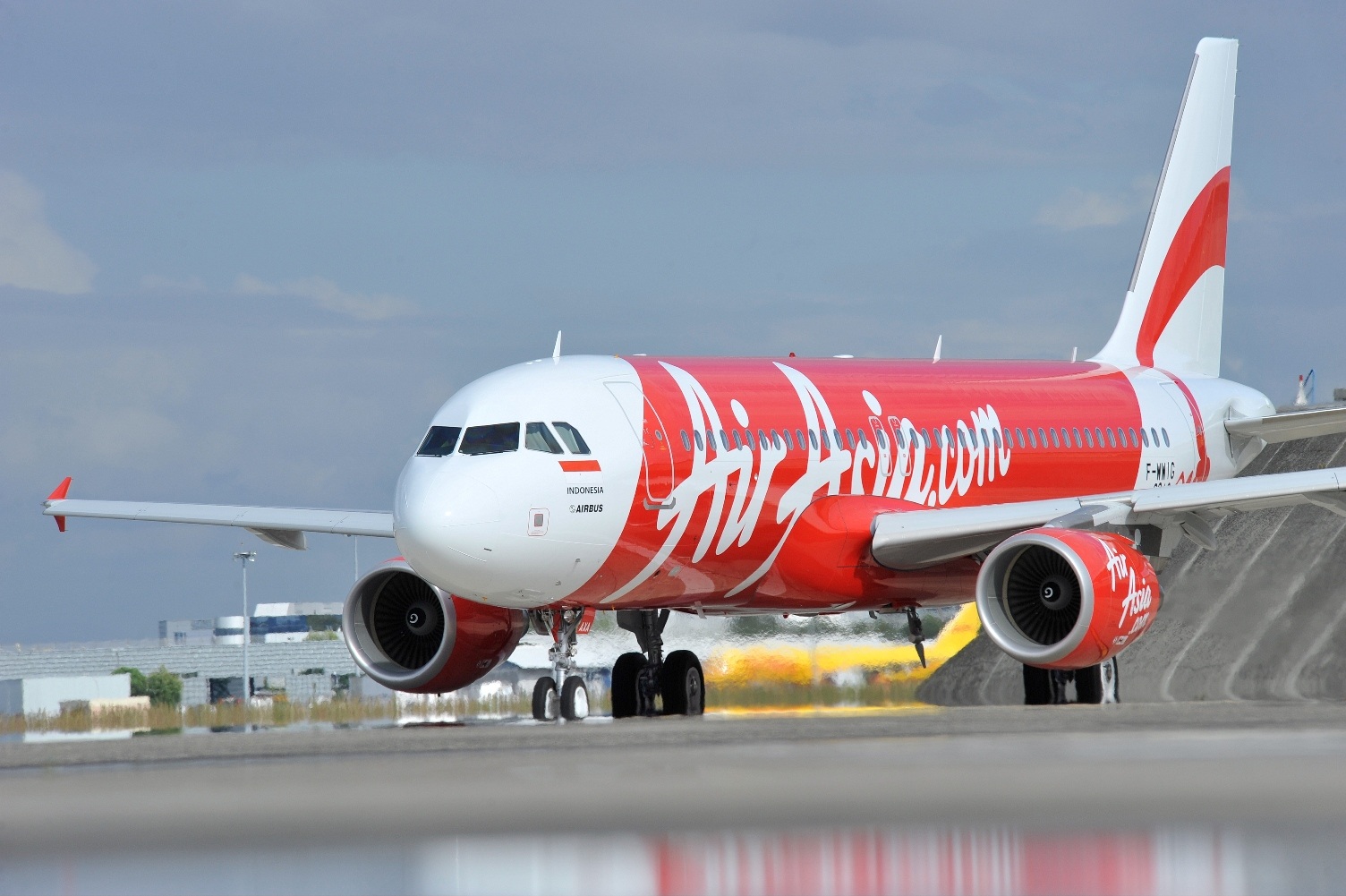
    Airasia SuperApp has denied a claim by Batik Air that it has acted in an “unauthorised manner” by selling the airline’s and Super Air Jet’s flights on its online travel agency (OTA) platform.

    In a statement, airasia SuperApp said its OTA platform holds a travel agent licence and is also accredited by the International Air Transport Association (IATA) as an authorised agent to sell flights from any airline on its app and website.

    The app said that as an accredited OTA, its flight inventories come from established partner aggregators and direct airline partners, a common OTA industry practice.

    “As any accredited OTA in the market, we will continue to sell flights from any airline, including those we do not have direct relationships with, through our established partner aggregators and consolidators,” said acting CEO of airasia SuperApp Hafidz Fadzil.

    Yesterday, the Edge reported that Batik Air demanded airasia SuperApp to immediately remove and delete all the airline’s products and services on the platform, saying it has never consented to place them on the app.

    The airline claimed that the app had acted in an “unauthorised manner” by selling the airline’s and Super Air Jet’s flights on its platform.

    “We wish to notify the public that Batik Air Malaysia, and all the airlines within the Lion Air Group, namely Lion Air, Batik Air Indonesia, Wing’s Air, and Super Air Jet, have not given any consent for airasia SuperApp to include their services on its OTA platform,” it was quoted as saying.

    Batik Air also threatened “legal redress” if airasia SuperApp failed to comply.

    Malaysia Aviation Group Bhd managing director Izham Ismail said it had filed an injunction to stop the low-cost carrier from selling Malaysia Airlines tickets on the app.

    Izham said the group had not reached a commercial agreement before this, yet airasia SuperApp “continued to sell our inventory”.

    In response, Hafidz today said the Malaysia Airlines flight tickets displayed on the app were taken from inventories supplied by their established partner aggregators.

    “The flight fares and fare class (economy or business) information is supplied directly by our partner aggregators without any intervention from airasia SuperApp. The same fare information was also displayed on other OTA platforms,” he said.

    He added that the legal action Malaysia Airlines has taken against them is premised on allegations of potential trademark infringement and passing off, and unrelated to the supply of inventory.

    Airasia SuperApp said it continues to call on Malaysia Airlines and other airlines to partner directly with it for better efficiency and performance, towards offering Malaysians the best value for travel.

  • UBS Can Use Repurchased Shares to Fund Credit Suisse Takeover

    UBS Can Use Repurchased Shares to Fund Credit Suisse Takeover

    Instead of raising new capital to fund its takeover of Credit Suisse by issuing new shares, UBS will repurpose some of those it obtained as part of a repurchase program.

    In March of last year, UBS launched a $6 billion stock buyback program, scheduled to run until the end of March of next year as part of a capital reduction, which has now been amended, according to a statement Tuesday.

    To fund its government-imposed take over on March 19 of rival Credit Suisse for three billion Swiss francs, and avoid raising new capital, UBS sought changes to the terms of the buyback. Instead of canceling the repurchased shares, they will be used to complete the takeover.

    A maximum of just over 178 million «UBS Merger Shares» will be required for the transaction, where one share will be exchanged for 22.48 shares of Credit Suisse. To date, UBS bought back 298.5 million shares through the program, corresponding to 8.5 percent of those registered,

    In the interest of the shareholders of UBS, the board of directors of UBS has decided not to implement a capital increase. Instead, already issued own shares of UBS shall be used for the completion of the Merger, according to the statement.

    As of April 14, UBS owned either directly or indirectly 473.2 million of its registered shares or 13.4 percent of voting rights. Black Rock is UBS’s largest shareholder at just under five percent. Artisan Partners, Dodge & Cox in the US, and Norway’s Norges Bank each own just over three percent.

    UBS said it does not know its intentions concerning the sale of shares as part of the buyback program.

    On April 2, UBS requested permission from the Swiss Takeover Board to approve the amended repurchase program and received it on April 12.

  • Rice export prices on the rise

    Rice export prices on the rise

    Vietnam’s rice export prices grew 9.2% year on year to $532 per tonne in the first quarter of 2023, said the General Department of Vietnam Customs.

    The price increase was attributed to a surge in the proportion of high-quality rice such as fragrant, glutinous, and specialty rice.

    High-quality rice is accounting for 50% of the total export volume and sold at $600-1,000 per tonne at present.

    Experts predicted that favourable conditions will remain for rice export and prices will stay good in the short term as the share of high-quality rice is increasing and global economic and political uncertainties are boosting food stockpiling demand.

    Vietnam exported 1.79 million tonnes of rice, earning $952 million between January and March.

  • Gold prices increase

    Gold prices increase

    SJC gold price gained 0.15% to VND67.1 million ($2,857.39) per tael Monday afternoon.

    Gold ring price rose 0.18% to VND56.65 million per tael. A tael equals 37.5 grams or 1.2 ounces.

    Globally gold rose on Monday as the dollar eased slightly. Still, prices were off one-year highs hit last week, as mixed economic data prompted investors to reassess the U.S. Federal Reserve’s interest rate hike trajectory.

    Spot gold was up 0.5% at $2,012.62 per ounce. U.S. gold futures rose 0.4% to $2,024.70.

    The dollar index was 0.1% lower, making bullion cheaper for overseas buyers.

    Gold is likely to trade with “positive bias but can see some initial correction…a major downfall” in prices is not expected as uncertain global economic and geopolitical tensions support its safe-haven status, said Hareesh V, commodity research head, Geojit Financial Services.

  • Buy2Sell Vietnam opens two new showrooms in Hanoi, HCMC

    Buy2Sell Vietnam opens two new showrooms in Hanoi, HCMC

    Buy2Sell Vietnam established two new showrooms in Vincom Mega Mall in Hanoi and SC Vivo City in Ho Chi Minh City last month.

    The Hanoi showroom is on the 1st floor of Vincom Mega Mall Times City and the HCMC showroom on the 3rd floor of SC VivoCity.

    Buy2Sell Vietnam plans to expand its new showroom chain to more than 100 stores in shopping centers in Southeast Asia during 2024-2030.

    Thousands of cosmetics, F&B, houseware, and appliances products… are exclusively distributed and displayed at these stores.

    All products are directly imported from over 60 countries, including the U.K., France, the U.S., Italy, Switzerland, Australia, Korea, and Japan.

    Vang Online is a high-end imported beverage distribution brand under Buy2Sell, specializing in wine and spirits, introducing numerous international premium beverage brands to the Vietnam market.

    In Vietnam, Buy2Sell is renowned as one of the first B2B e-commerce platforms focused on distributing imported goods since 2015, especially from brands yet to enter the market.

    Besides Vincom Mega Mall and SC ViVo City, Buy2Sell has invested in establishing its store chains at other top-tier shopping centers, including Lotte Mart (part of Lotte Korea Group).

    Buy2Sell has also invested in its online e-commerce platform, playing its role as a bridge for international brands to access the Vietnamese market more easily.

    Vincom Mega Mall Times City covers more than 230,000 m2 of various spaces including retail, food courts, supermarket and other entertainment venues, which is developed by Vingroup.

    SC VivoCity covering an area of around 62,000 m2 is developed by Mapletree, a major real estate investment, development, and fund management company in Asia.

  • WinMart’s loss triples in 2022

    WinMart’s loss triples in 2022

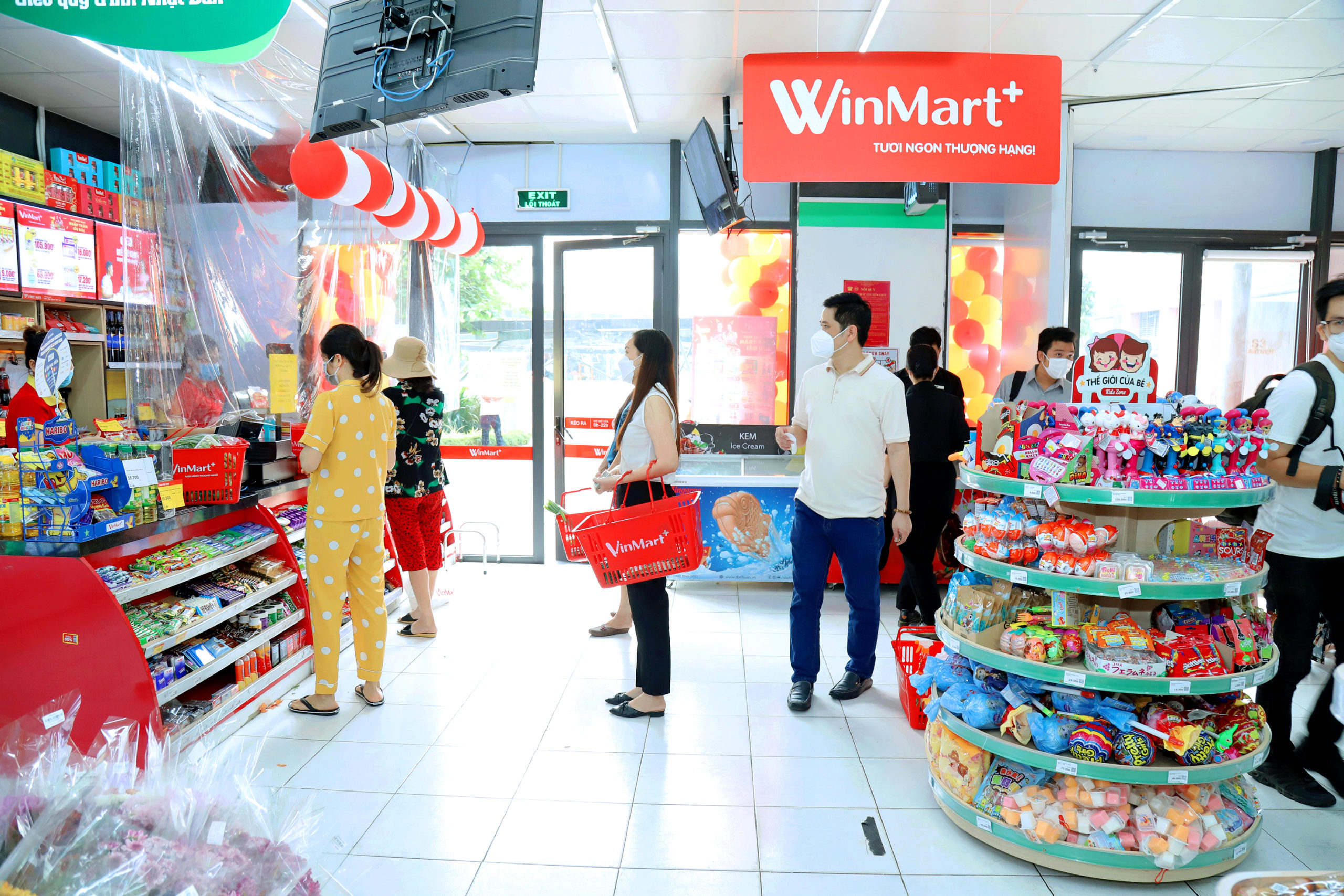
    WinCommerce, the operator of WinMart retail chain, saw its loss tripling from 2021 to VND445 billion ($18.97 million) last year.

    Since being acquired by Masan Group from Vingroup in 2019, WinCommerce has not been able to turn a profit.

    Its revenues declined 5% to VND29.37 trillion last year. Its equity rose marginally to VND3.98 trillion, and debts were at VND14.32 trillion.

    WinCommerce is Vietnam’s biggest retailer in terms of number of outlets. It had 3,268 WinMart+ stores and 130 WinMart supermarkets by the end of December.

  • iPhone 14 prices to decline further

    iPhone 14 prices to decline further

    A guest holds the new iPhone 14 at an Apple event at their headquarters in Cupertino, California, U.S. September 7, 2022. Photo by Reuters

    The prices of iPhone 14 in Vietnam, which are already among the lowest in the world, will continue decreasing in the coming time, market observers said.

    “In April, Apple authorized resellers will have to import a new batch of iPhones according to their commitments to Apple. To lower inventory, slashing prices is the best way,” said a reseller.

    Officially launched in the country on Oct. 14, 2022, the iPhone 14 Pro Max version originally sold for VND34 million ($1,440).

    Only half a year later, the price dropped by more than VND7 million, the fastest rate of price decline since iPhone smartphones were first officially sold in Vietnam in 2014.

    Prices of some other iPhone 14 versions also decreased sharply.

    “The iPhone price war is always going on, but never as fierce as now. This is the first time the price of Apple’s latest phone model has dropped so steeply after only half a year,” said Phung Phuong, a manager of smartphone retail chain Di Dong Viet.

    According to a large electronics retailer, there are two reasons for the current price race.

    Firstly, Apple has not yet fixed a price range in Vietnam, so local dealers set their own selling prices according to actual needs and market situations.

    Large stores often sell Apple smartphones at prices VND1-2 million higher than smaller ones, but still attract customers due to their wide coverage, good reputation, and better after-sales services.

    Meanwhile, smaller stores must accept low profits, slashing prices to compete with bigger ones.

    Secondly, at the beginning of 2023, demand for smartphones started diving, but Apple authorized resellers still imported a large number of products to receive sales incentives from Apple.

    Inventory is now too high, forcing resellers to lower prices to make cash flows run smoothly.

    “Big retailers are slashing selling prices, so small and medium ones have to follow suit to keep their market shares,” said Nguyen Lac Huy, a manager at smartphone retail chain CellphoneS.

    The iPhone 14 was rolled out in Vietnam in October last year. While the Pro and Pro Max versions sold out within a few months, sales of the iPhone 14 and Plus versions have been sluggish.

    Retailers said the combined sales of the two models account for less than 5% of the total.

  • VinFast to export 1,800 VF 8 electric cars to US, Canada

    VinFast to export 1,800 VF 8 electric cars to US, Canada

    VinFast, a member of Vietnamese private conglomerate Vingroup on April 15 announced that it would export 1,800 VF 8 electric cars to the U.S. and Canada.

    The cars is expected to depart in the next few days, announced VinFast. As planned, the cars will be sold in the U.S. in May and in Canada in June.

    Previously, on November 25, 2022, VinFast exported the first batch of smart electric cars, including 999 units of VF 8 City Edition, to the international market. This was the first batch of cars exported to the international market among 65,000 orders for VinFast VF 8 and VF 9 electric cars globally.

    On March 2, 2023, VinFast handed over the first 45 VF 8 City Edition cars to U.S. customers at 9 VinFast stores.

    According to VinFast, in the first three months of 2023, it handed over a total of 865 VF 8 units to customers in Vietnam.

    VinFast’s VF 8 is also a model that GSM (Green – Smart – Mobility) Joint Stock Company uses for Xanh SM taxi service which was launched in Hanoi on April 14.

    The taxi service using electric cars is expected to be available in Ho Chi Minh City this month and in at least five provinces and cities by the end of this year.

  • Vietnam Railways eyes profit in 2023

    Vietnam Railways eyes profit in 2023

    Train operator Vietnam Railways expects to earn a profit this year after posting losses in three previous years due to the impact of Covid-19.

    The company predicts a post-tax profit of VND3 billion ($127,960) and a revenue of over VND6.5 trillion.

    In the first quarter this year subsidiary Hanoi Railways served over 800,000 passengers and recorded VND300 billion in revenues. Both figures went up 200% year-on-year.

    Its other major subsidiary, Saigon Railways, also saw revenues rise 147% to VND360 billion and passenger numbers grow 136% to 660,000.

    Vietnam Railways attributed the rise to increasing demand and discounts of 50%-65% during days with low bookings. Other types of discounts for groups of four and large tourist groups also contributed to higher ticket sales.

    Vietnam Railways started to see signs of recovery last year after two years of difficulties due to Covid-19. It saw revenue rising 14% to VND7.7 trillion, and saw losses dwindling from VND1.33 trillion in 2020 to VND130 billion last year.