Tag: asia

  • Milk tea on flights fetches Noibai Catering Services rising revenues

    Milk tea on flights fetches Noibai Catering Services rising revenues

    Airline catering company Noibai Catering Services earned revenues of nearly VND22 billion ($936,947) from selling milk tea last year, over 63% of it from sales aboard flights.

    According to its annual report, the company put milk tea on flight menus in July 2022.

    NCS’s milk tea is available on Vietnam Airlines flights at VND50,000 a cup and also on other flights through other airline catering companies such as VACS and MASCO.

    The company’s losing streak due to Covid-19 snapped in 2022, when it made profits before tax of VND5 billion on revenues of VND410 billion, three times the 2021 figure and 60% of the pre-pandemic revenues.

    It had suffered losses of VND38 billion and VND77 billion in the previous two years.

    In 2023 it has continued to recover strongly, with first-quarter revenues rising 2.5 times year-on-year to VND150 billion in.

    Its profit was VND10.5 billion.

    NCS said the aviation market has recovered completely, causing its own revenues and profits to soar.

  • Taiwan’s Apple supplier Quanta plans Vietnam factory

    Taiwan’s Apple supplier Quanta plans Vietnam factory

    Apple supplier Quanta Computer plans to set up a factory in northern Vietnam, the Vietnamese government said.

    The company, a MacBook contract manufacturer, on Friday signed an agreement with the authorities of Nam Dinh Province, 90 km (56 miles) south of Hanoi, to construct the facility at an industrial park there, the government said in a statement late on Friday.

    The facility, which would be Quanta’s 9th factory globally, would initially cover an area of 22.5 hectares, the statement said, without giving its capacity nor a time frame for the construction.

    Local media said on Saturday Quanta would invest $120 million in the factory.

  • New Google Authenticator update enables one-time codes to be stored in your Google Account

    New Google Authenticator update enables one-time codes to be stored in your Google Account

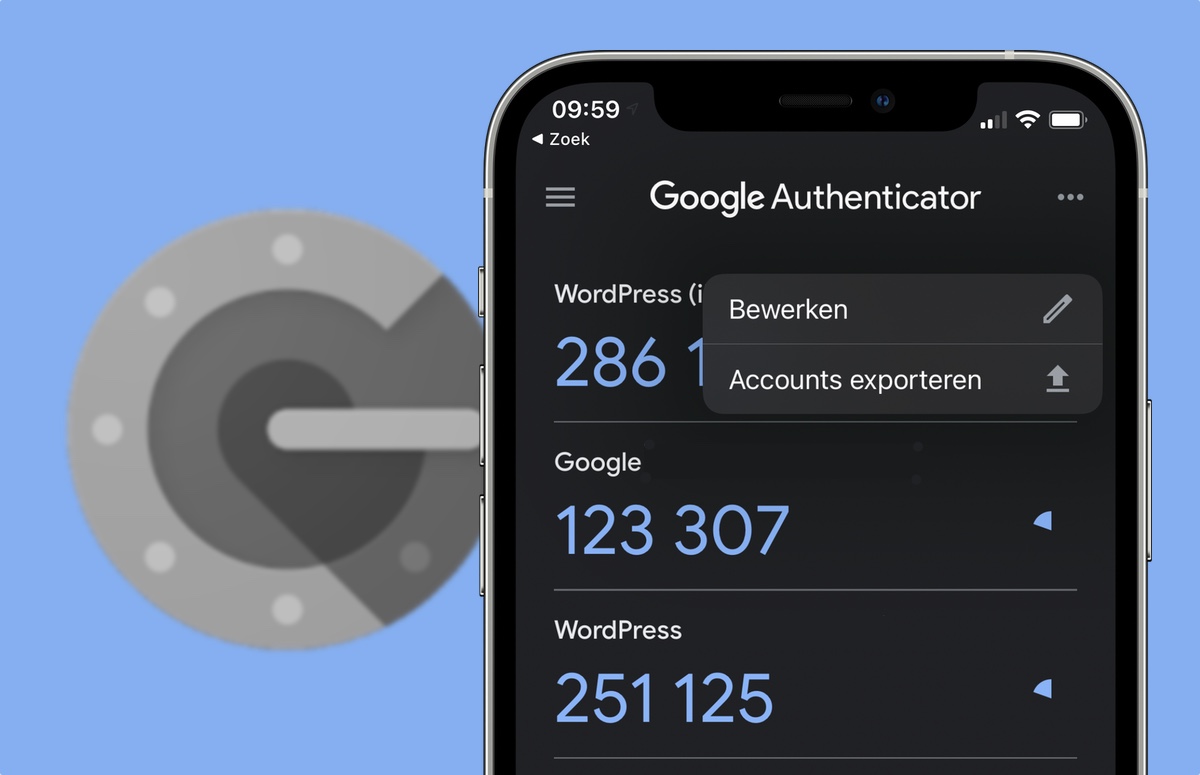
    Google Authenticator, the widely used two-factor authentication app, now allows users to sync their one-time codes in the cloud. This update aims to make it easier for users to switch between devices without losing their authentication data.
    The update was announced today via the Google Security Blog and it affects both the iOS and Android app. Previously, users had to manually transfer their codes from one device to another or disable and re-enable two-factor authentication when switching devices. This process could be cumbersome, especially for users who frequently switch between devices, replace their phones, or had their device stolen.
    The new cloud sync feature will automatically store users’ authentication data in the cloud, allowing them to access it from any device with the Google Authenticator app installed. To enable Google Account synchronization in Google Authenticator, users will need to open the app, tap the menu icon, select “Settings” and tap “Backup to Google Account,” then follow the on-screen instructions to sign in to their Google Account and enable backup.

    Once backup is enabled, one-time codes will be stored securely in the users’ Google Account, so if their device is lost or stolen, they can be restored simply by signing in on a new device and requesting to “Restore codes.”

    Google explains that with this update the company is making one-time codes more resilient by securely keeping them in users’ Google Accounts, improving user lockout protection and allowing services to rely on users maintaining access, which boosts convenience and security.

    Google has long promoted a number of methods for safe authentication across the web in addition to one-time codes from Authenticator, such as Google Password Manager and “Sign in with Google” options across the web. Additionally, Google has been collaborating with the FIDO Alliance to facilitate the move to using passkeys, instead of passwords, which will provide users with even more practical and secure authentication options.

  • Techcombank chairman says property loans given only for legally sound projects

    Techcombank chairman says property loans given only for legally sound projects

    Techcombank’s real estate loan portfolio might be big but most are personal loans or to develop projects that do not face legal issues, its chairman, Ho Hung Anh, said.

    At the lender’s annual general meeting on April 22 he said since the property developments have full legal status, even “in the current difficult period for the property market, these projects are being implemented.”

    Masterise, one of Techcombank’s clients, is proceeding with its projects normally and its construction is on schedule, he noted.

    As of the end of last year loans to the property and construction sectors represented 29% of Techcombank’s loans outstanding.

    The bank also has exposure to these sectors in the form of corporate bonds, which make up 6% of its total assets.

    “The bond market will recover,” Anh said, assuring that when this happens, Techcombank’s growth would resume very quickly.

    Last month ratings agency Moody’s Investors Service downgraded the long-term deposit and issuer ratings of Techcombank because of its high exposure to the struggling property sector.

    Techcombank targets pre-tax profits of VND22 trillion (US$932.2 million) this year, down 14% from 2022, and a bad debt ratio of below 1.5%.

    Its outstanding loans are expected to surge 15% to more than VND510 trillion by the end of the year.

    The bank does not plan to pay dividends this year.

  • MB launches banking app in Laos

    MB launches banking app in Laos

    Military Commercial Joint Stock Bank Laos branch (MB Laos) released a new banking application for individual customers in Vientiane, Laos, on Monday.

    Several Laotian government officials and representatives of the State Bank of Laos and MB attended the app launch ceremony.

    MB Laos app will increase customers’ convenience and optimize their banking experience on digital channels with advanced technology.

    The app helps customers manage their finances by providing online savings services, loans application, as well as local and foreign currency account management. Other features include bill payment, scanning Laos QR codes for payment, phone recharging, and money transfers from payment accounts to Umoney E-Wallet.

    It also provides users with a safe, secure and fast online money transfer and saving services.

    “With the new digital banking product, MB Laos is expected to bring the best experience to existing customers, while also attracting new ones,” an MB Laos representative said.

    The MB Laos app is available to download on the App Store and Google Play.

    Customers will have the opportunity to receive 20,000 Lak when opening a new account in the app.

    Find more information on this website.

    Email: [email protected].

    Hotline: 021 752 777

    Address: MB Building, No 10 Kaysone Phomvihane Avenue, Phonexay Village, Saysettha District, Vientiane Capital, Laos PDR, Vientiane, Laos.

  • Origin Tea launches sparkling iced teas into Woolworths

    Origin Tea launches sparkling iced teas into Woolworths

    Two Brisbane brothers have landed a deal with Woolworths and Coles with the hope they will transform an every day item from boring to “cool”.

    Chris and Lawrence Seaton started their business Origin Tea nine years ago as their father owned a tea plantation in Sri Lanka.

    The Australian operation of Origin Tea, which was started in their garage, now brings in $3 million in annual revenue but it wasn’t always smooth sailing for the siblings.

    “When we first launched in Australia, we wanted to take on the big brands like Liptons and all these named brands, and we actually learned the hard way that all these companies have large marketing budgets and are spending millions a year on marketing,” Chris told news.com.au.

    “And tea is one of those products that people are really brand loyal, so the first two years we made a pretty big mistake and had to change our entire business strategy.”

    This included bringing in a whole container of tea with hundreds of tea bags in boxes that they couldn’t sell. Instead they had to liquidate it through clearance warehouses, costing them a whopping $200,000.

    “At one point I was trying to sell packets of tea at the markets for $1.50 or $2 with a hundred in the box and at the end of day I was collecting $100 of cash at the markets, and I was like I don’t think this is really worth it,” added Chris.

    Then as the popularity of single-origin coffee started to take off, the duo realized it was an opportunity to take tea to that level by offering transparency on what people were drinking.

    They also started to partner with coffee roasters, building brand recognition in Australia’s cafes.

    It also helped them to become what they say was the fastest-growing consumer tea business in Australia, off the back of some partnerships with the likes of Coca Cola and Campos, while also riding the kombucha boom of 2016-17.

    Chris and Lawrence Seaton – who have built the fastest-growing consumer tea business in Australia, mainly off the back of some partnerships with the likes of Coca Cola and Campos and the kombucha boom of 2016-17. Picture: Supplied

    The tea was the basis for the original Remedy kombucha brew which grew to a million-dollar contract within a year and then doubled as the company went from needing 20 kgs to 150,000 kgs almost overnight.

    Chris said many people aren’t aware that there is a huge difference between how tea is made.

    It starts early too with Sri Lankan tea hand-picked based on whether the leaf is ready, rather than tea from Vietnam, India or even Australia being mechanically harvested where the heads of tea bushes are just cut off, Chris explained.

    People often blend the tea from different countries to lower the overall price, but Chris said that also impacts the taste.

    “Sri Lanka is renowned in the world as having the best quality tea from a taste perspective, however it comes at a premium,” he said.

    “When we talk taste in tea it’s like good liquor, like a good whiskey or wine.”

    The business now goes through up to 200,000 kgs of tea a year, which could jump further with the major supermarket deal, which will sell the product at up to 700 stores nationally.

    The deal has also helped Origin Tea to bounce back after 70 per cent of its business was wiped out overnight when the pandemic hit, Chris said.

    Woolworths and Coles will stock its Sticky Chai range, tea mixed with spices infused in a coconut sweetener, and retail for $9 for 120g, alongside a turmeric elixir series.

    Both hope the new products will shake up the stale category.

    “I think traditional tea is on the decline, so black and green teas, and where we play in and where we like to see us, is as the innovators in the tea space. Our main mission with Origin Tea is to make tea cool again,” Chris said.

    “Tea is seen as a stagnant stale category, and the Sticky Chai product is something innovative, infusing tea with other ingredients or to come up with an awesome iced tea that is ready to drink and concentrates like syrups so you can garnish it with alcohol or make your own cocktails or mocktails.

    “That’s where we see tea playing in the future as being creative with tea.”

  • Telegram update adds shareable chat folder, custom wallpaper, and more

    Telegram update adds shareable chat folder, custom wallpaper, and more

    Messaging app Telegram has just announced numerous improvements coming to its users in the following days. Shareable chat folders, custom wallpapers, better bots, fast scrolling for attachments, and many other new features and improvements are part of the latest Telegram update.

    Starting with the latest version of Telegram, users can share entire chat folders with just one link. It makes it infinitely easier to invite friends to groups, collections of news channels, and more. Not to mention that each chat folder supports multiple invite links allowing access to different chats.

    Now you can create custom wallpapers from your favorite photos and color combinations. These can be used in specific chats. Simply use the “Set Wallpaper” setting from the three dots menu on Android or open a profile and tap “Change Wallpaper” from the three dots menu on iOS.

    The latest Telegram update brings better bots, the developer announced today. They can now host web apps, which can be launched in any chat. Additionally, Telegram revealed that web apps can now support collaboration and multiplayer features for members when launched in a group.

    As mentioned earlier, the update makes scrolling for attachments faster, just like Shared Media. Finally, the update brings numerous improvements to various interfaces. For example, the Send When Online interface now requires fewer taps. Also, Telegram users can now create groups without adding members immediately, which is handy if they want to set up permissions and pin one or more messages first.

    More importantly, in groups of under 100 members that have topics enabled, you’ll now be able to see what time other group members read your messages. A much-needed quality-of-life improvement.

    If you’re using one of the newest iPhones, you’ll be happy to know that profile pictures in Telegram have a new animation when scrolling on profiles and info pages.

  • The tabs used to filter conversations in Google Messages have vanished

    The tabs used to filter conversations in Google Messages have vanished

    Underneath the search bar at the top of the Google Messages UI on Android used to be organizational category tabs that would allow users to run through chats and messages from “All,” “Personal,” and “Business.” This was a quick way to view only those messages that you wanted to see at a given time. Selecting “All” would show, well, all of the conversations you had in your messages conversation list while Personal and Business are pretty self-explanatory.

    This feature first surfaced in 2021 in India and Google said that it was to “roll out first to English users around the globe.” Now, the organizational category tabs are gone for many Messages users. They have vanished from the Google Messages UI as though they were deleted by the Magic Eraser. One interesting note though; 9to5Google said that all of the Pixel models it saw missing the feature were running Beta versions of Android and we don’t know if they meant the Android 14 Beta or the QPR3 Beta.

    Personally, my Pixel 6 Pro also does not show the category tabs anymore and my phone is running Android 13 QPR3 Beta 3. Is this the end of the organizational category tabs or is this a bug? Google is usually pretty good at telling users when it is removing a specific feature and why it is being removed. Still, it is possible that the tabs were not being employed that often by users and Google just felt it was better off to remove them.

    We should make it clear that not all Android users who favor using the Google Messages app are missing the organizational category tabs and Android users employing their carrier’s third-party messaging apps (like Verizon Messages, T-Mobile Messages, or AT&T Messages) wouldn’t be impacted at all. But most Android users know that RCS (Rich Communication Service), available with the Google Messages app, helps to deliver a better Android messaging experience.
    If you don’t have the Google Messages app (ahem, more precisely Messages by Google app) on your Android phone, feel free to tap on this link and install it from the Play Store.
  • Amazon launches program to identify and track counterfeiters

    Amazon launches program to identify and track counterfeiters

    The company announced that Amazon launched its Anti-Counterfeiting Exchange (ACX), an initiative to help retail stores label and track marketplace counterfeits as part of the e-commerce giant’s efforts to crack down on organized crime on its platform on Thursday.

    Online marketplaces in the United States, including Amazon face hurdles in keeping counterfeiters off their platforms and fake merchandise from entering their warehouses. The new program mimics data exchange programs by the credit card industry to find scammers and identify their tactics.

    Stores and Amazon marketplace sellers can anonymously contribute information and records flagging counterfeiters to a third-party database or use the database to avoid doing business with the bad actors.

    “We think it is critical to share information about confirmed counterfeiters to help the entire industry stop these criminals earlier,” Dharmesh Mehta, Amazon’s vice president of selling partner services, said in a statement.

    The Seattle-based retail giant piloted the anti-counterfeiting initiative in 2021 with an undisclosed number of apparel, home goods and cosmetics stores, where counterfeiting is most common.

    As part of other anti-counterfeiting efforts, Amazon is also working with the U.S. Customs and Border Protection on a data pilot that helps the company identify and target low-value e-commerce shipments that may be counterfeit goods or break other regulations.

  • Ikea unveils US$2.2 billion expansion plan

    Ikea unveils US$2.2 billion expansion plan

    Ikea is planning to invest more than US$2.2 billion in an omnichannel expansion strategy in the US over the next three years.

    According to Ikea, this is the company’s largest investment in the US in four decades, and it will focus on creating new stores and expanding fulfilment networks to serve more Americans.

    Ikea will build new shops and extend its fulfilment network to give better delivery alternatives and provide a product range that matches the demands of everyday living in diverse regions across the country as part of the investment.

    “The US is one of our most important markets, and we see endless opportunities to grow there and get closer to the many Americans with affordable products and services,” said Tolga Oncu, head of Ikea Retail at Ingka Group.

    “More than ever before, we want to increase the density of our presence in the US, ramp up our fulfilment capacities and make our offer even more relevant to local customers’ needs and dreams.”

    Ikea expects to open eight additional shops, nine Plan & Order points, and create more than 2000 jobs during this first phase of expansion. In addition, Ikea will build 900 new Pick-up locations where customers can pick up purchases made online.

    Last year, Ikea US has added 15 customer Pick-up locations and two Plan & Order stations to make Ikea more accessible to customers. This summer, the company also announced new locations in San Francisco, CA and Arlington, VA.

    “We are committed to continuing to grow in this market with our thousands of co-workers and millions of customers who look to Ikea for home furnishing inspiration and solutions at an affordable price,” added Javier Quinones, CEO & chief sustainability officer at Ikea US.

    Ikea says this latest investment will forward that work by continuing to modernise existing locations to serve a dual purpose: offering inspiration and home furnishing knowledge while also expanding handling capacity for parcel deliveries directly from the store.

    Neil Saunders, MD at consultancy GlobalData, said an investment of Ikea’s scale “should make other retailers sit up and take notice”.

    “As the largest furniture retailer in the world, Ikea has economies of scale and volumes that allow it to offer value that few others can match. The expansion is a potential threat to Wayfair, At Home and other many mass-market players. While it will take time for Ikea to execute its plans, it is clear that a previously sleepy giant has woken up and is intent on making its mark.”

    Saunders said that while the US is one of Ikea’s biggest international markets, the company’s reach there has always been relatively poor compared to its core European markets.

    “Part of this is the result of Ikea’s traditional model of huge stores designed to pull in customers from an extremely large catchment. These work well in population-dense countries like the UK, but are less effective in the US where, outside of cities, people are more scattered and drive times can be extensive.”

  • YouTube TV announces improvements in picture quality and major fixes for Apple TV

    YouTube TV announces improvements in picture quality and major fixes for Apple TV

    YouTube TV has announced via a post on their official Reddit account that it has made some updates to improve picture quality on its apps. The updates have been implemented in response to complaints from users about the streaming quality of YouTube TV and some major bugs specifically on the Apple TV platform

    On the Apple TV, a major update (version 1.13+) is coming which will address difficulties with the app opening up to a dark screen, will allow HDR implementation, and fix some bugs with 4k playback. Not addressed with this app version, but available in the app store very soon, will be a solution to the issue in which the application would crash on the first-generation 4K Apple TV when it is left on.
    Lastly, the team offered an immediately solution for users experiencing a momentary black screen when switching between content, explaining that this is happening because of the SDR/HDR transitioning that is taking place. The fix involves either setting SDR as content as your default format or disabling range matching altogether, both of which you can change from the Settings > Video and Audio menu.
    Aside from the major fixes for Apple TV, the team also announced some new features that will impact all platforms where YouTube TV runs, including mobile.
    YouTube TV successfully implemented “Multiview” to all its subscribers in response to the fervent demand during March Madness. Now, the company is working on further enhancements to the feature in order to ensure a seamless experience once the NFL season rolls around. No specific updates were shared in the blog post about what type of enhancements we will see, but as the Football season draws near, we can expect to receive more details soon.
    Since we are on the subject of Football and the NFL, YouTube TV added that its users can now access NFL Sunday Ticket by navigating to the “Memberships” page in their settings. Alternatively, they can head to the “Movies & TV” section on YouTube to sign up for the service or explore the various plans that are currently available. For a limited time, interested parties can sign up for a full season package at a discounted price until June 6th.
    YouTube TV is also addressing the issue of picture quality on their streams by conducting a series of tests on transcoding modifications in the next few weeks. The tests will involve a boost in bitrate for live 1080p content on all devices that are compatible with the VP9 codec and that benefit from fast internet connectivity. Assuming a successful outcome of these tests, the intention is to make this a permanent fixture by the upcoming summer season.
  • WhatsApp is rolling out the ability to save disappearing messages with the sender’s permission

    WhatsApp is rolling out the ability to save disappearing messages with the sender’s permission

    WhatsApp has announced via a blog post a new feature that allows users to save disappearing messages before they vanish. The feature will give users a chance to keep important messages that they may want to refer back to later.

    Disappearing messages is a feature that WhatsApp introduced back in 2020, which allows users to set their messages to automatically delete after a specified amount of time, ranging from 24 hours to 7 days. While this feature was meant to help users keep their chats private and reduce clutter, it was difficult for users to hold onto messages that they wanted to keep.

    With the new feature, called “Keep In Chat,” users can now select messages in a chat and save them by tapping on the bookmark icon. Once a message has been saved, it will no longer disappear after seven days. Users can also un-save messages by tapping on the bookmark icon again.

    Sender notification and consent will be required before proceeding, and without their permission, the message will automatically delete itself after the allotted time has passed. Both the sender and the receiver will be able to see the bookmark icon next to any messages that can be stored in the WhatsApp conversation and the saved messages will be conveniently stored in a designated “Kept Messages” folder.

    In this approach, WhatsApp’s implementation of its Keep In Chat function does not undermine the security and privacy afforded by disappearing messages and the decision to store a message ultimately rests with the sender. The new feature is currently rolling out to both individual and group chats. However, users can only save messages that have not already disappeared. Once a message has disappeared, it cannot be saved.

    This update comes after WhatsApp’s recent controversy over its privacy policy changes, which led many users to switch to other messaging apps such as Signal and Telegram. The addition of the save disappearing messages feature may help to win back some users who were concerned about the privacy and security of their conversations on the platform.

  • Seafood exports plummet

    Seafood exports plummet

    Seafood exports to most major markets have fallen by 17-50% this year.

    According to the Vietnam General Department of Customs, shipments to the U.S. fell by more than 50% year-on-year to US$284 million.

    Exports to Australia were down 30% to $65 million.

    Despite China’s reopening, exports to this market were worth only $279 million, 23% less than last year.

    Japan, South Korea, and Thailand imported 7-17% less than last year.

    Overall exports were down 28% year-on-year in the first quarter to US$1.8 billion.

    Key items such as pangasius, shrimp and tuna saw 30-37% declines, while exports of crab and other products were down 2-42%.

    The figures are alarming for the fisheries industry.

    According to the Vietnam Association of Seafood Exporters and Producers (VASEP), the industry is facing great challenges as global inflation has hit demand.

    Fisheries output has fallen since fishermen and aquaculture businesses lack capital.

    Production, raw material and labor are rising, making it harder for Vietnam’s products to take on competition from Ecuador, India, Thailand, and Indonesia in major markets.

    Businesses are also in a bind because the European Commission has not lifted the yellow card it had issued to Vietnam for illegal, unreported and unregulated fishing.

    VASEP expects seafood exports to only recover in the third quarter and only if there are support policies to reduce taxes, roll over loans and subsidize loan interest.

    The government deferred payment of taxes (VAT, corporate income tax, personal income tax) and land rentals for a fifth time last week to help ease the burden on businesses.

    It also reduced VAT to 8% though it must first be approved by the National Assembly.

  • Airport operator targets record revenue

    Airport operator targets record revenue

    The Airports Corporation of Vietnam (ACV) has set a revenue target of VND19.36 trillion ($823.92 million) this year, exceeding pre-pandemic levels and the highest since its establishment.

    ACV, which operates 22 airports in Vietnam, expects the aviation industry to see a strong recovery in both domestic and international flights.

    The company plans to serve 118 million passengers this year, up 20% on 2022.

    The number of takeoffs and landings are expected to hit 777,000, up 17%.

    These figures are set to bring the company a revenue of VND19.36 trillion, an increase of nearly 40%.

    This is VND1 trillion higher than in 2019, before the pandemic affected the industry.

    ACV, however, set a modest profit target of VND8.49 trillion, down 3% from 2022 and 16.5% from 2019.

    This is due to high input costs and overloaded airports, which are set to put pressure on operations.

  • Gasoline prices down

    Gasoline prices down

    The price of Vietnam’s best-selling gasoline RON 95-III fell VND610 to VND23,630 ($1) per liter on Friday, while E5 RON 92 prices dropped VND490 to VND22,680.

    Meanwhile, the price of diesel fell by VND750 to VND19,390.

    Kerosene prices dropped VND250 to VND19,480, while mazut oil prices rose VND650 to VND15,840.

    The Ministry of Industry and Trade and the Ministry of Finance, which oversee the adjusting fuel retail prices, said that global crude oil prices have fallen for the past 10 days on fears of looming Federal Reserve interest rate hikes and OPEC+ oil output cut.