Tag: asia

  • Sabeco profits soar by 40%

    Sabeco profits soar by 40%

    Brewer Sabeco said its after-tax profit rose by 40% last year to VND5.5 trillion. Vietnam’s biggest brewer had net revenues of VND34.98 trillion, an increase of 32% from 2021.

    These are significant achievements compared to the 2021 results.

    The 2022 profit figure was the highest in the company’s history, and was achieved despite the challenging market conditions and various post-pandemic difficulties.

    The year also marked an important milestone for Sabeco as it entered phase 2 of its transformation journey, focusing on sales, branding & marketing, production, and supply chain.

    The 2022 results also reflected Sabeco’s accomplishments in transforming its core business processes and accelerating its marketing and sales initiatives.

    It is improving cost management and operational efficiency across the entire supply chain by implementing Sabeco 4.0.

    Given the record profit, the board proposed a special dividend of 15%, which was approved at the AGM, bringing the full-year dividends for 2022 to 50%.

    To further enhance shareholder value, it was proposed to issue bonus shares at a ratio of 1:1, and was also approved.

    Sabeco expanded its mid-to-long-term strategic investment initiatives in 2022 to support sustainable business growth as part of its long-term growth plans.

    This includes recent strategic moves to increase ownership in Saigon Binh Tay Beer Group JSC and Saigon Packaging Group JSC. The two companies will become subsidiaries when the process is completed.

    Sabeco also announced plans to increase its stakes in the Western-Saigon Beer JSC from 51% to more than 70%.

    At the meeting, general director of Sabeco, Bennett Neo, said 2022 was a breakthrough year with record profits.

    “We grew our market share and net revenues, and profit after tax reached VND5.5 trillion, an increase of 40% over 2021. This is a result of our collective efforts to drive sales, the right investment strategy and efficient cost management.”

    For 2023 Sabeco has a revenue target of VND40.272 trillion and a profit target of VND5.775 trillion, increases of 15.1% and 5% from the previous year.

    The company said it would continue to strengthen its 4Cs sustainable development commitment, which includes driving ESG initiatives that are in line with its corporate goals and Vietnam’s national strategies.

    The corporation is committed to continuing its efforts as a proud, prominent and responsible corporate citizen to bring out the best in Vietnam.

    The chairperson of the AGM and board member Michael Chye said the business environment remains challenging with various uncertainties caused by the global economy and unpredictable but fierce competition.

    However, he said Sabeco remains committed to investing in opportunities that drive long-term growth and increase shareholder returns.

    “This will enable us to reward our shareholders with sustainable dividends and in line with the company’s long-term growth prospects.”

    A change of general director was also announced at the annual general meeting and will be effective from October 1, 2023. Lester Tan Teck Chuan will become the new general director.

    Lester is currently Senior Vice President, Chief Beer Business, at Thai Beverage PLC and has been at this role since 2020.

  • Mercedes distributor sees plummeting profit

    Mercedes distributor sees plummeting profit

    Mercedes distributor Haxaco reported a 92% year-on-year fall in pre-tax profits in the first quarter to VND5.6 billion ($238,750).

    Amid an industry-wide decline in sales, Haxaco’s revenues plummeted by 40% to VND992 billion.

    High-interest rates and the difficult economic situation caused sales of the luxury brand to drop, the company said in a statement.

    Its chairman, Do Tien Dung, said last week that in some months during the first quarter only a few cars were sold, and most of the income came from services.

    The company expects the difficult situation to persist until the end of the year.

    Yet it targets profits of VND310 billion for the year, the same as the record sum achieved last year, with Dung saying he does not want his employees to give up because the market situation is difficult.

  • Fast Retailing’s Uniqlo to add stores in North America

    Fast Retailing’s Uniqlo to add stores in North America

    According to one of its executives, fast Retailing’s Uniqlo plans to expand its existing stores in North America by 10 percent.

    Uniqlo is opening six stores — four in the US and two in Canada — this summer as part of its expansion plan to reach more than 200 locations in North America by 2027. The company hopes to open 20 to 30 stores each year as a part of the goal.

    The US stores, which will be located in malls in two California locations, Maryland and New Jersey, are in areas where the chain already has a presence.

    The two Canadian stores opening in Ottawa and Calgary — the first Uniqlo locations in those cities — each total 15,000 square feet (1,393.55 square meters).

    Each of the new stores will be equipped with self-checkout kiosks, in-store pickup and free clothing alterations.

    Fast Retailing reported a 16.4 percent rise to US$1.65 billion in first-half operating profit earlier this month. The company also raised its full-year profit forecast to $2.7 billion from$2.63 billion.

    Daisuke Tsukagoshi, Uniqlo North America chief executive, said in an email to Reuters that the chain chose to launch the Ottawa and Calgary stores after seeing a “strong online presence” there.

    The Tokyo-based retailer currently has 47 stores in the US and 16 locations in Canada.

    “We’re looking to locations where we have already seen high customer demand, as well as new markets that we see opportunity in,” Tsukagoshi added.

    Tsukagoshi said that localizing product offerings in the US’s various regions has been “challenging” as shoppers deal with different climates and experiences.

    He said Uniqlo is in a “unique position” to open stores in the current economic environment as shoppers trade down and turn to accessible pricing for essential styles.

    Uniqlo has gained popularity in the US for its relatively low pricing including women’s t-shirts for $14.90 and men’s zip-up jackets for $39.90.

    According to its website, Uniqlo currently has 1,028 stores in Greater China and 79 in Europe.

    For comparison, Gap Inc boasts more than 2,100 stores, including Old Navy and the Gap brand, in the US alone. However, the company plans to close approximately 350 Gap and Banana Republic locations by the end of 2023.

    According to the retailer’s website, Sweden’s fast fashion giant H&M has more than 738 stores in North and South America as of February 2023.

  • Dior to open its largest store in South Korea

    Dior to open its largest store in South Korea

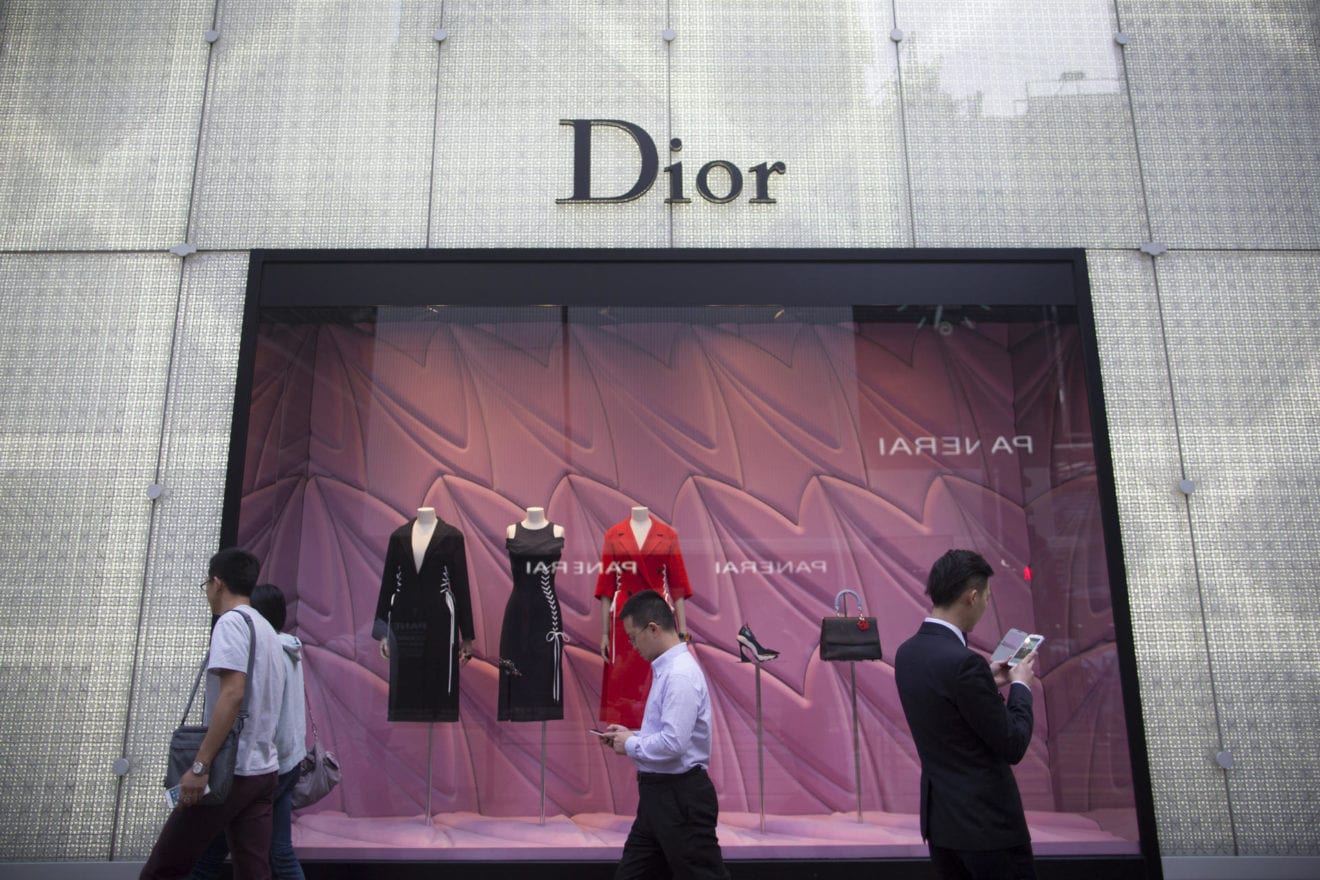
    Following the launch of its concept store in Seoul’s Seongsu-dong district last year, LVMH-owned luxury house Dior will open its largest brick-and-mortar store in South Korea in the second half of this year.

    Located inside one of the country’s largest department stores Hyundai Department Store Pangyo, Dior’s new flagship store will mark the largest among women’s boutiques, except for the men’s/women’s boutiques ‘House of Dior,’ ‘Dior Sung Soo,’ and The Hyundai Seoul Dior Boutique.

    Christian Dior Couture Korea’s net income swelled 54.8 percent on-year to $184 million last year, while its operating profit and sales in South Korea both rose over 50 percent on-year, according to its regulatory filing.

    Hyundai Department Store said last year it planned to invest approximately 200 billion won in upgrading its six branches: Apgujeong, The Hyundai Seoul, the Trade Centre branch, the Mok-dong branch, the Pangyo branch, and the Daegu branch.

    Dior has also just named Haerin, a member of the Kpop group NewJeans, as its new brand ambassador for Jewellery and House Ambassador for Fashion and Beauty at Dior.

    International luxury brands are paying close attention to the South Korean market as they employ various strategies to gain more customers, particularly those in Gen Z. According to Morgan Stanley, South Koreans were the world’s biggest spenders on personal luxury goods with the nation’s per capita spending amounting to US$325.

  • Startup e-commerce platform Temu expands to Europe

    Startup e-commerce platform Temu expands to Europe

    Ultra low-cost e-commerce platform Temu, owned by PDD Holdings has started selling to European markets including France, Germany, Italy, The Netherlands, Spain and the United Kingdom.

    The Temu.com website now shows all of these markets on its location drop down menu in addition to the United States, Canada, Australia and New Zealand, where it had previously already been available.

    PDD Holdings did not immediately respond to Reuters request for comment on the expansion.

    Temu, the sister site of Chinese discount e-commerce platform Pinduoduo, has made a big splash since launching in the United States last September, selling shoes, jewelry, beauty accessories and home goods directly from Chinese merchants for very low prices.

    It’s a similar cross-border model to the one that has propelled Shein, which ships to more than 150 countries, to become the world’s biggest fast-fashion brand with annual sales of more than $58.5 billion.

    Temu, which is headquarted in Boston, saw 19 million US downloads in the first quarter of this year, according to mobile intelligence firm Sensor Tower, which also ranks Temu as the most downloaded app on Apple and Google Play stores in the United States.

    The platform’s gross merchandise value – total sales before expenses – grew from $3 million in September to $192 million in January, according to data firm YipitData.

  • Kirin to buy Blackmores in $1.88 billion cash deal

    Kirin to buy Blackmores in $1.88 billion cash deal

    Japanese drinks giant Kirin Holdings has agreed a $1.2 billion buyout of Australian vitamin maker Blackmores, furthering a diversification push while offering the struggling target’s shareholders a neat exit.

    The deal makes good on a plan by Kirin to broaden its business beyond alcoholic drinks as a growing interest in health raises expectations of tougher regulation.

    It also throws a lifeline to Blackmores shareholders after years of soft returns. The company grew from Australia’s first health food store nearly a century ago into a national success story as it capitalized on Chinese appetite for imported health supplements.

    But COVID-19 containment ended the “daigou” boom, where Chinese consumers bought goods abroad to carry home, and the firm has been struggling to recover sales since. Before the Kirin deal, Blackmores shares traded at one-third their value in 2016, the height of the daigou craze.

    “When you’ve spent 57 years at a business, you don’t want to see the business suffer, and you want to see the business successful,” said former chairman Marcus Blackmore, son of the firm’s founder and its top shareholder with 19%.

    “I have no doubt in my mind that Kirin will deliver on that promise to me,” added Blackmore, 78, in a phone interview.

    Kirin, which makes about half its sales from alcoholic drinks, including top Australian beer brands like Tooheys, said it would benefit by joining a pharmaceuticals unit based in Japan with an already large Australian footprint.

    “In the health sciences area, Kirin is strong in Japan while Blackmores has a strong presence in Australia, China, and Southeast Asia,” Kirin Senior Executive Officer Takeshi Minakata told a Tokyo news conference.

    “The combination of the two companies will enable us to supplement each other’s coverage in areas that have not been covered so far.

    The news pushed Blackmores shares up 23% to A$94.26, their biggest single-day gain, and just short of Kirin’s A$95 purchase price as investors considered the deal final while allowing for dividends that might be paid, which would be subtracted from it.

    “Higher interloping bids are possible, but we think the odds are low given our A$80 stand-alone assessment of Blackmores’ intrinsic value,” said Morningstar analyst Shane Ponraj in a client note.

    Kirin shares fell as much as 3% as analysts wondered if it overpaid.

    “The deal just looked a bit expensive and Japan generally takes M&A negatively. A little surprised it isn’t down more.” said Mio Kato, founder of LightStream Research, who publishes on the SmartKarma platform.

  • WhatsApp rolls out the ability to use one account across multiple phones

    WhatsApp rolls out the ability to use one account across multiple phones

    WhatsApp has recently introduced a new feature that allows users to use their WhatsApp account on multiple devices. This feature has been long-awaited and is now finally available for both Android and iOS users.

    Previously, users could only use their WhatsApp account on one Android or iOS smartphone at a time, but with the ability to extend it to your tablet, laptop, or desktop computer. This required that your smartphone be your main WhatsApp device and the others would be linked via WhatsApp Web or the official WhatsApp Mac app. This solution worked great for many, however, you still could not use the app in more than one phone and needed to unlink and relink your account any time you wanted to switch mobile devices, which was inconvenient and time-consuming for many users.

    Now, with the new update recently announced via the WhatsApp blog, you will be able to switch between devices without any hassle seamlessly. This is great news for those that frequently switch between phones, such as between Android and iOS, or who have both a business and a personal device.
    To use this feature, you will still need to designate a primary phone, just as you’ve been able to do in the past with up to four devices, except now one of those linked devices can be a secondary or backup phone. On your secondary phone, open WhatsApp and tap Agree & Continue, followed by selecting “link this device to an existing account.” This will provide you with a QR code that will need to be scanned by your primary phone.
    One of the great things about this feature is that your messages and other data are end-to-end encrypted and stored locally on each device. This means your conversations are still private and secure, even when using multiple devices. However, there are some limitations.
    A few of the limitations include the lack of live location and status features on companion phones. Additionally, if you fail to use your primary phone for over 14 days, your companion phones will be logged out as they depend on the primary phone for the connection. Lastly, linked companion phones will always show the message “This is a linked device. Learn more” in Settings.
    This update has already begun to roll out to users worldwide, and should be accessible to everyone in the next weeks. In addition, over the next several weeks, WhatsApp will be rolling out a new way to link companion devices, which involves the use of a one-time code instead of a QR code.
  • Gold prices gain

    Gold prices gain

    SJC gold price gained 0.07% to VND67.2 million ($2,863.23) per tael Thursday morning.

    Gold ring price went up 0.09% to VND56.9 million per tael. A tael equals 37.5 grams or 1.2 ounces.

    Globally gold prices rose on a softer dollar, while investors braced for a host of U.S. economic data ahead of a crucial Federal Reserve’s policy meeting next week.

    Spot gold rose 0.4% to $1,996.50 per ounce while U.S. gold futures climbed 0.5% to $2,005.20.

    Making bullion less expensive for other currencies holders, the dollar index eased 0.1% on the day.

    Gold is treading waters right now, as investors keep an eye on U.S. debt ceiling talks, and the Fed meeting next, that could offer some ideas on what to expect for the rest of the year, said Edward Meir, a metals analyst at Marex.

  • Direct-To-Consumer Growth Fuels Supply Chain Innovation

    Direct-To-Consumer Growth Fuels Supply Chain Innovation

    While the pandemic and subsequent ecommerce explosion drove strong demand for true omnichannel supply chain commerce solutions, it also fuelled a less immediately obvious longer-term move towards direct-to-consumer (D2C) fulfilment too.

    Where suppliers of wholesale goods (including everything from FMCG goods to electrical appliances), often ship large, bulky consignments of cargo through industrial supply chains to distribution centres and then on to stores, companies selling to consumers must manage the flow of individual shipments, such as a single box of running shoes, or a polo shirt, direct to a customer’s home or preferred collection point.

    Footwear, apparel and electronics manufacturers were amongst the earliest adopters to have stepped up their D2C offerings through the Covid-19 pandemic as stores and retailers closed their doors and brands struggled to find new avenues to reach their customers.

    As the lines between what a retailer or manufacturer used to be and what they are today become more opaque, almost every company is in some way, shape or form, making attempts to get closer to their consumers. Take Adidas as an example. D2C sales helped to boost revenue at Adidas in the last year, and its own ecommerce website now accounts for more than 20 percent of its business. It recently reported that online sales grew by double-digits through large parts of 2022 too.

    Another example of a modern, successful D2C strategy is that which America’s own sporting leviathan, Nike has implemented. Since 2017, the company has actively reduced its number of retail partners (last year it withdrew from Urban Outfitters) to concentrate on growing its own online and bricks & mortar presence – its Oxford Circus flagship store in the UK and the intuitive members app are fine examples of this strategic move, providing ‘loyal’ members with a greater range of bespoke, limited edition offerings not available beyond Nike’s own online and physical retail ecosystem.

    The shift to this model has given Nike full control over its customer relationships and crucially, its customer’s associated data, making customer journeys and user experiences richer and more native in equal measure.

    Similar to Adidas’ announcement however, the D2C model has also increased the fulfilment costs per item: from managing logistics and supply chains, to hiring the right talent capable of creating those exceptional customer experiences, these extra costs can consume profits if unaccompanied by an agile and pragmatic supply chain strategy.

    If brands truly wants to harness the benefits of D2C, and serve millions of customers in a cost effective, sustainably-minded way rather than a network of third-party retail stores, they need to be nimble in every department – especially when it comes to supply chains.

    The movement towards D2C fulfilment is well illustrated by the efforts made by Nike and Adidas over the last year, and, by operating effective D2C channels, they are enjoying the freedom to optimise their logistics and deliveries, while meeting the exacting expectations of their customers.

    D2C is the latest iteration in a long line of retail supply chain evolutions and while finding the right balance may prove challenging in the short-term, the size of opportunity is huge for retailers and particularly wholesale brands as this route offers a wholly new touchpoint to interact with customers, not previously available.

    At Manhattan Associates our unified supply chain commerce platform is informed and inspired by more than thirty years of supply chain and commerce experience across retail, apparel, food, and wholesale distribution, working with some of the world’s most well-known brands including, AdidasLacoste, L’Oreal and Brooks Brothers.

    We also know that the key to success is to start from the ground up and build strong foundations for success. And, in the case of retailers looking to ride the D2C wave, this means first looking to their own supply chain networks and the IT infrastructure that underpins it.

    For more information on how your business can enhance its D2C supply chain capabilities, please visit: www.manh.com/en-sg

    Written by Richard Wright, Managing Director, SEA, at Manhattan Associates

  • French jeweler Tiffany opens store in HCMC

    French jeweler Tiffany opens store in HCMC

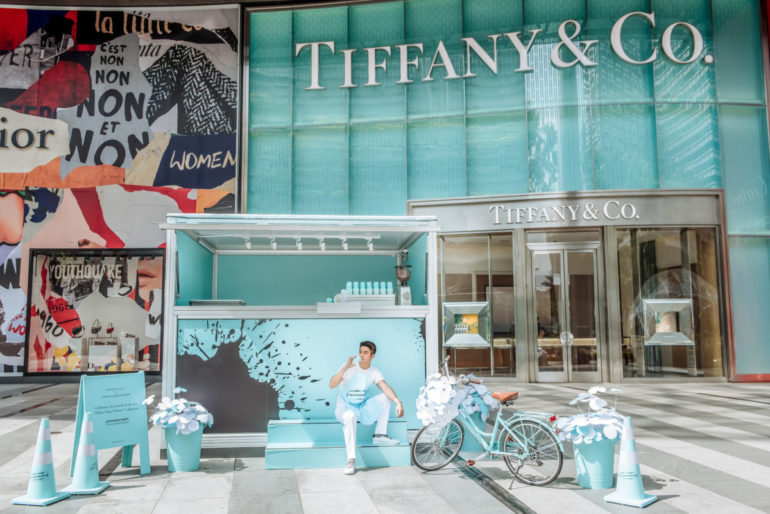
    Luxury jewelry brand Tiffany & Co. has opened a store in Ho Chi Minh City, two years after opening its first in Vietnam in Hanoi.

    The store in District 1, which had a soft opening last week, is part of a strategy by the 186-year-old jeweler to increase its presence in Asia after being acquired by France’s LVMH in 2021.

    The store is run directly by the company as against the Hanoi one, which a distributor operates.

    According to residence and citizenship advisory firm Henley and Partners, HCMC had the ninth fastest growth rate globally in the number of millionaires last year.

    Vietnam’s biggest city saw their numbers rise by 84% to 7,700 individuals, it said in its 2023 World’s Wealthiest Cities Report.

    As of last year HCMC had 15 people with a net worth of $100 million and three billionaires.

    It is ranked the 67th wealthiest city in the world.

  • Five motorbikes sold in Vietnam every minute

    Five motorbikes sold in Vietnam every minute

    Over 634,000 motorbikes were sold in Vietnam in the first three months, translating to almost five units every minute.

    The figure dropped by nearly 16% year-on-year, according to the Vietnam Association of Motorcycle Manufacturers, which comprises Honda, Yamaha, Piaggio, Suzuki and SYM.

    The motorbike sales figure was 7.3 times that of cars, showing that two-wheelers remain Vietnam’s dominant means of transport.

    In ASEAN, Vietnam ranks second only to Indonesia in motorbike sales with Honda accounting for roughly 80% of the market share.

    Earlier this month Honda hiked the prices of most motorbikes following an increase in costs with the biggest increase being of VND2 million ($85).

  • Our guide to Investing in Singapore 

    Our guide to Investing in Singapore 

    Singapore is often thought of as one of the most important financial hubs in the world. It also has one of the most diverse and quickly growing investment communities. If you want to invest in Singapore, you will find that the country has a lot of options and tools that can help you reach the level of financial success you require. In this article, we will discuss the many facets of investing in Singapore and present you with some useful advice to get you started.

    TradingView: Getting started with the trading platform 

    Before you start investing in Singapore, you need to make sure you have the right tools to help you make smart decisions. TradingView is a well-known and popular online trading platform that gives customers access to a wide range of financial data and research tools. TradingView gives users the ability to monitor charts in real-time, keep tabs on market trends, and access a plethora of technical analysis tools, all of which may assist them in making more educated choices about their investments.

    Opening an account with TradingView is simple, and once you have done so, you can start using the platform’s numerous tools and features right away. You can customize your trading dashboard so that it shows the information that is most important to your investment plan, and you can use the platform’s easy-to-use interface to make trades and keep track of your portfolio.

    Investing in the Singapore stock market 

    Buying shares of stock in one of Singapore’s numerous publicly listed firms is one of the most common ways that people invest their money in the nation. Singapore has a strong stock market and is home to a wide range of companies that do business in many different fields and markets.

    To get your foot in the door of the Singapore stock market, you will need to open a brokerage account with a reputable broker. The brokerage firms DBS Vickers, Phillip Securities, and UOB Kay Hian are among the most successful in all of Singapore. When you have registered for an account with the Singapore Exchange (SGX), you are allowed to begin making transactions and searching through the numerous stocks that are listed on the SGX.

     When investing in Singapore stocks, it’s important to do enough research and pick companies that match your investment goals and level of risk tolerance. Using the tools that TradingView gives you, you can do fundamental research to figure out a company’s financial health and growth potential. You can also use these tools to do technical analysis to keep an eye on market trends and find possible buying opportunities.

    Investing in the real estate market in Singapore

    Several investors have found success buying and selling homes in Singapore, a city-state. As a result, the real estate market in Singapore is another investment option that is quite popular. The real estate market in Singapore is well-known for being stable and transparent, which makes it an appealing choice for investors from both inside and outside Singapore.

    You have the option of investing in real estate directly by purchasing properties or indirectly by purchasing shares in real estate investment trusts (REITs), which are organizations that own portfolios of properties. Since buying property in Singapore can be hard and take a lot of time, it is important to work with a trustworthy real estate agent and do a lot of research before making a decision.

    Since they enable you to engage in a varied portfolio of properties without the need for enormous sums of funds, investing in real estate investment trusts (REITs) might be a more approachable way of investing in Singapore’s property market than other investment options. Mapletree Commercial Trust, Ascendas Real Estate Investment Trust, and Keppel DC REIT are three of the most successful real estate investment trusts in Singapore.

    Investing in the Singapore bond market

    Bonds provide one of several investment opportunities that can be pursued in Singapore. The bond market in Singapore is active, and investors may choose from a variety of government and business bonds to put their money into. Bonds are a low-risk investment option, so risk-averse investors who are searching for predictable returns often use bonds as their vehicle of choice.

    If you want to invest in Singapore bonds, you can work with a broker or buy into bond funds that hold portfolios of bonds. The LionGlobal Short Duration Bond Fund and the First State Investments Global Bond Fund are two excellent examples of the many bond funds that investors in Singapore have access to.

    Speculating on the market with exchange-traded funds (ETFs)

    Exchange-traded funds, often known as ETFs, are a common form of investing in Singapore due to the fact that they provide shareholders with access to a diverse portfolio of assets at a low cost and with little transaction expenses. ETFs are able to be traded on stock exchanges just like stocks, and they cover a broad variety of asset classes in addition to equities. These asset classes include commodities, bonds, and stocks.

    If you want to invest in exchange-traded funds, you’ll need to open a brokerage account in Singapore with a reputable broker who gives you access to the Singapore Exchange.The Nikko AM-Straits Trading Asia ex-Japan REIT ETF and the iShares MSCI Singapore ETF are two of the most popular exchange-traded funds that investors may purchase in Singapore.

    Investing in several mutual funds in Singapore 

    Another popular method of putting your money to work in Singapore is purchasing shares in a mutual fund. These funds provide investors with the chance to put their money to work in a diverse portfolio of assets that is overseen by experienced fund managers. There is a large selection of asset types covered by mutual funds, including equities, fixed income, and real estate, among others.

    To invest in mutual funds in Singapore, you can work with a broker or invest directly with fund companies such as Fidelity International or Aberdeen Standard Investments. It’s important to do plenty of research, choose mutual funds that match your investment goals and the level of risk you’re willing to take, and keep a close eye on how the funds are performing over time.

    Investing in new businesses inside Singapore

    The startup environment in Singapore is thriving, and the country is home to a large number of cutting-edge enterprises and entrepreneurs that are looking for funding to expand their operations. Investing in new businesses comes with both high risk and high reward, but it also has the potential to give you a huge return on your money.

    Anyone who wants to invest in Singapore’s startup scene can work with venture capital firms or angel investors who specialize in early-stage investments. If you want to invest in a business, you need to do your research. Also, it’s important to look closely at how the companies in question might grow and how they might do in the market.

    Conclusion

    If you’re an investor trying to reach your financial objectives and diversify your portfolio, investing in Singapore may provide you with a broad variety of chances to do both of those things. No matter whether you want to invest in stocks, real estate, bonds, exchange-traded funds, mutual funds, or new businesses, you can find a lot of information and resources to help you make smart decisions. 

    You will be able to keep up with the latest market trends and make more educated choices about your investments if you deal with a reliable broker and make use of tools such as TradingView. Keep in mind that you should always undertake extensive due diligence and choose assets that match your financial objectives and the amount of risk you are willing to take.

    In the end, investing in Singapore requires patience, discipline, and a willingness to take calculated risks. But if you take the right steps and show that you are committed to long-term growth, you may be able to build a diversified investment portfolio that will help you reach your financial goals over time. 

     

  • BMW Introduces Digital Key Plus For Android Smartphones

    BMW Introduces Digital Key Plus For Android Smartphones

    BMW introduced the smartphone as a digital vehicle key in 2018 and since then the company has been pressing ahead with the development and popularisation of its BMW Digital Key feature. The feature was made available to iPhone users in January 2021, and BMW has now added the same feature to Samsung & Google Android phones as well. The BMW Digital Key Plus is a convenient and secure way to unlock and start your car without taking your smartphone out of your bag or pocket, similar to a physical key that supports keyless entry & start.

    The new, additional features enabled by the BMW Digital Key Plus are based on Ultra-Wideband technology. This short-range, high-bandwidth digital radio technology is characterised by an exceptionally precise localization with the greatest possible security. UWB’s precision also ensures that relay attacks, where the radio signal is jammed or intercepted, are not possible.

    With the Car Connectivity Consortium (CCC), BMW has been working closely with Google as well as Apple to develop the corresponding specification with partners and established it as a global standard for the automotive industry. This has also enabled secure, cross-platform sharing of Digital Key between iPhone and compatible Android devices via email, SMS or any other messaging service. Until now, the feature was restricted to only iPhone & Apple watch users, but it will now be added to Select Samsung & Google devices – running Android 13.1 or later – which include Samsung Galaxy S23+, S23 Ultra, S22+, S22 Ultra, S21+, S21 Ultra, Z Fold4, Z Fold3, Note20 Ultra, and Google Pixel 7 Pro & Pixel 6 Pro.

  • Clients Flooded UBS With New Money in Late March

    Clients Flooded UBS With New Money in Late March

    The merger of UBS and Credit Suisse is expected to result in a behemoth wealth and asset manager, drawing all eyes to the institutions’ first quarter results at the start of the week.

    During the first quarter we saw strong net new fee-generating asset and net new money inflows in global wealth management and asset management, UBS CEO Sergio Ermotti said in a statement accompanying first quarter results.

    The global wealth management (GWM) business attracted $28 billion of net new money during the first quarter, of which $7 billion «came in the last ten days of March, after the announcement of our acquisition of Credit Suisse,» UBS said. Those results should ease some of the concerns that assets being taken out of Credit Suisse are headed to other firms.

    Moreover, UBS brought in $20 billion in new fee-generating assets in its GWM unit and $14 billion in asset management (AM).

    In the Americas region, vital to the Group’s growth plans, the GWM business brought in $8 billion of new money and $4 billion of new fee-generating assets. In Switzerland, new money inflows were $10 billion, while $8 billion in new fee-generating assets were reported along with $2 billion in new loans in GWM and P&C, according to the report.

    EMEA reported new money inflows of $4 billion and generated $3 billion in new assets. Net interest income increased almost 60 percent on the back of higher euro rates. Asia was also a bright star for UBS, bringing in $6 billion of net new money and $5 billion in new fee-generating assets, which marks a 17 percent growth rate over the past twelve months.

    Overall invested assets for GWM were $3 trillion at the end of the first quarter, down from $3.1 trillion in the first quarter of last year.

    UBS said it is focused on completing its acquisition of Credit Suisse in the second quarter of this year, which «will advance our strategy, particularly in global wealth management and Switzerland.» UBS reported that net profit attributable to shareholders was $1.029 billion in the first quarter, about half of the $2.136 billion in the same quarter a year ago. Its Group CET1 ratio was 13.9 in the first quarter, down from 14.2 in the fourth quarter of last year.

    It was a different story on Monday at Credit Suisse, where clients moved 47.1 billion francs of their wealth elsewhere.

  • Hanoi speculative villa prices down 40%

    Hanoi speculative villa prices down 40%

    Amid rising interest rates, Hanoi’s cash-strapped villa investors are slashing prices by up to 40% to lure customers.

    Loi spent VND32.5 billion (nearly $1.4 million) on a 180-square meter villa near Ring Road No. 3.5 in mid-2022.

    He paid for the house with a bank loan and VND11 billion of his own money hoping his investment’s price would double in two years.

    Two months later, the real estate market went silent. He put the villa for sale at a discount of 15%, but found no buyers. Early this year, he finally sold the villa for only VND23 billion.

    But despite all this, Loi is still considered a lucky investor, according to Tien, a local real estate broker in the urban area surrounding the villa project Loi bought into.

    “Many other investors of villas at the same project haven’t found any buyers at all even after lowering their prices 15-30%.”

    According to Tien, since late last year, many investors in the project, most of whom took out bank mortgages to pay for the villas, have slashed their prices 20-30% to cut losses.

    One investor has recently sold a 150-square meter villa for only VND17 billion, incurring a loss of VND8 billion.

    Brokers at the Hinode Royal Park urban area are trying to sell villas at prices of VND6-7.5 billion, down 40% against last year.

    Tu, also a broker, said she sold two villas at the Nam An Khanh urban area in Hoai Duc District for VND23.5 billion each early last year, but the price of the same properties has dropped over 30% to VND16 billion now.

    Villa offering prices at many other large-scale projects, including the Ha Do Charm Villas and An Lac Green Symphony, have decreased 25-30% over the past year.

    Most of the villas are being bought and sold by speculators, and many of them have been abandoned.

    According to real estate consultancy Savills Vietnam, the average villa price on the secondary (resale) market was VND22 billion in the first quarter of this year, 17% lower than the properties’ primary market (original) prices.

    As a result, some investors have leaned deeper into the secondary market and many have become speculators.
    Experts have also asserted that this is one major reason that the primary market has been so stagnant, with the absorption rate falling to the lowest level in the past seven years.

    Do Thu Hang, senior director of advisory services at Savills Vietnam, has predicted that liquidity in the villa market is likely to improve, but only for villas bought as homes, not investments.

    After construction of Ring Road No. 3.5 and Ring Road No. 4 is completes, over 80 property projects along the major new arteries will attract more buyers, she said.