Tag: asia

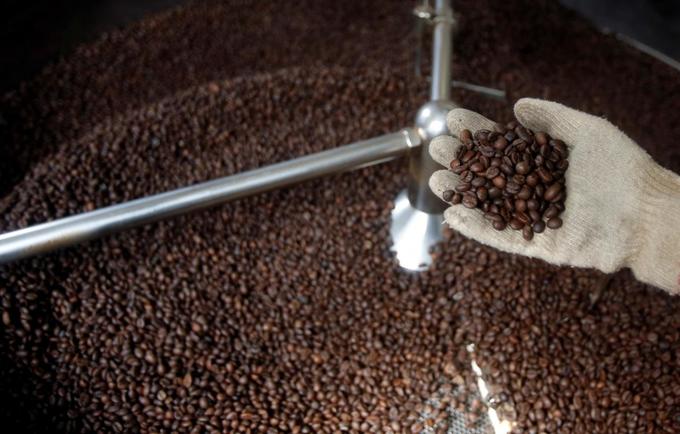
  • Vietnam’s coffee export could reach $4B

    Vietnam’s coffee export could reach $4B

    Domestic coffee prices are at high levels, providing opportunities for Vietnam to maintain a coffee export revenue of over $4 billion this year.

    According to Mercantile Exchange of Vietnam (MXV), Robusta averaged $2,564 per tonne as of April 24 on ICE Futures Europe, which increased by nearly 40 compared to the beginning of this year.

    Starting from early 2023, the market saw signals about the narrowing of supplies in major coffee-producing countries.

    Statistics from the Vietnam General Department of Customs showed that Vietnam’s coffee export totalled more than 634,000 tonnes from the beginning of this year to April 15, lower than the result of 663,816 tonnes of the same period last year.

    The drop in export volume occurred in the context that global coffee prices were at a high level, pushing up domestic prices to around VND52,000 per kg, a record high, according to giacaphe.com.

    Besides, the coffee output of Indonesia, the world’s third largest Robusta producer, is forecast to be at around nine million tonnes, the lowest in the past decade, according to Volcafe. The Brazil National Supply Company forecast Robusta output of this country would drop by nearly 4 compared to the 2022-23 harvest to 17.51 million bags.

    These figures show that there is not only a shortage of coffee in the short term but also a narrowing in coffee supply in the medium and long term, which will likely push up coffee prices.

    Pham Quang Anh from MXV said that Vietnam’s coffee inventories were gradually shrinking after a record coffee export year. Additionally, the coffee output in 2022 dropped sharply by 10-15 compared to the initial forecast due to heavy rain in the harvest period, which made the supply tight and price increase inevitable.

    Currently, domestic coffee prices were at a high level compared to recent years, creating an opportunity for Việt Nam to maintain the export value of more than 4 billion USD in 2023.

    Lower prices of Arabica than Robusta in the context of increasing concerns about global economic recession risks was an important factor for Vietnam to promote the export of coffee.

    It was an ideal condition for Vietnam to increase the export of Robusta and affirm the position of being the world’s largest Robusta supplier, Anh said.

    Still, Vietnam’s coffee industry should aim for more sustainable export in the long term.

    While coffee export was narrowing down, farmers in Tay Nguyen (Central Highlands) tended to cut down coffee trees to grow durian as China had allowed the official import of durian from Vietnam.

    Another problem was that Vietnam mainly exported coffee in raw forms, which must be tackled to increase added value.

    He urged enterprises to invest in production and processing to increase added value and develop brands for coffee products to meet the tastes of consumers in different markets.

  • Gasoline prices drop to near four-month low

    Gasoline prices drop to near four-month low

    Gasoline prices on Thursday fell by more than 5% to the lowest since mid-January.

    Starting from 3 p.m. RON95 declined by 5.5% to VND22,320 per liter. Biofuel E5 RON92 also dropped by 5.5% to VND21,430.

    Diesel fell 5.9% to VND18,250, a new low since the beginning of the year.

    The Ministry of Industry and Trade and Ministry of Finance, which manage fuel prices, said that fuel prices globally have been plunging in the last 15 days due to fear of economic recession.

    RON95 fuel fell by 8.4% to $93.33 per barrel, while RON92 dropped 8.7% to $89.39.

    Diesel declined by 7.2% to $90.91.

  • In February UBS Deemed Credit Suisse Takeover Undesirable

    In February UBS Deemed Credit Suisse Takeover Undesirable

    UBS was preparing a Credit Suisse takeover scenario months before it happened in March. A document filed with the US Securities and Exchange Commission (SEC) provides insight into the process.

    Just weeks before the takeover of Credit Suisse, the UBS board of directors deemed a takeover of its rival undesirable, according to the latest documents the Swiss bank recently filed with the US Securities and Exchange Commission (SEC). An Edgar filing provides insight into the processes leading up to the merger of the two credit institutions.

    Between October 2022 and February 2023, a UBS board of directors strategy committee reviewed developments at Credit Suisse. In early December, management, on behalf of the Strategy Committee, made a preliminary assessment of the impact of a transaction with Credit Suisse if UBS were asked to take an active role in the rescue of its competitor. An initial evaluation was presented to the Strategy Committee on December 19.

    Subsequently, the Strategy Committee, at its meeting on February 20, and the Board of Directors, at its meeting on February 22, concluded that a takeover of Credit Suisse was not desirable for UBS. Still, further analysis was necessary to prepare for a scenario in which the competitor ran into serious financial difficulties.

    In doing so, the Strategy Committee and the Board considered the uncertainty of a reliable valuation of Credit Suisse, its recent business performance and risks, other potential liabilities, and the overall uncertainty of the transaction.

    The Board instructed management to monitor ongoing developments at Credit Suisse and to consider measures that could address UBS’s concerns if UBS had to consider an acquisition of Credit Suisse.

    From January through mid-March 2023, teams of UBS employees, outside legal counsel, and Morgan Stanley, which was asked to assist with the theoretical analysis, conducted financial analyses, according to the SEC filings.

    They evaluated potential legal structures and measures that could address UBS’s concerns in a scenario where the Swiss government actively supported UBS’s acquisition of Credit Suisse. UBS also reviewed the potential negative impact on its bank if Credit Suisse were to be wound down.

  • Starbucks profits beat on China recovery

    Starbucks profits beat on China recovery

    Starbucks Corp beat Wall Street estimates on Tuesday for quarterly profits, powered by a sharp recovery in business in China, but shares fell about 6% in after-hours trading after the company did not lift its 2023 guidance.

    With most of China’s COVID-19 curbs now scrapped, consumer mobility and spending in the region bounced back sharply in March.

    Even so, some analysts had expected China sales to remain in the red after tumbling 29% the previous quarter.

    Instead, the world’s largest coffeehouse chain posted a 3% rise in China comparable sales in its second quarter ended April 2, helping boost international sales 7%, more than double the 2.94% increase of the average analyst’s estimate, according to Refinitiv data.

    While the China recovery was better than the company expected, growth in average weekly sales there will be at a more moderate pace in the second half, Chief Financial Officer Rachel Ruggeri said during an earnings call.

    “We’ve already seen it start to moderate,” she said, noting uncertainty about consumer behavior and international travel. “So when we consider all of that, when we look at our guidance for the full year, we believe reaffirming our guidance allows us to continue to convey the momentum, but also for the confidence we have while still navigating a rather uncertain environment globally.”

    Restaurant shares broadly have outperformed the S&P 500 Index this year, and McDonald’s Corp and others reported a strong quarter.

    Some Starbucks investors may have taken profits after Starbucks’ stock jumped 16% in the past five weeks with “a pretty big run” into the earnings report.

    Globally, Seattle-based Starbucks’ comparable sales climbed 11%, trouncing analysts’ expectation of a 7.36% rise.

    According to the earnings release, customers visited more often and spent more per trip. Starbucks earned 74 cents per share, excluding one-time items, beating estimates of 65 cents.

    Starbucks, whose customers are typically younger, wealthier and relatively unfazed by inflation, has doubled down on its cold and customizable beverages, boosting traffic in the U.S. and driving a 12% jump in comparable store sales in its North American market.

    According to its earnings release, the chain also keeps adding customers to its rewards program, which now has 30.8 million active members in the United States, up 15% over this time last year.

    And it is building more cafes, adding 100 net new stores in North America and more than 360 internationally.

  • Gold price goes up

    Gold price goes up

    SJC gold price rose 0.15% to VND67.25 million ($2,868.10) per tael Thursday morning.

    Gold ring price surged 0.53% to VND57.25 million per tael. A tael equals 37.5 grams or 1.2 ounces.

    Globally gold prices traded near record-high levels on Thursday, as U.S. yields and the dollar dipped after the U.S. Federal Reserve hinted it may pause its rate-hike cycle.

    Spot gold was up 0.1% at $2,040.46 per ounce. Earlier in the session, prices rose to $2,072.19 per ounce and hovered close to an all-time high of $2,072.49 scaled in 2020.

    Gold is helped by “lower yields and a weaker dollar in the aftermath of the recent Fed meet and changes in the policy statement language providing the conviction that the central bank will likely shift towards a rate pause,” said Yeap Jun Rong, market analyst at IG.

    The dollar index was down 0.2%, making greenback-priced gold more affordable for overseas buyers. Benchmark U.S. Treasury yields also dropped.

  • Vietnamese airlines recovering in 2023

    Vietnam Airlines and Vietjet Air reported profits again in the first quarter of this year, while Bamboo Airways neared the break-even point, thanks to the Tet travel peak.

    Analysts said increased international flights due to Vietnam’s Lunar New Year holiday festival (Tet) in late January were the cause of the uptick in the previously-ailing air industry.

    According to newly released financial statements, Vietnam Airlines posted a consolidated pre-tax profit of VND19.3 billion (US$817,800) in the first quarter of this year, compared with a loss of VND2.6 trillion in the first quarter of last year.

    The gains halted the streak of 12 loss-making consecutive quarters since Covid-19 emerged.

    The national flag carrier’s revenues doubled to VND23.64 trillion, the highest since the beginning of 2020 and close to the pre-pandemic levels of 2019.

    A manager at Vietnam Airlines said the better business performance mainly stemmed from the company’s effective tapping of Tet holiday travel, and the recovery of international flights, especially to and from China.

    In markets such as the U.S., Europe and Australia, the airline gained high seat occupancy rates.

    After incurring losses in 2022, Vietjet Air made a pre-tax profit of VND243 billion in the first quarter of this year. That figure came out of a consolidated revenue of VND12.9 trillion, its highest revenue in the last 12 quarters.

    Vietjet Air’s revenue from the international market increased, accounting for 45% of its total revenue from passenger transport.

    Among domestic airlines, Vietjet Air has pioneered opening new routes to India, Kazakhstan and Australia since the second half of last year.

    Vietjet operated 31,300 flights, transporting nearly 5.4 million passengers in the first quarter, up 57% and 75% respectively.

    Meanwhile, the number of passengers transported by Vietnam Airlines surged by 63% to 5.1 million.

    Domestic carriers’ improved performance was also partly due to lower fuel prices and exchange rate differences.

    In the last quarter of last year, both Vietnam Airlines and Vietjet operated below cost as the fuel price of Jet A1 and interest rates were high. The price of jet fuel last year sometimes exceeded $160 per barrel and averaged $130.

    According to Vietnam Airlines, the average price of Jet A1 fuel in the first three months of the year downed to US$110.69 per barrel.

    Bamboo Airways has not announced business results in the first quarter of this year. At an extraordinary shareholder meeting in early April, Bamboo Airways chairman Nguyen Ngoc Trong said the airline was close to breaking even in the first quarter, with its fleet of 30 aircraft operating at full capacity.

    He said Bamboo Airways “will get off the ground in 2024 and be profitable from 2025.” Bamboo Airways is expected to obtain 6-8 new aircraft in the coming months to expand its international flight network.

    Bamboo Airways is working with partners in China to open new routes from now to the end of the third quarter. Meanwhile, it will increase the frequency of many routes to Southeast Asia and Northeast Asia in the second half of the year.

    Vietjet Air will get more new wide-body and narrow-body aircraft, increasing the total to 87 by the end of this year, and launch new routes to India, Japan, and South Korea.

    Vietravel Airlines plans to receive 3 more aircraft to double its fleet.

  • Japanese cafe chain Mister Donut enters Singapore

    Japanese cafe chain Mister Donut enters Singapore

    The wait is almost over for Japan’s famed Mister Donut chain to launch in Singapore. Its first store opens on May 21 at Bishan’s Junction 8 mall. It will sell its iconic Pon de Ring doughnut – known for its crisp exterior and fluffy, mochi-like texture – which comes in a variety of flavors, including strawberry and chocolate.

    Other sweet treats include the Custard Strawberry French Cruller doughnut, Golden Chocolate ring and Honey Dip doughnut. The store will also sell a Singapore-exclusive Strawberry Chocolate doughnut.

    All doughnuts are priced between $2.30 and $2.50 each.

    Bundle purchases are available at $14 for six or $23 for 10. However, each customer can buy only a maximum of 10 doughnuts and no more than four Pon de Ring doughnuts.

    The doughnuts will be produced on-site in small batches by staff who went for training at the Mister Donut Academy in Osaka.

    While Mister Donut was founded in the United States in 1956, the chain became internationally famous after it was established in Japan in 1971. There are more than 900 stores across Japan.

    Its launch in Singapore is a franchise brought in by local food and beverage company RE&S Enterprises. RE&S’ stable of restaurant brands focused on Japanese cuisine includes Ichiban Boshi, Shimbashi Soba and Kuriya Dining.

    In July 2022, RE&S Enterprises ran a Mister Donut pop-up at Jurong Point, which sold 83,000 doughnuts in one month.

    The plan is to open at least nine stores here in three years, including larger-format cafe concepts with seating at some locations.

  • Chinese cafe chain Mellower Coffee exits Vietnam

    Chinese cafe chain Mellower Coffee exits Vietnam

    Café owner Liu Houjun gained a little online fame with his unique coffee brewing bravura. Formerly the director of a listed company, the coffee lover, in his 50s, decided to quit his job and open a coffee shop to develop innovative blends.

    “Different regions in the world all have their own ways of making a cup of coffee with local characteristics. I figured maybe we, as Chinese, could also invent our own unique coffee extraction method,” Liu said. And invent he did. After slowly adding water to the ground coffee powder, he puts the container into a pressure cooker filled with water and boils it extensively to complete the extraction.

    He explained that this process leaves the coffee with a smoother and lighter taste, much to the palate of many customers, contributing to the shop’s 70 percent returning customer rate. Apart from his special coffee-brewing technique, Liu has fashioned a range of innovative coffee products, like espresso made with the help of yogurt and rice wine.

    “I hope more of these Chinese-style coffee varieties can reap some worldwide recognition,” Liu said.

    According to YiMagazine, a financial media outlet in China, Shanghai currently has about 7,000 coffee shops, excluding coffee services in convenience stores and fast-food restaurants, ranking first nationwide—or even worldwide. The number of coffee hangouts per 10,000 people in Shanghai is 2.85, similar to that in London, the UK, New York, the U.S., and Tokyo, Japan.

    Major chains like Starbucks and Costa Coffee account for 35 percent of total coffeehouses in Shanghai, the report added. Luckin Coffee, one of China’s largest coffee chains established in 2017, quickly expanded by weaving some marketing magic combining expedient delivery service and discounts.

    “Many people believe it was Luckin that showed Chinese customers who had been less familiar with coffee the ropes, lifting the entire market to its next level,” said Zhang Mingzhu, General Manager of Mellower Coffee, a Chinese specialty coffee company.

    To attract more customers, many café proprietors are seeking state-of-the-art suggestions to give their place that little extra pizzazz. Coffee is mixed with more commonly spotted ingredients sitting next to a traditional Chinese meal, like soybean milk, tangerine peel, or even Moutai, a prominent brand of distilled Chinese liquor. Among the innovations, latte with sweet-scented osmanthus, the aromatic flower that is native to China and prized for its intoxicating, apricot-like scent, proved most popular, with more than 60,000 searches on Dianping.com, a Chinese restaurant review site, in 2021 alone. The search term “Chinese-style coffee” was entered over 280,000 times.

    According to another Dianping.com report released in December 2021, specialty coffee, often called quality coffee, is gaining popularity among customers in Shanghai. The term refers to coffee that has scored over 80 points on a 100-point scale by the Specialty Coffee Association of America.

    The group aged between 20 and 40 is the main consumers of this coffee type in Shanghai, with women accounting for 60 percent. Compared with 2019, the proportion of student consumers in the past year has increased by nearly 2.4 times. They usually opt for a boutique coffee shop to study, socialize, or take a break. People over the age of 50, too, have become more curious about and fond of specialty coffee. Compared with 2020, this group’s orders have increased by nearly 143 percent.

    “The quality of coffee beans is not the only customer focus; the ways of brewing and extraction, as well as the uniqueness and creative designs of coffee shops, all play a vital part,” said Zhang Xueqiang, Chairman of the Coffee Professional Committee of the Shanghai Food Industry Association, adding that Shanghai specialty coffee is entering a golden age of development.

    Shanghai-based entrepreneur Wu Yue told Beijing Review that in the past, he would invite potential business partners to a restaurant to talk shop; they might even go out for some drinks after. “But today, I usually take my prospective business partner to a coffee or tea shop, as it is healthier and more efficient. I’ll take a date there as well,” 28-year-old Wu said.

    Ample supply

    Many coffee shops in Shanghai flourish on an ample supply of coffee beans from Yunnan Province. One such example is Mellower Coffee, established in 2011 in Kunming, capital of Yunnan, and now headquartered in Shanghai, with chain stores in other parts of China, as well as in Singapore and the Republic of Korea. Yunnan is the largest coffee-growing province in China and, for years, the province’s yield has accounted for more than 98 percent of the country’s total. According to the Yunnan provincial department of agriculture and rural affairs, 131,000 tons of coffee beans were produced in the province in 2020.

    Pu’er City is one of Mellower Coffee’s main sources of coffee beans aside from other places in major coffee-producing regions like Ethiopia, Kenya, Colombia and Guatemala. The city’s coffee plantation area, output and value ranked No.1 in the nation in 2021. And it’s also a famous tea-growing area.

    Yunnan’s coffee history dates back to the 1950s, when scientists began researching planting there. The year 1988 was the starting point for Yunnan coffee to make its mark beyond China, when the local government launched a coffee assistance project, assisted by the United Nations Development Program and the World Bank. Swiss food and beverage giant Nestlé introduced new bean varieties and smart production technologies to Pu’er, and other places, transforming Yunnan into a global golden belt for its coffee cultivation.

    Coffee grows in semi-tropical climates with an average temperature of 20 to 27 degrees Celsius and abundant rainfall, making Pu’er the perfect candidate.

    However, Yunnan coffee was considered a relatively mediocre variety in the past as its quality fluctuated due to inexperienced production, unexpected bad weather occurrences and insect plagues, according to Hua Runmei, a coffee entrepreneur in Pu’er.

    A price drop further dampened the incentive to improve its quality. “With the development of the global coffee market, mechanization and large-scale production and processing in Brazil, Viet Nam and other countries, the price of traditional commercial coffee beans has gradually fallen, making it less profitable for farmers,” she said.

    Hua can recall her grandfather and parents growing coffee beans for a living ever since she was little. “Though they were cultivating it, farmers of their generations never actually tried the coffee, let alone study it and see how to improve the taste, which is vital in market competition,” Hua said. She added that the younger generation today can open up more possibilities for coffee plantation by transforming it, developing specialty varieties and adopting digital technology throughout the entire process, rendering product quality high and unwavering.

    Hua is currently preparing to launch her own brand, creating more coffee-related products and contributing her share to making quality Pu’er coffee known across the globe.

  • Shein to launch global integrated marketplace

    Shein to launch global integrated marketplace

    SHEIN, the global e-retailer of fashion, beauty and lifestyle products, today announced the launch of its global integrated marketplace. SHEIN Marketplace, which the company introduced in Brazil last month, will launch next in the U.S. before rolling out to other global markets. The platform will host local and international third-party sellers on the SHEIN site alongside SHEIN-branded apparel products, as the company expands to meet increasing demands for product variety.

    SHEIN Marketplace will allow sellers to access SHEIN’s real-time insights and learn from the company’s on-demand production and demand measurement capabilities. Through use of this unique model for over a decade, SHEIN has been providing cost savings and competitive pricing for its customers. Sellers will further benefit from access to SHEIN’s extensive customer base, a seamless process for product fulfillment, and SHEIN’s global brand marketing and social channel exposure.

    SHEIN Marketplace sellers will agree to and be bound by SHEIN’s Marketplace Services Agreement and Policies, which include a Code of Conduct and policies and terms protecting the customer experience.

    “SHEIN is committed to delivering the best shopping experience for customers and empowering the communities where we operate while doing so,” said Sky Xu, Chief Executive Officer of SHEIN. “By bringing new sellers onto SHEIN Marketplace that are aligned with our vision of making the beauty of fashion to all, we are creating increased value for our customers while enabling local businesses to grow with us.”

  • Ex-Credit Suisse Executive Joins Singapore Exchange

    Ex-Credit Suisse Executive Joins Singapore Exchange

    A former executive of Credit Suisse is said to be joining the Singapore Stock Exchange.

    William Gulya, Credit Suisse’s former head of Asia Pacific equity distribution, will join the Singapore Stock Exchange (SGX) Group to serve as the head of the Americas, according to a brief indication by him in a LinkedIn post on Wednesday.

    According to him, he left Credit Suisse on his own accord a couple of weeks ago and will join the exchange in mid-July. Gulya has also spent stints in senior positions at other banks, including executive director at JP Morgan and a director at Merill Lynch.

  • Google Accounts receives a major security feature today

    Google Accounts receives a major security feature today

    Google Accounts already have a few layers of security features meant to protect accounts from multiple types of online attacks. Today, the search giant launched a brand-new security feature, which seems to be the most powerful ever supported by Google Accounts: passkeys.

    Passkeys aren’t just an almost foolproof protection method for those using Google Accounts, but a very convenient way to sign in. If you’re unfamiliar with the term, passkeys have been around for a while, representing an alternative to passwords. Passkeys are used to sign in to apps and websites and are not just much easier to use than passwords, but also more secure.

    Basically, passkeys work the same way as many of the unlocking options that we now have available on just about every smartphone: fingerprint, face scan, or screen lock PIN. Instead of using a password, passkeys allow you to sign in to apps and websites using any of the methods mentioned.

    As you can imagine, passkeys are safer than passwords because they’re resistant to online attacks, including phishing. They’re even more secure than SMS one-time codes.

    Google announced that it’s now rolling out support for passkeys across Google Accounts on all major platforms, including Android and iOS. These will not replace current sign in options, but they will be available as an additional option that users can take advantage of.

    Passkeys aren’t enabled by default, so you’ll have to set them up via your Google Account settings. As far as Google Workspace accounts go, administrators will soon have the option to enable passkeys for their end-users during sign-in for, the company confirmed earlier today.

    The passwordless sign-in experience is certainly something more convenient and more secure than anything Google Accounts offer currently. Considering that most smartphones these days come with a fingerprint sensor or face unlock support, just about anyone will be able to use the new security feature.

  • AirAsia reopens international routes from Cebu and Manila

    AirAsia reopens international routes from Cebu and Manila

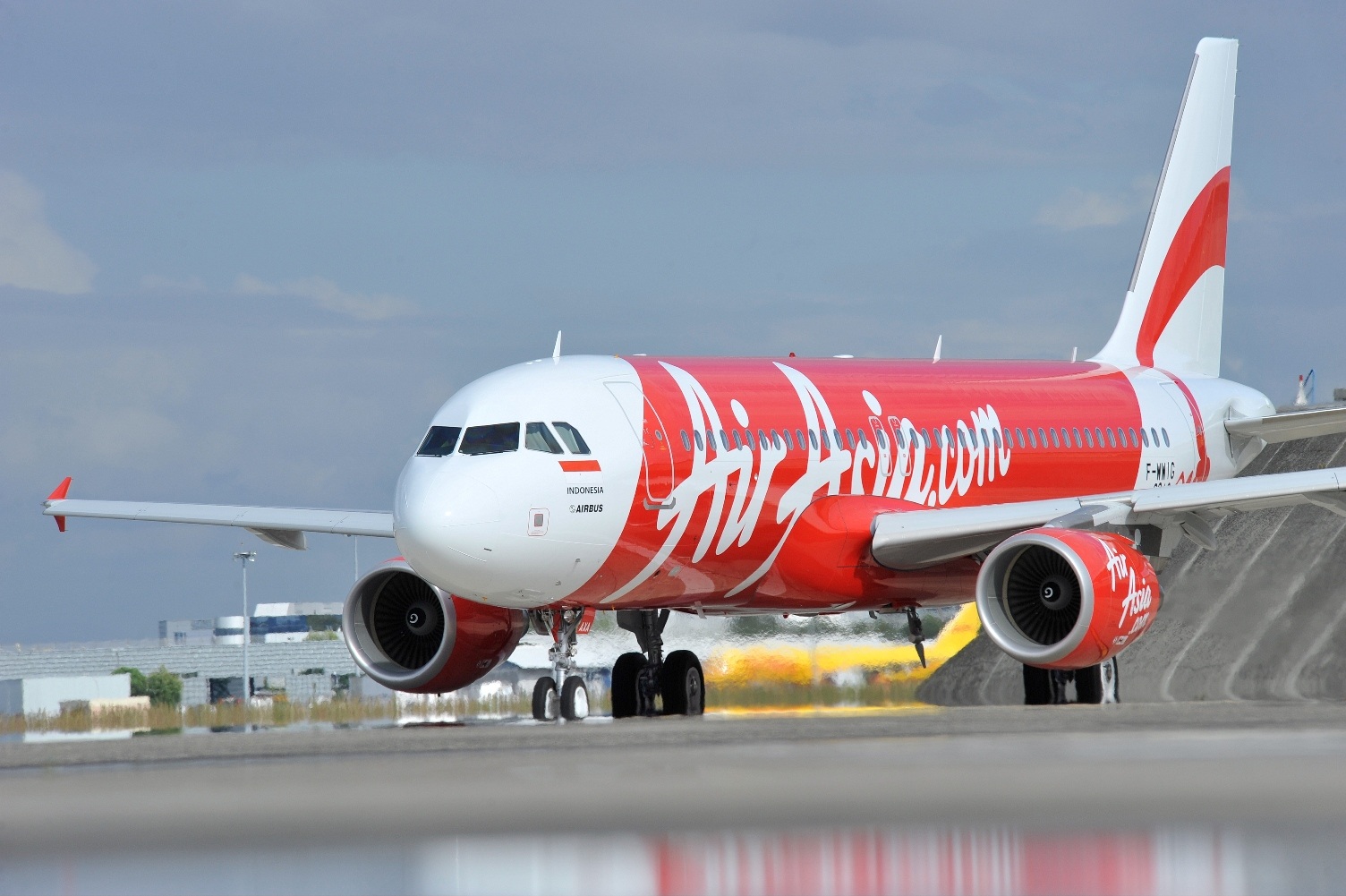
    AirAsia Philippines is strengthening its international presence in two of its major hubs – Manila and Cebu, with the return of the Manila-Shanghai flight and two new routes out of the Queen City of the South to Shenzhen and Narita.

    ‘The reopening of international routes is part of AirAsia Philippines’ recovery plan. We believe that the Filipinos’ hunger for travel is now strongly backed by opening more international destinations as shown in our forward bookings until the rest of Q2. As the World’s Best Low-Cost Airline that pioneered affordable air travel, we will continue to give our guests the best value for their money,’ said AirAsia Philippines Communications and Public Affairs Country Head Steve Dailisan, announcing that two new flights out of the Mactan-Cebu International Airport (MCIA) will be opened in June and July 2023.

    The Cebu-Shenzhen, China direct flight will be launched on June 2, 2023, while the Cebu-Narita, Japan route will be opened on July 1, 2023.

    On the other hand, the Manila-Shanghai flight which is set to open on 1 July is the last piece in AirAsia Philippines’ China network following the reactivation of the Manila-Shenzhen flight last month.

    The re-opening of more international direct flights, Dailisan said is seen to revitalize further the travel experience of the Cebuanos and other travelers from Central Visayas as they no longer have to transit to Manila to reach these exciting destinations.

    To invite more travelers from Manila and those from Central Visayas – Cebu, Bohol, Siquijor, and Negros Oriental to travel via MCIA, the World’s Best Low-Cost Airline is offering a PHP 1 one-way base fare to Tokyo, Shenzhen, and Seoul, Kaoshiung, Kuala Lumpur, and other international destinations for flights from 3 April to 31 October that are booked until 30 April 2023.

    AirAsia Philippines also reminds its guests to allot four hours for international travel to facilitate check-in procedures and other travel requirements. Those traveling light who are carrying hand-carry luggage are likewise advised to check in via the AirAsia Super App or through the self-check-in kiosks at the airport.

    Guests are also advised to accomplish the eTRAVEL form 72 hours before departure and arrival via etravel.gov.ph.

    Likewise, guests are encouraged to take advantage of the online payment for travel tax via tieza.gov.ph.

  • Ferrero launches frozen dessert range

    Ferrero launches frozen dessert range

    Italian chocolate maker Ferrero will add two new frozen treats to Woolworth’s freezer aisles later this month.

    The range – which allows Aussies to enjoy Ferrero Rocher and Raffaello on a stick for the first time –  comes in two flavours: chocolate hazelnut and coconut.

    “Our experts have spent years crafting these recipes inspired by two of our much-loved brands – Ferrero Rocher and Raffaello,” said Azzurra Puricelli, marketing manager at Ferrero Australia.

    The Ferrero Rocher Classic frozen desserts combine the flavor of the famous chocolate with hazelnut and come with a crispy white coating comprising coconut shavings and almond pieces.

    Ferrero Rocher and Raffaello 4-stick multipacks will be available exclusively in Woolworths stores nationwide with an RRP of $12.

    Last month, Ferrero Rocher unveiled its Easter collection this year, which featured 11 limited-edition creations and new chocolates.

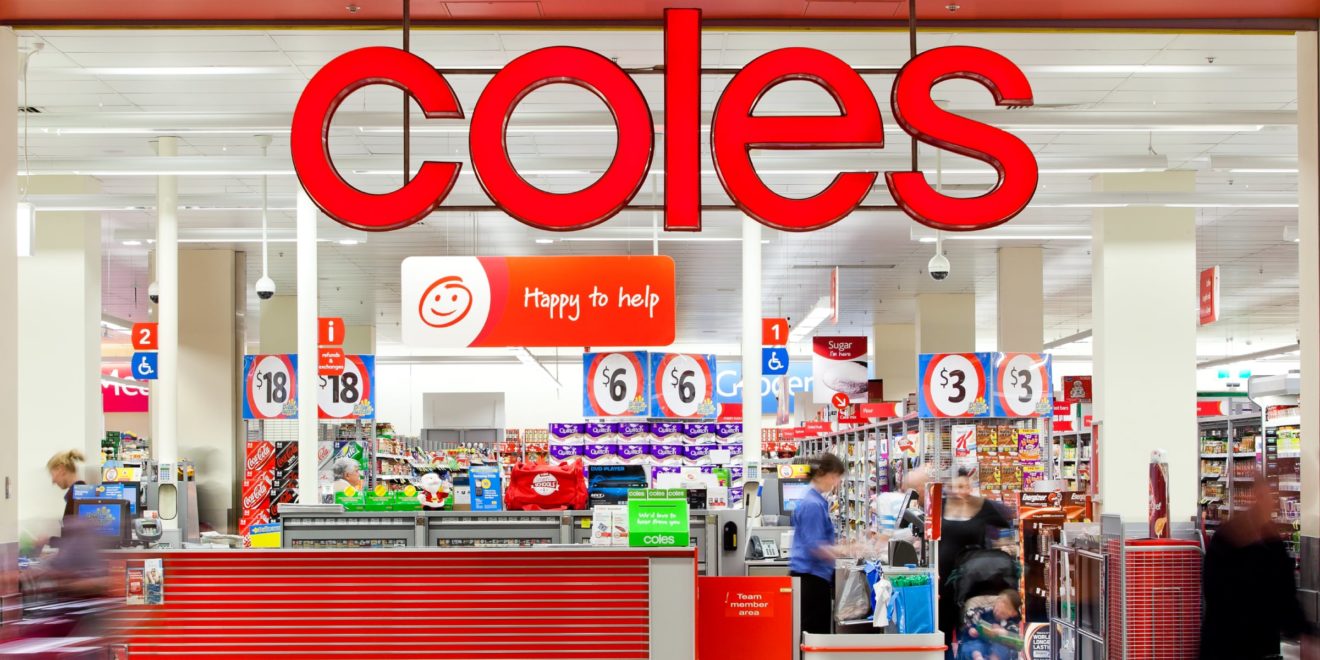
  • Coles opens its first automated distribution centre in Redbank, Queensland

    Coles opens its first automated distribution centre in Redbank, Queensland

    The first Australian Automated Distribution Centre (ADC) using global leading Witron technology is the largest of its kind in the Southern Hemisphere. Prime Minister Anthony Albanese MP, Queensland Premier Annastacia Palaszczuk MP, Coles Group Chairman James Graham, and Coles Group CEO Steven Cain are officially opening the ADC at Goodman’s Redbank Motorway Estate in Queensland this morning.

    This is the first of two Witron facilities to open here and comes after Coles Group’s biggest investment into technology in the company’s 109-year history. More than one billion dollars is being invested – with the second ADC opening in Kemps Creek, NSW in 2024.

    The ADCs are designed to create safer and more sustainable outcomes for team members and suppliers and better on-shelf availability for customers.

    The state-of-the-art facility in Redbank is located 30 kilometers southwest of Brisbane and will service 219 Coles supermarkets in Queensland and Northern New South Wales, as far north as Port Douglas and as far south as Laurieton in NSW.

    When operating at full capacity, the site can process up to four million cases per week, the equivalent of 32 million units sold in stores.   For a year, this is around 1.6 billion sales units.

    Chief Executive Officer Steven Cain said today is one of the most significant moments since Coles was founded in 1914 and five years in the making.

    “Modernising our operations is how we improve efficiency and availability in our stores and deliver higher service levels for our customers, team members and suppliers,” Mr. Cain said.

    “Our new ADCs can process twice the number of cases and hold twice the number of pallets compared to one of our current DCs. The ADCs enable us to reduce our total footprint, leading to a more productive and sustainable business model.”

    “Over 90 percent of the cases processed in these automated distribution centres will be processed fully by automation or ergonomically which will be a step-change for the safety of our team as it eliminates almost 18 million kilograms of manual handling in the supply chain each week once the ADC is running close to full capacity.”

    Coles Group Chairman James Graham AM said he would like to thank all those involved for their dedication to this very important project.

    “I’m proud of our team, partners and suppliers who’ve worked together for over five years to create this state-of-the-art facility. Over 3,000 people came together, contributing more than 2.5 million work hours to plan and design the facility, construct the building and install and commission the automation,” Mr Graham said.

    The Redbank ADC has LED and sensor lighting to reduce energy consumption and is fitted with a 180,000 litres of harvested rainwater storage for toilet flushing and landscape irrigation. There are plans for 3.5-megawatt solar installation, which will be among the largest rooftop solar solutions in the Coles network. To minimise food waste, the edible food that can’t be sold in the ADC will be donated to Coles community partner SecondBite.

    The Hon. Prime Minister Anthony Albanese MP said this world-leading technology will help advance supermarket supply chains.

    “This technology is not only a first for Australia, but also a win for the state of Queensland.  As we’ve seen during the pandemic and natural disasters, resilient supply chains are essential to feeding our nation and providing Australians with essential supplies,” Prime Minster Albanese said.

    “Coles is one of the biggest employers in this country and its team was pivotal in ensuring food security during challenging times. A facility like this one in Redbank shows how retailers and manufacturers can look to the future to improve the productivity, safety and sustainability of their operations for all Australians.”

    Queensland Premier the Hon. Annastacia Palaszczuk MP welcomed the significant investment in the strong Queensland economy.

    “The decision to invest in and build this Australian-first facility here in Queensland is a testament to the strength of the Queensland economy,” Premier Palaszczuk said.

    “Coles’ investment will drive productivity growth in Queensland while ensuring food security to one of the fastest growing regions in the country.”

    “It’s great to see Queensland lead the way with the arrival of world-leading technology at the Redbank Distribution Centre. The distribution centre will be powered by renewable electricity provided by Queensland’s publicly owned energy company CleanCo.”

    WITRON Logistik + Informatik CEO Helmut Prieschenk said Coles has partnered with the market leader in warehouse automation systems for major food retailers globally.

    “We have been engaged to build 93 automated distribution centres in 13 different countries, with the latest for Coles being the largest ambient system Witron has ever built,” Mr. Prieschenk said.

    “Witron will work with Coles to provide a technology focused, multi-disciplinary team for day-to-day operations, technical expertise and maintenance support.”

    Witron Founder Walter Winkler is extremely proud, that together with Coles, a powerful logistics platform has been created.

    “This ADC is for the benefit of the entire supply chain and will help the Australian grocery market by introducing the very best technology, and last but not least it creates great value to the Coles business,” Mr Winkler said.

    Coles thanks its partners and consultants Goodman Group, Richard Crookes Constructions and TMX Global for developing, building and managing the complex project to completion.

  • 7-Eleven Australia owners ready to sell

    7-Eleven Australia owners ready to sell

    The entire 7-Eleven business is for sale in Australia – just months after the iconic convenience store increased the price of its famous $1 coffee.

    Chairman of 7-Eleven Holdings Michael Smith said that on Monday shareholders decided the business was ready for new ownership.

    ‘The business has great momentum and a compelling strategy for growth across convenient food, the continued transformation of our total merchandise offer, digital and format innovation, and new stores,’ Mr Smith said.

    The entire 7-Eleven business in Australia, which comprises of about 750 stores nationwide, is up for sale (pictured, 7-Eleven store in St Kilda, Melbourne)

    Mr Smith reassured 7-Eleven customers claiming business is as ‘usual’ as the sale process is in its early stage and is expected to take several months.

    ‘Across our network of stores, it’s business as usual, and our focus is on our customers and being the first choice in convenience retailing in Australia’.

    Majority owner Russell Withers commented on behalf of 7-Eleven shareholders explaining the business started in 1977 with one store in suburban Melbourne.

    Mr Withers said the chain now boasts around 750 stores across Victoria, New South Wales, ACT, Queensland and Australia.

    He added that the chain processes 250 million transactions annually and employs more than 9,000 people across its corporate and franchise network.

    Chairman of 7-Eleven Holdings Michael Smith (left) said shareholders decided the business was ready for new ownership. Majority owner Russell Withers (right) said 7-Eleven has an ‘exciting outlook for growth

    However, the Withers and Barlow families decided the time was right to sell the chain to new owners with a view to future growth and success.

    ‘The company has made significant progress in recent years on a number of fronts and is performing well under a highly credentialed management team, with an exciting outlook for growth,’ Mr Withers said.

    The sale comes just months after the iconic convenience store increased the price of its famous $1 coffees and Slurpees. From October 4 last year, the price of a regular 7-Eleven coffee doubled to $2 and the stores large Slurpees increased to $1.50.

    A spokesperson from 7-Eleven confirmed the price of Australia’s favorite service station drinks rose due to inflated operational costs.

    ‘The changes are a result of increasing input costs for our products,’ 7-Eleven told Daily Mail Australia.

    The affected coffee varieties included the shop’s standard $1 coffee and its hot chocolates, iced coffees and ice cream coffee melts. The first 7-Eleven store opened in Melbourne’s Oakleigh in 1977, and opened the business’s first 24 hour store in 1978.

    The sale comes just months after the iconic convenience store increased the price of its famous $1 coffees (left) and Slurpees (right). From October 4 last year, price of a regular coffee doubled to $2 while Slurpees increased to $1.50

    7-Eleven is the largest convenience retailer on the eastern seaboard of Australia, with an estimated market share of about 38.5 percent.

    The business also claims to be the largest independent fuel retailer on the eastern seaboard, selling Mobil-branded fuel. he Withers and Barlow families brought the 7-Eleven brand to Australia after signing an area license agreement in 1976.

    The Withers Group also secured the Australian rights to Starbucks, bringing the coffee chain back to Aussie shores in 2014.