Tag: asia

  • Labor market to record 150,000 new jobs in Q2

    Labor market to record 150,000 new jobs in Q2

    About 150,000 new jobs will be created in the second quarter of this year, including 28,200 in electronics and optical device manufacturing, according to the Ministry of Labor, Invalids and Social Affairs.

    The ministry forecast the most sought jobs will be related to manual works in the industrial sector, sales and marketing, accounting and finance, production management, personnel management, and project management.

    The most in-demand jobs will be relevant to software development; network administration; network security; data analysis and communications; accounting and finance; marketing, sales, and product management; health care; as well as mechanics, electronics, and automation.

    However, the ministry also pointed out that the labor market is facing numerous challenges in Q2, which will lead to the loss of 38,100 jobs in the garment industry, 38,000 in furniture production, and 37,800 in record printing and copying.

    Data from the General Statistics Office show that nearly 294,000 workers suffered from lay-offs or furloughs due to businesses’ shortages of orders in Q1.

    Experts held that it is necessary to take actions in response to the order decline facing many companies in such major industrial hubs as Dong Nai, Binh Duong, Bac Ninh, and Bac Giang.

  • EZZ Life partners with Aubay for exclusive distribution rights

    EZZ Life partners with Aubay for exclusive distribution rights

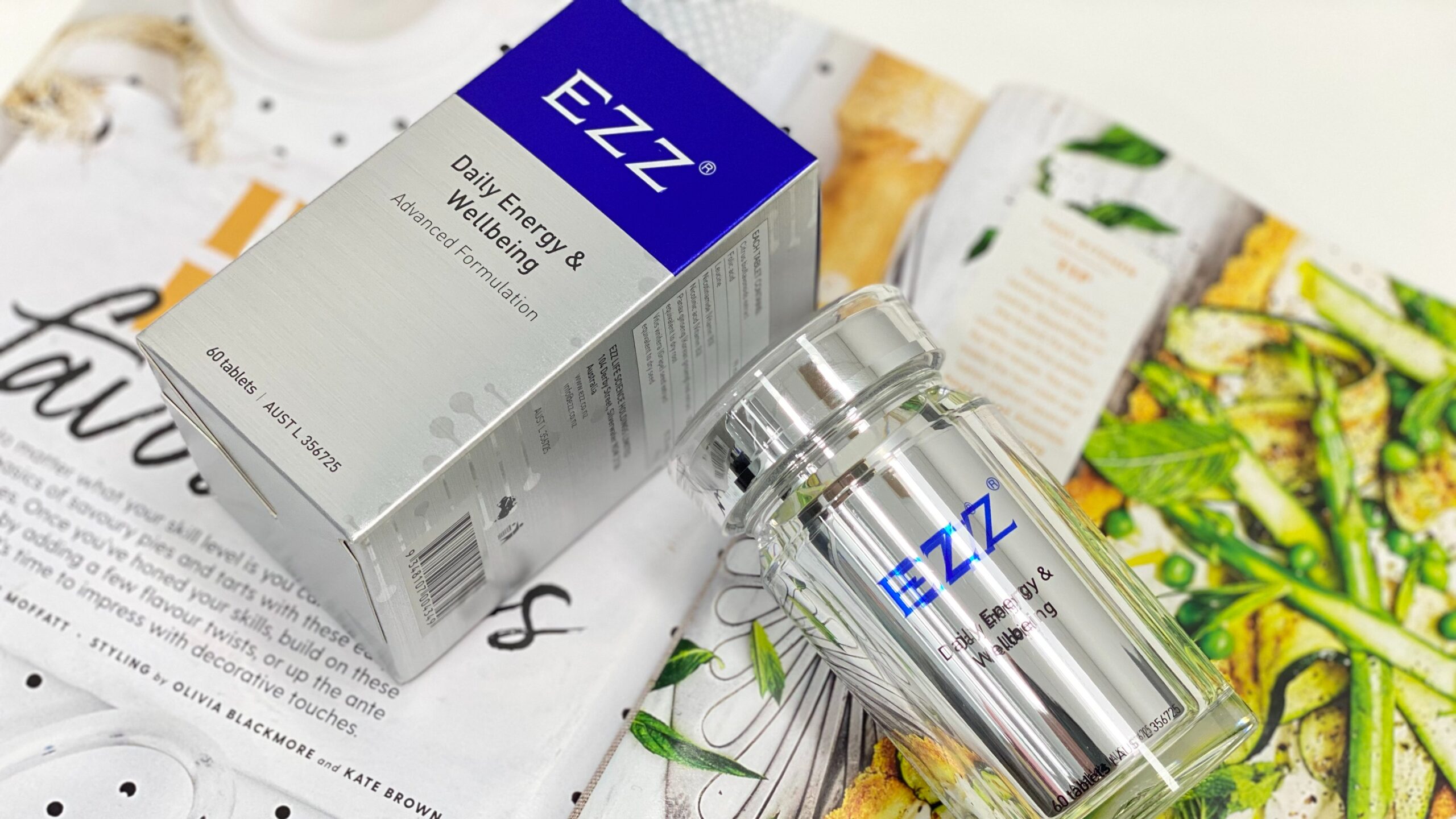
    The deal excludes Tmall, Douyin, Pinduoduo, and all Australian and New Zealand regions – is expected to generate at least $16 million in additional revenue for EZZ, commencing from FY24, with minimum order quantities agreed for both products.

    EZZ’s full-year sales revenue for FY22 was $15.02 million, and more recently, the company reported sales revenue of $15.13 in the half-yearly financial statements to December 31.

    HIC’s social e-commerce model allows EZZ products to reach consumers outside its existing distribution channels, offering significant potential for growth.

    “HIC’s established distribution channels in China and surrounding countries in Asia through its membership-based platform will enable EZZ to expand its reach and market presence,” said Glenn Cross, chairman at EZZ Life Science.

    “The company looks forward to a successful partnership with HIC and anticipates the potential for further growth in the coming months.”

  • Bamboo Airways owes director $329M

    Bamboo Airways owes director $329M

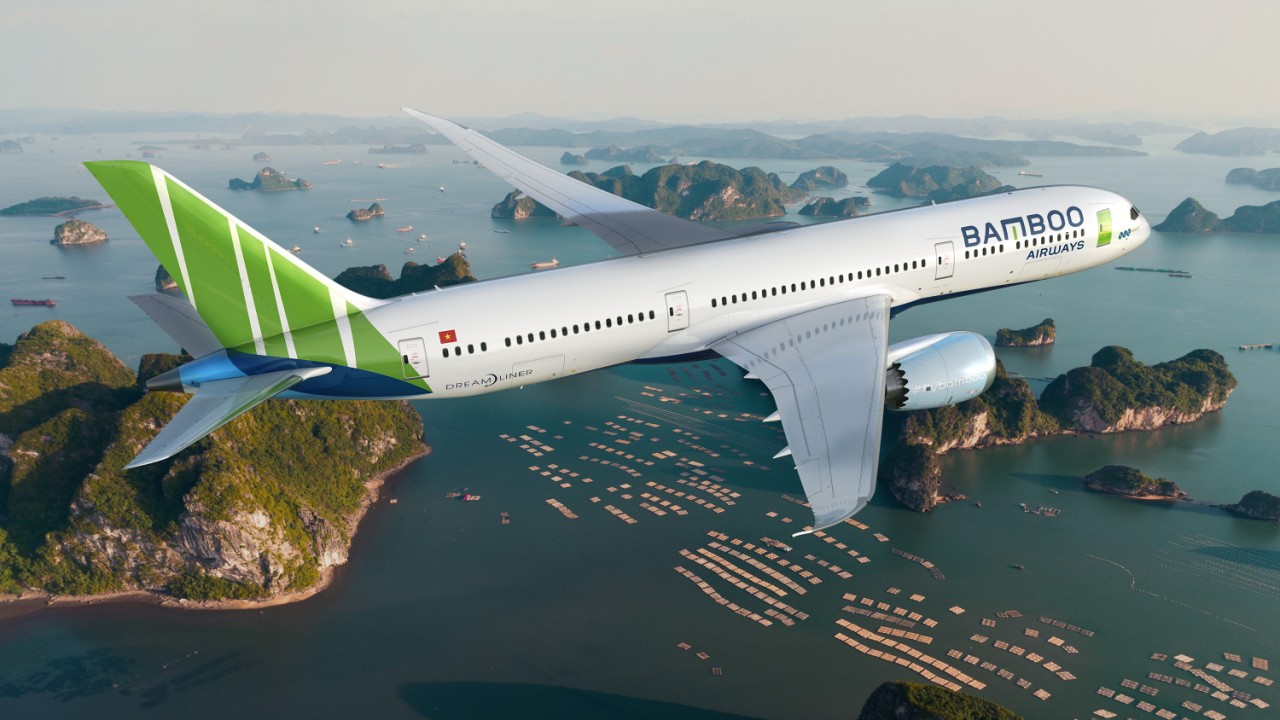
    Bamboo Airways owes one of its directors, Le Thai Sam, almost VND7.73 trillion ($329.50 million) as of April 10, according to a meeting on Tuesday.

    Sam, who became a board member in July last year, will soon receive a 21.7% stake from FLC, which has been operating the airline since the beginning, according to a document made public at the Bamboo Airway’s extraordinary shareholders’ meeting.

    As he already owns a 12.5% stake in the airline, the transfer from FLC will increase his ownership to more than one-third of the carrier.

    Since last year he has been lending the company cash at zero or low-interest rates and required no collateral to ensure the company could continue its operations despite many difficulties after its founder Trinh Van Quyet was arrested on stock manipulation charges.

    Sam, 59, has 30 years of experience in property, finance and banking. He used to be one of the directors of Development Investment Construction (DIC).

    Shareholders of Bamboo Airways on Tuesday approved the company’s proposal to issue more shares to increase its charter capital by 62% to VND30 trillion.

    The company will look to sell the shares to strategic investors with deep pockets who are willing to lend the company at least VND1 trillion.

  • Vietnam third top chip exporter to the US

    Vietnam third top chip exporter to the US

    Vietnam accounted for 10% of semiconductor chip exports to the U.S. in the 12 months ending this February, ranking third after Malaysia and Taiwan.

    The Vietnam chip industry’s revenue from the U.S. market rose by 74.9% during the period, from $321.7 million in February 2022 to $562.5 million this February, according to a report by the Ministry of Information and Communications.

    Vietnam is also among the countries with the highest growth rate of chip exports to the U.S., alongside Thailand, India and Cambodia.

    Cambodian chip exports to the U.S. grew in value 7-fold over the period, from $20.8 million to $166.3 million, while Indian revenues from the market grew 34-fold to $152 million in February.

    In February, semiconductor chip export orders to the U.S. reached $4.86 billion, up 17% year-on-year. Among those, chips made in Asia accounted for 83%.

    Bloomberg reported that the U.S. is diversifying its electronics supply chain by reducing the share of chip imports from Malaysia, a longtime powerhouse in chip packaging, alongside moving its iPhone production chain out of China.

    At a government meeting in April, Prime Minister Pham Minh Chinh assigned the Ministry of Planning and Investment the tasks of improving the National Innovation Center, and developing a chip production program.

    Experts believe Vietnam has the potential to be a global center of chip production if it can utilize its advantages and implement effective strategies, policies, and incentives for the sector.

    Intel’s Asia Pacific and Japan General Manager Steve Long told VnExpress last year: “Vietnam can establish the necessary infrastructure and policies to support cutting-edge chip manufacturing.”

  • Taxi company back in the black after four years

    Taxi company back in the black after four years

    Taxi firm Mai Linh Group reported its first profit of VND1 billion ($42,600) after four years in 2022.

    Its revenues surged by 57% to VND1.65 trillion on recovering demand for transportation after two years of Covid-19.

    It posted a loss of over VND270 billion in 2021.

    The company has overcome its most difficult period and is recovering, but its figures show that more work remains to be done, its chairman, Ho Huy, said in a letter to partners earlier this year.

    “We have not made as much profit as expected.”

    He added that the goal is to see every unit making profits this year.

    The company’s debt-equity ratio is a ridiculous 43. Anything in excess of two is considered risky.

  • Education startup TEKY raises $5M from foreign investors

    Education startup TEKY raises $5M from foreign investors

    Education startup TEKY Alpha has raised US$5 million from Singaporean investment firm Sweef Capital to expand its operations.

    TEKY plans to expand its educational services at public schools and after-school programmes for children aged five to 18, Sweef Capital said in a statement.

    The startup, founded by Dao Lan Huong in 2016, delivers science, technology, engineering, the arts and mathematics (STEAM) education.

    It operates 16 STEAM coaching academies in five cities and partners with more than 45 schools to deliver STEAM courses to more than 25,000 children.

    “I’m excited about our expansion plan to open more STEAM centers across the country in the next two years and the prospects of a partnership with public schools to integrate the STEAM curriculum and increase accessibility,” Huong said.

    The International Labour Organization has forecast that 137 million workers in Southeast Asia, or a fifth of the region’s population, will lose their jobs because of automation, robots and artificial intelligence in the next two decades.

    Workers around the world are likely to need to switch jobs and learn new skills, but many of the new jobs created by 2030 by technology would not have existed before.

    Vietnamese education must keep pace with these big shifts so that the future workforce could seize the opportunities of the industry 4.0 era, Huong said.

    This is Sweef Capital’s first investment from its Southeast Asia Women’s Economic Empowerment Fund.

    Existing investor Hong Kong-based Strategic Year Holdings also participated in the round.

  • DNA Distillery launches European drink Rakija in a can

    DNA Distillery launches European drink Rakija in a can

    DNA Distillery has teamed up with Sydney’s inner west restaurant Baba’s Place to launch Rakija & Tonic in a can format.

    Rakija is a collective term for fruit spirits loaded with botanicals, consumed in the Balkan and Slavic regions of Eastern Europe.

    DNA Distillery’s Rakija is made with fermented and double-distilled Australian Shiraz grapes.

    Co-founders of DNA Distillery, cousins James Projcevski and Monique Sutevski, described the brew as the “perfect beverage” for family gatherings, parties and events.

    “DNA Distillery is the legacy of our ancestors; a tradition passed down from generation to generation, from Europe to Australia. Our Dedo’s recipe was so famous in the village that people would travel by foot for the chance to taste it.”

    The Rakija cans are now available online from the DNA Distillery website with a four-pack retailing for $29 and a 16-pack retailing for $109.

  • Skin Control launches Pore Patches

    Skin Control launches Pore Patches

    Vegan skincare brand Skin Control has rolled out a Pore Patch product into Woolworths, Big W stores and online.

    The Pore Patches absorb excess oil build-up on the nose and stops blackheads before forming. It is suitable for all skin types and can be cut to cover all nose shapes and sizes.

    A single pack comes with six individual patches and retails for $13.

  • WhatsApp Android bug has been found to give the app continuous access to the microphone

    WhatsApp Android bug has been found to give the app continuous access to the microphone

    WhatsApp, the popular messaging app owned by Facebook, has been found to include a bug that allows the app to continue accessing the microphone even after the user has closed it. This bug was discovered by several users, but brought to the spotlight by a Twitter engineer who noticed it happening on his Pixel 7 Pro.

    The bug appears to be affecting several Android devices, including different Samsung and Pixel models, as well as several different versions of the Android app. However, WhatsApp has responded by claiming that the issue lies with Android, not the app itself.
    In several of these reports, microphone activity from the app has been spotted in Android’s Privacy Dashboard as well as through the visible green dot notification on the Android status bar. However, WhatsApp states that this seems to be a bug on Android that mis-attributes information in the privacy dashboard and has asked Google to investigate further.
    Unfortunately, WhatsApp’s response didn’t come until after Elon Musk took to his Twitter account to share his opinion. As you can probably guess by now, his reaction was not positive, accusing the company of not being trustworthy.
    This latest bug could further erode users’ trust in the app, so it is important that Google take a look at the issue and respond accordingly. Hopefully this fix comes sooner rather than later.
  • LinkedIn cuts over 700 jobs, exits China app as demand wavers

    LinkedIn cuts over 700 jobs, exits China app as demand wavers

    LinkedIn, the social media network owned by Microsoft that focuses on business professionals, said on Monday it would cut 716 jobs as demand wavers, while also shutting down its China-focused job application.

    LinkedIn, which has 20,000 employees, has grown revenue each quarter during the last year, but it joins other major technology companies including its parent in laying off workers amid a weakening global economic outlook.

    In the past six months, more than 270,000 tech jobs globally have been cut, according to Layoffs.fyi, tracking the fallout.

    LinkedIn makes money through ad sales and charging for subscriptions to recruiting and sales professionals who use the network to find prospects.

    In a letter to employees, LinkedIn CEO Ryan Roslansky said the move to cut roles in its sales, operations and support teams was aimed at streamlining the company’s operations and would remove layers to help make quicker decisions.

    “With the market and customer demand fluctuating more, and to serve emerging and growth markets more effectively, we are expanding the use of vendors,” Roslansky wrote.

    A LinkedIn spokesperson said the vendors were “external partners” who would undertake new and existing work.

    Roslansky also said in the letter that the changes would create 250 new jobs. The spokesperson said that employees affected by the cuts would be eligible to apply for those roles.

    LinkedIn also said it was eliminating the slimmed-down jobs app that it offers in China after it decided in 2021 to mostly withdraw from the country, citing a “challenging” environment. The remaining China app, called InCareers, will be phased out by Aug. 9, LinkedIn said.

    “Despite our initial progress, InCareer faced fierce competition and a challenging macroeconomic climate, which ultimately led us to the decision of discontinuing the service,” the company told users of the website.

    LinkedIn will retain a presence in China to help companies operating there to hire and train employees outside the country, the company spokesperson said.

    Large companies have accounted for the bulk of recent layoffs in the tech sector, including 27,000 at Amazon.com, the most in its history.

    Facebook owner Meta Platforms shed 21,000, and Google parent Alphabet has laid off 12,000.

    Before LinkedIn’s announcement, 5,000 technology jobs had been in eliminated in May alone, according to Layoffs.fyi.

    Microsoft, which bought LinkedIn for around $26 billion in 2016, has announced some 10,000 job cuts in recent months and took a $1.2 billion charge related to the layoffs.

  • Changi Airport retail sales continue to rise as travel rebounds

    Changi Airport retail sales continue to rise as travel rebounds

    Surging traveller numbers, revamped retail spaces and a focus on omnichannel engagement are paying off at Changi International Airport, as the Singapore hub reports retail sales rebounded to 60% of 2019 levels in January.

    Travellers from Indonesia, Thailand and Vietnam are leading the recovery, while traditionally strong categories including P&C, liquor, tobacco and luxury drive spending.

    The figures come following a period of revamp and refresh in the airport’s retail offer, which includes 140 airside concession leases being concluded in the last year, including the introduction of 19 new brands and concepts for the airport.

    Among the new arrivals are the largest Bacha Coffee store in the world in Terminal 3, new luxury boutiques for Dior, Louis Vuitton and Tiffany & Co in Terminal 1 and the debut of Korean streetwear label ADLV in Terminal 4.

    These new arrivals have come along with an upgrade to the wider retail space at Changi. Last year, the airport completed a revamp of the Terminal 1 Departures Central Piazza to create “a sense of warmth and serenity”, while the west wing has got a refreshed design to rejuvenate and elevate the retail and F&B experience, according to airport bosses.

    Pop-up stores and omnichannel engagement have also played a role in the upswing. The Guerlain pop-up in Terminal 3 is just one example, celebrating the launch of the new Jasmin Bonheur fragrance from its L’Art & La Matière collection.

    Th airport’s shopping concierge service and an enhanced brand offer on the iShopChangi platform have also been

  • Newly registered enterprises in Laos increases sharply

    Newly registered enterprises in Laos increases sharply

    In 2022, Laos had a total of 18,076 newly registered enterprises, with a total registered capital of about US$7.5 billion, an increase of 42.94% compared to 2021, statistics of the country’s Ministry of Industry and Trade revealed.

    The positive signals from the business registration situation in 2022 have proved Laos’s determination in bringing the economy through a difficult period to recover and develop.

    According to the ministry, the country’s reopening of its door after the pandemic has created favorable conditions for international visitors to enter Laos, which has created a positive impact on the tourism industry.

    With the recovery of the economy post Covid-19 pandemic and the Lao Government’s efforts in prioritizing macroeconomic stability and controlling inflation, the confidence of the country’s businesses has gradually bounced back.

    Besides, the increase in the number of newly registered businesses in 2022 has partly shown that the macroeconomic management solutions are implemented in the right direction, creating confidence and optimism for the people and business community after two years of Covid-19 outbreak.

    Currently, the Lao Government, ministries and branches are supporting businesses to grab opportunities to grow, while improving the business investment environment, as well as issuing timely, transparent and favorable policies, creating motivation for businesses in the country.

  • Apple co-founder Wozniak fears that AI will be used to scam the public

    Apple co-founder Wozniak fears that AI will be used to scam the public

    Apple co-founder Steve Wozniak, affectionately known as “The Woz,” says that artificial intelligence could make it harder to spot scams. Wozniak says that content created by AI should clearly be labeled as such and that regulation is needed or else bad actors will take control of the technology. Wozniak talked to the BBC about this issue two months after he and other tech leaders, including Elon Musk, signed an open letter asking for a slowdown in developing powerful AI models.
    Speaking to BBC Technology Editor Zoe Kleinman, Wozniak said, “AI is so intelligent it’s open to the bad players, the ones that want to trick you about who they are.” While The Woz thinks that the lack of emotion will prevent AI from replacing humans in the workforce, he fears that it will make bad actors seem more convincing when they are trying to scam the public. That’s because conversational AI chatbots like ChatGPT can create text that sounds convincing to the layman.
    As a result, Wozniak says that those who publish text written by AI are responsible for labeling it as AI-generated. “A human really has to take responsibility for what is generated by AI,” Wozniak says. He wants regulation to hold big tech firms accountable. The Woz didn’t mention any particular firm but said these are the tech companies that “feel they can kind of get away with anything.”
    Not that Wozniak was specifically talking about the company he helped create, but Apple CEO Tim Cook said to investors during a conference call last week that when it comes to AI, Apple would be “”deliberate and thoughtful. Cook added, “We view AI as huge, and we’ll continue weaving it in our products on a very thoughtful basis.”
    The Woz was not optimistic that regulators will be able to oversee the use of artificial intelligence. “I think the forces that drive for money usually win out, which is sort of sad,” he said. While he doesn’t believe that the development of AI can be stopped, he thinks that people can be educated to help them find situations where their personal data is at risk due to fraud.
  • UBS Announces its Game Plan and Leadership Team

    UBS Announces its Game Plan and Leadership Team

    The legal integration of UBS and Credit Suisse will close in the next few weeks. The team to manage the new venture has also been announced. Ulrich Koerner resurfaces.

    Following UBS’s government-imposed takeover of Credit Suisse on March 19, there has been much speculation about who would lead the new entity and what it would look like. UBS Group AG will manage the two parent companies of UBS AG and Credit Suisse AG, each with its subsidiaries and branches, to serve its clients and deal with counterparties, according to a statement from UBS Tuesday.

    Overall responsibility falls to the UBS Group board of directors and the UBS executive board. Until the two entities integrate further, Credit Suisse will rely on its established governance and risk control frameworks, with some new policies added so that UBS can effectively oversee it.

    This is a pivotal moment for UBS, Credit Suisse, and the entire banking industry. Together we will solidify and represent the Swiss model for finance worldwide, one that is capital-light, less reliant on taking risks, and anchored by stability and high-touch service. This transaction will allow us to offer attractive returns to our shareholders and give us the capacity to further invest and grow, said UBS CEO Sergio Ermotti.

    The overall structure will comprise five business divisions, encompassing seven functions and four regions, with each represented by an executive board member of the group, all reporting to Ermotti. In addition, Credit Suisse CEO Ulrich Koerner becomes a member of the UBS Group’s executive board. The new divisions are as follows:

    • Iqbal Khan remains President of Global Wealth Management
    • Rob Karofsky remains President Investment Bank
    • Sabine Keller-Busse remains President of Personal & Corporate Banking and President of Switzerland
    • Suni Harford remains President of Asset Management and Lead for Sustainability & Impact
    • Beatriz Martin Jimenez becomes Head Non-Core and Legacy and President EMEA. She remains UBS’s Chief Executive for the UK and continues in her role as Group Treasurer until a successor is named.

    As previously announced, UBS will continue to evaluate all options for the Swiss business of Credit Suisse, which is considered the crown jewel of  Credit Suisse. It will «communicate further on this matter in the coming months,» according to the statement.

    Within the functional structure, UBS announced that Sarah Youngwood will be departing.

    • Todd Tuckner is appointed Group Chief Financial Officer. He will become a member of the Group Executive Board with immediate effect and take on the role of CFO at the close of the acquisition. He will succeed Sarah Youngwood, who has decided to leave the firm after the transaction closes.
    • Michelle Bereaux will be Group Integration Officer. She has spent nearly 23 years at UBS and has held various leadership roles across the firm.
    • Mike Dargan will be Group Chief Operations and Technology Officer
    • Stefan Seiler will be the Group Head of Human Resources and Corporate Services.
    • Christian Bluhm will remain Group Chief Risk Officer
    • Barbara Levi will remain Group General Counsel
    • Markus Ronner will remain Group Chief Compliance and Governance Officer

    Tuckner, Martin Jimenez, Bereaux and Seiler also become members of the executive board at the close of the transaction.

  • Hai Phong port customs look for owner of Rolls-Royce unclaimed for one year

    Hai Phong port customs look for owner of Rolls-Royce unclaimed for one year

    Customs authorities in Hai Phong City’s Dinh Vu Port are looking for the owner of a Rolls-Royce car that has remained unclaimed since being imported in July last year.

    According to the port customs sub-department, after no individuals or organizations came to collect the vehicle, last December it had posted the first notice to find the owner.

    The exporter is Germany’s Hollman International Company, and the recipient is a company with address in the Trung Van urban area in Hanoi.

    Mediterranean Shipping Company had transported it.

    The automobile is at the port’s Tan Cang International Container Terminal.

    A Rolls-Royce Cullinan currently costs over VND40 billion ($1.7 million).

    Past cases of abandoned luxury cars have existed in Hai Phong and Da Nang ports.

    In 2020 Hai Phong customs auctioned a Ferrari after a public notice failed to find its owner for over 90 days.