Tag: asia

  • Company fined $37,000 for not disclosing stock market transactions

    Company fined $37,000 for not disclosing stock market transactions

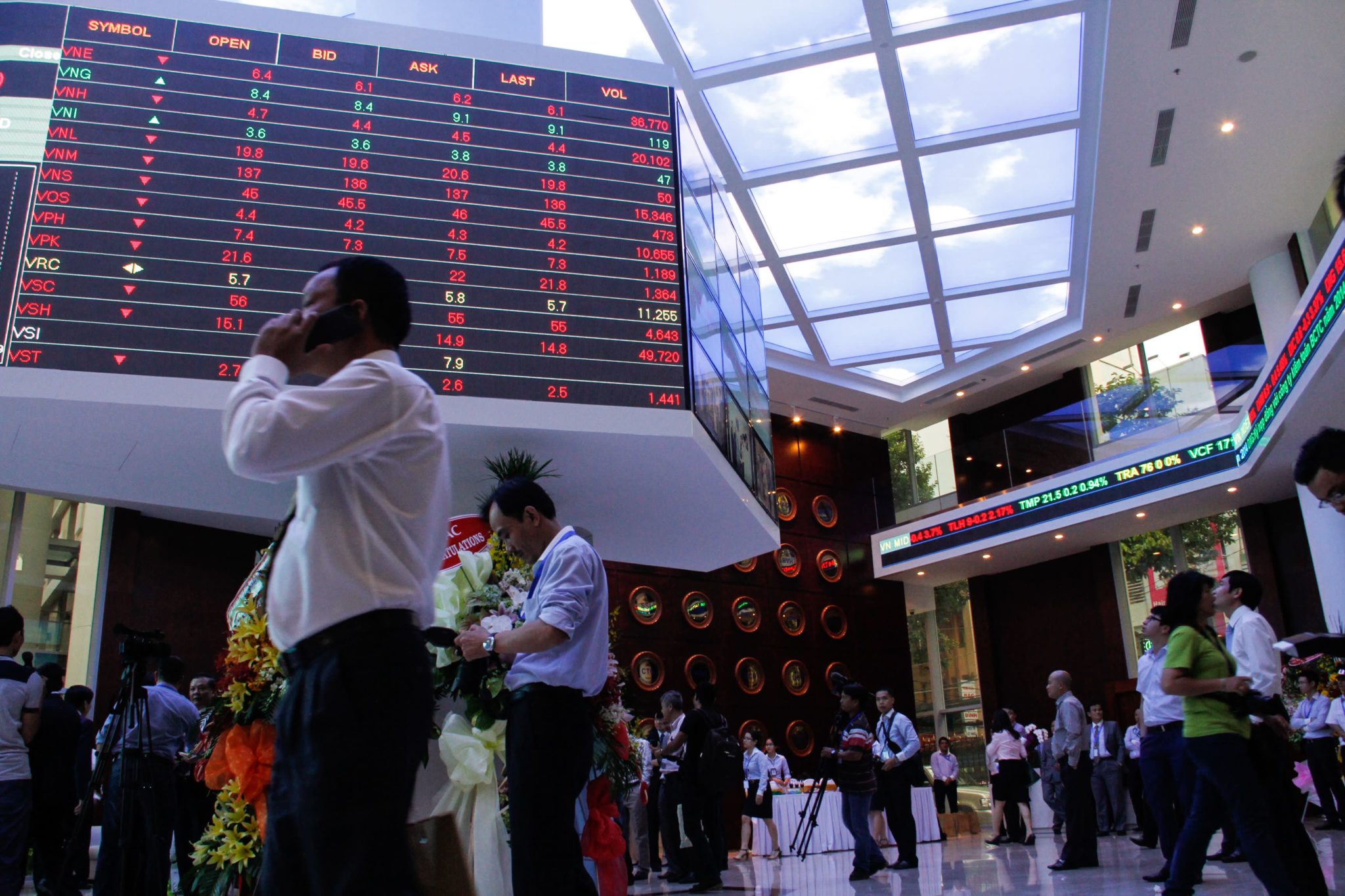
    Thai Son Investment Solutions Jsc has been fined VND870 million (US$37,100) for selling and buying back a stock in October last year without disclosing the information.

    The State Securities Commission of Vietnam announced the fine recently and prohibited the company from trading on the stock market for three months starting May 19.

    Thai Son surreptitiously sold 1.5 million shares of Electricity Investment Service Trade Jsc (EIN) on October 19, 2022, and bought 1.4 million shares three days later.

    The SSC recently placed Tan Viet Securities under restrictions for four months for publishing its unaudited financial statements.

    The company had been fined VND745 million in 2021 and 2022 for multiple stock market violations.

  • Bentley recalls two Continental models due to fire risk

    Bentley recalls two Continental models due to fire risk

    Luxury carmaker Bentley is recalling its Continental GT First Edition W12 and W12 cars in Vietnam to fix a faulty water pump that poses a threat of fire.

    Due to a design defect, the water pump could create a vacuum within the electrical area of the pump and cause liquid from the coolant system to permeate the housing of the water pump and damage the electrical circuitry which could cause a fire, it said.

    The recalled vehicles were manufactured in 2018 and imported from the U.K.

    Dealers of distributor CT Wearnes Vietnam are handling the recall, and it will take some 50 minutes to replace the faulty water pump.

    A spokesperson for the British carmaker in Vietnam said if the engine management light lights up or smoke is detected, people should immediately stop the vehicle wherever it is safe to do so, turn off the ignition, evacuate the vehicle, and contact the nearest retailer immediately.

    Bentley has an authorized dealer each in Hanoi and Ho Chi Minh City.

    The Continental GT is a two-door sedan with a price-tag of at least VND18 billion (US$762,700) in Vietnam.

  • Poor demand drags MacBook prices down

    Poor demand drags MacBook prices down

    Apple’s MacBook Pro laptops have seen their prices tumble by tens of millions of dong (VND1 million = $42.6) in the two months amid underwhelming demand.

    Quy Thien, a video editor, said when the MacBook Pro 16-inch was released in Vietnam at the end of March, he ordered a high-end model with an M2 Max chip, 96 GB RAM, and 4 TB storage for VND149 million (US$6,400).

    But Apple dealers told him the model was not available, but would arrive in two months. When his device arrived, he checked the prices and found it had fallen to VND133 million.

    “In two months, I lost VND16 million when I hadn’t even received my device,” he said.

    A retailer explained that the MacBook Pro is a niche product due to its high price. Dealers do not stock some high-end models, and users have to order and wait for six to 12 weeks. Thus, early buyers got a bad break since prices started to fall as they waited, he said. Even the standard version has become cheaper.

    At the time of launch the 14-inch version with 16 GB RAM, 512 GB storage and an M2 Pro chip cost VND52.9 million, and the 16-inch version cost VND65.9 million. If they had M2 Max chips, the prices were VND81.9 million and VND92.9 million.

    In the next two months retailers slashed the prices of the 14-inch model by VND5 million if it had an M2 Pro chip and VND8 million if it had an M2 Max chip.

    VND million (VND1 million = $42.63)MacBook pricesMarchMayMacBook Pro 14 inch M2 ProMacBook Pro 14 inch M2 MaxMacBook Pro 16 inch M2 ProMacBook Pro 16 inch M2 Max0255075100

    However, it has not worked and sales have not picked up, and the MacBook Pro only accounts for 2-3% of total laptop sales.

    Hoang Ha Mobile said the high prices are the biggest dampener of demand.

    Other Apple laptops have also become cheaper.

    The MacBook Air M1, which used to be the best-selling laptop in Vietnam, currently costs VND17.9 million, VND11 million down since its launch in January 2021.

    The MacBook Air M2’s prices have fluctuated. At the end of April its price briefly went down from VND28 million to VND25.9 million before climbing back up at the beginning of May.

  • Construction steel sales fall 15% in April

    Construction steel sales fall 15% in April

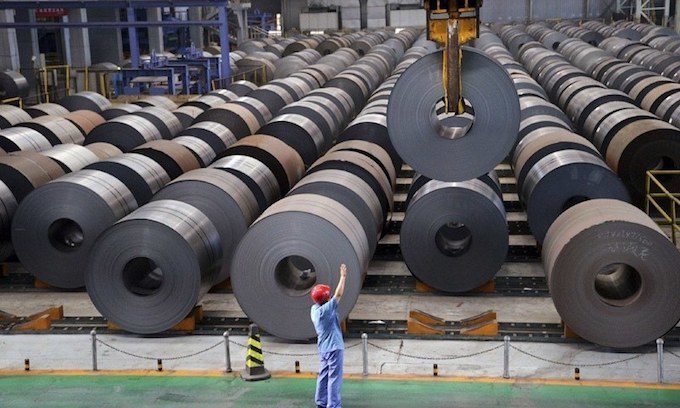
    According to the Vietnam Steel Association, over 735,000 tons of construction steel were sold in April, the second-lowest monthly sales figures since 2022.

    The sale was down 15% against the same period last year.

    Over 710,000 tons of construction steel were produced, posting the smallest monthly output since 2022, and a year-on-year drop of 37%.

    According to Hoa Phat Group, which holds one-third of the market share for construction steel, demand remained weak worldwide, so it sold only 214,000 tons of construction steel in April, down 28%.

    To spur sales, Hoa Phat on May 19 reduced the price of rebar by VND200,000 (US$8.50) to VND15.09 million per ton. Other steel makers lowered the price by VND150,000-250,000.

    Since early April, steel prices have decreased six times. At present, the average price of most common products is around VND15 million per ton, similar to that in October 2022 when steel demand started to plummet.

    According to Vietcombank Securities Company, steel prices started to fall in late April when prices of input materials such as iron ores, steel scrap and coke went down.

    Construction steel prices are likely to drop further in the coming time because of weak demand, the company said, noting that real estate developers and people are discouraged to build houses amid economic difficulties with high lending interest rates.

    According to the World Steel Association, the global steel demand is likely to increase by 2.3% to 1.82 billion tons this year, and by 1.7% to more than 1.85 billion tons next year. However, the demand will still be affected by high leading interest rates.

  • Meme coin Pepe craze causes thousand-dollar losses

    Meme coin Pepe craze causes thousand-dollar losses

    Thanh Nam from Binh Duong Province sold half his Bitcoin for US$5,000 to buy the hot meme coin Pepe at its peak.

    But he was recently only able to sell the coin for a total of $2,000.

    When the Pepe coin price hit $0.000004 on May 5 (bringing its market capitalization to $1.63 billion), Nam’s initial investment could have returned $7,000.

    But he wanted more, so he decided to wait.

    However, Pepe’s price plummeted to $0.0000017 only one week later. Nam then sold his tokens at a loss of $3,000

    “If I had waited more, I would have lost even more”, he said.

    Nam is just one of many who joined the Pepe craze recently.

    According to crypto price tracking website CoinMarketCap, Pepe’s price spiked after its launch in mid-April. It peaked on May 5, then lost most of its value afterwards.

    Meme coins are still widely considered a joke in cryptocurrency, however popular they get.

    Pepe was built on the BRC-20 standard of Bitcoin, different from many other meme coins which use Ethereum’s ERC-20.

    On its project homepage, Pepe’s developer said: “$PEPE is a meme coin with no intrinsic value or expectation of financial return. There is no formal team or roadmap. The coin is completely useless and for entertainment purposes only.”

    Despite such disclaimers, new meme coins like Pepe still attract lots of investment.

    Kyle Doane, who is in charge of transaction review at digital asset management company Arca, said that quite a few people sold parts of their top coins like Bitcoin and Ethereum to join the Pepe frenzy.

    When Pepe peaked on May 5, both those coins’ value dropped by 10%, a considerable value reduction after four straight months of growth.

    Joe Rotunda, director of enforcement at the Texas Securities Commission, said that when the hype surrounding a meme coin goes away, most people who invested in the coin suffer significant losses.

    Even when one gains from a meme coin, obtaining the profit is not easy.

    Merav Ozair, fintech expert at Cornell University, said he saw many who hit million-dollar jackpots investing in meme coins unable to withdraw their profits.

    Meme coins like Dogecoin and Shiba Inu, which are still highly valuable, are the exceptions, not the rule.

    Experts suggest that if investors want to try their luck with meme coins, they should only invest a small amount, and be ready to lose it all.

  • CIMB Thai, Positive Thinking Company partner to establish software development center

    CIMB Thai, Positive Thinking Company partner to establish software development center

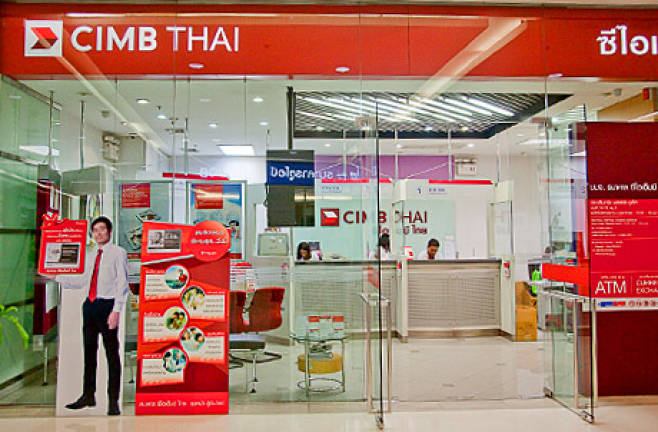
    CIMB Thai Bank and Positive Thinking Company, a leading technology company in Asia-Pacific, have announced to establish an expert software development center for CIMB Thai in Hanoi.

    The Vietnam Software Development Center in Hanoi is expected to add powerful engineering expert resources and accelerate the digital journey of CIMB Thai, a member of CIMB Group.

    “With the vision of becoming a digital-led bank with ASEAN reach, we look forward to the collaboration to help accelerate our ambitious digital evolution roadmap aimed at offering customers a best-in-class digital banking experience,” said Paul Wong Chee Kin, President & CEO of CIMB Thai.

    “The Vietnam Software Development Center in Hanoi will be the latest highlight in our fast-moving digital journey, joining existing digital hubs in Bangkok and Chiang Mai as a collective engine of excellence that will support our long-term digital aspirations.-

    The partnership will scale up digital resources and drive products and services across CIMB Thai’s offerings.

    Pieter van Diermen, CEO of Positive Thinking Company APAC, a member of Collaboration Betters The World (CBTW) Group, said the strategic tech partnership would help CIMB Thai set up their first software development center in Vietnam, through the distinctive Build Operate Transfer (BOT) model of Positive Thinking Company.

    “During our 20 years of experience in building custom software and product development centers in Vietnam, we have witnessed the local market grow an ever more talented pool of highly motivated and well-rounded software engineers,” said Pieter van Diermen.

    “The Vietnam Software Development Center will be a powerful addition to the current expert engineering teams of CIMB Thai and will make remarkable contributions to its inspiring digital journey.”

    The Vietnam Software Development Center kicks off with a team based in Hanoi. The team is working closely with the CIMB’s engineering teams in Thailand to deploy new features and enhancements on the CIMB Thai mobile banking application as well as other digital touchpoints.

    With an average of 55,000 new engineers graduating each year, Vietnam’s software development sector is flourishing and becoming a major player in the worldwide software product engineering market.

    Vietnam is also predicted to become the second-largest digital economy in Southeast Asia by 2025.

    Through its scalable and cost-effective BOT model, Positive Thinking Company has established more than 15 software development centers in Vietnam to assist its global clients in accelerating their product roadmaps and digital transformation journeys.

    Positive Thinking Company is a founding partner of Collaboration Betters The World, a global tech group and ecosystem with a global team of 4,000 tech talents. Its core expertises in APAC include software product engineering (developing web and mobile apps, enterprise apps, platforms & eCommerce) and the unique Build Operate Transfer (BOT) Model (building custom software and product development centers on behalf of global clients such as Atlassian, National Australia Bank, and many more).

    CIMB Thai Bank Public Company Limited is driven by its vision to be a digital-led bank with ASEAN reach delivering wealth management, treasury, consumer banking, corporate banking and ASEAN-related products and services.

    CIMB Group is a leading focused ASEAN bank and one of the region’s foremost corporate advisors. The group is headquartered in Kuala Lumpur, Malaysia, and offers consumer banking, commercial banking, investment banking, Islamic banking and asset management products and services.

    The bank had around 33,000 staff and over 20 million customers as of the end of December 2022.

  • Bank deposit interest rates continue to fall

    Bank deposit interest rates continue to fall

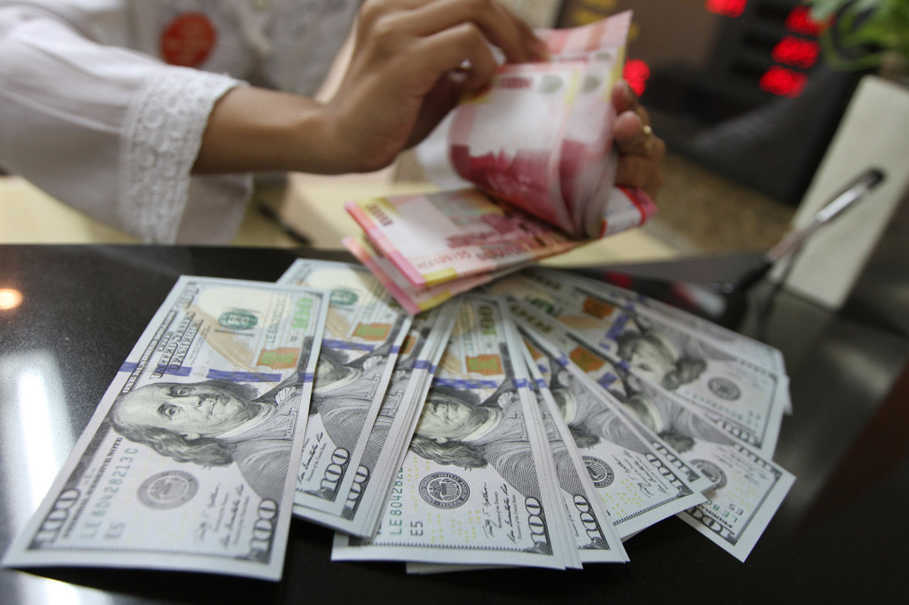
    Many banks have cut deposit interest rates this month, bringing the average rate to below 9.

    The rate is half a percentage point lower than at the start of this year for terms of less than six months, and one point lower for longer tenors.

    Some banks offered nearly 10% earlier this year.

    As of May 15 more than half the banks offered rates of up to 7-8%, and the rest, slightly higher.

    After a period of rapid growth at the end of 2022, deposit interest rates began to plateau at the beginning of this year as liquidity became abundant, even excessive, according to analysts, especially compared to the end of October last year when a run occurred on Saigon Commercial Bank (SCB).

    Besides, bank lending has eased off, meaning funds mobilization is not an urgent need for them.

    Deposits of less than six months carry a maximum interest rate of 5.5%.

    Banks that offer the highest rates, ranging from 8.5% to 8.9%, include SeABank, ABBank, VietABank, HDBank, and VietBank.

  • Sabeco to install rooftop solar panels at 9 breweries

    Sabeco to install rooftop solar panels at 9 breweries

    Sabeco has partnered with SP Group, a leading utilities group in the Asia Pacific, for the second phase of its rooftop solar energy system installation and operation.

    Saigon Beer-Alcohol-Beverage Corporation (Sabeco) and SP Group signed a Memorandum of Understanding on Thursday to carry out rooftop solar energy system installation and operation with a maximum output of 10.44 MWp (Megawatt-peak) at nine Sabeco’s breweries.

    This will bring the number of Sabeco breweries adopting solar energy by the end of 2023 to 17.

    “This partnership demonstrates our commitment to facilitating the clean energy transition of manufacturing facilities. Leveraging our comprehensive range of sustainable energy solutions, we look forward to supporting Sabeco towards their energy efficiency goals and co-creating a more sustainable future for Vietnam,” Brandon Chia, Managing Director, Sustainable Energy Solutions (Southeast Asia & Australia), SP Group, said.

    The first phase kickstarted in 2020, receiving VND107 billion ($4,7 million) investment from Sabeco with a maximum output of 9 MWp at Cu Chi, Dak Lak, Phu Yen, Quy Nhon, Song Lam, Khanh Hoa, Can Tho, Soc Trang and Ben Tre breweries.

    Under the new MoU, SP has been commissioned to install and operate the rooftop solar panels at nine breweries in Lam Dong, Ha Tinh, Ha Noi, Tay Do, Vinh Long, Nguyen Chi Thanh, Bac Lieu, and Quang Ngai, and expand the system in Cu Chi.

    The installment is scheduled to be completed and operational by the end of Q3. The system of 17 breweries is estimated to provide almost 23% of electricity consumed at the breweries, or 25 million kWh, equivalent to a reduction of 18,000 tons of CO2 emitted annually.

    “The company has sought to implement initiatives and solutions that support sustainable business over the past few years. We have already embarked on various ESG (Environment, Society and Governance) initiatives through our 4C corporate social responsibility pillars (Consumption, Conservation, Culture and Country). We also have implemented Best Brewery Awards to encourage our breweries to embed sustainability mindset,” Bennett Neo, General Director of Sabeco, said.

    Apart from energy usage, Sabeco has implemented other initiatives to mitigate environmental impacts. The company reduced waste used per liter of beer from 5 liters in 2018 to below 3 liters in 2022.

    Sabeco has embarked on plant-based biomass fuel (rice hulls, sawdust, cashew shell, and leaves) usage instead of using fossil fuel-powered boiler, applying the CIP wastewater treatment system; using sustainable packaging (downgauged cans, lightweighted carton boxes and bottles) and reusing beer glasses and cans.

    Sabeco also promotes other sustainability initiatives which focus on local communities where it operates. The recent project “Light up the Rural”, a part of the three-year strategic partnership between Sabeco and the Central Committee of the Ho Chi Minh Communist Youth Union, has constructed 34km of street lighting that uses solar power in 34 rural areas in 34 provinces across the country.

    This initiative aims to improve socio-economic infrastructure to more than 210,000 households. The project will be expanded in 2023 with more than 39 km of solar street lights to be installed.

    Sabeco operates 26 breweries, 11 member trading companies and a network of hundreds of thousands of selling points across the country.

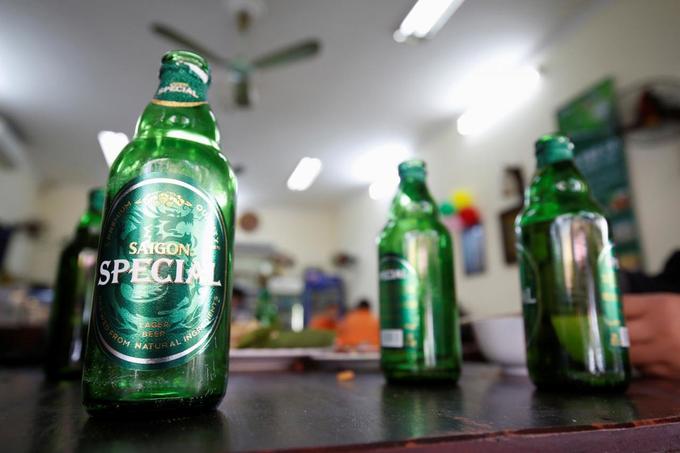
    Sabeco has a wide portfolio of beer brands that are beloved by the people of Vietnam, which includes Bia Lac Viet, Bia Saigon Chill, Bia 333, Bia Saigon Special, Bia Saigon Export, Bia Saigon Lager and Bia Saigon Gold.

  • BNP Paribas Bags Credit Suisse Specialist Team

    BNP Paribas Bags Credit Suisse Specialist Team

    The revolving door at Credit Suisse keeps spinning, as the Swiss bank loses a team of specialists to BNP Paribas.

    BNP Paribas is strengthening its equities team in London by hiring Credit Suisse’s event-driven team. Susan Stryker Marinello, an event-driven specialist for the EMEA region at the Swiss bank, and risk arbitrage traders Andy Martin and Simon Scott are joining the French bank.

    Before their stint at Credit Suisse, the team of specialists previously worked together at Citi.

    The hiring of the unit is an important step following BNP Paribas’ acquisition of Exane in 2021, the sources added. As part of that acquisition, BNP Paribas brought equity trading, research, and derivatives activities in-house after a 17-year partnership with Exane. It said the new hires are part of BNP’s expansion into cash equities following Exane’s return.

    Neither Credit Suisse nor BNP Paribas had any comment.

  • Starbucks Coffee Korea seeks new ventures amid sales slowdown

    Starbucks Coffee Korea seeks new ventures amid sales slowdown

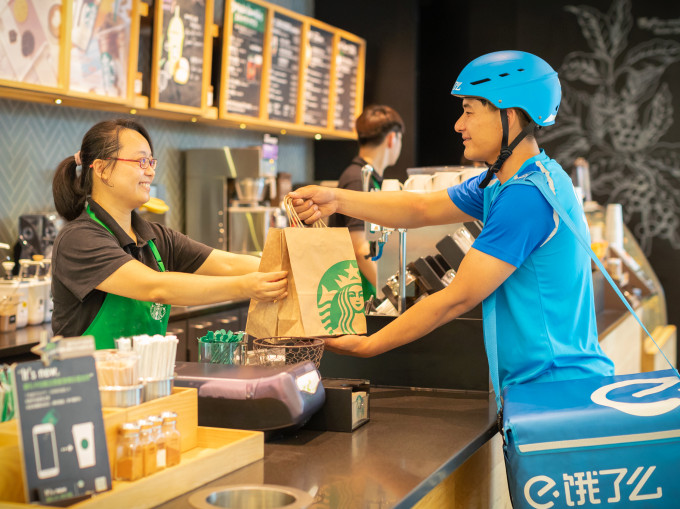
    Starbucks Coffee Korea, which experienced a slowdown in sales growth last year, is seeking new ventures to secure a fresh growth engine.

    The company held a board meeting in late March and revised its articles of association to include 65 additional business purposes, according to industry sources.

    Among the newly added business purposes are electric vehicle charging services, construction, property development and supply, real estate leasing and management, and the operation of golf courses and ski resorts.

    Regarding electric vehicle charging, Starbucks collaborated with Mercedes-Benz Korea to open a charging station at its its The Bukhan riverR outlet in January.

    The company has also expanded its business scope to include lunch box and prepared meal manufacturing, wholesale of processed foods related to its existing business, as well as industrial robot manufacturing and biologic agent manufacturing.

    Furthermore, various types of franchise businesses have been introduced. As of late March, Starbucks Coffee Korea operated all of its 1,813 stores under direct management.

    This photo by Mercedes-Benz Korea shows a electric vehicle charging station at Starbucks Coffee Korea’s The Bukhan riverR outlet.

    This initiative aims to explore diverse new businesses in response to the sales growth slowdown.

    In the previous year, Starbucks Coffee Korea recorded sales of 2.59 trillion won (US$1.94 billion), representing an 8.7 percent increase yearly.

    This growth rate was more than 50 percent lower than the average annual sales growth rate observed from 2012 to 2021.

    The company’s operating profits in 2022 decreased by 48.8 percent to 122.4 billion won, with estimated net profits of 99.3 billion won, down 51.7 percent year on year.

    The poor performance of the previous year can be partly attributed to the recall of giveaway picnic bags due to the detection of harmful substances.

    According to the company, the one-off recall-related expense amounted to 44.4 billion won, which accounted for 38 percent of the decline in its operating profits.

  • Aldi to open its first Townsville store

    Aldi to open its first Townsville store

    Aldi has announced a new lease agreement with Dexus to see Townsville’s first Aldi arrive at the Willows Shopping Centre later this year.

    The new 2,252sqm store will offer North Queenslanders the full Aldi experience, providing shoppers with award-winning grocery products at low prices and Special Buys together with fresh fruit, vegetables, and bread delivered daily.

    Ryan Wheelhouse, Willows Centre Manager, said the Townsville community looks forward to having its Aldi open later this year.

    “We know the community have been excited about this announcement and the great value Aldi offers across its grocery range, including its famous Special Buys. The store will open later this year and will be next to TK Maxx, making Willows the only centre north of south-east Queensland to house all three supermarket chains under the one roof.”

    Dexus’s Head of Retail Leasing, Eddie Giraldo said that Aldi will bring a new affordable, quality supermarket offering to Willows where customers can continue to enjoy the convenience of having everything they need under one roof. We are committed to delivering the best retail experiences in Townsville.

    “After much anticipation and popular demand from the Townville community, we are delighted to be working with Aldi to bring them to North Queensland,” he said.

    Aldi will join Woolworths, Coles, Big W, Rebel, JB Hi-Fi, TK Maxx, Cotton On Mega and Best & Less and 130 specialty retailers making Willows Townsville the home of the biggest brands.

  • Google Drive will soon get its own Spam folder just like Gmail

    Google Drive will soon get its own Spam folder just like Gmail

    In an effort to enhance user experience and fortify its security measures, Google announced a new update to Google Drive that those that have been plagued by spam will surely appreciate. This update will introduce a new spam folder within Google Drive, which will work similarly to what we have now with Gmail.

    Unfortunately, spam and malicious attempts are becoming more common in today’s digital world. In fact, according to Google, it is constantly blocking spam from our email inboxes at a rate of 15 billion unwanted messages daily. Thankfully, these same protections are now being expanded to Google Drive, one of the latest targets spammers and scammers alike have gravitated towards.

    To separate legit Google Drive files from potential spam, Google will be adding a new view or folder within the application that will let you sort through and classify them as needed. If an uninvited file finds its way into your spam folder, you’ll be automatically unsubscribed from it, effectively halting any subsequent notifications, such as comments, shares, or mobile push alerts. Once you’ve opted out, the file will be inaccessible from any location in Drive except for the new spam folder, which will live in the left sidebar.

    Just like Gmail’s spam folder, Google Drive will automatically scan and reroute files that are highly likely to be unwanted to the spam folder. However, users remain under control and can always manually move files back and forth between their My Drive and Spam folder. Once a file has been in your spam folder for over 30 days, it will be automatically deleted from your Drive.
    This update to Google Drive will be available to all Google google accounts, including personal ones, starting on May 24th, 2023. The new Spam folder will be visible on Android, iOS, Drive for Desktop, and the Drive homepage on the web. Note though, that it will undergo an extended two-week rollout starting on the launch date.
  • Shrimp prices plummet on stubbornly low global demand

    Shrimp prices plummet on stubbornly low global demand

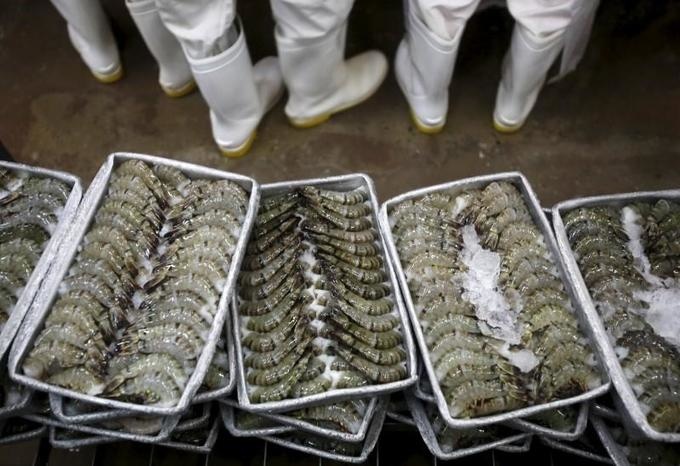
    Shrimp prices have fallen by up to 30% within a month, and threaten to cause losses to southern farmers.

    In the Mekong Delta provinces of Tien Giang and Ca Mau, the prices of shrimp sized 100 to a kilogram have declined by a third from four weeks ago to VND70,000-80,000 (US$3-3.41).

    Larger ones, sized 30 to a kilogram, are priced at VND108,000, down 20%.

    Minh, a farmer in Ca Mau, said with prices dropping by 20-30%, he is not earning profits.

    “I have been trying to cut expenses, but at these prices I might record a loss.”

    Trong in Tien Giang Province faces potential losses of hundreds of millions of dong (VND100 million = $4,260).

    Other farmers are saying on online forums that they had been expecting prices to rise for weeks and are hit by the decline.

    The fall has been caused by lower demand in major export markets while supply has been rising in Vietnam, the Ministry of Agriculture and Rural Development said in a recent report.

    Rising inflation has caused a drop in consumption in the E.U. and the U.S., two main export markets, the Vietnam Association of Seafood Exporters and Producers said.

    Exports to China fell by 40% year-on-year in the first quarter to $54 million, according to Vietnam Customs.

  • WhatsApp introduces new Chat Lock feature for those sensitive conversations

    WhatsApp introduces new Chat Lock feature for those sensitive conversations

    WhatsApp has announced a new feature called “Chat Lock” that adds an extra layer of privacy to its users’ most private chats. This feature allows users to lock a chat thread so that it can only be viewed after once again entering the device’s password or fingerprint.

    WhatsApp touts this feature as a tool to make sure its users are able to keep their private talks private, even if the smartphone in question is passed around or someone is able to get into it without permission. This also works with notifications, making sure that any notifications from a locked chat does not show a preview of what is being said.

    With WhatsApp Chat Lock, you can make sure that your private talks stay private even if someone gets into your device without your permission. Whether you share sensitive information, talk about personal things, or have private conversations, this new tool gives you the power to keep your privacy at its highest level.

    The announcement is accompanied by a video highlighting how the feature works and how it can be convenient in family settings where the phone could be borrowed several times by others to either take a photo or participate in a video chat. In it, you see the main character escape several scenarios where his private conversation could have been made public, only to be saved by the existence of this feature.

    Locked chats can be accessed via the “Locked chats” folder, which can only be accessed by authenticating via the same method you use to unlock your phone. Locked chats will also be expanded in the coming months with new features such as extending the lock to companion devices and the ability to apply a different password to your locked chat folder than the one being used to unlock the device.

    The latter helps when you want to give access to your phone to someone else by sharing your device pin, but still want to keep specific WhatsApp chats private. Currently, you are able to lock the entire WhatsApp application with your chosen authentication method, but this takes it one step further by targeting specific conversations. The feature is rolling out in the latest version of the app.
  • More Barclays Bankers Decamp for UBS

    More Barclays Bankers Decamp for UBS

    For the second time in weeks, Barclays bankers are leaving for UBS. Six investment bankers in the US are on the move.

    UBS appears to have found rich poaching grounds at Barclays, as it is hiring half a dozen investment bankers specializing in technology, media, and telecom companies,  citing sources familiar.

    According to the sources, Richard Hardegree, Laurence Braham, Ozzie Ramos, Richard Casavechia, Neil Meyer, Jason Williams, and Ken Tittle are those departing for UBS locations in New York, San Francisco, and Chicago.

    The recent departures follow three more in April, when it was announced Marco Valla, Jeff Hinton, and Kurt Anthony are joining the UBS banking team in New York, with Valla appointed co-head of global banking alongside Javier Oficialdegui.

    Although UBS wants to reduce its investment banking to 25 percent or less of risk-weighted assets as part of its new structure with the merger with Credit Suisse, it wants to stay active in certain sectors. The recent hires appear to confirm that.

    Neither bank commented to Bloomberg about the departures, first reported by Reuters.