Tag: asia

  • China Telecom taps Silver Peak for managed SD-WAN services

    China Telecom taps Silver Peak for managed SD-WAN services

    China Telecom has forged a partnership with Silver Peak to provide its multinational enterprise customers with fully-managed software-defined wide area networking (SD-WAN) services using Silver Peak’s Unity EdgeConnectSP and Unity Boost SD-WAN products.

    The collaboration enables China Telecom to deliver managed SD-WAN services, including security services, SaaS optimization, cloud application performance, visibility and control to its large enterprise customers as well as existing enterprise customers with connectivity requirements.

    The partnership is signed between Silver Peak, a developer of SD-WAN technology and hybrid WAN products, and China Telecom Shanghai Ideal Information Industry Group, a wholly owned subsidiary under China Telecom.

    China Telecom Shanghai Ideal Information Industry is also partnering with Westcon-Comstor, a global distributor for Silver Peak, to help distribute the product globally.

    Westcon-Comstor has integrated EdgeConnectSP into China Telecom’s NetCare unified customer network monitoring and management platform using the EdgeConnect RESTful API. This enables China Telecom to offer real-time and proactive managed SD-WAN service monitoring and management to existing and new clients, according to Sliver Peak.

    “We are excited to partner with one of the world’s largest service providers, China Telecom, to bring fully managed tiered SD-WAN services to multi-national enterprises that are struggling with management challenges associated with cost effective global connectivity while maintaining WAN performance and security” said Shayne Stubbs, vice president service provider and cloud at Silver Peak.

    Stubbs said the new managed SD-WAN services help China Telecom cost effectively address the international connectivity, performance and security requirements for multinationals based in China seeking to expand out of region.

    Silver Peak’s SD-WAN solution also enables China Telecom to offer “tiered” managed SD-WAN services, including SLA-based performance for on premise and cloud-hosted applications, the executive added.

    He described the partnership with China Telecom as a “very strategic” move for Silver Peak’s expansion into the service providers market.

    In addition to China Telecom, Silver Peak has also worked with a handful of such service providers – including NTT Communications, Hyundai HCN in South Korea, TeliaSonera Finland and Interoute – to deliver managed SD-WAN services.

  • AirAsia X enters U.S. market with flights to Honolulu

    AirAsia X enters U.S. market with flights to Honolulu

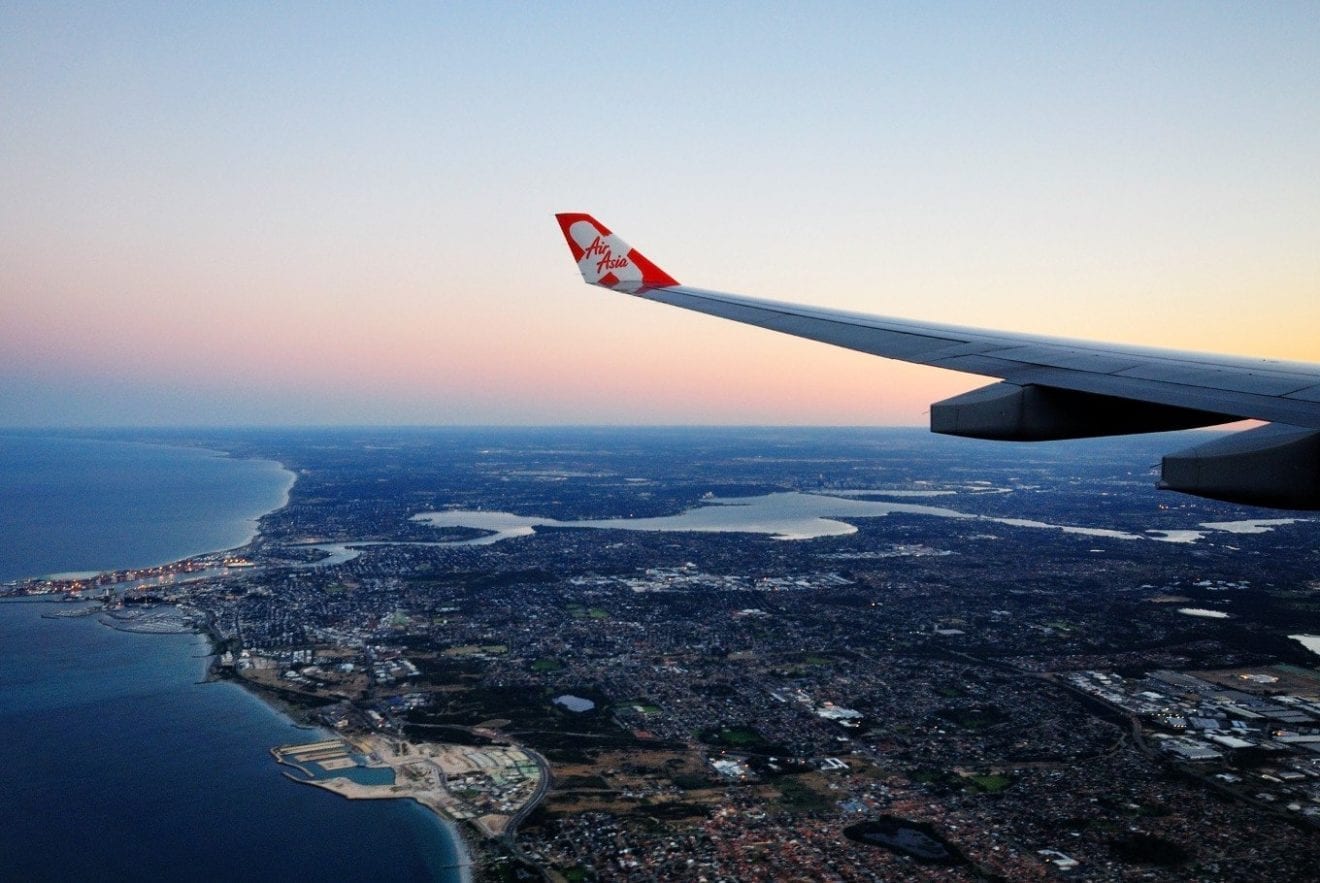
    Low-cost airline AirAsia X entered the U.S. market Wednesday, arriving in Honolulu on an inaugural flight for a new route between Malaysia and Hawaii.

    The AirAsia X flight departed Kuala Lumpur, Malaysia, and stopped in Osaka, Japan, before landing at Honolulu International Airport. The new flight will operate four times per week utilizing Airbus A330-300 aircraft with 12 premium flatbeds and 365 economy seats.

    “We are here to democratize air travel for everyone so flying long haul would no longer be a luxury only a few could enjoy,” AirAsia X Group Chairman Tan Sri Rafidah Aziz, who held a news conference at The Royal Hawaiian hotel after landing in Honolulu, said in a statement. “This landmark route to Hawaii is a bold new chapter in that quest to help more people travel farther for less.

    “But this is just the beginning, and soon our guests will be able to enjoy flights to even more destinations in the US as we continue to grow our international footprint.”

    AirAsia X, an affiliate of the AirAsia Group, operates in 24 destinations in Asia, Australia, New Zealand and the Middle East.

  • Vietnam Motor Show scheduled in August

    Vietnam Motor Show scheduled in August

    They include 12 brands of 10 members of the Viet Nam Automobile Manufacturers Association (VAMA) including Chevrolet, Ford, FUSO, Honda, Isuzu, Mercedes-Benz, Mitsubishi, Nissan, Suzuki, Toyota, and Do Thanh.

    The exhibition will also feature over 50 companies from supporting industries who will bring automobile parts and services.

    The event, which this year will have the theme “connected technology for smart moving”, will highlight the role of technology in modern life.

    Toru Kinoshita, chairman of VAMA, said: “The development of automobiles has had an enormous effect on people’s way of life all over the world. Advanced technology and innovation in the auto industry nowadays has given people incredible freedom of movement and influence over how they want to move, live and enjoy life.

    “Therefore we decided to choose this theme. We would like to express the impact of connected technology on Vietnamese life, thus enabling significant changes to patterns of living.”

    The exhibitors have said they will offer many promotions at the event.

    Also at the exhibition, conferences and forums will be held to discuss urgent issues facing the industry.

    The event, which will be held at the Sai Gon Exhibition and Convention Centre in District 7, expects to welcome 150,000-160,000 visitors.

  • Hong Kong’s millennials plan for retirement earlier than anybody else in Asia

    Hong Kong’s millennials plan for retirement earlier than anybody else in Asia

    Many see Hong Kong millennials as living from paycheck to paycheck and not committing to a long-term plan – but they actually lead their Asian peers in retirement planning, according to new research from BlackRock, the world’s biggest asset manager.

    Four out of five Hong Kong millennials (aged between 25 to 35) have already started preparing for retirement, the highest ratio across Asia-Pacific, with a majority of them betting their financial future on buying stocks, the study shows.

    The young Hongkongers’ high proclivity for retirement savings is against the backdrop of notoriously high living costs in the city and escalating global economic uncertainties, noted the report, which polled 28,000 investors across the world.

    “These findings are contrary to the common view that the city’s millennials would rather splurge on holidays and nice food than save for their long-term future,” said Julia Lee, BlackRock’s head of Hong Kong retail business.

    The study found that 81 per cent of Hongkongers aged between 25 to 35 said they had already begun retirement planning, compared with 69 per cent for their Asia-Pacific peers.

    They are also much more likely to take risks, with more than two thirds pouring money into equities in their investment portfolios, whereas only 42 per cent of their regional counterparts would do the same.

    Hong Kong runs a Mandatory Provident Fund (the MPF), a compulsory pension fund for residents with employees and employers required to contribute monthly.

    “The MPF scheme is good, while we also see local people’s need to achieve good returns from their personal financial investments,” Damien Mooney, BlackRock’s head of retail business for Asia-Pacific, said.

    Hongkongers have the world’s longest life expectancy, thanks to low smoking rates, with the average lifespan for women 87 years, and men 81 years, according to data released by Japan’s health and welfare ministry.

    The average retirement age is 58, meaning residents can be faced with over two decades relying on their savings, in what consistently ranks as one of the world’s most expensive cities to live.

    The BlackRock figures showed 86 per cent of Hong Kong investors, aged between 26-74, had managed to set money aside for retirement, and more are reducing their exposure to cash in the low interest rate environment. In spite of their high awareness, fewer than a half said they were confident in achieving their expected retirement income.

    The MPF delivered its best first-quarter results this year since 2013 with an average gain of 5.89 per cent, but it still lost out to pure stock market investment. For the same period, Hong Kong’s benchmark Hang Seng Index rose 10 per cent.

    That might help to explain why 49 per cent of Hong Kong investors polled by BlackRock said they preferred to buy dividend-bearing stocks, the most favourable asset class over real estate, government bonds and funds.

    When making investment decisions, the majority still rely on advice from online sources, including social media and websites of brokers and asset managers, instead of professional financial advisors that usually come with much higher charges.

  • Tourism plans in Mekong Delta called too ambitious

    Tourism plans in Mekong Delta called too ambitious

    Thirteen provinces and cities in Mekong Delta received 7.6 million travelers in 2016, including 900,000 foreign travelers, or 10 percent of total foreign travelers to Vietnam.

    Under the plan for Mekong Delta tourism development, the region would have turnover of VND25 trillion by 2020, or VND15.3 trillion higher than last year’s turnover.

    Some experts commented the plan is too ambitious, because the number of travelers to Mekong Delta has not increased sharply like other regions. With the overlap in tourism products, poor infrastructure and services, and bad marketing, Mekong Delta tourism agencies should not set a high target in the number of travelers.

    An analyst commented that there could be a ‘one for all’ tour, in which travelers visit one locality to experience all the products of the whole region.

    If travelers visit My Tho, they will not need to go to Can Tho, and if they visit Can Tho, they can go straight to Chau Doc or to Cambodia, and there would be no need to stop over in neighboring localities.

    My Tho and Ben Tre’s tourism has become nearly saturated as all tourism resources such as don ca tai tu (amateur music in southern Vietnam), hand rowing and craft villages.

    Travel firms report that travelers to Mekong Delta stay for 1-2 nights or go home within the day. While the central region can exploit its advantages to provide resort tourism or MICE, Mekong Delta has few large groups of 500-1,000 MICE travelers because of the lack of hotels and services.

    Nguyen Thi Hoa Le, CEO of Hoa Binh Tourism JSC, said that provinces and cities need to provide tourism products with ‘specific taste’.

    She has urged local authorities to make heavier investments in infrastructure and services. “All localities want to develop tourism, but how they can attract more tourists if they hesitate to make big investments?” she said.

    Some businesses think Mekong Delta has become less attractive because of rapid modernization. Many rural areas have lost the charm of the southern countryside.

    In Tien Giang and Can Tho provinces, for example, there are floating markets, an original characteristic of the southern region. However, the markets have become smaller as people now have other modern trade channels.

  • BMW, competing with Tesla, to introduce electric 3 Series

    BMW, competing with Tesla, to introduce electric 3 Series

    BMW plans to introduce an electric version of its popular 3 Series in September, a move designed to fend off rival Tesla.

    The German carmaker will present the vehicle at the IAA auto show in Frankfurt in September.

    The 3 series, which is a high volume sales model, will have a range of 400 km (248 miles) and is seen as a direct response to the success of Tesla’s Model 3, according to Handelsblatt.

    BMW declined to comment.

  • Louis Vuitton and Supreme to host first collaboration pop up in Sydney

    Louis Vuitton and Supreme to host first collaboration pop up in Sydney

    The long-awaited collaboration between Louis Vuitton and Supreme has finally come, and the two labels announced the location of the first collaboration pop up shop.The LVxSupreme collaboration debuted in January at the Louis Vuitton fall 2017 show.
    Louis Vuitton and Supreme fans in Sydney, Australia will be happy to hear that the world’s first LVx Supreme pop up will be located at 95 Roscoe St in Bondi Beach, and the pop up will be open from June 30 through July 13, 2017.

    The fashion world went into frenzy in January when the LVxSupreme collaboration collection debuted at the Louis Vuitton fall 2017 show in Paris.

    Rumors of a New York City pop up began circulating and looked real for a period of time, until a Manhattan community board unanimously voted against the idea, citing preparedness concerns. The board felt that those manning the event would not be ready for the number of shoppers that would line up for the pop up, which was originally planned to be located at 25 Bond Street.

    Since the possibility of a New York City pop up has been shut down, Sydney will host the first pop up for the collaboration, and more pop up locations are to be announced soon.

  • China Mobile, Huawei showcase 5G SBA proto

    China Mobile, Huawei showcase 5G SBA proto

    China Mobile and Huawei have used Mobile World Congress Shanghai to showcase the world’s first 5G core network prototype using service-based architecture (SBA).

    The prototype is based on the 3GPP’s 5G SBA standard. Under SBA, core network functions are defined as loosely coupled, combinable services that can be flexibly scheduled based on standard interface protocol. These elements are self-contained, reusable and able to be independently managed.

    Functions of the 5G SBA prototype include service registration, discovery and authorization, as well as service operations and service-oriented 5G basic business processes such as device registration and connection establishment and release.

    “The service-based architecture shows that 5G is a truly Cloud Native design. It makes carrier networks more agile, flexible, scalable, and open,” China Mobile Research Institute GM Yang Zhiqiang said.

    “We will work to reduce its complexity, and look forward to working with all industry players to accelerate completion of international standards and product R&D. Our goal is to quickly put SBA into large-scale commercial use and enable 5G operations.”

    The companies said the successful demonstration of the 5G SBA prototype provides a foundation for the IMT-2020 Promotion Group’s 5G core network testing.

  • Naver will buy Xerox Research Centre Europe

    Naver will buy Xerox Research Centre Europe

    Korea’s largest internet portal Naver inked an agreement to acquire France-based Xerox Research Centre Europe (XRCE) a lab with expertise in major new technologies such as artificial intelligence and machine learning.

    Naver wants to ratchet up its AI capabilities and expand its presence in Europe, a fresh market for the Korean IT giant.

    Naver has identified AI as a future cash cow business and has been aggressively investing in the area. In January, the company established a separate corporation called Naver Labs dedicated to research and development of AI and future businesses involving AI such as autonomous driving and robotics. The company also applies AI to existing services like search engine and translation apps.

    The acquisition of the 24-year old research center is expected to make a big impact on Naver’s AI development.

    XRCE’s research papers on AI have been adopted by 75 conferences, academic journals and learned societies, Naver said. The center received an award for technological innovation by the Wall Street Journal in 2005 and was named one of the 50 most disruptive companies by the Massachusetts Institute of Technology in 2013.

    The center has 80-plus staffers dedicated to AI research and administrative works.

    Naver Founder Lee Hae-jin announced his desire to tackle the European market last year and left for Europe to spot business opportunities, leaving his role as chief strategy officer for the company.

    The company has been eying new markets because the local internet market is saturated.

    “Europe also has many potential IT start-ups specializing in sectors of AI, Internet of Things and virtual reality, which is why global tech giants are eyeing the market,” the company said in a statement.

    “The research expertise at the European center is perfectly aligned with Naver Labs and we expect immediate, powerful synergies,” said Song Chang-hyeon, both CEO of Naver Labs and Chief Technology Officer of Naver. “XRCE’s world class R&D achievements in AI technology will significantly strengthen Naver Labs’ research.”

    Song is known to be the man behind the deal. As the head of Naver Labs, he visited the center in Grenoble, France, to persuade officials that Naver is aligned with the center’s vision. Naver is known to have been selected from among a list of global IT giants that bid to acquire the center.

    The acquisition process, however, is still ongoing. It is due to be finalized within the third quarter this year. Xerox will maintain ownership of intellectual property and arrange licensing agreements with Naver even after the acquisition.

    A day before, Naver also inked a strategic partnership with Korea’s largest brokerage firm, Mirae Asset Daewoo, to develop financial service with new technologies such as AI. The two will collaborate on investing in start-ups at home and abroad.

  • South Korea joins DHL’s Asia-Europe multimodal network for more flexible freight services

    South Korea joins DHL’s Asia-Europe multimodal network for more flexible freight services

    DHL Global Forwarding, the leading international provider of air, sea and road freight services, has connected South Korea to its comprehensive Asia-Europe multimodal network, giving Korean businesses more flexible and efficient access to the country’s third-largest export market.1

    As part of the extension, new ferry services link ports in Incheon and Busan to a range of major Chinese ports including Shanghai, Taicang and Lianyungang. South Korean shipments will then travel via truck to major inland hubs in cities including Chengdu, Hefei, Suzhou and Xi’an for subsequent transport to Europe on DHL’s rail services. Korean businesses will also gain access to DHL’s Flexigateway service, which selects the optimal rail route for shipments based on available capacity and route speed at any given time — giving them clearly-defined transit times at the most efficient operating cost.

    “With South Korean exports to Europe this year growing at their fastest pace since 2011,2 the country’s major industries have greater need for flexible, scalable freight services than ever before,” said Charles Kaufman, CEO, North Asia; Managing Director, Japan; and Head, Value Added Services, Asia Pacific, DHL Global Forwarding. “While its level of global connectedness has remained relatively stable over the past few years,3 South Korea must continue to invest in deeper trade ties — and the infrastructure that sustains them — to key partners like the European Union and China if it wants to maintain its record of economic growth and development.”

    “Our new offerings like Flexigateway, combined with the range of value-added services already built into our multimodal network, seek to streamline and stabilize the logistics process for Korean businesses of all sizes.”

    DHL’s Asia-Europe multimodal services include specialized solutions for some of South Korea’s largest industries,4 including

    • Car racking and expert handling for automotive exporters;
    • Garment-on-hanger services for the fashion industry;
    • Temperature-controlled containers for technology manufacturers; and
    • Licenses, labelling, and dedicated warehousing for wine and spirits producers.

    The multimodal network is also supported by features including end-to-end customs handling, GPS tracking of containers and a range of cargo insurance options, minimizing the risks of delays and disruption for both full- and less-than-container load shipments on any route.

    “South Korea’s economy continues to rely heavily on value-added exports to grow, and reinforcing its existing trade partnerships will help it continue to weather global uncertainty,” said Seokpyo Song, Managing Director, DHL Global Forwarding Korea. “This new connection to our Asia-Europe multimodal network will not only improve the fundamentals of freight flexibility, cost and reliability for Korean businesses — it also directly addresses the unique needs of our country’s most crucial and well-regarded industries, giving them the confidence to pursue greater expansion overseas.”

    DHL continues to expand its Asia-Europe multimodal network to meet rapidly-growing demand from businesses in both regions, with the company launching its latest route — from Shenzhen to Minsk — in May 2017.

  • 5G connections in China to reach 428m by 2025: GSMA

    5G connections in China to reach 428m by 2025: GSMA

    Chinese operators are on track to launch commercial 5G networks by 2020 and are expected to establish the nation as the world’s largest 5G market by 2025, Mats Granryd, director general of the GSMA, said during a keynote at the Mobile World Congress Shanghai.

    5G connections in China will reach 428 million by 2025, accounting for 39% of the 1.1 billion global 5G connections expected by that point, Granryd said, citing a new study by GSMA Intelligence and the China Academy of Information and Communications Technology (CAICT) released Wednesday.

    “In its early phase, 5G will offer an enhanced mobile broadband experience that will enable next-generation consumer services such as augmented and virtual reality, while at the same supporting mission-critical applications across a range of industry verticals,” the executive said.

    Granryd said mobile operators – China Mobile, China Unicom and China Telecom- in China plan to run a phased testing period for 5G networks from 2017 to 2019 before launching commercially in 2020.

    The trio is expected to deploy ‘standalone’ 5G networks, which will require the construction of new base stations to site 5G equipment, backhaul links and a core network.

    Yet, some mobile operators in Asia are considering to deploy ‘non-standalone’ 5G networks that would run on existing infrastructure supplemented by targeted small cell deployment in areas of high density, allowing 4G and 5G services to run in parallel, the report noted.

    Granryd said 4G penetration is China has increased fivefold to 61% over the two-year period to March 2017 and there remains significant headroom for 4G growth.

    That said, 4G and 5G networks are expected to co-exist in China for a considerable period of time. The rate of 5G network rollout and adoption in China is also expected to be slower than it was for 4G, which Chinese operators were able to deploy rapidly earlier this decade within a mature 4G ecosystem.

    Granryd added that 5G investment in China will follow a more gradual path and over a longer timeframe than 4G, roughly seven years, from 2018 to 2025 – with capex not expected to account for more than 25% of operator revenue prior to commercial launch.

    In their early phase, 5G networks will concentrate on boosting the capacity of 4G networks to support rising cellular data traffic demands.

    Meanwhile 5G will also enable enhanced mobile broadband (eMBB) services such as 4K/8K Ultra-HD video and augmented reality (AR) and virtual reality (VR) applications.

    Though some services will require devices with new form factors, the smartphone is expected to remain the principal 5G interface at launch. The first 5G smartphones are likely to be priced at a premium to 4G models, as they will require an enhanced chipset and RF module supporting multiple sub-6 GHz, and possibly extremely high frequency bands (mmWave), as well as, potentially, a 4K or 8K screen.

    Enterprise is considered to offer operators the largest incremental revenue opportunity. Key vertical markets for 5G applications include automotive and transport, logistics, energy and utilities monitoring, security, finance, healthcare, industrial and agriculture.

  • Singapore and Denmark sign fintech pact

    Singapore and Denmark sign fintech pact

    The Monetary Authority of Singapore (MAS) and the Danish Financial Supervisory Authority (Danish FSA) yesterday signed a FinTech Co-operation Agreement which aims to help FinTech companies in Singapore and Denmark to expand into each other’s markets.

    The agreement will enable both regulators to refer FinTech companies to their counterparts. MAS and the Danish FSA have also committed to exploring joint innovation projects together, and to share information on emerging market trends and their impact on regulation.The agreement was signed at the sidelines of the Money 20/20 Europe conference in Copenhagen. Singapore will also host the inaugural Money 20/20 Asia conference in March next year.

    Sopnendu Mohanty, Chief FinTech Officer, MAS, said: “Singapore and Denmark are important gateways to their surrounding regions. This cooperation agreement signifies the commitment of MAS and Danish FSA to promoting innovation in financial services and growing the FinTech landscape. We look forward to closer interactions between our respective FinTech ecosystems and more opportunities for our businesses to grow, expand and serve customers in each other’s markets.”

    Thomas Brenøe, Deputy Director General, Danish FSA, said: “The FSA is committed to encourage innovation in the financial sector. We are currently establishing a FinTech Lab to support the development of fintechs and provide assistance for these to set up business in Denmark. Financial innovation is not confined to national borders, and we are therefore delighted to enter into this agreement with MAS. This agreement will ensure cooperation between the Danish FSA and MAS and will foster opportunity for businesses in Denmark and Singapore to grow.” Brian Mikkelsen, Danish Minister of Industry, Business and Financial Affairs added: “I am very happy that Denmark and Singapore have been able to join forces in this agreement. I am sure that this will help many FinTech companies and create an even better growth environment for these companies in both Singapore and Denmark.

  • Brick-and-mortar stores with online presence have retail edge

    Brick-and-mortar stores with online presence have retail edge

    The growth of e-commerce may pose a serious threat to brick-and-mortar stores, but there is a silver lining for department stores here. A nationwide survey has found that department stores with both a physical and online presence can have a competitive edge over online-only stores.

    Department store customers who shopped via the store’s online channels – such as its website or mobile app – reported higher levels of customer loyalty than shoppers at e-commerce sites such as Zalora and Groupon.

    This was one of the findings of the latest Customer Satisfaction Index of Singapore released yesterday.

    “This would suggest that traditional brick-and-mortar stores could be better served and complemented by developing a robust omni-channel presence if they have not already done so. It can potentially give them a competitive edge over the e-commerce retailers,” said Mr Chen Yongchang, head of research and consulting at the Institute of Service Excellence (ISE) at the Singapore Management University, which compiled the index.

    The survey of 6,900 Singapore residents and tourists between January and April this year found that satisfaction levels in the retail sector remained similar to last year’s, with the retail sector scoring 72.1 points out of 100, up from 71.7 the year before.

    Of the four retail sub-sectors surveyed, the department store sub-sector showed significant improvement.

    This largely stemmed from more satisfied local shoppers, said Ms Neeta Lachmandas, ISE’s executive director.

    “This increase could be related to the revamps of various stores and product offerings, as well as increased promotional activities targeted at boosting sales.”

    Among department stores, DFS had the highest score of 73.6 while Metro was the only store whose score had increased significantly.

    DFS’ managing director for Singapore and Indonesia, Ms Wilcy Wong, attributed the retailer’s high score to its focus on providing “authentic and personal customer engagement. But at the heart of the DFS experience is of course our people,” she added.

    “We invest heavily in talent management programmes, as well as learning and development through our own DFS University to enhance our operations.”

    The fashion apparel, supermarket and e-commerce sub-sectors did not see any significant change in scores.

    A notable observation among supermarket customers was that those who frequently used self-checkout counters were more satisfied than those who mostly used manned cashier counters.

    The survey also looked at customer satisfaction for the info-communications sector, which scored a record high of 69.6 points out of 100, up 1.6 per cent.

    ISE found that service attributes relating to responsiveness, assurance and empathy were key drivers of loyalty among mobile telecommunications and broadband customers.

    This was in addition to the usual product-related attributes such as suitable subscription plans and fast data speeds.

  • Hong Kong retail sales extend growth to three months

    Hong Kong retail sales extend growth to three months

    Retail sales rebounded modestly for the third consecutive month in May, edging up 0.5% on the year to reach 35.9 billion Hong Kong dollars ($4.6 billion). That was slightly higher than the 0.2% sales increase in April, according to official data released on Thursday.

    Leading the gain was an improvement in the sales of luxury goods including jewelry and watches, which rose for the third straight month at 1.4%. This was followed by a 3.8% increase in department store sales, while sales of vehicles jumped 8% as demand surged ahead of more stringent pollution regulations imposed on diesel vehicles.

    Clothing sales swung back to negative territory and fell 0.4% from a year ago. Sales of electrical goods and consumer durables like cell phones remained in the doldrums, slumping 14% and 12% respectively.

    A government spokesperson said the figures indicated the “relative improvement in inbound tourism” and the “resilience of local consumption demand.” Boosted by long weekends including the three-day Labor Day Holiday and Dragon Boat Festival, the number of mainland tourists in Hong Kong grew 3.7% on the year in May, compared with a 1.8% increase in April.

    But industry players remain cautious on the outlook of nonessential items such as electrical goods, as mainland tourists tighten their purse strings. “Their travel pattern is no long the same — what they want is something more experiential than just shopping,” said Thomson Cheng Wai-hung, chairman of Hong Kong Retail Management Association. “The chance of a quick turnaround for this market is slim.”

    Some luxury retailers in Hong Kong are eyeing overseas expansion to make up for the sluggish business at home. Jeweler Luk Fook is working with local partners to open two shops in Cambodia this year, including a 30,000 sq. ft (2,787 sq, m) flagship store in Phnom Penh, in the hope of bringing the total number of retail outlets there to seven in five years.

    Luk Fook reported an 8.7% decline in revenue to HK$12.8 billion for the year ended in March, dragged lower by a near 20% slump in Hong Kong retail revenue. But same-store sales in the territory turned around in the last quarter of 2016 after falling 12 consecutive quarters.

    But Luk Fook has no plans to expand in Hong Kong despite signs of recovery. “Our expansion will focus on mainland China in the medium- to long-term. We are particularly bullish on the growth of the country’s middle-class population,” said Chief Financial Officer Kathy Chan. The group is planning another 50 shops on the mainland this year to add to its sales network of 1,500 spanning the U.S., Malaysia and South Korea.

  • British Airways will use Qatar planes during cabin crew strike

    British Airways will use Qatar planes during cabin crew strike

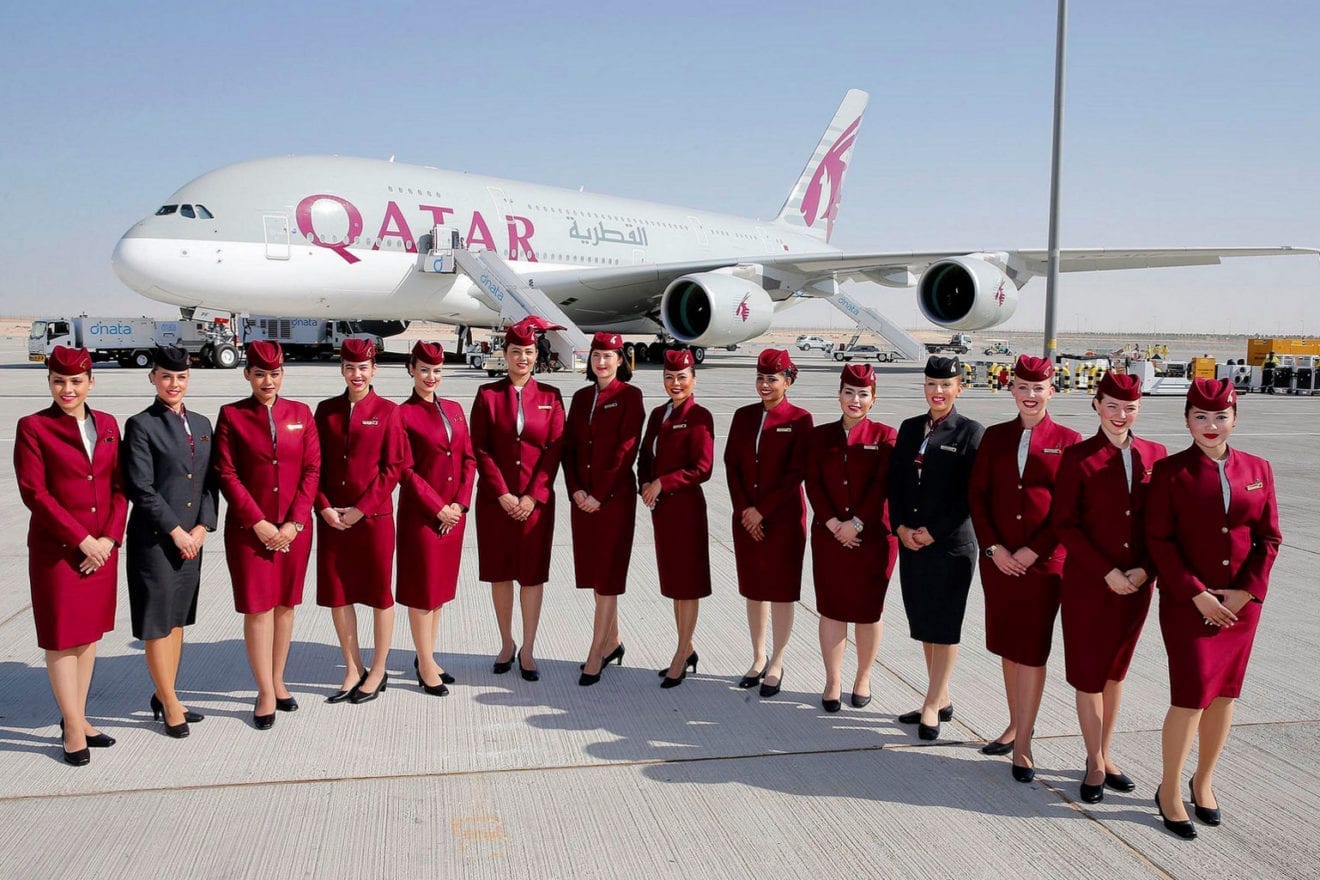
    British Airways will use Qatar Airways planes and crew to fly all its passengers to their destinations during a planned two-week strike by some cabin crew, Willie Walsh, head of BA’s parent company, said on Thursday.

    The strike by BA’s mixed fleet cabin crew – those who work on both long and short-haul flights – is due to begin on Saturday. BA had already applied to Britain’s Civil Aviation Authority (CAA) to use nine Qatar-registered Airbus A320 or A321s betweenJuly 1 and July 16 and Walsh, CEO of International Consolidated Airlines Group (IAG), said the plan would go ahead.

    “I’ll be pleased to say that those airplanes will fly and all of the British Airways passengers who are booked to fly with us over the next couple of weeks will be flying,” Walsh told reporters in Brussels on Thursday when asked if the application to use the planes had been successful.

    Members of the mixed fleet crew are engaged in a long-running dispute with BA about pay. The forthcoming strike is over sanctions on union members involved in previous industrial action.British Airways had previously guaranteed that all customers would reach their destinations, although some flights will be merged.

    The CAA would not confirm that BAs application had been approved and said it was still processing it.

    “Under European regulations specific approval is required for an EU airline, such as British Airways, to wet lease aircraft from an airline based outside of Europe,” a spokesman for the CAA said in a statement.

    “The UK Department for Transport will approve or reject the application taking into account advice from the Civil Aviation Authority.”

    A “wet-leasing” deal would mean that BA pays Qatar to use its aircraft and crew for the two-week period.

    The deal could help Qatar make more use of its planes after its operations were disrupted by a boycott from four Arab nations, forcing it to seek out other destinations on which to use its planes.

    Saudi Arabia, the United Arab Emirates, Bahrain and Egypt cut ties with Qatar on June 5 in the worst diplomatic crisis in the region in years.

    BA and Qatar Airways have close ties. Both are partners in the OneWorld alliance and code share on certain flights, while the Doha-based carrier owns a 20 percent stake in BA parent
    International Airlines Group.