Tag: asia

  • China’s Tech Entrepreneurs Need to Watch Their Backs

    China’s Tech Entrepreneurs Need to Watch Their Backs

    In China, that’s already happening. Alibaba Group Holding Ltd. and Tencent Holdings Ltd. are online-offline conglomerates each with hundreds of millions of users. The pair–directly or through companies they invest in–provides services and products across a range of businesses from retail, media and entertainment to health care, payment, banking, logistics and transportation.

    Their market capitalizations, Alibaba at $358 billion and Tencent at $350 billion, are much higher than those of the state-owned enterprises that dominate the Chinese economy. The country’s biggest bank, Industrial and Commercial Bank of China, is valued at $261 billion; the telecom titan China Mobile is valued at $218 billion. The tech giants, with their wide reach into many facets of daily life, touch ordinary Chinese in ways state companies don’t.

    As their size and influence grow, Alibaba and Tencent are entering uncharted territory: Never in nearly seven decades of Communist Party rule have private-sector companies held such sway over the economy and society. How well they handle relationships with competitors, old-line companies and, ultimately, an authoritarian government that isn’t used to sharing power will be a top challenge in coming years.

    “The most important counterbalancing force against Alibaba and Tencent will probably not come from their direct competitors but the government and the traditional industries they disrupt,” says Yin Sheng, an independent technology consultant who owns shares in both companies. As the two tech companies push further into other sectors, Mr. Yin believes established businesses will lobby the government to enforce tax, antimonopoly and other rules.

    A Tencent spokeswoman said the company “views our peers in the internet sector and traditional industries as partners” and “the healthy growth of the internet industry will benefit users, industry players” and the economy. Alibaba didn’t respond to requests for comment.

    Alibaba and Tencent need to tread carefully. Some of China’s wealthiest businessmen ended up in jail, often when they appeared to fall out of favor with the government. Earlier this month, the government said it was investigating the borrowings of some highflying private conglomerates to rein in runaway debt.

    Bitterness from the old guard is already spilling into view. On a popular business program on national TV late last year, beverage tycoon–and once China’s richest man– Zong Qinghou dismissed as “nonsense” Alibaba Chairman Jack Ma’s idea that a new world is being created as data and growing computing power transform industries from retail to manufacturing.

    “He’s not in the physical economy. What does he make?” Mr. Zong said. The other two panelists, heads of two biggest electronic appliance makers, concurred. An Alibaba executive was quoted in Chinese media at the time as saying that Mr. Zong’s comments were illogical.

    Mr. Zong is one of the more outspoken among a cadre of traditional entrepreneurs raising questions about whether the internet businesses should continue to benefit from preferential policies. Online shops operated by individuals and small businesses, for example, pay extremely low to no taxes under a policy that was aimed at nurturing a fledgling e-commerce sector. But that sector is now huge.

    Members of this business lobby raised the e-commerce taxation issue during spring meetings of the legislature and a top government advisory body. They noted that current tax rules put traditional retailers at a disadvantage and urged the government to heed their complaints because they employ more people than the online firms.

    Big tech firms have also been called bullies and monopolists because of their treatment of competitors. When Uber Technologies Inc.’s China operation was battling Didi Chuxing Technology Co. more than a year ago, for example, Tencent, a Didi investor, blocked some of Uber China’s service accounts on WeChat, its popular messaging app. Some online commentators excoriated Tencent for abusing its power. Uber sold its China operation to Didi last year.

    Above all, there’s their delicate relationships with the government. As I wrote earlier, once disrupters, China’s internet companies are now part of the system. But still, they’re private enterprises founded by ambitious men.

    “The question is whether these companies will demand more say in things as they grow bigger,” says Jingzhou Tao, managing partner of China practice at law firm Dechert LLP.

    Mr. Tao points out that private ownership is increasingly at odds with the current political environment. The Communist Party is strengthening its command of state-owned businesses and building up its presence in private and multinational companies. “Will it come to a point that the party committee will take charge of private enterprises too?” he says.

    For now, neither side is testing the line in the sand. The government knows these companies are important and globally known. The companies are being supportive of Beijing’s goals. Alibaba’s Mr. Ma recently traveled to America to talk up the benefits of China-U. S. trade, and Tencent’s Pony Ma organized a forum on improving the competitiveness of Hong Kong, a former British colony, and the surrounding area.

    Both sides are fumbling for “the best way to coexist,” says an executive who has worked on government relations for decades.
     

  • Auto firms ask to lower component import taxes

    Auto firms ask to lower component import taxes

    High import taxes on auto components and parts, packaging and logistics expenses are major reasons behind locally-assembled cars costing 10-20 per cent higher than imports from Thailand and Indonesia.

    As such, these are also factors hindering growth of the domestic automobile industry, the automobile working group said at the Vietnam Business Forum (VBF) 2017 recently.

    At the forum, a meeting between the Vietnamese Government and the business community held in Ha Noi, the group said higher prices made local automakers less competitive than imports from ASEAN members, and the situation will worsen when import taxes drop to zero per cent in the region next year.

    Sumito Ishii, general director of General Motors Viet Nam and head of the VBF automobile working group, said major automakers and auto part suppliers felt the local automobile industry was operating on a small scale, so it had not attracted the participation of sufficient global part suppliers.

    “The global suppliers will not invest if there is no clear business plan – whether automakers maintain or raise production in Viet Nam or not,” Ishii said.

    Of the current part suppliers in Viet Nam, more than 90 per cent are foreign-invested businesses, and the majority of auto components, parts and materials are imported.

    To help expand domestic auto production, the Government team currently in charge of the automobile industry should have auto assemblers and part suppliers participate in the process so they can understand the industry’s current situation better, the group said.

    The team should organise monthly conferences to discuss policy drafts for the industry and keep the Prime Minister informed.

    Policy makers should also continue working with businesses to build measures that will help cut production costs, reducing the pressure of competition on local automakers from 2018. Programmes have to be developed to connect businesses in the sector.

    “The connection between foreign investment businesses and domestic businesses is ineffective because there is no available database relevant to domestic parts and component suppliers. If we have a database, businesses can compare and contact local part suppliers easily,” Ishii said.

    He said foreign investment businesses should provide the list of auto parts and components that need to be localised with more details so as to help local suppliers prepare the necessary technologies.

    Meanwhile, local part suppliers would need to focus on meeting production demands, including quality, costs and delivery, and step up co-operation with foreign suppliers.

    “As for the automobile industry, the top priority is to build up a sustainable growth market. Relevant long-term, stable policies are needed to help businesses set up their plans,” Ishii said.

    Large output

    Deputy General Director of the Truong Hai Automobile Company (Thaco), Pham Van Tai, said industry needed an output large enough for businesses to invest in technology, machines and equipment to increase the localisation rate (or the rate of parts that are produced locally) and reduce production costs.

    Tai and representatives of other domestic automakers asked the Government to issue policies protecting the local auto market to help local auto and support industries to develop in a sustainable manner.

    Tai drew attention to proposals made by the Ministry of Industry and Trade (MoIT) recently, noting that they contained effective solutions.

    In the proposal, the MoIT asks the Government to cut import taxes on auto parts and components not produced locally to zero per cent from current 15-20 per cent.

    Meanwhile, import duties on components and parts that are being produced domestically should be maintained at the highest possible level to local production and create stable jobs for more than 120,000 workers in the auto industry, they said.

    “To encourage development of the support industry, the Government needs to exempt it from special consumption tax on locally-produced components and parts, contributing to decreasing the prices of cars in Viet Nam,” said Tai.

    The group also proposed that the Government takes measures to control trade fraud, strictly examine certificates of origin and create a healthy and fair environment for all businesses.

    Deputy MoIT Minister Tran Quoc Khanh said the Government gave a lot of importance to the auto support industry.

    It has issued Decree 111/2015/ND-CP and Decision 68/2017/QD-TTg on a 10-year (2016-2025) plan to develop the support industry, he noted.

    “Apart from the ministry’s measures and proposals from auto businesses, the ministry is willing to discuss the industry’s difficulties in order to ensure sustainable development in the future,” Khanh said.

    Earlier, in an evaluation on the country’s automobile industry after 20 years of development, the MoIT had said the industry had failed to reach its set targets, especially a 40 per cent of localisation rate for cars with nine seats or less by 2005 and 60 per cent by 2010. The current rate is between seven and 10 per cent.

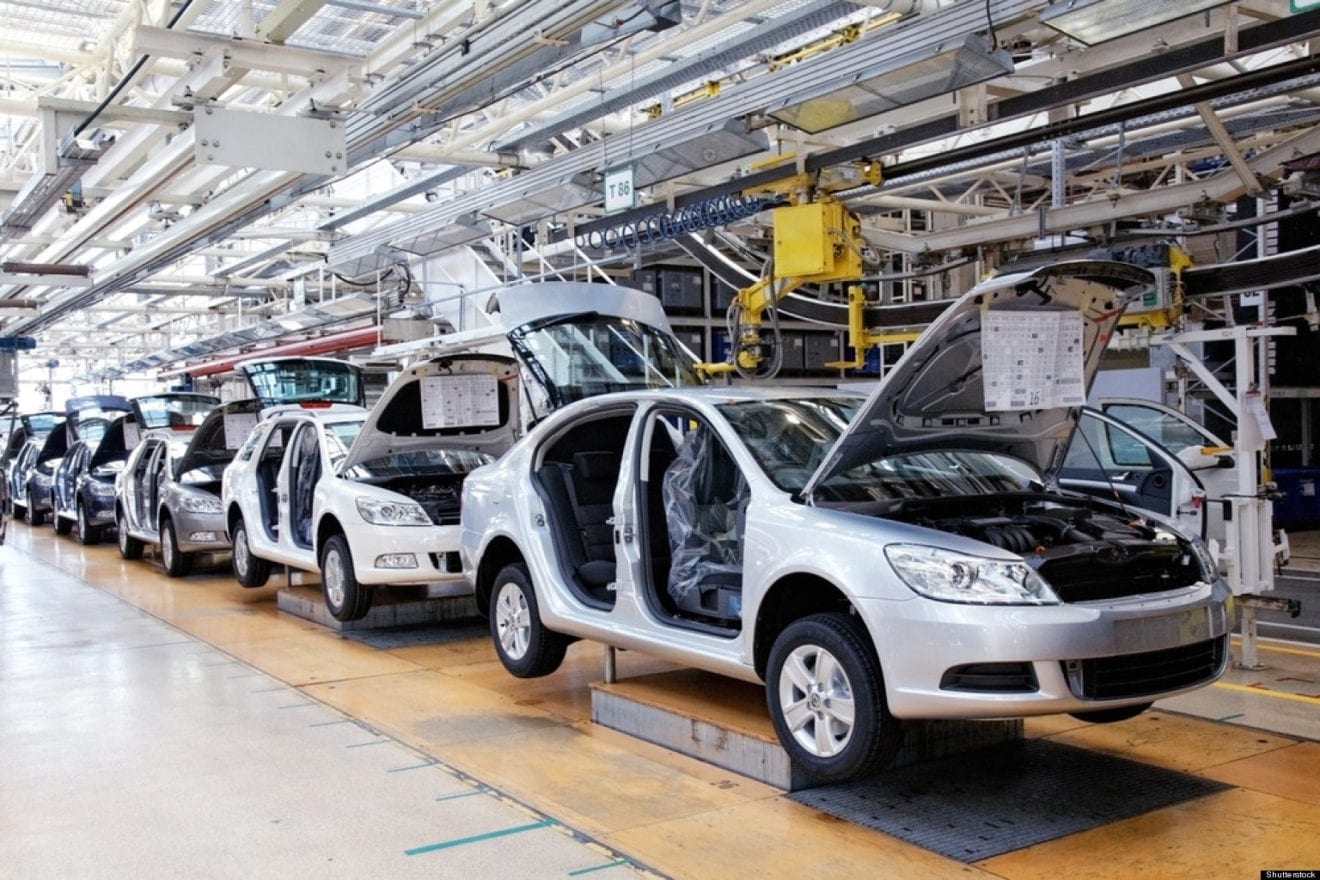
    The quality of local autos has improved but it is yet to match that of imported ones. Prices still remain higher than other countries in the region. Production stagnates at the basic assembly stage of four steps: welding, painting, assembling and examination.

    Besides low market capacity, the ministry said policies on taxes, fees and infrastructure lacked stability and there was no high consensus among State management bodies. These factors have led to a failure in creating favourable conditions for businesses in the auto industry.

  • Retailer Courts Asia more than triples its earnings despite challenging retail environment

    Retailer Courts Asia more than triples its earnings despite challenging retail environment

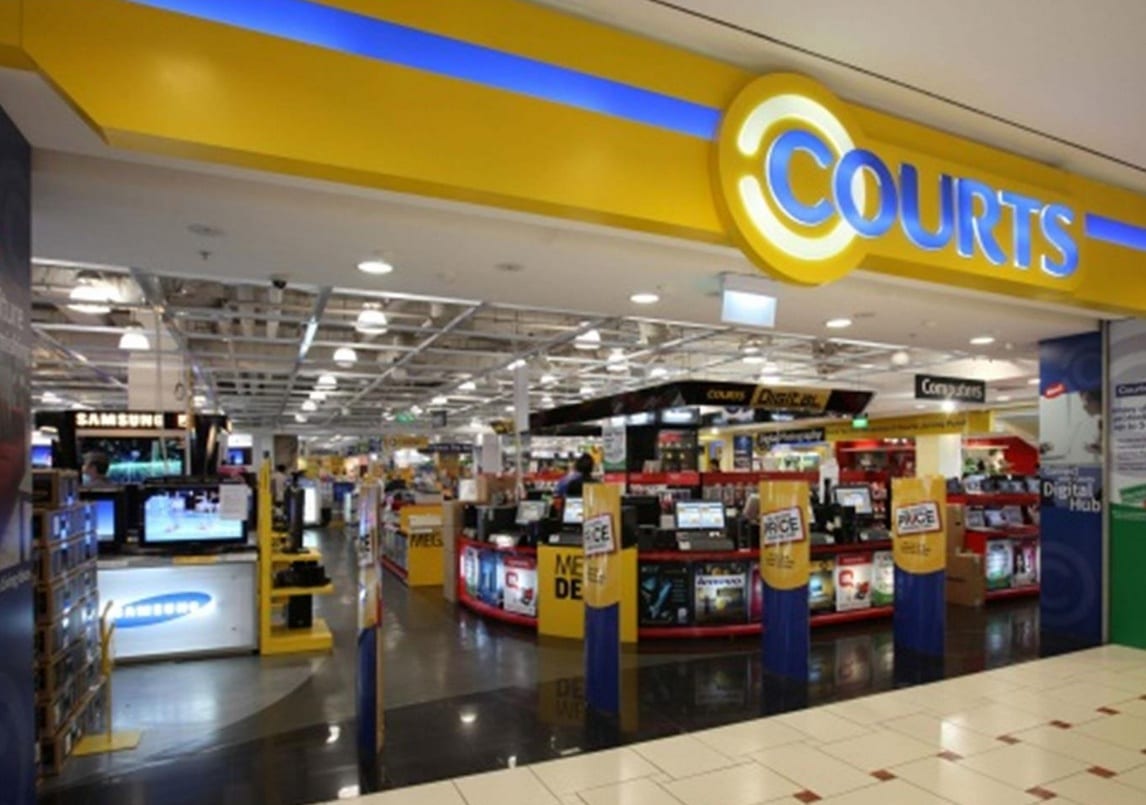
    Despite the challenging retail landscape, Courts Asia more than tripled its profit for the full year ended March 31. Mainboard-listed Courts Asia took in earnings of S$23.7 million, up from S$6.8 million in the previous year.

    The company delivered a strong performance in spite of a slip in revenue, which fell 1.5 per cent to S$740.5 million.

    The firm attributed the profit improvement to better cost and margin management. It said that Singapore contributed 66.3 per cent of the group’s revenue. Sales here fell by 2.7 per cent from last year, mainly due to lower sales of goods, which was offset by higher service charge income.

    While revenue in Malaysia fell by 3.1 per cent due to currency conversions, revenue in Indonesia rose 59.2 per cent due to contributions from new stores.

    Courts Asia has more than 90 stores in three markets, including 69 in Malaysia and eight in Indonesia.

    The company also said it had applied the new Singapore financial reporting standard 115 revenue from contracts with customers (FRS 115) to its financial statements for the year before, even though the effective date for the implementation of the standard is for accounting periods beginning on or after Jan 1, 2018.

    The change has an impact on the revenue recognition for credit sales and services, resulting in a restatement of reporting earnings for prior years, including the 2016 financial year.

    Earnings per share for the full year came to 4.59 cents, while net asset value per share was 42.5 cents as at March 31.

    It declared a final dividend of 1.29 cents per share, which was unchanged from the last two financial years.

    In a press release, the company said it will invest in new store openings across Malaysia and Indonesia, and refresh existing stores across its three markets with the “next generation” concept. It is targeting a minimum of five new stores each in Malaysia and Indonesia by March 2018.

    It added that the company is exploring the option of “pop-up” stores with short term leases that could potentially be converted into permanent stores. This would serve as an interim measure to add market share, it noted.

    The group has also started to trial door-to-door credit sales in Indonesia, which it said would add a new stream of recurring customers.

    Dr Terence Donald O’Connor, Courts Asia’s executive director and group chief executive officer, said that the company delivered a strong set of results despite the challenging retail environment.

    “In the year ahead, we will leverage the growth levers to expand solutions-selling in all categories, transform offline stores into experience centres and drive omni-channel execution with urgency.”

  • SK Telecom conducts 5G trials in 3.5-GHz

    SK Telecom conducts 5G trials in 3.5-GHz

    SK Telecom, Samsung and Nokia have jointly conducted a 5G trial demonstration using the 3.5-GHz frequency band.

    The operator worked with Samsung to develop a 3.5-GHz 5G end-to-end network comprising a 5G virtualized core, virtualized RAN, distributed baseband and radio unit and test device based on the 3GPP 5G new radio (NR) standards established so far.

    The 3GPP has standardized the key physical component technologies of the 5G air interface. The companies’ trial 5G NR system has been developed based on this specification, incorporating innovations including subcarrier spacing of 60 kHz, transmit time interval (TTI) length of 0.25ms to reduce latency and low-density parity-check channel coding.

    SK Telecom has also collaborated with Nokia to co-develop 5G base station equipment and test devices for 3.5-GHz spectrum, achieving Gbps level throughput during a field trial near the operator’s Bundang Office Building.

    The trial also involve the measurement of link quality depending on the distance between a moving vehicle and base station to generate data to be used in the design of optimal 3.5-GHz 5G networks.

    SK Telecom plans to deploy commercial networks using both 28-GHz or another above 6-GHz frequency and the 3.5-GHz band, using the former in highly-concentrated areas and the latter to achieve wide area coverage.

    “With the successful demonstration of 5G communications using the 3.5GHz spectrum, SK Telecom has secured all key technologies for building commercial 5G networks using 3.5-GHz and 28-GHz frequency bands,” SK Telecom SVP and head of network R&D Park Jin-hyo said.

    “We will maintain our leadership in 5G by enhancing our technologies for both above 6-GHz and below 6-GHz frequencies, while playing an active role in the standardization and commercialization of 5G technologies.”

  • Blackstone targets Japanese retail through privatisation of Croesus

    Blackstone targets Japanese retail through privatisation of Croesus

    Blackstone has offered to buy a listed owner of retail assets in Asia-Pacific, valuing the Singapore-based Croesus Retail Trust at SGD901m (€572m).

    Blackstone has agreed to pay SGD1.17 per unit for all of the company’s issued units and intends to privatise it through a scheme of arrangement to be approved by unitholders.

    In 2013, Croesus Trust Retail became the first Asia-Pacific retail business trust with assets in Japan to be floated on the Singapore Stock Exchange (SGX).

    The trust owns a diversified portfolio located predominantly in Japan and has strategic relationships with large Japanese groups Marubeni and Daiwa House.

    Market sources told IPE Real Estate that several Singapore real estate investment trusts, including Croesus, have been trading at discounts to their net asset value, and have consequently attracted interest from investors keen to acquire sizeable portfolios in Asia-Pacific.

    The offer, announced to the SGX on Wednesday, confirmed market speculation of a potential takeover of the trust. Since speculation surfaced in April this year, the Croesus unit price has risen 25%.

    Blackstone will pay unitholders of Croesus a distribution income of up to SDG31.1m, subject to the deal closing by the end of October.

    A simple majority of more than 50% of unitholders, representing at least 75% in value of the units held by unitholders present and voting at the scheme meeting, is needed to approve the scheme.

    In a joint statement to the Singapore Stock Exchange, Croesus and Blackstone said the scheme represents an opportunity for unitholders to realise their investment at an attractive valuation.

    It said unitholders will receive significant premiums to the historical trading price of the units, the net asset value per unit and the net tangible asset per unit.

    CRT and Blackstone said the offer carries a premium of about 38% to the 12-month volume-weighted average price per unit, and that the offer price exceeds the highest closing price of the units since the initial public offering in May 2013.

    The trust has almost 770m units on issue, and, at the end of March 2017 the net asset value of the units was SGD0.95.

    At the end of March, the company reported an occupancy rate of 97.7% and a weighted average lease expiry of 6.5 years.

    Croesus has doubled its portfolio in Japan to 11 retail assets from just four when it listed in 2013. Its market cap has doubled to SGD759.9m since then.

  • The Challenges For Global Retail Franchises in Indonesia

    The Challenges For Global Retail Franchises in Indonesia

    Research company Spire in 2016 found Indonesia is viewed as the region’s largest franchise industry, with experts predicting at least 60 percent of franchise business operated in Indonesia last year with the majority of foreign franchises.

    Amir Karamoy, Chairman of the National Committee for Franchising and Licenses at the Indonesian Chamber of Commerce and Industry, said regional headquarters based in Indonesia should be encouraged as it benefits the country through taxes and human resource development. But at this stage, Indonesia’s complicated regulations regarding retail businesses and franchises limit foreign involvement, particularly for foreign businesses hoping to base a regional headquarters in the country.

    These regulations, as well as strong competition, can spell trouble for even the biggest global brands. The recent announcement that US convenience store giant 7-Eleven will close its doors in Indonesia has prompted speculation on further reforms.

    Modern Sevel Indonesia (MSI), the local arm of 7-Eleven Indonesia, opened its first store in Bulungan, South Jakarta, in 2009.

    “The business model that 7-Eleven implemented made underlying products such as snacks, beverages and cigarettes popular. This had made several other mini markets struggle to compete,” University of Indonesia academic and businessman Rhenald Kasali said.

    The chain introduced the hang-out concept to Indonesia, which saw young people gather to spend time together and snack, which in turn disrupt traditional models where customers would purchase food and then leave.

    Kasali speculated the Indonesian government does not support the business concept, which could have been a factor in MSI closing all stores by the end of June.

    He said government regulations typically ‘take sides’ in support of older retailers.

    “Sixty percent of 7-Eleven’s income came from youngsters who hang out at the store. 7-Eleven suffered because of bureaucracy and regulators that don’t understand the business model,” Kasali added.

    7-Eleven faced tough questioning from the Ministry of Trade when it first launched about the concept and whether the outlets were convenience stores or restaurants. A government regulation which prohibited the sale of alcohol at convenience stores is also believed to be a factor in the shutdown.

    The convenience store brand is not the first international giant to struggling to do business in Indonesia. Last year Swedish furniture retailer IKEA struggled to keep its franchise in Indonesia due to copyright problems with a firm called IKEA Surabaya.

    The Surabaya-based IKEA had registered the name in 2013, while the Swedish firm had registered in 2013. But Indonesian regulators defended the Surabaya business, saying the Swedish IKEA had been commercially inactive. As a result, Swedish IKEA paid a royalty to the Surabaya IKEA.

    Similarly, French fashion brand Pierre Cardin sued Jakarta businessman Alexander Satyo Wibowo who had been using the name for his brand in Indonesia. Like the IKEA case, the courts sided with the local business and ruled Pierre Cardin had lost the rights to the name due to inactivity.

    Although Pierre Cardin is a famous brand globally, the company registered its name in Indonesia in 2009 while Wibowo registered his brand in 1977. As a result, France’s Pierre Cardin no longer open outlets in Indonesia under that name.

  • CapitaLand nabs three mall management contracts in China

    CapitaLand nabs three mall management contracts in China

    These expand the group’s mall footprint by another 115,000 sqm. CapitaLand Limited is accelerating its shopping mall network expansion through the recently-won management contracts with three new partnerships in China.

    According to the group, its subsidiary CapitaLand Mall Asia will be adding more than 115,000 square meters of gross floor area with these deals.

    In Chengdu, CapitaLand has been commissioned by Sichuan Da Yi Real Estate Co. Ltd to manage the retail component of Leshijie, an integrated development in the up-and-coming Pidu district.

    In Foshan, CapitaLand will be managing the retail component of Hehua International Commercial Plaza a landmark integrated development near Foshan’s border with Guangzhou, on behalf of Hehua Shengshi (Foshan) Property Development Co. Ltd.

    In Shanghai, CapitaLand will manage the retail component of Capital Square, an integrated development it is jointly developing with Shanghai Shentong Metro Group, which develops, constructs and operates railway and metro lines in the city.

    “Since embarking on our mall network expansion strategy last August, we have secured six management contracts in Singapore and China to date, growing our portfolio by close to 300,000 square metres within a year,” CapitaLand Mall Asia CEO Jason Leow said.

  • China economy growing but harder times beckon

    China economy growing but harder times beckon

    China’s economy continued to improve in the second quarter, with corporate profits rising and hiring up, a private survey showed, but it suggested the Asian giant may have to brace itself for tougher times ahead even though firms have been able to weather a tighter financing environment.

    The quarterly survey of thousands of Chinese firms by China Beige Book International (CBB) showed yesterday that while the property sector slowed, manufacturing improved further and the retail and service industries bounced back after a difficult first quarter.

    That reinforced a flurry of recent data and policymakers’ comments that indicated the authorities were working to curb financial risks and keep the economy on an even keel heading into a key political meeting this year. The survey showed surprisingly strong performance in the commodities sector despite some price weakness in the second quarter, with the aluminium sector particularly strong.

    Yet signs of stress in the corporate sector pointed to a bumpy ride for businesses. CBB said cash flow was negative for many companies and inventory levels in the second quarter was at the highest in the history of the survey.

    That is in line with official data showing growth in industrial inventories picked up to over 10 per cent in April, sparking worries of weak demand. CBB said there are signs that tougher times could be ahead for Chinese companies during a period of deleveraging and rising interest rates.

    “It remains true that either rates have to come plunging back down, as the (state planner) recently called for, or the present level of corporate activity is headed for a cliff,” CBB said in its report.

    As the government stepped up its campaign to curb debt risks and stabilise the financial sector, growth of China’s broad money supply came in at the slowest in at least two decades in May, though bank lending remained solid.

    The survey showed the corporate sector started to feel the effect of tighter credit conditions in the second quarter. Borrowing was not impacted much, CBB said, likely due to positive business outlook for the next six months.

  • China’s Alibaba boosts stake in SE Asia online sales

    China’s Alibaba boosts stake in SE Asia online sales

    Chinese e-commerce giant Alibaba said Wednesday it would inject another $1 billion into Southeast Asia’s Lazada, as the cashed-up company increases its stake in the region’s nascent online shopping market.

    The investment will raise Alibaba’s holding in Lazada to 83 percent from 51 percent and take its total outlay on the company so far to more than $2 billion.

    “The e-commerce markets in the region are still relatively untapped and we see a very positive upward trajectory ahead of us,” said Alibaba chief executive Daniel Zhang, estimating only three percent of Southeast Asia’s retail sales are conducted online.

    Alibaba, founded by China’s richest man Jack Ma, is a dominant player in the fast-growing online commerce market as shoppers increasingly shun bricks-and-mortar stores.

    Earlier this month Alibaba forecast annual revenue growth of 45-49 percent. That followed an almost doubling in its net profit in the quarter ended March 31, on a 60 percent surge in revenue.

    Alibaba’s Taobao platform is estimated to hold more than 90 percent of China’s consumer-to-consumer market, while its Tmall platform is believed to handle over half of business-to-consumer transactions.

    But its international commerce business accounted for only 10 percent of revenue in the last quarter.

  • Kerry launches new UK-China rail freight service

    Kerry launches new UK-China rail freight service

    Kerry Logistics Network announced the launch of its weekly scheduled Less Than Container Load (LCL) rail freight service between Duisburg, Germany and Shanghai via the Yiwu terminal in the Yangtze River Delta, China, using its own consolidation containers.

    This additional service option for east- and westbound shipments enhances Kerry Logistics’ existing Full Container Load (FCL) and LCL services, offering a transit time of 16 days for westbound cargo, and 21 days eastbound.

    Shipments have already been successfully moved using the new service, which offers weekly departures on Friday eastbound and Wednesday westbound.

    The rail freight solution is part of Kerry Logistics’ end-to-end freight management service, which provides an unrivalled range of upstream services, including storage, quality control, assembly, and reworking in addition to the pre-carriage and delivery to final destination.

    Thomas Blank, managing director of Europe, Kerry Logistics, said, “Our proven track record and unparalleled service network in Asia, together with our local expertise throughout Europe, promise that we can now offer our customers a flexible, cost-effective solution on this route for cargoes from industrial freight, down to smaller e-commerce commodities.

    “Acting as the consolidator ourselves allows us to offer shorter lead times, moving each shipment faster than if we had to wait for a full container from each customer, who can monitor their cargo along the route via online track and trace.

    “We can be more reactive to our customers’ rapidly evolving needs,” Blank added.

  • Vietnam bans new carpooling services from Uber, Grab

    Vietnam bans new carpooling services from Uber, Grab

    The authorities say sharing a car with a stranger comes with risks that passengers should not ignore. It’s yet another bumpy ride for popular ride-hailing services Uber and Grab.

    Their new carpool versions in Vietnam, UberPOOL and GrabShare, have been blocked by the Ministry of Transport, not long after their summer launch.

    Low-cost services that allow drivers to pick up an extra person along the way will create risks for the passenger, the ministry said in a new statement. stopping short of mentioning any such incidents.

    The ban is to protect Vietnamese passengers from what could happen, it said.

    If Uber and Grab disobey the rule, they will be fined VND4-6 million ($175-260) per ride.

    Last month, U.S.-based Uber and Malaysia-based Grab rolled out their carpooling services in Vietnam, promising to help passengers save 30 percent of payments by splitting the costs.

    Uber and Grab entered Vietnam in 2014. Since then, the two have repeatedly made headlines for regulatory issues.

    Exisiting service providers have not been happy. Vinasun and Mai Linh, the two major taxi companies in Vietnam, blame their business difficulties on Uber and Grab, saying the competition has been “unfair” because the foreign firms are not subjected to strict tax rules.

  • Hong Kong’s First Business Travel Mobile App Launched by TravelSky

    Hong Kong’s First Business Travel Mobile App Launched by TravelSky

    China TravelSky Holding Company today announced the launch of CozyGo, Hong Kong’s first business travel management mobile app. Tapping into cross-border corporate travel demand, especially among SMEs (small and medium-sized enterprises), the app – unlike anything currently in the market –  provides efficient business-ready travel service based on corporate travel policies. 

    In one of its first forays into international markets, TravelSky decided to launch a Traditional Chinese version of CozyGo in Hong Kong. The business travel management mobile application is designed to enhance the efficiency of the business travel booking process, and the autonomy of the traveler to manage his/her own booking and approval process within just a few clicks, without the need to spend extra time on internal communications for approval of the trip.

    Until now, full integration with users’ corporate travel policies and complete Traditional Chinese functionality have not been available together in one app in Hong Kong. Users of TravelSky partner companies will be able to use CozyGo for flight searching and booking, trip management, and order approval functions. It also stores frequent flyers’ information to provide convenience for repeated bookings.

    Business travel demand is strong and Hong Kong’s large SME sector in particular is known for frequent cross-border business travel. According to TravelSky, bookings with Chinese commercial airlines increased by almost 12% from around 449 million in 2015 to around 502 million in 2016. And in the first two months in 2017, domestic flight bookings with Chinese commercial airlines recorded a YOY increase of nearly 14%, to around 75 million.

    Mr. Peng Bo, General Manager of GDS (Global Distribution System) Business Unit, TravelSky Technology Limited said, “As a leading provider of information technology solutions for China’s aviation and travel industry, we are excited about extending our technology to Hong Kong. CozyGo is our flagship product for travel management companies in China, which achieved 120,000 downloads in 2016. We aim to capitalize on Hong Kong’s high-potential market to capture market share in the corporate travel sector here. Today’s launch aligns with our vision to become a world-class company, internationally competitive and stable in the Chinese market.”

    CozyGo features at a glance:

    1. Flight Booking – It offers the fastest bookings customized for each corporate client, aligned with the corporation’s travel policy.
    2. Approval – Users can submit orders online for trip approval; the app will send timely reminders to the approving manager.
    3. Flight Data – The large database offers comprehensive details for making flight selection decisions.
    4. Flight Status – Flight status is continuously updated on the homepage, users are informed of any change any time, anywhere.
    5. App Download – CozyGo is available for download on Apple App Store (for iPhone, iPad and iPod Touch), and on Google Play (for Android devices).
    6. Language – Users can select the preferred language to display on the interface, between English, Traditional Chinese and Simplified Chinese, catering to the needs of the international business environment in Hong Kong.
  • Singapore named 9th most economically vibrant city globally

    Singapore named 9th most economically vibrant city globally

    Singapore has shot up by 12 places in a league table that ranks cities on opportunities for property investment. The index, launched last August, looks at factors such as retail sales, household income, adult population size and gross domestic product to determine how economically vibrant a city is.

    Singapore was ranked ninth, up from 21st last December, by asset manager Schroders, which compiles the index of 161 cities.

    Los Angeles took the top spot, with London second, a move up from eighth place in December.

    “One of the key strengths of Los Angeles’ economy is that it is well-diversified across multiple industries, including financial services, media, trade and technology,” said Mr Hugo Machin, co-head of global real estate securities at Schroders.

    “The technology sector, in particular, has grown substantially over the past few years, and this has not only boosted demand for office space but also for residential property, much of it due to the increased hiring of millennials.”

    On London, he said the firm believes it “has a competitive advantage in location, language, scale, infrastructure and cultural diversity”, adding: “If we add the global strength of its universities, London remains a favoured place to invest.”

    Schroders said university rankings, which were taken into account this time for the first time, were the main reason behind changes in cities’ positions.

    “Universities are critical in powering city economies. Innovation and education provide a better trained, more productive workforce. Knowledge-based hubs are growing in economic strength with a positive knock-on to real estate markets in those locations,” Mr Machin noted.

    The new methodology gave a boost to US cities, which filled 16 of the top 30 slots. Boston, where the greater metropolitan area houses academic institutions such as Harvard University and the Massachusetts Institute of Technology, jumped from 24th to third place.

    But Chinese cities were hard hit, after taking four out of the top five spots in December last year.

    Beijing fell from pole position to 11th place, with Shanghai dropping from second place to 10th and Shenzhen plummeting from third to 24th. Tianjin, which came in fourth last year, is no longer in the top 30.

  • Car ownership ratio remains low

    Car ownership ratio remains low

    The industry’s growth for 2012-2016 period was 38%, the highest rate in the South East Asia. About 45% of the new cars were registered in Hanoi and HCM City.

    As of 2016, about 211,000 vehicles were registered in HCM City and 291,000 in Hanoi. 600,000 cars were sold in remaining provinces and cities.

    Cars from Japan and South Korea were favoured in Vietnam. Customers now have more choice as more European car brands have appeared in Vietnam such as Renault and Volkswagen.

    However, the car ownership ratio in Vietnam is only 16 cars for 1,000 people. This rate is lower than Malaysia’s 341 cars, Thailand’s 196 cars and Indonesia’s 55 cars.

    According to Solidiance, one of the reasons is because prices are still high. Car manufacturing, as well as supporting industries, are still weak so Vietnam has to import completely built units. Moreover, poor infrastructure and constant congestion have discouraged people from buying cars.

    It is predicted that the demand will continue to rise with steady economic growth and increasing personal incomes. Import taxes will be reduced or lifted from 2018 after Vietnam joins various trade agreements such as the ASEAN Trade in Goods Agreement. As a result, the car prices will fall and become more affordable.

  • Samsung to invest $380 mln, add almost 1,000 jobs

    Samsung to invest $380 mln, add almost 1,000 jobs

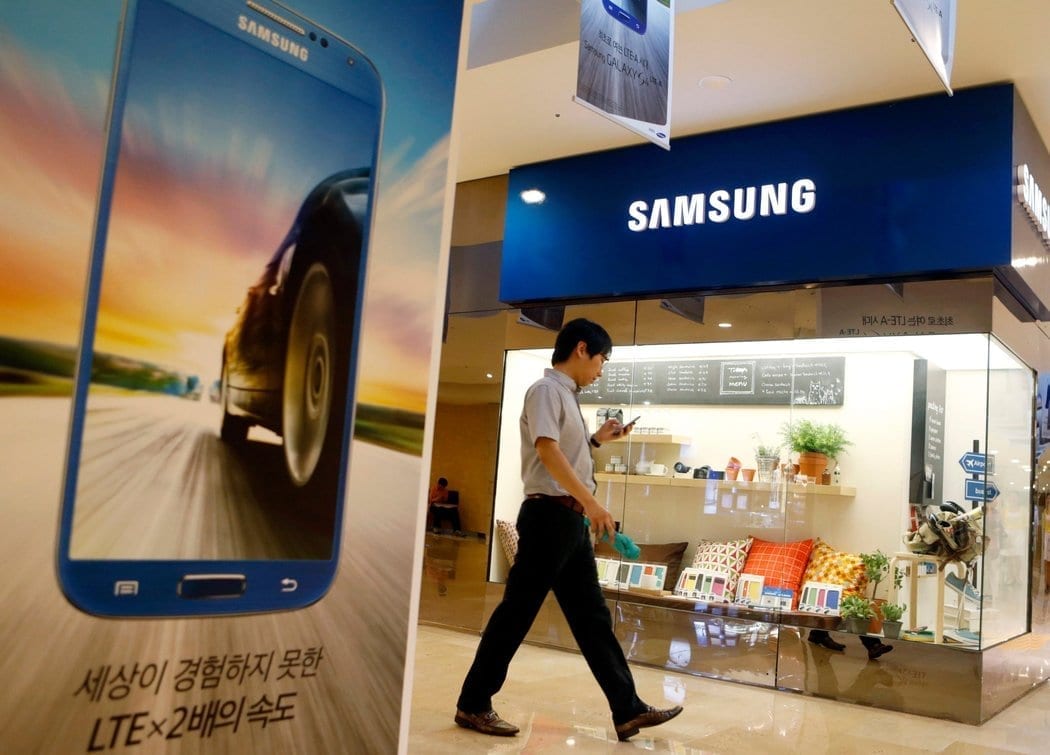
    Samsung plans to invest $380 million and hire nearly 1,000 workers for a new plant in South Carolina to manufacture home appliances, the company announced Wednesday.

    Samsung Electronics America described it as a “state of the art” facility that starting next year will build premium home products, including washing machines, and will be staffed with craftsmen, engineers and operators.

    U.S. Commerce Secretary Wilbur Ross, who is leading President Donald Trump’s “America First” manufacturing and trade strategy, applauded the announcement and appeared at a signing ceremony with South Carolina officials.

    Ross said in a statement the investment was “a direct reflection of the fact that America is becoming an even stronger destination for global businesses looking to grow.”

    Samsung said ultimately facility in the southern U.S. state will be “serving as the U.S. hub for home appliance manufacturing across the business unit.”

    “For nearly 40 years, Samsung has steadily expanded our operations in the United States,” said Tim Baxter, chief executive of Samsung Electronics America.

    “With this investment, Samsung is reaffirming its commitment to expanding its U.S. operations and deepening our connection to the American consumers, engineers and innovators who are driving global trends in consumer electronics.”

    The company alluded to incentives granted by the state government as a factor in the decision to invest in the project, which upgrades a plant formerly owned by machinery manufacturer Caterpillar.

    The South Carolina commerce department said it approved job development credits for the project by the South Korean technology giant.

    The facility also will receive $2.75 million in incentives from Santee Cooper, an electric utility owned by the state, the Post & Courier newspaper reported.

    A Samsung spokesperson declined to comment on the incentives package.

    On its website, the South Korean company said the investment decision was driven by the high-skilled workforce in South Carolina, the state’s record in attracting and retaining other global businesses, “strong local government leadership” and strong highway and port facilities.

    The Samsung spokesperson denied news reports saying the company was moving operations to South Carolina from Mexico.

    “We’re expanding our footprint in the U.S. to meet the surging demand for our products in that market and to increase the speed with which we can adapt our products to the preferences of American consumers,” she said.

    “Mexico is an important market for Samsung and our manufacturing operations in the country continue to serve as a major production bases for the company in Latin America.”