Tag: asia

  • Vietnam’s employers, unions fight again over wage increase

    Vietnam’s employers, unions fight again over wage increase

    Discussions for the annual wage increase have started, and as expected, the business group at the table, the Vietnam Chamber of Commerce and Industry, has come in with a relatively low offer of 5 percent for 2018.

    That would be down from the 7.3 percent hike earlier this year and much lower than the preferred 13.3 percent bump wanted by the Vietnam General Confederation of Labor, which speaks for unions across the country.

    The business chamber, better known as VCCI, argued that businesses are facing harsh competition and many have to scale down their operations.

    But the labor confederation said a 5 percent increase would be just enough to offset inflation. Consumer prices rose 4.74 percent last year, according to official data.

    “Despite annual increases, the current minimum wages are not enough to pay for workers’ basic demands,” a spokesperson for the labor group said. If the group manages to have its way this year, the minumum wage for workers will be raised to as high as VND4.2 million ($185) a month.

    The two groups are the major parties of Vietnam’s National Wage Council, which also includes government officials.

    Minimum wage is used by businesses to calculate salaries for their workers, by multiplying the basic amount by a coefficient assigned to each worker, based on their skills and experience.

    Vietnam has been raising this yardstick every year, a policy that has pitted labor groups against employers.

    Last year, prolonged negotiations ended with a 7.3 percent increase, the smallest in 10 years. The wage now ranges between VND2.58 million and VND3.75 million ($113-165) depending on regions.

    In a March survey by the Vietnam’s Institute of Workers and Trade Unions, a third of the 2,600 workers questioned said their incomes were low and barely sufficient to live on, while 12 percent said their wages simply did not cover living expenses, forcing them to work extra hours.


  • Takashimaya profits soar in Q1

    Takashimaya profits soar in Q1

    Takashimaya announced on June 26th that net profit for the first quarter of the fiscal year surged 44.7%, as the company saw revenues increase slightly and “endeavoured to cater to the increasingly diverse array of customer needs and create sales spaces that deliver new value.”

    The Japanese department store operator reported a net profit of 5.45 billion yen (US$48.7 million) for the three months ended May 31, compared to the same period last year, while operating profit lifted 5.1% to 8.09 billion yen.

    The retailer said first-quarter sales grew 2.8%, hitting 225.48 billion yen (US$2.02 billion).

    Takashimaya credited its rejigged operating strategy with a focus on omni-channel, and an improved consumer sentiment in Japan for the financial result.

    “We made efforts to harmonize the product lineup between stores and the online store, develop distinctive merchandise, provide a streaming service aimed at enhancing convenience for customers and in-store tablets to introduce customers to the online store,” the retailer said in a statement. “These and various other measures contributed to strong sales.”

    During the quarter, the department store’s Shinjuku location opened a specific level for ‘wellbeing’, boasting shops and a café with healthy items, as well as studios and a gym.

    Takashimaya said it expects net profit to life 3% to 21.5 billion yen (US$191.1 million). The firm forecast 12-month operating profits to increase 2.9% to 35 billion yen (US$311.2 million) and a yearly sales growth of 2.% to 943 billion yen (US$8.38 billion).

  • UnaBiz secures IoT license in Taiwan

    UnaBiz secures IoT license in Taiwan

    IoT-dedicated network operator UnaBiz has secured a license to operate an IoT network in Taiwan from the National Communication Commission (NCC).

    As the first of its kind to receive an IoT network operator license from the NCC since Taiwan’s announcement of the use of the unlicensed spectrum, UnaBiz is on track to become a nationwide network operator in Taiwan.

    As a provider of a dedicated communications service for the IotT, the Sigfox low power wide-area network (LPWAN) is currently present in 32 countries worldwide and target to reach 60 countries by 2018. The roll out of the commercial grade global network is in line with Taiwan’s “Asian Silicon Valley” initiative, a vision to transform Taiwan from an ICT specialist to an IoT specialist.

    UnaBiz’s vision is to empower massive IoT in Asia. The network operator will actively engage and collaborate with industry partners, academic institutions and government agencies to help Taiwan address the global IoT market potential.

    “This is a milestone for UnaBiz but also for Taiwan industry which henceforth can boldly step into the Sigfox global IoT market and ecosystem,” UnaBiz MD and co-founder Philippe Chiu said.

    In 2017, UnaBiz will focus on deploying the IoT network in the six main municipalities – Taipei, New Taipei, Taoyuan, Taichung, Tainan and Kaohsiung – effectively bringing Sigfox service coverage to more than 80% of the population in Taiwan.

    The deployment will cover both urban and rural areas, and the LPWAN network will be extended to cover 95% of the population in Taiwan in 2018.

    Along with the fast-paced deployment of the network across Taiwan, the local IoT ecosystem and stakeholders can already evaluate and start developing products and solutions using the royalties-free Sigfox technology. This happens at an excellent timing for Taiwan’s industry looking for transformation and new business opportunities, especially at a global scale.

    The global IoT sensors market is expected to reach $17.81 billion by 2020, and although Taiwan is big in semiconductor manufacturing (60% of global market), it only accounts for 15% of the global sensor manufacturing. Given the predominant impact of Taiwan in the conception, production and integration of smart sensors into electronic hardware in the global IoT market, Taiwan joining the Sigfox ecosystem represents a significant milestone.

    Chiu notes, “To significantly build up the IoT industry, we need a sound ecosystem of highly-engaged players from semiconductors to device manufacturers and all the way up to cloud platforms. That is why, on top of providing Sigfox communication service, UnaBiz is also acting to catalyze IoT opportunities by establishing partnerships and providing keys to address the Sigfox global IoT market.”

    “According to studies, the explosion of the global IoT market will create the largest device market in the world,” UnaBiz CEO and co-founder Henri Bong said.

    “The number will double of that of the current market of personal PC, tablets and wearable technology combined. The growth of this ecosystem not only creates more jobs in Taiwan’s manufacturing industry but will eventually spur a paradigm shift in Taiwan’s entire workforce to that of a more innovative and creative economy, one that engages higher skilled and hence higher-paying workers.”

  • Asia-Africa-Europe 1 cable system launches

    Asia-Africa-Europe 1 cable system launches

    The consortium behind the Asia-Africa-Europe 1 (AAE-1) subsea cable system has announced the launch of the new cable, with services commencing from Europe to far east Asia.

    The 40Tbps, five fiber pair cable system is the first cable to link all major Asian, African, Middle Eastern and European regions, combining both subsea and terrestrial routes.

    It spans 19 nations and territories – Hong Kong, Vietnam, Cambodia, Thailand, Malaysia, Singapore, Myanmar, India, Pakistan, Oman, UAE, Qatar, Yemen, Djibouti, Saudi Arabia, Egypt, Greece, Italy and France.

    The AAE-1 provides termination with Telecom House in Hong Kong and Equinix and Global Switch in Singapore, as well as three termination options in Europe.

    The system has been designed from the outset with 100Gbps technology and is upgradeable in the future to meet growing demand. The consortium said the AAE-1 is the largest subsea cable system to launch in more than a decade.

    Members of the AAE-1 consortium include China Unicom, CIL, Djibouti Telecom, Etisalat, GT5L, Mobily, Omantel, Ooredoo, OTEG, PCCW, PTCL, Reliance Jio, Retelit, Telecom Egypt, TeleYemen, TOT, Viettel, VNPT and VTC

  • Blibli.com acquires Tiket.com, expands into online travel

    Blibli.com acquires Tiket.com, expands into online travel

    Indonesian e-commerce company Blibli.com has acquired a pioneer Online Travel Agents (OTA) in Indonesia, Tiket.com. Blibli.com CEO Kusumo Martanto and co-founder and chief communications officer Gaery Undarsa, the of Tiket.com signed the documents finalising the acquisition recently. At the same event, George Hendrata was appointed Tiket.com’s new CEO.

    Since it was founded in 2011, Blibli.com has held on to a vision of expanding its business line through various innovations.

    In late 2016, Blibli.com introduced its online travel product category, Blibli Travel. Blibli Travel is a special category section that offers travel products on the Blibli.com website.

    Since then, online travel has become one of Blibli.com’s focuses in developing its business due to the size of this market.

    “Tiket.com has a good business track record. In a relatively short time, it grew into one of the biggest OTA in Indonesia. It has maintained its focus on customer satisfaction and has been consistent in running its business.

    “Moreover, we see that Tiket.com shares many similarities of vision, mission and corporate values with Blibli.com. We expect that this can ease the process of achieving synergy between the two. Based on this consideration, we are confident with this acquisition,” explained Kusumo.

    Tiket.com is currently one of the OTA with the biggest inventory of travelling-related and leisure products, namely airline and train tickets, hotel room bookings, car rental, concert tickets.

    Tiket.com has partnered with more than 35 international and domestic airlines, and with thousands of domestic and international hotels.

    Blibli Travel, newly-developed late last year, now has more than 1,000 travel product variants, including train tickets, hotel vouchers, and entertainment and lifestyle tickets.

    Blibli.com partners with various banks offering 0% interest instalment programs and offers a wide array of payment methods to customers.

    With the acquisition, Blibli.com is set to become an e-commerce group offering a one-stop shopping experience and added value to its customers.

    Business target and plan

    “The acquisition process started five months prior. We see this as an opportunity for Tiket.com to grow exponentially, in terms of the plan for synergy and from the point of view of market penetration. Seeing the future potentials and the similar business cultures and vision shared by both companies, we are very excited about the move to become part of Blibli.com” said Gaery.

    Blibli.com will provide full support to Tiket.com, both in the share inventory, sales programme, promotion, and social media penetration. Blibli.com will also help strengthen Tiket.com’s team.

    “Blibli.com is optimistic that from the business point of view we are looking at organic and non-organic growths which are to reach 2.5 times in the second semester of this year,” explained Kusumo about the target by the company for the second half of 2017.

    “With the acquisition, Blibli.com is ready to emerge as the biggest OTA player in the country and to become the only, or the first, B2C e-commerce player in Indonesia whose OTA business offers the most complete variety of travel products,” said Kusumo, who went on to explain that the money for the acquisition was from the internal sources set up by Blibli.com for its business development.

    Moving forward, Blibli.com sees no reason not to expand to other categories of products. The company, however, for the time being will concentrate on developing the two e-commerce companies to cater to the traveling and online shopping needs of its domestic and international customers.

  • Bali Travel Bureaus optimistic of Obama`s vacation boosting tourism

    Bali Travel Bureaus optimistic of Obama`s vacation boosting tourism

    The Indonesian Tourism Travel Bureau Association (Asita) has expressed hope that the visit of former US president Barack Obama to Bali would help attract foreign tourists to the island.

    “We hope the number of tourists from the US to Bali would increase,” Balis Asita Chairman Ketut Ardana stated here, Tuesday.

    The visits of world leaders to Bali help to promote Bali internationally since they are covered by the media, he said.

    Their visits to Bali will also draw other leaders to visit Bali for a vacation, he added.

    Tourists from the US usually stay for more than a week in Bali, and they prefer five-star hotels, he remarked.

    The number of US tourists to Bali had reached 64,042 during the January-April period, or an increase of 19.7 percent from that recorded during the same period last year.

    The US stands sixth among the list of 10 countries contributing the largest number of foreign tourists to Bali. From January to April 2017, a total of 1,817,772 foreign tourists had visited Bali.

    A total of 511 thousand tourists from China had visited Bali during the period between January and April, followed by 353 thousand from Australia, and 74 thousand from Japan.

  • La Chapelle gets green light to list in China

    La Chapelle gets green light to list in China

    Chinese multi-brand apparel group Shanghai La Chapelle Fashion Co., Ltd., backed by Legend Capital, Goldman Sachs and other investors, have received approval from Chinese security regulators to list on domestic Chinese stock exchanges three years after it completed an IPO in Hong Kong.

    Founded in 1998, La Chapelle is often called “China’s ZARA” as it focuses on fast fashion for young female consumers in China. Receiving regulatory approval for its IPO is welcoming news for La Chapelle, and its investors, as the company has previously tried and failed to list on domestic exchanges. Its Hong Kong-traded shares have long traded below its IPO price and are currently valued at a price-to-earning ratio of 3.5, compared to a projected PE ratio of around 29 for its planned A-share IPO.

    With the more favorable valuation, La Chapelle can raise RMB1.64 billion (US$240 million) in fresh capital to fuel its expansion. Its venture investors will also be handsomely rewarded. Goldman, in particularly, will finally be able to make a positive return on investment after suffering significant paper losses.

    Legend Capital invested RMB45 million to acquire a 25% stake in the company in 2009. A year later, as the company reached its earnings target, Legend invested another RMB46 million to remain its stake as required by a valuation adjustment mechanism embedded in the investment contract.

    At the same time, Le Chapelle grew rapidly, quadrupling its sales to RMB2 billion in 2011 from RMB500 million in 2009. But its road to IPO did not go as well. In 2013, its IPO application was rejected by the China Securities Regulatory Commission as the domestic IPO market was suspended.

    That year, Goldman invested RMB300 million for a 5% interest in the company, valuing the company at RMB6 billion, before the company moved its focus to a Hong Kong IPO. Other investors in the company from previous financing rounds include Orchid Asia Group Management Ltd., Boxin Capital, Shanghai Ronggao Venture Capital and Asia Alternatives Management LLC.

    The company completed a Hong Kong IPO in October 2014, raising a total of HK$1.7 billion (US$220 million) by offering 121.58 million ordinary shares at HK$13.98. Its shares subsequently tanked and reached as low as HK$7 apiece last July despite a HK$120 million share buy-back aimed to improve sentiment. The poor performance also put Goldman at a significant paper loss.

    In April 2015, shareholders approved a plan to list on the A-shares market during one of the biggest ever bull markets in the domestic Chinese stock market. Over two years later, the newly approved plan calls for the company to issue no more than 54.77 million new shares to raise RMB1.64 billion.

    Le Chapelle plans to use the IPO proceeds on opening more retail stores. The company has expanded its network of retail locations, which are 100% self-owned, to nearly 9,000 last year from 1,841 in 2011.

  • John Hardy opens second Hong Kong store

    John Hardy opens second Hong Kong store

    Artisan jeweller John Hardy has opened a second Hong Kong store this month, setting up shop on China’s Pearl River Delta.

    Located at Gateway Arcade, the Harbour City shopping area on Hong Kong’s Kowloon, the new store covers 391-square feet and joins John Hardy’s debut store at Landmark (Central) on Hong Kong Island.

    The jeweller is also stocked in multi-brand retailer Lane Crawford, but sees the Gateway standalone store as a prime move due to it interconnected location.

    “The Gateway is one of the most popular destinations,” John Hardy chief executive officer Robert Hanson, told WWD. “It attracts locals, professionals, expats and visitors from mainland China. They’re drawn to the energy and the traffic of the mall. This is our only location on the Kowloon side.”

    Headquartered in Manhattan, New York, John Hardy jewellery is designed and produced at the brand’s Balinese workshop and studio, maintaining a connection with Asia.

    Which is why inside, the new store boasts boards displaying tools, raw stones, paint-brushes, pigments and photos of craftsmanship, displayed throughout dark coloured store. The jewellery is displayed in glass display cases set on pedestals.

    Interestingly, the Hong Kong store also implements John Hardy’s special front drawer system – something already established at the jeweller’s SoHo boutique, which allows sales associates to be alongside clients rather than behind a counter; a more informal model of selling that allows clients to explore products.

    John Hardy now has stores two stores in Hong Kong, and three in Bali, including one Duty Free location. It is eyeing distribution partnerships for China, Hanson told WWD.

    “The Southeast Asia area has always been vital to the brand,” he said. “We opened Gateway Harbour City to build more awareness with mainland Chinese.”

  • Facebook hits two billion user mark

    Facebook hits two billion user mark

    Facebook said Tuesday it now counts two billion active monthly users, as the social giant’s founder Mark Zuckerberg highlighted his new mission — not just connecting people, but helping them find common ground.

    “As of this morning, the Facebook community is now officially 2 billion people!” Zuckerberg wrote in a post marking the milestone.

    “We’re making progress connecting the world, and now let’s bring the world closer together,” he wrote. “It’s an honor to be on this journey with you.”

    Facebook’s announcement came as it works to redefine its purpose, led by Zuckerberg who traveled the US this year to better understand what people want out of the social network.

    “We realize that we need to do more too,” the 33-year-old said in a recent interview.

    “It’s important to give people a voice, to get a diversity of opinions out there, but on top of that, you also need to do this work of building common ground so that way we can all move forward together.”

    The firm’s new mission statement says it seeks “to give people the power to build community.”

    Zuckerberg’s message was echoed by Naomi Gleit, a vice president at the internet giant, who credited the millions of small communities emerging within Facebook for helping drive growth.

    More than a billion people take part each month in Facebook “groups” — built around everything from sporting interests to humanitarian projects, she said in an online post on Tuesday.

    For Gartner analyst Brian Blau, Facebook appears to be striving to become “more of a community company than a technology company.”

    He noted that Facebook’s role in last year’s contentious US election — during which social networks were awash in misinformation — may have been a motivating factor.

    TV shows

    Founded in 2004, the social media behemoth hit the billion-user mark five years ago.

    “These billion levels are significant milestones; and certainly it is a lot of people around the planet,” said Blau. “It goes to show the power of community, and how people are naturally drawn to each other.”

    As it has grown, Facebook has updated features to fend off challengers such as Snapchat and adapt to trends such as the migration of news and streaming video online.

    In the latest move to deepen its reach, it revealed Monday it is starting production on high-quality television series and gaming shows to be broadcast on its platform.

    Working with a small group of partners, Facebook hopes to start putting out episodes of its forthcoming series by the end of the summer, Nick Grudin, the vice president for media partnerships.

    Facebook’s initiative follows similar moves by Netflix, Amazon and the online television platform Hulu — a joint venture by Disney, Comcast, 21st Century and Time Warner — who have thrown themselves into content production, as have YouTube and Apple, although on a more modest scale.

    Battling hate

    Chief among the challenges it faces, Facebook is under pressure — along with other social media giants — to tackle the proliferation of hate speech and extremist content, trolls and misinformation, while safeguarding freedom of speech.

    Facebook, Microsoft, Twitter and YouTube announced Monday the launch of an anti-terror partnership aimed at thwarting the spread of extremist content online.

    Each of the technology giants has been working individually to prevent its platforms or services from being used to spread extremist views.

    The “Global Internet Forum to Counter Terrorism” intends to share engineering, research and knowledge to “continue to make our hosted consumer services hostile to terrorists and violent extremists,” the companies said.

    Facebook this month launched a series of counterterrorism measures in the wake of attacks in Manchester and London.

  • Public cloud adoption growing globally

    Public cloud adoption growing globally

    The use of public cloud is increasing globally, with many organizations seeing substantial process and financial benefits, according to a new report conducted by Vanson Bourne for Barracuda Networks.

    On average, organizations have nearly 40% of their infrastructure in the public cloud today, with the expectation to increase this to 70% over the next five years.

    Four in 10 reported that their organization relied on public cloud deployments to expand their services, often replicating those over multiple regions, while 30% said they only migrated selected services to the cloud and kept the balance on premises.

    Overall, the survey found that organizations are growing more comfortable with hybrid environments that deploy a range of public cloud services along with more traditional on-premises infrastructure.

    The research surveyed 1,300 IT decision makers from organizations using public cloud Infrastructure as a Service (IaaS) from the Americas, Europe, Middle East and Africa (EMEA), and from Asia Pacific (APAC).

    Of the 450 APAC IT decision makers who participated in the survey, 150 of them were from ASEAN countries Indonesia, Singapore and Malaysia. The report outlines the respondents’ use of public cloud, benefits of public cloud, challenges with public cloud, and public cloud security.

    However, there are still a significant number of organizations that are not clear on the shared security model and the implication to their data and applications.

    “The challenges in migrating legacy security appliances and architectures require having the right infrastructure for securing hybrid cloud solutions. Organizations need to select cloud-ready security solutions that are designed for the new architectures and capabilities enabled by public and hybrid cloud adoption,” Barracuda SVP and GM of security Hatem Naguib said.

    Nearly all the respondents (99%) said that their organization has seen benefits as a result of moving to the public cloud, including greater scalability and reduced IT expenditures. The survey found, on average, that organizations didn’t use a single cloud provider for everything, and cited a number of reasons for this: Top of mind was that different providers had different strengths (63%), followed by the view that this increased security (51%) and helped keep costs down (42%).

    But the public cloud also involves fresh challenges. Security remains to be the biggest challenge when it comes to using the public cloud – 71% felt that security concerns restricted their ability to migrate workloads to the public cloud. Nine in 10 (91%) of organizations reported they worried about their use of public cloud, with cyberattacks being the chief concern at 54%. Phishing (50%), DDoS (47%), APTs (45%), and ransomware (41%) were the main threats that most conerned them.

  • Smart Mobility Consortium holds C-V2X demo in Hong Kong

    Smart Mobility Consortium holds C-V2X demo in Hong Kong

    Hong Kong’s Smart Mobility Consortium has held the city’s first demonstration of the use of cellular vehicle to everything (C-V2X) technology for connected cars.

    The demonstration was conducted at Hong Kong Science Park as part of the Intelligent Transportation System (ITS) Asia-Pacific Forum 2017.

    It used operator HKT’s C-V2X trial network, using the 2.6-GHz band for vehicle-to-infrastructure communications and 5.9-GHz for vehicle-to-vehicle communications.

    A vehicle fitted with C-V2X technology demonstrated scenarios including the transmission of vehicle-to-vehicle do not pass, vulnerable road user, blind spot or lane change warnings, alerts sent in cases where vehicles need to make emergency stops and intersection collision warnings.

    The Smart Mobility Consortium was founded in March by HKT, Huawei, Qualcomm and the Hong Kong Applied Science and Technology Research Institute (ASTRI).

    “Three months ago, we shook hands and signed the MoU to establish the Smart Mobility Consortium. Today, we are working hand-in-hand to bring the first demonstration of C-V2X technology for pushing safe mobility in Hong Kong,” HKT group managing director Alex Arena said yesterday.

    “The demonstration shows how C-V2X alerts drivers to dangers under different use cases on the road and emergency traffic conditions, which will make the roads safer and Hong Kong a better city to live in. Being the mobile network technology leader in Hong Kong, HKT will continue to push and realize C-V2X technology & applications, in support of the Government’s Smart City vision and strategy.”

  • Fusionex wins contract with Asian logistics and communications provider

    Fusionex wins contract with Asian logistics and communications provider

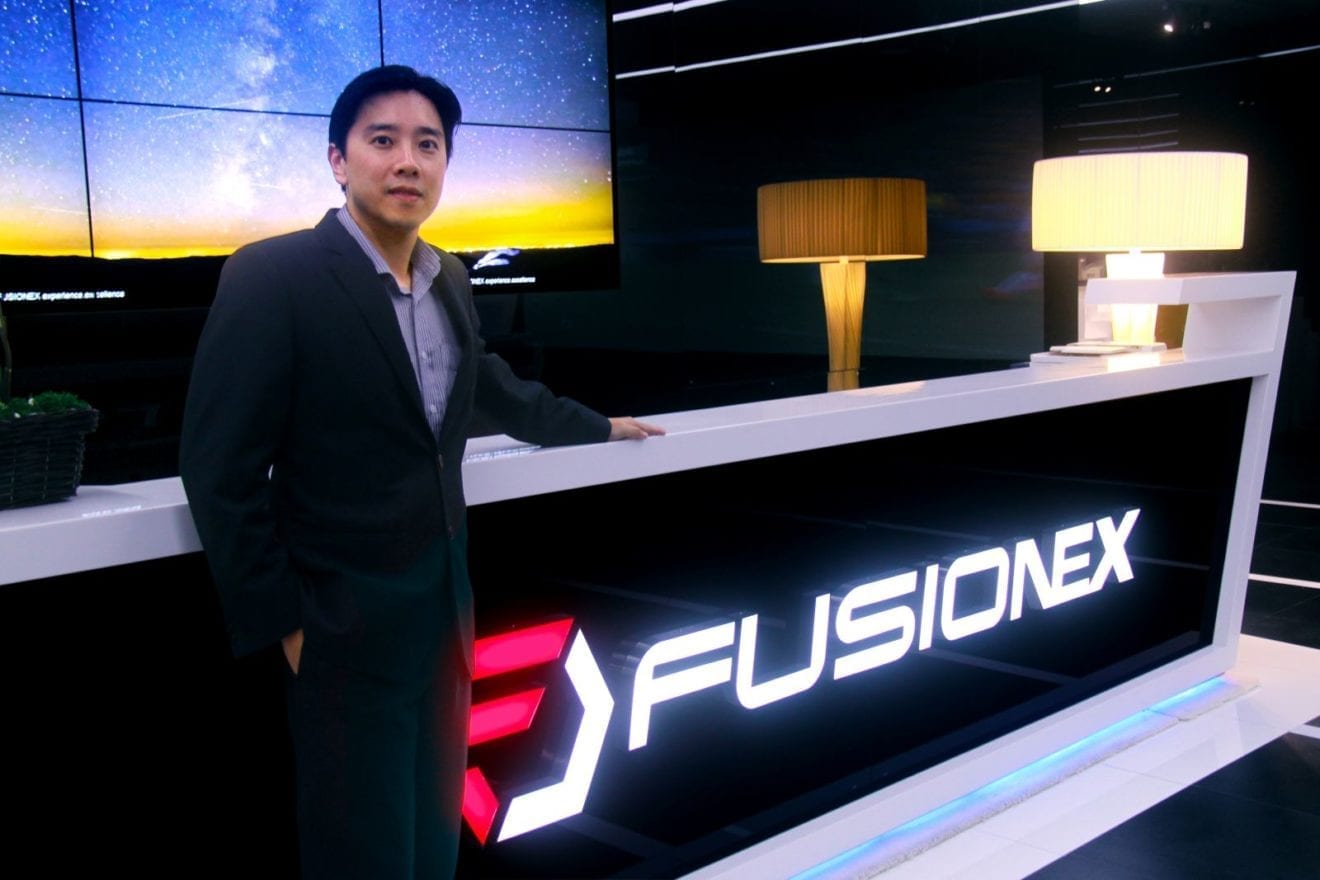
    Fusionex, a software solutions provider specialising in Big Data Analytics (BDA), the Internet of Things (IoT), Artificial Intelligence, and Deep Learning, has won a multi-million dollar multi-year contract to deliver a data management solution for an Asian logistics and communications service provider to revamp how it engages with customers.

    The client is one of the leading logistics and communications providers with a presence in more than 1,000 locations nationwide. Among the services offered by the client are 24-hour outlets, self-service terminals, mobile outlets, postal agents, and stamp agents.

    In line with the client’s plans to revolutionise their businesses processes and bolster their ability to compete in a modernising world, the data-driven customer relationship and analytics solution is intended to increase the user-friendliness of their services and simplify their interactions with customers.

    Operating such a huge organisation with outlets across multiple locations proved to be cumbersome especially when seeking to craft overall corporate strategies from disparate datasets. Each location had their own set of data idling in physical storages and legacy IT systems which were also hard to access due to differing formats.

    The types of customers who were catered to in those various locations also differed based on age, gender, income, whether they lived in urban or rural areas, and other demographics. Consolidating all their customer engagements into a single platform would help the client tremendously in automating their customer engagement processes and streamlining their response times.

    Previously, customer engagement officers were only able to view records available to each particular branch, but now they can see all records of their engagements with specific customers, thanks to the consolidated platform. Now, when a customer calls a branch, the officer in charge would be able to see the customer’s entire call history including calls to other branches, and what complaints had been made before – all on a single screen.

    This will help improve customer engagement quality and response time, where the customer’s complaints can be dealt with the instant the phone is picked up, rather than having to check with a colleague or a superior and then getting back to the customer at a later time. This consolidated solution will also be applied to the client’s subsidiaries, bestowing them with the convenience of streamlining customer information at a greater pace.

    Data management and insights mining will also be carried out for the client via Big Data Analytics platform Fusionex GIANT 2017. This platform will help the client draw data related information to its customers, vendors, suppliers, and internal business processes. From all this disparate data, GIANT 2017 can piece together past patterns and make predictions of future trends.

    This gives the client the ability to gain insights into everything that’s happening within the organisation, as well as foresights into the future and how the organisation can adapt. The client will also be able to craft new products and services, decide on expansion plans, and other strategic moves with more accuracy, confidence, and a higher chance for success.

    Ivan Teh, Fusionex managing director and chief executive officer, commented: “The team is excited and can’t wait to roll out our solution to give the client a greater edge over their competition. IT solutions have the potential to be game changers in this day and age and we believe the client will begin reaping immense benefits from the get go once this project goes live.”

  • BMW Plans $1 Billion Expansion in Assembly Plant

    BMW Plans $1 Billion Expansion in Assembly Plant

    Germany-based BMW will invest $1 billion to expand the company’s assembly plant in Spartanburg, South Carolina.

    Dr. Norbert Reithofer, Chairman of the Board of Management, BMW Group, said, “We will expand the plant’s annual production capacity by 50% up to 450,000 vehicles by the end of 2016. Today’s capacity is around 300,000 vehicles. This investment will also create an additional 800 jobs, increasing the total workforce to 8,800 on site.”

    The additional investment will be used to increase capacity, which is necessary to meet strong global demand for BMW X models. “Plant Spartanburg was built to enhance and expand the BMW line-up, underscoring the BMW Group commitment to the United States” said Dr. Reithofer. “In addition to the X3, X5, X6, and the new X4, we are today announcing another all-new, larger X model to be manufactured exclusively at this plant for our world markets: the X7.”

    Harald Krüger, Board of Management member for Production explained the important role of the US for the BMW Group production strategy: “The BMW Group strives for a good balance of growth among all markets and continents. The Spartanburg plant is an important building block in our international network of 28 production and assembly facilities in 13 countries today and makes a vital contribution to profitable, globally-balanced growth.”

    “Our U.S. plant is the best example of our successful strategy of ‘production follows the market’. The state of South Carolina has supported us as a valuable and reliable partner throughout our 20-year involvement in the region, making the United States our second home,” he explained.

    “We are expanding BMW Plant Spartanburg as our center of competence for production of BMW X models and broadening our product portfolio,” Mr. Reithofer said. “This expansion means Spartanburg will have the largest production capacity of any plant in our global production network. This plant already exports, on average, 70% of its annual production with a 2013 value of more than US$ 7.5 billion which, according to the U.S. Department of Commerce, makes BMW the largest U.S. vehicle exporter to non-NAFTA countries.”

    Since production began 20 years ago, in 1994, the Spartanburg plant has produced over 2.6 million vehicles for BMW customers around the world. Currently the BMW X3, X5, X5 M, X6 and X6 M are all produced at the plant.

    “This is the fifth expansion since production began 20 years ago and represents another major investment,” said Manfred Erlacher, President & CEO of BMW Manufacturing. “The increase in annual capacity, the number of models produced, and the number of jobs on site, reinforce the major role BMW is playing in the region’s economic vitality through technological innovation, environmental stewardship, and development of a highly skilled workforce.”

  • Connected consumers driving growth of smart devices in Asia Pacific

    Connected consumers driving growth of smart devices in Asia Pacific

    Action cameras, flat panel TVs and wearables were the fastest-growing technology products in the past year.

    The consumer technology market in Asia Pacific (APAC) has grown tremendously over the past year, with the introduction of new technologies and advancements of existing technologies.

    One innovative product that is gaining popularity in the market is the action camera. More brands (from 2 brands in 2015 to 13 brands in 2016) that offer 360-degree features have entered the market. In the last 12 months, emerging markets in APAC have been the key growth driver for such action cameras, registering 57% and 33% increase in sales volume and value respectively, while the region’s developed markets experienced a corresponding 9% and 40% growth last year.

    Action cameras with 4K features are also selling well with sales accounting for 47% and 52% growth in volume and value respectively in APAC. Meanwhile, emerging markets in the region contributed up to 46% share of the pie in both volume and value terms.

    “Nowadays, consumers are increasingly sharing videos, contributing to the rising popularity of action cameras,” said Gerard Tan, Senior Director, Technology at GfK Asia. “Besides one of its key draw factors of being able to connect seamlessly to today’s smartphones, action cameras also tend to appeal to active consumers who are seeking new and interesting ways to record their lifestyle activities to view or share in full HD quality.”

    Another product which has jumped onto the 4K bandwagon is TVs. In the past year, 4K TVs, also known as Ultra High Definition (UHD), have been gaining traction as sales growth hit over 103% in units across APAC in the past 12 months, with the market upgrading the display resolutions from Full High Definition (FHD) to UHD. Demand is expected to continue to rise at a rate of 42% in 2017, with emerging economies projected to register higher growth (55%) due to the erosion of UHD prices.

    “There is a rising uptake of 4K TVs as discerning consumers are increasingly choosing UHD TV technology due to its sleek design and better image quality,” observed Tan. “The popularity of UHD will subsequently create more opportunities for content studios to produce better image content, especially when more recording devices are beginning to support 4K recording, enabling more UHD content to be made readily available for consumers.”

    Since the advent of the Smart TV in 2011, there have been ample opportunities for companies to develop TV software for its platforms. In the last 12 months, sales of Smart TVs in APAC continued to increase by 40% to reach over 5 million units.

    One of the latest technologies available in the TV market is OLED TV—a TV display technology based on the characteristics of organic light-emitting diodes. According to GfK findings, OLED TV has been registering significant growth since its launch in APAC in 2014, growing in demand from 7,000 units in 2014 to 98,000 units in 2016. As more brands continue to come into the equation, the OLED TV market is projected to expand further by more than 63% in 2017, with huge growth anticipated from the developed markets in APAC.

    Meanwhile, core wearables, comprising smart watches, and, health and fitness trackers, is yet another thriving category within the consumer electronics. Total sales units in the last year reached 3.3 million across developed APAC markets as consumer spending on the product category grew 9% year on year.
    “Heart Rate Sensor and GPS are generally the key features that appeal to consumers looking to purchase a wearable device, and this is reflected in the significant increase in devices that provide these features. The sales of wearables with heart rate sensors rose by 28% within a year, while devices with inbuilt GPS almost doubled (98%) during the same time period,” said Tan.

    With consumers embracing the digital lifestyle and using smart devices, the overall consumer technology market in APAC is expected to perform positively this year, with TVs, action cameras and wearables likely to experience further growth.

  • DoCoMo launches prepaid SIM for foreign visitors

    DoCoMo launches prepaid SIM for foreign visitors

    Japan’s NTT DoCoMo will this week launch a new prepaid SIM service for foreign visitors to Japan providing access to its network for 15 days.

    The Japan Welcome SIM offering will launch on July 1. It will allow travelers to apply for the service online prior to leaving their home country and pick up their SIMs in locations such as international airports upon their arrival in Japan.

    Visitors will be able to subscribe to one of three 15-day plans, including a 1,000 yen ($8.90) plan providing unlimited 128kbps internet access and a 1,700 yen plan providing download speeds of up to 682Mbps for the first 500MB used. Additional high-speed access can be purchased for 200 yen per 100MB of 700 yen per 500MB.

    From October, DoCoMo will also launch a plan providing free internet access in exchange for viewing a certain number of video ads and filling out a survey prior to their arrival.

    DoCoMo partners will also be able to bundle access to the Japan Welcome SIM service with their own services. Initially Tokyu Hotels and Booking.com will be providing the service. This will include the ability for reselling businesses to offer unmetered access to their own web services.