Tag: asia

  • Japan’s BITPoint to Add Bitcoin Payments to Retail Outlets

    Japan’s BITPoint to Add Bitcoin Payments to Retail Outlets

    BITPoint Japan, the company behind Peach Aviation Ltd.’s move to let travelers use bitcoin to pay for tickets, is planning to give hundreds of thousands of Japanese retail outlets the ability to accept the digital currency.

    “We’re holding discussions with a retail-related company,” Genki Oda, BITPoint’s president, said in a recent interview. “By going through a company providing payment terminal services to shops, we have the possibility of increasing its use at one stroke. It’s easier than talking to lots of individual retailers.”

    BITPoint is joining a flurry of companies embracing regulations, enacted in Japan last month, that recognize digital currencies as a form of payment. That has helped to make yen trades one of the world’s largest transaction pools, exceeding China’s pole position at the end of 2016, according to Oda. Bic Camera Inc., one of the country’s biggest electronics retailers, began accepting bitcoin at two stores in Tokyo last month.

    “We’re also talking to a big convenience store operator about using it,” said Oda, 36, who also runs BITPoint parent Remixpoint Co., which had a market value of about 21 billion yen ($189 million) on Friday. He said he’s aiming to make an announcement by early next year.

    The shares of Remixpoint rose as much as 18 percent to their daily price limit. Last week, Remixpoint said it will convert debt issued to BITPoint into equity, raising its ownership in the subsidiary to 97.7 percent.

    Bitcoin, which debuted eight years ago, is gaining wider use as a way to pay for goods and services, and lets people transact without oversight from governments, regulators or central banks. The virtual currency has been rallying against the dollar and other fiat currencies and was trading at $2,210 on Monday, near record highs.

    While BITPoint operates as a bitcoin exchange, it’s pushing to promote the use of the cryptocurrency in stores and other retail outlets, instead of as a speculative instrument. The company currently has ties with tens of retailers and plans to expand that number, Oda said.

    A change in Japanese law on April 1 formalized rules around anti-money laundering and put in place standards for security and audits. Restaurant booking site Gurunavi Inc. will start letting diners pay with bitcoin later this year, the Nikkei newspaper reported last month.

    “It’s funny how the whole narrative of bitcoin being risky or dangerous has changed, and it is now seen as a form of pride to regulate and embrace it,” said Thomas Glucksmann, head of marketing at Hong Kong-based bitcoin exchange Gatecoin.

    Asked about the recent climb in bitcoin’s value, Oda said he’s wary of the sudden jump and doesn’t think it’s sustainable. At the same time, Japanese investors and day traders are taking a serious look at bitcoin as an asset class, thanks to the new regulations, he said, adding that several large foreign exchange brokerages will begin bitcoin trading in the coming months, boosting volumes.

    Still, it’s unclear whether bitcoin payments can become more than a marketing gimmick. The biggest hurdles include long network confirmation times and high transaction fees. While many bitcoin community members rallied around a new proposal last week to fix the problem, deep differences within the group have led to several similar solutions falling through since 2015.

  • Social media fatigue spreading among Korean users

    Social media fatigue spreading among Korean users

    The explosive popularity of social media among Korean users is starting to subside amid a sense of fatigue on excessive information from the new medium, according to industry sources.

    Data showed the numbers of users on major social media sites such as Facebook and KakaoStory are decreasing this year. According to market tracker Nielsen KoreanClick, the monthly active users of Facebook remained at 9.96 million in May, down 13.1 percent from 11.45 million a year earlier. That of Kakao Story was 12.59 million, down 17.76 percent from 15.31 million. Twitter also lost over 10 percent of its users in the month.

    Facebook has been the most-used social media site in Korea, recording 5.6 billion minutes of cumulative use time on mobile devices in April, according to mobile app data researcher WiseApp. Naver’s Band came second with 2 billon minutes. Instagram had 1 billon minutes and Kakao Story had 900 million minutes.

    WiseApp pointed out Facebook’s use time is continuing to decrease for the first four consecutive months of this year. Its use time was 6.6 billion minutes in January, 5.9 billion minutes in February and 5.8 billion minutes in March.

    When the internet entered the business world in the 1990s, executives unaccustomed to the massive amount of information suffered from what is called “information fatigue syndrome,” which made making decisions difficult.

    “Adding to the information fatigue syndrome, social media users increasingly face concerns over excessive or unwanted disclosure of personal data. They also experience a sense of relative deprivation as they compare their actual lives with the seemingly happy lives of others,” an internet service industry source said. Out of so-called “social media fatigue,” some of them stop using social media or unregister from the services, he said.

    “Though it has not been medically defined, those who excessively indulge in social media can feel stressed and fatigued. Some of them undergo withdrawal symptoms when they are not able to access social media,” the source said.
    An overflow of ads in social media timelines has also been pointed out as a cause of the user’s tiredness.

    In particular, Facebook is increasingly strengthening its ad business on the social media platform, tapping into its 2 billion global user base. Besides Facebook, most social media platforms have introduced ad platform algorithms that automatically analyze user patterns and preferences to publish ads.

    “Ad platform businesses on social media will definitely continue to grow on the spread of mobile devices and their use. Social media platform operators will come up with more elaborate advertising techniques to penetrate into the lucrative market,” a Seoul analyst said.

    “It is notable that the number of ads that users have to watch is rapidly increasing while people have already started to access the services less. In the meantime, users may find the platform less intriguing.”

    Meanwhile, new types of social media such as video-sharing Snapchat and Naver’s SNOW are gaining momentum in niche markets. Closed-doors social media services such as Blind are also popular.

    Compared to mainstream social media platforms such as Facebook, Instagram and Kakao Story, Blind provides anonymous communication channels among members of the same industry or company.

  • Textile and garment industry undergoes restructuring

    Textile and garment industry undergoes restructuring

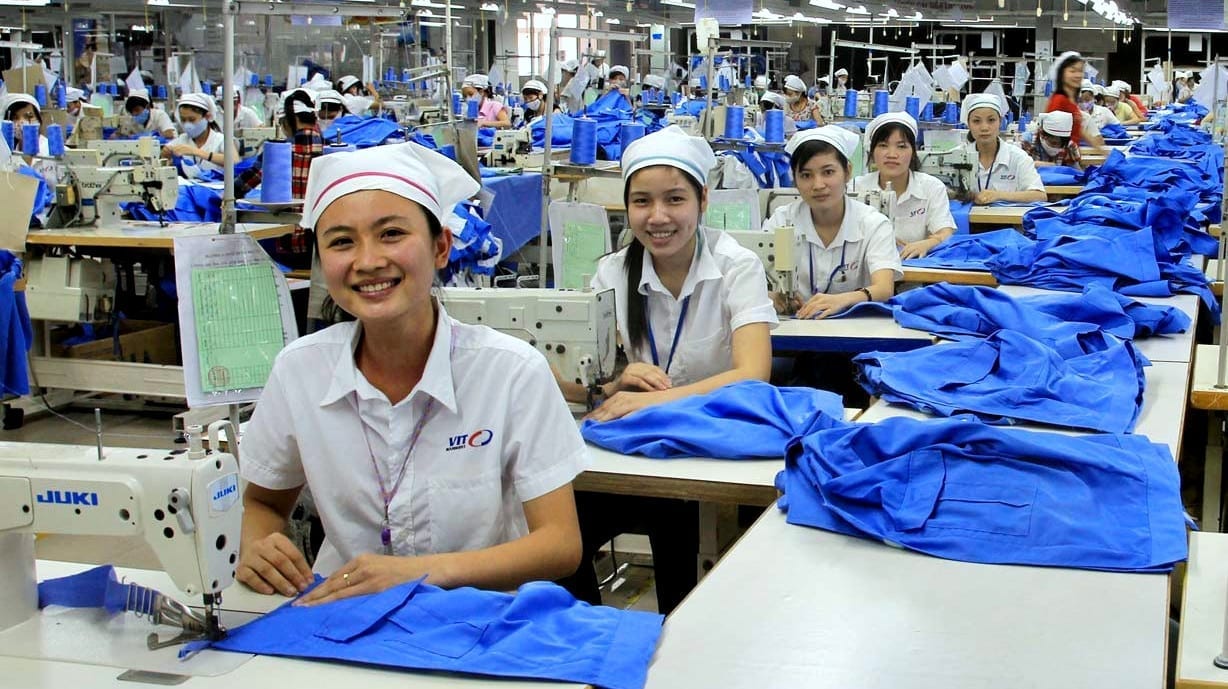
    Restructuring the textile and garment industry involves drawing up a new development strategy, using new technologies, and closing fiber and textile factories that use outdated technologies.

    The Nam Dinh Textile & Garment JSC has undergone ‘major surgery’. The number of workers has been cut from 18,000 to 4,000. However, the remaining workers’ output equals that of 18,000 workers in the past.

    The textile & garment industry has been improving satisfy the requirements of global value chains. The productivity has improved thanks to renovation of machines and equipment and the removal of factories with outdated technologies. However, many things still need to be done.

    MOIT is going to submit to the government a plan to restructure industry in general in 2016-2020, which includes the textile & garment industry.

    Commenting about the plan, Le Tien Truong, deputy chair of the Vietnam Textile & Apparel Association (Vinatas) said the figures shown in the plan were not reliable.

    The plan, for instance, says that productivity is VND35-40 million a year, while Truong believes the figure is inaccurate and it is lower than the real figure.

    If noting that Vietnam exported $28 million worth of textiles & garments in 2016 and imported $17 billion worth of input materials, the average productivity would be VND140 million per worker.

    The plan shows several targets such as repositioning enterprises geographically and shutting down factories with outdated technologies, but it does not include implementation measures.

    There are three ways to improve productivity in the textile & garment industry, according to Truong.

    First, using few workers and high-productivity machines. Second, shutting down unprofitable enterprises and reducing the number of enterprises consuming a lot of power. Third, adjusting the product structure to choose enterprises with higher added value.

    Truong Duy Hung, director of MOIT’s planning department, the compiler of the plan, believes the weak point of textile industry is the lack of input materials.

    Analysts say that if Vietnamese enterprises make input materials, their products would be able to replace Chinese products and can compete with Chinese products in price.

    In current conditions, however, it is easier and faster to seek input materials from China than domestic sources. This is because China organizes large-scale production and  always has large stocks, while Vietnam only makes products to order.

    Vietnam earned $6.84 billion from garment and textile exports in the first quarter of this year, 11.2 percent more than in the same period last year, according to Vinatas.

  • Starbucks Caffeinates Plans for New Stores in Japan

    Starbucks Caffeinates Plans for New Stores in Japan

    Starbucks Coffee Japan plans to open new outlets at an accelerated pace while shifting its focus from urban centers to suburban areas. Over the next three years, the company will spend roughly 15 billion yen ($146 million) to open 260 new coffee shops, which is 60% more than were opened during the last three years. Starbucks now operates some 1,000 stores in Japan, of which around 10% are located in suburban areas along main streets.
    Now that the urban market has become saturated, and even convenience stores have become rivals offering quality coffee, the company is looking to expand outside cities. The plan is to open 75 new outlets in fiscal 2014, 85 in fiscal 2015 and 100 in fiscal 2016. These will be located mainly along arterial streets in suburban areas and near residential districts.

    The stores will offer both seating and drive-thru windows, and they will be open longer hours than the urban stores, which close at 11 p.m. Some of Starbucks’ existing suburban outlets are open until 2 a.m. and remain busy until closing.

    In a typical day, the stores capture business from people on their way to work in the morning, seniors at lunchtime, housewives in the afternoon, as well as from workers and students returning home at night. Rents are cheaper than in the city, and sales tend to be 30-40% higher, with the average suburban store generating annual revenue of 150 million yen.

    But Starbucks is not alone among companies making the push outward to suburban markets, where coffee shops are filling the gap left by the demise of roadside family restaurants. For example, Hoshino Coffee, owned by Doutor-Nichires Holdings, is opening more coffee shops with sit-down service, hand-dripped coffee, and sweet and savory foods. Thirty-five new branches are planned for the current fiscal year. And Komeda is opening coffee shops with brick walls, wooden tables and other cozy touches.
  • Competition heats up as convenience stores race for dominance in Vietnam

    Competition heats up as convenience stores race for dominance in Vietnam

    With a slate of brands operating nearly 2,000 stores, the remaining space for expansion is limited. The first outlet of 7-Eleven, the largest convenience store chain in Japan, opened in Vietnam last week with a lot of fanfare.

    Thousands of people lined up and squeezed into the small shop in downtown Ho Chi Minh City, trying to buy snacks and light meals.

    The chain has said it will open around 20 outlets in Vietnam by the end of this year and 100 in the next three years.

    The important question here is not about whether similarly big crowds will be coming to its stores in the future. It’s where to put these stores.

    7-Eleven is entering a market that has become increasingly packed in recent years. Its arrival is intensifying the heated competition for both customers and for retail space.

    After all, the choice of location can make or break a convenience store. In big cities, many of the best spots are either too expensive or already taken.

    Crowded market

    The A.T. Kearney’s Global Retail Development Index this month named Vietnam the sixth most attractive retail market. The country made headlines worldwide when it topped this list in 2008.

    The market has drawn a lot of foreign players who are now occupying 70 percent of the convenience store segment.

    The American chain Circle K is operating around 250 stores, mostly in the country’s two biggest cities Ho Chi Minh and Hanoi.

    FamilyMart, Japan’s second largest convenience store chain, now has 130 stores in Ho Chi Minh City, the nearby resort town of Vung Tau and in Binh Duong Province. It aims to expand the network to 150 locations by the end of this year.

    Southeast Asian chains Shop&Go and B’s mart are running another 300 stores.

    The dominant local player VinMart+, an offshoot of conglomerate Vingroup, has quickly expanded its network from 500 outlets in 2015 to around 900 last year. The chain plans to round up the number to 1,000 this year or next.

    According to industry insiders, setting up a convenience store is much simpler than a supermarket but in order to launch a profitable chain, it takes a lot of money and efforts.

  • Tata Comm launches IZO cloud node in Malaysia

    Tata Comm launches IZO cloud node in Malaysia

    India’s Tata Communications has launched three new nodes for its IZO Private Cloud service designed to support enterprises’ hybrid cloud adoption while ensuring regulatory compliance.

    The new private cloud nodes in Germany, United Arab Emirates (UAE) and Malaysia aim to enable CIOs to gain more control over all their applications by creating a hybrid, high-performance IT infrastructure where different cloud, colocation and managed hosting environments work together.

    Today, different clouds often operate in silos, resulting in a complex environment which can hold back enterprises’ digital transformation. The fully-managed IZO Private Cloud service seeks to address this complexity by enabling CIOs to create a hybrid IT environment that combines the flexibility of public cloud with enterprise-grade security.

    It also gives CIOs complete control of the residency of their data, while keeping up with employees’ demands for mobile, collaborative and social ways of working.

    IZO Private Cloud now spans across 13 locations. In addition to Germany, UAE and Malaysia, Tata Communications has private cloud nodes in India, Singapore, Hong Kong and the UK.

    The new private cloud nodes address the needs of enterprises in industries with stringent regulatory requirements, including aviation, healthcare, manufacturing, media, banking, IT, financial services and insurance, retail and e-commerce.

    “In today’s digital economy, enterprises’ growth is fuelled by cloud-based applications and data,”  Tata Communications SVP of global product management and data center services Srinivasan CR said.

    “Yet, the sovereignty and security of these critical assets is a major concern for CIOs. As a global cloud provider with a local presence, we address these concerns by giving CIOs complete visibility and control over their entire IT estate, across all networks and devices, and empower them to drive organisation-wide digital transformation with maximum agility.”

  • FedEx posts strong fiscal Q4 and FY 2017 earnings results

    FedEx posts strong fiscal Q4 and FY 2017 earnings results

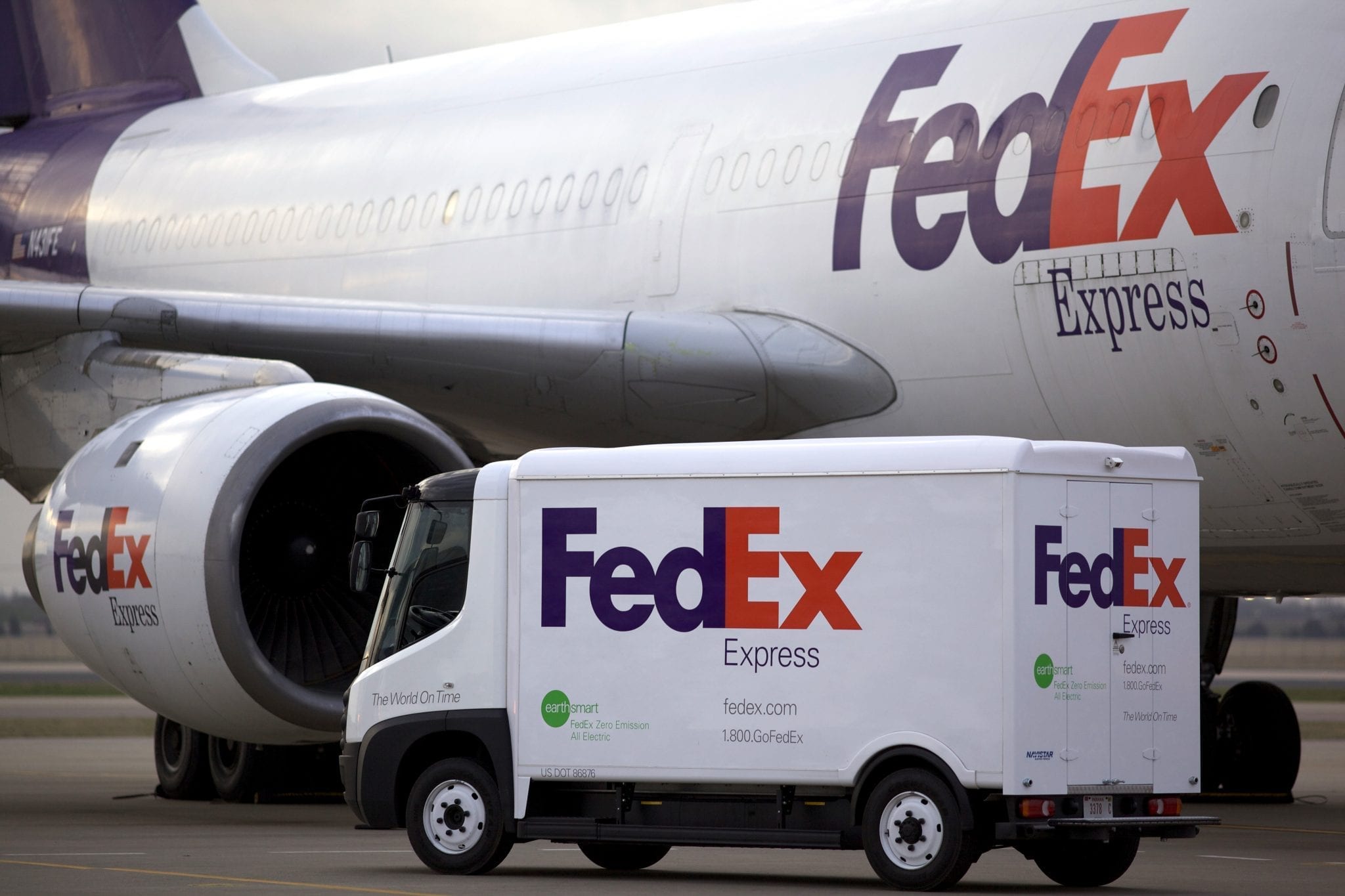
    FedEx Corp. reported earnings of US$3.75 per diluted share (US$4.25 per diluted share on an adjusted basis) for the fourth quarter ended May 31, compared to a loss of US$0.26 per diluted share (earnings of US$3.30 per diluted share on an adjusted basis) a year ago.

    This year’s and last year’s quarterly consolidated earnings have been adjusted for:

    Impact per diluted share Fourth Quarter
    Fiscal 2017 Fiscal 2016
    Mark-to-market (“MTM”) pension accounting adjustments ($0.02) $3.47
    TNT Express integration expenses  0.32
    FedEx Trade Networks legal matters  0.09
    TNT Express intangible asset amortization  0.06
    FedEx Ground legal matters  0.05  0.02
    TNT Express expenses and operating results from the date of acquisition  —  0.34
    Tax impact – legal entity restructuring for TNT integration  —  (0.28)

    “Strong fourth quarter results completed a record fiscal 2017,” said Frederick W. Smith, FedEx Corp. chairman and chief executive officer. “We enter fiscal 2018 confident FedEx Corp. will continue to deliver outstanding value and opportunities for shareowners, customers, and team members for years to come.”

    Fourth quarter results
    FedEx Corp. reported the following consolidated results for the fourth quarter (adjusted measures exclude the items listed above for the applicable fiscal year):

    Fiscal 2017 Fiscal 2016
    As Reported
    (GAAP)
    Adjusted
    (non-GAAP)
    As Reported
    (GAAP)
    Adjusted
    (non-GAAP)
    Revenue $15.7 billion $15.7 billion $13.0 billion $13.0 billion
    Operating income (loss) $1.58 billion $1.76 billion ($68 million) $1.51 billion
    Operating margin 10.1% 11.2% (0.5%) 11.7%
    Net income (loss) $1.02 billion $1.15 billion ($70 million) $897 million
    Diluted EPS $3.75 $4.25 ($0.26) $3.30

    Operating results benefited from higher base rates, increased package volume and the inclusion of TNT Express results.  Net income and earnings per share reflect tax benefits of US$104 million, or US$0.37 per diluted share, related to the implementation of new foreign currency tax regulations, the adoption of a new accounting standard for share-based payments, and certain transactions related to the TNT Express integration.

  • Vietnam’s fruit, vegetable exports growing

    Vietnam’s fruit, vegetable exports growing

    Minister of Agriculture and Rural Development, Nguyen Xuan Cuong said the export potential of fruits and vegetables is huge, with the products key to restructuring the sector.

    Cuong said the ministry has focused on promoting the use of modern technologies in agriculture, aiming to create quality products, thus improving the sector’s competitiveness and expanding export markets.

    “Exports of fruits and vegetables will grow in the upcoming time. The sector should develop association models for investing in hi-tech agriculture. Businesses should work with farmer collectives to establish concentrated raw material areas,” he added.

    The minister said growing the agricultural sector, and fruits and vegetables in particular, would largely depend on export value and changes in the market.

    However, if businesses and farmers build production chains of safe fruits and vegetables together with hi-tech agriculture development, the export target of US$3 billion this year will be reached, he said.

    Exports of fruits and vegetables hit $1.38 biliion in the first five months of this year, a year-on-year increase of 38 per cent.

    China, the US, Japan and South Korea markets accounted for nearly 84 per cent of total vegetable and fruit export value. Vietnamese fruits and vegetables have been exported to about 60 markets globally.

    Many farmers have applied the safe agricultural production processes of VietGap and GlobalGap, giving Vietnamese fruits and vegetables a foothold in foreign markets.

    According to the ministry of agriculture, restructuring of the sector is going well, with export structure focused on commodities such as coffee, rubber and fruit.

    Dinh Cao Khue, general director of Dong Giao Food Export Company said their products have been exported to 50 countries thanks to a closed supply chain of materials, collection, processing and trading.

    “We have invested in specialised and concentrated material areas. Product quality should be priorities for both local consumption and exports,” Khue said.

    Experts said export markets such as the US and Europe have potential but also high risk as they have strict requirements on product quality, so domestic producers should strictly follow health and safety requirements.

    Vu Kim Hanh, chairwoman of the Vietnam High-quality Product Association said local agricultural producers should change their mindset in production and organising supply chains. Each segment should have standards to satisfy export markets’ requirements.

  • Australia plans to mandate 25Mbps broadband speeds

    Australia plans to mandate 25Mbps broadband speeds

    The Australian government has introduced new legislation that would mandate the supply of broadband services with peak speeds of at least 25Mbps to all premises in the country.

    The proposed Telecommunications Reform Package would require that services provided over the in-construction National Broadband Network (NBN) – even the fixed-wireless and satellite services – would need to be capable of broadband speeds of at least 25Mbps downlink and 5Mbps uplink.

    A draft version of the reforms published last December excluded the fixed wireless and satellite components of the network from this obligation.

    The legislation would also introduce the government’s planned A$7.10 ($5.36) per connection Regional Broadband Scheme, a levy that operators will pay to nbn for each connection capable of download speeds of 25Mbps.

    The levy will be used to defray the expected A$9.8 billion in losses over 30 years that are expected to be accrued by the fixed wireless and satellite components of the network due to the shortage of customers.

    In a concession for smaller players, the first 25,000 connections serviced by a broadband provider will not be subject to the levy for the first five years.

    The new reform package will also mandate the delivery of voice capability over the nbn in fixed line and fixed wireless areas.

    The Australian Communications Consumer Action Network (ACCAN)  has welcomed the consumer protection measures of the proposed legislation.
    “The legislation includes big wins for all consumers, especially for regional, rural and remote consumers,” ACCAN CEO Teresa Corbin said.

    “Broadband services are essential for consumers, yet currently, there is no requirement on nbn to connect and provide ongoing services to all premises. We are pleased that consumers can now be reassured that under the proposed legislation all premises must be able to access a broadband network capable of a minimum peak speed of 25Mbps download and 5Mbps upload.”

    But she said ACCAN will also be pushing to ensure that public phones will be provided where they are needed and consumers relying on satellite services have access to reliable telephony and broadband services.

  • Lacoste pops up at Haitang Bay’s China Duty Free Mall

    Lacoste pops up at Haitang Bay’s China Duty Free Mall

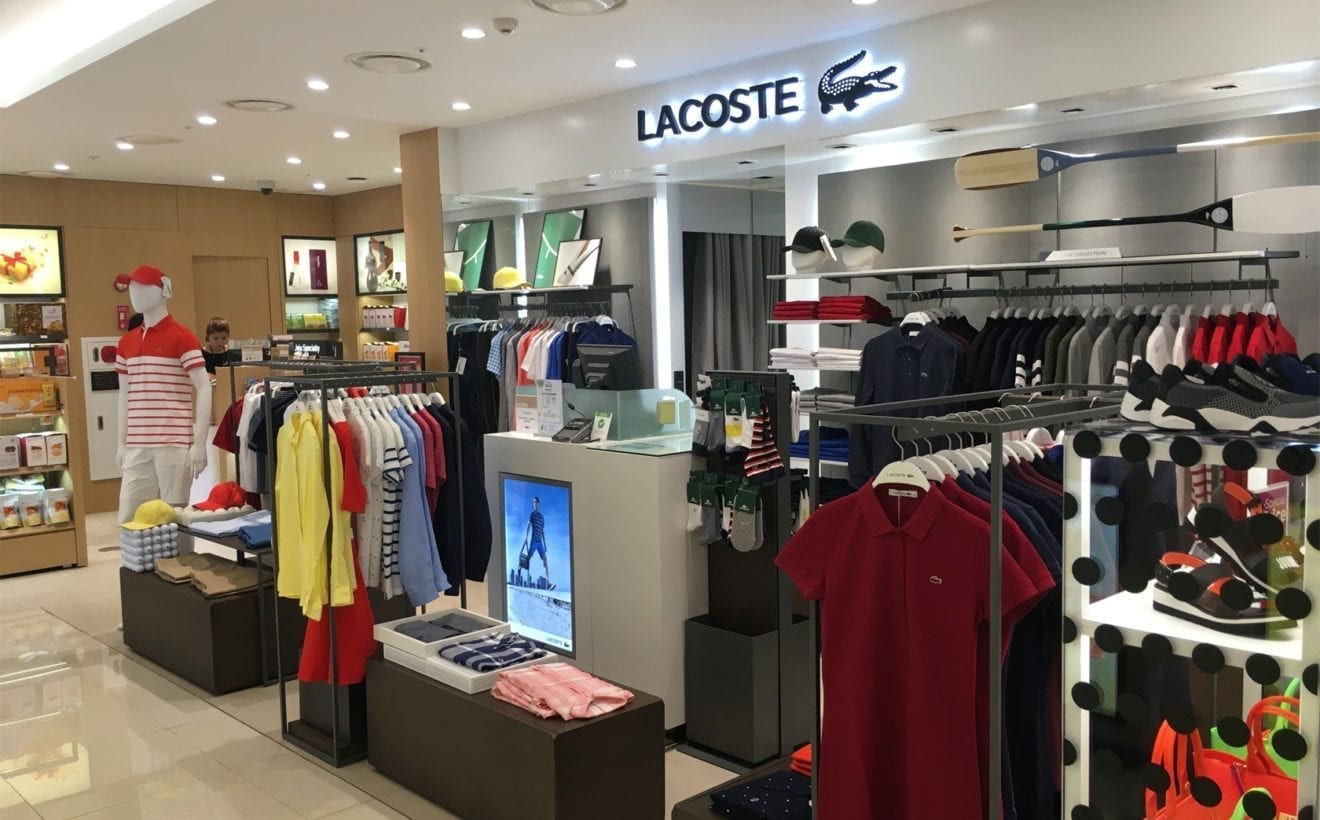
    Lacoste has opened a pop-up store this month in the China Duty Free Mall, the centrepiece of the CITS Haitang Bay Duty Free Shopping Complex.

    Tennis time: Lacoste’s pop-up outlet in the China Duty Free Mall includes an interactive game.

    The 64sq m outlet is celebrating the recent French Open championships and the announcement of Lacoste’s new ‘Crocodile’, Serbian tennis ace Novak Djokovic. It includes an exhibition dedicated to legendary French tennis champion René Lacoste, a retail area featuring the brand’s latest collection, and an interactive game.

    Customers are being encouraged to play tennis on digital screens and they stand a chance of winning a gift. The pop-up will operate until 26 June.

  • Kioda to enter India via franchise route, open 300 stores

    Kioda to enter India via franchise route, open 300 stores

    Malaysia-based Korean concept retail store Kioda plans to open 300 stores in India by 2021 and has tied up with Franchise India which will invest USD 10 million for expansion and marketing.

    Kioda, which has a product range of cosmetics, gifts, stationery and household items, is looking to source 25-30 per cent of its products locally for Indian stores and rest to be imported from Malaysia.

    Kioda is entering India in a joint venture partnership with Franchise India and will open 300 stores in the next four years, the company said in a statement.

    “We eventually want to source products from India itself especially in the F&B range.Kioda stores will be unique stores which have a Korean concept and experience,”Kioda Managing Director Alvin said.

    The company, which currently has presence in Singapore and China apart from Malaysia, plans to expand to additional 13 countries by 2018.

    The joint venture agreement was signed at the Master Franchise Show here by Franchise India where over 150 companies participated.

    Franchise India Chairman Gaurav Marya said: “India offers a large landscape for brands to access the burgeoning consumer market with international brands taking the top tier space in the hierarchy. Our investments in the JV will help us to quickly ramp up across India.

  • Michelin to re-organise business leading to job losses

    Michelin to re-organise business leading to job losses

     Tyre giant Michelin has announced plans to significantly re-organise globally, resulting in significant job losses in France and the US most of which will be covered by natural attrition.

    In the United States 450 jobs in central functions are to be cut between 2018 and 2021. According to Michelin, 1,500 employees would actually leave the company in the same period, suggesting a large majority will result from natural attrition and retirement.

    In France, the transformation coincides with significant job creation. By 2021, 5,000 employees will leave the group in France, the majority due to retirement, and around 2,000 of these would be in Clermont-Ferrand.

    However, at the same time Michelin says it wants to recruit more than 3,500 people externally in France by 2021, including 1,000 in Clermont-Ferrand. The company will also start new activities in Clermont-Ferrand and at other sites in France, creating 250 new jobs. The firm says it aims to “progressively reach the target size of the future organizations, without forced redundancies.”

    The company would not replace 970 retirees, between now and 2021 in Clermont-Ferrand. And finally, in order to be closer to its customers and improve competitiveness, Michelin will locate 290 employee and manager positions in other countries where the group is operating.

    Corporate reorganisation 

    On 16 March 2017 Michelin launched a global reorganisation project. The goal was to “boost growth by adapting…operations to meet the evolving demands of…customers and employees. ” Now, on 22 June, the company has released further details of what has been taking place. In short there will now be 10 new regions, 14 business lines and 8 operational divisions.

    The 10 new regions will be given more operational responsibilities. These are Africa – India – Middle-East; South America; Central America; North America; Eastern Asia and Australia; China; Central Europe; Northern Europe, Southern Europe and Eastern Europe.

    Tyres  and accessories understand that UK and Eire operations will fit into the Northern European region. No details of who will be leading this region or were indeed this region will be physically based have yet been announced.

    Likewise, no details of job consolidation within this region have yet been released, but while the official details clearly focus on the USA and France, it wouldn’t be surprising to learn of some job consolidation in other regions too.

    In addition 14 “business lines” will develop offers for each customer category. The purpose of these Business Lines is to develop offers to satisfy global customer groups with similar needs around the world. They would have a key role in building the strategy of the group and would steer their business results in their respective customer segments.

    At the same time eight operational divisions will provide expertise and support for the regions and business lines. These are research and development; service technology development; manufacturing; supply chain; marketing and sales support; purchasing; operations quality assurance; and corporate and business services (CBS).

    In order to streamline the group’s central operations, the corporate divisions are to focus on their strategic missions. The group’s reporting would be based on consolidation of business lines and would be very similar to currently.

  • Nars comes to Vietnam

    Nars comes to Vietnam

    Japanese cosmetic brand Nars has landed in Vietnam, opening a brand new store in Ho Chi Minh City. Located on Dong Khoi Street inside Vincom Center mall, Nars’ debut store offers Vietnamese customers all of the makeup brand’s newest and most popular items.

    According to Nars’ brand president, Barbara Calcagni, the new store signals the local market’s growth, and therefore, readiness for a fresh cosmetics entrant such as Nars.
    “Vietnam is a potential market for growth thanks to the rapid development of the country,” Calcagni said.

    With more than 250 shops, Vincom Center is Ho Chi Minh City’s biggest shopping mall. It is split into two separate buildings, Vincom Center A and Center B, as houses the largest array of international luxury brands and retailers.

    Nars is on an Asian retail rollout. The latest Vietnam store succeeds a new retail venture for Nars in Malaysia. Earlier this month, Shiseido Travel Retail partnered with Colours & Fragrances to open a Nars cosmetics stand-alone boutique at Kuala Lumpur International Airport (KLIA).

    The boutique is Nars’ first travel retail location in Malaysia.

    Founded in 1994 by French make-up artist and photographer Francois Nars, Nars was acquired by Japanese cosmetics giant Shiseido in 2000.

  • Hong Kong ranked third worldwide for broadband speeds

    Hong Kong ranked third worldwide for broadband speeds

    Hong Kong has been ranked third worldwide for broadband download speeds, with HKBN named the market’s fastest provider, according to Speedtest results from Ookla.

    Between the fourth quarter of 2016 and the first quarter of 2017, Hong Kong achieved an average download speed of 142.65Mbps. This speed represents the experience of a typical consumer in the market.

    The fastest broadband speeds were recorded by subscribers to HKBN at 544.18Mbps, followed by Netvigator at 470.43Mbps, 3 Hong Kong at 290.17Mbps and i-Cable Communications at 141.5Mbps.

    Top upload speeds were meanwhile recorded at 544.07Mbps for HKBN, 460.63Mbps for Netvigator, 201.15Mbps for 3 Hong Kong and 27.89Mbps for i-Cable.

    To determine this metric, Speedtest compares the top 10% of each ISP’s speed results to provide an accurate view of their top-end performance.

    “We are proud to know that our outstanding network performance has been duly recognized by independent global leader Speedtest. Our top-notch fiber network, advanced facilities and round-the-clock network operation management ensures that our customers enjoy the best internet experience in this data hungry era,” HKBN CTO Gary McLaren said.

    “Currently, with about one-third of all households in Hong Kong connected to HKBN broadband, we look forward to bringing more top-value services to more people across Hong Kong.”

  • AirAsia to acquire 14 more aircraft

    AirAsia to acquire 14 more aircraft

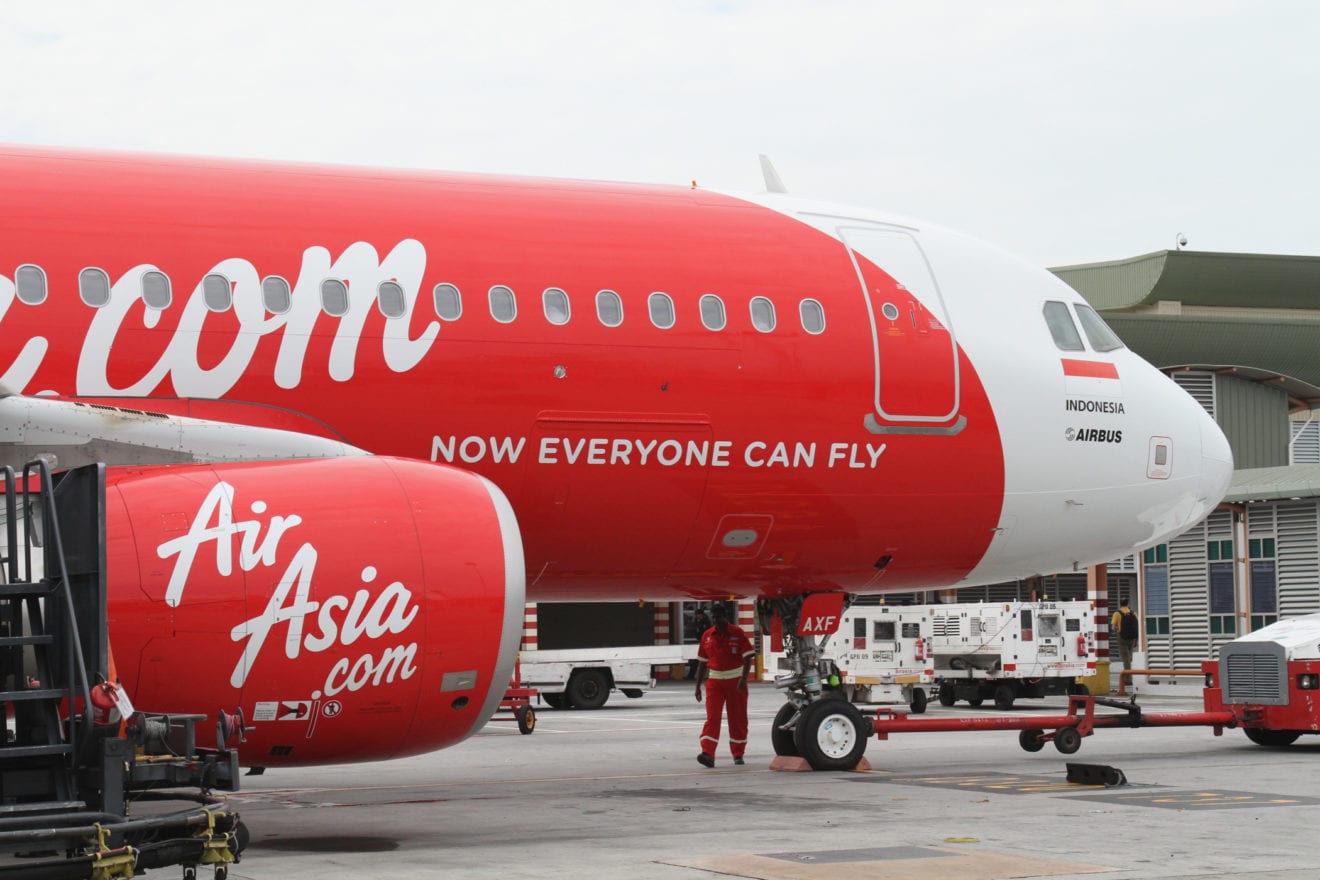
    French plane maker Airbus S.A.S announced yesterday that Malaysia’s AirAsia Bhd. ordered an additional 14 A320ceo aircraft to cater to increasing demand.

    Airbus said the deal with AirAsia, which has extensive operations in Southeast Asia, including the Philippines, was announced during the 2017 Paris Air Show.

    Following the order, AirAsia’s fleet of mid-range A320s will increase to 529 planes. It is the single largest airline customer for the A320, Airbus said in a statement.

    To date, 171 A320ceo and eight A320neo have already been delivered to AirAsia and are operated by units in Malaysia, India, Indonesia, Thailand and the Philippines.

    “Demand is very strong in AirAsia’s traditional countries, but now we have Indonesia, Philippines and India doing extremely well. The robust demand has led us to expand our fleet, and Airbus has been a great partner in finding us slots,” AirAsia Group CEO Tony Fernandes said in the same statement.

    “We still need to find more aircraft to expand our regional reach and are actively sourcing from the leasing market. The competitive environment is at its best, coupled with a stable oil price. With the lowest cost in the world, AirAsia is back on aggressive growth,” he added.

    Airbus said the A320 family is the world’s best-selling single aisle product line.

    To date, it has won over 13,000 orders and more than 7,600 aircraft have been delivered to some 400 customers and operators worldwide. With one aircraft in four sizes (A318, A319, A320 and A321), the A320 Family seats from 100 to 240 passengers.