Tag: asia

  • VCAR – Vietnam Limousine for the Southeast Asian market

    VCAR – Vietnam Limousine for the Southeast Asian market

    VCAR, a new generation Limousine of Vietnam, has been launched at a recent ceremony with the participation of nearly 300 businessmen and investors from many Southeast Asian countries like Malaysia, the Philippines, Thailand and Singapore.

    Since the limousine first appeared in Vietnam 5 years ago, thousands of limousines with luxurious and comfortable interiorshave been sold. To grasp this trend, Vinter Capital Group Corporation and its close joint venture partner, Dasan, has manufactured limousines with VCAR brand for the purpose of exporting to Malaysia and other Southeast Asian countries,with the support of the parent company Dynamic Investment Fund from Vinter Capital Group Corporation based in Malaysia, Vietnam and Thailand.

    At the launching ceremony of the new model of limousine, Vinter and Dasan introduced the three versions of VCAR New Generation Limousines, includingVCAR VIP, VCARSolati and VCAR X with excellent and valuable interiors.

    “VCAR Limousine brings about totally new experiences with luxury and comfortable interiors. I hope that the venture between Vinter Capital Group and Dasan will create and bring more versions of VCAR limousine, especially VCAR X to Malaysia in the coming time”, said a Malaysian entrepreneur at the ceremony.

    “Limousine has beenfavored in Vietnam since the very first day. Six versions of limousine have been introduced in the market for the past 5 years. All the essentials of limousine in Vietnam are currently crystallized in VCAR X, a President’s new generation version in Vietnam, produced by Dasan,” said Mr. Le Thanh Tuan, President of VCAR Limousine.

    “The Malaysian market is hard-to-please and much larger compared to Vietnam. Even though the population of Malaysia is only one third of Vietnam, Malaysia’s GDP is three times higher than that of Vietnam. Malaysia’s total number of tourists and revenue from tourism are three times higher, and the income per capita is six times higher. The transportation infrastructure is also one of the best among ASEAN countries. Therefore, VCAR X with its outstanding features would be able to meet the best needs in Malaysia. We believe that the limousine, which is highly favored in Vietnam, could be developed in Malaysia,” Tuan said.

    Dasan and Vinter Capital Grouphave conducted a lot of researches, improvement and investment in order to produce the VCAR limousine with the best standard and unique design to satisfy requirements of the Malaysian market in particular and the Southeast Asian markets in general.

    President of Dasan, Mr. Dang Quang Khanh, said: “Dasan and Vinter Capital Group Corporation will promote operations and fully exploit the assembly and production capacity of factories in Malaysia and supply our products to Malaysia and ASEAN countries in the near future. We will constantly improve the technologies and designs to create more variants of VCAR limousine to satisfy and suit the market trend of Malaysia in particular, as well as other countries in general. Vinter Capital Group Corporation and Dasan expect thatVCAR limousine will be the first Vietnam car brand to reach out to the world”.

    “This event is the milestone of success and close joint venture between Dasan and Vinter Capital Group Corporation. We have committed strongly to support Dasan in expanding the market of VCAR limousine in Malaysia and other ASEAN countries as soon as possible,” said Mr.  Elvin Chew Chee Wooi and Ms. Dolly Hoang Minh Tuyet, Chairman and General Director of Vinter Capital Group.

    “Dasan and Vinter Capital Group had seriously prepared over a year to get this event done. We plan to let the first VCAR limousine to be driven in Malaysia within the next three months,” said Mr. Dang Quang Khanh.

    VCAR X, a President’s new generation version has included all the essentials of existing limousines in Vietnam. Besides strengths of “Ground Specialist”, VCAR X also eliminates redundant and impractical items and overcomes inherent weaknesses of the President version (with two 180-degree-rotation seats), and adds unique interior features that are equipped for the President version.

    With the overwhelming and positive respond by the entrepreneurs and investors from the ASEAN markets, Vinter Capital Group Corporation has committed to launch the limousine as soon as possible.

    Not only manufacturing limousine, Vinter has also actively involved in several segments of business such as property development and investment, agriculture sector, legal and consulting services and resort and restaurant services.

  • MPT upgrading new LTE network to 4×4 MIMO

    MPT upgrading new LTE network to 4×4 MIMO

    Myanmar Post and Telecom (MPT) has adopted 4×4 multiple input multiple output (MIMO) technology for its recently-launched 4G network covering Yangon, Mandalay and Nay Pyi Taw.

    The operator is using LTE-Advanced technology capable of internet speeds of up to 150Mbps in 47 townships across the three cities.

    MPT meanwhile plans to extend its LTE-Advanced network to Bago, Taunggyi, Mawlamyine, Monywa, and Patheingyi in July and to 20 other major cities the following month, the report states. The deployment is expected to cover all 30 major cities in the nation by November.

    MPT announced the commencement of its LTE rollout last month after securing approval along with the market’s other operators to use 1800-MHz spectrum for 4G. The state-owned operator has partnered with Japan’s KDDI and Sumitomo for its mobile operations.

    As part of its deployment, the operator is offering customers the ability to swap their existing 3G SIMs for a 4G SIM while maintaining their current phone number.

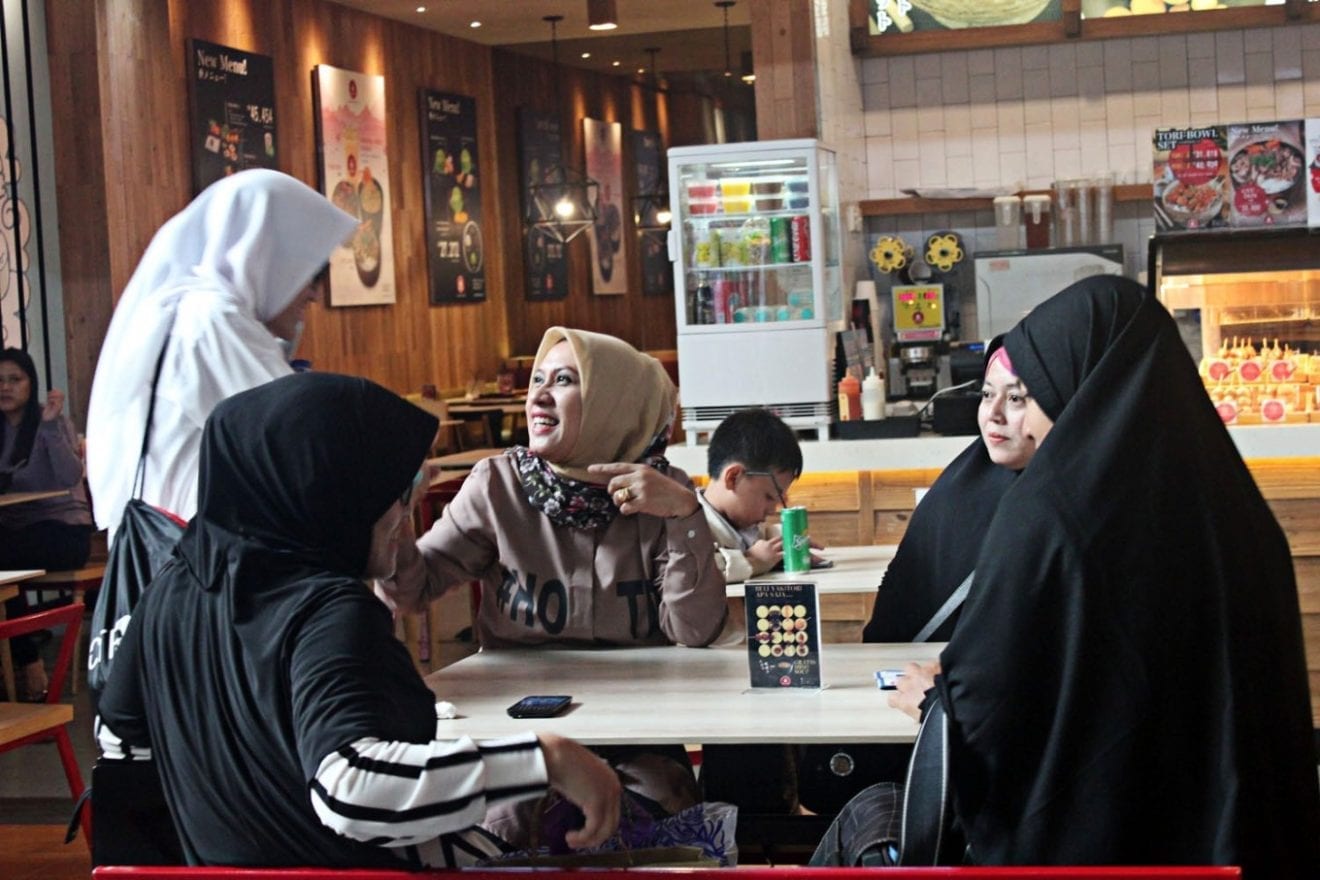
  • Engagement opportunities with Muslim consumers in Southeast Asia

    Engagement opportunities with Muslim consumers in Southeast Asia

    According to the “State of the Global Islamic Economy Report” by DinarStandard, Muslim consumers spent an estimated US$243 billion on apparel in 2015.

    Modest fashion purchases by Muslim women, estimated at US$44 billion that year, accounted for 18 percent of that total. Muslim consumer spending on apparel is expected to reach US$368 billion by 2021 – a 51 percent increase from 2015.

    The rise of modest fashion

    What is modest fashion? It generally refers to looking stylish while remaining relatively covered. Most importantly, the modest fashion movement is more mainstream and multi-brand than ever before. It is not reserved just for those who follow religious customs when it comes to apparel.

    Modest fashion is gaining momentum, driven by eCommerce and social media. Mass market retailers and designers are taking notice of the market potential and joining the modest mix. Prominent eCommerce players like Zalora and Lazada are already offering more than 3,077 and 13,310 pieces of modest fashion respectively. Brands like Nike, Zara and Mango have also introduced special collections for the Ramadan season.

    The Asia-Pacific region is home to 63 percent of the world’s Muslim population, or nearly one billion people. It is therefore no surprise that we see retail spikes during Ramadan, especially in Indonesia, Malaysia and Singapore.

    Based on an analysis of more than 8 million transactions across Southeast Asia, Criteo observed a 67 percent increase in retail eCommerce sales during this period in 2016. This trend is expected to continue during this year’s fasting month, which commenced on 26 May 2017 and will be followed by Eid al-Fitr from 25 to 27 June 2017.

    The Eid festival is the biggest holiday in Indonesia and amongst the most widely celebrated in Singapore and Malaysia. During this period, families customarily visit the homes of their relatives and friends, and households would be decorated lavishly and stocked with an abundance of food and snacks to welcome their guests. Naturally, they would also have bought new clothes to mark the beginning of the festivities.

    Overall, this represents a great opportunity for retailers, if they take note of the following seasonal shopping trends.

    Engaging consumers at the right time

    The third week of Ramadan represent the biggest opportunity for retailers to engage consumers when they are actively browsing and purchasing items for upcoming celebrations. During this period in 2016, there was a 67 percent uplift in online retail sales, especially on mobile devices. To reach mobile shoppers, apart from promoting their offers on mobile just before the start of Ramadan, eCommerce players must also intensify their digital marketing efforts towards the season’s end.

    One of the hallmarks of Ramadan is dawn-to-dusk fasting, which ends once the sun goes down. That means that throughout the 30-day period, daytime quiet gives way to night time buzz when people can eat and drink, giving retailers more opportunities for incremental sales increases at night.

    In Southeast Asia, nearly a third (29 percent) of retail sales happens between 9pm and 5am during the Ramadan period – a 21 percent increase as compared to the pre-Ramadan period. This means that eCommerce players should optimise marketing efforts for the time of day (or night) when Muslim consumers are most likely to shop online.

    Engaging consumers on the right device

    In Southeast Asia, 46 percent of Ramadan retail buyers use multiple devices prior to purchase, while one in four shoppers switched devices at least three times during their purchasing journey. No matter where your shoppers are, one thing is clear – they are browsing and toggling between mobile devices, desktops and various applications before making the actual purchase. During this season, eCommerce players must ensure that their digital storefronts are optimised for differing consumer paths to purchase.

    The success of eCommerce businesses in Southeast Asia will depend on their ability to enable or encourage users to complete purchases on their web, mobile web or app storefronts. To do so, these businesses can turn to machine learning based performance marketing technology that automatically understands customers’ shopping behaviour across devices, browsers and apps, and delivers personalised and compelling advertising content based an individual’s online habits and preferences.

    Modesty is both a fashion choice and a lifestyle. Today’s modest fashion buyers select pieces based on style and takes inspiration from many sources – they are no longer just relying on larger mainstream brands, but also turning to smaller players with niche interests and products. Social media platforms also allow individuals who dress modestly to share styles, experiences and views.

    Whether it is festive season or beyond, Muslim and modest fashion is still a relatively untapped market, but with massive growth potential. There is therefore no better time than now for eCommerce players to respond to and maximise the opportunities presented by this unique market, by leveraging mobile and cross-device strategies and technology.

  • DHL signs up for four more A330-300P2Fs

    DHL signs up for four more A330-300P2Fs

    DHL Express has signed up for four more A330-300 passenger-to-freighter conversions from ST Aerospace subsidiary Elbe Flugzeugwerke.

    The express operator, which in July last year became the launch customer for the conversion programmewith an order for two of the aircraft, said the deal also includes options for a further 10 conversions.

    The contract was signed at the 52nd International Paris Air Show this afternoon, and witnessed by Guests-of-Honour Singapore’s Second Minister for Defense Mr Ong Ye Kung and Chief of the Saxon State Chancellery and State Minister for Federal and European Affairs Dr Fritz Jaeckel.

    The conversion will be carried out by EFW, which is jointly owned by ST Aerospace and Airbus. The aircraft has a payload of up to 61 tons.

    In order to take on the expanded conversion programme for DHL Express, EFW is gradually ramping up its capacity at its facility in Dresden, with a new single-bay wide-body hangar being completed recently.

    Geoff Kehr, senior vice president, global air fleet management, DHL Express, said: “DHL is delighted to be expanding this pioneering conversion programme with ST Aero, EFW and Airbus and securing the option to add more units to our fleet in future.

    “We believe the A330-300P2F, with its favourable payload and range metrics, will address an important demand segment within the air cargo market that is not currently served by any other aircraft type.

    “It will further strengthen the global air network of DHL Express and help us to achieve even greater efficiencies in our aviation operations.”

    The first aircraft under the DHL Express A330-300P2F program is currently undergoing conversion at EFW’s Dresden-based facilities, while work is set to begin on a second aircraft at an ST Aerospace engineering facility in Singapore.

    The first two aircraft are scheduled to be redelivered by the end of 2017.

    The A330P2F conversion programme, launched in 2012, is a collaboration between ST Aerospace, Airbus and EFW.

    ST Aerospace, as the programme and technical lead for the engineering development phase, is responsible for applying for the supplemental type certificates for the freighter conversions from the European Aviation Safety Agency and the US Federal Aviation Administration.

    Aircraft original equipment manufacturer (OEM), Airbus, contributes to the programme with OEM data and certification support, while EFW leads the industrialisation phase and marketing for the freighter conversion programme.

    The A330P2F programme includes two versions – the A330-200P2F and the larger A330-300P2F. DHL Express is EFW’s first customer for the A330-300P2F conversion programme, while a launch contract with EgyptAir Cargo was secured in December 2014 for the A330-200P2F conversion programme.

  • Garuda Indonesia reigns as world’s best airline cabin crew for fourth consecutive year

    Garuda Indonesia reigns as world’s best airline cabin crew for fourth consecutive year

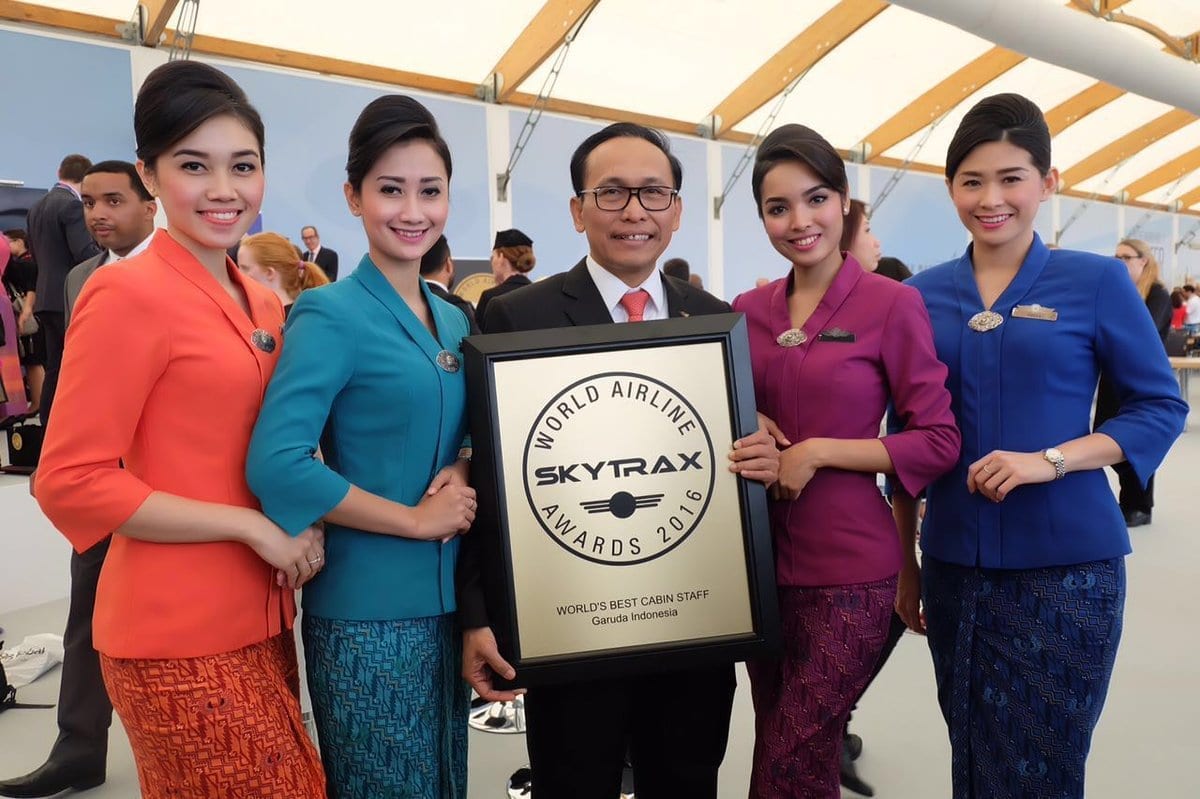
    Indonesia’s flag carrier Garuda Indonesia has won the world’s best airline staff award for the fourth year in a row according to a survey conducted by international rating organization Skytrax.

    Garuda Indonesia took first spot in the category at this year’s World Airline Awards, dubbed as the Oscars of the aviation industry, beating other prestigious airlines in the region such as Singapore Airlines and Thai Airlines.

    In the same category, Japan’s largest airline All Nippon Airways came second, followed by Taiwan-based international airline Eva Air and Thai Airways and Singapore Airlines.  The awards were announced at the Paris Air Show yesterday.

    According to Skytrax, the award “recognizes the highest all-around performance of an airline’s cabin staff” as well as the quality of staff members’ techniques and efficiency and their enthusiasm, attitude and overall hospitality.

    The survey was conducted from August 2016 to May 2017, involving 19.8 million votes.

    This year, Garuda Indonesia improved its position in the best airline category, climbing one spot to enter the top ten carriers on the world’s best airline list.

    The world’s best airline award for 2017 went to Qatar Airways, which took the title from fellow Middle Eastern carrier Emirates.

  • Unilever Indonesia secures Rp 3 trillion standby loan for expansion

    Unilever Indonesia secures Rp 3 trillion standby loan for expansion

    Publicly listed consumer goods giant PT Unilever Indonesia (UNVR) has secured a standby loan worth Rp 3 trillion (US$225 million) from Unilever Finance International AG to expand its business in the country.

    Unilever corporate secretary Sancoyo Antarikso said the loan facility could be disbursed anytime the firm needed it in the next five years, with a tenure of one to 12 months and at a 0.15 percent lower interest compared to bank loans.

    “The shareholders meeting has agreed to allow the firm to receive a standby loan within five years from now, so we can use it anytime we need it,” Sancoyo told after the meeting at Unilever Indonesia headquarters in BSD City, Banten, on Tuesday.

    The loan can be used to fund the company’s plan to expand the capacities of its nine existing factories in West Java and East Java. The Indonesian unit of the Dutch-British transnational consumer goods company has announced plans to invest $500 million within the 2016-2020 period in Indonesia.

    In 2016, Unilever Indonesia spent Rp 1.79 trillion (US$134.4 million) in capital expenditure toward capacity expansion, among other aims, while booking a 9.2 percent increase in its net profit to Rp 6.4 trillion and a 9.8 percent increase in net sales to Rp 40 trillion.

    Almost all of its 2016 profit will be distributed as dividends worth Rp 835 per share. While Rp 2.9 trillion has been paid as an interim dividend last year, the company will distribute the remaining Rp 3.5 trillion this year.

  • AirAsia to start flights to South East Asia from next year

    AirAsia to start flights to South East Asia from next year

    Singapore or Bali should now be even cheaper to fly, with AirAsia India spreading its wings to the Asean. The carrier announced that it will launch its international operations by providing connectivity to Southeast Asia from next year. Vistara, too, plans to fly international next year.

    “We have kind of cracked the Indian market. We will make money in the next six months. We are only three years old in India. We are happy with the way we are going. We will be a good mix between dom estic and international, which we are planning to go next year,” AirAsia Group CEO Tony Fernandes said on the sidelines of the Paris Airshow.

    He added that AirAsia India would be focusing on launching connectivity between Asean nations as it starts international operations. Asean members include Indonesia, Malaysia, the Philippines, Singapore, Thailand, Brunei, Cambodia, Laos, Myanmar, and Vietnam.

    AirAsia (India) Ltd is a JV between Tata Sons & AirAsia, with AirAsia and Tata Sons Ltd holding 49 per cent each and S Ramadorai (chairman) and R Venkataramanan, two directors of the company in their individual capacity, holding 0.5 per cent and 1.5 per cent, respectively.

  • Thousands of jobs at risk over spat between Vietnam coal corporation and power group

    Thousands of jobs at risk over spat between Vietnam coal corporation and power group

    Imported coal is currently cheaper than what’s available on the domestic market, so which industry should the government support? Thousands of workers at Vietnam National Coal-Mineral Industries Holding Corporation Limited (Vinacomin) could lose their jobs if the state-run power monopoly Electricity of Vietnam (EVN) slashes coal purchases this year.

    Vinacomin’s stockpile stands high at 9.3 million tons, largely due to reduced purchases by EVN, Vinacomin officials said at a meeting with government representatives on Monday.

    In May, EVN  reduced its planned purchases from Vinacomin by 2 million tons to 17.92 million tons, saying imported coal was cheaper.

    Vietnam is running out of hydropower sources so it plans to focus on developing coal-fired thermal power. The proportion of thermal power will rise to 49 percent by 2020 and 55 percent by 2025, said EVN

    According to Do Hoang Anh Tuan, deputy minister of finance, domestically produced coal currently costs more than imported coal, making it hard to compete. For example, a certain type of imported coal dust costs around VND 1.5-1.6 million ($66-71) per ton, while the same type produced by Vinacomin costs around VND 2 million each ton.

    “The price of domestic coal should be competitive; at least the same or lower than imported coal, but we still need to ensure international market commitments are met,” said Tuan.

    While insisting EVN should continue to buy its coal this year, Vinacomin officials warned that if EVN cancels the order for 2 million tons, some 4,000 workers could lose their jobs and a coal mine could be closed.

    Government Office Minister Mai Tien Dung came to Vinacomin’s defense, saying that while abiding by market rules, “we should ensure domestic production and protect established corporations like Vinacomin, otherwise 4,000 workers could be out of a job.”

    The government also asked Vinacomin to reduce its production costs and price to ensure they are competitive with imported coal.

    For its part, the Ministry of Industry and Trade has been asked to look at long-term measures to protect domestic coal, while Vinacomin should work with local authorities to fight illegal coal exploitation and smuggling.

    To end the meeting, Dung called on Vinacomin to reach its VND 110 trillion revenue and VND 2 trillion profit targets in 2017.

    According to a report by Vinacomin, the corporation produced some 19.87 million tons of raw coal in the first six months this year, accounting for 55.2 percent of the annual target.

  • Tesco aims to boost online sales

    Tesco aims to boost online sales

    Ek-Chai Distribution System Co, the operator of Tesco Lotus hypermarkets, has outlined strategies to serve omnichannel shoppers better.

    Due to the growth of mobile internet usage in Thailand, the boundaries between offline and online worlds are become increasingly blurry.

    Customer behaviours have shifted towards omnichannel shopping, where they receive information, converse with brands, do their research and finally shop both in brick-and-mortar stores and online, interchangeably, according to Mark Roughley, the company’s online director.

    Internet penetration in Thailand in 2017 grew to 67% from 56% in January 2016. Nearly 45 million Thais now access the internet on their mobile phones.

    Due to these trends, the customer journey has changed tremendously, and the new retail ecosystem now involves several parties and providers to facilitate the new customer journey and offer more choice, Mr Roughley said.

    “We have been witnessing an increasing number of omnichannel customers,” he said. “We know that convenience is key for these customers. And we also know that mobile and innovation is the secret to attracting and connecting with omnichannel customers.”

    To cope with this trend, the company continues to enhance its shopping fulfilment by extending more choices in terms of product delivery and shopping platforms.

    The customer journey has changed rapidly. The new retail ecosystem is much more sophisticated than the old one, which had only three or four key players, namely product manufacturers, distributors, retailers and customers.

    But the new retail ecosystem involves several parties and providers facilitating the new customer journey, from logistics providers to payment providers and price comparison platforms.

    “We plan to enhance our services for customers in this new retail environment,” Mr Roughley said. “For example, the company has partnered with Happy Fresh to deliver fresh food to customers in their homes within one hour, or they can choose Tesco’s delivery.”

    The retailer has also set a more comprehensive plan geared towards the e-payment system, in line with the government’s national e-payment scheme.

    Mr Roughley said Tesco Lotus will focus on providing e-payment channels for customers. The retailer is considering setting its own e-payment system or using those of partners it would recruit.

    The launch of the government’s national e-payment system will propel the country’s e-commerce industry and online shopping business. And the company can see that more customers are aware of e-payment.

    To prepare for the growing trend, Tesco Lotus is working with payment providers such as Rabbit Line Pay to facilitate mobile payments. The retailer’s e-payment module is expected to start sometime by the end of this year or early next year.

    This will support the online business of Tesco Lotus, currently a small portion of total sales. Mr Roughley declined to reveal the sales figures for Tesco, one of Thailand’s leading retailers operating 1,900 branches in all formats, including Tesco Express.

    “Online shopping in Thailand grew faster than our network in several countries worldwide,” he said. “We are seeing very strong double-digit growth in our online business since offering it in the past five years, and the growth will be stronger this year.”

  • Vietnam launches new agency to ‘rescue’ farm products

    Vietnam launches new agency to ‘rescue’ farm products

    Farmers are growing more food than the population can eat due to a breakdown in communication. Vietnam’s Ministry of Agriculture and Rural Development (MARD) launched a new department on Wednesday aiming to “rescue” the country’s farm products.

    Despite its agricultural strengths, Vietnam simply isn’t consuming its own agro-products. Weak connections between farmers and traders and an inability to forecast the market have led to overproduction, leaving farmers and producers on the brink of bankruptcy.

    Local people have even been asked to step in and buy up excess supplies of bananas, watermelons and pork since the beginning of the year.

    The department will offer market forecasts and monitor the consumption of domestic farm products, then coordinate with relevant agencies to balance supply and demand as well as work with the trade ministry to control imports and exports, said MARD on its website.

    According to MARD chief Nguyen Xuan Cuong, Vietnam has managed to shift from a hungry country to a major food exporter in the past 30 years.

    Last year, Vietnam raked in $32 billion from agro-forestry-fishery exports. Of that figure, 10 items enjoyed export revenue of over $1 billion.

    However, the Southeast Asian country is facing three main challenges. Firstly, Vietnam has over 10 million farming households whose productivity remains lower than that of the region and the world. Secondly, Vietnam is among the world’s top five nations hardest hit by climate change, especially in agriculture. Thirdly, in the age of integration, the country faces fierce competition from overseas.

    To address these challenges, Cuong said the sector needs to restructure and focus more on processing and marketing.

    “Currently, processing and marketing remain weak in Vietnam as production and marketing are not linked, which results in the overproduction of many agricultural products,” said Cuong.

    The new department is expected to work closely with ministries, associations and businesses to connect production and marketing with the aim of tapping the world’s 7 billion population and the 92 million people in the domestic market, Cuong said.

  • Asia still top dog for payments innovation but Europe gaining ground

    Asia still top dog for payments innovation but Europe gaining ground

    Asia remains home to most payments innovation but Europe is making a charge, leapfrogging Africa, North America and Latin America, according to a survey of industry execs which also calls out distributed ledger technology as over-hyped.

    Based on a survey of 70 execs from 37 countries, the Global Payments Innovation Jury table sees Asia crowned champion again – a position it has held since the inaugural 2008 Jury. The continent scores 64% of the vote and while the “China effect” is significant, there have also been innovative developments in the likes of South Korea, Singapore, Japan and Malaysia.Notably, for the first time in nine years, Europe has leapfrogged Africa, North America and Latin America to take second place in the ranking.

    Says John Chaplin, chairman, Global Payments Innovation Jury: “While Europe has never been rated favourably for payments innovation in the past, the 2017 Jury sees real grounds for optimism.

    “There is now a much more progressive regulatory environment in Europe, world-leading innovation hotspots have developed in London and Berlin and we are starting to see that consumers are more willing to give new financial service providers a go.”

    In developed markets, such as Europe, a big majority see B2B investment as more likely to generate good returns than B2C, citing the consumer expectation that payment services should be free and the major marketing investment required to build a substantial user base.

    However, in markets such as Asia and Africa, the sheer size of the population still without access to formal financial services makes the Jury lean more towards B2C (56%) than B2B (44%).

    Addressing top industry trends, three quarters of the Jury believe that APIs are going to play an increasingly significant role in the payments market over the next three years.

    “Payments are often a source of friction and that means lost sales for retailers and frustrated customers. Using APIs it is much easier to integrate payments into apps so that transactions become almost automatic,” says Chaplin.

    Meanwhile, DLT is seen as the most over-hyped payments innovation. Says Chaplin: “While the Jury believe that distribution ledger technology can deliver real benefits for the overall financial services business they also consider that many of the claims made about its applicability to retail payments are over the top.”

  • Experts concerned over NBTC’s plan to control OTTs

    Experts concerned over NBTC’s plan to control OTTs

    Thai regulator NBTC could be on shaky legal ground with its plan to control overseas OTT service providers by requiring them to set up local entities, legal experts have warned.

    Lawyers stating that if the NBTC goes ahead with the plan, Thailand would be the first country to require OTT providers to set up local entities to make them easier to regulate.

    A key challenge in regulating OTT services is that the internet is borderless and service providers can set up entities anywhere in the world, the experts added. The NBTC lacks the jurisdiction to force foreign players to set up local entities.

    Such a move would also raise concerns over extra-territorial jurisdiction and international free trade arrangements.

    The time-consuming requirements for establishing a local entity could also discourage foreign players from entering the market, the report adds.

    The Thai government aims to level the playing field between operators and international OTT communications service providers. In April, the NBTC floated a plan to require OTT providers that utilize existing mobile networks to secure an operating license and pay internet bandwidth fees or value-added taxes to operate in the country.

  • Bank Indonesia sets chip technology standard for ATMs, debit cards

    Bank Indonesia sets chip technology standard for ATMs, debit cards

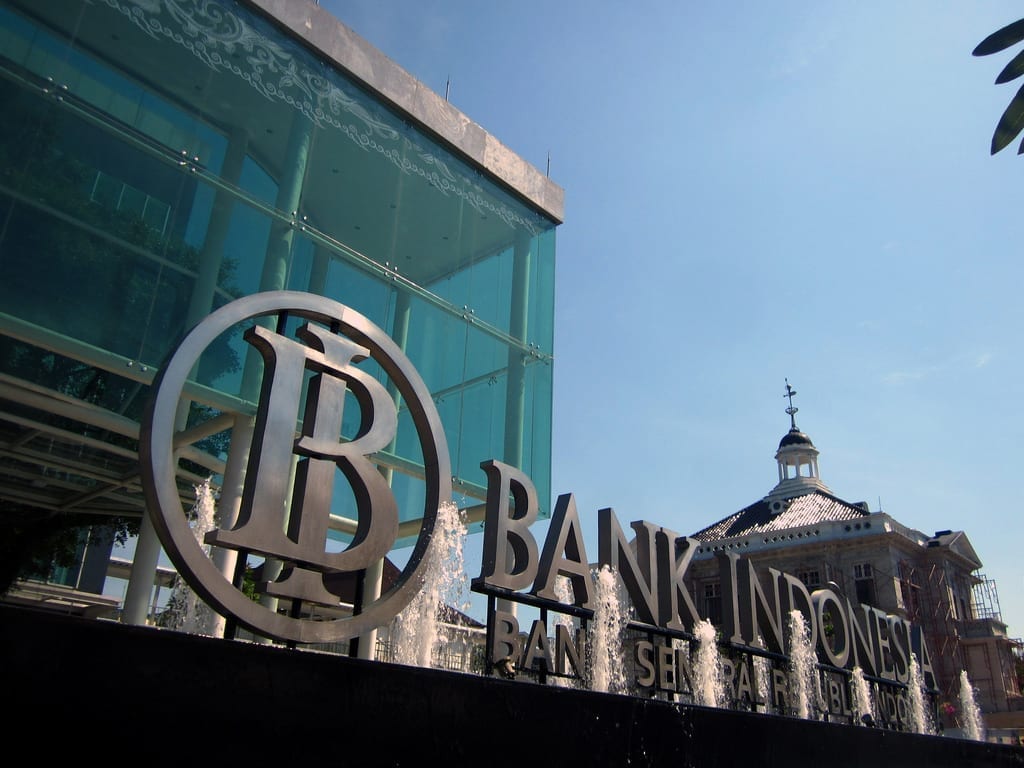
    Bank Indonesia has set National Standard Indonesian Chip Card Specification (NSICCS) as the country’s technology benchmark for ATMs and debit cards of all card providers across the country.

    The regulation was officially implemented during a meeting attended by Bank Indonesia deputy governor Sugeng, bankers and the Indonesia Payment Systems Association (ASPI) on Wednesday in Jakarta.

    The central bank also appointed ASPI to oversee the implementation of the NSICCS and to develop it through observation of several aspects, such as security and technology development.

    “The implementation of a standard was aimed at increasing the security of transactions and encouraging the creation of an interoperability instrument, which was in line with the National Payment Gateway program,” the central bank wrote in an official statement.

    Bank Indonesia through its letter, No.17/52/DKSP on the requirement of a six digit PIN number for all debit and ATM cards utilizing magnetic stripe technology, tried to improve on the security aspects of transactions.

    The NCICCS technology will not only be implemented in the ATM and debit cards, but also in the system, which processes transactions within the cards. The full implementation is expected to finish at the end of 2021.

    The implementation of the NCICCS is part of an ongoing effort to mitigate fraud and align ATM and debit card standards in Indonesia with the best practices on the international level, Bank Indonesia wrote.

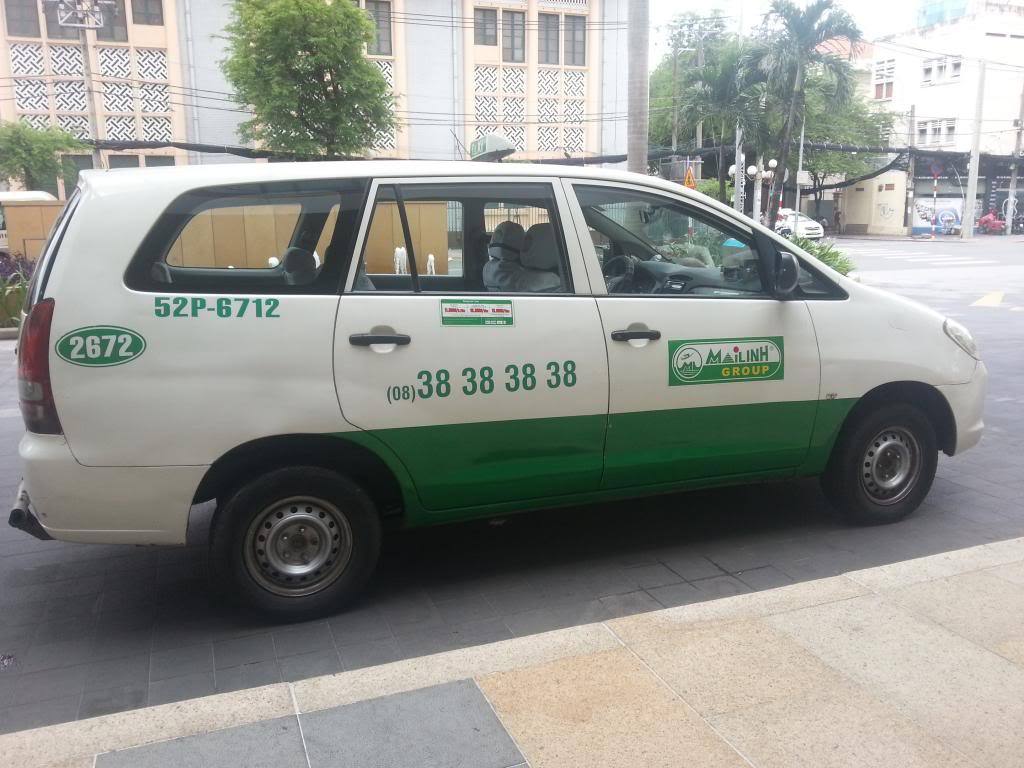
  • Saigon cab firm lodges formal complaint after losing out to Uber, Grab

    Saigon cab firm lodges formal complaint after losing out to Uber, Grab

    The plight of traditional taxis has received little sympathy from members of the public, who say they are fed up with unreliable services.

    Vietnam’s second biggest taxi firm Vinasun said it lost over 4,200 drivers in the first quarter of 2017 while more than 300 of its cabs have been left in the yard due to harsh competition from ride-hailing firms Uber and Grab.

    In a document sent to the government, Vinasun said more than 21,100  cars have been granted licenses to work for Uber and Grab in Ho Chi Minh City, not to mention over 1,800 cars from other cities and provinces.

    The figure matches data from the city’s transport department, which says the number of so-called technology taxis in the city had reached 22,000 at the end of the April, far beyond the authorities’ expectations.

    As Uber and Grab are not registered to run passenger transport services, they do not have to follow the strict regulations that traditional taxi firms do and pay less taxes, according to Vinasun.

    Due to loose management, Uber and Grab have been able to offer a string of promotions to lure customers, it claimed, calling the competition “unhealthy” and “unfair”.

    Vinasun asked the government to treat Uber and Grab like traditional taxi firms, limit the number of cars they operate and charge them corporate income tax.

    In response to Vinasun, the Ministry of Transport said the government welcomes all transport firms that use hi-tech applications to support their businesses.

    Uber and Grab are not taxi firms but transport firms that ink contracts with their passengers that are electronic instead of on paper, it said.

    Yet late last week, the ministry instructed localities to stop licensing new ride-hailing services in a bid to control app-based taxis.

    With the number of technology taxis threatening to spiral out of control, Nguyen Hong Truong, deputy transport minister, said his ministry will tighten management of ride-hailing firms.

    U.S.-based Uber and Malaysia-based Grab entered Vietnam in 2014. Since then, collecting tax from the two firms has proved a headache for local authorities.

    As currently regulated, Uber has to pay 3 percent VAT while Grab has to pay 5 percent. Traditional taxi firms have to pay 10 percent VAT and 20 percent corporate income tax.

    In April, Mai Linh, another major taxi firm in Vietnam, also complained that they were losing business to Uber and Grab.

    Mai Linh said its net profit plunged nearly 70 percent last year to VND43 billion

    Ho Huy, chairman of the company, said Uber and Grab were the main reasons 2016 was such a difficult year for Mai Linh and other traditional taxi firms.

    But so far, the plight of traditional taxis has received little sympathy from the public. Many people are fed up with poor and unreliable services provided by traditional taxi firms, such as drivers refusing to take short trips or failing to show up for a booking, while ride-hailing firms are clean and their fares are transparent.

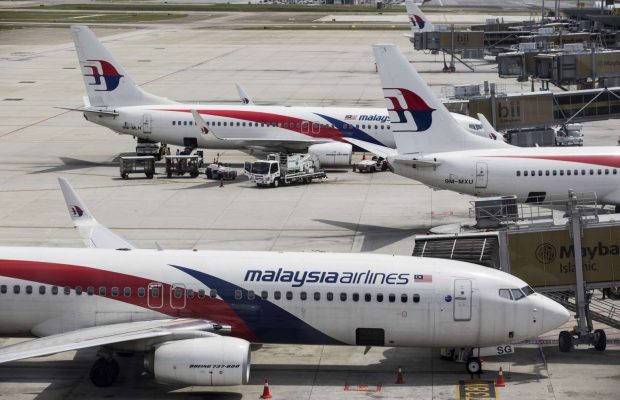
  • Change of guard as new CEO takes Malaysia Airports’ reins

    Change of guard as new CEO takes Malaysia Airports’ reins

    The new Director and Chairman of Malaysia Airports is YAM Tan Sri Dato’ Seri Syed Zainol Anwar Ibni Syed Putra Jamalullail, who took over from Tan Sri Dr Wan Abdul Aziz, who has served in the position for the last five years.

    Commenting on the contribution made by its former chairman, Malaysia Airports said: “Tan Sri Dr Wan Abdul Aziz has held the position for five years and during his stewardship has seen to the company’s significant achievements such as the successful opening of klia2 and full acquisition of Istanbul Sabiha Gokcen International Airport in Turkey – as well as the opening of Mitsui Outlet Park KLIA as a catalyst to KLIA Aeropolis.

    “His guidance and commitment at the Board has also steered the company towards charting its next phase of growth in Malaysia Airports’ five-year business plan Runway to Success 2020 (RtS2020) and launching of the KLIA Aeropolis Master Plan.”

    Adding his remarks at the end of his tenure at the airports company, Tan Sri Dr Wan Abdul Aziz said: “I believe Malaysia Airports has the capability to continue to create value for the ever-evolving aviation landscape – way into the future.

    “I am also confident that it will continue to reap the success of its innovative plans and hard work. This is the right time for me to make way for another leader at the helm to pursue the company’s vision and steer it towards achieving even greater heights.”

    The new incoming Chairman YAM Tan Sri Syed Zainol Anwar was formerly the Chairman of Nestlé (Malaysia).