Tag: asia

  • Vietnamese street food favored over foreign fast food chains

    Vietnamese street food favored over foreign fast food chains

    Several Burger King shops in HCMC and Da Nang have closed, while Lotteria has also shut down ineffective shops. Other giants have not closed many of their shops, but they are cautious developing their chains.

    McDonald’s, when setting foot in Vietnam, stated it would open 100 shops within 10 years. However, after three years in Vietnam, the giant has opened only 15 shops.

    A representative of Lotteria admitted that competition in the fast food market is getting stiff with many foreign and domestic brands.

    Some brands have shut down shops because their menus were not suitable to Vietnamese tastes and the prices were not competitive.

    Nguyen Huy Thinh, managing director of McDonald’s, said it was normal for fast food brands to shut down unprofitable shops, while a representative from Burger King said the chain’s business has been going well with a two-digit growth rate.

    However, Hoang Tung, a branding expert, blames the failure of some fast food chains on the difference between the food and Vietnamese tastes.

    Burger King, for example, develops products based on burgers as the core product.

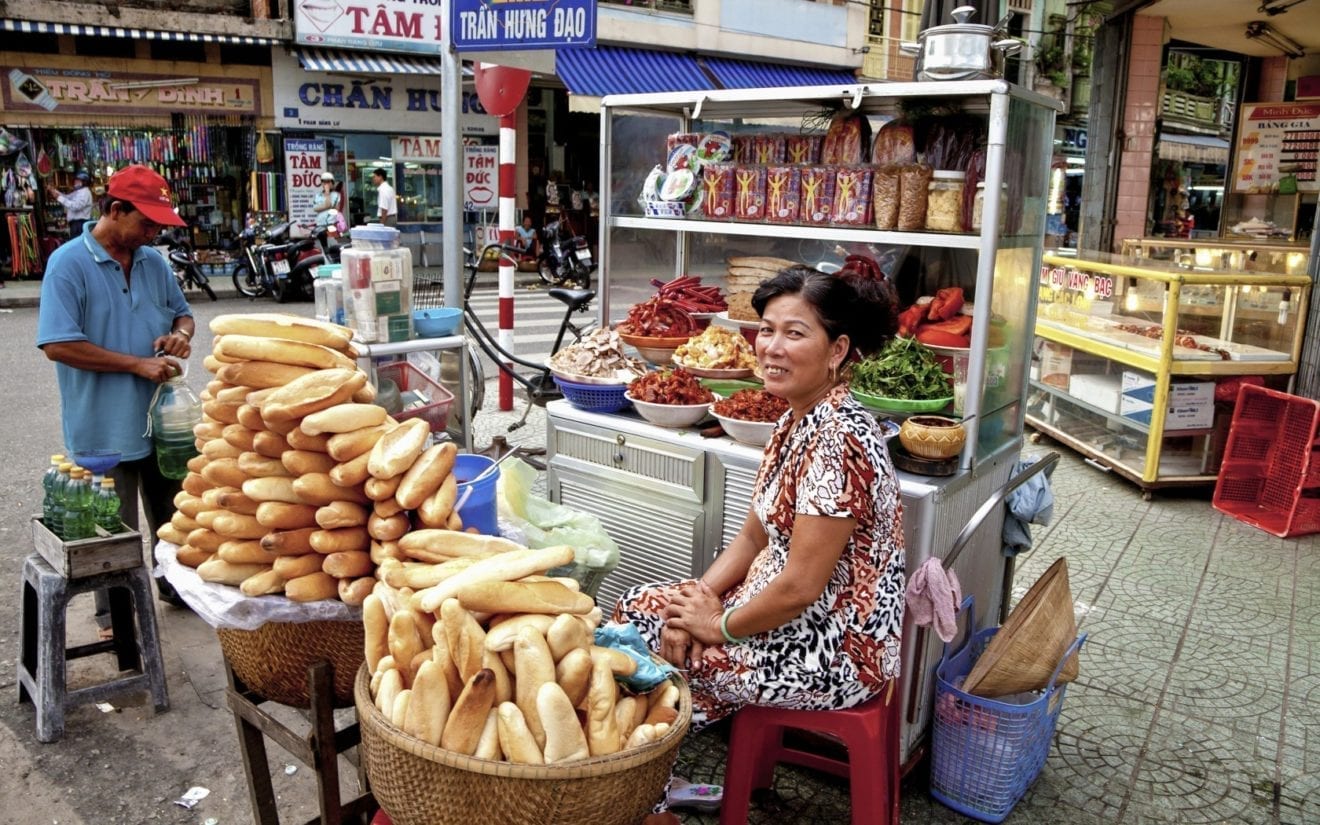
    “Vietnamese still prefer banh my (sandwich) and banh my is cheaper than a burger,” Tung said. “This is why the burger chain expansion has slowed down, while banh my chains have been booming.”

    Tran Anh Tuan, CEO of Pathfinder, a consultancy firm, also said that some fast food chains are not positioned well in the domestic market, and products don’t change regularly. And the price is too high compared to consumers’ income.

    “Fast food, in foreign countries, is generally for the masses. But in Vietnam, fast food chains target high-income earners,” he explained.

    Fast food… and rice

    While western-style fast food chains are not thriving, Vietnamese and Asian food brands are doing well.

    Anh from Pathfinder said that many Japanese and Korean food chains have appeared i which are closer to Vietnamese tastes.

    “Korean fried chicken chains have been developing rapidly because they have reasonable prices and fit Vietnamese tastes,” he said.

    In the past, only a few fast food chains sold Vietnam rice, but now it is a major dish on menus.

    MOIT has granted licenses to 148 foreign brands to enter the Vietnamese market in the last eight years.

    This includes 42 fast food, bakery, coffee, beverage and restaurant brands, accounting for 43.7 percent of the total.

  • Thailand to link 3,920 villages with fiber by mid-2018

    Thailand to link 3,920 villages with fiber by mid-2018

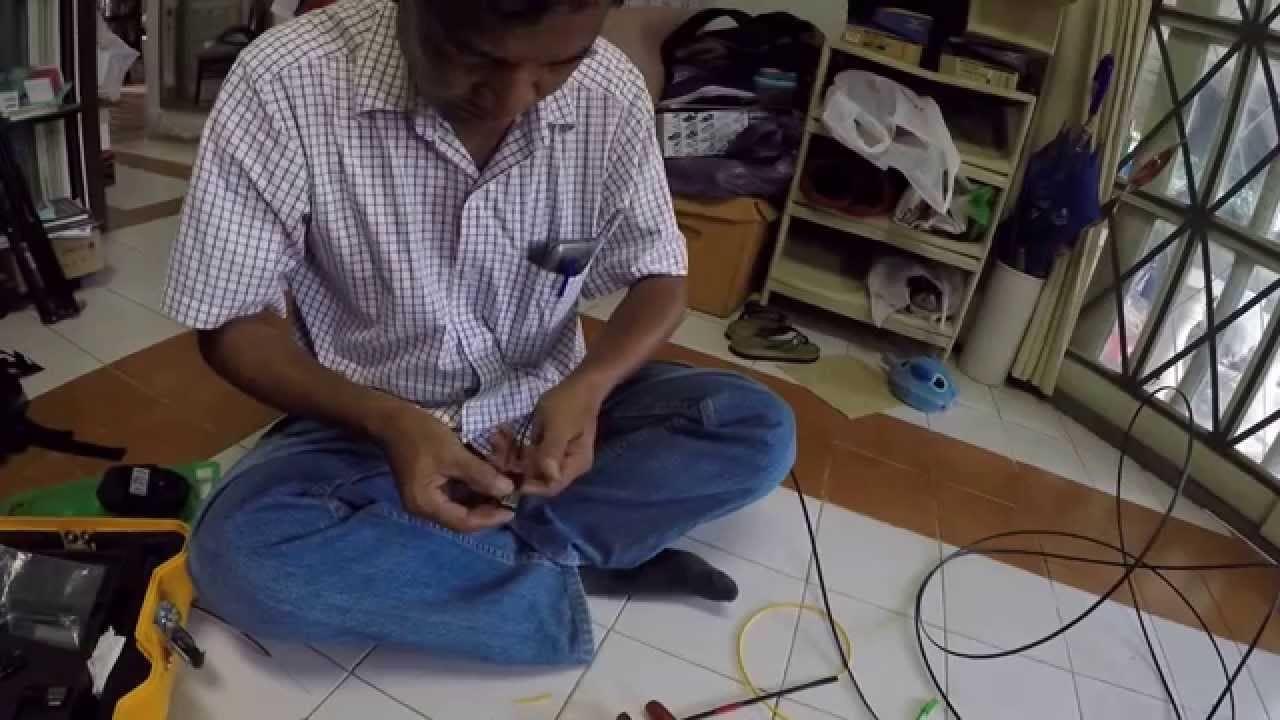
    Thailand’s first state-provided high speed fixed broadband services for rural areas are on track to launch by mid-2018, according to reports.

    The fiber-based service will be offered to 3,920 border villages across 62 provinces by this time, providing broadband at speeds of at least 10Mbps.

    The low cost services will start at just 50 baht ($1.47) per month for a 10Mbps connection with unlimited data, 150 baht or less for a 15Mbps connection and 200Mbps or less for a 20Mbps connection.

    An initiative of regulator NBTC, construction of the network will be funded as part of the 14 billion baht Universal Service Obligation (USO). It will also involve the construction of 5,229 free Wi-Fi hotspots, as well as 763 public internet centers that will fuction as community centers for 2-4 villages.

    The NBTC has just launched a tender process to select the project’s contractor, and plans to hold an online auction to choose a winning bidder in July. Networks must be capable of a minimum 30Mbps connection speed, and the service packages must be offered for at least five years.

    The NBTC is also finalizing the details of construction of a broadband network for an additional 15,732 villages, as part of its plan to deploy a low-cost broadband infrastructure spanning 40,432 underserved villages nationwide to help bridge the digital divide between urban and rural Thailand.

  • Facebook retailers in Hanoi told to pay tax

    Facebook retailers in Hanoi told to pay tax

    Tax collectors have reached out to more than 13,400 businesses, following a similar move by their peers in Ho Chi Minh City.

    The Hanoi Department of Taxation has sent text messages to 13,422 Facebook accounts that use the social media network as a retail platform.

    The retailers have been urged to go to the department’s website to register their businesses and declare tax, Vien Viet Hung, the department’s deputy director, said.

    So far nearly 2,000 of them have registered and been granted a tax code.

    The move came soon after the tax authority in Ho Chi Minh City took similar action.

    Le Thi Thu Huong, a municipal tax official, said Ho Chi Minh City has a record of 13,500 retailers on Facebook and that the law only requires those with an annual revenue of VND100 million or $4,400 to declare tax.

    Tax officials will also need to figure out how to determine their taxable income, Huong said, noting that cash transactions are difficult to track.

    But both officials and experts have admitted that it would be extremely difficult to collect tax from Facebook retailers.

    Nguyen Thi Cuc, who chairs the Vietnam Tax Consultants’ Association, told VnExpress that Vietnam’s tax policy for online businesses is incomplete and that it’s a challenge when most transactions are still in cash.

    Vietnam is also struggling to monitor the business activities of transnational corporations like Facebook and Google, she added.

  • Mobile users cringe at new photo ID requirements in Vietnam

    Mobile users cringe at new photo ID requirements in Vietnam

    Many subscribers say they have already provided copies of their ID cards, so why is the new regulation necessary? Mobile subscribers in Vietnam are objecting to a government regulation which requires them to provide a portrait photo of themselves when they register with a provider to clarify their personal information in an effort to get rid of spam messages.

    Under the amended telecommunications law, existing subscribers will have until next April to furnish network providers with photos.

    After the deadline, networks will be fined if they are caught offering services to users who provide false information.

    MobiFone and VinaPhone, two of the biggest mobile service providers in Vietnam, have already started taking photos of new subscribers. Viettel, the country’s largest provider, said it will start taking photos of new users from next month.

    A VinaPhone representative told that the company has faced strong opposition from customers, with many refusing to provide a photo.

    A MobileFone staff member in Hanoi also said that customers simply don’t want to sit down for a photo.

    Registering new customers is already a headache, and obtaining photos from existing users will be a much bigger problem.

    VinaPhone said it is planning to offer incentives to current customers who provide the company with photos, while Viettel said it is still working on a solution to deal with existing customers.

    Last week, Duong, the owner of a mobile subscription service run by MobiFone in Hanoi, received a text from the company asking her for a photo.

    Duong said she was surprised as she has been using MobiFone for nearly 20 years and has already provided the company with her personal information.

    “I have already submitted a copy of my ID with a photo on it but the staff at MobiFone said the photo isn’t clear enough and they need a new one,” she said.

    When she learned that operators will bar outgoing calls after 15 days and disconnect after 30 days if subscribers refuse to submit their photos, Duong’s first reaction was that it could be a breach of contract. She was also concerned about the security of her personal information.

    Many people echo Duong’s opinion.

    Others simply said the whole idea is a waste of time, and questioned whether mobile operators will be able to protect their personal information.

    The regulation, which is aimed at eliminating spam messages, states that telecom companies will be fined VND30 million ($1.320) to VND50 million for leaking customers’ personal information, and VND50-70 million for trading that information, according to the Ministry of Information and Communications.

    Nguyen Chien, vice chairman of the Vietnam Bar Association, said the regulation risking breaking contracts signed by existing subscribers if they are cut off for not providing a photo.

    This requirement should only be applied for new subscribers and existing subscribers who have not provided enough personal information, he suggested.

    Official data show millions of spam messages are sent in Vietnam every day. Most of them come from prepaid phone accounts that are unregistered or registered with false information.

    The messages are not only annoying but dangerous as they can be used by criminals and terrorists, according to the ministry.

  • For some Indie beauty brands, getting into Sephora can be better than getting into an incubator

    For some Indie beauty brands, getting into Sephora can be better than getting into an incubator

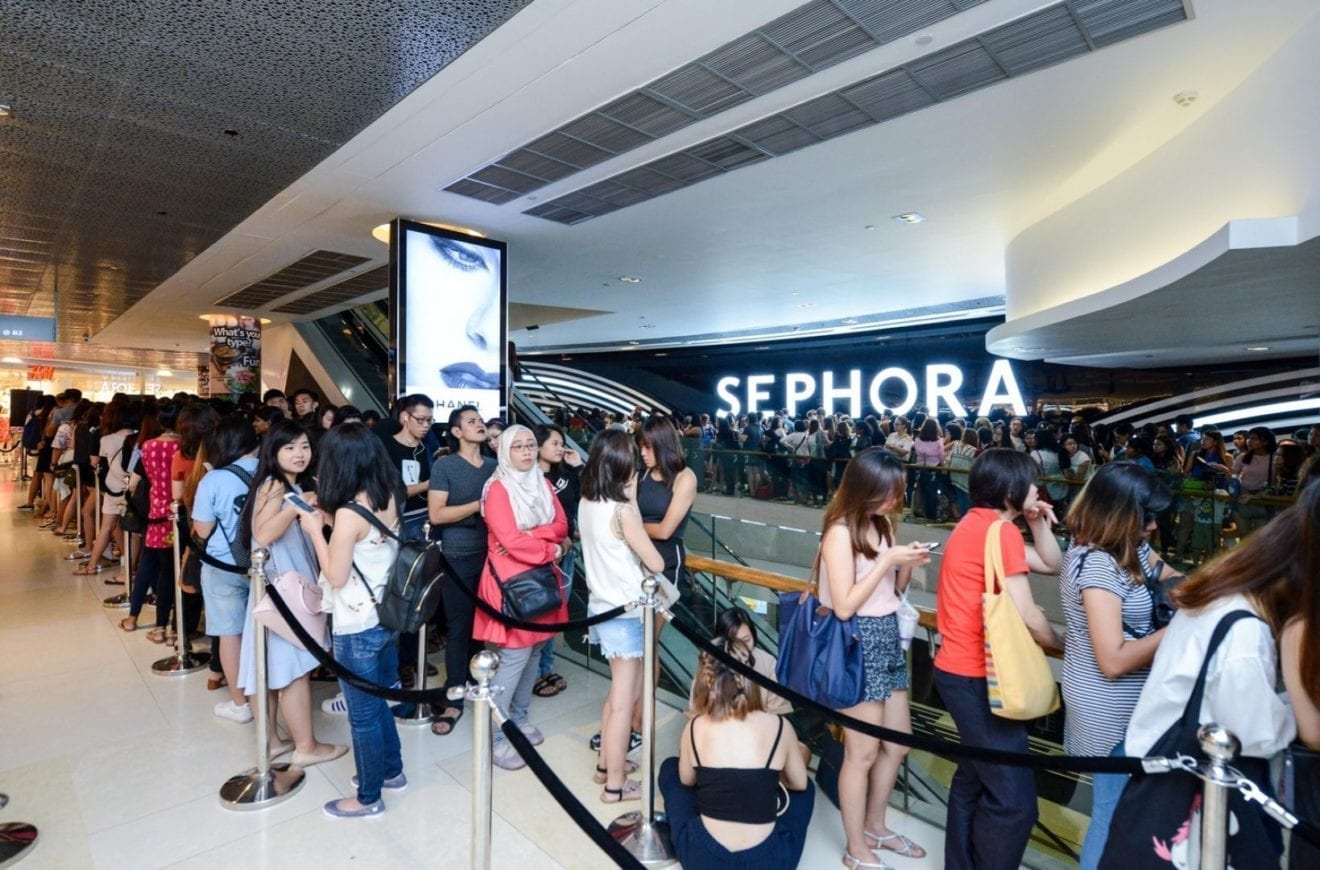
    For Supergoop’s Holly Thaggard, getting into Sephora helped her small sunscreen brand look bigger than it was. Over the six years since she got onto the shelves of Sephora – the world’s largest beauty retailer with more than 2,300 stores worldwide, including more than 350 in the United States – Sephora has been especially helpful in promoting the brand, developing new products and navigating the regulatory complexities of launching in multiple countries in Asia.

    That’s typical of how Sephora deals with the small brands it helps launch. Think of Sephora as part retailer, and part incubator for indie beauty brands.  To get in to Sephora, startups need to have not only a strong product, but also a strong story the beauty retailer can tell. Sephora, a division of luxury conglomerate LVMH, has gotten flack for stocking LVMH brands over those of cosmetics giants L’Oréal and Estee Lauder.

    But for the startup brands it works with, its execs will brainstorm on product development, help with social-media promotion, and offer a roadmap for how to go from small to big based on a template it’s been using successfully for years. “We work very closely with these brands,” says Priya Venkatesh, Sephora’s vice of merchandising for skincare and haircare. “That is the model of Sephora.”

    Over the years, it’s given big boosts to indie makeup brands like Urban Decay, a cult favorite purchased by L’Oréal in 2012, and Too Faced, a popular indie brand bought by Estee Lauder last year for $1.4 billion. “Sephora is constantly looking to support new and indie brands,” says Amanda Davenport, a retail consultant at The Grayson Co. For the brands that make it onto the shelves, she notes, “they have done a lot of things right, and they have the opportunity to scale.”

    Consider a startup haircare brand, Ouai (pronounced “way”) added the name of celebrity stylist Jen Atkin, who founded the line, to its products’ packaging at the urging of Sephora. “Jen didn’t want that,” says Ouai co-president Andrew Knox. “If Sephora didn’t push that, we might not have done it.” The startup, which expects sales above $20 million this year, also worked closely with Sephora on the launch of a dry shampoo foam in February, creating how-to videos and Instagram content for the retailer about it. As co-president Deanna Kangas says: “They understand small brands, and how to build small brands. That is part of Sephora’s DNA.”

  • Food delivery and out-of-home dining are thriving in China

    Food delivery and out-of-home dining are thriving in China

    China is one of the world’s largest e-commerce economies, but that doesn’t mean people are only opting to consume in the comfort of their homes.

    In fact, a study by consultancy Bain and Company and Kantar Worldpanel found that the growth rate of FMCG (fast-moving consumer goods) home consumption is only tepid compared to the strong growth of dining out.

    According to that 2017 China shopper report, released on Tuesday, dining out and food delivery are seeing robust growth with Chinese consumers, who have traditionally cooked at home.

    The results revealed that while the value of food purchased for in-home meal preparation grew by only 3 percent annually from 2013 to 2016, food delivery rose by 44 percent and dining out grew by 10 percent over the same period.

    “You can still have family lunches and dinners at home but there is so much variety of delicious food that is available at 30 minutes from where you live or where you work, why would you bother cooking at home?” said Bruno Lannes, partner in Bain’s Greater China Consumer Products Practice.

    The study analyzed responses from a panel of 40,000 households and 4,000 individuals in tier 1 and tier 2 cities.

    The report’s findings this year are a continuation of a “two-speed” trend identified last year, said Lannes.

    In the case of dining, it’s “high-speed dining out and delivery versus low-speed home cooking” and this divergence will present new opportunities and strategies for food businesses, the report added.

  • Hella and ZF enters into partnership for autonomous driving

    Hella and ZF enters into partnership for autonomous driving

    German auto component makers ZF and HELLA have entered a strategic partnership for making products for autonomous vehicles, the company informed a press statement. The partnership will strengthen both the companies in sensor technology, particularly for front camera systems, imaging and radar systems.

    “This strategic partnership for sensor technology with HELLA enhances our position as a complete systems supplier for modern assistance systems as well as autonomous driving functions,” says Dr. Stefan Sommer, CEO of ZF Friedrichshafen AG. “This non-exclusive cooperation with HELLA is an important expansion of our Vision Zero ecosystem of development partnerships. Thus, we can create a wider technological foundation for safety and autonomous driving.”

    ZF will further strengthen its portfolio as a systems supplier which offers both modern assistance systems and autonomous driving functions, whereas HELLA will drive technological development and benefits from a broader market access with its leading technologies. The first joint development project in camera technology will start immediately, with the objective of a market launch in 2020.

    Dr. Rolf Breidenbach, CEO at HELLA KGaA Hueck & Co., adds: “HELLA is a strong and experienced provider of sensor technologies. Our knowledge aligns perfectly with ZF’s expertise. By combining our strengths, we clearly aim to provide market leading and high performing assistance systems and autonomous driving functions. In addition, this cooperation will strengthen HELLA’s position as a well-regarded supplier for imaging and radar sensor technologies.”

    In their first joint project, the partners are targeting a current market trend: In the future, the highest Euro NCAP safety ratings will require the assistance of camera-supported assistance functions. Therefore, the demand for front cameras in all vehicle segments will rise. ZF and HELLA will offer automotive manufacturers a joint product and are starting development immediately with an expected SOP in 2020. ZF brings hardware and its expertise in functions, systems and integration to the table, whereas HELLA and its subsidiary HELLA Aglaia Mobile Vision contribute competence in efficient, tried-and-tested imaging software and application development.

    In the mid to long term, these cooperation partners will also provide camera systems for automated driving functions as well as for commercial vehicles and off-highway applications. ZF expands its camera portfolio and therefore offers more options to customers while continuing to work with established partner. HELLA Aglaia gains a new customer and partner for its independent and open software solutions for driver assistance systems.

    In their cooperative work in the radar systems sector, the partners will also identify opportunities to provide attractive volume-production solutions in the short to mid term by jointly building up their product portfolio. HELLA’s 360° surround view radar systems together with ZF’s mid-range and long-range radar systems will establish a new and comprehensive systems solution.

    While the joint development will focus on systems solutions, each partner will continue to develop and to offer its technology independently on a component level. Here, the true potential of a long-term development partnership lies in the ability to utilize common system architecture as well as product families which are adapted to each other.

  • Vietnam drops criminal charge threat against unregistered online businesses

    Vietnam drops criminal charge threat against unregistered online businesses

    Successful business owners would have faced up to two years in jail if they failed to register under the previously flawed law. Vietnam’s lawmakers have officially removed a controversial clause from the Penal Code that would have allowed criminal proceedings to be taken against unregistered online businesses with possible jail sentences.

    The legislative National Assembly passed the revised Penal Code on Tuesday and agreed to remove Article 292.

    Under the article, companies that provide online services without being properly registered would be fined as usual, just like most business offenses. However, businesses that generate a profit of VND50 million ($2,200) or revenue of VND500 million would have faced criminal charges and a potential two-year jail term.

    The article was enshrined in the 2015 Penal Code, which itself was scheduled to come into effect last year but was postponed due to multiple errors and loopholes. Article 292 was one of the most controversial parts of the code.

    Last October, the government agreed that the rule should be scrapped after it met with strong opposition, including a petition with 6,000 signatures from the local startup community.

    The Vietnam Chamber of Commerce and Industry also asked legislators to scrap the article, warning that the rule would have negative impacts on the economy and inhibit the modern era of online services and startups.

    Vietnamese authorities have been trying to gain stronger control over online businesses. Hanoi and Ho Chi Minh City have both launched tax collection campaigns targeting retailers on Facebook, the country’s most popular social network.

    Hanoi’s tax department this week called on 13,422 retailers that use the Facebook platform to register and pay taxes. The move follows a similar push by Ho Chi Minh City that covered around 13,500 retailers.

  • IoT standardization picks up pace in Taiwan

    IoT standardization picks up pace in Taiwan

    IoT interoperability and standardization has moved forward in Taiwan after oneM2M, the global standards initiative for M2M and the IoT, held its fourth interoperability testing event in Taipei.

    Interop 4 gave organizations implementing oneM2M standards the opportunity to check end-to-end functionality via oneM2M interfaces and validate interoperability, with a total of 13 companies taking part.

    A conference held the day before the event featured presentations from leading companies and members of oneM2M’s leadership team to promote oneM2M to Taiwanese businesses in the IoT sector.

    The event was held as the Asian Silicon Valley Development Agency (ASVDA) works to transform and upgrade Taiwan’s industrial infrastructure with IoT technology. The agency aims to have a 5% stake in the global IoT market by 2025.

    “Taiwan is looking to become a major player in the IoT and Interop 4 helped drive this goal by giving organisations in the country and the wider Asia region the opportunity to test and improve their deployments,” said JaeSeung Song, Associate Professor at Sejong University and Test Working Group Chair at oneM2M.

    “Interop 4 was our second interoperability event of the year and its success highlights the continuous growth of oneM2M’s standards.”

    Hosted by TTA and ETSI – two of oneM2M’s founding partners – along with the Taiwan-based Institute for Information Industry (III), Interop 4 allowed participants to take part in interoperability scenarios from TS-0013 – oneM2M’s testing specification.

    Testing at the event was based on oneM2M’s set of standards, Release 1 and Release 2 and covered functional architecture, service layer core protocol and Constrained Application Protocol (CoAP), HTTP, Message Queue Telemetry Transport (MQTT) and WebSocket protocol binding.

    The event allowed companies to check interoperability levels of their implementations and ensure they had interpreted oneM2M’s standards correctly. Conformance Testing to help debug products was also available.

    Organisations which participated in this event include: Spirent Technologies, Institute For Information Industry, NTT, TTA, Sporton, DEKRA, KETI, C-DOT, ETRI, Sejong University, Easy Global Market, nTels and Sensinov.

  • Korean Duty-free shops’ sales to foreign customers rise in May

    Korean Duty-free shops’ sales to foreign customers rise in May

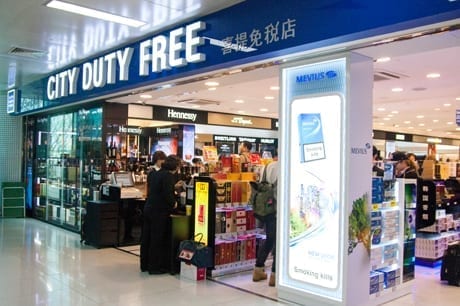
    South Korean duty-free shops saw sales to foreign customers increase for the first time in three months in May, industry data showed, a sign that Beijing’s trip restrictions may be wearing off.

    The sales to foreigners at local duty-free shops reached US$655.9 million last month, up a solid 11.1 percent from the previous month, where they stood at US$590 million, according to the data from the Korea Duty Free Shops Association.

    The on-month increase marks the first rebound following a big drop in the number as the Chinese government exerted pressure on the country’s travel agencies to stop selling package tours to South Korea in an apparent retaliation over the deployment of a U.S. missile system on the Korean Peninsula.

    Beijing’s ban dealt a blow to the local duty-free industry, which has heavily relied on Chinese demand. Chinese tourists accounted for 46.8 percent of all tourists coming to South Korea last year.

    It is attributed to the increasing sales of airport duty free shops by increasing number of outbound for golden holiday last month.

    The latest tally showed that while South Korean nationals bought less at duty-free shops in May, a rise in demand by foreigners pushed up total sales 4.8 percent on-month to US$937 million. This is also the first overall increase in three months.

    The association added the number of foreign customers who visited shops in the country increased 2.6 percent on-month to 1.02 million from 998,000 in April. The rise is the first upward trend in four months.

    Unlike the expectation that the Thaad retaliation will be eased after the inauguration of new government, the ban on the Chinese visit has not yet been resolved. Even if the China stops the Thaad retaliation within this month, it takes at least one month or two months that group tourists visit Korea, which means Chinese tourist will visit Korea in September.

    A downtown duty-free shop official said, “There are not any Chinese tourists who visit our duty-free shops yet.” There is no factor to improve the relationship between the two countries.

    Although sales temporarily recovered, it is too early to predict that Chinese will return soon.

  • DoCoMo adopts SAP HANA to boost customer service

    DoCoMo adopts SAP HANA to boost customer service

    Japan’s NTT DoCoMo will adopt the SAP HANA platform as the foundation of its data needs to improve customer service.

    Large volumes of data, as large as 18TB, will be collected from various touch points, including nationwide DoCoMo Shops, for processing and analysis.

    The new platform will initiate better customer services by helping to identify areas of operational improvement at the storefronts and uncover best practices for applying insights and lessons from other stores.

    The implementation took eight months to complete and officially went live in March 2017.

    DoCoMo needed a new IT platform system to meet three key objectives – strengthen its competitive edge, propose and deliver services that meet customer needs, and enhance data utilization efficacy and operational efficiency of the sales team.

    “Before we implemented the new system, we lacked the capability to deliver information to the sales force. It took the backend office at least a week or two to generate and deliver information” stated Taku Hasegawa, GM of DoCoMo’s Information Systems Department.

    “Now with SAP HANA, users can pull out the latest data whenever they need to. An increase in performance has also helped individual storefronts to monitor status of sales promotions. Moving forward, we expect to see an improvement in service at docomo Shops.”

  • Number of Indonesian air passengers spike before Idul Fitri

    Number of Indonesian air passengers spike before Idul Fitri

    Indonesian flyers embarking on the homeward-bound Idul Fitri exodus have surged in the six days before the holiday, Transportation Ministry data has shown.

    “According to the data collected until June 20 at midnight, domestic flights have seen a 10 percent surge in passengers,” an official with the Transportation Ministry in charge of the Idul Fitri holiday daily integrated transportation post, Adi Karsyaf Rahayu, said in a statement.

    On the accumulated data from 10 days before until six days before the festivity collected from 35 airports, the number of domestic flyers has surged to 1.3 million from 1.18 million passengers in the same period last year.

    A higher jump was observed in international flights in seven airports in Indonesia six days  before Idul Fitri, with a 12.69 percent hike to 222,976 passengers from the 197,871 in the same period last year.

    The Transportation Ministry, which spearheads the coordination for this year’s annual exodus, predicted that the country would see a 4.8 percent surge in the number of people traveling by public transportation to 19.04 million.

  • Opening of Incheon Airport’s 2nd terminal likely to be delayed

    Opening of Incheon Airport’s 2nd terminal likely to be delayed

    Incheon Airport’s second terminal, which was originally slated to open this year, may push back its opening to after the PyeongChang Winter Olympics next February.

    According to a spokesperson at the airport corporation, the airport is weighing the pros and cons of opening the terminal within the year or after the PyeongChang Games.

    “It is technically possible to operate the second terminal this year, because all of the necessary facilities will complete construction in September,” he said.

    However, this would require the terminal to open while the luxury and fashion duty-free shopping area, considered a “landmark” of the airport, is still under construction.

    “It would not only create inconvenience for airport visitors, such as dust from the construction, but also impact the airport’s image,” the spokesperson said.

    Incheon Airport has gone through six rounds of tenders to find an operator for the area, but has been unsuccessful. Shinsegae DF was the only company to bid in the fifth and sixth rounds, meaning that now Incheon Airport is legally able to directly negotiate a contract with an operator without another open bidding process.

    Even if Incheon Airport is able to negotiate acceptable terms with Shinsegae DF or another operator, it would take time for the Korea Customs Service to grant the final license. Another nine months to finish construction would mean that the shopping area would be able to open around next April.

    Another consideration is that visitors to the airport might still be unfamiliar with the second terminal when the PyeongChang Games are being held. The new terminal will house Korean Air, Delta, KLM and Air France.

    “Unless we are able to open by December, there will still be confusion at the airport regarding the terminals by the time the Games begin,” the spokesperson said, noting that the airport will have no problems handling the influx of travelers during the Olympics with just its first terminal.

    The Transport Ministry said in a statement that the second terminal “will be opened according to plan, with no postponement plans currently under consideration.”

  • Leading US-based index to include Chinese stocks for 1st time

    Leading US-based index to include Chinese stocks for 1st time

    MSCI’s decision has been closely watched as a sign of China’s growing importance on international financial markets. China on Wednesday hailed the acceptance of its stocks in a leading U.S.-based index of emerging market shares as a signal of confidence in the Asian power’s economy after three previous rejections.

    The Shanghai and Shenzhen stock markets opened higher after New York’s MSCI agreed to include 222 large capitalization Chinese stocks in its MSCI Emerging Markets Index, representing 0.73 percent of the index.

    MSCI’s decision has been closely watched as a sign of China’s growing importance on international financial markets.

    “We applaud and appreciate MSCI for making such a decision,” said Zhang Xiaojun, spokesman for the China Securities Regulatory Commission.

    “It showed international investors’ confidence in a stable Chinese economy with better prospects and in the steadiness of China’s financial market,” Zhang said.

    The benchmark Shanghai Composite Index jumped 0.29 percent while the Shenzhen Composite Index, which tracks stocks on China’s second exchange, gained 0.24 percent in early trading.

    MSCI said the move has “broad support” from international institutional investors and was the result of loosening of restrictions enacted by China on foreign ownership of “A” shares — stock in mainland China-based companies — ownership of which had once been limited to mainland citizens.

    “International investors have embraced the positive changes in the accessibility of the China A shares market over the last few years and now all conditions are set for MSCI to proceed with the first step of the inclusion,” said Remy Briand, MSCI managing director.

    “MSCI is very hopeful that the momentum of positive change witnessed in China over the past years will continue to accelerate.”

    ‘Token inclusion’

    MSCI says its emerging markets index is tracked by more than $1.5 trillion in assets. The company said the Chinese representation in the index could be increased in time if China enacts additional reforms.

    MSCI has in the past cited obstacles such as China’s restrictions on market access and on moving capital in and out of the country. Prior to Tuesday’s decision, it had excluded Chinese shares for three years in a row.

    “We reflected the comments from the institutional investor community. They (Chinese officials) took them very seriously and acted upon some of them,” MSCI chief executive Henry Fernandez told CNBC.

    Institutional investors praised a decrease in the number of stock suspensions in China, but said the current level is still an “outlier” compared with other markets, MSCI said.

    Chinese shares will go into a number of provisional indices before they are included in the flagship index starting in June 2018.

    China’s addition would help around $8 billion flow into its stock markets, Capital Economics said, describing it as “a token inclusion” given that the weighting would be the equivalent of 0.1 percent of the domestic market’s capitalization.

    Opens the door

    Analysts nevertheless said China’s admission to the index would be a good start.

    “A low number of shares and weighting is not important at the beginning,” said Li Daxiao, chief economist at Yingda Securities.

    “It is like opening a door. Even if it is just a crack, it is a huge improvement compared to being completely shut.”

    Citic Securities analyst Zhang Qun said inclusion would have “more of an emotional effect than a practical one”.

    “It is the change from zero to one. If in the next few years the degree of opening up increases… then it could go from one to 10 or even 100,” Zhang said.

  • Amazon continues to open new fulfilment centres

    Amazon continues to open new fulfilment centres

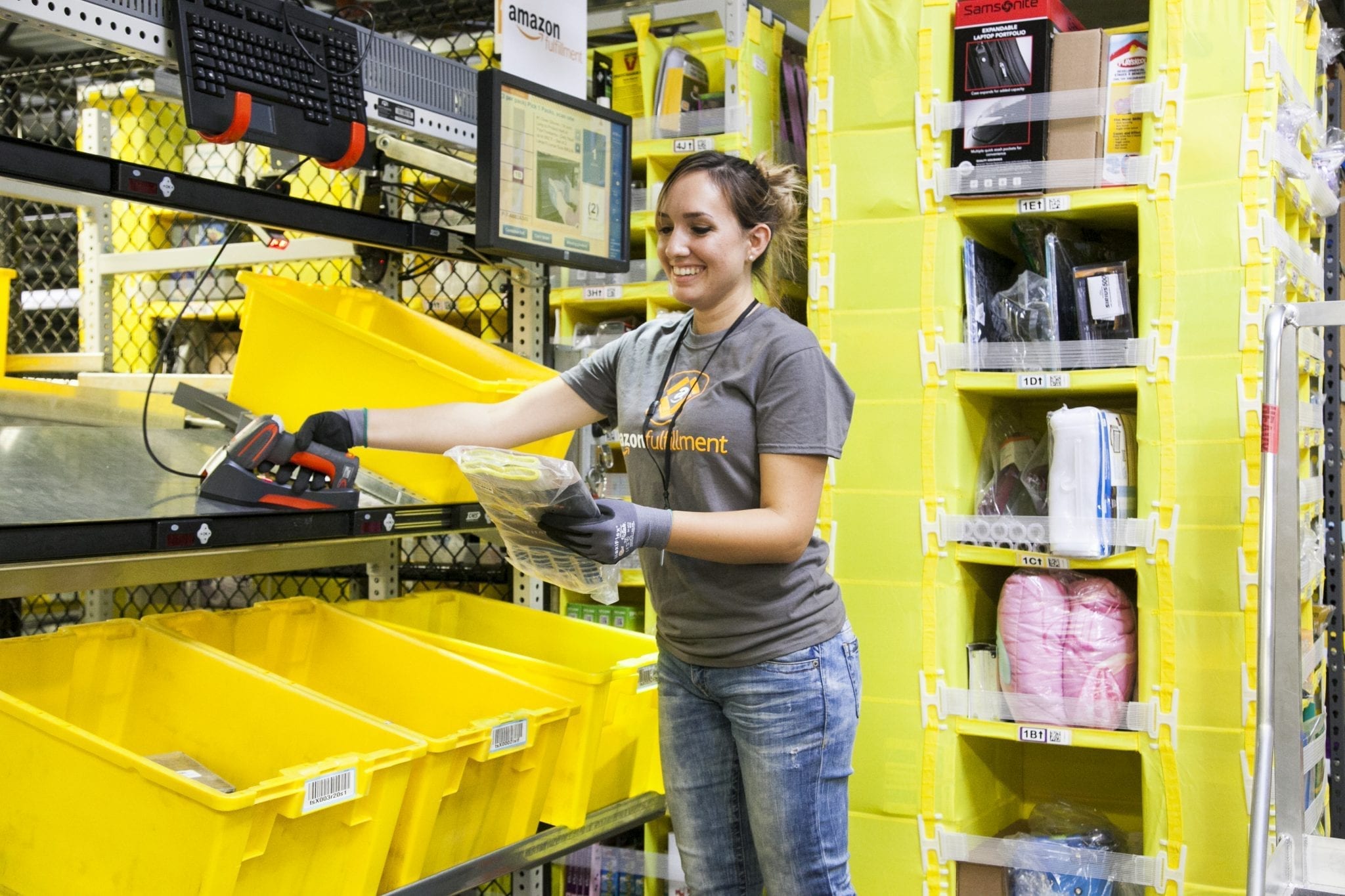
    Amazon.com announced plans to open its second Colorado fulfilment centre in Thornton, which will be the first Amazon Robotics facility in the Centennial State. Amazon will create more than 1,500 new full-time associate roles at this facility.

    “We are excited to continue growing in Colorado with the new Robotics fulfilment center in Thornton,” said Akash Chauhan, Amazon’s vice president of North American Operations. “This facility will utilise robotics, vision systems, and more than 20 years’ worth of software and mechanical innovations. We are grateful for the support we have received from state and local leaders who have helped make this project possible.”