Tag: asia

  • Tech advancements in SEA driving demand for IoT

    Tech advancements in SEA driving demand for IoT

    The rapid technological developments in Southeast Asia have led to great demands for Internet of Things (IoT) technologies, according to a recent survey from Asia IoT Business Platform.

    The survey indicates that more than 70% of local enterprises and organizations are currently in the process of exploring or finding possible IoT solutions to be deployed or implemented. However, only 7% of them report benefitting from any IoT implementation.

    Enterprises and organizations cite cost, legacy systems, and complexity as the top three concerns in adopting IoT.

    Following the great interest in IoT technologies but low benefits from implementation, Irza Suprapto, director at Asia IoT Business Platform, noted that it is now important to understand the challenges that enterprises face in trying to deploy IoT in their businesses.

    “The challenges that enterprises face in implementing IoT will determine how they view the benefits of IoT implementation and in turn, affects the demand for IoT technologies. Therefore, this year, we are inviting IT leaders of local enterprises and organizations to share more about their IoT projects or their digital transformation vision, as well as the challenges that they face in deploying IoT. This is to ensure that their concerns and challenges will be addressed and IoT adoption rates in the region will continue to grow, instead of being stunted,” Irza added.

    The Asia IoT Business Platform series will be returning to Southeast Asia for the fourth consecutive year. The programs, which are organized by Industry Platform Pte. Ltd, will take place in major cities across the region, including in Bangkok, Kuala Lumpur, Manila, and Jakarta, in July and August.

    The programs will continue to facilitate the digital transformation of enterprises and organizations in Southeast Asia. It will also have an additional focus on addressing challenges and issues that organizations face in adopting and implementing IoT technologies.

    The prestigious programs will involve government officials, senior business leaders in the IoT and Machine-to-Machine (M2M) sectors, as well as local enterprises that are looking to explore business growth and improved business efficiency with IoT.

    “We are excited to return to major cities in ASEAN this year, after many successful editions in the past couple of years. Since 2014, we have seen business partnerships among stakeholders being forged to drive the IoT adoption growth in the region. IoT developments are also apparent, especially in the different smart city initiatives, and the different IoT projects implemented by local enterprises. We are glad to witness these promising developments,” said Suprapto.

    The Asia IoT Business Platform series across ASEAN will feature a line-up of esteemed speakers comprising IT leaders from local enterprises such as Sampoerna Strategic (Indonesia), Garuda Indonesia, Bank of Thailand , Charoen Pokphand (Thailand), Petronas (Malaysia), Tenaga Nasional Berhad (Malaysia), Philippine Ports Authority, Metro Cebu Development and Coordinating Board


  • Toshop creditors are owed at least A$35m after Australian collapse

    Toshop creditors are owed at least A$35m after Australian collapse

    The creditors of Austradia Pty Ltd, which operated Topshop and Topman in Australia before its voluntary administration filing, are owed at least A$35 million following the collapse of the business, it has emerged.

    But Myer, the Australian department stores giant that held a 20% stake and also hosts Topshop and Topman concessions in its stores, is not listed among theAsia  creditors.

    The Australian Financial Review reported that rescue negotiations with the UK brand owner Arcadia Group are dragging on with no resolution yet in sight.

    The first creditors’ meeting saw the Commonwealth Bank of Australia emerging as the biggest creditor on A$12.1 million with Arcadia itself claiming A$8.8m (just over £5 million).

    But while Myer is not on the list, it it believed to be owed several million dollars and had already written down its A$9.2 million equity stake to A$7.2 million, with further losses linked to the failure a possibility.

    Although negotiations have not yet concluded, Arcadia is expected to take over the Australian business and buy back around A$12 million worth of inventory as part of a deal. It is unclear how much creditors would get back.

    The Australian market is as tough as many other global markets at the moment and while Topshop was an early mover in the foreign invasion of its retail sector, the size of its operation was dwarfed by that of global giants H&M and Inditex.

    With estimates that per capita spend on clothing in the country has risen just 0.1% in the past year, and that H&M, Uniqlo and Zara have been behind most of that, it is unsurprising that other retailers have struggled.

  • Asia is turbo boosting luxury bag maker Mulberry’s profits

    Asia is turbo boosting luxury bag maker Mulberry’s profits

    Luxury fashion brand Mulberry saw profits jump due to expansion in Asia, a rise in digital sales, and increased efficiencies, the group reported on Wednesday.

    Profit before tax was up 21% at the end March 2017, compared to a year previously. Sales from digital grew by 19%, and now make up 15% of the Group’s revenue. Total revenue is up 8% to £168.1 million, compared to £155.9 million in 2016.

    The brand also created a new entity, Mulberry Asia, to manage its business in China, Hong Kong and Taiwan, with stores opening in Shanghai and Hong Kong earlier in the year.

    “During the year we have made good progress. Our sales and profits are growing, enhancing our strong cash position. We have advanced our international growth strategy with a new partnership in Asia and the continued expansion of our omni-channel offer in key markets,” said CEO Thierry Andretta.

    The rise in profit comes despite fears, over the past two years, that luxury brands expanding in Asian markets might suffer from slowing growth in China. The group also seems to have recovered from having slipped into the red in December 2016: despite upfront costs caused by expanding in Asia, Mulberry reported it now has no debt. Despite the good news, Mulberry’s shares dropped 2% as of 09:05 a.m. (BST) on June 14.

    In the UK, two stores (Covent Garden and Bicester) were relocated, while two closed in North America (in New York and Washington), to focus instead on digital sales.

    “Looking ahead, we will continue to invest in advancing our international development and increasing Mulberry’s relevance to our customers’ rapidly evolving lifestyle,” said Andretta.

  • Digital driving nearly half of revenue for companies

    Digital driving nearly half of revenue for companies

    Emerging technologies such as AI, the IoT and machine learning have changed the way businesses operate and what it takes to thrive in a digital economy, a new report finds.

    An independent survey of IT leaders in more than 9,000 businesses spanning twenty-four countries across APC, EMEA and the US, conducted by Pure Storage, found that digital solutions drive around half of revenue (47% on average) for organizations, whether through customer facing applications or more back-office functionality.

    But despite this growth, technical complexity and strategic uncertainty from an infrastructure standpoint have prevented businesses from truly becoming digital. Public, private and hybrid cloud, SaaS and traditional on-premises all have momentum, but businesses still lack confidence in where to place specific workloads.

    On average, businesses are running 41% of applications with traditional on-premises IT – higher than both public cloud (26%) and private cloud (24%).

    Public cloud is poised to grow in the next 18-24 months (61% say their use will increase). Alongside this, a combined 87% of respondents see their use of either private cloud (52%) or traditional on-premises (35%) accelerating.

    Despite strong indications of public cloud growth, a significant number of companies that ran workloads in public cloud environments have actually moved some or all of those workloads back on-premises (43% of businesses in North America have done so). In EMEA, 65% say they have reduced use of public cloud in the last 12 months because of security concerns.

    Businesses run approximately one in five applications via SaaS currently (22%), and more than half (51%) see their use of SaaS increasing over the next 18-24 months.

    “Emerging technologies have started to drive true digital transformation, but businesses remain in a cycle of lure and regret when it comes to public cloud,” said Scott Dietzen, CEO of Pure Storage.

    “Rather than being viewed as competing options, companies should embrace cloud and on-premises storage as complementary offerings. By doing so, storage infrastructure becomes agile and future-proof, which drives the data advantage that enterprises seek.”

  • Nokia to launch world’s fastest router

    Nokia to launch world’s fastest router

    Nokia has revealed plans to launch what it says will be the world’s most powerful network processor chipset, routing platform and router as part of its new IP routing portfolio.

    The company has unveiled new products based on its high-capacity FP4 silicon, featuring the first 2.4Tbps network processor, up to six times more powerful than processors currently available.

    A service router capable of supporting a 144Tbps configuration in a single shelf and an extensible petabit-class routing system scaling to 576Tbps in a single system using the new chipset will be launched in the fourth quarter.

    Nokia said these new platforms will be the industry’s first capable of delivering terabit IP flows, which will be a tenfold improvement over the existing 100Gbps links used for the internet’s backbone.

    The new routing platforms will have embedded packet intelligence and control technology that can be combined with Nokia’s Deepfield IP network analytics solution to minimize security threats such as DDoS attacks while improving network efficiency and 192.168.0.1 router management.

    “Nokia has managed to combine the raw horsepower required to run historic amounts of traffic between data centers with intelligent, secure and adaptable capabilities necessary for a cloud-connected environment,” ACG Research CEO and principal analyst Ray Mota commented.

    “The company has seemingly struck the right balance with silicon and systems innovations that address investment protection and now has the fastest router on the market.”

  • UPS study finds traditional distributor model faces mounting risk

    UPS study finds traditional distributor model faces mounting risk

    Companies must adapt amid rapid change fuelled chiefly by millennials and a shift to e-marketplaces; A surge of purchases coming directly from manufacturers and e-marketplaces, bypassing distributors

    Asset-light e-marketplaces and other nontraditional shopping channels, combined with shifting demographics, are upending industrial distributors’ inventory-heavy model more rapidly than previously thought. As a result, distributors must quickly adapt and address threats with everything from sharper mobile offerings to upgraded customer service, a new white paper from UPS shows.

    According to the UPS Industrial Buying Dynamics Study: Buyers Raise the Bar for Suppliers, the biggest shift comes from millennials (defined for this study as those currently ages 21-34) who grew up in a digital era and are bringing their tech-savvy and nontraditional purchasing habits – for example, bypassing the middle man and working directly with the manufacturer – with them into the workplace. The impact on the future of industrial products purchasing may be among the most profound of any modern generation of buyers and provide a glimpse of the future.

    The report, the third such study compiled since 2013, captures a sector undergoing demand changes and channel shifts at a startling speed: 81 percent of buyers have purchased directly from manufacturers, up from 64 percent in 2015. Meanwhile, 75 percent of buyers surveyed have shopped at an e-marketplace, soaring from just 20 percent in 2013. What’s more, 80 percent of buyers are likely to shift to suppliers with a more user-friendly web presence, up from 72 percent two years ago.

    “With e-commerce, industrial buyers can choose from numerous suppliers with the click of a button, leaving the traditional business-to-business distributor model threatened,” said Matthew Guffey, vice president of UPS segment marketing. “Maintaining the status quo, even just for now, is not an effective solution. Distributors have to up their game.”

    The paper identifies four main ways for distributors – including those with smaller ambitions or limited funds – to remain competitive and offers solutions to reach these young corporate buyers where and how they want to interact:

    1. Recognise rising threats: It is imperative to consider strategic investments that bring services to parity with competitors. The paper found that more than half of respondents working primarily with distributors intend to increase e-marketplace spending, representing a looming risk to distributors.

    2. Think digital: Online channels are a necessity and distributors need to strengthen e-commerce capabilities, particularly for mobile ordering. Thirty percent of corporate buyers use mobile channels to order industrial products, and 24 percent are “extremely likely” to do so in the future. Nearly half of all buyers – and 69 percent of millennials – indicated they would likely shift business to a distributor offering a mobile app.

    3. Address buyers’ needs by product: Partnerships can help make businesses more competitive. Look into purchasing insurance on products and shipments to mitigate risk and to help protect and improve cash flow; leverage a logistics provider’s global network to ramp up service more quickly and reach more pockets of growth.

    4. Go beyond the sale: Buyers want interaction beyond the sale (i.e. post-sales support), with half of respondents stating they would switch to a supplier offering assistance with returns, training and on-site maintenance or repairs. Thirty-six percent of millennials need services at least once per month, compared with just eight percent of Baby Boomers, according to the study.

    UPS and TNS conducted the survey of 1,500 buyers of industrial products who are between the ages of 21 and 70 in the United States. Respondents purchased industrial parts, products or supplies in five product categories: equipment sold in a business-to-business transaction; final assembly OEM (original equipment manufacturer) parts; MRO (maintenance, repair and operations) parts; consumables/raw materials – input items used in a manufacturing process; and janitorial and sanitation. Participants came from companies of all sizes, with roughly one-third reporting annual revenue of US$1 million; one-third reporting between US$1 million and US$10 million; and one-third reporting more than US$10 million.

  • As Shoppers Move Online, Brand Turn To Shopee For Ecommerce

    As Shoppers Move Online, Brand Turn To Shopee For Ecommerce

    Shopee, the leading eCommerce platform in Southeast Asia and Taiwan, is partnering with major brands to offer consumers more variety and convenience. The brand partnerships will span across various categories, including health & beauty, baby care, home appliances and electronics. Over 100 major brands currently have Official Stores on Shopee, and more than 10 new Official Stores from brands including 3M, Kotex and Reckitt Benckiser will go live this June.

    Zhou Junjie, Country Head of Shopee Singapore, said: “We are thrilled to have such a wide range of brands on board as Official Stores. Given the growth of online shopping in Singapore, it is more crucial than ever for brands to adopt an omnichannel strategy. However, setting up an eCommerce platform can be complex and expensive. Shopee aims to help these brands grow their online presence by bridging the gap with the necessary payments infrastructure, access to a large base of active shoppers, and integrated delivery and logistics functions.”

    A survey conducted by Shopee in May 2017 indicated that 86 per cent of sellers enter into partnerships with Shopee with the intention to boost revenue, and 69 per cent do so to tap on Shopee’s extensive user base. Ninety-three per cent of Shopee sellers agreed that the partnership has been beneficial for their business.

    For sellers who operate both online and offline, 79 per cent identified online platforms such as Shopee as their fastest growing channel. Additionally, sellers who place a bigger focus on eCommerce tend to reap better business growth. Twenty-eight per cent of omnichannel businesses who conduct most of their business online saw a 150 per cent uplift in sales, while only 10 per cent of omnichannel businesses who operate mostly on offline channels saw the same increase.

    Maybelline, a leading cosmetics company, became an official store on Shopee in May 2017.Abigail She, Senior Key Account Manager of Maybelline said, “We will be able to reach out to a larger base of new and existing Maybelline customers online by tapping on Shopee’s user base. We have observed that a growing number of shoppers now prefer to shop online given the wide assortment of products. Shopee is one of the key platforms that we identified and we look forward to working together and building a more robust online presence.”

    Mr Chow Phee Chat, Director, Marketing Communications and Corporate Affairs, Nestlé Singapore, said: “The convenience of doorstep delivery is rising in popularity among shoppers in Singapore. Online portals which provide a wide variety of trusted brands cater to the hectic lifestyles of Singaporeans who may not have the time to visit a physical store but want to ensure that the purchases they make online are safe, authentic and delivered quickly.”

    As part of the collaboration, Maybelline and Nestlé will also offer exclusive promotions and deals on Shopee during this year’s Great Singapore Sale (GSS), as part of Shopee’s Great Shopee Sale campaign which runs from 9 June 2017 to 13 August 2017. Maybelline will host a 30 per cent storewide discount on Shopee, offering attractive discounts on everything from concealers to their popular Color Sensational Loaded Bold lipstick range. Nestlé will also be running storewide sales on Shopee during this period.

    Shopee was officially launched in November 2015. As of May 2017, it has achieved over 40 Million downloads and an annualised Gross Merchandise Value (GMV) of over US$3 Billion across its seven markets – Singapore, Malaysia, Thailand, Taiwan, Indonesia, Vietnam and the Philippines.

  • China Fruit Logistica to launch in 2018

    China Fruit Logistica to launch in 2018

    Global Produce Events has announced the launch of CHINA FRUIT LOGISTICA, the new annual trade show for China’s fresh fruit and vegetable business, which opens its doors next May in Shanghai. 

    “FRUIT LOGISTICA is a trusted brand family, and we now have a third platform that enables us to service the fresh produce trade in mainland China,” said Will Wollbold, commercial director of Global Produce Events. 

    “FRUIT LOGISTICA in Berlin is the leading global fresh fruit and vegetable event. ASIA FRUIT LOGISTICA in Hong Kong is the leading continental event for Asia’s buyers. CHINA FRUIT LOGISTICA in Shanghai launches as the leading national event for China’s fresh produce trade.” 

    CHINA FRUIT LOGISTICA takes place on 14-16 May 2018 at Shanghai Convention & Exhibition Center of International Sourcing in the commercial capital’s Putuo District. 

    “The time is right for the launch of CHINA FRUIT LOGISTICA,” said Wollbold. “There are many events for the fruit business here in China, but the Chinese trade needs a truly national and trusted platform for the trade in fresh fruit and vegetables, with effective international connections to the wide world of fresh produce. CHINA FRUIT LOGISTICA provides just that.

    “This is a powerful proposition,” Wollbold continued. “China is home to hundreds of millions of consumers demanding freshness, taste and quality in every region of the country. CHINA FRUIT LOGISTICA establishes the premier trade platform on a national scale for the Chinese fresh fruit and vegetable business, both online and through conventional channels.” 

    China’s fresh produce hub 

    CHINA FRUIT LOGISTICA offers a range of services to visitors and exhibitors to boost their business, said Wollbold. 

    “It’s the meeting place for top buyers and decision-makers, and the central trading platform where retailers and produce buyers from across the nation look for the widest range of top-quality fresh produce on the best business terms,” he explained. “Reliable supply partners present new business concepts, from new products to modern distribution solutions. And everyone gains fresh inspiration and new business contacts from both inside and outside China to develop and expand their business.” 

    CHINA FRUIT LOGISTICA covers every sector in the fresh produce category, including fruit, vegetables, mushrooms, herbs, dried fruit and nuts as well as many new products. The trade show spans the complete supply chain, featuring cool chain logistics, packaging and technology solutions, and the full range of service providers to the fresh fruit and vegetable business. 

    The majority of trade visitors and buyers are set to come from China, including retailers, wholesale buyers, online traders, importers and exporters as well as other stakeholders along the country’s fresh produce supply chain.

    Fresh know-how 

    FRESH PRODUCE FORUM CHINA, which has established its position as the number one conference and networking event for decision-makers in China’s fresh fruit and vegetable business, forms an essential part of CHINA FRUIT LOGISTICA. 

    “A trade show is all about exchanging ideas, learning about the latest developments in the business and sharing information,” said Wollbold. “FRESH PRODUCE FORUM CHINA takes place alongside CHINA FRUIT LOGISTICA, providing delegates with first-rate information and insights on the latest market trends and opportunities, not to mention high-quality networking.” 

    Powerful support: in person & online

    Exhibitors and visitors to CHINA FRUIT LOGISTICA can rely on a strong support network – in person and online. CHINA FRUIT LOGISTICA is run by a world-class organisation team based in Shanghai, Bangkok and Berlin, and is supported by an international network of representatives in over 100 countries. 

    “CHINA FRUIT LOGISTICA exhibitors and visitors can be assured of a FRUIT LOGISTICA-class service,” said Wollbold. “We have set up a Chinese subsidiary, Global Produce Events (Shanghai), and we’re operating our own office in Shanghai.

    “We look forward to welcoming fresh produce professionals from all over China, and from throughout the international trade, to Shanghai next May.” 

  • Amazon reportedly eyeing BigBasket buy in India

    Amazon reportedly eyeing BigBasket buy in India

    India’s e-commerce market, which is very much driven by mobile commerce, is growing fast and Amazon, which has been operating there for several years, is trying to stay ahead of that growth. The company recently made progress gaining on market leader Flipkart, largely by improving its mobile app engagement rate by 46% in the span of one year.

    But that’s not the only way to grow a business, and if Flipkart’s Snapdeal acquisition goes through, Amazon may move fairly quickly to take advantage of new regulations in India allowing 100% foreign ownership of native e-commerce marketplaces.

    The Bloomberg story also suggests that BigBasket could be talking to other parties, including private equity firms, about a deal, even though the company raised about $150 million from investors last year and another $7 million in venture debt just three months ago. That may be another sign of how fast the market is growing, as even a well-funded, fast-growing online grocery firm appears to need even more money help to keep up.

    Amazon is “deadly serious about Indian e-grocery,” according to Deepanshu Mandlekar, retail analyst with Planet Retail, who wrote up his opinion of the Amazon-BigBasket report. Mandlekar suggested Amazon needs to move quickly to make this acquisition if Flipkart is working on its own deal to gain greater scale and resources.

    Though most recently Amazon has been obsessed with entering the brick-and-mortar grocery market, it could also focus on international expansion of those efforts. In India, being able to absorb an established player would be a shortcut to market prominence might be too hard to ignore.

  • Flipkart fashion sale clocks 2x sales jump

    Flipkart fashion sale clocks 2x sales jump

    Running on its 3rd day, Flipkart said its Fashion Sale event has witnessed a 2x sale jump in the first 3 days of the total 9 day sale event. The ecommerce player said, it is confident about receiving similar response on the remaining 6 days of the sale event.

    Flipkart Fashion Sale which started on 10th of June’2017 is majorly offering theme based discounts including ‘Brand Stock Exchange, Late Night, Early Morning Shows, Fashion Tribes, Lucky Size Store etc.

    “The purpose of the sale isn’t to get a onetime spike but to shift the baseline itself. With learning from this sale, Flipkart will make several of these first time constructs regular engagement activities for its fashion shoppers,” said Rishi Vasudev, head-Fashion, Flipkart.

    Flipkart said, the biggest attraction for shoppers has been the Brand Stock Exchange, where over 20 brands such as Benetton, Puma, Fila, Fossil, Vero Moda, American Tourister, etc have participated.

    “Basis demand, discounts surged and prices were slashed every hour. As demand for a brand increased, discounts reduced. The construct proved to be very engaging for customers, and categories like kids, clothing & footwear spiked the maximum. Multiple editions of the Stock Exchange are expected to come again during the sale. Almost 25% of all customers who visited Flipkart for the day interacted with the Stock Exchange, thereby leading to 2X surge in sales volumes,” Vasudev added further.

    At an overall level, the sale has seen a healthy mix of repeat and new customers on the platform, with women customers again seeing a surge for both western & ethnic wear, the company said.

  • Thai AirAsia to launch direct flights to Bangkok

    Thai AirAsia to launch direct flights to Bangkok

    hai AirAsia has planned to operate direct flights to Bangkok from Trichy international Airport on a daily basis from August 12, according to sources.

    The move was widely welcomed as a large number of travellers from the central region currently have to take a circuitous route via Kuala Lumpur, Colombo and Singapore to reach Bangkok. Once the service becomes operational it would take less than two hours to reach Bangkok from Trichy.

    Thai AirAsia, a joint venture of Malaysia low-cost airline AirAsia and Thailand’s Asia Aviation, flight would depart from Trichy international airport at 1.30am, sources said. With this new service, the total number of international flights being operated from Trichy airport would go up to 112 from 105. At present, SriLankan Airlines, AirAsia, Air India Express, Tiger Air and Malindo Air are operating services from the airport.

    They are presently connecting Dubai, Singapore, Kuala Lumpur, Colombo and Sharjah, besides 28 domestic services per week by Jet Airways.

    As Thailand is a popular and affordable tourist destination, the launch of Thai AirAsia would attract more number of people from central region, travel agents have said. “There is a close historical, spiritual and cultural connection that dates back to thousands of years. India’s influence in Indonesia can be felt even today. Ramayana is a popular epic in Bali and Java islands of the country,” said M S Paramasivam, chairman of Travel Agents Associations of India, South Tamil Nadu Chapter.

    “Compared to any other overseas tourist destination, Thailand would be comparatively cheaper. So, the new service would definitely attract more number of tourists from both the countries,” he added.

  • Yahoo signs off, completes sale to Verizon

    Yahoo signs off, completes sale to Verizon

    Yahoo’s chief executive Marissa Mayer resigned as Verizon finalized the $4.48 billion deal. Internet pioneer Yahoo ended its two-decade run as an independent company on Tuesday, completing the sale of its core online assets to telecom giant Verizon.

    Yahoo’s chief executive Marissa Mayer resigned as expected, as Verizon finalized the $4.48 billion deal integrating the Yahoo internet operations into a new unit called Oath, which includes another former sector leader, AOL.

    Tim Armstrong, former CEO of AOL, now holds the same title at Oath, a division in Verizon’s Media and Telematics organization.

    “We’re building the future of brands using powerful technology, trusted content and differentiated data,” Armstrong said in a statement.

    “We have dominating consumer brands in news, sports, finance, tech, and entertainment and lifestyle coupled with our market leading advertising technology platforms. Now that the deal is closed, we are excited to set our focus on being the best company for consumer media, and the best partner to our advertising, content and publisher partners.”

    Verizon has made no indication of how it will use the Yahoo brand — which is used by over a billion people worldwide — but indicated it is keeping the names Yahoo Sports, Yahoo Finance, Yahoo Mail and more.

    Some reports have said more than 1,000 jobs would be eliminated as a result of the merger, but statements from Yahoo and Verizon on Tuesday made no mention of any cuts.

    Yahoo’s sale caps a long decline from when it had a peak market value of some $125 billion in 2000.

    The original Yahoo group now becomes a holding company with stakes in Chinese internet giant Alibaba and Yahoo Japan.

    On Friday, it will change its name to Altaba Inc. and on Monday begin trading under the ticker symbol “AABA.”

    Mayer, who was unable to stem the decline of the iconic Silicon Valley company, is getting a departure package worth an estimated $186 million, according to regulatory filings.

  • Zara looking to zip up fashion market with new store in Hanoi

    Zara looking to zip up fashion market with new store in Hanoi

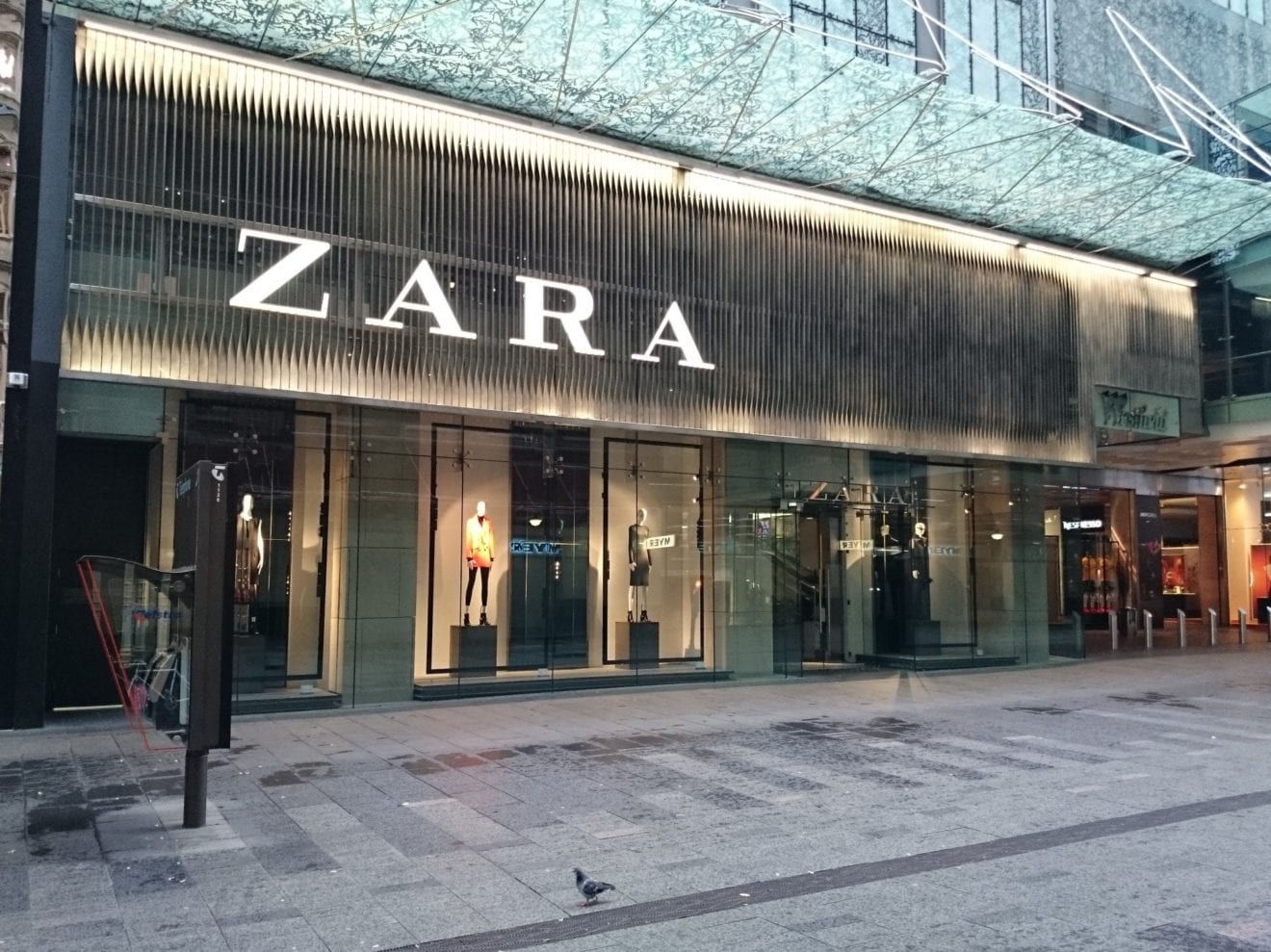
    Fashion lovers will have yet another reason to go shopping with the brand’s first store opening in the Vietnamese capital. High street retailer Zara has announced plans to open its first store in Hanoi in October.

    The world’s leading clothing and accessories retailer has selected the Vincom complex on Ba Trieu Street for the location of its first store in Vietnam’s capital.

    Zara opened its first store in Vietnam in Ho Chi Minh City’s Vincom Dong Khoi commercial center back in September 2016.

    The source also said Zara has spent months preparing for the launch of its Hanoi store.

    Established in Spain in 1975, Zara now has 2,213 stores strategically located in leading cities across 93 countries. The brand is popular thanks to its diversified products and reasonable prices.

    Zara is following in the footsteps of Sweden’s H&M, which has also confirmed the opening of its first store in Ho Chi Minh City’s Vincom Dong Khoi center.

  • Vietnam’s annual inflation expected at 2.6%

    Vietnam’s annual inflation expected at 2.6%

    Inflation this year is forecast at 2.6 per cent amid fluctuations in prices on world markets and adjustments in the cost of public services, according to the latest report from the government watchdog, the National Financial Supervisory Commission (NFSC).

    While average inflation during the first five months of this year hit 4.47 per cent, the NSFC believes it will fall towards the end of the year due to stability in food and restaurant prices.

    Figures from the General Statistics Office show a 0.53 per cent decline in the CPI in May against April, primarily due to sharp falls in food prices. May’s CPI rose 3.19 per cent year-on-year.

    Forex

    The NSFC also pointed out that exchange rates will be vulnerable against high foreign currency demand due to the rising trade deficit, where Vietnam may see its trade balance change from a surplus in 2016 to a deficit of about 3.5 per cent of total exports this year.

    Its calculations show that if the VND/USD exchange rate rises 1 per cent, inflation will increase by 0.17 per cent. The US Federal Reserve raising short-term interest rates in small adjustments has yet to put pressure on the exchange rate, however.

    It’s very likely, though, that “the VND will be under pressure by the US Fed’s roadmap of raising interest rates in the long run, along with unpredictable changes in the prices of the Chinese Yuan and Japanese Yen,” the NFSC said, adding that efforts are required to ease pressure on exchange rates and drastic measures needed to tackle bad debt.

    Earlier, BMI Research, a Fitch Group company, predicted that further Chinese Yuan weaknesses could prompt a slight devaluation of the VND in 2017 by the SBV to preserve export competitiveness.

    By end-May, the VND was down more than 1 per cent against the USD this year, according to State Bank of Vietnam (SBV) figures.

    Interest rates

    Vietnam is now more eager than ever to tackle the scale of bad debts in its banking sector, especially with the amount sold to the Vietnam Asset Management Company making up 10.08 per cent of total outstanding loans by end-2016.

    The government issued Decree No.61/2017 on May 16 on the verification of the initial price of bad debts and the formation of a council for bad debt auctions. A draft law on support for credit institution restructuring and bad debt settlement is also being finalized, and a decree on the settlement of credit institutions’ bad debt may be approved as soon as June 20.

    But while the NSFC report noted that measures to settle bad debts will help reduce interest rates, SBV Deputy Governor Ms. Nguyen Thi Hong made it clear in a meeting last week that lowering interest rates will remain a challenge for the central bank in 2017.

    “Some commercial banks have increased interest rates on certificates of deposit and VND deposits already, mainly for terms of over 12 months,” she said, adding that by the end of last month, the central rate was up 1 per cent from the same period last year.

    In a related note, the NFSC’s calculations show that the country’s ratio of credit-to-GDP has continuously increased since the last quarter of 2015, reaching 11 per cent in the first quarter of this year. This is the second highest level in the 2009-17 period, after the 13 per cent recorded in the first quarter of 2011.

    At end-May, credit had risen 5.7 per cent compared to the same period last year.

  • Palo Alto sets up VC fund for security applications

    Palo Alto sets up VC fund for security applications

    Palo Alto Networks is forming a $20-million security venture fund to provide early stage investments to fuel development of security applications for the Palo Alto Networks Next-Generation Security Platform.

    The fund will be aimed at seed-, early- and growth-stage security companies with a cloud-based application approach.

    These companies can accelerate their routes to market for their respective technology by developing cloud-based applications built upon the Palo Alto Networks platform and the new Palo Alto Networks Application Framework, easily engaging the tens of thousands of Palo Alto Networks customer deployments.

    The fund expects to collaborate with Greylock Partners and Sequoia Capital to identify and evaluate innovative security applications for potential co-investment.

    By providing capital, the fund aims to enable entrepreneurs and security vendors to focus on developing high-value functionality for customers, instead of developing the infrastructure and data stores necessary to effectively deliver their applications and establish a foothold in the market.

    The investments in entrepreneurial security companies are designed to accelerate the development of new security applications for the Palo Alto Networks platform.

    Such applications will help customer organizations more easily access, evaluate, and adopt new advanced security capabilities and activate cloud-delivered security applications from different providers as their security needs change.

    “This new fund represents an essential part of our mission to help organizations prevent cyber breaches by inspiring and accelerating a groundswell of security innovation in a model that can be easily accessed and deployed by customer organizations,” Palo Alto Networks.SVP for business and corporate development Chad Kinzelberg said.