Tag: asia

  • Bolloré Logistics Awarded at the China Offshore Convention in Shenzhen

    Bolloré Logistics Awarded at the China Offshore Convention in Shenzhen

    Present at the China Offshore Convention in Shenzhen from May 25-26, 2017, Bolloré Logistics was honored to receive the “Outstanding Offshore Logistics Contractor of the Year” award in front of the Oil & Gas community.

    “After 50 years serving the Oil & Gas industry around the world, Bolloré Logistics is proud to be recognized for its expertise. I would like to once again thank the organizers for such a great event,” says Mr. Bruce Boudailler, Regional Director Oil & Gas at Bolloré Logistics Asia-Pacific, who received the award on behalf of the Oil & Gas teams from the hands of Mr. Weiping Hu, President of China Overseas Development Association.

    80% of the results were based on WeChat online voting platform, a Chinese social media application, while the 20% remaining were based on the voting of the expert committee from the summit. Initiated by the organizer on WeChat, the voting period went on from May 12-20, 2017, in an effort to select nine outstanding companies in different sectors related to the offshore. Among the last three nominated outstanding logistics contractors of the year, Bolloré Logistics received the most votes out of more than 11,000 persons who voted.

    Recently tasked to lead the Oil & Gas global strategy of Bolloré Logistics, Mr. Bruce Boudailler would like to take this moment to praise the value and commitment of our dedicated teams of specialists, which have been supporting all the segments of the industry.

    Present in the major global hubs, as well as in most of the oil and gas producing countries, with a strong implementation in Africa and Asia, Bolloré Logistics offers tailor-made solutions on contract or project basis.

    The company prides itself in delivering simple or complex solutions to its oil & gas customers, sometimes in the most challenging areas of the world, in full compliance with Ethics and the QHSE standards. Differentiating itself from the other major international freight forwarders, Bolloré Logistics has developed a very strong expertise and track record in handling very big capital asset projects onshore and offshore, and extended the logistics chain beyond the entry gates of the supply bases.

    As an extension of the supply chain, Bolloré Logistics has been integrating for many years in its solutions marine services as well as supply base services. With reference to the Oil & Gas players and many industry suppliers in its portfolio, Bolloré Logistics also created a movie showcasing its technical expertise of logistics operations dedicated to the Oil & Gas in Port Gentil, Gabon.

  • Samsung Experience Store Large unveiled at The Gardens Mall

    Samsung Experience Store Large unveiled at The Gardens Mall

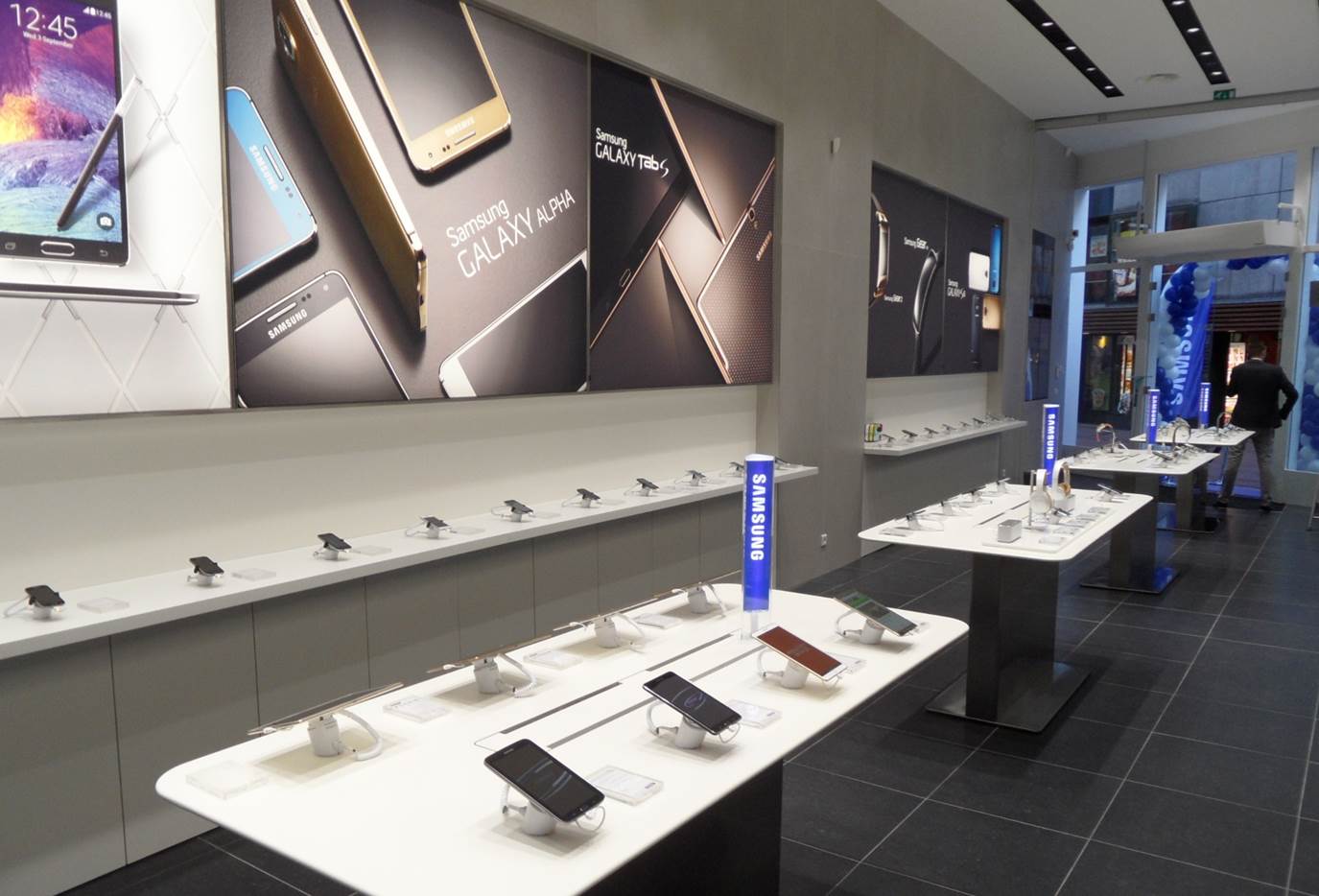
    Samsung Malaysia Electronics relaunched one of its most prominent Samsung Experience Store Large (SESLs) in Malaysia at The Gardens Mall here.

    Being only one of a handful of SESL establishments in the country with vast retail area that integrates merchandising, experiential zones and customer services, the grand reopening marked the establishment’s first major revamp since its inception in 2013.

    Samsung Malaysia Electronics said the SESL, operated by Welfon Telecommunication Sdn Bhd, is designed to be a one-stop retail solution, offering the full range of smartphones, tablets, wearables, ecosystem and genuine accessories.

    The company’s Head of Mobile Business, Hosea Heen, said the new flagship store concept is a reflection of the Samsung philosophy to provide the best costumer experience.

    “With this new SESL located at one of the prime shopping locations in the Klang Valley, we look forward to encouraging an open and welcoming (environment) that goes beyond just brick-and-mortar, and resonate with consumers from all walks of life,” he said.

    The SESL also provides the Samsung Smart Service, allowing customers to obtain after-sales care at the service centre, including full hardware repair, software upgrades, device consultation and advice.

    From June 9 to 27, in conjunction with the SESL’s grand opening, customers who spend over RM1,000 will receive a complimentary Mono Bluetooth Headset; while visitors who register their first payment via card will be entitled to a free Samsung Wireless Charger Stand worth RM279.

  • More Filipinos adopt online trading at stock mart

    More Filipinos adopt online trading at stock mart

    Online accounts at the Philippine stock market grew 27.8 percent to 302,516 from 236,669 in 2015, according to the annual Philippine Stock Exchange (PSE) report.

    PSE reported also that the total number of stock market accounts, which include both online and traditional accounts, was at 8.5 percent, from 712,549 accounts in 2015 to 773,187 at the end of 2016.

    “Technology has played a big role in the growth of our investor base over the years. We are pleased to see that more Filipinos have continued to adopt online trading to invest in the stock market,” said PSE President and CEO Ramon S. Monzon.

    Investors with online accounts trade themselves, typing in their buy or sell orders on their online trading platform whereas investors with accounts in traditional stock brokerage firms have to call their broker to place their orders.

    The minimum required amount to open an account and the broker’s fee of online stock brokerage firms are usually lower compared with their traditional counterpart. Online investors are typically provided research materials by their online broker while investors of traditional firms also get research reports and they can discuss their investing options with their broker.

    The continued growth in online accounts also translated to higher trading activity. In 2016, 53.7 percent of total market transactions, measured in terms of number of trades, were accounted for by online accounts.

    This was the first year that online transactions were responsible for more than half of the market’s total transactions. Online trades registered a 41.4 percent growth in value turnover, which translated to a 9.3 percent share in the market’s total value turnover.

    Of the total stock market accounts, 98.2 percent, or 759,952, were held by local investors while the remaining 1.8 percent or 13,595 were accounts of foreign investors.

    The PSE’s 2016 Stock Market Investor Profile survey showed that among the retail investors using online and traditional brokering, 43.7 percent earn less than P500,000 annually. This was followed by investors earning above P1 million at 31.1 percent while investors with an annual income of Php 500,000 to Php 1 million made up 25.2 percent of the total retail investors.

    Meanwhile, close to 40 percent of investors were aged 30 to 44. The 45- to 59-year-old investors covered 26.4 percent of the total count and those who are 60 and above comprised 19.3 percent. The young millennials or those between 18 and 29 had accounted for 14.8 percent of investors.

    In terms of geographic location, a total of 96.1 percent of retail investors are based locally while the rest are based overseas.

    The concentration of retail investors continue to be in Metro Manila, which accounted for 70.6 percent of investors. Luzon cornered 16.4 percent of investors with Visayas and Mindanao making up for 6.2 percent and 2.9 percent, respectively. Overseas-based investors comprised 3.9 percent of retail accounts.

    “We are pleased with the continued growth of stock market investors in the market. Clearly, we have a long way to go and we at the PSE will continue our financial literacy programs to demystify stock market investing and make investing as understandable and accessible as bank or insurance products,”. Monzon said.

    In the past year, the PSE has intensified its market education efforts by doubling the number of its free seminars both in Metro Manila and in Cebu. To cater to the increasing number of tech-savvy Filipinos, PSE has been regularly conducting free webinars to discuss basic and intermediate topics. These webinars attract close to 500 participants per session.

    Online retail investors younger, more spread across the country

    The PSE survey results showed that close to three quarters of online retail investors are aged 18 to 44 years. Among online investors, 21.7 percent are in the 18 to 29 year old range, 52.9 percent are 30 to 44 years old, 18.4 percent are 44 to 60 years old, while the remaining 7.0 percent were 60 years and above.

    In terms of location, retail online investors are also less concentrated in Metro Manila compared to the geographical distribution of total stock market accounts. For online accounts, Metro Manila investors only accounted for 57.0 percent of the total online accounts, with Luzon, Visayas and Mindanao online investors making up a much bigger share of 26.0 percent, 6.8 percent and 4.2 percent, respectively. The share of overseas-based clients is also higher at 5.9 percent for online accounts.

    The survey also showed that online traders invest even with lesser incomes. Those earning P500,000 or less annually comprise 60.3 percent of the total online trading population. Meanwhile, 23.7 percent of online traders earn between P500,000 to P1 million per year and the remaining 16.0 percent have incomes of more than P1 million annually.

    “The numbers show that more investors are finding out that participating in the stock market is actually an affordable investment. We are also happy that our online brokers have been able to reach out to more Filipinos outside of Metro Manila towards making stock market investing more inclusive,” Monzon added.

  • Vietjet makes its debut at Hong Kong International Travel Expo with 5,000 free tickets

    Vietjet makes its debut at Hong Kong International Travel Expo with 5,000 free tickets

    The fast growing New-Age Carrier, Vietjet, will take part in the International Travel Expo (ITE) Hong Kong to be held at the Hong Kong Convention and Exhibition Centre from June 15 to 18, 2017.

    As a debutant of this star event of the Asia travel industry, Vietjet will turn out in full force with attractive and informative displays, special offers and promotion programs. The Vietjet Booth at G102 with the theme, “Free Summer, Fly for Free,” will spot the very attractive Vietjet Red and Yellow to welcome its visitors. They will be treated to interesting and interactive activities, from photo-taking opportunities with the popular Vietjet crew to mobile phone games with special prizes for the winners.

    The highlight of Vietjet’s presence in the ITE will be a feature performance on the Grand Stage at 2:00 pm on June 17 (Saturday), with a spectacular Flashmob Dance by a leading dance group Helki.Fam. There will also be a drama and game session on stage for visitors from the public.

    To celebrate Vietjet’s participation in the ITE, Vietjet also offers 5,000 promotional tickets priced only from HKD0 (excluding taxes & airport fees) within the golden hour 13h-15h during the ITE’s four-day time from June 15 to June 18, 2017 only at their website. The promotion applies for Ho Chi Minh City-Hong Kong route with flight time being from August 1 to December 31, 2017 (excluding national holidays).

    The recent Vietjet Summer Promotion, “Free Summer, Fly for Free,” held between April 25 and June 15, 2017, has proven to be very popular among travelers with the 1 million HKD0 tickets.

  • Entrepreneur is trying to cure Hong Kong’s meat addiction

    Entrepreneur is trying to cure Hong Kong’s meat addiction

    David Yeung believes that meat is the new tobacco. But the long-time vegetarian and practicing Buddhist won’t try to get you to stop eating meat. He just wants you to consider eating less.

    That’s what he’s trying to do with the citizens of Hong Kong, who collectively have the highest per-capita meat and seafood consumption in the world, according to a 2015 study by Euromonitor. His life’s mission is to get the citizens of our planet — particularly his home city — to cut out eating animals at least one day a week. And it’s working: Menus inspired by his “Green Monday” philosophy appear in hundreds of restaurants across Hong Kong, and at schools and universities around the world.

    Though Mr Yeung grew up in Hong Kong, he spent over a decade living in New York. When he was 16, his family moved to nearby New Jersey to be closer to the fashion industry. His father was one of the four founders of the global clothing company Tommy Bahama. Mr Yeung graduated from Columbia University in 1998 with a degree in engineering, spent a few years consulting for PwC and then launched a software startup (now defunct). He grew up eating meat, but in 2001 he dove into Buddhist philosophy, a core tenet of which is the truth of suffering. It wasn’t a big leap for Mr Yeung to go from looking inward to looking outward, and he quickly concluded that by changing his diet he could stop the suffering of animals.

    Shortly before moving back to Hong Kong, he read about Meatless Monday, a campaign that urged Americans to take one day each week off from eating meat. “I thought the word meatless was not the best choice. People aren’t going to say, ‘Oh, today let’s go meatless,’” he said. He also figured that regardless of language, ethnicity, geography and gender, “green” was a universally known word. “Monday”, too. “These have to be two of the top 50 words that people around the world learn,” said Mr Yeung. So he made it positive and actionable: “Green Monday.”

    Today, you can find Green Monday vegetarian menus offered at hundreds of restaurants around Hong Kong. It’s incorporated into the food service at over 600 universities in 31 countries, 84 of them in the US, including Mr Yeung’s alma mater. You’ll find Green Monday menus at several hotel chains and even at Bon Appétit Management Co ., which is best known for managing Google’s dining empire. The one thing he insists on when he signs up new partners is that they don’t remove meat entirely from the menu. This may seem counterintuitive, but it’s a mind shift. “If you completely remove choices for people, that’s when you get a backlash,” he said.

    These small but important partnerships provide the foundational arm of Mr Yeung’s Green Monday empire with helpful branding to grow its name recognition; to date, it works with more than 2,000 schools. As a mission-based entrepreneur, he makes it an integral part of his social-impact goals, which Mr Yeung defines as bringing a triple-bottom-line to his organization: His work is good for the business, the community and the environment.

    After several successful years promoting Green Monday, Mr Yeung opened the world’s first plant-based retail store in 2015. Think 7-11 (grab-n-go food) meets Muji (clean, functional design) meets Hello Kitty café (fun). He named it Green Common . It was a place for people to eat delicious vegetarian food that riffs on Chinese classics — such as Hainan Chicken, minus the bird — and then take home the newest plant-based groceries. There are non-edible items too, including reusable water bottles, green cleaning products, skincare, cookbooks and vegetable growing kits. In addition to investing in plant-based products, Mr Yeung has become the distributor of choice for American brands that want to break into the Asian market, such as Follow Your Heart, Daiya, Califia Farms, Gardein, and Miyoko’s Creamery. Today, there are four locations, all in iconic Hong Kong retail spots including Harbour City Mall and Landmark Alexandra House.

    What Mr Yeung is most excited about is the April launch of the Beyond Meat burger — a pea-protein, plant-based burger that looks like meat (the pink hue on the inside comes from beets) and tastes like meat. (Really.) Sales are already more than double the projections, a great sign for its broader acceptance. As an investor in the US startup, Mr Yeung has become one of its biggest advocates. “He has been enormously supportive of our brand,” said Ethan Brown, chief executive officer of Beyond Meat and a fellow plant champion. Brown had wanted to expand into the international market, but he needed the right partner. “It was an easy decision to make,” said Brown. “He handles all the marketing and distribution, and he’s positioned the burger in the only way that someone that lives [in Hong Kong] could do.” The one tricky piece was naming the dish. Because there is no word for ‘beyond’ in Cantonese, Mr Yeung calls it the “future burger”. For the entrepreneur, the burger was from the future and for the future.

    Mr Yeung’s journey towards social entrepreneurship wouldn’t have gone anywhere without two key figures. One of them is Green Monday co-founder Francis Ngai, a local investor who previously founded Social Ventures Hong Kong, a philanthropic venture fund that invests in social mission-based startups that work to address urban challenges such as wealth discrepancy, handicap accessibility and elderly issues in Hong Kong. The two shared a diet and a cause. “We would have lunch for hours and talk about ideas to change the world,” said Mr Yeung. At one of those lunches, Mr Ngai said, “David, is there anything we can do with food that is social?” Mr Yeung put down his chopsticks and said, “Duh”.

    At the time, all that the two vegetarians could order were beef noodles — and then ask the server to hold the beef. “But they charge you the same, and they give you that look,” recalled Mr Yeung. The look that says you are giving them trouble.

    The other influence was Mr Yeung’s father, who oversaw the manufacturing side of Tommy Bahama before it sold for $325 million in 2003. In living the Buddhist philosophy — an awareness of those less fortunate — Mr Yeung’s father gave a good deal of his income to charity. These two men inspired Mr Yeung to create his for-profit business, along with his charitable foundation. The third piece of his plant-forward company is a venture fund that focuses on impact investments. Green Monday Ventures pilot fund invested in Beyond Meat, and its second fund invested in Perfect Day, a cellular agriculture company making dairy from cell culture;  Lighter, which provides meal-planning technology and services; and other food-tech startups.

    It may be hard to keep track of all of Mr Yeung’s efforts, but it’s clear that his outreach has, in some way, nudged his fellow Hong Kongers toward a more sustainable lifestyle. PizzaExpress, a UK-based chain with over 20 stores in Hong Kong, has experienced double-digit growth in its vegetarian menu sales on Mondays, and it sees a halo effect on other days. Said Liam Collette, the general manager of PizzaExpress for Hong Kong, United Arab Emirates and Singapore, “We have more than doubled the people eating vegetarian [menu items] on Monday, but we have also had a sustained uplift of overall customers on Mondays. I see this a success for us and for customers.” A third-party study of over 1,000 people, sponsored by Green Monday, found that before the launch, only 5% of the autonomous territory’s more than 7 million inhabitants had a goal of adjusting their consumption. Today, 22% of Hong Kong’s inhabitants report practicing some form of plant-based diet. Other signs? In 2013, Hong Kong had only 130 vegetarian restaurants, and today there are close to 250. Financially, Mr Yeung is on track, too. Revenue for the entire organization, including retail and wholesale, should fall somewhere in the $10 million to $12 million range.

    Mr Yeung’s next target, after Hong Kong? Mainland China. “The food industry is going through a lot of change,” he said, undaunted by the scope of this challenge. “We are exactly at a point where disruption is due.”

  • Weak peso to weaken consumer spending

    Weak peso to weaken consumer spending

    Household spending in the Philippines is expected to post a slower growth this year because of rising consumer prices and a weaker currency, Business Monitor International, a unit of Fitch Group, said in a report over the weekend.

    “In US dollar terms, household spending growth will experience a significant deceleration from 6 percent in 2016 to 0.8 percent in 2017 as we forecast the Philippine peso to depreciate against the US dollar over 2017,” BMI said.

    “With that said, household spending will grow at an annual average of 8 percent between 2017 and 2021, reaching $337 billion up from $232 billion in 2017,” it said.

    BMI expects essential spending to remain dominant over its forecast period and account for 74 percent of total household spending in 2017 and 75 percent by 2021.  Essential items include food, beverage, housing, clothing, utilities and basic services.

    Essential spending is expected to grow at an average annual rate of 9.5 percent between 2017 and 2021, with non-essential spending growing at an average rate of 8.4 percent over the same period.

    “As a result of low average incomes and a large rural population, essentials will continue to account for the majority of household spending in the medium term at least. Food and non-alcoholic drinks, housing and utilities and transport will continue to account for the majority of household retail spending, rising from 74 percent of total spending in 2017 to 75 percent by 2021,” it said.

    The increasing cost of housing and utilities will demand a greater portion of household income over the coming years. Albeit declining, the share of household spending on food and drink will remain the largest, forecast at 37.3 percent in 2021 (down from 38 percent in 2017), it said.

    “Non-essential spending is expected to continue to account for a roughly stable portion of total household retail spending over our forecast period. Real wages are steadily on the rise, however, which should boost spending in the non essentials sector over the long term, and will prompt consumers to upgrade to higher quality essentials,” BMI said.

    Household spending in the Philippines is dominated by spending on food and non-alcoholic drinks; housing and utilities and transport, which accounts for 69 percent of total spending. BMI expects spending patterns in the Philippines to remain fairly static over the medium term with the top three spending categories retaining their positions.

    “Housing and utilities will make the greatest gains over our forecast period, increasing by 1.15 percentage points as a proportion of total spending on the back of rising costs in this segment. Food and

    non-alcoholic drinks spending will experience the largest decline over this period, registering a decline 0.7 percent as a proportion of total household spending,” it said.

    “Food and non-alcoholic drinks account for the largest share of retail spending in the Philippines, at 38 percent of total household spending in 2017. We expect that the sub-sector will maintain its

    dominant role in the Philippines’s retail basket, as low household income levels in the country encourage subsistence-based spending,” it said.

    Households are forecast to spend P4.4 trillion on food and non-alcoholic drinks in 2017, while spending another P190 billion on alcoholic drinks and tobacco. BMI said over the medium term, food and drink will continue to dominate household spending, as overall income levels remain low.

  • Cashing in on mobile payment

    Cashing in on mobile payment

    Eight years ago, Starbucks developed an app for mobile payments. Today, it is still held up as the gold standard in the US. In Asia’s rapidly developing market, where mobile payment is almost a decade ahead of the West, things are quite different.

    In China, you can mobile pay for everything, from cab fares to a utility bill. In 2015, WeChat registered more financial transactions in a day than PayPal did in 12 months. It is not just China that is adopting the trend – mobile payment is also making massive inroads in South-east Asia as shopping apps gain popularity.

    In Singapore, there are 30,000 retail points accepting contactless payment methods, such as Apple Pay, Android Pay and Samsung Pay. In Indonesia, the most populous country in the region with 250 million people, most of the big traditional retailers are unveiling e-commerce plans of their own.

    In a recent GfK study, The Connected Asian Consumer, consumers here and in Indonesia reported fairly high usage of shopping apps (37 per cent and 35 per cent, respectively).

    This growth is fuelled by affordable smartphones, a massive young and tech-savvy population as well as efforts by governments and telco operators to expand and improve high-speed wireless networks.

    It is only a matter of time before mobile payment goes mainstream.

    Unfortunately for traditional retailers, the age of e-commerce also produced a new consumer – we like to call them the “connected consumer” – and their behaviours are shaping the future of retail.

    In the GfK FutureBuy survey last year of 20,000 consumers in 20 markets, it was found that shoppers are becoming less loyal to any one retailer.

    Almost half (46 per cent) of all consumers (aged 14 to 65) stated that they are less loyal when shopping. This figure rises among the youngest consumers – to 53 per cent of Gen Y (aged 18 to 29) and 58 per cent of Gen Z (aged 14 to 17).

    For retailers who understand the connected consumer, there are opportunities to stay ahead of the competition – and mobile payment is a huge part of it.

    Despite becoming less loyal, many connected consumers expect an omni-channel shopping experience, where they interact with a brand. Connected consumers in Asia-Pacific seek the best of both worlds.

    For example, shoppers in China are the most likely to embrace omni-channel shopping – 71 per cent shop both online and in-store, while Australian shoppers are the most likely to shun online shopping (62 per cent shop exclusively in-store).

    In contrast, Indians lead the way in online shopping with 23 per cent shopping the category exclusively online.

    NEW REALITY

    Therefore, it is important for retailers to understand the new reality of the omni-channel consumer and know that the “whatever, whenever” culture demands that user experience is seamless across all devices.

    If retailers do not understand this, customers will simply delete their app and move on.

    At the same time, using analytics, retailers can receive customer data to offer more personalised services. In turn, this presents an opportunity to generate long-term relationships.

    But it is important to note that not all connected consumers are the same.

    For example, older consumers are not as comfortable with sharing personal information as younger consumers.

    Understanding the shopper’s purchase journey is easier these days, with research offering detailed information on the route shoppers take when making a purchase as well as ways in which online and offline touchpoints influence their decisions.

    We believe that brands that understand, respect and protect the consumers’ individual boundaries will earn their loyalty.

    As mobile payments continue to grow in Asia-Pacific, businesses in sectors such as financial services, cybersecurity and telecommunications stand to gain, and they can evolve to support the changing landscape.

    Loyalty is great, but to really retain customers in today’s omni-channel space, the shopping experience is equally important.

    To connected consumers, simplicity and convenience is paramount. Not only do they expect everything quickly, they also lose their patience faster.

    For large retailers, mobile payment offers the opportunity to segment and target consumers much more effectively, with highly-personalised offers.

    Discounts and offers can be integrated into mobile payment, replacing the need for physical coupons and entering information into a terminal.

    Connected consumers will wave goodbye to the traditional checkout queue and benefit from customised rewards.

    Mobile payment also offers a chance for small retailers to move into a new era of retailing. Freed from high transaction fees and with new ways to connect with consumers, they can embark on the kind of personalisation and targeting that is usually the privilege of larger players.

    With e-commerce here to stay, there is plenty of potential for retail businesses to leverage research intelligence to adequately design and develop strategies to target this group of consumers.

  • Maxis’ continuous plans to enhance network in Sarawak

    Maxis’ continuous plans to enhance network in Sarawak

    Maxis Bhd’s (Maxis) network expansion plans in Sarawak is an ongoing development, as it currently covers 89 per cent of the population with its 4G network.

    According to head of Sarawak region Alexius Bong, at this point in time, Maxis has no intentions to stop and will continue to expand “even to the smallest towns.”

    “Because you can’t hide the fact that people are consuming more data and you need that network to support (demand), it is definitely a focus in our plan to do that,” he revealed in an exclusive interview with The Borneo Post earlier this week.

    On plans to open more retail outlets in Sarawak, Bong stressed that Maxis is very focused on retail expansion and distribution footprint. It currently has nine Maxis centres and 15 dealer-operated retail stores in the state.

    “By this year end, we intend to add six more retail stores plus another 20 dealer-operated stores at the same time to increase our distribution footprint, it goes in tandem with our network,” he added.

    These plans will occur throughout Sarawak, with the focus now on secondary towns. Maxis also intends for customers to have the same experience whether they are visiting Maxis centres or dealer-operated outlets.

    Continuous network expansion will be one of the key areas Maxis focuses on in Sarawak this year.

    “We want to continue expanding our network, we have such a great product that syncs together with this,” Bong added.

    “At any one time, the focus of the network is not just the network itself – it ties back to the consumer.

    “With that, we want to ensure that whether it is prepaid, postpaid, or wireless broadband (WBB), we will continue to enhance our product proposition especially on internet offerings.

    “Of course, we will continue to expand our distribution and retail because market presence is significant in our business and is very important.”

    At the same time, Maxis would also like to relook at the small and medium enterprises (SMEs) in Malaysia and, how they can help SMEs digitalise the way they work.

    Head of prepaid, Navin Manian, highlighted that Maxis is also trying to give a much better experience by going purely digital for its customers.

    “It’s not just all product-centric, we also look into the customer experience,” Navin said.

    “So it’s a big drive now, for both postpaid and prepaid segments to move our customers from the old UMB usage behaviour to now the app and we have been doing very good in that space.”

    On the expected takeup rate for the prepaid segment in East Malaysia, Navin revealed that Maxis has been doing really well in the region over the past few years from a series of products that they have been launching.

    “We are very confident that this will continue a good growth trajectory for us here,” he added.

  • China cuts retail fuel prices

    China cuts retail fuel prices

    China will cut the retail prices of both gasoline and diesel for the fifth time this year from Friday following a drop in global oil prices, the country’s top economic planner said Friday.

    Gas prices will decrease by 180 yuan ($26) per ton, while the diesel price will be lowered by 175 yuan per ton, according to the National Development and Reform Commission (NDRC).

    China adjusts domestic retail oil prices when international crude prices change by more than 50 yuan per ton within a 10 working-day period.

    Global crude prices have fallen in recent weeks following expansion of U.S. crude oil output and inventories. The NDRC expected global crude prices to continue to fluctuate, tempered by the effects of falling OPEC output and rising U.S. production.

    The NDRC said it is closely monitoring the current pricing mechanism and will continue improvements based on market changes.

  • Alibaba’s Tmall expands in Hong Kong and Southeast Asia to non-Chinese speaking consumers

    Alibaba’s Tmall expands in Hong Kong and Southeast Asia to non-Chinese speaking consumers

    Alibaba Group, the world’s largest e-commerce operator, is beefing up its presence in online shopping by further expanding in Hong Kong and tapping more English and non-Chinese speaking consumers in Southeast Asia.

    The group has officially launched its Tmall online supermarket in Hong Kong this week, and teamed up since March with Southeast Asian e-commerce operator Lazada – which it acquired last year – to sell selected Taobao products under the “Taobao Collection” direct to shoppers in Singapore.

    The English-language Lazada site also operates local sites in Indonesia, Malaysia, the Philippines, Thailand and Vietnam, where some of them are in local languages.

    The Malaysian platform will be launched on June 13, where shoppers will be able to take advantage of lower prices from Chinese sellers, said Elaine Hu, director of Tmall World on Monday.

    In Hong Kong, Tmall sells daily necessities from food to household products imported from the mainland to local Hong Kong consumers. With its warehouse in Shenzhen – the group’s largest in South China region – consumers will be able to receive the products within the next day after placing the order on the Hong Kong supermarket, Hu said.

    She said mainland foodstuff and snacks not easily available in Hong Kong were the most popular products.

    Household supplies, especially paper products were also selling well as consumers look for cost-saving products from the mainland, Hu said, based on data obtained from the trial run of the platform in the city since late April.

    “The average value of orders on Tmall HK’s supermarket is surprisingly high so far. It is the highest compared to any other regions in China and shows the strong spending power of local Hong Kong consumers,” Hu said, without giving specific figures.

    The variety of goods available to Hong Kong consumers pales in comparison to those on the mainland platform as fresh products and heavy goods are generally not included. Products imported to Hong Kong are also subject to rules of local regulations.

    Unlike on the mainland where the group faces fierce competition from rivals including the Tencent-backed JD.com, Hu said Alibaba was a dominant e-commerce player in the Hong Kong market.

    In 2012, the group said it had 1.4 million registered users in Hong Kong. Hu said the figure was higher now but she didn’t give any figures.

    According a survey released by Mastercard in April this year, topping the most popular category list for Hong Kong online consumers is clothing and accessories, with 41.7 per cent out of more than 8,000 consumers surveyed. Supermarket products came second, with 37.5 per cent. Other popular categories: airlines – 36.7 per cent; travel – 36.2 per cent; and hotels – 36.0 per cent.

    The strengthening of retail business in Hong Kong and other overseas markets is seen to serve as a part of Alibaba long-term plan that aims to provide services to as many as 2 billion consumers worldwide by the year of 2036, Alibaba founder Jack Ma Yun told the investors in Hangzhou last week.

    In response to the recent dispute between Alibaba and logistics firm SF Express, Hu said SF remained a partner of Tmall and for overseas transactions, downplaying the impact.

  • Indonesia may lose 50,000 tourists because of Qatar crisis

    Indonesia may lose 50,000 tourists because of Qatar crisis

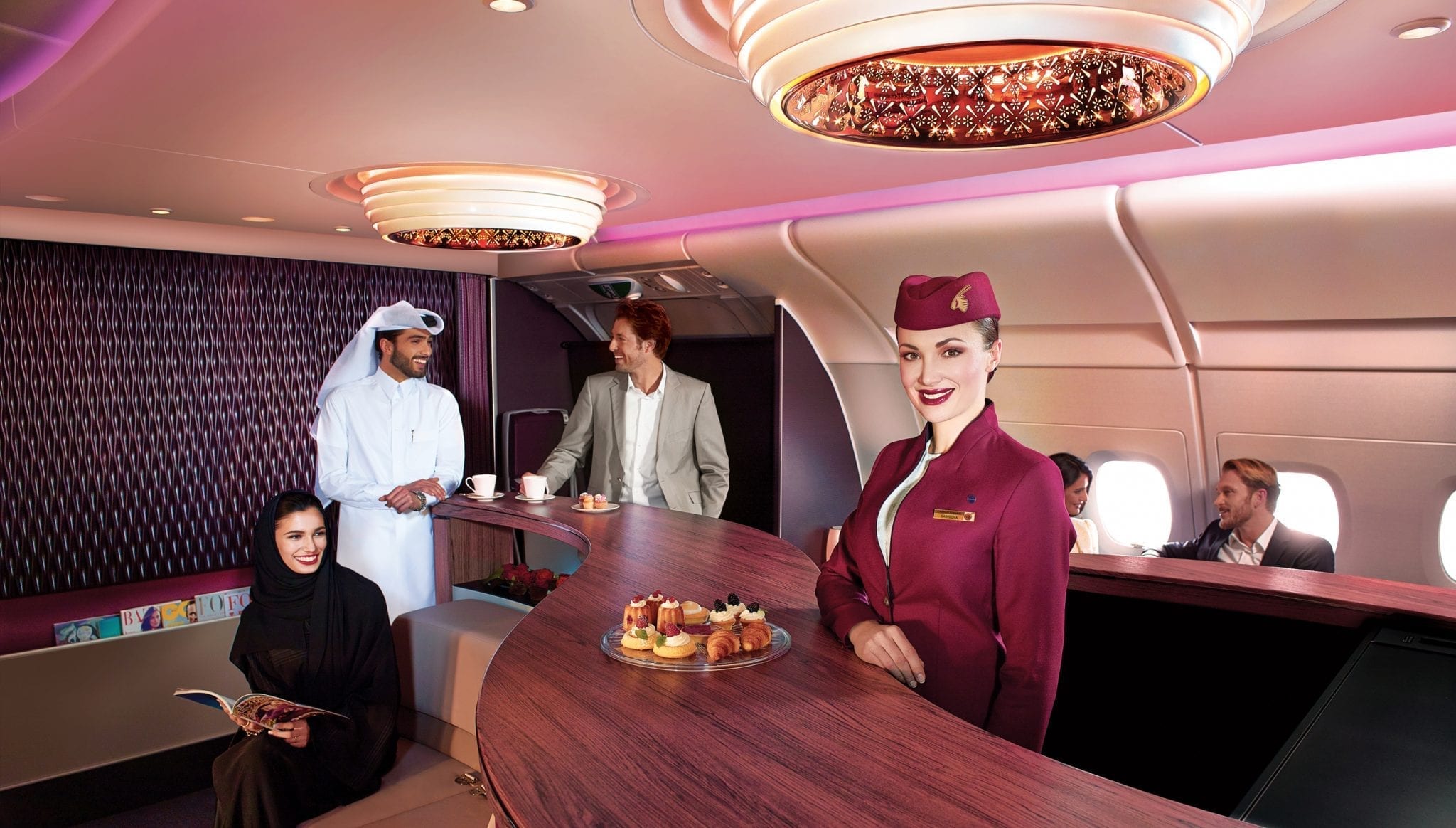
    The Indonesian government is predicting that the recent severing of ties between several Arab countries and Qatar would deal a blow to the archipelago’s tourism industry, with 50,000 expected tourists not showing up because of the crisis, a senior official said on Tuesday.

    That is the number of visitors Tourism Minister Arief Yahya said Qatar Airways, for the most part, would have brought to Indonesia this year.

    “Given that seven months are left in the year 2017, we estimate we will lose about 50,000 foreign tourists as a result of the boycott of Qatar,” Arief told reporters at the State Palace on Tuesday.

    In order to reduce the expected loss, Arief said his ministry would coordinate with the Transportation Ministry to transfer the license given to the Qatari airline to other airlines, such as Emirates and Etihad.

    “First of all, I will ask the Transportation Ministry to transfer the aircraft license given to Qatar Airways to other airlines. We have no option as they Qatar Airways could not fly their aircraft anyway,” Arief said.

    Qatar Airways said on its official website it had suspended all flights to Saudi Arabia.

    Saudi Arabia and several of its allies on Monday cut relations with Qatar, accusing it of supporting extremism.

  • Tesla Model X electric cars to hit Indonesian roads

    Tesla Model X electric cars to hit Indonesian roads

    Indonesians can now purchase US-made Tesla Model X electronic luxury cars with price tags starting from US$200,000. Prestige Image Motorcars, the sole Tesla motor car distributor in Indonesia, began exhibiting one of the cars at its showroom in Pluit, North Jakarta, on Tuesday.

    Prestige president director Rudy Salim said his company started receiving orders for the car in June with deliveries, beginning in September.

    “Tesla cars have good prospects in the Indonesian market, considering they are not the most expensive among the super cars in the country,” Rudy said.

    Each Telsa cars is equipped with a battery that supports up to 350 kilometers of travel, much more than Indonesians generally needed, Rudy said.

    A director of the Association of Indonesian Automotive Manufacturers (Gaikindo), Jongkie Sugiarto, said that Tesla cars would have their own fans in Indonesia.

    However, he said, luxury cars belonged to a specific and limited market, which did not grow significantly.

    According to Gaikindo, the domestic sales of diesel and petrol cars in the first four months of the year increased by 5.71 percent to 373,407 from 352,072 in the same period of 2016.

    Tesla Inc. of the United States was quoted by Reuters as saying in April 2 that its first-quarter vehicle deliveries jumped by 69 percent to 25,000 vehicles compared to the same period last year.

  • Swisslog launches latest intralogistics innovations

    Swisslog launches latest intralogistics innovations

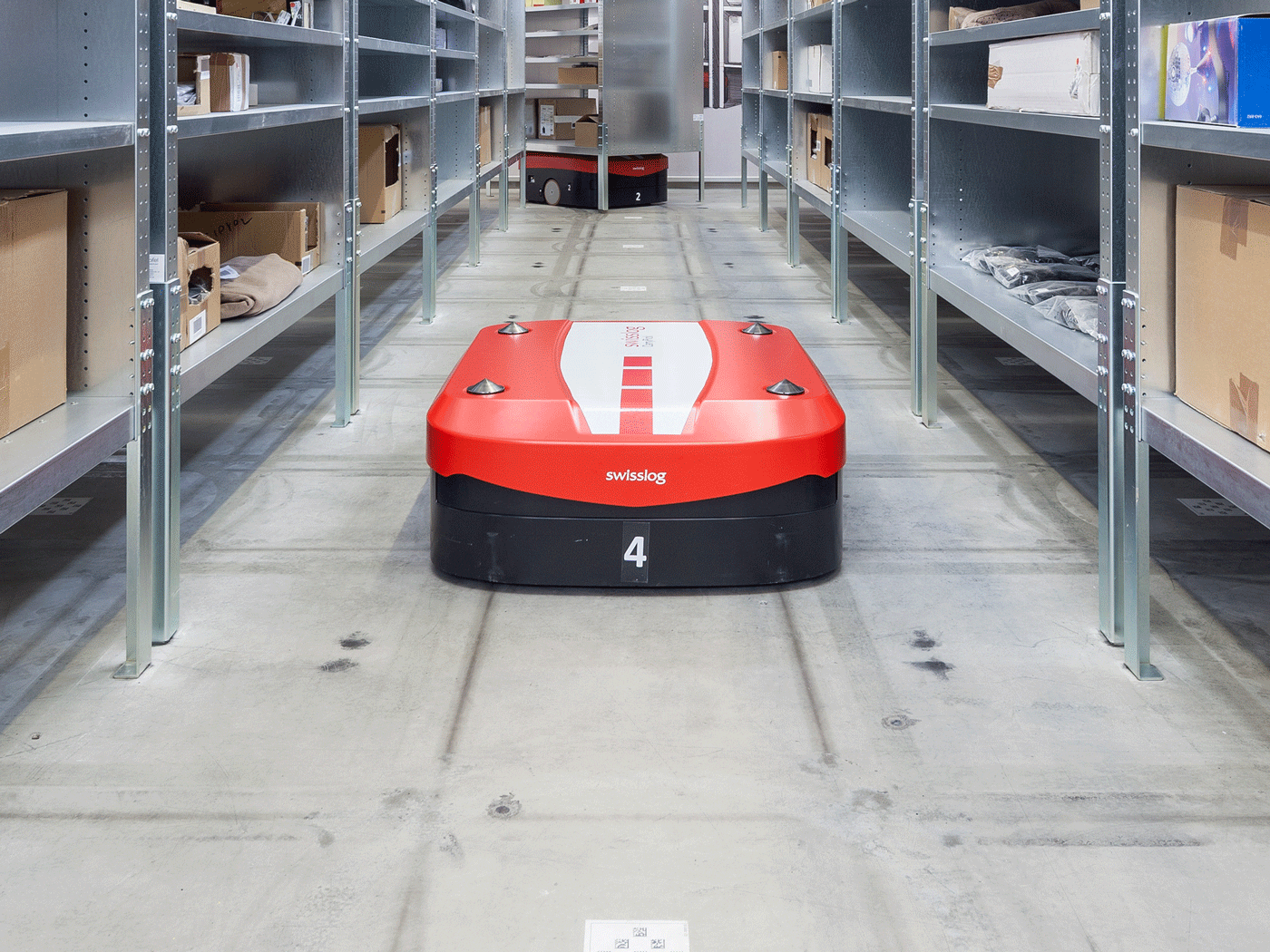
    Intralogistics provider, Swisslog, is expanding the capabilities of the business by reinforcing its presence in France. The global provider of robotic and data-driven intralogistics solutions have customers which include Unilever, Coca-Cola, Pfizer and Walmart. Already having a well-established presence within the French materials handling market from its base in Paris, Swisslog has historically focused on healthcare related applications. Building on its success since becoming part of the KUKA Group, the company is now investing in the delivery of materials handling technologies to the French intralogistics market.

    Managing director of Swisslog WDS in France and the Benelux, Peter De Henau, believes now is the best time to expand in the French warehouse and distribution sector. Says De Henau: “We are delighted to be strengthening our presence in this vital European market. Together with KUKA, we are looking forward to opening the next chapter of Industry 4.0. Our latest innovations and proven technologies are testament to the support Swisslog can offer businesses in France to help them grow smart with their intralogistics.”

    Edin del Mar is the latest to join De Henau’s growing team as business development manager for Swisslog WDS in France. Joining Swisslog from Savoye, del Mar will play an integral part in expanding the provider’s presence in the country.

    “I am really pleased to be joining Swisslog at this exciting time,” says del Mar. “Swisslog is ready to offer the widest and smartest portfolio of automated intralogistics technologies and services to the French market and is investing heavily in bringing in a new era of innovations alongside its proven solutions portfolio. Having launched multiple solutions such as ACPaQ, PowerStore and SynQ this year alone, I am excited to be working with solutions that many leading global brands are already benefiting from.”

    Swisslog offers proven solutions, including the popular AutoStore and CarryPick technologies, to businesses looking to expand or simply take their first steps into automated warehousing, and the firm’s expansion is already accelerating with the first CarryPick solution being installed for a retailer in the Northern French region.

    “Our technologies may be innovative but our approach is fairly straightforward,” adds Peter De Henau. “While we eradicate risk and inefficiencies for customers by delivering new or adapted solutions, it often takes face-to-face discussions to really demonstrate the range of opportunities we can offer. That’s why it’s great to have a local presence in this key European market.”
    “Every single customer is important at Swisslog and we pride ourselves on providing a tailored approach,” concludes De Henau. “Businesses looking to connect their warehouse to the future can arrange a visit to see our technology in action via www.swisslog.com/solutions-automatisees.”

    Swisslog designs, develops and delivers best-in-class automation solutions for forward-thinking warehouses and distribution centers. The company offers integrated systems and services from a single source – from consulting to design, implementation and lifetime customer service. Behind its growing success are 2,300 employees worldwide, supporting customers in more than 50 countries.

  • Vietnam, Indonesia have much faster internet speed than India

    Vietnam, Indonesia have much faster internet speed than India

    Ranked 89 globally, India’s average internet connection speed of 6.5 Mbps is slower than Vietnam and Indonesia, which are much faster, a report said on Friday.

    While Vietnam, ranked 58, had an average internet speed of 9.5 Mbps, Indonesia at rank 77 provided a speed of 7.2 Mbps, Global leader in content delivery network services Akamai Technologies’ “The State of the Internet Q1 2017 Connectivity” found.

    The report also said that India witnessed a 4 Mbps broadband adoption of 42 per cent in the first quarter of 2017 with a year-over-year change of 81 per cent.

    “Increases in connection speeds and broadband penetration have helped enable the internet to support levels of traffic that even just a few years ago would have been unimaginable,” David Belson, editor of the report, said in a statement.

    “One need only look to January’s US Presidential Inauguration, which broke traffic records for live coverage of a single news event delivered by Akamai, largely thanks to the combination of more viewers watching at increasingly higher levels of video quality,” Belson added.

    On a global level, the average connection speed was 7.2 Mbps – an increase of 15 per cent year-over-year – and average peak connection speed increased 28 per cent year-over-year to 44.6 Mbps in the first quarter of 2017.

    “While South Korea had the highest average connection speed globally at 28.6 Mbps in the first quarter, Singapore had the highest peak connection speed at 184.5 Mbps in the first quarter,” the report noted.

    The average mobile connection speeds ranged from a high of 26 Mbps in Britain to a low of 2.8 Mbps in Venezuela. Germany had the highest peak mobile connection speed at 200 Mbps in the first quarter.

  • Government to realize self-sufficiency in garlic in 2019

    Government to realize self-sufficiency in garlic in 2019

    The Agriculture Ministry has targeted to achieve self sufficiency in garlic in 2019, sooner than its previously set target of 2033, Agriculture Minister Amran Sulaiman stated here, Monday.

    Sulaiman noted after the delivery of the Supreme Audit Agency Report that the decision to advance the target was made following recent fluctuations in the prices of the commodity.

    “We are learning from the recent fluctuations in the prices of garlic. Earlier, we had planned to become self-sufficient in garlic in 2033. However, we would advance the target; god willing, it would be in 2019 or 2020. We are aiming to advance the target by 13 years,” he remarked.

    According to the minister, a total of 60 thousand hectares of land will be needed to realize the target.

    Currently, some 90 percent of the countries garlic demand is met through imports annually reaching some 500 thousand tons worth Rp20 trillion.

    “If we can have 60 thousand hectares of (garlic plantations), then we can save Rp20 trillion in foreign exchange while boosting the farmers income,” he added.

    Sulaiman noted that the ministry will maximize the existing land potential, including four million hectares of rain-fed land and 21 million hectares of former swamp areas.

    “We can cultivate (garlic) in these four million hectares of land, with three harvests a year. Farmers could earn Rp150 trillion-Rp200 trillion from this. Secondly, we have 21 million hectares of swap areas that we can use for farming along with building a sugar factory. If we can achieve this, then we can become the worlds largest food producers,” Sulaiman remarked.

    Data from the Central Bureau of Statistics showed that 22,630 tons of garlic was imported from China as of April, while 1,971 tons of the commodity was imported from India during the same period.

    Indonesia has recorded self-sufficiency in garlic production in the period between 1990 and 1998.