Tag: asia

  • Oppo eyes phone sales of 100m

    Oppo eyes phone sales of 100m

    OPPO, the No. 1 smartphone vendor in China in 2016, plans to sell 100 million phones globally as it taps its models’ strong photography features and the company’s offline retail channels.

    Oppo partners Sony and Qualcomm to develop customized processors and photography technologies used in its new flagship model R11, the successor to the Oppo R9s — the world’s best selling Android smartphone in the first quarter of 2017.

    The R11 has dual camera including a 20-megapixel front camera for selfie fans, a Sony sensor specially designed for Oppo, and Qualcomm’s Snapdragon processor with photography optimization bokeh.

    In 2016, Oppo ranked No. 1 in China’s smartphone market with 18.1 percent, according to US-based IDC.

  • Alibaba to open data center in Indonesia amid tighter controls on local storage

    Alibaba to open data center in Indonesia amid tighter controls on local storage

    Alibaba Cloud, the cloud computing arm of Alibaba Group, announced today that it plans to establish a new data center in Jakarta, Indonesia. It’s scheduled to open before the end of Q1 next year.

    “Alibaba Cloud will significantly increase its computing resources in Asia, allowing greater support for small and medium enterprises,” the company said in a statement.

    It’s also opening a new center in India and recently announced similar plans for Malaysia.

    Alibaba Cloud operates globally. Other Asian countries like China, Japan, and Singapore already have similar facilities.

    Demand for local storage
    In Indonesia, international giants like Alibaba Cloud are answering the growing demand for reliable, scalable data storage.

    The entire industry is experiencing a boom. NTT Indonesia, a subsidiary of Japanese NTT Data Corporation, told trade publication Data Center Dynamics that it’s seeing “significant growth” since 2014 on the back of developments such as e-commerce and more frequent internet use.

    Amazon Web Services is popular with Indonesian companies, even though the firm does not operate data centers in the archipelago.

    But a 2012 government regulation (PDF) has recently been tightened – especially in the fintech sector. Indonesia’s Financial Services Authority at the end of last year introduced its own sub-regulation that says Indonesian’s financial data must not be stored outside the country without prior approval. This could encourage companies and startups to consider working with Indonesia-based servers.

    We’ve reached out to Alibaba Cloud to learn more about the location of the Indonesia-based center and when it will start operating.

  • DHL boosts cooperation with fashion industry

    DHL boosts cooperation with fashion industry

    DHL is strengthening its ties with the fashion industry and will intensify its participation in this e-commerce driven business sector. DHL has teamed up with multiple fashion organisations across the globe to design tailored initiatives that will help fashion businesses to streamline their international supply chain and expand their business into new markets. Among the new partners are the Council of Fashion Designers of America (CFDA), the British Fashion Council (BFC) and Camera Nazionale della Moda Italiana (CNMI) in Milan.

    “It has always been a major goal of DHL to support the fashion industry in all its different facets. The new approach will allow us to reach an even larger audience of fashion businesses consistently throughout the year with tailored support across their various needs, from producing a collection to shipping it to fashion shows and setting up an e-commerce presence.” said Arjan Sissing, senior vice president corporate global brand marketing, Deutsche Post DHL Group.

    As a partner of the leading US fashion trade association, DHL will co-sponsor and work with CFDA’s innovation partner, Accenture, on a study looking at the future of the industry’s supply chain to help fashion designers more effectively use global supply chains and shipping networks as key means to better target customer needs and elevate their brands. The Council of Fashion Designers of America Inc. is a not-for-profit organization with a membership of more than 500 foremost womenswear, menswear, accessory and jewelry designers.

    Through its cooperation with the British Fashion Council, DHL will launch an award program recognising ‘International Fashion Potential’ supporting British fashion businesses in their ambition to go global. The annual program offers mentoring and logistics support for designers. DHL will provide an annual prize for a promising fashion business and the winner will be announced during London Fashion Week in September 2017.

    In collaboration with Camera Nazionale della Moda Italiana DHL will organise multiple workshops involving start up brands, young designers and members. These seminars will give insights on e-commerce and custom regulations in the fashion business as well as the opportunities and challenges of different trade lanes and transport solutions. Additionally, DHL will form part of a jury together with Camera Moda to select the most international brand designer from all young designers participating. The award will be presented at the Camera Moda opening event in September 2017, and the winner will receive a DHL care package to ease his international express shipments.

  • Chinese e-commerce giant JD.com plans expansion into Southeast Asia

    Chinese e-commerce giant JD.com plans expansion into Southeast Asia

    It plans to use Thailand as a hub for servicing other regional countries such as Vietnam and Malaysia. JD.com Inc, China’s second-largest e-commerce company, plans to enter the Thai market later this year in a move to expand its overseas business beyond Indonesia, its founder and chief executive said on Friday.

    Richard Liu also told Reuters in an interview the company planned to use Thailand as a hub for servicing other Southeast Asian countries such as Vietnam and Malaysia.

    “Thailand will come soon, before the end of the year. We will invest a lot and also find the best local partners to work together with. Everyone could be possible, but not Lazada,” Liu said, referring to the fact that the Southeast Asian online retailer is now controlled by JD.com’s largest domestic rival Alibaba Group.

    Liu said he was confident his firm could compete with Alibaba in that market and elsewhere in Southeast Asia.

    “When we entered the e-commerce business 12 years ago Alibaba was already a giant. It couldn’t kill us. How can it do so today?” Liu told Reuters.

    “Unless we make some serious strategic mistake, no competitors can actually beat us nowadays.”

    But he declined to say how much JD.com would invest in Thailand, though said it was likely to be less than he was investing in Indonesia, which accounts for almost all its current business outside China.

    Amid intense competition, JD.com has expanded into fast-moving consumer goods, including household supplies, food and drink. The company has also diversified into data, cloud and artificial intelligence services.

    In May the firm posted its first quarterly profit since its share listing in 2014, as an expanded product line-up attracted more active users, but also cautioned the cost of expanding at home and abroad could crimp profits growth.

    It made a first-quarter net profit of 355.7 million yuan on revenue up 41 percent at 76.2 billion yuan ($11.21 billion), while active customer accounts total more than 237 million.

    Liu also said the firm was pressing ahead with its adoption of drones to deliver goods between cities and remoter areas including sourcing agricultural and wild produce in the southwestern province of Sichuan, and adjoining Shaanxi province.

    He said JD planned to build 180 so-called drone network “airports” in the mountainous Sichuan region where vehicle deliveries would cost more and take much longer. Each of these drone launch pads would likely cost around 600,000 yuan he said.

    “In the mountains there is a lot of … very good food like wild fruits, like fish, mushrooms, chicken, everything that is safe, more organic or green food,” Liu said.

    Packages delivered to remote villages now cost around five times more than in large cities, Liu said, but with drones this could be reduced to around twice the cost. Deploying drones across China’s vast rural hinterland could potentially grow into a “multi-billion” yuan business for JD he said, without giving exact projections.

    Liu earlier told the D.Live Asia technology conference in Hong Kong that he aimed to eventually be operating a million drones but this would not lead to fewer jobs for its staff.

    “We will need a huge staff to maintain the drones,” he said.

  • Avoiding Supplier Sustainability Scandals Through Better SRM

    Avoiding Supplier Sustainability Scandals Through Better SRM

    Corporate ethics are under greater scrutiny than ever before; any failing is rapidly exposed on social media and very soon hits the global headlines. Investigative media – be that online, on television, or on paper – will eagerly expose the latest scandal, whether it’s to do with child labour, slave workers or bribery in high places, while Governments, which must be seen to act, respond with public inquiries, new legislation, or prosecutions. But it’s not just about protecting brand reputation and adhering to regulations, it’s also about being able to reassure and cater for customers.

    Daniel Weston, Chief Operating Officer (Europe), Adjuno, discusses how best to implement effective Supplier Relationship Management (SRM) to help avoid nasty surprises.

    Conscious Consumers
    Many of today’s shoppers want to know exactly where the items they buy come from and that they are sourced sustainably and ethically. Is that garden furniture made from illegally logged rainforest teak rather than the FSC (Forest Stewardship Council) variety from sustainable plantations? Can you trust the supplier to have honestly labelled it as such? As various scandals in recent years have highlighted, what certain suppliers say about their products is not always strictly true, and when the deception hits the headlines then most members of the public will remember the retailer’s name – not the lesser known supplier.

    Our global world is also highly competitive: consumers are increasingly demanding with across to cross-border ecommerce commonplace, while product life cycles grow ever shorter. Add to that concerns over rapidly changing business-to-consumer (B2C) dynamics as well as the total “cost to serve” – as competition and consumer demand increase pressure on high-level services – and the need for good supplier relations becomes ever more significant.

    Implementing Supplier Relationship Management
    Supplier relationship management is all about strategic collaboration with suppliers to add value, minimise risk and ensure consistent and compliant governance. Any SRM implementation should start small with a pilot project involving a handful of key strategic suppliers before embarking on more significant developments.

    Implementing an SRM process is made a lot simpler when following a step structure, such as in the following checklist.

    1. Define objectives and priorities.
    2. Analyse the activities involved, process change needed and the necessary toolkit.
    3. Identify and define the necessary roles and responsibilities.
    4. Assess the maturity of your procurement department and their ability to cope with change.
    5. Establish the internal competences needed and give training where required.
    6. Identify suppliers and their core competencies.
    7. Segment suppliers: identify the strategic with whom to develop SRM.
    8. Examine existing and needed technology.
    9. Establish parameters for measuring and improving supplier performance.
    10. Establish systems to identify and mitigate risk.
    11. Select meaningful KPIs relevant to both you and your strategic supplier.
    12. Ensure both partners in the relationship are committed and all stakeholders throughout the
    13. Don’t expect a one- size-fits all solution: relations with each strategic supplier may take on a organisation aligned unique character.

    Overcoming Obstacles

    Putting a set of standardised, open and transparent SRM tools in place, plus a rigorous and consistent management approach can help improve the chances of SRM success. But there are still several pitfalls to consider and avoid when setting up SRM, three key ones are:

    1. Placing too much focus on costs rather than value
      Effective SRM demands attributes, such as change management, team leadership, and the long-term planning necessary to develop lean and agile supply chains. Too much preoccupation with short-term cost control and it’s back to those old adversarial combats with buyers pushing down the price while disgruntled suppliers watch their profits evaporate.
    2. Lack of specific SRM competencies and skills
      While the right software tools can ease SRM implementation, it is more than just an electronic filing cabinet. The success also depends on the people and processes across both supplier and buyer organisations. For example, this new way of operating may be challenge for those transitioning from traditional procurement departments that have previously been responsible for running sourcing projects and have specialised in taking an adversarial approach to negotiation. Extra training will help to combat any of these sorts of issues.
    1. Non compatible strategic objectives
      SRM also requires that both supplier and buyer adopt a complementary strategy: developing long-term collaborative partnerships will not work if either side is still in combative mood looking for weaknesses to exploit. The decision to introduce and develop SRM needs good executive leadership and agreement from selected strategic suppliers so that they, too, are comfortable with such an approach.

    Conclusion
    There are lots of benefits to supplier relationship management, as well as more sustainable processes and improved customer satisfaction, they generate better access to technological innovations, improved on-time delivery, reduction on inventories, higher responsiveness to customer demand and more product innovation opportunities.

    SRM is not a quick-fix solution, it is a long-term game and involves a strategic approach to business improvement. Success requires commitment and persistence. Especially, in the global economy with ever-increasing competition, where securing a reliable and supportive supplier base is essential: if businesses do not become the “customer of choice” then it is very likely that one of their competitors will. Equally, if procurement departments maintain a traditional adversarial stance, the performance management is poorly monitored or contracts are buried deep in a filing cabinet, then the likelihood of supply chain breakdown increases – and brands will have no excuse when the ethical failings of their suppliers become public knowledge and damage their hard earned reputation.

  • Garuda aims to improve financial performance in two years

    Garuda aims to improve financial performance in two years

    Garuda Indonesia is optimistic its operational and financial performance will see sustainable positive growth in one to two years, fueled by business strategy focusing on financial performance transformation.

    “Garuda Indonesia will focus on improving its performance by taking 10 financial and business performance initiatives in such a way that its operational and financial conditions will be better and we are quite optimistic about achieving it in one to two years time,” Garuda Indonesia President Director Pahala N Mansury said here on Sunday.

    In the phase of business growth which is full of challenges, Pahala expressed gratitude to all sides for their attention and inputs to improve the financial performance and business dynamics of Garuda Indonesia.

    “Of course, this is worthy of out praise, particularly when it comes to the commitment and concern of all stakeholders to ensure that Garuda Indonesia as national flag carrier will always have good business performance,” he said.

    He said the company is currently in very good condition in terms of operations and services to the public.

    The challenge that the company must fulfill now is related to how to improve its financial performance in a sustainable way to ensure the continuity of its business, he said.

    “We ascertain that the phase of business cycle that Garuda Indonesia is going through is only temporary now that in terms of infrastructures, human resources and products, all business lines of the company have good platform to support the improvement of its performance,” he said.

    Among the 10 financial performance strategy initiatives are making optimum use of fleet, lowering the costs of fleet, improving services related to punctual departure and arrival time, and reforming the system of managing income from service users.

  • Rohlig opens new warehouse facility in Sydney

    Rohlig opens new warehouse facility in Sydney

    Due to continued success in the Australasian markets, International freight forwarding firm Rohlig Logistics, is continuing the expansion plans of its contract logistics divisions with the opening of a new 6000 sqm warehouse in Sydney.

    The new warehouse has been equipped with the latest in warehousing and logistics technology, including as a sunken dock with a seven metre in-ground hoist capable of handling 14 tonnes of air freight. Additionally, the facility will be able to handle up to 4000 pallet spaces, encompassing every element of the supply chain, from warehousing and freight, to contract logistics.

  • Qatar Airways Umrah Passengers Transferred to Garuda Indonesia

    Qatar Airways Umrah Passengers Transferred to Garuda Indonesia

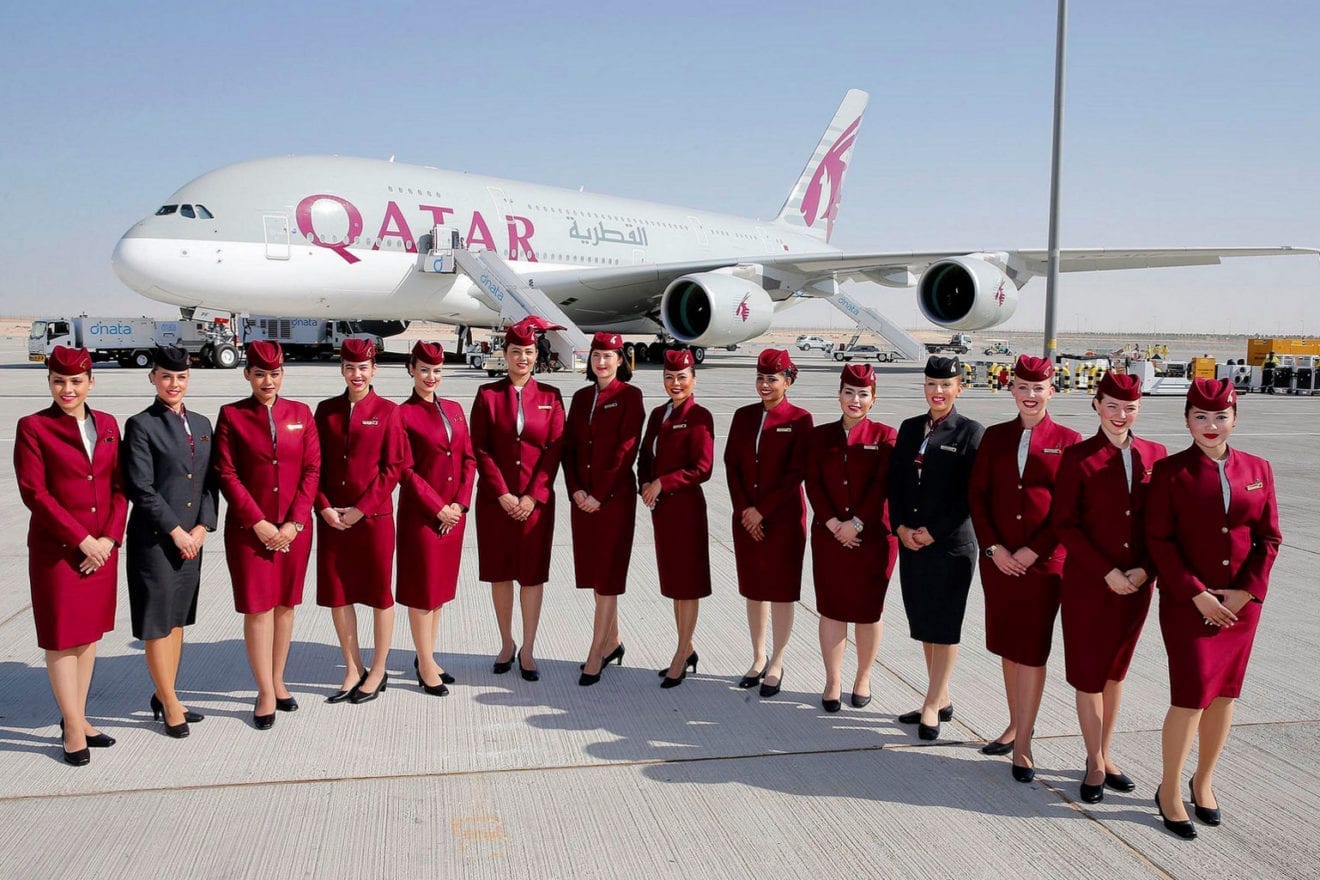
    Qatar Airways umrah passengers will be transferred to flag carrier Garuda Indonesia. “We have a partnership with Qatar Airways. Some passengers to be carried from Jakarta to Saudi Arabia will be transferred to Garuda Indonesia, it expected to happen in a short term,” Garuda CEO Pahala Mansyuri told us yesterday, June 8. According to Pahala, the opportunity will be exploited by Garuda Indonesia to introduce its highly potential umrah services. The first phase will see the transfer of 45 Qatar Airways passengers in Jakarta-Saudi Arabia route. In the phase, around 150 passengers will be carried in the routes previously operated by Qatar Airways.

    In a written statement issued Wednesday Transportation Minister Budi Karya Sumadi said that he has not revoked Qatar Airways flight license. The government will only transfer Indonesian umrah passengers using Qatar Airways to other airlines.

    Budi said that the transfer will be done in the wake of the diplomatic row between Qatar and some other Gulf countries. The conflict has resulted in a ban on Qatar Airways from flying above Gulf countries, including Saudi Arabia, which is the destination country of hajj and umrah.

    As for flights from and to Indonesia, Qatar Airways may still carry passengers as usual. “Qatar Airways can still serve flights from and to Indonesia and [passengers] may continue the travel to third countries aside from those having diplomatic issues with Qatar,” the minister said.

  • Pelni and Pertamina building a cruise ship

    Pelni and Pertamina building a cruise ship

    State shipping company PT. Pelayaran Indonesia (Pelni) will team up with Patra Jasa, a subsidiary of state-owned energy company PT. Pertamina, to build a cruise ship, to support the countrys tourism industry.

    “We already signed a memorandum of understanding (MoU) to build a cruise ship to support the countrys tourism industry especially in 10 tourist destinations,” head of the Kupang branch of PT Pelni Adrian said here on Saturday.

    The ship is being built in South Korea expected to be completed and to be operational in 2018, Adrian said.

    Earlier Pelni and Patra Jasa planned to buy a cruise ship, but the plan could not be realized with a regulation banning government agencies including state companies to buy second hand goods from abroad.

    “Therefore, Pelni and Pertamina decided to build one that would take a year for completion,” Adrian said, adding the cruise ship would serve transport to 10 tourist destinations recognized by the government.

    The ten tourist destinations include Labuan Bajo and under sea destination in Riung, East Nusa Tenggara.

    Currently Pelni operates not only passenger ships but it also has ship for the transport of cargoes and livestock and tourists.

    Business in passenger transport has declined as most passengers choose air transport which much faster.

    “Mr (Ignasius) Jonan , when he was transport minister, once told us that it was time for Pelni to focus on other lines of business, but business in passenger transport continues,” Adrian said.

    He said business in tourism industry is growing that cruise ships is important . The government has been more aggressive in developing its tourism industry to make use of the countrys tourism wealth .

    The government is set to double the number of foreign tourists visiting the country to around 20 million in 2019.

  • Yusen to strengthen contract logistics business in Indonesia

    Yusen to strengthen contract logistics business in Indonesia

    PT. Yusen Logistics Solutions Indonesia strengthens contract logistics business by relocating and expanding warehouse facilities in MM2100 Industrial Town, Jakarta, in November 2017.

    MM2100 Industrial Town is strategically located as a logistics hub, offering good access to Jakarta, the Port of Tanjung Priok, and Soekarno–Hatta International Airport. The surrounding area is also home to a large number of companies centered on manufacturing operations and is seeing ongoing infrastructure improvements, so the industrial town is expected to expand further.

    The company owns three warehouses in MM2100 Industrial Town and operates them independently. Warehouse No. 3 will relocate within the industrial town, doubling its warehouse space to 11,000 square metres. It will go into operation in this November. As a result, the total floor area of the three warehouses in MM2100 Industrial Town will increase to approximately 45,000 square metres, the largest of any logistics provider in the industrial town. Using our accumulated know-how, we will respond to increased demand for logistics services.

    Yusen Logistics has three Indonesian subsidiaries: PT. Yusen Logistics Solutions Indonesia, PT Puninar Yusen Logistics Indonesia, which also provides warehouse services, and PT. Yusen Logistics Indonesia, which provides ocean and air freight forwarding services. Yusen Logistics Group is working to strengthen internal collaboration, with D. Budijanto becoming president director of all three companies in April this year. It has also centralised PT. Yusen Logistics Solutions Indonesia as a contact window for contract logistics business and prepared a system for expanding the business.

    Yusen Logistics Group in Indonesia continues to combine its services across warehousing, ocean and air freight forwarding, road transport, and customs clearance, providing supply chain logistics to meet customer needs.


  • Compass Yacht Delivery will be appearing at the celebrated Singapore Yacht Show

    Compass Yacht Delivery will be appearing at the celebrated Singapore Yacht Show

    Leading yacht and boat company Compass Yacht Delivery will be appearing at the celebrated Singapore Yacht Show early next year, and offering nautical enthusiasts the chance to win a day’s instruction with one of the most experienced skippers around.

    The Singapore Yacht Show, held in April, is one of the highlights of the Asian seafaring calendar, hosting a plethora or top brands, celebrated speakers and the latest innovations in boating technology 2018 will see Compass Yacht Delivery take a stand for the first time after almost a decade of successful operation, and they are celebrating their appearance with an exclusive competition.

    Attendees to the show are invited to enter Compass Yacht Delivery competition, in which one lucky winner will be able to take advantage of eminent skipper Sven’ wealth of knowledge with a full day of yacht instruction.

    Sven has racked up an impressive 200,000 nautical miles including 18 trans-Atlantic crossings, and his extensive experience makes a one-of-a kind opportunity for boat lovers to take instruction from a real yacht master of the sea.

    Sven said, “We are thrilled to be exhibiting at the Singapore Yacht Show for the first time. We’ll be on hand to offer advice on yacht delivery, maintenance, consultation and of course where the best places are for your next yacht holiday.”

    Experts in all things yacht and boat, Compass Yacht Delivery have expanded from international yacht delivery to a service providing world-class skipper and crew hire to a soft landing packages that takes the stress out of buying and setting out on a boat. Ever-focused on exceedingly high standards of customer service and professionalism, the Singapore Yacht Show is the perfect opportunity to see how the exacting and experienced Compass Yacht Delivery team can take yachting to the next level.

    Compass Yacht Delivery will be appearing at the Singapore Yacht Show from 12-15 April at the Sentosa Cove.

    To find out more visit www.compassyachtdelivery.com

  • Largest Chinese firm to invest in power plants in Indonesia

    Largest Chinese firm to invest in power plants in Indonesia

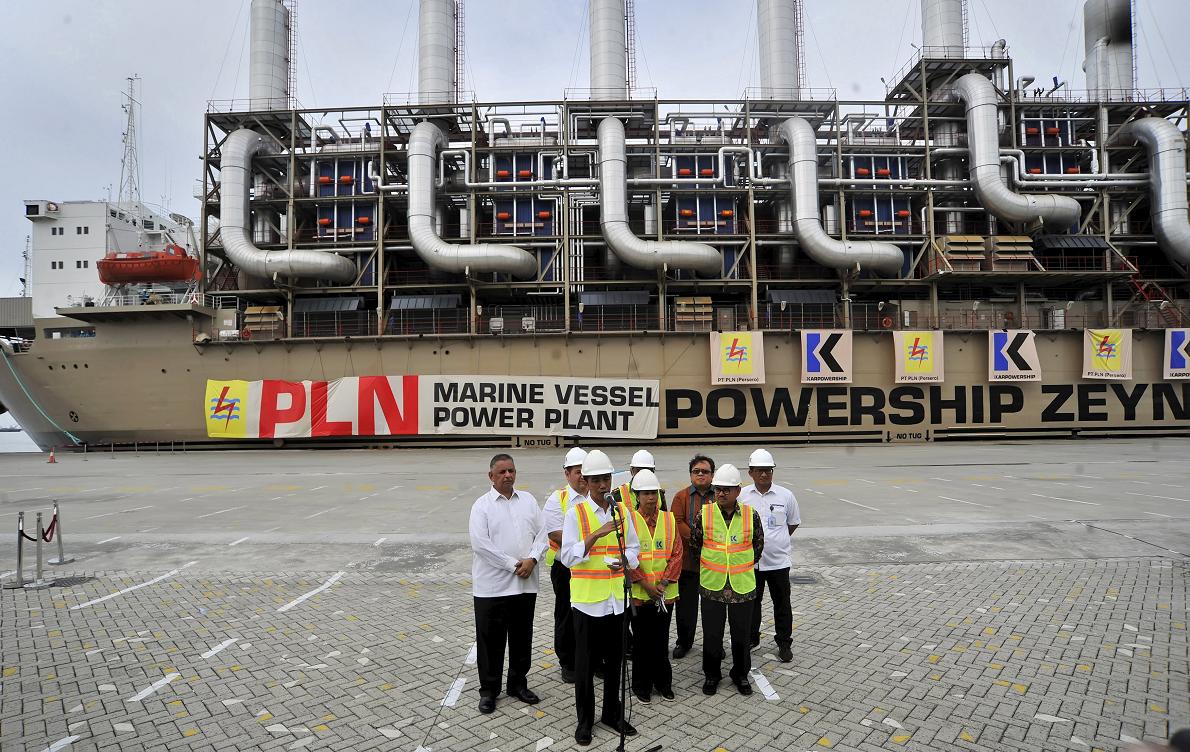
    The largest Chinese power company “China Huadian Corporation” has the opportunity to invest in power plants in Indonesia. “The Chinese firm wants to invest in our power plants. I have suggested that it should find a good local partner,” Energy and Mineral Resources Minister Ignatius Jonan informed us in Beijing on Thursday night.

    According to Jonan, China Huadian Corporation is the largest power company in China, and its assets are about twice that of Indonesias state electricity company (PLN). Jonan said that with regard to investment matters, his ministry will not discriminate investors based on certain countries.

    “We do not differentiate, whether it is China, Japan, or any other country. What matters is that we are fit with it; that is all,” he said after the Eighth Ministerial Conference on Clean Energy (CEM8).

    One of the opportunities offered to China Huadian is the construction of power plants in the governments 35 thousand-megawatt power plant program.

    “This is in accordance with the directives of Joko Widodo during the OBOR Conference (One Belt, One Road), which encouraged Chinese investment in Indonesia. I am following up on it,” Jonan, who is a former minister of transportation, stated.

    Jonan made assurance that next year, all residents of the island of Sumba, East Nusa Tenggara, will have access to electricity.

    “Coincidentally, with the development of a steam power plant, Sumba may perhaps get an additional 50 megawatts of electricity,” the minister, who was accompanied by Indonesian Ambassador to China Soegeng Rahardjo, noted.

    The annual CEM event, held in Beijing, was attended by ministers and high-level officials from 24 countries.

    At the eighth CEM, Jonan got the opportunity to hold a bilateral meeting with China, as the host.

    On the occasion, Minister Jonan also encouraged several Chinese companies to increase their investment in the oil and gas sector in Indonesia.

    “Some Chinese oil and gas companies have been investing in Indonesia for the past 15 years, but the number is still small and needs to be increased,” Jonan added.

    He said that unlike Chinese companies, oil and gas companies from the US have been investing in Indonesia for quite a long time.

    “Chevron, which was known as Caltex in the past, and Exxon have been operating in Riau for about 100 years with a very big investment,” Jonan pointed out.

    In addition to working sessions for energy ministers and other high-level policymakers, CEM8 featured a public-private action summit with keynote speakers, thematic panel discussions, and opportunities for high-profile announcements of ambitious clean energy efforts.

    It also included a two-day technology exhibition demonstrating breakthrough clean energy technologies, products, and business models; and an Innovation Theater showcasing potentially game-changing clean energy innovations and inspirations.


  • Indonesian biodiesel producers turn to China

    Indonesian biodiesel producers turn to China

    Indonesian biodiesel producers are eyeing China as a new promising market amid negative sentiment in the European Union and the United states.

    Indonesian Biofuel Producers Association (Aprobi) chairman MP Tumanggor stressed Thursday that their members could no longer rely on their exports to the US and European Union.

    “Our production capacity reaches 11 million kiloliters per year, 4 million of which is absorbed by the domestic market. The remaining 7 million kiloliters are idle,” he said, adding that exports to European countries and the US account for just a portion.

    The negative sentiment was sparked by an anti-dumping campaign from both the European Union and the US commercial trade association National Biodiesel Boards (NBB).

    Aprobi secretary general Stanley Ma said that China was a potential market for Indonesian biodiesel because the country used B5 for its fuel, which consists of 5 percent biodiesel and 95 percent petroleum biodiesel. “China might need 9 million kiloliters of biodiesel a year. This could boost our exports,” he said.

    The Indonesian government is reportedly set to send a team to China on June 16 in an attempt to boost biodiesel exports to the country.

    Data from the association shows that in first quarter of this year, Indonesia produced 1.01 million kiloliters of biodiesel of which 761,519 kiloliters was absorbed by the domestic market.

  • PanaHome, Sojitz to develop ‘smart town’ in Indonesia

    PanaHome, Sojitz to develop ‘smart town’ in Indonesia

    PanaHome, a housing company under the Panasonic group, has teamed up with trading company Sojitz Corp. to build a sustainable “smart town” in the city of Deltamas outside Jakarta.

    The two companies’ Indonesian subsidiaries will establish a joint venture, PT PanaHome Deltamas Indonesia, in October to construct residential and commercial complexes as part of the Deltamas smart town plan, a comprehensive urban development project that includes commercial facilities, residential neighborhoods and an industrial park.

    The joint venture combine PanaHome’s expertise in building sustainable smart towns with the Sojitz group’s concept of a residential neighborhood proximal to business districts in the area of Deltamas.

    “The first phase of this project will involve construction of 520 housing units with costs up to ¥10 billion ($91 million). And we will continue other phases with 1,000 housing units,” said Kazuhiko Tanaka, managing director of PanaHome Asia Pacific Pte. Ltd., who is based in Singapore.

    The first phase will start in the beginning of 2018 and finish in 2019, followed by a final phase to be completed around 2026, Tanaka said. “We will start selling units in the middle of 2018.”

    “We will not only adopt Japanese quality, such as construction and after-sales service, but also adjust to Indonesia’s situation,” said Tanaka.

    “Nowadays, the development of Deltamas city has already reached 70 percent of its total 3,200-hectare area. In the near future, there will be schools and hospitals as well,” said Masahiro Koizumi, vice president of Sojitz’s local property developer, PT Puradelta Lestari Tbk.

  • Rupiah Climbs on Forex Reserves Increase

    Rupiah Climbs on Forex Reserves Increase

    The rupiah climbed 20 bps this morning at the Jakarta Interbank Spot Dollar Rate. The rupiah now trades for Rp13,278 per US dollar, from what analysts said to be the impact of Indonesia’s foreign exchange (forex) reserves’ increase.

    Samuel Sekuritas economist Rangga Cipta said on Friday, June 9, that the forex reserve increase in May to US$124.95 billion helped the rupiah strengthened. But the gain is relatively limited as the US dollar is also on an uptrend over speculations that the Federal Open Meeting Committee will result in a Fed Fund Rate hike.

    Meanwhile, money market observer from Bank Woori Saudara Indonesia, Rully Nova, said the forex increase is expected to help maintain the rupiah stability on the long run.

    “With stable fluctuations, the domestic economic activities will be able to increase, and eventually provide investors’ with comfort and security when making investments,”