Tag: asia

  • Satellites key for 5G

    Satellites key for 5G

    Without next generation satellites, 5G networks will take longer to deploy, lack the necessary coverage and will be more expensive to build, a satellite industry executive told a keynote audience at CommunicAsia2017.

    Dr Ashok Rao, VP of product development at O3b Networks, said that the current generation of GEO, MEO and LEO satellites has a critical role to play in making 5G a reality, and that new networks will be transformative for the satellite business, during his presentation: “The Future of the Global Network.”

    The satellite business, he said, “is not a dinosaur industry for rural and remote communities any more.”

    There had been a “lot of innovation” in the satellite industry, and terrestrial infrastructure alone will not be able to deliver networks which can truly be rated as 5G.

    “A major characteristic of 5G is 99.9% coverage, and that’s where satellite comes in,” said Rao.

    “Traditionally satellite has been used in places which are remote and not well connected, but new use cases in 5G such as autonomous cars require the almost universal coverage which satellite can support.”

    Data hungry users are driving a big uptake in the use of mobile video, and satellites also has a role in delivering this capacity.

    Rao quoted UK research which claims that to deliver 5G in the UK requires an additional 400,000 masts, each about 25 meters high.

    “Britain is not a large geography, so imagine what would be required in larger countries,” he said.

    “But this is not going to happen in the UK, because of the zoning and community issues which would require negotiation.”

    Rao said next generation GEO satellites are significantly more powerful than those launched only ten years ago.

    Satellites launched in 2007 had a capacity of 8Gbps and download speeds of 2 Mbps, while those launched in 2020 will offer 800Gbps and 100 Mbps, respectively.

    “Satellites will enable low cost access to 5G, and reduce the capex burden on operators,” he said.

  • Spar China Continues Strong Growth in 2017

    Spar China Continues Strong Growth in 2017

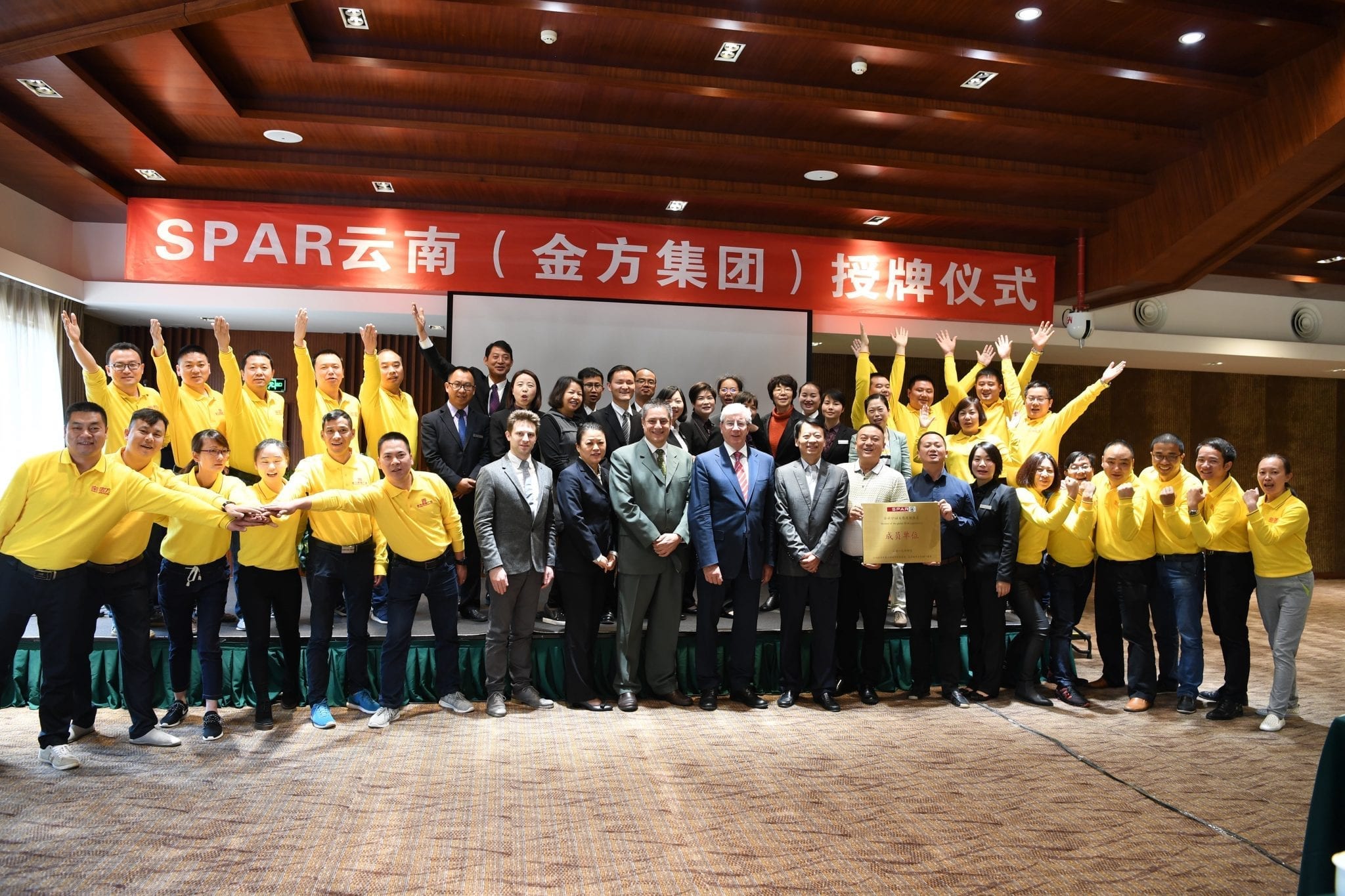
    PAR International (“SPAR”) and Yunnan Anning Jinfang Commercial Group (“Jinfang”) have announced a new partnership agreement authorising Jinfang to grow the SPAR Brand in Southeast China across Yunnan Province, Liu Pan Shui City, Bijie City, Buyi and Miao Autonomous Prefecture, and Anshun City in Guizhou Province.

    Jinfang will invest in converting 32 stores to the SPAR brand in the coming months, bringing together the best of SPAR’s global retail expertise and Jinfang’s deep understanding of the local customer. The 2,550 employees currently working in the chain’s hypermarkets, supermarkets and convenience stores will benefit from access to the retail training academy of SPAR China.

    The announcement marks an exceptional 12 months for SPAR in China. In 2016, sales grew by 6.7% to 14.5 Billion RMB, with SPAR China continuing its expansion in a maturing food retail sector. Store numbers increased by 14% to 395 and SPAR China added 43,918m² of selling area.

    In December, Jiajiayue Group, which was SPAR’s first Chinese retail partner, launched an initial public offering (IPO) on the Shanghai Stock Exchange. The fund raised from the IPO will be used to strengthen and develop the business further investing in technology and the supply chain infrastructure.

    Today, 14% of the total selling area of SPAR worldwide is in China and SPAR China has partners building the brand’s presence in Shandong, Guangdong, Shanxi & Inner Mongolia, Beijing, Sichuan, Henan, Zhangjiakou and now Yunnan.

    SPAR International’s growth in China has been driven by investment in a multi-channel supply chain, the development of hypermarkets, the launch of world-class convenience stores in Tier 2 and 3 urban centres and a strategic emphasis on fresh food through initiatives like the development of a new, state of the art bakery production facility. Ongoing developments in retailing via online channels including the popular WeChat and Weibo platforms in addition to web sales.

    SPAR is working closely with Jinfang on the first SPAR Supermarket design and an expert international logistics team from SPAR International and SPAR China are supporting Jinfang in the development of a modern warehouse.

    Speaking on the official announcement of the new partnership Tobias Wasmuht, Managing Director of SPAR International said:

    “Since entering into China in 2004, SPAR has worked closely with partners to accelerate the growth of their food retail business through our standardisation methods, latest store design, modern supply chain expertise and improved shopping experience. The strong growth figures demonstrate that the ‘Better Together’ strategy is delivering for our Partners. The partnership with Jinfang represents a further, exciting development in the growth of SPAR in China.”

    Mr Wang Peihuan, Chairman of SPAR China said:

    “Our new partnership with Jinfang is consistent with SPAR China’s strategic focus on accelerating expansion and growing presence. Together we unite the best of SPAR’s global retail expertise and Jinfang’s extensive and longstanding understanding of the local customer to grow SPAR presence in Southeast of China.”

    Mr. Li Jia, the Chairman of the board of Yunnan Jinfang Group said:

    “Jinfang has followed SPAR’s progress since SPAR entered into China in 2004, and has seen the great success achieved by SPAR China and its Partners. SPAR and Jinfang share key values in many areas. In order to serve customers in the Southeast of China better, we plan to bring high operation standards, efficient logistics and a modern supply chain to build diverse retail solutions.”

  • Vietnam plans to open ‘outstanding’ special economic zones

    Vietnam plans to open ‘outstanding’ special economic zones

    The country is becoming more selective in the kind of investment it seeks, giving greater priority to high-tech and green sectors. Vietnam plans to open three special economic zones that offer investors greater incentives and fewer restrictions than available to date in the country, the investment minister said.

    Foreign direct investment, largely in manufacturing, has been key to Vietnam’s growth. It hit a record of $15.8 billion last year and has risen 6 percent in the first five months of 2017 from a year earlier.

    The new economic zones will be in the north, center and south of the 1,650-km (1,000 mile) long country, Planning and Investment Minister Nguyen Chi Dung told in an interview on Tuesday.

    The ministry is drafting a law for the zones in northern Quang Ninh province, central Khanh Hoa province and southern Phu Quoc province. Approval from lawmakers is expected by the end of 2017.

    Dung said the zones would be free from local regulations to make them competitive internationally.

    “It will be a massive attraction to investment and investment will boom next year,” Dung said. “It will be outstanding in everything: free and favourable in every aspect.”

    Vietnam currently has 18 economic zones, offering incentives for investors from free tariffs in selected items to lower personal income tax or reduced rent and fees. There are another 325 state-supported industrial parks, which have fewer incentives.

    Broadly positive investors

    A survey by ANZ Research last year said investors were broadly positive about the industrial parks because of tax incentives and the ease of customs clearance. Occupancy in operating industrial parks is more than 70 percent.

    Vietnam’s government this week reiterated its annual economic growth target at 6.7 percent, despite a drop to a three-year low of 5.1 percent in the first quarter. The government blamed the low rate on drought, salination issues and a temporary drop in production for Samsung Electronics due to its Note 7 battery woes.

    Dung said the government was confident of meeting its 2017 growth target given factors including improved weather, solid loan growth, a rise in tourism and rising numbers of new businesses.

    He expected Vietnam to continue drawing at least $10 billion a year in foreign direct investment for each of the next five years, while adding it was becoming more selective in the kind of investment sought. High tech and clean sectors are now a greater priority than low-cost industries, he said.

    “It’s no longer about quantity but more about quality,” Dung said.

  • Unisys launches software to enhance visibility of pharma supply chain

    Unisys launches software to enhance visibility of pharma supply chain

    Unisys Corporation has launched PharmaTrack, new software that combines security, advanced data analytics and compliance technology in a single, unified platform to provide life sciences and healthcare companies enhanced visibility and oversight of the entire global pharmaceutical supply chain and thus help combat theft and counterfeit drugs.

    This newest addition to the Unisys ActiveInsights suite of solutions arose from an overlap of industry needs between two industries in which Unisys has deep domain expertise: life sciences and healthcare, and travel and transportation.

    “When we started talking to people involved in pharmaceutical supply chain management, we quickly realised that Unisys already had developed the technologies in other industries required to address longstanding problems in pharmaceuticals,” said Jeff R. Livingstone, PhD, vice president and global head, Life Sciences and Healthcare, Unisys. “We then started right away to work with the Unisys Travel & Transportation group and other teams to successfully adapt their technologies for our Life Sciences clients.”

    According to the World Health Organisation, dangerous counterfeit drugs make up more than 10 percent of the drug market worldwide. In addition, supply chain theft and materials erroneously compromised by poor environmental quality controls can cost manufacturers billions of dollars annually and likewise put their patients at risk. PharmaTrack helps secure the supply chain by leveraging Unisys’ leading cross-platform analytics to identify and pre-empt fraudulent activity, issuing immediate alerts when product authentication fails.

    PharmaTrack also enables track-and-trace capabilities so companies can verify product shipping information, monitor temperature issues and other environmental factors affecting drug viability and flag potentially counterfeit product at any point in the supply chain. All data tracked and transmitted through PharmaTrack is protected by Unisys’ state-of-the-art Unisys Stealth micro-segmentation security software, preventing unauthorized access while maintaining the confidentiality of shipping contents.

  • DHL teams up with Rugby World Cup 2019

    DHL teams up with Rugby World Cup 2019

    DHL announced that it is the official logistics partner and a worldwide partner of Rugby World Cup 2019. The partnership will see DHL again team up with one of the biggest international sporting events, which will take place in host country Japan from 20 September to 2 November 2019. DHL was official logistics partner of Rugby World Cup 2011 in New Zealand and Rugby World Cup 2015 in England.

    “We are very excited to be continuing our longstanding, successful partnership with the game of Rugby including again being involved in the premier event of such a dynamically growing sport,” said Ken Allen, CEO, DHL Express. “We are also thrilled that it is breaking new ground in Japan, a country with the fourth largest population of rugby players in the world and with great potential to inspire a new generation of Rugby fans with its performances both on and off the pitch. The company has operated in Japan for 45 years and has built up an unrivalled network in the country. We can’t wait to share all the passion and enjoyment that Rugby embodies with our customers, employees and the broader Rugby family in Japan and around the world over the next two and a half years.”

    World Rugby Chairman Bill Beaumont said: “We are delighted to be extending our long-standing and highly-successful partnership with DHL, the express and logistics global leader. More than a commercial partner, DHL is a world class logistics operator and in an event where success hinges on the details, we know that we have the best possible partner.”

    The partnership continues a longstanding relationship between the logistics provider and the game of rugby. As the official logistics partner of Rugby World Cup 2015, DHL was responsible for the transportation of tournament and team equipment from around the world to England and across the country. DHL delivered over 48 tons of team freight, 1,400 official match balls, and 20 sets of uprights to the 13 match venues, and also delivered over 400,000 tickets to more than 160 countries.

  • Sales at Korean duty-free shops inch up

    Sales at Korean duty-free shops inch up

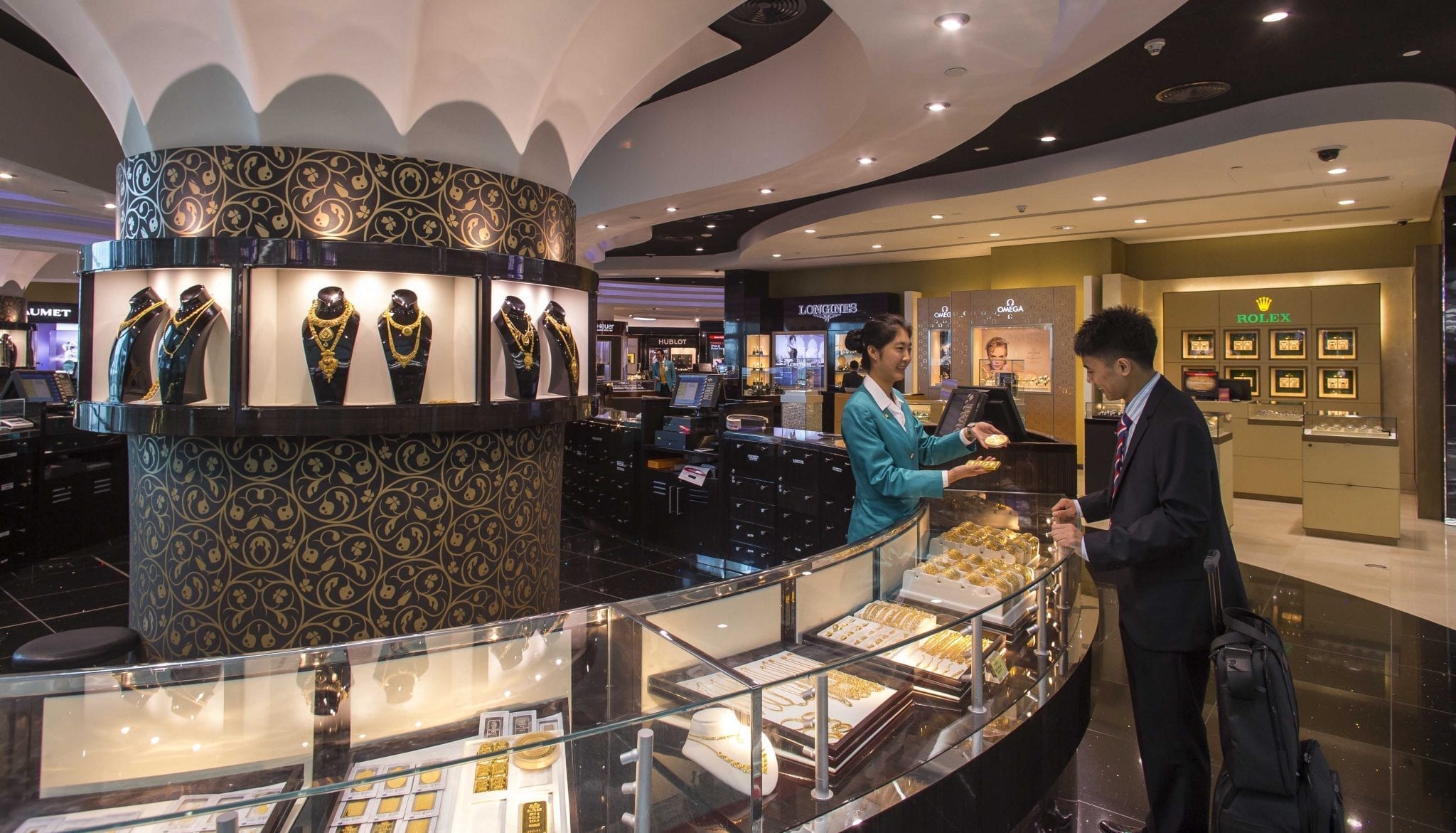
    Despite concerns of economic retaliation from China, sales at duty-free stores in April rose slightly over last year. Korea Customs Service said revenue at local stores reached 1 trillion won ($8.9 billion) last month, a 0.3 percent increase year-on-year.

    Outside the airport, sales at city duty-free stores climbed 0.4 percent year-on-year in April to 501 million won. Two new duty-free shops opened during that period.

    The increase gap isn’t large, but the uplift is a positive surprise for operators that expected sales to retreat amid frozen relations with China after Korea deployed the U.S. antimissile system known as Thaad. Beijing halted group tours to Korea on March 15. At the time, most duty-free operators were expecting the consequent blow the following month.

    Their concern was partly correct: The number of Chinese tourists to Korea in March declined 40 percent year-on-year and April’s visits, although not yet tallied, are expected to have plummeted further.

    One possible explanation of the unexpected outcome is the increase of daigou, or personal shoppers that purchase commodities overseas and resell them to customers in mainland China. “The contributor that kept local duty-free operators’ sales afloat is individual shoppers and especially daigou,” said one industry source.

    This form of transaction is not confined to professional businessmen, but also young Chinese who are increasingly conducting business through Weibo, China’s version of Twitter, and mobile messenger WeChat.

    Chinese tourists who travel multiple times in Korea can easily get into the business by buying cosmetics from Korea and reselling them when they return home.

    The influence of daigou on the local duty-free scene isn’t new. “One individual Chinese tourist visiting Korea on a three-day group tour plan will spend $200 to $300 in duty-free stores; individual shoppers spend around $700 to $800. During the same period, daigou shoppers spend at least $2,000,” said a travel agent who works exclusively with Chinese tourists.

    The increase of daigou is partly due to the Chinese government’s decision to ban group tours to Korea.

    In fear of dropping sales, local duty-free operators and tour agencies strengthened marketing and promotion targeted at daigou. When group tours were at their peak, competition to find popular products was fiercer. But after their disappearance, daigou were able to shop in a more comfortable environment, easily obtaining high-premium goods that were frequently sold out in the past.

    However, a new problem emerged – as the importance of daigou rises, the commission they receive from duty-free stores is rising as well. Duty-free stores pay tour offices around 10 to 20 percent of sales earned from daigou. Tour offices receive this money and pay part of this fee to daigou.

    “The payback rate for daigou is relatively high because they normally purchase in large sums,” said a travel agent who specializes in Chinese clients. “There was a case where the tour agency received 22 percent and paid back 20 percent to daigou.”

    This commission rate is a major reason this form of transaction is increasing among Chinese tourists. The commissions duty-free stores paid agencies in return for bringing tourists were 967 billion won last year, accounting for 10.9 percent of annual sales, according to the Korea Customs Service.

  • Australia Topshop franchisee in administration, but says it’s business as usual

    Australia Topshop franchisee in administration, but says it’s business as usual

    The franchisee for Arcadia’s Topshop and Topman said Wednesday that it has filed for voluntary administration. Austradia Pty Ltd has named Ferrier Hodgson partners James Stewart, Jim Sarantinos, and Ryan Eagle as its administrators.

    But Stewart said in a regulatory announcement that it will be “business as usual”  as the administration team “works closely with Arcadia Group on supporting and right-sizing the Australian business to a sustainable platform going forward.”

    Stewart said that the 760 employees will continue to be paid by the administrators and normal customer policies such as gift cards and product returns will continue during the administration period.

    It seems clear that the Topshop and Topman names will survive in the Australian market with a clear demand there for its particular brand of trend-focused fast fashion. Topshop/Topman has been operating nine standalone stores, 17 Myer concessions and an online business in Australia and has enjoyed annual sales of around A$90m.

    The separately owned and operated Australian franchise opened locally in 2011 and Myer owns around one-fifth of the operation. Earlier this year Myer said that losses at the Topshop operation grew to A$0.6m in H1 from A$0.1m a year earlier.

    Its administration filing is further evidence that times are as tough for fashion retailers in the country as they are in many other countries around the world, even for some of the biggest names in affordable fashion.

    The arrival of more global chains in the local market and an increasing move by consumers towards e-sales have added to the competitive pressures at a time when shoppers are also re-assessing where and how they spend their discretionary cash. And the arrival of Amazon this year will not make the retail environment any easier with local chains that have been battling sluggish sales likely to see even more market share seeping away.

    Myer has itself seen challenges on the sales front with the company reporting a 3.3% sales drop for Q3.

  • Ericsson, Microsoft to push IoT globally

    Ericsson, Microsoft to push IoT globally

    Ericsson will further strengthen the global Internet of Things (IoT) ecosystem with Microsoft by enabling enterprises to speed up the time it takes to launch mobile network-based IoT services.

    Their collaboration will help simplifying the launch of mobile network-based IoT services for enterprises.

    Ericsson IoT Accelerator allows enterprises to deploy their IoT solutions using Azure, which connects them directly to the ecosystem of mobile operators using the connectivity management service delivered by the Ericsson Device Connection Platform (DCPEricsson will further strengthen the global Internet of Things (IoT) ecosystem with Microsoft by enabling enterprises to speed up the time it takes to launch mobile network-based IoT services.

    Their collaboration will help simplifying the launch of mobile network-based IoT services for enterprises.

    Ericsson IoT Accelerator allows enterprises to deploy their IoT solutions using Azure, which connects them directly to the ecosystem of mobile operators using the connectivity management service delivered by the Ericsson Device Connection Platform (DCP), which is part of the Ericsson IoT Accelerator.

    Ericsson IoT Accelerator, a cloud-based, horizontal cross-industry offering comprising platform services and near-product services for telecom operators and selected industries, provides a continuous incremental set of functionality offered as a service to enable agile creation and deployment of solutions for IoT.

    The connectivity management service of the Ericsson IoT Accelerator allows telecom operators to design, launch and evolve managed IoT connectivity offerings towards enterprises requiring cellular connectivity.

    By cooperating with the continuously growing number of other telecom operators connected to Ericsson DCP, telecom operators can address the needs of global enterprises without making one-off investments alone. The platform gives the enterprise a unified service expEricsson will further strengthen the global Internet of Things (IoT) ecosystem with Microsoft by enabling enterprises to speed up the time it takes to launch mobile network-based IoT services.

    Their collaboration will help simplifying the launch of mobile network-based IoT services for enterprises.

    Ericsson IoT Accelerator allows enterprises to deploy their IoT solutions using Azure, which connects them directly to the ecosystem of mobile operators using the connectivity management service delivered by the Ericsson Device Connection Platform (DCP), which is part of the Ericsson IoT Accelerator.

    Ericsson IoT Accelerator, a cloud-based, horizontal cross-industry offering comprising platform services and near-product services for telecom operators and selected industries, provides a continuous incremental set of functionality offered as a service to enable agile creation and deployment of solutions for IoT.

    The connectivity management service of the Ericsson IoT Accelerator allows telecom operators to design, launch and evolve managed IoT connectivity offerings towards enterprises requiring cellular connectivity.

    By cooperating with the continuously growing number of other telecom operators connected to Ericsson DCP, telecom operators can address the needs of global enterprises without making one-off investments alone. The platform gives the enterprise a unified service experience for their entire device fleet.

    Also, Landmark chose Ericsson to build communications infrastructure for its intelligent micro grid ecosystem across North America.

    The program includes Ericsson’s Zero Site communications platform, cloud, core and IoT software solutions. Ericsson will provide micro grid management, integrating communications for the industrial IoT with battery storage applications and grid-control software.

    Also, Landmark chose Ericsson to build communications infrastructure for its intelligent micro grid ecosystem across North America.

    The program includes Ericsson’s Zero Site communications platform, cloud, core and IoT software solutions. Ericsson will provide micro grid management, integrating communications for the industrial IoT with battery storage applications and grid-control software.), which is part of the Ericsson IoT Accelerator.

    Ericsson IoT Accelerator, a cloud-based, horizontal cross-industry offering comprising platform services and near-product services for telecom operators and selected industries, provides a continuous incremental set of functionality offered as a service to enable agile creation and deployment of solutions for IoT.

    The connectivity management service of the Ericsson IoT Accelerator allows telecom operators to design, launch and evolve managed IoT connectivity offerings towards enterprises requiring cellular connectivity.

    By cooperating with the continuously growing number of other telecom operators connected to Ericsson DCP, telecom operators can address the needs of global enterprises without making one-off investments alone. The platform gives the enterprise a unified service experience for their entire device fleet.

    Also, Landmark chose Ericsson to build communications infrastructure for its intelligent micro grid ecosystem across North America.

    The program includes Ericsson’s Zero Site communications platform, cloud, core and IoT software solutions. Ericsson will provide micro grid management, integrating communications for the industrial IoT with battery storage applications and grid-control software.

  • Samsung, VMware team up for simpler IoT

    Samsung, VMware team up for simpler IoT

    Samsung Electronics and VMware announced a new collaboration to help simplify Internet of Things (IoT) for both information technology (IT) and operational technology (OT) teams by expanding end-to-end IoT solutions for industrial and enterprise customers.

    The companies will showcase the combination of the Samsung Artik Smart IoT platform with VMware Pulse IoT Center, offering a secure, enterprise-grade, end-to-end IoT infrastructure solution that allows IT and OT teams to have complete control of their IoT use cases, from the edge to the cloud.

    In addition, the companies will showcase the integration of the Samsung Artik 530 with Liota (Little IoT Agent), a vendor-neutral open source software development kit developed by VMware, to help enterprise customers with the management, monitoring and securing of their IoT implementation.

    While Samsung Artik Smart IoT platform provides customers with all the upfront IoT hardware and software they need to kick start their IoT developments, VMware will help manage IoT infrastructure from the edge all the way to the cloud.

    The combination will provide an end-to-end solution, including the hardware and software components, security, cloud connectivity, building services, and ability to monitor and manage the products over the product’s lifecycle.

    “Being able to monitor and manage these (IoT) solutions across devices at enterprise scale both on premise and in the cloud is critical for successful rollouts,” said Curtis Sasaki, VP of ecosystems at Samsung Strategy and Innovation Center.

  • Harley-Davidson plans a Thailand factory to serve SE Asian market

    Harley-Davidson plans a Thailand factory to serve SE Asian market

    otorcycle maker Harley-Davidson said on Thursday it will build a plant in Thailand, a major Asian automotive hub, to serve the growing Southeast Asian market, a move criticized by a U.S. labor union.

    The company did not give a figure for the planned investment in Thailand’s Rayong province, southeast of Bangkok.

    Katie Whitmore, Harley-Davidson public relations manager, said the company had its best results in Asia-Pacific in 2016, though she gave no numbers.

    The Thailand facility “will allow us to be more responsive and competitive in the ASEAN region and China,” Harley-Davidson public relations manager Katie Whitmore said.

    “Increased access and affordability for our customers in the region is key to growth for the company in total,” she said. “There is no intent to reduce H-D U.S. manufacturing due to this expansion.”

    The plant would let Milwaukee-based Harley-Davidson avoid Thailand’s up to 60 percent tariff on imported motorcycles and help it get tax breaks when exporting to Thailand’s neighbors, thanks to a trade arrangement among members of the Association of Southeast Asian Nation (ASEAN).

    Harley opened a plant in India in 2011. It also assembles motorcycles at a plant in Brazil.

    After the New York Times reported on Harley’s planned Thai investment, United Steelworkers (USW) International President Leo W. Gerard on Tuesday said the decision was “a slap in the face to the American worker and to hundreds of thousands of Harley riders across the country.”

    USW represents members at Harley plants in two U.S. states and 850,000 workers in North America.

    Gerard also said that production outside the U.S. “puts in jeopardy the success that has propelled Harley over the years.”

    Whitmore said motorcycles assembled in Thailand would have the same “authentic look, sound and feel” as those manufactured in the U.S.

    Demand for Harley motorcycles in the U.S., the company’s biggest market, continues to be slow as its loyal baby boomer demographic changes ages.

  • Japanese department store sales recover but fashion falls

    Japanese department store sales recover but fashion falls

    It may only have been a 0.7% rise but an uplift in Japanese department store comparable sales during April was welcome nonetheless. It was the first increase in 14 months and reflected data from 229 stores based on ¥452.7bn worth of sales.

    The Japan Department Stores Association said the growth was boosted by foreign tourists as sales to international shoppers surged 22.9% to a record level of ¥22.1bn.

    And cosmetics were strong with their 25th consecutive monthly jump as they rose an impressive 15.2%. Jewellery and other luxury goods grew only 1.1% and that was on the back of higher prices. But as they hadn’t risen for at least the previous year, it was good news.

    Yet there had to be bad news too and that came on the fashion front. Clothing sales fell 1.2% for their 18th drop in a row, although steady demand for spring collections helped temper the drop after March had seen a 4.6% decline.

    Meanwhile, the Japan Chain Stores Association said supermarket sales rose 0.6% last month, aided by a slight recovery in clothing sales through those outlets. They may have only risen 0.2% but that was the first rise for nine months.

  • Business case for IoT in healthcare still wanting

    Business case for IoT in healthcare still wanting

    The Internet of Things (IoT) in healthcare will remain experimental over the 2017-2020 period, according to the latest research from Strategy Analytics.

    Strategy Analytics said IoT has the potential to provide significant benefits but must compete for a share of total technology spend. IoT will grow at 18% on a compound annual basis across 2016-2025, with annual global IoT in healthcare revenues passing $27 billion in 2025.

    However, healthcare will be dwarfed by primary processing, security and automotive segment spending in the broader IoT market over the forecast period.

    Also, security, privacy, training and business case justification for broad deployment “remain elusive.”

    “The beneficiaries of IoT in healthcare will be the patients, for whom IoT has the ability to deliver an experience that is less intrusive, less stressful and faster; but also the medical profession which may be able to operate with higher efficiency, through better knowledge of what is happening at any point in time with patients, professionals, equipment, and processes,” said Matt Wilkins, senior analyst at ABI Research.

    Chris Ambrosio, executive director at ABI Research, said that healthcare providers are actively exploring IoT in how it can help them to improve patient quality of care, lower re-admissions, and shorten visit times; the advantages IoT offers in allowing them to use analytics for things like population health management to identify at-risk patients; and how using wearables to

  • Singapore’s IMDA to focus on four frontier tech areas

    Singapore’s IMDA to focus on four frontier tech areas

    At the Infocomm Media Business Exchange 2017, Dr Yaccob Ibrahim, Minister for Communications and Information, said that Singapore’s Infocomm Media Development Authority (IMDA) has identified four frontier technology focus areas-AI and data science, cybersecurity, immersive media, and the IoT.

    1) AI and data science

    Initiatives include AI.SG, a new S$150 million ($108m) national program to boost Singapore’s AI capabilities, and the establishment of the Singapore Data Science Consortium. Under the Techskills Accelerator (TeSA) program, IMDA announced the first TeSA Fintech project with DBS Bank to develop more professionals with capabilities in agile development, DevOps, information security, and data analytics for the financial services sector.

    2) Cybersecurity

    Companies like Singtel, ST Electronics, Quann, Accel, and Deloitte have embarked on the Cybersecurity Associates and Technologists (CSAT) program to train more cybersecurity professionals for the industry. The government also established the National Cybersecurity R&D Programme in 2013, with funding of S$130 million ($94m) over five years, to develop R&D expertise and capabilities in cybersecurity.

    3) Immersive media

    Ibrahim spoke about the potential of virtual and augmented reality across various industries, and focused on how it can be used in education and training.

    IMDA has partnered with Beach House Pictures to pilot the use of VR in five primary schools. Through the pilot lessons, about 400 students learned about design, architecture, and high-tech farming. Beach House Pictures has also collaborated with local startup Hiverlab to develop a customized VR classroom application for teachers to guide students on VR experiences to different locations around Singapore.

    IMDA and Tan Tock Seng Hospital will be collaborating with SideFX Studios to use VR and mixed reality to augment clinical training. The collaboration will develop immersive simulations for basic surgical skills and complex airway management, which is critical in life-threatening emergencies.

    4) IoT and future communications infrastructure

    Enhancements are planned to the Nationwide Broadband Network, IoT networks, 5G mobile network and sensor networks, to enable businesses to leverage high-speed networks, real-time communications, and high accuracy location positioning.

    5G trials in Singapore have achieved throughputs of over 1Gbps with latency of less than 1ms. To encourage industry trials in 5G technology, the IMDA will waive frequency fees for 5G trials and conduct public consultations on the development of 5G in Singapore.

    “We need to develop strong digital industries in their own right, and catalyze their transformation of other industries to spur productivity and yield new synergies,” said Ibrahim. “Ultimately, we hope that all our efforts to prepare Singapore for the digital future will improve people’s lives.”

    Another priority for the IMDA is to ensure that citizens can continue to be employed amid rapid technological change. To help displaced PMETs, IMDA has been working with partners like Workforce Singapore, Singapore Computer Society, e2i, and NTUC on initiatives such as TeSA Integrated Career Services, programs and courses for upskilling and reskilling PMETs, and new skill upgrading pathways.

  • Jabong launches ‘The mood store’ – shopping innovation rooted in fashion insights

    Jabong launches ‘The mood store’ – shopping innovation rooted in fashion insights

    Jabong, India’s leading online fashion retailer, launches the ‘Jabong Mood Store’, which redefines how India shops for fashion online. The Mood Store is the first-ever comprehensive fashion store that allows consumers to shop the entire look per their mood. The store is based on deep consumer understanding and analytics around preferences of the Indian fashion customer.

    The Mood Store will help users understand the best choices across moods like hanging out with friends, out for a road trip, stay at home pampering, and working at the office, among many others. Users will also be able to select the entire look based on different price points basis their needs. Building on Jabong’s brand philosophy of ‘Be You’, the Mood Store is the next step in Jabong innovating for growth.

    The Mood Store launch is supported by a 360-degree marketing campaign across TV, outdoor, cinema, CRM and social media. The overall brand campaign will focus heavily on digital promotions where various influencers will showcase their looks in different moods and for different occasions. The commercial will be aired on leading TV channels in entertainment, music, movies, lifestyle and other genres.

    The Mood Store brand campaign will feature day-to-day fashion that is easily shoppable and wearable, as against the typical industry trend of showcasing outlandish, runway fashion that the shoppers grapple to find anywhere. Digital shoppable videos on YouTube and Facebook will allow customers to buy the fashion shown in the video directly by clicking on its product card

    Gunjan Soni, Head of Jabong, says, ‘We understand both fashion and our consumers really well. Jabong consumer is more affluent, well-travelled, fashion forward and likes to buy complete looks, not just apparel. Fashion shopping behaviour tells us that people buy for a specific mood or occasion, not by categories. This insight led to the mood store innovation where consumers can shop entire looks together for a specific mood. With the launch of mood store and several new brand launches we are well set for a growth momentum. Our strategy is to use ‘tailored to fashion’ innovations to attract and retain the experienced fashion shopper. ‘

    Jabong is credited with launching several industry-firsts in Indian fashion ecommerce such as ramp walk video, online shoppable fashion week and the concept of online shop-in-shop. It has also brought several top global brands exclusively to the Indian market. Its high-quality product curation, top international brands, and a deep assortment that caters to the needs of a complete wardrobe make Jabong ideal to launch this unique fashion proposition as a one-stop destination for all moods and styles of a fashion shopper.

  • ShopWorn Brings Luxury to a New Generation of Online Shoppers

    ShopWorn Brings Luxury to a New Generation of Online Shoppers

    ShopWorn has come into its own in recent months thanks to the brand’s ongoing engagement with customers on all things style and fashion, led by Ecommerce Director and Resident Stylist Elana Birnbaum. With a keen eye for quality and style, insider industry knowledge, and expert insight into consumer needs, Elana interacts daily with customers across multiple channels where she frequently lists trend updates and new product arrivals. Elana is helping bring awareness to ShopWorn’s unique shopping concept to a new generation of savvy online shoppers.

    Working with ShopWorn’s global procurement team, Elana plays a pivotal role in curating and merchandising the website’s continuously changing collection of authentic display-model products including watches, jewelry, handbags, and more. Sourcing these unsold display model products directly from authorized retailers means that ShopWorn has evolved into the equivalent of an online sample sale for designer goods featuring more than 45 notable brands, including Dior, Chopard, Cartier, Rolex, Tudor, Bvlgari, Hublot, Carl F. Bucherer, and Montblanc. Elana gives a personal voice to ShopWorn through blog posts about the latest trends, interactions with fans over social media, product highlight videos, and lifestyle photoshoots. With an inside view of the business from every angle, she provides insight into how ShopWorn offers a new way to shop luxury:

    “I really believe that ShopWorn is the antidote for shoppers who want the finer things – but at a great value. Today’s shopper is savvy and knows how to search the internet for deals, and ShopWorn is able to offer excellent prices on coveted designer goods. ShopWorn acts like an online sample sale or trunk show by offering high-quality designer products that are inherently limited in quantity. Like a traditional brick-and-mortar sample sale, our products move quickly and are sometimes up on our website for less than 24 hours. However, unlike traditional sample sales, our door never closes, you’ll never need to wait in line, and you have 24/7 help easily available. The concept has really resonated with our savvy shoppers who appreciate high quality designer pieces at great prices.” – Elana Birnbaum, ShopWorn E-Commerce Director and Resident Stylist