Tag: asia

  • Vietnam to block payment for unlicensed games

    Vietnam to block payment for unlicensed games

    The Ministry of Information and Communications said it will deploy solutions to block the payment for unauthorized games in the country.

    There are hundreds of thousands of unauthorized games, card games, and gambling games which cause insecurity and disorder as well as bad consequences for the society, the ministry’s Authority of Broadcasting and Electronic Information said at a meeting on Thursday.

    The unauthorized games, mainly released on the App Store, Google Play, and online gaming platform Valse Stream, are estimated to generate an annual revenue of nearly VND5 trillion ($211.86 million), accounting for 30% of the total revenue of the game industry in Vietnam.

    The ministry is requiring organizations and businesses that provide intermediary payment services not to allow payment for unauthorized games through their systems.

    In the case of payments via IAP (in-app purchases), they should ask Apple and Google to provide sufficient information about the transaction to block the payment.

    Every month, the Authority of Broadcasting and Electronic Information will update the list of licensed and unlicensed games for payment intermediaries.

    The ministry also said it will require Google and Apple not to cooperate with intermediaries to pay for unauthorized games on their app stores.

    According to Le Quang Tu Do, the authority’s director, many games are being released across borders through the App Store and Play Store, while a number of Vietnamese e-wallets have been deployed on the two stores, making it easy for users to pay through intermediaries.

    The Ministry of Information and Communications has so far licensed some 200 game companies, but the number of licensed businesses that are actually providing games to the market is less than 30.

  • Vietnam to raise air ticket price cap

    Vietnam to raise air ticket price cap

    The Ministry of Transport will increase the domestic air ticket price ceiling in Vietnam by an average of 3.75% later this year, a decision to delight local carriers.

    The maximum airfare on four out of five flight distances will rise in the second or third quarter, according to a recent Ministry of Finance price report.

    The biggest increase will be 6.67% (to VND4 million or $170) for one-way tickets on flights of 1,280 kilometers (Hanoi to Phu Quoc Island) and longer.

    Flights between 1,000 and 1,280 kilometers will see their ticket cap price rise 6.25% to VND3.4 million.

    Flights of smaller distances will see their maximum price rise by between 2.27% and 3.58%.

    Flights under 500 kilometers will see no ceiling change. Their prices will remain at a maximum of VND1.7 million per one-way ticket.

    The cap price increase will likely increase Vietnam’s 2023 Consumer Price Index by 0.07% points.

    Earlier this year, Vietnam Airlines and Bamboo Airways proposed increasing the cap ticket price to take into account rising in costs.

    The airfare price cap was last increased in 2015.

    By November last year, fuel costs had surged more than 80% from September 2015, which raised airlines’ total expenses by 33.5%, according to the Civil Aviation Authority of Vietnam (CAAV).

    Bamboo Airways CEO Nguyen Manh Quan has argued that the price cap be applied only to air routes operated by a single carrier.

    For routes with two carriers or more, the cap should be removed so the “market can adjust by itself,” he said.

    Some analysts have said that the price cap is unreasonable and could slow the growth of domestic aviation.

    In 2021, the CAAV proposed that air routes with three carriers or more have no price cap to allow for more healthy competition in services.

  • VinFast rolls out long-awaited electric SUVs, eyes overseas deliveries

    VinFast rolls out long-awaited electric SUVs, eyes overseas deliveries

    Vietnamese carmaker VinFast said on Thursday it will begin delivering its new electric sport utility vehicles (SUVs) to local customers this week and targets overseas deliveries in the coming months.

    VinFast, which began operations in 2019, is gearing up to expand in the United States, where it hopes to compete with legacy automakers with its two electric SUV models.

    “After Vietnam, VinFast expects to export the first batch of VF9 to international markets in the coming months,” VinFast said in a statement, without providing a specific timeline for deliveries of the new model.

    The VF9 model was initially scheduled to debut at the beginning of this year.

    The company currently sells the VF8 model of SUV. It started shipping those last year and delivering them to customers this month. The company has said it would ship the second batch to the U.S. in the second quarter of 2023.

    VinFast, backed by Vietnam’s biggest of conglomerate Vingroup JSC, is the country’s sole EV maker.

    As of December last year, VinFast said it secured 55,000 orders globally, of which 12,000 were from the U.S. market.

  • Bamboo Airways to raise $425M through rights issue

    Bamboo Airways to raise $425M through rights issue

    Bamboo Airways plans to make a rights issue of shares to increase its capital by 54%, or nearly VND10 trillion (US$425.44 million), to fund operations and pay off debts.

    It will offer 35 new shares for every 100 held and the issuance will be made this year.

    It currently has a charter capital of VND18.5 trillion.

    The proposal will be presented to shareholders at an extraordinary general meeting on Apr. 10.

    The airline has said it has found a buyer to take it over.

    Former chairman Trinh Van Quyet, arrested last year for alleged stock manipulation, owns a 55.5% stake in it.

    The buyer, whose identity has not been revealed, has agreed to take over the entire debts and provide Quyet with the money he might have to pay as fines and indemnification for the stock manipulation that led to his arrest.

  • Moody’s lowers Techcombank ratings

    Moody’s lowers Techcombank ratings

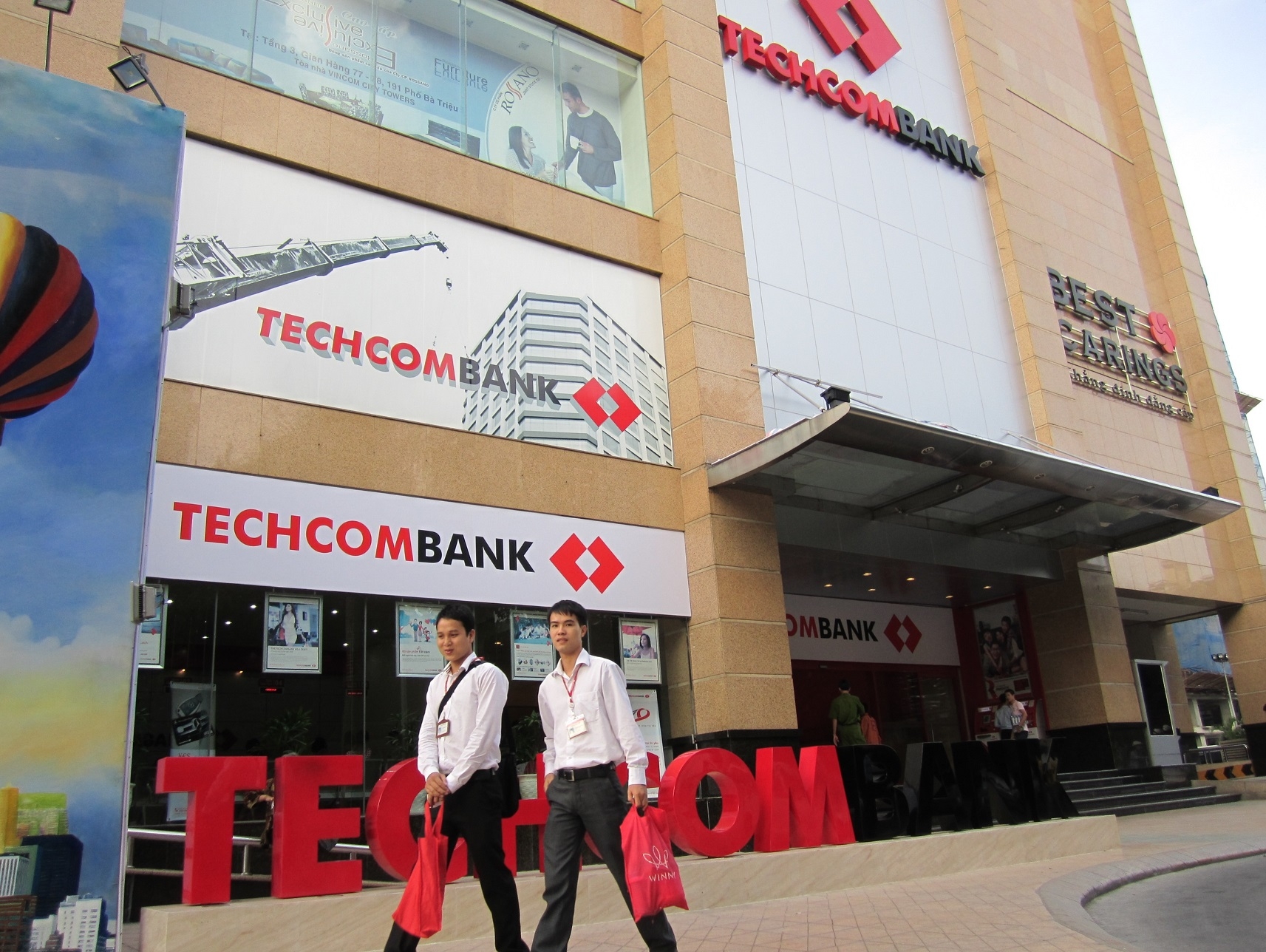
    Ratings agency Moody’s Investors Service has downgraded the long-term deposit and issuer ratings of private lender Techcombank because of its high exposure to the struggling property sector.

    Its currency deposit and issuer ratings were lowered from Ba2 to Ba3, the same level as several other banks in Vietnam.

    Its outlook is down from stable to negative.

    “The downgrade of Techcombank’s ratings and assessments reflects Moody’s expectations that the stress faced by Vietnam’s real estate sector will negatively impact the bank’s standalone credit strength, given its high exposure to the sector,” the ratings agency said in a release.

    It claimed that the downgrade is unrelated to recent U.S. bank failures and events at Credit Suisse Group AG.

    As of the end of December loans to the property and construction sectors represented 29% of Techcombank’s gross loans.

    The bank also had exposure to the sectors in the form of corporate bonds, which made up 6% of its total assets.

    Some of its exposure to the property sector were of significant size relative to its tangible common equity and could bring volatility to its profitability and capital should they become problem assets.

    Defaults by real estate companies in Vietnam have increased since 2022 because of tighter regulations for bond issuances alongside arrests of high-profile real estate business owners and executives amid the government’s anti-graft crackdown.

    Property sales have also weakened because rising interest rates have hit affordability.

    These factors have weakened the debt repayment capacity of property developers, particularly highly leveraged ones with a sizable amount of bonds maturing in 2023 and 2024.

    Techcombank’s asset quality could therefore deteriorate given its exposure to the sector.

    Its funding and liquidity are adequate given the current environment but are vulnerable to confidence shocks like at other Vietnamese banks.

    The negative outlook reflects uncertainties around how the real estate sector in Vietnam will perform and, in turn, the risk of a further strain in the bank’s standalone credit strength if stress in the real estate sector persists.

    Moody’s could change the outlook to stable if the stress abates or the bank maintains its problem asset ratio, including its restructured assets, at less than 2% over the next 12–18 months while gradually reducing concentration to the real estate sector.

    A bank spokesperson said Moody’s decision reflects the challenges the banking industry faces.

    But Techcombank’s core strengths would allow it to remain outstanding, especially in terms of the strength of its capital base, liquidity position and earnings-to-operating income ratio, the spokesperson added.

    An earlier Moody’s report said many lenders in Vietnam had high exposure to the property and construction sector as of 2021, the top five being Viet Capital, Nam A Bank, SHB, Techcombank, and BIDV.

  • Vietnam rice price on top of the world

    Vietnam rice price on top of the world

    Vietnamese 5% broken rice has been the most expensive in the world since August last year, surpassing rivals Thailand and India, according to the Ministry of Industry and Trade.

    In the first two months of this year Vietnam’s average rice price was over $519 per ton. Since August last year, it has exceeded Thai prices by $15-27 and prices from India by $40-50.

    Although Vietnamese export volumes dropped 20.9% year-on-year to $400,000 tons in January, prices rose 7%.

    Last year rice exports from Vietnam reached a 10-year high of 7.1 million tons.

    The country plans to export 6.6 million tons of rice this year, with 4.12 million tons in total scheduled to be delivered by the end of the first six months.

    Favorable export conditions are expected to return this year thanks to a resumption in demand from Indonesia and Bangladesh.

    Buyers will increasingly turn to Vietnam for rice as India has banned the export of broken rice and put a 20% tax on white rice.

    But the Ministry of Industry and Trade is concerned that the need for more diversification in export markets and dependence on China and the Philippines (the latter being the largest buyer of Vietnamese rice, accounting for 45% of exports) will be a challenge to the industry.

    Low-priced rice from Pakistan may also present a challenge to holding market shares.

    Input prices have been rising and logistics costs have remained high since the beginning of the Russia-Ukraine conflict.

    The trade ministry is working with the E.U. to better introduce the import of Vietnam fragrant rice on the continent.

  • Steel prices surge in face of declining demand

    Steel prices surge in face of declining demand

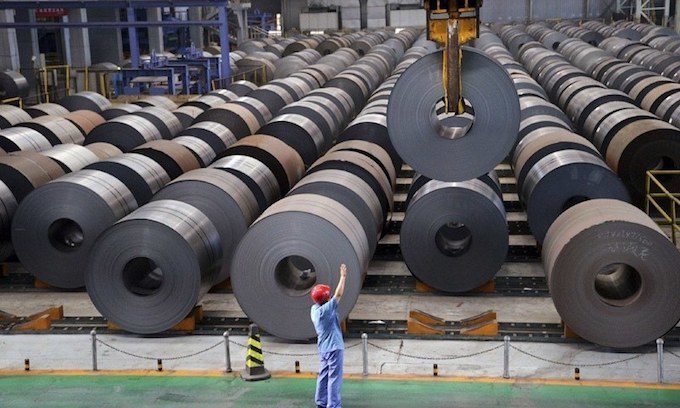
    Vietnam’s major manufacturers have raised steel prices to a 7-month high despite plunging demand.

    On Tuesday, Hoa Phat Group hiked its prices for rebar steel by 0.95% to VND15.99 million ($678.55) per ton.

    Local steelmakers Viet Y, Viet Duc, Kyoei and Viet My all made similar adjustments, while Pomina’s price tag towered above at VND17.6 million, 10% higher than market average.

    Manufacturers said that steel prices, which are now at their highest point since August, have been rising since October last year due to an input materials shortage prompted by declining billet production.

    Steel billets are raw steel bars not yet processed for the market, and billet makers reduced production due to low prices in earlier months.

    Steel demand will likely remain meager in upcoming months.

    Steel products sales in the first two months of 2023 plunged 23% year-on-year to 3.8 million tons, while exports dropped 10% to 1 million tons.

    Analysts at brokerage Mirae Asset Vietnam said that the steel market is largely dependent on the property sector, and the real estate market cool down this year has thus adversely affected the steel industry.

    Steel production is therefore expected to drop 10.5% from last year to under $17.9 million tons this year.

    However, manufacturers hope that public spending, which is set to hit an historic high of VND704 trillion this year, will help boost demand as the government aims to disburse at least 95% of that figure.

  • Citi wins award for bank of the year in Asia Pacific

    Citi wins award for bank of the year in Asia Pacific

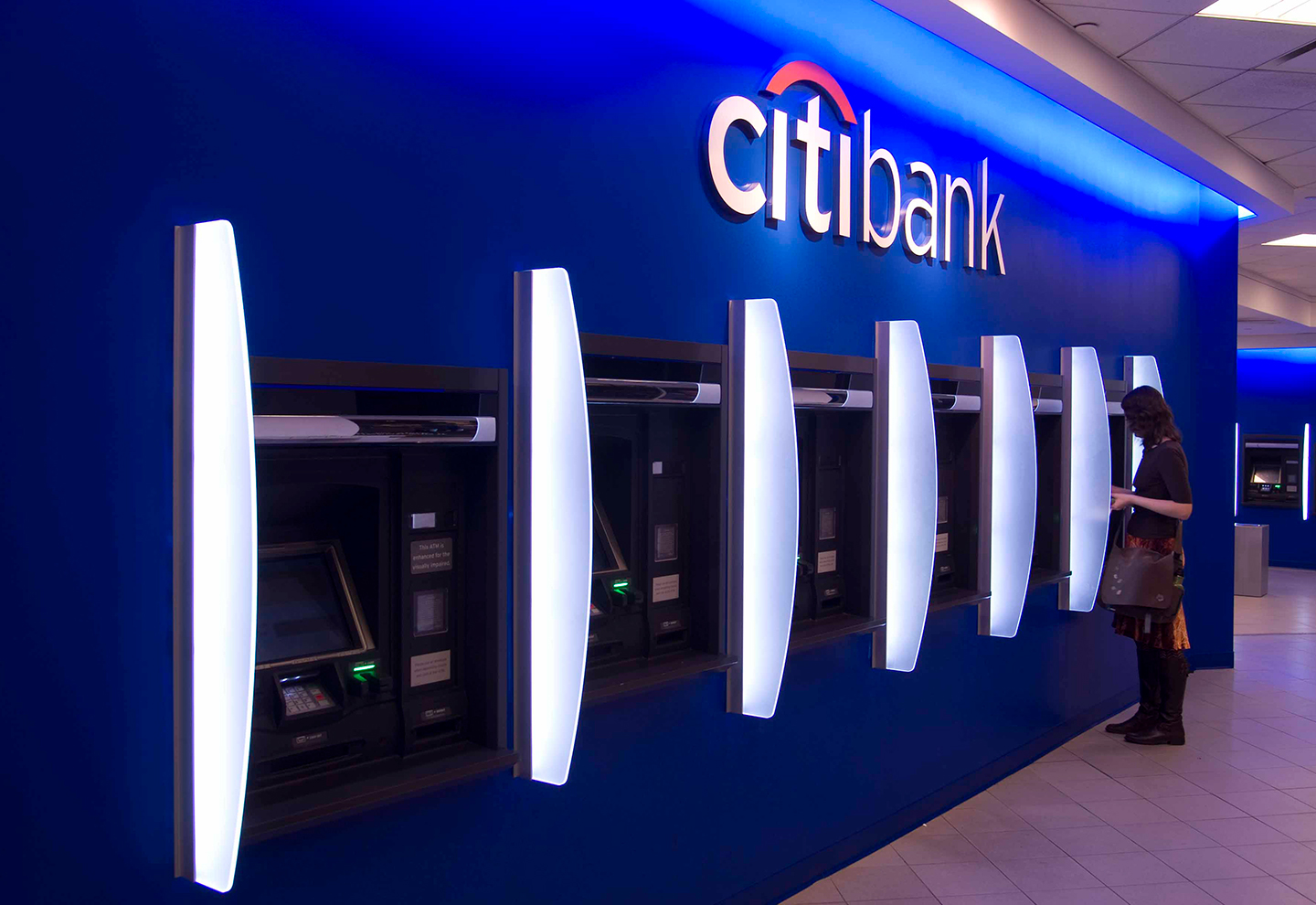
    Citibank has been honored as “Bank of the Year” in the Asia Pacific at the 2022 International Financing Review Asia Awards.

    The award was based on a unanimous decision by the editors of IFR Asia, a leading regional capital markets magazine.

    The recognition from IFR Asia reaffirms the expertise and solution-driven approach of Citi’s capital markets and advisory teams in developing and executing complex transactions for clients in an ever-changing and challenging macro-environment.

    “Citi’s pan- Asian footprint and diverse sector coverage made it a bastion of stability, while its commercial bank enabled it to give issuers more options in rapidly changing market conditions,” IFR Asia concluded in an editorial write up accompanying the award win.

    “This win is a recognition of the strength of Citi’s franchise, the competitive advantage of our global network and the passion and energy of our teams,” Jan Metzger, head of Asia Pacific banking, capital markets and advisory at Citi, said.

    In Vietnam, the bank recently won the 2023 Golden Dragon Award for its role as an outstanding foreign enterprise promoting green investment, digital transformation and sustainable development.

    Ramachandran A.S., Vietnam Citi Country Officer, said: “We have been financing and facilitating a wide array of climate solutions, from renewable energy and clean technology to carbon credits, to help accelerate the country’s transition to a low-carbon economy.

    “Our strategy in Vietnam is to continue doing what we do best: corporate and institutional banking for large companies and financial institutions with cross – border needs, and simultaneously supporting Vietnam’s ambitions to build a more sustainable future.”

  • Gold inches lower

    Gold inches lower

    SJC gold price dropped 0.22% to VND67.15 million ($2,855.14) per tael Wednesday morning.

    Gold ring price fell 0.53% to VND55.5 million per tael. A tael equals 37.5 grams or 1.2 ounces.

    Globally gold prices edged higher on Wednesday as the dollar eased, while investors kept a close watch on the U.S. Federal Reserve’s interest rate decision and policy outlook, Reuters reported.

    Spot gold was up 0.2% at $1,942.96 per ounce.

    Gold is traditionally considered a hedge against inflation, but higher rates increase the opportunity cost of holding the non-yielding asset.

    The dollar index was down slightly, making bullion less expensive for buyers holding other currencies.

    Markets will also take stock of the February UK inflation data, also due on Wednesday ahead of the Bank of England’s monetary policy decision on Thursday.

    U.S. Treasury Secretary Janet Yellen told bankers on Tuesday that she is prepared to protect depositors in smaller U.S. banks suffering deposit runs that threaten more contagion amid the worst financial system turmoil in over a decade.


  • Japanese retailers expand in Vietnam, targeting affluent

    Japanese retailers expand in Vietnam, targeting affluent

    Targeting consumers is not much affected by the difficult economic situation, Japanese retailers are opening more stores in Vietnam.

    Uniqlo, which has 15 stores in Vietnam after entering three years ago, last month announced plans to expand to the southern province of Binh Duong, with a first store to be opened this spring or summer.

    Also in Vietnam for three years, MUJI opened a 2,000-square meter store in HCMC’s Thu Duc City that sells everything from food, home appliances and clothing to furniture, stationery and accessories.

    Even amid the Covid pandemic and economic distress, it had five stores, three in HCMC and two in Hanoi.
    Its stores in Vietnam are the largest at around 2,000 square meters on average.

    “The size in Vietnam is almost double the average in other countries, including Japan,” Tetsuya Nagaiwa, general director of MUJI Vietnam, said.

    He added that it plans to open more stores in Hanoi in the second quarter of this year.

    Aeon started building its seventh outlet in Vietnam in February in the central city of Hue. at a cost of U$169.67 million. It will be the largest mall in the central region when it opens by April 2025.

    A recent business survey by the Japan External Trade Promotion Organization found that 100% of Japanese retail businesses in Vietnam expect profits to increase this year.

    Of them 80% said they would expand in the next one to two years.

    Japanese retailers are doing well partly because, like everywhere else, high income earners in Vietnam are recession proof.

    “We see strong demand for high-value products,” Nagaiwa said, adding that MUJI’s sales remained good because young consumers prefer its stationery, cosmetics and furniture.

    Japanese chains also sell online shopping support made-in- Vietnam products.

    In November 2021 Uniqlo started selling online through an application, and introducing Vietnamese agricultural products.

    MUJI has steadily increased the local content rate and looked for local suppliers.

    Nagaiwa said goods made in Vietnam account for 30% of its products and 97-98% in the case of products like T-shirts, backpacks and messenger bags. “We hope these numbers will increase in future.”

    After discovering that the Vietnamese stationery market only had the popular and high-end segments and not the mid-range one, MUJI started selling ballpoint pens for VND19,000 ($0.8), attracting students, who liked Japanese goods with minimalist designs.

  • Vietnam blockchain development center launched in Hanoi

    Vietnam blockchain development center launched in Hanoi

    DTS Group and GMO have established a blockchain technology application and development center with the goal of promoting blockchain technology in Vietnam.

    The Mira Blockchain Center in Hanoi aims to bring blockchain technology to life through integrated technology-based physical products and high technology projects.

    The unit will research, apply, deploy, and transfer blockchain technology in artificial intelligence-related technology and other sectors.

    Through research, Mira will create and utilize blockchain technology for ground-breaking technological solutions. The hands-on human resources training center will provide consultation services and technology deployment training for both local and international businesses.

    The Mira Blockchain Center’s services include blockchain application services for asset management, finance, and supply chains, technology consulting services for businesses or organizations, and blockchain testing services for testing and evaluating blockchain performance in businesses.

    At first, Mira will focus on supporting Vietnamese businesses by carrying out technology research and development activities, increasing technology capacity of enterprises.

    The center will later develop blockchain solutions and applications for international markets.

    Leon Truong (Truong Gia Bao), Chairman of DTS Group, said: “Mira will execute continuous testing to perfect our technical process for new projects, providing in-depth knowledge about blockchain.”

    Ngo Van Tau, General Director of GMO, said the center will provide well-trained, practical engineers for domestic and foreign enterprises.

    “I believe the center will help improve Vietnam’s position on the world technology map,” Van Tau said.

    DTS Group, founded by Truong Gia Bao, is a private corporation operating in the fields of media, finance and technology investment. DTS Group has collaborated with associates in its network to promote technology innovation, particularly in the blockchain sector.

    GMO is as a software manufacturer, providing IT solutions and services in Japan, Vietnam, and several English-speaking markets.

    Mira blockchain center

    Address: 6th floor, Ocean Park Building, No. 1 Dao Duy Anh, Dong Da, Hanoi

    258 Ton Dan, Ward 8 District 4, Ho Chi Minh City

  • Landmark Unified Commerce Benchmark for Specialty Retail Released

    Landmark Unified Commerce Benchmark for Specialty Retail Released

    Manhattan Associates Inc., in partnership with Google Cloud and Zebra Technologies, has released the findings of the industry’s first real-world analysis of Unified Commerce in specialty retail. The Unified Commerce Benchmark for Specialty Retail, conducted by Incisiv, assessed 124 retailers across 11 specialty retail segments on the implementation of 286 key attributes of Unified Commerce.

    Based on insight from real purchases, returns, and customer journeys across digital and physical channels, the benchmark reveals the common attributes of successful retailers and the opportunities for others to improve their customer value and modernize operations. Of the 124 retailers benchmarked, 15 emerged as leaders. These brands are Academy Sports + Outdoors, American Eagle Outfitters, Belk Inc., Crate & Barrel, Levi’s, Macy’s, MAC Cosmetics, Neiman Marcus, Nordstrom, Pandora, REI Co-op, Saks Fifth Avenue, Sephora, UGG and Zales.

    In today’s rapidly evolving ecosystem, retailers need complete visibility on and insight into every aspect of their business, from back-end to customer-facing. Unified Commerce solutions combine a retailer’s front- and back-end systems to establish a single view of the business. That single view informs better decision-making and enhanced customer experiences, while enabling brands to identify and respond to trends quickly, ultimately driving stronger revenue growth by up to 6X. However, consolidating systems and building a cohesive Unified Commerce solution can be quite challenging. The benchmark identified the following common challenges in retailers’ efforts to adopt this new model:

    • Personalisation – Retailers must be able to identify shopper intent and curate a personalized experience that meets their expectations. However, only 38% of the retailers studied give their store associates access to shopper purchase history and wish lists across all channels. Only 20% of the retailers studied provided personalized product recommendations and offers. As a category, digitally-native vertical brands (DNVBs) outperformed the broader retail cohort in this area, with 42% offering advanced personalisation capabilities – 16 points ahead of the overall group examined.
    • Real-Time Inventory Visibility – Visibility into allocatable and saleable inventory and rich findability are critical for retailers wanting to provide a seamless omnichannel experience. Only 29% of the retailers studied provide real-time inventory statistics on their product detail pages.
    • Convenience and Flexibility – Today, convenience is about more than just speed of delivery. Convenience encompasses providing multiple payment and delivery options and the ability to make changes to an order after the sale. Only 15% of the retailers studied provided the option to change fulfillment method post order confirmation. On an average, only 27% of the retailers provided the ability to return store purchases online.

    “Shoppers don’t see channels the way retailers do. Unified Commerce can only provide the highly customized shopping experience expected by today’s consumers if there is true visibility of inventory availability, and flexibility during and after the sale,” said Manhattan Associates president and CEO, Eddie Capel. “Embracing a Unified Commerce model can drive strong business growth, high revenue opportunity, lead to competitive advantage and heightened customer loyalty that every retailer covets. With the right technology and solutions, they can outperform their peers by as much as 6X.”

    “Zebra Technologies is helping retailers globally optimize their inventory and engage their associates to improve productivity and deliver an elevated customer experience,” said Bill Burns, Chief Executive Officer, Zebra Technologies. “This new benchmark highlights the important role that real-time inventory visibility, front-line worker enablement, and fulfilment flexibility play in driving Unified Commerce, and we have the right solutions to deliver these benefits.”

    “In order to deliver on the promise of Unified Commerce, retailers must connect digital and in-person experiences, and all of the data and systems that enable them,” said Carrie Tharp, VP of Retail and Consumer at Google Cloud. “Manhattan Associates’ partnership with Google Cloud on this benchmark shows how retailers can make it easy for customers and store associates to find the right products online and instore by implementing a unified commerce strategy backed by data and AI.”

    Giri Agarwal, Chief Strategy Officer at Incisiv commented: “Unified Commerce is the new battleground for retailers to differentiate themselves. Our 2023 Unified Commerce Benchmark shows that leaders who have adopted unified commerce deliver highly nuanced, seamless customer experiences across channels, leveraging technology and data to drive revenue growth. The insights from this benchmark won’t just help retailers keep up, it will help them stand out.”

    Click HERE to view the complete 2023 Unified Commerce Benchmark for Specialty Retail. 

  • Digital Marketplaces to Grow in 2023 Despite Economic Slowdown

    Digital Marketplaces to Grow in 2023 Despite Economic Slowdown

    Digital marketplaces continue to gain significant momentum in Australia,  with 88% of shoppers buying from a digital marketplace in the past year, and 92% of consumers planning to shop on marketplaces like eBay, Amazon and Catch in the year ahead.

    The findings were revealed as part of global ecommerce accelerator, Pattern’s fifth annual ‘Marketplace Consumer Trends Report – 2023,’ which researched Australian shoppers’ changing ecommerce habits and the latest digital marketplace trends.

    “Digital marketplaces are this year on a continued growth path and are becoming increasingly accepted and adopted as a shopping channel of choice by Australian consumers,” said Merline McGregor, General Manager, Pattern Australia. “However, with cost of living pressures and an uncertain economic outlook, our report highlights how consumer behaviour is set to again evolve in the year ahead.”

    Consumer Behaviour 

    Pattern research shows that 73% of consumers are set to spend more or the same online overall in 2023, and for the leading global digital marketplace Amazon specifically, 84% of consumers expected to spend more or the same on this platform in 2023.

    “Given the rapid increases in the cost of living and interest rate pressures facing consumers in Australia, it could be expected that a majority of shoppers would be looking to reduce their ecommerce spend in the year ahead. However, our research found a large portion of consumers said they had no plans to change their shopping habits in 2023,” said Merline.

    Not only are digital marketplaces attracting higher volumes of shoppers, but the demographic mix and way that shoppers use these channels is also evolving. High income earners are most likely to shop on Amazon today (36% vs 21% average), while eBay attracts larger volumes of male shoppers – with 69% of men purchasing from eBay vs 55% of females. 

    Marketplace Performance

    Looking at the past year, 62% of consumers bought from eBay, with 65% planning to buy from the platform in 2023. Running just behind, 52% of consumers bought from Amazon over the past 12 months, with 59% intending to buy from Amazon this year. Amazon (with 43% of shoppers having access to Amazon Prime) was recorded as the second most visited marketplace, with an anticipated 12% increase in purchases in 2023 compared to last year.

    In terms of website traffic, Amazon overtook eBay in average monthly website visits (58.3M Amazon visits vs 57.6M eBay visits), from December 2022 to February 2023, according to SimilarWeb data, with Catch trailing down the line at 9.9M visits over the same period.

    Pattern’s research asked shoppers what they were likely to buy in 2023 and through which marketplace they were likely to make a purchase. These results indicated that:

    • Amazon’s key shopper categories include Books & eBooks and Home & Kitchen products.
    • eBay scored highest in Electronics & Computer Equipment, followed by Home & Kitchen.
    • Catch saw an equal share in Clothing, Shoes & Accessories, Toys, Kids & Baby products and Home & Kitchen.
    • Kogan consumers are looking for Electronics and Home & Kitchen products on the platform.

    Research also showed that shoppers are most likely to visit a brand’s own D2C (direct-to-consumer) website when it comes to Clothing, Shoes & Accessories, Skincare & Make-up and Food goods.

    “As consumer confidence increases on digital marketplaces, so does their desire to cross-shop and discover new categories. Likewise, as brands begin to include marketplaces in their growth strategy, consumers are met with more choice as the platforms add new products to cater towards a wider variety of consumer interests,” said Merline.

    Marketplaces Continue to Serve as Product Discovery & Research Hubs 

    Marketplaces are increasingly becoming a product discovery hub for many online shoppers. Outside of Google (57% of shoppers), the next most popular channel to research products online is via digital marketplaces, where 23% of shoppers use platforms like eBay and Amazon to search for their goods.

    Of those shoppers using Amazon, 62% indicated that they discovered a new brand on the platform. Interestingly, 42% of consumers who discovered a new brand or product on Amazon also went on to visit the retailer’s D2C website.

    While eBay remains the dominant marketplace in Australia, it is being overtaken by Amazon in consumer search behaviour. Recent data from Power Retail suggests that Amazon has increased in popularity as a customer research tool by 71% (12% of product searches in January 2023 vs 7% in January 2022). This compares to eBay who’s popularity has decreased by 17% over the same period.

    “These findings demonstrate the ongoing appeal of marketplaces as product discovery platforms, whereby consumers are utilising the wide breadth of product diversity on marketplaces to fine-tune their search for particular items. Digital marketplaces appeal to shoppers trying new brands online through building purchaser trust through customer data, including real-world product reviews and informative answers to product page questions,” ended Merline.

    Download the full Australian Marketplace Consumer Trends  Report – 2023’ report HERE

  • The Future of Powerball Prizes: What to Expect from Future Jackpots

    The Future of Powerball Prizes: What to Expect from Future Jackpots

    Powerball jackpots are a highly anticipated event for millions of lottery players across the United States. These jackpots have become synonymous with the idea of “striking it rich” and the excitement of the lottery industry. In fact, Powerball jackpots have had a significant impact on the lottery industry as a whole, with many other games attempting to replicate their success. So let’s see what we can expect from the future of  Powerball jackpots and prize payouts. We will be analyzing current trends, historical data, and potential factors that could affect the size of future jackpots. 

    Factors Affecting Future Powerball Jackpots

    The future of Powerball jackpots is subject to a variety of factors that will shape the game and its payouts. In this section, we will explore some of the most important factors that are likely to impact the size of future Powerball jackpots.

    A significant factor that is likely to contribute to larger Powerball jackpots in the future is an increase in population and demand for lottery games. As the population grows, more people are likely to play Powerball, which in turn will increase the size of the jackpots. In addition, advances in technology have made it easier for people to play Powerball online on 1xBet, which could further increase the player pool.

    Changes in Powerball game rules and prize structures are also likely to impact the size of future jackpots. In recent years, we have seen changes to the Powerball game, including the addition of a multiplier feature and an increase in the number of balls used in the drawing. These changes have led to larger jackpots, and it is likely that future changes will continue to impact jackpot size.

    Economic factors such as inflation and interest rates are also important when considering the size of future Powerball jackpots. Inflation can erode the value of lottery winnings over time, making it more difficult to achieve larger payouts. Interest rates can also impact jackpot payouts, as larger jackpots may require the lottery to pay out over a longer period of time, leading to lower overall payouts.

    Predictions for Future Powerball Jackpots

    Making predictions for the future of Powerball jackpots is a challenging task, but one that is important for players, the lottery industry, and other stakeholders. In this section, we will examine some of the trends and historical data that can help us make predictions for the future of Powerball jackpots.

    Based on current trends, it is likely that we will continue to see larger and larger Powerball jackpots in the future. As the player pool grows and game rules and prize structures evolve, the potential for larger payouts will increase. Additionally, the increasing availability of online ticket sales could also contribute to larger jackpots, as more people are able to play Powerball from the comfort of their own homes.

    There is also the potential for record-breaking Powerball jackpots in the future. The current record jackpot of $1.586 billion was set in January 2016, and it is possible that this record could be broken in the years to come. If the player pool continues to grow and other factors align, we could see jackpots that exceed $2 billion or even $3 billion.

    These potential record-breaking jackpots could have significant effects on the lottery industry and Powerball game rules. As jackpots grow, more people are likely to play, which could increase revenues for lotteries and provide more funding for education and other programs. However, larger jackpots may also lead to more controversy and scrutiny, particularly if players feel that the odds of winning are too low.

    In addition, larger jackpots could lead to changes in Powerball game rules and prize structures. As we have seen in the past, changes to the game can have a significant impact on the size of jackpots, and it is likely that future changes will continue to impact the game and its payouts.

    Conclusion

    Based on current trends and historical data, it is likely that we will continue to see larger and larger Powerball jackpots in the future. As we move into the future, it will be important for lotteries and game organizers to carefully consider the potential impact of larger jackpots and make changes to the game as necessary. By staying attuned to the needs and desires of players, the lottery industry can continue to thrive and provide valuable support to communities across the country.


  • Apple launches Apple Pay in South Korea

    Apple launches Apple Pay in South Korea

    After a years-long wait, Apple Pay today launched in South Korea, allowing those living in the country to use Apple’s payment system to make contactless payments using the iPhone or Apple Watch.

    Apple has been working to bring ‌Apple Pay‌ to South Korea since 2017, but Apple was unable to be registered as an electronic financial business operator because regulators were investigating whether ‌Apple Pay‌ violated local regulations and laws. Apple was finally approved by financial regulators back in February.

    NFC terminal adoption was also low in retail stores in South Korea around when ‌Apple Pay‌ first launched, which continues to be an issue. There are more NFC terminals than there were six years ago, but The Korea Times suggests ‌Apple Pay‌ will face “significant challenges” in Korea due to the limited number of NFC terminals.

    With ‌Apple Pay‌, credit and debit cards from supported banks in South Korea can be added to the ‌iPhone‌ and Apple Watch to make purchases at stores that have contactless payment options. ‌Apple Pay‌ cards can be used on ‌iPhone‌, iPad, and Mac to make ‌Apple Pay‌ purchases on the web.

    At the current time, ‌Apple Pay‌ is limited to Hyundai Card users, which could see South Koreans interested in using the service picking up a Hyundai Card. No other card companies are participating in ‌Apple Pay‌ as of yet.