Tag: asia

  • Indonesia’s GoTo posts $201.9 million quarterly loss

    Indonesia’s GoTo posts $201.9 million quarterly loss

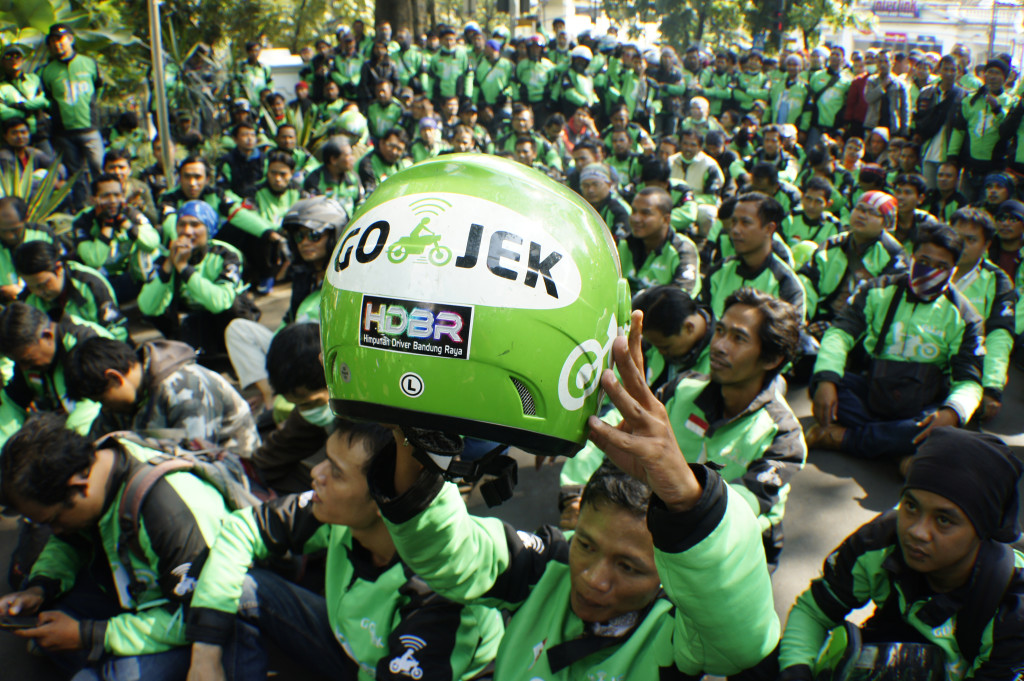
    Indonesia’s biggest tech firm PT GoTo Gojek Tokopedia Tbk posted a narrower adjusted EBITDA loss for the fourth quarter of 2022 of 3.1 trillion rupiah ($201.89 million), the firm said on Monday.

    GoTo posted 6.5 trillion rupiah in adjusted EBITDA (earnings before interest, tax, depreciation, amortisation and rent) loss in the same period of 2021.

    Its group CEO Andre Soelistyo said the results showed the company was making progress towards profitability through its cost-cutting measures, such as reducing incentives and marketing spending.

    “Although we expect growth to moderate in the short term, we will continue to focus on building the foundational product infrastructure that will drive sustainable, profitable growth over the long term,” he said in the statement.

    GoTo said its growth of gross transaction value in the next quarters will be slowing down as the company reduced its spending on promotion and a high-based effect last year, which saw higher transactions due to COVID-19 public movement restrictions.

    “There will be a normalisation for our food deliveries and e-commerce transactions…and there’s still macrouncertainty that will affect customer spending,” GoTo Group CFO Jacky Lo said in an investors call on Monday.

    GoTo said the group is on track to achieve positive adjusted EBITDA within the fourth quarter this year, while its 2023 adjusted EBITDA loss is expected to be in range of 5.3 trillion rupiah to 4.6 trillion rupiah.

    The results were indicative position and results based on unaudited reports. Audited numbers would be available by the end of March, it said.

    Gross revenue in the last quarter of 2022 was up 19 per cent year-on-year to 6.3 trillion rupiah, while net loss in the quarter was 19.5 trillion, up almost double from 10.2 trillion in the fourth quarter of 2021.

    For the whole year of 2022, it booked a net loss of 40.4 trillion rupiah or up 55.9 per cent from 2021’s net loss of 25.9 trillion rupiah.

    The group said the higher net loss was due to several reasons, including an 11 trillion rupiah goodwill impairment related to the business combination of Gojek and Tokopedia, which are both their units.

    Prior to the 2022 result announcement, shares of GoTo closed 6.9 per cent down or hit their bottom trading limit on Monday to 108 rupiah a piece.

  • YouTube Music can now download 500 of your favorite songs to your iPhone automatically

    YouTube Music can now download 500 of your favorite songs to your iPhone automatically

    Doesn’t it drive you crazy when you’re out of data or roaming the wilderness with a poor connection and your iPhone suddenly begins to skip your favorite music? With its most recent feature drop, YouTube Music introduces one cool feature that will keep your favorite music playing wherever you go.

    The company announced a bunch of new features in a blog post, and Smart Downloads is one of them.

    “If you opt-in for smart downloads, the YouTube Music app will automatically download up to 500 songs that you’ll be able to listen to anywhere — whether or not you’ve got a data connection. ”

    The feature was already available on Android, but this is the first time it has been made available on iOS. To enable “Smart Downloads,” just go to Settings > Downloads > toggle ‘Smart Downloads. Of course, you need to be a YouTube Music Premium subscriber in order to use the new feature.

    There are other minor polishing touches here and there, announced in the same post. Music Video Mixes, for example, will now show you more diverse results, and there are also new Live, Cover & Remix labels under Other Performances in the Related Tab.

    Another change concerns the radio page: “If you use an iOS device to listen to music, you’ll see a redesigned radio page which changes key social & engagement action buttons. You’ll notice how the download, add to queue, play, share and three dot menu buttons can now be found under the radio cover art, making it easy for you to carry out actions.”

    All the above changes were introduced for the first time back in January, but they’re now starting to roll out to the general public.

  • Factories find ways to deal with decreasing exports

    Factories find ways to deal with decreasing exports

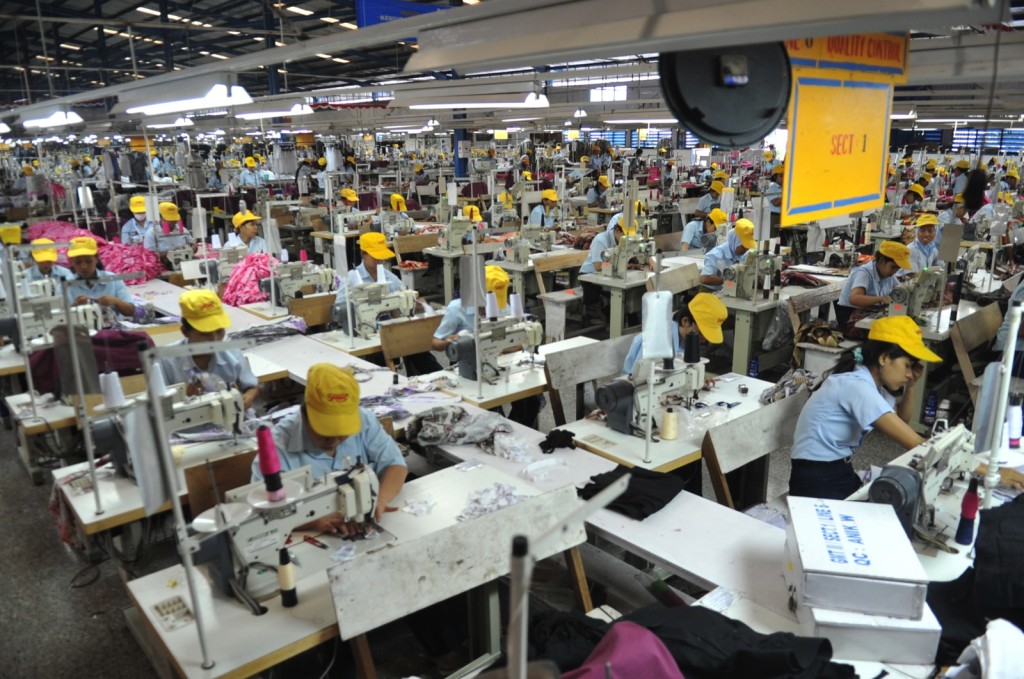
    Finding new and niche markets is how factories cope with the fall in export orders.

    After seeing orders from Europe plunge by 70% in recent weeks, shoemaker Chang Shuen in the southern province of Binh Duong quickly turned to the U.S., a market it has yet to pay attention to for nearly a decade.

    According to Doan Sy Loi, its CEO, the prices of products made for the U.S. market are always at least 15% lower than for the European market.

    When exporting to Europe, Chang Shuen only needs to make 5,000 pairs of shoes a day to turn a profit, but needs 6,000-6,500 pairs in the case of the U.S., he said.

    “During difficult times I have to do more to make a profit.” However, one advantage is that orders from the U.S. are five to 10 times larger than from Europe, he said.

    He added that the larger volumes attune workers, making production smooth and speedy. Garment company Dony in Ho Chi Minh City recently sent executives to the Middle East to meet and negotiate with wholesalers for big brands, its director, Pham Quang Anh, said.

    If the price is good, importers are willing to order in bulk and take delivery over one or two years, he said. “I offered a lower price than before. They immediately agreed to increase the order quantity by 300%.”

    With the extended delivery time, the factory could better manage its production schedules, he said.

    Often it had to buy raw materials at short notice and thus high prices, he said. Workers had to work overtime, increasing labor costs, or the factory had to hire causal labor with poor skills, often resulting in faulty goods.

    Pham Xuan Hong, president of the HCMC Association of Garment-Textile-Embroidery-Knitting, said many businesses are also looking for niche markets and new partners.

    They are developing green products from recycled materials, and targeting high-end segments and customers.

    He expects orders to recover by 90% by the end of the third quarter.

  • FLC uses Bamboo Airways shares as collateral

    FLC uses Bamboo Airways shares as collateral

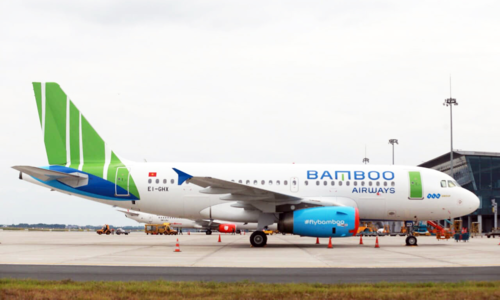
    Property developer FLC will use nearly 155 million Bamboo Airways shares as collaterals for loans from lender OCB, repeating a decision it made three years ago.

    The company will also use golf project FLC Quang Binh Golf Links as collateral for the loans from the same bank.

    FLC used a total of nearly 155 million Bamboo Airways shares as collateral for OCB loans five times in 2020.

    The developer has invested VND4.02 trillion in the carrier for a 21.7% stake. It is set to sell the stake, partially or fully, to a buyer who has yet to be revealed.

  • Free VPN: How to keep security using public WiFi?

    Free VPN: How to keep security using public WiFi?

    The potential of a cybercriminal to put themselves between you and the connection point is the most severe security flaw in public Wi-Fi. There is a risk of inadvertently communicating with a cybercriminal, who could capture and transmit your information to the hotspot rather than connecting directly to it. However, there is a way to enhance your security while connected to public Wi-Fi by using a VPN.

    Let’s discuss why you should use a free VPN to protect your devices and why public Wi-Fi can be harmful.

    What is a VPN, and why is it useful?

    A VPN’s objective is to offer you protection and privacy while communicating over the internet. The issue with the internet is that it is inherently dangerous. The priority when the internet was first designed was to be able to transfer data packets as reliably as possible. Networking across the globe was still in its infancy, and nodes frequently went down. Most of the internet’s key protocols were created to avoid failure rather than secure data.

    This exposes any internet user to cybercriminals looking to steal financial or credit card information, governments looking to monitor their citizens, and other internet users looking to snoop on you for a variety of illicit purposes.

    A VPN establishes a private tunnel over the public internet. The concept is that everything you communicate is encased in a secret communications channel and encrypted, making it impossible to decipher your packets even if they are intercepted. VPNs are effective and necessary tools for protecting yourself and your data.

    Why can using public Wi-Fi be dangerous?

    As briefly mentioned above, public Wi-Fi is typically unencrypted and open to everyone. Whether checking your bank statements or working from a coffee shop, hotel, or airport, public Wi-Fi brings security dangers that only some consider.

    Without sufficient measures, hackers can use public Wi-Fi low security to eavesdrop on you, steal your personal information, or even take control of your online accounts. Cybercriminals enter insecure networks and steal sensitive information using a combination of technical knowledge and inexpensive tools. Passwords, banking information, or personal information that can be exploited to commit identity theft are examples of this. Hackers can even easily infect your device with malware over a public Wi-Fi connection.

    Below are a few of the most common methods attackers use to gain access to other devices over public Wi-Fi:

    Man-in-the-Middle Attacks

    A Man-in-the-Middle (MITM) cyberattack occurs when a third party intercepts communications between two parties. Instead of transferring data directly between server and client, another entity disrupts that communication. The unwanted hijacker could then provide you with their version of a site, complete with their messaging.

    Fake Hotspots

    This is another type of MITM assault. The method intercepts your data in transit while avoiding any security features that a public Wi-Fi hotspot may have. People may be giving over all of their personal data just because they were duped into joining the wrong network. A phony Access Point (AP) is relatively simple to put up and is well worthwhile for hackers.

    Packet Sniffing

    Although packet sniffing is less common since most websites are assumed to be HTTPS encrypted, it can still occur on unsecured networks. Packet sniffing is a technology that allows hackers to eavesdrop on your internet activities when you are on a compromised or infected network. Hackers can then intercept your internet connection and steal essential data and information.

    Be wary and follow best practices

    As a general rule of thumb, there are a few things you should avoid if you are using public Wi-Fi. Don’t allow your devices to connect automatically to public hotspots. When using public Wi-Fi, try not to log into sensitive accounts or perform tasks such as online banking. Lastly, avoid websites that are not HTTPS – these sites are not protected and can be easily intercepted by hackers.

    How does VPN protect you while using public Wi-Fi?

    The critical takeaway is unless you were connected to a private Wi-Fi network that required a password, any data sent during an online session over a public network was likely to be open to eavesdropping by strangers on the same network.

    A VPN’s encryption and privacy safeguard your online activities, including sending emails and buying online. VPNs can also help you browse the web anonymously. When using Urban VPN, your data is encrypted and transferred in an unreadable manner. Encryption is performed using a specific key installed on both the VPN server and your client. You can feel comfortable and secure that your data is yours once you download and activate it.

    Conclusion

    As the internet has become a vital part of people’s life, public hotspots are a huge convenience. Yet, using these networks is not without risk. The sooner you become aware of the dangers of utilizing public Wi-Fi networks, the sooner you can take action to protect your privacy and avoid your personal information from falling into the wrong hands.

  • The Most Popular Casino Games in Asia

    The Most Popular Casino Games in Asia

    Casino gaming may have been around for some time, but more and more people in Asia are deciding to experience the pleasures of online casinos. This region of the world already has plenty of traditional casinos to entertain visitors, but online casinos are beginning to enjoy popularity as people seek the convenience and the excitement of gaming online. If you don’t fancy stepping through the doors of a casino but still want a casino experience with an Asian flavour to it, try 777 casino.

    Casino gaming in Asia is an excellent chance to try something new. You can play classic casino games, of course, but you’ll also discover some more unique to this area of the world. Below is a look at some of the most popular casino games out in Asia.

    Baccarat

    Baccarat is easy to play and relies heavily on luck, two reasons why it’s so popular. The odds of winning are also greater. It’s common knowledge in the casino industry that baccarat is one of the games that has the lowest house edge.

    Winning at baccarat is all about beating the dealer, who plays the “banker” hand, by getting as close to nine as possible without going over. The dealer deals two cards at the start of the hand. You just have to bet whether the banker hand will be closer to nine or further from it than yours.

    Roulette

    Roulette is another straightforward casino game. The roulette wheel has divisions numbered 1 to 36, alternating between red and black in colour. There’s also a green division numbered 0. If you’re playing American roulette, the wheel will have an additional green division numbered 00. All you have to do is bet on where the ball placed on the roulette wheel will land when the wheel stops spinning.

    Roulette gives you the chance to win big money. It’s one of the few casino games in which you can try out different strategies. The fact that it’s easy to play means you can learn it quickly and test strategies out sooner.

    Sic Bo

    Sic Bo requires three dice and a betting table. It’s like roulette, but instead of betting on where the roulette ball will land, the player bets on what the dice will show when they’re rolled. The table is divided into three different sections that correspond to the different types of bets that can be placed. It’s possible to place multiple bets in one round across the different sections to increase your chances of winning. The more specific your prediction, the more you can win if it’s correct.

    The fact that sic bo is one of only two games that involve dice in casino gaming (craps is the other) makes it a standout game. The different types of bets possible to place give players plenty of options.

    Mah Jong

    Mah Jong is popular for all kinds of reasons besides creating the opportunity for players to win a lot of money and being a good way to socialise. Aesthetically, the game is pleasing because of the variety of tiles. Mentally, the game is also pleasing because it gives the brain a workout. You can also choose from the Korean, Chinese classic, Taiwanese, Vietnamese, American, Hong Kong and Japanese styles.

    Generally, Mah Jong requires four players, 144 tiles and two dice. A little like poker, the object of the game is to create matching sets and pairs. Three consecutive tiles or three or four identical tiles make up a set, and two of the same tiles make up a pair. You must form four sets and a pair to win Mah Jong.

    Pai Gow Poker

    Pai Gow Poker is another game that’s popular in Asia for several reasons. It’s slower paced, so there are fewer winning or losing hands per hour and you can make your bank roll last for longer. Not only this, but you also stand a better chance of winning because the house edge is lower.

    The object of Pai Gow Poker is to arrange your seven cards into two hands both higher the banker’s hands. One hand must consist of five cards and the other of two. Your five-card hand must be higher than your two-card one. If one is equal to the dealer’s, it’s a tie (or “copy” hand) and the banker wins. Winning hands are paid even money, whereas losing ones lose the money bet. If one hand wins but the other one loses, this is a ”push” and the bet isn’t acted upon.

    If you’re a fan of casino gaming, you can play traditional games in Asia or, if you’re looking for something a little bit different, try variations of games such as poker or play games more typical of the region. Keno and pachinko are two further games you could try. Slots are also an option in Asia.

  • Google adds profile pictures from the Contacts app to the Messages UI

    Google adds profile pictures from the Contacts app to the Messages UI

    Google loves to add little things to its apps that might not seem like a big deal but are useful. The latest update to the Google Messages app adds the profile picture from the Contacts listing of the person you’re messaging to the top of the screen. Tapping on the profile picture will take you to that person’s Contact card. To make room for the avatar, Google removed the search function from the top of the display and deleted the magnifying glass icon. If you need the Search tool, tap on the three-dot overflow menu icon to find it as an option.

    To be clear, we are talking about the Google Messages app, which includes the Rich Communication Services (RCS) platform. The latter has the same features as the highly-touted (by iPhone users) iMessage platform. Both include end-to-end encryption, higher-quality images, read receipts, typing indicators, and more.

    Now here’s the thing. What happens in an RCS group chat when an iPhone user joins it? Those lovely features go away which is exactly what happens when an Android user joins an iOS group chat. Yet, you never hear about Android users bullying iPhone users to the brink of emotional distress. And Google has been more than willing to allow Apple to add the RCS platform to Apple’s Messages app. However, Apple CEO Tim Cook would probably prefer hearing his sink drip all night rather than allow a cross-platform messaging app to be developed.
    Also, and this is important for Android users to understand, RCS is available on the Google Messages app. It is NOT available on the messaging apps that your carrier might have pre-installed on your Android phone. For example, if you are using the Verizon Messages app, T-Mobile Messages app, or any other Android messaging app outside of Google Messages, you are not getting the RCS platform.
    For RCS to work, you and the rest of the chat group must all be using the Google Messages app. You can tell if others you are chatting with are using Google Messages by the color of the text balloon that appears when you send a message. If it is a dark blue, you are engaged in a chat over RCS. Also, look at the text field. If it says Text message, you are about to message an iPhone user or an Android user employing a messaging app that is not Google Messages. Instead of using the RCS platform, such messages use old-school SMS.
    If the text field says RCS message, then you are messaging another Android user with the Google Message app and will have all of the RCS features available to you. If you don’t have the Google Messages app on your Android phone, you can install it by tapping on this link.
    The new Google Messages feature that shows the profile picture of the person you are messaging. To see the profile pictures you must be using version version 20230313_01_RC00.phone.openbeta_dynamic of the Google Messages app or later. To see which version you’re running, open the Google Messages app and tap on your profile picture at the right of the search filed at the top of the display. Press on Messages settings and scroll all the way to the bottom.
    The very last option reads About, terms & privacy. Tap on it and the Version info will be the first thing listed on the page that you are sent to. If you haven’t seen the profile pictures on your Google Messages app yet, it might be available to Google Messages beta testers at the moment. To join the beta, go tot he Play Store, open it, and type in Google Messages in the search field. Once you see the listing for Google Messages, scroll down and if Google is accepting more beta testers for the app, you will see a button to press to join.
    Even if you aren’t a beta tester for the app, you should see the profile pictures appear on an upcoming stable version of Google Messages.
  • Gambling ads, adult content make Facebook ‘toxic’

    Gambling ads, adult content make Facebook ‘toxic’

    Facebook frequently displays ads soliciting gambling, which is illegal in Vietnam except at licensed casinos, and adult content even in accounts whose owners never search for them.

    Hoang Quan, an office clerk in Da Nang’s Thanh Khe District, says ads with scantily dressed women and gambling games often appear when he surfs the message board or watches Reels on Facebook.

    “The ads are suggested by Facebook and displayed at specific times: After 4 p.m. it is gambling; in the evening it is sexy and suggestive content,” he said.

    Tuan Phuong of Ho Chi Minh City, another Facebook user, sees similar ads pop up constantly.

    “Toxic content appears next to posts. Every time I scroll through a few posts of my friends, the News Feed inserts a gambling ad,” he says.

    He says he is flustered when he sees Facebook live streams with inappropriate content while sitting with his child in the evenings.

    In a survey this month 96% of participants said they had seen gambling and other offensive ads on Facebook, with 81% saying they are frequent.

    The situation seems to have worsened in March, with members on some technology forums suggesting Facebook’s censorship filter could be faulty.

    The contentious ads are usually in the form of a live stream and direct users to gambling websites. As soon as the live stream ends the video is removed from the platform by Facebook fan pages, leaving no trace.

    According to online marketing expert Mai Thanh Phu, the Facebook censorship system only looks at the beginning of a live stream and not the whole of it.

    “In the beginning, the live stream will not have any objectionable content. After Facebook approves the live stream and starts charging for the advertising, the fan page will become a gambling ad.”

    He says buying a fanpage to livestream or Facebook ads is simple and costs just a few million dong (VND23,600=US$1).

    Users can turn them off and report violations though there is no guarantee the same content will not appear again, he warns.

    The Facebook representative in Vietnam has not commented on the above issue.

    According to Ha Hai of the Ho Chi Minh City Bar Association, it is illegal for Facebook to allow gambling ads according under the Law on Advertising.

    “Facebook must actively control, block and remove illegal content, and not wait for users to report or authorities’ instructions.”

    In the past Facebook users have reported seeing ads for cannabis seeds and poppy though Vietnam has stringent drug laws.

    Last November Minister of Information and Communications Nguyen Manh Hung said the ministry plans to start inspecting advertising on cross-border platforms.

  • UBS to take over Credit Suisse, assume up to 5B Swiss francs in losses

    UBS to take over Credit Suisse, assume up to 5B Swiss francs in losses

    UBS agreed to buy rival Swiss bank Credit Suisse for 3 billion Swiss francs ($3.23 billion) in stock and agreed to assume up to 5 billion francs ($5.4 billion) in losses, in a shotgun merger engineered by Swiss authorities to avoid more market-shaking turmoil in global banking.

    The deal includes 100 billion Swiss francs ($108 billion) in liquidity assistance for UBS and Credit Suisse from the Swiss central bank.

    The government said that to enable UBS to take over Credit Suisse, the federal government is providing a loss guarantee of a maximum of 9 billion Swiss francs for a clearly defined part of the portfolio.

    This will be activated if losses are actually incurred on this portfolio. In that eventuality, UBS would assume the first 5 billion francs, the federal government the next 9 billion francs, and UBS would assume any further losses, the government said.

    Switzerland’s regulator FINMA said that there was a risk that Credit Suisse could have become “illiquid, even if it remained solvent, and the authorities needed to take action”.

    Credit Suisse Additional Tier 1 shares with a nominal value of around 16 billion francs ($17.2 billion) will be written down completely after the Swiss government provided support for UBS’ takeover of Credit Suisse, FINMA said.

    The 167-year-old Credit Suisse has been the biggest name ensnared in market turmoil unleashed by the recent collapse of U.S. lenders Silicon Valley Bank and Signature Bank, forcing it to tap $54 billion in central bank funding last week.

    “With the takeover of Credit Suisse by UBS, a solution has been found to secure financial stability and protect the Swiss economy in this exceptional situation,” the Swiss central bank said.

    Authorities had been scrambling to rescue Credit Suisse, among the world’s largest wealth managers, before financial markets reopened on Monday.

    UBS and Credit Suisse are both in a group of the 30 global systemically important banks watched closely by regulators, and Credit Suisse’s failure would ripple throughout the entire financial system.

    The announcement came in a make-or-break weekend after some rivals grew cautious in their dealings with the struggling Swiss lender, and its regulators urged it to pursue a deal with UBS.

    FINMA, which said it had approved the takeover, said recent measures to stabilize itself were “not enough to restore confidence in the bank, however, and more far-reaching options were also examined.”

    The two banks’ fortunes have diverged sharply over the past year. UBS earned $7.6 billion in profit in 2022, while Credit Suisse lost $7.9 billion. Credit Suisse’s shares are down 74% from a year ago, while UBS’s are relatively flat.

    The Swiss government said that it was also giving UBS a guarantee of 9 billion Swiss francs “assume potential losses” from assets as part of the transaction.

    UBS’s chief executive officer Ralph Hamers and Chairman Colm Kelleher will remain at the helm of the combined bank.

    “The transaction reinforces UBS’s position as the leading universal bank in Switzerland,” UBS said.

    Executives foreshadowed structural changes in the offing.

    Kelleher said it would wrap up running Credit Suisse’s investment bank, but added that it was too early to say anything about potential job cuts.

    Kelleher also said they would keep Credit Suisse’s domestic business, despite speculation that it could be spun off amid competition concerns.

    Credit Suisse’s Chairman Axel Lehmann called the merger the “best available outcome”.

  • Higher input costs, speculation drive housing prices up

    Higher input costs, speculation drive housing prices up

    According to experts, the increasing costs of land, materials, labor, legal procedures, and interest rates, as well as speculation, have all been pushing housing prices up for years.

    In recent market reports, the Ministry of Construction has confirmed that housing prices are currently unaffordable for many people.

    Le Huu Nghia, director of construction and real estate firm Le Thanh Company, said housing prices in big cities like Ho Chi Minh City are too high compared to ordinary middle-class incomes.

    Nghia said all high-end housing sells at high prices, while a shortage of social housing and affordable commercial housing has increased the average housing price.

    According to him, of the three reasons, housing development projects’ legality-related sluggishness is a huge cost push-up because of its impact on other costs.

    It takes 5-7 years or even longer for a project to complete legal procedures, so its developer incurs many costs while waiting.

    With loan interest rates of 11-14% a year, the prolonged time period increases 50-70%, or even 100%, in the project’s total capital cost. The final long-term use home buyer will have to pay more because the project’s production costs have also risen.

    The chairman of a firm developing residential real estate projects in HCMC’s Thu Duc City also said hefty input costs are the main reason for high housing prices.

    He added that land clearance compensation costs, which developers have to pay in advance, have also surged in recent years, and it often takes years to complete the site clearance process.

    According to businesspeople and experts, other factors contributing to high housing prices are speculation and price manipulation by some investors.

    Both Le Huu Nghia, director of Le Thanh Company, and Huynh Phuoc Nghia, a senior consultant at advisory firm GIBC, suggested simplifying legal procedures.

    Economic expert Huynh The Du said the State should ensure the consistency of housing policies and the transparency of real estate-related information.

    The government should create channels providing home buyers with enough data and analysis to make informed decisions, while also establishing mechanisms to more effectively screen and allocate capital to the development of different housing segments, he added.

  • Importers propose halving car registration fees

    Importers propose halving car registration fees

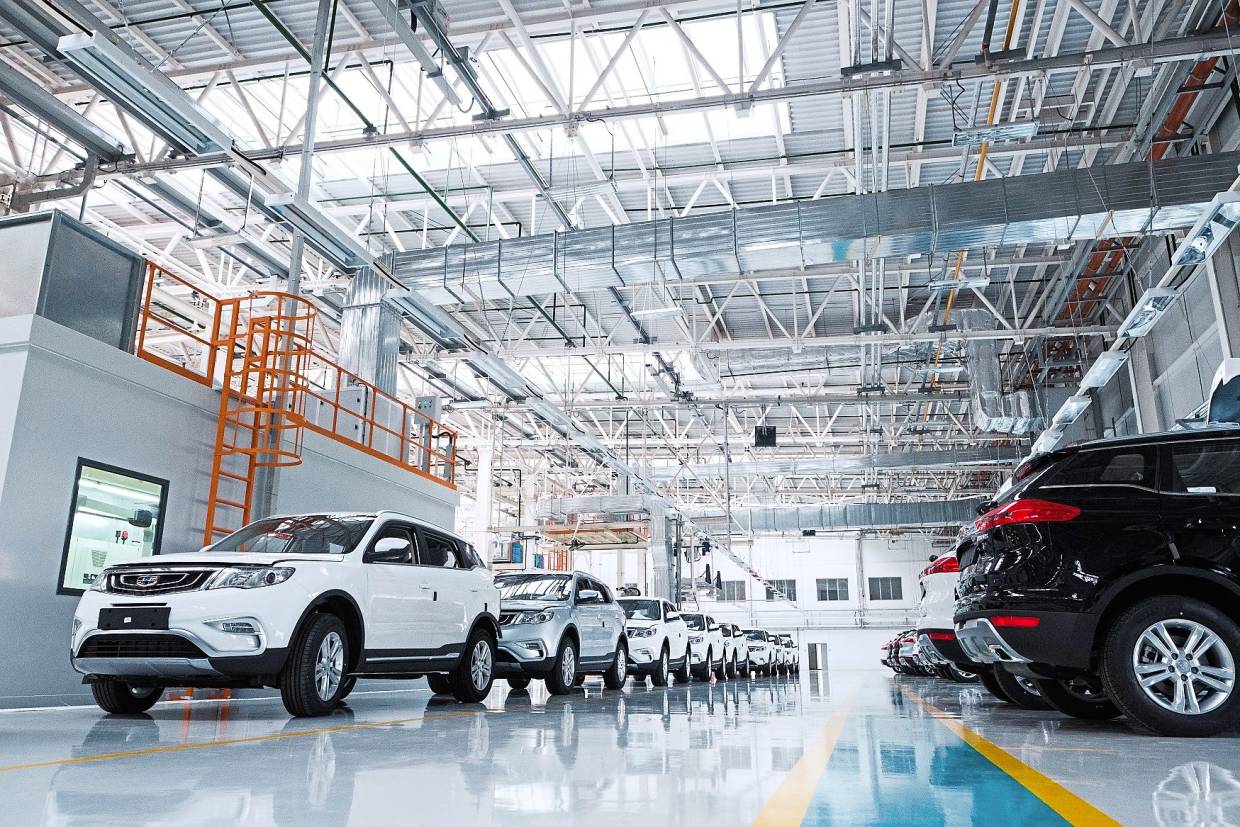
    All 12 members of the Vehicles Importers Vietnam Association (VIVA) have asked the Government to reduce the registration fee on imported cars by 50% to spur demand.

    VIVA proposed in the context of a sharp drop in sales and gloomy market forecasts.

    According to the association, car importers need help to cope with high inventories due to the sudden decrease in demand.

    In the first month of this year, the number of cars imported to Vietnam tripled over the same period last year to more than 12,800 vehicles. The number of imported cars also tripled in the last three months of last year.

    Earlier, the Prime Minister ordered the Ministry of Finance and the Ministry of Industry and Trade to consider lowering registration fees for domestically assembled cars.

    The Vietnam Automobile Manufacturers Association (VAMA) said tightening credit and rising interest rates have diminished market liquidity, and automobile companies are struggling to cope with high inventories.

    According to VAMA, its members reported a decline in sales four months in a row starting last October. Only 17,314 vehicles were sold in January, down 51% from December.

    During the Covid pandemic, Vietnam halved registration fees on domestically assembled vehicles, not on imported ones, twice, first in mid-2020 and then again in late-2021. Each reduction period lasted six months.

    In the first half of 2020, over 102,900 domestically assembled vehicles were registered. The figure then doubled in the second half of the year.

  • AirAsia X continues to recover quarter by quarter

    AirAsia X continues to recover quarter by quarter

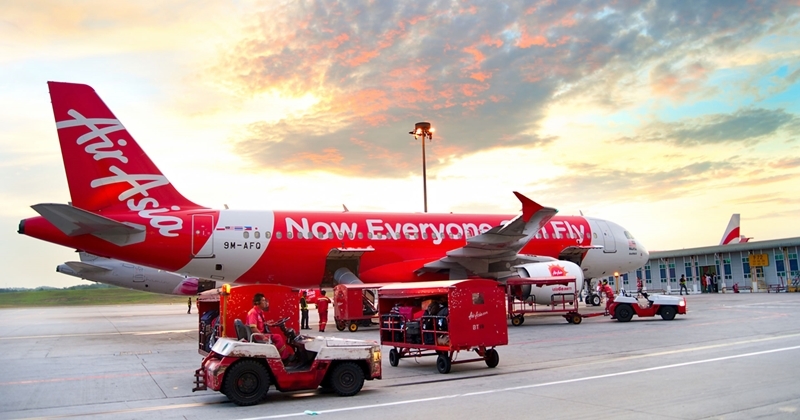
    Malaysian long-haul low-cost AirAsia X is returning to recovery, reporting improvements in revenues, profits, and costs after some very difficult years during the Covid crisis. The carrier expects to benefit this year from the relaunch of its most profitable routes and gradually grow the fleet again, it said on February 22. AirAsia X continues to recover quarter by quarter.

    After changing the accounting period for its financial year 2022 from July instead of January, FY22 includes six quarters between July 2021 and December 2022. This makes comparisons with previous years meaningless. The net profit for FY22 was RM 33 million, with revenues of RM 878.2 million, as it carried 417.195 passengers at a 78 percent load factor. Almost all of that was generated in the second half of 2022 when lockdowns and travel restrictions in most of its key markets in Asia were lifted. The airline already reported a profit for its September quarter.

    As far as a fifth or sixth quarter says anything, they at least confirm that the airline is further recovering. Revenues grew from RM 100.1 million in Q5 (July-September) to RM 339.3 million in Q6 (October-December), with a net profit from RM 25.1 million to RM 153.5 million. For reference, in Q4 (October-December) FY19, AirAsia X produced an RM-95.8 million net loss, revenues of RM 1.196 billion, and carried 1.6 million passengers.

    Passengers carried grew significantly quarter on quarter, from 79.557 to 337.638. That positively affected revenues per available seat kilometer (RASK), which improved from RM 17.62 to RM 19.96. In contrast, costs per available seat kilometer (CASK) excluding fuel went down from RM 6.95 to RM 1.42. AirAsia X resumed services to Australia (Perth, Melbourne, Sydney), New Zealand (Auckland), Japan (Tokyo Haneda and Sapporo), Taiwan (Taipei), Saudi Arabia (Jeddah), and Indonesia (Bali) in the final quarter of 2022, growing the network to fourteen destinations.

    AirAsia X has high hopes for the reopening of China, although bookings are currently below expectations. It recently resumed services to South Korea (Busan) and will launch flights to Turkey later this year. Istanbul was already announced as a new destination in June last year.

    The airline currently operates a fleet of seven Airbus A330-300s with seven more to join shortly but has an appetite for three more. “As we rise up to meet the ever-thriving demand for flights, we are diligent in ensuring that aircraft within the Company’s fleet will be operational within the stipulated timeline, with all safety requirements met. As we speak, we are also in varying degrees of engagement with third-party aircraft lessors for the induction of additional aircraft within its fleet. By the year 2024, we expect to have a total of seventeen A330

  • 40% of car buyers in Vietnam depend on loans

    40% of car buyers in Vietnam depend on loans

    Only 30-40% of Vietnamese car buyers resort to bank loans compared to some 80% in developed countries.

    The rates vary by geographical region, with automobile firms saying more customers in the south borrow than in the north.

    Vinh Nam, sales manager of Vietnam Star, a Mercedes dealer in Binh Duong Province, said generally southerners are bigger spenders than people elsewhere.

    A large number of buyers in the south are businesspeople or buy vehicles for businesses, and so their purchase decision is faster.

    According to salespeople, the ease of borrowing and paying interest to buy a car is the main factor affecting the purchase decision.

    Car loan interest rates are volatile and currently start at around 8.5%.

    Banks lend 70-80%, even 100%, of the car’s value, but many borrowers cannot repay in time, and this is one reason why many people are hesitant about borrowing, according to banking and car sales executives.

    Analysts expect borrowing to decrease this year because of credit tightening and high-interest rates.

    To stimulate demand, automobile firms are offering discounts and promotions, and even subsidizing interest.

    Last month Volkswagen unveiled a promotion program offering 0% interest for the first six months.

    “Sales are very slow, so we have to adjust,” Thao Van, head of marketing at Volkswagen Vietnam, said.

    Analysts do not expect sales this year to reach last year’s half a million units.

    The Vietnam Automobile Manufacturers Association said its members reported a decline in sales for four months in a row starting last October. Only 17,314 vehicles were sold in January, down 51% from December.

  • Bamboo Airways unveils mystery buyer

    Bamboo Airways unveils mystery buyer

    Bamboo Airways has found a buyer who is also willing to help disgraced former chairman Trinh Van Quyet deal with the financial consequences of his alledged crime.

    A spokesperson said Thursday that the identity of the investor would be revealed later.

    The buyer has agreed to take over the airline’s entire debts and provide Quyet with the money he might have to pay as fines and indemnification for the stock manipulation which led to his arrest last year.

    Property developer FLC held a 51.24% stake in Bamboo Airways, and Quyet personally owned 40.03%. His 30.3% stake in FLC took his total ownership of the airline to 55.5%.

    Bamboo Airways said the sale of shares has been approved and supervised by authorities.

    The carrier now flies to 21 out of 22 airports in Vietnam and in April will add Ca Mau to its destinations.

    Internationally, it has been resuming services to Europe and Australia post-Covid.

  • SpaceX, Netflix, Boeing to join ‘biggest-ever’ US business mission to Vietnam

    SpaceX, Netflix, Boeing to join ‘biggest-ever’ US business mission to Vietnam

    SpaceX, Netflix and Boeing are among the companies joining the “biggest-ever” U.S. business mission to Vietnam next week to discuss investment and sales opportunities in the booming Southeast Asian nation, the organizer said.

    More than 50 companies, including defense, pharmaceutical and tech firms, will participate in the mission organized by the US-ASEAN Business Council, an industry body, according to a list seen by Reuters.

    The delegation is a sign of rising interest in the global manufacturing hub, which is benefiting from a shift away from China amid Sino-U.S. trade friction.

    Vietnam, with a population of 100 million people, also has a rapidly-growing consumer market as its middle class expands.

    “This is the biggest-ever mission in Vietnam,” said Vu Tu Thanh, the US-ASEAN Business Council’s representative in the country, noting that the body had been organizing these events for three decades.

    Streaming giant Netflix, which Reuters last month reported was planning to open an office in Vietnam, is among the companies joining the trip. Netflix did not respond to a request for comment.

    Aerospace manufacturers Boeing, Lockheed Martin and Bell will hold meetings with state-owned Vietnamese defense procurement companies, Thanh told Reuters, adding that it was the first time in about a decade that security firms had decided to join the annual mission to Vietnam.

    In December, the same companies held talks with Vietnamese government officials about the possible sale of helicopters and drones, as the country seeks new suppliers.

    “Helicopters is one of the things the companies hope to sell to the Vietnamese,” Thanh said, although he cautioned that defense deals took time to be completed and no immediate breakthrough was expected.

    Boeing said in a statement that its discussions with officials would focus on its growing partnership with Vietnam and ways to strengthen the country’s aviation and defense capabilities.

    Lockheed Martin and Bell did not respond to requests for comment.

    The majority of the companies joining the business mission already have a business or manufacturing presence in Vietnam, including Apple, Coca-Cola and PepsiCo, Thanh said, with some planning to expand it.

    Participants will have meetings with Vietnam’s top political and regulatory leadership, including with Prime Minister Pham Minh Chinh.

    Thanh said some companies were interested in Vietnam as a manufacturing hub and in providing services to increasingly wealthy consumers at a time when economic growth reached more than 8% last year.

    Among them is SpaceX, which is looking to sell its satellite internet services to Vietnam and other countries in the region, Thanh said. SpaceX did not respond to a request for comment.

    The mission will also include semiconductors companies, pharmaceutical giants Pfizer and Johnson & Johnson, medical device maker Abbott, financial firms Visa and Citibank, internet and cloud companies Meta and Amazon Web Services, the list showed.