Tag: asia

  • Snapchat doubles down on Family Center, adds new controls for parents

    Snapchat doubles down on Family Center, adds new controls for parents

    Introduced last year, Snapchat’s Family Center was one of Snap’s most important steps toward allowing parents to control the accounts of their offspring. Today, the social app announced more improvements are coming to Family Center, which includes additional controls for parents who aren’t content with what they received in 2022.

    Suggestively dubbed “Content Controls,” the latest feature for Family Center allows parents to limit the type of content their children can watch on Snapchat. Surprisingly, this wasn’t available when Family Center was launched last year, but at least the feature if finally here.

    Particularly, the newly added controls enable parents to filter out Stories from publishers and creators that they feel are not a good match for their kids. Either they’re creating sensitive, suggestive content or their views are in contradiction with what parents believe about a particular topic, it’s now possible to filter out Stories based on who creates them.

    Snap’s policies are designed to prevent “unvetted content from going viral,” so it’s harder for certain content you can find on TikTok or other social networks to share widely on Snapchat. Not to mention that Snap moderates public-facing content from creators and Snapchatters before it’s eligible to get reach on Stories or Spotlight.

    Of course, to take advantage of the latest feature for Family Center, you’ll need to have an account set up with your child. The Family Center account is free and can be created in just a few minutes.

    In related news, Snap revealed plans to add even more new features to the Family Center. Some of these upcoming features will be built around My AI, Snap’s experimental chatbot, and are meant to provide parents with more visibility and control around their children’s usage of My AI. Other new features might be in the pipeline too, but these are the only ones we know of so far.

  • Luckin Coffee to make Southeast Asia debut in Singapore this month

    Luckin Coffee to make Southeast Asia debut in Singapore this month

    Luckin Coffee, the once-troubled Chinese coffee chain, is slated to open up locations in Singapore as early as this month.

    The development follows the coffee chain’s job postings earlier this year looking for store managers in the city-state. It also aims to fill marketing, project management, and engineering roles.

    The firm also previously told Chinese media that it was conducting preliminary testing in Singapore and reiterated its core focus in its home country.

    Luckin Coffee was once considered China’s answer to Starbucks. However the US Securities and Exchange Commission slapped the company with a US$180 million fine after it was revealed that the firm had misreported financial statements. It went into restructuring and emerged in April last year.

    In its most recent financial report, Luckin Coffee said it logged US$1.9 billion in total net revenue for its 2022 financial year. It has over 8,200 stores in China.

  • AirAsia X continues to recover quarter by quarter

    AirAsia X continues to recover quarter by quarter

    Malaysian long-haul low-cost AirAsia X is returning to recovery, reporting improvements in revenues, profits, and costs after some very difficult years during the Covid crisis. The carrier expects to benefit this year from the relaunch of its most profitable routes and gradually grow the fleet again, it said on February 22. AirAsia X continues to recover quarter by quarter.

    After changing the accounting period for its financial year 2022 from July instead of January, FY22 includes six quarters between July 2021 and December 2022. This makes comparisons with previous years meaningless. The net profit for FY22 was RM 33 million, with revenues of RM 878.2 million, as it carried 417.195 passengers at a 78 percent load factor. Almost all of that was generated in the second half of 2022 when lockdowns and travel restrictions in most of its key markets in Asia were lifted. The airline already reported a profit for its September quarter.

    As far as a fifth or sixth quarter says anything, they at least confirm that the airline is further recovering. Revenues grew from RM 100.1 million in Q5 (July-September) to RM 339.3 million in Q6 (October-December), with a net profit from RM 25.1 million to RM 153.5 million. Just for reference, in Q4 (October-December) FY19, AirAsia X produced an RM-95.8 million net loss, revenues of RM 1.196 billion, and carried 1.6 million passengers.

    Passengers carried grew significantly quarter on quarter, from 79.557 to 337.638. That had a positive effect on revenues per available seat kilometer (RASK), which improved from RM 17.62 to RM 19.96, while costs per available seat kilometer (CASK) excluding fuel went down from RM 6.95 to RM 1.42. AirAsia X resumed services to Australia (Perth, Melbourne, Sydney), New Zealand (Auckland), Japan (Tokyo Haneda and Sapporo), Taiwan (Taipei), Saudi Arabia (Jeddah), and Indonesia (Bali) in the final quarter of 2022, growing the network to fourteen destinations.

    AirAsia X has high hopes for the reopening of China, although bookings are currently below expectations. It recently resumed services to South Korea (Busan) and will launch flights to Turkey later this year. Istanbul was already announced as a new destination in June last year.

    The airline currently operates a fleet of seven Airbus A330-300s with seven more to join shortly but has an appetite for three more. “As we rise up to meet the ever-thriving demand for flights, we are diligent in ensuring that aircraft within the Company’s fleet will be operational within the stipulated timeline, with all safety requirements met. As we speak, we are also in varying degrees of engagement with third-party aircraft lessors for the induction of additional aircraft within its fleet. By the year 2024, we expect to have a total of seventeen A330s within our fleet, active and operational,” CEO Benjamin Ismail said in a media statement.

  • Beverage industry lobbies against taxing sweetened drinks

    Beverage industry lobbies against taxing sweetened drinks

    Drink makers are lobbying against levying a special consumption tax on sweetened beverages, arguing that they do not contribute to health problems such as obesity.

    At a Wednesday workshop to discuss draft amendments to the Law on Special Consumption Tax, Nguyen Thi Lam, former deputy director of the National Institute of Nutrition, cited data showing that obesity is related to an imbalance between energy intake and outtake, and the frequency of physical activity.

    “Fat in food causes overweightness and obesity more than drinking soft drinks. There is no link between sweetened beverages and obesity,” she said.

    The Ministry of Finance is again considering imposing a tax on sweetened beverages eight years after failing to get other ministries to back it. The ministry said that a “reasonable” special consumption tax on sugary drinks would help protect people’s health in line with World Health Organization recommendations and international practices.

    Chris Vanloon, Chairman of the American Chamber of Commerce (Amcham) in Da Nang, said there is currently no definition of “sugary drinks,” so on the basis that the Ministry of Finance provides, the special consumption tax could be imposed on milk, dairy products, special foods for children and women, as well as sports drinks with electrolytes.

    Do Thai Vuong at the Vietnam Beer-Alcohol-Beverage Association said the beverage industry is still recovering from the Covid pandemic, facing global economic uncertainties and increased production costs.

    Beverage businesses need a stable tax policy environment to return to the numbers they were putting up pre-pandemic, Vuong said.

    He added that imposing the tax would be discriminatory without solving any public health problems.
    The proposed policy would also cause unwanted consequences for related industries, such as sugar, retail, and packaging, he said.

    A manager of Heineken Vietnam stated that the Ministry of Finance’s introduction of barley and non-alcoholic beverages into the taxable category was unreasonable.

    According to him, similar factors in terms of materials, processing, forms and flavors are not a legal basis for imposing a special consumption tax.

    “It is also inconsistent with the purpose of this tax — restricting or discouraging the consumption of products that are harmful to health,” he said.

    Businesses say they want to give regulators more time to analyze and evaluate relevant factors comprehensively and thus develop a suitable tax schedule to avoid negative impacts on consumers and businesses.

    However, Dinh Trong Thinh, an expert from the Vietnam Academy of Finance, said the tax rate could be 10%, similar to what Cambodia now applies.

    In 2014 the Ministry of Finance had formerly proposed a similar 10% special consumption tax on sweetened beverages, but other ministries opposed it.

    It is also considering hikes in the special consumption tax on beer, other alcoholic beverages and cigarettes.

    Between 2016 and 2019 it had increased the rate on beer and certain alcoholic beverages from 55% to 65% and on cigarettes and cigars from 70% to 75%.

    At the workshop, businesses suggested delaying the hikes, at least until 2025.

  • Fonterra profits increase despite volatile market conditions

    Fonterra profits increase despite volatile market conditions

    Fonterra Co-operative Group Ltd today released its 2023 Interim Results which show the Co-op has delivered a half year Profit After Tax of $546 million, an earnings per share of 33 cents, and a decision to pay an interim dividend of 10 cents per share alongside a forecast Farmgate Milk Price range of $8.20 – $8.80 per kgMS.

    The Co-op also upgraded its full-year forecast normalized earnings from 50-70 cents per share to 55-75 cents per share and announced a proposed tax-free capital return to farmer-owners and unit holders of around 50 cents per share, subject to completion of the sale of its Chilean Soprole business.

    Fonterra CEO Miles Hurrell says the results for the year’s first half show the Co-op is performing well, with profit up 50 per cent, against a backdrop of ongoing market volatility.

    “Our Co-op’s scale and diversification across channels and markets has enabled us to navigate through disruption and make the most of favorable market conditions in a number of areas.

    “While milk powder prices have softened recently, impacting our forecast Farmgate Milk Price range, protein prices have been high, and this is reflected in the lift in earnings we’re reporting today.

    “Our improved earnings and strong balance sheet have enabled us to pay an interim dividend of 10 cents per share which is positive news for our farmer owners and unit holders. We also expect to be able to pay a strong full year dividend, in addition to our proposed capital return.

    “The outlook for high quality sustainable New Zealand dairy remains positive. We have a clear strategy and are well-positioned to take advantage of this demand,” says Mr Hurrell.

    The Co-op has delivered a Profit After Tax of $546 million, up $182 million compared to the same time last year, and a Return on Capital for the last 12 months of 8.6%, up from 6.1% in the comparable period.

    “This lift in earnings is thanks to our Co-op’s scale and ability to move our farmer owners’ milk into products and markets with favorable prices.

    “With whole milk powder prices down, we moved more milk into skim milk powder and cream products to optimize our Farmgate Milk Price.

    “We also made the most of favorable margins in our cheese and protein portfolios by moving a higher proportion of current season milk into these products which has benefited our earnings.

    “Our ability to capture these higher margins is reflected in our Ingredients channel performance, with normalized EBIT up $494 million, or 118%, on the same time last year to $911 million.

    “Our Consumer and Foodservice channels benefited from improved in-market prices, with Foodservice normalized EBIT up $81 million, or 95%, to $166 million. However, higher input costs and ongoing pressure on margins have impacted overall Consumer channel performance.

    “Our domestic consumer business, Fonterra Brands New Zealand (FBNZ), has been under margin pressure for some time and is not improving as fast as planned. Performance of our Asia consumer brands has been impacted by weakening currency in the markets they operate, higher interest rates and a declining economic environment in some South East Asian markets.

    “For these reasons, we have revised down the valuation of FBNZ by $92 million and our Asia consumer brands Anlene, Chesdale and Anmum by $70 million.

    “As a result of market conditions and the impact of impairments, our overall Consumer channel normalised EBIT is down $177 million to a loss of $94 million.

    “This year our reportable segments have been updated to reflect an organisational change to better support our strategy. Group Operations is shown as a separate segment and the previous results of the AMENA and Asia Pacific segments are now combined into the new Global Markets segment.

    “Group Operations represents the business activities that collect and process New Zealand milk through to selling the products to our customer-facing regional business units, Global Markets and Greater China.

    “Group Operations normalised EBIT increased $412 million to $501 million, due to higher Ingredient prices, in particular proteins and cheese, relative to the products portfolio that informs the Farmgate Milk Price.

    “Looking at our customer-facing regional business units, Global Markets normalised EBIT was down 4% to $267 million. Global Markets’ Ingredients channel in-market earnings increased by $145 million, mainly due to higher sales volumes and improved pricing. However, this was offset by the impairments and increased operating costs in its Consumer channel.

    “Greater China normalised EBIT decreased 1% to $215 million, with the Foodservice channel showing resilience to market disruption from COVID-19. However, this was offset by the Consumer channel, which included a proportion of the Anlene brand impairment.

    “We continue to exercise financial discipline with a focus on delivering returns, while managing higher costs and ongoing market disruption.

    “Our Total Group normalised operating expenses are up from $1.1 billion to $1.4 billion due to the New Zealand consumer business and Asia brands impairments, increased costs including inflation and foreign exchange, and last year having a one-off favourable item.

    “Since year end we have improved our net debt and working capital position through improved earnings and clearing the higher year-end inventory.

    “Severe storms and flooding across the North Island in January and February temporarily delayed some product getting onto ships. We remain focussed on inventory management, which seasonally peaks through February and March.

    “Our improved earnings and strong balance sheet put us in a position to pay an interim dividend of 10 cents per share,” says Mr Hurrell.


  • Retail sales up 3.5% in first two months, thanks to government’s pro-growth measures

    Retail sales up 3.5% in first two months, thanks to government’s pro-growth measures

    China is gradually shrugging off the negative impact of the pandemic, as official data showed that retail sales in the first two months of 2023 expanded, following China’s optimization of its COVID-19 response.

    Chinese experts predicted that retail sales will continue to increase, given concrete government measures to boost consumption.

    Retail sales totaled 7.71 trillion yuan ($1.12 trillion) in January and February, a year-on-year increase of 3.5 percent, data from the National Bureau of Statistics (NBS) showed on Wednesday. Retail sales fell 1.8 percent in December.

    The catering industry experienced a rapid recovery, with annualized growth of 9.2 percent in the first two months, compared with a decrease of 14.1 percent in December.

    “The rebound of consumption was a major bright spot of China’s economic operations in the first two months of this year,” Fu Linghui, a spokesperson of the NBS, told a press conference in Beijing.

    The fast recovery came amid the rebuilding of consumers’ confidence, and on-site consumption has rebounded since China revamped its COVID-19 management in light of the evolving situation, Zhou Maohua, an economist at Everbright Bank, said told the Global Times on Wednesday.

    The retail, catering and travel sectors have seen a surge in demand, and the boost from China’s Spring Festival holidays also helped lift consumption, Zhou said.

    The NBS also released other statistics on Wednesday, such as the total value added of industrial enterprises above the designated size, fixed-asset investment and employment, which Fu said showed that “China’s overall economic performance is showing a trend toward stabilization and recovery.”

    China has set a GDP growth target of about 5 percent in 2023, with a CPI target of about 3 percent, according to this year’s Government Work Report, which was delivered at the first session of the 14th National People’s Congress.

    China will seek to expand domestic demand in 2023, prioritizing the recovery and expansion of consumption, according to the report.

    The key to economic growth is lifting domestic demand, as the external environment remains uncertain and volatile, Fu said. Support measures have been rolled out nationwide, such as consumption promotions and vouchers for vehicle purchases.

    Vehicles occupy an important position in China’s consumption, accounting for approximately 10 percent of retail sales, according to a report released by Fitch Bohua on Wednesday.

    Some carmakers have launched subsidies this month to improve sales, and Fitch Bohua believes that automobiles will remain the primary big-ticket spending item this year, with more preferential policies to come. Promoting consumption is high on the government’s agenda this year, as the annual Central Economic Work Conference held in mid-December noted that the country would prioritize the recovery and expansion of consumption.

    A State Council executive meeting held in late January also urged prompt measures to promote an early recovery of domestic consumption to revive the economy. Boosted by this positive outlook, local governments have been moving to unveil an array of pro-consumption measures designed to fuel the growth of specific spheres.

    Cities such as Beijing, Shanghai and Zhengzhou, Central China’s Henan Province, have announced detailed plans to offer consumption coupons, which will nurture sales of vehicles and home appliances, experts said.

  • Samsung steals Xiaomi’s crown in India’s premium smartphone market

    Samsung steals Xiaomi’s crown in India’s premium smartphone market

    Xiaomi Corp is reviewing its India strategy after misjudging consumer tastes for mobile phones. This costly mistake allowed Samsung Electronics to lead the Chinese company to the top spot in the world’s second-largest market for these devices.

    While Xiaomi continued to focus on selling mobile phones below Rs 10,000 ($120), Indian consumers were willing to pay more for better-looking models with richer features. Samsung of South Korea launched products that met those aspirations and offered innovative financing schemes that made them affordable for most.

    These measures have helped Samsung take the lead of the Indian mobile phone market from Xiaomi. Data from Hong Kong-based Counterpoint Research shows that Samsung had a market share of 20% in the last quarter of 2022, compared to 18% for the Chinese company.

    “The Indian market is witnessing a ‘premiumization’ trend. (But) Xiaomi is underprepared for this shift with a portfolio full of cheap phones,” said Tarun Pathak, research director at Counterpoint.

    The loosening of Xiaomi’s grip on India’s 626 million smartphone users – the largest after China – shows how companies that fail to respond to changing consumer preferences are penalized in a fast-growing economy with rising disposable incomes.

    Best known in India is Tata Motors’ Rs 100,000 ($1,200) Nano, which was heralded as the world’s cheapest car, shunned by consumers who associated its low price tag with inferior quality.

    Indians’ demand for more expensive mobile phones to consume videos and other content is also beneficial for social media app providers like Meta, and iPhone maker Apple Inc, which so far has a small market share in the country as it focuses exclusively on high-end phones, with prices ranging from $605 to a whopping $2,304, according to its website.

    According to Counterpoint, the market share of the phones under $120 in India has fallen to 26% by 2022, from 41% two years ago. And premium phones – above 30,000 ($360) – saw their share double to 11% over the same period.

    Xiaomi and Samsung both view India as a major growth market, with smartphones being their top-selling electronic device. The Chinese company posted a total revenue of $4.8 billion in India in 2021-22, while Samsung posted $10.3 billion in revenue, of which $6.7 billion came from smartphones.

    However, Xiaomi is already struggling in India with the departure of at least five top executives and increased government scrutiny over frosty relations with neighboring China. The company has had $674 million frozen by the country’s Financial Crime Bureau over alleged illegal remittances to foreign entities, which Xiaomi denies.

    A Reuters review of the product listings on Xiaomi’s website revealed the mismatch between consumer needs and the products the company offers. Xiaomi had six smartphones priced over $360, compared to Samsung’s 16. Under $120, Samsung had seven models, while Xiaomi had 39 – most of which turned out to be out of stock.

    And premium phones accounted for just 0%-1% of total shipments of Xiaomi’s Indian phones over the past two years, while the share of Samsung’s more expensive phones more than doubled to 13%, according to data from Counterpoint.

    But Xiaomi, which has admitted to introducing “too many” models in the past, is revamping its product line to focus on premium smartphones.

    In January, the company launched the Redmi Note 12 with a top price of over Rs 30,000, and recently launched the Xiaomi 13 Pro at Rs 79,999 ($970) – its most expensive phone in India. The strategic shift seems to have paid off immediately, as the Redmi Note 12 posted sales of $61 million within two weeks of its launch.

    “We have established a streamlined and cleaner portfolio with a focused approach to build expertise in the top segment, and the launch of our latest flagship, the Xiaomi 13 Pro, is a step in that direction,” said Indian President Muralikrishnan B.

  • Waze makes it easier to find EV charging stations on its map

    Waze makes it easier to find EV charging stations on its map

    Waze is adding new features to its navigation app almost every month. March is no exception to this unwritten rule, so if you own an electric vehicle, this month’s update has been specifically tailored for you. As the title says, Waze’s newly added feature makes finding charging stations for electric vehicles easier than ever before.

    Whether you’re using an Android or iOS device, starting today, you’ll be able to find relevant EV charging stations along your route. Despite saying that the feature will be available starting today, Waze also mentions that this will be rolled out globally over the coming weeks, so if you don’t see the option to find EV charging stations in your Waze app, give it some days and check again.

    The latest Waze update is important because it adds up-to-date EV charging information to its map. More often than not, charging station information is not exactly accurate or it’s downright outdated and unreliable, making the navigation experience disappointing for many owners of electric vehicles.

    According to Waze, in order to provide the most accurate information to the map, all EV data is reviewed and updated in real-time with the help of the local Map Editors from the community.

    Most likely the new EV-related feature is now available in North America, so if you drive an electric vehicle, you can plug type into the Waze app to find all relevant EV charging stations along your route. As far as the accuracy goes, its Waze users who will decide how reliable the new feature truly is, but considering it’s curated by the community, it’s safe to say that it’s going to be updated in real time.

    Here is hoping that the expansion of the new EV feature won’t take so many weeks as Waze suggests, especially since there are many electric cars in Europe and other regions of the world.

  • Chinese growers put Vietnamese durian, dragon fruit in risky oversupply

    Chinese growers put Vietnamese durian, dragon fruit in risky oversupply

    Vietnamese dragon fruit is at risk of oversupply, while durian prices will likely plummet as China, the local fruits’ largest importer, continues growing an increasing amount of the two trees.

    Late last month, China announced its dragon fruit output reached 1.6 million tons a year, 200,000 tons higher than Vietnam’s output.

    According to Chinese customs’ statistics, Chinese demand for dragon fruit is two million tons a year.

    Regarding durian, China imported over 800,000 tons of fruit worth some US$4 billion last year.

    But the giant economy it is likely to import less this year because after years of failed experiments, the country’s farmers are finally growing the fruit successfully in China’s southern regions, according to experts.

    The Chinese Academy of Tropical Agricultural Sciences in Hainan Province reported that China’s southern provinces are growing over 2,000 hectares of durian, amounting to 45,000-75,000 tons of the fruit expected to be sold in 2024.

    Durian cultivation will also be expanded to the North, according to the academy.

    About 90% of Vietnam’s major agricultural products are exported to China.

    So the northern neighbor’s plan to ensure its own local supply of agricultural products puts key Vietnamese farm items exported to the Chinese market at risk of oversupply.

    According to statistics from the General Department of Vietnam Customs, 90% of Vietnamese dragon fruit is exported to China.

    Tran Ngoc Hiep, director of Hoang Hau Dragon Fruit Company in Binh Thuan Province said that Vietnam’s dragon fruit exports to China in the first months of this year have are already slowing under the weight of increasing supply to the north.

    In previous years, China imported more than 300 containers of Vietnamese dragon fruit every day through Vietnam’s northern border gates, Hiep said.

    But he added that the figure is now already less than 100 containers.

    Currently, Vietnamese dragon fruit prices remain high because local farmers can grow off-season fruit.

    But when Chinese dragon fruit in season, from March to September, Vietnamese dragon fruit will face the risk of oversupply and dropping prices.

    Ngo Tuong Vy, vice director of Chanh Thu Export and Import Fruit Company in Ben Tre Province, said if the quality of Vietnamese fruits could improve, they will retain the Chinese market to Chinese rivals.

    Vietnamese durian must also compete with Thai and Malaysian fruit in the Chinese market.

    Phan Thi Tra My, president of the Provisional Vietnamese Business Association in China, said Chinese demand for durian is still high, but if Vietnamese exporters continuing paying more attention to quantity than quality, they will soon find it hard to compete with Thai, Malaysian and Chinese durian.

    Vietnam currently has 246 durian growing regions that export China totaling 12,000 hectares. And 97 Vietnamese durian packing establishments are certified for official export to China.

    According to the Department of Crop Production at the Ministry of Agriculture and Rural Development, by the end of last year, Vietnam’s total durian-growing area had reached 110,000 hectares, some 35,000 hectares higher than the initial plan.

    In the first two months of this year, ass durian prices surged dramatically, many farmers in the Mekong Delta and the Central Highlands region replaced their coffee, pepper, and rice fields with durian trees.

    The department warned that the uncontrolled increase in durian acreage would lead to oversupply.

    To overcome the challenges, Dang Phuc Nguyen, general secretary of the Vietnam Fruit and Vegetable Association, asked the State to help with better planning of growing areas. He also asked the State for help in building a brand for Vietnamese durian.

    According to Nguyen, farmers should strengthen their off-season fruit production because Thailand and China cannot.

    In China, prolonged cold winters make it difficult for durian trees to bear fruit.

    “The Chinese acreage of banana, mango and dragon fruit is increasing sharply, but China still has to import large quantities of fruits when they are not in season,” he said.

    Fruit farms and traders should also further tap the domestic market, he added.

    Vietnam’s total fruit and vegetable exports in the first two months of this year increased by 17.8% year-on-year to $592 million.

    China accounted for 57.5% of all Vietnamese fruit exports, according to the Ministry of Agriculture and Rural Development’s department of agricultural products processing and market development.

  • ECB Has to Show its Colors Amidst US Bank Crash

    ECB Has to Show its Colors Amidst US Bank Crash

    Price stability or financial stability. The European Central Bank has been in a dilemma since the US banking crisis last week in the US and will need to send a clear signal Thursday.

    Until the banking crash in the US late last week, it was a foregone conclusion the European Central Bank (ECB) would raise key rates another half percentage point at its meeting on Thursday. It would mark the sixth consecutive hike since it began raising rates in July of last year.

    Despite the banking sector turmoil, it remains plausible the half-percentage point increase in the deposit rate to three percent telegraphed by the ECB at its February meeting won’t shake financial markets. ECB President Christine Lagarde stressed at the time that only extreme developments could still upset the roadmap to another March rate hike.

    For observers, however, Thursday’s rate hike is not the most imcrucialessage. Instead, they will keenly be looking for signals about the upcoming meeting in May. In light of recent events, the odds have changed.

    Traders scaled back their bets at the beginning of the week. According to a report, tha hike of 25 basis points in May is re likely than a 50 basis point move.

    The deciding factor for the further pace of key rate hikes will be how quickly the ECB expects inflation to fall toward its two percent target. So far, the prevailing view among analysts is the deposit rate will peak at four percent in July.

    However, the banking crisis emanating from the US and the possible contagion risks to other regions could change that assessment. To be sure, further monetary tightening is still urgently needed to curb high inflation, but at the same time, they threaten to further jeopardize financial stability, which has been battered above all in the US.

    Central banks are faced with a classic dilemma. According to Klaus Wellershoff of the Zurich-based wealth advisor Zwei Wealth, the monetary guardians have to choose between more future inflation or exacerbating the banking crisis. He said this balancing act is fundamentally different from the financial crisis of 2007 to 2009.

    Then, central banks were able to achieve both financial and price stability at the same time because of the threat of inflation that was too low, Wellershoff said.

    Because inflation rates are currently above central bank targets by a wide margin, their options depend on how the US banking crisis plays out in the coming days. Wellershoff expects that central banks won’t be able to ignore financial stability and will put on the brakes. The past few days’ events make higher inflation likely in the future.

    How badly financial stability suffers from California’s Silicon Valley Bank (SVB) collapse is currently the big question, even for central bankers.

    For the optimists, the events surrounding SVB do not pose a systematic risk because it was primarily active in a relatively small group of large depositors from startups in the technology and life sciences sectors.

    That’s why contagion would be limited and mainly confined to private equity and venture capital, says Rohan Reddy, research analyst at US asset manager Global X ETF, for example.

    SVB is not on the Financial Stability Board’s list of systematically important banks, explained in part by SVB’s $175 billion in customer deposits, whereas US GDP in 2021 was $23 trillion.

    Those $175 billion won’t vanish entirely into thin air, and depositors would likely get back a substantial portion of their deposits.

    What speaks against the US crisis spreading to Europe is the ECB has been slower to raise interest rates than the Fed, leaving banks still have plenty of cheap funding.

    In addition, European banks are required to hold more liquid assets than would flow out in a 30-day stress scenario. In the U.S., these rules apply only to the largest banks – and not, for example, to SVB, as is pointed out at Citigroup.

  • Etsy, other e-commerce companies feel squeeze of SVB collapse

    Etsy, other e-commerce companies feel squeeze of SVB collapse

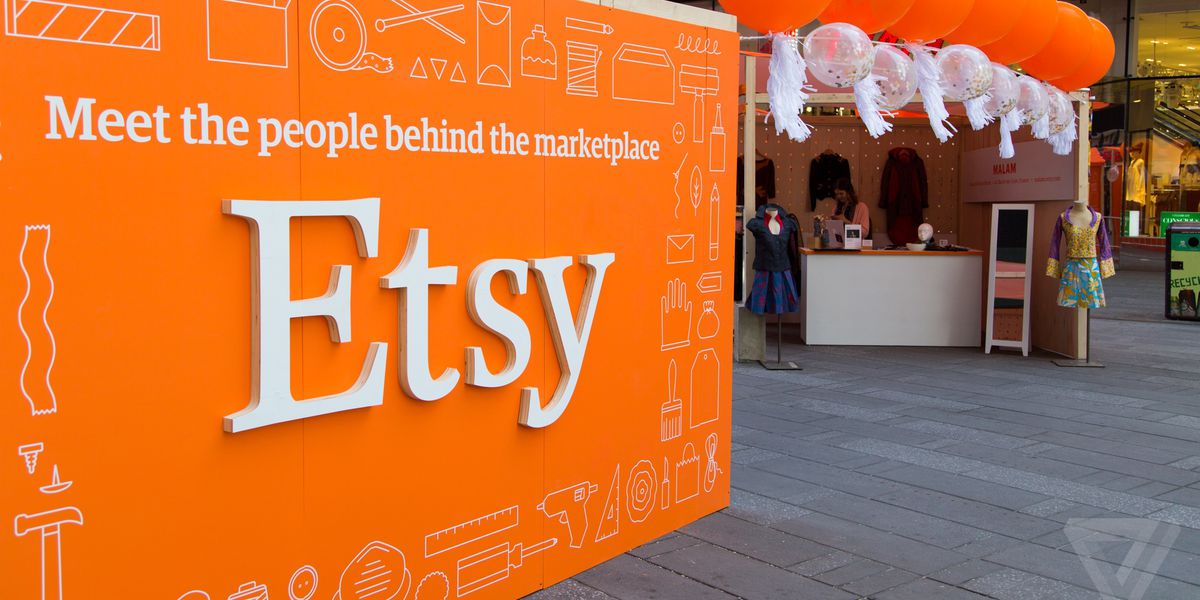
    Etsy on Monday resumed payments to merchants with Silicon Valley Bank accounts after the e-commerce platform paused their payouts over the weekend following the U.S. government shutdown of the bank last week.

    Approximately 0.5% of Etsy’s active sellers -or around 2,700 merchants- had their payments delayed on Friday related to SVB’s collapse, according to Etsy.

    “We are working to pay these sellers today, and we’ve already started processing payments via another payment partner this morning,” an Etsy spokesperson told Reuters on Monday.

    The payments Etsy sellers received is unrelated to the Federal Reserve’s Sunday announcement, which ensured that SVB’s customers would have access to their funds on Monday.

    Shopify SHOP.TO, which provides websites and apps to stores, also halted payments to online sellers with Silicon Valley Bank accounts, telling merchants they must switch accounts to receive funds, according to the company’s website.

    Etsy and Shopify each work with 5.4 million and 1.75 million online merchants respectively worldwide, mostly small-to-medium size businesses.

    Some Etsy sellers decided to put their stores on vacation mode, pausing customer purchases in an effort to minimize their financial losses while others say they have received their payments on schedule.

    Moshe Steinberg, 31, said that he received a payment from Etsy on Monday morning, but is still waiting for it to clear with his bank.

    “It was a nail biting situation until I checked my bank account this morning,” the 3D-printed seller from Central Ohio said, adding that Etsy is currently his only source of income.

    Etsy merchant Elizabeth Thompson, 57, said she has received little guidance from the company on what transpired.

    “I just don’t understand why they can’t be a little more transparent about what’s going on. It’s not like it’s their fault,” she added.

    Etsy said it communicated with any seller who was impacted on Friday directly via email and posted an update in their forums on Saturday.

  • Coupang to exit Japan to focus on Korea, Taiwan

    Coupang to exit Japan to focus on Korea, Taiwan

    Coupang has decided to withdraw its e-commerce business from Japan, 21 months after it began offering its online delivery service there, a company official said Sunday.

    “After testing our service as a pilot version, we have decided to withdraw our business from Japan,” a Coupang Japan official said.

    The Japanese daily, Nikkei, reported Saturday that Korea’s largest e-commerce firm will terminate its delivery service for fresh food and daily necessities in Meguro and Setagaya, Tokyo, on March 21.

    The company has been operating a quick commerce service that delivers online customer purchases within 10 minutes in the two cities.

    It has been selling nearly 5,000 grocery items on its shopping platform in partnership with local department store, Takashimaya and the dollar-store, Daiso.

    However, local consumers find Coupang’s service less attractive because Japan already has a strong convenience store business culture.

    Also, Japan has, by far, the highest senior population in the world and many of them are not used to shopping for groceries online. About 29.1 percent of its people are over 65 years old, according to Japan’s Ministry of Internal Affairs and Communications’ data, which was released in September 2022.

    Instead, Coupang said it will focus its businesses on Korea and Taiwan.

    The e-commerce firm introduced its Rocket Delivery service for Taiwanese customers last October. It provides local consumers the choice of buying hundreds of Korean items online through the direct-purchase service.

    Taiwan has a high population density and is an ideal environment to run an e-commerce business. Taiwanese consumers are also very interested in Korean products due to the influence of Korean popular culture.

    Coupang headquarters in Seoul confirmed the withdrawal of its business from Japan, but declined to comment further on the issue.

    Meanwhile, Coupang achieved record-high sales of 26 trillion won ($19.6 billion) last year. In the third quarter of 2022, the company turned out a surplus for the first time in eight years with its Rocket Delivery service.

  • Australian Hass avocadoes to be exported to India

    Australian Hass avocadoes to be exported to India

    The national peak avocado body has welcomed a “game changer” deal giving Australian Hass growers access to the Indian market.

    The Australian and Indian governments issued a joint statement welcoming the finalization of market access for Hass avocados.  It’s a significant boost to an industry experiencing a massive supply glut and poor returns, making it unviable for many growers.

    Avocados Australia chief executive John Tyas said the deal, alongside December’s free-trade agreement that would bring tariffs from 30 percent to zero by 2029, was monumental.

    “Having access to India along with the tariff reductions is a game changer,” Mr Tyas said.

    “We think India is going to be a great market for us to build and a great market for us to really dominate.”

    He described the deal as “massively significant”, chief executive of Avolution — Australia’s largest exporter of Australian avocados — Anthony Allen says a new market is needed.

    “It’s perfect timing in terms of the ability for the industry to move forward out of what is increased production,” he said.

    “The industry has been working on a number of export markets and this is probably one of the key ones for it actually to eventuate.”

    Avocados Australia hopes the deal will end over-supply and “glut” issues in the market, with India poised to become the world’s most populous country this year.

    “There’s a lot of people in India — nearly 1.5 billion people,” Mr Tyas said.

    “If we can get 1 per cent of people to buy Australian avocados, that’s a market of 15 million people.”

    Unlike current export markets in Singapore, Malaysia and Hong Kong, the enormous population in India means the Australian avocado industry only needs an incredibly small amount of Indians to purchase a single avocado to make a difference.

    Mr Allen said it could save Australian avocado growers from a “very dire-looking outlook”.

  • High-end Android smartphones sell at steep discount

    High-end Android smartphones sell at steep discount

    After visiting electronics stores, Minh Quan was surprised to see Xiaomi 13 Pro smartphones costing nearly VND7 million (US$297) less than their listed price of VND30 million.

    Besides offering discounts of VND4-5 million, most stores – in his native Da Nang — also had promotions like trade-in programs and to further reduce the price by VND1-2 million.

    “The discounts and promotions make me wonder if other stores offer even lower prices,” he said.

    Other Android phone makers too are selling at much below list prices.

    The Samsung Galaxy S23 Ultra has a list price of VND32 million, but is sold at is around VND24 million.

    Last year Oppo, another Chinese consumer electronics company, listed its Find X5 Pro smartphone in Vietnam at VND33 million, but sold it at less than VND25 million.

    “It is normal to buy a phone cheaper than the list price, but a difference of more than 20% only applies to some high-end Android smartphone models,” Truong Xuan, the manager of a phone shop on Pham Tuan Tai Street in Hanoi, said.

    However, the plethora of offers for a product confuses buyers, and it takes buyers a lot of time to compare prices and find the best one, he said.

    Nguyen Lac Huy, manager of electronics retail chain CellphoneS, said some phone makers have high list prices as a means of enhancing their brand value and placing their products in the high-end segment.

    Information about gifts and big promotions in soon after a product’s release also helps attract buyers, he said.

    But technology analyst Minh Tien said selling phones at much below list prices shows manufacturers are under pressure.

    “Listing a product at VND30 million is understandable because it is gradually becoming a benchmark for high-end smartphones. However, big promotions indicate that firms are desperate for sales in a slowing market.”

    Vietnamese are reducing their spending on smartphones sharply. Sales in the first two months of the year were 2.5 million units, down 30% year-on-year.

  • Korea’s Financial Regulator Hits UBS With Hefty Fine

    Korea’s Financial Regulator Hits UBS With Hefty Fine

    Korea’s financial regulator has fined the Seoul branch of UBS AG (in Zurich) for allegedly violating short-selling rules. Other financial firms are under investigation.

    UBS Securities and ESK Asset Management were fined a total of 6 billion won ($4.5 million) by Korea’s financial regulator in what it said was a violation of local short-selling rules.

    It marks the first time financial authorities imposed penalties on financial firms for breaching rules since the country’s capital market law was revised in April 2021 to tighten short-selling regulations.

    The statement added that financial regulators are currently investigating ten other domestic and foreign financial firms for similar violations.

    The report, citing industry sources, said the Securities and Futures Commission (SFC), a top financial regulator decision-making body, decided last Wednesday to fine UBS Securities 2.18 billion won and ESK 3.87 billion won for illegal short-selling practices.

    UBS’s Seoul branch allegedly placed sell orders for shares of a local company worth 7.3 billion won in 2021 without owning the shares. Normally, traders must borrow shares before they can sell them short.

    An official from the Financial Supervisory Authority said the decision was made after several in-depth discussions on the appropriate level of sanctions.