Tag: asia

  • Furla to buy back Australian distribution from Luxury Retail Group

    Furla to buy back Australian distribution from Luxury Retail Group

    Furla Group announced the buyback of the Australian distribution network from its distributor, Luxury Retail Group (LRG). Furla opened the first boutique in Westfield Sydney in December 2013, and now has 15 stores in Melbourne, Sydney, Brisbane and Gold Coast.

    Furla acquires 100% of the distribution network, reaffirming the brand’s vision of further strengthening its presence in Australia and New Zealand. This year, Furla plans to open 5 more stores in Australia and New Zealand, beside enlarging the existing Westfield Sydney boutique: by the end of 2017, the network will be made up of 20 Furla stores.

    “Australian market is very important for Furla and crucial in our expansion plan. Since 2013, Luxury Retail Group has been the best key partner to work with as it perfectly embodies the Furla vision, values and DNA: this is the reason why the two LRG directors will remain as board members of Furla Australia” said Alberto Camerlengo, Furla Group CEO, “We expect that in 2017 Australian business will represent the 5% of the global revenues, we are very proud to announce this acquisition. We aim to enhance the distribution in this Country given the success of the Furla retail strategy and the very positive response of Australian customers”.

    “We believe the timing makes sense for Furla to reacquire its distribution.” Nelson Mair, Managing Director of LRG also added, “After having achieved 95% sales growth in 2016, this vertical integration of Furla Australia will better equip the business for the next phase of its growth. I am extremely proud of my team and what they have been able to achieve in such a short space of time and thankful to Furla for trusting their wonderful brand to us”.

    Furla has a direct presence in 100 countries; with 444 monobrand stores that are split evenly between directly-owned boutiques and franchises. The Company also has distribution in multibrand and department stores in 1,200 international locations.

  • Vietnam in gradual shift to exporting more roast and ground coffee

    Vietnam in gradual shift to exporting more roast and ground coffee

    A decade ago most of the country’s coffee exports were semi-processed beans. The TNI King Coffee Factory that recently opened in Vietnam’s southern province of Binh Duong is the latest player to join the race to ship more finished coffee products from the world’s second-biggest producer.

    With an investment of $15 million, the factory aims to produce 9,000 tons of roast and ground coffee and nearly 20,000 tons of instant coffee annually for export, according to Le Hoang Diep Thao, director of TNI Corporation and the co-founder of Trung Nguyen Coffee. She has also helped build five plants for Trung Nguyen, one of Vietnam’s biggest coffee makers.

    TNI Corporation, which has recently gained a foothold in China’s online market for instant coffee and plans to start distribution through a supermarket chain there, did not give the size of its annual green bean demand for the new factory.

    But to reach the targeted annual output, the Binh Duong-based facility will need at least 13,000 tons of green beans for roast and ground coffee and another 50,000 tons for the instant variety, according to a Vietnamese coffee expert at a European firm based in Ho Chi Minh City.

    TNI’s factory will have to compete with 200 plants already in operation or which will be going into operation this year and the next, before the government puts a stop to new coffee processing plants in 2020 to ensure quality.

    In December 2016, India’s Tata Coffee said it will set up a freeze dried coffee plant in Vietnam to expand its market. In mid-January 2017, Tin Nghia Coffee Co began construction of a $28 million instant coffee plant in the southern province of Dong Nai, which is slated to open in early 2018.

    Demand for raw materials from the new plants will eat into exportable green bean stocks in Vietnam, the world’s largest exporter of semi-processed robusta beans, which has seen a smaller harvest this season due to adverse weather.

    “Demand is rising about 10 percent a year, and with a higher ratio of bad-quality beans from the last harvest due to bad weather, Vietnam may face shortages in the third quarter,” said the expert, who declined to be identified by name, referring to the three-month period starting this July.

    Top exporter Intimex expects the supply crunch to emerge in May or June, citing Vietnam’s fast export pace in the first months of 2017.

    Smaller harvest

    Vietnam’s 2016/2017 output has dropped 8 percent to an estimated 26.7 million bags (1.6 million tons) due to high temperatures and dry conditions brought by El Nino, the U.S. Department of Agriculture (USDA) said in its December 2016 report. One bag contains 60 kilograms of beans.

    Green coffee bean shipments are forecast to drop 13 percent from the previous 2015/2016 season to 23.5 million bags due to smaller output and more beans being used for domestic consumption or processed for export, the USDA said in its latest report.

    As such, green beans accounted for 90 percent of Vietnam’s total export volume, while roast and ground beans and instant coffee – or finished products – made up the rest. Vietnam’s crop year lasts from October through September.

    The forecasts mark a slow change to the country’s coffee export structure. Five years ago, finished products made up only 2 percent of Vietnam’s coffee shipments, the government said.

    Exports of roast and ground beans in the current 2016/2017 season are projected at 550,000 bags, unchanged from 2015/2016, but above the 457,000 bags shipped in the 2014/2015 season, based on the USDA report. The forecast volume represents 2 percent of Vietnam’s total projected shipments.

    The USDA also forecasts instant coffee exports to remain steady at 2 million bags, which shows a surge of 56 percent from the 2014/2015 season, while it said domestic consumption of roast and ground coffee would rise nearly 10 percent from the previous season to 2.5 million bags.

    Consumption of green beans in Vietnam is estimated at 2.87 million bags, up 9 percent from a year earlier, the USDA said.

    Vietnam does not publish breakdowns for its coffee exports.

    The Vietnamese government has plans to raise the output of roast, ground coffee and instant coffee to 25 percent of total output by 2020, while the output of instant coffee alone will increase to 5.83 million bags by 2030 from the 255,000 tons targeted for 2020.


  • New BMW M4 CS revealed

    New BMW M4 CS revealed

    High-performance coupe gets more power to level the 0-100kph time with the two-door Audi RS5 and Mercedes-AMG C63 S. Thanks to an improving competition, BMW has made a fourth version of the M4 called CS (Club Sport) following the regular model, Competition Package and GTS.

    As seen in these first official pictures, the M4 CS highlights some sporty details like front splitter and rear spoiler made from carbonfibre. Inside, there’s a steering wheel clad with Alcantara and the handles on the slimmed-down door panels have been replaced with loops.

    BMW has tweaked the 3.0-litre twin-turbo inline-six engine to 460hp and 600Nm for the M4 CS. That’s 10hp and 50Nm more than in the M4 Competition Package.

    As a result, the M4 CS goes from 0-100kph in 3.9sec – a tenth of a second quicker than the M4 Competition Package. And because the M4 CS comes with the M Driver’s pack as standard, the electronically limited top speed has been raised from 250kph to 280kph.

    Speaking of the acceleration time, the M4 CS is now level with Audi’s latest RS5 Coupe and Mercedes-AMG C63 S Coupe.

    The M4 GTS is faster with a 3.8sec time. However, BMW’s intention with the M4 CS is to create a go-faster model suited for public roads; the M4 GTS has been developed with the race track in mind.

    That’s one reason why the M4 CS still has rear seats and omits the roll-cage fitted in the two-seat M4 GTS. BMW says the M4 CS’s 7min 38sec lap time around the Nurburgring falls in between the M4 Competition Package and M4 GTS.

    According to BMW, the exhaust sound in the M4 CS can be adjusted by a mode selector. As well, drifts can be made easier in the M4 CS thanks to the M Dynamic diff being modified to allow greater wheel slip.

    Standard in the M4 CS is seven-speed dual-clutch automatic with paddle-shift, M adaptive suspension and Michelin Pilot Sport Cup 2 tyres. Carbon-ceramic brakes, however, are optional.

    The M4 CS will only be built in limited numbers and is expected to command a slight premium over the lesser M4s at just over 10 million baht.

  • SATS unveils a brand new US$21mn eCommerce AirHub

    SATS unveils a brand new US$21mn eCommerce AirHub

    SATS, a provider of Gateway Services and Food Solutions, unveiled its new eCommerce AirHub, at a ceremony officiated by S Iswaran, Minister for Trade and Industry (Industry).

    The $21 million facility, co-funded by the Civil Aviation Authority of Singapore (CAAS), enhances Changi’s eCommerce mail sorting capability to support the growing eCommerce market. This new 6,000 sqm facility also features new innovations that will improve productivity and enable airport workers to acquire new skills.

    By deploying state-of-the-art technology, SATS has multiplied mailbag processing capacity by more than three times and streamlined the mail sortation process to deliver quicker turnaround for international eCommerce mail. Processing time is now reduced by 50 per cent. At the same time, automation has provided opportunity for employee upskilling. SATS is currently the only ground handler in the region to operate such an automated airside facility.

    Alex Hungate, president and CEO of SATS said, “eCommerce is expected to continue on its growth trajectory in the region and beyond with continued strong consumer demand. The SATS eCommerce AirHub enhances the competitiveness of the whole airfreight industry in Singapore by offering greater speed and transparency, as well as higher capacity to handle future growth.”

    Kevin Shum, director-general of CAAS, said, “CAAS is pleased to support the establishment of the eCommerce AirHub under the Aviation Development Fund. We are delighted that this initiative has enabled SATS staff to benefit from an enlarged job scope, higher pay, and a more comfortable and conducive workplace. Such collaborations are part of our efforts to transform Singapore Aviation, make the  2 sector more efficient and competitive, create better jobs and improve productivity using technology.”

    Tapping on technology for greater efficiency
    At the official opening of the SATS eCommerce AirHub this afternoon, the company unveiled several new innovations. These include a fully automated mail sortation system that increases the mailbag processing capacity of SATS to more than 1,800 an hour – up from 500 previously.

    Additionally, due to interface integration with SingPost’s airmail consignment operations and the facility’s locality within the free trade zone on the airside, mail sortation operation is streamlined to eliminate the need for mailbags to be transported to and from the hub.

    The combination of these factors has enabled faster mailbag processing that reduces turnaround time by 50 percent – from six hours to three – thus allowing international eCommerce mail to connect to an earlier flight for faster delivery.

    Traceability is also improved at the SATS eCommerce AirHub, as customers, such as SingPost, can now better track and trace their mail via the data interface, for example checking connection status by confirming arrival and departure times.

    Woo Keng Leong, chief executive officer, Postal Services, SingPost, said: “The improved efficiency and tracking from our collaboration with SATS will enhance SingPost’s international mail operations amid Singapore’s growing importance as an eCommerce logistics hub.”

    As well as improving service, SATS eCommerce AirHub will also be more productive: airmail consignment operations are targeted to be at least 30 per cent more efficient with full automation.

  • Startup community lends a hand to women entrepreneurs in Vietnam

    Startup community lends a hand to women entrepreneurs in Vietnam

    Woomentum will launch its first event in Ho Chi Minh City to connect women-founded startups and investors.

    Woomentum, a Singapore-based startup community and crowdfunding platform, will launch its first event in Vietnam this month to support female entrepreneurs and their startups, by connecting them with investors and consultants.

    “CrowdFundHer Live!” will take place from 6:30 p.m. to 10:30 p.m. on April 25 at Dreamplex 2, 195 Dien Bien Phu Street in Ho Chi Minh City’s Binh Thanh District.

    The fourth CrowFundHer Live! event held in Singapore in June last year. Photo courtesy of Woomentum

    The fourth “CrowFundHer Live!” event held in Singapore in June last year.

    Six women-founded startups chosen for the event operate in different sectors including education, Internet of things, lifestyle, hi-tech agriculture and fintech. This is a chance for them to showcase their work and vision to investors, seek funding and see how experts respond to their products.

    Each of them will have eight minutes to present their projects and convince investors to back them. Woomentum will also facilitate discussions between the startups and interested investors.

    Guests include Adrian Tan, director of Vietnam Innovative Startup Accelerator (VIISA), Ngo Thuy Ngoc Tu, co-founder of YOLA Language Center, Nguyen Ngoc Dung, Vice President of the Vietnam E-commerce Association (VECOM), Violet Lim, CEO of Lunch Actually, and Michael Blakey, managing partner of Cocoon Capital, a renowned investor in UK.

    Woomentum had organized four “CrowdFundHer Live” events in Singapore with support from Bloomberg, Google, the Hub Singapore and other organizations.

    Thanks to such events, which drew 600 attendants, 23 tech startups have received S$200,000 ($143,200).

    For the upcoming event in Vietnam, Woomentum will work with the Vietnam E-commerce Association, Startup Vietnam Foundation, Mat Bao Corporation, Baker McKenzie, Citylinks, VnExpress, among others.

    Startups with Mouna Aouri (sitting), CEO of Woomentum. Photo courtesy of Woomentum

    Startups with Mouna Aouri (sitting), CEO of Woomentum.

    Founder Mouna Aouri said Woomentum will make its official debut in Vietnam this summer, offering opportunities for startups with female founders to approach new knowledge, access capital and receive valuable feedback to create better products. The April event will also allow members of the startup community to share their ideas.

    She said Woomentum wants to work as a bridge to link Vietnamese startups with investors, entrepreneurs and consultants in Southeast Asia and more importantly, to connect male and female entrepreneurs.

    Women are the emerging power of the economy in Asia, she said, adding that once they get access to technology and a good environment, female entrepreneurs will become an undeniable force.

      Program  
      6:30 p.m.

    7:00 p.m.

    7:30 p.m.

    9:30 p.m.

    9:30-10:30 p.m.

     Opening

     Exchange of startups, investors and Vietnamese entrepreneurs

     Fundraising

     Presentation of startups and results

     Entertainment

    Click here for tickets.

  • Global vendor revenue from cloud hits $32.6b in 2016

    Global vendor revenue from cloud hits $32.6b in 2016

    Vendor revenue from sales of infrastructure products (server, storage, and Ethernet switch) for cloud IT, including public and private cloud, grew by 9.2% year over year to $32.6 billion in 2016, IDC estimates.

    Vendor revenue for the fourth quarter meanwhile grew at 7.3% year-on-year to $9.2 billion, the research firm said.

    Cloud IT infrastructure sales as a share of overall worldwide IT spending climbed to 37.2% in 4Q16, up from 33.4% a year ago. Revenue from infrastructure sales to private cloud grew by 10.2% to $3.8 billion, and to public cloud by 5.3% to $5.4 billion.

    In comparison, revenue in the traditional (non-cloud) IT infrastructure segment decreased 9.0% year over year in the fourth quarter. Private cloud infrastructure growth was led by Ethernet switch at 52.7% year-over-year growth, followed by server at 9.3%, and storage at 3.6%.

    Public cloud growth was also led by Ethernet switch at 30.0% year-over-year growth, followed by server at 2.4% and a 2.1% decline in storage. In traditional IT deployments, storage declined the most (10.8% year over year), with Ethernet switch and server declining 3.4% and 9.0%, respectively.

    “Growth slowed to single digits in 2016 in the cloud IT infrastructure market as hyperscale cloud datacenter growth continued its pause,” said Kuba Stolarski, research director for Computing Platforms at IDC.

    “Network upgrades continue to be the focus of public cloud deployments, as network bandwidth has become by far the largest bottleneck in cloud datacenters. After some delays for a few hyperscalers, datacenter buildouts and refresh are expected to accelerate throughout 2017, built on newer generation hardware, primarily using Intel’s Skylake architecture.”

    From a regional perspective, vendor revenue from cloud IT infrastructure sales grew fastest in Japan at 42.3% year over year in 4Q16, followed by Middle East & Africa at 33.6%, Canada at 16.6%, Western Europe at 15.6%, Asia/Pacific (excluding Japan) at 14.5%, Central and Eastern Europe at 11.6%, Latin America at 9.9%, and the United States at 0.1%.

  • SoftBank taps Ericsson to improve indoor coverage

    SoftBank taps Ericsson to improve indoor coverage

    Japan’s SoftBank plans to deploy Ericsson’s Radio Dot system across Japan to improve indoor coverage for its large subscriber base.

    The operator will target medium to large buildings in high-density urban areas including Tokyo, Osaka and Nagoya with the deployment, Ericsson said. Deployment will commence in the densest areas of the three cities, in buildings including office towers, shopping malls and train stations

    SoftBank began testing Radio Dot technology in Japan in June 2015 as the company explored ways to better meet the huge demand for improved indoor coverage in urban areas. Now after extensive testing and verification, the operator is ready to enter the mass deployment stage.

    “We are always interested in adopting the latest technologies to ensure our subscribers receive the best possible network service,” SoftBank SVP Hideyuki Tsukuda said.

    “After evaluating a number of options, we concluded that the Ericsson Radio Dot System was the most cost-efficient solution for large buildings. Its deployment in crowded urban indoor environments will enable us to meet user expectations for a consistently high quality of network coverage.”

  • 2017 Mercedes-Benz S-Class facelift includes new engines

    2017 Mercedes-Benz S-Class facelift includes new engines

    Flagship saloon receives mandatory mid-life design tweaks and new inline-six and eight-cylinder engines.  The Mercedes-Benz S-class you see here in official pictures is a mid-life refresh of the current generation that’s currently making its debut at the Shanghai motor show.

    Stuttgart’s flagship saloon gets a more prominent face thanks to more accentuated air vents in the bumper. The interior has also been updated with new materials and sportier-looking steering wheel for AMG-trimmed models.

    Mercedes-Benz usually showcases its latest technologies in the S-class before letting them filter down into other models. And while the S-class can already do many things in a semi-autonomous manners, it has raised the bar of its so-called Distronic Active Proximity Control and Active Steering Assist systems.

    Apart from being able to automatically accelerate and brake within speed limits, the S-class can also self-steer for half-a-minute. These features are probably the most advanced driver-assist technologies available so far in a production-ready vehicle.

    After using V6 engines for many years, Mercedes-Benz has returned with a straight-six petrol and diesel engines. These 3.0-litre motors are said to be developments of the existing 2.0-litre four-pot motors and are hooked up to 48V electrical motor and compressor systems and lithium-ion batteries to help enhance performance, as well as reducing fuel consumption and CO2 emissions.

    There are two outputs for the diesel head including 286hp for the S350d and 340hp for S400d. The petrol version gets plug-in ability to allow for 50km of pure electric driving. This particular model is called S560e and replaces the S500e, which had 3.0-litre V6 petrol-electric hybrid.

    On the high performance front, the 455hp 5.5-litre twin-turbo V8 seen in the S500 has been superseded by a smaller 468hp 4.0-litre bi-turbo V8, now called S560.

    As the Thai government is now trying to lure carmakers in bringing EV technology to Thailand, Mercedes-Benz (Thailand) will continue to focus purely on plug-in hybrid for the revised S-class when sales start toward the end of this year.

    As reported earlier, this particular hybrid drivetrain will also appear in a performance-oriented version of the E-class Coupe. The rumoured Mercedes-AMG E50 is said to develop over 400hp when petrol power is combined with electricity.

  • Vietnam’s bank seeks $700 mln via stake sale to foreign investor

    Vietnam’s bank seeks $700 mln via stake sale to foreign investor

    Saigon Commercial Bank expects further talks with two potential investors from China and Indonesia as it plans to sell more than half of the bank at par value. Saigon Joint Stock Commercial Bank, Vietnam’s fifth largest by assets, is in talks to draw an investment of at least $700 million by selling a controlling stake to a foreign investor.

    As the first Vietnamese bank granted government approval to seek such foreign investment, the lender plans to sell more than half of the bank at par value through the issuance of new shares, Chief Executive Officer Vo Tan Hoang Van was quoted as saying.

    “We’re really looking for a partner who would not only put money into the bank but also has the same vision about this market,” Van told Bloomberg. “”More importantly, they need to help our clients to complete their real estate projects so that we can solve the bad debt issue in a shorter time.”

    Saigon Commercial Bank slashed its bad debt ratio to 0.68 percent by the end of last year from 7.25 percent in 2012, the lender said at its April 18 shareholders’ meeting.

    Van said the bank has been in talks with banks, equity funds and insurance companies from China, Indonesia, Norway, and Taiwan over the stake sale. It expects intensifying negotiations with two potential investors from China and Indonesia.

    The bank plans to submit its stake sale plan to the central bank for approval early next year and close the deal in mid-2018, he said.

    The Vietnamese government currently sets a 30-percent cap on total foreign ownership in banks.

    Prime Minister Nguyen Xuan Phuc told in January that he plans to raise the cap in banks to accelerate restructuring Vietnam’s banking system.

    The government established the Vietnam Asset Management Company in 2013 to deal with bad bank loans, mostly incurred due to a slowdown in the country’s real estate market in the early 2010s.

    State Bank of Vietnam’s data showed the bad debt ratio was cut to 2.46 percent of total loans in November last year, from 17.2 percent in September 2012.

  • Singtel lines up $2.94b in credit facilities

    Singtel lines up $2.94b in credit facilities

    Singtel has lined up a total of S$4.1 billion ($2.94 billion) in credit facilities for debt refinancing and general corporate purposes.

    In Singapore, the operator’s subsidiary Singtel Group Treasury has entered into a three-year S$2.5 billion revolving credit facility with 12 banks.

    These include Australia’s ANZ, Bank of America Singapore, BNP Paribas, the Bank of Tokyo-Mitsubishi, Citibank Singapore, DBS Bank, HSBC Singapore, Mizhou Bank, OCBC, Standard Chartered, Sumitomo Singapore and United Overseas Bank.

    Singtel’s Australian subsidiary Optus has meanwhile signed a three-year A$1.5 billion ($1.13 billion) credit facility with 15 banks, including local branches many of the above banks as well as Australia’s Westpac and Commonwealth Bank.

    Both credit facilities are guaranteed by the respective operators and certain subsidiaries, Singtel said.

    “The Singtel Group is very pleased with the level of support demonstrated by our bankers in Singapore and Australia, which reflects their confidence in the Singtel Group’s credit quality and business fundamentals.” Singtel group CFO Lim Cheng Cheng said.

  • Cargobase launches “On The Go!” app

    Cargobase launches “On The Go!” app

    Cargobase, the online platform for spot-buy freight, has launched its mobile application “On the Go” for shippers. The mobile application allows users to book, approve and track shipments, as well as interact with logistics service providers. The latter is another effort to eliminate the excessive usage of emails in the logistics industry, making shipment management a wild jungle of information.

    The approval feature supports one of the workflow tools the Cargobase platform offers to its enterprise shippers. If approval from a manager is required to proceed with the service, the mobile application can be used to turn approvals around in minutes, avoiding any delays and unauthorized movements.

    Shipment visibility is important for every stakeholder when a shipment is in transit, think of sales staff, engineers, suppliers, customers or management. With Cargobase, all stakeholders have access to all tracking milestones in a shipment dashboard. The platform is connected to over 300 logistics service providers, such as Kuehne+Nagel, Expeditors, DSV, FedEx and DHL, for automated milestone updates. On top of that, milestones from over 350 commercial airlines are also fed onto the platform.

    To improve the efficiency of communication between shipper and provider, the new Cargobase app has the capability for both parties to interact through chat. This also includes having access to shipments and conversation of team members and the option to view shipment documents on the go.

    “We are learning every day more about the gaps in today’s supply chain and the struggles both shippers and providers go through on a daily basis. We have tackled automating the quoting for spot-buy shipments and are pleased to launch our new mobile app designed to focus on visibility. For shippers it is important to get the right price and service for an ad hoc movement, but what happens next is still a big unknown. Quoted cost and delivery time, versus actual outcomes have a huge delta, but most shippers don’t have the tool to measure this, let alone fix it. That’s where we focus on.” said Wiebe Helder, CEO Cargobase.

  • Thailand plans to build Bangkok-China-Hong Kong cable

    Thailand plans to build Bangkok-China-Hong Kong cable

    The Thai government is eager to build a new subsea cable linking China, Bangkok and Hong Kong, as part of the efforts to transform Thailand into Southeast Asia’s digital hub.

    The Digital Economy and Society ministry is drawing up a master plan for the cable project, and lso aims to attract foreign investors to the project.

    According to the report, the government is currently in the process of identifying a marine route for the planned cable system.

    Thai cabinet has approved a 5 billion baht ($145.5 million) investment in the system. The investment will be handled by state-owned operator CAT Telecom via the Neutral Gateway Network & Data Center project.

    Investment in the cable forms part of the government’s Thailand 4.0 strategy, which aims to transform the nation’s economy with a focus on digitally-enabled innovation and establish the nation as a digital hub for the wider region.

    As part of this project, the government is also investing in establishing Digital Park Thailand, a planned new digital business economic zone, and has just approved the establishment of he facility along the Eastern Economic Corridor.

  • Cebu Pacific expected to mount more China flights

    Cebu Pacific expected to mount more China flights

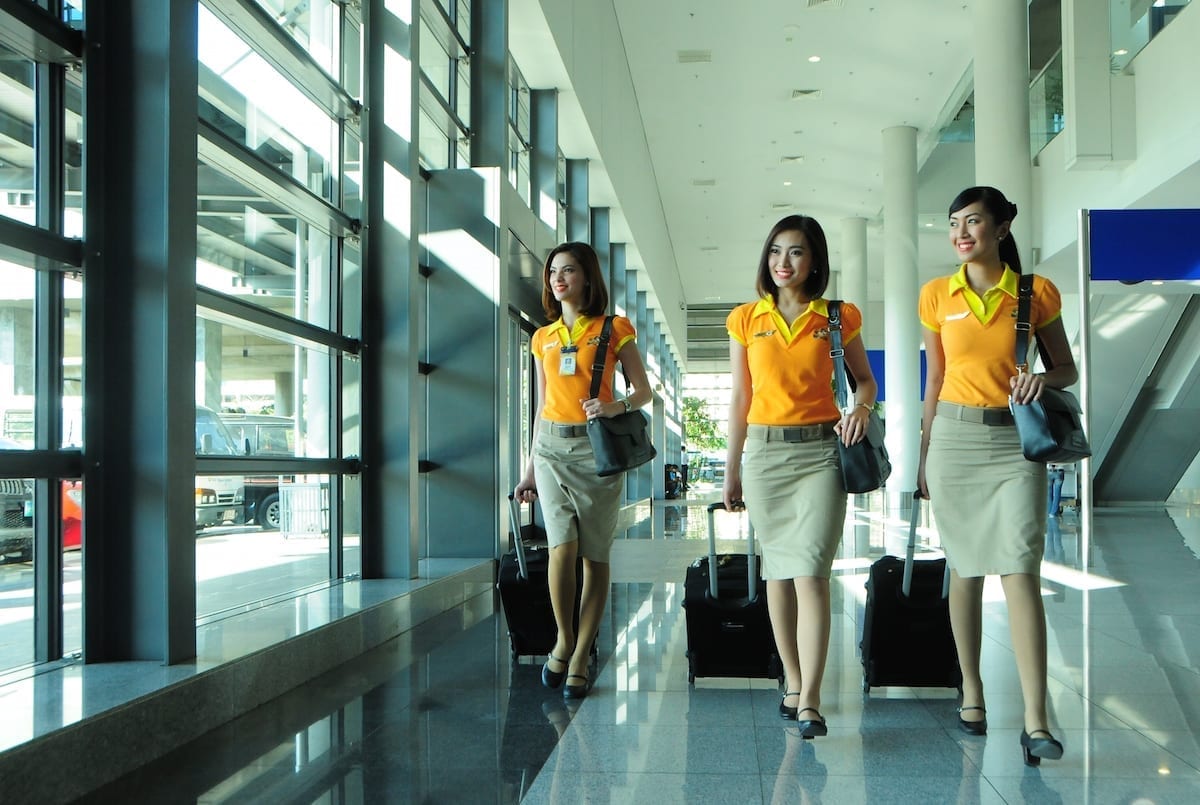
    Cebu Pacific is expected to expand operations to China with the delivery of its ordered A321neo aircrafts that allow the budget carrier to open new routes and grow its capacity, the Center for Asia Pacific Aviation (CAPA) said in a recent report.

    The aviation think tank said the budget carrier has 47 aircraft on order, of which 32 are A321neos.

    “Cebu Pacific is particularly keen to use the A321neo to open new routes deeper into China,” CAPA said in its report, noting that the aircrafts will also support plans for its North Asia expansion.

    It said Cebu Pacific currently has a “small China operation,” consisting of only 17 weekly flights to four destinations.

    “However, it is keen to add new flights to China, both scheduled and charters, in line with expected further rapid growth in the China-Philippines market,” it added.

    CAPA said visitor numbers from China grew by approximately 20% in 2016, as China overtook Japan to become the country’s third largest source market for the Philippines.

    The think tank added that aside from China, Cebu Pacific is also considering opening a branch office in Japan to help support future capacity growth in both markets.

    “Cebu Pacific has expanded in Japan in recent years, adding three destinations for a total of four, and will likely use the A321neo to add capacity and new destinations,” it said in its report.

    CAPA said Japan is now Cebu Pacific’s third largest international market after Hong Kong and Singapore, while South Korea is its fourth largest international market.

    “It’s presence in Korea is surprisingly small given that South Korea is the Philippines largest source market for visitors,” the aviation think tank added.

    Cebu Pacific is looking to improve market share in South Korea with the A321neos adding to the expected capacity growth, CAPA said. The budget carrier already opened a branch office in Seoul in late 2016.

    CAPA noted that branch offices, which are “unusual,” for low cost carriers, should improve Cebu Pacific’s local distribution in international markets that consist mainly of inbound passengers.

    For this year, the think tank said Cebu Pacific “does not have the capacity to pursue significant growth in any of its international markets in 2017, but is putting in place the building blocks to support faster international growth once the A321neo arrives.”

    European plane-maker Airbus has committed to delivering three A321neos to the budget carrier in the fourth quarter, although some delays may push back the schedule.

    Cebu Pacific ended 2016 with a fleet of 57 aircraft — up only two from the beginning of the year. Cebu Pacific’s fleet was flat at 47 aircraft, while its turboprop subsidiary Cebgo expanded its fleet from eight to 10 aircraft.

    “The Cebu Pacific Group is planning once again to add only two aircraft in 2017, for a total of 59. The group plans to maintain the size of its narrowbody jet fleet at 39 aircraft as three more A319s are phased out and the first three A321neos are delivered. At the same time, an eighth A330 is being delivered and the turboprop fleet is expanding by one more aircraft for a total of 11,” CAPA said in its report.

    Cebu Pacific currently offers flights to nine destinations in China — Beijing, Guangzhou, Haikou, Lijiang, Ningbo, Shanghai, Shenzhen, Xiamen, Xian; four in Japan — Fukuoka, Nagoya, Osaka, and Tokyo; and flights to Incheon and Busan in South Korea, according to its Web site.

    Cebu Air, the listed operator of Cebu Pacific and Cebgo, saw its net income last year surge by 122% annually to P9.8 billion propelled by higher passenger, cargo and ancillary revenues.

    It flew 19.1 million passengers, up 4.1% from the 18.4 million passengers ferried in 2015.

  • Jaguar F-Type gets four-pot turbo power

    Jaguar F-Type gets four-pot turbo power

    New entry-level sports car may not match the performance credentials of the Porsche Cayman on paper but is set to be significantly cheaper in price in Thai showrooms.

    The Jaguar F-Type Coupe you see here in official pictures is the new entry-level model powered by a 2.0-litre four-cylinder petrol-turbo engine. This new motor is also available in the Convertible version.

    For the sake of differentiation, this particular F-Type gets a single exhaust pipe mounted centrally behind where you can also find a new diffuser design. The 3.0 V6 models get two tailpipes, while the 5.0 V8 receives four of them.

    And since the F-Type is now three years old in its current generation, Jaguar has given new mag wheels and slightly massaged the front end with new LED lights and bumper.

    What’s the power like?

    Jaguar has taken its new Ingenium four-pot engine from other models and tuned it to 300hp – between 50-100hp more than in other applications. Maximum torque is rated at 400Nm attained at 1,500rpm. Drive in this F-Type goes via eight-speed automatic to just the rear wheels.

    Jaguar claims a 0-100kph time of 5.7sec – 0.4sec slower than the F-Type fitted with 340hp 3.0-litre supercharged V6. However, the four-potter is said to be 16% more fuel efficient while spewing out 163g/km of CO2; the V6 emits 199g/km.

    Although the acceleration time may by slightly slower, the four-pot F-Type may have the chance of being more agile to drive because Jaguar says it is 52kg lighter than the V6. But what also remains to be seen is whether the engine noise would be as tuneful as the V6.

    How does it fare against the Cayman?

    The Porsche Cayman comes with 300hp 2.0-litre flat-four turbo-petrol engine, seven-speed dual-clutch automatic and a quicker 4.9sec (4.7sec with launch control) acceleration time.

    But the Cayman already costs one million baht more than the 7.99 million baht F-Type V6. This means than the F-Type in 300hp suit should be priced even lower than that level when sales start later this year, although punters must be content with the inferior on-paper performance figures the front-engined Jag concedes to the mid-engined Porsche.

  • APeJ Ethernet switch market grew 21% in Q4

    APeJ Ethernet switch market grew 21% in Q4

    The APeJ Ethernet switch market grew 21% during the fourth quarter, with vendor revenues of $131.23 million, IDC research indicates.

    Increased spending from the enterprise segment due to technology refreshes drove the overall LAN market in Q4 2016.

    There was a significant increase in uptake of L3 and ADC switches in both the enterprise and service provider segments in Q4 2016. Investments in the government, education, telecom, professional services and BFSI were the key drivers for growth this quarter.

    But the router market witnessed a year-on-year decline of 4% to $69.2 million.

    The router market was propped up mainly by investments from the service providers for 4G rollouts and technology refreshes in Q4 2016. Increased uptake of high end router from the service provider segment and the enterprise segment drove the market.

    With the evolving network environment and the huge amount of data available, adoption of advanced analytics in this area is becoming mainstream. This will enable efficient network management for improved performance. Also in 2016, there was an increased uptake of SDN deployments and NFV POCs.

    Cisco continues to be dominant in Q4 2016 with a 65.74% market share, followed by Huawei and HPE. Avaya posted a significant growth in Q4 2016 mostly due to increased investments in the enterprise space.