Tag: asia

  • Ginza Six opening with 241 outlets

    Ginza Six opening with 241 outlets

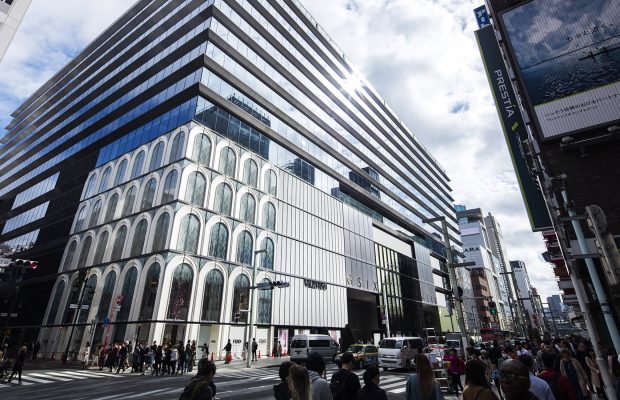
    Ginza Six, one of the largest commercial complexes in Tokyo’s Ginza district, will open tomorrow.

    At Ginza’s 6-chome block, the retail venture was jointly developed at a cost of about ¥86 billion (US$12.4 billion) by companies including J. Front Retailing, which runs the Daimaru and Matsuzakaya department stores, and Mori Building.

    Ginza Six has about 47,000 sqm of sales space – larger than the neighbouring Ginza Mitsukoshi and Matsuya Ginza department stores. With its open ceiling structure, the complex has 241 retail outlets, mainly overseas luxury brands including Christian Dior and Fendi.

    French luxury house Saint Laurent will have its second flagship store for Tokyo across three floors at Ginza Six.

    Ginza Six inside

    Its 17m backlit black marble facade comprises 18 noren panels (traditional fabric dividers) laminated with low-reflective glass. The store will feature pret-a-porter, accessories, shoes, sunglasses and jewellery for women and men.

    Ginza Six’s owners are estimating it will draw 20 million customers and earn ¥60 billion in sales annually.

    It occupies the site that was home for 90 years to Matsuzakaya Ginza, as well as other stores. Rather than buying and selling goods like a department store, Ginza Six runs on the rent from the outlets. “The same business model used in the past can’t be applied forever,” says J. Front Retailing president Ryoichi Yamamoto.

    Other retail developments in the area also mainly house outlets, such as Tokyu Plaza Ginza and Marronnier Gate Ginza, a renovation of Printemps Ginza that opened in March.

    Ginza Six will attract foreign tourists as well as trigger consumption, says Mori Building president Shingo Tsuji. “This is one of the largest redevelopment projects in the history of Ginza. It will be a new symbol of Ginza.”

    Attractions at the development include a noh theatre and a rooftop garden.
  • Yellow Cab Pizza Vietnam to open in suburb district

    Yellow Cab Pizza Vietnam to open in suburb district

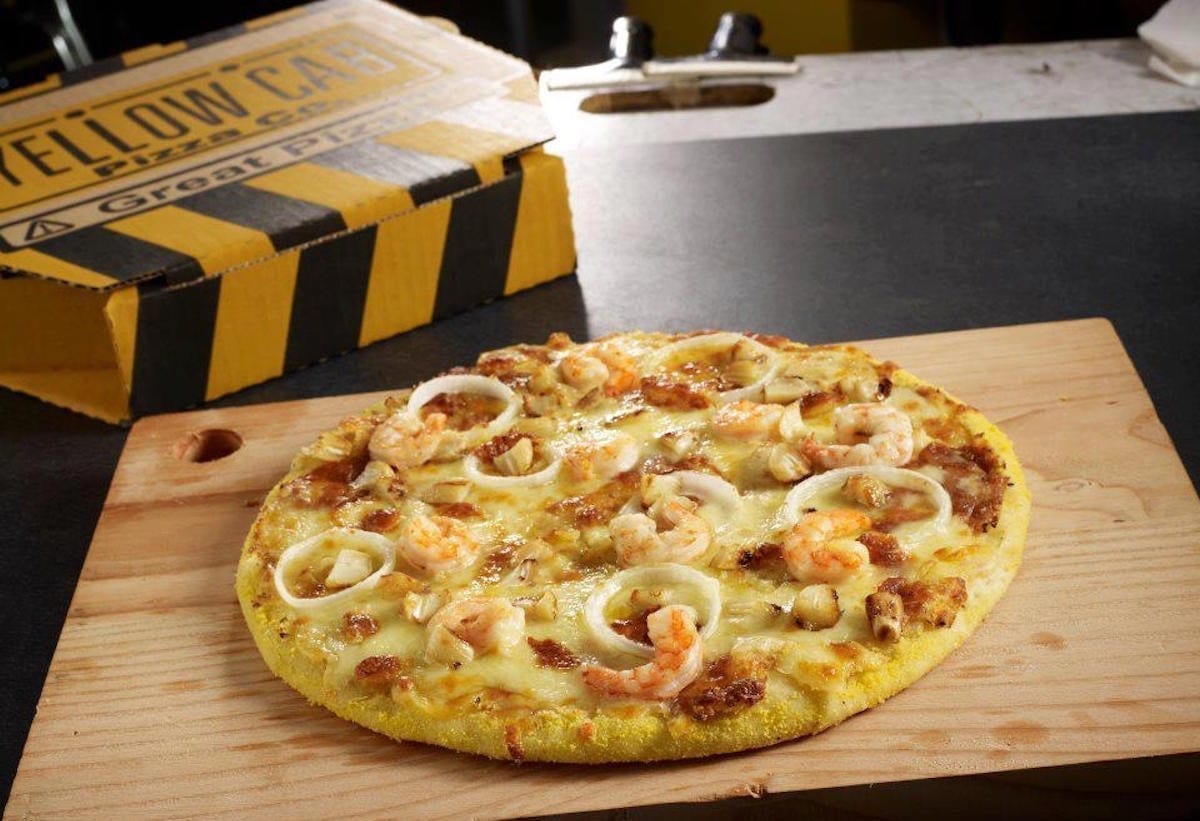
    The Philippines’ Yellow Cab Pizza is about to open its first restaurant in Vietnam.

    The chain, owned by Max’s Group, which is rolling out franchised eateries across Southeast Asia, will launch in Ho Chi Minh City.

    But instead of debuting in the CBD suburb, District 1, as most international brands have traditionally done, Yellow Cab Vietnam has chosen the suburban area of Hau Giang street in District 6.

    Yellow Cab Vietnam

    Rapidly rising retail rents in District 1 are the most likely reason for the location chosen. While it is attractive to open the first store in District 1, the rent is now likely to cost as much as four times that of neighbouring districts.

    Good locations are becoming increasingly rare with so many international and local brands competing for the same space. However, it is expected that Yellow Cab will open in the CBD once it has tested its model and offer on Vietnamese consumers.

    “When F&B chains enter Vietnam, they will enter with multiple unit commitment, so eventually they must have stores outside of District 1,” commented Sean Ngo, CEO of VF Franchise Consulting.

    He said in District 6, there would be less competition from similar products and services in these non-central districts, and providing brands like Yellow Cab more opportunities in their early days in the city.

    Yellow Cab Vietnam will open 12 stores in the country within five years under a partnership between Max’s Group and Blue Star Food Vietnam.

  • Burberry sales ‘lacklustre’ despite China boost

    Burberry sales ‘lacklustre’ despite China boost

    Strengthening sales in Mainland China and an “exceptional” UK performance helped UK luxury fashion retailer Burberry weather a weakening US market in its second half year.

    Same-store Burberry sales rose 3 per cent – a lesser rate than during the third quarter. The company said a recovering Mainland China market had driven growth in Asia-Pacific.

    Incoming CFO Julie Brown says UK Burberry sales soared 90 per cent during the second half year as US tourists took advantage of the weaker pound in the UK.

    But sales in its wholesale division fell by 13 per cent and licensing sales fell 38 per cent, although the latter was largely due to the company taking back control of its Japan business.

    While based in Great Britain, the bulk of Burberry’s turnover is abroad and Hong Kong and China comprise its largest market.

    Releasing its second half year sales figures, the company revised down its estimate of the sales boost from the weaker UK currency from an earlier projected £130 million to £115 million. And it warned shareholders to expect a £10 million hit in 2018.

    Charlotte Pearce, associate retail analyst with GlobalData, described the second half results as “lacklustre” following impressive third quarter figures.

    “Burberry’s international performance in the second half has proved disappointing, with declining sales in Korea and the US and a challenging market in the Middle East bringing down the brand’s overall performance.

    “However, its plan to invest in store refits will help to increase footfall, especially in areas such as Hong Kong, where trading has historically been much more positive.”

    She said Burberry’s strong digital performance, particularly via mobile, continues to drive growth for the luxury brand as it maintains its reputation as a digital innovator in the luxury market.

    “Burberry live-streamed its February catwalk show on Instagram, giving the brand a sense of accessibility and allowing the brand to engage with shoppers on a platform where many consumers are regularly active. Burberry’s investment in experiential retail, including its app which will be rolled out in English speaking countries from the first quarter, will resonate well with modern shoppers and enable it to promote new products.”

  • Chow Tai Fook sales recovering in Hong Kong, Macau

    Chow Tai Fook sales recovering in Hong Kong, Macau

    Same store Chow Tai Fook sales in Hong Kong and Macau “continued to show a sequential improvement” during the first quarter of the year.

    The trend reverses 12 consecutive quarters of decline by the Hong Kong-listed jeweller, the first increase since last last three months of 2014.

    Chow Tai Fook says Mainland China same-store sales rose 12 per cent year-on-year and in the two SARs by 4 per cent. However, sales volume declined by 2 per cent in the mainland and 1 per cent in Macau and Hong Kong.

    Performance of gold products in both Mainland China, Hong Kong and Macau benefitted from an increase in Average Selling Price, rising 19 per cent. But sales of gem-set jewellery fell 17 per cent year-on-year during the quarter in the two SARs.

    “The percentage of RSV (retail sales value) settled by China UnionPay or RMB to the total RSV of Hong Kong and Macau market, a proxy for sales contribution from Mainland tourists, declined to 45 per cent in the quarter as compared to 49 per cent of the same period last year,” Chow Tai Fook said in its stock exchange filing, adding that “such contribution was similar to that in the first half of FY2017”.

    The company had 2381 points of sale as of end-March, with 102 located in Macau and Hong Kong.

  • Walmart India weighing food retail possibilities

    Walmart India weighing food retail possibilities

    Walmart India is “evaluating” new foreign direct investment (FDI) guidelines for the food retail space. This follows the government permitting 100 per cent FDI in the sector.

    Walmart India president/CEO Krish Iyer describes the government’s decision as a good step. “It’s a very noble objective in terms of being able to double farmers’ income and reduce food waste.”

    He says the company has been evaluating the guidelines and “at an appropriate time” will look at the sector. Walmart India currently works in the wholesale segment with 21 cash-and-carry stores across nine states. It plans to increase the number of stores to 50 by 2021.

    Regarding its Best Price wholesale stores, Iyer says the major focus has been in states where the company already has a presence – Andhra Pradesh, Haryana, Himachal Pradesh, Madhya Pradesh, Maharashtra, Punjab, Telangana, Uttarakhand and Uttar Pradesh.

    Walmart India is a wholly ­owned subsidiary of US retail giant Walmart Stores.

  • Miniso US making debut in California

    Miniso US making debut in California

    Miniso US is opening its inaugural store on Friday, in Southern California.

    Known for launching new products every seven days, the four-year-old Chinese discount retailer, which positions itself as a “Japanese lifestyle brand” will have a weekend of celebration to mark the opening of Miniso Pasadena.

    Highlights of the opening will include a taiko drumming performance, goodie bags for the first 200 customers and Miniso headphones for the first 60 shoppers who spend at least $30.

    As an industry disruptor, Miniso combines fashion, lifestyle and low prices. On average, the retailer opens 80 to 100 stores monthly with an anticipated 6000 outlets worldwide by 2020 and global revenues of US$9 billion.

  • Malaysians spending up online, says iPay88

    Malaysians spending up online, says iPay88

    Despite a sluggish economy, Malaysians are buying online more than ever, according to payment service provider iPay88.

    A subsidiary of Japanese company NTT Data, iPay88 claims to cover 70 per cent of Malaysia’s e-commerce market. It recorded 38.2 million online transactions via its payment gateway systems last year, a leap of 161 per cent from 14.6 million in 2015.

    Executive director Lim Kok Hing says e-commerce and online purchases soared by 210 per cent last year, mainly because of convenience and the ability to find better deals online.

    Transactional data from iPay88 shows that the volume of marketplace shopping for the first quarter of this year grew by 293 per cent, with purchases mainly being online games, ticketing, and fashion and apparel.

    While the type of goods being bought online have not changed, people are spending more online. Main purchases include apparel and footwear (RM25.3 million, or US$5.7 million), accessories and jewellery (RM5.1 million), and electronics and sports equipment (RM3.3 million).

    An interesting trend noted by iPay88 is that online shopping spikes during week days, with the two daily peak times being 11am to 3pm, and 7pm to 11pm. The most popular days for shopping are Wednesdays, Thursdays and Fridays.

    Set up in 2006 and headquartered in Kuala Lumpur, iPay88 has also established a presence in Indonesia, Singapore, Thailand, the Philippines and Vietnam.

  • Vietjet offers millions of promotional tickets for “Free Summer, Fly for FREE”

    Vietjet offers millions of promotional tickets for “Free Summer, Fly for FREE”

    To celebrate the coming summer, Vietjet launches its most outstanding campaign ever – “Free summer, Fly for FREE” from April 25 to June 15, 2017, offering one million promotional tickets priced from only HKD0 within the golden hours 13:00 – 15:00 at www.vietjetair.com together with some very interesting activities.

    During the campaign’s first week, Vietjet will run a three-golden-day promotion from April 25 to 27, 2017. This applies for all Vietnam domestic and international routes from Vietnam to Hong Kong, Seoul and Busan (South Korea), Kaohsiung, Taipei, Taichung and Tainan (Taiwan), Singapore, Bangkok (Thailand), Kuala Lumpur (Malaysia), Yangon (Myanmar) and Siem Reap (Cambodia) with travel period between May 15, 2017 and December 31, 2017 (excluding national holidays).

    The promotional tickets are available for booking within the golden hours from 13:00 to 15:00 at www.vietjetair.com or at www.facebook.com/vietjethongkong (just click the “Booking” tab). Payment can be easily made with debit and credit cards of Visa, MasterCard, JCB, KCP and American Express.

    Especially from May 8, 2017 to June 4, 2017, participants of the “Free Summer – Fly for FREE” game at Vietjet’s microsite: freesummer.vietjetair.com will have the chances of winning a weekly award of 5 free return flights, each flight with 5 free tickets for a five-person group and a grand award of a free package tour to an optional destination.

    Also, all customers successfully booking tickets at www.vietjetair.com with instant payment within the golden hours (13:00-15:00) from May 8, 2017 to June 15, 2017 will also have the chances to join the lucky draw for the gifts of mobile phone top-up cards and air ticket promotion codes (*) at www.summerwin.vietjetair.com. Besides, the summer campaign will feature a series of activities including interactive games, amazing performances by Vietnamese and international celebrities, “Vietjet Bikini” challenge at some domestic airports and onboard Vietjet flights, which are expected to “heat up” the coming summer.

  • Apple self-driving car testing plan gives clues to tech program

    Apple self-driving car testing plan gives clues to tech program

    Apple Inc outlined a plan to train operators of self-driving cars in documents submitted to California regulators earlier this month, the latest clues to the company’s autonomous vehicle technology aspirations.

    Apple was granted a permit to test self-driving cars on April 14 by the California Department of Motor Vehicles but the company has never said anything about its plan.

    The state released 41 pages of Apple application documents to Reuters that give some clues about the company’s highly secret self-driving effort, which it has never openly acknowledged.

    The iPhone maker joins a long list of carmakers, start-ups and technology rivals, including Alphabet’s Waymo, that are testing cars on state roads. Apple is looking for new hit products and autonomous car technology is expected to revolutionize the traditional auto industry.

    As part of the application, Apple included a 10-page training plan that appeared to be related to operators taking back manual control of the car during automated driving exercises of the system, which it calls a development platform.

    Apple declined comment beyond the filing.

    The plan includes a document called “Automated System: Development Platform Specific Training Overview” whose objective is “to train safety drivers in various automated driving conditions.”

    “Development platform will be controlled electronically (e.g. joystick) and safety drivers must be ready to intervene and take control,” the document reads.

    The document highlights different scenarios to be tested, from high speed driving and tight U-turns to lane changes.

    One letter sent from Apple to the state Department of Motor Vehicles noted that Apple’s development platform “will have the ability to capture and store relevant data before a collision occurs.”

    The document does not include detail on how Apple’s self-driving platform actually works or other technical details. It also does not say what kind of sensors are found on Apple’s three permitted vehicles, all 2015 Lexus model RX450h.

    The permit does not necessarily mean that Apple itself is building a full car. Apple could instead be designing a self-driving platform that can be integrated into other manufacturer’s cars.

  • Delhi leads India by internet readiness

    Delhi leads India by internet readiness

    The state of Delhi leads India in internet readiness, according to a new report from the Internet and Mobile Association of India (IAMAI) and Nielsen.

    In the report titled Index of internet readiness of Indian states, Delhi has overtaken last year’s winner Maharashtra and is followed by Karnataka, Maharashtra, Kerala and Tamil Nadu.

    According to the report, Delhi has won top spot because of its superior infrastructure and online participation.

    Releasing the report, Aruna Sundararajan, Secretary, Ministry of Electronics & Information Technology (MeiTy), Government of India said: “We are hopeful that India will leapfrog from the present 155th position to world’s top fifth in connectivity, within the next 5-6 years. India today is one of the most rapidly digitizing economies in the world with the telecom industry leading the change. Things have improved multifold with state governments of Chattisgarh, Andhra Pradesh and Telangana among others taking proactive steps to improve connectivity and internet reach.”

    “The combination of various indigenous digital platforms along with innovative and disruptive startups holds the greatest scope for digital transformation in India. Post demonetization, the country today has 3 million POS as compared to 1.5 lakhs POS earlier which is clearly a transformation and going forward, the infrastructure for digital payments will grow 3X within a span of one year,” she added.

    The North East has ranked low in terms of overall internet readiness. Much more needs to be done in the form of investment and infrastructure development in the region. Among the north eastern states, Nagaland tops the list, closely followed by Manipur and Tripura. Nagaland leads in IT environment and performs moderately well in other categories to get to the top.

    Internet readiness index is a composite benchmark of four components: e-Infrastructure index, e-Participation index, IT-Environment and government e-services index. All four components have equal weightage in this model. Separately, a fifth Index (named the Core Internet Index) has been created this year, consisting of select variables already used in constructing the above indices.

    The purpose of the index is to give a sharper perspective for digital industries looking to expand their business in India.

  • Air Asia: Cebu is a priority

    Air Asia: Cebu is a priority

    TO aid in the decongestion of the Manila airport, an airline executive disclosed that Cebu will be his company’s priority as it expands its fleet and increases the number of flights to various domestic and international destinations. “Cebu is a priority of AirAsia…We are looking at expanding our routes in Cebu,” said Philippines AirAsia director of flight operations captain Gomer Monreal in a press conference last Saturday.

    The airline company launched on Saturday new routes connecting Cebu to three domestic destinations, namely Davao, Boracay via Caticlan airport, and Puerto Princesa. AirAsia has added two new daily flights from Cebu to Davao, and to Puerto Princesa and Caticlan. This is on top of its existing routes Cebu-Singapore, Cebu-Taipei, Cebu-Kuala Lumpur, and Cebu-Incheon/Seoul. Aside from Cebu, AirAsia has also expanded its Davao routes to Cebu twice daily, added daily flights to Boracay, three times weekly to Palawan, and four times weekly to Clark.

    “The plans are on the table but these are variable. We already have a hub here. All we have to do is expand the frequency,” said Monreal. With AirAsia’s interest for expansion in Cebu, GMR-Megawide Cebu Airport Corp. (GMCAC) chief commercial adviser Ravishankar Saravu said this will make Cebu a more popular destination. “With more Cebu routes, this will reduce the congestion in Manila. (In Cebu airport) we are trying to improve the transfer of domestic and international flights,” said Saravu. Presently, MCIA is connected to 27 domestic destinations and 16 international destinations.

  • IMDA warns StarHub over October outages

    IMDA warns StarHub over October outages

    Singapore’s Infocomm Media Development Authority (IMDA) has issued StarHub a warning over two brief home broadband outages from October last year, after finding that the disruptions were caused by a surge in legitimate DNS traffic.

    StarHub Online’s home broadband network was disrupted on October 22 and October 24, causing fiber customers in parts of the market to lose connectivity intermittently for around 130 minutes and 55 minutes respectively.

    The initial symptoms of the outage bore the hallmarks of a DDoS attack, and the timing coincided with the massive DDoS attacks on DNS provider Dyn in the US.

    But IMDA said an in-depth investigation involving reviewing logs of StarHub DNS servers and consumer devices identified as responsible for the disruptions did not uncover any evidence to suggest that the cause was a DDoS attack.

    Instead, a higher-than-usual build-up in StarHub DNS traffic just prior to the disruption appears to be to blame, as these mostly legitimate DNS requests eventually overloaded part of StarHub’s home broadband infrastructure.

    IMDA and the Cyber Security Agency of Singapore (CSA) identified areas of improvement in StarHub’s network infrastructure during the investigations, and said StarHub has taken steps to mitigate the risks of further outages, including boosting home broadband DNS server capacity and enhancing traffic monitoring.

    In an emailed statement, StarHub said it noted the findings that the outages did not fit typical DDoS patterns.

    “The authorities have acknowledged the fact that we have increased our DNS processing capacity and taken additional security measures to better avert similar incidents,” the statement reads.

    “We assure our customers and the regulator that we will continuously review our security posture and enhance network resilience in partnership with network and security providers.”

  • Budget airliner cuts fares to Rs 1,099 in new summer scheme

    Budget airliner cuts fares to Rs 1,099 in new summer scheme

    AirAsia offer: Summer holidays are here and airlines are looking to lure with their low-fare schemes. Budget airliner AirAsia India has slashed ticket prices for travelers on flights to Bengaluru, Chandigarh, Goa, Hyderabad, Jaipur, Pune and Visakhapatnam, to as low as Rs 1,099 in its summer scheme. However, the offer is available for the limited period and fares are not available during the embargo period. The offers are available for the period between September 5, 2017 to February 8, 2018. Bookings will stop on April 30.

    The fares for New Delhi-Srinagar and New Delhi-Bagodogra routes have been reduced to a starting Rs 1,699 and Rs 2, 499 respectively. Similarly, the airliner has reduced fares from Bengaluru to Kochi and to Rs 1,299. The ticket prices from Bengaluru to Pune and Visakhapatnam will start at Rs 1,499. It has also kept fares from Bengaluru to New Delhi at Rs 2,999 during the given period.

    The airliner has slashed fares of its international flights too. If a passenger plans to take a flight from Bengaluru to Kuala Lumpur, then he has to pay a fare starting from Rs 2,399. For connecting flights from Bengaluru to Kuala Lumpur and from there to Jakarta, the fare is starting from Rs 4,352.

    Similarly, air fares of connecting flights from Kolkata to Bangkok, and then to Phuket will start from Rs 5,949 during the given period. Air tickets for flights connecting Kolkata to Bangkok and after that to Singapore are starting from as low as Rs 6,061.

    During the period, fares of AirAsia flights departing from Chennai to Singapore via Kuala Lumpur will start from Rs 7,137. For those passengers who are planning to go to Yangon from Chennai during the period, airfares will begin from Rs 7,371. They will have to change from Kuala Lumpur.

  • M1 shareholders may seek sale to China Mobile

    M1 shareholders may seek sale to China Mobile

    Major shareholders in Singapore’s M1 have reportedly approached China Mobile with an offer to sell their majority stake in the operator.

    Malaysia’s Axiata Group, Singapore Press Holdings and Keppel T&T – which together hold a controlling 61% stake in M1 – are reviewing their investments in the operator in the wake of lackluster financial results and intensifying competition.

    The shareholders have now reached to China Mobile as well as other prospective bidders with a proposal to sell the stake, citing unnamed sources.

    Negotiations are still at an early stage and it is unclear whether China Mobile was receptive to the offer, the report notes.

    M1 is worth around S$1.9 billion ($1.36 billion), and has long been considered an acquisition target due to its smaller size and diverse shareholder base. Rumors were circulating last month that rival StarHub may be considering acquiring or merging with M1, but later reports disputed those rumors.

    The report adds that Singapore trading rules would require the purchaser of the stake to make an offer to buy out the rest of M1.

    The review comes ahead of the arrival to the market of new entrant TPG Telecom, the Australian fixed line operator that recently won the auction to become Singapore’s fourth mobile operator. TPG is also planning a mobile foray in its home market.

  • PT Telkom launches TV-based video calling

    PT Telkom launches TV-based video calling

    Indonesia’s PT Telkom has soft-launched the market’s first TV-based video communications service, in collaboration with Huawei.

    The IndiHome Video Call service will allow subscribers to PT Telkom’s triple-play IndiHome fiber broadband, telephony and TV service to also use their TV to place video calls.

    The service combines IPTV and IMS functionality, incorporating a set-top box with integrated video communication capabilities and a webcam to support video communication between TV and TV, TV and smartphone as well as smartphone and smartphone.

    IndiHome Video Call supports high-definition video with a resolution up to 720p as well as HD voice.

    PT Telkom plans to launch the service commercially in the East Java, Bali and Nusa Tenggara area by the middle of next month.

    “With the soft launching of IndiHome Video Call, we hope that the presence of IndiHome may be useful to the community of East Java, Bali, and Nusa Tenggara,” PT Telkom’s district executive vice president for the region Suparwiyanto said.

    “IndiHome is easy and practical, a complete digital solution as well as a positive entertainment.”