Tag: asia

  • Samsung offers RM200 rebate on Galaxy J5, J7 for smartphone trade-ins

    Samsung offers RM200 rebate on Galaxy J5, J7 for smartphone trade-ins

    South Korean electronics giant Samsung is offering a RM200 rebate for customers who trade in their old smartphones for its Galaxy J5 Prime, or Galaxy J7 Prime. Samsung Malaysia Electronics said that with the rebate, via the trading-in of smartphones of any brand which is in working condition (the company said the trade-ins do not have to be in perfect form), customers can purchase the Galaxy J5 Prime and the Galaxy J7 Prime for RM699 (retail price: RM899) and RM999 (retail price: RM1,199), respectively.

    The company said that the month-long offer is valid from tomorrow until May 21, 2017, at any participating outlet and Samsung Experience Stores.

    Samsung Malaysia Electronics vice president for IT & Mobile Business unit, Lee Jui Siang, said that the company wants consumers to discover experiences that the company’s mobile phones bring to the table today.

    “This is a golden opportunity for them to expand their mobile experience further. The Galaxy J5 Prime and J7 Prime are great devices coming from the diverse Galaxy J family.

    “Simultaneously, we are encouraging consumers today to responsibly discard their used mobile phones in the most environmentally-safe way possible,” he said in a media statement today.

    Calling the two models “the best smartphones to take ‘wefies’ with”, the company said that the two models feature 13MP rear cameras, with an f1.9 aperture lens for bright images, even in low-light settings.

  • WeChat Pay launches new service in Hong Kong

    WeChat Pay launches new service in Hong Kong

    WeChat Pay, one of the Chinese mainland biggest mobile payment platforms, has boosted its cross-border business by launching a new service in Hong Kong.

    In a move that is expected to promote businesses of local merchants, it opened a channel for membership card applications when customers pay through WeChat.

    After paying for their goods through the platform, they will receive information from local merchants’ WeChat official accounts automatically on becoming a member.

    The virtual membership card will enable customers to be given details on vendors’ latest activities, while at the same time help local merchants gain new followers and promote their businesses.

    Hong Kong, which is a major destination for Chinese mainland outbound tourists, is a key market for WeChat Pay to develop its cross-border business, said Grace Yin, director of WeChat Pay international operations.

    “We will further increase our investment in the cross-border payment business in Hong Kong to help local merchants better serve mainland tourists,” Yin said.

    WeChat Pay’s move comes at a time when Hong Kong’s retail industry is still struggling to recover from a “chilling winter” caused by the decline in the number of mainland visitors.

    Mainland arrivals dropped 6.7 percent year-on-year in 2016, according to the Hong Kong Tourism Board. The situation saw a slight improvement this year, rising 1.1 percent from January to February compared with a year earlier.

    “Linkage of WeChat payment and the merchants membership system will enable us to provide a better shopping experience to consumers, thereby enhancing our brand reputation. Moreover, with data on WeChat Pay users, we will be able to understand our consumers better,” said Wang Yifan, social media specialist with British cosmetics brand Lush, which has a number of stores in Hong Kong.

  • Alibaba hub spells trouble for malls

    Alibaba hub spells trouble for malls

    A veteran economist foresees trouble for traditional retailers when the Alibaba Group sets up its logistics hub in Malaysia. Speaking to Retail News, Hoo Ke Ping said the hub, which is expected to be operational at the end of 2019, would threaten the survival of shopping malls and small-time traders.

    He noted that traditional retailers were already facing competition from their online counterparts, but he said the hub would pose a more significant challenge.

    He described Lazada, the Alibaba-owned online retailer, as among the most competitive with its pricing and said it would be a challenge for mall-based retailers to match it because they could not avoid overheads like rent, utilities and wages.

    Hoo also said there was an oversupply of shopping malls, with many struggling to find occupants for their retail spaces.

    Last month, a news report quoted Savills Malaysia managing director Allan Soo as saying the retail market could take up to four years to improve due to the oversupply in retail spaces.

    The Klang Valley alone has 160 malls and hypermarkets, including seven megamalls. Seven more megamalls are in the pipeline.

    Hoo also noted that Pos Malaysia, which currently handles parcel deliveries for Alibaba, was building up its capabilities to tap into the e-commerce market.

    In a press interview in February, Pos Malaysia CEO Mohd Shukrie Mohd Salleh said the group was in the process of beefing up its capabilities and infrastructure so it could provide a full range of eFulfilment services required by the industry.

    The term “eFulfilment” describes the people, processes and technology used in delivering an online order to a customer.

    Hoo said Alibaba’s Malaysian logistics hub would accelerate the shift towards e-commerce.

    Recently, Reuters reported that the hub will function as a centralised customs clearance, warehousing and fulfilment facility for Malaysia and neighbouring countries and would speed up clearance for imports and exports.

    “This means it will be easier for people to sell and move their goods within the country,” Hoo said. “So the prospects for shopping malls and even small retailers in rural areas don’t look so good.”

    He noted that the situation was not unique to Malaysia.

    “The same thing is happening in the United States as more businesses switch from brick and mortar stores to the online market,” he said, citing the likes of women’s clothing chains The Limited and Bebe.

    According to a Business Insider report, The Limited shut down all of its 250 stores, laid off 4,000 workers and moved its business online. Bloomberg reported last month that Bebe was planning to take a similar route.

  • Singapore office rents under pressure

    Singapore office rents under pressure

    Office rents in Singapore’s central business district eased 1.2 per cent to S$8.90 (Bt220) per square foot a month in the first quarter of this year, while retail rents show signs of stabilising despite challenges, a property consultancy says.

    Research by Edmund Tie & Co shows the decline in CBD office rents last quarter abated from the 2.1 per cent drop in the fourth quarter of last year.

    While the uncertain external environment continued to pressure rents, higher pre-commitment levels at upcoming completions and the filling up of newer buildings helped support rent levels.

    Office rents in Marina Bay eased 0.5 per cent in the first quarter of this year, less than the 2 per cent seen in the fourth quarter of last year.

    This was supported by the higher occupancy rate of 96.8 per cent in the first quarter of this year compared with the 94.6 per cent in the fourth quarter of last year.

    Shadow space in Marina Bay, as of the first quarter of this year, declined from nearly 150,000 square feet (14,000 square metres) to 45,650 square feet. “While the market showed signs of stabilising, it is premature to conclude the office market is bottoming out due to the uncertain external environment.

    “Geopolitics in the region remain volatile, although the summit talks between US President Donald Trump and Chinese President Xi Jinping went well,” said Lee Nai Jia, head of research.

    Retail rents are exhibiting signs of stabilisation, with gross rents of first-storey retail space in Orchard Road and Scotts Road staying flat at S$37.20 per sq ft per month in the first quarter of 2017. This was in contrast to the corresponding period of last year, when rents declined by 1 per cent

    Rents in Orchard Road and Scotts Road remained resilient, supported by limited supply. The fall in first-storey retail rents in other city areas, including Raffles Place, City Hall, Tanjong Pagar, Shenton Way and Bugis, also moderated – to 0.6 per cent quarter on quarter in the first quarter.

    In the fourth quarter of last year, the quarterly decline was 1 per cent.

    The stabilisation of rents comes on the back of higher visitor arrivals and stronger retail sales last year.

    According to preliminary estimates from the Singapore Tourism Board in February, arrivals grew by 7.7 per cent to 16.4 million and tourism receipts by 13.9 per cent to S$24.8 billion.

    Retail occupancy across the island also improved towards the end of 2016, reaching 91.5 per cent in the fourth quarter from 90.6 per cent in the third quarter.

    “E-commerce is an enabler that allows the products of local retailers to reach to a wider audience, without paying the high rents at prime shopping malls,” Lee said.

    More Singapore residents are drawn to cities like Bangkok and those in Taiwan, Malaysia and South Korea for shopping.

    Lee cited Bangkok’s Chatuchak market as  being a popular destination for Singapore shoppers.

  • Centric Software Opens New Office in Hong Kong

    Centric Software Opens New Office in Hong Kong

    Centric Software announces the opening of a new office in Hong Kong, bringing its innovative Product Lifecycle Management (PLM) solutions to local retailers, brands and manufacturers. Centric Software is the leading PLM solution for fashion, retail, footwear, luxury, outdoor and consumer goods companies.

    The opening of the Hong Kong office confirms Centric Software’s explosive growth in Asia, having recently opened an office in Tokyo, Japan in 2016 and Shanghai, China in 2014. In addition, the company recently announced the signature of its first customer in Australia, Redbubble. Leveraging the success and continued growth in the region, now with 25 Asian customers, Centric plans to further develop the market in Hong Kong and the surrounding regions.

    “Prior to the opening of our new Hong Kong office, we had already built strong momentum with several large customers.  Companies in Hong Kong and throughout South East Asia need modern, mobile-based PLM solutions. It’s a big space to grow,” said Nick Wei, Regional Sales Director Hong Kong at Centric Software.

    “The fashion market is very competitive and companies need every possible advantage beginning with the products they make and sell; products are the heart of any brand, retailer or manufacturer.  Making great products starts with great product development technology, like Centric PLM,” Wei adds.

    Supporting not only retailers and brands, but also original design manufacturers (ODM) and original equipment manufacturers (OEM) with flexible, configurable, out-of-the-box and intuitive PLM, Centric Software solutions enable companies to speed time to market, improve team collaboration and cut costs while developing deeper bonds with trading partners.

    “Fashion companies here are really excited to finally have a modern, mobile PLM solution available to them. They want innovative easy to use, cloud and mobile-based PLM software that provides a ‘single version of the truth’ solution,” Wei explains, “Centric’s mobile applications, which are the first to be developed in the sector, keep product teams connected at all times to aid product design development and execution.”

    “In Asia, when a company invests in a technology partner, they want to know you are present and a have strong local team to service them. This new office will allow Centric Software to work in close proximity with our customers and provide them with the industry best practices and Agile DeploymentSM knowledge needed to enable their ambitious growth strategies,” Wei concludes.

    “We are very excited to announce the opening of our new home in Hong Kong,” said Chris Groves, CEO of Centric Software. “We will continue to build on innovations made with our customer partners in the region and will look forward to welcoming new ones into the Centric family.”

  • Orchard revamp a step in the right direction, say experts

    Orchard revamp a step in the right direction, say experts

    Pedestrianisation of Orchard Road is a step in the right direction, said observers, as they flagged considerations and floated suggestions for the proposal to work.

    “Great cities have great streets, and many of them are pedestrianised,” said urban planner William Lau. The former president of the Singapore Institute of Planners gave the Myeongdong shopping district in Seoul as an example.

    “It is very vibrant. The shops spill out onto the street there,” he said, adding that accommodation would have to be made for buildings which are accessible to vehicles only via Orchard Road.

    Redirecting traffic around the area may be difficult as it is not built on a grid, said National University of Singapore transport researcher Lee Der Horng.

    But Mr Gopinath Menon, transport consultant and senior research fellow at the Nanyang Technological University, felt pedestrianisation could be done with little impact to vehicular traffic. He suggested that Orchard Boulevard, which runs parallel to Orchard Road between Orchard Link and Grange Road, could be converted to a two-way road to accommodate traffic. Public transport can serve as an alternative to cars for shoppers headed to the area.

  • Manhattan Associates Unifies Brand Experience  for Country Road Group Customers

    Manhattan Associates Unifies Brand Experience for Country Road Group Customers

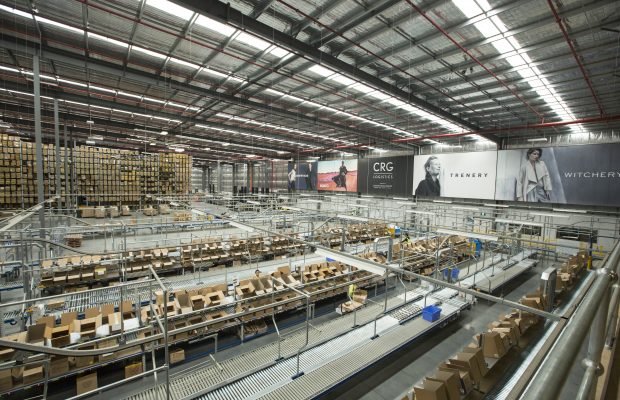
    Manhattan Associates, today announced that Country Road Group, one of Australia’s largest specialty fashion retailers, has completed a successful roll out of Manhattan’s Warehouse Management Solution (WMS). The technology deployment is a key component of a business transformation project designed to deliver a unified brand experience for customers across channels and to drive ongoing business growth.

    Country Road Group’s business and sales channels have evolved in complexity and scope as the company has expanded its operating footprint. With over 700 stores and a growing online operation, the retailer had outgrown its outsourced logistics services model and recognised the critical need to take greater command of its supply chain. The company made the strategic decision to invest in a new distribution centre (DC) and chose Manhattan’s solution to orchestrate goods flows through the new DC.

    Peter Fouskarinis, Head of Supply Chain Australasia, Country Road Group / David Jones, commented, “The Manhattan solution has enabled us to optimise our store replenishment and online order fulfilment processes, resulting in improved product availability and customer satisfaction.”

    The Manhattan solution’s advanced fulfilment logic for wave management, constraint-based selection and real-time replenishment has been critical in helping Country Road Group to realise its omni-channel commerce goals. The system eliminates costly physical counts with auditor-approved cycle counting and stores can now provide same day fulfilment as a result of a new cross-docking approach.

    Raghav Sibal, Manhattan Associates’ managing director for Australia and New Zealand, commented, “With our solutions, retailers can take ownership of their omni-channel operations and streamline their distribution processes. We’re confident our solutions will continue to unlock supply chain value for Country Road Group and support its commitment to strengthening customer relationships for many years to come.”

  • Failed Pepsi, Nivea ads show industry’s diversity problem

    Failed Pepsi, Nivea ads show industry’s diversity problem

    ‘Between Nivea’s ‘white is purity’ ad and Pepsi’s ‘Black soda matters’ ad, I think it’s time to open my ‘Ask a Black person’ consulting firm.’ Recent high-profile advertising missteps by Pepsi and skin-care company Nivea underscored anew Madison Avenue’s awkward relationship with racial diversity at a time when the United States is becoming less white.

    PepsiCo’s ill-fated “Moments” spot, featuring model Kendall Jenner, was quickly pulled with an apology after being vilified for trivializing the “Black Lives Matter” movement.

    Nivea also apologized and withdrew an ad for a deodorant after its “White is Purity” pitch was embraced by white supremacists.

    Social media had a field day with the botched campaigns, which seemed to suggest scant progress from the white male bubble of the 1960s depicted in the popular television series “Mad Men.”

    “Between Nivea’s ‘white is purity’ ad and Pepsi’s ‘Black soda matters’ ad, I think it’s time to open my ‘Ask a Black person’ consulting firm,” comedian Travon Free said on Twitter.

    In fact, data shows a diversity deficit in a sector that both reflects and molds public sentiment.

    Only 4.1 percent of advertising industry employees in the country are African Americans, well below their 13.3 percent of the overall population. Latinos account for 12.3 percent of the industry, compared with 17.6 percent of the population.

    Nearly half of respondents among advertising employees said the industry was “terrible” or “not great” at hiring diverse professionals, with another 25 percent describing it as “mediocre,” according to a survey released last September by the American Association of Advertising Agencies.

    The trade group’s outgoing president Nancy Hill made publicly calling out “racist and misogynistic behavior” her New Years resolution for 2017.

    “I have realized given the current climate in our country and our industry, that doing that privately is tantamount to condoning the behavior,” Hill said in a column on a marketing industry website.

    “Others involved need to know that this industry does not tolerate this kind of thinking and its resulting behavior any longer.”

    Some major advertisers, such as Verizon, General Mills and Hewlett-Packard have threatened to fire firms that aren’t diverse enough.

    Pepsi misfires

    The demise of the Pepsi spot has especially provoked intense discussion throughout the industry. The company is led by Indian-born chief executive Indra Nooyi, a vocal proponent of diversity.

    A poll showed 40 percent on respondents blamed the debacle on lack of diversity or diversity of thought, while 25 percent said it reflected an overzealous approach to attracting millennials and 13 percent blaming the fact that it was made by Pepsi’s in-house creative team and did not involve an outside firm.

    The spot follows Jenner as she is stirred from a fashion shoot by a handsome Asian cellist to join an unspecified but peaceful street protest with people of all ethnicities, including African American street dancers.

    The two-and-a-half minute short film culminates with Jenner handing a Pepsi to a handsome grinning police officer, a move that draws wild applause from the crowd, including from a hijab-wearing photographer who nods in agreement as she records the moment.

    The spot spurred instant ridicule, most witheringly from Bernice King, who posted a picture of her father, Martin Luther King, being apprehended at a civil rights march by police.

    “If only Daddy would have known about the power of #Pepsi,” King wrote on Twitter.

    History repeating?

    Kelly O’Keefe, a professor of brand strategy at Virginia Commonwealth University, said the spot was shockingly heavyhanded in its constant hawking of cola.

    It reflected a “cloistered view of the world and distorted view of diversity,” he said, adding that the spot has dominated discussion in class this week.

    Jake Beniflah, executive director of the Center for Multicultural Science, thought the ad was a spoof when he first saw it because of the omnipresence of the product and in its creation of “utopian” world where every race is shown.

    “Perhaps they thought diversity on camera was enough, but obviously it wasn’t,” Beniflah said. “In fact, it backfired.”

    For Judy Davis, a marketing professor at Eastern Michigan University, the controversy stirred memories of Barbara Gardner Proctor, one of the women she profiled in her book, “Pioneering African American Women in the Advertising Business: Biographies of MAD Black WOMEN.”

    Proctor was fired in the 1960s from a large firm when she refused to work on a campaign that showed black women clamoring in the street for a hair product. The ad was a tasteless allusion to the civil rights movement, she said.

    “It was the same kind of trivialization of a serious social movement and taking that to promote some brand,” Davis said.

    “You would think in 2017 things would be different. But here we are seeing some of the same problems that were present 50 years ago, and I think that’s pretty amazing.”


  • Omnichannel customer experience drives contact center growth

    Omnichannel customer experience drives contact center growth

    The rising relevance of the cloud in the current business environment is prompting contact center solution providers (CCSPs) to shift from a premise-based legacy infrastructure to hosted/cloud contact centers.

    Global, as well as mid-sized CCSPs such as Avaya, Genesys, Verint, NICE, Cisco, Unify, Interactive Intelligence and West Interactive, are strategically offering an omnichannel customer experience to attract business across end-user segments.

    Frost & Sullivan finds that the acceleration of omnichannel and digital transformation, coupled with the C-suite demand for stronger and swifter growth, is driving technology acquisitions.

    “Hosted/cloud contact center solutions will benefit from converged tools, newer social channels and deeper integrations to expand their footprint from 24% of the total seats base in 2015 to a likely 40% by 2020,” said Nancy Jamison, principal analyst of Frost & Sullivan Digital Transformation.

    “CCSPs can drive home the advantage by delivering an omnichannel CX that aligns with the needs of all stakeholders, including employees, customers, prospects, suppliers, distributors and partners.”

    Jamison said contact center vendors need to find a way to tap greenfield opportunities while still catering to their large installed base of premise products.

    “Vendors that deliver a comprehensive suite of cloud contact center solutions comprising of mobile, social, web real-time communication, analytics, machine learning, artificial intelligence, automation and personalization technologies, will grow faster than best-of-breed solution providers,” said Jamison.

  • Tesla becomes most valuable US car maker, edges out GM

    Tesla becomes most valuable US car maker, edges out GM

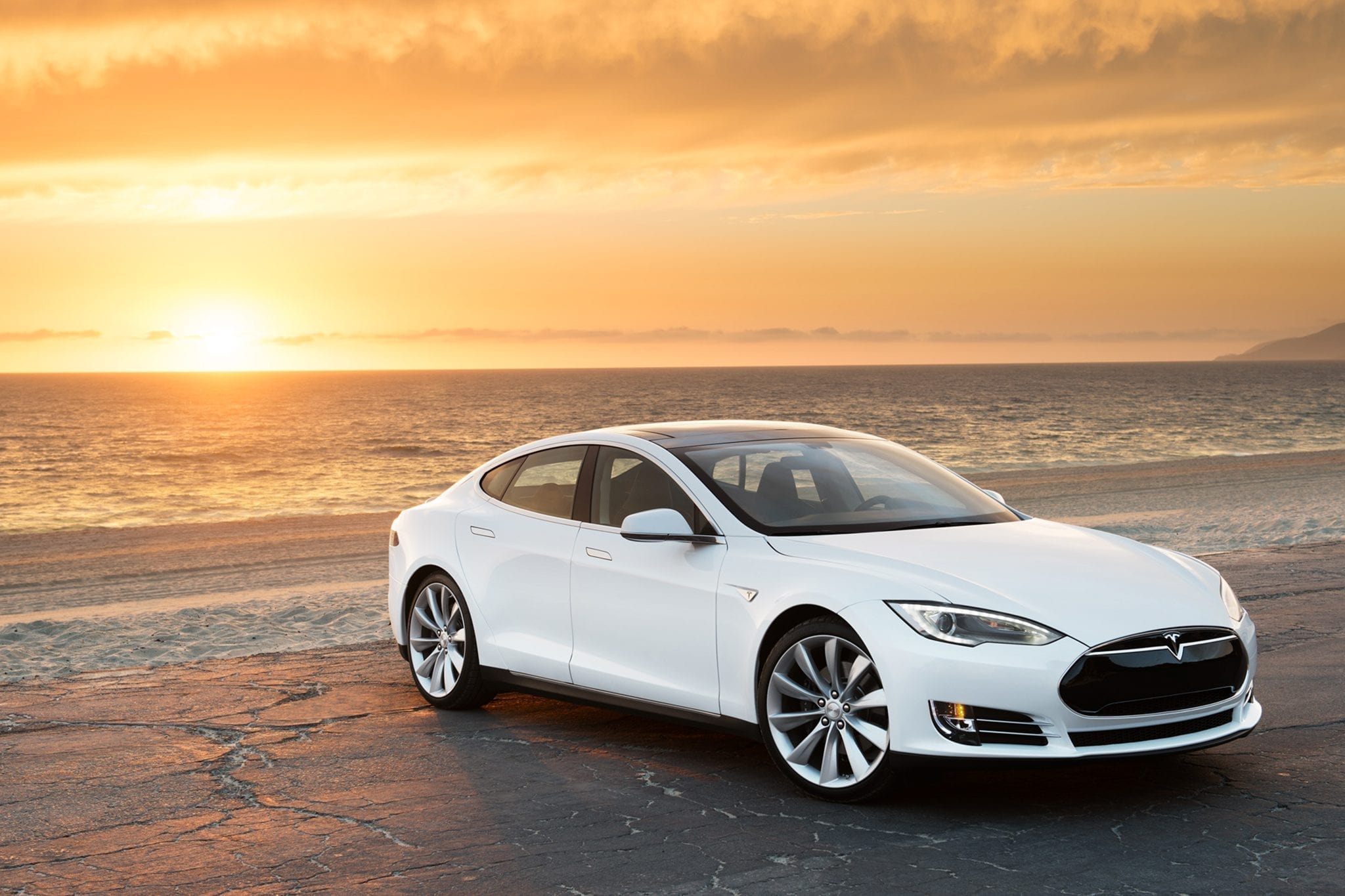
    For the first time in the era of the modern automobile, the most valuable U.S. car maker is not based in Detroit. Silicon Valley’s Tesla Inc overtook General Motors on Monday to become the U.S. car maker with the largest market capitalization as the century-old automobile industry increases its reliance on software and cutting-edge energy technology.

    That milestone is likely to be on the minds of Tesla Chief Executive Elon Musk and GM Chief Executive Mary Barra as they and other CEOs visit the White House on Tuesday to discuss tax reform and infrastructure with President Donald Trump.

    Helped by an analyst’s recommendation, Tesla rose 3.26 percent to a record high of $312.39 on Monday. Its market value of $50.887 billion exceeded GM’s by about $1 million.

    Over the past month, the luxury electric car maker has surged 35 percent as investors bet that Musk will revolutionize the automobile and energy industries.

    That compares to a declining share performance by GM in recent years that recently led billionaire investor David Einhorn to propose splitting the stock into two classes to help boost its price.

    Tesla’s market capitalization is now equivalent to $102,000 for every car it plans to make in 2018, or $667,000 per car sold last year. By comparison, GM’s market capitalization is equivalent to $5,000 per car it sold in 2016.

    The Palo Alto, California company is rushing to launch its mass-market Model 3 sedan in the second half of 2017 and quickly ramp up its factory to reach a production target of 500,000 cars per year in 2018. Last year it sold 76,230, missing its target of at least 80,000 vehicles. By comparison, GM sold 10 million cars and Ford sold 6.7 million.

    With its stock down nearly 20 percent since 2013, GM has scaled back operations outside the United States while pushing to improve its profitability. It announced in March it would sell its European operations.

    Reflecting Wall Street’s worries, GM’s stock trades at 6 times its expected earnings, the lowest multiple among companies in the S&P 500.

    Proponents believe Tesla, which is not profitable, argue its stock price is justified based on long-term expectations for Tesla’s growth.

    They also point to opportunities from Tesla’s acquisition last year of money-losing solar panel installer SolarCity and Tesla’s Nevada battery cell plant aimed at driving down manufacturing costs.

    Analyst enthusiastic

    After driving a Tesla for seven months, Piper Jaffray analyst Alexander Potter on Monday upgraded the stock to “overweight” from “neutral”, describing Tesla’s products as “captivating”.

    “Tesla isn’t just another company. More so than any stock we’ve covered, Tesla engenders optimism, freedom, defiance, and a host of other emotions that, in our view, other companies cannot replicate,” Potter wrote in a report.

    Skeptics believe Tesla’s growth targets are unrealistic and that the company risks being overtaken by GM, Ford and other deep-pocketed manufacturers ramping up their own electric-vehicle offerings.

    Its market capitalization remains smaller than Japan’s Toyota Motor Corp, at $173 billion.

    Tesla’s rich valuation has made it a target of short sellers, who so far in 2017 have suffered over $2 billion in paper losses as the stock rallied.

    Jeffrey Gundlach, who oversees over $105 billion in assets at Los Angeles-based DoubleLine Capital, told Reuters last week: “As a car company alone, Tesla is crazy high valuation. As a battery company – one that expands and innovates substantially – maybe the valuation can work.”

  • Uber’s ride hailing service is finally legal in Vietnam

    Uber’s ride hailing service is finally legal in Vietnam

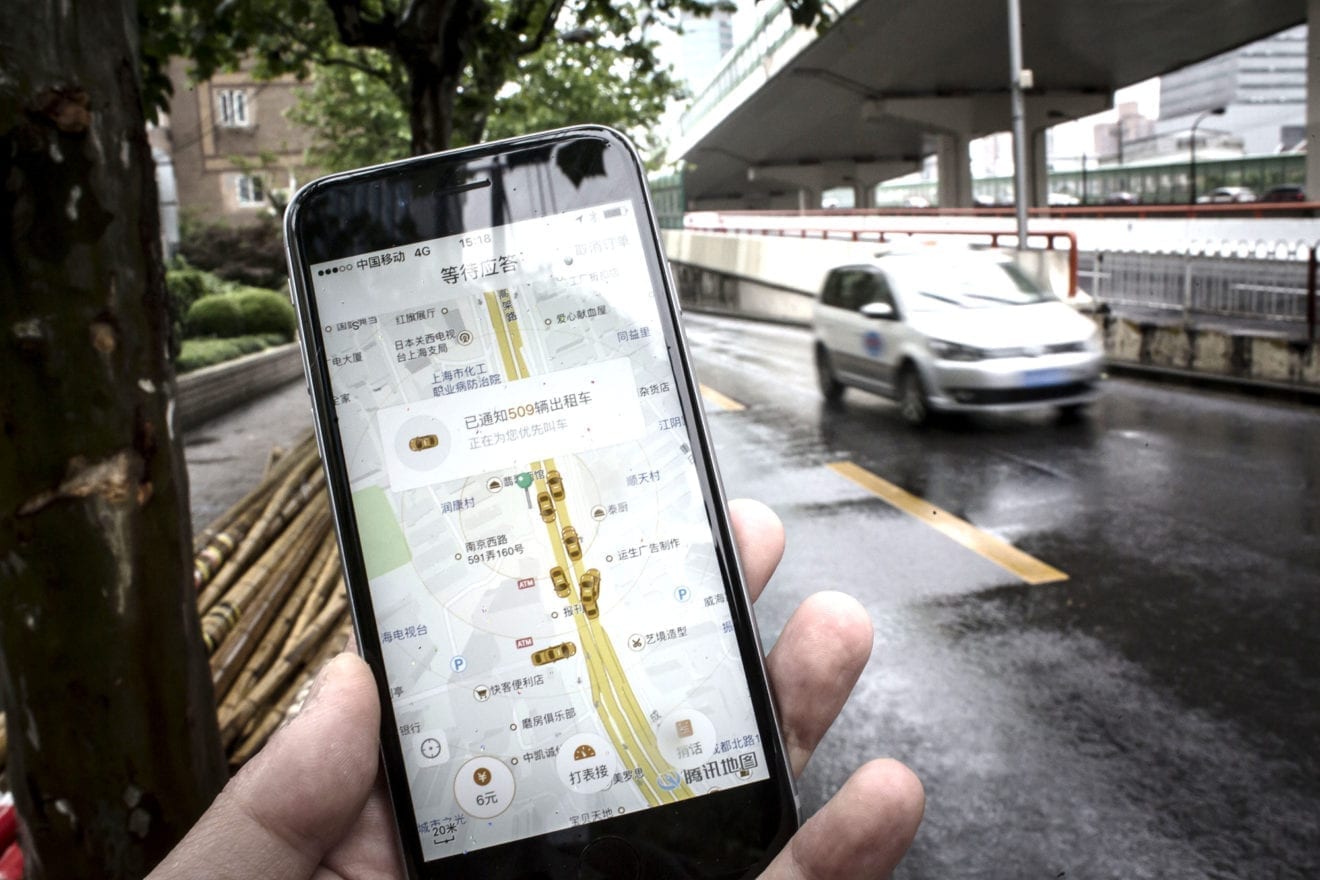
    The ride-hailing firm has now secured approval from local authorities after two previous rejections. The Vietnamese government has finally approved Uber’s application to trial its ride hailing services, a minister said, after having rejected requests from the company twice since 2015.

    Deputy Transport Minister Nguyen Hong Truong said on Monday that Uber Vietnam has fulfilled all necessary conditions to pilot its online ride-hailing application. However, the company will still need approval from local authorities before it starts operating, Truong added.

    The main obstacle facing Uber’s quest to legally offer its services in Vietnam was mainly its failure to register Uber Vietnam as a ride service provider since its arrival in June 2014 as the company expanded into Southeast Asia.

    Previously, Uber Vietnam was only registered to offer “consulting and management” and “market research and public opinion polling”. Now, it’s also registered to offer “information technology services and other computer related services.”

    The Transport Ministry previously said that Uber Vietnam’s authorization given by its parent company – the Netherlands-based Uber International Holding BV – which provides the smartphone application for Uber services, was insufficient.

    Market regulators said the parent company should be held responsible for the application rather than its Vietnamese business unit.

    Local regulators outlawed Uber’s smartphone app-based services in November 2015 after they flagged the company for tax avoidance.

    In an attempt to regulate ride-sharing services, Vietnamese regulators have allowed companies to run pilot programs through IT applications under 3-year contracts. Vietnam’s transport authorities earlier approved a pilot scheme for Grab Vietnam, Uber’s main rival, that also entered Vietnam in 2014.

    The Malaysia-based Grab was previously the only foreign-run transport service allowed to operate in five cities across Vietnam using registered private vehicles between 2016 and 2018.

  • Virgin Media picks Netcracker for revenue management

    Virgin Media picks Netcracker for revenue management

    Virgin Media has expanded its relationship with Netcracker by selecting it as the managed services provider of choice for its Revenue Management solution.

    By using Netcracker’s Managed Services, Virgin Media will be able to scale more flexibly while reducing the cost of operations.

    This multiyear managed services engagement with Netcracker will open new opportunities for Virgin Media to deliver customized services for its business customers and improve scalability in terms of meeting increasingly complex customer demands.

    “Our longstanding relationship with Netcracker is built on trust and its proven ability to deliver and support complex business programs, which drove us to select it for this important initiative,” said Duncan Macdonald, executive director of technology and transformation at Virgin Media.

    “Netcracker has demonstrated and validated its managed services capabilities around the world and we are happy to extend our partnership in order to meet our objectives,” said Macdonald.

    Sylvain Seignour, chief customer officer at Netcracker, service providers are constantly evolving to meet new customer needs, which create complexities that can be mitigated through the use of managed services.

  • ‘I’ve never aimed at being a billionaire’ says Vietjet CEO

    ‘I’ve never aimed at being a billionaire’ says Vietjet CEO

    Vietnam’s richest woman with an estimated net worth of $1.2 billion says she’s not used to the new title yet. CEO of Vietnam’s rising budget carrier VietJet said her main goal in business is not money or a “billionaire” title, which she received last month as the only self-made woman billionaire from Southeast Asia.

    “To be honest, I’m not used to it yet,” Nguyen Thi Phuong Thao, 46, said during the Forbes Vietnam Women Summit 2017 on Wednesday.

    “During my 30 years in business, I’ve never counted my money and I’ve never aimed at being a millionaire or billionaire,” Thao said.

    She said she did not grow up poor and thus earning money was never her primary goal. Her main concern, she said, is to build a strong stand for her business.

    Thao studied economics and finance in Soviet Russia in the 1980s. She founded VietJet, the country’s only private airline, in December 2011, after starting her career trading commodities in Eastern Europe and Asia.

    The “bikini” airline, nicknamed after its unique yet controversial promotional campaign for depicting a female crew in bikinis, now makes up 41 percent of the domestic air travel market, only one percentage point behind the national carrier Vietnam Airlines.

    It went public on February 28 and, in less than a week, reached the market value of $1.8 billion, ahead of Vietnam Airlines’ $1.7 billion.

    Thao said her carrier is not competing directly with Vietnam Airlines. “We create our own customers. We do not take them from others.”

    She said around 30 percent of VietJet’s passengers never flew before and more than half of their air routes are brand new.

  • Cebu Pacific links up with KLM AFI to service expanding fleet

    Cebu Pacific links up with KLM AFI to service expanding fleet

    Gokongwei-led budget airline Cebu Pacific (CEB) has chosen Air France Industries KLM Engineering and Maintenance (AFI KLM E&M) to provide maintenance support for its expected new fleet of Airbus A320s .

    “This is our first agreement with Cebu Pacific and also our first component support contract in the strategic Philippines market,” said Gery Mortreux, Executive Vice President of AFI KLM E&M in a statement released.

    The selection of AFI KLM E&M came following a call for tenders by CEB in September last year for the carrier’s expanding fleet of Airbus passenger jets .

    The long-term contract covers a fleet of over 40 Airbus A320-family aircraft, and encompasses full component support and solutions, including repairs and local pool access to maximize aircraft availability for both CEB’s A320s and its future A321neos.

    The A321 neo (new engine option) is a variant of the A320 that features a more efficient engine and more aerodynamic refinements.

    CEB currently has a fleet of 59 aircraft, comprised of 4 Airbus A319s, 36 Airbus A320s, 7 Airbus A330s, 8 ATR 72-500, and 4 ATR 72-600 aircraft. The average age of its fleet currently stands at 4.94 years.

    The airline also expects to take delivery of 45 brand-new aircraft as part of its fleet renewal program composed of one brand-new Airbus A330, 32 Airbus A321neos, and 12 ATR 72-600s

    All told, the new aircraft will bring the CEB fleet to 85 by 2021.

    CEB’s local rival, flag carrier Philippine Airlines (PAL), is also in the process of upgrading its fleet headlined by two new Boeing 777–300ERs set to arrive in December 2017 and January 2018, the airline announced over the weekend.

    Along with that, it is also expecting the arrival of the Q400 Next Generation turboprops for domestic flights starting in July 2017, and the first of 6 new A350-900s expected to arrive in 2018.

  • BMW i3 Wins Inaugural World Urban Car

    BMW i3 Wins Inaugural World Urban Car

    At a press conference hosted by the New York International Auto Show, Bridgestone Corporation, and Autoneum, the BMW i3 (94Ah) was declared the inaugural winner of the 2017 World Urban Car award.

    “We are delighted and honored that the BMW i3 has been recognized as the World Urban Car,” said Ludwig Willisch, Head of BMW Group Region Americas. “This award highlights BMW Group’s commitment to sustainable mobility through BMW’s first all-electric vehicle made primarily of carbon fiber. The design brief for the BMW i3 was to create a Mega City Vehicle for the cities of the future. Today, the new 2017 BMW i3 (94 Ah) provides more range paired with a high-level of dynamic performance, making it the perfect urban vehicle for people around the world.”

    2017 marks the first year for the World Urban Car award. World Car vice-chairman, Mike Rutherford, commented, “It’s an award whose time has come. Everyday cars in many – perhaps most – parts of the world will have to become smaller if road and parking space is to be found for them in increasingly packed towns and cities whose populations are swelling annually. This year’s winner in our inaugural World Urban Car category proves that these small vehicles don’t have to be cheap, undesirable and unpleasant to drive. Quite the opposite. It is among the best value-for-money products on the market”.

    This year’s winner was chosen from an initial entry list of 7 cars from all over the world, then a short list of three finalists as announced in Geneva last month: the BMW i3 (94 Ah), the Citroen C3 and the Suzuki Ignis

    Vehicles in all award categories are selected and voted on by an international jury panel comprised of 75 top-level automotive journalists from 23 countries around the world. Each juror was appointed by the World Car Steering Committee on the basis of his or her expertise, experience, credibility, and influence. Each juror typically drives and evaluates new vehicles on a regular basis as part of their professional work. Through their respective outlets they collectively reach an audience of many millions world-wide. The international accounting firm KPMG tabulates the jurors’ ballots.

    The Road to World Car began in Paris on September 29, was followed by test-drives in Los Angeles in November, continued in Geneva with the Top Three in the World announcement, and finally ended today with the declaration of the winners in six categories at the New York International Auto Show.

    2017 marks the 11th anniversary of the partnership between World Car and the New York show, and the fourth consecutive year that the World Car Awards have retained their ranking as the number one automotive awards program in the world in terms of media reach.

    The Global Trends Report, co-presented annually by Prime Research and Autoneum, was also released today.The report is the culmination of research and insights across the past six months. Autoneum CEO Martin Hirzel said, “The auto industry is in the midst of an upheaval that goes far beyond anything it has experienced in the past 100 years. Emerging industry trends such as autonomous driving, electric mobility and connected cars are changing not only vehicles and their technologies but also their concepts and forms. As the market leader in acoustic and thermal management for vehicles, Autoneum today already offers a large variety of multifunctional and lightweight technologies and components to meet the requirements of modern mobility. With our recently established “Competence Center for New Mobility” in Sunnyvale, California, Autoneum is taking a committed and active role in driving vehicle advancement by developing innovative technologies and components for all forms of mobility.”

    World Car of the Year is more than just an awards program. The World Car community brings together a large cross section of experts and professionals from every segment of the automotive industry. World Car connects the global industry around the very best of today and inspires, with insights, the ideas and trends of tomorrow. Thus defining The Road Ahead platform shared with our presenting partners Bridgestone Corporation, Prime Research, Autoneum and, most recently, Brembo.

    “As the world’s largest tire and rubber company, we are proud to partner with the World Car program for the 9th consecutive year,” said Mike Martini, president, original equipment tire sales, U.S. and Canada, Bridgestone Americas Tire Operations. “This is an important forum for leaders in the automotive industry to celebrate achievements in innovation, performance and sustainability. As new mobility preferences emerge, we must continue to collaborate across our industry to deliver cutting-edge technology and world-class products that meet the needs of a changing global customer base.”

    In a rapidly changing automotive world, Brembo is also focused firmly on the future and the vehicles it will bring to market. Brembo is committing significant resources to perfecting ever more sophisticated virtual simulation methodologies that includes the study of forms, materials, technologies and surface treatments able to meet the needs of the new-generation vehicles, with a particular focus on environmental impact aspects, which drives all of Brembo’s development activities.