Tag: asia

  • Papua releases export containers to China

    Papua releases export containers to China

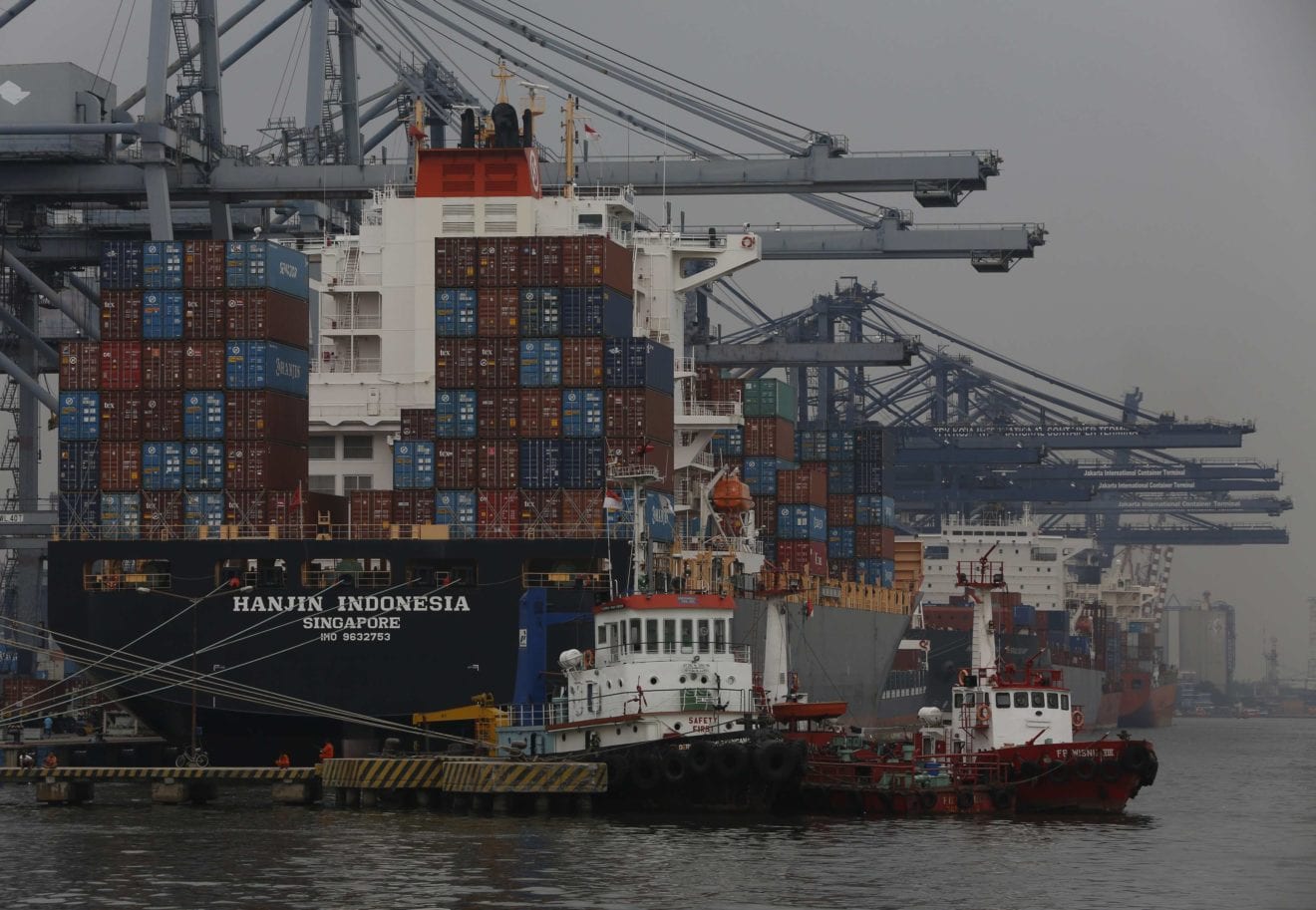
    The Papua provincial government, facilitated by the Indonesian ship management PT. Pelindo IV, has released 100 containers of forest products to China.

    President Director of PT Pelindo IV, Doso Agung, said in a statement received by ANTARA here on Tuesday that the exported containers released by the Governor of Papua, Lukas Enembe, along with the Board of Directors of Pelindo IV, is expected to bring in a revenue to Rp20 billion (or about US$1.5 million).

    Doso stated that Pelindo IV will continue to carry direct export to transport Papua’s commodity crops to a number of countries.

    “Direct export is expected to stimulate the economy in regions where the Pelindo IV operates. We will boost the direct exports, particularly in the ports managed by Pelindo IV,” he noted, adding that the Papua provincial administration will provide ships from Australia to open seaweed markets.

    The release event was followed by a groundbreaking of the Jayapura seaport extension development in order to increase the capacity of the port.

    Enembe appreciated Pelindo IV for engaging in direct overseas export.

    Lukas hoped the direct export will immediately open up overseas market for Papuas commodities, and the area can attract investors.

    He also hoped that the direct export would not only include forest products but also other commodities in Papua such as coffee, cocoa, and fisheries.

  • Viu OTT service users hit over 6m in 14 markets

    Viu OTT service users hit over 6m in 14 markets

    PCCW Media said its Viu OTT video service has reached over 6 million active users in one and half year after launch and is driving 3G/4G acquisition and mobile data consumption for its telco partners in the region.

    Speaking at Broadband Forum Asia in Hong Kong Tuesday, Helen Sou, senior vice president and digital media head of OTT at PCCW Media, said Viu is now available in 14 markets in Southeast Asia, Middle East and India and the company is expected to continue to see strong growth in its user base.

    As of February, Viu had 6 million monthly active users, 80% of which were Generation-X with high disposal income and millennials who were receptive to digital ads. These users, Sou said, are highly engaging and valuable viewers, consuming an average of 1.8 hours of content per day or 12 videos per week.

    “These 6 million users are very sticky and consistent. They are not just coming in and leave in two months, they view video quite often and consume quite a long while,” she said.

    “They are valuable users for us, our advertisers and telco partners, because they are willing to spend money, consume data, pay for content and be responsive to digital advertisements.”

    Sou said Viu service has also created quantifiable value for its telcos partners in the region, driving up mobile data usage and 3G/4G customer acquisition in the markets where the service is available.

    “We’ve heard a lot of good things from partners, especial telco partners…In some markets, there are users afraid of buying data plans or either buy low-end data plan, but because of Viu they upgrade their data plans or their smartphones, and in some cases, some extend their Wi-Fi plans from hourly to weekly or migrate to the mobile network,” the executive said.

    Citing statistics from telco partners from one unidentified country, she said the Viu service has helped telcos achieve 3.5GB average monthly mobile data consumption per user and 25% incremental data revenue and APRU growth in three months.

    Launched in October 2015, Viu targets emerging markets with strong potential growth for 4G, where there are expected to have 600 million 4G users in 2020, according to the GSMA.

    The company is currently working with 20 telco partners in the region, including U Mobile, Maxis, TM, Indosat, AIS, Vodafone, Airtel, Digi, Idea Cellular and Singtel.

    According to Sou, OTT video revenue, including subscription revenue and advertising revenue, is expected to grow tremendously in these emerging markets next four years, with Middle East growing at CAGR 33%, India CAGR 62.8% and South East Asia CAGR 27.3%.

    There is also strong potential for OTT video, which is expected to account for around 75% of mobile data traffic, generating 69 exabytes in 2020, compared to 8.5 exabytes of mobile data traffic in 2016, she added.

    Sou said Viu is now a dominant OTT player in the region, attributing its success to good product, localization and good content for the success.

    Instead of Hollywood content, the company started with premium Asian video content – Korean, Bollywood, Japanese and Chinese dramas – and variety shows from over 200 content partners. The company also differentiates with fast local subtitling by promising viewers to deliver popular content as fast as 8 hours after local telecast.

  • Alibaba Group’s UC News crosses 100 mn active users in India, Indonesia

    Alibaba Group’s UC News crosses 100 mn active users in India, Indonesia

    Alibaba Mobile Business Group-owned company UCWeb’s news app UC News has garnered more than 100 million monthly active users (MAUs) in India and Indonesia. With 100 million daily article views, UC News has rapidly grown in the India and Indonesia markets since its launch in June 2016.

    UCWeb is increasing its focus on digital content aggregation and distribution in India, the world’s second-largest internet market.

    Talking about the latest milestone, Alibaba Mobile Business Group, president of overseas business, Jack Huang said, “We are experiencing a fast rise in the average time spent on UC News. As of this quarter, an average user spends over 23 minutes on UC News. Users are embracing diverse digital content and their appetite for such content is being met by UC News. Going forward, we are also targeting more diversified and localised content on our platform by end of 2017 to make the local content ecosystem stronger. With over 100 million MAUs, UCWeb envisions itself as powerful as Google and Facebook, and aims to bring the global mobile internet to an era of ‘GUF’ (Google, UCWeb and Facebook).”

    Leading the user-generated content ecosystem in India, UC News recently announced We-Media Reward Plan 2.0 for self-publishers, bloggers and independent writers with an initial investment of Rs 50 million. UCWeb is investing Rs 2 billion for driving content distribution in India over the next two years.

    With the changing mobile internet landscape, UCWeb has adopted a strategy of becoming a content distribution platform from being a browsing tool by engaging and aggregating diverse form of content on its platforms—UC Browser and UC News.

    According to web analytics firm StatCounter, UC Browser now holds the highest browser market share in India. UC Browser is now the most popular browser in India in terms of internet usage across all platforms, with a market share of 43.31%, followed by Chrome’s 36.07% and Opera’s 8.34% share. UC Browser is also the dominant browser for mobile internet in India with over 100 million MOUs (as of September 2016).

    According to StatCounter, internet usage in India by desktop and tablet fell from 33.2% in January 2016 to 21% this year. Mobile internet usage jumped from 66.8% to 79% over the same time period.

  • Bolloré Logistics Korea Installs an Urban Farm in the Center of Seoul

    Bolloré Logistics Korea Installs an Urban Farm in the Center of Seoul

    Bolloré Logistics Korea recently installed an urban farm on its office rooftop building in Seoul, South Korea, as part of the Group’s initiative to promoting “Green Projects” and protecting biodiversity.

    Urban farming is a practice of growing your own food in the city, with limited space. Bolloré Logistics Korea has transformed the available rooftop space of its 6-floor office building into an urban farm, optimizing current available space resources. This urban farm is split into four parcels and covers a total space of 264 sqm.

    Bolloré Logistics Korea signed an agreement with Pajeori*, a non-profitable organization, to maintain the farm with volunteers from the nearby neighborhood in order to cultivate each a small parcel of the Urban Garden, therefore making it a community base project as well.

    The urban farm is growing organic fruits and vegetables as only natural fertilizers mostly made from rice bran are and will be used. Bolloré Logistics Korea also plans to grow traditional Korean fruits and vegetables which are not always found anymore in big retail stores, as they are difficult to grow and conserve since they require a wide range of unique resources for food and agriculture.

    Some honey plants will also be planted in order to attract pollinators. Back in 2016, Bolloré Logistics Korea sponsored a wooden beehive structure (“Honey Factory”) to create awareness of the vital role of bees in our lives as they are a crucial component of food production and are responsible for a third of the food that we eat.

    Bolloré Logistics Korea looks forward to harvesting the very first crops in the upcoming months.

    Fully in line with the biodiversity action plan put into effect within the Group, Bolloré Logistics’ biodiversity strategy has three fundamental pillars based on the ARC concept (Avoid / Reduce / Compensate):

    • Embracing biodiversity as one of the company’s environmental concerns;
    • Working with customers and suppliers on biodiversity issues and the impact of our activities;
    • Make our sites models for biodiversity, all over the world.
  • UL wire, cable laboratory inaugurated in North Jakarta

    UL wire, cable laboratory inaugurated in North Jakarta

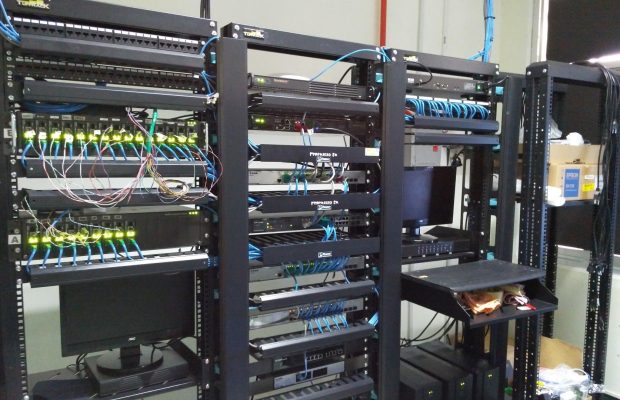
    A United States safety consulting and certification company, Underwriters Laboratories (UL), inaugurated on Tuesday a wire and cable laboratory operated by its subsidiary, PT UL International Indonesia, in North Jakarta as part of its business expansion in Southeast Asia.

    UL commercial and industrial business president Ben Miller said after the inauguration ceremony that the company had chosen Indonesia for the laboratory’s location because of the county’s fast-growing economy.

    UL said in a statement that the laboratory, the company’s first wire and cable certification facility in Southeast Asia, had been accredited by the National Accreditation Committee as a testing laboratory and by the Product Certification Agency (LSPro) for the certification of Indonesian National Standards (SNI).

    The statement said that UL Indonesia had signed an agreement with the Industry Ministry’s Center for Material and Technical Products (B4T) on the expansion of the SNI certification scope by UL.

    UL Indonesia is allowed to provide testing services in line with SNI certification.

    Miller said that UL standard certification required ongoing surveillance and comprehensive monitoring of products starting from their designing until their selling.

    Meanwhile, vice president and managing director for UL ASEAN Region Anthony Tan said that UL operated three laboratories in Southeast Asia.

    The company had two laboratories in the consumer technology and transaction security fields in Singapore and a textile and consumer goods laboratory in Vietnam, Tan said.

    Tan added that the company would open another laboratory in the heating and ventilation field in Thailand this year.

  • Huawei pushing into public cloud market

    Huawei pushing into public cloud market

    Huawei is entering the public cloud market, placing the company in competition with AliCloud, AWS and other major global public cloud providers.

    At the Huawei Global Analyst Summit in Shenzhen yesterday, Huawei said it will work with industry partners to promote ten scenario-specific cloud services covering HPC Cloud, SAP Cloud, IoT Cloud and other common scenarios.

    “Cloud technology is becoming the new growth engine as digital transformations accelerate,” Huawei president of cloud business unit and IT product line Zheng Yelai said at the event.

    “Huawei has continued to step up its R&D, one result culminating in the cloud service offering. Huawei has become the preferred partner for many of the world’s top customers and will continue to provide high-quality cloud services with our partners as we persist in building a healthy ecology in the sector.”

    The vendor is establishing a dedicated cloud division with 2,000 staff and last month launched 54 full-stack public cloud services in ten categories. Huawei said since the launch it has attracted customers in China, Europe, North America, Latin America and the South Pacific.

    Huawei is also working with operators including China Mobile, Deutsche Telekom and Telefonica to provide tailored public cloud services to their respective customers.

  • Vietnam moves ceiling price mechanism for dairy products

    Vietnam moves ceiling price mechanism for dairy products

    The Government removed price ceilings on dairy products for children under six from April 1, 2017 according to the Ministry of Industry and Trade’s proposal.

    The Government has direct the ministry, other ministries and related agencies to manage prices of dairy products for children under six according to the Law on Price and other legal documents. They were also told to enhance State management in price control, anti-speculation and monopoly controls.

    After three years of use, the mechanism had many limitations so abolishing the mechanism was necessary and suitable with price management measures in a market economy.

    Experts said after removing the ceiling price mechanism, the State should encourage competition and a healthy business environment. They also suggested the State regulate the price if a firm gains a monopoly of dairy products or if dairy firms violate the Law on Competition.

    The most important task of the price management agency should be to follow the development of factors used to calculate the selling price. The agency should manage the prices of dairy products according to market rules, the experts said.

    Price ceilings were put in place in May 2014 by the Ministry of Finance. At the end of the second quarter of 2015, the ministry extended the price ceiling to March 1, 2017.

    The Ministry of Finance’s Pricing Management Department said after stabilising milk prices, the prices dropped by between 0.1 per cent and 34 per cent for milk products for under six year-olds.

    Experts said in the short term, buyers have enjoyed lower prices thanks to the price ceiling. But in the mid and long term, the mechanism would hinder the development of milk firms and reduce competition.

    They said the price ceiling for dairy products of children under six would not be for the long term because Việt Nam signed free trade agreements that forbade it from using price ceilings to manage the market.

    At present, 877 milk products for children under six have their prices listed on the websites of the Finance Ministry and local finance departments across the nation.

  • Toyota Invests $1.33 Billion To Upgrade Georgetown, Kentucky Plant

    Toyota Invests $1.33 Billion To Upgrade Georgetown, Kentucky Plant

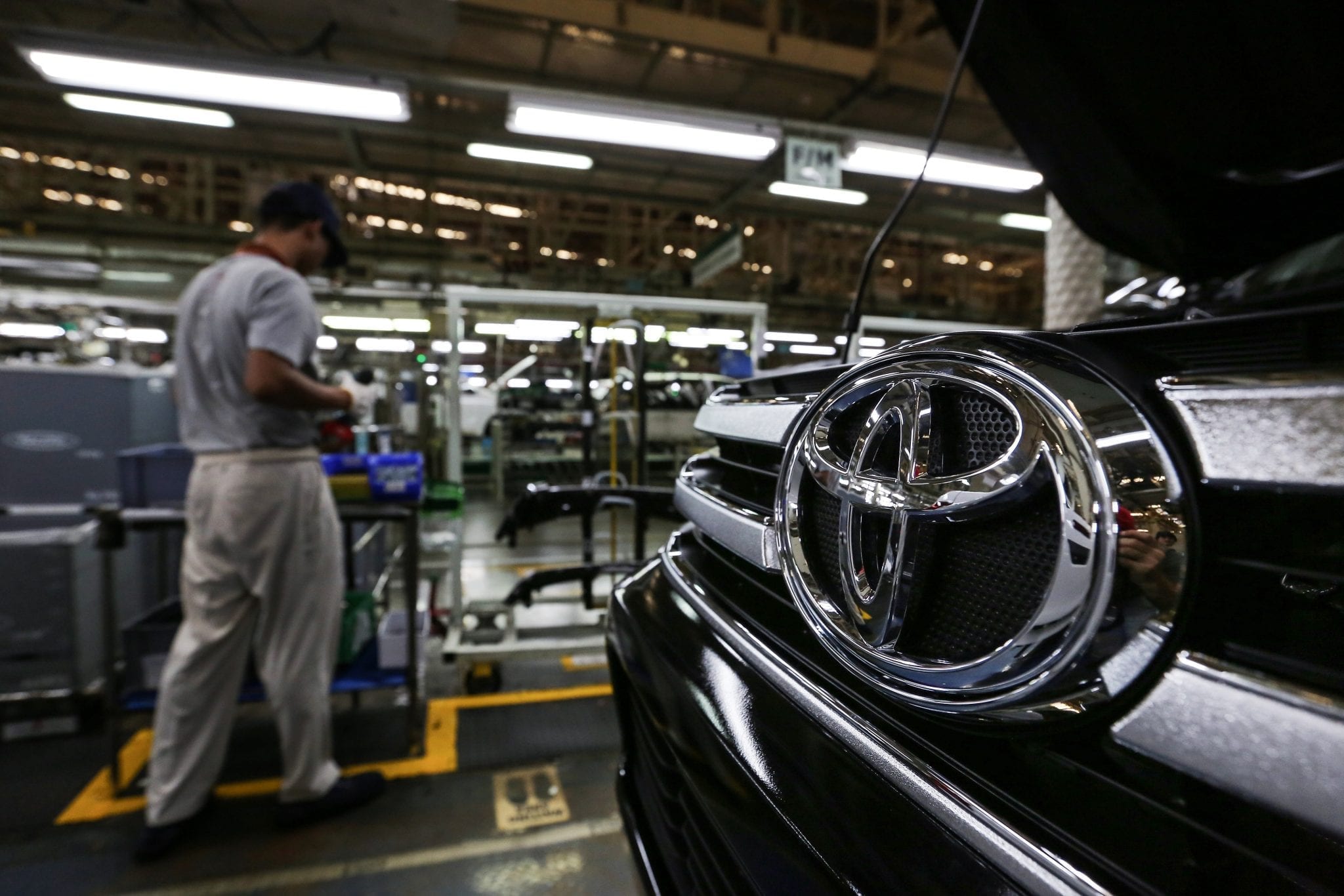
    A $1.33 billion investment will make Toyota Motor Manufacturing, Kentucky, Inc. the first plant in North America to begin producing vehicles using Toyota New Global Architecture.

    Toyota’s Kentucky assembly plant located in Georgetown, 13 miles north of Lexington and 71 miles east of Louisville, is the automaker’s largest in the world employing 8,200 team members. This represents an all-time high after recently adding over 700 people to support the upcoming launch of the 2018 Camry.

    Last year, TMMK produced nearly a quarter of the total number of Toyota vehicles produced in North America, over 500,000. In total, the plant has produced more than one-third, 11 million, of all Toyota vehicles manufactured in North America since 1986.

    Today’s announcement adds to the $530 million investment the plant committed to in 2013, in part to support Lexus production, the carmaker said. This brings Toyota Kentucky’s investment in the last four years to approximately $1.86 billion.

    “This $1.33 billion investment is part of Toyota’s plan to invest $10 billion dollars in the U.S. over the next five years, on top of the nearly $22 billion Toyota has invested in the U.S. over the past 60 years,” said Jim Lentz, CEO of Toyota Motor North America.

    “Toyota New Global Architecture is about exciting, ever-better vehicles for our customers as it will improve performance of all models, including increased fuel efficiency, more responsive handling, and a more stable, comfortable feel while driving,” he added.

    “This is the largest investment in our plant’s history and it speaks directly to the quality of our people and our products, as well as the partnerships we’ve forged in the local community and across the state,” said Wil James, president, Toyota Motor Manufacturing, Kentucky, Inc. (TMMK). “This major overhaul will enable the plant to stay flexible and competitive, further cementing our presence in Kentucky.”

    “Toyota is a global icon. This $1.33 billion investment is further proof of their commitment to producing American-made cars that are among the finest quality found anywhere in the world,” said Governor Matt Bevin. “It also serves as a testament to the hard work and dedication of the plant’s current employees, and reaffirms Toyota’s confidence in the advantages of manufacturing in Kentucky. We are grateful that this significant investment further validates the fact that Kentucky is the engineering and manufacturing hub of excellence in America.”

    “This major investment further solidifies Toyota’s long-term commitment to its Kentucky plant,” said Secretary Terry Gill of the Kentucky Cabinet for Economic Development. “Its ripple effects will add to Toyota’s three decades of transformative impact on our communities and for our residents across the Commonwealth. Additionally, this strengthens Kentucky’s status as a top state for auto manufacturing.”

  • Cebu Pacific’s Dubai route surges ahead as profit doubles

    Cebu Pacific’s Dubai route surges ahead as profit doubles

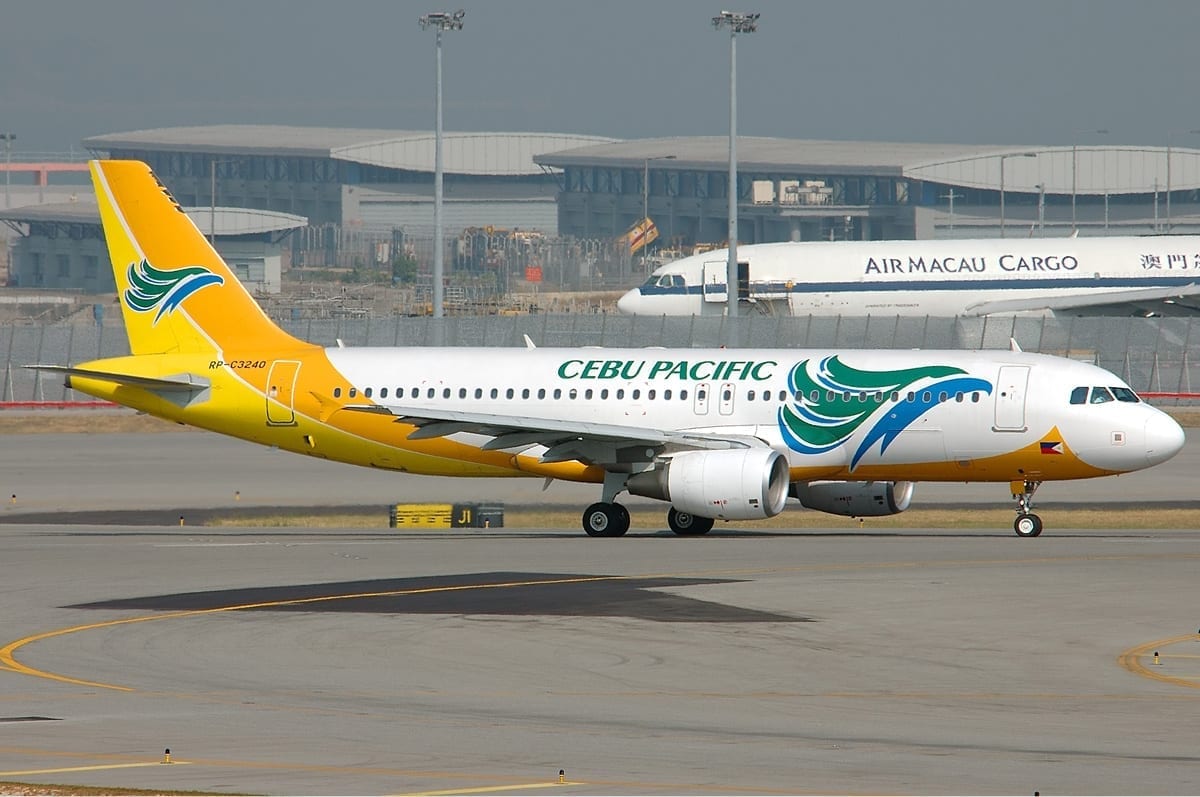
    Cebu Pacific Air boosted passenger numbers between Dubai and Manila last year as profits more than doubled, overcoming overcapacity in the global aviation sector.

    The Philippine low-cost carrier said overall passenger numbers between Dubai and Manila rose by 8 per cent to more than 252,000.

    That beat overall passenger growth at the airline, which flew a total of 19.1 million customers, up by 4.1 per cent on a year earlier.

    The airline reported profit of 9.8 billion Philippine pesos (Dh725.4 million) – an increase of 122 per cent on a year earlier. Growth in revenue from baggage fees, on-board meals and merchandise helped to drive profits higher, it said.

    Total revenue, which includes cargo services, jumped by 9.6 per cent to 61.9bn pesos.

    In 2016, Cebu Pacific flew to 36 domestic and 30 international destinations through 102 routes.

  • Jin Air ready to fly to lombok using Boeing 777

    Jin Air ready to fly to lombok using Boeing 777

    South Korean low-cost carrier Jin Air is ready to fly to Lombok in the Indonesian province of West Nusa Tenggara using a wide-bodied Boeing 777 plane to encourage the tourism industry there, an official said.

    “I have received an official (notification) from the chairman of Korean Air that its subsidiary, Jin Air, is ready to fly to Lombok using Boeing 777,” Chief of the Investment Coordinating Board (BKPM) Thomas Lembong noted following a meeting at the Coordinating Ministry for Maritime Affairs here on Monday.

    He stated that low-cost carriers are badly needed to boost the tourism industry in Indonesia.

    Although investment in the tourism sector is not large, it still plays a very strategic role in creating jobs and bringing in foreign exchange earnings from international tourists, he said.

    “This needs an extraordinary teamwork as many tourists depend on air connectivity. We need air connectivity, particularly through budget carriers, so that there will be low-cost flights from Korea, China, Japan, Australia, India, and so on,” he remarked.

    Besides low-cost carriers, the government must also prepare supporting infrastructures to boost the tourism industry, he pointed out.

    “Although the runways and terminals of airports are still good, we still need to upgrade them. We must check their electronic navigation system, so that planes can land and take off despite bad weather,” he stated.

  • Singtel’s Amobee completes acquisition of Turn

    Singtel’s Amobee completes acquisition of Turn

    Singtel has enhanced its digital marketing capabilities with the acquisition of marketing technology platform provider Turn.

    Singtel’s Amobee digital marketing arm has acquired Turn to provide the ability to offer an end-to-end advertising and data management platform for marketing companies worldwide.

    The platform will cover all channels, formats and devices and also provide access to Amobee Brand Intelligence analytics and insights.

    “The acquisition of Turn underscores Singtel’s commitment to grow and scale Amobee to become a global digital marketing leader,” Singtel Group Digital Life CEO Samba Natarajan said.

    “The powerful combination of Amobee and Turn addresses the rapidly changing digital marketing landscape. Together, we will bring marketers the most innovative, efficient, and data-driven approach to better understand and reach their customers, and enhance the way they engage them on a global scale,” added Amobee CEO Kim Perrel.

  • Goldman Sachs linked to The Body Shop bid

    Goldman Sachs linked to The Body Shop bid

    Investment bank Goldman Sachs is reportedly preparing a £600 million bid for The Body Shop.

    Owner L’Oreal decided to put the ethical cosmetics brand on the market last month, apparently unwilling to invest in arresting falling sales and market share.

    The Body Shop bid price would fall considerably short of the £850 million L’Oreal is said to be seeking – a figure roundly considered as highly optimistic in the investment community.

    Private equity companies Carlyle, CVC Capital Partners, Advent International and Apax Partners have all been reported to have shown an interest in the business. L’Oreal paid £650 million for the business in 2006.

    Founded by Dame Anita Roddick and her husband Gordon in 1976, The Body Shop has grown to more than 3000 stores in 66 countries. The original concept was to create an ethical approach to cosmetics with fewer chemicals and no animal testing.

    Sales fell 3.2 per cent in the first half of 2016 and by 2.8 per cent in the third quarter. Another decline is expected to be reported when L’Oreal releases its results this month.

    Charlotte Pearce, an analyst with GlobalData, warns The Body Shop needs to freshen its offer or face its eventual demise.

    “The brand has become outdated and has failed to provide an innovative offer with exciting new products to entice customers into stores, causing the retailer to lose out to brands with more relevant beauty and skincare ranges,” said Pearce.

  • Community park to be settled in MyTown Kuala Lumpur

    Community park to be settled in MyTown Kuala Lumpur

    MyTown Shopping Centre has opened in the Kuala Lumpur CBD as a joint development by Boustead Holdings and retail banker Ikano.

    It features 1.6 million sqft (148,644 sqm) of retail space (more than 400 stores), an alfresco dining area and a park.

    Anchor tenants include the biggest Ikea and Zara stores in Malaysia, Malaysia’s first Best flagship, Food Empire, Golden Screen Cinemas, H&M, Parkson Department Store and Village Grocer.

    Biggest ZARA in Malaysia @ MyTOWN

    Its two-acre (0.8ha) Town Park has been set aside for community events. It includes ramps and tracks for rollerblading and skateboarding. A Sunken Garden features amphitheater-style.

    MyTown is the first shopping centre in Malaysia to feature Soundscapes – special compositions and custom designed sounds to offer an immersive environment in key locations.

    MyTOWN Launch

    Mr Christian Rojkjaer – Managing Director of Ikea Southeast Asia & Director of Boustead Ikano Sdn Bhd (3rd from left) & Tan Sri Dato’ Seri Lodin Wok Kamaruddin – Deputy Chairman / Group Managing Director, Boustead Holdings Berhad (4th from left) flanked by Directors from Boustead Ikano Sdn Bhd, Boustead Holdings Bhd & Ikano Ptd Ltd including (from left to right), Mr Lee Hartigan, Dato Sri’ Ghazali Mohd Ali, Datuk Koo Hock Fee, Ms. Cheah Swee Choo, Mr Sebastian Hylving, Mr Joakim Hogsander – General Manager of MyTOWN Shopping Centre & Mr Thomas Malmberg.

    GM Joakim Hogsander describes the centre as a lifestyle mall. “We have created a special customer journey through our choice of tenants, design and experience.”

    MyTown has been awarded green building status by the US Green Building Council (USGBC) and Malaysian Green Building Index.

  • Where is Indonesian e-commerce headed?

    Where is Indonesian e-commerce headed?

    With a population of over 250 million and rapidly growing internet adoption, the Indonesian archipelago could offer a booming market for online shopping — and current projections say it will reach $130 billion by 2020.

    “The great thing is that there are a lot of investments… There are choices for consumers that love innovative solutions that are coming out from Indonesia itself,” William Gondokusumo, the CEO of Campaign.com and director of Tororo.com told.

    Recently, the Indonesian government altered regulations to allow more foreign investment in the sector. Indonesia’s investment service agency only recently allowed 100-percent foreign ownership for investments above 100 billion Indonesian rupiah ($7.53 million) for the establishment of an e-commerce company in the country.

    However, even with “big boys” such as Alibaba and JD.com coming in — and Amazon soon following with a reported $600 million investment — Gondokusumo predicted that domestic e-commerce firms won’t be pushed out as they are “more community focused.”

    The slowing Indonesian retail growth numbers of February, and indications that price pressure will continue over the next few months do not affect Gondokusumo’s bullish view on the retail and e-commerce in the country.

    “The way we see it,” he said. “All retail and media companies will eventually become their own social network.”

    On the contrary, Ken Dean Lawadinata, former CEO and chairman of Kaskus Networks, who invested alongside Gondokusumo in Tororo, held a less optimistic attitude.

    “At the moment, I have a more bearish attitude towards the IT industry, where I believe most investors and owners are pushing their company to a quick sell or short term mentality. This is not sustainable and bad for the industry itself,” he told in an email.

  • Australia’s TPG to enter local mobile market

    Australia’s TPG to enter local mobile market

    Fast-growing Australian fixed line operator TPG Telecom has bid A$1.26 billion ($944.8 million) to acquire 2×10 MHz of valuable 700-MHz spectrum, and plans to build its own mobile network using the bandwidth.

    TPG has revealed plans to spend A$600 million over three years to deploy a mobile network that covers 80% of the Australian population.

    As well as its imminent 700-MHz holdings, TPG also holds spectrum in the 1.8-GHz and 2.5-GHz bands. The operator plans to deploy a network consisting of around 2,000 to 2,500 sites, and use its extensive 21,000km fiber network as backhaul.

    TPG currently operates as an MVNO over Vodafone Australia’s network, but now plans to invest in deploying its own network. The company estimates it can break even with around 500,000 subscribers.

    CEO David Teoh said TPG expects to have several advantages over incumbent operators Telstra, Optus and Vodafone due to the ability to operate fewer mobile towers and deploy advanced mobile technology on its network, without the requirement to support legacy equipment and networking standards.

    “We believe that our mobile strategy will be complementary to our ongoing fixed line business, with the ability to bundle mobile and fixed services expected to have a beneficial effect on our already low fixed services customer churn,” he said.

    TPG was also recently selected to become Singapore’s fourth mobile operator after bidding S$105 million ($74.8 million) for a license and spectrum, and last week successfully bid S$23.8 million for 10 MHz of 2500-MHz spectrum.

    The Australian 700-MHz auction raised more than A$1.5 billion – significantly higher than the A$857 million reserve price – with Vodafone Australia also securing 2x5MHz of spectrum for A$285.9 million.

    The licenses will commence in April 2018 and expire at the end of 2029.