Tag: asia

  • Burberry changes strategy to boost up sales

    Burberry changes strategy to boost up sales

    In a significant strategic u-turn the Burberry beauty business is to be out-sourced again.

    The UK fashion brand has announced a partnership with Coty to help boost the growth of Burberry beauty products from October.

    “We are delighted to partner with Coty, a world leader in luxury fragrance and makeup,” said creative chief Christopher Bailey in a statement. “Working with a global partner of their scale and expertise will help drive the next phase of Burberry Beauty’s development and position this business for future growth.

    “Further, the combination of the upfront payments and ongoing royalties is financially attractive and is expected to provide an accretive impact to our earnings from 2018/19.”

    The Burberry beauty portfolio includes fragrance lines Mr Burberry and My Burberry and make-up products. It turned over about £203 million last fiscal year.

    The appointment of Coty suggests the failure of a four-year old decision to take the beauty business in-house, after previous partner Interparfums was ended. But management disagrees.

    “We are in a very different position now to the position we were in four years ago,” said Julie Brown, Burberry’s chief operating and financial officer, explaining the strategic shift.

    “There was quite a high level of distribution of beauty products four years ago and what we wanted to do was bring it back in-house, control it a lot more carefully, and ensure we repositioned it, alongside the rest of the Burberry range.”

    Executive director John Smith said taking the portfolio in-house had helped strengthen the brand but “at the same time, we are on our own, in an industry where there is lots of competition. By partnering with Coty with their sheer scale… we do feel that we will have a lot more force in the marketplace in terms of distribution and relationships with wholesalers, department stores and so on.”

    Burberry expects be paid £130 million ($163 million) for the long-term exclusive global licence and related transfer of the beauty business, and £50 million for assets.

    Under the deal,Burberry will lead the creative parts of the business and Coty will use its industry expertise and global distribution network to optimise sales.

  • Digital ingenuity triumphs over logistics challenges at DHL Asia Pacific Innovation Day

    Digital ingenuity triumphs over logistics challenges at DHL Asia Pacific Innovation Day

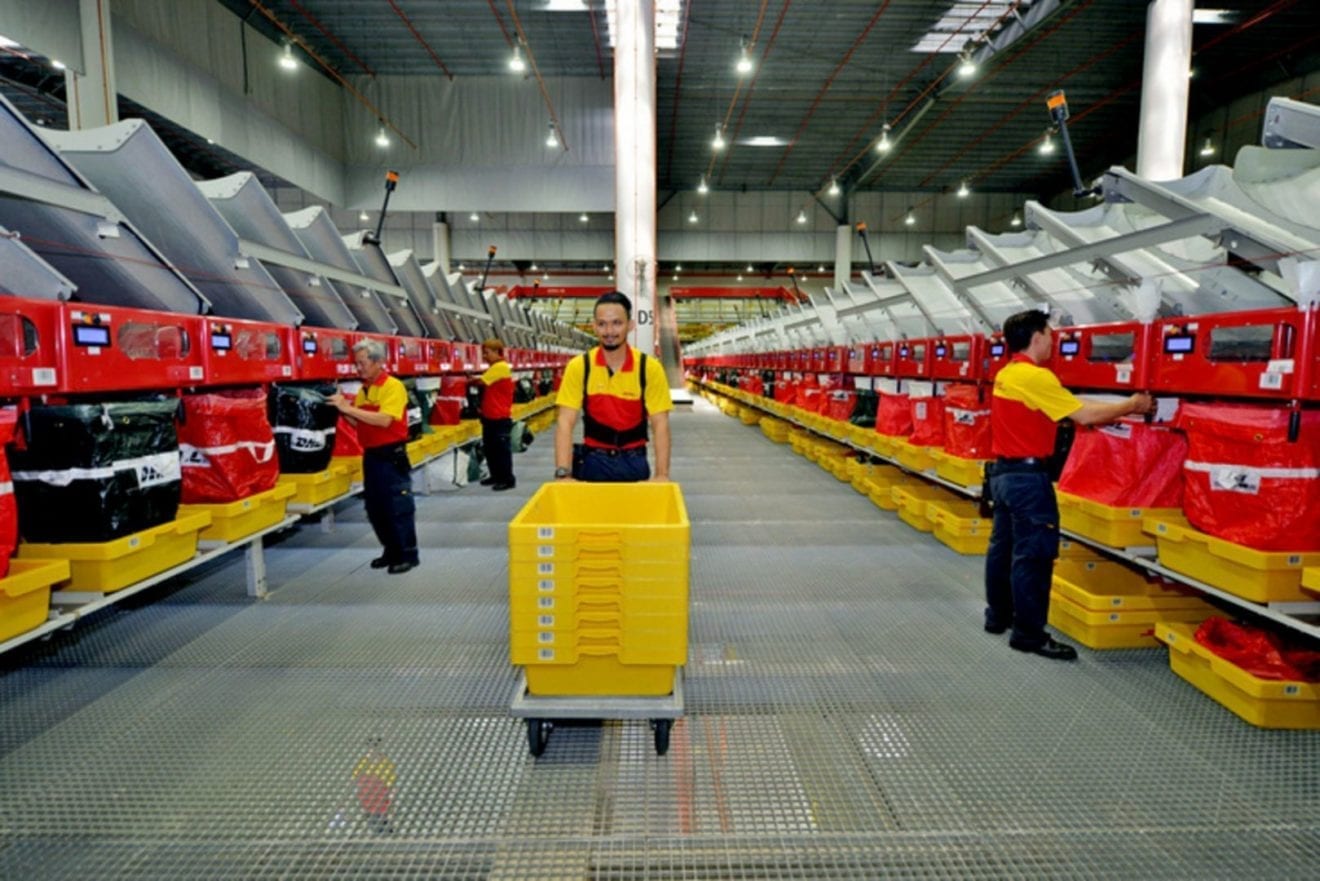
    Supply chain optimization platforms, digital payment, and robotics and unmanned aerial solutions were amongst the inventions which took center stage at the DHL Asia Pacific Innovation Day yesterday, hosted at the DHL Asia Pacific Innovation Center in Singapore. Focused on driving the future, DHL Asia Pacific Innovation Day showcased some of the latest trends and technologies shaping the logistics industry, awarding projects that have already applied these ideas to real-world challenges.

    One such project, which received the Most Innovative Customer Award, involved DHL collaborating with Schindler Lifts to develop a bespoke web-based tracking and optimization platform for their operations in Australia. Based on two years’ worth of past shipment data, the platform allows the elevator manufacturer to shave more than AU$500,000 from their annual running costs. The platform gives Schindler Lifts full visibility over the warehousing, shipping, and last-mile delivery of its elevator shipments, allowing the business to optimize end-to-end supply chain movements based on their required delivery dates.

    “The platform has enabled visibility at every stage of the process from collection to final delivery at the specified site address. Should any unexpected changes occur, both DHL and Schindler have the ability to instantly adjust with the amended delivery dates,” said George Lekkas, Strategic Procurement Manager, Schindler Lifts Australia. “Many logistics players are touting the potential of real-time tracking and data analytics to transform supply chains, but DHL has put those ideas into practice in a way that not only overcomes our unique shipment handling challenges, but can easily scale to meet ongoing growth in the Australian construction industry.”

    The Innovation Day also saw an award go to a digital payment solution developed by DHL eCommerce subsidiary Blue Dart, which enables couriers in India to collect cash-on-delivery (COD) payments through mobile Point of Sale devices and 15 different secure digital wallet options instead of physical cash. The system, which rolled out just as the Indian government took INR 500 and 1,000 notes out of circulation, enabled delivery staff to not only continue but significantly increase collection of COD payments, saving them more than 29 man-months between October 2016 and February 2017.

  • 5G indoor wireless market to be worth $509m by 2025

    5G indoor wireless market to be worth $509m by 2025

    The global equipment market for in-building wireless system, including active distributed antenna systems (DAS), passive DAS, and repeaters, is expected to grow to $10 billion in 2025, according to ABI Research.

    Yet, out of this market, 5G in-building wireless equipment will account for only 5% or $509 million in 2025, due to one year or more delay of 5G deployments indoors and in venues compared to outdoor 5G deployments starting from 2020, the research firm says.

    “As 5G nears full specification, mobile network operators will face challenges for indoor mobile coverage, including signal propagation, next-generation fronthaul/backhaul, and massive MIMO,” says Nick Marshall, research director at ABI Research.

    According to Marshall, early 5G deployments indoors and in venues will be a migration building on the features of LTE-Advanced and LTE-Advanced Pro. This will happen technology by technology and frequency by frequency, avoiding costly ‘rip and replace’ style deployments, the analyst notes.

    Marshall further points out that future 5G networks – which will comprise of a combination of different cell types and access technologies to seamlessly adapt to an array of use cases and applications – will rely on network functions virtualization (NFV) and mobile edge computing (MEC) to alter the architecture and topology of the RAN by leveraging telco data centers to virtualize signal processing in the cloud.

    NFV migrates cellular signal processing to a remote telco data center, while MEC, in a countervailing trend, migrates IT compute and storage to the network edge within the building or venue for low latency use cases and applications.

    With 5G standards yet to be finalized, many equipment vendors are actively researching and developing 5G equipment with a variety of approaches. These companies include Nokia with its AirFrame/AirScale Radio Access, Ericsson with its ERS, and CommScope with its OneCell.

  • SQ, Ethiopian Airlines to expand codeshare agreement

    SQ, Ethiopian Airlines to expand codeshare agreement

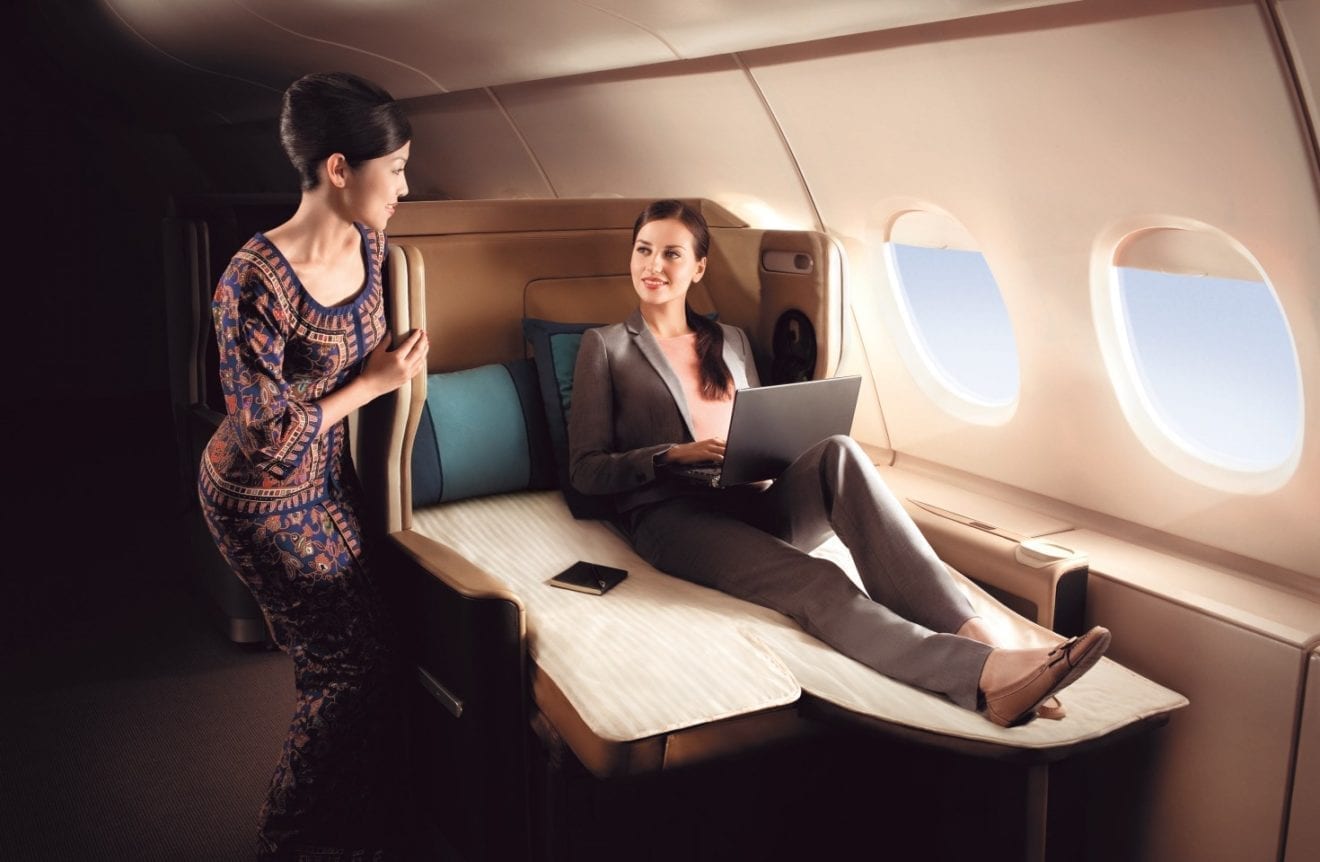
    Star Alliance members Singapore Airlines and Ethiopian Airlines plan to expand their codeshare agreement on June 1 to also cover the daily non-stop flights of Ethiopian Airlines from Addis Ababa to Singapore, according to a statement.

    Under the agreement, Singapore Airlines customers can also fly through Ethiopian Airlines’ vast intra-African network, while in turn, Ethiopian Airlines customers will have access to multiple destinations across the Singapore Airlines network.

    The airlines’ codeshare agreement started in 2011 and the expanded codeshare flights were still subject to regulatory approvals, the statement added.

    Singapore Airlines marketing planning senior vice president Tan Kai Ping said that the extended agreement was part of the carrier’s efforts to continuously expand its network in Africa, Asia and the southwest Pacific.

    Meanwhile, Ethiopian Airlines strategic and alliances vice president Girma Shiferaw said that the agreement would offered the best connectivity options with one ticket and a single check-in at the first boarding airport.

    “It will also play a critical role in enhancing investment, trade and tourism ties between a rising Africa and business-friendly Singapore.” Shiferawa said.

    Singapore Airlines, with its subsidiaries, operates a modern passenger fleet of more than 100 aircraft to 130 destinations around the world, while Ethiopian Airlines serves more than 90 international destinations across five continents with more than 240 daily departures.

  • AirAsia is official airline partner for SEA Games 2017

    AirAsia is official airline partner for SEA Games 2017

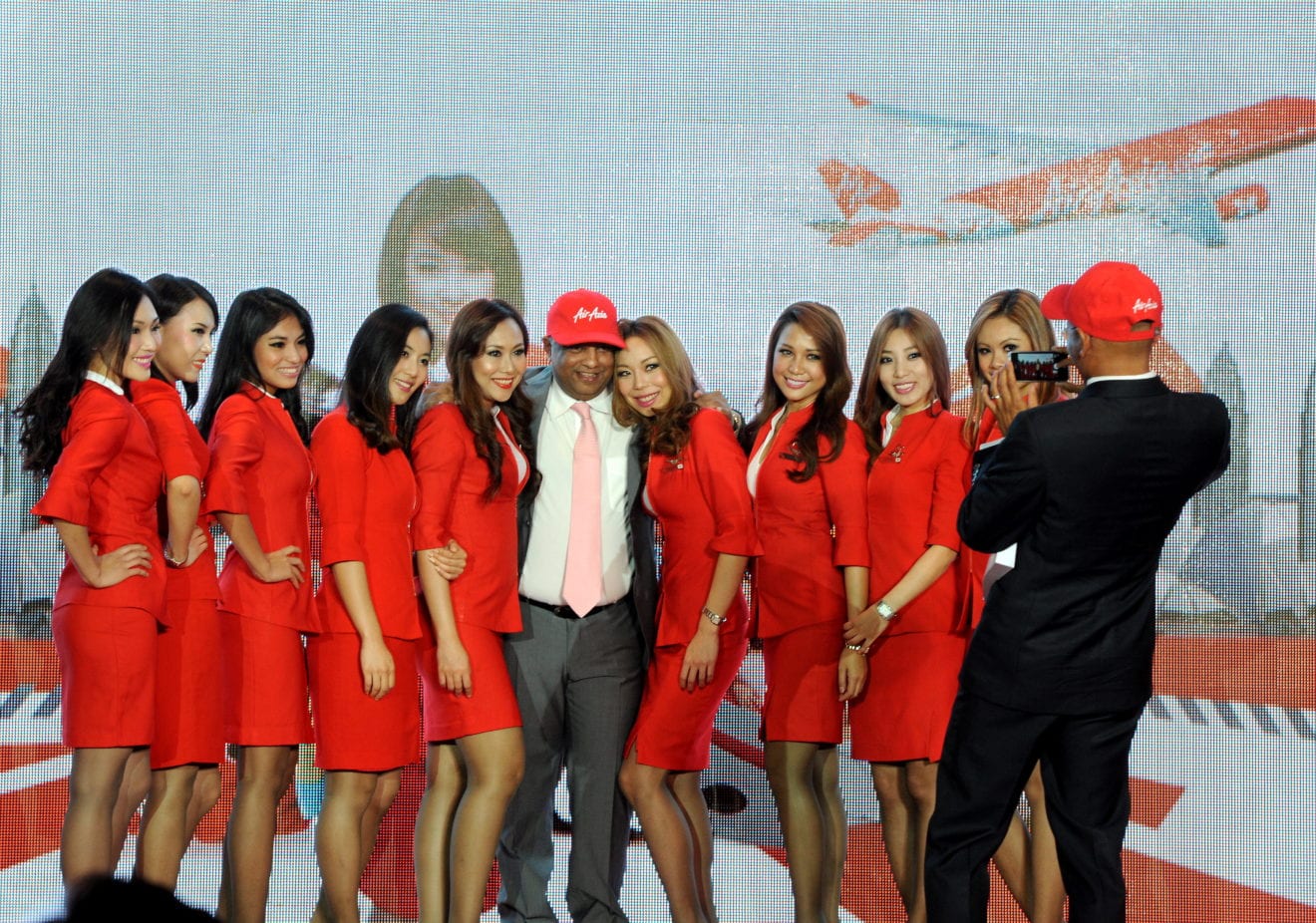
    Budget airline AirAsia Bhd has lent its support to Malaysia’s hosting of the 29th Southeast Asian Games from Aug 19 to 31, 2017 and 9th Asean Para Games from Sept 17 to 23, 2017.

    As a Gold Sponsor, AirAsia will be providing flights for the Malaysia Organising Committee (MASOC) officials within the airline’s Asean network for the purpose of organising both sporting events.

  • Coffee industry in Vietnam turns bitter

    Coffee industry in Vietnam turns bitter

    The Ministry of Agriculture and Rural Development in turn estimated the export volume in the first quarter when compared against the same three months last year to have dipped 5.4% to 449,000 tons with revenue jumping 25.6% to US$1 billion.

    Average prices in the first quarter ticked up 32% on year to US$2,262 a ton, said MARD, adding that Germany and the US were the two largest buyers with market shares of 17% and 16%, respectively.

    Markets witnessing sharp growth over the same period last year were Belgium (230%), the Republic of Korea (79%), the US (60%), Algeria (50%), Spain (34%), Germany (29%), the UK (27%), Japan (21%) and Italy (20%).

    Compared to the end of February 2017, the price of coffee Robusta in the Central Highlands at the end of March rose by US$.09-US$.10 (US$ VND2,000-VND2,200) to US$2.03- US$2.07 (VND46,000-VND46,900) per kilogram.

    Coffee prices in Dak Lak, the largest coffee bean-growing province in the country, stood at US$2.08-US$2.11 (VND47,300-VND48,000) per kilogram as stockpiles remain low.

    According to Nam, coffee prices look to continue to increase in the near term as farmers are holding back waiting to see if prices will rise even further.

    Despite the higher coffee prices, the profits per hectare remain lower than other alternative crops such as fruit trees and pepper— resulting in many farmers getting out of the coffee business entirely.

    Solutions to boost coffee exports

    The small production scale and lack of sophisticated skills of farmers have stopped them from becoming major players in the global market, said Nam, noting the lack of access to credit has prevented them from replanting with the latest varieties and newest technology.

    Meanwhile, farmers collectively have processed 10% of the total coffee output for the year but instant, roasted and ground coffee products, have not achieved a high volume, strong brand or the quality reputation to compete with top global brands.

    Huynh Quoc Thich, deputy director of Dak Lak Agriculture and Rural Development Department, notes that most actors in the coffee segment in the province have not paid sufficient attention to quality.

    He added that the existing sales prices have not incentivized coffee growers to produce high quality coffee.

    Meanwhile, he looks for exports to drop 25-30% this year. That won’t turn around until actors in the segment comprehensively collaborate to promote brand recognition, food safety and boost added value, he concluded.

  • HCM City metro projects short on capital

    HCM City metro projects short on capital

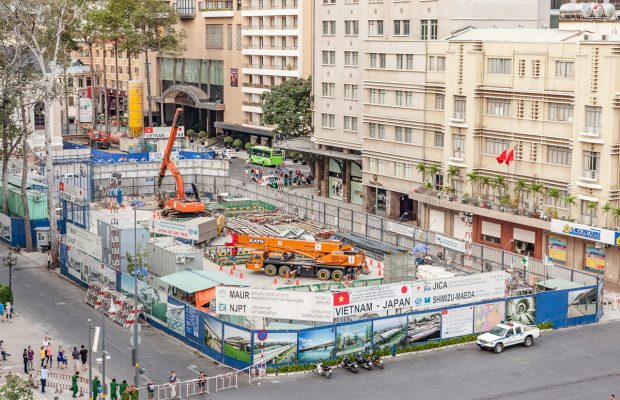
    A shortage of capital is the key problem of both Line 1 (Ben Thanh – Suoi Tien) and Line 2 (Ben Thanh – Tham Luong) urban railway projects.  The Ho Chi Minh City People’s Committee is the developer responsible for the two projects. At the Metro Ben Thanh-Suoi Tien project, the developer has been slow to pay contractors and may have to pay interest on late payment.

    According to a report submitted to the Ministry of Transport at the beginning of March 2017 by Le Van Khoa, deputy chairman of the Ho Chi Minh City People’s Committee, the payments for four construction packages have been delayed since September 2016.

    The reason is that the ODA capital provided for Ho Chi Minh City was only VND592.693 trillion ($26 million), a much lower amount compared to the VND1.95 trillion ($85.17 million) payable for the contractors.

    To deal with the current shortage, Ho Chi Minh City had to withdraw VND600 billion ($26.3 million) from the city budget to pay in advance for the consulting companies and contractors.

    With the current progress, although package No. 1a was started in November 17, 2016, the authority cannot pay the contractors as promised.

    Accordingly, by February 15, 2017, Ho Chi Minh City’s Urban Railway Management Boardwould have to pay in advance the amount of VND571 billion ($25 million).

    In case the developer fails to pay, the contract will be extended, which will result in numerous incurred additional expenses.

    Khoa said that the estimated ODA capital for Metro Line 1 is VND2.119 trillion ($93 million) in 2017.

    However, the project’s capital has not been added to the country’s plan on using ODA, which significantly affected the construction progress.

    By the end of February 2017, package No. 1b, used for the constructions of the stations between Saigon Opera House and Ben Thanh, was 41 per cent completed, while package No. 2 toconstruct the 17.1-kilometre stretch plus depots between Ba Son and Binh Duong was 65 per cent completed.

    Package No. 3 for the purchase of electromechanical equipment, locomotives, carriages, and railway tracks was 12 per cent completed.

    In general, the total disbursement of the project is VND10.9 trillion ($477 million), of which VND9.712 trillion ($425 million) is sourced from ODA.

    If the Japanese and Vietnamese contractors progress as scheduled, the total value of the completed parts in 2017 may reach VND5.320 trillion ($233 million).

    “The project should receive more ODA. It is essential to ensure the project’s progress as committed, as well as to avoid other incurred expenses, late payment penalties, and lawsuits from foreign contractors,” said the report.

    The 19.7-kilometre Ben Thanh-Suoi Tien Line goes through District 1 (Binh Thanh), District 2 (Thu Duc), District 9, and ends in Binh Duong Province (Di An District).

    Of the total, the underground parts are 2.6 kilometres, and the overhead parts are 17.1 kilometres long.

    The total investment after three adjustments has increased from VND14.415 trillion ($631 million) to VND47.325 trillion ($2.07 billion).

    The construction of the overhead part has been on-going since August 2012.

    The maximum speed along the line will be 80 kilometres per hour on the underground sections and 110 kilometres per hour on the bridge. It is forecasted to begin test runs in 2019 and be officially put into operation in 2020.

    Metro Line 2 in a worse spot

    Although Metro Line 1 is in slow progress, at least it has a forecasted launching period, while Line 2, which is also managed by Ho Chi Minh City’s Urban Railway Management Board, is struggling with investment adjustments and updating bid documents.

    Accordingly, the total investment of Metro Ben Thanh-Tham Luong is proposed to be VND47.605 trillion ($2.152,36 million), an increase of 56.6 per cent compared to the initial planned investment in 2010.

    The three biggest increases derive from land clearance, which rose from $119.38 million to $197.88 million; installation and purchase, which went from VND748.11 billion ($33 million) to VND1.198 trillion ($52 million); and reserves, which increased from $263 million to $368 million.

    By the end of February 2017, after six years of construction works, the disbursement was only VND700 billion ($31 million), including VND572 billion ($25 million) of ODA capital, which is equivalent to three per cent of the expected sum total.

    A representative of the Ho Chi Minh City Urban Railway Management Board admitted that implementation was slow compared to the promised schedule because the design has been adjusted.

    Additionally, the different instructions issued by the sponsors and the Vietnamese government on picking contractors and the elongated time for collecting feedback from sponsors also contributed to the slow going.

    As the most important Metro line in Ho Chi Minh City, the Ben Thanh-Tham Luong line will go from the new urban area Thu Thiem (District 2) and end in An Suong (District 12). It is forecasted that by 2025, it will handle 481,700 passengers a day.

    Besides the sharp increase in capitalisation, the launch will be delayed to 2024, despite initial promises to complete works by the end of 2016, as specified in Decision No 4474/QD – UBND approved by the Ho Chi Minh City People’s Committee.

    “The Ho Chi Minh City People’s Committee should review the implementation progress of each package used in these projects and have appropriate solutions to avoid the extension of process, which may lead to an increase in total investment, administration, and interest expenses, exchange rate risks, and fluctuations in construction material prices,” an expert said.

  • 3 Hong Kong upgrading network to prepare for 5G

    3 Hong Kong upgrading network to prepare for 5G

    Hutchison Telecommunications Hong Kong Holding’s mobile division 3 Hong Kong has teamed up with Huawei to upgrade its mobile network in preparation for the 5G era.

    The operator is adopting five component carrier aggregation (5CC CA) using its extensive spectrum holdings across the 1800-MHz, 2100-MHz, 2300-MHz and 2600-MHz bands with both FDD and TDD technology.

    Huawei will also upgrade the network to support 4×4 MIMO and 256 quadrature amplitude modulation (QAM) technology, to enable 3 Hong Kong to provide customers with data download speeds of over 1.2Gbps.

    In addition to these 4.5G technologies, 3 Hong Kong has started planning for the deployment of 4G technologies based on network cloudification.

    The partners have already deployed Huawei’s CloudEdge technology on the 3 Hong Kong core network and are now applying CloudRAN technology to the wireless access network. The operator also plans to adopt Huawei’s CloudAIR air interface cloud technology.

    A Massive MIMO base station has also been built in Causeway Bay to conduct field tests of the 5G technology, and 3 Hong Kong plans to continue the deployment of Massive MIMO in key locations within the year.

    “As we move towards the 5G and IoT era, 3 Hong Kong is actively deploying 5G technologies and upgrading its existing network architecture,” HTHKH executive director and CEO Cliff Woo Chiu-man said.

    “In addition to using CA technology with 5CC, we have conducted research and carried out trials for various technologies, such as small cell installations, network cloudification, NFV and Massive MIMO towards the 5G era. These  efforts will enable the timely launch of services to meet market demand as soon as the 5G  standard and Hong Kong’s spectrum plans are confirmed.”

  • Samsung details Samsung DeX

    Samsung details Samsung DeX

    Samsung is introducing Samsung DeX that – when combined with Citrix Receiver – converts the new Samsung Galaxy S8 into a desktop environment including an optimized UI for multi-tasking a desktop environment with keyboard and mouse support, resizable window capabilities, a task bar, pop-up notifications and more.

    The combination of Citrix and Samsung DeX unboxes the phone and provides employees with secure access to their digital workspace and all of the business apps and data they need to get their work done. Samsung exclusively showcased Citrix in Samsung DeX demos with XenApp and XenDesktop and Citrix Receiver to media, customers and analysts during the Samsung Unpacked event at the Samsung B2B Analyst Day in New York City.

    In addition to the preferred solution that combines Citrix innovation with Samsung DeX, Citrix also offers support and integration for Samsung devices that include XenMobile enterprise mobility management, security features and secure virtual access to apps and desktops through XenApp and XenDesktop, and support for Secure Apps with Samsung Knox at the native Android OS layer.

    Citrix XenMobile also supports new Samsung capability known as Enterprise Firmware- Over-The-Air (E-FOTA). Samsung E-FOTA enables IT admins to take greater control over when devices get updated, as well as what version is updated. This Samsung capability provides IT with native device control without sacrificing user flexibility.

    “While many people use their smartphones for business, they usually turn to a laptop or desktop when they need to use Windows or browser-based apps, said Maribel Lopez, founder and principal analyst, Lopez Research.

    “Even though VDI or app virtualization lets them run Windows applications on their smartphone, the Windows experience does not always translate well to a small touchscreen. To address this issue, vendors have worked to develop solutions that make it easier to connect smartphones to a keyboard, mouse and a monitor. The solution that succeeds has significant market potential.”

  • Asos posts half year profit increase

    Asos posts half year profit increase

    Online fashion retailer, Asos, has posted a 14 per cent increase in profits for the six months to the end of February to £27.3 million.

    The company saw a 31 per cent increase in sales to £889.2 million. UK retail sales rose by 18 per cent and international sales went up by 42 per cent.

    Sofie Willmott, senior retail analyst at GlobalData, said Asos’ broad product range sold on local language and currency platforms, along with its aggressive delivery proposition and responsive pricing, allows it to steal market share from well-established international and local players.

    “Asos’ mobile-first approach has paid off with mobile devices now accounting for 58 per cent of orders and 70 per cent of traffic,” she said.

    Willmott said competitors targeting the 16-34 age group should take note that a spotlight on mobile functionality to create a smooth, and enjoyable, shopping journey will drive visitor-purchaser conversion.

    “In a period of weak volume growth, retailers must use mobile channels to capitalise on frequent engagement and implement fast and simple checkouts to capture impulse spend.”

    According to Willmott, Asos has continued to strengthen its product offer by introducing new brands, including competitors Miss Selfridge and Burton, while also broadening its own label offer into niche product areas such as plus size for men which was recently introduced and activewear due to launch in 2017 – allowing Asos to target a larger customer base.

    “Meanwhile, the number of UK Asos premier customers lifted 41 per cent on last year, leading to an eight per cent rise in order frequency in the UK.”

    GlobalData research shows Asos is market leading in driving spend through its delivery subscription scheme, with 60 per cent of consumers shopping at Asos more often since signing up.

    Despite a 14.3 per cent rise in operating profit to £27.1 million, operating margins fell to 2.9 per cent from 3.6 per cent last year, signalling the impact of the highly promotional sector.

    “Since Asos is committed to keeping prices stable despite higher inflation in 2017, we forecast margins to weaken further in H2.”

  • Philippine Seven returns 16 per cent profit growth

    Philippine Seven returns 16 per cent profit growth

    Convenience store group Philippine Seven (PSC) had 16.6 per cent growth in net profit last year to reach P1.18 billion (US$23.5 million).

    Its figures were boosted by store openings and “modest” growth in same-store sales, says the 7-Eleven licensee.
    Its system-wide sales grew 23.2 per cent to P31.8 billion, attributed to store growth alongside a 1.2 per cent increase in same-store sales. The store count by year end reached 1995, up 393 outlets or 24.5 per cent from the previous year.

    There were 1633 7-Eleven stores in Luzon, 808 of them in Metro Manila, with 255 in Visayas and 107 in Mindanao. Franchisees control 55 per cent of stores, with the balance owned by the company.

    PSC says its spending on capacity building, such as establishing distribution centers and regional headquarters, is starting to produce results.

    “We aim to further expand our product offering, remodel stores and implement our market-development plan over the next five years,” says the company.

    PSC’s average net margin eased to 4.1 per cent last year from 4.5 per cent in 2015. For the fourth quarter alone last year, net margin stood at 7 per cent, down from 7.4 per cent for the same period in the previous year.

    For the quarter alone, net profit increased by 8 per cent to P532.1 million while system-wide sales ballooned by 20 per cent to P8.75 billion.

    This year PSC has budgeted capital expenditure of at least P3.5 billion to support its store expansion strategy.

  • L Catterton Asia launches beachwear platform

    L Catterton Asia launches beachwear platform

    Australian swimwear brand Seafolly and Colombian beachwear brand Maaji are the first signings for a global lifestyle platform launched by L Catterton Asia.

    Based in Singapore, L Catterton Asia is an arm of private equity firm L Catterton, formed last year through a partnership between Catterton, LVMH and Groupe Arnault. It will be the controlling shareholder of the combined business, with the Maaji and Seafolly founders as minority shareholders.

    It is the first step in the aggregation of the fragmented swimwear/beachwear industry.

    Seafolly was founded in 1975 by Peter and Yvonne Halas, and has been led by Anthony Halas since he became CEO in 1998. He has built the business across international markets in Europe, North America and Asia. L Catterton Asia acquired a controlling interest in the brand in December 2014, and now it is sold in 41 countries (there are four stores in Singapore) as well as online.

    Maaji was founded by sisters Manuela and Amalia Sierra in 2002, and has a presence in more than 54 countries.

    “With this unparalleled combination of Maaji and Seafolly we look to grow our portfolio and create the largest independent house of beach lifestyle brands,” says L Catterton Asia chairman/managing partner Ravi Thakran. “This combination will drive many synergies, including geographic expansion, retail rollout and product sourcing.”

    L Catterton Asia’s goal is to preserve each brand’s DNA and heritage, while enabling the brands to enhance their global growth.

    Previously known as L Capital Asia, L Catterton Asia was launched in 2009 and manages more than US$1.6 billion across two private equity funds, and more than US$2 billion including co-investments. It has offices in Singapore and Mauritius, with further regional advisory presence in Hong Kong, Mumbai, Shanghai and Sydney. Its investments include Charles & Keith, Crystal Jade, Pepe Jeans Group and YG Entertainment, which promotes Korean singers and entertainers like Big Bang and Psy.

  • Jollibee Foods JV to open door to Europe

    Jollibee Foods JV to open door to Europe

    Philippine foodservice giant Jollibee Foods (JFC) has entered into a JV agreement with Singapore-based Blackbird Holdings to take the Jollibee brand to the European market.

    JFC’s wholly owned subsidiary Golden Plate has signed the deal with Blackbird to own and run the first Jollibee store in Italy. Golden Plate and Blackbird will incorporate a Singapore company, a 75:25 JV, with Golden Plate holding the controlling stake. The two companies are looking at investing more than US$1 million in the JV.

    Established in 2014, Blackbird has investments both in Singapore and the Philippines in the F&B and other sectors.
    Jollibee says Golden Plate will have full management control of the JV and the first store. Jollibee’s strategy is still to find a territorial franchisee for Italy with the capability to develop and expand the brand there.

    Jollibee has the largest foodservice network in the Philippines and has more than 3290 stores worldwide including such brands as Burger King, Chowking and Red Ribbon. In China it has Dunkin Donuts, Hong Zhuang Yuan, Jollibee and Yonghe King.

    JFC has Jollibee stores in Vietnam (86), Brunei (14), Singapore (4), Hong Kong (3).

  • China’s healthy snack trend creates opportunities

    China’s healthy snack trend creates opportunities

    China’s healthy snack trend is creating massive opportunities for FMCG companies and retailers according to a new report from research house Mintel.

    While snacking is often thought of as an indulgent and convenient alternative to traditional meal times, many Chinese consumers are now focusing on their health. Mintel’s report reveals that four in 10 urban Chinese consumers eat more nuts and seeds today compared to six months ago. Pointing to the rise in popularity of these healthy snacks, 58 per cent of consumers say that nuts and seeds taste good and 44 per cent say they are convenient to eat, while only 9 per cent say nuts and seeds are unhealthy.

    It seems that nuts are high in demand in China as product launch activity is also on the rise. Mintel Global New Products Database (GNPD) reveals that 17.5 per cent of snack products launched in China between 2014 and 2016 were nuts, compared to 15.3 per cent of those launched globally.

    The healthy snacking trend is contributing to the growing popularity of nuts and seeds in retail channels as well. In China’s retail snack market, nuts and seeds is the largest category, with a retail value of RMB263.7 billion (US$38.3 billion). Mintel forecasts the segment will grow at a CAGR of 10.7 per cent in value between 2015 and 2020, reaching RMB345.6 billion.

    Ching Yang, senior food and drink analyst at Mintel, said Chinese consumers have become more aware of the health benefits of nuts and seeds.

    “Now, it seems that  eating nuts and seeds is no longer something to do to kill time while chatting with friends, but part of the overall pursuit of a healthy and trendy lifestyle. Therefore, companies should consider packing up the traditional nuts and seeds bulk products in favour of branded products that are positioned as a healthy snack. We’re seeing a number of the nuts brands thriving when leveraging this consumer trend.”

    Mintel research reveals that six in 10 consumers associate a healthy snack with ‘all-natural’, while 42 per cent associate it with ‘fortified with additional nutrients’. One third of Chinese consumers associate healthy snacks with ‘high in protein’, and the demographic skews towards male consumers aged 25-29 (42 per cent). What’s more, 41 per cent of Chinese consumers aged 40-49 associate healthy snacks with ‘low in salt’.

    According to Mintel GNPD, one quarter of snack products launched in China between 2014 and 2016 were meat- or seafood-based snacks. In line with this, Mintel research reveals that 48 per cent of consumers think meat/seafood-based snacks taste good and 46 per cent think they are filling.

    On the other hand, the growth rates of traditional sweet snacks, such as sugar confectionery, ice cream and biscuits, are relatively slow. Mintel research indicates that 26 per cent of urban Chinese consumers are eating less chocolate confectionery today compared to six months ago, while 23 per cent are eating more. However, 63 per cent of Chinese consumers are eating more fresh fruits and vegetables as snacks, and 42 per cent are eating more dairy-based snacks.

    Yang added: “Chinese consumers have rising awareness of their sugar and fat intake. Therefore, more consumers are switching to fresh fruits and vegetables or dairy-based foods for snacking. This suggests a growing opportunity for food and drinks brands that enjoy a healthy perception (e.g. dietary supplements, cereals and yogurt) to tap into the snacking occasion by developing snack format products. Our research shows that Chinese females are concerned with calories, while Chinese males care about protein. With this in mind – and the fact that  the average sodium level in China’s meat snacks is lower than the global average and the level is decreasing over time – the ‘reduced sodium’ claim is still rarely seen on meat snacks and, therefore, could be leveraged to meet consumer needs.”

    Imports gain favour

    Finally, imported snacks are gaining popularity among urban Chinese consumers. According to Mintel research, as many as four in 10 urban Chinese consumers are interested in buying imported products they’ve never tried before across a variety of purchase channels that specialise in selling imported snacks. Of these same urban consumers, while 34 per cent have bought snacks from imported food stores, 28 per cent have bought at local stores when travelling and 19 per cent have bought from foreign shopping websites. In addition, though 75 per cent of consumers have bought snacks from any e-commerce site, physical retail channels are still the most popular purchase destination (96 per cent).

    “As consumers continue to look for new and different flavour experiences, international snacks have become a sector that many consumers are gravitating towards,” said Yang. “E-commerce is an especially important channel for international snacks. It not only allows consumers to easily access foreign products, but also provides a less costly channel for international players to enter the Chinese market.

    “However, one of the challenges for consumers is deciding what products are good and worth the higher cost, especially for consumers living in tier-one cities as they are more likely to shop online. A product targeting mainstream consumers could use regular retail channels in order to reach more consumers, especially in the lower tier cities,” Yang concluded.