Tag: asia

  • Pink Star diamond sells for record $553 million

    Pink Star diamond sells for record $553 million

    Hong Kong jewellery company Chow Tai Fook ­has paid a record HK$553 million (US$71.2 million), including fees, for the illustrious Pink Star diamond.

    This makes the diamond the most expensive ­precious stone sold at auction. The sale relieves auction house Sotheby’s of unwanted inventory it was forced to take on three years ago.

    Measuring 2.69cm by 2.06cm and set on a ring, the 59.6-carat stone is the largest “internally flawless fancy vivid pink” diamond ever graded by the Gemological Institute of America, the industry arbiter. It is more than twice the size of the 24.8-carat Graff Pink, previously the most expensive pink diamond, which fetched US$46.2 million including fees in Geneva in 2010.

    The previous record holder for any diamond was the Oppenheimer Blue, a 14.6-carat “vivid blue”, which sold for 56.9 million Swiss francs (US$56.7 million) in Geneva last May.

    Chow Tai Fook, owned by the family of late tycoon Cheng Yu-tung, last year bought a 5.03-carat green diamond, Aurora Green, for HK$130 million at auction, and a 507-carat Cullinan Heritage rough diamond for HK$275 million in 2010. The Cullinan Heritage was subsequently cut and turned into a necklace.

    Asia overtook the US last year as the largest auction market, prompting Sotheby’s to opt for Hong Kong instead of Geneva to sell the Pink Star. The Swiss city is the traditional centre for sales to dealers.

    “Industry buyers remain the biggest market for large precious stones, but we are seeing great potential for growth among Asian private collectors. That’s why we did not sell this in Geneva,” says Sotheby’s Asia chairwoman Patti Wong.

    Sotheby’s initially sold the Pink Star in 2013 after New York cutter Isaac Wolf, acting on behalf of Ukrainian investors, made a record bid of 68 million Swiss franc for it. However, says Wong, his backers failed to come up with the money.

    Sotheby’s had made a pre-sale guarantee to the seller for the diamond, then estimated at US$60 million, and had to buy it when the sale fell through. It placed the diamond in its inventory with a value of US$72 million.

  • Australia’s nbn trials Nokia’s universal GPON tech

    Australia’s nbn trials Nokia’s universal GPON tech

    Australia’s nbn, the company in charge of rolling out the National Broadband Network, has achieved 102Gbps aggregate speeds during a lab trial of Nokia’s universal NG-PON fiber technology.

    Universal NG-PON (next-generation passive optical network) combines TWDM-PON (time wavelength division multiplexing PON), XGS-PON (10 gigabit symmetrical PON) and GPON (gigabit PON) technology on the same fiber to support blazing fast speeds.

    It is designed to serve as a simple upgrade path to the current fiber technology used in FTTP deployments, saving the time and additional costs associated with laying new fiber.

    During the trial at Nokia’s Melbourne laboratory, nbn tested TWDM-PON with 40Gbps symmetrical, XGS-PON with 10Gbps symmetrical and GPON with 2.5Gbps, achieving aggregate download and upload speeds of over 102Gbps over a single shared access fiber.

    “Our successful trial of NG-PON2 technology with Nokia is another example of our ongoing commitment to continually develop the capabilities and speed of the nbn network,” nbn CTO Dennis Steiger said.

    “While we continue to deploy the nbn network at pace with over 2 million end-users now receiving nbn services and nearly 5 million able to order a service, we also have a very sharp focus on the future. The NG-PON2 trials we have conducted with Nokia have shown us the huge potential this very exciting technology has in terms of helping us deliver on our future bandwidth and capacity requirements.”

    But the current government’s decision to abandon the previous government’s plan to use FTTP for around 93% of connections, in favor of a multi-technology mix incorporating last-mile copper technology purchased from incumbent operator Telstra, complicates the potential upgrade path to the new technology.

  • Scale360 establishes Centre of Excellence to develop Thai Fintech talent

    Scale360 establishes Centre of Excellence to develop Thai Fintech talent

    Scale360, a UK-based fintech start-up that develops cutting-edge software to power banks’ digital transformation, has established a Bangkok Digital Centre of Excellence to service banks’ growing need for financial technology and develop local skills in leading global technologies.

    Thailand’s Board of Investment has recognised Scale360’s commitment to developing skills in Thailand, awarding the company a special eight year status to help attract top talent and establish the Digital Centre of Excellence in Bangkok.

    Combining Microservices application architecture with Scala and Java programming languages, Scale360 develops technology platforms that deliver better outcomes for customers across all channels via a digital banking infrastructure. Scale360 has established its own Thai language learning programme to advance the knowledge of skills required to build its Digital Banking 4.0 platform, with the aim of providing local developers with knowledge of programming languages used by global Internet giants like Twitter and LinkedIn.

    “We have a very clear vision of how banks need to operate in the digital age, and to deliver the kind of services today’s mobile and connected customers’ need requires a new approach to technology. This means using global leading technologies which are not yet prevalent in banking. At Scale360 we have developed our own learning programmes to give our employees the tools they need to compete in a global marketplace,” said Neville Molyneux, managing director, Scale360.

    Scale360 has implemented solutions-focused technology to leading global businesses for over 10 years, helping businesses define and execute their digital strategy, and create growth opportunities driven by enhanced customer-centric digital experiences.  Scale360’s developers have already completed transformation projects in Vietnam and are working with a challenger bank in the UK.

    “Scale360’s solutions enable pure digital play; we help our partners build greater customer loyalty and engagement, developing in-depth understanding of the digital customer that ultimately grows online revenue. It’s not just financial services – we’ve given retailers, hoteliers and charities the tools to embark on their digital journey,” added Neville.

  • Central Embassy Open House opens

    Central Embassy Open House opens

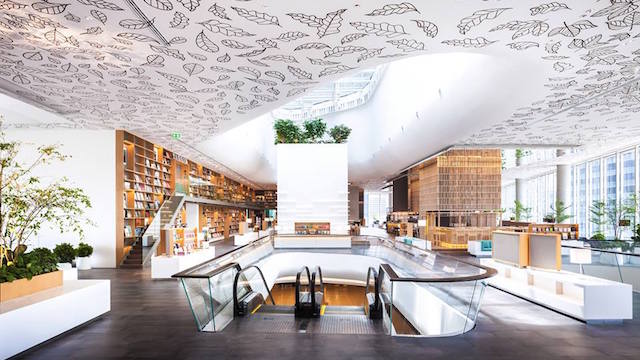
    Bangkok luxury mall Central Embassy has unveiled a new space, Open House, where customers can eat, work, study or just relax – even take a nap.

    Central Embassy Open House 1

    Covering the entire top floor, Central Embassy Open House offers 7000 sqm of open-concept “co-living space” beneath high ceilings, with glass panels all around offering city views.

    Central Embassy Open House 6

    As well as a “co-working space”, Open House offers a restaurant, lounge, bar, bookshop, art gallery, design shop and children’s playground, nestled against the Embassy Diplomat Screens cinema.

    Central Embassy Open House 5

    “It took almost two years to complete this project,” says Central Embassy MD Barom Bhicharnchitr. “Accessible luxury is the key, but luxury is not about price – it’s mostly about quality of life.”

    Central Embassy Open House 2

    Central Group launched the THB18-billion (US$523.1 million) Embassy in 2014 on part of the former British Embassy site and Wireless and Ploenchit Roads. Its curving 200m facade advertises such brands as Gucci, Prada and Ralph Lauren, while ticket prices in its VIP cinema top THB1000.

    Central Embassy Open House 3

  • Hooters Southeast Asia opens two more outlets

    Hooters Southeast Asia opens two more outlets

    Hooters has opened two outlets in Southeast Asia, Hooters of Singapore – Fusionopolis and Hooters of Jakarta.

    Both locations are run by international franchisee Destination Group of Singapore, a Hooters 2015 Developer of the Year.

    Hooters of Singapore – Fusionopolis is in the One-North Business Park in Buona Vista. The 240 sqm restaurant accommodates 103 guests and has more than 20 large-screen televisions. Fusionopolis is an integrated work-life-play-learn development comprising retail outlets, a fitness club, R&D businesses and apartments.

    Hooters restaurant

    Hooters of Jakarta is in the Kemang Square shopping area, known for its upscale shopping centres, residences and nightlife. The 228 sqm Hooters restaurant seats 105 guests and has more than 16 large-screen televisions.

    “We are continuing our steady progression of opening locations across Southeast Asia,” says Destination Group CEO Gary Murray. The company has a 35-location Southeast Asia development agreement with Hooters of America, with plans to open more outlets soon in Phnom Penh, Koh Samui in Thailand, Taipei and Manila (multiple locations).

    While guests in SouthEast Asia are offered the Hooters standards of burgers, wings, appetisers and salads, they can expect menu additions that suit local tastebuds such as sauces, Indonesian sambal and Singaporean chili crab.

    Hooters of America chief development officer Mark Whittle says more sites are being sought for the group’s restaurants in Bali, Bangkok, Cebu, Davao, Ho Chi Minh City, Hong Kong, Jakarta, Kowloon, Krabi, Kuala Lumpur, Macau, Manila, Siem Reap, Singapore, Taipei and Yangon.

  • Mitsubishi open to helping Renault in Southeast Asia

    Mitsubishi open to helping Renault in Southeast Asia

    Mitsubishi is open to rebadging and selling models from alliance partner Renault in Southeast Asia. It’s one way the newest member of the Renault-Nissan alliance could create synergies with its partners, Mitsubishi Chief Operating Officer Trevor Mann told Automotive News Europe.

    “Renault is almost non-existent in Southeast Asia,” Mann said at the auto show here this month. “If it made sense for Mitsubishi to cross badge a Renault product in Southeast Asia that could be an interesting discussion.”

    Mitsubishi also has a more dominant presence than Nissan in much of Southeast Asia. Mann said the company’s strength in places such as Thailand, where it has three factories that have produced more than 3 million vehicles, could be used to help boost Nissan’s market share and its bottom line.

    For instance, Mann told Reuters the two companies are studying joint production of pickup trucks in Southeast Asia. Mitsubishi, which builds the Triton pickup in Thailand, could supply Nissan with its next-generation Navara pickup. Nissan currently builds the Navara for local sales in Thailand.

    “If you look at our cost performance in that region, we are the benchmark within the alliance,” Mann said. “Our cost-base on pickups is better than Nissan’s.”

    Mitsubishi’s pickup architectures are likely to become the basis for future alliance models, added Mann, who was formerly Nissan’s chief performance officer but was dispatched by CEO Carlos Ghosn to help turn around Mitsubishi after Nissan paid $2.3 billion for a 34 percent controlling stake in the scandal-hit company last October.

    Mitsubishi’s admission that it cheated on fuel-economy ratings for several nameplates sold in Japan opened the door for Nissan to make the move. The two companies expect the deal to lead to combined savings of 49 billion yen ($473.2 million) in the 2017 fiscal year that ends in March 2018.

  • Supply chain group Tigers launches new e-shop marketplace supporting brands entering china

    Supply chain group Tigers launches new e-shop marketplace supporting brands entering china

    Supply chain group Tigers has launched a new marketplace, called eShop, to support brands entering the rapidly expanding China and Southeast Asia e-commerce markets.

    The digital marketplace, part of Tigers’ suite of e-commerce products, offers a one-stop shop solution, from marketing, to taking payments, managing the supply chain, order fulfilment, and returns.

    Up-and-coming Italian designer workout wear Gr1ps, and award-winning golf simulator OptiShot Golf are amongst the first Tigers eShop customers in China, Hong Kong, and Malaysia.

    “Tigers eShop offers a cost-effective, scalable enterprise solution for companies of all sizes,” said Andrew Jillings, chief executive officer and group managing director, Tigers.

    “We can provide fiscal representation to SMEs wanting to enter the China market that do not have a presence there.”

    “The logistics industry has the desire to adopt technology, but few providers are offering a real solution that ultimately services every e-commerce business.

    “Rather than being a one-size fits all, Tigers’ IT systems, which work on a cloud-based operating platform, are flexible enough to meet a large variety of demands.”

    Gr1ps, founded in 2011, designs innovative functional training products and has been recognised as a pioneer in Brazilian Jiu Jitsu and Mixed Martial Arts apparel. “Tigers eShop forms a core part of our sales strategy in acquiring new clients in the Asia market, and increasing brand awareness and exposure through Tigers’ network,” said Katty Fung, chief operating officer, Gr1ps.

    “We look forward to bringing our brand values, of quality and attention to detail, to larger sports and lifestyle communities with this expansion.”

    OptiShot Golf is a golf simulator platform designed by two fans of the game, which allows players to practice and play on replicas of major championship courses, as well as play in global online tournaments, with real clubs and real golf balls.

    “China is an important market for us and the Tigers eShop is an exciting opportunity for us to grow our presence there,” said Kevin Johnston, president and chief operating officer (COO), OptiShot Golf.

    Tigers, which has been operational in Greater China since 1969, has 17 offices across the country and specialises in e-commerce fulfilment, transportation, and supply chain solutions.

    The Hong Kong headquartered supply chain specialist has 65 offices and 32 omni-distribution hubs across China, the USA, Germany, the United Kingdom, the Netherlands, Switzerland, Australia, Malaysia, India, and South Africa.

    Tigers plans to open more eShops across a number of strategic locations.

    “Tigers will continue to focus on our two main assets, our technology and our people,” said Jillings.

    “We are privileged to be working with exciting brands like Gr1ps and OptiShot Golf. They are both dynamic groups with great products and they embrace the online retail space.

    “There is always a learning curve working with companies like these.”

    Tigers can trace its founding origins back to 1888 in the Cape of Good Hope, South Africa, where their South African subsidiary was first founded.

  • Cebu Pacific launches four new routes in Clark, Cebu

    Cebu Pacific launches four new routes in Clark, Cebu

    Cebu Pacific (CEB) is set to launch four new routes from Clark International Airport and Mactan Cebu International Airport. This is in line with the airlines program to strengthen its domestic route network geared towards making inter-island travel more accessible to residents outside Metro Manila. Starting this May 15, Cebu Pacific’s wholly-owned subsidiary, Cebgo, will be flying daily between Clark and Caticlan (Boracay) three times weekly on Monday, Wednesday, and Friday between Clark and Busuanga,and three times weekly on Monday, Wednesday, and Friday between Cebu and Busuanga.

    Cebgo will also begin flying between Cebu and Cotabato four times weekly, on Tuesday, Thursday, Saturday, and Sunday on May 16, 2017. “We believe that by opening these new routes, we are enabling more residents from Central and even North Luzon to travel to Palawan and Boracay—two of the world’s best islands, without having to make the trip to Metro Manila to catch their flights. Even guests from the Visayas who would like to explore Northern Palawan have to fly via Manila to get there. With a direct Cebu-Busuanga route, the islands of Coron and Culion are easier to get to.

    Aside from boosting domestic tourism, our new routes will also enhance trade and investment as we also make available our cargo services,” Alexander Lao, Cebgo president and chief executive officer, said. CEB is launching the four flights with an introductory, all-in seat sale of P599 from April 6 to April 9, 2017, or until seats last. Travel period is from May 15 to November 30, 2017.

    “CEB has remained true to its commitment of making air travel safe, affordable, reliable, and fun-filled for every juan. Rest assured, we will continue expanding our network to enable even more of our kababayans to travel with our trademark lowest fares, not only within the Philippines, but also to international destinations,” added Lao. Aside from Cebu and Clark, CEB also operates flights out of four other strategically placed hubs in Manila, Davao, Kalibo, and Iloilo. The airline’s extensive network covers over 100 routes and 66 destinations, spanning Asia, Australia, the Middle East, and United States of America.

  • Cooking to coding: What free HTML classes mean for Indonesian maids

    Cooking to coding: What free HTML classes mean for Indonesian maids

    Jamilah’s newly obtained skills are beyond anything most would expect from an Indonesian maid working in Singapore – she is not only a cook and a cleaner, but a website builder.

    Jamilah learnt programming languages such as HTML and CSS at a free, eight-week coding course for domestic workers provided by Indonesia’s Creative Economy Agency. The agency plans to expand the programme, launched in Singapore in January, to Hong Kong later this month, then to Malaysia, Taiwan and Saudi Arabia.

    To cater to maids’ strict schedules, the classes are held every Sunday from 10am to 1pm. In Singapore, the demand to enrol was so high the programme was forced to move those about to leave the city state to the front of the line – such was the case with Jamilah.

    “I’m very keen on learning how to code,” Jamilah told. “I’m hoping to have my own business when I return to Central Java and use the website to market my products and bring in more customers from the internet.”

    Students are expected to bring their own laptops to class, and this posed a problem for Jamilah since her old computer was broken. “So I bought a brand new Dell laptop that set me back SG$499 (HK$2,765), or a month’s salary. But it’s worth it.”

    The 41-year-old said she was blessed to have an understanding employer who allowed her to take the course. “My boss even downloaded GitHub for me,” the mother of four said, referring to a popular software development platform.

    By advancing the skill sets of maids such as Jamilah, Indonesia aims to empower workers with entrepreneurial skills that will help them set up businesses once they return home.

    About a third of Indonesia’s six million migrant labourers work as housemaids in places such as Singapore, Hong Kong, Taiwan and the Middle East. In 2015, Indonesian migrant workers sent home about US$9.4 billion in remittances, according to official data. However, once they return home, a relative lack of workplace skills often prevents them from securing well-paying jobs or establishing their own businesses.

    Indonesia has a workforce of about 125 million people, 60 per cent of whom did not get past middle school or high school, according to Minister of Labour Hanif Dhakiri.

    “They do not have the skills needed to have a proper job that would lift them out of poverty,” he said. “We fully support the coding programme for maids as a solution to increase their self-sufficiency post tenure.”

    Through the programme, the government also hopes to bolster the talent supply in Indonesia’s creative workforce to 13 million people by 2019, about a million more than last year.

    “We need to have our own talents so, when it comes to software programming, we no longer have to depend on foreign companies,” said Triawan Munaf, head of the state agency that founded the programme.

    The coding course for maids is a twist on a similar course designed for stay-at-home mothers in Indonesia called “Coding Mum”, organised by the same agency. Launched in February last year, Coding Mum began in six cities and will be expanded to three more this year to meet demand. Its graduates either run their own businesses or are employed as front-end developers and beta testers by local tech firms such as e-commerce company Tokopedia.

    “We have positive results from Coding Mum, where housewives from all ages up to 60 years old have joined the programme,” said Izak Jenie, Coding Mum’s co-founder. “After Coding Mum, we felt challenged to teach coding to housemaids.”

    But teaching how to code to mostly undereducated housemaids is not without challenges. Despite sharing the same lessons with the stay-at-home moms, mentors need to be more patient and understanding with maids, since most of their experiences with the internet are limited to social media services such as Facebook or WhatsApp.

    “However, their motivation to succeed seems bigger. In Singapore, for example, they asked me questions outside of the classroom, sometimes until 1am,” said Henry Sutjipto, the programme coordinator for countries outside Indonesia.

    The classes for maids also require Indonesian-speaking tutors who are willing to volunteer, Sutjipto said.

    These same challenges face the programme as it looks to start classes in the New Territories of Hong Kong, starting on April 23.

    “In Kuala Lumpur it’s easy to find mentors because there are many Indonesians there,” Sutjipto said. “It was difficult to find one in Hong Kong, but we found two information technology lecturers from Indonesia who are currently studying in Guangzhou and are willing to come to Hong Kong to teach.”

    The programme has piqued the interest of Anggraeni Ustianingsih, an Indonesian maid living in Tseung Kwan O who has been working in Hong Kong for five years and whose tenure will expire in November.

    When she returns home, she hopes to expand her business of selling shumay (steamed fish dumplings) to a broader online market.

    “My boss is supportive because the class is scheduled on my day off,” the 42-year-old from Tegal, Central Java, said.

    She has a Lenovo laptop, and is ready to do any homework from the course in her spare time.

    Due to the high interest shown by maids in learning programming and coding, the Indonesian government also plans to bring the course to villages that have sent many migrant workers overseas. It will not, however, expand the programme to cities in the Middle East, other than Medina in Saudi Arabia.

    “It’s hard to implement the programme in the Middle East because housemaids there are not even allowed to get out of the house,” said Dhakiri, the labour minister.

    Back in Singapore, Jamilah dreams of becoming a tailor in her home town after her contract to work in the city state expires on September. But a question lingers: “I’m still not sure whether to return to Indonesia or renew my contract here… I still need more money to send my children to college.”

  • The rise of the IoT marketplace is under way

    The rise of the IoT marketplace is under way

    As companies seek to transform themselves with IoT technologies, they are confronted by an incredibly complex and diverse supplier market from which to build IoT solutions, according to ABI Research.

    To address this challenge, suppliers are leveraging ecosystem partnerships to provide end-users with a one-stop-shop portfolio of hardware, software, and services.

    These emerging IoT Marketplaces not only simplify IoT solution creation and adoption, but they also facilitate supplier and buyer interactions ultimately creating open networks that encourage innovation.

    “The IoT supplier landscape is scattered right now with a diverse array of companies offering a myriad of complex components and solutions,” ABI research analyst Ryan Harbison said.

    “IoT Marketplaces, are a response to this complexity designed to reduce the friction buyers face when adopting and implementing IoT solutions.”

    ABI Research finds that to reduce the friction that enterprise developers encounter when developing IoT solutions, IoT Marketplaces need to effectively address all components of the IoT value chain.

    While some IoT Marketplaces currently offer all solution components, many do not have comprehensive offerings. Suppliers are currently working to formalize and expand marketplace offerings and in some cases, integrate them with resources and programs already in place to fully leverage existing relationships.

    “IoT Marketplaces allow suppliers to build an IoT offering centered around their core offerings,” continued Harbison. “These marketplaces are particularly effective when they are built around a single connection point, such as a platform or gateway, because that simplifies the work enterprise developers need to do on both the front and back end.”

    ThingWorx successfully leveraged its platform alongside its partners’ expertise to offer a comprehensive supplier exchange. Aeris’ Neo Marketplace provides enterprises not only end-to-end IoT solutions, but also access to support services, APIs, and network services tools.

    Dell, likewise, worked with its partner program to center its end-to-end marketplace offerings on its IoT edge gateways. Companies like Libelium, Sierra Wireless, and Telus offer solutions in the form of vertical-specific application development and solution kits aimed at enterprise developers.

    Other companies like Amazon Web Services and Microsoft currently limit their IoT Marketplace offerings to software solutions, but both are looking to integrate their existing program into a cohesive end-to-end IoT offering.

  • Malaysia puts high hopes on one halal certification with Indonesia

    Malaysia puts high hopes on one halal certification with Indonesia

    Malaysia is putting high hopes on the planned unified halal certification with Indonesia, the country with the world’s largest Muslim population, in a bid to strengthen halal trade relations between the two countries.

    At present, Indonesia only directly accepts Malaysian halal certificates for industrial goods, such as palm oil.

    However, Malaysian end-user products must undergo various tests to obtain another halal certificate from the Indonesian Ulema Council (MUI) and halal logo from the Food and Drug Monitoring Agency (BPOM) before being marketed in Indonesia.

    To address the issue, Malaysian and Indonesian authorities are reviewing their halal certifications to avoid inefficient imports and exports in the long run.

    “We have been collaborating very closely because we want to sell more products to Indonesia and, of course, we also welcome Indonesian products in Malaysia,” Malaysian International Trade and Industry Minister Mustapa Mohamed told reporters on the sidelines of the 2017 Malaysia International Halal Showcase (Mihas) in Kuala Lumpur on Wednesday.

    “Some challenges have not been resolved. Indonesian authorities recognize our halal certification, but there are some additional tests that our people have to go through.”

    The MUI’s Food and Drug Analysis Agency (LPPOM) deputy director, Muti Arintawati , said her side had planned to simplify halal certification for Malaysian end-user products imported into Indonesia.

    “We may not need to conduct an audit at the production location. Instead, we can just audit the documents of those products. Nonetheless, this plan has yet to be officially agreed to,” Muti told The Jakarta Post over the phone on Friday.

    In August last year, Malaysian Prime Minister Najib Razak said he was committed to boosting trade between the two neighboring countries to US$30 billion in the near future.

    Total trade between Malaysia and Indonesia has seen a declining trend to $14.31 billion in 2016 from $24 billion in 2013 amid the global economic crisis, as shown by data from Indonesia’s Trade Ministry.

    “Indonesia is huge, of course. It’s a very big market. […] The issue here is that there are some technical issues in regard to the acceptance of halal,” Abu Bakar Koyakutty, senior director of the market access and international partnership division at the Malaysia External Trade Development Corporation (Matrade), told The Jakarta Post on Tuesday.

    “There are different standards on halal. If we can resolve the issue, we see there’s a huge potential.”

    According to a 2016 study published by Salaam Gateway, a business intelligence platform that is a joint effort between the Dubai Islamic Economy Development Center and intelligence and research agency Thomson Reuters, one of problems facing halal regulatory standards globally is that there is no unified standard.

    For instance, it states there is a significant variance between the standards of the Department of Standards Malaysia (DSM) applied in Malaysia and the standards of the Emirates Authority for Standardization and Metrology (ESMA) applied in the United Arab Emirates.

    “The cost of gaining multiple certifications to satisfy the needs of different markets adds complexity and could prohibit entry, resulting in unmet demand for halal food among Muslim consumers,” said the report.

    The report also notes the slow and limited uptake of halal accreditation programs, the process in which a third neutral party validates the certification.

    Compounding that problem, halal accreditation bodies have yet to sign specific mutual recognition agreements for halal certification and there is no forum or framework to ensure peer review.

    Halal accreditors operate independently of each other at present and, often times, there is limited clarity on the jurisdiction of the accreditors.

    Meanwhile, the State of Global Islamic Economy Report 2016/2017 — by Thomson Reuters and research and advisory firm DinarStandard puts the size of Islamic economy at an estimated $3 trillion by 2021, rising from $1.9 trillion in 2015.

    In 2015, Muslims’ spending on food and beverages stood at $1.1 trillion and there was $415 billion estimated revenues from halal-certified food and beverage products.

  • Cloud boom fuels demand for identity-as-a-service

    Cloud boom fuels demand for identity-as-a-service

    The rising adoption of cloud computing, especially among small and medium organizations, is fueling demand for new identity and access management business models such as Identity as a Service (IDaaS), Frost & Sullivan said.

    IDaaS will strike a balance between on-premise and cloud identity management, as well as significantly lower the cost of ownership of IAM solutions.

    The research firm noted that IAM challenges are more business-centric than technology-centric. Segments such as administration, authentication and auditing are developing technologies to improve service accuracy and cost efficiency.

    Emerging services like Platform-as-a-Service (PaaS) and Infrastructure-as-a-Service (IaaS) are contributing heavily to the growth of IAM technologies.

    “The shifting of enterprise solutions to the cloud has created a complex architecture that requires more advanced IAM solutions than the ones currently offered by traditional identity management vendors,” noted Frost & Sullivan TechVision Industry Analyst Swapnadeep Nayak.

    “The emergence of IDaaS has proven beneficial to enterprises, as it will assist with regulatory compliance, reduce the expenses involved in extending on-premise solutions to the cloud, and support the same features as enterprises’ legacy systems.”

    As most of the recent IT trends have been mobile centric, IAM solution providers need to ensure their innovations are mobile friendly to attract the attention of enterprises. Supporting cross-platform visualization and advanced analytics, as well as portable biometric technology, will give a huge boost to technology adoption rates.

    “Biometric authentication is a key area that is experiencing significant technology development, especially with regard to accuracy levels of validation and flexibility of usage,” noted Nayak. “Analytics is also growing rapidly due to the emergence of futuristic solutions like neural networks and machine learning.”

  • Big points for AirAsia’s animal shelter

    Big points for AirAsia’s animal shelter

    One  of the joys of coming home after a long day of work is to greet, and be greeted by, your pets. Seeing them jump in excitement, or brushing up against your legs, or demanding your attention is surely a mood booster that melts away the worst part of the day.

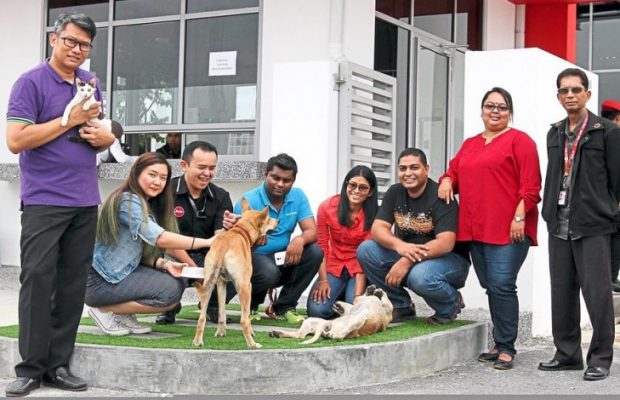
    For AirAsia staff, however, this joy and happiness awaits even before they get to their work stations. Waiting for them at RedQ, AirAsia’s headquarters in Sepang, Kuala Lumpur, are the four dogs they recently adopted and now consider as part of their work family.

    In fact, these dogs have occupied the area next to KLIA2 longer than most of the workers there. Every morning, with tails wagging, the dogs run up excitedly to the familiar faces, especially the ones they have formed a close bond with, and of course, those who come bearing doggie treats.

    “We found the dogs, when they were still puppies, at the construction site of RedQ. Even then, some of our staff members fed them and played with them. They let the dogs roam the area, and ensured that they didn’t harm themselves, or posed a threat to others. When we moved to RedQ last year, the dogs were still here, and there was talk of sending them to shelters,” says AirAsia People Department executive Ahmad Faizul Ahmad Rusli during an interview at RedQ.

    Airasia

    A group of animal-loving colleagues then decided to approach their boss, AirAsia group chief executive officer Tan Sri Tony Fernandes, with a plan that benefits the dogs and them.

    “They asked if they can keep the dogs, and I immediately said yes. The dogs literally grew up in RedQ. We should not just keep them, but build a proper home for them,” says Fernandes in a text message.

    Quickly, a taskforce dedicated for the caring of the animals was formed and interested staff members were encouraged to join. Around 10 people – the number increases by the day, by the way – pledged to care for the dogs. As a joke, they say that any work relating to the dogs starts only at 6.01pm, after working hours, so that it doesn’t interfere with their day-to-day operations.

    The first thing they did as a committee was to get licenses for the dogs from their local municipal council but found out that they weren’t issued to dogs staying in a company building. Faizul nevertheless says that they would apply again and find a way to get proper licenses for the dogs as they do not want them to be forcefully taken away.

    “We then came up with a blueprint for the dog shelter and found contractors to do the job. A corner of RedQ’s parking lot was then decided as the best and turned into a shelter that could fit the four dogs.

    “Besides that, we had to come up with a working plan that includes the cost of keeping the dogs. This should cover their food, medication, and other miscellaneous expenses,” explains AirAsia Government Relations head Vijaya Priya Ananthan.

    Airasia

    AirAsia DogQ’s committee members Kumaravel Subramaniam and Melissa Fok take turns to feed and walk the dogs.

    Once again, Fernandes proved his generosity when he offered to personally cover the expenses for the construction of the shelter – which he dubbed the DogQ – as well as pledged monetary support for the cause. Although they prefer not to disclose the exact amount that was given by Fernandes, they share that it costs approximately RM3,000 yearly to care for each dog.

    “We took them to the vet to have them spayed and get the necessary immunisation,” shares Faizul. Members of the DogQ committee also actively do their part by taking turns to purchase food and treats, and keep the dogs engaged with fun activities.

    “We feed and play with them, and the dogs follow some of us for after-work hiking sessions. Most of the time, they follow the security guards on their rounds. They really have formed a bond with them,” says Priya.

    Faizul adds: “We do have staff members who are afraid of dogs or who cannot interact with dogs, but they are not complaining. That’s because the dogs do not threaten them in any way, and everyone is just happy to go about their ways like they normally do.”

    Ahmad Faizul Ahmad Rusli (left) and Vijaya Priya Ananthan say that the DogQ project has brought together AirAsia staff members from different departments.

    Ahmad Faizul Ahmad Rusli (left) and Vijaya Priya Ananthan say that the DogQ project has brought together AirAsia staff members from different departments.

    The dogs have yet to be named, as the committee has decided to run a contest and let the big bosses pick the winning names.

    “The poor dogs are quite confused as each one of us has a nickname for them. But they still come to us when we call them,” says Faizul, with laugh.

    The dogs are undergoing obedience training and therefore can respond to simple commands. “We’re not training them to become commando dogs. We just want them to listen to us when we call them or tell them not to go somewhere,” adds Priya.

    Security is of utmost importance to the DogQ committee as they do not want the dogs to interfere with KLIA2’s operations nearby. The dogs are not allowed to roam beyond certain areas, and the ever-present security personnel keep an eye on the dogs to ensure that they do not wander into restricted sections.

    “They cannot enter the airport and the office building. Other than that, the dogs are free to go wherever they want. Their shelter will only be used when they are sick, or when they need to be isolated – like when we have big events with guests,” she further explains.

    Faizul would also like to avoid the misconception that the public can come and drop their unwanted animals at the shelter.

    The AirAsia DogQ committee members take it upon themselves to care for the four abandoned dogs that grew up within AirAsias headquarters compound in Sepang, KL.

    The AirAsia DogQ committee members take it upon themselves to care for the four abandoned dogs that grew up within AirAsias headquarters compound in Sepang, KL.

    “We are keeping just the four dogs. They are our dogs. We don’t plan to turn DogQ into a shelter – at least not yet – because firstly, we don’t have the expertise. But, under special circumstances, we would care for any animal that finds its way here and we will try to find a new home for them. We also have two cats that we’re taking care of right now, and we are trying to find people who would take them in,” says Faizul.

    AirAsia staff members are used to undertaking big and tough projects, but Faizul and Priya say that the DogQ is one that has united them all – bringing together people from different departments who otherwise wouldn’t have a reason to work together.

    “I always say that AirAsia is less of a company and more of a family. We are a company that looks after everyone – our guests, our staff and our partners. Now, we have four new ‘staff members’ to look after,” says Fernandes.


  • Indonesia turns it back on Vietnamese rice as crops at home flourish

    Indonesia turns it back on Vietnamese rice as crops at home flourish

    Indonesia’s rice imports from all destinations in 2017 are forecast to halve to 500,000 tons, based on USDA reports. Indonesia, the world’s fourth most populous country and a major buyer of Vietnamese rice, has not returned to Vietnam for new purchases this year, while its overall 2017 rice imports are forecast to halve to around 500,000 tons thanks to better domestic production, according to industry reports.

    Indonesia was among Vietnam’s 10 biggest rice buyers in the 2010-2016 period, with imports peaking at nearly 1.9 million tons in 2011, based on data from Vietnam’s agriculture ministry.

    But its purchases have been falling and Vietnam received no orders during the first two months of 2017, ministry data shows. Vietnam is the world’s third-biggest rice exporter after India and Thailand.

    Indonesia is forecast to import 500,000 tons of rice this year, down 50 percent from 2016, as domestic milled rice output edges up 2.6 percent to 37.15 million tons “due to increased area harvested”, a U.S. Department of Agriculture attache said in a March 30 report.

    The report said increased cropping intensity and new land will help expand the harvested area this year to 12.24 million hectares (30.25 million acres), 1.2 percent above 2016 when Indonesia experienced a weak to moderate La Nina weather phenomenon.

    Given more use of high-yielding varieties, the report forecasts Indonesia’s output next year will rise further to 37.4 million tons, leaving the country’s rice imports unchanged.

    The forecasts pose a challenge to Vietnam’s rice exports in 2017, with shipments in the first quarter already dropping 24 percent from a year ago to 1.2 million tons, a two-year low, the government has said.

    Hanoi maintains forecasts of a modest rice export volume for 2017, anticipating 5 million tons to be shipped, due in part to expected higher demand from top buyer China. Last year, Vietnam’s rice exports fell to 4.8 million tons, the lowest since 2008.

    Malaysia, another key buyer of Vietnamese rice, is forecast to import 950,000 tons of the grain this year, unchanged from 2016, said a USDA report dated March 27. Last year, the country was Vietnam’s 5th biggest rice buyer, after China, Ghana, the Philippines and Indonesia.

    The average export price of Vietnam’s 5-percent broken rice eased 2 percent in the first quarter ending March from a year ago to $344 a ton, free-on-board basis, and that on Thailand’s 5-percent broken rice also eased the same pace in the same period to $372 a ton, the U.N. Food and Agriculture Organization said.

    Unseasonal rain in the past week has disrupted the harvest of the Mekong Delta’s winter-spring crop, and quotations edged up slightly even though buying demand remains thin, traders said. The 5 percent broken rice advanced to $355 a ton this week from $347-$350 last Thursday.

    Output of the crop, the biggest among the Delta’s three crops grown a year, is projected to drop 1.3 percent from last year to around 10 million tons of paddy, the agriculture ministry has said.

  • China Unicom parent seeks private investment

    China Unicom parent seeks private investment

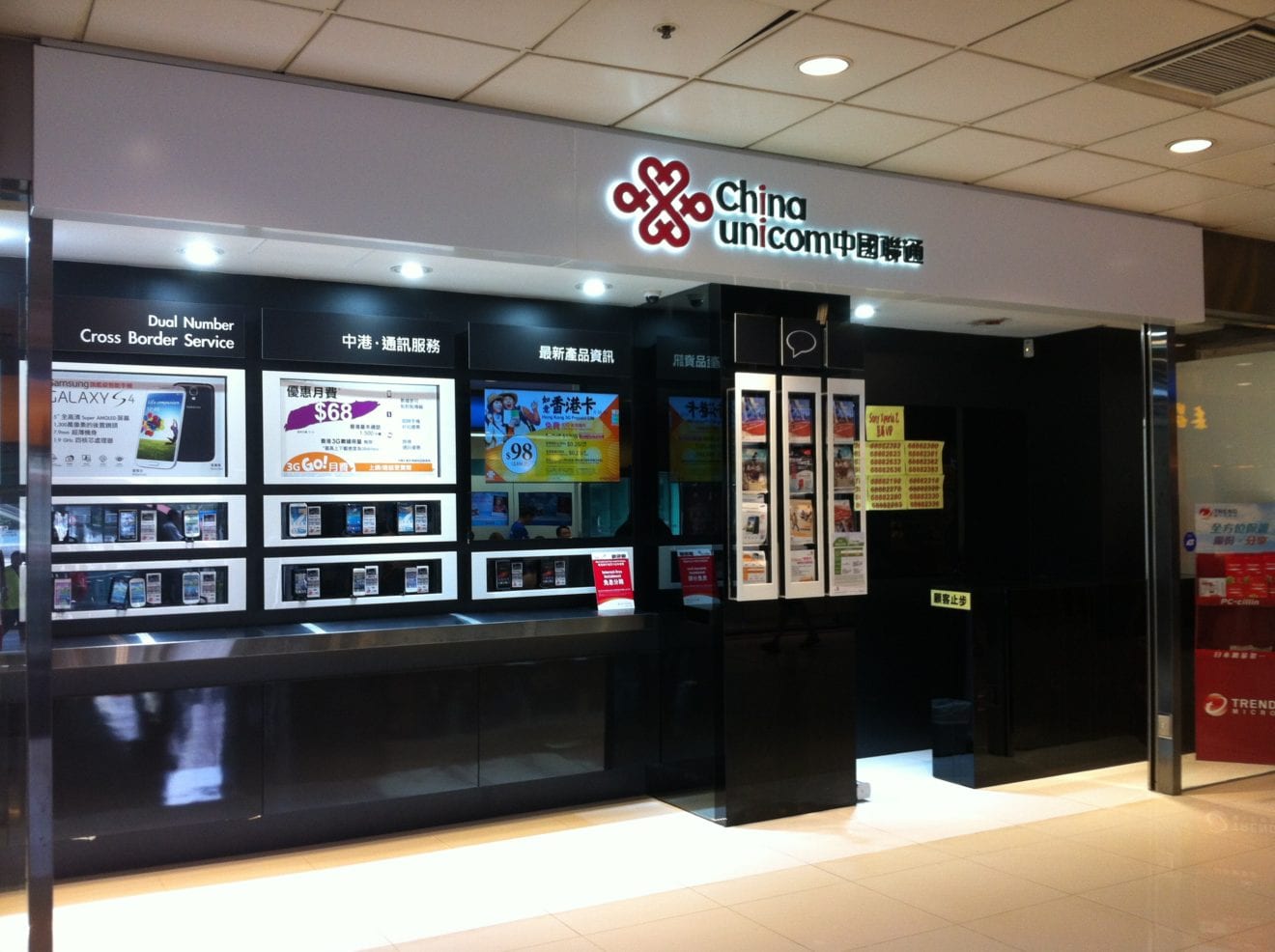
    China Unicom’s parent company China United Network Communications plans to open up to private investors in response to government pressure to reform the ownership structure and competitiveness of the market’s big three operators.

    The company plans to welcome in a strategic private sector investor as part of a pilot designed to evaluate having subsidiary China Unicom operate more like a private company.

    China Unicom itself is listed on the Hong Kong stock exchange along with rivals China Mobile and China Telecom, but China United Network Communications owns a controlling 75.9% stake in the company.

    As the least profitable of China’s big three operators – Unicom reported a 94.1% slump in net profit for 2016 – the government has selected Unicom to pilot the mixed ownership reform model.

    The operator has already taken steps towards becoming a leaner, more competitive company. Unicom cut its planned capex budget to 45 billion yuan ($6.52 billion), from 72.1 billion yuan last year, to ensure it has the resources needed to fund its 5G rollout once the technology launches.

    The pilot of a mixed ownership model forms part of the government’s wider plans for state-owned enterprise reform. The government has previously announced that substantial reforms will be needed across seven industries including the telecoms sector.