Tag: asia

  • Total data created to grow tenfold by 2025

    Total data created to grow tenfold by 2025

    In response to a new study forecasting a tenfold rise in worldwide data by 2025, Seagate is advising business leaders and entrepreneurs to amplify their focus on the mega trends driving data growth over the next several years, and examine their business’ course for the future value of data from creation, collection, utilization and management.

    The IDC white paper, Data Age 2025, sponsored by Seagate, predicts data creation will swell to a total of 163 zettabytes (ZB) by 2025; indicating that the decade centered around the conversion of analog data to digital is being replaced by an era focused on the value of data; creating, utilizing, and managing ‘life critical’ data necessary for the smooth running of daily life for consumers, governments and businesses alike. Consumers and businesses creating, sharing and accessing data between any device and the cloud will continue to grow well beyond previous expectations.

    Further, whereas once consumers were the primary creators of the bulk of the world’s data, Data Age 2025 predicts this will shift, with enterprises creating 60% of the world’s data in 2025. Business leaders will have the opportunity to embrace new and unique business opportunities powered by this wealth of data and the insight it provides but will also need to make strategic choices on data collection, utilization and location.

    Virtually every enterprise, the white paper indicates, is being affected by the major data-driving trends. Notable drivers of the shift from primarily consumer-led to enterprise-driven data include:

    • The evolution of data from business background to life-critical –By 2025, nearly 20% of the data in the global datasphere will be critical to our daily lives and nearly 10% of that will be hypercritical.
    • Embedded systems and the Internet of Things (IoT) – By 2025, an average connected person anywhere in the world will interact with connected devices nearly 4,800 times per day – basically one interaction every 18 seconds.
    • Machine learning changing the landscape –IDC estimates that the amount of the global datasphere subject to data analysis will grow by a factor of 50 to 5.2 ZB in 2025.
    • True mobile and real-time data –By 2025, more than a quarter of data created will be real-time in nature, and IoT real-time data will constitute over 95% of it.
    • Automation and machine-to-machine technologies shifting the bulk of data creation away from traditional sources – While data creation in the previous 10 years has been characterized primarily by an increase in entertainment content, the coming decade will reflect the shift to productivity-driven and embedded data, as well as non-entertainment images and video such as surveillance and advertising.

  • Japan’s EneCom expanding 100G OTN

    Japan’s EneCom expanding 100G OTN

    Japan’s top utility communications provider, Energia Communications (EneCom), has contracted Nokia to support a 100Gbps optical network rollout in Chugoku.

    The operator will deploy a cutting-edge OTN integrated with 100G/200G coherent technology covering the cities of Okayama and Hiroshima.

    Under the contract, Nokia will supply a photonic service switch to support ultra-wideband wavelength routing and switching to help EneCom meet its unpredictable traffic demands.

    EneCom also plans to use the new network to provide protection during natural disasters, due to the real-time optical fiber supervision technology which is able to monitor and locate fiber breakage.

    “We are committed to continue offering our subscribers reasonable, reliable, and high-quality services,” EneCom CEO Satoshi Kumagai said.

    “To do so, we need to meet the huge increase in traffic driven by cloud-based services, WiFi offloads, rich video content and the future demands of IoT and 5G. The disaster recovery function will provide stable services even during natural disasters.”

    “As Japan is exposed to many earthquakes and typhoons, the region requires infrastructure that can automatically reroute services upon failure and provide geographic redundancy,” Nokia Japan head Jae Won added.

    “Our solution including the 1830 PSS allows for a simple and robust operation model based on integrated fiber monitoring. This, along with a fully flexible optical transport system and end-to-end network management, is the ideal fit for EneCom’s upcoming service deployment.”

  • Toyoda Gosei to Exhibit at Auto Shanghai 2017

    Toyoda Gosei to Exhibit at Auto Shanghai 2017

    Toyoda Gosei Co., Ltd. will exhibit a broad range of products and technologies that contribute to improved vehicle environmental performance and comfortable vehicles at Auto Shanghai 2017. The show will be held in Shanghai, China from April 19 to 28. Toyoda Gosei’s exhibition booth is located at 4BA101 on the 2nd Floor in Hall 4.

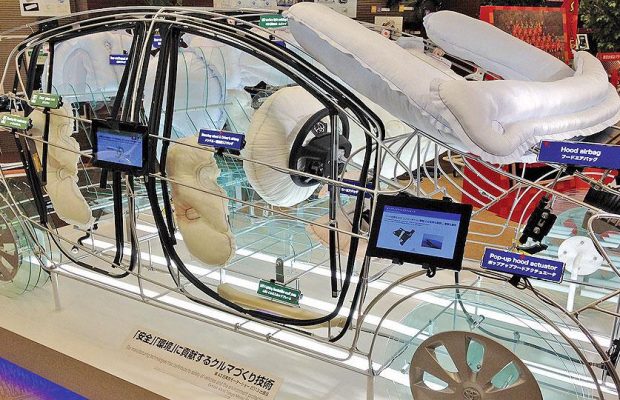
    Prominently displayed will be a wire mock-up car fitted with Toyoda Gosei products that contribute to improved safety and environmental performance. These include various airbags for full 360° coverage to protect vehicle occupants from impacts on all sides, millimeter wave radar compatible emblems, lightweight plastic fuel filler pipes and automotive LED products. The wire mock-up makes it easy to see and understand the features and location of these products on a vehicle.

    Also on exhibit will be the company’s highly designable radiator grilles that can accommodate diverse user design preferences and multifunction console boxes that provide greater convenience.

    Toyoda Gosei has 13 subsidiary companies in the China region and is actively developing its business there. The company will continue to expand its operations in the region to meet the needs of customers in the growing Chinese market.

  • Y3 Technologies opens new office, signs MoU with GOGOVAN

    Y3 Technologies opens new office, signs MoU with GOGOVAN

    Supply chain and logistics innovation providers Y3 Technologies (Y3) has officially launched its new 6722 sq. ft. office space. Located in heart of Singapore’s supply chain logistics hub – Bulim Avenue, the move to the new office housed within Supply Chain City highlights its commitment towards further providing businesses with top-notched technological logistics solutions.

    In line with that, Y3 Technologies also unveiled an MoU signing with hyperlocal on-demand delivery provider, GOGOVAN. As Asia’s pioneer app-based logistics platform, GOGOVAN connects users with real-time delivery services. Under the MoU, GOGOVAN will be part of Y3’s supply chain ecosystem, offering enhanced delivery capabilities to Y3’s end-to-end supply chain management system. Both entities will provide joint efforts involving collaborations between management systems and physical last mile deliveries.

    “We are extremely excited to be operating out of our new office space, with the move playing an integral part of our transformational journey over the past 18 months. Not stopping short of our aim to provide continued service excellence as well as business expansion, the partnership with GOGOVAN will further enable us to better cater to businesses in this digital age,” said Marc Dragon, CEO, Y3 Technologies.

    “It is a great opportunity to be able to collaborate with Y3 Technologies and we are extremely honored to be part of this partnership. This collaboration will enable us to be part of Y3’s supply chain ecosystem. We would also like to congratulate Y3 on the new office opening that we witnessed today,” shared Patrick Wong, country manager, GOGOVAN.

    Apart from the MoU announcement, attendees also had the opportunity to witness Y3’s Innovation Showcase and experience first-hand the company’s technological solutions and offerings. CEO, Marc Dragon, also carried out an insightful presentation addressing some of the key trends and challenges that businesses currently face, and the ability of supply chain technology solutions to empower businesses and enable them to overcome these challenges.

    Y3 has also recently acquired leading CRM and eCommerce solutions provider Ascentis, and is actively involved in the Chongqing Connectivity Initiative (CCI), Singapore’s third Government-to-Government (G2G) collaboration with China.

  • Here’s where K-beauty is driving Western skin care, cosmetics

    Here’s where K-beauty is driving Western skin care, cosmetics

    New research from Mintel, presented at in-cosmetics Global, is taking a look at the size of South Korea’s beauty market, the changes Korean beauty has brought to the global market and what trends to expect in the coming year.

    Mintel notes that South Korea is among the top 10 global beauty markets, with its market size sitting at $13 billion in 2017, with facial skin care composing $6.5 billion in retail sales. It’s expected that facial skin care will grow at a 5.8% compound annual growth rate for the next five years, hitting $47.2 billion in 2020. Color cosmetics make up the second-largest segment of the Korean beauty market, and Korean shoppers spend $45 per capita on color cosmetics, compared with the $37 per capita spend in the U.S.

    “The Korean beauty market remains buoyant thanks to fast-paced innovations and highly engaged consumers who don’t hesitate to adopt novel products delivering new beauty experiences,” Mintel senior beauty analyst Jane Jang said. “The success of the market has been heavily driven by the boom of facial skincare, but is also highlighted by the impressive per capita spend on color cosmetics which is more than double the global average.”

    In addition to the size of the beauty market in Korea, the trends that have driven its growth have gone global, with such retailers as CVS looking to capitalize on it with and expanded K-beauty selection that includes exclusive brands and products. Mintel projects continued influence from Korea on product innovation and launches.

    “Looking at facial skincare, 2017 will be the year of extreme segmentation. Products will become increasingly targeted and multi-functional, responding to the needs of knowledgeable and demanding consumers,” Jang said. “South Korean Beauty routines can consist of up to 10 steps, and a common obsession for specific claims – especially moisturizing, brightening, whitening and anti-ageing — means that most products combine multiple functions. The goal is to achieve the so-called ‘chok-chok’ skin, which is supposed to look bright, fair, plump, dewy and youthful.”

    Trends in skin care will include such hybrid concoctions as exfoliating moisturizers, anti-wrinkle whitening tone-up creams and nourishing oil serums, Jang said, as well as transformative textures — powder-to-serum, oil-to-foam and water-to-cream products. Jang also notes that natural is a big factor in K-beauty, with 69% of 2016 South Korean skin care launches including herbal or botanical claims.  And sheet masks are here to stay, Jang noted.

    When it comes to cosmetics, Mintel predicts that the skin care trends of hybrid textures and formats will carry over, with focuses on jellies, gels, mousses and watery oils. The main category seeing growth from hybrid formats has been the lip care category. Cushion compacts from Korea also have broken into the U.S. market, with 54% of global cushion compact launches taking place in Europe and the United States from October 2015-Setpember 2016.

    “Because of K-beauty’s growing popularity worldwide, Western brands are constantly looking to South Korea for their next inspiration, seeking to adapt popular South Korean beauty formats for Western consumers,” Jang said. “The popularity of South Korean beauty products is due to their high performance combined with fun packaging and sensorial cues, as well as affordable prices. By gaining the attention of bloggers, vloggers and the media, the K-beauty wave is spreading to retailers outside of Asia. While color cosmetics will be the active innovation area to cater to an increasing number of sophisticated beauty consumers.”

  • New Anchor Travel Retail Concessions Set to Elevate Overall Airport Experience

    New Anchor Travel Retail Concessions Set to Elevate Overall Airport Experience

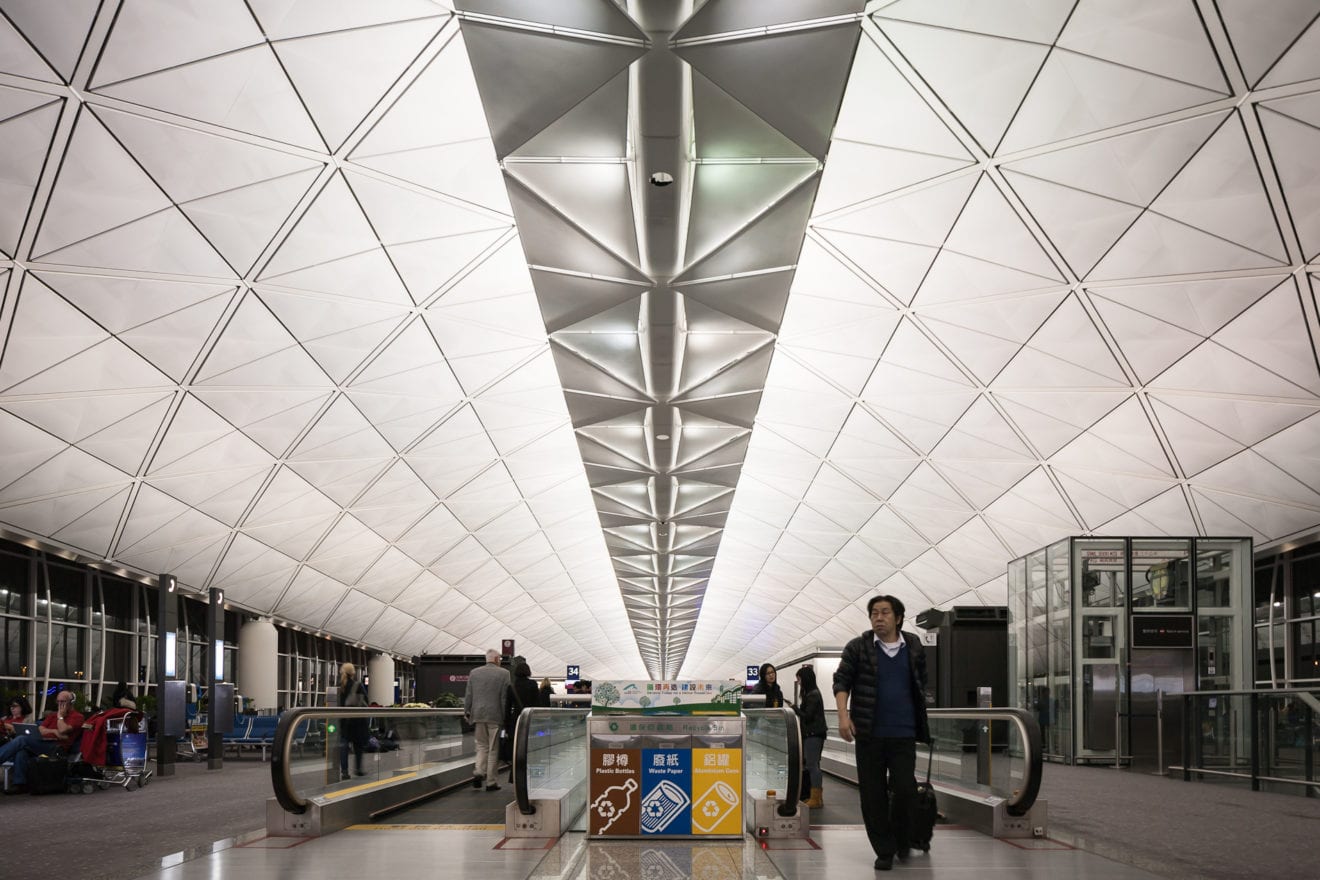
    Airport Authority Hong Kong (AA) has awarded the “Liquor & Tobacco” concession to CDF – Lagardère Company Limited (CDF – Lagardère), and the “Perfume & Cosmetics and Fashion Accessories” concession to Shilla Travel Retail Hong Kong Limited (Shilla) at Hong Kong International Airport (HKIA), which would open for business from November 2017. The award is a result of the open tender exercise held earlier.

    Cissy Chan, Executive Director, Commercial of the AA said, “As a world-class international and regional aviation hub welcoming over 70 million passengers in 2016, we strongly believe that this collaboration will form HKIA’s signature stores introducing attractive and diverse choices, sought after brands, as well as unique and engaging shopping experiences. We are confident that the new concessions will elevate the overall airport experience and create a new shopping journey for the worldwide passengers.”

    The Liquor & Tobacco concessionaire will have the flexibility to include complementary products and upmarket gourmet food items.  The Perfume & Cosmetics and Fashion Accessories concessionaire will offer a one-stop shopping destination for beauty and fashion accessories, such as sunglasses, fashion watches, small leather goods and handbags.

    CDF – Lagardère, the awardee of the Liquor & Tobacco concession, will be introducing new experiential concepts, which include the widest selection of Chinese liquor assortment, a whisky chamber bringing an extensive offering under one roof, an in-store VIP lounge, tasting bars and more.

    Shilla, who will be operating the “Perfume & Cosmetics and Fashion Accessories” shops, will bring a wide spectrum of beauty products and fashion accessories representing almost 100 brands that are new to HKIA.  There will be a dedicated zone for male-specific products, as well as a “New Generation” zone providing a platform for emerging Korean and Japanese brands

    With the emerging trend of omni-retailing, both concessionaires will bring in new ideas to deepen customer engagement through digital initiatives. Interactive zones with virtual reality (VR), interactive and digital devices, together with iBeacon technology, will be installed inside the shops to enhance in-store navigation and real-time promotional offers.

    Charles Chen, President of China Duty Free Group said, “We are honoured to be awarded the Liquor & Tobacco concession at HKIA. This marks an important milestone in the international development of our organisation’s duty free business. We extend our sincere gratitude to the AA for their trust, and we will join hands with Lagardère Travel Retail to present a world class duty free shopping experience to the HKIA passengers.”

    Dag Rasmussen, Chairman & CEO of Lagardère Travel Retail said, “We look forward to growing our long-standing partnership with one of the world’s finest airports. Our teams across the world are excited to collaborate with our brand partners to bring to life a new benchmark for quality and engagement in travel retail.”

    Roberto Graziani, President, Hotel Shilla Travel Retail said, “This highly competitive win is attributed to our teams’ innovative category insights, our deep understanding of customer needs as well as our long standing operational excellence. We are grateful to the AA for this vote of confidence and look forward to warrant to our customers and all stakeholders, offers, services, and operational performances which will stay abreast of trends and changes in the consumers’ preferences, always maintaining a strong competitive edge throughout the length of the concession.”

    The two concessions will be open for business from November and December 2017 respectively. The AA will also fully assist the two concessionaires for a smooth fitting out and changeover.

  • Vietnam’s top brewer Sabeco tops up profit goal for 2017

    Vietnam’s top brewer Sabeco tops up profit goal for 2017

    The company expects its annual sales to rise 3 percent against last year. Vietnam’s biggest brewer Sabeco is aiming to push sales to more than 1.7 billion liters this year, an increase of 3 percent against 2016, in a bid to raise its annual revenue by 9 percent to VND34.5 trillion ($1.52 billion) and net profit by 1 percent to VND4.7 trillion ($207 million).

    The state-owned company also plans to raise its dividend payments from 30 percent to 35 percent, as agreed by its board of director.

    Those targets will be put on the table at a shareholder meeting on April 18.

    Company bosses said that price cuts on ingredients, a preferential tax policy on malt and stable market growth in rural areas, where Sabeco is the most competitive, are the reasons for the more positive targets.

    Sabeco, known for the Bia Saigon and 333 brands, is also preparing for fiercer competition on the domestic market following Belgium’s Anheuser-Busch InBev entry into the Vietnamese market.

    With the special consumption tax on beer and wine raised from 55 percent to 60 percent on January 1 this year, and set to climb to 65 percent in 2018, as well as a labeling regulation that’s still under discussion, Sabeco is concerned that the at production cost for each beer bottle will be rise by VND200.

    In its financial statement released last month, the brewer reported VND30.66 trillion in revenue last year, up 13 percent from 2015, and a profit of VND4.6 trillion ($205 million), a 33 percent jump.

    According to the Ho Chi Minh City Securities Corporation, Sabeco’s beer sales made up 43.3 percent of the domestic market share last year, a slight decrease compared to 43.9 percent of 2015. It predicted that the figure will edge up to 43.5 percent this year.

    The trade ministry announced in August last year that it planned to sell its entire stake in Sabeco, according to a government report.

    Under the plan, the ministry would have offered a 53.59 percent stake worth VND24.5 trillion ($1 billion) in 2016 before Sabeco made its market debut, and the remaining 36 percent stake worth VND16 trillion ($705 million) in 2017 after the listing.

    However, due to delays, the trade ministry failed to sell its first Sabeco shares as planned.

    Deputy Trade Minister Do Thang Hai told local media on Monday that over 641 million shares in Sabeco had been listed on HOSE on December 6 last year at a starting price of VND110,000 ($4.85) per share. As of April 3, prices stood at VND200,400 ($8.8) per share.

    Beer consumption in Vietnam rose 12 percent year-on-year to reach 3.8 billion liters in 2016, according to the trade ministry.

    Vietnam is Asia’s third largest beer consumer by volume after China and Japan.

    Industry experts expect annual growth of 4 to 5 percent over the next five years. The country’s annual beer output is forecast to hit 4.1 billion liters by 2020, according to government projections.a

  • AirAsia joint venture’s prospects uncertain

    AirAsia joint venture’s prospects uncertain

    Talking to VIR, an official from the Department of Enterprise Management under the Ministry of Transport said that AirAsia has yet to submit an official application to establish a joint venture with Gumin and Hai Au Aviation.

    Civil Aviation Authority of Vietnam said the first time it heard of the news was from the media.

    “Hai Au, Gumin, and AirAsia. None of them has applied for a certificate to do business in air transport,” said Vo Huy Cuong, deputy director of CAAV.

    Hai Au has a license to provide general air transport for commercial purposes, with a fleet of four amphibious airplanes.

    Gumin, which operates in management consultancy, has only started operation on March 29.

    Official information is forthcoming only from Thien Minh Group.

    According to the company’s website, the new airline is going to start operation in 2018 after being ratified by the Vietnamese government.

    The new airline is going to provide “high-quality service at affordable prices.”

    An expert said that it is currently unclear whether this airline is going to be a new entity or part of Hai Au.

    However, given the time that it normally takes to obtain a license to fly commercially, the joint venture is unlikely to get a license by the end of 2018.

    Vietstar One-member Co., Ltd., which applied for a license to provide air transport services in July 2016, is still waiting.

    Narrow window

    This is AirAsia’s third attempt in 10 years to join hands with a Vietnamese partner to set up an airline.

    Earlier, Air Asia made an agreement with Vinashin (now Vietnam Shipbuilding Industry Corporation) in 2007 and with Vietjet in 2010 to set up the second foreign-invested airline in Vietnam after Jetstar Pacific.

    For one reason or another, these plans failed to materialise.

    At the moment, AirAsia has two airlines that fly frequently to Vietnam, Thai AirAsia (FD), which flies from Thailand, and AirAsia Berhad (AK) which flies from Malaysia.

    There was also Indonesia AirAsia which used to fly from Indonesia, but at the moment this activity has been suspended.

    The Vietnamese aviation market sees ripe competition from Vietnam Airlines and SkyViet/VASCO, as well as two low-cost airlines, namely Vietjet and Jetstar Pacific, the former of which is considered to be on par with big regional airlines, such as AirAsia, in terms of capital and governance ability.

    The growth in demand still outpaces the growth in supply. However, in the first quarter, demand  showed signs of slowing growth.

    Moreover, the price of airplane fuel is increasing sharply, affecting the profit of airlines.

    The average price in January this year was $65.15 per barrel, up 1.57 per cent compared to December 2016.

    CAPA Centre for Aviation expects that the profit margin for global air transport will decrease from 8.3 per cent in 2016 to 7.4 in 2017 and further to 6.6 in 2018, due to the increasing price of fuel and the surplus in airplanes as airlines have been buying too many of them recently.

    “AirAsia is very late to the party in Vietnam and as a result faces huge challenges,” said Brendan Sobie, Singapore-based chief analyst at CAPA Centre for Aviation at a recent interview with Bloomberg on the issue.

    “The market is now well served by two low-cost carriers, VietJet and Jetstar Pacific. The rate of growth will likely slow in the coming years as the market is now more mature.”

  • Nissan premium brand Infiniti global sales rise 18 percent in January-March

    Nissan premium brand Infiniti global sales rise 18 percent in January-March

    Nissan Motor’s premium brand Infiniti sold 67,367 vehicles globally in the first three months of 2017, up 18 percent from the same period a year prior, showed a press release seen on Thursday.

    Globally, Infiniti sold 28,406 vehicles in March, up 14 percent.

    The brand’s performance in the first three months of this year was led by its U.S. unit. In the United States, Infiniti sold 43,561 vehicles over January-March, up 33 percent. U.S. sales volume in March rose 33 percent to 18,266 vehicles.

    In China, the world’s biggest auto market on which Infiniti has focused to gain momentum, the brand sold over 10,000 vehicles, up 4 percent, in the first quarter of the year. Its sales increased 6 percent in March to 4,050 vehicles.

  • China Telecom, Huawei hold NB-IoT symposium

    China Telecom, Huawei hold NB-IoT symposium

    China Telecom and Huawei co-hosted a symposium in Shenzhen yesterday aimed at exploring the potential of narrowband IoT (NB-IoT) technology in smart city applications.

    The symposium attracted participants from the China Academy of Information and Communications Technology (CAICT) as well as representatives from industries including water, gas, smart meters and other fields.

    Attendees were told that the wide coverage and massive simultaneous connection capabilities of NB-IoT meke it ideally suited for deployment in smart city areas including water and gas management, street lighting and car parking.

    “NB-IoT-based Smart Water and Smart Gas are the main components in Smart City, fully exhibiting the informatization level in the public service provisioning sector of a city,” China Telecom GM of government and enterprise Sun Jian commented.

    “China Telecom and Huawei have initiated together pilot NB-IoT applications on Smart Water and Smart Gas with industry partners, including Shenzhen Water and Shenzhen Gas. Through comprehensive cooperation on standards formulation, technological research, network construction, service development, business model exploration, and associated aspects, all parties wish to jointly promote informatization construction for water and gas industries.”

    Huawei president of marketing and solutions Zhang Shunmao added that Huawei is currently shipping 200,000 NB-IoT capable chips per month, and expects to increase this to 1 million per month in the future.

    This year the company is also scheduled to deploy more than 30 NB-IoT networks for Smart City applications – particularly for public service provisioning – in over 20 countries this year.

    Separately, IoT provider Thinxtra has announced a partnership with Hong Kong wireless technology company Victory Concept to develop IoT devices for Asia-Pacific enterprises to implement using the low-power-wide area (LPWA) Sigfox network.

    Thinxtra recently announced plans to deploy a Sigfox network throughout Hong Kong by June. The devices will also be compatible with Sigfox networks in 32 countries worldwide.

    “The Thinxtra network will offer companies and researchers in Hong Kong the chance to create new products and services based on IoT. We believe that Hong Kong has the potential to be a world-leading IoT design and manufacturing hub,” Thinxtra Asia MD Murray Hankinson said.

    “With the skills and facilities to provide a reliable supply of high-quality, low-cost devices in Hong Kong, Victory Concept is helping us create the right conditions for IoT innovation to flourish here and spread around Asia Pacific and to the world.”

  • Vietnamese workers warned of ‘robot threat’

    Vietnamese workers warned of ‘robot threat’

    Robots are already being used at the 20-hectare Vinamilk actory in Binh Duong province. There are 19 robots and several workers. Everything runs on an automation process. Some robots carry packs to the filling room, while others take finished products to the storehouse.

    When robots begin to lose power, they automatically go to the battery charging area, where they install full batteries without the assistance of workers.

    Nguyen Chien Thang, director of Scan Pacific, an interior product manufacturer, who has received more orders from foreign partners in recent years, has decided to equip his newly built factory with an automated production line, which would help increase productivity by 4-5 times.

    Other large furniture companies in Binh Duong have also spent money on automation technology. A representative of Vi Dai, a supplier of machines and equipment, said the company’s sales increased by 50 percent in 2016 because more wooden furniture manufacturers bought modern equipment to increase productivity and lower costs.

    Thanks to the automation production line, which has been running in the last 10 years, Minh Long 1 Porcelain Company has cut the number of workers from 400 to 20. To date, it has imported seven robots with the value of no less than 40,000 euros.

    Analysts commented that though it is costly to replace workers with intelligent robots, using robots in production lines is a growing tendency worldwide, including in developing countries like Vietnam.

    The World Economic Forum predicted 5 million jobs would be lost by 2020 because of  artificial intelligence. The latest report from ILO shows that two-third of 9.2 million workers in the textile & garment and footwear industries in South East Asia are being threatened by robots.

    In Vietnam, ILO said 86 percent of textile & garment workers may lose jobs in the automation process, while three-fourth of workers in the electronics sector will be replaced with robots.

    Pham Thi My Le, president of Le & Associates, predicted that 80 percent of works would be undertaken by robots by 2020.

    The popularity of robots would prompt multi-national conglomerates to stop outsourcing to Asian countries and to make products in their home countries with automated production lines. If so, Asian countries, which now rely on doing the outsourcing for foreign companies, would suffer.

    Vietnam can attract foreign investments thanks to cheap labor. However,  once robots replace large numbers of workers, that advantage will diminish.

  • VW’s Audi and Porsche to join forces on vehicle development

    VW’s Audi and Porsche to join forces on vehicle development

    Volkswagen Group’s Audi and Porsche brands will join forces on vehicle development, the two upmarket brands said on Wednesday, to help the world’s largest carmaker save money in the wake of its costly emissions test cheating scandal.

    The pact comes as Volkswagen (VW) Chief Executive Matthias Mueller, who previously worked as Porsche’s CEO and Audi’s head of product management, finalizes a plan to step up development of autonomous cars, electric vehicles and digital services.

    Porsche and Audi said the focus was on jointly developing shared vehicle platforms, modules and components, in a deal that follows a period of intense in-house competition for development resources.

    Projects will be jointly headed by representatives from each brand. In the coming months, joint teams will prepare the specific areas of cooperation and define a roadmap to 2025, they said.

    Porsche, taken over by VW 2012, has emerged as a strong rival engineering center to Audi. Porsche’s MSB platform, used for its four-seater Panamera model, has been adopted for VW group’s next generation Bentley Continental model even though Audi had developed a similar offering.

    Since the group’s emissions test cheating on diesel engines was exposed in September 2015, Audi has lost two research and development chiefs and the head of its automotive electronics division, who did pioneering work in the area of autonomous driving and battery technology.

    Audi remains the group’s center of excellence for sport-utility vehicles, a lucrative and growing market, where it supplies platforms to Porsche and other brands such as Bentley.

    With self-driving vehicles likely to play a major future role in the industry, Audi also develops autonomous cars for the group.

    But a separate internal race has begun to become an engineering hub for electric vehicles, a field which includes research and development of battery cells, battery packs and electric motors.

    Porsche has developed the J1 electric cars platform, while Audi has also worked on its own electric car.

    Porsche has also taken over production of eight-cylinder gasoline engines for large sportscars for the VW group, even though Audi has its own engine factory in Hungary.

  • Philips Lighting first lighting company to “elluminate” the way forward for Omni-channel retail

    Philips Lighting first lighting company to “elluminate” the way forward for Omni-channel retail

    With the increase in operating costs and growing competition in e-commerce, Singapore’s retailers are realising the importance of leveraging omni-channel retail strategies to bring new and better experiences to today’s shoppers.

    Philips Lighting, a global leader in lighting, has become the first lighting solutions provider to announce the launch of a ‘chatbot’ on their local Facebook page, allowing users to purchase Philips Lighting’s suite of consumer products conversationally through Facebook’s messenger platform.

    Facebook’s users will now be able to get round-the-clock assistance in making their lighting purchase decisions just by interacting with the chatbot on the Facebook Messenger system. The chatbot responds with product recommendations based on the user’s inputs to the chat and allows users to make their purchase directly on the platform itself.

    Besides being the first lighting provider to officially launch a Facebook Messenger Bot, this is also one of the initiatives undertaken by the company for its LEDs Get Smart campaign, aimed at educating consumers on the benefits of installing the right lights at home. Under this campaign, Philips Lighting has also partnered with Lazada Singapore to launch its “first ever specialty e-store” on the e-commerce platform.

    These initiatives are borne from Philips Lighting’s desire to capture the local e-commerce market. A joint report by Temasek Holdings and Google has revealed that the e-commerce market in Singapore is expected to be worth US$5.4 billion (S$7.4 billion) by 2025, and is expected to make up 6.7 per cent of all retail sales in Singapore. As e-commerce gain traction and become a big contributor to the omni-channel retail trend, the firm aims to stay ahead of the game by becoming the first lighting company to tap into this growing segment. The move is also in line with the government’s plans, as revealed in the recent budget announcement, to promote digitalisation in the retail sector.

    Alok Ghose, Managing Director and Cluster Leader for Philips Lighting in Singapore, Malaysia and Exports said: “The partnership with Facebook and Lazada Singapore will serve as an excellent opportunity for Philips Lighting to tap onto the growing e-commerce market segment to unlock new business revenue. These platforms will enable us to bring  light beyond illumination to Singaporean households, connecting their home lighting systems to the Internet of Things, a viable first step in building homes in a Smart Nation.”

  • Convenience, food safety matters to Vietnamese consumers

    Convenience, food safety matters to Vietnamese consumers

    The retail market in Vietnam is quickly shifting away from traditional live markets to more modernized trade, said Nick Miles, head of Asia-Pacific at IGD, with convenience stores showing the strongest growth prospects.

    There are several factors driving this including a positive economic outlook for the country, a significant increase in gross domestic product per capita and rapidly changing shopper habits.

    The segment has also experienced a shift in shopping behaviours as younger consumers with higher disposable incomes typically make smaller, but more frequent purchases rather than splashing out on a big weekly shop.

    Of note, Mr Miles said young consumers prefer to shop in an air-conditioned environment that has products well-organized on the store shelves and provides seating areas.

    With higher take home pay they are also looking for and willing to pay for higher-quality products than can be found in most traditional live markets.

    While free trade agreements such as the ASEAN Economic Community have given rise to a race for larger supermarkets throughout the country, many stores and individuals have opted to open smaller mini-supermarkets and convenience stores.

    It is also easier to get licences for stores under 500 square metres, said Mr Miles noting that this explains why retailers have been able to expand so speedily in the large metropolitan areas such as Hanoi.

    The study said it expects to see convenience stores in Vietnam to champion innovative new products and formats such as food to go, and begin working collaboratively to develop coordinated supply chains to ensure they are making the most of their growth prospects.

    Vietnam is undergoing an organized retail revolution, explained Luong Quang Thi, general director of domestic refrigerated transport specialist ABA Cooltrans.

    Convenience stores and mini-marts are popping up everywhere, Mr Thi noted, adding that as of last June there were 1,500 mini marts across the country mostly in the larger urban areas.

    Those numbers are expected to continue to mushroom over the next few years, which in turn is fuelling a heightened demand for chilled and frozen foods, setting the stage for the cold chain industry to soar.

    ABA Cooltrans hopes to put itself at the forefront of the Vietnam cold chain expansion, he added.

    The company’s 200 reefer trucks handled 54,000 metric tons in 2016, and a newly acquired 15,000 pallet-capacity cold storage facility in Hanoi saw throughput of 100,000 metric tons.

    Convenience and food safety matters to a typical young Vietnamese consumer nowadays, said Mr Thi, adding that freezing some foods for short or long term use, is essential to prevent foodborne illness.

  • Avaya taps COL as Hong Kong distribution partner

    Avaya taps COL as Hong Kong distribution partner

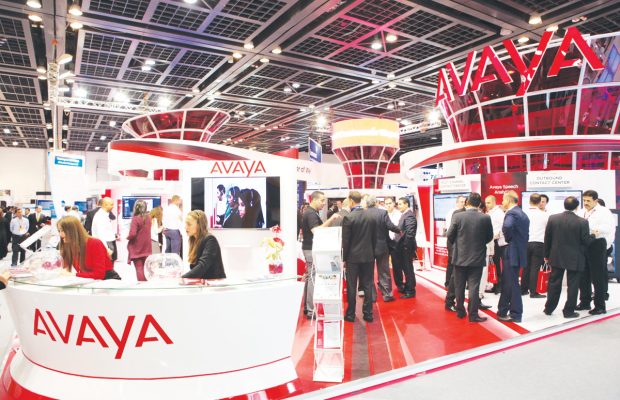
    Business communications and ICT solutions provider Avaya has appointed COL Limited as its distribution partner for the Hong Kong market.

    Under the agreement, the two companies will collaborate to drive adoption of Avaya solutions in the market and helping Hong Kong organizations achieve their digital transformation ambitions.

    COL, a subsidiary of fixed line operator Wharf T&T, will provide the full range of Avaya products – including unified communications and collaboration, contact center, cloud-based communication applications and networking solutions – to resellers in Hong Kong, and later to the wider region. Resellers will be able to offer products to enterprises of all sizes.

    COL has a more than 40 year history in Hong Kong. Its flagship product is its data center and business continuity solution, which has an 80% market share in the financial and multi-national corporation market segments.

    “This distribution agreement signals the start of an exciting time for the industry and for us. Avaya has the reputation, the reach and the commitment to deliver quality communication applications,” COL VP for the business market Kam Poon said.

    “Together and through our resellers, we will make a highly positive impact in delivering future-proof communications solutions to business customers with proven competence to design, build, implement and operate.”