Tag: asia

  • South Korea making mark in global beauty markets

    South Korea making mark in global beauty markets

    South Korea is among the top 10 global beauty markets, estimated to be worth more than US$13 billion this year, according to London-based market research firm Mintel Group.

    Its research was released on the eve of the 27th edition of In-cosmetics Global in London, said to be the world’s foremost exhibition for personal-care ingredients. As well as spotlighting South Korea’s beauty market, the research looks at trends impacting the global beauty industry and innovations in textures, ingredients and product experience.

    Facial skincare accounts for 51 per cent of total market share with $6.5 billion in retail sales and a projected 5.8 per cent CAGR over the next five years to reach $7.2 billion by 2020. Much of the success of the category comes from an abundance of product development and the fact that 68 per cent of total skincare product launches in South Korea for 2015-2016 were facial skincare products, according to the Mintel Global New Products Database (GNPD).

    Colour cosmetics make up the second-largest beauty category in the South Korean market, valued at $2.3 billion this year. Mintel research indicates the market is actively supported by consumers with a per capita spend at $45, compared to $43 in the UK and $37 in the US, and more than double the global average of $21. With a projected CAGR of 8.1 per cent over the next five years, the market is estimated to reach $2.8 billion by 2020.

    “The Korean beauty market remains buoyant thanks to fast-paced innovations and highly engaged consumers who don’t hesitate to adopt novel products,” says Mintel senior beauty analyst Jane Jang.

    Several South Korean beauty and personal-care trends are set to impact global beauty markets, says Jang…

    Facial skincare

    For facial skincare, this will be a year of extreme segmentation, says Jang. Products will become increasingly targeted and multi-functional, responding to the needs of knowledgeable and demanding consumers.

    South Korean beauty routines can comprise up to 10 steps, with moisturising, brightening, whitening and anti-ageing specific obsessions.

    “Expect to see hybrid concoctions, such as daily exfoliating moisturisers, anti-wrinkle whitening tone-up creams and lightweight nourishing oil serums, but also transformative textures, like powder-to-serum, oil-to-foam and water-to-cream. Overall, lines are blurring in every possible way to deliver new experiences and create continuous excitement around skincare.

    “A strong focus on quality and safety supports a fascination for natural ingredients, in line with ‘hanbang’, the ancient Korean herbal medicine. Tradition is taken to the next level through scientific improvements, and 69 per cent of facial skincare launches last year featured herbal/botanical claims.”

    Jang says the sheet mask craze does not seem to be slowing down. “Moving beyond basic hydrating benefits, sheet masks and patches are now designed for each part of the body and every member of the family, babies included… Some interesting examples include masks inspired by oriental acupressure massage techniques, plus injection treatments at clinics featuring micro-needles and pressure points, and sauna-effect masks that lock in moisture while trapping body heat.”

    Make-up

    South Korea’s make-up rituals last year focussed greatly on lips and complexion, using products in a diversity of shades with a variety of contouring techniques. “As such, the number of  lip colour and face make-up product launches tend to be higher than the global average,” says Jang. Mintel GNPD says lip colour launches accounted for 30 per cent of all launches of colour cosmetics in South Korea last year, compared to a global average of 27 per cent. This is followed by foundations and fluid illuminators, accounting for 16 per cent of launches.

    “The boom of hybrid formats has spawned a variety of new lip products, like lip syrups, lip crayons, lip-quids and gel sticks,” says Hang. “Lip tints are also widely diffused, but contrary to their potentially drying Western counterparts, South Korean products are lightweight and glossy, and often come as oils.”

    A Korean success story for the past few years has been cushion compacts, breaking through the Western market last year. “New launches in South Korea include multi-functional skincare claims such as moisturising, anti-ageing, whitening and UV protection; foundation-like properties; and hygiene and application innovations.”

    Jang says the trend for hybrid textures and formats is borrowed from skincare. “South Korean brands are increasingly focussing on gels, jellies, mousses and watery oils. Moreover, transforming textures combine the benefits of two or more textures within one product. For instance, liquid textures such as cream and oil that provide high moisture and spreadability transform into a water or serum for fast absorption or into a powder to give a matte and lasting finish.”

    Summing up, Jang says that because of K-beauty’s growing popularity worldwide, Western brands are constantly looking to South Korea for inspiration.

    “The popularity of South Korean beauty products lies in their high performance combined with fun packaging and sensorial cues, as well as affordable prices.”

  • Indonesia Promotes Tourism in Japanese Festival

    Indonesia Promotes Tourism in Japanese Festival

    The Indonesian government participated in the “Singen-ko Festival 2017” held in the Yamanshi Prefecture, Japan, to promote the tourism sector and investments in Indonesia.

    Indonesia was represented by state-owned airline PT Garuda Indonesia, assigned to strengthen the Indonesia-Japan diplomatic relationship.

    “The Garuda Indonesia team is led by Garuda Indonesia Commissioner Jusman Syafeii Djamal, accompanied by House of Representatives Commission X member Niko Siahaan, and a number of local celebrities, such as Donna Agnesia, Okky Lukman, Indra Bekti, and Vincent,” Indonesia’s special envoy for investment affairs Rachmat Gobel said on Monday, April 10, 2017.

    According to Gobel, Indonesia’s involvement in such cultural festival is a strategic way to strengthen ties between Indonesia and Japan. In addition, Garuda has served Japanese wine products from Yamanase on its flights. Therefore, Gobel said Indonesia must seize the opportunity to attract more Japanese investors.

    Data from the Investment Coordinating Agency revealed that Japan is the second largest investor with a total investment value of US$5.4 billion after Singapore in 2016. Japan has made investments in almost all sectors, such as manufacturing, infrastructure and automotive.

    In addition, Japan recorded a surplus of USD 25 billion in current trade balance in February 2017, increasing from USD 588.6 million in January. Official data from the Japanese government showed that the surplus increased by 18.2 percent when compared to last year. Bloomberg forecasted that the current account surplus reached USD 22.5 billion.

    Japan has maintained its trade balance surplus for years, thanks to positive trade balance and strong revenues from overseas investments.

  • Japanese-Bruneian fund seizes investment opportunities in Indonesia

    Japanese-Bruneian fund seizes investment opportunities in Indonesia

    SBI Islamic Fund (Brunei) Limited, a joint venture between Brunei Darussalam’s Ministry of Finance and Japan’s Strategic Business Innovator (SBI) Holdings, is looking for opportunities to invest in Indonesia.

    SBI Islamic Fund (Brunei) Limited CEO Amran Mohammad said the fund would build fish processing factories in Maumere, East Nusa Tenggara, and in Aceh. The facilities would be used to process tuna to be exported to Japan.

    “The one in Aceh will be much bigger than that in Maumere. We are sealing the agreement for [the project in] Aceh,” he told The Jakarta Post during the 3rd IDB Member Countries Sovereign Investment Forum in Nusa Dua on Tuesday.

    The investment for the development of the two facilities would come from its second sharia fund totaling US$60 million.

    Both Brunei’s Ministry of Finance and SBI Holdings contributed $25 million each to the fund, while the remaining $10 million comes from the Islamic Development Bank (IDB).

    SBI Islamic Fund (Brunei) Limited’s first sharia fund worth $75 million was created three years ago and invested in Indonesia’s logistics firm Pandu Logistics, among other investments.

    However, Brunei Ministry of Finance deputy permanent secretary for investment Khairuddin Abdul Hamid said the fund was still looking for another $40 million from private investors.

    “We have already talked with some prominent parties during this forum and are still waiting for the reply,” he said.

  • Say goodbye to Whatsapp India’s payment service

    Say goodbye to Whatsapp India’s payment service

    Instant messaging app WhatsApp India, owned by Facebook, has advertised for someone to head its digital transactions.

    It is the first time it has looked at moving into digital payment services globally, Reuters reports. India is WhatsApp’s biggest market with 200 million users.

    Earlier, news website The Ken reported that WhatsApp was working to launch person-to-person payments in India in the next six months.

    A job advertisement on WhatsApp‘s website says it is looking for a candidate with a technical and financial background who understands India‘s Unified Payments Interface (UPI) and the BHIM payments app that enables money transfers and merchant payments using mobile numbers.

    “India is an important country for WhatsApp, and we’re understanding how we can contribute more to the vision of Digital India,” says a WhatsApp spokesman, referring to a flagship government program that aims to boost the use of internet-based services in the nation.

    “We’re exploring how we might work with companies that share this vision, and continuing to listen closely to feedback from our users,” the spokesman says.

    Digital transactions in India have surged after Prime Minister Narendra Modi’s shock ban of certain high-value banknotes in November that accounted for more than 80 per cent of the country’s currency in circulation at the time.

    In February, WhatsApp‘s co-founder Brian Acton told local media the app was in early stages of investigating digital payments in India, and that he had spoken to the government about the matter.

    Meanwhile, Swedish communications app Truecaller, which has a large user base in India, has launched a mobile payment service on India’s UPI payment platform.

  • Volkswagen offers six-year warranty to win back customers

    Volkswagen offers six-year warranty to win back customers

    Volkswagen AG is trying to win back American customers after its diesel emission scandal with SUV warranties that it said will be the longest in the United States.

    Ahead of the New York auto show, the world’s largest automaker said Tuesday it will offer a six-year, 72,000 mile warranty on its new 2018 Atlas and 2018 Tiguan sport utility vehicles that go on sale later this year.

    “This warranty further addresses the needs of American buyers head-on,” said Volkswagen Group of American chief executive Hinrich Woebcken.

    VW said most other major rivals offer a 36,000 mile, three-year warranty on similar SUVs. The longest warranty is now offered by Hyundai Motor Co (005380.KS) and its Kia Motors Corp (000270.KS) affiliate. That warranty extends 60,000 miles or five years. The powertrain warranty is 100,000 miles, but it only lasts five years or 60,000 miles if transferred.

    The German automaker has been struggling to recover since it admitted in 2015 the company installed secret software that allowed vehicles to cheat emissions tests for six years.

    The new VW warranty is twice as long as the current three-year 36,000-mile warranty on the Tiguan. The Atlas is a new model.

    VW brand U.S. sales this year are up 10 percent this year, but fell 8 percent in 2016 to 323,000 vehicles after falling 5 percent in 2015. The automaker halted all U.S. diesel sales in late 2015.

    AutoNation (AN.N) Inc chief executive Mike Jackson said that an extended warranty could help win customers.

    “The American people are full of forgiveness. All you have to do is say you are sorry and give them a deal,” said Jackson, who heads the largest U.S. new car dealership chain. VW has “to give a price that reflects that you are asking for forgiveness.”

    In March Volkswagen pleaded guilty as part of a settlement over the automaker’s diesel emissions scandal.

    In total, VW has agreed to spend up to $25 billion in the United States to address claims from owners, environmental regulators, states and dealers and offered to buy back about 500,000 polluting U.S. vehicles.

  • H&M Sustainability goal: 100 per cent recycled by 2030

    H&M Sustainability goal: 100 per cent recycled by 2030

    The latest H&M Sustainability Report released this week aims for 100 per cent recycled or other sustainably sourced materials by 2030.

    And the Swedish headquartered retailer says it wants to be “climate positive” throughout its entire value chain by 2040.

    Another key highlight is a commitment to switch to 100 per cent renewable electricity. In 2016, 96 per cent of the company’s global electricity in its own operations came from renewable sources.

    The report also mentions that H&M in 2016 was named the biggest global user of cotton  certified by the Better Cotton Initiative.

    “When it comes to recycling and reuse, the H&M group is continuing to drive an ambitious development plan,” the company said in a statement.

    Since the start of the global Garment Collecting initiative in 2013, the H&M group has collected 39,000 tonnes of unwanted textiles. By 2020 the company aims to collect at least 25,000 tonnes of textiles every year. The report also shows that the work to scale-up the H&M group’s industrial relations and fair living wage programs continues with good progress.

    “We want to use our size and scale to lead the change towards circular and renewable fashion while making our company even more fair and equal. This is why we have developed a new strategy aiming to take our sustainability work to the next level,” said Anna Gedda, head of sustainability at the H&M group.

    “We want to lead by example, pave the way and try new things – both when it comes to the environmental and social side – to ultimately make fashion sustainable and sustainability fashionable. Our climate positive strategy is one way of doing this,” she added.

    DBL factory visit. Savar. Bangladesh

    Fashion from plastics

    This year, H&M launched its first Conscious Exclusive collection featuring clothing made from Bionic, a polyester made from recovered plastic from shorelines.

    “We are committed to proving that sustainable fashion has a place on the red carpet as well as making it part of the standard offer in our stores,” the report says.

    The Conscious Exclusive collection is available in about 160 H&M stores worldwide, as well as online from April 20.

    “We continually work with materials and processes that make our products more sustainable. In doing so, we contribute to the democratisation of sustainable fashion by making more environmentally friendly choices available to our customers.

    “We also help lift these materials to scale and create demand for further innovation. In the long run, this can change the way fashion is produced by greatly reducing the need for raw materials, which in turn lightens the burden on our precious planet.”

    Other sustainable materials in the Conscious Exclusive collection and in other H&M ranges available throughout the year include fabrics such as recycled polyester, Tencel and organic cotton.

  • Pertamina to acquire more oil and gas blocks abroad

    Pertamina to acquire more oil and gas blocks abroad

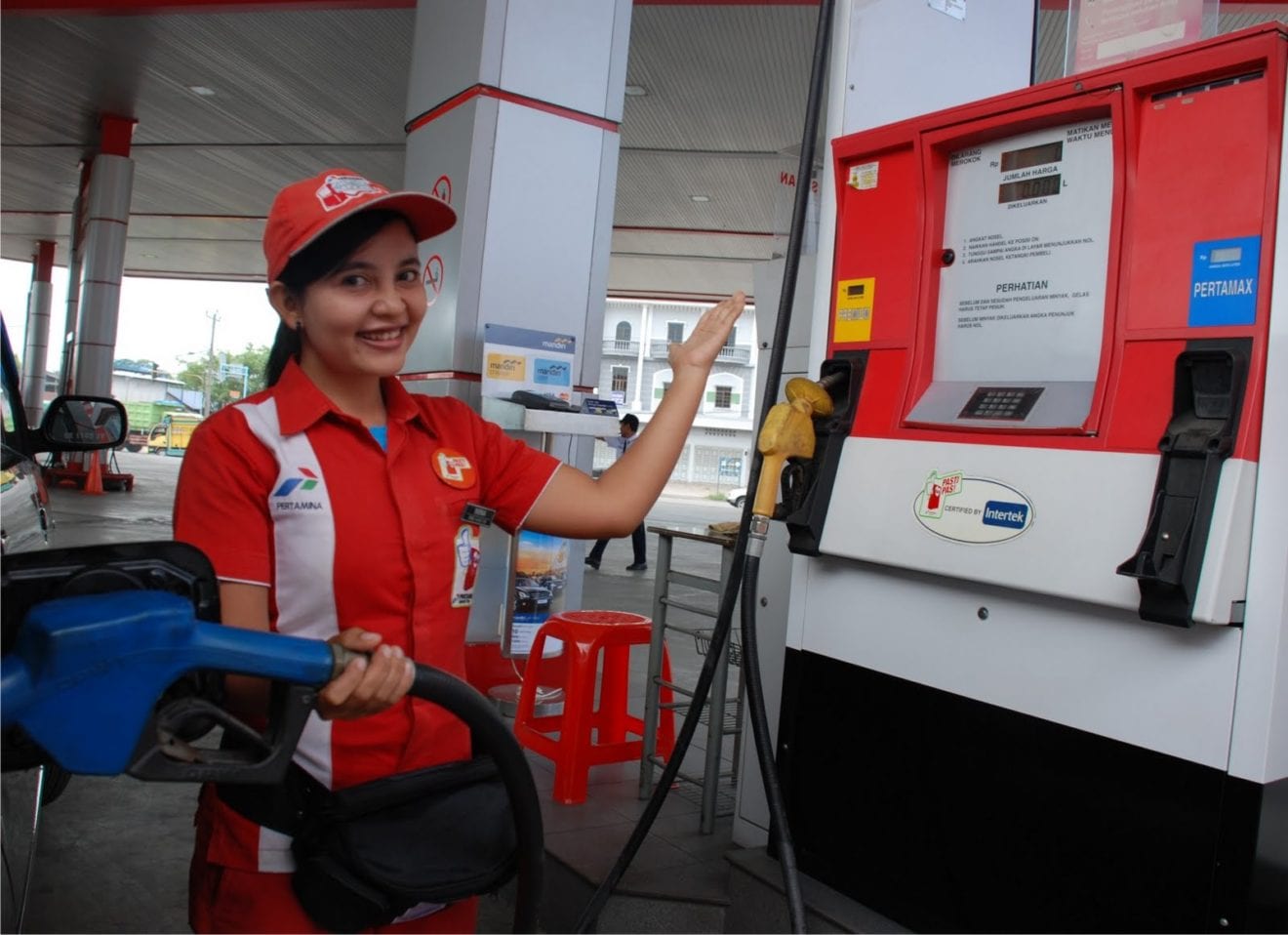
    State-owned oil and gas company PT Pertamina is seeking to acquire more oil and gas blocks in the country and abroad to meet its production target set by the government.

    “Operations abroad are expected to contribute 33 percent to the companys target of production of 1.9 million barrel oil equivalent per day in 2025,” its Upstream Director Syamsu Alam said in a media gathering here on Monday.

    The company would also be as aggressive in acquiring oil and gas blocks in the country, Syamsu said.

    Syamsu said currently Pertamina already has oil and gas blocks in operation in 12 countries such as in Algeria, Iraq and Malaysia, the first to operate , followed by ones in Nigeria, Tanzania and Gabon.

    Pertamina is preparing development of eight termination blocks in 2018 already handed over by the government to Pertamina including one in Sanga Sanga, East Kalimantan and OSES.

    Domestic assets are also optimized, Syamsu said citing the project of PHE WMO Integration, drilling of Parang Nunukan, Randugunting, enhanced oil recovery (EOR) of old wells.

    Indonesia is currently the 16th largest economy in the world with gross domestic product (GDP) at US$941 billion . In 2050, it is expected to break into the ranks of four largest after China, the United States, and India with GDP predicted at US$15.432 billion.

    Indonesia, therefore, would need support of large supply of energy , Syamsu said.

    In 2015 the countrys energy output reached 354 million tons equivalent oil including 271 million tons of coal and 113 million tons of oil, gas and renewable energy.

    While consumption of oil and gas is still high, production is decreasing with the shrinking known oil and gas reserves .

    Although Indonesia still has 60 oil and gas basins , the countrys oil reserves are ranked only the 26th in the world at 4 billion barrels. Similarly the countrys gas reserves , Indonesia is the 14th largest in the world with reserves of 100 TCF.

    The policy of Pertamina to acquire more oil blocks abroad to increase its reserves will contribute to guaranteeing energy supply in the country .

  • M1 launches cross-border mobile remittance

    M1 launches cross-border mobile remittance

    Singapore’s M1has launched new cross-border digital mobile remittance supporting transfers to multiple APAC destinations.

    The service named M1 Remit is available to users of M1 mobile phone numbers holding valid NRIC/FIN/Work Passes in Singapore.

    Users of the service can access real time exchange rates and remit funds to their designated recipients anytime, anywhere, through a mobile app or a browser on their smart device.

    Unlike typical remittance services where customers have to queue at a physical outlet to deposit funds, payments for M1 Remit transactions can be made at any one of the 915 AXS machines located in shopping malls, office buildings and other sites islandwide using an ATM card.

    Customers who do not have bank accounts or ATM cards can opt to make cash payment at M1’s IMM and Paragon outlets in Singapore, after completing a one-time verification process.

    Recipients will be able to cash out as quickly as within an hour of the transaction from over 23,000 cash agents and 640 banks available at the various destinations.

    M1 Remit currently offers eight remittance destinations – Bangladesh, India, Indonesia, Myanmar, Malaysia, Sri Lanka, Pakistan and the Philippines. Thailand, Vietnam, and other remittance destinations will be made available progressively. For a limited time, M1 Remit is also waiving the remittance fee to these destinations.

    “M1 Remit offers a wholly digital experience for money remittance. Nobody likes to queue, and now our customers can skip the queue and make better use of their time with and M1 Remit – Singapore’s most convenient, secure and cost-effective way to remit funds to their loved ones,” M1 chief innovation officer Alex Tan said.

  • Grab Indonesia buys e-commerce startup Kudo

    Grab Indonesia buys e-commerce startup Kudo

    Ride-hailing firm Grab Indonesia has acquired e-commerce startup Kudo for an undisclosed amount, striking its first deal since pledging to invest US$700 million in its largest market.

    Kudo helps consumers without bank accounts to shop online by connecting them with online merchants and other service providers across 500 cities and towns.

    Based in Singapore, Grab says it plans to accelerate the expansion of Kudo’s network while bringing more riders and drivers on to its own platform. The two companies also plan to explore new financial products such as consumer loans and insurance.

    Former payment-processing company Euronet Worldwide executive Jason Thompson has been hired by Grab to head GrabPay. This digital wallet for riders was introduced last year.

    Grab’s Indonesian investment promise entails building its digital payments network over the next four years in a bid to win over the 260 million people in its largest market. The company’s car- and motorcycle-hailing businesses grew more than 600 per cent in Indonesia last year.

    Valued at more than US$3 billion, Grab intends to set aside as much as US$100 million to bankroll early-stage domestic startups in mobile and financial services. It has started establishing research centres in Bangalore, Ho Chi Minh City and Jakarta to complement engineering offices in Beijing, Seattle and Singapore.

  • CDF-Lagardere, Shilla win Hong Kong Airport concessions

    CDF-Lagardere, Shilla win Hong Kong Airport concessions

    Key Hong Kong airport concessions for cosmetics, fashion accessories and liquor & tobacco have been awarded at Hong Kong International Airport.

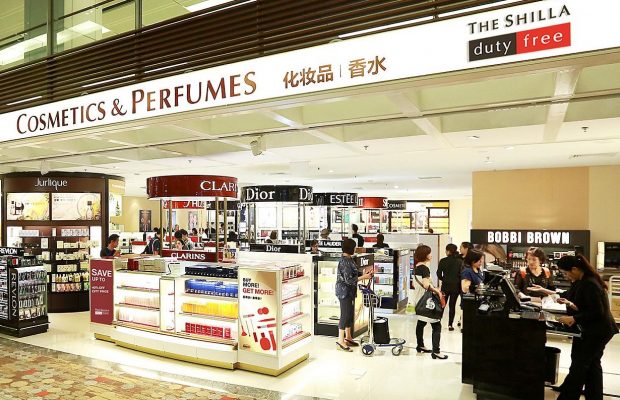
    The Airport Authority of Hong Kong has awarded the liquor & tobacco concession to China Duty Free – Lagardere Company and the perfume & cosmetics and fashion accessories concession to Shilla Travel Retail Hong Kong Limited (Shilla).

    The concessions will open from November 2017 and follow an open tender exercise.

    Cissy Chan, executive director, commercial of the Airport Authority said she is confident the new concessions “will elevate the overall airport experience and create a new shopping journey for the worldwide passengers”.

    The liquor & tobacco concessionaire will have the flexibility to include complementary products and upmarket gourmet food items.  The perfume & cosmetics and fashion accessories concessionaire will offer a one-stop shopping destination for beauty and fashion accessories, such as sunglasses, fashion watches, small leather goods and handbags.

    CDF – Lagardere, the awardee of the liquor & tobacco concession, will be introducing new experiential concepts, which include a wide selection of Chinese liquor assortment, a whisky chamber bringing an extensive offering under one roof, an in-store VIP lounge, tasting bars and more, said Chan.

    Shilla, which will be operating the perfume & cosmetics and fashion accessories shops, will bring a wide spectrum of beauty products and fashion accessories representing almost 100 brands that are new to HKIA.  There will be a dedicated zone for male-specific products, as well as a New Generation zone providing a platform for emerging Korean and Japanese brands.

    Both concessionaires will bring in new ideas to deepen customer engagement through digital initiatives. Interactive zones with virtual reality (VR), interactive and digital devices, together with iBeacon technology, will be installed inside the shops to enhance in-store navigation and real-time promotional offers.

    Charles Chen, President of China Duty Free Group (CDF) said being awarded the liquor & tobacco concession at HKIA marks an important milestone in the international development of the organisation’s duty free business.

    “We extend our sincere gratitude to the AA for their trust, and we will join hands with Lagardère Travel Retail to present a world class duty free shopping experience to the HKIA passengers.”

    Dag Rasmussen, chairman & CEO of Lagardere Travel Retail promises the company’s teams across the world will collaborate with brand partners “to bring to life a new benchmark for quality and engagement in travel retail”.

    And Roberto Graziani, president, Hotel Shilla Travel Retail says the highly contested tender win is a tribute to Shilla’s innovative category insights, deep understanding of customer needs and long-standing operational excellence.

    “We are grateful to the AA for this vote of confidence and look forward to warrant to our customers and all stakeholders, offers, services, and operational performances which will stay abreast of trends and changes in the consumers’ preferences, always maintaining a strong competitive edge throughout the length of the concession.”

  • Chanel Vietnam opens first cosmetics boutique

    Chanel Vietnam opens first cosmetics boutique

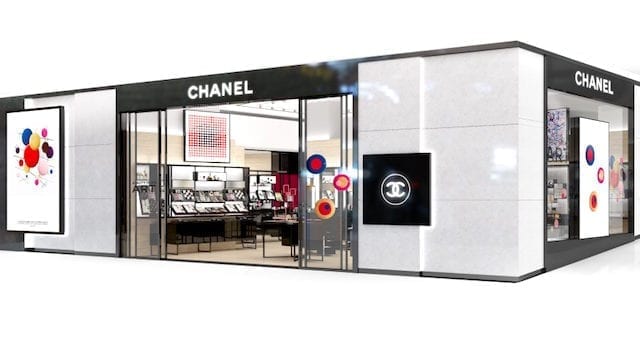
    Chanel Vietnam has opened its first dedicated cosmetics and perfume boutique.

    The 133 sqm store is located on the ground floor of the Saigon Center shopping mall in the heart of Ho Chi Minh City. It is decorated with a three-color theme of black, beige, and burgundy.

    The store showcases Chanel’s latest collections of makeup, skincare, and perfumes – with special emphasis on the “Les Exclusifs de Chanel” perfume collection with 16 scents.

    Customers will also enjoy a special skincare service called Sublimage from Chanel beauty team.

  • Midas Touch Delivers Large POS Tablet for Hospitality & Retail

    Midas Touch Delivers Large POS Tablet for Hospitality & Retail

    The MTB-3133 13” large Point-of-Service (POS) Tablet provides secure data capture, storage and transmission within a durable design ideal for food ordering. Midas Touch large POS tablet run on Windows 10 IoT Enterprise OS for seamless front and back office application integration and take full advantage of advanced Windows 10 security.

    The MTB-3133 Rugged Tablet features the integration of a 13.3″ Full-HD capacitive touch screen, energy efficient Intel Bay Trail J1900 processor, and a full-slot smart card reader within a slim, lightweight, durable package. With built-in 2M camera and GBE as well as options for RFID reader. With its large, vivid display, the MTB-3133 is perfect for the mobile cart for POS systems or the nursing cart.

    Midas Touch POS Tablet provides dedicated solutions ideal for customer service. All optional features are built into the tablet for reliable operations, providing customized POS tools for a restaurant, hotel, store or entertainment company to achieve enhanced ROI.

  • Cebu Pacific posts P9.8bn net income in 2016

    Cebu Pacific posts P9.8bn net income in 2016

    Cebu Pacific Air (CEB) posted a net income of P9.8bn in 2016, up 122% year-on-year, on the back of the strong demand for low-cost air travel and robust growth in ancillary revenues, which include baggage fees, on-board meals, and merchandise.

    Total revenues, which include CEB cargo services and wholly-owned subsidiary Cebgo, jumped 9.6% to P61.9bn, as passenger revenues surged 9.2% to P46.6bn. For the full year, CEB flew 19.1mn passengers, up 4.1% versus the 18.4mn passengers carried in 2015.
    “2016 was a great year for CEB as we continue to enable ‘every Juan’ to fly to more destinations around the Philippines and to key destinations in Asia, the Middle East, Australia, and the US.

    “CEB remains committed to further increasing inter-island connectivity within the Philippines to promote trade and tourism and help more people connect with their families and friends all around the world, while consistently providing our trademark best value fares,” said lawyer JR Mantaring, vice-president for Corporate Affairs of Cebu Pacific.

    In 2016, CEB flew to 36 domestic and 30 international destinations through 102 routes and more than 2,820 flights weekly. CEB boosted its intra-regional network in the Visayas with flights from Cebu to Ormoc, Roxas and Calbayog. The airline also launched direct service between Kalibo and Incheon, as well as its first US destination, Guam.

    CEB also teamed-up with some of the world’s leading Low Cost Carriers (LCC) to form Value Alliance, the world’s largest LCC Alliance, which aims to provide greater value, connectivity and choice for travel throughout Southeast Asia, North Asia, and Australia. CEB also opened a branch office in South Korea to boost promotional efforts in the Korean market.

    CEB capped 2016 with 57 aircraft, adding two brand-new ATR 72-600 aircraft in February 2017, to bring its current fleet to 59. For the rest of 2017, CEB expects to take delivery of one Airbus A330, two Airbus A321neo, and four more ATR 72-600, and delivering out three of its four Airbus A319 to end the year with 63 aircraft. CEB continues to have one of the youngest aircraft fleets in the world with an average age of 4.91 years.

  • Logistics association to assist in national plan on competitiveness

    Logistics association to assist in national plan on competitiveness

    The Vietnam Logistics Association (VLA) on Wednesday launched a ceremony to implement the Government’s first national action plan to improve the country’s competitiveness and its logistics sector by 2025.

    Lê Duy Hiệp, VLA chairman, said that VLA had been assigned to complete several tasks of the plan.

    In February, Prime Minister Nguyễn Xuân Phúc approved the action plan, which aims to have the logistics sector contribute 8 to10 per cent to the country’s GDP, with annual growth of 15-20 per cent by 2025.

    The plan also calls for Việt Nam to become one of the world’s 50 leading logistics services providers.

    The plan recommends new policies, more investment in infrastructure development, and better co-operation between local and foreign logistics companies.

    The aim is to have logistics companies that can be competitive in both domestic and international markets.

    Under the plan, Việt Nam will enhance connectivity with neighbouring countries and develop regional and international hubs.

    The plan calls for building level-1 logistics hubs (the highest level) in Hà Nội and HCM City, and level-2 logistic centres in Lạng Sơn, Lào Cai, Hải Phòng, Đà Nẵng, Quy Nhơn, and Cần Thơ.

    Trần Thanh Hải, deputy director of the Ministry of Industry and Trade’s Import-Export Department, said the country’s logistics development has been modest, as there are only 1,300-1,500 firms in the sector.

    More than 70 per cent of the businesses are small- and medium-sized with average capital of about VNĐ7 billion (US$320,000).

    “The country’s logistics effectiveness has been low, while available resources have not been fully exploited,” Hải said.

    The action plan would provide short- and mid-term solutions to improve the logistics sector in the next seven or eight years, he added.

    The initiatives taken by the Government to strengthen the logistics industry and increase efficiency have been supported by industry insiders.

    Christoph Matthes, managing director of logistics firm DB Schenker in Vietnam, said, “We strongly support the plan as the logistics has become more important than ever before.”

    In addition, increasing consumer demand requires a faster and more reliable way of delivery of goods.

    For many customers, logistics is no longer a matter of moving boxes from one location to another, but creating a highly efficient and reliable supply chain which enables them to be competitive in a fast-changing world.

    International trade is growing rapidly as well, and thus, a need to connect to other markets via air, ocean and road freight.

    Some of the largest export markets for Vietnam include the ASEAN region and Europe, where Việt Nam competes with other countries and where logistics costs play a vital role.

    Trade with Europe is expected to increase with the EU-Việt Nam Free Trade Agreement (EVFTA) coming into force next year.

    Experts said more steps were needed for smooth implementation of the agreement and to make sure businesses can fully benefit as soon as the treaty takes effect.

    The commitment of the Vietnamese Government to strengthen the logistics sector is an important step towards making this possible.

    Nestor Scherbey, general director of logistics firm Customs, Trade and Risk Management Services Ltd Việt Nam, said the national action plan would play a critical role in raising competitiveness.

    Logistics costs in Việt Nam are among the world’s highest, at 25 per cent of GDP, which hinders the cost competitiveness of Vietnamese firms, according to Logistics Insight Asia.

    Logistics costs in the US, Europe and the rest of the world are around 9, 13, and 15 per cent, respectively.

    “The efforts necessary to achieve a national action plan for logistics must be undertaken in co-ordination with diligent efforts by Việt Nam to implement the commitments of the World Trade Organisation Trade Facilitation Agreement (WTO TFA),” Scherbey said.

    Many of the major commitments of the WTO TFA were contained in the Trans-Pacific Partnership (TPP) and EVFTA.

    Full implementation of trade facilitation by Việt Nam would reduce the country’s international trade transaction costs by 20 per cent.

    “It is the combination of the benefits of trade facilitation, with the benefit of reducing domestic logistics costs, that will allow Vietnamese products to become fully competitive in global markets,” he said.

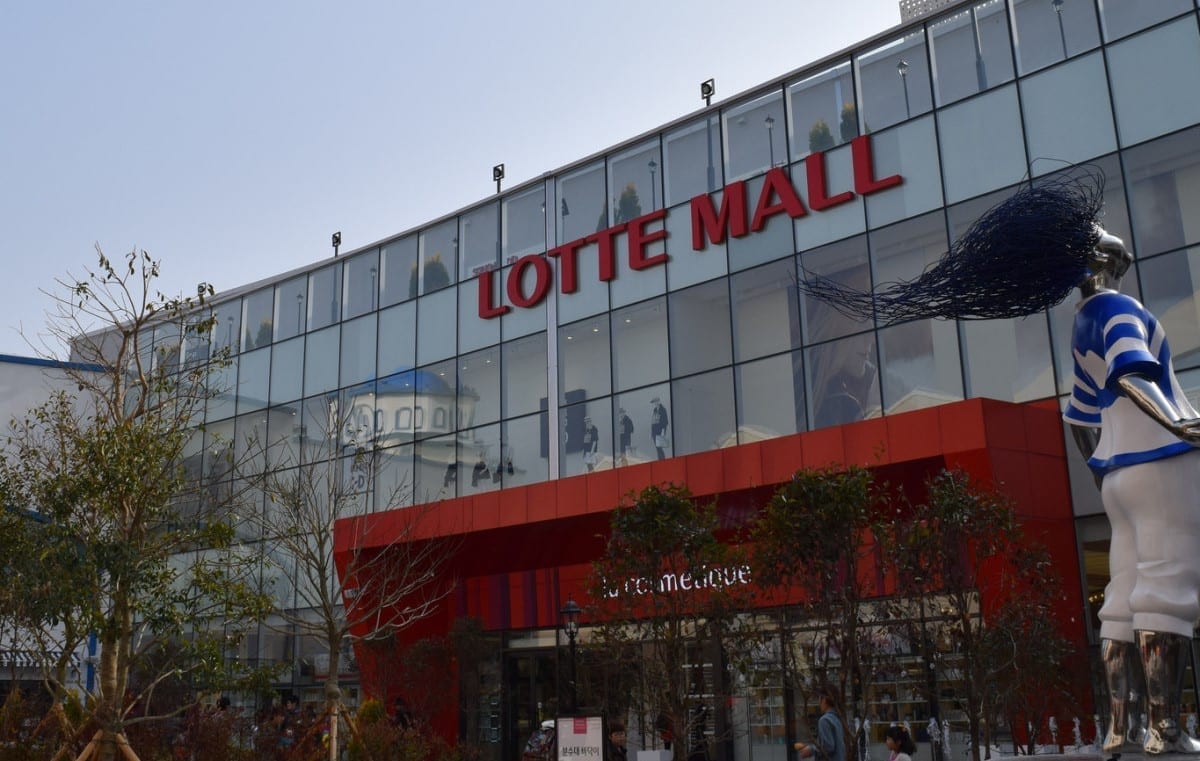
  • China still on radar for Lotte Group

    China still on radar for Lotte Group

    A Lotte Group executive says the retail giant will continue to invest in its China business despite diplomatic tensions.

    Chinese authorities last month closed dozens of Lotte stores following inspections, ramping up pressure on South Korea’s fifth-largest family-run conglomerate after it agreed to provide land for the US Terminal High Altitude Area Defence (THAAD) missile system outside Seoul.

    South Korea and the US say the system is designed to thwart North Korea’s nuclear missile threat, but Beijing says the system’s radar can also reach far into China. This led to Chinese state media calling for a boycott of Lotte businesses.

    “We plan to continue to invest in our China business and continue to strengthen it,” executive Hwang Kag-gyu says. He is the head of Lotte Corporate Innovation Office and is regarded as the second-highest executive next to chairman Shin Dong-bin.

    “It has been 20 years since Lotte entered the China market. We believe the China business is still in an investment period,” he says.

    Out of 99 Lotte hypermarkets in China, 75 have been closed by Chinese authorities. Hwang says the company is working to fix the problems raised by Chinese regulators.

    China is Lotte’s biggest overseas market, generating more than 3 trillion won (US$2.7 billion) in annual revenue in 2015. It is also one of four strategic markets along with Indonesia, Russia and Vietnam that Lotte has been focussing on.