Tag: asia

  • Japanese telco taps Redknee for 4G service upgrade

    Japanese telco taps Redknee for 4G service upgrade

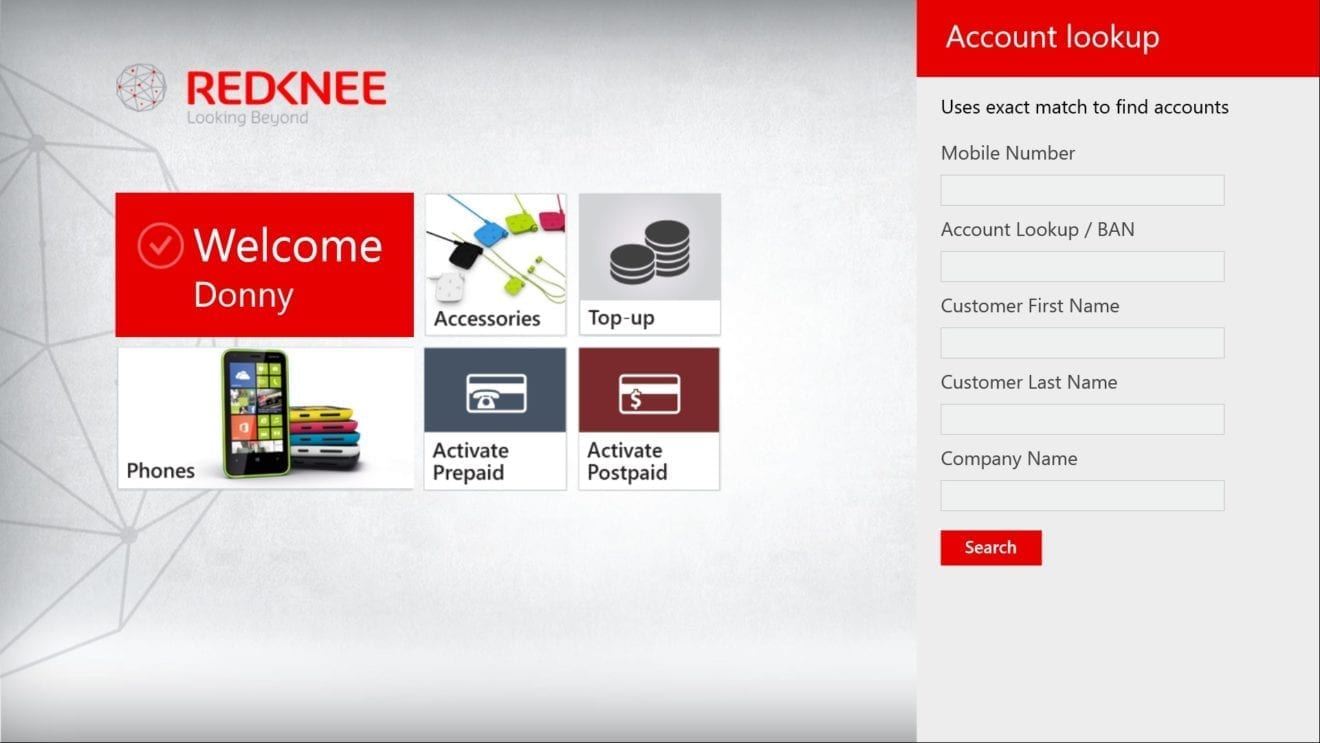
    A Tier 1 communication service provider in Japan has awarded Redknee Solutions has won a multi-million dollar.

    The operator is experiencing increasing demand for 4G services while its subscriber base expands rapidly. The solution will upgrade Redknee’s integrated policy and charging solution to support more than 30 million subscribers.

    The solution will also add support for new capabilities such as Voice-over-LTE (VoLTE). The win will see Redknee scale its solutions to meet the needs of a growing Tier 1 CSP while supporting 4G service offerings that require an agile and innovative approach to achieve customer satisfaction and success.
    Consumers are increasingly using data rich services such as HD voice and multimedia services, and this is prompting CSP’s to invest in new technologies that support increasing volumes of data and traffic. VoLTE is quickly being adopted because it can deliver faster onboarding, shorter call setup times, and improved spectral efficiency.

    “Redknee understands the importance of customer success. Redknee’s agile and scalable solutions support new technologies and service offerings, such as VoLTE, which allow our customers to improve quality of service, drive innovation, and deliver successfully to all of their subscribers,” said Danielle Royston, Redknee’s CEO.

  • DHL unveils new outbound cross-border distribution center in Japan

    DHL unveils new outbound cross-border distribution center in Japan

    HL eCommerce, a division of Deutsche Post DHL Group (DPDHL Group), is set to give an extra boost to Japan’s booming cross-border e-commerce industry which is growing at a CAGR of 16 percent and estimated to exceed EUR1.1 billion in 2018. The company officially launched its new outbound cross-border Distribution Center located in Narita, to enable Japan’s online merchants to sell directly to some of the hottest e-commerce destinations worldwide.

    “In Japan, SMEs and sellers on marketplaces such as Amazon and eBay are the main cross-border e-commerce players, targeting markets in Europe, Asia, and the Americas. To enable them to grow their business and reach a wider customer base internationally, they need a greater variety of international shipping solutions with high-quality services while keeping their operational costs low. Specific e-commerce services are also needed, such as IT integration from shopping cart to delivery for a seamless logistics process,” said Yoshihiko Sasaki, managing director, DHL eCommerce Japan.

  • Qualcomm, Apple go to war over licensing

    Qualcomm, Apple go to war over licensing

    Qualcomm and Apple will battle it out in court over patent licensing for technology used in the iPhone, with both filing suit against the other.

    Apple recently filed three lawsuits against Qualcomm, in the US, China and the UK, accusing the chipmaker of abusing its dominant market position to force Apple to pay billions in superfluous royalty payments for components that have nothing to do with Qualcomm baseband processors.

    These components include Touch ID and Apple Pay. The US lawsuit is seeking $1 billion in damages, while the lawsuit in China is seeking $145 million.

    Now Qualcomm is hitting back, filing an answer to Apple’s lawsuit as well as a counterclaim accusing Apple of failing to engage in good-faith negotiations regarding Qualcomm’s 3G and 4G standards-essential patents on fair, reasonable and non-discriminatory (FRAND) terms.

    Qualcomm has also accused Apple of breaching agreements and negotiations with the company, interfering with Qualcomm’s agreements with licensees that manufacture iPhones and iPads for Apple and encouraging “regulatory attacks” on Qualcomm’s business by making false claims.

    Apple also allegedly deliberately chose not to utilize the full performance of Qualcomm chips in the iPhone 7 to misrepresent the performance disparity between iPhones using Qualcomm’s modems and those using competitor-supplied modems, and threatened Qualcomm in an attempt to prevent it from making public comparisons about the relative performance of iPhones.

    “Over the last ten years, Apple has played a significant role in bringing the benefits of mobile technology to consumers with its popular products and services. But Apple could not have built the incredible iPhone franchise that has made it the most profitable company in the world, capturing over 90% of smartphone profits, without relying upon Qualcomm’s fundamental cellular technologies,” Qualcomm EVP and general counsel Don Rosenberg commented.

    “Now, after a decade of historic growth, Apple refuses to acknowledge the well established and continuing value of those technologies. It has launched a global attack on Qualcomm and is attempting to use its enormous market power to coerce unfair and unreasonable license terms from Qualcomm.”

  • ZTE, China Mobile complete NB-IoT field trial

    ZTE, China Mobile complete NB-IoT field trial

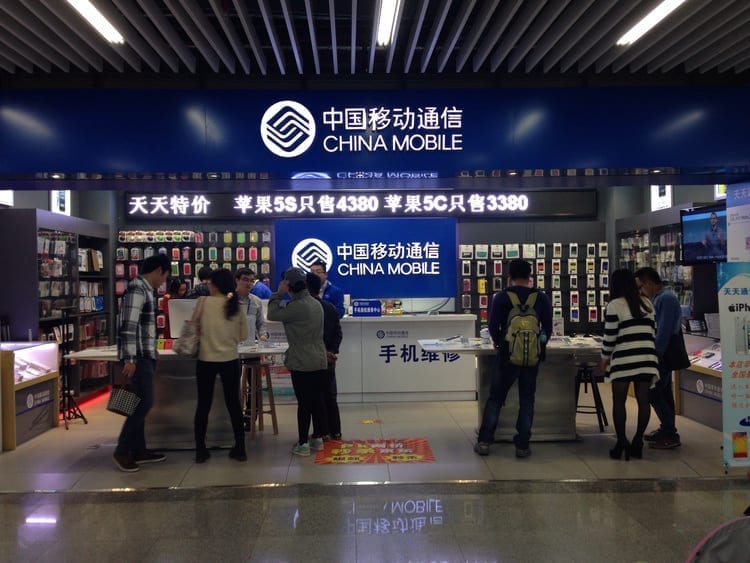
    ZTE and China Mobile have announced they have completed the operator’s first narrowband IoT (NB-IoT) field test in Guangzhou.

    The trial involved the validation of core network, service, terminals and wireless equipment for NB-IoT with both single mode and multi-mode networking.

    Testing concentrated on performance, including users’ data rate, delay and coverage enhancements. ZTE provided all the equipment for the trial, including virtual core network, 2T4R base stations and terminals using a ZTE custom-developed chip.

    China Mobile is conducting NB-IoT trials in four provinces – Guangzhou, Hangzhou, Shanghai and Fuzhou, and is working with only one vendor in each of these provinces to allow it to deeply study and verify various NB-IoT features.

    Guangdong Mobile’s field test is the largest-scale among the four provinces with nearly 200 sites constructed. ZTE said this trial was also the only field test to accomplish specified test items dedicated to the NB-IoT protocol, including all combinations of uplink channels and services specified in NB-IoT protocol standards.

    The trial also exclusively supported the sub-carrier interval of 3.75KHz and 15KHz simultaneously, marking the world’s first 3.75KHz test.

    ZTE separately announced it has completed verification for its emergency communication solution based on drone technology, in collaboration with the Quanzhou branch of China Telecom.

    The lightweight (15 kilogram) solution comprises a drone equipped with a ZTE Pico base station and customer premises equipment that can be easily transported and deployed to a rescue scene.

    The test demonstrated that the drone can complete preparation and be in the air within 10 minutes, and can deliver a downlink peak data rate of 30Mbps and a VoLTE speech quality mean opinion score of 3.3.

  • Jio accuses rivals of “unfair and deceptive” practices

    Jio accuses rivals of “unfair and deceptive” practices

    India’s Reliance Jio Infocomm has called on the market’s telecoms regulator to penalize incumbent operators Bharti Airtel, Vodafone India and Idea Cellular for allegedly violating regulations covering mobile plans in an attempt to prevent more customers from porting to the new operator.

    Reliance Jio has accused the operators of using “unfair and deceptive” methods to retain customers, including by offering custom retention offers for subscribers thinking of porting to Jio.

    Jio said these custom offers are being offered on a one-off basis to existing customers, and as such are not advertised publicly as required by the regulations.

    The operator has further argued that the custom offers violate regulatory norms limiting the number of prepaid and postpaid plans allowed to 25.

    Finally, Jio has accused the operators of providing “false and malicious” information regarding the quality of Jio’s network to customers via call center interactions.

    The operator is requesting that regulator Trai issue a ceast and desist order prohibiting the operators from continuing with the alleged actions.

    But Both Bharti Airtel and Vodafone India strongly denied to the Press Trust of India any allegation that they are in violation of the regulations.

  • China’s Dongfeng signs JV with Nexteer for power steering systems

    China’s Dongfeng signs JV with Nexteer for power steering systems

    China’s Dongfeng Motor Group Co Ltd will form a joint venture with auto parts maker Nexteer Automotive Group Ltd to design and make electric power steering systems for Dongfeng passenger vehicles, Nexteer said on Monday.

    The venture – to be equally owned by Nexteer and a unit of Dongfeng – will set up a facility near Dongfeng’s headquarters in Wuhan, China, Nexteer said.

    Nexteer, whose customers include Fiat Chrysler, General Motors, Toyota and Volkswagen , currently provides electric power steering systems for many Dongfeng-affiliated vehicles, including the Peugeot 2008 crossover.

  • BluJay acquires mobility solutions provider Blackbay

    BluJay acquires mobility solutions provider Blackbay

    BluJay Solutions, a provider of supply chain software and services powered by the ‘world’s first’ Global Trade Network, has acquired Blackbay Ltd. Blackbay is a provider of mobility-enabled solutions for the transport and logistics industry. With the acquisition, BluJay expands its mobile offerings with comprehensive shipment tracking and proof-of-delivery capture.

    “Intelligent mobility solutions have become an indispensable part of delivering a world-class experience for our customers and their customers,” said Doug Braun, CEO of BluJay Solutions. “Adding Blackbay to our Global Trade Network is a highly valuable and ideal extension of BluJay’s offering, expanding customers’ visibility into the supply chain and each stage of delivery.”

  • Vietnam banks aim for high profit in 2017

    Vietnam banks aim for high profit in 2017

    At the AGM on March 25, LienVietPostBank’s shareholders agreed on this year’s development plan, aiming to reach US$66.2 million in pre-tax profit, 10 per cent higher than that of 2016 (US$59.5 million).

    Furthermore, the expected dividend rate was raised to 12%. LienVietPostBank also planned to raise capital from US$285.1 million to US$309.0 million by issuing 54 million shares.

    On April 10, VPBank organised its AGM. According to the AGM’s documents, VPBank’s pre-tax profit goal for this year is US$300.2 million, 38% higher than that of 2016.

    Its total assets are expected to reach US$12.4 million and total outstanding loans and corporate bonds US$8.9 million.

    With this expected total outstanding loan volume, to ensure the capital adequacy ratio (CAR) of 9% stipulated the State Bank of Vietnam (SBV), VPBank’s total capital must reach at least US$794.5 million.

    With its current owner’s equity of VND15.4 trillion (US$679.8 million), VPBank must increase capital by US$132.4-176.6 million.

    Techcombank’s documents for its AGM on April 15 showed that the bank is aming to increase consolidated pre-tax profit by 26% over 2016’s US$221.6 million.

    This year, Techcombank planned to increase its chartered capital by US$220.7 million (from US$391.9 million to US$612.6 million), and raise its total assets to US$12.4 billion.

    Other banks also expect great increases in profit. For instance, at its AGM on April 21, HDBank plans to get shareholders’ approval on the US$72.5 million pre-tax profit target, 28% higher than that of 2016.

    Meanwhile, OCB is planning to aim for US$34.4 million at its AGM, 60% higher than the previous year. Also, Vietcombank’s board of directors has set a goal to reach US$406.1 million in pre-tax profit, a 12% increase on-year.

    Well-founded optimism

    These ambitious figures in expected profit correspond with the results of the survey on business trends in the second quarter of 2017 for credit institutions and foreign bank branches in Vietnam, which was conducted by the Monetary Forecasting and Statistics Department of the SBV.

    According to the results, 89.5% of the credit institutions reported improvements in the first quarter of 2017. 90.4% of the institutions expected great increases in pre-tax profit compared to 2016.

    The expected average increase for the whole system is much higher than that showed in the survey in December 2016 (+ 13.4%).

    The banks’ optimism is due to domestic economic circumstances and good forecasts for the industry.

    According to the report on the economic situation in the first quarter of 2017 and forecasts on the fiscal year conducted by National Financial Supervisory Commission (NFSC), aggregate demand will improve in the upcoming time since directions from the government have initiated major increase in public investments in several key projects and capital disbursement in the application of high-tech agriculture projects.

    This positive attitude is also due to the fact that, despite the recent wake of US protectionism, based on the economic optimistic potential of the US and the globe at large, the International Monetary Fund (IMF) has forecasted the trade growth of Emerging Markets and Developing Economies at 4% in 2017, higher than the estimated 1.9% for 2016.

    A senior leader of the SBV shared with VIR that the bank would adjust the interest rates flexibly, in correspondence to macroeconomic indicators, inflation, and the currency market.

    Also, SBV would continue directing credit institutions to balance their capital and interest rates, economise operating costs, and increase business efficiency to lower interest rates.

    SBV continues its policy on operating currency rates flexibly, closely following the interbank foreign exchange market, the currency rate on the global market, economic and currency balances, and the monetary policy.

    It would also introduce measures to improve credit quality, focus lending on manufacturing and prioritised areas.

    “We would closely inspect the credit granting situation in some industries and fields that have high chances of risk, such as medium-long term credit, credit for large customers, credit for real estate, as well as BOT and BT transportation projects,”, the senior leader shared.

  • Garuda Indonesia Posts USD 9.36mn Profit

    Garuda Indonesia Posts USD 9.36mn Profit

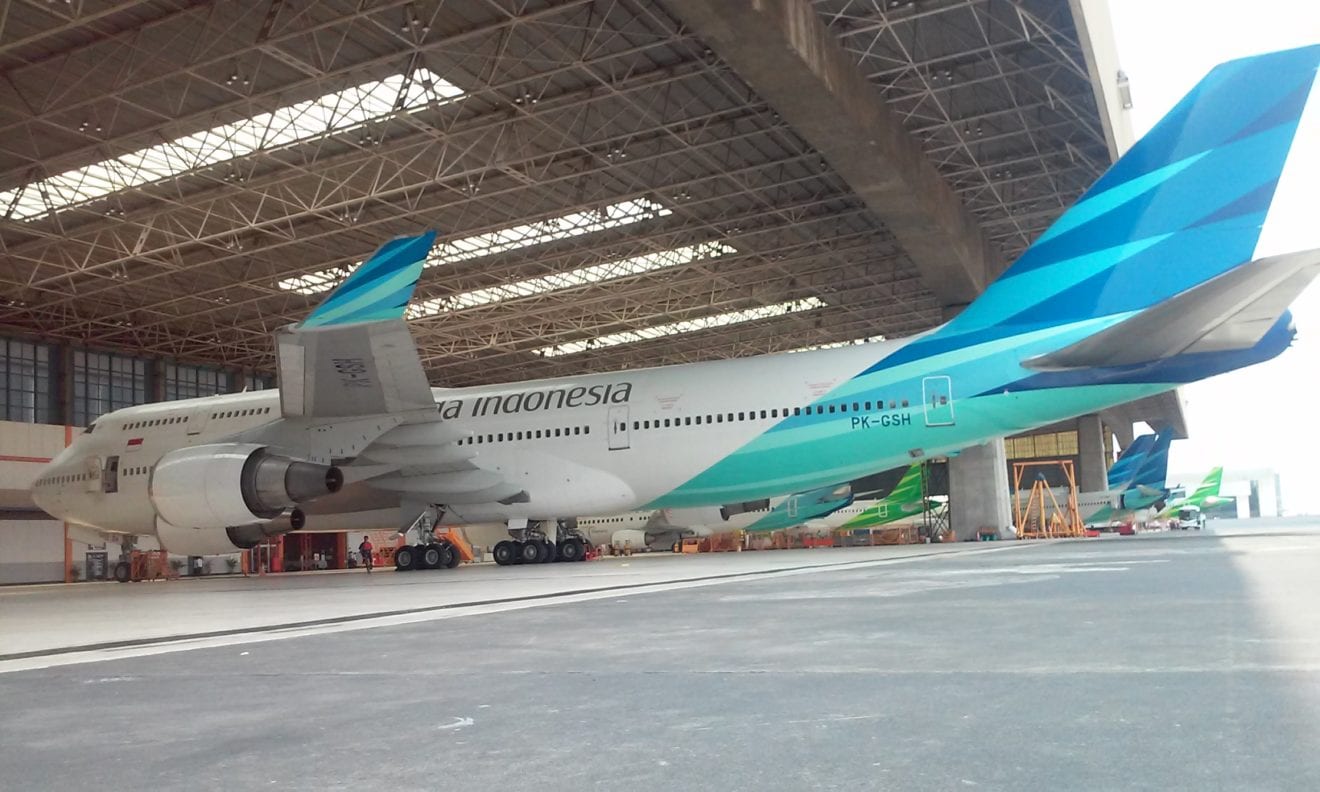
    Flag carrier PT Garuda Indonesia (Persero) posted a net profit of USD 9.36 million, or IDR 124.5 billion, as of the end of 2016, as flight frequency increases by 9.89 percent to 274,969 flights from 249,974 in 2015.

    “The increase in flight frequency was in line with the company’s effort to expand both domestic and international flights,” Garuda Indonesia Vice President of Corporate Communication Benny S. Butarbutar said in a written statement received in Jakarta on Wednesday, April 12, 2017.

    In 2016, the company carried 35 million passengers by both Garuda Indonesia and its subsidiary Citilink Indonesia. Garuda Indonesia Group also recorded increase in ancillary revenue, strategic business unit (SBU) revenue, as well as other sectors at US$392 million or a 13.7 percent increase compared to 2015 at US$344.4 million.

    The press release stated that Garuda Indonesia’s on time performance (OTP) in 2016 was recorded at 89.51 percent, an increase compared to the previous year at 88 percent. The OTP figure was achieved despite challenges in developing aviation operational infrastructures, such as service migration to newly opened Terminal 3 of Soekarno-Hatta Airport and weather-related force majeure.

    The average occupancy rate in 2016 was 73.1 percent for Garuda and 76.8 percent for Citilink. As for air cargo business, Garuda Indonesia managed to improve air cargo transport to 415.824 tons, or an 18.22 percent increase compared to 2015 at 351.724 tons.

    All in all, the total air cargo revenue in 2016 amounted to US$219.15 million or a 16.65 percent increase compared to 2015 at US$187.87 million. In 2016, Garuda Indonesia Group added its flight capacity as part of fleet revitalization by purchasing 17 aircraft, namely four ATR 72-600 aircraft, four A330-300 aircraft, one B777-300ER aircraft and eight A330-200 aircraft. As such, as of the end of 2016, Garuda Indonesia Group operates 196 aircraft with an average age of 4.6 years.

  • GMR Hyderabad Airport Offers ‘Mumbai Central’ delivering the Authentic Street Food from Mumbai

    GMR Hyderabad Airport Offers ‘Mumbai Central’ delivering the Authentic Street Food from Mumbai

    GMR Hyderabad International Airport (GHIAL), which operates Hyderabad Airport today announced the opening of ‘Mumbai Central’ near EAT at Hyderabad food court at the domestic departures Security Hold Area (SHA) of the airport. With the opening of its outlet at Hyderabad Airport, ‘Mumbai Central’ takes a maiden venture into airport Food & Beverage segment.

    Mumbai Central offers a live counter with a menu distinct from other outlets. It brings to the platter the popular west costal cuisine of India including some of the mouthwatering popular street food from the heart of Mumbai to the passengers flying from Hyderabad Airport. Now the travelers in love with the authentic and popular street food from Mumbai, could savour it when at Hyderabad Airport.

    Mumbai Central has been appealing to the travellers throughout the day, allowing them to relax, enjoy their meal and time at the airport. Mumbai Central brings the bustle of the Mumbai street food culture to Hyderabad Airport, offering high quality, authentic and famous Mumbai delicacies. Offering a quick serve world of cuisine, Mumbai Central is focused on directly triggering the customers appetite and to introduce the beauty of fast and fresh cooking; a lot of food is made and finished in the front of the customers.

    A wealth of fresh ingredients and spices adds spontaneous bursts of tasteful experience and stimulates the senses at every step of the way. Diners can order from the digital menus featuring daily specials, which are updated regularly to continuously delight the customers. Strongly promoting the traditional emphasis on healthy eating, balanced meals and fresh food, Mumbai Central uses the freshest of ingredients for recipes, flavors and spices, developed and preserved for many generations.

  • Cyient, Amdocs to implement GIS for NetLink Trust

    Cyient, Amdocs to implement GIS for NetLink Trust

    Cyient is collaborating with Amdocs to implement GE’s Geographical Information System (GIS), Smallworld, as part of the next-generation business/operations support system (NGBOSS) project for NetLink Trust.

    The NGBOSS project aims to improve the user experience for NetLink Trust’s customers with faster deployment of new fiber networks while reducing fault repair and outage times, as well as delivering improved service quality.

    As part of the overall solution, Amdocs will deliver a comprehensive BSS/OSS suite that includes an online portal, billing, order orchestration and service order management, workforce management, and service assurance components.

    Amdocs will assume the role of solution provider and will also act as the prime system integrator of third-party software and hardware. Cyient will install and configure GE Smallworld 5.1 GIS, enabling NetLink Trust to plan and design modules to model fiber to the x (FTTx), including homes and businesses.

    The project includes end-to-end operations support planning, operations, fulfillment and assurance teams, consolidation, as well as migration of the business processes and network data from existing systems to new systems without disturbing the current operations.

    Ongoing maintenance and support of the GIS subsystem/component will also be provided by Cyient in the effort to ensure that the implemented solution continues to provide NetLink Trust’s customers with an uninterrupted service.

  • Vietnam gov’t tells fifth airline Vietstar to stand in the waiting line

    Vietnam gov’t tells fifth airline Vietstar to stand in the waiting line

    The airline will have to wait for Tan Son Nhat International Airport to complete expansion. Vietstar Airlines, a military-run company, will have to wait for the completion of an expansion project at Ho Chi Minh City’s Tan Son Nhat airport before it can get a license to fly passengers and cargo, the Vietnamese government said.

    The government will review the licensing for Vietstar Airlines, the fifth in Vietnam once operational, when Tan Son Nhat International Airport completes building new terminals and parking space, Prime Minister Nguyen Xuan Phuc was quoted as saying in a recent government document.

    Vietnam’s airline market has the third fastest growing pace in Asia-Pacific and the country is grappling with an acute dearth of airport capacity.

    A project to expand the country’s largest and yet overcrowded Tan Son Nhat airport has been under way, aimed at building runways, parking space and two terminals by 2018 to raise the passenger handling capacity to 45 million a year. The airport has to serve 42 million people annually, well over its design capacity of 25 million.

    In February Deputy Prime Minister Trinh Dinh Dung instructed transport, planning and aviation authorities to speed up work to finish upgrading the airport within this year.

    Vietstar Airlines was granted a general aviation license in 2011 when it was founded with a registered capital of VND400 billion ($17.6 million). It has been providing ground handling, aircraft maintenance and pilot training services.

    In 2015 it sought permission for flying passengers and goods, but was instead asked to raise its registered capital before it could get a license. The airline reported an equity of VND652.7 billion at the end of 2015, below the VND700-billion government requirement.

    It has since raised its charter capital to VND800 billion and last September, the transport ministry’s aviation department said Vietstar Airlines was qualified to get license for offering passenger and goods transport services.

    Vietstar aims to serve 500,000 passengers and carry 32,000 tons of good in the first year of operation, which had previously been expected to be in 2017.

    National flag carrier Vietnam Airlines, two budget carriers VietJet Air and Jetstar Pacific as well as Vietnam Air Services Company have been competing in a market that served 52,2 million passengers last year, up 29 percent from 2015, while the domestic sector alone grew 30 percent with 28 million passengers, based on aviation authority data.

  • HLIB Research retains Sell on Pharmaniaga

    HLIB Research retains Sell on Pharmaniaga

    Hong Leong Investment Bank (HLIB) Research is maintaining its Sell rating on Pharmaniaga and target price  of RM4.29, based on FY18 price-to-earnings multiples of 15.6 times , which is in line  with the international peers.

    It said on Thursday that despite Pharmaniaga’s monopoly in the government concession business, “we expect near term headwinds driven by lower orders and higher finance cost to drag earnings”.

    HLIB Research said the uninspiring FY16 earnings (RM52.9mil, down 40.3% on-year) largely reflected the government’s move to rationalise its expenditure and shift towards a leaner procurement model.

    “We expect the trend of slower government offtakes to follow through in FY17 as evidenced by the 2017 Budget healthcare allocation (RM4bil in 2017 vs RM4.6bil in 2016).

    “Whilst the group has been working on a sleuth of measures aimed at diversifying its earnings base in the long run, which we are inherently positive on; its interim outlook still remains downcast by weaker demand from the concession business amidst a rising cost environment,” it said.

    The research house said that to address immediate concerns, it expects Pharmaniaga to undergo an internal cost recalibration programme in FY17 to address some of the margin pressures it faces amidst the slower concession off-take (inventory optimisation and efficiency drive in its logistics department).

    However, in the mid-term, it is upbeat on the prospects of Pharmaniaga’s venture into the Indonesian market, which augurs well for the group’s diversification strategy.

    Pharmaniaga’s 55% stake subsidiary PT MPI has 31 distribution points across Indonesia as at FY16 and is in a strong position to benefit from the nation’s increasing demand for medicines.
    GlobalData estimates that the Indonesian pharmaceutical industry is expected to grow to US$12.6bilin FY20 from US$7bil in FY15.

    HLIB Research said furthermore, PT Errita (manufacturing) is well positioned to benefit from the JKN initiative; a universal healthcare programme which aims to provide 100% coverage to all Indonesian by 2019. This has fueled the demand for generic drugs in the nation. Indonesia accounted for 29% of non-concession revenue in FY16 (FY15: 23%).

    “However, the success of their Indonesian ventures largely hinges upon the successful registration of the right offerings into the JKN system having passed the drug registration hurdle and conquering the logistical challenge that Indonesia presents.

    “We anticipate advancements into the private sector in FY17 on the back of the low base effect. The group has turned its attention to capture a greater share of the private business domestically amidst waning concession orders.

    “Despite its Indonesia and private sector segments having shown positive signs, we anticipate the near term prospects to remain challenging for the bread and butter business, as lower concession orders (FY16: 51% of revenues vs. FY15: 56% of revenues) drag earnings.

    “Downside risks to the stock stems from lower than expected government offtake and a further depreciation of the ringgit,” it said.

  • The Road to World Car journey ended today with the declaration of a double win

    The Road to World Car journey ended today with the declaration of a double win

    The JAGUAR F-PACE won the 2017 World Car Design of the Year award as well as the overall 2017 World Car of the Year. The winner was announced during a press conference hosted by the New York International Auto Show, Bridgestone Corporation and Autoneum.

    Dr Ralf Speth, CEO Jaguar Land Rover said: “The F-PACE was designed and engineered as a performance SUV with exceptional dynamics, everyday usability and bold design. Winning these two awards endorses the talent and great work of our teams that have delivered the world’s most practical sports car and Jaguar’s fastest selling vehicle.”

    The JAGUAR F-PACE was chosen from an initial entry list of 23 vehicles from all over the world, then a short list of ten, then three finalists as announced in Geneva last month: the Audi Q5, the Jaguar F-PACE and the Volkswagen Tiguan

    To be eligible for the overall World Car award, the candidates must become available for sale on at least two continents during the period beginning January 1, 2016 and ending May 31, 2017.

    This year, vehicles were selected and voted on by an international jury panel comprised of 75 top-level automotive journalists from 23 countries around the world. Each juror was appointed by the World Car Steering Committee on the basis of his or her expertise, experience, credibility, and influence. Each juror typically drives and evaluates new vehicles on a regular basis as part of their professional work. Through their respective outlets they collectively reach an audience of many millions world-wide. The international accounting firm KPMG tabulates the jurors’ ballots.

    Previous World Car of the Year winners were the Mazda MX-5 (2016), Mercedes-Benz C-Class (2015), the Audi A3 (2014), the Volkswagen Golf (2013), the Volkswagen Up! (2012), the Nissan Leaf (2011), the Volkswagen Polo (2010, the Volkswagen Golf (2009), the Mazda2 / Mazda Demio (2008), the Lexus LS460 (2007), the BMW 3-Series (2006), and the Audi A6 (2005).

    The Road to World Car began in Paris on September 29, was followed by test-drives in Los Angeles in November, continued in Geneva with the Top Three in the World announcement, and finally ended today with the declaration of the winners in six categories at the New York International Auto Show.

    2017 marks the 11th anniversary of the partnership between World Car and the New York show, and the fourth consecutive year that the World Car Awards have retained their ranking as the number one automotive awards program in the world in terms of media reach.

    The Global Trends Report, co-presented annually by Prime Research and Autoneum, was also released today.The report is the culmination of research and insights across the past six months. Autoneum CEO Martin Hirzel said, “The auto industry is in the midst of an upheaval that goes far beyond anything it has experienced in the past 100 years. Emerging industry trends such as autonomous driving, electric mobility and connected cars are changing not only vehicles and their technologies but also their concepts and forms. As the market leader in acoustic and thermal management for vehicles, Autoneum today already offers a large variety of multifunctional and lightweight technologies and components to meet the requirements of modern mobility. With our recently established “Competence Center for New Mobility” in Sunnyvale, California, Autoneum is taking a committed and active role in driving vehicle advancement by developing innovative technologies and components for all forms of mobility.”

    World Car of the Year is more than just an awards program. The World Car community brings together a large cross section of experts and professionals from every segment of the automotive industry. World Car connects the global industry around the very best of today and inspires, with insights, the ideas and trends of tomorrow. Thus defining The Road Ahead platform shared with our presenting partners Bridgestone Corporation, Prime Research, Autoneum and, most recently, Brembo.

    “As the world’s largest tire and rubber company, we are proud to partner with the World Car program for the 9th consecutive year,” said Mike Martini, president, original equipment tire sales, U.S. and Canada, Bridgestone Americas Tire Operations. “This is an important forum for leaders in the automotive industry to celebrate achievements in innovation, performance and sustainability. As new mobility preferences emerge, we must continue to collaborate across our industry to deliver cutting-edge technology and world-class products that meet the needs of a changing global customer base.”

    In a rapidly changing automotive world, Brembo is also focused firmly on the future and the vehicles it will bring to market. Brembo is committing significant resources to perfecting ever more sophisticated virtual simulation methodologies that includes the study of forms, materials, technologies and surface treatments able to meet the needs of the new-generation vehicles, with a particular focus on environmental impact aspects, which drives all of Brembo’s development activities.

  • Game marketplace “itemku” has raised USD 1.2 Million

    Game marketplace “itemku” has raised USD 1.2 Million

    Five Jack (fivejack.com), a company that operates an e-commerce game platform called itemku (itemku.com) for gamers in Indonesia, recently raised an additional investment of USD 1.2 million.

    On April 10th 2017, Five Jack announced to have raised investments from 500 Startups and Korean venture capitals, an addition to investments made by BonAngels in 2014 and 500 Startups in 2015. This adds to an accumulated total investment of nearly USD 1.7 million.

    Denis Kim, CEO of Five Jack, commented that itemku’s rapid growth averaging 30% a month is what attracts new and existing investors to back the company. “Our team has extensive experience in the local game market in Indonesia and Southeast Asia, an industry that has high growth potential in the near future.”

    With a population of 250 million, Indonesia is an emerging market where the e-commerce-based tech industry has been growing rapidly in the past few years.

    Five Jack was founded in South Korea and Indonesia in 2013 and currently operates game e-commerce platform, itemku, in Indonesia.

    In March, Five Jack launched a trial version of gokil (gokil.me), a service developed to identify the potential development of game community in Indonesia. The service is building on the existing customer base of hardcore gamers that itemku has secured.

    In the second half of 2017, Five Jack plans to expand its presence in Southeast Asia while keep growing their business in Indonesia.

    Indonesia, where Five Jack is currently focusing its business efforts on, is a market with great potential. Success in Indonesia directly depends on the company’s ability to localize its business and tailor their service to adapt to the local market. I expect Five Jack to grow and become one of the top game communities, not only in Indonesia, but also in Southeast Asia in general,” said Kim-Jong-kap, Chief Executive Director of K-ICT Born2Global Centre, a startup incubator in South Korea.

    More information about Five Jack, including recruitment information, can be found on the company’s website (fivejack.com).