Tag: asia

  • AirAsia records over 1 million seats sold during its FREE* Seats campaign

    AirAsia records over 1 million seats sold during its FREE* Seats campaign

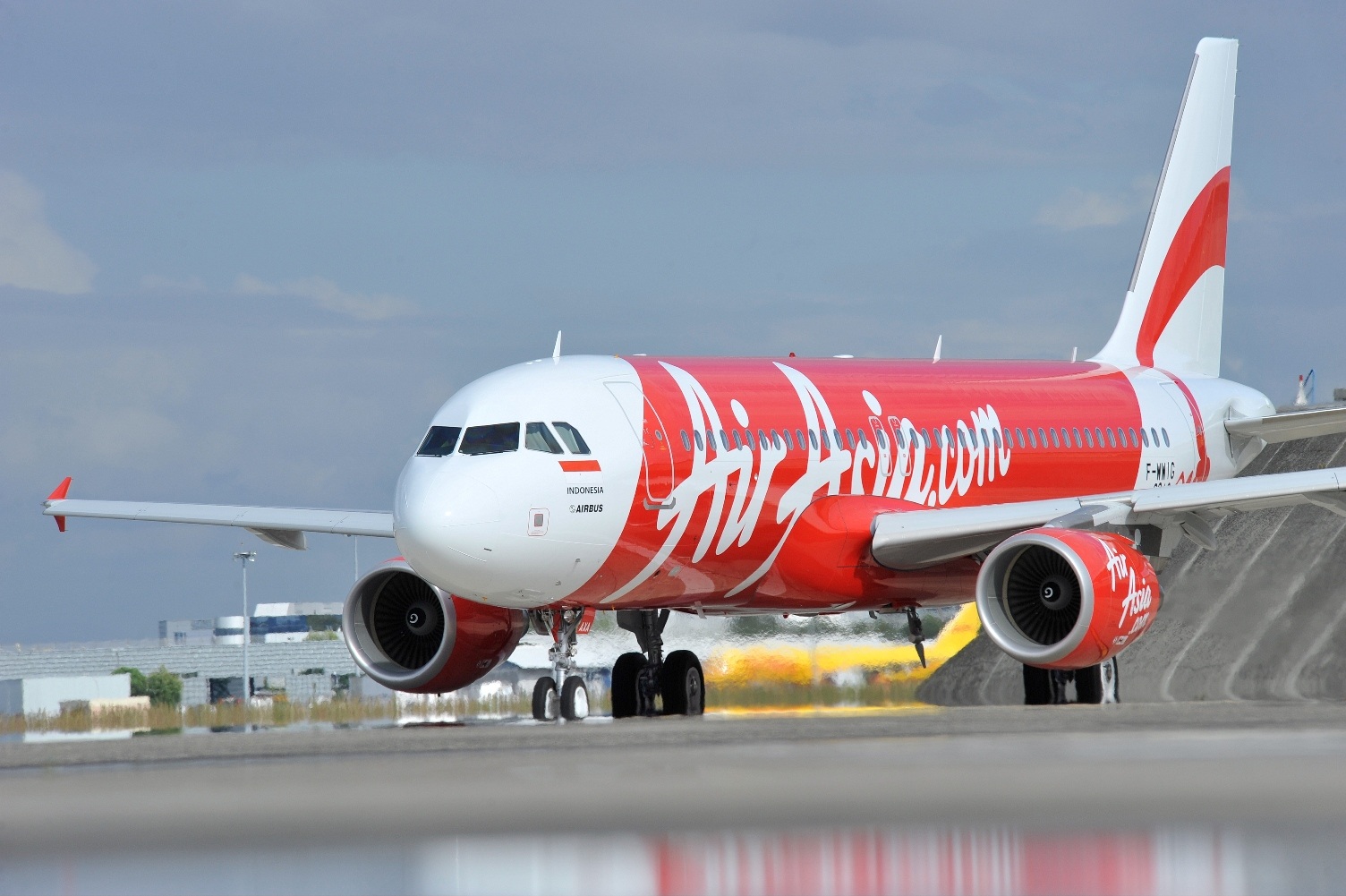
    AirAsia’s first FREE* Seats Campaign for the year launched last Friday, aimed at further revilatlising the travel and tourism industry in Asean, has proven to be one of its BIGGEST hits yet, with a whopping 1.2 million seats sold across both short haul and long haul flights in less than a week.

    There are still almost 4 million seats available for those eager to venture out, exclusively on the airasia Super App and website, until this Sunday for travel between 1 March 2023 and 10 December 2023. Guests can simply click on the ‘Flights’ icon on the airasia Super App or website.

    The FREE* Seats Campaign, launched by Dato’ Sri Tiong King Sing, Minister of Tourism, Arts & Culture Malaysia (MOTAC), follows AirAsia’s pledge to fully support the Ministry in its mission to strengthen Malaysia as a multi-faceted and multi-destination attraction, and boost tourism in the region.

    This marks another record-breaking sale for AirAsia, whose ‘FREE* Seats Campaign’ is much awaited by the masses in and around Asean. The airline is set to fly 69 million guests annually which will provide a much welcomed boost to the travel sector in Malaysia and Asean.

    Tony Fernandes, Chief Executive Officer of Capital A said, “To see AirAsia breaking records and continuing to outdo itself year after year is motivating for me as we strived so hard to come out of the pandemic stronger than ever ‒ and here we are today with another amazing milestone to celebrate. It’s tremendously uplifting to see such strong demand across Asean destinations and this sale is a true testament that AirAsia is indeed the ‘People’s Airline’. As the saying goes ‒ size matters! When we say bigger and better, we mean more than just the numbers— from our incredibly low fares, better on-time performance and to our group-wide commitment to providing an enhanced travel experience for millions of our guests, who choose to fly with us each and every time. We aim to be more than just a ‘low cost airline’, but one that delivers top notch customer experience and constantly innovates to listen and meet our guests’ needs. You can always count on us to be bigger and better.”

    Adventure seekers have been snapping up FREE* seats by the minute to their favourite short haul destinations, with the likes of Langkawi and Penang in Malaysia, Phuket and Krabi in Thailand as well as Bali in Indonesia being amongst the most popular choices.

    Seats to other AirAsia and AirAsia X destinations which are also on sale now for a steal have also been in strong demand. Starting from RM99*, guests have snapped up thousands of international flights to Chennai, Kolkata, Hong Kong and the Maldives ‒ and to mid-long haul destinations such as Taipei, Seoul, Perth, Melbourne at as low as RM329*.

    To further strengthen its commitment to offer better flying experience for its guests, AirAsia also launched an industry-first Flight Delay Insurance* powered by Tune Protect. It offers a one-off payment of RM200 if the flight is delayed for a minimum of two hours from the originally scheduled departure time or any new departure time. It is now available for FREE to all guests who book their flights from 10 to 19 February 2023 for the travel period between 1 March 2023 and 10 December 2023. The insurance will be available for purchase starting 20 February 2023 from RM10 (one way) or RM14 (return) on the airasia Super App and the website. AirAsia has also partnered with BigPay exclusively to provide automatic claims credited to the BigPay user’s account within three (3) working days for guests who received the complimentary Flight Delay Insurance*.


  • Zuckerberg copies Musk announcing Meta Verified for Facebook and Instagram

    Zuckerberg copies Musk announcing Meta Verified for Facebook and Instagram

    It looks like Twitter isn’t the only company willing to put a little blue checkmark next to your name in return for a stream of monthly payments. As you probably know, Twitter is asking $8 per month or an annual payment of $84 to join Twitter Blue, which, among other features, will allow you to have your identity verified with a blue checkmark next to your name. Today, Meta co-founder, chairman, and CEO Mark Zuckerberg announced that Meta will test a new service called Meta Verified.

    Meta calls Meta Verified a subscription bundle for Instagram and Facebook and includes a verified badge that shows that you are who you say you are and have verified your identity using a form of government ID. The bundle also helps protect subscribers from having their identities impersonated by using “proactive account monitoring.” Meta Verified members will also have access to a real person to handle common issues that an Instagram or Facebook user might have.

    Other features of the program will give Meta Verified users increased visibility and reach. This means that subscribers will have their posts prominently appear in certain areas of the Instagram and Facebook platforms such as “search, comments, and “recommendations.” Lastly, the subscription bundle offers users exclusive features that will allow them to express themselves “in unique ways.”

    The Meta Verified subscription bundle will be available starting later this week in Australia and New Zealand as a direct purchase on Instagram and Facebook. Make the purchase on the web, which will cost the equivalent of $11.99 per month. If you subscribe via the Facebook or Instagram app on iOS or Android, the price is the equivalent of $14.99 per month. Hmm. Why should an in-app purchase from the App Store or Google Play Store be 25% more expensive (wink, wink)?

    To be eligible to sign up for the program, accounts have to show that they were active in the past with a prior posting history, and the account owner must be at least 18 years of age. Those applying for a Meta Verified subscription must submit a government ID to Meta showing their name and photograph (like a Driver’s License, for example) which must match the name and photo used on their Facebook or Instagram account.

    Meta says, “We’re also committed to continuous monitoring and review of reported violations, as well as taking swift action against those who try to evade our systems.” There will be no changes to accounts on Facebook and Instagram that are already verified based on previous requirements.

    The company states, “Long term, we want to build a subscription offering that’s valuable to everyone, including creators, businesses, and our community at large. As part of this vision, we are evolving the meaning of the verified badge so we can expand access to verification and more people can trust the accounts they interact with are authentic.”

    After being tested in Australia and New Zealand, Meta says that it hopes to bring Meta Verified to the rest of the world soon.

    Back when the company was known as Facebook, it made what is arguably the best acquisition of all time in the tech industry by paying $1 billion for Instagram back in 2012. Some believe that Instagram is now worth in excess of $100 billion. Instagram has matured from a camera filter app to a broader, more well-rounded social media site.

    In 2014, Facebook announced its purchase of messaging app WhatsApp for an initial price of $16 billion. By the time the deal closed a few months after it was first revealed, the final price tag of the transaction had ballooned to a range of $19 billion-$21 billion due to Facebook’s increasing stock valuation.

  • Google warns iOS, Android users about an upcoming change to location data

    Google warns iOS, Android users about an upcoming change to location data

    Google is warning both iOS and Android users about estimated photo locations. This feature, which is used with photos stored in the Google Photos app, looks at the background of photographs and videos you’ve taken with your phone’s camera and using landmarks visible in the image, tries to figure out where the picture or video was taken. While Google no longer uses your Location History to figure out where you snapped a photo or recorded a video, it works around this by using other methods.

    Google’s alert pops up in the Photos app and says, “Photos locations come from multiple sources, including locations estimated by Google Photos. We stopped using Location History to estimate photo locations, but we’ll continue estimating using other sources when ‘Estimate missing locations’ is on.” The alert also asks whether you want to keep any existing estimated locations or have them removed.

    As Google notes, “Choosing ‘Keep’ means you can use existing estimated locations to organize and find photos.” If you choose to delete them, you will get a message that says, “Deleting estimated photo locations based on Location History may result in permanent loss of those estimated locations. Your photos will be kept.”

    You might have estimated photo locations toggled on by default. To check, open the Google Photos app and tap on the profile picture in the upper right corner of the screen. Tap on Photos settings > Location > Location sources. There is a toggle for  “Estimate missing locations.” If it bothers you that Google is using landmarks in your pictures to take an educated guess about where you were, make sure that this setting is toggled off.

    You can also edit or remove an estimated location from a picture stored in the Google Photos app by opening the app, and tapping on the picture or video. Tap the three-dot overflow menu and “Edit” (with the pencil icon). Add or select a location from your recent locations or tap Remove location to have any location associated with a picture or video deleted. Pictures that have a location added by your phone’s camera cannot be edited.

    Google Photos users on iOS or Android will have the option of keeping or removing estimated locations before May 1st. If you don’t make a decision before then, Google will automatically remove the existing estimated locations from your Photos app on or after that date.

  • Update to iOS version of WhatsApp adds multitasking feature already available on Android

    Update to iOS version of WhatsApp adds multitasking feature already available on Android

    Back in December of last year, we told you that WhatsApp was conducting a beta test involving a Picture-in-Picture (PiP) feature for video chats on iOS. Now, according to 9to5Google, we can tell you that version 23.3.77 of the iOS variant of the WhatsApp app is available, allowing users in the middle of conducting a video call to access another app without having to pause or disconnect the video call that is in progress.

    The PiP works like this. When you are engaging in a video call and want to multitask by opening another app, exiting WhatsApp will minimize the video chat and allow it to float above other apps. You can move it around the screen with your finger while the video chat continues and the other app you want to open is underneath it. The feature might not work right away and WhatsApp says it will disseminate it over the coming weeks.

    The update to version 23.3.77 also includes new features, including adding captions when sending documents to contacts in personal or group chats. You will also be able to use longer group subject names and descriptions when describing a WhatsApp group. Following the update, these names and descriptions can be as long as 2,048 characters which is a huge increase from the prior 512 characters allowed.

    Stable-mates Facebook and Instagram allow users to create personalized avatars and now WhatsApp users can do so as well. To create your own avatar, open the WhatsApp app and go to Settings > Avatar > Create Your Avatar. Follow the directions and tap on Done. That’s just the first step. To make your new Avatar the profile picture on WhatsApp, open the app and tap on your profile picture. Then tap on Edit > Edit.

    Again, this update is for iOS only since Android users already have Picture-in-Picture capabilities for video chat on WhatsApp. If you want version 23.3.77 of WhatsApp for iOS right away, you can install the version of WhatsApp from the App Store since it already includes the aforementioned features including PiP for video chat.

  • Apple has sharply reduced the size of the order it has with TSMC

    Apple has sharply reduced the size of the order it has with TSMC

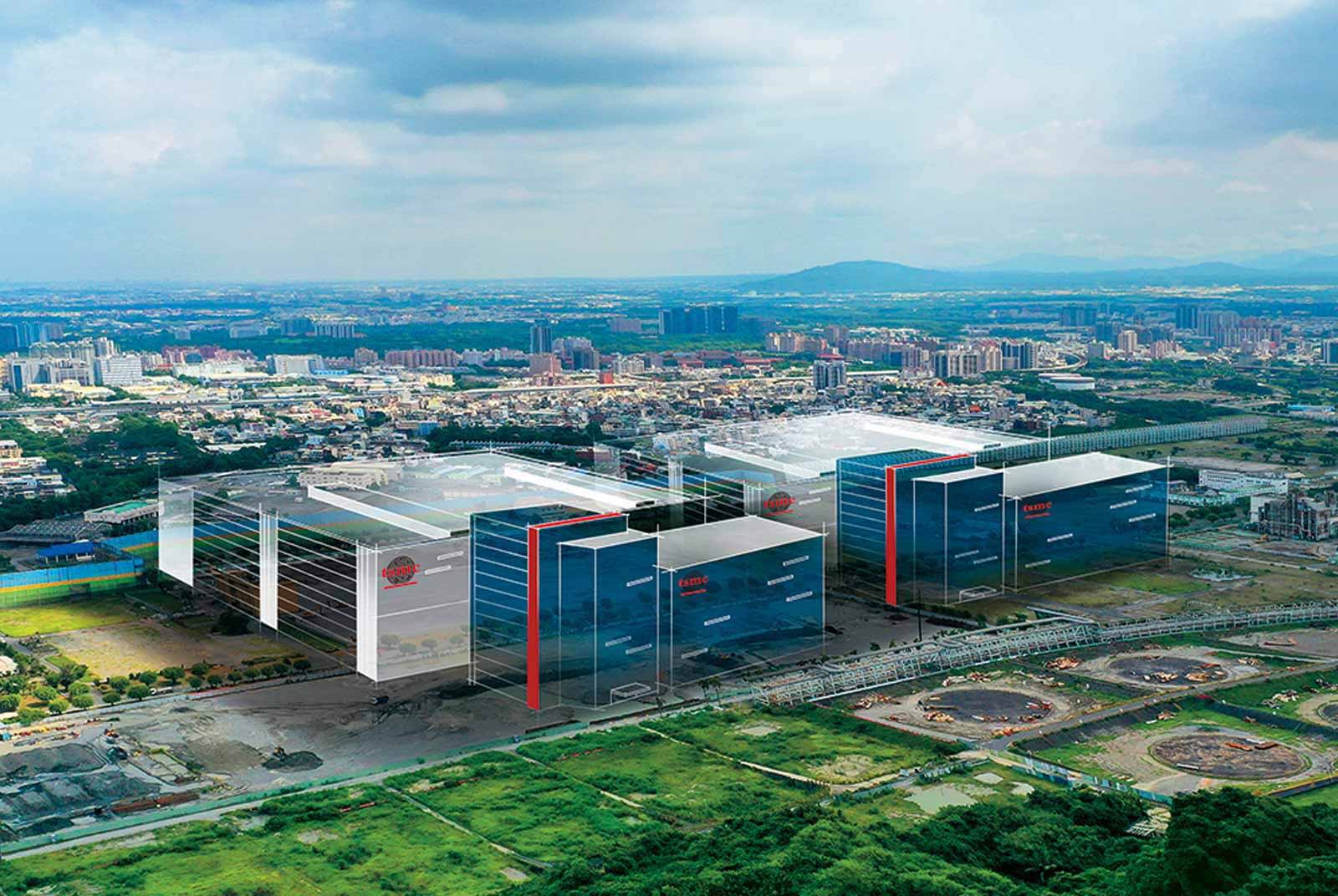
    Taiwan Semiconductor Manufacturing Co. Ltd., better known as TSMC, is the world’s largest foundry. Only TSMC and Samsung currently mass-produce chips using their respective 3nm process nodes (which use different types of transistors, as we will explain later). Apple is TSMC’s largest customer and is believed to account for a quarter of the company’s revenue (that’s 25% for you numerical types).

    With the overall weakness of the global economy and the hangover from last year’s chip shortage, some major brands have been canceling orders placed earlier with TSMC. And believe it or not, that goes for Apple as well. You know that we often cite Twitter tipsters and check out social media posts from Weibo writers for the sake of alliteration. Weibo is a Chinese social media site and one subscriber, whose user name translates to something like @CellPhoneChipExpert posted some big Apple news.

    The tipster, who allegedly gets news directly from the semiconductor industry, says that Apple has reduced its orders with TSMC by as many as 120,000 wafers. The canceled orders were for chips that would be made using TSMC’s N7, N5, N4, and even some N3 nodes. Rumors call for the A17 Bionic, which is expected to be found under the hoods of the iPhone 15 Pro and iPhone 15 Ultra, to be produced using TSMC’s N3 (3nm) process node. Apple’s M2 Ultra and M3 chips might also use the same node.

    Digitimes reports that TSMC has been able to beat out Samsung Foundry when it comes to signing up customers. Samsung’s 3nm node uses Gate-All-Around (GAA) transistors that allow the gate to come into contact with the channel on all sides resulting in less current leakage and higher drive current compared to the FinFET transistors used by TSMC for its 3nm node. GAA features vertically placed horizontal nanosheets while FinFET uses horizontally placed vertical “fins.” TSMC is expected to go to GAA for its 2nm production in 2025-2026.

    Despite sticking with FinFET for 3nm production, TSMC still has a pretty full-order book with big names like Qualcomm, MediaTek, and Nvidia reserving production capacity for 2023 and 2024. Samsung, though, has been handicapped in its efforts to secure more business due to low yields. That means that a higher percentage of the chips it cuts from wafers fail to pass quality control.

    The report says that in order to give Apple most of the 3nm production capacity later this year, Intel agreed to change its roadmap and delay receipt of its 3nm orders. TSMC’s enhanced 3nm process node (N3E) could be launched this year even though there might not be a big rush for orders considering the cost.

    Digitimes points out that wafer prices have skyrocketed with 90nm wafers selling for about $2,000 in 2004. By 2016, 10nm wafers cost $6,000 and that price hit $16,000 for 5nm which debuted on consumer electronics in 2020. Wafer prices for 3nm chips are priced in the $20,000 area.

    Intel has said that it will take process leadership from TSMC and Samsung by 2025 thanks to two developments. It will use RibbonFET transistors which is another term for the Gate-All-Around (GAA) transistors already employed by Samsung. And it will use a feature known as PowerVia or backside power delivery. This allows transistors to obtain power from one side of a chip while using the other side to connect to data communication links.

    Today’s chip designs have transistors trying to handle both functions from the same side which makes the process more complicated and limits the use of miniaturization. Intel will also be the first to use high numeric aperture Extreme Ultraviolet Lithography (EUV). This machine will etch higher-resolution circuitry patterns on wafers which could reduce the time it takes to add additional features to a pattern.

  • Chinese tea chain Mixue opens its first Australia outlet

    Chinese tea chain Mixue opens its first Australia outlet

    Chinese tea chain Mixue has launched in Australia, opening its first store in Sydney’s World Square shopping centre.

    Two more locations are imminent in Brisbane and Melbourne.

    The Sydney store features floor-to-ceiling windows spanning an entire wall and red steel frames.

    A marketing campaign by Mixue offering “1000 Sydney students to have a drink for free” was launched for the brand’s Sydney launch. Mixue said that although the pricing will be different to that in its home market, the quality will not change.

    Founded by Zhang Hongchao in 1997, Mixue Ice Cream and Tea opened its first overseas store in Vietnam in 2018 and currently has 600 stores in 11 Asian countries and 21,000 stores in China.

    With several milk tea companies expanding into the market during the past two years, Australia is a promising destination for the sector.

    Global milk tea giant Gong Cha last year said it planned to add 17 new stores to its existing 118 locations in Australia and both Gotcha and Chatime recently said they planned to prioritise the market.

  • Japanese restaurant chain Zensho to buy Lotteria Japan

    Japanese restaurant chain Zensho to buy Lotteria Japan

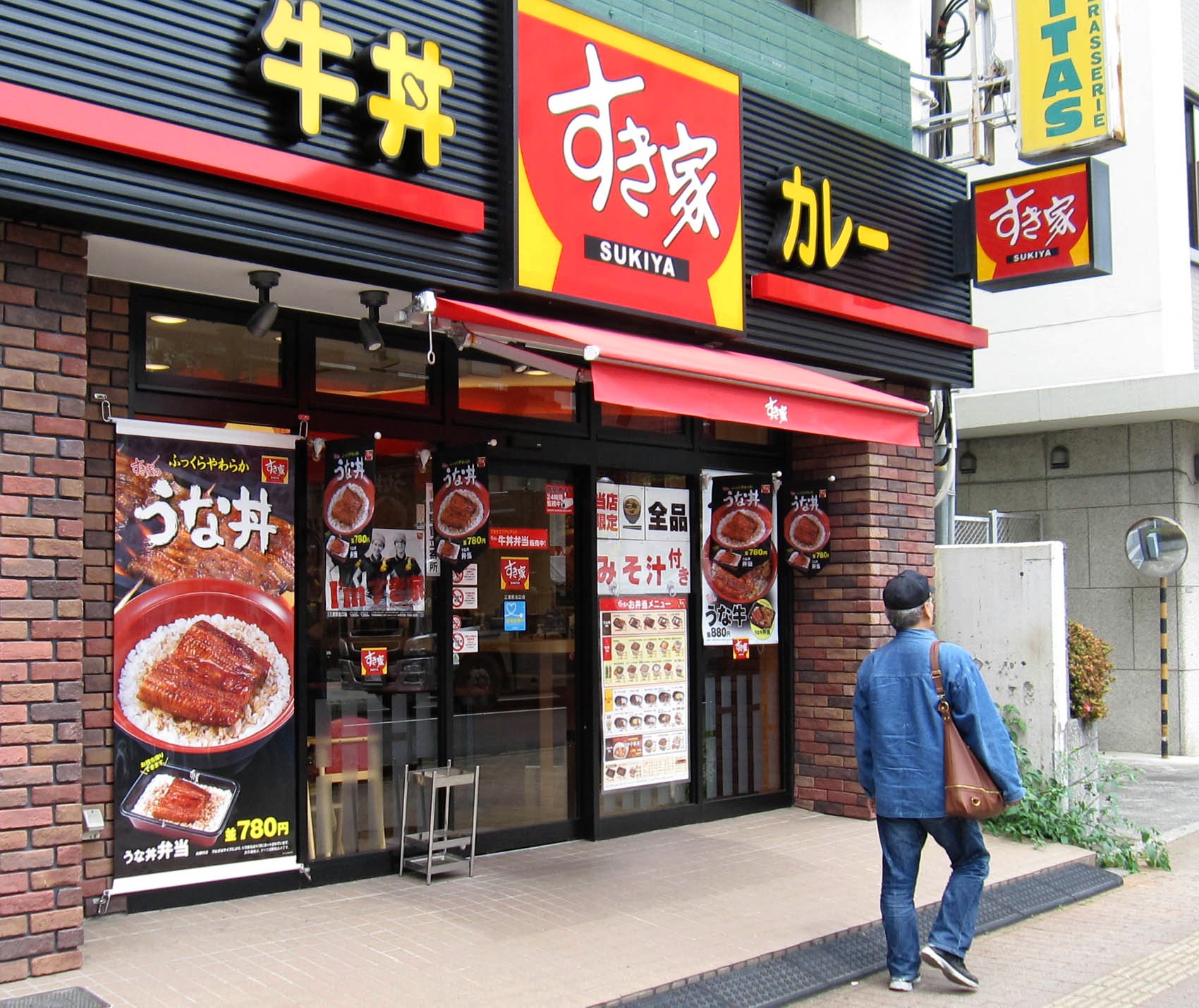
    Sukiya beef bowl chain’s operator, Zensho Holdings, is to acquire burger franchise Lotteria Japan from Lotte Holdings for an undisclosed sum.

    The deal is expected to be completed on April 1.

    Entering Japan in 1972 with the first store opened in Tokyo’s Nihonbashi, Lotteria had 358 stores across the country as of January 1.

    Zensho Holdings said it has decided to acquire the shares based on the judgment that the synergistic effect of its mass merchandising system and wide range of food business will contribute to the future expansion and development of Lotteria’s business.

    The deal is part of an operational restructuring by South Korea’s Lotte Holdings.

    “We believe this is the best option for Lotteria to pursue new growth,” Lotte Holdings said in an announcement.

    The company said the Lotteria brand will continue for a certain period after the transfer of the shares but the new owners may rename it in the future.

    As of March 31 2022, Zensho Holdings managed and developed 10,078 restaurants, with sales of about US$4.9 million. Its portfolio of brands includes Sukiya, Big Boy, Nakau, Victoria Station and Jolly Pasta. The company previously operated US burger chain Wendy’s restaurants’ in Japan.

  • Vietnamese airlines race to find new investors

    Vietnamese airlines race to find new investors

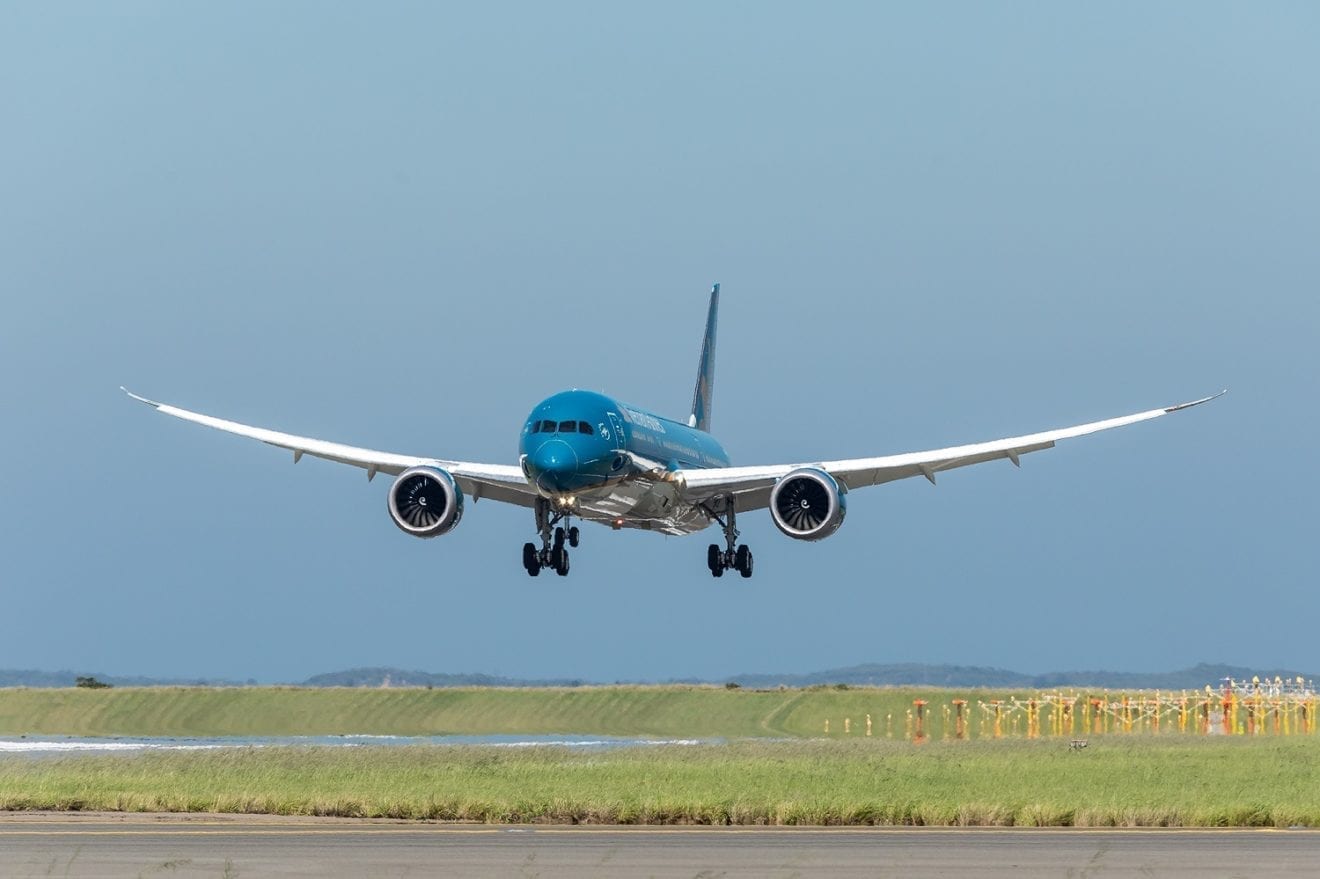
    Pacific Airlines, Bamboo Airways, and Vietravel Airlines are seeking new investors to help them overcome financial difficulties and speed up their post-pandemic recovery.

    Vietnam Airlines, which owns approximately 98% of Pacific Airlines’ shares, has been searching for new investors for its subsidiary carrier since last year.

    The national flag carrier is also looking to sell its stake in jet fuel distributor Skypec to help alleviate some of its difficulties and gradually reduce its losses.

    By the end of last year, Vietnam Airlines was recording an accumulated loss of nearly VND34.2 trillion ($1.45 billion), and its shares are at risk of being delisted as the carrier is set to record three annual losses in a row.

    Bamboo Airways is also seeking new investors to help its ambitious development plans.

    Although the airline was expected to be invested in by a large southern property company, the deal has yet to be finalized and the airline is still looking for new investors.

    Rookie Vietravel Airlines is also seeking investors and has requested the government to increase its charter capital sixfold to more than VND7.6 trillion, mainly to expand its fleet.

    By 2030 the airline seeks to have VND8.25 trillion in charter capital, in which shareholders contribute VND2 trillion, with the remainder coming from undistributed profits and other investors.

    Nguyen Quoc Ky, chairman of Vietravel Airlines, said “the airline is lucky as it has attracted interest from some investors.” He added that the airlines prioritizes domestic investors who can journey with the airline for a long time.

    Each airline has its own strengths to entice investors.

    Pacific Airlines and Vietnam Airlines possess prime flight slots at major airports like Noi Bai and Tan Son Nhat.

    Bamboo Airways is the fastest growing airline with a fleet of 30 jets just four years after it was launched. It also has a network covering both domestic and international markets.

    Vietravel Airlines is part of tourism firm Vietravel’s ecosystem and therefore has a large customer base and a connection with tourism markets.

    Nguyen Hai Quang, a lecturer at the University of Economics and Law under Vietnam National University, Ho Chi Minh City, acknowledged that the pandemic has severely impacted the airline industry and that finding new investors is essential.

    “The aviation business requires large capital and aircraft-related expenses,” he said, adding that this is a good time for investors to join the industry.

    The International Air Transport Association (IATA) has forecast that the global aviation industry will become profitable again this year with a profit to sales ratio of 0.4%.

    But Quang also said that challenges lie ahead for Vietnamese airlines, and one of these is the recovery of the international markets.

    “Only when international markets resume pre-pandemic levels can Vietnamese carriers report profits again,” he said.

    Other factors such as fuel price, currency exchange rates, global economic growth and inflation will also play important roles in the performance of airlines, Quang said.

    When new investors are found, airlines will have many opportunities for growth, he added.

  • Thaco eyes 7% auto sales growth despite headwinds

    Thaco eyes 7% auto sales growth despite headwinds

    Automaker Thaco Group plans to increase its sales 7.7% from last year to 120,000 units this year, with earnings of more than VND90 trillion ($3.80 billion), despite concerns about market challenges.

    The plan calls for the sales of 96,000 passenger cars, 23,500 trucks, and 1,500 buses and minibusses, Chairman Tran Ba Duong said in a letter to employees.

    Duong said many global challenges are expected this year, including rising inflation and tightened spending, adding that Vietnam’s economy is forecast to grow slower while consumption declines.

    Although Thaco is targeting a sales growth, Duong anticipates that the auto industry will see a drop in sales and that competition will be fierce. Lowering costs to bring down prices is a key mission, he added.

    Thaco Group this year begins a new development phase with focus on six sectors: automobiles, mechanics and supporting industry, agriculture, logistics, investment, construction and commerce.

    The company wants the mechanics and supporting industry managed by its subsidiary, Thaco Industries, to be the second biggest business in the group with a target revenue of over VND20 trillion.

    The company expects to manufacture and export 15,000 trailers to the United States, Canada, Mexico and Japan.

    Thaco Industries was established last year with a charter capital of VND12.6 trillion. It expects to spend over VND3 trillion this year to build a manufacturing complex to produce auto parts.

    Agriculture subsidiary Thaco Agri plans to grow 14,000 hectares of bananas, and expects to have over 100,000 cows and 215,000 pigs by the end of the year.

    The construction unit Thadico – Dai Quang Minh will launch 24 new projects this year and complete three projects.

  • International Fruit prices drop by half

    International Fruit prices drop by half

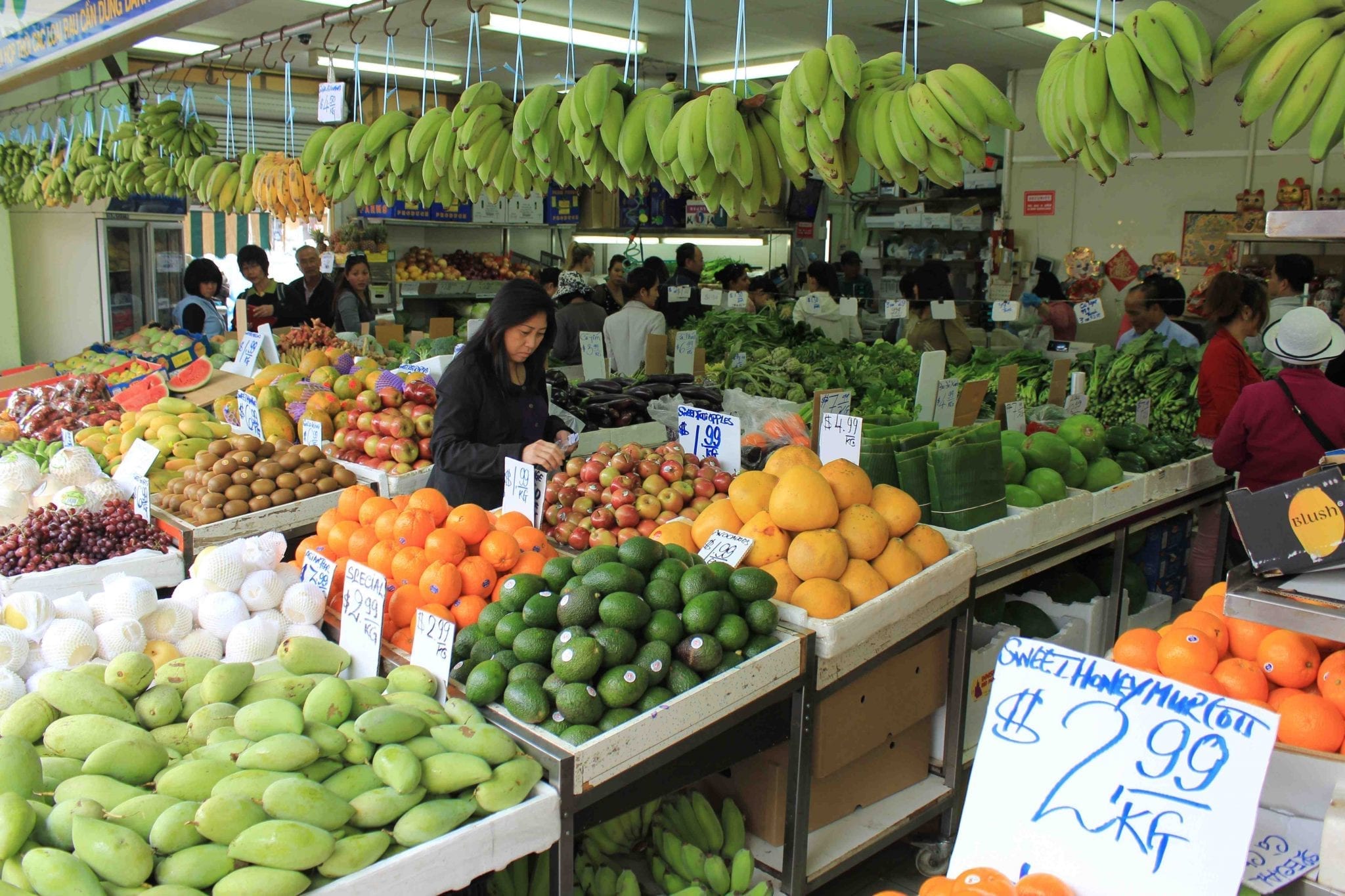
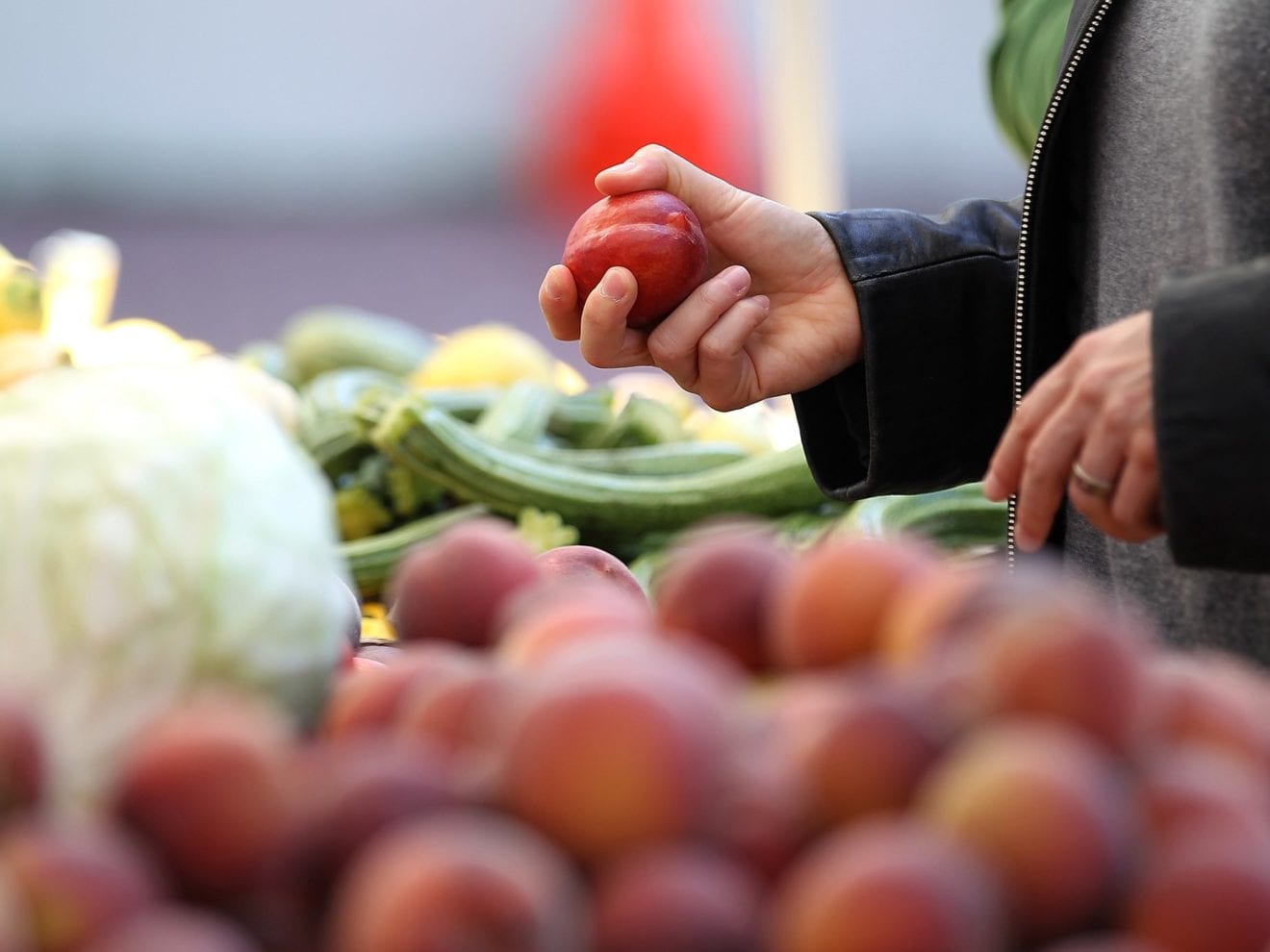
    Oranges, coconuts, and wax apples are sold at VND1,000-7,000 (4-29 U.S. cents) per kilogram at farm, half the prices compared to a month ago.

    In Ho Chi Minh City these days, vendors are selling king oranges at VND7,000-20,000 per kilo, depending on the size and quality of the fruit, along the sidewalk, on mobile trolleys or in wet markets. The prices have decreased 50%.

    Coconut is being sold at VND5,000-8,000 per fruit, pomelo VND8,000-15,000 per kilo, wax apple VND10,000-15,000 per kilo, down 30-50% compared to two months ago.

    Dat, who owns a one-hectare king orange farm in Tra On District of the Mekong Delta’s Vinh Long Province, said traders have bought his family’s oranges at VND4,000-5,000 per kilo and for this crop, he has lost almost VND100 million (US$4,228).

    The loss mainly comes from the cost of fertilizers and drugs, and yet to include the efforts.But he said “for those that have to rent land to grow oranges, the loss would even double.”

    Wax apples farmers in An Phuoc Commune, Long Thanh District of Dong Nai Province which borders HCMC said they are suffering “heavy losses” as the fruit’s prices sold at farm fall sharply to VND6,000-7,000 per kilo.

    In Ben Tre Province, Vietnam’s coconut kingdom, prices of dry coconut have also halved compared to the same period last year and farmers have reported to lose VND20-50 million for every hectare of coconut with prices dropping by half.

    Huynh Quang Duc, deputy director of Ben Tre’s Agriculture Department, said the reason for prices of dry coconut prices to fall sharply is because, after Covid-19, many countries with large coconut areas such as India, Indonesia, and the Philippines have lots of dried coconut inventories, resulting in a supply surge on the market, pushing the prices down.

    As for king orange, the Vinh Long Province’s Agriculture Department said consumers in northern and central Vietnam have lost appetite for the fruit during the past month under impacts of prolonged cold waves.

    Meanwhile, the supply source has remained abundant as farmers prepared a lot for Tet sales in January and then the crop in February resulted in high yield.

    Tra On District now has as many as 50,000 tons of oranges in stock and from now until early March, an extra of 60,000 tons will be harvested, according to the department.

    As per an approved plan, Vinh Long only have 12,000 hectares for king orange farming but in the past two years, with prices of the fruit on the rise and farmers earning profits, they have rushed to grow the fruit, expanding the farming area to 17,000 hectares.

    The Ministry of Agriculture and Rural Development has asked localities to support farmers by strengthening the connection between farms and supermarkets as well as fruit shops and online markets to help farmers sell all of their ripe oranges, despite the low prices.

    Several supermarket chains in HCMC are buying in oranges at VND10,000-14,000 per kilo.

  • Starbucks accelerates Asian expansion plan – eyes 400 more stores

    Starbucks accelerates Asian expansion plan – eyes 400 more stores

    Starbucks is ramping up its expansion plan in the Asia Pacific region, revealing plans today to open 400 additional stores this year alone.

    The expansion will include new cities and outside of major metropolitan areas in markets such as Thailand, Indonesia, Malaysia and the Philippines. In Laos, where it first opened its doors in November in the capital city of Vientiane, Starbucks also plans to open a new store this year.

    The rollout plans exclude the company’s Chinese and Japanese operations.

    Meanwhile, Starbucks plans to build on its existing portfolio of more than 300 stores in India by expanding into at least five new cities.

    The company recorded an 8 percent growth in net new stores during the past year.

    In South Korea, the US-headquartered coffee chain has introduced a 500sqm thrive-thru store in the business district of Gwangyang-si, marking its 5000th location in the region (excluding China and Japan).

    “Our 5000th store in Asia Pacific is a drive-thru store that speaks both to the changing habits of our customers and of our determination to meet them where it is most convenient, while still offering the Starbucks connection,” said Emmy Kan, president of Starbucks Asia Pacific.

    “We will continually enhance our store formats and innovate, not just to cater to changing customer behaviours, but also to fuel growth in the region.”

    Starbucks doubled its number of drive-thru stores in the region in the last four years. The brand plans to open more than 100 locations this year.

    Michael Conway, group president, of international and channel development for Starbucks, said the region achieved more than 20 per cent growth year on year as recovery continues.

    “We are well positioned for further growth with our licensed business partners, who continue to elevate the Starbucks Experience across a range of innovative store formats.”

    Last month, Starbucks launched its first community concept cafe in Taiwan in Xiulin Township with local operator Uni-Wonder Corporation.

  • Newest version of WhatsApp on Android introduces competitive new features

    Newest version of WhatsApp on Android introduces competitive new features

    WhatsApp has been hard at work lately, adding features to compete with the likes of Signal and Telegram. However, a few new features are already making their way to the Android app, including one still in the beta testing phase.
    According to WABetaInfo, the new features are in addition to the status update ones announced last week, which were meant for both iOS and Android. These additional new features targeted the Android app specifically and were spotted when they appeared in the release notes of the latest version available via the Google Play Store.
    The version in question is 2.23.3.77, which has an update date of February 13th, and lists the below new features:
    • You can now add captions when sending documents
    • Added support for longer group subjects and descriptions to describe your group better
    • You can now send up to 100 photos/videos at once (vs. 30 previously)
    • You can now create personalized avatars and use them as stickers and profile photos. Go to Settings > Avatar to get started.
    The most prominent and useful one of all the features above, at least to me, happens to be the increase in the number of photos and videos that can be sent all at once within a conversation. Going from 30 to 100 is quite the leap and hopefully enough for even the most active photographers.

    However, one rumored upcoming feature has not yet made it out of beta: Disappearing Messages. The ephemeral message feature, made popular initially by Snapchat, is currently only available in the beta version of the app. Additionally, the beta version also includes a “Kept Messages” folder, which is meant to store the disappearing messages you prefer to keep indefinitely. Sadly, the beta version of WhatsApp for Android is currently full and not accepting new registrations.

    All of these changes come at a time when Will Cathcart, Head of WhatsApp at Meta, is launching an all-out war against Telegram by urging his Twitter followers not to use that app, going as far as to label it as “Russian spyware.” So far, this battle has been beneficial for WhatsApp users in that it has sparked some innovation and new features to be launched. It will be interesting to see how far this goes and how much we as users can get out of it.
  • Vietnam needs to build national brands for fruits

    Vietnam needs to build national brands for fruits

    Experts said that Vietnam must develop national fruit product brands to increase added value and competitiveness in international markets.

    Although fruits bring in billions of U.S. dollars in export revenue annually, Vietnam has no well-established fruit brands.

    “When talking about apples, we think about the US,” said Nguyen Dinh Tung, Director of Vina T&T Import-Export Company. “Talking about kiwis, we think about New Zealand. Talking about melons, we think about Japan. Talking about Monthong durians, we think about Thailand. Talking about Musang King durians, we think about Malaysia… Meanwhile, where many types of fruits are grown, Vietnam has no famous fruit brands.”

    Tung said Vietnam has Ri6 durian, which could compete with durian from Thailand and Malaysia in terms of quality and is chosen by many companies as an export product.

    However, it is still falling behind in terms of brand identity and value.

    “Because there is no brand, the price of Ri6 is always about 20% lower than Monthong and much lower than Musang King,” he said.

    Le Thi Kieu Oanh, Director of Apple LLC, which exports Vietnam’s agricultural products to Japan, said Japan imported dragon fruit from Vietnam, but only 10% were sold at supermarkets under Vietnamese brand names.

    According to Ta Duc Minh, Vietnamese Trade Counselor in Japan, Vietnamese lychees are exported to many countries and have become popular with the Japanese market.

    However, Vietnamese lychees remain inferior to their Japanese counterparts in terms of economic value, even though Japan does not have a production advantage in lychees.

    Japanese lychees are grown in Miyazaki over an area of around 10,000 hectares, and Japan has built a brand for its lychees as a precious fruit. There was a time when each Japanese lychee was sold for as much as $10 each, and people still waited in line to buy them, Minh said.

    According to Tung, Vietnam must develop national fruit brands to increase their value and competitiveness in the international market.

    “We should select several types of fruits to build national brands for,” Tung said. “Like New Zealand, this country successfully built brands for kiwis, which have markets around the world with the export value of over $3 billion per year, equal to the whole fruit and vegetable export of Vietnam.”

    To build fruit brands of national pride, Tung said it was necessary to pay attention to factors including varieties associated with soil, Vietnamese culture, quality, food hygiene and safety, planting area, high yield and preservation technology.

    Tung said that grapefruit, coconut and durian were fruits with large potential for export.

    He said that to build national fruit brands, it was vital to control the granting of geographical indication certificates strictly.

    Each type of fruit is only suitable for the climate and soil of certain localities. However, many kinds of fruit, such as pomelo, dragon fruit and lychee, are grown all over the country, which can affect branding, according to Tung.

    Therefore, it is important to select products associated with local culture and history to grant and manage geographical indication certificates.

    For example, the best quality coconuts are from Ben Tre province, lychees from Bac Giang and Hai Duong, white-flesh dragon fruit from Binh Thuan and red-flesh dragon fruit from Long An. Vietnam could choose typical products of each locality and upgrade them to national brands.

    Ngo Tuong Vy, General Director of Chanh Thu Company, said that among dozens of fruits exported, Vietnam could choose from three to five fruits to focus the resource on to build brands of Vietnam’s pride.

    “It’s time for Vietnamese fruits to focus on improving quality and adding cultural and creative elements to farming methods so that products contain stories that appeal to consumers,” Minh said.

    Minh pointed out that Japan focused on the quality of some world-famous fruits of the country. Even output was controlled to maintain selling prices. For some, special farming techniques were incorporated into the story to ensure the best quality.

    Building national brands and quality management databases and traceability systems would be the focus of the Ministry of Agriculture to increase the export value, Deputy Minister Tran Thanh Nam said, adding that growth should not be based on output any longer.

    He said that the agriculture ministry must work with the Ministry of Industry and Trade to propose to the Government a program to build national brands for agricultural products.

    The branding should also be integrated with a digitalization process in traceability, field diary, fruit chain management, and registration and protection of fruit brands in foreign markets.

    Vietnam’s export of fruit and vegetables reached nearly $3.34 billion in 2022, 80% of which were fruit exports.

  • Japanese firm looks to raise export-quality oysters in Vietnam

    Japanese firm looks to raise export-quality oysters in Vietnam

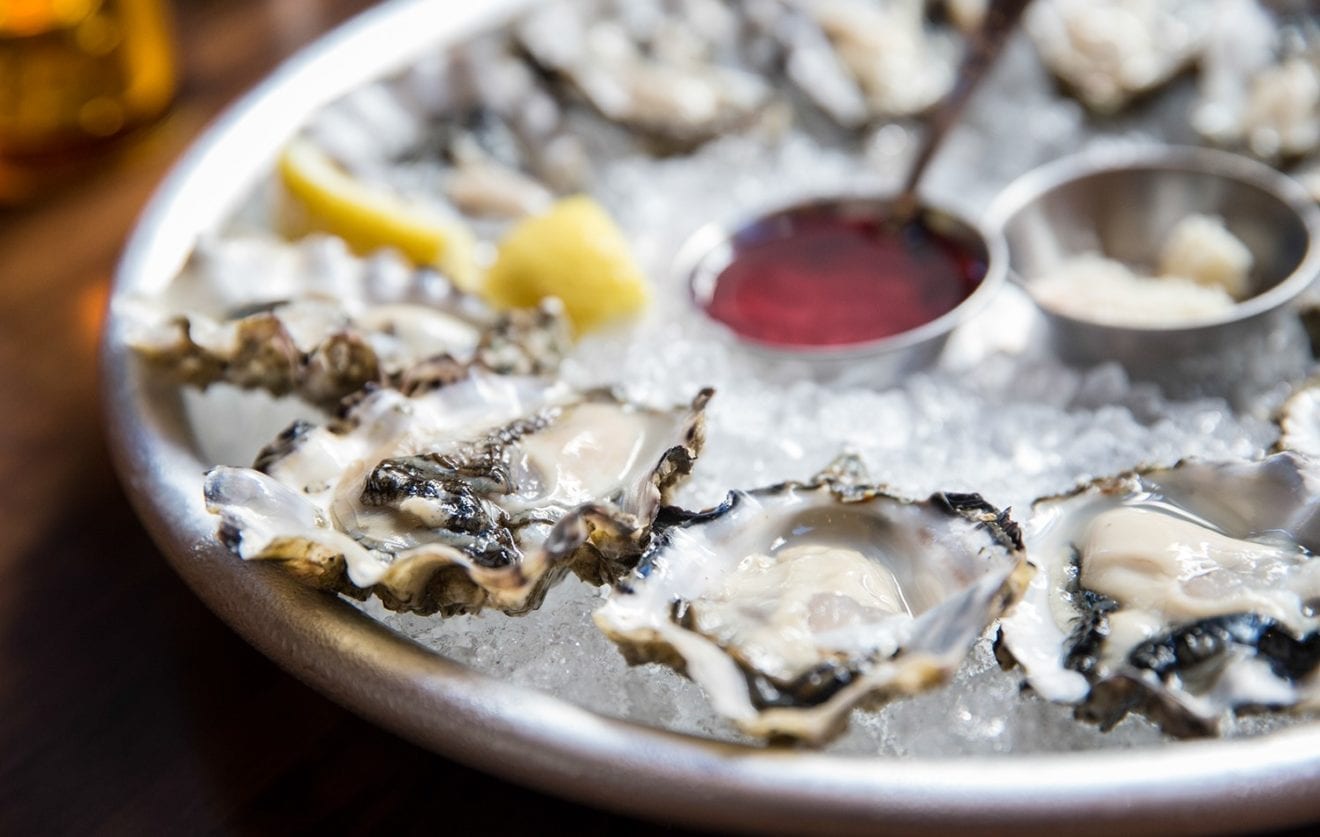
    Japanese seafood producer Yamanaka wants to partner with Vietnam agencies to raise oysters locally for both domestic and international markets.

    A feasibility research conducted by Yamanaka in the central province of Khanh Hoa since June last year, with the support of the Japan International Cooperation Agency (JICA), found that raising oysters in Vietnam under two Japanese methods brought high yields as well as oysters of a quality high enough to be eaten raw.

    “With this project we hope to establish a foundation for raising oysters with natural disaster resistance to improve productivity and farmer incomes,” said Shinji Takada, CEO of Yamanaka.

    Yakamana sells Japanese oysters in 350 sales points in Vietnam, but the company is now seeking to grow the shellfish locally and sell them in Vietnam, Taiwan and Thailand.

    Vietnam has nearly 3,000 hectares for oyster farming. The shellfish is being raised in 20 out of 28 seaside localities, with Khanh Hoa and Quang Ninh leading in numbers, according to the International Collaborating Centre for Agriculture and Fisheries Sustainability (ICAFIS).

    A farmer in Khanh Hoa needs around VND45 million ($1,904.44) to invest in an oyster raft which would fetch him VND30-50 million worth of oysters in a season. Each household typically has three to five rafts. There are three seasons each year in Vietnam, ICAFIS said.

    However, the added value of oysters in Vietnam remains low and therefore only a small amount of them are exported. In Khanh Hoa 95% of oysters are used as lobster food, while 4% goes to domestic consumption and 1% are exported.

    Ho Chi Minh City oyster farms produce over 21,000 tonnes of oysters a year but mostly for domestic consumption. Only two companies, BIM Group and VINABS, export oysters regularly.

    “A challenge in the oyster farming industry is setting up a clean source of water,” said Dinh Xuan Lap, deputy director of ICAFIS. “In Vietnam there is lack of technology to ensure the quality of oysters and to help them cope with natural disasters.”

    The hanging method and Australian basket method have both proved to be suitable for producing export-standard oysters in Vietnam, Japanese researchers have found.

    “We plan to set up an oyster cleaning system for commercial use, hopefully this or next year,” said Takada.

    One important step is identifying which oyster breed to farm, as the popular breeds in Vietnam cannot be raised with the hanging method, said Nguyen Thanh Luan, a seafood farming expert.

  • Banks Are Increasingly Victims of Data Theft

    Banks Are Increasingly Victims of Data Theft

    Cybercriminals who want to obtain a large amount of valuable data quickly are increasingly attacking financial institutions. Data breaches can be very expensive for banks.

    Credit Suisse seemingly cannot escape the negative headlines. After numerous scandals and annual results deeply in the red last year, a former employee is now making new negative headlines for the bank. An IT employee is alleged to have stolen personal data from Credit Suisse employees over the years.

    While the data was taken, there is so far no evidence of it being used maliciously.

    We have taken and are continuing to take steps, including legal remedies, to contain the incident adequately. To date, there is no evidence of any onward transmission or intent to use the data in any way,» according to a statement from Credit Suisse.

    Still, the security incident is seen as further damaging the image of the crisis-hit financial institution.

    Data security must be a top priority in a bank’s security concept since financial data contains some of the most sensitive information on individuals. Should cybercriminals get hold of such data, it can have devastating consequences for customers who have placed their trust in a financial institution that lacks adequate security measures.

    Financial institutions have been a popular target for data breaches and theft for years. The vast amount of data residing in banks on accounts, credit cards, and securities holdings is a juicy target for those with ill intent.

    According to a study by the security company Proxyrack that evaluated data breaches since 2004, the financial sector is the third most frequent target of hackers, with Citigroup a popular target. It was victimized by three hacker attacks since 2004, resulting in 4.4 million records being stolen or compromised.

    According to Proxyrack, only companies in the Web and healthcare industries have been affected more frequently than financial institutions. The top three causes of security incidents are hacker attacks, inadequate security measures, and lost or stolen data.

    Cybersecurity firm Flashpoint comes to a similar conclusion. According to its data, the financial sector recorded the second-highest number of data breaches globally after government agencies in 2022. US banks were the most affected, followed by institutions in Argentina, Brazil, and China. At least 79 US financial institutions reported data breaches affecting 1,000 or more customers last year.

    Data leaks and data theft can be very expensive. According to an IBM report on the cost of data breaches in 2022, the US financial sector recorded the second-highest average cost per security incident after healthcare. While the average cost of data breaches in healthcare reached a record high of $10.1 million, up over 40 percent since 2020, it was just under $6 million for financial firms.

    The largest known data breach to date involving a financial institution was at First American Financial Corp. In 2019, security specialist Brian Krebs discovered 885 million First American documents posted online that contained information such as account numbers, bank statements, tax records, and wire transfer receipts. The data of millions of customers was freely accessible.

    The US financial services provider Equifax also experienced a similar breach. In September 2017, the company informed its customers that cyber criminals had accessed 147 million accounts. Equifax had learned about the security breach a month earlier but failed to inform its customers immediately, resulting in a $700 million fine from US authorities.

    The third largest data breach also involved a US company when in 2009, Heartland Payment Systems announced it was the victim of a security breach in its processing system in 2008. A web form on the company’s website gave access to the corporate network allowing Russian hackers to gain to over 100 million credit and debit card numbers.