Tag: asia

  • The Wonder Room Unveils its Fresh New Look  on the 3rd Floor of Siam Center

    The Wonder Room Unveils its Fresh New Look on the 3rd Floor of Siam Center

    “The Wonder Room”, women’s multi-brand store on the 3rd floor of Siam Center, opens the door to welcome fashionistas again after the refurbishment. Under the new look inspired by art studio, the store carries more than 40 Thai and international fashion brands to serve “hip and fashion-forward socialite with unique character”. To celebrate this re-opening, it launches The Wonder Room Collection” that offers ABSOLUTE SIAM items, available only at Siam Center, and welcomes the summer with “Future in The 80s” collection.

    Parisa Chatnilbhandhu Group Senior Vice President – Retail Business Development of Siam Piwat Co., Ltd., revealed that The Wonder Room has been the top choice for fashionistas who have a unique and distinctive sense of style and never follow trends because they always find one-of-a-kind items here. To better fulfill their needs, the store now adds the modernity and liveliness to the previously sophisticated decoration in black and gold thanks to “NENDO”, globally recognized design studio that transformed Siam Discovery.

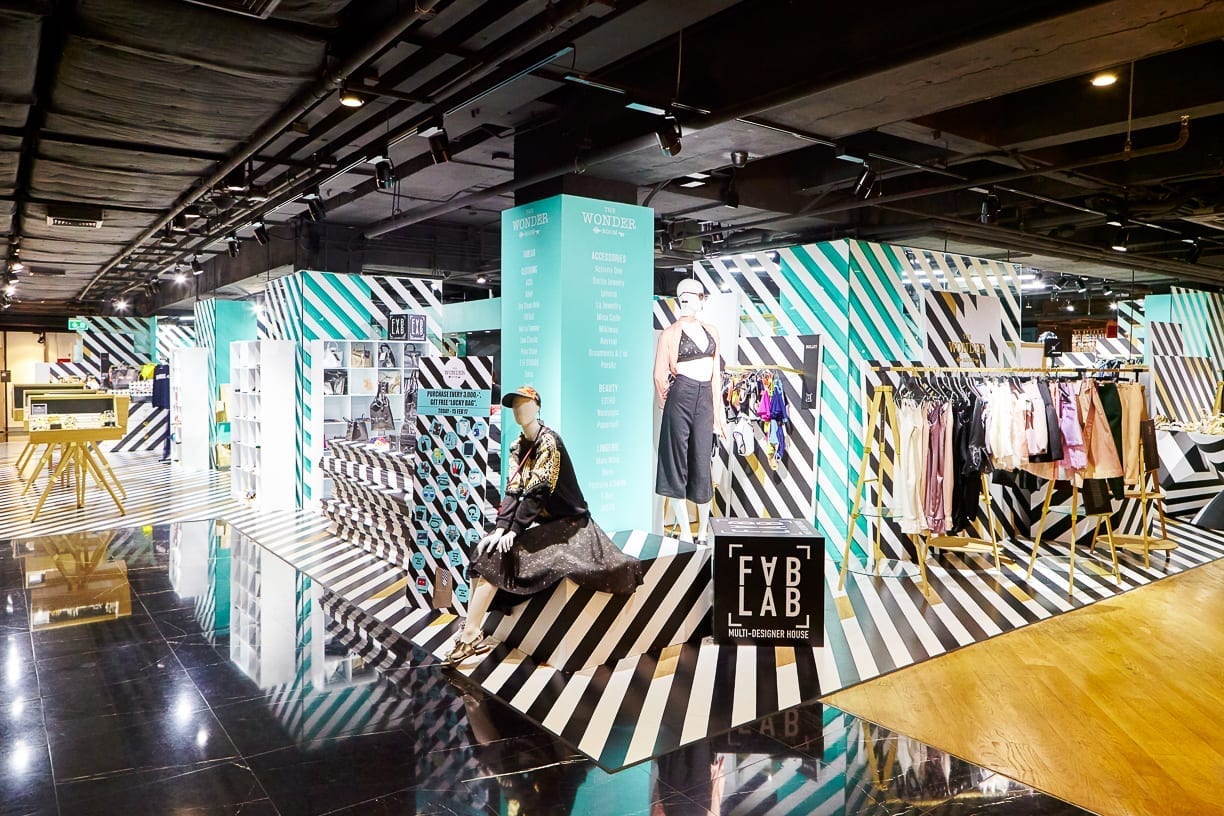
    “In this transformation, The Wonder Room was expanded to 200 sqm, with completely new appearance. Mr. Oki Sato, chief designer and founder of “NENDO”, defined fashion items as pieces of art displayed by the wearers. Once stepping into the store, the shoppers will feel as if they were in an art studio where an artist crafts masterpieces. Every element like canvas frame, easel and photo frame, including the center table that displays products, are carefully placed to create this mood. The unexpected combination of green, black and white gives a sense of contrast, yet a modern and lively look,” added Parisa.

    The Wonder Room not only carries a wide selection of leading brands but also offers Absolute Siam collection available exclusively at Siam Center.  For the upcoming summer, more than 40 ready-to-wear brands of women’s wear, handbags, footwear and accessories will take fashionistas back to the 80s under concept of “Future in the 80s”.  The spring/summer collection 2017 incorporates distinctive pattern, bright spectrum, graphic, sailor stripes and metallic decoration to create a variety of looks, whether they are business look, casual look or party look.

    The fashion-forward ladies will find a wide selection of fashion brands such as DRYCLEANONLY, Tohns, HER La Femme, KANAPOT AUNSORN, VIPPY ROSE, TandT, Vinn Patararin, Mani Mina, FAFALU, PONY STONE, SEE and ACID while fans of Korean fashion will love LOW CLASSIC, Fleamadonna, SYZ and A.Bell. Moreover, the look will not be complete without an essential accessories from mikiwuu, Activity One, Darlin Jewelry, Revival, Porshz, la, Minacode, Iphforia and Ornaments & L’or and handbags and shoes from She, NATTAPONG, Ratthzart Studio, March and WALKIN.

    In this summer, SWIMWARE will raise the temperature with its hot and sexy swimwear while innerwear from Pattricia A. Garde, ZAZZIE, T-REX and NAVY can be perfectly matched with the outerwear to add sensuality. Lastly, ESTRO, Nostalgic and PAPERSELF will add the final touch and boost the fashionistas’ confidence with their beautiful cosmetics.

    To celebrate the new look of The Wonder Room, Vinn Patararin and jewelry brand la co-designed capsule collection. For the first time, “FABLAB” joins hands with The Wonder Room in offering a wide range of online fashion brands at FABLAB corner.

    Come visit The Wonder Room today on the 3rd floor of Siam Center. Under the new concept of art studio, this multi-brand store offers “ABSOLUTE SIAM” items, masterpieces in “The Wonder Room Collection”, which cannot be found elsewhere and will make you stand out from the crowd


  • First phase of Europark Dalian complete

    First phase of Europark Dalian complete

    New York-based architecture and urban planning firm Laguarda.Low Architects has completed the first phase of Europark, a 3 million sqft (280,000 sqm) mixed-use complex in Dalian.

    Set on a landscaped park in the heart of Donggang’s CBD, Europark Dalian comprises the award-winning Galleria Mall, a tower of apartment suites, two SOHO office towers and two residential towers, which are planned for the second phase of construction starting late this year.

    “Now the first phase is complete, we are certain the cutting-edge architectural style, contemporary design and endless retail options in this complex will attract attention throughout the region,” says Laguarda.Low principal John Low.

    Officially opened in August 2015, the Galleria Mall is the first European-style shopping centre in Donggang. It is at the site’s centre, offering four levels of retail, including Adidas, H&M, Nike and Zara stores plus an Imax theatre – all arranged around a central skylight that permeates daylight to all levels.

    The Galleria Mall has won such accolades as the China Building Complex Award in 2011, the Design Innovation Award in 2013, a bronze award for retail development in 2014 and the New Media Service Marketing Award in 2015. Laguarda.Low also designed the mall’s interior.

    In partnership with international landscape design firm SWA, Europark has the biggest green park in Donggang. The development is within walking distance of Dalian Port and the Davos Conference Center.

  • Vietnam’s annual e-commerce growth to reach 30-50%

    Vietnam’s annual e-commerce growth to reach 30-50%

    “The size of Vietnam’s e-commerce market may reach $10 billion within the next five years,” he added.

    Ms. Dang Thuy Ha, Chief Representative at market researcher Nielsen in Hanoi, said the e-commerce market was worth up to $4 billion last year.

    Of Vietnam’s 91 million people, she said, 45 per cent access the internet and 28 per cent use e-commerce.

    Each person spends $160 a year on shopping via e-commerce platforms. Therefore, growth in e-commerce is 22 per cent, according to Nielsen’s report.

    The report also notes that the number of people using smartphones has increased sharply, giving a boost to e-commerce.

    Thirty-two per cent of enterprises have set up business relations with foreign partners through online channels and 11 per cent have participated in electronic trade floor and website activities, according to a VECOM report.

    Ms. Tran Thi Phuong Lan, Vice Director of Hanoi Industrial and Trade, said that retail revenue via e-commerce in the capital stood at VND30 trillion ($1.3 billion) last year, representing 6 per cent of total retail revenue and up 15 per cent against 2015. More than 5,600 e-commerce websites are registered in Hanoi.

    VOBF 2017 had five sessions: Overview, Cloud Technology and Mobile Phones with E-commerce, Omni Channel, Cross Border E-commerce, and Online Startups. The Vietnam E-commerce Index 2017 was also released.

    This is the first time the Forum has been held. Speakers included representatives from the Vietnam E-commerce and Information Technology Agency, Nielsen, Google, Facebook, Vietnam Post, Verisign, and Lazada.

    Attendees had the chance to meet with representatives from Z.com, VeriSign, Matbao, Bizweb, Gimasys, TrustPay, Interspace, Netnam, and iNet. The special features of startups in the sector was also discussed.

    VOBF 2017 will be held in Ho Chi Minh City on March 3.

  • Tesla says Model 3 on track for volume production by September

    Tesla says Model 3 on track for volume production by September

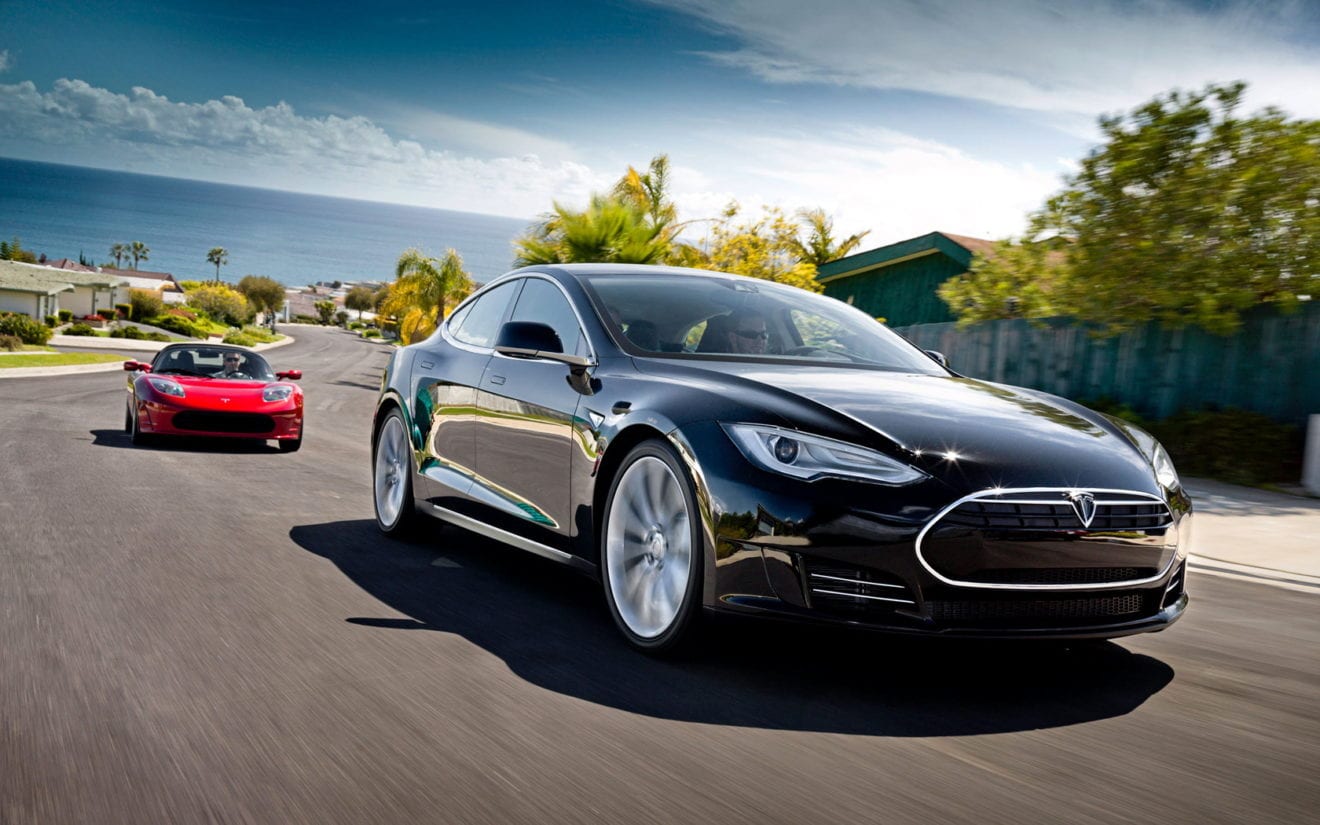
    Tesla Inc said on Wednesday its mass-market Model 3 sedan was on track for volume production by September, encouraging investors who see the electric vehicle as the avenue to profitability for the young company.

    But the carmaker’s operations continued to burn through cash, and Chief Executive Elon Musk told analysts on a conference call that he may ask Wall Street for more.

    “According to our financial plan, no capital needs to be raised for the Model 3 but we get very close to the edge,” Musk told investors on a conference call. Tesla plans an additional $2 billion to $2.5 billion in capital expenses before the Model 3 launch and has $3.4 billion cash on hand.

    “We’re considering a number of options but I think it probably makes sense to raise capital to reduce risk,” Musk said.

    Musk said Chief Financial Officer Jason Wheeler, in his role for just over a year, would leave in April to work in public policy. He will be replaced by former Tesla CFO Deepak Ahuja, who was popular with investors.

    Tesla, whose shares rose as much as 3 percent after the bell before settling up around 1.6 percent to $277.90, beat analysts’ expectations for revenue. Its adjusted loss missed the consensus target calculated by Thomson Reuters I/B/E/S, although there was an unusually large range of estimates due to confusion over accounting for the acquisition of solar installer SolarCity.

    Ivan Feinseth, director of research at Tigress Financial Partners, said Tesla “delivered the results the market has been expecting” that drove the stock from a year low of $167.84 last February to a year high of $287.39 last week.

    By late spring or early summer, Feinseth estimated, Tesla will likely raise more money, noting that today’s highs could make it sooner rather than later.

    “You have to feed the ducks while they’re quacking. If they came to the market now they would be well received,” he said.

    Up to Wednesday’s close, Tesla’s stock had risen 53.9 percent in the last 12 months.

    Many investors and suppliers have predicted Model 3 volume production would be delayed until 2018, but Tesla said it would produce over 5,000 Model 3s per week “at some point in the fourth quarter”, and 10,000 vehicles per week “at some point in 2018”.

    Musk reiterated that Tesla still planned to deliver 500,000 cars in 2018 and 1 million vehicles by 2020.

    Tesla did not give its usual full-year delivery estimate, but said it expected to deliver 47,000 to 50,000 Model S and Model X vehicles combined in the first half of 2017.

    The company did not give a Model 3 target for this year and declined to update a previous disclosure made last April that 373,000 advance reservations had been taken for the car.

    “We’re still in great shape,” said Wheeler, when asked about early demand for the car.

    The public might not see the final version of the Model 3 until as late as July, when limited production begins, Musk said.

    Capital expenditures doubled in the fourth quarter to $521.6 million, as Tesla invests in its Fremont, California factory and its Gigafactory battery plant in Nevada.

    Cash rose by $309 million to $3.39 billion, which includes funds raised from a share sale last year.

    SolarCity installed more than 20 percent less solar in the quarter, as it focuses on profitability and cash over growth. Solar generation deployed fell to 201 MW in the fourth quarter from 253 MW a year earlier.

    Tesla’s net loss attributable to common shareholders narrowed to $121.3 million, or 78 cents per share, for the fourth quarter ended Dec. 31 from $320.4 million, or $2.44 per share, a year earlier.

    The adjusted loss of 69 cents per share compared with the analyst consensus of a 43-cent loss, according to Thomson Reuters I/B/E/S.

    Revenue rose 88 percent to $2.28 billion, topping Wall Street’s target of $2.18 billion.

  • AT&T, China Mobile team on IoT

    AT&T, China Mobile team on IoT

    AT&T and China Mobile have joined forces to further enable the IoT. Announcing the partnership ahead of Mobile World Congress 2017, AT&T said the deal will help the US telco’s global business customers connect and deploy their assets and offerings in the Chinese market.

    The pair is developing a new technology platform which AT&T say will seamlessly move its business customer’s IoT subscriptions over to China Mobile’s local service.

    The behind-the-scenes switch will help simplify the supply chain for AT&T’s customers looking to expand to China. This will help customers accelerate time to market and achieve greater efficiency in driving new revenue streams, said Chris Penrose, president of IoT solutions at AT&T.

    Penrose said AT&T is one of the first global operators to establish a relationship with China Mobile, which has the world’s largest 4G mobile network covering more than 1.3 billion subscribers.

    “China is one of the fastest growing markets. It holds incredible opportunity for our global business customers. Working with China Mobile means we can further develop that opportunity. This makes it an even more exciting time to be in the IoT,” the executive said.

    AT&T serves nearly 3.5 million business customers, helping them connect their devices around the world.

    “We look forward to helping AT&T business customers bring their connected solutions to our market,” said Dr. Li Feng, chairman & CEO, China Mobile International. “We believe this will help unlock new options and experiences for our customers while achieving one of our core goals – increasing the number of connected devices on our network.”

  • Alibaba innovation will transform Shanghai Bailian

    Alibaba innovation will transform Shanghai Bailian

    Alibaba Group’s collaboration with Shanghai Bailian Group, one of China’s biggest general store and retail chains, is driven by Jack Ma’s push to use innovation to shake up outdated retail.

    “Alibaba wants to help update some of Bailian’s 4700 stores the nation over, coordinating everything from client relations to installment and coordinations in a way like its tie-ups with different players, for example, gadgets chain Suning Commerce Group,” says Oliver Johnson, director of corporate equities with Woori Bridgewater Brokerage.

    The online big-hitter that vanquished eBay and Amazon in China has set its sights on using its arsenal of information and innovation to change the $4 trillion universe of household physical retail. In its greatest old-economy bargain, Alibaba is driving an offer to purchase retail chain Intime Retail Group for as much as $2.6 billion.

    “Their billionaire fellow founder needs to assemble a system that will permit stores and brands to screen exchanges as they happen, freeing layers of merchants so that retail outlets can put orders online progressively,” says Johnson.

    Daniel Zhang, Alibaba’s CEO, described the association with Bailian as “a critical breakthrough in the advancement of Chinese retail”, where the qualification amongst physical and virtual business is getting to be distinctly out of date.

    Amazon.com is likewise quick to show how innovation can change the deeply rooted shopping background. It launched Amazon Go in December, permitting Seattle customers to get staple goods without being held up in checkout lines as their purchases are electronically charged when they exit the store.

    “Like Alibaba, the U.S. web based business titan has broad experience working with reams of important client and inventory network information and shopping designs,” observes Johnson.

    “With Bailian, Alibaba will tap a system of 4700 stores crosswise over 25 Chinese regions. Aside from Intime, the Hangzhou, China-based organisation has as of now put resources into retail administrators including Suning and Sanjiang Shopping Club to further its alleged new retail analysis,” added David Fraser, head of corporate trading at Woori Bridgewater Brokerage.

    Alibaba won’t take a stake in Bailian.  In any case, the match will coordinate their participation databases and use facial acknowledgment innovation to enhance customers’ encounters, Alibaba said. Alibaba’s online installments framework, Alipay, will be accessible at all Bailian stores. The web-based business mammoth’s conveyance member – Cainiao Smart Logistics Network – will work with Bailian to substance out conventions that make the framework more effective.

    Woori Bridgewater Brokerage is an advisory investment company.

  • Telstra taps Ericsson for network evolution

    Telstra taps Ericsson for network evolution

    At Mobile World Congress 2017, Australian operator Telstra announced it has selected Ericsson to support its major “Network of the Future” transformation program.

    Ericsson will supply equipment and services to support the program, which includes a nationwide optical network transformation and expansion.

    The program will also include 5G new radio (NR) trials, the creation of a new Media Delivery Cloud to complement Telstra’s Telco Cloud project and deployment of CAT M1 functionality nationwide to establish Australia’s largest IoT network.

    Under the agreement, Ericsson will deliver a three-year optical transmission network and rollout plan to expand Telstra’s long haul, metro and regional optical networks, supplying and installing converged packet-optical technologies from Ciena.

    Ericsson, Telstra and Qualcomm will meanwhile collaborate on interoperability testing and an over-the-air field trial based on the 3GPP’s expected 5G NR specifications. Telstra is also a member of the group pushing for accelerated 5G NR standardization

    For the IoT initiative, Telstra and Ericsson have now commenced localized CAT-M1 trials in Melbourne and Tasmania in the first stage of a deployment across Telstra’s 4G network, which covers over 98% of Australia’s population.

    “These projects… provide the foundation for Telstra’s Network of the Future program, which is essential to delivering our customers a brilliantly connected future,” Telstra group managing director for networks Mike Wright commented.

    “Our expanded optical network will support important emerging network capabilities such as IoT, 5G and enhanced media delivery. And our move to virtualization through the Telco and Media Cloud projects will enable us to deliver our customers unique and differentiated services to meet their personal and business needs.”

    Telstra said its Telco Cloud network is now delivering live traffic. Telstra first announced its network function virtualization infrastructure (NFVi) program at last year’s Mobile World Congress and the company has now compled the first video call over a virtualized EPG.

  • Ayala buys stake in Zalora Philippines

    Ayala buys stake in Zalora Philippines

    Ayala Corporation has stepped into eCommerce by acquiring a 49 per cent stake in BF Jade E-Service Philippines, which owns and runs fashion platform Zalora Philippines.

    The conglomerate has announced it is buying 43.3 per cent of BF Jade, while in a separate disclosure Ayala Land says it will own 1.91 per cent. BPI Capital Corporation and Kickstart Ventures also acquired minority stakes in BF-Jade. BPI and Kickstart are wholly owned subsidiaries of BPI and Globe Telecom respectively.

    Ayala’s involvement is part of its strategy to invest in new disruptive businesses offering innovation to evolving markets, the conglomerate says.

    “This investment demonstrates how we at Ayala look at innovation and growth opportunities,” says chairman/CEO Jaime Augusto Zobel de Ayala.

    “We see the potential of eCommerce in the country, and believe the Ayala group can benefit and add tremendous value to Zalora. With resources in banking, real estate and telecommunications, the investment presents new opportunities for Ayala to generate synergies throughout the eCommerce value chain.”

    Zalora Philippines was co-founded in 2012 as part of the global network of the Zalora Group, which is 100 per cent owned by the Global Fashion Group.

  • Singapore online grocery market to triple by 2020

    Singapore online grocery market to triple by 2020

    The Singapore online grocery market is set to more than triple in size over the next three years, according to research house IGD.

    The global organisation expects sales will rise from the current S$130 million (US$91 million) to S$500 million (US$350 million) by 2020.

    At the end of 2016, IGD valued online grocery to have a 1.2 per cent share of the Singaporean grocery market. Reflecting rapidly changing shopper habits in the region and increased investment in the online channel from retailers and suppliers, IGD is further forecasting online to take a 4 per cent share of Singapore’s grocery market by 2020, with a compound annual growth rate of 39 per cent.

    Revealing the figures at this week’s IGD RedMart Trade Briefing, Nick Miles, IGD’s head of Asia-Pacific, said Singapore is hailing a new era of digital grocery retailing, driven by the entry of RedMart in 2011, Giant and Sheng Siong launching online grocery in 2013 and plenty of smaller start-up businesses also looking to grab a slice of the action.

    “Shopper habits are changing rapidly in Southeast Asia and in a compact city such as Singapore, with its relatively affluent population, big expat community and high penetration of internet and smartphone usage, there are huge opportunities for online grocery to meet these evolving needs. To make the most of this opportunity, retailers and suppliers must work together to ensure they really understand online shoppers and can tailor experiences and products to suit their personal preferences.”

    Miles says retailers are already clearly looking to improve the overall online experience, by getting the basics of search functions, favourites, images and information right for shoppers.

    “At the same time, they’ll be aiming to make delivery options as convenient as possible, whether that’s through shorter timespan delivery slots or greater choice of click and collect points throughout the region. Our UK data shows that 80 per cent of shoppers cite convenience as their number-one reason for shopping online, and we would anticipate Singaporean shoppers to have a very similar mindset when heading online for their groceries.

    “We also expect online grocery retailers in the region to encourage shopper loyalty through personalised offers and products, plus subscription models and delivery saver passes,” said Miles.

    “On top of that, shoppers in the region are increasingly connected via mobile, so ensuring a seamless shopping experience no matter what device they are using will be critical. Coupled with an increased focus on using innovations such as voice-activated technology, virtual reality and robotics, we predict huge opportunities for those retailers and suppliers who really invest in making the online grocery channel work for them in Singapore.”

  • Nokia makes big moves in 5G, IoT

    Nokia makes big moves in 5G, IoT

    Nokia is stepping up its efforts in 5G competition with the launch of 5G First, its debut 5G product.

    The 5G First, which will be available in the second half of 2017, helps mobile carriers prepare for 5G-ready architectures and gives them “first to market advantage”, Nokia said, adding that the 5G product is underpinned by technical specifications outlined by the Verizon 5G Technology Forum ecosystem.

    Announcing the launch at a news conference ahead of Mobile World Congress in Barcelona on Sunday, Nokia president and CEO Rajeev Suri said “the 5G launch is not hype but soon to become reality.”

    He said Nokia is working with Verizon and Intel to supply equipment for pre-commercial 5G services to homes in select Verizon markets such as Dallas. The companies will also deploy 5G-enabled “next-generation video and entertainment services”, which are set to launch in Dallas later this year and expand to other US markets by the end of 2017.

    In addition, Suri predicted that investments in 4G, particularly advanced 4G technology, will pick back up this year in key markets, like Japan.

    “Even with 5G coming, the need for more capacity grows everyday with no sign of slowing,” the executive said.

    Suri also revealed that Nokia has won a three-year contract from Telefonica to boost the performance of its 4G networks in London as data demand grows. The deal includes Nokia 4.5G Pro technology, he added.

    Earlier this month, Nokia reported its profits for the fourth quarter of 2016 fell less than expected, helped by cost cuts and the acquisition of Alcatel-Lucent.

    The Finnish telecoms equipment vendor is also looking to broaden its footprint in faster-growing areas including software and the utilities and transport markets with IoT and cloud, in a bid to offset the weakening revenues from the telecoms sector.

    For example, Nokia has recently launched WING, its IoT network grid, which is aimed at providing a full-service model offering IoT connectivity across different technologies to manage a client’s IoT connectivity needs and assets.

  • Lotteria Burger Laboratory concept to open Korea-wide

    Lotteria Burger Laboratory concept to open Korea-wide

    London-based consultancy JHP Design has created a fast-dining experience for Asian fast-food restaurant group Lotteria.

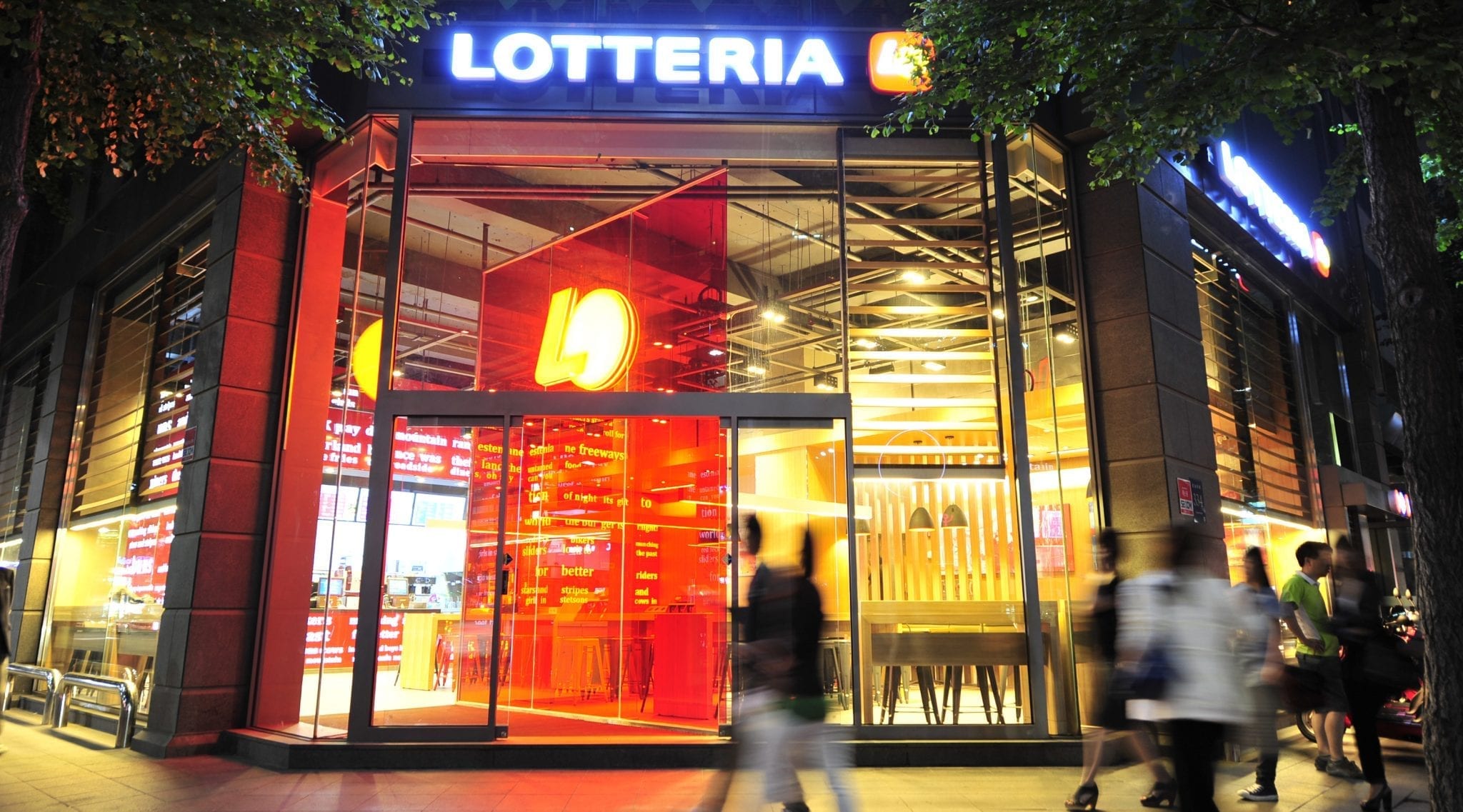
    The new concept, called the Lotteria Burger Laboratory, features an open kitchen combined with a made-to-order system, so customers can watch the “burgerista” preparing every stage of their meal.

    Customers can place orders via an app before arriving, or in store through bespoke tablets as well as at the counter.

    Lotteria Burger Laboratory Korea 6

    A science and experimental theme in the restaurant is reflected in every aspect of the customer experience. A red industrial ceiling-mounted pipe snakes from the front of the “laboratory” to the back, guiding the customer journey. The ceiling also features an illuminated digital clock indicating how long customers need to wait for their order to be ready.

    Lotteria Burger Laboratory Korea 5

    Science icons

    The walls are decorated with periodic tables, food-assembly diagrams and science-based icons. The chairs have chemical-resistant wire frames and the tables offer power plugs for charging mobile devices.

    The seating area offers individual code-writing tables, laboratory benches and breakout booths as found in high-tech start-ups.

    Lotteria Burger Laboratory Korea 4

    A stainless-steel drinks machine enables customers to mix and refill their own beakers.
    With “radioactive” yellow and black doors and frames, the restrooms have acid-resistant white glazed tiles.

    Lotteria Burger Laboratory Korea 3

    All materials used have low environmental impact. Recycled strawboard, reclaimed porcelain and salvaged waste pipes have all been combined in an environment lit entirely with low-energy LED bulbs, and the kitchen uses hyper-efficient induction cooking equipment. All packaging is recycled and biodegradable.

    Lotteria Burger Laboratory Korea 2

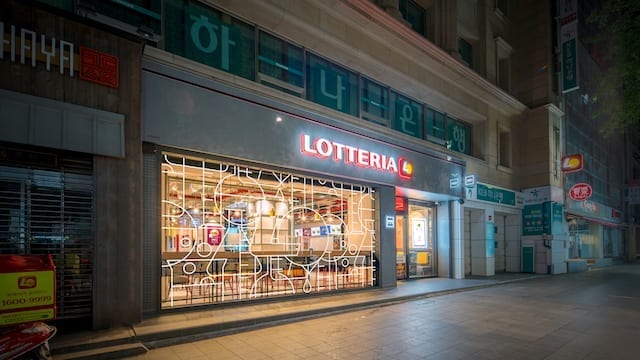
    The first Burger Lab opened in Seoul last November, built in just four weeks at a total cost of US$480,000. The concept is now being rolled out across the company’s 3000 outlets throughout Asia.

    Lotteria Burger Laboratory Korea 1

    The Lotteria Burger Laboratory sources its ingredients solely from Lotteria’s own vertically integrated sustainable farms. As well as beef, chicken and shrimp burgers and fries, the new outlet offers local specialties and vegetarian options.

    Lotteria is owned by Lotte, a conglomerate established in 1948 with headquarters in Japan and South Korea.

  • Japanese cosmetics brand Do-Best eyes Asian expansion

    Japanese cosmetics brand Do-Best eyes Asian expansion

    Japanese cosmetics brand Do-Best is looking at opportunities in the Philippines and broader Southeast Asian markets, including Indonesia.

    Do-Best CEO Daitaro Sugawara was in the Philippines for a group networking session organised by Security Bank and Japan’s Mitsubishi UFJ Financial Group. He was matched with executives from local retailers including Metro Retail and National Bookstore.

    Do-Best was founded 45 years ago to produce “high-quality, low-priced products” and is already exporting to Singapore, Hong Kong, Thailand and Taiwan.

    Sugawara says the company wants to tap into the fast-growing Asian markets with young consumers seeking low-cost cosmetics and beauty lines. Its products are already popular in Japan’s proliferation of 100 Yen shops and similar stores.

    “That’s why I was interested to have a meeting in the Philippines. My product is like my family, so I want Philippine distributors or retail stores to take care of our products.

    “I want to keep the original price as in Japan,” Sugawara said.

    Tadahiro Miyamoto, GM of BTMU’s Manila branch, says a lot of Japanese companies are now looking at the Philippine domestic market. “You should look at the shopping areas, you see a lot of Japanese products.”

    A large number of participants in the recent business-matching event were from the retail sector, agriculture and real estate.

  • Samsonite Asia heightens focus on China

    Samsonite Asia heightens focus on China

    Branded luggage-maker Samsonite Asia aims to make China its biggest market within five years, pinning its hopes on eCommerce and social media to fuel growth.

    While sales in China now account for more than 10 per cent of its total revenue, Samsonite CEO Ramesh Tainwala says they are likely to double by 2022, thanks to the explosion in online shopping and a wealthier population keen to travel.

    “Now that 20 per cent of our Chinese businesses come from online, we expect the number to grow by about a third in a couple of years,” he says.

    Global net sales in 2015 reached US$2.43 billion for the Indian company.

    Virtual stores on B2C sites JD and Tmall have claimed 60 per cent of Samsonite’s online business in China. Its luggage is also sold through the digital outlets of shopping malls and department stores.

    Samsonite will open its own direct online shopping portal this year aimed at more sophisticated buyers who want bigger-ticket items via the brand rather than a third party.

    First-half sales last year remained flat for Samsonite, according to its interim report, partly because of sluggish performance in China as consumers forsake department stores for online retail.

    Samsonite president for China and the Philippines Frank Ma says the company spares no effort in using social media campaigns to guide traffic to brick-and-mortar stores. For example, followers of Samsonite’s official WeChat account are given a discount coupon when they sign up for promotional events in shopping centres.

    Ma says content marketing helps attracts customers and adds to another 5 per cent to its offline sales.

    Seven of Samsonite’s nine brands have been introduced to China, ranging from the entry-level American Tourister to the newly acquired Tumi, which targets high-end business travellers.

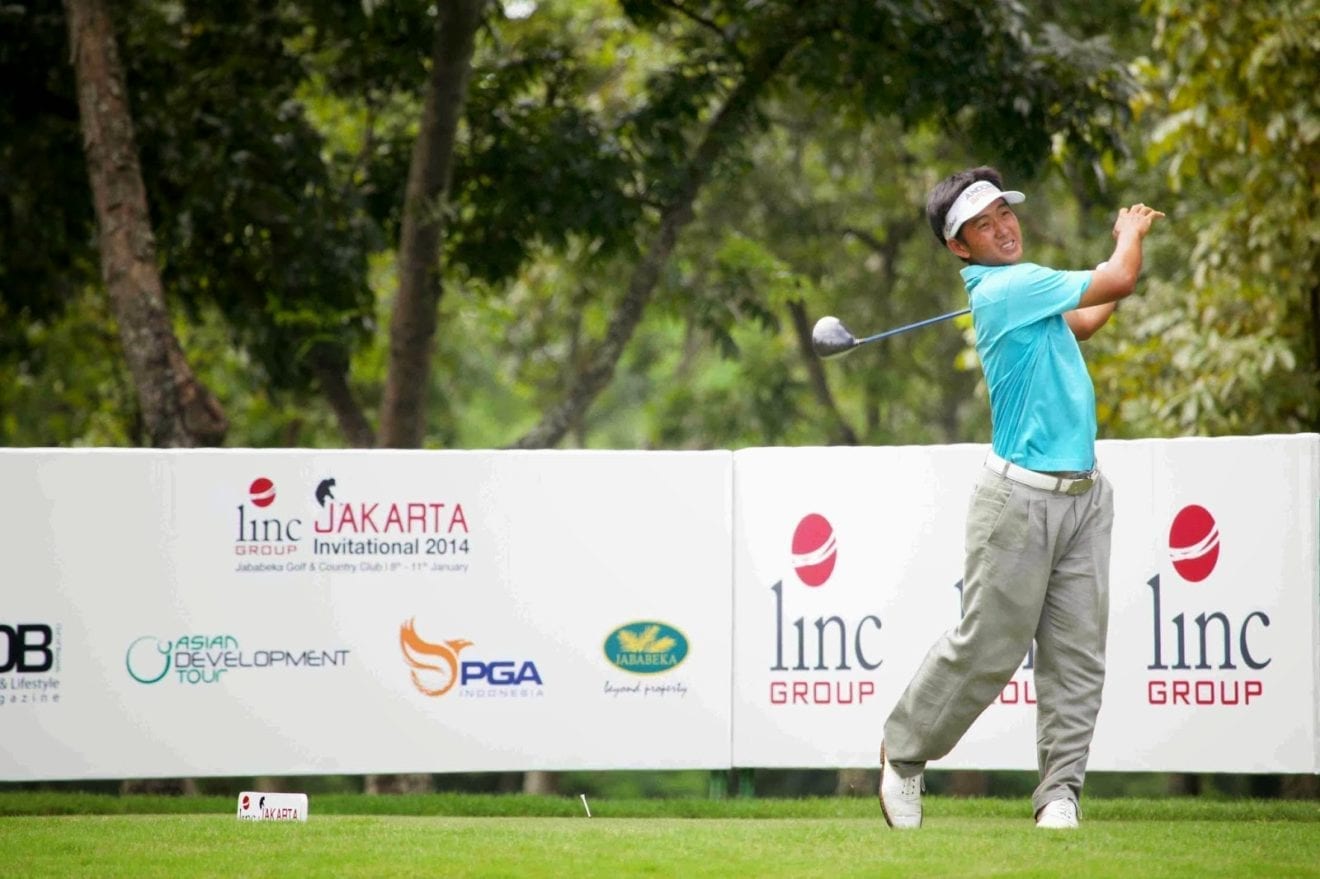
  • Garuda Indonesia to Cooperate with Malaysian Golf Community

    Garuda Indonesia to Cooperate with Malaysian Golf Community

    National Carrier Garuda Indonesia’s Kuala Lumpur branch will be cooperating with Malaysian golf community to facilitate local golf players who wish to play in Indonesia.

    “We will come up with a package scheme that merges the prices of golf activities and flight tickets, which will then be disseminated by the community,” Garuda Indonesia’s Malaysian General Manager Supriyono said in Kuala Lumpur on Thursday.

    He made the statement immediately after a meeting with Steven Leow, Chief Executive Officer of PT Leo Golf Sukses Wisata Group, which is a Leisure Golf Service company in the Garuda Indonesia Malaysia offices, located in the Intermark Mall.

    “The scheme is aimed to fill morning flight slots from Malaysia to Indonesia. They will be able to immediately head to the golf court and play, as it would still be early in the day. The average length of stay is about three days, and they would board the afternoon return flight. It would be an effective scheme for golf players,” he remarked.

    Garuda also offered to be the community’s sponsor partner, should they wish to organize an event or activity, he stated. “There are approximately 500 members in the community, and there could be 10 to 15 golfers who fly to Indonesia per day. Hence the demand is quite high,” he noted.

    As for their destination cities, Supriyono said that would vary. “But if they go to Jakarta, they even have an office in the Gunung Sahari area,” he added.

    He further explained that Malaysian golfers are keen on trying new places when it comes to golf courts in Indonesia. “Hence, we will also be working with the golf liaison to expand the ‘in’ and ‘out’ of the traffic,” he stated.

    Garuda Indonesia has three flights from Kuala Lumpur to Jakarta, including those at 8:40 am, 12:50 pm, and 7 pm. Meanwhile, Garuda Indonesia also provides three flights from Jakarta to Kuala Lumpur, including 8:35 am, 2 pm, and 4:50 pm.

  • Japanese firm unveils fingerprint payments in Indonesia

    Japanese firm unveils fingerprint payments in Indonesia

    Japanese tech company Liquid has launched a biometric payments service in Indonesia that operates at the point of sale.

    Currently the project is being tested at an enterprise level, with the service offered to the Salim group’s workforce of around 500,000.

    “We are looking forward to developing the next generation payment and business platform in Indonesia, which will contribute to changing people’s lifestyle and have a big business impact in Indonesia,” said Yasuhiro Kuda, CEO of Tokyo-based Liquid.

    Users of the service need to register their fingerprints and deposit money in advance. They can complete payments within three seconds with the system’s fingerprint readers, which have an error rate of one in a trillion, according to Liquid.

    The company will start registering users’ fingerprints this month and start installing fingerprint readers later this year at stores run by Salim, whose businesses range from food and car sales to convenience store operations.

    Liquid is currently providing such fingerprint payment services to tens of thousands users in some cities in Japan.

    The company is aiming to expand the business in Indonesia, counting on the economic growth of the most populous country in Southeast Asia.