Tag: asia

  • Last Mile Fulfilment Asia returns for the third edition from 2 to 3 March 2017

    Last Mile Fulfilment Asia returns for the third edition from 2 to 3 March 2017

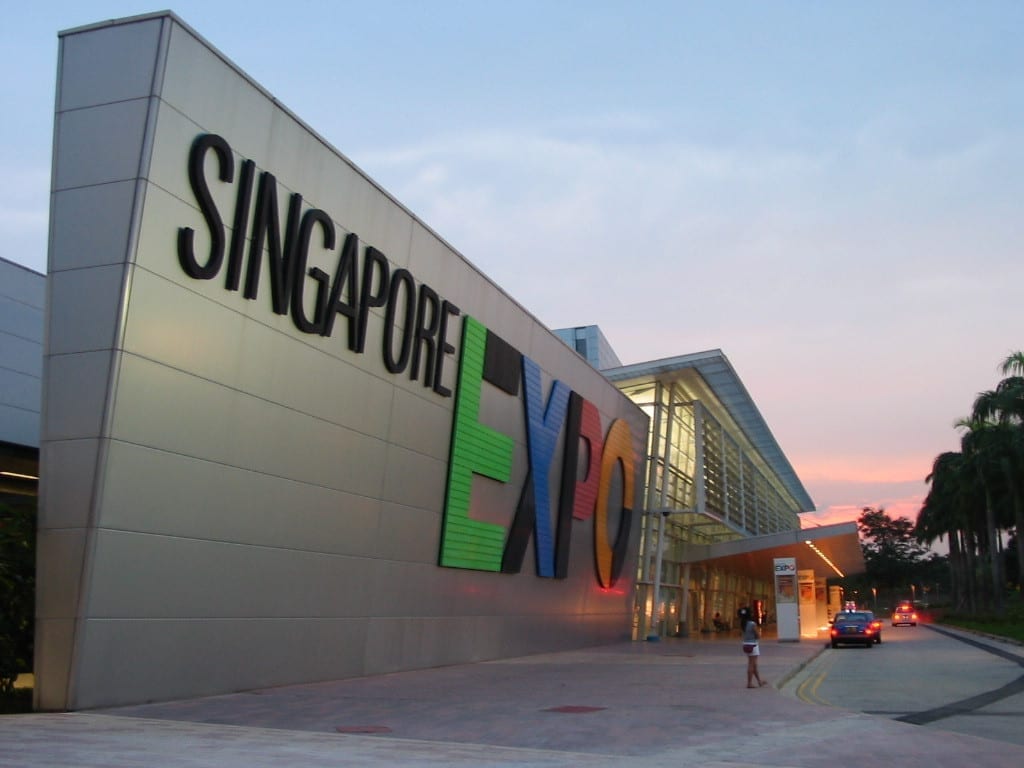
    Last Mile Fulfilment Asia (LMFAsia), the region’s premier trade show for the retail, ecommerce, logistics and parcel industries, returns with the third edition on 2 to 3 March 2017. Themed “Go Global, Deliver Local”, the event aims to drive and strengthen a borderless fulfilment process, where in-market industry players fortify their business locally whilst expanding their foothold in the region through perfecting the last mile beyond borders.

    Amidst a backdrop of economic uncertainties today, Southeast Asia ecommerce market continues to grow to 16 times and will reach $88 billion by 2025 . The two-day conference and exhibition, organised by SingEx Exhibitions will deep-dive into the need to tap on the potential growth of ecommerce, and optimise the cross border fulfilment and delivery processes.

    The multi-track conference component of the trade show will focus on evolutionary topics such as turning fulfilment challenges into opportunities, designing cross-border fulfilment solutions across Asia. In recognising that the last mile of the fulfilment process costs almost 28 per cent of total cost of moving goods , achieving cost efficiency through innovative logistics solutions will be key to amplify the ecommerce market that is already expanding at rapid speed in the region. According to Frost & Sullivan, the global B2B ecommerce market alone will reach US$6.7 trillion by 2020. The 2017 conference will feature a new track “The Future of ecommerce is B2B ecommerce”, in which industry speakers from renowned retail, ecommerce and logistics leaders will share keynotes, highlighting the potential wins of adapting a successful B2C model into the B2B segment to conduct ecommerce business in a similar fashion.

    Separately, the exhibition component of Last Mile Fulfilment Asia will offer a convenient business matching platform for innovative companies to meet potential business partners, and showcase products and technologies that add value in the delivery chain. There will be three thematic zones dedicated to specific solution categories ranging from last mile, fulfilment centres, warehousing to automation.

    Adrian Sng, general manager of SingEx Exhibitions said, “Industry giants from China and US are pursuing significant ecommerce market shares in Asia and it will be a challenging year with headwinds affecting many in the fulfilment business. In order for companies to gain a competitive edge, there is a need to leverage technology to advance and conquer the last mile. This year’s overarching objective will be to bring this to the forefront. Through our focused strategy of curating trade events in emerging markets and industries with high-growth potential, Last Mile Fulfilment Asia will be a driving force for change that will see ecommerce and the fulfilment business playing a much more significant role in the region.”

    Charles Brewer, chief executive officer of DHL eCommerce, who will be sharing during the conference on leveraging opportunities presented in cross-border ecommerce, acknowledges the game-changing benefits last mile fulfilment will bring. “Perfecting logistics is the key to delivering the best ecommerce experience and a great chance to deliver a smile in the last mile. I am looking forward to sharing and connecting with other ecommerce players at the conference to discuss latest trends in this very exciting industry.”

    Joseph Yuen, board chairman of the Hong Kong federation of ecommerce and managing director of China Post Trade Development Company Limited, will also be speaking during the conference on paving the way into doing business in China through “11.11” case study. “Technology brings businesses closer to each other and around the world, but successful cross border ecommerce does need a mastery in the difference in culture, trade practices, government policy and others. On this note, Last Mile Fulfilment Asia 2017 provides a great opportunity for industry stakeholders to catch up with the latest trends and solutions in cross-border ecommerce.”

  • Pick-up in Chinese luxury spending won’t save traditional retailers

    Pick-up in Chinese luxury spending won’t save traditional retailers

    Chinese consumers are buying more luxury items at home, but it may not be enough to save struggling department stores – particularly those that don’t boast a restaurant, cinema or ice rink.

    Offline shops may benefit from a recovery in domestic luxury spending, but the future is still gloomy for traditional retailers that have been increasingly losing out to e-commerce platforms, according to analysts at Fitch.

    The stores need to focus on providing a ‘shopping experience’ in order to win over the country’s internet-savvy consumers and survive the fierce competition, said analysts Yee Man Chin and Cathy Chao.

    “The previous few years have been difficult for Chinese brick-and-mortar retailers, who had to grapple with increasing competition both offline and online as well as changing spending patterns, with consumers choosing experiences over shopping,” they wrote. “The pick-up in luxury spending could provide some relief, particularly for mid-to-high end retailers.”

    China’s domestic luxury sales have been recovering recently due to the ‘wealth effect’ from higher property prices – meaning homeowners spend more since they feel more secure about their wealth – and a drop in overseas purchases, the analysts said.

    Weak consumer sentiment and the government’s anti-corruption crackdown had caused a slump in luxury spending in the last five years, while a gulf between prices at home and abroad prompted many to shop in places such as Hong Kong, Japan and Europe.

    To encourage people to spend at home, the Chinese government has cut import taxes and allowed more duty-free stores. Some global luxury brands have cut their prices in China amid sluggish demand.

    A weaker yuan against the Japanese yen and US dollar, and a series of high-profile terrorist attacks in Europe, have also encouraged Chinese buyers do their shopping on home turf.

    International brands have recently reported improving growth momentum in China. Coach said its Greater China local-currency sales rose 6 per cent in the last quarter of 2016, while Swatch spoke of “very good growth” in mainland China sales from November to January, according to Fitch.

    This trend could boost sales growth at department store operators Golden Eagle Retail Group and Parkson Retail Group, as well as watch retailer Hengdeli Holdings, Fitch said. All three have seen their profit margins shrinking in the past few years.

    However, the boost from luxury sales is no long-term solution to the threat from online stores and fancy shopping malls.

    Consumers are choosing e-commerce. Even when they buy offline, people go to shopping malls rather than department stores/

    In November, the credit rating agency issued a “negative” rating for China’s 2017 retail sector outlook. Parkson was in January downgraded to B- as its profitability worsened, while Golden Eagle Retail was downgraded to BB- last year due to changes in consumer behaviour.

    “Consumers are choosing e-commerce. Even when they buy offline, people go to shopping malls rather than department stores,” Chin said. “The amount of retail space has also increased, so there is much more competition.”

    Analysts said offline retailers need to offer food and beverage, lifestyle and entertainment options to attract China’s young consumers who are increasingly demanding a full shopping experience.

    Although young consumers have been buying more online, they still go to physical shopping centres to relax and socialise, according to property consultancy CBRE.

    A 2015 survey of 1,000 Chinese millennials showed they ate out an average of 5.9 days per month and went to the cinema or live events on four days, according to CBRE.

    A quarter of the respondents said they considered “seeing and feeling the products” as the primary reason for shopping in physical stores.

    Chin said many traditional department store chains were adding restaurants and cinemas to their portfolios.

    “They don’t necessarily get people to shop, but they at least get people to go in those places,” she said.

  • Yum China tramples expectations; profit up 31%

    Yum China tramples expectations; profit up 31%

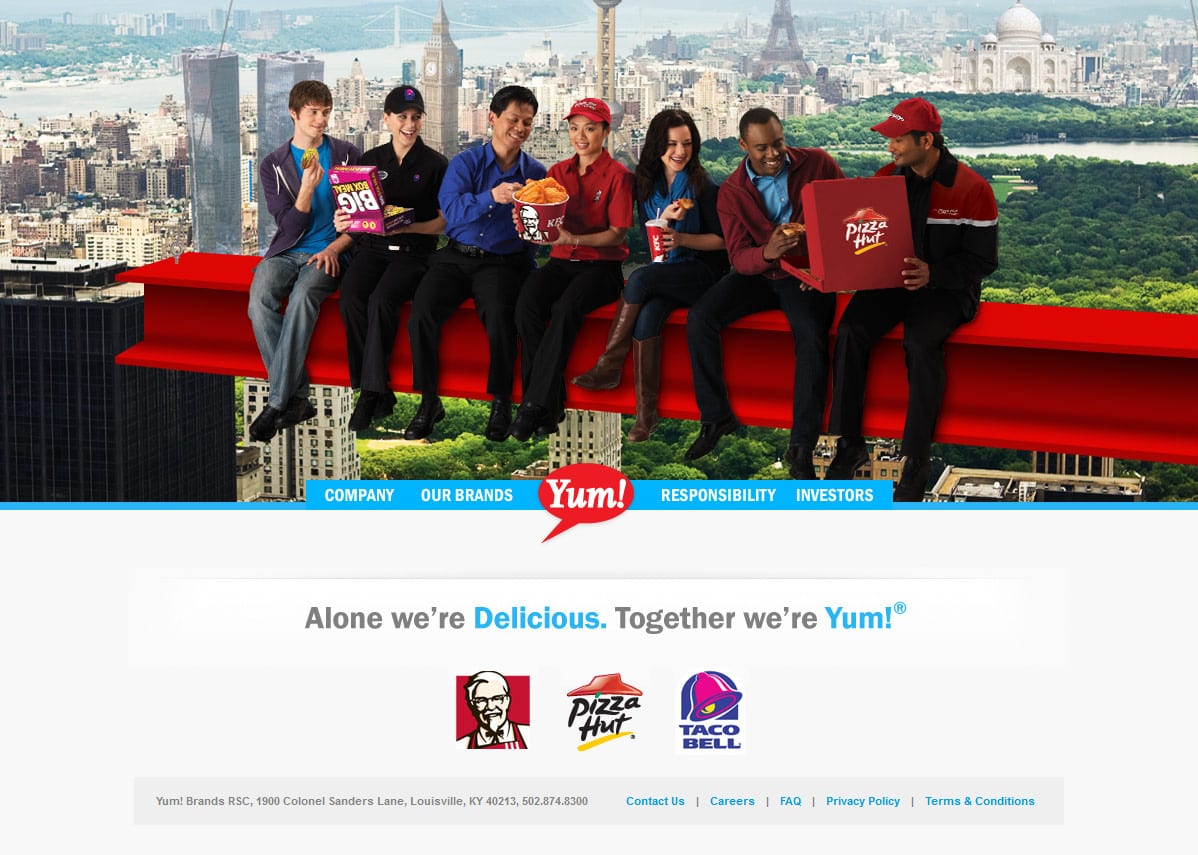
    Yum China’s first earnings report as an independent company proves that sometimes breaking up can be a very beautiful thing. In fact, its first report since the October spin-off from Louisville-based Yum Brands not only surpassed estimated sales projections for the company but showed its full-year operating profit was up 31 percent year over year to $640 million, according to a news release.

    For the year and fourth quarter that ended Dec. 31, Yum China reported a profit of 17 cents a share, up from the average estimate of 10 cents. The company also attributed much of the financial success of the last year to expansion and new openings, as well as same-store sales growth at KFC. 

    The only clouds inside this silver-lined report came from the direction of the performance of Pizza Hut, which was worse than expected, according to the news release.

    Yum China’s board of directors also authorized the repurchase of up to $300 million of common stock.

    “This was a momentous year for Yum China,” CEO Micky Pant said in the news release. “We successfully became an independent, publicly traded company while simultaneously improving our business performance and investing for future growth. At year end 2016 with over 7,500 restaurants nationwide, we extended our market-leading position in China.” 

    Full-Year Highlights
    •    Total system sales grew 5 percent, including growth of 6 percent at KFC and 3 percent at Pizza Hut Casual Dining, excluding foreign currency translation.
    •    Opened 575 new restaurants for the full year, or 5 percent net growth, surpassing 7,500 restaurants in China.
    •    Same-store sales were flat, with an increase of 3 percent at KFC, offset by a decline of 7 percent at Pizza Hut Casual Dining.
    •    Total restaurant margin increased 2.7 percentage points to 15.3 percent, primarily aided by the impact of retail tax structure reform implemented on May 1, 2016.
    •    Reported operating profit grew 31 percent, primarily aided by the impact of retail tax structure reform. Foreign currency translation negatively impacted operating profit by $36 million. Excluding foreign currency translation and special items, and Special Items, operating profit grew 37 percent.

    Fourth-Quarter Highlights
    •    Total system sales grew 4 percent, including growth of 4 percent at KFC and 6 percent at Pizza Hut Casual Dining, excluding foreign currency translation.
    •    Opened 302 new restaurants during the quarter.
    •    Same-store sales were flat, with an increase of 1 percent at KFC, offset by a decline of 3 percent at Pizza Hut Casual Dining.
    •    Foreign currency translation negatively impacted operating profit by $5 million.

    “For our shareholders, we exceeded our 2016 financial targets in operating profit, restaurant margin and adjusted EBITDA,” Pant said. “We continue to focus on our long-term growth formula: new unit development, same-store sales growth, and continued restaurant margin improvement. Right now, our top priority is consistently delivering positive same-store sales growth. During 2016, we continued to build a foundation for long-term growth with emphasis on product innovation, investments in refurbishing our restaurants, and focus on digital engagement with our customers.”

    New leaders named

    Yum China also announced Tuesday afternoon that it has appointed Joey Wat as president and COO of Yum China and Johnson Huang as KFC business general manager. Wat was previously CEO of the company’s KFC business and Huang was previously chief information and marketing support officer

  • APAC widens lead for average broadband speed

    APAC widens lead for average broadband speed

    Asia-Pacific further increased its lead in the fourth quarter in terms of the average bandwidth of residential broadband services, as well as the best value for money in terms of cost per megabit, according to Point Topic.

    The research firm said average bandwidth in the region jumped 28% year-on-year during the quarter to 419Mbps, well ahead of the global average of 118Mbps.

    Globally, the average monthly cost for residential broadband services declined by $2 to $98. Costs have been decreasing for several quarters. In APAC by comparison, the average monthly cost is roughly $50.

    The 118Mbps global average bandwidth provided to residential subscribers was up from 112Mbps in the previous quarter, in a result Point Topic attributes to the accelerated rollout of Docsis 3.1 cable networks capable of 1Gbps speeds.

    The global average price per Mbps accordingly fell to $0.83 by the end of the Q4, from $0.89 at the end of the previous quarter. The average cost per Mbps of a copper connection reached $7.07, compared to $0.58 for cable and $0.45 for fiber.

  • Vietjet gets approval for HOSE listing

    Vietjet gets approval for HOSE listing

    The HCM Stock Exchange (HOSE) has approved the listing of Vietjet Aviation Joint Stock Company’s 300 million shares on the southern bourse.

    The opening price of Vietjet’s shares is unknown. Vietjet on January 25 registered its 300 million shares with the Vietnam Securities Depository.

    According to Reuters, Vietjet Air has sold 44.8 million shares of current shareholders to institutional investors at VND84,600 per share, and 3.5 million shares to individual investors for VND86,500 per share.

    About 30 international corporations and investment funds have offered to purchase Vietjet’s shares, including Morgan Stanley, Mirae Asset, Dragon Capital and VinaCapital.

    According to a recent report by Vietnam Enterprise Investment Limited (VEIL) run by Dragon Capital, the investment fund on January 19 owned $43 million worth of Vietjet shares. Besides VEIL, HCM City Securities Corp (HSC) also spent VND134.5 billion to buy 1.6 million of the carrier’s shares.

    Shareholders of Vietjet Air have also approved the company’s proposal to issue more than 22.3 million shares to the Huong Duong Sunny Investment Co Ltd in 2017 at a price of VND84,600 per share.

    The share issuance will increase the aviation company’s chartered capital to VND3.22 trillion.

  • CenturyLink launches ‘integrated big data’ for global firms

    CenturyLink launches ‘integrated big data’ for global firms

    CenturyLink has launched CenturyLink Big Data as a Service (BDaaS) with Managed Cloudera, a new managed service offering.

    The company said the new offering combines CenturyLink’s expertise in data and advanced analytics, network, cloud and application services with the highly secure Apache Hadoop-based data management and analytics platform from Cloudera.

    This managed service delivers data integration and analytics consulting to help customers deliver use cases for increasing sales, streamlining operations, improving customer engagement and gaining competitive advantage.

    Many organizations lack the in-house resources, expertise and strategy needed to successfully leverage their big data, especially as the Internet of Things (IoT) places more demands on their IT infrastructure.

    CenturyLink BDaaS, led by specialized consulting from the company’s team of big data experts, delivers a comprehensive managed service backed by infrastructure that can handle data-intensive workloads, including surges. This enables rapid analysis of large and complex data sets, the company said.

    CenturyLink BDaaS is enhanced by adding data and advanced analytics consulting services supported by a deep bench of Cloudera-certified data scientists and Cloudera Hadoop solution administrators, developers and architects. The solution, bolstered by CenturyLink’s global high-speed network connectivity, provides storage, processing, and management components deployed on CenturyLink Cloud Bare Metal servers.

    As a preferred Cloudera partner, this new BDaaS solution on Cloudera Enterprise furthers CenturyLink’s commitment to its recently expanded strategic alliance with Cloudera.

  • Colt launches Ethernet on-demand service

    Colt launches Ethernet on-demand service

    Colt Technology Services has announced the expansion of its SDN-enabled on-demand portfolio.

    The company said the new solutions are designed to “enable the digital transformation of today’s demanding businesses.”

    Colt’s Ethernet on Demand service supports dynamic real-time ordering, provisioning and flexing of high bandwidth connectivity between locations connected to the Colt IQ Network, the company said.

    This includes more than 5,000 enterprise buildings and 200 data centers that are currently eligible across 11 countries in Europe, creating an industry breakthrough never before realized on this scale. Colt also plans to further expand its reach to additional locations during 2017, including Asia.

    The new service allows businesses located in Colt-connected enterprise buildings to intelligently meet variable additional demands for high-bandwidth applications, such as cloud connectivity, disaster recovery or real-time data backup.

    Colt’s Ethernet on Demand service is the latest innovation available from the company’s On Demand Portfolio. It follows the launch of Colt’s DCNet On Demand in 2016, which transformed the user experience for managing high bandwidth connectivity between data centers.

    Colt’s On Demand Portfolio, which allows enterprises to consume Ethernet connectivity services on the Colt IQ Network in real-time via an intelligent online customer portal, bypasses the legacy service delivery processes.

    It also gives customers full control and the ability to flex bandwidth requirements up and down instantaneously, using the portal. The on-demand flexibility also extends to pricing, giving customers the option to choose per-hour pricing plans, as well as more traditional fixed term contract durations.

  • Vietnam to change landline codes in Da Nang, Hue this weekend

    Vietnam to change landline codes in Da Nang, Hue this weekend

    The country plans to change the telephone area codes in 59 cities and provinces, starting with 13 this Sunday. Vietnam will change the landline telephone area codes in Da Nang and 12 central and northern mountainous provinces from Sunday, the first step in a long-term plan to simplify the country’s telecommunications network.

    The codes will start with a “2” and be either two or three digits long. Callers will be required to dial the new area code (plus the 7-digit number) to place a domestic call.

    Also on the list are Quang Nam and Thua Thien-Hue, home to popular resort towns Hoi An and Hue.

    Later phases finishing in August will change the codes in another 46 localities including Hanoi and Ho Chi Minh City. The codes in Vinh Phuc (211), Phu Tho (21), Hoa Binh (18) and Ha Giang (19) in northern Vietnam will remain the same.

    Minister of Information and Communications Truong Minh Tuan said that people’s existing phone numbers will remain the same and there won’t be any changes to calls between fixed line numbers within the same province.

    However, the changes will affect calls between different provinces and incoming calls from mobile phones and foreign countries to a fixed line number in Vietnam, Tuan said. In these cases, callers will be required to use the new area codes.

    Vietnam constructed its first repository of phone numbers in 2006 after eliminating a monopoly in the telecommunications sector, but the area codes and network codes of the previous networks have been left unchanged to avoid confusion.

    The ministry hopes that the area code change will solve inconsistencies in Vietnam’s area code system without having a big impact on Vietnam’s telecom traffic and users.

    Reports on Vietnam’s telecoms sector show that inter-provincial calls and mobile and international calls to fixed landlines in Vietnam only account for 1.6 percent of the country’s total telecom traffic.

    The ministry said the changes will be the first step in a long-term plan to reduce the number of area codes from 63 to only 10. Under the plan, adjacent provinces and cities will be grouped into regions with one area code. This should make the telecom network easier to manage, while people living in provinces with same area code will enjoy lower call rates.

    Areas subject to telephone code changes from February 11:

    No. Province/City Old Area Code New Area Code
    1 Son La 22 212
    2 Lai Chau 231 213
    3 Lao Cai 20 214
    4 Dien Bien 230 215
    5 Yen Bai 29 216
    6 Quang Binh 52 232
    7 Quang Tri 53 233
    8 Thua Thien-Hue 54 234
    9 Quang Nam 510 235
    10 Da Nang 511 236
    11 Thanh Hoa 37 237
    12 Nghe An 38 238
    13 Ha Tinh 39 239
  • 20% off all AirAsia seats across its entire network

    20% off all AirAsia seats across its entire network

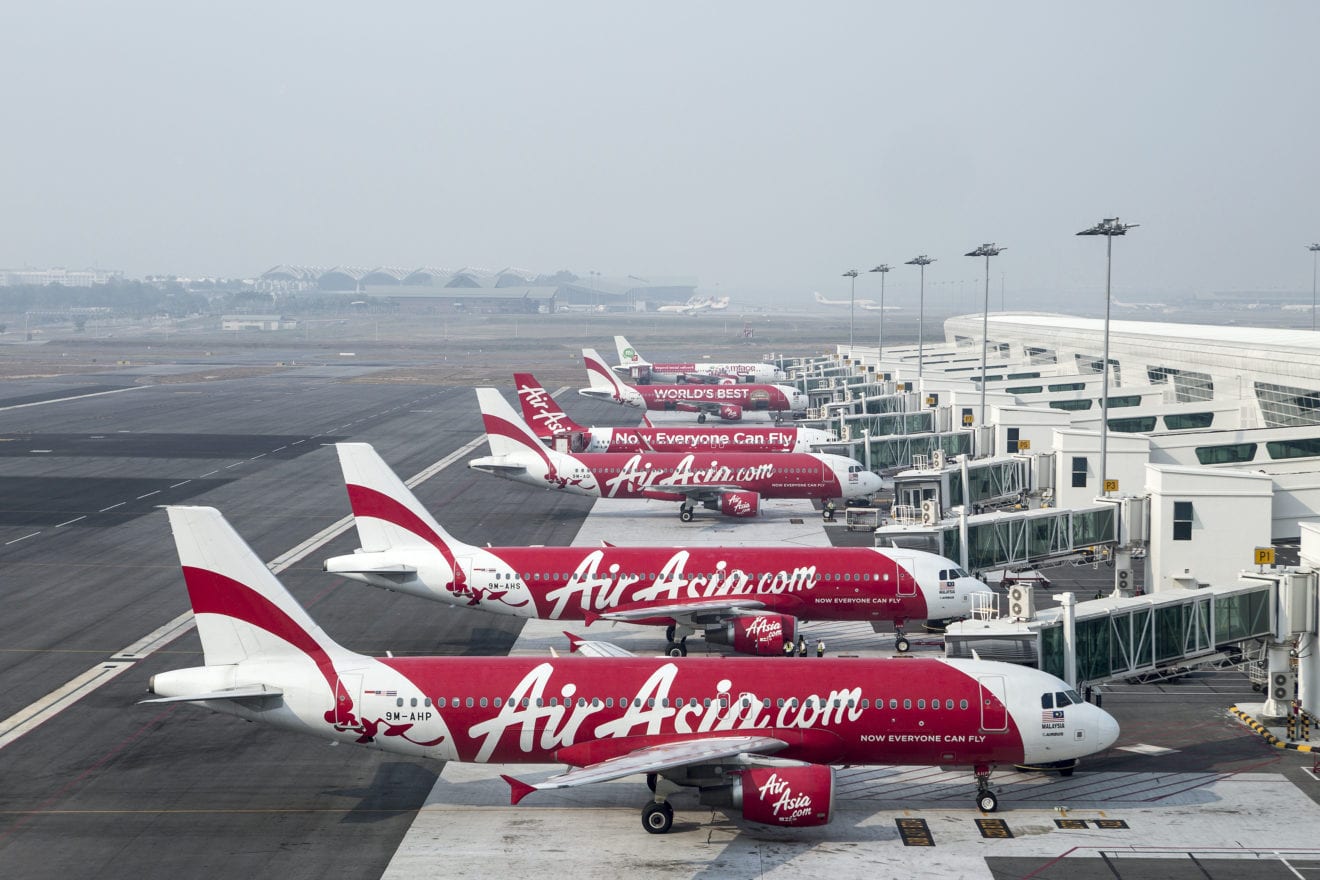
    Low-cost airlines have a habit of tempting holidaymakers with sale after sale but lately it feels like Malaysia’s budget airline AirAsia has been dominating the deals department.

    Over Chinese New Year it dropped flights to China to $297. It then continued the discounts with last-minute commutes to select South East Asian destinations from $129.

    Just when we thought it couldn’t do any better the airline has now slashed 20% off all seats and all flights across its entire network.

    This includes low fare economy and premium flatbed fares on flights operated by both AirAsia and AirAsiaX.

    AirAsia flies from Sydney, Melbourne, Gold Coast, Darwin and Perth and has routes to popular destinations such as Tokyo, Shanghai, Bangkok, Ho Chi Minh City, Auckland, Penang, Phuket, Manila, Bali, Cebu, Singapore, Colombo, Chiang Mai and Male.

    While all these routes are included in this sale travel must must be taken between 7 February and 31 July 2017 and some peak periods are excluded.

    The largest date restrictions with this are on flights to and from Colombo, Mauritius and Wuhan. Broken down: flights to/from Colombo are available only from 7 February to 15 March 2017, flights to/from Mauritius are only available from 7 February to 25 March 2017 and flights to/from Wuhan are only available from Kuala Lumpur from 22 March to 31 July 2017.

    While it may be natural to nominate a return flight when searching for fares, AirAsia has a tendency to overcharge for return bookings. To avoid this and save even more, it might be worth purchasing two one-way flights.

    For example: flying Sydney to Kuala Lumpur on 24-26 February in this sale costs $568.50 return. Split into two single flights, you’ll pay $250 from Sydney to Kuala Lumpur and MYR837 (AUD$248) from Kuala Lumpur to Sydney. This gives you a total of $498. While that conversion doesn’t include fees your bank may charge for an international transaction, it’s still a hefty saving overall.

    AirAsia also charges a $10 processing fee per flight per person on credit and debit card purchases. You can avoid this by paying with PayPal.

    As a low-cost carrier, this price does not include extras such as checked baggage, on-board meals and in-flight entertainment. These can be purchased during the booking process for an additional fee.

    This 20% off all AirAsia flights sale ends 12 February 2017.

  • Thailand invests $7.7 billion in Vietnam

    Thailand invests $7.7 billion in Vietnam

    According to the Ministry of Planning and Investment’s Foreign Investment Agency (FIA), Thailand has invested US$7.7 billion in 440 projects in Viet Nam to become the country’s tenth largest investor.

    Amata industrial zone in Dong Nai Province, where Thailand has invested in infrastructure. Foreign investment in Viet Nam grew in January.

    So far, Viet Nam has attracted foreign direct investment from 112 countries and territories, the agency says.

    Thai businesses began investing right after Viet Nam introduced policies to attract foreign investment, it says. From 2006 to 2008, Viet Nam wooed the largest investment capital from Thailand amounting to $5 billion, accounting for 21.4 per cent of the total investment from ASEAN to Viet Nam worth $23.3 billion. Investments from Thailand have focussed on processing and manufacturing industries.

    At present, Thai investors have assured investments of $7.04 billion in 205 projects in the processing and manufacturing industries, accounting for 87.2 per cent of total registered invested capital. The largest project in those industries is the Southern petrochemical complex with a total investment of $3.77 billion.

    The agency says Thai investors are now turning their attention to industrial infrastructure and retail sectors. These include a joint venture project between Amata VNPCL of Thailand and Sonadezi Bien Hoa in the infrastructure sector and a project of MM Mega Market Co, Ltd in HCM City, with a capital of $36 million, reports vneconomy.vn.

    Viet Nam is considered an important investment destination in the region in line with Thailand’s policies on promoting investment in foreign countries. This is big opportunity for Viet Nam to attract investment capital from this country, FIA says.

    Thailand is near Viet Nam on the map and the two countries have cultural similarities. They signed an agreement on encouraging and protecting investments in 1992 and to create favourable conditions for investment co-operation. Therefore, Thai investors have not faced many difficulties while investing in Viet Nam. Meanwhile, the Thailand government has also encouraged and supported Thai investors already in Viet Nam.

  • Public cloud services to hit $10b in APAC

    Public cloud services to hit $10b in APAC

    The public cloud services market in the mature Asia Pacific region is forecast to grow 17.7% in 2017 to total $10 billion, up from $8.5 billion in 2016, according to Gartner.

    By 2019, Gartner predicts that total public cloud services spending in the mature AP region will rise to $13.6 billion.

    Public cloud services are shared, meterable, elastic and scalable multi-tenanted IT offerings delivered as a subscription-based service to external customers using internet technologies.

    Gartner categorizes Australia, New Zealand, Singapore and South Korea as the mature APAC market.

    The highest growth for the cloud services market in the mature APAC market comes from software as a service (SaaS) with a 28.5% increase in 2017, and platform as a service (PaaS) growing 26.7% this year.

    “The increase in SaaS and PaaS are indicators that migration of application and workloads from on premises data centers to the cloud, as well as development of cloud ready and cloud native applications, are fueling growth in the cloud space,” said Sid Nag, research director at Gartner.

    “Software vendors will continue to shift investments from on-premises license-based software to cloud-based offerings.”

  • Vietnam plans to digitize healthcare cards

    Vietnam plans to digitize healthcare cards

    The electronic system will also make insurance payments faster and more transparent. Vietnam plans to issue electronic health security cards to its citizens verifying their right to medical services, the Government Office said on Monday.

    Just as a social security card shows that a person has a lifetime account used to calculate their pension benefits, the healthcare security card will make it more convenient for patients to access insurance plans and health care.

    The push to digitize the system is aimed at seamless healthcare delivery and insurance across the country.

    With the new system, electronic healthcare registries in all 63 cities and provinces will be synced together so that regardless of whether a cardholder changes their job, move to a different place or have pre-existing medical conditions, insurance plans will have to accept all cardholders.

    The electronic system will also make insurance payments faster and more transparent through digital transactions.

    The Vietnam Social Security Administration is in charge of developing a plan to sync health security, social security and unemployment insurance on one electronic card.

    About 75 million Vietnamese people, equal to about 81 percent of the population, have registered for the national health insurance program. The government aims to lift healthcare coverage to 91 percent of its population.

    However, it is still unclear about how the government will prevent the fraudulent use of the cards or how they will protect the privacy of patients and their medical records.

    Vietnam is also working on electronic immunization records that will make it easier to track vaccination data and make sure children get their shots at the recommended ages.

  • Telefónica selects Huawei to build virtual EPC network in 13 countries

    Telefónica selects Huawei to build virtual EPC network in 13 countries

    Spanish telco Telefónica has contracted Huawei to virtualize its 4G networks in 13 countries as part of its UNICA program.

    The Spanish telco said the two companies are building a large scale virtual Evolved Packet Core (vEPC), an industry-approve framework for providing converged voice and data on 4G LTE networks, in Latin America and Europe.

    The vEPC network will cover 11 countries in Latin America:  Brazil, Argentina, Uruguay, México, Colombia, Peru, Panama, Costa Rica, Nicaragua, El Salvador and Guatemala; and two in Europe: Germany and Spain.

    Telefónica will be using Huawei’s vEPC solution, called CloudEPC, that will allow the operator “to build agile networks that quickly scale to match the performance demands of new services”, the companies said in the statement.

    Telefónica and Huawei have been jointly working and testing Huawei CloudEPC performance, in Telefónica’s NFV Reference Lab in Madrid. During the test, Huawei CloudEPC showed one of the best performances in both data and signaling planes by good cloud-formation architecture and by using EPA (Enhanced Platform Awareness) technologies.

    The companies are currently testing the onboarding of the CloudEPC solution over Telefónica´s UNICA infra cloud platform that will allow full automatization of the vEPC deployments and life cycle management within Telefónica networks.

    “This large scale vEPC network deployment is a further step within the Telefónica UNICA virtualization program where a smooth migration to UNICA infra cloud capabilities will be reached following extensive test in Telefónica Lab,” Javier Gavilán, planning and technology director at Telefonica said.

    “These results provide the confidence needed to continue with the adoption and deployment of virtualized solutions and to enable the transformation to software-driven networking.”

  • Mikimoto Ginza set to reopen in June

    Mikimoto Ginza set to reopen in June

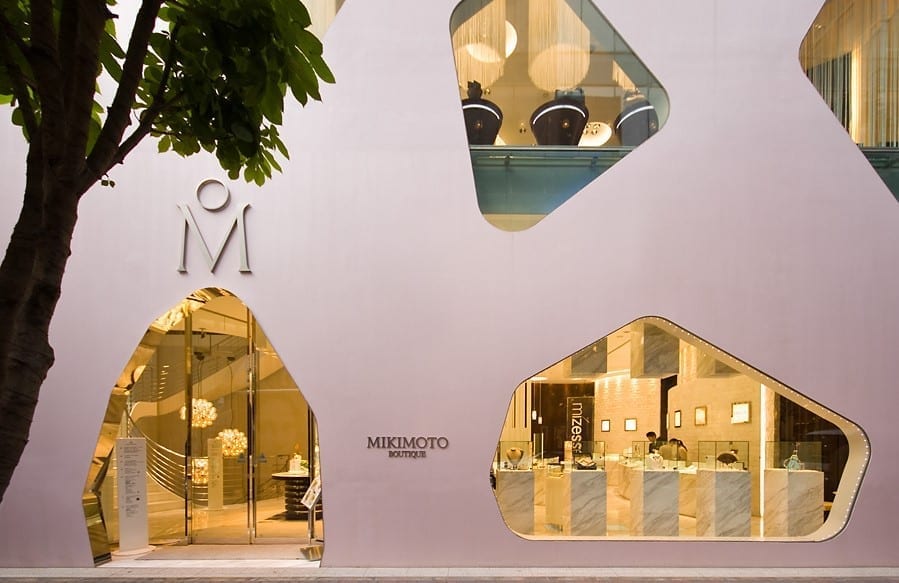
    The Mikimoto Ginza flagship store in Tokyo will reopen in June, the pearl retailer has confirmed.

    The store has taken more than two years to rebuild, fuelling expectation of a unique and outstanding design concept when the building is unveiled. The photo above shows the store before reconstruction commenced.

    Once complete, the shop will be located within a 56-metre-tall building encased in some 40,000 pieces of glass. The sales space will almost double to about 1400 sqm, spanning six floors.

    Construction began in January 2015.

    Mikimoto says the store will open on June 1 and the company hopes to attract more Japanese customers after the investment – as well as its traditional tourist base.

  • Dotty Bee founder looks to sell

    Dotty Bee founder looks to sell

    Katherine Brady, founder of online baby bouquet retailer Dotty Bee, is to sell the business ahead of leaving Hong Kong.

    Dotty Bee was established in 2011 and has since expanded into Singapore and Spain, with potential to add other markets. Beside online sales, the company has retail clients including Toys R Us, Babies R Us, Eugene Baby, Bumps to Babes, Partytime and the Hong Kong Design Gallery. It is listed on 26 online marketplaces.

    dotty-bee-baby-sooq-0977

    “It is sad to be selling as it is still a growing business. But I believe it needs to stay in Asia and so have come to the decision to sell as I will be going to the UK or Australia where the concept is already established by other companies,” Brady said.

    Brady founded Dotty Bee while working part time as a marketing consultant. After exhausting sightseeing options, she looked for something “a little more productive to do” with her mornings.

    The concept – selling flower bouquets made with baby clothes to parents and retailers for sale as gifts – is based on a similar concept in the UK, but adapted to the Asian market.

    “When a new baby arrives you want to celebrate and spoil them – a baby clothes bouquet can do both. It has the wow factor when the new parents open the gift and includes useful items of baby clothing, a perfect gift combination,” says Brady.

    “I bought similar products over from the UK to test the market first. After there was interest I looked into finding a manufacturer who would do my own brand and designs.”

    She found that company in Shanghai – along with a machine which rolls the clothing into tight  flower buds from which the ‘bouquets’ are created.

    dotty-bee-bouquet-2

    She credits a background in marketing for helping keep the start-up costs modest.

    “I qualified as a graphic designer so did all my brand, packaging and website design myself. I worked in a marketing agency and so I knew how to do basic SEO and market the company.

    “When I received my own brand products is when the company really took off. Due to lower product costs I could then approach retailers, do promotions and work with other affiliates. Before them I just sold on my own website.”

    Awareness gradually built, but Brady recalls while word of mouth is great in Hong Kong, it does take time.

    “I worked on getting featured in magazines, online magazines, blogs. Getting a social media following. The only advertising I pay for is Google Adwords. I found other advertising does not give me a good return on investment.”

    Dotty Bee has deliberately eschewed physical shops, even pop-ups.

    “Due to the high rent costs in Hong Kong I have not even entertained the thought of a physical store. As we are stocked by a lot of retailers all over Hong Kong customers are never far from a store that has our product, so I do not see the need or desire to have one – and I sure wouldn’t want the stress.”

    Brady says she is in talks with several potential buyers for the business, but is still seeking expressions of interest.