Tag: asia

  • iFashion Group reels in Megafash

    iFashion Group reels in Megafash

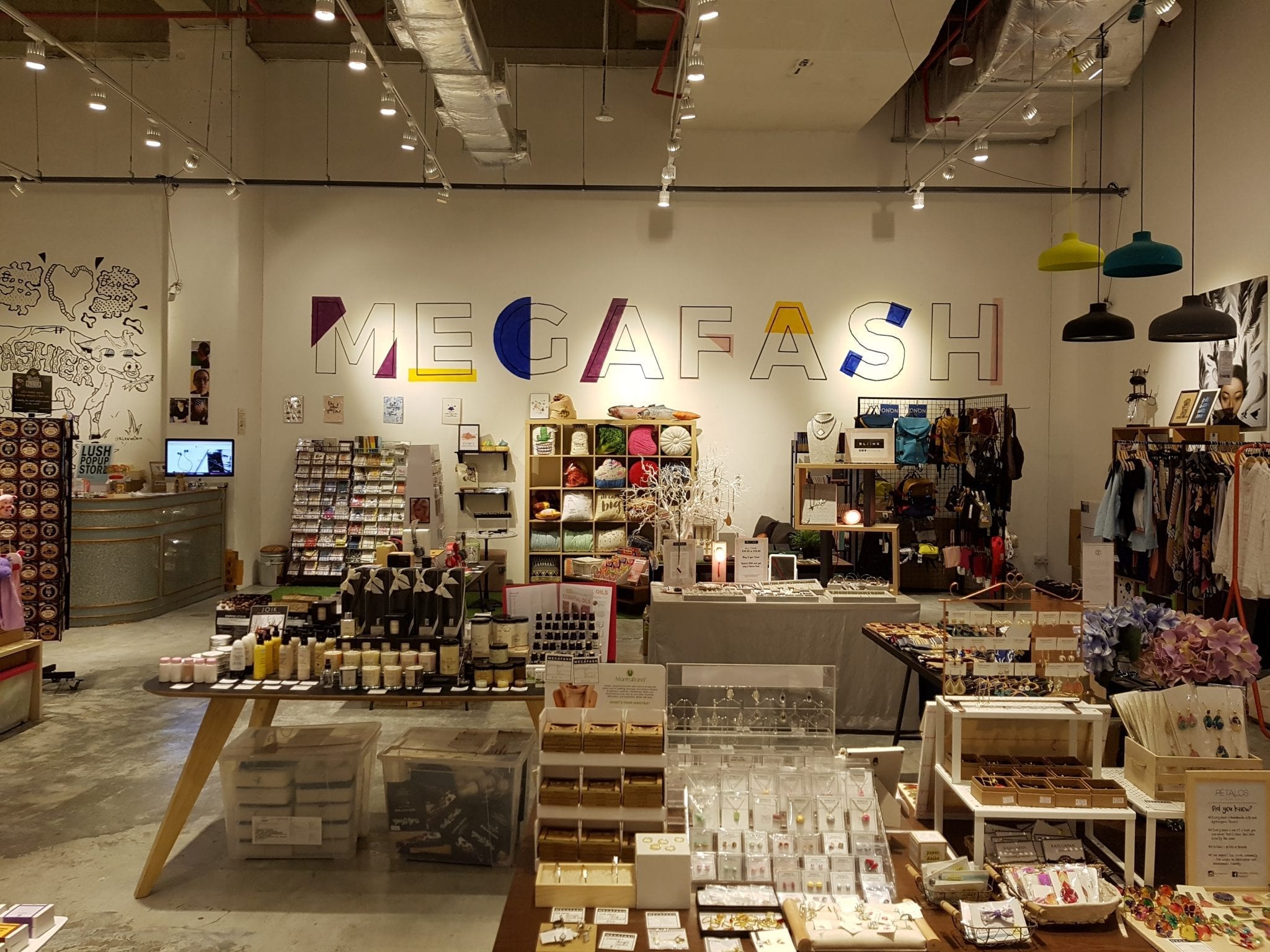
    Singapore fashion and lifestyle platform iFashion Group has acquired independent designer brands marketplace Megafash in a S$3.15 million (US$2.23 million) cash-and-shares deal.

    This follows iFashion’s purchase of lifestyle and fashion brands Dressabelle and Nose, as well as real-estate booking platform Invade.

    Megafash was launched in December 2015 with an eCommerce platform and three stores, and now has more than 15,000 sqft (1393.5 sqm) of retail space across seven stores. It also has a presence in Indonesia and Thailand and stocks more than 2000 international indie brands, with 30 per cent of its in-store brands being exclusive.

    Its annual revenue last year was reported to be $8 million.

    “In times of economic downturn, we are pleased to say our revenue grew five times from 2015,” says Megafash CEO/co-founder Jiawen Ngeow. “In December we received as many as 2000 orders a day.”

    iFashion has appointed Dressabelle CEO/founder Jeremy Khoo as new CEO, who will be responsible for driving the company to the next level.

    “Our acquisition of Megafash completes our line-up of brands for our IPO,” says iFashion Group VP of corporate affairs Jeneen Goh. The company is looking at going public at the end of April or May.

  • Salvatore Ferragamo Hong Kong sales still weak

    Salvatore Ferragamo Hong Kong sales still weak

    Despite business still being weak in Hong Kong, Asia Pacific was again been the top market in revenue terms last year for Italian design label Salvatore Ferragamo.

    Preliminary figures show the group’s consolidated revenues for its latest fiscal year reached €1438 million (US$1.5 billion), up by 1 per cent at current exchange rates and down by 2 per cent at constant exchange rates from the previous 12 months.

    Asia Pacific contributed 36 per cent of total revenue for the year, up by 1 per cent. Growth was more than 4 per cent for the fourth quarter. The positive performance was achieved despite lacklustre sales for Salvatore Ferragamo Hong Kong.

    In Japan, the brand had stable revenues last year, with a 3 per cent rise in the fourth quarter.

  • AWS dominates public cloud market in Q4, says report

    AWS dominates public cloud market in Q4, says report

    Amazon Web Services (AWS) is maintaining its dominant share of the burgeoning public cloud services market at over 40%, new fourth quarter data from Synergy Research Group showed.

    The research firm also said that the three main chasing cloud providers – Microsoft, Google and IBM – are gaining ground but at the expense of smaller players in the market.

    In aggregate, the three have increased their worldwide market share by almost five percentage points over the last year, helped by particularly strong growth at Microsoft and Google, and together now account for 23% of the total public IaaS and PaaS market.

    The next ten cloud providers in the ranking have slipped off the pace a little, though this group does include Alibaba and Oracle who continue to grow at impressive rates. There is then a very long tail of small-to-medium sized cloud service providers, whose collective market share has now dropped to just 18%.

    With most of the major operators having now released their earnings data for Q4, Synergy estimates that quarterly public cloud infrastructure service revenues (including both public IaaS and public PaaS) have now reached well over $7 billion and continue to grow at almost 50% per year.

    If managed private cloud services are included, quarterly cloud revenues are now well over $9 billion. The cloud providers and rankings are very different in the managed private cloud, where IBM continues to lead while Rackspace and traditional IT service providers feature more prominently than they do in public cloud.

    “While a few cloud providers are growing at extraordinary rates, AWS continues to impress as a dominant market leader that has no intention of letting its crown slip,” Synergy Research chief analyst and research director John Dinsdale said.

    “Achieving and maintaining a leadership position in this market takes huge ongoing investments in infrastructure, a continued expansion in the range of cloud services offered, strong credibility with the large enterprise sector, consistently strong execution, and the wholehearted and long-term backing of senior management. AWS is checking all of those boxes and any serious challengers need to do likewise.”

  • Shoppes at MBS share set at $4.9b

    Shoppes at MBS share set at $4.9b

    Casino mogul Sheldon Adelson’s price tag of up to S$4.9 billion (US$3.5 billion) for a 49 per cent stake in Shoppes at Marina Bay Sands makes it the “most expensive mall in the world,” he says.

    However, sovereign wealth funds and private-equity giants may be willing to pay a massive premium to own a stake in such a high-profile asset, says real-estate consultancy firm Chesterton Singapore MD Donald Han.

    He says Singapore stacks up as one of Asia’s best property markets because its relatively strong dollar enables investors to preserve their capital.

    “The property has to be assessed based on yield or the operating income from the mall, and how it stacks up against market expectations…But buildings with a certain character or iconic stature that are one of a kind are also worth a premium.”

    Another selling point is that there are few quality malls on the market, and little prospect in the near term of more land being released for such large developments, says Savills Singapore research head Alan Cheong.

    Meanwhile, the proposed sale is subject to approval from the authorities, under an agreement that allowed US gaming giant and Marina Bay Sands parent Las Vegas Sands (LVS), as well as Genting Singapore, to have exclusivity in Singapore for 10 years. The agreement says LVS cannot sell any part of its 800,000 sqft (74,322 sqm) mall for that period, and then only after government approval. The 10-year duopoly, which also applies to Genting’s Resorts World Sentosa, expires next month.
    Adelson says the mall sale proceeds could be used in the firm’s next investment in Japan or South Korea.

  • Tiffany CEO in shock resignation

    Tiffany CEO in shock resignation

    Tiffany CEO Frederic Cumenal has stepped down, effective immediately.

    Cumenal assumed the role just last April after a long transition to replace previous CEO Michael Kowalski, who is now chairman, Kowalski will take back the role while a search gets underway for a permanent replacement.

    The iconic US jewellery retailer is facing a raft of challenges. Weak holiday sales impacted on its share price, its top designer departed three weeks ago and turnover in its flagship store in Manhattan has been impacted by increased security procedures for the neighbouring Trump Tower.

    Abroad, tourist spending has slumped and the high US dollar value has impacted on sales revenues in its native currency.

    In a statement, Tiffany was complimentary about Cumenal.

    “On behalf of the entire board…, I would like to thank Frederic Cumenal for his contributions to Tiffany,”Kowalski said. “At a time of continuing challenges in the global luxury market, Frederic has enhanced the management team and taken important steps to position Tiffany for success in the long term. We wish him the best in his future endeavors.”

    Kowalski said the board was disappointed by recent financial results, but remained committed to its current core business strategies.

    “The board believes that accelerating execution of those strategies is necessary to compete more effectively in today’s global luxury market and improve performance. As such, we remain focused on enhancing the customer experience, increasing the rate of new product introductions and innovation, maximising marketing effectiveness, optimising the store network, and improving our business operations and processes, all while efficiently managing our capital and costs.

    “We believe these initiatives and the pace of their execution are key to driving shareholder value,” he said.

    Cumenal said he had great confidence in Tiffany’s brand, strategic direction and people. “I believe the company will have many exciting opportunities in the future.”

  • Lotte Group in China suffers from Korea’s missile plan

    Lotte Group in China suffers from Korea’s missile plan

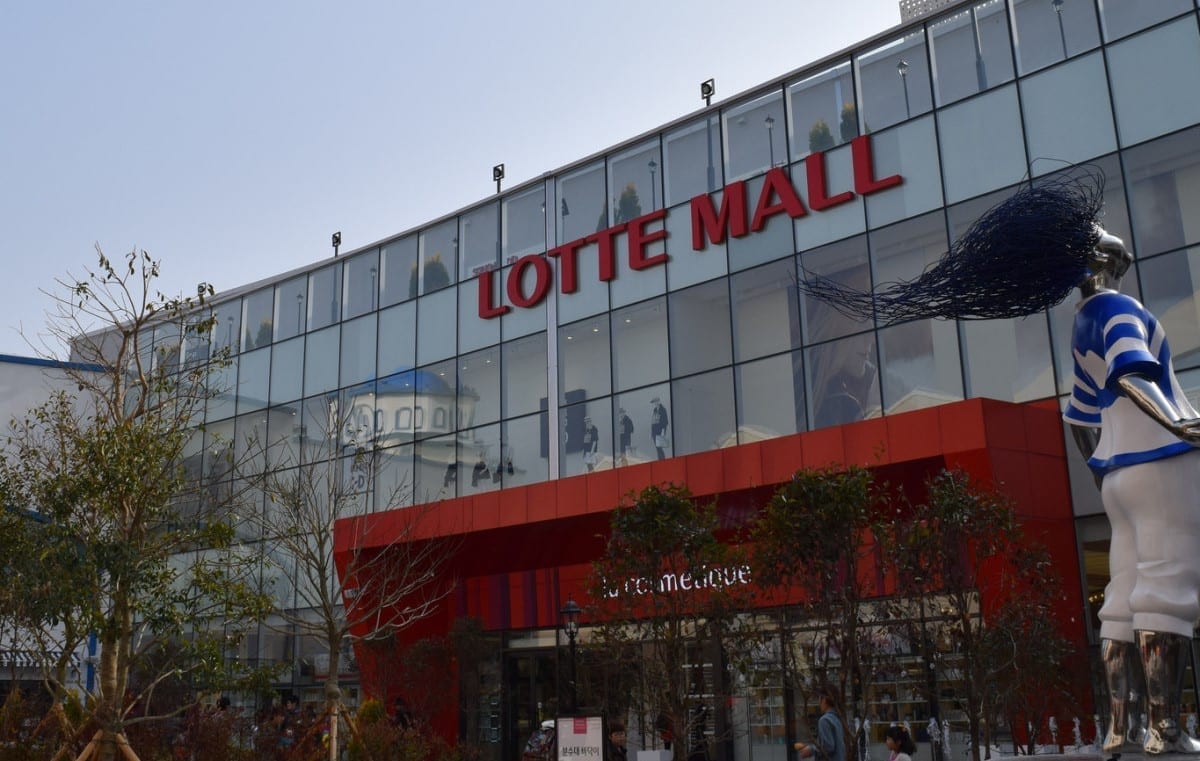
    Hit by fallout from the Korean government’s plan to deploy a US-made missile shield, the Lotte Group is shutting three retail shops near Beijing.

    Korea’s fifth-largest conglomerate, Lotte was hit by a series of regulatory investigations into its China business in December after striking a deal with the Korean government a month earlier to relinquish one of its golf projects to accommodate the anti-missile system.

    South Korean companies have discovered themselves in China’s crosshairs since Seoul’s determination in July to deploy the Terminal High Altitude Area Defence (THAAD) platform, reports News on Hand. Beijing opposes the move, fearing the US will use the platform’s radar to probe deep into Chinese territory.

    Lotte says it has been restructuring its loss-making China enterprise for a few years, but the work has been spurred by the deteriorating bilateral relations because of the THAAD deployment. The retailer has already closed some of its unprofitable outlets in China.

    Lotte has also been opening shops in China, but has put the brakes on this following officials conducting security, tax and other investigations. Having entered the market in 1994, the group has 99 stores and 16 Lotte Super shops in China.

    Also in retaliation to THAAD, Beijing has blocked imports of high-tech bidets and a range of cosmetics, cancelled shows by Korean pop groups and restricted Chinese flights and tourism to Korea.

  • Vietnam’s Flappy Bird creator is back with a new Ninja game

    Vietnam’s Flappy Bird creator is back with a new Ninja game

    The unexpected success in 2014 has turned Nguyen Ha Dong into a star of Vietnam’s startup scene in recent years. Just one week after its debut, the latest mobile game from Nguyen Ha Dong, the creator of Flappy Bird, has become the new addiction of many people around the world.

    The fast-paced Ninja Spinki Challenges has won many positive reviews from users on Apple’s App Store and Google Play.

    The new game, which is free, is a collaborative effort between Nguyen Ha Dong’s Gear studio and Japanese game maker Obokaidem.

    Staying true to the familiar 8-bit style found in Flappy Bird, it requires game players to have a good mix of dexterity and fast reactions to tap and swipe through levels.

    “The game is entertaining and brain-teasing at the same time,” said Huy Can, a gamer.

    “What should I do when it comes to the point of frustration?” a player asked sarcastically, referring to the game’s difficulty.

    Flappy Bird was released in May 2013 with little fanfare. By February 2014, the sleeper hit topped the charts in more than 100 countries and had been downloaded more than 50 million times. Dong reportedly earned an estimated $50,000 a day.

    The Vietnamese government has seen successes like Flappy Bird as an encouraging sign. It is trying hard to cultivate a startup scene where tech entrepreneurs can create products and services that will go global.

    The overnight success of Flappy Bird seemed to overwhelm its creator, who later decided to pull the game from the app stores.

  • New food truck dishes out noodles at Hong Kong Disneyland’s doorstep

    New food truck dishes out noodles at Hong Kong Disneyland’s doorstep

    Hong Kong’s latest food truck may have found its sweet spot on Disneyland’s doorstep after its first location was deemed too remote.

    Mein by Maureen, which offers lo mein (noodles in seafood sauce), has made its new home on Park Promenade, the only thoroughfare between the public transport drop-off points and the theme park’s entrance.

    Although existing rules prohibit visitors from bringing in outside food, the new food truck effectively competes with more expensive restaurants inside the park. It is a stone’s throw away from the MTR station and next to the luggage valet counter.

    Some food truck operators had complained that the original site, near the parking lot for coaches, was too remote, prompting the park to designate a new location last month.

    Mein by Maureen started taking orders from hungry customers at 10.40am on Tuesday, after a 40-minute delay.

    Operator Maureen Loh Mo-lin explained that her staff were still experimenting with the operation.

    Traffic heading into Sunny Bay on Lantau Island was also an unexpected hiccup.

    “Last week it was smooth and perfect … but this morning there was a big traffic jam crossing the harbour,” she said, referring to her commute from Wan Chai at about 7.30am.

    “Maybe people were heading back for work.”

    One of Loh’s first customers was Mika Shimizu, a Japanese expatriate and Disney fan who visits the park once a week.

    She and her friend forked out HK$48 each for a serving of lo mein. They both felt the price was reasonable.

    “It was tasty, and the portion was right. I think I would visit again,” she said.

  • Vietnam’s car imports soar in January as tariffs fall

    Vietnam’s car imports soar in January as tariffs fall

    Tariffs on car imports from ASEAN countries will be fully removed by 2018. A growing middle-class population, rising disposable incomes and falling tariffs on cars imported from neighboring countries in Southeast Asia appear to be driving Vietnam’s car market.

    The country’s car imports in the first half of January soared 50 percent from the same period last year to about 5,000 units worth $116 million, customs data shows.

    This surge in imports is mainly due to a switch from motorbikes to cars. Around 75 percent of imported cars were classed as midsize sedans and the number of vehicles with nine seats and below nearly tripled from a year ago to more than 3,000 units.

    Vietnam still relies heavily on imported automobiles to meet domestic demand despite a slight year-on-year decline in 2016 to 113,567 cars after it imported a record-breaking number of 125,534 units in 2015, according to customs statistics, equivalent to a 77 percent jump from 2014.

    Since the Vietnamese government has targeted car manufacturing as a “spearhead industry”- one of the economy’s driving forces – car import taxes have remained high to shield domestic automobile producers from foreign rivals.

    However, following the ASEAN Trade in Goods Agreement, Vietnam will cut tariffs incrementally over the next few years on imported cars from ASEAN countries. With the tariff scheduled to be fully removed by 2018, import turnover from ASEAN neighbors is expected to increase exponentially.

    The tariff on cars from Thailand and Indonesia has been cut to 30 percent from 40 percent, effective at the start of this year, according to tax authorities. As a result, many imported cars will be 7 percent cheaper than previously.

    New cars imported from Thailand dominate the market, with Mazda, Toyota and Ford among the most popular.

    Sales of used cars are slowing, said the association of automobile manufacturers.

    The number of imported new cars from ASEAN countries is on the rise due mainly to relaxed tax policies, including lower import tariffs, value added tax and special consumption tax, which will benefit import companies and authorized dealers, said a car dealer in Hanoi.

  • HGC launches iBizCloud in Indonesia

    HGC launches iBizCloud in Indonesia

    Hutchison Global Communications (HGC) has teamed up with Indonesian ISP PT Centrin Online Prima to launch a cloud service tailored for the Indonesia market.

    The launch of ibizCloud in Jakarta aims to provide a one-stop global cloud service that meets the infrastructure and speed requirements of local and international enterprises.

    HGC is providing cloud technologies and service design, as well as international connectivity, while Centrin Online provides local connectivity for the service. This launch aims to help the latter meet increasing demand for data exchanges from corporations operating in Indonesia.

    Offered as a total solution, ibizCloud aims to enable Indonesian businesses to access reliable cloud storage without having to make hefty upfront investment in infrastructure.

    The service grants access to a cloud environment via infrastructure-as-a-service (IaaS), bandwidth-as-a-service (BaaS) and dedicated bandwidth-as-a-service (DBaaS).

    Customer organizations can also choose to use on-demand Virtual Leased Line (ODVLL), which facilitates end-to-end data transmission over a secure network. ibizCloud comes complete with virtualised infrastructure such as virtual machines, CPU cores, RAM and storage.

    “Making ibizCloud available in Jakarta represents a great start to 2017 for HGC,” commented Andrew Kwok, Limited president of international and carrier for HGC parent company Hutchison Telecommunications (Hong Kong).

    “The new cloud site strengthens ibizCloud’s market position in Asia, following launch of the service in Hanoi last December. HGC works tirelessly to enhance ibizCloud features in order to meet ever-rising demand from multinationals. One of the value-added features to look out for in early 2017 will be a resource pool arrangement by which customers can allocate additional resource promptly, without having to go through a subscription process.”

  • Cebu Pacific gets its 3rd ATR 72-600 aircraft

    Cebu Pacific gets its 3rd ATR 72-600 aircraft

    In a statement, Cebu Pacific said the new high capacity aircraft as delivered to its wholly owned subsidiary Cebgo on Feb. 3.

    The new ATR 72-600 will be used for the two new routes to be launched on Feb. 15 — Manila to Masbate and Manila to Tablas.

    “We are glad to take delivery of another brand-new ATR 72-600, especially since this is the first to have the titanium seats from Expliseat installed. This aircraft therefore combines reduced seat costs while optimizing comfort for passengers,” Cebgo President and CEO Alexander G. Lao was quoted as saying in a statement.

    Cebu Pacific’s aircraft fleet has an average age of 4.92 years, which the airline says is one of the youngest around the world.

    It currently operates a 58-strong fleet made up of four Airbus A319, 36 Airbus A320, seven Airbus A330, eight ATR 72-500, and three ATR 72-600 aircraft. Starting this year to 2021, the budget carrier expects to receive one more brand-new Airbus A330, 32 Airbus A321neo, and 13 ATR 72-600 aircraft.

  • Korean firm enters Indonesian credit card market

    Korean firm enters Indonesian credit card market

    Shinhan Indo Finance Ltd (SIF), a subsidiary of South Korean credit issuer Shinhan Card, has launched its first credit card on the Indonesian market.

    The “ShinhanIndo Card Hi-Cash” comes in four different types to reach consumers from all segments, especially the millennials.

    In developing its credit card business, SIF is cooperates with Indo-Pack, merchants under Indomobil Group, and K-Pack, merchants from South Korean companies, the company’s vice president Tan Kim Piauw told a press conference after the launching event on Monday.

    SIF was established in December 2015 as a multi-finance joint venture between the Korean credit issuer and two Indonesian firms, Indomobil Group and Asuransi Central Asia (ACA).

    The joint venture obtained permits to issue credit cards from the Financial Services Authority (OJK) and Bank Indonesia in December last year.

    In its initial stage of operation, Indomobil’s 20,000 employees and those of ACA were SIF’s main market target, Tan said, adding that this year the number of credit card holders was expected to reach 80,000.

    “We hope to book Rp 500 billion in transactions in 2017,” he said.

    Speaking at the press conference, Shinhan Card CEO Wi Sung Ho said that with its growing middle class, Indonesia was a market with quite a bit of potential for the credit card business. He said that the number of credit card holders totaled only 17 million despite the country’s large population, far below the South Korean market with 22 million cardholders.

  • Level 3 opens DDoS scrubbing centers in APAC

    Level 3 opens DDoS scrubbing centers in APAC

    Multinational companies located in the Asia-Pacific region now have access to Distributed Denial of Service (DDoS) mitigation solutions from Level 3 Communications.

    The new scrubbing centers in Hong Kong, Tokyo and Singapore signify an expansion of the company’s security service functionality. The company says its security solutions provide layers of defense through enhanced network routing, rate limiting and filtering that can be paired with cloud-based scrubbing for a more comprehensive mitigation solution.

    The Asia-Pacific region is key for both Asian and multinational enterprises which demand global security services — making Level 3’s cybersecurity solutions and global presence essential.

    Level 3 began operating in Asia Pacific in 2004. The company has 14 on-net markets throughout Asia Pacific with service reach to more than 50 markets in the region. Level 3 offers its customers in the region VPN, direct internet access, Ethernet VPL, managed services, unified communications, CDN and security solutions.

    Level 3 opened the additional scrubbing centers to provide customers with infrastructure in the region to quickly mitigate attacks with less disruption to business operations.

    Level 3’s DDoS ingest capacity, 4.5 terabits per second, provides a high capacity to ingest massive attacks so customers can get back to business as usual.

    The service is carrier agnostic and pulls all customer traffic into Level 3’s globally located scrubbing centers for cleansing before forwarding legitimate traffic through a private connection or the public internet.

    Level 3 now has 11 scrubbing centers on four continents. Other locations include São Paulo, Frankfurt, London, Chicago, Dallas, Los Angeles, New York and Washington, DC.

    24/7 Security Operations Centers detect anomalies in global NetFlow sessions, perform impact analyses, notify customers of threatening conditions and then help them mitigate the issue.

    Australia, China and Hong Kong are listed among the most vulnerable to cyberattacks, according to a report by Project Sonar.

    IoT-compromizing malware research by Level 3 Threat Research Labs reveals many connected devices are being compromised and enabling attacks reaching in excess of 600 Gbps.

  • Nice start to the year. Pity about the rest of it

    Nice start to the year. Pity about the rest of it

    There are too many uncertainties ahead to know whether it will continue or crumble, economists say. The world economy has begun the year in fine form. America is cruising along, China is growing faster than expected, Britain is muffling the Brexit downdraft. Even the usually lagging euro zone is perky.

    Pity about what lies ahead.

    Almost every major economy’s data releases these days seem to follow a similar pattern.

    First, they are generally positive – either better than previously or only a little weaker. Then, policymakers and economists come out and say there are too many uncertainties ahead to know whether it will continue or crumble.

    “Geopolitical risks are mounting and increasingly catching market attention in such fashion as to risk overshadowing most other developments,” Canada’s Scotiabank told its clients.

    The risks are primarily political. How will U.S. President Donald Trump’s “America First” protectionist talk translate into policy? Will Brexit finally come back to bite Britain by cutting off commercial growth and breeding inflation?

    For the euro zone, meanwhile, the risks are existential. Elections in France, Italy, Germany and the Netherlands could result in anti-euro political parties gaining significant ground or even taking office. And Greece’s hold on its place in the currency union remains flimsy.

    In the past week the extra money investors demand to buy French bonds rather than German ones jumped – much of it because of a comment by an official of the far-right National Front that it would put leaving the euro at the heart of its economic platform.

    Polls suggest National Front candidate Marine Le Pen will not win the presidency – but after the Trump and Brexit surprises last year nothing can be ruled out.

    Other risks are more Keynesian, revolving around whether years of stimulus from central banks in the form of asset-buying and negligible interest rates are finally producing inflation, which in turn will stop consumers from buying, slowing economic growth.

    Economics can be very much a game of whack-a-mole.

    Up next

    The coming week may well be dominated by China, which returns from a holiday with a large slate of data, including the services purchasing managers index – which implied steady if slightly slower growth – foreign reserves data and possibly trade figures.

    China grew a faster-than-expected 6.8 percent in the fourth quarter, boosted by higher government spending and record bank lending.

    But the economy still faces headwinds from a cooling housing market and possible protectionist measures from the U.S.

    The foreign exchange reserves, meanwhile, are on the verge of falling below $3 trillion, although the pace of declines could be slowed by capital controls and the dollar’s retreat.

    China is being cautious. It raised a number of policy rates on Friday against what Deutsche Bank described as a dilemma.

    “Policy needs to be tightened for financial stability considerations, but (the central bank) wants to control the pace and magnitude so that … the tightening does not trigger disruptive adjustments (bubble burst), and … does not jeopardize the stabilizing growth outlook,” it said.

    In the euro zone, there will be German, French, Spanish and Italian industrial production data. All are expected to show growth.

    Germany’s volatile factory orders may be under particular scrutiny. They fell 2.5 percent month-on-month in November, a plunge from a 5 percent rise the month before.
  • Nearly 9,000 new companies launched in Vietnam in January

    Nearly 9,000 new companies launched in Vietnam in January

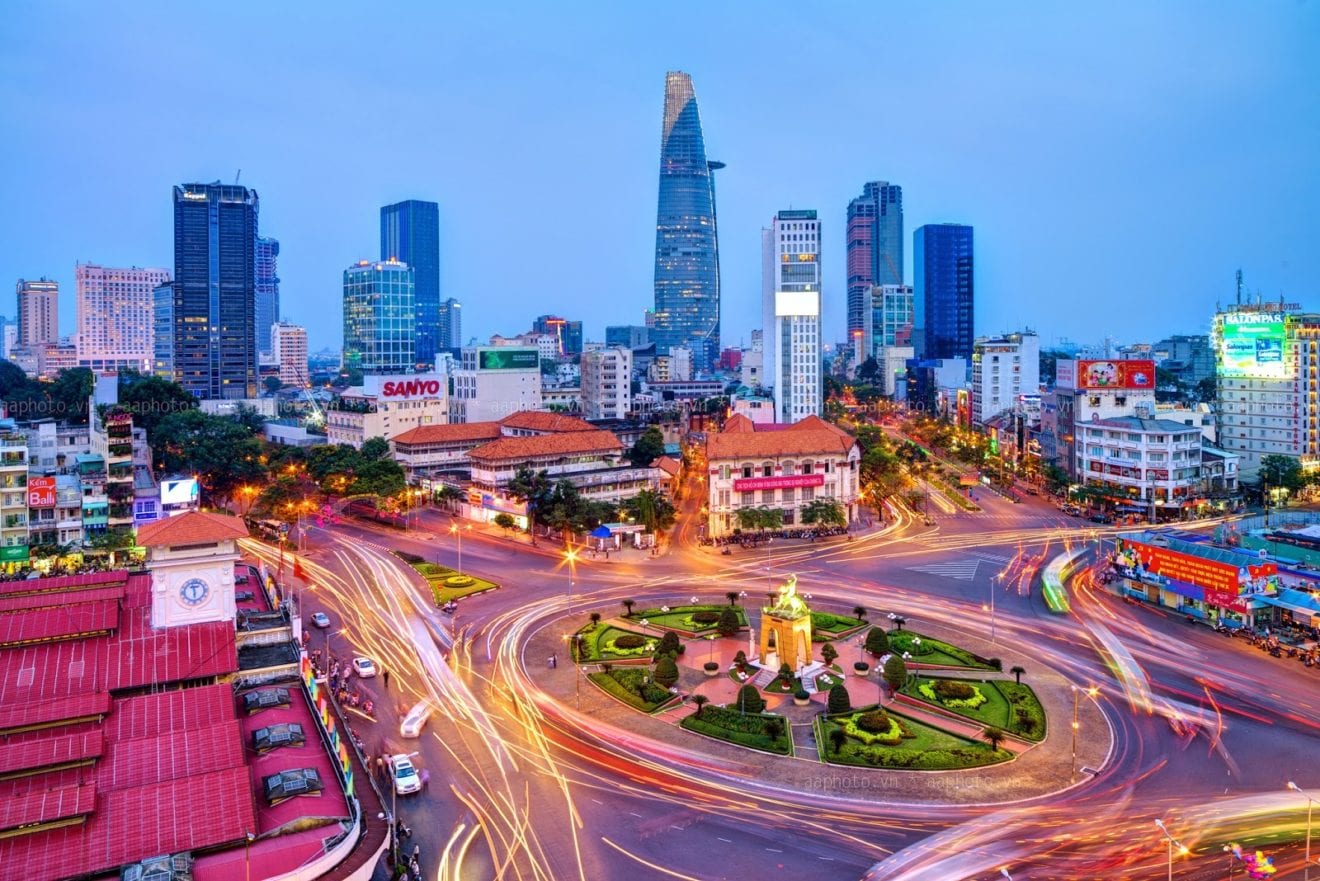
    A strong start for the economy in the new year after a record high number of new openings in 2016. Vietnam’s business community has hit the grounds running in the new year. Official reports showed that 8,990 companies opened in January, up 8 percent from last year. Their registered capital surged 52.3 percent to VND90.3 trillion ($4 billion) in total.

    The new companies are expected to create 104,100 jobs. In comparison, there were 8,320 new companies with 124,000 new jobs in January last year.

    Nearly 5,600 suspended companies also resumed operations last month.

    The number of businesses shutting down increased 18.3 percent year-on-year to 1,583.

    Vietnam hopes to see over one million businesses in operation by 2020. It is now halfway to that point.

    The country saw a record number of business openings of 110,000 last year, strengthening hopes for robust growth and strong investment in the near future.

    Officials from the labor ministry reportedly said that Vietnam aims to create 1.6 million jobs this year, roughly the same figure last year.

    More than 3 percent of the country’s urban adults are unemployed while the rural rate is nearly 2 percent.