Tag: asia

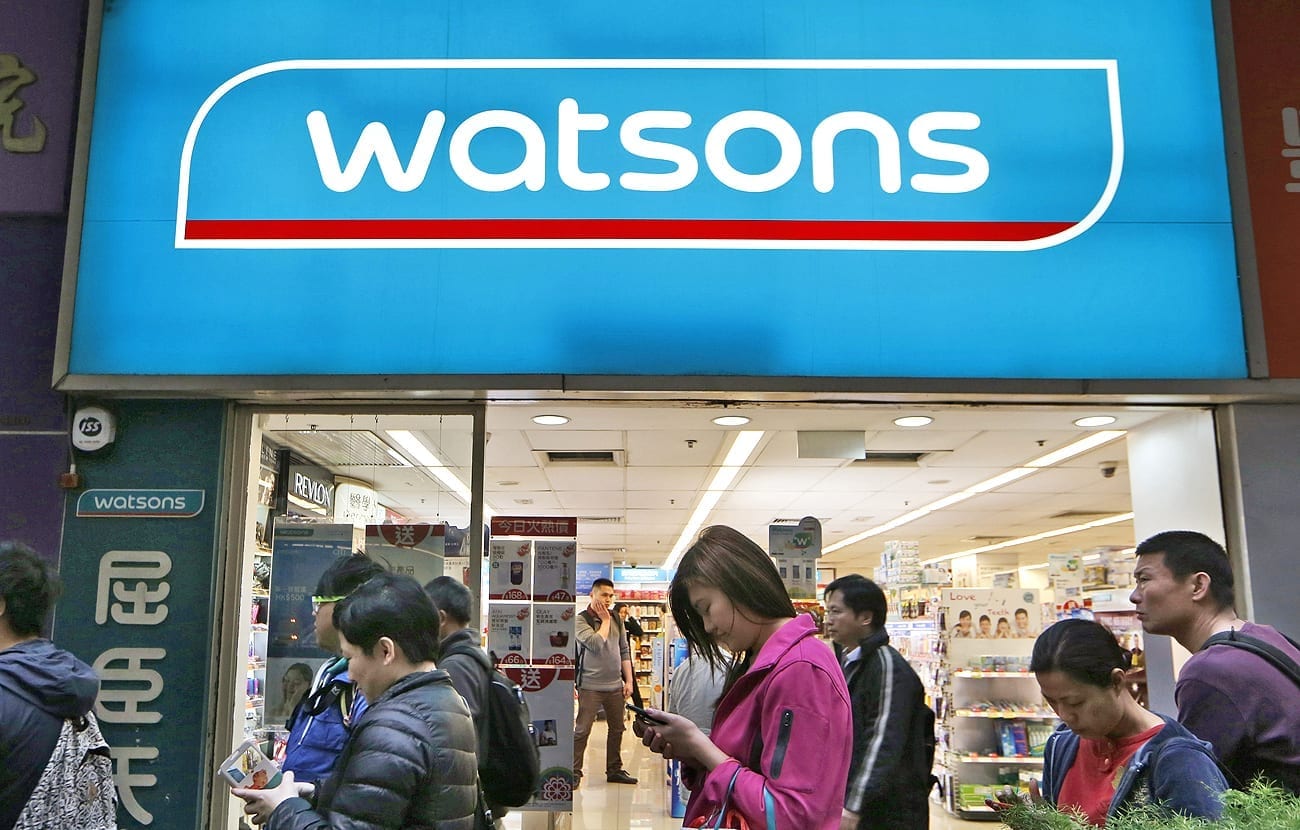
  • Watsons opens 1000th Philippine store

    Watsons opens 1000th Philippine store

    Health and beauty retail giant Watsons has opened its 1000th store in the Philippines – which is also its largest in the country yet.

    Coinciding with the company’s 20th anniversary in the Philippines, the new store located in The Block, SM City North Edsa, spans nearly 1000sqm and displays a range of products the company says “takes the shopping experience to the next level”.

    “This new flagship store is important in the nationwide expansion in this beautiful country as it’s a clear demonstration of Watsons’ determination to strengthen our connection with customers via seamless O+O (online-to-offline) platforms,” said Dominic Lai, group MD of Watsons, who attended the opening event.

    “O+O platform strategy is at the core of our business to create an integrated experience, to better serve customers anytime, anywhere.”

    The interactive O+O experience includes several tools online and on-site, including a Skinfie Lab, a skin analysis tool that creates personalised skincare recommendations from selfies; a #ColourMe Virtual Makeup tool that lets customers try cosmetics digitally; a virtual consultation and remote physical examination in partnership with The Medical City; and a Supplement Finder.

    Using its 1000-strong store network in the country, Watsons also offers customers an online express delivery service that can deliver their products within three hours or pickup orders in-store within 30 minutes via Click and Collect Express.

    In addition, the company also aims to support customers’ sustainable lifestyles by offering more than 1500 eco-friendly products under Clean Beauty, refill packs, better packaging, and better ingredients.

    “Looking ahead, we’re committed to continuing our expansion in the Philippines and the rest of the world,” Lai concluded. “Besides bringing pleasurable O+O shopping experience to our customers, we want to engage our customers to do good to the c


  • Popular social media app accused of hooking kids up with drug dealers

    Popular social media app accused of hooking kids up with drug dealers

    Some parents are accusing social media app Snapchat of helping their kids find easy access to drugs. These parents have filed a lawsuit against Snapchat and its parent company SNAP. Amy Neville’s 14-year-old son allegedly used the app to connect with a drug dealer who sold him pills that were laced with fentanyl. The latter is a powerful narcotic that is 100x stronger than morphine and it doesn’t take much to kill an unsuspecting user.

    Neville, talking about kids who have died after buying pills containing fentanyl from dealers via Snapchat said, “And they’re gone because apps like Snapchat…make these dangers accessible to our kids.” More than 50 parents have filed what NBC News calls “a string of lawsuits” that say Snapchat “ignored the harms its product was causing users” and said that the company turned the reins of the app over to drug dealers.

    Matthew Bergman, an attorney with the Social Media Victims Law Center, is representing several of the grieving parents and noted that calls continue to come into his office. “I had no idea how pervasive this problem was, Bergman said.” The attorney added that he had just received calls from seven more families that had lost children to drugs purchased through dealers that were supposedly discovered on Snapchat.
    Bergman points out that while other social media platforms have unintentionally hosted drug dealers, certain features of Snapchat make it more favorable for drug transactions. One is the disappearing messages feature that allows messages to vanish. And the Snap Map can be used to find the exact location of dealers.
    NBC’s Seattle affiliate KING-TV filmed one overdose survivor as he used his phone and the Snapchat app to find a dealer showing how easy the whole process is. The dealer he found was willing to deliver the narcotics to the survivor’s home. “It’s pretty much Amazon for drugs,” he said.
    In a statement given Snapchat said that it works closely with law enforcement and “uses cutting-edge technology to…find and shut down drug dealers’ accounts…block search results for drug-related terms.” It also redirects such searches to resources that explain to Snapchat users about the dangers of fentanyl. Snapchat also helped produce a public service announcement about the dangers of fentanyl.
  • Musk claims to have saved Twitter from bankruptcy and red ink

    Musk claims to have saved Twitter from bankruptcy and red ink

    Still one of the richest men in the world, Twitter CEO Elon Musk is now claiming that his $44 billion purchase of Twitter was a timely one as it saved the social media company from bankruptcy. Replying to a tweet from The Wall Street Journal, Musk wrote, “Last 3 months were extremely tough, as had to save Twitter from bankruptcy while fulfilling essential Tesla & SpaceX duties. I wouldn’t wish that pain on anyone. Twitter still has challenges but is now trending to breakeven if we keep at it. Public support is much appreciated!”
    Whether this is just a self-serving missive designed to pump up his accomplishments at Twitter or a legitimate fact isn’t clear. But the multi-billionaire might be feeling his oats after a jury in California found him “not liable” for losses that Tesla stockholders suffered after he disseminated a tweet saying that he was considering taking Tesla private at $420 a share and had “funding secured.”

    In reality, funding was not secured. The tweet was originally posted in 2018 and sent Tesla stock up 11% to $387.46 before crashing to $263.24 a month later when it became obvious that the funding was not secured.

    Since buying Twitter, things have gone anything but smoothly for Musk. He changed his mind several times about his plan to sell verification check marks on the platform and even mentioned that filing for bankruptcy was an option for Twitter that he was considering. However, Musk said in a subsequent tweet that Twitter’s daily user count and user minutes are “still strong.”
    Despite the talk of bankruptcy, Twitter was able to make the first interest payment on the $12.5 billion of debt that Musk borrowed to complete the purchase of Twitter. Being able to make the payment on time probably gave Musk the confidence to tweet his claim. Personally, though, Musk has been going through some tough times. Last year, he became the first person to have the dubious honor of losing $200 billion in wealth during a single year. Over the past year, Tesla’s shares have declined by 37% accounting for most of the evaporation of his wealth.
  • Huawei reportedly testing HarmonyOS 3.1 before it is pre-installed on P60 line

    Huawei reportedly testing HarmonyOS 3.1 before it is pre-installed on P60 line

    The last Huawei phone to feature the Google Mobile Services version of Android was the P30 Pro released in March 2019. Banned from using Google software and apps by the U.S. Commerce Department due to security issues, Huawei developed its own operating system called HarmonyOS. It was first used on a Huawei smartphone with the Mate 40 series and the Mate X2 foldable. Eventually, Huawei Mobile Services was also released in 2019 and includes the company’s AppGallery app storefront.

    Gizchina reports that according to an unnamed tech blogger, Huawei is currently in the process of testing HarmonyOS 3.1 internally. Version 3.0 of the operating system was pre-installed on the Mate 50 line that was released to a warm reception domestically last year. The latest rumor says that the new build kills off some bugs while improving system stability. The report also says that Huawei doesn’t have plans in place to update recently released handsets over the air with HarmonyOS 3.0.

    And it isn’t too soon to be thinking about version 4.0 of HarmonyOS. The report says the operating system’s next major build will include some new designs (we assume that the UI of the operating system is what will be changed) along with some new functionality. Now here’s the deal folks, while HarmonyOS-powered handsets make up only 2% of the world’s smartphones, that is good enough to make Huawei’s in-house operating system the third largest smartphone platform in the world after Android and iOS.
    In talking with our readers throughout the years, some believe that Huawei deserves all of the punishments placed on it by the U.S. because the company is truly a national security threat. And there are others who believe that the U.S. started punishing Huawei only to make sure that it didn’t negatively impact Apple’s businesses. No matter what you believe, the Chinese manufacturer may not have thrived as it did in the past, but it didn’t roll over and die either.

    And Huawei’s Mate 50 featured some innovations including the Emergency Battery Mode that even with 1% battery life remaining allowed users to make calls for 12 minutes, send messages, and stay on standby for up to three hours. The Mate 50 Pro became only the second handset to feature a camera with a variable aperture.

    One of the most interesting apps available from AppGallery is called Petal Search. The app allows users to obtain, “daily weather forecasts and top news; live sports scores and schedules; video, image, and music searches; and financial news and stock market updates.” If you’re about to travel, Petal Search will “search millions of hotels worldwide and book rooms; and check flights and travel info for top global destinations.” Petal Search will also “look up local services and businesses with comprehensive directories.” But there is even more functionality to this app.
    If you’re looking for a particular app that isn’t listed on AppGallery for one reason or another, search for it on Petal Search and even apps developed by Americans will show up if they are available to be sideloaded from a third-party app store. If an alternative source for such an app is found, you can install it directly from the Petal Search app. When we first wrote about the app three years ago, it allowed Huawei device owners to install American-developed apps such as Amazon, Snapchat, Speedtest.net, and AccuWeather.
    Now that the U.S. has banned Huawei from receiving the 4G-only Snapdragon chipsets from Qualcomm, the company’s continued existence in the smartphone industry will depend on whether Huawei receives a patent for a new light source it created for the extreme ultraviolet (EUV) lithography machines that are used to etch extremely thin circuitry patterns on silicon wafers. It is crucial to the production of cutting-edge chips. One Ditch company, ASML, makes these machines and is banned from shipping them to China.
  • Vietnamese can’t wait for official rollout, pay for ChatGPT accounts using VPN

    Vietnamese can’t wait for official rollout, pay for ChatGPT accounts using VPN

    With ChatGPT still not available in Vietnam, service providers are offering to set up accounts for fees of up to VND200,000 (US$8.52).

    Seeing friends chat with the artificial intelligence-based chatbot provided by U.S. startup OpenAI, Hong Nhung, an office clerk in the central city of Da Nang, tried to create an account.

    However, in Vietnam, the only way yet to set up an account is by using a virtual private network (VPN) and getting a foreign phone number.

    Since she was unable to do it by herself, Nhung turned to service providers. “Some people say they will do it for free, some say they will do it for a cup of coffee but others charge VND20,000 to VND200,000,” she said.

    In the end she managed to set up an account for VND20,000.

    Dong Quan, the administrator of a ChatGPT group with more than 20,000 members, said demand increased sharply a week ago.

    There are dozens of posts about selling accounts and how to use the chatbot on the online group every day, and each attracts hundreds of comments, he said.

    The price varies based on the flexibility to change passwords and other benefits, he explained.
    OpenAI’s has said users can start experimenting with $18 in free credit that can be used during their first three months.

    Some sell the same account to many users, even take free accounts shared on online groups and sell them at high prices.

    Quan said his group has received reports of some people paying money but not getting an account and others tricked into clicking on fake links and losing their email accounts.

    Experts suggest people should not pay more than a few tens of thousands of dong for an account or should register with their own email address to get permanent use.

    For service providers, creating an account on OpenAI takes just a couple of minutes, and the cost of messaging is VND3,000.

    According to AI engineer Nguyen Hoang Bao Dai, ChatGPT has become popular globally and in Vietnam because this is the first time people have access to a large AI model.

    ChatGPT not only chats normally like traditional chatbots, but also searches, processes information and responds precisely and instantly. Its ability to keep the chat smooth and easy-to-use interface are other factors.

    Data from Similar Web shows that within two months of its launch, ChatGPT has reached 100 million users.
    According to Sensor Tower, TikTok needed nine months to reach 100 million users, Instagram needed 2.5 years and Google Translate 6.5 years.

  • Airports serve more than 9.8 million passengers in January

    Airports serve more than 9.8 million passengers in January

    Airports across Vietnam handled more than 9.8 million passengers in January, an increase of 13.8% compared to the previous month, according to the Civil Aviation Authority of Vietnam (CAAV).

    Of the total, the number of international passengers reached 2.3 million, a 10% rise month on month, while the number of domestic passengers was 7.5 million, an increase of 15% month on month.

    Domestic airlines carried 4.85 million passengers, up 13.4% including 1.1 million international passengers and 3.75 million domestic ones.

    About 112,000 tonnes of cargo were handled at the airports in the first month of 2023, up 11.6% compared to December 2022.

    During the 7-day Lunar New Year (Tet) holiday, airports across the country served more than 1.9 million passengers, an increase of 58%, and more than 7,600 tonnes of cargo, down 11.6% compared to the same period of the Lunar New Year in 2022.

    Particularly, Vietnamese airlines transported more than 967,000 passengers and 1,550 tonnes of cargo, an increase of 60.7% and 28.4% respectively compared to the same period last year.

    Tan Son Nhat International Airport in Ho Chi Minh City saw 20,975 flights, an increase of about 26.5% over the same period in 2022, and 3,147,014 passengers, up 61%.

    Noi Bai International Airport from January 19 to 29 (or the 28th day of the 12th lunar month to the 8th day of the first lunar month) saw 5,618 flights, an increase of 49% compared to the same period of last year. Nearly 900,000 passengers traversed the airport during the festive time, up 71%.

    According to the CAAV, although the number of passengers increased during the Tet holiday, there were no congestions at airports, especially Noi Bai and Tan Son Nhat airports.

    “Airports proactively prepared for the festive time and worked closely with airlines and ground service units to provide maximum support for passengers, especially large groups and last-minute guests,” said the agency.

  • SEC Searching for More Whatsapp Offenders

    SEC Searching for More Whatsapp Offenders

    Last year, the SEC imposed fines worth billions of dollars for violations of record-keeping requirements in banks’ communications with their customers. It seems more firms are being targeted.

    The Securities and Exchange Commission (SEC) has ordered some large hedge funds to review the personal cell phones of certain employees for evidence of trades made through unauthorized channels. Among those targeted are Steve Cohen’s Point72 Asset Management, and Ken Griffin’s Citadel.

    Last year, the SEC imposed heavy fines on banks after months of investigations into a series of corresponding cases. A total of 16 financial companies, including Goldman Sachs, Bank of America, Citigroup, and Morgan Stanley, paid a total of $1.8 billion.

    Credit Suisse and UBS also had to pay $200 million each. Employees at each of the firms were accused of communicating with customers about business matters via chat programs and applications such as Whatsapp.

    If customer contacts were conducted via the private devices of bank employees and not recorded accordingly, there were in violation of the banks’ documentation obligations.

    The hedge funds contacted by the SEC were asked to search the devices of certain employees for evidence of business dealings on unauthorized channels, the sources told «Bloomberg». The SEC is also investigating the practices of brokerage firms, asset managers, and private equity firms.

    Reuters reported last October the SEC was looking to expand its investigation to other financial firms. From the SEC’s perspective, the retention and documentation of communications between institutions and clients serve market integrity.

    By imposing the fines, the authority wants to ensure communications about business matters are handled exclusively through official channels and be tracked accordingly.

  • Apple and Google asked to ban TikTok over national security concerns

    Apple and Google asked to ban TikTok over national security concerns

    Michael Bennet — Colorado senator, also a democrat and a member of Senate Intelligence Committee — wrote a letter to Google and Apple this Thursday, pleading for them to ban TikTok due to concerns over national security.

    The New York Times reports that the letter has been addressed to the chief executives of the companies — so, Tim Cook for Apple and Sundar Pichai for Google — and in it, Michael Bennet basically states that it’s not okay for the Chinese government to have access to this much data or the ability to curate media for a third of US population.

    The senator elaborated further, stating that he sees the current situation as irresponsible. From his point of view, this is an opportunity for Big Tech to step in on the debate and show where they stand.

    TikTok spokesperson Brooke Oberwetter commented on Michael Bennet’s letter, expressing concern over its subjectivity and how it may be misleading. She stated that the report “totally ignored” the company’s plan — called Project Texas — to assure all of its users in data transparency and security integrity.

    TikTok maintains the stance that data is in no way, shape or form, being transferred to the Chinese government. The company submitted a plan back in August, detailing how it intends to prevent China’s access to US data. The social platform is even willing to let the US government oversee its operations in an attempt to prove its claim.

    From a political stance, this is yet another sign of a democrat joining in on a typically republican-led battle. This entire ordeal harkens back to 2020 and Trump’s own efforts to get TikTok banned, along with WeChat — another popular Chinese app.

    Google and Apple have yet to respond to the senator’s letter, but they may have to. After all, this ordeal marks a point at which over 24 states have chimed in to support the movement to have TikTok banned

    Without going too much into detail, the entire thing revolves around a Chinese law loophole, which basically allows the Chinese government to get their hands on data in secret. With the discussion being on the rise, it will be interesting to see if the company manages to prove that it has prevention plans for such a scenario.

  • Gold prices fall

    Gold prices fall

    SJC gold price dropped 0.44% to VND67.5 million ($2,878.46) per tael Friday afternoon.

    Gold ring price fell 0.54% to VND55.2 million per tael. A tael equals 37.5 grams or 1.2 ounces.

    Global gold prices steadied on Friday after a sharp sell-off in the previous session, as traders digested rate-hike remarks from global central banks, but the metal was set for its first weekly drop in seven amid a strong dollar.

    Spot gold was up 0.1% at $1,914.33 per ounce.

    “With gold prices delivering a stellar performance of more than 20% over the past three months, some positioning for softer rate-hike bets could already have been at play and having found the much-needed validation from the recent FOMC meeting,” said Yeap Jun Rong, a market analyst at IG.

    Therefore, it may trigger some near-term profit-taking, “but for gold prices, a greater conviction for sellers could be a break below the $1,895 level, where dip-buyers were seen stepping in this week just before the meeting,” the analyst added.

  • Thailand’s land prices skyrocket amid urban growth

    Thailand’s land prices skyrocket amid urban growth

    Land prices in Bangkok capital city of Thailand has skyrocketed 75% in recent years due to infrastructure development along with urbanization driven by mass transit expansion.

    Saenphin Sukhee, chief executive of residential developer Frasers Property Home (FPH), said land prices in Bangkok continued to grow despite the Covid-19 pandemic with an average increase of 70-75% during 2020-2022.

    Saenphin said actual prices of land have risen beyond appraisal land prices. Financial institutions cannot catch up with the rise. As a result, FPH got project loans lower than they should.

    The Real Estate Information Center (REIC) has recently reported the price index of vacant land in Greater Bangkok in the fourth quarter in 2022 at 381.4 points, an increase 12.5% compared to the same period in 2021 and rose 3.4% from the third quarter of 2022.

    REIC acting director-general Vichai Viratkapan said rices of vacant land kept increasing but the rises remained lower than the five-year pre-pandemic average of 14.8% year-on-year and 4.1% quarter-on-quarter during 2015-2019.

    He said the lower growth was derived from the global economic slowdown due to the pandemic and the Russia-Ukraine conflict and the normal collection of the land and building tax in 2021-2022.

    Meanwhile, land in outer Bangkok locations saw a rising change in prices as land prices remained low, viable to develop low-rise houses at affordable prices for mass market demand.

  • Vietnamese tech workers high and dry amid layoffs in Silicon Valley

    Vietnamese tech workers high and dry amid layoffs in Silicon Valley

    Hoang Tu said his “American Dream” lasted only six months. He was let go from Google two days before the Lunar New Year.

    “This is the worst Tet (Lunar New Year) of my life,” he said.

    The 27-year-old joined Google’s new project development team in Silicon Valley last year after passing a series of rigorous interviews.

    This Tet, which began on January 22 this year, he took time off work to visit his family in Vietnam.

    On January 20, however, he received a shocking email dismissal letter.

    “Before I was fired, I didn’t hear a word from the management team. I didn’t have time to ask my coworkers what was going on because I was too busy with other things during Tet. I didn’t know what to tell my loved ones about this news,” he lamented.

    Since his H-1B visa, a work visa with a cumulative maximum duration of six years, is set to expire in 60 days, he cut short his vacation and came back to the U.S. to complete the paperwork and get ready to start looking for a new job.

    Similar frustrations were felt by former Meta employee Hong Anh, who was in the U.S. with only a few weeks left on her visa when she was let go by the company.

    She said the Vietnamese engineering community in Silicon Valley isn’t as worried about money as it is about finding work in order to keep visas valid.

    “Getting an H-1B visa is really hard now, especially for recent graduates,” she said, adding that she had recently applied for positions at more than twenty companies but hadn’t heard back from any of them.

    Tech workers from Vietnam face tough competition from their counterparts in China, India, and even within the U.S.’s own IT community.

    Anh, an IT professional with three years of experience, said she would accept lower pay at smaller companies in exchange for a sponsorship that would allow her to remain in the country.

    There are no official numbers yet on how many Vietnamese tech workers were laid off during Silicon Valley’s record downsizing, but experts estimate the figure to be in the thousands.

    Meta software engineer Tai Nguyen revealed that even those such as himself who haven’t been laid off are anxious and making plans for the worst.

    He said that in his more than 15 years living in the U.S., this is the worst job cut he has ever seen.

    Those who are already working in the U.S. on an H-1B visa and whose spouses are able to lawfully remain in the country with the help of the sponsorship program are under even more stress, he added.

    “If the sacked H-1B worker doesn’t find a new job within 60 days, the whole family will have to leave the U.S.,” he said.

    The great downsize

    Mass layoffs have hit the tech industry in Silicon Valley recently.

    Both small businesses and multinational conglomerates like Microsoft, Google, MetaAmazon, etc., have announced job cuts.

    Around 150,000 tech workers in the U.S. may have lost their employment in January. Many engineers and skilled workers who entered the U.S. on H-1B visas are anxious they could lose both their jobs and their visas at the same time.

    From October 2020 through September 2021, United States Citizenship and Immigration Services (USCIS) reported that around 407,000 H-1B applications had been approved. Citizens of Asia submitted the vast majority of applications.

    Some 74.1% were of Indian descent, 12.4% were of Chinese descent, and the rest were citizens of other countries.

    Vietnamese tech workers who have been laid off now have three choices.

    Firstly, they need to start by rapidly securing new employment before their H-1B visas expire. In an effort to streamline the application process, they frequently target small and medium-sized companies. If they are not married to anyone, they can “prolong the American dream” by changing their visa status to that of a tourist and continuing to look for work in the U.S. under the B-2 category.

    Then there’s a second option for recent graduates like Hoang Tu.

    While waiting for an opportunity to present itself, he intends to return to school in order to renew his visa and further his education. He will be able to keep studying for over a year thanks to his savings and the severance pay he will receive from the company after being let go. However, he’ll have to apply and get into school first, which is no easy task, and also takes time.

    The third option is going back to Vietnam to look for jobs at home or elsewhere in Southeast Asia, like Singapore.

    If her visa deadline passes and Hong Anh still hasn’t landed the job she wants, she plans to return to Vietnam to take a break before looking for work again.

  • Amorepacific Group’s net profit halved last year

    Amorepacific Group’s net profit halved last year

    On April 28, Amore Pacific Group announced key figures for Q1 FY2022, with the Korean beauty giant reporting sales of $997 million, down 9% year-on-year, operating profit of $136 million, down 13.4% year-on-year, and net profit of $104 million, down 25.2% year-on-year.

    The earnings report noted that domestic sales in Korea continued to account for the largest share of sales at 62.9%, down 9.9% year-over-year, while overseas sales fell 6.1%. In addition, in its fiscal 2021 earnings report, it noted that the Korean beauty giant’s sales rose 8% to $4.26 billion in 2021, which ended on December 31 last year, while operating profit soared 136.4% to $286 million, with sales up 8% year-over-year to $4.2 billion and net profit of $240 million , a 1224% jump compared to 2020.

    For the reason that its revenue decreased 10%, Amore Pacific Group said pure domestic (Korean) revenue increased from strong online sales growth (over 20%) but travel retail revenue declined by double digit (24% of total revenue).

    In the first quarter of 2022, group revenue in Asia fell 10% to $300 million due to revenue decline from resurgence of COVID-19 and restructuring of offline stores.

    Notably, in Asia, Amore Pacific’s premium brand Sulwhasoo contributed accounting 35% in its Luxury Subsidiary. Sulwhasoo strengthened representative anti-aging solution line of Sulwhasoo strengthened its representative anti-aging solution line of “Concentrated Ginseng Renewing Serum Ex, eye cream”.

  • Volkswagen Jetta gets a facelift

    Volkswagen Jetta gets a facelift

    Volkswagen’s D-segment fighter has just been given a facelift. The Jetta has features like Xenon headlamps with integrated washers, LED daytime-running lamps, dual-zone Climatronic air-con and 16-inch alloy wheels. It also gets a 12-way electrically adjustable driver’s seat, front and rear parking sensors, and cruise control.

    Volkswagen’s D-segment fighter has just been given a facelift. The Jetta gets some additional features to make it more competitive and desirable.

    The Jetta now comes with additional features like Xenon headlamps with integrated washers, LED daytime running lamps, dual-zone Climatronic air-con and 16-inch alloy wheels. It also gets a 12-way electrically adjustable driver’s seat, front and rear parking sensors, and cruise control.

    There are no changes regarding the engine and the car is available in a 2.0-litre TDI and 1.4-litre TSI avatar. The new Jetta will be made available in 3 trims. Both engines come with a six-speed manual transmission, and the 2.0-litre TDI also gives you an option of a six-speed DSG automatic gearbox with paddle shifters.

    Commenting on the launch of the new Volkswagen Jetta, Arvind Saxena, managing director, Volkswagen Group Sales India, said, “With Volkswagen’s acclaimed engineering expertise, we are able to build some of the most comfortable, safe, fuel-efficient and performance-oriented luxury sedans, which offer outstanding power delivery and driving dynamics. We are sure that the new Jetta, with its range of petrol and diesel engine options and optional 6-speed DSG automatic transmission, will offer a delightful driving experience for premium-segment car buyers in the Indian market.”

  • JD Sports to quit South Korean after five years

    JD Sports to quit South Korean after five years

    UK activewear label JD Sports is set to withdraw from South Korea after five years of operation, according to Edaily.

    The retailer was reported to have experienced a deepening deficit since the Covid-19 pandemic, which led to the decision. The source said JD Sports Korea had notified all employees of the exit plan.

    JD Sports entered South Korea in 2017 through a joint venture deal with South Korean footwear company Shoemarker. The first JD Sports store was opened in April 2018. Currently, the company operates 14 directly managed stores nationwide, including at Lotte World Tower in Jamsil, Seoul and Starfield Goyang.

    Meanwhile, the UK retailer has recently been the target of a cyber attack that resulted in unauthorised access to a system containing customer data relating to online orders between November 2018 and October 2020. The affected JD Sports group brands are JD, Size?, Millets, Blacks, Scotts and MilletSport.

    Earlier this year, British retailer Frasers Group bought shares in JD Sports for about US$57.7 million, as the Mike Ashley-owned company continues its drive into a more premium market.

  • Tiffany & Co collaborates with Nike on ‘Legendary’ kicks

    Tiffany & Co collaborates with Nike on ‘Legendary’ kicks

    Tiffany & Co has collaborated with Nike to release the Nike x Tiffany & Co Air Force 1 1837 sneakers and a limited-edition sterling silver accessories range.

    The sneakers, which will be available on March 7, are made of premium black suede, have a Tiffany Blue-coloured Swoosh, and co-branded silver elements over each heel.

    The Nike x Tiffany & Co Air Force 1 1837 will be available in women’s and men’s sizes, with a retail price of $356.98. The sneakers can be found in New York City Tiffany & Co locations: The Tiffany Flagship Next Door and Tiffany & Co SoHo, and globally via Nike’s SNKRS app and select Nike partner retail stores in North America.

    The brands said the collaboration is a continuation of the Air Force 1’s 40th anniversary and the businesses’ first collaboration on a “legendary pair”. Nike also partnered with Louis Vuitton last year to launch Dream Now, a brief pop-up event in Brooklyn, New York, featuring 47 pairs of Nike Airforce 1s designed by Virgil Abloh, to celebrate the anniversary.

    The basketball trainer was launched by Nike in 1982 and since then has gone on to become the most successful model ever created and symbolic in black culture.

    Aside from the launch, Tiffany & Co will release a line of limited-edition sterling silver goods, including a sterling silver whistle, shoe horn, shoe brush, and dubrae for the Nike x Tiffany & Co Air Force 1 1837 lace