Tag: asia

  • Marikina-made shoes a hit in Indonesia

    Marikina-made shoes a hit in Indonesia

    Filipino fashion retail brand Rusty Lopez recently opened its newest store in Jakarta featuring comfortable sandals and casuals made from Marikina, the Philippines’ shoe capital known for producing durable and high-quality footwear.

    According to a recent report of the Department of Trade and Industry’s Philippine Trade and Investment Center – Jakarta, the store in Sogo Lippo Mall Puri located in the St. Moritz Central Business District is the brand’s 9th outlet following the opening of stores in Seibu Grand Indonesia, Sogo Emporium Pluit, Sogo Central Park, Sogo Alam Sutera, Lotte Shopping Avenue, Metro Plaza Senayan, Metro Gandaria City, Metro Taman Anggrek.

    In a statement, Philippine Commercial Attaché to Indonesia Alma Argayoso said the sales of the newest collection during the opening were brisk. The other stores also received positive feedback.

    “It is exciting to bring to the Indonesian market the Philippines’ world-famous Marikina-made shoes. This affirms our belief on the potential of fashion retail products in Indonesia, Southeast Asia’s biggest economy,” Argayoso said.

    The first overseas store of Rusty Lopez opened in Jakarta on March 6, 2016 at the Seibu Department Store of Grand Indonesia Mall and featured carefully selected designs suited to the Indonesian market.

    DTI noted that increased interest in Philippine-made shoes abroad helps revive the local shoe industry and is expected to open more opportunities for small enterprises to generate employment within their communities.

    As part of the DTI’s Industry Promotion Group, the Philippine Trade and Investment Center (PTIC) in Jakarta will continue to support and assist Filipino homegrown brands in globalizing their products and accessing regional markets by continuously looking for potential partnerships.

    Aside from Rusty Lopez, other Filipino fashion retail brands in Indonesia include Karimadon, Penshoppe, Gingersnaps and Ann Ong Jewelry.
  • Indonesia seeks to boost tourist visits from Europe

    Indonesia seeks to boost tourist visits from Europe

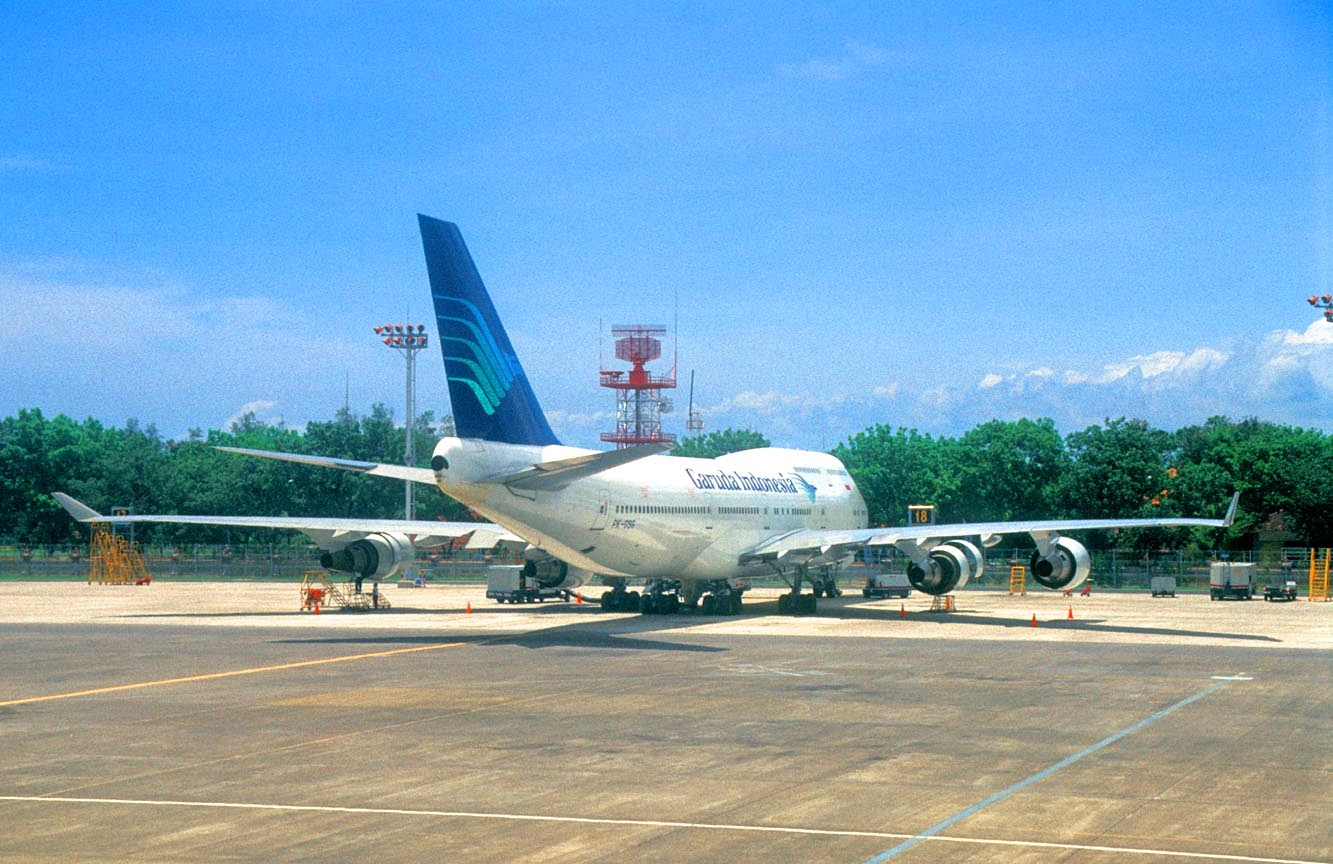
    Indonesia is seeking to lure more European tourists to visit the country by promoting its national tourism industry in the Matka-Nordic Travel Fair 2017 that will be held from January 19-22 in Messukeskus, Helsinki, Finland.

    “Indonesia has set the target of attracting at least 2.1 million European tourists to Indonesia,” Deputy Assistant of Europe, Middle East, America and Africa Market Development of the Tourism Ministry Nia Niscaya said here Monday.

    Pointing out that the travel fair will be held in Finland, Niscaya stated the Nordic countries, including Denmark, Finland, Iceland, Norway and Sweden, offered great potentials for the countrys tourism industry.

    In 2015, the official data showed that as many as 98,960 tourists from the Nordic countries had visited Indonesia.

    “The number is predicted to be more in 2016, as until October itself, the number of tourists from the Nordic nations visiting Indonesia had reached 95,196,” Niscaya revealed.

    During the largest travel exhibition in Northern Europe, Indonesia will showcase several industries that will present and promote the countrys tourism potential at the Pavilion Indonesia booth.

    Several Indonesian traditional dances will also be performed during the travel fair. Visitors would also be invited to taste Indonesias traditional drink in the exhibition booth, Niscaya mentioned.

    “Using the tagline Wonderful Indonesia Explore Further, we want to showcase its biodiversity, unique handicrafts, music, variety of culinary delights, tourism destinations and most importantly, its diversity and the hospitality of the people,” Niscaya explained.

    The government of Indonesia has set a target of increasing the number of tourist visits from 9.5 million in 2014 to 20 million in 2019.

    The country has also developed 10 prioritized destinations, namely Lake Toba in North Sumatra, Tanjung Kelayang in Belitung, Mandalika in South Lombok, Wakatobi in Southeast Sulawesi, Morotai in North Maluku, Seribu Islands in Jakarta, Tanjung Lesung in Banten, Borobudur Temple in Central Java, Mount Bromo in East Java, and Labuan Bajo in East Nusa Tenggara.

    The government has also provided short stay free visa on arrival for tourists from 169 countries, including Finland, to increase the number of tourist visits.

  • Taco Bell China launches in Shanghai

    Taco Bell China launches in Shanghai

    Mexican-inspired restaurant chain Taco Bell has opened its first outlet in China, near Shanghai’s landmark Oriental Pearl Tower in the Lujiazui business district.

    The restaurant has opened in conjunction with Yum China Holdings, which is the licensee of Yum! Brands in Mainland China.

    “Leveraging our deep insights into Chinese consumer preferences, developed from close to 30 years working in this market, we researched and fine-tuned the Taco Bell menu for China, and the initial response from customers is very encouraging,” says Yum China CEO Micky Pant.

    Favourite items on the brand’s menu have been adapted to local tastes, plus sauces have been developed. Items such as the Shrimp and Avocado Burrito will be offered only in China Taco Bells, and the Crunchy Taco Supreme now has Taco Bell’s signature nacho cheese sauce while the Volcano Chicken Burrito features spicy Sriracha sauce.

    Customers can order shared plates featuring seasoned nacho chips, spicy fried chicken and Mexican fries. Drinks available include cold draft beer and specialty cocktails such as the Margarita and the Mojito.

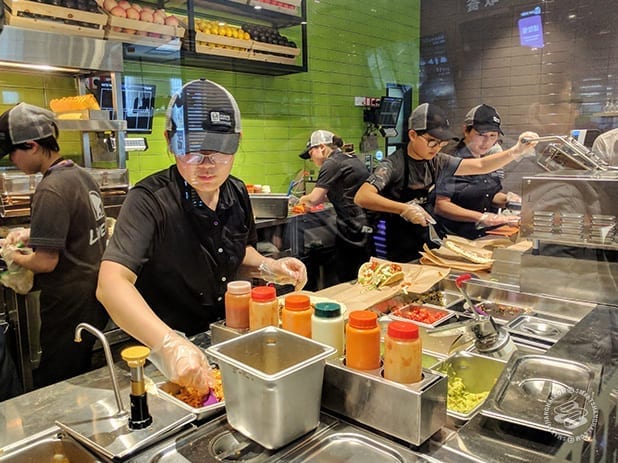
    There is an open kitchen so customers can see their food being made to order. There are also self-order kiosks.

    The restaurant has been officially launched following a soft opening during which customers have been sharing their experience of the brand through social-media posts, blogs and videos. More than 1000 people took part in a selfie soft-opening promotion.

    taco-bell-shanghai-inside

    California inspiration

    “Built around the concept of ‘Live Mas’, which literally means ‘Live More’, Taco Bell encourages its customers to try new things,” says Pant. “I look forward to creating experiences that surprise and delight people as we expand the Taco Bell brand in China.”

    The Shanghai restaurant showcases Taco Bell’s classic California-inspired look and design. It features surfboards hanging from the ceiling as well as guitars and graffiti art. It also integrates advanced technology throughout, including free Wi-Fi, digital ordering kiosks, digital menu boards and a range of payment options.

    “Building restaurants in new international markets is a key component to the overall growth and evolution of Taco Bell, and we’ve just scratched the surface of our global unit expansion potential,” says CEO Brian Niccol. “The opening of this restaurant in China is an exciting milestone for the brand, as this market holds tremendous growth potential.”

    Taco Bell has more than 7000 restaurants, more than 300 of them in 26 countries outside of the US. It aims to reach 1000 restaurants internationally by 2022.

    Yum China Holdings, with executive offices in Shanghai, has exclusive rights in mainland China to KFC and Pizza Hut as well as Taco Bell. Yum China also owns the East Dawning and Little Sheep concepts. With more than 7300 restaurants and 400,000-plus employees in more than 1100 cities, Yum China generated more than $8 billion in system sales in 2015.

    Taco Bell, a subsidiary of Yum! Brands, was the first quick-service restaurant to offer American Vegetarian Association (AVA) certified menu items. Taco Bell’s 350-plus franchise organisations serve more than 42 million customers each week through 7000 restaurants across the US, as well as through its mobile, desktop and delivery ordering services.

    Based in Louisville, Kentucky, Yum! Brands has nearly 43,000 restaurants in 135 countries and territories. Worldwide, it opens more than six new restaurants a day on average.

  • AI to fuel smartphone sales rebound in 2017

    AI to fuel smartphone sales rebound in 2017

    Consumer purchases of smartphones dropped to a three-year low in 2016, but Accenture believes sales will rebound this year, fueled by demand for new capabilities including AI-driven digital assistants.

    A new global Accenture survey finds that the expected resurgence will be also fueled by the introduction of better security, new functions, improved performance and device refresh schedules.

    Accenture polled 26,000 consumers in 26 countries. Results show that more than half (54%) of consumers surveyed said they plan to buy a smartphone in the next year, up from 48% in last year’s survey.

    Chinese consumers are the main drivers of this upturn, with three-quarters (74%) of respondents in China saying they intend to purchase a smartphone in the coming 12 months, up from less than two-thirds (61%) in last year’s survey.

    The number of respondents in India and the United States who said they plan to buy a smartphone in the coming 12 months also increased by double digits over last year, to 79% in India (from 68% last year) and 52% in the United States (from 38% last year).

    Among all consumers surveyed, the leading driver of purchase intent is the ability to access the newest and most innovative features and functions, cited by 51% of respondents in this year’s survey, compared with only 41% last year.

    Another reason consumers are opting to buy new smartphones is the inadequate performance of their existing devices, cited by 45% of customers this year – up from 33% last year.

    “Improved features and falling prices are key reasons consumers around the world are signaling a desire to buy new smartphones,” said David Sovie, global managing director for Accenture’s Electronics and High-Tech business.

    “Growing acceptance of services powered by artificial intelligence, such as voice assistants, is also fueling this market upswing. 2017 will be the year when artificial intelligence goes mainstream in consumer devices.”

    For the first time, the annual survey polled consumers about their intentions to buy digital voice-enabled assistants such as Amazon Echo and Google Home. Powered by artificial intelligence, the products recognize a human’s voice commands, such as ‘Turn on the light’ and ‘Play music’ and answer questions such as ‘What time is it?’ and ‘What is the temperature outside?’

    While only 4% of the respondents said they own such a device today, two-thirds (65%) of these said they use their device on a regular basis, showing strong acceptance of this new technology.

    Voice assistants on smartphones are also becoming increasingly popular as the AI technology powering these services has improved dramatically. Younger consumers are leading the adoption, with more than four in five (84%) of 14-to-17-year-olds saying they either use this technology today or are interested in doing so.

    Consumers are also willing to embrace a wide array of potential AI-powered, personalized services, with a majority of respondents saying they are interested in personal health assistants (cited by 60%), smart trip assistants (59%) and entertainment advisors (51%).

  • Samsung-Apple battle: the gap is closing

    Samsung-Apple battle: the gap is closing

    Samsung’s surprise surge in 2016 fourth quarter profit may further close the gap with its US competitor Apple.

    As the high-profile Samsung-Apple battle continues, the Korean company reported sales revenue of 53 trillion won (US$44 billion) with an operating profit of 9.2 trillion won, for an impressive operating margin of 17.36 per cent. The margin rose from 16.2 per cent in the second quarter of 2016 and represented its best result during the past two years.

    Apple has always led the Korean tech giant in terms of operating margin. In Q1 2015, the difference between the two companies was 18.82 percentage points, with Apple and Samsung reporting 31.51 per cent and 12.69 per cent, respectively. In Q4 of same year, the gap further widened with Apple reporting 31.86 per cent, and Samsung, 11.52 per cent.

    However, Samsung started catching up in 2016.

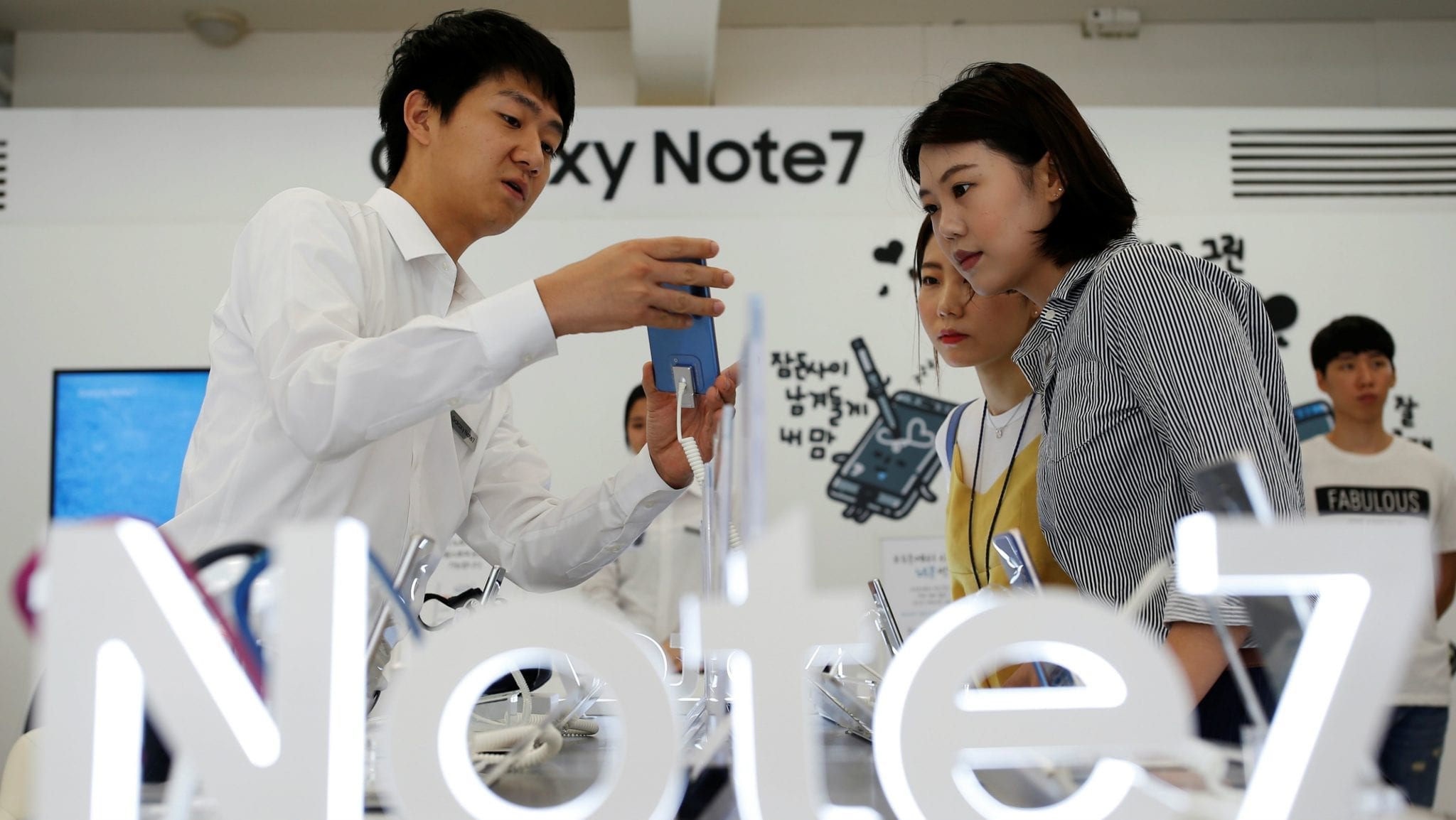
    Apple saw a continuous drop in its operating margin from 27.67 per cent in Q1 to 23.82 per cent in Q2 and 19.19 per cent in Q3, while Samsung saw its rate increase from 13.42 per cent in Q1 to 16. 2 per cent in Q2 and 17.36 per cent in the last quarter, although it did plummet in Q3 to 10.87 per cent as a result of the Note 7 crisis.

    Samsung’s prosperity in Q4 2016 was driven by a boom in its semiconductor business, improvement in display sales, and the success of its Galaxy S7 series, sources said.

    Apple has yet to disclose its financial results for the last quarter, but it is estimated that the company’s profit margin will come in around 20 per cent, with a slight improvement from the previous quarter, which will bring down the gap between the two tech giants to a record low of 3 per cent.

  • India could become cashless by 2020

    India could become cashless by 2020

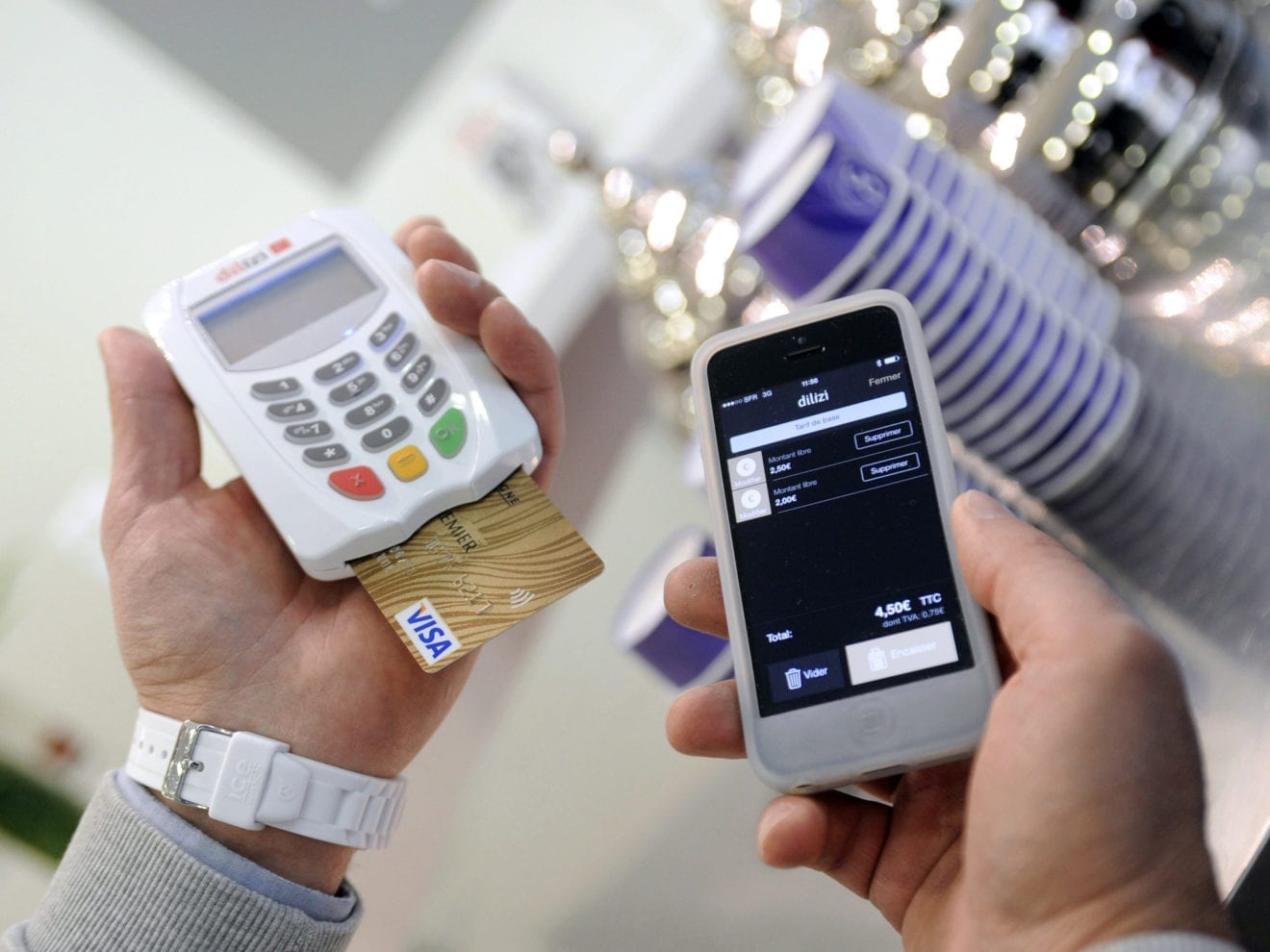
    After the demonetisation of India’s 500 and 1,000 rupee banknotes, the Indian government is stressing the importance of digital transactions in a bid to help the country transform into a cashless economy.

    Government policy think-tank Niti Aayog CEO Amitabh Kant has predicted that that cards, ATMs and POS machines would become redundant in the country by 2020.

    “India is in the midst of huge disruption in the world of both financial technology and in terms of social innovation (there is) huge innovation and this disruption will enable India to leapfrog and by 2020 my view is that in the next two-and-a-half years, India will make all its debit cards, credit cards, all ATM machines and POS machines totally irrelevant,” explained Kant.

    Kant was addressing a session on ‘Startups and innovations which have social impact in India’ at Pravasi Bharatiya Divas 2017, a three-day mega event involving Indian diaspora.

    “They will all become redundant in India, and India will make this jump because every Indian will be doing his transaction just by using his thumb in thirty seconds.”

    Kant added that the government was pushing for digital payments in a big way and this was a huge disruption with several innovative methods. “India has created a back end in terms of biometric which will enable India,” he said, highlighting recently launched BHIM app and Aadhar enabled payment system initiatives.

    BHIM (Bharat Interface for Money) is a mobile app developed by National Payments Corporation of India (NPCI) based on Unified Payment Interface (UPI) launched by Prime Minister Narendra Modi to faciliate e-payments directly through banks. It was launched as part of the 2016 Indian banknote demonetisation and cashless transaction drive. With the Aadhaar Payment App, another initiative of the government, allows users to make cashless transactions through multiple bank accounts.

    While India is the only country with a billion mobile and billion biometric, it is largely a cash driven economy.

    Kant added that despite demonetisation and focus on digital payments, only 2% to 2.5% of Indians pay taxes, so India needs to move from a non-formal to a formal economy.

  • Free trade deal boosts South Korea’s exports to Vietnam

    Free trade deal boosts South Korea’s exports to Vietnam

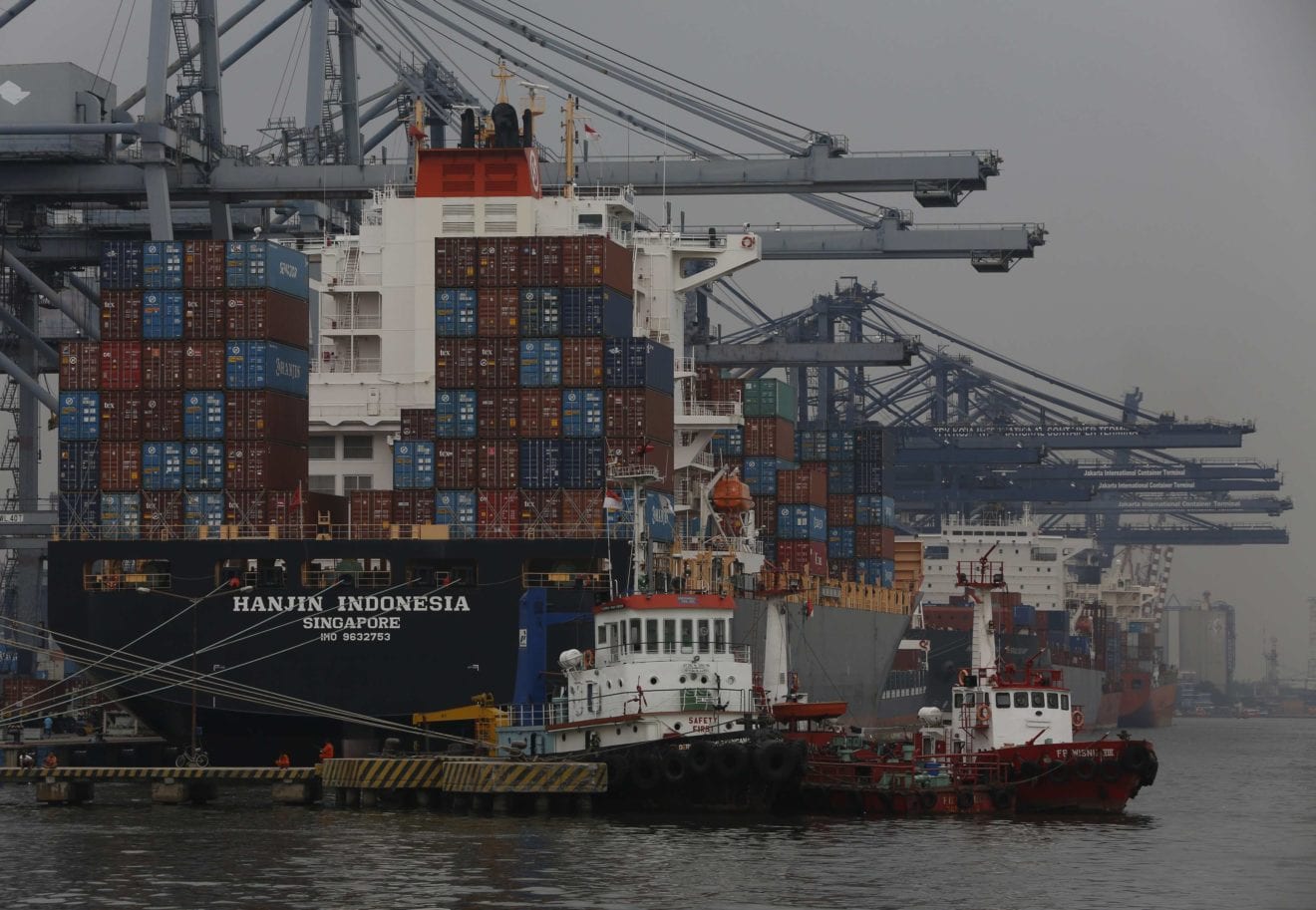
    Vietnam was the world’s third largest importer of South Korean products during January-October, data show. The Korea-Vietnam Free Trade Agreement, which took effect a year ago, has largely expanded exports from South Korea to Vietnam.

    South Korea’s shipments to Vietnam in the first 10 months climbed 12 percent from the same period last year to $26.4 billion, citing reports from the trade ministry and the Korea Trade-Investment Promotion Agency.

    South Korea’s trade ministry said the rising exports made Vietnam the world’s third-largest importer of South Korean products during the January-October period, after China and the U.S.

    Vietnam’s General Statistics Office on Friday released trade data for the first 11 months, putting South Korea among the top exporters to Vietnam in a wide range of products from iron and steel and garment materials to phones and consumer goods.

    In particular South Korea was the biggest seller of computers and electronics to Vietnam, with a total value of $7.94 billion, up 26.3 percent from the year-ago period. It was also the second biggest supplier of machinery to Vietnam, with exports of $5.12 billion, up 9.5 percent.

    Fuel shipments from South Korea increased fivefold to 1.6 million tons, the biggest expansion from all suppliers.

    Statistics showed that Vietnam has been recording a larger trade deficit with South Korea since 2010. The decifit hit nearly $19 billion last year.

    A survey by the Korea investment promotion agency found 42 percent of 60 South Korean exporters increased their shipments to Vietnam following the enactment of the Korea-Vietnam FTA in December 2015. A majority expected the free trade deal to continue helping their business in 2017.

    For years, South Korea has been the biggest foreign investor in Vietnam, driven by major projects of electronics giants LG and Samsung.

  • Tata Sky offers 600 channels and services

    Tata Sky offers 600 channels and services

    Tata Sky in India has unveiled its offerings #MaxJingalala of 600 channels and services, which is said to be the highest ever in the DTH sector.

    Tata Sky today is a market leader in HD channels along with maximum number of Tamil, Telugu, Kannada, Malayalam, Marathi, Bengali, Oriya, Punjabi and Assamese channels on offer.

    As of December 2016, Tata Sky is offering an unprecedented 76 HD (highest in the industry) and 483 SD channels. The bouquet of 31 value added services, 15 SD & HD movie platforms specials, 9 exclusive +1 channel feeds, have been a clear differentiator and a key focus area for the brand.

    “Consumers in India consider the number of channels provided by an entertainment platform to be among the second-biggest reason to make their purchase decisions,” said Malay Dikshit, Chief Communications Officer of Tata Sky. “Tata Sky is leaving no stone unturned to offer the maximum number of channels and services to its subscribers. Hence offering Sabse Zyada Manoranjan catering to every member of the family is key to the Tata Sky offering.”

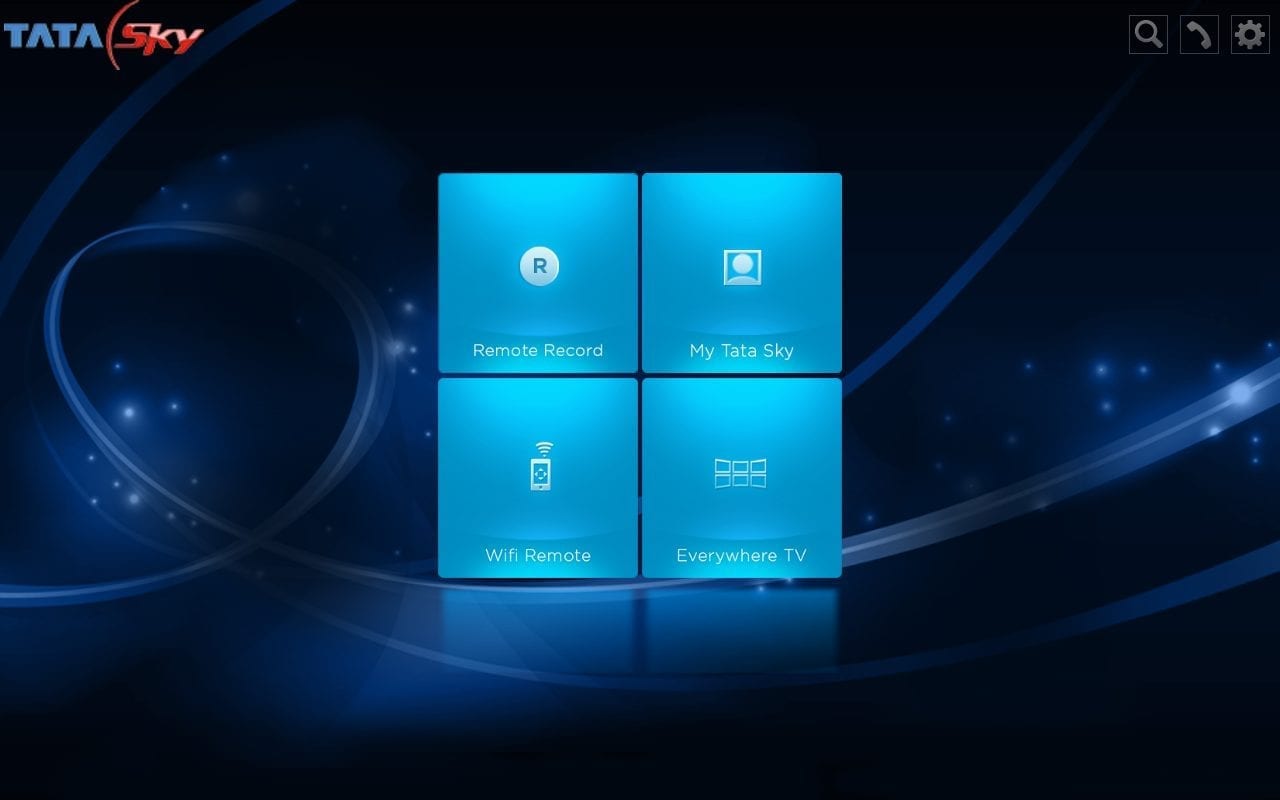
    Throughout 2016, Tata Sky has pioneered in the Pay TV sector with offerings ranging from enabling internet browser application on the Set Top Box, introducing Kids Showcase, Bengali & Punjabi movies MAMI films, m-Visa payment option to first of its kind interactive services such as Comedy, Devotion, Music + and Gurus.

    The year also saw popular campaigns from Tata Sky such as Pyaar Jingalala (13 series ad films), Das Saal Jingalala and Family Jingalala (starring Amitabh Bachchan).

    Some of the other first-ever in the sector that Tata Sky has under its hat are the launch of 4k Set Top Box in India, Karaoke service on STB, unique interactive services Classroom and Smart manager and the world’s first Daily Recharge option.

  • Jaguar Land Rover sells record 583,313 cars in 2016

    Jaguar Land Rover sells record 583,313 cars in 2016

    Britain’s biggest carmaker Jaguar Land Rover sold a record 583,312 cars last year as the Indian-owned firm continues its rapid expansion with the aim of building 1 million vehicles a year at the turn of the decade.

    Sales were up 20 percent from the previous year, although sales growth slowed to 12 percent year-on-year in December, the carmaker said.

    The automaker, which spent years in the doldrums before being bought by India’s Tata in 2008, has since invested heavily in new models and expanded production with plants in China and Brazil and construction of a new site in Slovakia under way.

    Sales of luxury Jaguar models rose 77 percent to 148,730 units in 2016 due to strong demand for a range of new high-end products including the F-PACE, the brand’s first off-roader which was launched last year.

    Europe was the carmaker’s biggest overall market, accounting for almost a quarter of total demand.

    The firm said its line-up will continue to expand but it has warned about the negative effect any tariffs on its business imposed as part of a Brexit deal could have if Britain were to lose unfettered access to the single market.

    Its annual profit could be cut by 1 billion pounds ($1.23 billion) by 2020 if Britain returned to World Trade Organization rules for trade with the continent, two sources told Reuters last year.

  • Vietnam telecom giant to scrap roaming fees with Laos, Cambodia from 2017

    Vietnam telecom giant to scrap roaming fees with Laos, Cambodia from 2017

    The company expects to lose $1 million a month but hopes to boost connections in Indochina. Vietnam’s biggest telecom firm Viettel has announced it will abolish roaming charges between Vietnam and neighboring Cambodia and Laos, where it has also developed strong networks.

    Nguyen Manh Hung, general director of the company, said that starting from next year its subscribers in the three countries will be able to phone each other at domestic call rates, local media reported. Viettel has developed the Metfone network in Cambodia and Unitel in Laos.

    Hung said the initiative is to facilitate cultural and trade connections in Indochina, but the company will lose around $1 million a month.

    In October last year, members of the European parliament also voted to scrap mobile roaming charges from mid-2017 to save holidaymakers among member countries from racking up massive phone bills.

    ASEAN ministers of communications raised the idea of abolishing roaming fees thoughout the bloc back in 2013, but no agreement was finalized.

    Besides Vietnam, Viettel operates mobile networks in ten countries in Southeast Asia, South America and Africa.

    Its brand value has been estimated at $973 million by UK-based intangible asset valuation consultancy organization Brand Finance. It is ranked seventh in Southeast Asia and 93rd globally.

  • KBZ and Kasikorn Banks Introduce Remittance Services in Rangoon

    KBZ and Kasikorn Banks Introduce Remittance Services in Rangoon

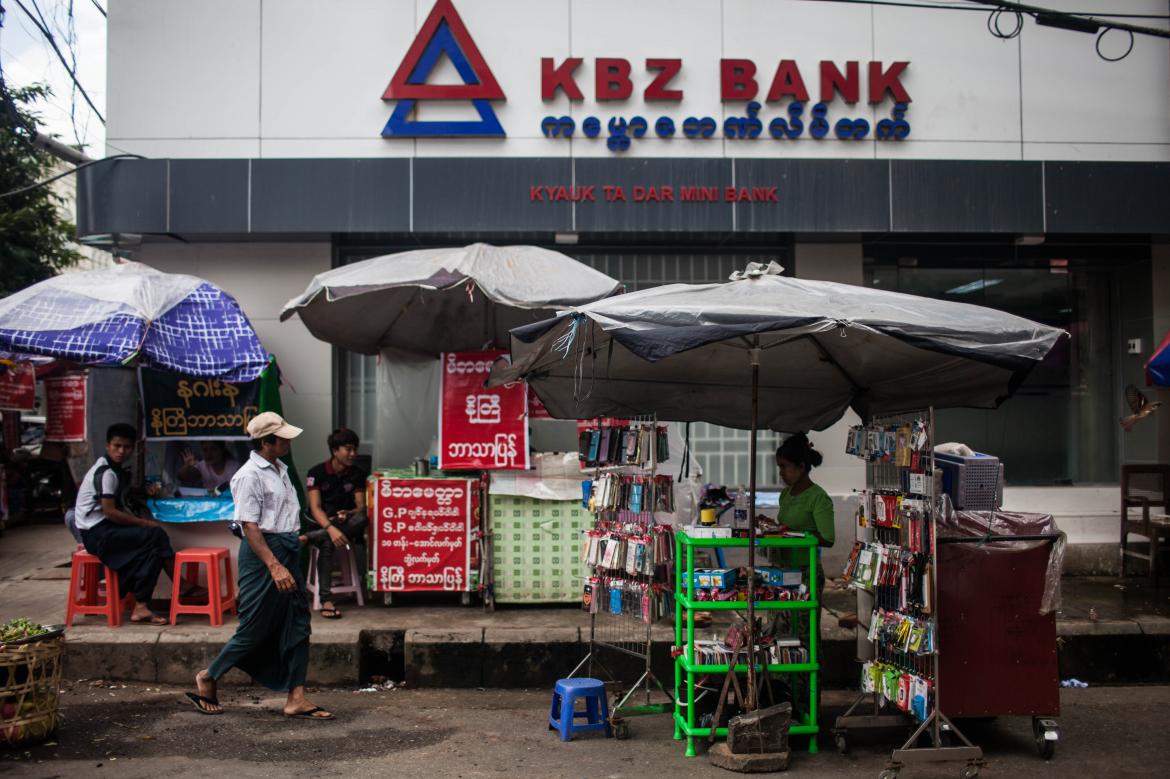
    Burma’s Kanbawza Bank (KBZ) signed a memorandum of understanding with Thailand’s Kasikorn Bank in Rangoon on Wednesday to introduce remittance services for migrant workers in both countries.

    Worawut Wesaratchakit, senior vice president of Kasikorn Bank, told the Irrawaddy that the remittance service was expected to begin during the first quarter of 2017 as further details needed to be discussed.

    “Most migrants have to go to bank branches to send money, which is not convenient. They use agents, which is unregulated, unsafe, and costs at least 10 percent of the money being sent,” he said.

    He added that the new service would be easier and cheaper than the one currently used by agents.

    There are an estimated 3 million Burmese migrant workers in Thailand.

    Many of those workers currently use informal channels to send money home, bank officials said.

    U Win Lwin, managing director of KBZ’s international banking division, said the new service will pose less risk for migrant workers.

    “By partnering with Kasikorn Bank, we can ensure the protection of people’s remittances,” he said.

    The transfers will be arranged via a mobile application. According to Kasikorn Bank, senders will be able to monitor transfers and clearly see when the money reaches the receiver’s account.

    The service will be linked to the full features of KBZ’s online banking system and a savings scheme as well.

    One of the largest private commercial banks in Burma, KBZ Bank was established in 1994 in the Shan State capital, Taunggyi. International representative offices have opened in Thailand and Singapore currently. KBZ opened a representative office in Bangkok in May.

    Thailand’s Kasikorn Bank was founded in 1945 and operates more than 1,000 branches across Thailand and 16 overseas offices.

  • Vietnam to develop legal framework for Bitcoin

    Vietnam to develop legal framework for Bitcoin

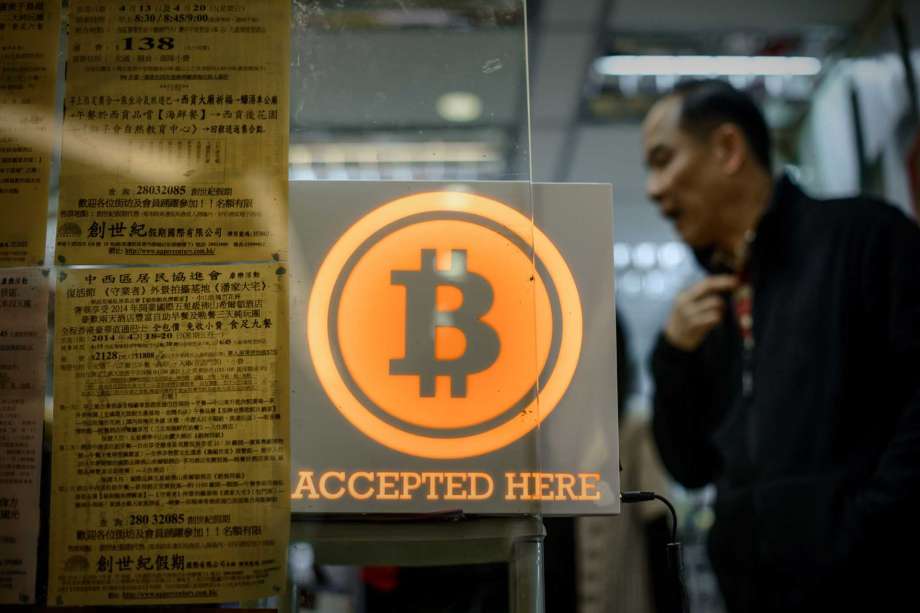
    The government is looking to cash in on taxes from the virtual money. Amid concerns that Bitcoin can be used for money laundering, creating chaos in the financial markets, Vietnamese regulators, rather than banning Bitcoin, are looking to manage the virtual money through a new legal framework.

    Since Bitcoin transactions are mainly conducted on the internet, it makes it difficult for the government to collect taxes. This means losses to the budget revenue due to tax evasion, said a recent government proposal.

    The proposal also pointed out that Bitcoin can be used to launder money, purchase illegal weapons and arms, and enable corruption and bribery.

    The justice ministry, along with the central bank, the information ministry and the trade ministry, has been tasked with bringing a regulatory framework to the table by the end of next year.

    Vietnamese lawmakers admit that they are behind other countries when it comes to defining virtual currency and how it can be regulated.

    They are also aware that electronic payments are on the rise in Vietnam, with over 2.2 million electronic wallets currently active across the country.

    Besides, as Vietnam is experiencing an e-commerce boom, Bitcoin and other types of virtual money could be used as non-cash payments in the future.

    Vietnam expects revenue from online retail to hit $10 billion by 2020, accounting for 5 percent of total nationwide revenue from sales of goods and services, according to the government’s e-commerce development plan for 2016-2020.

    The Southeast Asian country forecasts rapidly growing demand for online shopping with 30 percent of the population buying goods and services over the internet.

    The justice ministry said that there are no rules in place to regulate Bitcoin as well as other electronic forms of money, and this must change.

  • Kasikornbank expands in China with local incorporation

    Kasikornbank expands in China with local incorporation

    Kasikornbank will soon be Thailand’s second bank to be locally incorporated in China, with hopes of cashing in further on the growing trade between the two countries.

    Thailand’s fourth largest bank by assets is currently going through the final procedures with the Chinese authorities, with official approval to be completed by mid-2017, Chairman Banthoon Lamsam told reporters on Thursday. Incorporation in China will enable Kasikornbank to operate on the same conditions as a local bank, including offering full-scale renminbi services to local clients. It would become the second Thai bank to incorporate in the country after Bangkok Bank.

     Also in 2017, the bank will open a new branch in Shanghai, its fourth in Chinese territory after those in Chengdu and Shenzhen on the mainland, and one in Hong Kong.

    “China is a super power country, especially at a time when so much change is going on in the global political landscape,” Banthoon said. He added: “The trading power of the West will be more difficult to rely on. We must lead on the East in which China stands as an important country.”

    Neither the economic slowdown nor the massive shadow banking industry in the country seems to bother Banthoon. “China does have its own problems but they have the system to adjust and control so the situation will remain manageable and can go on,” he said.

    Currency settlement

    Additionally, Kasikornbank on Thursday signed an agreement with Chinese fintech firm International Business Settlement to develop a baht-yuan cross-currency settlement system using blockchain technology.

    It will be based on an IBS platform which the Chinese company claims will be a cheaper, quicker and safer alternative to the dominant SWIFT settlement system. IBS Chairman Luo Feng said that his company is working with central banks in Europe and other regions in the world to develop the new settlement and clearing network.

    “IBS has the technology and network to facilitate international settlement that is not based just on the U.S. dollar, at a time when the yuan’s international presence is increasing,” Banthoon said.

    The system IBS is developing will enable direct settlement of transfers between baht and yuan, without the need to use U.S. dollar conversions at any point in the procedure.

  • Nvidia launches AI-focused incubator in India

    Nvidia launches AI-focused incubator in India

    American graphics processing unit (GPU) technology giant Nvidia has launched the Nvidia Inception program in India, in recognition of the country’s budding innovation ecosystem surrounding Artificial Intelligence (AI).

    Inception is a virtual incubator program to support startups with revolutionary ideas in AI. Members will receive a custom set of benefits, from hardware grants and marketing support to access to the latest Nvidia deep learning technologies and training with deep learning experts.

    The Inception Program was launched in India at the inaugural Nvidia Emerging Companies Summit India, part of the GPU Technology Conference (GTCx).

    The momentum around AI among Indian innovators is so significant that, at launch, the Inception Program already has close to 100 Indian startups as members.

    “Artificial Intelligence has gone from science fiction to reality thanks to a new computing model: GPU-accelerated deep learning,” Nvidia MD for South Asia Vishal Dhupar said.

    “We believe the next generation of breakthroughs in technology and business will be driven by the AI startup community. Young India’s aspirations, ideas and potential are global in scale, and we are excited to amplify the imagination and intelligence of the country’s brightest minds.”

  • Why Vietnam should care about how much Chinese tourists splurge

    Why Vietnam should care about how much Chinese tourists splurge

    More spending by Chinese visitors can boost Vietnam’s GDP by 1 percentage point. As more Chinese travel around the world, they leave bigger impacts wherever they go. Now experts say for countries that receive a large number of Chinese arrivals, including Thailand and Vietnam, their economic growth will be influenced by the spending habits of these visitors.

    A 30 percent increase in spending by Chinese tourists would boost Vietnam’s gross domestic product by nearly 1 percentage point, citing Credit Suisse. For Thailand, that would be around 1.6 points.

    Vietnam’s economy is expected to expand 6 percent this year, before speeding up to 6.8 percent next year.

    Mainland China accounted for 30 percent of all tourists to Vietnam, with more than 2.48 million coming in the first 11 months this year, up 54 percent from the same period last year. It was the biggest source market, and only came after Hong Kong in terms of growth.

    In October, the Chinese Tourism Administration released a top 10 list of favorite destinations for Chinese travelers, ranking Vietnam at seventh.

    Edward Lee, an economist with Standard Chartered Plc in Singapore, said that tourism in Southeast Asia will benefit from the growing Chinese demand.

    The number of Chinese tourists into Asia as a whole has grown tenfold since 2000, Lee said. They now account for a quarter of tourists in Thailand, which came first in the China’s list of top 10 favorite destinations.

    “Chinese tourism is pretty big for ASEAN now, and all the countries rely on Chinese visitors to keep coming and keep spending,” Lee was quoted as saying.

    Many direct flights are serving Vietnamese major cities from China. A large number also entered via northern border provinces, particularly Quang Ninh, home to the much loved Ha Long Bay.

    Quang Ninh has announced that it will ease visa requirements for Chinese visitors from January 1, allowing groups of Chinese travelers to stay for up to three days without a visa.

    Harry Sa, a research analyst at the S. Rajaratnam School of International Studies, told that “China can do wonders for the economy and the countries in the region understand.”

    Most countries welcome that, even those that have tensions with China, he said, referring to the overlapping claims in the South China Sea (which Hanoi calls the East Sea) that involve Malaysia, the Philippines and Vietnam.