Tag: asia

  • Chow Tai Fook remains calm in the storm

    Chow Tai Fook remains calm in the storm

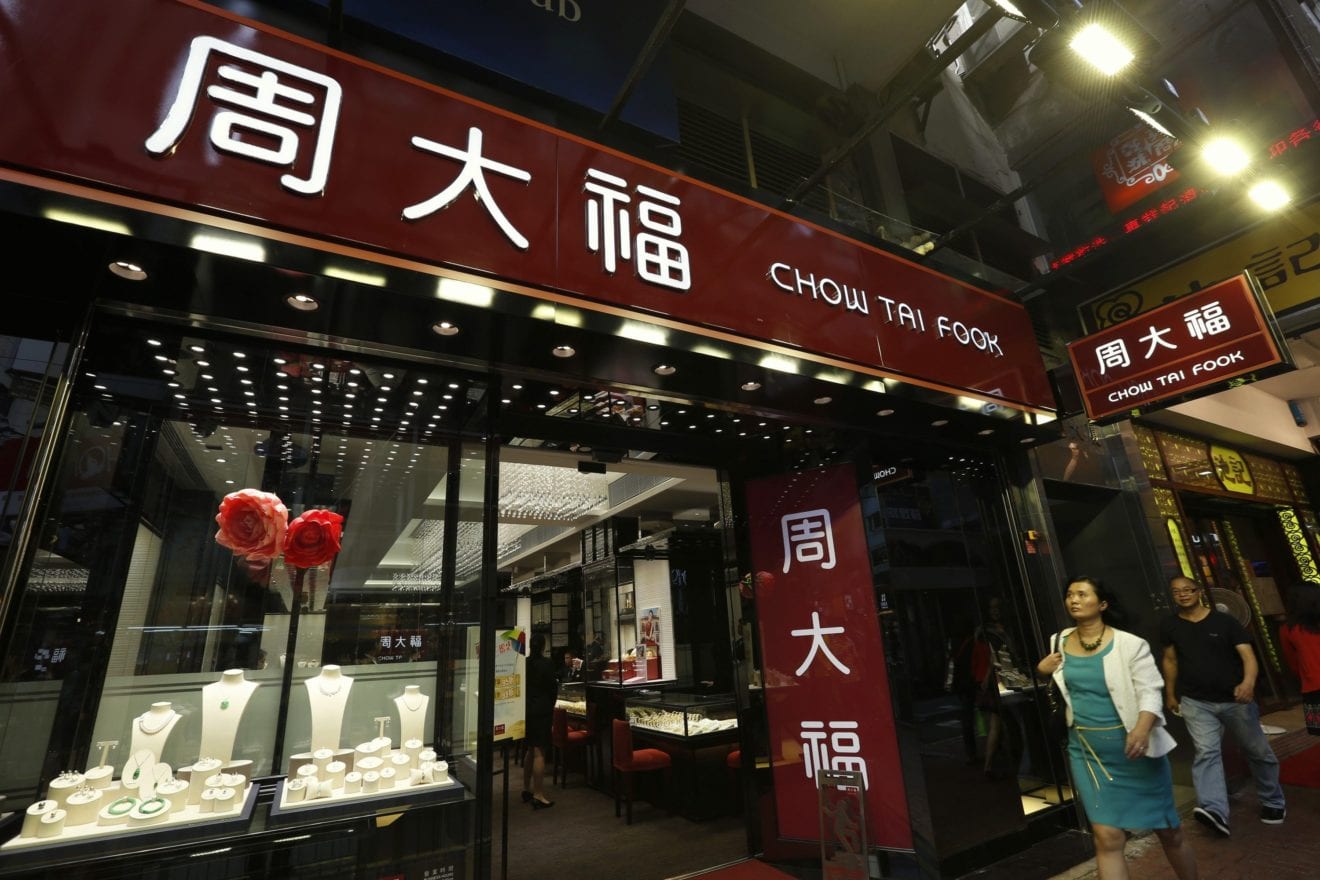
    A 23.5 per cent drop in revenue to HK$21.526 billion (US$2.775 billion) was recorded by Chow Tai Fook Jewellery Group for its latest six months.

    Its interim results for the period to September 30 show same-store sales in Hong Kong/Macau dropped by 25.7 per cent and in China by 20.9 per cent.

    Gross profit was down by 13.1 per cent to HK$6828 million from HK$7857 million in the first quarter.

    In its executive summary, the group says that in response to the rapid market changes and volatile macroeconomic environment across Greater China during the first half, it focussed on enhancing store productivity and efficiency.

    The group also capitalised on its vertically integrated business model and proprietary technology to introduce the Chow Tai Fook T Mark diamond brand in the first half, which it describes as “an important milestone in our heritage” that “revolutionised the current diamond-industry practice”.

    Despite revenue declining with the market slowdown in the first half, the group’s adjusted gross profit margin improved, mainly because of an enhanced product mix and an uplift in gross profit margin for gem-set jewellery and gold products.

    As at the end of September the group’s retail network comprised 2326 points of sales, and increase of seven. During the first half, 26 points of sale were opened in shopping malls while 19 were closed in department stores on the mainland.

    Also in the mainland the group promoted its premium diamond brand Hearts On Fire, opening two points of sale and 30 shop-in-shop/counter-in-shop outlets for a total of seven POS and 148 shop-in-shop/counter-in-shop.

  • Cybercrime rising Asia as cashless payments rise

    Cybercrime rising Asia as cashless payments rise

    Cashless payments are growing rapidly in Asia-Pacific and so is cybercrime, costing the region an estimated $US 81 billion.

    With new combinations of malware customised for local markets, phishing and social engineering attacks as well increasing e-commerce and ATM fraud, businesses are increasingly at risk for payment data theft, according to the PCI Security Standards Council.

    Singapore’s cards and payments market is one of the most competitive and attractive in the Asia-Pacific region. Already, 69 per cent of consumer spending in Singapore is made through electronic payments.

    It’s against this backdrop that global payment and cybersecurity experts met at the PCI Asia-Pacific Community Meeting in Singapore to collaborate on helping businesses prevent, detect and respond to cyberattacks that can lead to payment data breaches and fraud.

    “We simply must work together to advance payment security,” PCI Security Standards Council (PCI SSC) international director Jeremy King told attendees.

    “New technologies are driving adoption of cashless, mobile and digital commerce in Singapore and the Asia-Pacific region, and it’s critical that we ensure consumers remain confident in the security of their financial information with every payment transaction. As payments evolve, businesses must prioritise data protection with robust security standards and practices.”

    The PCI SSC has reinforced its mission to foster secure transactions globally and emphasised that as new cyber threats emerge, and advances in technology change the way payments are conducted, PCI Standards will evolve to protect the next generation of payments. Regional and industry experts speaking at the event included representatives from the PCI Security Standards Council, Interpol, Verizon, Diners Club Singapore, Foregenix, Beijing Information Technology and Pen Test Partners.

    Presentations and discussions addressed a mix of regional and global topics ranging from new threats via the Internet of Things; cybersecurity trends in Asia-Pacific; Point-to-Point Encryption for protecting payment data throughout the entire processing environment; preventing skimming at ATMs and the future of mobile and digital commerce.

    PCI SSC GM Stephen Orfei said the Asia-Pacific region has made tremendous advances in payment security in the past decade.

    “More and more companies in the region are making cybersecurity a top priority.  With the rapid growth in mobile payments, now, more than ever, we must join forces to devalue payment data and make it useless to criminals.  It is very encouraging to see industry and public-private partnerships in Asia-Pacific working together to address the ever expanding cyber threats from around the world.”

    The PCI Security Standards Council is a global forum that is responsible for the development, management, education, and awareness of the PCI Data Security Standard (PCI DSS) and other standards that increase payment data security.

    Key focus areas at the PCI Asia Pacific Community Meeting included:

    • Devaluing data with point-to-point encryption: More and more solution providers in Asia-Pacific are encouraged to adopt the PCI Point-to-Point Encryption (P2PE) Standard to provide solutions that devalue data and simplify security and PCI DSS compliance efforts for businesses.
    • Simplifying security for small merchants: The PCI SSC Small Merchant Task Force urged banks, technology providers and security assessors with small business customers to adopt and disseminate newly published PCI Payment Protection Resources for Small Merchants.
    • Improving security of online and mobile payments with stronger authentication: PCI SSC chief technology officer Troy Leach discussed the newly released device standards (PTS POI v5 and HSM v3) that support online and mobile payment security. PCI SSC is collaborating with EMVCo to support 3-D Secure 2.0 (3DS 2.0), which provides a way for consumers to directly authenticate their card with the card issuer when shopping online.
  • Meet China’s online super-consumers

    Meet China’s online super-consumers

    Like many college students in China, Song Yang buys most of the things she needs for daily life by shopping on the internet. But while her peers have to satisfy the urge to splurge with the occasional new smartphone or pair of branded sneakers, Song doesn’t worry much about living on a student’s budget.

    A finance major at Beijing’s prestigious Peking University who says she made a “pot of gold” in the stock market after being staked by her parents, Song, 21, spends upwards of $15,000 a year shopping on Alibaba Group’s Taobao e-commerce website. Her purchases range from high-end imported cosmetics, fashion apparel and consumer electronics, to Japanese snacks and organic produce, to furnishings for her family’s new apartment, to parts and gadgets for her father’s car.

    “As long as I have free time, I am on Taobao,” says Song, adding that her binge-shopping habit has resulted in up to 30 packages delivered to her home in a single day. “Whenever I have a new idea, I will search on Taobao,” she said.

    Song is the kind of China super-consumer that retailers dream of connecting with—and Alibaba Group is happy to oblige. In 2014, Alibaba recognized that out of the millions of consumers that shop in the company’s China retail marketplaces, a small percentage had adopted online shopping as a significant part of their daily lives. The company created a membership program called APASS (Alibaba Passport) to cater to their needs by assigning them personal account managers and organizing special events like wine tastings and automobile test drives.

    Alibaba top shoppers

    APASS shoppers are mostly young, internet-savvy and increasingly affluent members of China’s rising middle class. To qualify for the program, consumers must spend a minimum of nearly $15,000 a year online. That’s just the minimum. In fact, the average annual spend among current APASS members is about $45,000. In contrast, American’s millennials—defined as aged 18 to 34 with higher consumption than other demographic groups—spend about $2,000 a year online, according to a recent study conducted by BI Intelligence. During Alibaba’s recent 11.11 Global Shopping Festival, a 24-hour online sale, APASS members spent nearly eight times as much as the average consumer shopping on Alibaba’s platforms.

    Alibaba identifies candidates based on an algorithm that takes into account not only how much e-shoppers spend, but how often they shop online, the range of products purchased, credit record, and engagement in online communities.  If you think this screening limits membership to a very exclusive few, think again: There are about 100,000 APASS members.

    Fostering relationships with top customers is a time-honored marketing tactic. To Alibaba, APASS members are vanguards of an emerging consumer lifestyle in China. “They are opinion leaders who drive the consumption trend among China’s middle class,” said Zheng Dongyang, senior manager of the APASS program. To stay on their radar and cultivate loyalty, Alibaba recently upgraded APASS to foster online communities and to offer members exclusive daily deals from more than 100 top brands including Maserati, Burberry, Fissler and Estee Lauder.

    An APASS member who has recently enjoyed the perks of belonging is Hong Degang, a self-described “consumer electronics geek” who runs a wedding photography studio in the city of Wuhan. Hong, 27, was selected as one of 10 APASS members for a nine-day, all-expenses-paid trip to Italy. The mini-holiday included visits to the venues of eight top Italian brands including wine producer Mezzacorona and luxury carmaker Maserati.

    Alibaba livestreamed parts of these visits on the company’s Tmall app and video site Youku over a nine-day period. A trip to a Mezzacorona vineyard generated 400,000 views, 200,000 likes and 120,000 comments, but it wasn’t just social sharing that was inspired. According to Tmall, total sales of the online shops of the eight featured brands jumped more than fivefold over the livestreaming period compared with sales during the nine days preceding the event.

    Despite his recent exposure to Italian brands, Hong says he’ll likely remain enamored mainly with electronics gear. He says that he owns up to 20 computers and tablets at any given time, and stays immersed in his passion by reading electronics blogs on Mobile Taobao’s news channel every day while spending more than $3,000 a pop to acquire the latest cameras from Sony and Canon. He trades his used cameras and computers in Alibaba’s flea market app, Xianyu.

    “I celebrate 11.11 every day,” Hong jokes, referring to Alibaba’s giant annual online sale.

    Not every APASS member shops purely for the joy of it. Wu Xiaofang, a 41-year-old interior designer who lives in Lishui, a small city located in southern Zhejiang Province, says she is a big online spender and APASS member because she sources products for clients on Taobao.

    Wu designs exclusively for themed country inns and guesthouses that are popular in her mountainous province, so before she shops she determines whether customers want rooms done up in Chinese ancient style, American country style, French classic style or other themes. Everything is purchased online: toilets, shower kits, bathroom faucets, customized beds and wardrobes, curtains, lamps and other furnishings.

    “Taobao can always fill my specific demands,” Wu says. “I can buy second-hand antique French or German furniture on Taobao, and classic, floral-pattern tiles from ancient Chinese buildings. You won’t be able to find this unique stuff elsewhere.”

    She says she has so far finished five “Taobao inns” at a total cost of about $270,000 on all the furnishing—but admits that APASS perks encourage her to shop not just for business but for herself and her family.

    “I think everyone goes through the same journey,” she said. “When you first start online shopping, you are just curious. Later on, you kind of get addicted to it.”

  • Tmall flagship store for Cosmax

    Tmall flagship store for Cosmax

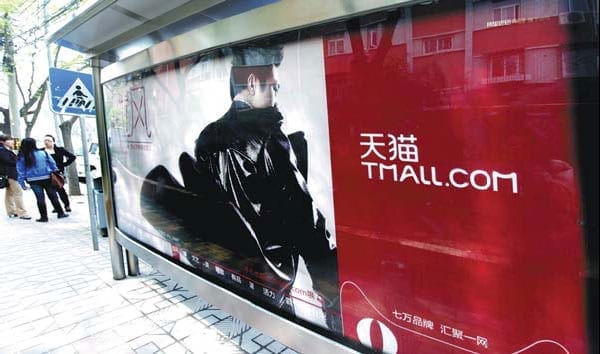
    South Korean cosmetics developer/manufacturer Cosmax Inc is to run an online flagship store on China’s Tmall.com.

    It has signed an agreement with online retail giant Alibaba Group Holding to establish the eCommerce platform to distribute Korean beauty products across China.

    cosmax-tmall

    Under the contract, Cosmax will be Korea’s first multi-shop dealer for various cosmetics brands on Tmall.com, China’s largest third-party platform for brands and retailers.

    The launch of the Cosmax platform is expected to help expedite the China Food and Drug Administration (CFDA) hygiene approval process for Korean cosmetics companies.

    Cosmax, which entered China in 2003, has cosmetics factories in Guangzhou and Shanghai. It earned more than 200 billion won (US$181.1 million) in China alone last year.

  • Retail gets personal

    Retail gets personal

    In this year of the 400th anniversary of the passing of William Shakespeare, we’ll borrow some inspiration from the great bard and say: The store is dead – long live the store.

    For, despite the stellar rise of online shopping, it accounts for just 7.3 per cent of total global retail spending.

    The store’s “renaissance,” if it were needed, reflects the fact that shopping remains popular. It also comes on the back of investment from retailers keen to make the most of the store as a differentiator – the place where shoppers touch the brand. A big feature of this spending has been the drive to make the store central to an omnichannel shopping experience where shoppers can conveniently mix how they try, buy, and return items through online, in-store, and mobile channels.

    To achieve this versatility, retailers have deployed RFID and barcode labels to track and trace items across the supply chain, into the store, and back from the customer (via returns). By using such labels, which can be automatically recorded by RFID systems or handheld computers and scanners, retailers can capture what we call Enterprise Asset Intelligence (EAI). As we move forward, EAI will play a key role as retailers look to make the in-store experience ever more enjoyable and rewarding.

    Continuous improvement

    Smart labels and sensors can be attached to any object – associates, stock, vehicles, equipment, totes and pallets, and many more. The stream of data collected from the labels is connected over wireless and cell networks to your back office, providing visibility into every area of your operations. This opens boundless opportunities to manage processes more efficiently, improve the customer experience, and free your associates from time-consuming to spend more time in the shop floor. A couple of interesting examples include:

    • Being more responsive to customers: we spoke to one UK retailer recently who told us they have 100,000 people working to restock their stores at night. Indeed, the cost of their associates is 66 per cent of their store overheads. The interesting thing is this retailer, and others we speak with, is not looking to cut these costs: it’s looking to allocate them more wisely – to free staff to spend less time on operations and more with customers. This can be achieved by using smart labels to provide a continuous view over inventory and supporting teams with better technology – including voice-guided workflows through mobile and wearable devices – to help them manage replenishment more efficiently and spend more time providing attentive and personal experiences to shoppers.
    • Being more rewarding: Using your wireless network, you can connect with the sensors that most of us carry with us all the time – in our smartphones. If the customer agrees, every time they come into store their phone can register on to your system to allow you to offer a more personalized service. For example, you can send a welcome message and offer a wide range of promotions from money-off based on their preferences, to loyalty bonuses, to gifts for their birthday, and much more. You can also build in “help” features so associates’ mobile devices can alert them, and help them easily find shoppers who’ve asked for assistance.

    What really excites us about retail right now is that we’re getting back to those halcyon days: the days when your local shop keeper would know who you are, know what you want, and engage with you in compelling ways – ways that you’d value and that encouraged your loyalty. We can use technology to achieve similar things – to not only free staff to spend more time with customers but increasingly to offer customers more intriguing, engaging, and rewarding ways to shop.

  • Vipshop adds customers, but margin narrow

    Vipshop adds customers, but margin narrow

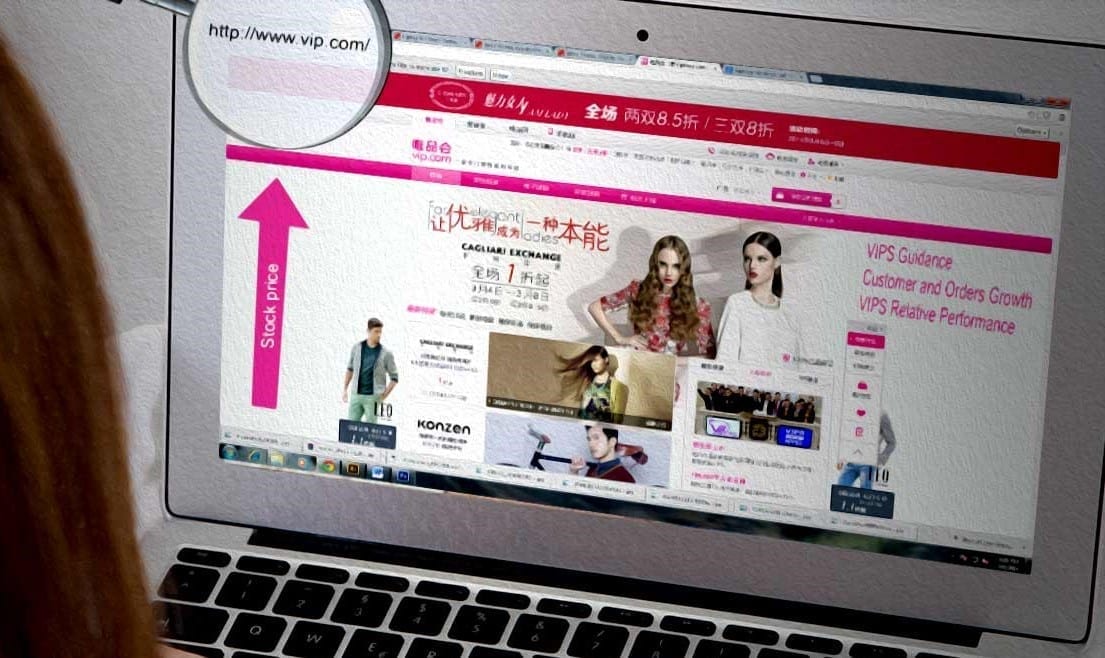
    Chinese online discount business Vipshop reports rising revenues but narrower margins during the third quarter.

    The New York-listed eCommerce player says its total net revenue increased by 38.4 per cent to RMB12 billion (US$1.8 billion), primarily attributable to a 43 per cent year-on-year increase in the number of active customers to 20.8 million and a 34 per cent year-on-year increase in total orders to 60.1 million.

    Gross profit increased by 36 per cent to RMB2.93 billion (US$439.7 million) from RMB2.16 billion in the prior year period.

    Income from operations increased by 21.3 per cent to RMB528.8 million (US$79.3 million) from RMB436.1 million in the prior year period, but the company’s operating margin fell from 5 per cent last year to 4.4 per cent.

    Vipshop’s net income attributable to shareholders increased by 8.3 per cent to RMB342.9 million (US$51.4 million).

    “We are pleased to have delivered solid financial results and healthy customer growth despite a seasonally soft quarter for retail,” said Eric Shen, chairman and CEO.

    “As a leading online discount retailer for brands in China, we are committed to advancing the end-to-end shopping experience on our platform by providing our customers with diverse products and more personalised merchandising. The superior user experience across our platform led to improved user stickiness, as demonstrated by the strong 49 per cent year-on-year increase in repeat customers to 16.7 million. Despite macro weakness, our robust customer growth and retention is a testament to the resilience of our business model. We are confident that our strong foundation will continue to drive our overall secular business growth and enable us to maintain our market leadership regardless of macro environment changes,” said Shen.

    For the fourth quarter of 2016, the company expects its total net revenue to be between RMB18 billion and RMB18.5 billion, representing a year-on-year growth rate of 30 per cent to 33 per cent.

  • HKT to build fiber super highway for Hong Kong DCs

    HKT to build fiber super highway for Hong Kong DCs

    PCCW’s HKT has revealed plans to build what it is calling a “fiber super highway” connecting the Tseung Kwan O Industrial Estate (TKOIE) with the Chai Wan area.

    The Ultra Express Link will be a 3km high-capacity, low-latency subsea cable system spanning the Junk Bay. The cable system has a target ready for service date in 2017

    HKT group managing director Alex Arena said the system will provide additional diversity in connectivity for the multiple data centers in TKOIE, and serve to position the estate as Asia’s data center hub.

    “The building of Ultra Express Link demonstrates once again not only our leading position in solid fiber infrastructure in Hong Kong, but also our dedication to build Hong Kong into a regional data center hub,” he said.

    “The new cable, together with the existing extensive fiber infrastructure provided by HKT, will allow us to meet the rising demand for high speed and high capacity connectivity from data center operators.”

    Arena said HKT is the only operator to provide full fiber coverage in all data centers in Hong Kong with diversity paths in all data centers in TKOIE.

    HKT is a quadruple-play operator in Hong Kong serving both consumer and enterprise customers.

  • StarHub launches shopping channel

    StarHub launches shopping channel

    Singapore telco StarHub has launched a 24-hour Chinese language shopping channel called Go Shop in a deal with Malaysian pay-TV giant Astro.

    Singapore, 24 November 2016 This festive season, StarHub TV customers can look forward to an exciting round-the-clock shopping destination right at their fingertips. Starting tomorrow, StarHub TV, in partnership with Astro Malaysia, will be launching Go Shop (StarHub TV Channel 110), a 24-hour, Mandarin shopping channel. Go Shop will also be made available on StarHub Go, StarHub’s video streaming service, by early next year.

    Customers in Singapore can now immerse themselves in a shopping experience that is differentiated, hassle-free and convenient, anytime anywhere. Through Go Shop’s fun and informative TV demonstrations, customers can understand the benefits of each product in-depth as well as the value of the offer. The well-researched product demonstrations are specially tailored to cater to the preferences and lifestyles of Singapore’s consumers.

    Targeted at StarHub’s audiences as well as connected online and mobile shoppers in Singapore, Go Shop offerspremium and trusted international brands such as Finn Esker, HappyCall, Kloken and Shogun across various product categories from Living, Beauty, Fashion, Kitchenware and Home Appliances. New product categories such as Digital Electronics, Health and Wellness, Sports and Leisure will be introduced progressively.

    Go Shop is a joint venture between Astro Retail Ventures, a wholly owned subsidiary of Astro Malaysia, and GS Home Shopping, the global leader in TV home shopping. GS Home Shopping has international presence in nine countries such as South Korea, Malaysia, China and Russia. To celebrate its launch in Singapore, Go Shop will be introducing some of its global best-selling items on StarHub TV. These include Age 20s, an award-winning Moisture Compact Foundation from Korea, Hurom Slow Juicer which comes with a low speed rotation to preserve nutrients, and the Roichen Cookware set, made with a safe and natural stone coating.

    To entice consumers, Go Shop will introduce special offers on TV through innovative bundling that cannot be found anywhere else. It aims to offer unbeatable value by combining the main product with other product lines to complement the core offering. For instance, a set of Laneige sleeping masks can be bundled with other items from the same skincare line for a complete, value-for-money deal. Consumers can also look forward to special festive offers from time to time.

    Commenting on the launch, Ms Lee Soo Hui, Head of Content & TV, StarHub, said: “Shopping is a favourite pastime of Singaporeans, whether it is online or at the mall. Go Shop’s extensive catalogue, accompanied with detailed product demonstrations, will enable our viewers to make informed decisions before making that purchase from the comfort of their living rooms. With the upcoming festive season, the timely launch of Go Shop on StarHub TV will enable customers to get a head start on their Christmas shopping!”

    According to Go Shop’s Chief Executive Officer, Grace Lee, “Go Shop is excited to expand our wings to serve customers in Singapore, after seeing our service grow rapidly in Malaysia. We offer a differentiated shopping experience that gives our customers choice, convenience and peace of mind through our entertaining and informative product demonstrations, reputation for providing trusted international brands and products as well as great value from innovative product bundling and free delivery in a matter of days.”

    To make a purchase on Go Shop, customers can order online via www.goshop.com.sg. Payment can be made via selected credit or debit cards. The products will then be delivered to the customer within two to three days with no additional shipping fee. In addition, customers can shop with peace of mind, knowing that sales support does not end at the point of purchase. A group of specially-trained agents called Personal Go Shoppers, will be offering their assistance online or through Go Shop’s hotline around the clock. To start shopping, tune in to Go Shop on StarHub TV channel Ch 110 at 9am tomorrow.

  • Liquid Pay targets 25,000 retailers in Singapore with QR code mobile payments

    Liquid Pay targets 25,000 retailers in Singapore with QR code mobile payments

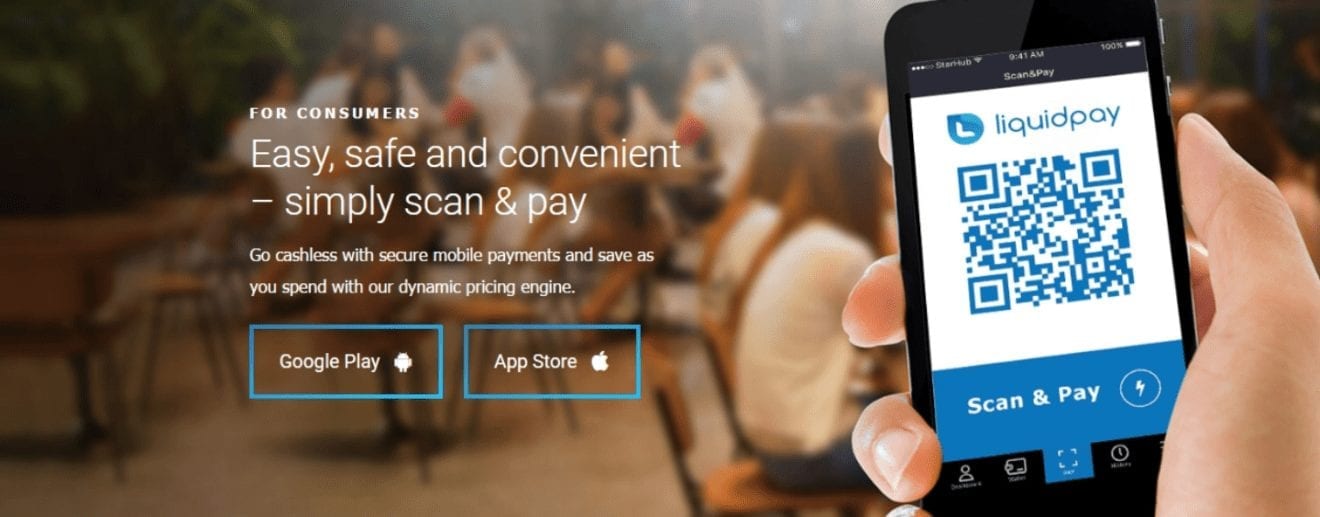
    Some 25,000 retail locations in Singapore are expected to accept a new mobile payment service within the next 12 months. Liquid Pay enables consumers to make payments by scanning a QR code at the point of sale, and compare merchant discounts and rewards from within the mobile app.

    “Liquid Pay has just successfully completed trials at select hawker stalls in Bukit Timah and Tiong Bahru markets, food and beverage (F&B) outlets at One-North/Galaxis and all Spinelli Coffee Company outlets,” Liquid Pay says.

    “Deployment to 30 more hawker centres and multiple F&B chains is expected to complete before the end of the year, with the target of 25,000 acceptance points in Singapore within 12 months.”

    “By adding their credit and debit cards onto the Liquid Pay app, consumers are able to compare the various card discounts and merchant rewards when making payments,” the company adds.

    Offers and rewards

    “To pay for their purchase at checkout, consumers scan the merchant’s individual QR code at the point of sale with Liquid Pay’s QR code reader.

    “Consumers can then view the savings, offers and rewards available with different payment methods, select the most beneficial one for that particular purchase and complete their transaction.

    “Merchants accept payments via QR codes without the need to upgrade equipment or make any costly upfront investment. Merchants and banks can also deepen engagement with customers by extending dynamic, real-time, hyper-personalised promotions and offers.

    “Liquid Pay’s robust architecture also enables banks and merchants to introduce e-cards (prepaid, debit, credit, discount and gift cards) instantaneously, with contextual data analytics for deep consumer insights.”

  • NBA legend Gary Payton to celebrate opening of NBA store in Cebu City

    NBA legend Gary Payton to celebrate opening of NBA store in Cebu City

    The National Basketball Association (NBA) announced Wednesday the fourth NBA Store in the Philippines will open Nov. 24 at the Ayala Center in Cebu City.

    NBA Legend and Hall of Famer Gary Payton will be on hand to meet and interact with fans at the store opening, which will celebrate the league’s first NBA Store in the Visayas region. To commemorate the occasion, the first 300 customers that purchase an item will receive an NBA gift.

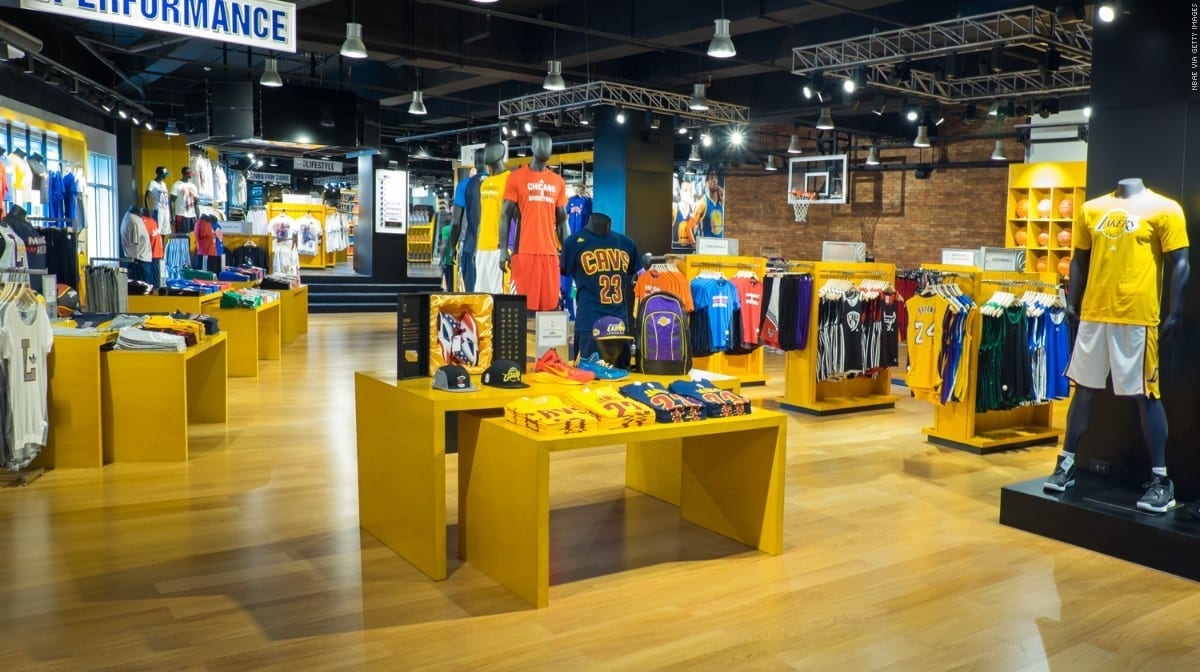
    Located on the fourth level of the Ayala Center in 452 square meters of retail space and managed by International Athletic Trading Company, Inc. (IATC), the new NBA Store will offer a wide selection of authentic NBA products from all 30 teams, including official jerseys, footwear, performance gear, lifestyle apparel, and non-apparel merchandise including basketballs, toys, collectibles, and more.

    The store will also offer personalized jerseys and will feature interactive elements including NBA 2K video game players where fans test their gaming skills and compete against each other, a Pop-a-Shot machine and a dedicated section for NBA memorabilia.

    “We had envisioned expanding the NBA footprint across the country and to have now reached the Visayas region is a milestone for us,” said IATC President and CEO Melvin Lloyd Lim.

    “We could not be more excited to open the first NBA Store in the second most populous metropolitan area in the Philippines after Metro Manila.”

    “The NBA and IATC are committed to bringing the NBA experience closer to all Filipinos nationwide,” said NBA Philippines Managing Director Carlo Singson. “The NBA Store in Cebu is the first outside of Metro Manila and is strategically positioned as a premier shopping destination for NBA fans within Central and Southern Philippines, offering an extensive range of authentic NBA products.”

    The NBA Store at the Ayala Center will carry products from brands including 2K Sports, adidas, Enterbay, Mitchell & Ness, New Era, Nike, Panini, Spalding, Spec Seats, Stance, and Under Armour. The regular store hours are 10 am – 9 pm (Sunday-Thursday) and 10 am – 10 pm (Friday-Saturday).

    On Nov. 22, Payton will also conduct a meet-and-greet with fans at the NBA Store in Glorietta 3 at 6 pm before visiting the NBA Store in Cebu City’s Ayala Center on Nov. 24 at 6 pm.

    The flagship NBA Store in the Philippines in Glorietta 3 opened in 2014, followed by the store in Mega Fashion Hall in 2015 and the store in TriNoma in 2016.

    For all the latest news and updates on the NBA, visit www.nba.com and follow the NBA on Facebook , Twitter  and Instagram.


  • One of SEA’s leading banks teams up with Powerman for two duathlon events

    One of SEA’s leading banks teams up with Powerman for two duathlon events

    Maybank, South East Asia’s fourth largest bank, and Powerman Philippines, the Philippine affiliate of the International Powerman Association (IPA), are hosting two duathlon race events in the Philippines this year.

    The first race, which was held last November 20, 2016 at the SM Mall of Asia by the Bay, Anytime Fitness Powerman Philippines Asian Invitational was co-presented by Maybank. Professional duathletes Jason Loh and Su Teoh from Malaysia and Airi Sawada from Japan flew in to be part of the race’s Elite Category.

    Maybank is also the title presentor of the Powerman Philippines World Series which will be held on December 3 and 4 at the Clark Freeport Zone in Pampanga. Ten professional duathletes including Powerman World from all over the globe including the two-time Powerman World Champion and Powerman Philippines Ambassador Gael Le Bellec three-time and defending Powerman World Champion Emma, and defending Powerman World Champion Seppe Odeyn will fly to the Philippines for this race.

    Aside from having a Powerman Short, this event will also feature the Powerman Classic (10 km run– 60 km bike –10 km run), the Powerkids (for kids ages 6-12) and the Powerteens (for teens aged 13-19).

    The Maybank Powerman Philippines World Series is also a qualifying event for the Powerman Duathlon World Championships to be held in Zofingen, Switzerland in 2017. The event attracts a host of professional and highly competitive age-group athletes, seasoned multi-sport athletes who want to take on a different challenge, and athletes who have just started in the multi-sport category.

    “Maybank welcomes this partnership with Powerman Philippines,” according to Richard C. Lim, Executive Vice President and Head of the Retail Business Group of Maybank Philippines, Inc. “Maybank prides itself in being at the heart of the communities we are present in. Being associated with this important sporting event, with almost 3,000 participants in both races, and leveraging on this type of sports sponsorship platform can definitely help elevate our brand in the Philippines. We are excited by the fact that the biggest event, the Powerman Philippines World Series, will be held in Clark where Maybank has one of its largest branches in North Luzon, an area where we have a strong branch network, the largest of any foreign bank in the country.”

    Mr. Lim added, “Endurance sports are gaining popularity in the country and Maybank wants to capitalize on this and become associated with the positive values that sporting events promote.”

    “The inclusion of Maybank definitely adds prestige to both Powerman events this year,” says Owen Gan, President of Powerman Philippines. “Being one of the largest banks in South East Asia, Maybank will definitely help Powerman in gaining popularity in the Philippines, and eventually in the region, especially now that there are more Powerman events lined up for 2017.”

    Part of the proceeds of Powerman will go towards buying bicycles and other gear for the Batang Tri Grassroots program that supports young individuals who do not have the financial means to enter the world of multi-sports.

  • H&M celebrates Black Friday with up to 70% off

    H&M celebrates Black Friday with up to 70% off

    Outside of traditional holidays like Christmas, Valentine’s and Mother’s Day, perhaps the most awaited day of the year in the United States, especially for shoppers and bargain hunters, is Black Friday, which is celebrated after Thanksgiving.

    After feasting on turkey with their families, Americans then head out to the nearest shopping center to get the best deals and bargains of the year, as most brands go on sale. And by sale, we mean really BIG discounts on a whole range of items.

    Black Friday is considered the starting point for the holiday shopping season, as Americans buy Christmas presents for their loved ones.

    As an early Christmas treat to shoppers and bargain hunters, international clothing company H&M is bringing the Black Friday frenzy to the Philippines for the first time this year!

    On November 25 to 27, H&M stores in the Philippines will be offering discounts on its new collection, with over 150,000 items sold at 50% to 70% off. Black Friday will be celebrated in the following H&M branches nationwide:

    1. SM Megamall
    2. SM Makati
    3. Robinsons Magnolia
    4. Robinsons Place Manila
    5. UPTown Bonifacio
    6. U.P. Town Center
    7. SM North EDSA
    8. SM Fairview
    9. SM City Clark
    10. Marquee Mall Pampanga
    11. SM City Seaside Cebu
    12. Ayala Center Cebu
    13. Centrio Mall Cagayan de Oro
    14. EVIA Lifestyle Center
    15. SM City Dasmarinas
    16. Festival Mall
    17. SM City Southmall
    18. Robinsons Place Ilocos
    19. Gateway Mall
    20. SM City Iloilo
    21. Abreeza Mall Davao

    All concepts — ladies, men’s, divided, kids, and home — will be part of this promo. Here are some of the items that will be offered at a discount:

  • Verint acquires OpinionLab to push digital customer engagement

    Verint acquires OpinionLab to push digital customer engagement

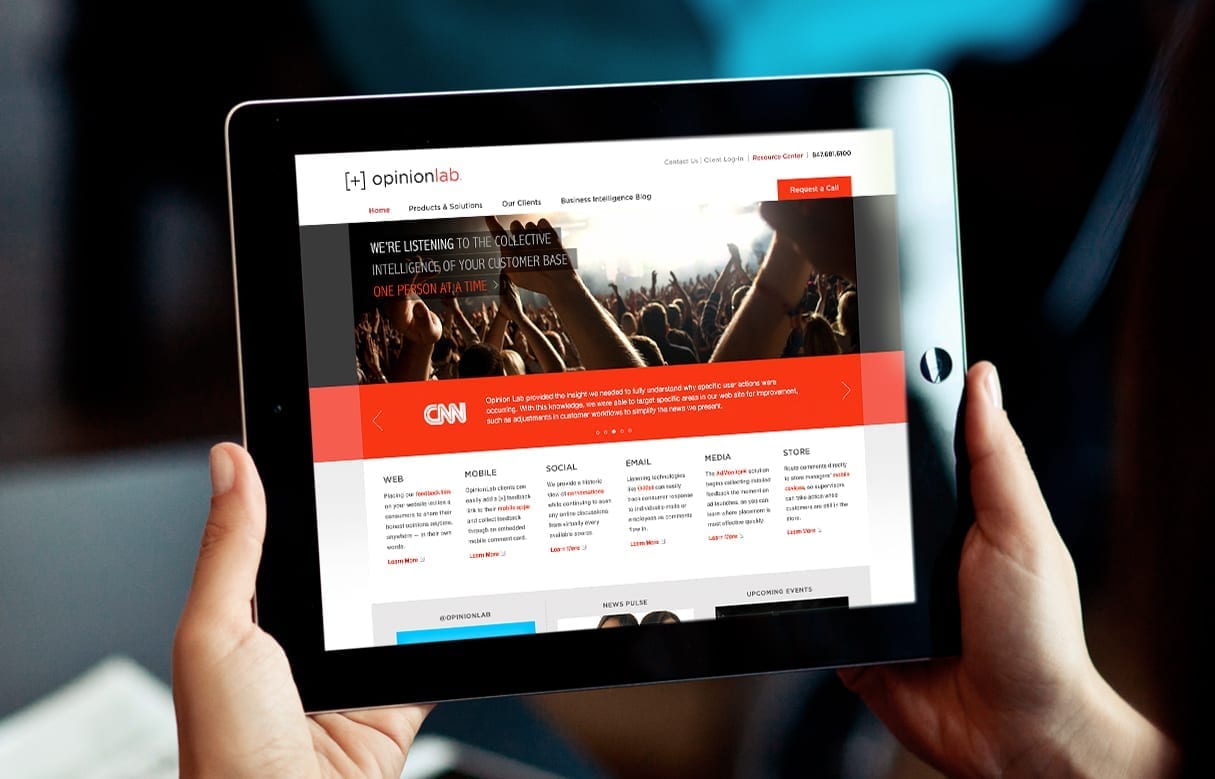
    Verint Systems has extended its Customer Engagement Optimization portfolio through its acquisition of OpinionLab, a provider of continuous voice of the customer listening solutions that drive smarter, real-time digital engagement.

    OpinionLab solutions are used by global brands to optimize web and mobile customer experiences and engagement.

    Voice of the Customer (VoC) solutions are becoming a strategic imperative, helping organizations measure and enhance experiences, satisfaction and loyalty.

    As more customer engagements follow a “digital-first” approach for conducting research and performing transactions, as well as solving problems, companies need to measure their customers’ digital experiences and quickly act on those insights to enhance both the customer experience and business performance.

    Through its acquisition of OpinionLab, Verint has extended its Customer Engagement Optimization portfolio to now include the ability to measure and act on digital customer experiences in-the-moment.

    With this addition, Verint has broadened its capabilities for listening, analyzing and acting on the VoC across all channels—digital, voice, text and social.

    “Capturing, analyzing and acting on the voice of the customer are critical for any organization in any industry,” says Elan Moriah, Verint’s president, for customer engagement solutions. “With the OpinionLab combination, we’re taking voice of the customer to a new level by giving organizations a complete solution for improving the customer experience across engagement channels.”

  • China’s Ctrip is buying flight search company SkyScanner

    China’s Ctrip is buying flight search company SkyScanner

    Skyscanner, the Scotland-based flight search company, has been acquired by Chinese online travel giant Ctrip for £1.4 billion, or approximately $1.74 billion.

    The deal is predominantly cash and is expected to close before the end of this year. Once completed, SkyScanner will operate independently of Ctrip, both parties confirmed.

    Ctrip was founded in 1999, and it is China’s largest online travel firm. Its revenue for Q3 2016, which was announced today, came in at RMB 5.6 billion ($810 million), that’s up 75 percent year-on-year, with a slim $4 million net profit. Ctrip recently raised close to $1 billion from the sale of convertible notes, a raise that looks to have be coordinated with the Skyscanner deal.

    This news comes less than a year after Skyscanner, which has over 700 staff across 10 offices, raised $192 million in funding in January 2016 to expand its reach worldwide. That was the company’s first financing in more than two years, and investors included Khazanah Nasional Berhad, the Malaysian government’s strategic investment fund, Yahoo Japan, fund manager Artemis, investment firm Baillie Gifford, and PE firm Vitruvian Partners. Sequoia is an existing backer.

    The round valued SkyScanner at a reported $1.6 billion. The company was widely-expected to pursue an IPO in 2017, which made its acquisition somewhat surprisingly while the price isn’t a huge leap on that previous valuation. SkyScanner had seen its revenue growth slow, as Skift reported, but the company put that down to increased investment in product rather than marketing.

    Regardless, this is the largest travel tech acquisition in Europe to date. SkyScanner placed much emphasis on Asia — partnering with Yahoo Japan and acquiring China-based travel search startup Youbibi — but the deal promises to help Ctrip expand its business into international markets.

    “Skyscanner will complement our positioning at a global scale and Ctrip will leverage our experience, technology and booking capabilities to Skyscanner’s,” Ctrip co-founder and executive chairman James Jianzhang Liang said in a statement.

    In a video statement, Skycanner CEO and co-founder Gareth Williams said that the deal would enable his company to gain access to greater resources to make travel “simpler:”

    It’s been a busy past year or so for Ctrip, which has pursued M&A activity to expand. More than a year has passed since it agreed to a share swap with arch rival Qunar which saw it gain a 45 percent voting interest in Qunar in exchange for 25 percent of the Ctrip business.

    In January of this year, Ctrip spent $180 million to buy around one-quarter of India’s MakeMyTrip, while it splurged $463 million this summer to get a slice of China Eastern Airlines, a state-run airline that claims 94 million passengers.

  • Idea to expand 4G to nine more circles

    Idea to expand 4G to nine more circles

    India’s third largest mobile operator Idea Cellular has revealed plans to expand its 4G network to nine additional telecoms circles by March next year.

    The operator plans to add around 57,000 new 4G cell sites this year alone.

    With the expansion, Idea Cellular plans to launch of 4G in the circles of Uttar Pradesh East and West, Gujarat, Mumbai, Bihar, Rajasthan, West Bengal, Assam and Jammu & Kashmir.

    This will take Idea’s total 4G footprint to 20 of India’s 22 telecoms circles. The 20 circles together account for 94% of Idea Cellular’s revenue and 90% of all industry revenue.

    Idea is using the spectrum it acquired in the recent $9.8 billion spectrum auction to pursue the 4G expansion.

    India’s 4G market is heating up due to the entry into the market of disruptive Pan-Indian 4G operator Reliance Jio Infocomm.

    Idea’s wireless broadband network currently spans 17 circles, with the operator aiming to achieve a total of 250,000 sites this financial year.

    To better compete against Reliance Jio, Idea is also increasingly pursuing a content strategy, starting with branded games. The operator plans to expand to movie and music services in the near future.