Tag: asia

  • Malaysia’s MMU, Teradata ink pact on big data analytics skills

    Malaysia’s MMU, Teradata ink pact on big data analytics skills

    Multimedia University, Malaysia (MMU) and Teradata have announced a strategic partnership to collaborate on education and research in an effort to cultivate the next generation of data science professionals and experts in Malaysia.

    Through this co-operation, MMU will gain access to the Teradata University Network (TUN), a web-based portal that provides complementary teaching and learning tools used by more than 45,000 students around the world to share expertise, access knowledge as well as information on how to enhance both curriculum and align research to the current industry needs.

    Teradata University Network currently has over 5,500 registered faculty members, from over 2,400 universities, in 115 countries, with thousands of student users.

    A key to the success of Teradata University Network is that it is led by academics to ensure the content will meet the needs of today’s classrooms.

    Leveraging the partnership, MMU’s Faculty of Computing and Informatics will offer a Data Science Specialization as part of its Bachelor of Computer Science degree.

    This step was taken following the formalization of a Data Science Institute (DSI) at MMU last month designed to cater to both research and industry engagement of MMU’s expertise in this area.

    “This MoU facilitates greater input from a leading industry player, and Teradata has committed to provide experts to support exposure to our students and staff alike to its services and solutions,” said MMU president Ahmad Rafi Mohamed Eshaq.

  • Singapore’s Central Bank to Test Blockchain-Backed Digital Currency

    Singapore’s Central Bank to Test Blockchain-Backed Digital Currency

    The Monetary Authority of Singapore (MAS) will soon test how it could issue digital currency using a v-based interbank payment system.

    The planned proof-of-concept will be supported by blockchain consortium R3CEV, as well as eight banks and an unnamed local stock exchange. The Development Bank of Singapore, HSBC, Bank of America, JPMorgan, Credit Suisse and Bank of Tokyo-Mitsubishi are all said to be participating.

    In a speech on Wednesday, MAS managing director Ravi Menon said the test could come to include other central banks. Further, he credited the bank’s desire to remove cost and friction from traditional bank transactions as the motivation for the effort.

    Menon said:

    “Today, banks have to go through correspondent banks to intermediate these payments. It takes time and adds to cost. This project marks the first step in MAS’s exploration of ways to harness the potential of central bank-issued digital currency.”

    The trial would find banks depositing cash as collateral with MAS, which would then issue a digital currency to participants. The digital currency could then be exchanged among participants in the system and later redeemed for cash.

    The forthcoming trial bears similarities to a previously announced effort from UBS, Deutsche Bank, Banco Santander and startup Clearmatics in August.

    Called Utility Settlement Coin, the project envisioned how a central bank could issue digital currency that could then be redeemed for cash held by a central bank.

  • China tapping 10 Philippine’s banks

    China tapping 10 Philippine’s banks

    State-owned Bank of China is in talks with ten Philippines banks including  Banco de Oro Unibank Inc. and Land Bank of the Philippines to retail the $3-billion fund committed by the Chinese lender to the Philippines.

    A team of high ranking officials from Bank of China’s main office in Beijing attended the first of a series of roadshows in the Philippines to link with local financing institutions including banks and microfinance lenders.

    Bank of China president Jun Deng said more financing institutions and legitimate lenders would be announced soon.

    “This is just the initial phase. We will be having discussions with the banks we invited. Maybe later on, we’ll disclose these banks and the development of our discussions,” he said during the Manila leg of the roadshow held Thursday at Fairmont Hotel in Makati City.

    The roadshow is a pre-event exercise in preparation for the Bank of China’s global SME cross-border trade and investment conference that will take place in Davao City in 2017.

    Bank of China will provide details on how it will disperse financing to Philippine SMEs during the Davao conference.

    The bank said it would also bring in 100 Chinese SMEs interested in the Philippine agro-industrial industry.

    “Agribusiness is one of the key areas important to China. Other interests include technology, renewable energy which is heavy on solar-based power production and the furniture industry,” said International Chamber of Commerce of the Philippines president Jesus Varela.

    Initial talks between the Chinese bankers and Filipino businessmen pointed to Mindanao as the priority area.

    The conference will also serve as a matchmaking event for SMES to have access to financing from credited financing retailers of Bank of China.

    Bank of China said while the $3-billion financing commitment would not be for the sole benefit of SMEs, the bigger portion of the fund will help SMEs grow and build a global enterprise.

    Deng said a portion of the financing would also support important infrastructure and energy projects and programs that would promote industrialization.

    Bank of China held 26 cross-border trade and investment conferences across the world that attracted over 30,000 people from political and business circles and  more than 15,000 enterprises from 60 countries over the past two years.

  • Luk Fook plans to double jewelry stores in China

    Luk Fook plans to double jewelry stores in China

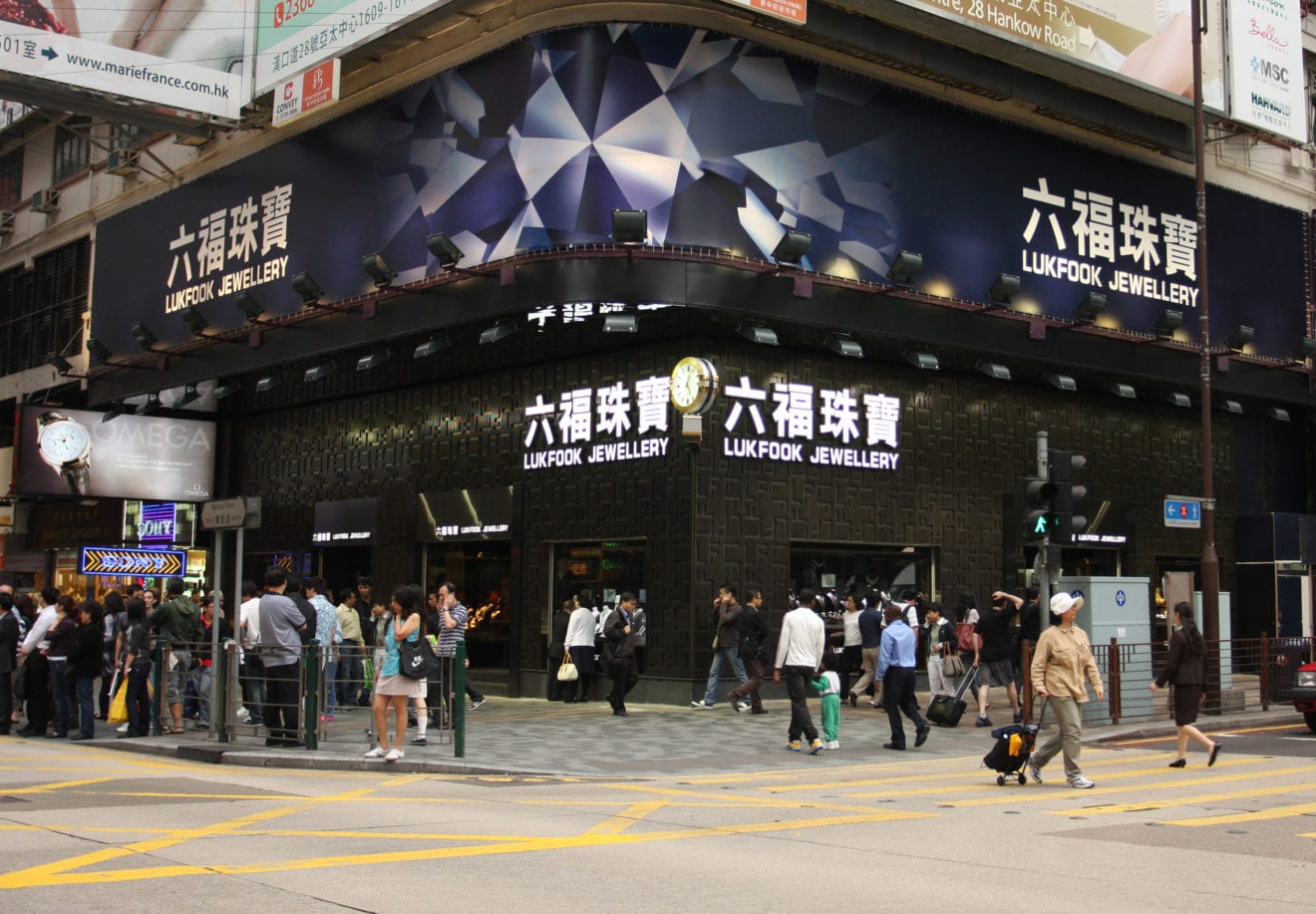
    Hong Kong-based jeweler Luk Fook is pushing ahead with its expansion into mainland China by doubling its stores there even as competitors are moving at a slower pace amid tepid demand for luxury goods.

    The company, a smaller rival to Chow Tai Fook Jewellery Group, one of the world’s largest listed jewelry chain, said on Thursday it “still had room” to increase its mainland outlets to 2,000-3,000, up from 1,400 currently, without giving a timeframe for the expansion.

    “We are only in about 300 Chinese cities comparing with 500 cities of our rivals,” said Luk Fook Executive Director Shirley Wong Hau-yeung, adding that the group would focus its expansion in quality shopping malls in second- and lower-tier cities.

    The jeweler is also looking to boost its revenue contribution from the mainland, which now accounts for over half of its total — a three-year goal it set two years ago. “We actually met our target early,” said Chairman and Chief Executive Wong Wai-sheung. “Having 80-90% of revenue from China is probable.”

    Chairman Wong’s upbeat remarks comes at a time when Luk Fook is seeking to diversify from a struggling home market where luxury retail has been hit hard by a dwindling number of deep-pocketed mainland visitors to Hong Kong.

    First-half net profit fell 7.4% on the year to its lowest level since 2010 at only $429 million Hong Kong dollars ($55.3 million) between April and September. Revenue dived 21.5% to HK$5.47 billion, dragged lower by a 32.3% sales plunge in stores that had been open for over a year in Hong Kong and Macau, while its mainland sales saw a slightly less severe decline of 23.7% from a year ago.

    The group added 27 shops to its network of 1,455 outlets globally, including 24 in China and the rest in Macau, New York and Seoul in the same period. “A further depreciation of the Chinese yuan will prompt more mainlanders to spend at home and boost local consumption,” said Chief Financial Officer Kathy Chan So-kuen, justifying the group’s strategy in mainland China.

    Meanwhile, rival Chow Tai Fook would be “selective” when entering mainland China, said Managing Director Kent Wong Siu-kei on Tuesday. The Hong Kong-listed jeweler added only 11 shops on the mainland — many of them in shopping malls — between April and September, bringing the total to 2,100 in the country.

    Chow Tai Fook’s more cautious approach followed a decade of aggressive expansion into the mainland market that hurt its profitability as the country’s economic slowdown and anti-corruption drive dampened appetite for luxury goods. With about half of its turnover from the mainland, the group reported its lowest first-half profit since its 2011 listing — just HK$1.22 billion, a fall of 21.5% from a year ago.

    With competition from e-commerce players such as Alibaba Group Holding and JD.com, the group would continue to close loss-making outlets in department stores and hopefully turn its shops into logistics centers for handling e-commerce orders in a bid to find better use for its ailing assets.

  • AirAsia X may relaunch London in 2017

    AirAsia X may relaunch London in 2017

    Malaysia’s AirAsia X is considering the lease of A350s or 777-300ERs in 2017 to accelerate its return to Europe. A new widebody type will add cost and complexity but is necessary if the medium/long haul low cost airline is to meet its objective of relaunching London as soon as possible.

    AirAsia X had been planning to wait until it receives A330-900neos before relaunching London and commencing other European routes. However the airline prefers not to wait until 2H2018, when its A330-900neo deliveries are slated to begin, and using another aircraft type in the interim mitigates the impact of a potential delay with the A330neo variant required for Kuala Lumpur-London.

    AirAsia X could also use a new aircraft type – most likely A350-900s – to support new routes to the US. It plans to launch services from Japan to Hawaii in Jun-2017 using A330ceos, but also has longer-term plans for longer routes from Japan to Las Vegas, Los Angeles and San Francisco – and potentially ultra-long haul routes from Malaysia to the US.

  • Online retailer Ymatou expects huge Black Friday sales

    Online retailer Ymatou expects huge Black Friday sales

    Jia Yi, a white-collar employee from Chengdu, the capital city of Sichuan province is passionate about overseas brands and products. She is now considering buying a Coach handbag on the upcoming Black Friday shopping event.

    “The price in the domestic market could reach more than 2,000 yuan ($290), but it is just 848 yuan on the e-commerce platform during Black Friday. It is very cost-effective and I am prepared to buy one,” said Jia.

    China’s cross-border e-commerce has been growing over the past few years. The Shanghai-based cross-border e-commerce site ymatou.com expects the scale of the Black Friday event this year to be 10 times over last year by hiring more than 30,000 overseas buyers.

    The company, which has participated in the biggest retail sales day of the year since 2014, said customers could buy more than 600,000 imported goods from 83 countries, including discounted clothes, shoes, bags, cosmetics, fine jewelry and health care products without leaving the house.

    “There is a trend that consumers from second- and third-tier cities are more willing to buy overseas products. Chinese consumers’ demands have been upgraded as they have diversified and personalized requirements for products and services,” said Zeng Bibo, chief executive officer of Ymatou.

    Zeng added they prefer to buy niche brands from European designers than the mass-market brands in America.

    Black Friday, the day following Thanksgiving Day in the United States, is a busy shopping day with the highest discounts of the year and a major impact on brick-and-mortar retailers, e-commerce players and consumers around the world.

    Ymatou said it is set to ensure that Chinese online shoppers can get the same deals that their Western counterparts enjoy during Black Friday. Buyers can broadcast their shopping process at the online shopping platforms.

    It continues to increase investment in the access threshold of buyers to ensure the authenticity of the goods’ sources. Zeng said they will check the credit status of buyers from time to time, requiring them to offer credentials for long-term living overseas and identifications.

    Furthermore, Ymatou has established an independent logistics company, XLobo, to develop overseas direct mail business.

    XLobo collects and bundles individual parcels at overseas locations and ships them to China as a single consignment. It now owns 15 international logistics centers around the world to ensure the period of direct mail within five days, on average.

    “The number of professional logistics service staff has been doubled. We have expanded the space of warehouses in New York, San Francisco and Osaka, and the investment in equipment and logistics this year has surpassed the total input of last year,” said Zeng.

    It arranges over 90 chartered airplanes each week to transport the goods and other airlines that have cooperative relations with Ymatou will reserve shipping space for XLobo in advance.

    Chinese e-commerce companies, such as Alibaba Group Holdings and JD.com Inc have developed their own cross-border e-commerce businesses.

    Statistics from the China E-Commerce Research Center show that China’s cross-border e-commerce transactions totaled 5.4 trillion yuan ($783 billion) last year, a year-on-year increase of 28.6 percent.

    The generation aged between 20 and 35 old is the major force of cross-border shopping, experts said.

    Cao Lei, director of the China E-Commerce Research Center, said customers need to choose an excellent cross-border e-commerce platform, pay attention to sellers’ reputations or ranking level and customers’ comments, adding they should choose a platform that owns and operates its logistics system.


  • Bentley ‘Be Extraordinary’ tour kicks off in Melbourne

    Bentley ‘Be Extraordinary’ tour kicks off in Melbourne

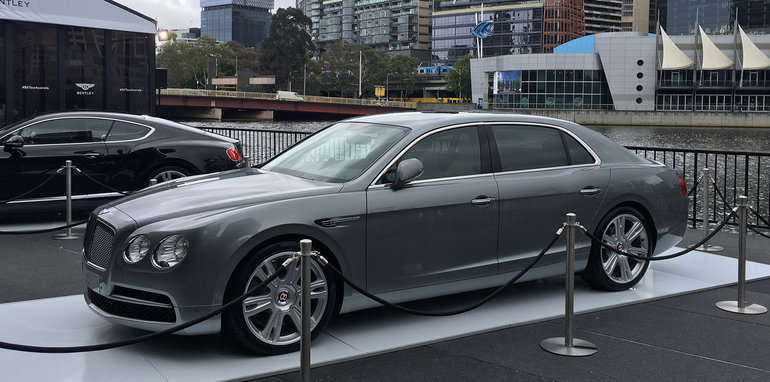
    Bentley has kicked off its Be Extraordinary tour in Melbourne, with the brand showcasing four models and a new, more affordable way of entering the Bentley brand.

    With plans to expand the tour to include Brisbane, Bathurst, Sydney and Perth, the tour kicked off this week on the banks of the Yarra in Melbourne.

    Located just outside Crown Casino, the Bentley marquee includes material samples and showcases iconic parts of Bentley’s history.

    bentley-be-extraordinary-melbourne-7

    The Be Extraordinary tour has also been designed to launch Bentley’s new financial services, which make the ContinentalGT V8 and Flying Spur V8 more accessible to prospective buyers.

    Both models now feature an attractive $399,000 drive away price, which can be packaged as part of a financial services product over 60 months, that comes out to $3999 per month.

    “We had a look at the content and options that would be fitted to a standard GT V8 as an entry-level model to the brand. There has always been a misconception that Bentleys have been a million-dollar car and inaccessible to people. That’s a problem we’ve been looking to overcome in Australia,” said David Jackson, Bentley’s regional manager for the Asia Pacific region.

    bentley-be-extraordinary-melbourne-4

    “We’ve introduced the ‘399 GT V8’, which has the options a customer would want — like the 21-inch alloys and sports exhaust – but you still come in with all taxes paid. That’s 399 on road. What we’re looking to do beyond this is expand the financial services to make the whole range accessible.”

    Bentley has four vehicles on display at the Melbourne roadshow, including the Bentayga and Continental GT V8 Convertible, along with two examples of the $399,000 product in the Continental GT V8 and Flying Spur.

    “There are a lot of people in different industries in Australia that are booming right now. Australia is a developing market and something like Bentley Financial Services then becomes an option for them. The point of this roadshow is to bring the Bentley brand to life for people,” Jackson said.

    bentley-be-extraordinary-melbourne-3

    “People often don’t know about the Bentley brand and as part of this roadshow we have 21 extraordinary stories here. The point is to explain 21 things you may have never known about Bentley. Such as…James Bond in the Ian Fleming novels never drove an Aston Martin, he drove a Bentley.”

    The Melbourne marquee and display will be around until Sunday 27 November, and operates from 11AM to 8PM each day. Residents of Sydney, Brisbane, Bathurst and Perth will also get to experience the roadshow later this year and next year.

    “We are going to move this on to Sydney before the end of this year. It will stay there until Bathurst, and after Bathurst we will head to Brisbane, and the Grand Prix next year. Perth will then get it around April next year [2017],” Jackson said.

    bentley-be-extraordinary-melbourne-9

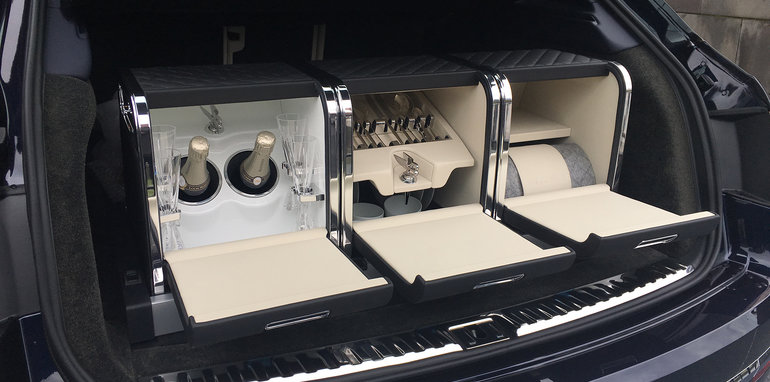
    If you do get down to the display in Melbourne, ask to see the Linley Hamper by Mulliner in the rear of the Bentayga. This incredible picnic package includes a chilled champagne cooler with four crystal flutes.

    There’s also storage room for a rug and a full cutlery set. And, at a reasonable $57,808, it seems like a no brainer option for your new Bentley Bentayga SUV.

  • Cebu Pacific opens 3 more domestic routes

    Cebu Pacific opens 3 more domestic routes

    The Philippines’ leading airline, Cebu Pacific, further reinforces its position in the Visayas region with the launch of three more routes.

    Starting last Nov.19 (Saturday) , CEB has officially become the only carrier flying daily between Cebu and Ormoc and Cebu and Roxas; and four times weekly (Tuesday, Thursday, Saturday and Sunday) between Cebu and Calbayog using the ATR 72-500 aircraft.

    With these new destinations, CEB is now up by three with a total of 36 domestic cities being served. With this further expansion, more and more travelers now have easier access to the already wide (and continually-growing) network of Cebu Pacific.

    The lowest all-in year-round fare, one-way for Cebu to Calbayog is Php1,983, Cebu to Ormoc is Php1,647 and Cebu to Roxas is Php2,039.

    “CEB remains committed in offering the most convenient choices for passengers at the lowest fares possible. With these additional routes in and out of the Queen City of the South, more guests can now easily explore the Visayas region. At the same time, locals can now connect not only to Cebu and Manila, but to international destinations as well. Rest assured, we will continue to persist in expanding our horizons and promote trade and tourism in the destinations we operate in,” said Alexander Lao, Cebgo President and CEO.

    Moreover, the addition of these new routes will foster stronger cargo services within Calbayog and Ormoc, and soon will expand in the whole of Visayas region.

    Based on the current data released by the Civil Aeronautics Board, Cebu Pacific Air group is currently the largest domestic cargo carrier, representing 50% of the market. Nearly 165 million kilos of cargo were delivered to domestic and international destinations in 2015. We service more than 2,000 accounts, tailor-fitting products to our clients’ domestic and international cargo needs. This includes express cargo service, seamless transshipment, and 30 interline partnerships for worldwide reach.

    In 2015, over 4.4 million passengers were flown to and from Cebu. Cebu routes cover about 24.5% of CEB’s seat capacity for 2015. With the addition of these new routes, CEB now has a total of 25 domestic routes in Cebu, which caters to the ever-increasing travel demand.

    Aside from Cebu, CEB also operates flights out of five other strategically placed hubs in the Philippines: Manila, Davao, Clark, Kalibo, and Iloilo. The airline’s extensive network covers over 100 routes and 66 destinations, spanning Asia, Australia, the Middle East, and USA. CEB’s 58-strong fleet is comprised of six Airbus A319, 36 Airbus A320, six Airbus A330, eight ATR 72-500, and two ATR 72-600 aircraft. Between 2016 and 2021, CEB expects delivery of two more brand-new Airbus A330, 32 Airbus A321neo, and 14 ATR 72-600 aircraft.

  • Where to shop in Singapore this Black Friday weekend

    Where to shop in Singapore this Black Friday weekend

    The post-Thanksgiving shopping tradition that’s driving many Americans off the rails at the moment is returning to Singapore this weekend with several retailers here jumping on the Black Friday bandwagon.

    For those who are still keen on shopping even after Singles Day (11 Nov), here’s where you can take advantage of Black Friday bargains in Singapore, both online and offline.

    1. Amazon

    Head on to Amazon’s website from 14 to 26 Nov if you’re looking for great bargains. Be sure to refresh their Black Friday page at 7am every day to discover new deals.

    2. Cotton On

    Now is probably the best time to restock your everyday basics as Cotton On is slashing 30 per cent off its full-priced items if you’re purchasing them online from 24 to 26 Nov. If you’d rather hit their brick-and-mortar stores, be sure to shop at the outlets at Bugis Junction, Plaza Singapura, Bedok Mall and Lot One until 28 Nov. You might walk away with a top as cheap as $10.

    3. Esprit

    Esprit is having a sale online from 24 to 27 Nov, offering 50 per cent off every second piece.

    4. Lazada

    From home appliances, health supplements to electronics, everything has been on sale on Lazada since Singles Day. Their sale ends on 12 Dec. 

    5. Robinsons

    All three Robinsons stores – The Heeren, Raffles City and Jem – will be opened from 7am on Friday (25 Nov), with up to 80 per cent discount storewide.

    6. Timberland & The North Face at Singapore Expo

    Get your adventure gear at a bargain at the Timberland and The North Face sale, happening at the Singapore Expo from 24 to 27 Nov, with discounts up to 80 per cent and 60 per cent respectively.

    7. G2000

    Need new office wear? G2000 is offering 50 per cent off your second piece. This storewide promotion will be available from 24 to 29 Nov.

    8. SaSa

    Need to shake up your beauty regime? SaSa is offering up to 70 per cent off its products storewide for outlets at Bugis Junction, Lot One and Nex shopping malls on 24 Nov. Yes, one day only.

    9. Sephora

    If you’d rather shop for beauty products from Sephora instead, the retailer is offering 20 per cent off all of their products if you buy them online on 25 Nov.

    10. New Balance

    If you’re looking for fresh New Balance kicks, head over to any of the brand’s Experience stores for 20 per cent off your purchase.

    11. Books Actually

    Here’s something for the bookworms. Homegrown books and stationery retailer BooksActually is throwing a 20 per cent off storewide sale from 24 to 25 Nov.

    12. Qoo10

    If you’re an avid Qoo10 shopper, the e-marketplace is not offering discounts, but they are giving away cart coupons priced up to $100 from 23 to 25 Nov.

    13. Shopee

    Online retail site Shopee is having a Black Friday and Cyber Monday (28 Nov) with up to 80 per cent off their items.

  • AirAsia plans IPO of ASEAN airline holding company

    AirAsia plans IPO of ASEAN airline holding company

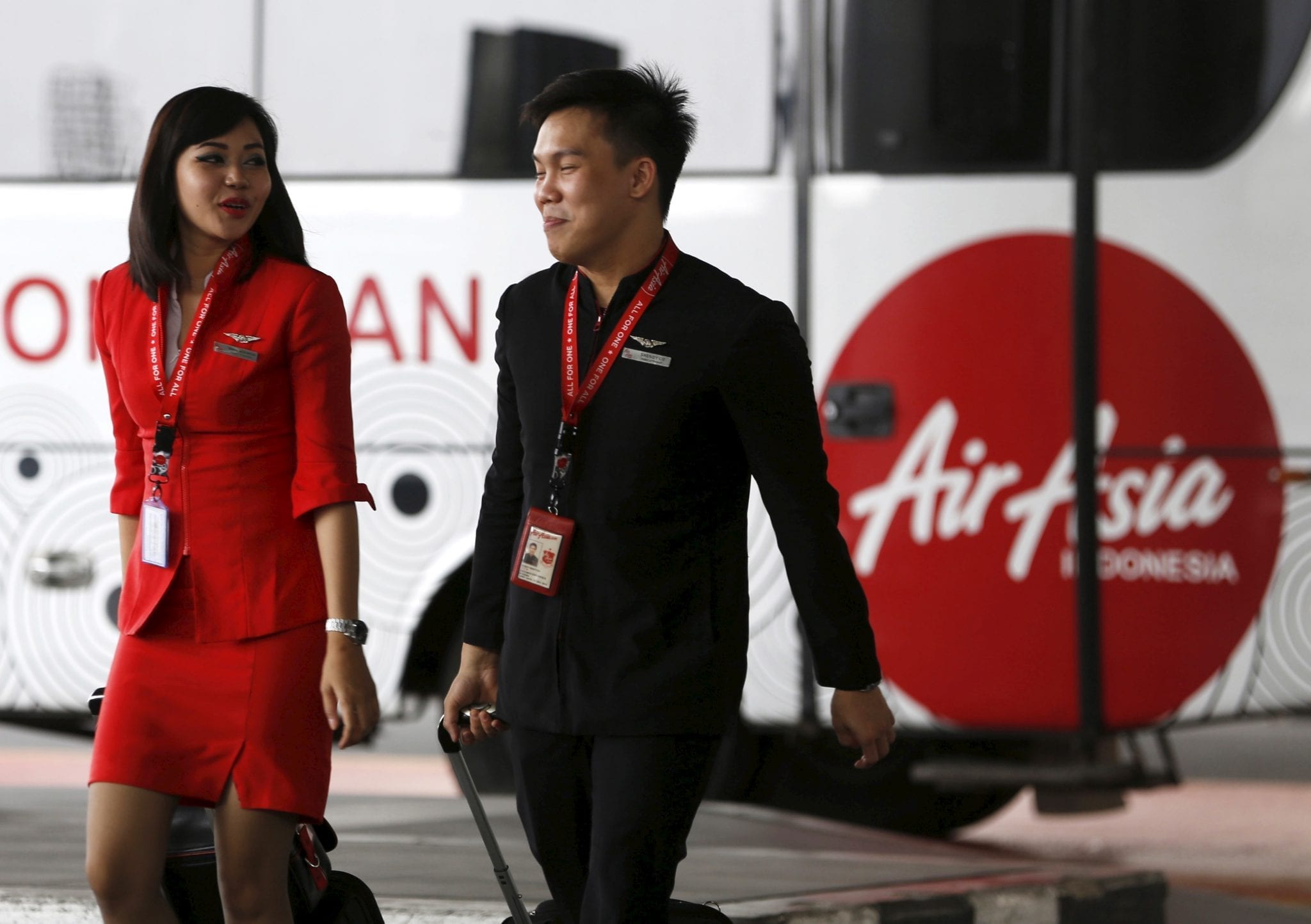
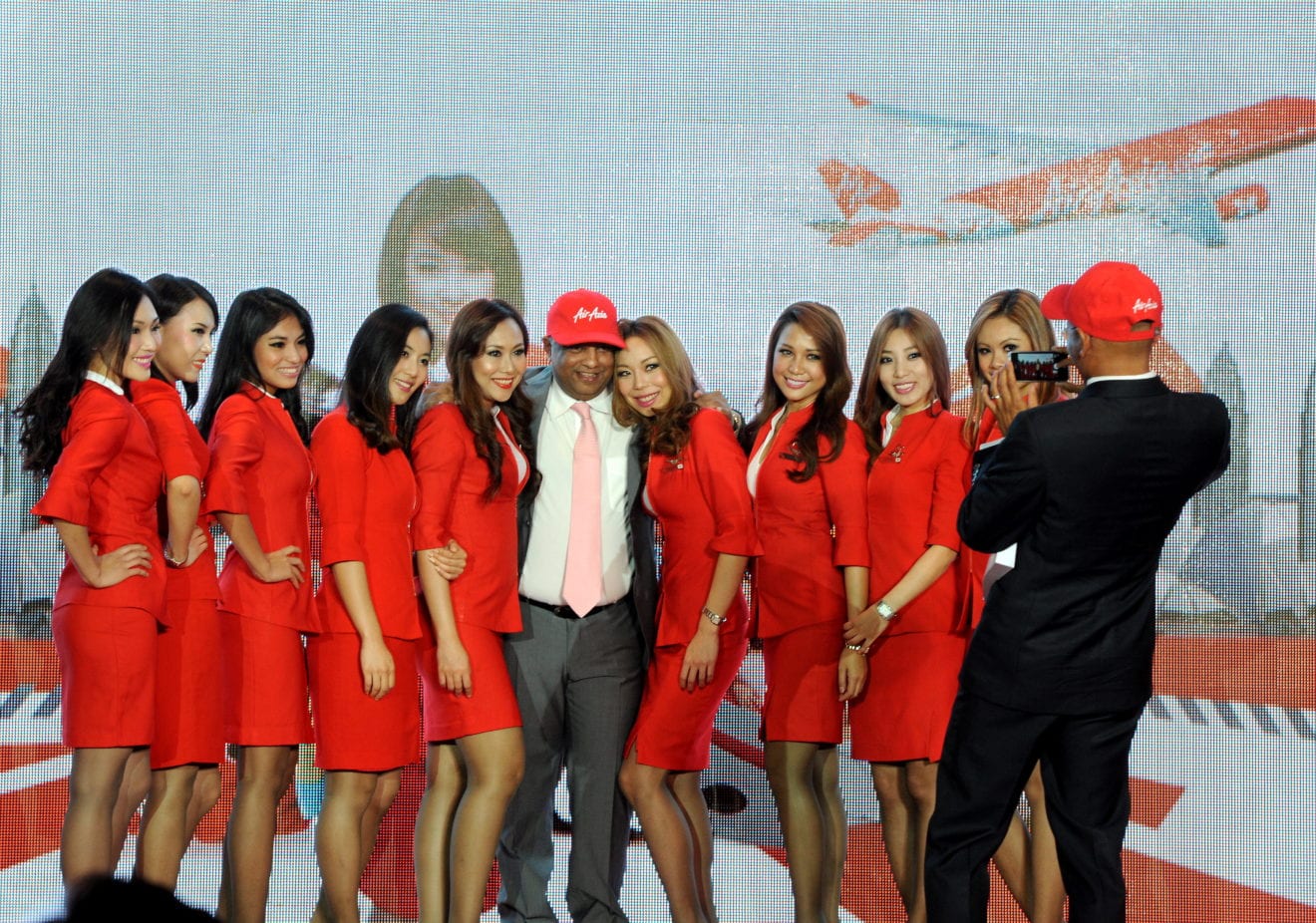
    Asia’s biggest low-cost airline AirAsia Bhd plans an initial public offering of a holding company that will house all its Asean operations, group CEO Tony Fernandes said on Thursday.

    ASEAN Holding Co will be listed in Hong Kong, Fernandes said in a statement without giving a timeline. AirAsia will also list its flight crew training centre in Kuala Lumpur, he said, following the company’s third-quarter results.

    Fernandes did not say how much the IPOs will raise.

    He has in the past expressed a desire to combine the airline’s operations in its home country Malaysia with those in Indonesia, Thailand and the Philippines.

    “The plan is to list Indonesia and Philippines first by next year before looking at ASEAN Holding Co to be listed,” a company spokesman told Reuters.

    AirAsia is also looking to divest some of its non-core businesses. It already has its aircraft leasing arm on the market and aims to complete the sale in early 2017 following bids that are due in December, Fernandes said, adding that he valued the unit at about $1 billion.

    Reuters reported in August that AirAsia was looking to sell a majority stake in its Asia Aviation Capital leasing operation, or possibly the entire business, which the carrier values at 4.1 billion ringgit ($922.38 million).

    Last month, AirAsia said it had received good interest in the sale.

    AirAsia also said on Thursday it swung to a profit in the third quarter, from a net loss a year ago, driven mainly by an increase in aircraft operating lease income and lower oil prices.

    Net profit for the three months ended Sept 30 was 353.9 million ringgit, versus a net loss of 405.7 million ringgit a year ago.

    Revenue rose 11.2% to 1.69 million ringgit, the company said.

    The results were underpinned by a load factor of 87%, a measure of how full planes are, up 6 percentage points from the same period last year.

    The number of passengers carried rose 11%, ahead of an increase in seat capacity of 2% year-on-year, according to AirAsia’s statement.

    AirAsia expects average load factor for its Malaysia business to remain at 89% in the following quarter, riding on strong demand due to year-end holidays and festivities.

    It forecasts load factors of more than 80% for its operations in Thailand, Indonesia and the Philippines for the fourth quarter.

    On Tuesday, the group’s long-haul unit, AirAsia X Bhd swung to a net profit of 11.03 million ringgit.

    Revenue was higher at 982.4 million ringgit.

    Shares of both AirAsia X and its parent have more than doubled this year, after sharp losses in 2015.

  • Smartphones can help India’s drive for cashless economy

    Smartphones can help India’s drive for cashless economy

    India is currently the largest growing market for smartphones and it is estimated that the number of smartphones sold in the country is very likely to be greater than 100 million in 2017.BEIJING: As India embarked on cashless economy with demonetisation of high value notes, smartphones could help in the country’s de-cashing drive like in China where online payment through phones have become order of the day, Chinese media said today.

    “While India is implementing the government-led de-cashing via demonetisation, China is experiencing a rapid market based de-cashing process via the digitalisation of transactions on the online or mobile payment platforms,” an article in the state-run Global Times said today.

    In the most recent 11/11 (Singles Day) online shopping day, consumers spent 120.7 billion yuan (USD 18 billion) on Tmall, the largest business-to-customer shopping website in China, with all transactions settled via Alipay, the online payment platform set up by Alibaba Group, the article said.

    “Meanwhile, Alipay and WeChat Pay (the online payment platform of WeChat by Tencent) are widely accepted by restaurants, shops and even grocers throughout the country,” it said.

    The high ownership rate of smartphones in China may explain this rapid digitalisation in transactions, it said, citing a recent survey by Pew Research Centre, which said smartphone ownership rate is 58 per cent in China, 37 per cent in Japan and 17 per cent in India.

    “This high ownership rate plus a relatively slow growth rate in credit card ownership has led to the ‘leapfrog development’ of de-cashing in China,” the article said.

    “Compared to traditional bank transfers, online payment systems are usually more convenient and user friendly. Hence, market-based de-cashing faces much less resistance than other types of de-cashing,” it said.

    “India is currently the largest growing market for smartphones and it is estimated that the number of smartphones sold in the country is very likely to be greater than 100 million in 2017,” it said, pointing to high sales witnessed by Chinese phone makers like Xiaomi.

    “If India would like to try the Chinese style of de-cashing through online/smartphone payment, it is very likely to be beneficial to both countries,” it said.

  • Comptel unveils intelligent UIs for digital services LCM

    Comptel unveils intelligent UIs for digital services LCM

    Comptel has added a set of operational user interfaces (UIs) to its FlowOne V solution, tailored for specific user groups within service providers.

    The UIs are designed to increase productivity, empower the critical service orchestration processes behind frictionless delivery of end-to-end virtualized services, and accelerate time-to-market.

    FlowOne V incorporates virtualized network function (VNF) onboarding and service chaining, digital service design and orchestration, and dynamic, closed-loop service assurance.

    By providing a holistic, end-to-end view and orchestration of digital services, it allows operators to transform their current service delivery processes by connecting the cloud and physical resources (compute, storage, network) with business management processes and systems (customer care, billing, customer order management).

    With the addition of four new intuitive UIs called “Hubs,” FlowOne V translates the service orchestration process into routine tasks, specific to individual user groups.

    The UIs strengthen the solution with inbuilt intelligence, including the normalization of service terminology between multiple platforms to make them easily manageable and reusable components, and the validation of service specifications to avoid unnecessary mistakes.

    “Intuitive operational UIs are a key factor for increasing the speed at which services can be developed, verified, deployed and improved – consequently reducing time-to-profit and increasing customer satisfaction,” said Antti Koskela, EVP of Comptel.

    “By adding this new functionality to FlowOne V, we’ve created a new paradigm for operationally managing NFV and SDN, empowering service providers to more effectively specify, test and deliver services across virtual, physical and IT domains,” said Koskella.

    The four new UIs include DesignHub, OrderHub, LifecycleHub, and SystemHub.

  • Fashion reseller Banananina joins e-commerce race

    Fashion reseller Banananina joins e-commerce race

    Jakarta branded fashion reseller Banananina has moved into eCommerce in a bid to reach potential customers outside the Indonesian capital.

    The company, which launched in 2009 through now-defunct eCommerce site Multiply, offers apparel, bags, shoes, accessories and beauty products. Its new website will also offer men’s products for the first time.

    Founder Fitri Maya Safira says the new sales channel is expected to grow daily transactions from 30 to 70 items.

    Banananina claims its luxury goods all have original guarantees as they come from licensed suppliers. Online buyers will be given a return guarantee, particularly for shoes.

    Fitri says her company’s customers live as far apart as Aceh, Bandung,  Biak, Jayapura, Makassar, Surabaya and Timika.

  • Headwinds will cramp luxury retail sector

    Headwinds will cramp luxury retail sector

    The luxury retail sector will grow next year – but at a disappointingly slow rate, according to the latest data from Euromonitor.

    As tough global trading environments continue to prevail – social and political unrest in Asia Pacific, economic slowdown in Latin America, and conflict in Eastern Europe will conspire to restrain growth in both key emerging and developed markets, the research house says.

    “Indeed, the market continues to face headwinds from major luxury goods markets, such as France and Hong Kong, as well as other large emerging markets, such as Russia and Brazil, while instability in the Middle East continues to cloud the horizon.”

    Whilst 2017 will not be a stellar year for the global industry overall, “we will see some tailwinds, with markets such as India and Mexico in a much stronger position,” Euromonitor concluded.

    “At the same time, luxury brands and retailers continue to seek ways to harness social media and tap into the psyche of the digital consumer, as connectivity continues to drive new opportunities in digital innovation and growth in the omnichannel continues to reach new frontiers.

    Divergence remains a key theme across the luxury markets for the year ahead with strong regional disparities in Asia Pacific appearing strong with 5 per cent growth, a marked difference to 2015, with a regional growth of just 1 per cent, reflecting the significant economic slowdown in China.

    The developed regions of Western Europe and North America were significantly weaker, with both regions showing a slight downturn in 2016 with a weak Eurozone continuing to hold back regional performance and the added concerns over terrorist attacks, as well as the more recent Brexit vote, have also dampened sales. In the next five years, the US is predicted to lose its top spot in the ranking to China.

    However, the disappointing data for the developed regions should not obscure the importance of these high-value luxury goods markets. These regions remain amongst the most powerful in the world and together account for over half of all luxury goods sales in 2016.

    Watch Fflur Roberts, head of luxury goods with Euromonitor International, share more about the luxury sector.

  • Nokia unveils machine learning-powered customer experience solutions

    Nokia unveils machine learning-powered customer experience solutions

    Nokia has powered major updates to its Motive Customer eXperience Solutions (CXS) software portfolio, promising communications service providers with advanced machine learning capabilities to reduce costs and improve customer experiences.

    Nokia Motive Service Management Platform (SMP) 7.0 and Motive Care Analytics (CAL) 2.0 use machine-learning algorithms developed by Nokia Bell labs — advanced capabilities that give computers the ability to learn without being explicitly programmed.

    With support for machine learning in its CXS portfolio, Nokia aims to set a new standard for proactive care in the industry, dramatically improving the detection, troubleshooting and resolution of subscriber issues.

    Nokia Motive SMP 7.0 features Dynamic Intelligent Workflows, a new self-optimizing system that determines the ideal sequence of tasks that deliver the highest probability of resolving billing, subscription and network service issues in the shortest amount of time.

    By analyzing data from previous workflow executions, the network, customer premises equipment, and trouble tickets, this capability enables service providers to quickly find the optimal remediation to issues when subscribers contact help desk agents or use self-care.

    Nokia Motive CAL 2.0 is the first solution of its kind that automatically correlates customer help desk calls and self-care actions with network, service and third-party application topologies to identify call anomalies, such as unusual patterns in help desk calls that indicate the location of customer-impacting network and service issues.

    Together, Motive SMP 7.0 and Motive CAL 2.0 help service providers lower costs by reducing average help desk handling times 5% to15% and eliminating inappropriate truck rolls (dispatching a service technician to a customer location) related to network outages by as much as 90%.