Tag: asia

  • India looks to cut tariff concessions on Chinese goods

    India looks to cut tariff concessions on Chinese goods

    India is expected to push for a new approach to tariff cuts at the 16-country trade bloc to prevent China from flooding its market with cheap goods. The commerce department is working on ways to give minimum tariff concessions to Chinese goods and delay the concessions by a long number of years even as it allows imports from other member countries at lower duties.

    As part of the Regional Comprehensive Economic Partnership (RCEP) trade negotiations, India is looking to treat Chinese products differently due to the burgeoning trade deficit it has with Beijing. In 2015-16, India’s exports to China were $9 billion while the imports were a staggering $61.7 billion leaving a trade deficit of $52.7 billion.
    India hopes this longer phasing out of tariff concessions and differential treatment, called “deviations”, will become the basis for RCEP negotiations. The new approach comes ahead of the next ministerial meeting on November 3-4 in the Philippines.

    Moreover, since India had to do away with a three-tier structure of differential duty cuts as part of the negotiations, deviations are the last ray of hope to contain the trade deficit with China under a formal trade agreement. In the earlier tiered structure, India had proposed to remove duties on 42.5% of the items traded with China, something that Beijing had termed as low.

    “We hope the tiers come back from the backdoor through deviations,” said a commerce department official, adding that the difference in tariff cuts may not be as much as in the earlier structure of three tiers.

    “We can look at longer staging periods for China by delaying the concessions by some years or not offer key products for tariff cuts to them at all,” the official said. Despite agreeing to a common concession, India is insisting on a single undertaking for the RCEP which means nothing is agreed until everything is agreed. “With single undertaking, we can be sure other members will not lose interest in India’s demands once we accept their demands for tariff concessions on goods,” the official said.

    Trade Openness

    Our problem with China seems to be a lack of trade access. And to better manage our trade deficit with China, we need to call for better trade access rather than opt to keep tariff barriers high. The latter option would only raise transactions costs and lead to thoroughly suboptimal policy going forward. are definite gains from trade and openness

  • Sheng Siong’s net profit expands 8.2% to $15.7m in Q3

    Sheng Siong’s net profit expands 8.2% to $15.7m in Q3

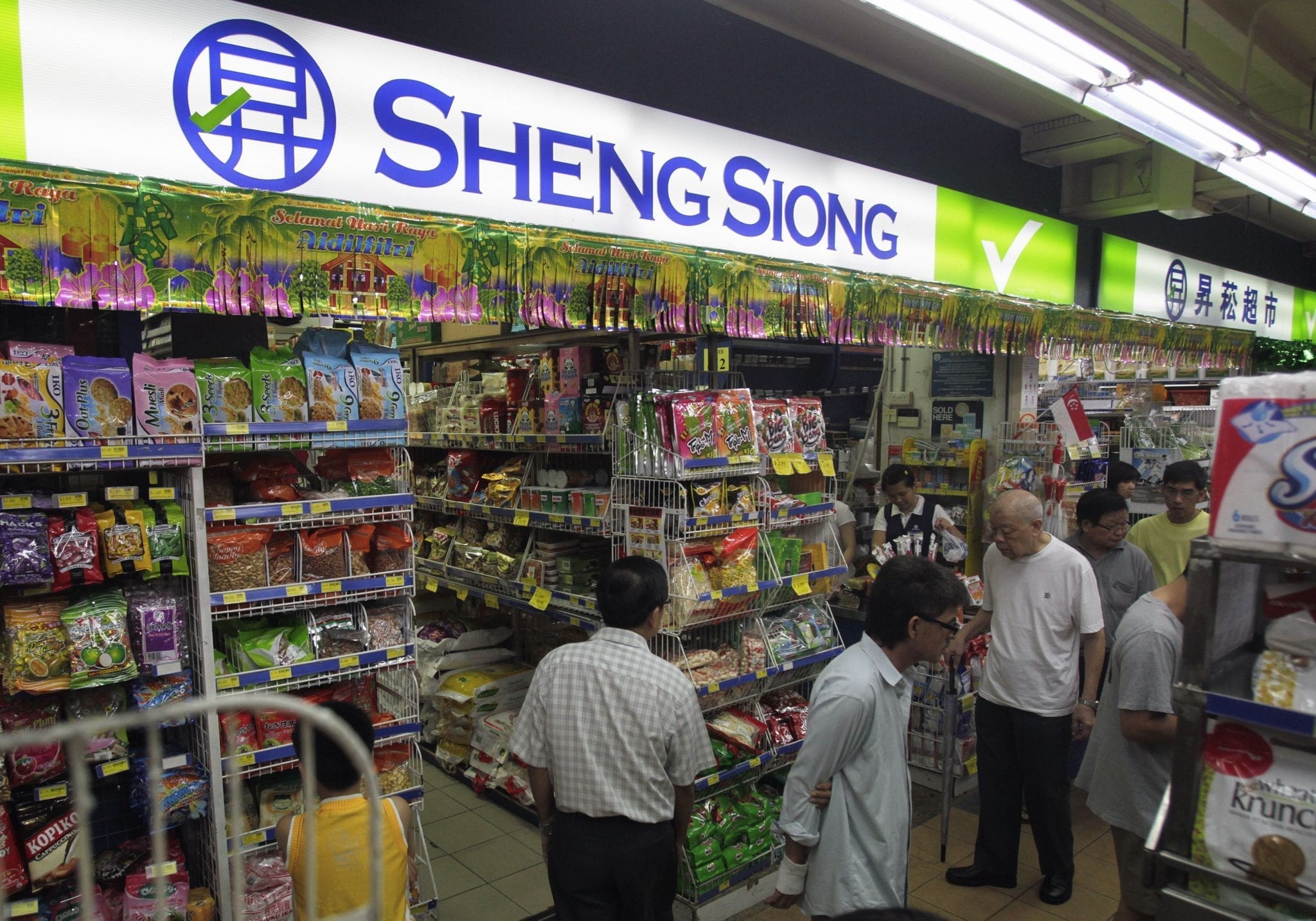
    Even with the sluggish retail sales numbers published by the Department of Statistics, Singapore’s supermarket giant Sheng Siong reported a considerable improvement in earnings for 3Q16.

    According to the group’s announcement, its net earnings jumped $15.6m, from $14.5m recorded last year.

    This came after its headline increased marginally by 1.2% to $202m mainly driven by new stores.

    “But (this) was offset by the temporary closure of the Loyang Point store and a contraction in comparable same store sales of 1.15% caused mainly by poor festive sales during the Chinese Seventh month and sluggish sales in September,” Sheng Siong noted.

    Excluding the closure of the said store, revenue would have grown by 4.2%.

    Looking forward, the group expects the supermarket industry to remain competitive, as consumers continue to be even more cost conscious.

    “The Group is still looking for suitable retail space particularly in areas where the Group does not have a presence. However, competition for retail space, particularly for new HDB shops is expected to remain keen, which have escalated bidding prices,” the group said.

  • Across China, Walmart Faces Labor Unrest as Authorities Stand Aside

    Across China, Walmart Faces Labor Unrest as Authorities Stand Aside

    In a one-man war room in his apartment, a laid-off Walmart employee named Wang Shishu was tapping out a message on his phone to a group of workers and plotting his next move.

    Over the past few months, Mr. Wang, 56, has helped organize a national movement in China against Walmart. Labor strikes have hit stores in the south simultaneously. There have been boycotts in the northeast. And here in Shenzhen, where Walmart opened its first outlet in China two decades ago, employees have filed a lawsuit demanding back pay.

    “We want a snowball effect,” he said in the booming baritone of a street preacher. “We want everybody to know what to do next.”

    As the Chinese economy has slowed, strikes and labor protests have broken out across the country, mostly scattered episodes targeting a single factory or business. The government has responded aggressively, detaining activists and increasing censorship to keep unrest from spreading.

    But activism against Walmart’s more than 400 stores in China in recent months has followed a different pattern: workers in several cities agitating against the same company, bypassing official unions controlled by the Communist Party and using social media to coordinate their actions — while the authorities largely stand aside.

    Across China, Walmart employees have raised their fists at protests, chanting, “Workers, stand up!” They have appealed to local officials with patriotic fervor, invoking the struggles of Mao Zedong against foreign imperialists. They have posted screeds online against unkind bosses and “union puppets.”

    In doing so, the Chinese work force of the world’s largest retail chain has put the ruling Communist Party in an uncomfortable position, publicly testing its Marxist commitment to defend the working class and pitting that against its fear of independent labor activism.

    Ever since the Solidarity trade union helped topple Communist rule in Poland, Beijing has sought to prevent the emergence of a nationwide labor movement, suppressing efforts by workers to organize across industries or localities.

    But the authorities appear to be hesitating in the case of Walmart, whose workers have complained of low wages and a new scheduling system they say has left them poorer and exhausted.

    In recent months, as many as 20,000 people, about a fifth of the company’s work force in China, have joined messaging groups set up by Mr. Wang and other activists on WeChat, a popular app. In these forums, they vent about company policies, share protest slogans and discuss plans to coordinate demonstrations for maximum effect.

    Mr. Wang, a former customer service representative whom Walmart has fired twice, spends his days babysitting his granddaughter and trading messages with workers across the country, often as late as 2 a.m.

    “What they’re doing is inhumane,” he said. “I want Walmart to return to the sympathetic company it used to be.”

    Eli Friedman, a labor scholar at Cornell University, said the Walmart movement was “probably the most substantive example of sustained, cross-workplace, independent worker organizing we’ve ever seen in China’s private sector.”

    The government appears to be keeping a distance because it is worried about provoking a backlash, or about acting on behalf of a prominent American company against Chinese workers at a time when nationalism in China is rising.

    But by doing little or nothing, it risks encouraging disaffected workers elsewhere, especially at the growing number of national chain businesses with operations across China. Already, workers at Neutrogena stores and China Unicom, a state-owned telecom operator, have used similar tactics, while avoiding serious punishment.

    “We can only expect that online organizing will continue to break down local barriers,” said Keegan Elmer, a researcher for China Labour Bulletin, an advocacy group based in Hong Kong.

    The retail sector in particular has become a hotbed of worker activism. The government wants to shift growth from manufacturing to service industries, but many new jobs at restaurants, hotels and stores are low-paying or part-time.

    From July through September, there were 124 strikes and protests at service-sector firms, about double the number last year, outpacing episodes in manufacturing for the first time since at least 2011, according to China Labour Bulletin.

    Chinese law requires businesses to establish labor unions, but they are almost always controlled by management, and companies generally use the unions to contain worker activism. In the face of labor strife, some businesses have offered back pay, bonuses and other benefits to workers.

    But others, concerned that labor activism could force costly concessions, have resorted to tougher tactics, retaliating against those who help organize protests. At Walmart, some of the most vocal workers have been deprived of raises, reassigned, or in some cases fired, according to interviews with more than a dozen employees.

    At one store in Zhongshan, west of Shenzhen, a labor activist said a supervisor photographed her in the bathroom as retribution for speaking out. She asked not to be identified for fear of further antagonizing her bosses.

    Much of the discontent stems from a new scheduling system that Walmart put in place this summer as a way, the company said, of giving workers more flexibility. Workers have argued that it has resulted in cuts to overtime pay and excessively long shifts, and some say they were coerced into signing new contracts agreeing to the system.

    Walmart denied that it had treated its employees unfairly or had pressured them to accept the new schedules. Rebecca Lui, a spokeswoman, said that the vast majority of its work force supported the new system, and that employees were free to keep their old schedules.

    “Our associates are our most valuable asset,” she said in a statement.

    Zhai Xiuhua, a former greeter at a Walmart store in Shenzhen, said she was fired in September after leading a fight against the new scheduling system.

    “I told them, ‘Even if you put a knife to my neck, I’ll never agree,’” she recalled at her home, where her uniform and identification badge — No. 14470 — still hang on the wall. Ms. Zhai, worried about medical bills, says she now hopes to find work in her hometown in the southwestern province of Sichuan.

    Walmart, which has resisted unionization at its thousands of stores across the world, was forced by the government in 2006 to establish branches of the Communist Party-controlled All-China Federation of Trade Unions for its roughly 100,000 Chinese employees, part of a broader push by the party to unionize foreign businesses.

    But union branches at many Walmart stores are under the thumb of store managers, and higher-level union officials appear torn about how to respond to complaints from workers like Ms. Zhai.

    While union officials here in Guangdong Province have criticized Walmart for not seeking governmental approval for the new scheduling system, they have not taken more forceful action or helped mobilize workers.

    Labor activists at Walmart have cited the ideals of President Xi Jinping and the Communist Party’s history of protecting workers, and experts said they appeared to be benefiting from a belief among some officials that the influence of foreign companies such as Walmart should be curtailed.

    “If the Chinese authorities try to suppress the workers on behalf of Walmart,” said Wang Jiangsong, a Chinese labor scholar, “it will hurt the country’s image.”

    When Walmart opened its first store in China in 1996, workers rushed to snap up jobs that paid more than those at Chinese competitors.

    Now, some employees say, a Walmart job does not pay enough to comfortably support a family, with wages hovering around minimum wage, or about $300 a month. While Walmart has led a high-profile campaign in the United States to raise pay, salaries in China have remained largely stagnant, workers said, barely keeping pace with inflation.

    Walmart has struggled to keep up with the fast-changing tastes of Chinese consumers and tried to re-energize its business by making investments in online retailers.

    But the continuing labor unrest poses a potential hurdle.

    You Tianyu, 45, a customer service employee at a Walmart store in Shenzhen, caught the attention of her supervisors in August when she wrote a letter to the president of Walmart, Doug McMillon, to complain about the company’s efforts to silence aggrieved workers.

    Ms. You said her bosses now harassed her daily because she spoke out, and she has received a diagnosis of anxiety and depression.

    She spends most of her nonworking hours rummaging through a mess of worker manifestoes, union laws and pay slips in her tiny apartment, hoping to find a new line of attack against Walmart.

    “I’m on the verge of collapsing,” she said. “I don’t know how much longer I’ll last.”

  • Shinsegae bets big on rooftop entertainment

    Shinsegae bets big on rooftop entertainment

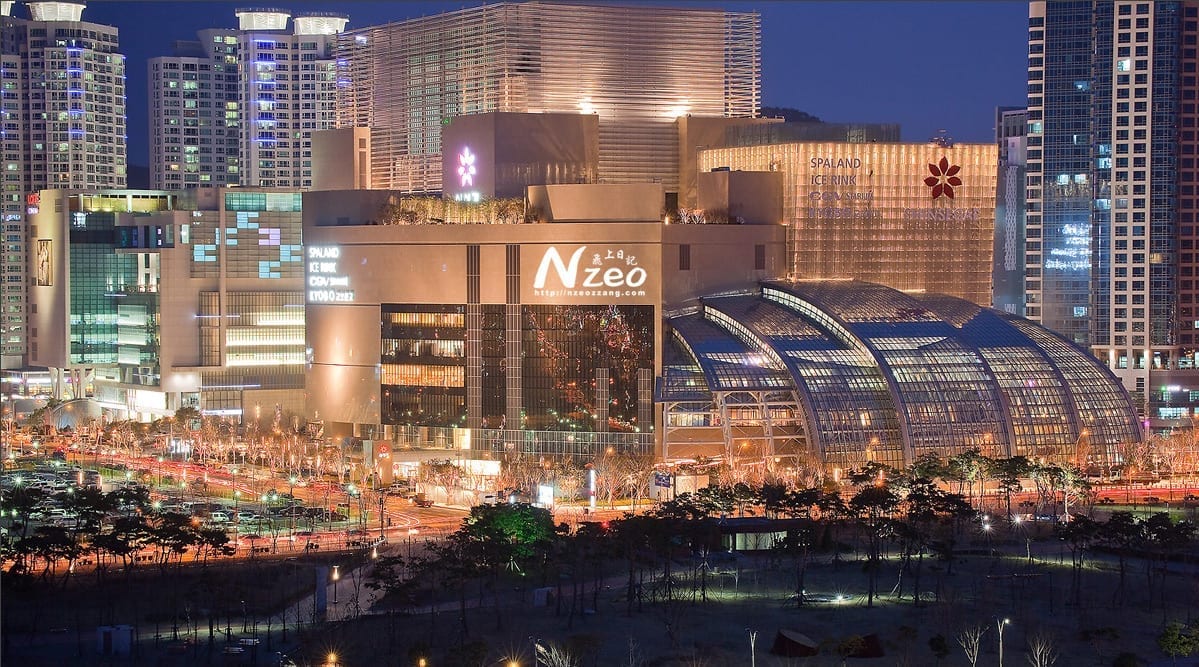
    Shinsegae Department Store’s newest location in Daegu is set to open next month, and it will include a massive 56,000-square-foot aquarium and indoor park on its roof, the company revealed Wednesday.

    The move is a bid to attract more visitors with family-friendly entertainment options. Incorporating more amusement facilities into its department stores and shopping malls has been Shinsegae’s main strategy in breaking through a prolonged slump in the retail business.

    shinsegae-aquarium

    The aquarium, which will feature some 200 types of animals including rare ones like manatees, sea lions and elephant seals, will occupy the ninth floor of the store. An indoor park with oversize furniture a la Alice in Wonderland and an outdoor plaza with plants and fountains will be adjacent to the aquarium.

    “The Daegu branch will be different from the concept of existing department store and focus on providing value and experience to visitors,” Shinsegae Department Store CEO Jang Jae-young said. “We will become a landmark in the North Gyeongsang region and attract people who were originally planning to go to an amusement park, zoos or baseball games during the weekend with our diverse cultural facilities.”

    This is the first time a Korean department store is installing an aquarium on the top floor. The heavy weight of water tanks requires most aquariums to be located at ground or on lower levels. Shinsegae, though, has defied convention by placing all its entertainment facilities on the roof.

    “The construction cost is double compared to when building [an aquarium] on ground level, but we boldly invested to provide more pleasure to visitors,” Shinsegae said in a statement.

    A 600-seat concert hall and art gallery that will host exhibitions and auctions are also in the space.

    The Daegu location is the last of Shinsegae’s six-projects initiative announced early this year, which also includes the recently-opened Starfield Hanam in Gyeonggi, the largest retail complex in Korea.

    CEO Jang said the series of projects marks Shinsegae’s “quantum jump” that it has been preparing for over three years, and once complete, its retail businesses will be “free of market share competition.”

  • Brydge to expand channel reach in South East Asia

    Brydge to expand channel reach in South East Asia

    Brydge, an award-winning leader in premium and innovative tablet accessories, is participating at next month’s DISTREE APAC in Singapore, to meet and build business relationships with some of the region’s top consumer tech distributors and retailers. , said: “We are performing really well in the US market and we’re keen to replicate this success within Asia-Pacific, especially the markets of South East Asia.”

    “In APAC we have already experienced some success in Japan, Korea and Australia with consumers keen to purchase premium accessories for iPads,” he added. “We currently work with Ingram Micro in Australia and New Zealand, and are ready to recruit additional distributors and retail partners across South East Asia, which is one of the reasons why we are attending DISTREE APAC.”

    Smith continued: “We offer products that excel in their category, which have achieved strong channel sell through. We’re keen to increase our channel reach in Japan and Hong Kong and also want to build relationships with Apple Premium Resellers (APRs) across the region.”

    Brydge has strong consumer channel credentials, having just expanded its online partnership with Best Buy to a US-wide rollout in Best Buy retail locations. The company’s retail sales have soared tenfold year-on-year to date in calendar 2016.

    “We are selling through more than Best Buy stores now in the US and also have agreements with some key carriers and important APRs such as Simply Mac. We’re available in nearly 1,600 stores in the US market alone, as well as 2,000 more across the globe,” said Smith.

    Announcing the Best Buy partnership, Smith stated: “Brydge is dedicated to becoming the market leader in premium and innovative devices that deliver the ultimate experience in mobility and productivity, and this partnership [with Best Buy] is a further step towards that goal.”

    Brydge iPad keyboards are precision-engineered to provide users an unrivalled experience that combines the convenience and functionality of the iPad with the productivity of a MacBook. All Brydge keyboards boast a sophisticated, minimalistic design that includes adjustable brightness backlit keys, Brydge’s patented 180-degree hinge system for premium viewing angles and adjustments, Bluetooth connectivity, and a powerful rechargeable battery that lasts up to three months.

    “We’re now looking to leverage our success in iPad keyboards and expand our portfolio into some new exciting areas, which we will be able to talk about with distributors and retailers at DISTREE APAC,” explained Smith.

    “We are in a crowded product category with hundreds of competing products, so we know we have to work hard to achieve differentiation in the market and ensure Brydge offers a compelling proposition to the consumer,” he added.

    This year Brydge has been included on the prestigious Inc. 5000 list as one of the ‘Fastest-Growing Private Companies in America’. Each year, business publication Inc. ranks the 5000 fastest-growing private companies in America by sales growth over a three-year period. Brydge was ranked 1542 overall and ninth in the computer hardware category.

    Brydge is receiving positive reviews in the press and is also looking beyond retail towards opportunities in the enterprise and education markets as well. Retailers and distributors attending DISTREE APAC 2016 can pre-schedule one-on-one meetings with the Brydge team through their web account.

  • Adyen supports WeChat Pay globally

    Adyen supports WeChat Pay globally

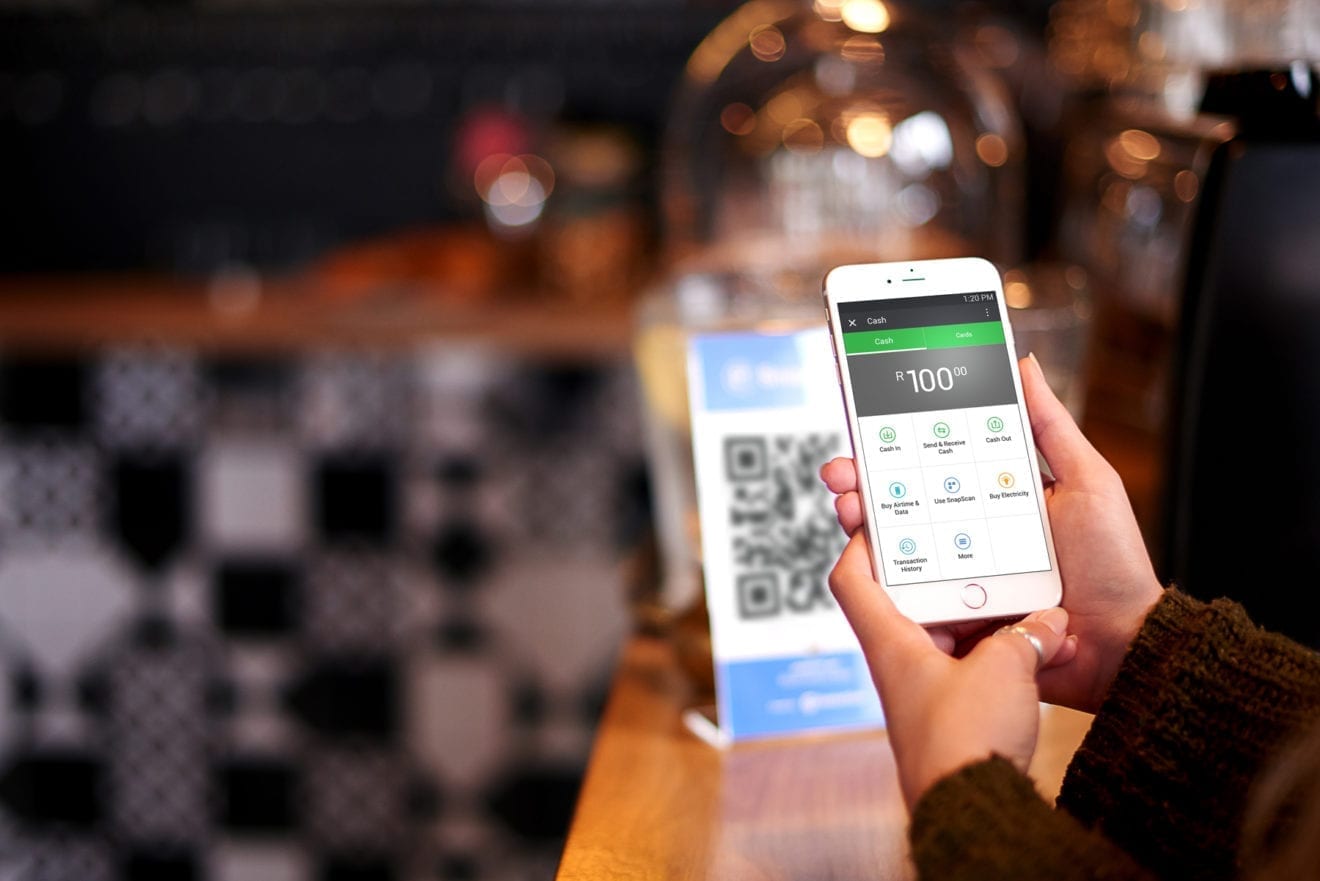
    Global payments technology provider Adyen has added WeChat Pay support to help businesses worldwide sell to customers in China and Hong Kong.

    Adyen provides the payment infrastructure for multiple major internet companies including Uber, Facebook and Neflix. With the agreement, Adyen will be the first payment service provider to support WeChat Pay on a global scale.

    Adyen CCO Roelant Prins said China is at the forefront of the digital payments revolution, with 15% of the total population expected to make a cross-border purchase in 2016.

    “We are very excited to support WeChat Pay. When combined with our existing UnionPay and Alipay integrations, it gives businesses access to the world’s biggest e-commerce market with a single partner,” he said.

    “This is the final key to unlocking full access to the Chinese shopper. This is especially appealing to travel businesses and high-end retailers.”

    According to Adyen data, despite the rapid adoption of digital payments in Hong Kong, credit cards are expected to remain the most popular payment method in the market. Visa has a significant lead over rival MasterCard.

    Because no local entity is required for cross-border transactions it is easy to accept and settle payments in Hong Kong dollars with no impact on currency conversion.

  • Malaysia defers raising palm oil share in bio-diesel mix

    Malaysia defers raising palm oil share in bio-diesel mix

    Malaysia will push back a mandate to blend more palm oil into diesel to a later date following a rebound in crude palm oil prices.

    The biodiesel program, targeted at transportation and industrial sectors, was initially designed in-part to cut the Southeast Asian country’s swelling palm oil inventory that weighed on prices of the commodity.

    “After a thorough study, taking into consideration the difference between crude palm oil and diesel prices at current volatile market, I would like to announce that the implementation of Biodiesel Mandate will be deferred to a later date,” Plantation Minister Mah Siew Keong said in a short statement.

    The content of palm oil in biodiesel will be raised to 10% under the so-called B10 program that blends palm-based methyl ester with traditional petroleum diesel for sale at retail pumps nationwide. Malaysia will also mandate for a 7% blend, or B7, for industrial sector.

    The program, scheduled to be enforced next month, has been delayed twice this year amid mounting concerns from vehicle resellers over potential damage to engine that may prompt manufacturers to dishonor their warranty pledges.

    The rising cost of palm oil could result in higher pump prices for consumers at a time when Malaysian households are grappling with higher cost of living.

    “Although significant effort has been put into for its implementation, the government is committed to ensure that there is no burden of extra cost at this time,” Mah said in the statement.

    Malaysia estimates that the program is expected to consume about an additional 709,000 tons of crude palm oil annually, and contribute to a saving of 820 million liters of petroleum diesel a year.

    Crude palm oil production in Malaysia declined 2.2% month-on-month to 1.67 million tons in October, a seasonally strong month, according to data from the Malaysian Palm Oil Board. On a year-on-year basis, output plunged 17.6% in October and inventory stood at 1.57 million tons.

    Spot prices of crude palm oil has risen more than 30% so far this year as production of the edible oil used in everything from soap to snacks fell in Malaysia and Indonesia due to unfavorable weather conditions.

    Key agricultural areas in Malaysia and Indonesia, which collectively produces more than 80% of the global supply of palm oil, have been hit by lingering effects of 2015’s El Nino weather conditions that shriveled oil palm trees and hurt yields this year.

    El Nino is the unusual warming of the Pacific Ocean that causes a shift of moist winds away from their more typical patterns and results in less rain.

    The benchmark crude palm oil futures on Bursa Malaysia Derivatives for January delivery rose 2.0% to 2,883.00 ringgit on Wednesday.

  • Singapore ranks 2nd in global connectedness

    Singapore ranks 2nd in global connectedness

    Singapore is the world’s most connected and globalized country, according to DHL’s Global Connectedness Index (GCI).

    All but two of the top 10 most globalized countries in the world are located in Europe, with Singapore and the United Arab Emirates as the exceptions.

    The 2016 edition of the report shows that global connectedness, measured by cross-border flows of trade, capital, information and people, surpassed its 2007 pre-crisis peak during 2014.

    In 2015, globalization’s post-crisis expansion slowed, but the data indicate that it did not go into reverse. Currently available evidence — still preliminary in some areas — suggests that the world was about 8% more connected in 2015 than in 2005.

    North America is the second most globally connected region and leads on the capital and information pillars, with the United States as the most connected country in the Americas. Overall the US is ranked 27th out of the 140 countries measured by the GCI.

    North America had the largest gain in overall global connectedness during the past two years,

    followed by South & Central America & the Caribbean. Countries in South & Central Asia and Sub-Saharan Africa suffered a drop in their average levels of global connectedness.

    Suriname, Jamaica and Fiji were the biggest gainers in terms of rank changes from 2013 to 2015, moving up 23 (112th to 89th), 22 (107th to 85th) and 20 (94th to 74th) places respectively.

    Suriname’s rise was driven by a substantial broadening of its international interactions, whereas Jamaica and Fiji increased on both the depth and breadth dimensions of their global connectedness.

    Nigeria, Togo and Nicaragua experienced the largest decreases in terms of overall rank, dropping 28 (67th to 95th), 21 (72nd to 93rd) and 19 (71st to 90th) places respectively.

  • Telenor launches mobile wallet in Malaysia

    Telenor launches mobile wallet in Malaysia

    Telenor Group has launched a new mobile wallet service in Malaysia targeted at the underbanked segments of the market.

    The service is has been built based on the Malaysian money services business Prabhu, which Telenor acquired in May.

    The service has been rebranded Valyou, Telenor’s mobile wallet brand. While Telenor was forced to shut down its Valyou service in its home market of Norway last year due to lower than expected demand, the service will live on in Malaysia.

    Valyou supports cross-border international mobile remittance including money transfers to seven countries as well as over-the-counter remittance at local retailers. It is open to subscribers from any mobile operator and supports all smartphone types.

    Valyou is currently available as and Android app and will soon be coming to iOS.

    “Malaysia ranges among the regional frontrunners when it comes to digital payments, and we are happy to expand Telenor’s financial services footprint with Valyou,” Telenor SVP and head of financial services Tine Wollebekk said.

    “Our ambition is to explore end to end digital remittance to all relevant corridors, including both Telenor’s own financial services markets – such as Pakistan, Bangladesh or Myanmar – but also to other countries that are important for the local migrant community.”

  • Consumer credit seen to grow in Philippines

    Consumer credit seen to grow in Philippines

    Consumer credit demand in the Philippines remains strong, supported by President Rodrigo Duterte’s push to sustain economic growth, a loan provider said Friday.

    Home Credit Philippines expects to hit its target 500,000 clients this year and double its client base to one million in 2017, according to its chief executive, Annica Witschard.

    “Obviously, there’s going to be some ups and downs in the global economy but the Philippines has a strong track record of growth and I don’t seen anything that’s going to stop that in the coming years,” she told ANC’s “Market Edge with Cathy Yang.”

    Companies like Home Credit thrive with only three out of every 10 Filipinos having access to banks and only five percent with credit cards, she said.

    Home Credit Philippines, the local unit of Home Credit Group, plans to expand to more retail stores in 17 provinces nationwide to offer non-cash, no-collateral in-store financing.

  • Blue Coral Samsung Galaxy S7 edge officially confirmed, launching November 5 in Singapore

    Blue Coral Samsung Galaxy S7 edge officially confirmed, launching November 5 in Singapore

    If you recall, a photo leak last week revealed a new Blue Coral variant of the Samsung Galaxy S7 edge, and that it’s headed to Verizon in the US. Now, the South Korean company has officially confirmed the new Galaxy S7 edge color.

    Specifically, the confirmation came from Samsung’s Singapore subsidiary which announced the retail availability for the handset on its official website.

    The image that leaked last week

    “Samsung today also announced the retail availability of the Samsung Galaxy S7 edge 4G+ in Blue Coral, adding a stunning colour variant to this sleek and stylish device,” the company said in a press release.

    “Currently available in Black Onyx, Gold Platinum, Silver Titanium and Pink Gold, the new colour variant of the Galaxy S7 edge 4G+ features a refined design coupled with powerful functionality while encased in a cool blue hue.”

    As for availability, the subsidiary said the phone (32GB variant) will go on sale in the Asian country starting November 5. It will carry a price tag of SGD 1,098 ($787).

  • Google Android Pay lands in Hong Kong

    Google Android Pay lands in Hong Kong

    Google may be blocked in mainland China, but it’s Android Pay mobile payment service has just launched in the freer environs of Hong Kong.

    The mobile payment service from the American Internet company has launched in Hong Kong and is now available at thousands of retail outlets.

    Android Pay is a “one-click payment” service launched by Google. It features NFC communications technology and can be used on devices starting with the KitKat 4.4 Android system.

    Android Pay is similar with Apple Pay, which supports rapid and convenient payment functions via smartphones. Apple Pay launched in Hong Kong and mainland China earlier this year.

    Android Pay has established partnerships with the Bank of East Asia, DBS, Dah Sing Bank, Hang Seng Bank, HSBC, and Standard Chartered Bank in Hong Kong. At the same time, Android Pay gained support of over 5,000 retailers, including 7-11, Circle K, Fortress, Mannings, Maxims Cakes, MX, and McDonald’s.

  • Rupiah falls against dollar to 13,414 on Friday

    Rupiah falls against dollar to 13,414 on Friday

    The rupiah fell 54 points to close at Rp13,414 per dollar in the Jakarta inter-bank spot market on Friday evening, compared to the previous close of Rp13,360 per dollar.

    The dollar appreciated at the weekend, sending a signal that the Fed has indicated the possibility of raising its interest rate this year end, Ariston Tjendra, chief researcher of Monex Investindo, said here on Friday.

    “The signal about a hike in the US interest rate is in line with the US optimistic economic data,” he added.

    The release of data about US jobless claims at low level and the increase in home sales are among the reasons for the Fed to tighten its monetary policy, he noted.

    “The majority of global currencies also tend to weaken against the US dollar,” he commented.

    Lukman Leong, an analyst of PT Platon Niaga Berjangka, reminded that Bank Indonesia which remains in the foreign currency and bond market to control the fluctuation of local currency has prevented the rupiah from further weakening against the dollar.

    On the other hand, the tax amnesty program has added to the rupiah enjoying a positive sentiment, he observed.

    According to the BI mid-rate, the rupiah weakened to Rp13,408 per dollar, compared to Rp13,385 per dollar the day before.

  • Philippines based mobile payment service Abra joins hands with Codapay

    Philippines based mobile payment service Abra joins hands with Codapay

    Philippines-based mobile payment service Abra has announced a partnership with Singapore-based e-payment gateway Codapay.

    With this new deal, Abra users in the Philippines will be able to purchase Steam wallet codes, Skype credit, Amazon gift cards and Battle.net cards by paying with Abra at Codapay’s retail site, Codashop.

    “It is Abra’s goal to provide its users a better way to send and receive money, and to pay for things online. I am incredibly happy to partner with Codapay, a company whose vision of financial inclusion aligns with ours,” said Bill Barhydt, founder and CEO of Abra, in an official press statement.

    Founded in 2014, Abra leverages on blockchain technology to store digital cash on users’ smartphones. Credits in the mobile wallet can be topped up via any accredited Abra teller (which incurs a small fee) or through the users’ bank accounts. Users can also transfer cash to other users via the app — including cross-border money transfers between Philippines and the US.

    To date, it has raised a total of US$14 million in three funding rounds.

    While mobile payment services such as Smart Money and GCash have been operating in the Philippines for a decade, the country is experiencing a surge in mobile payment adoption due to the increasing smartphone penetration rate and growth of e-commerce (which is set to hit US$1.01 billion in revenue this year).

    Additionally, a Mastercard survey revealed that 17 per cent of consumers and 15 per cent of consumers in Philippines have made mobile commerce purchases and p2p transactions respectively.

  • Thailand’s Bank of Ayudhya books 11% Q3 profit rise

    Thailand’s Bank of Ayudhya books 11% Q3 profit rise

    Bank of Ayudhya PCL, Thailand’s fifth-largest lender, said on Friday its quarterly net profit rose 10.6 percent from a year earlier, boosted by higher net interest income as a result of strong loan growth from retail clients.

    Bank of Ayudhya, controlled by Japan’s Mitsubishi UFJ Financial Group Inc, raised its 2016 loan target range to 8 per cent to 9 per cent, from 5 per cent to 6 per cent, after consolidating loans from Cambodia subsidiary Hattha Kaksekar, it said in a statement.