Tag: asia

  • Chinese mall opens ‘nursery’ room for husbands

    Chinese mall opens ‘nursery’ room for husbands

    A new mall in Shanghai has set aside a space for what it is calling a ‘husbands nursery’, where it hopes bored spouses will hang out while their wives are shopping in the mall, China Central Television (CCTV) reported.

    This ‘husbands nursery’, on the third floor of a shopping mall in Shanghai which opened on October 30, “is equipped with multiple leisure facilities, including magazines in its reading area, and a television,” supposedly for men to relax, CCTV said. But what those running the mall may not know is that Chinese men – the mainland’s biggest online shoppers – will likely be racking up credit card debt sitting in the ‘husbands nursery’ and splurging on themselves.

    “Mainland men are more likely to splurge on themselves when making purchases over the internet than women – who focus more on buying daily necessities,” according to a May 2016 survey.

    The survey was conducted by Ant Financial Services, an affiliate of the Alibaba Group that owns the South China Morning Post. Its findings are contrary to popular perception that it is women who go on shopping sprees, buying cosmetics and clothes. And, the study also found that women are buying more daily household necessities, while men are splurging on personal-care products and leisure goods.

    “Male online shoppers prove to be more hedonistic and the level of online spending by men is higher than women,” Ant Financial said in its report published in May.

    The survey said that women still bought a greater number of goods and services on the internet, but that they were buying more daily necessities for household use. Men’s online spending on entertainment, sports, dining and travel was 26 percent higher than the spending of women, and that women’s online purchases were aimed at running more efficient households.

    Ant Financial conducted the survey in partnership with the China Academy of New Supply Side Economics. The survey was based on data collected by Alipay, China’s online payment giant operated by Ant Financial, which has 450 million users.

  • 7-Eleven offers 24×7 e-commerce service

    7-Eleven offers 24×7 e-commerce service

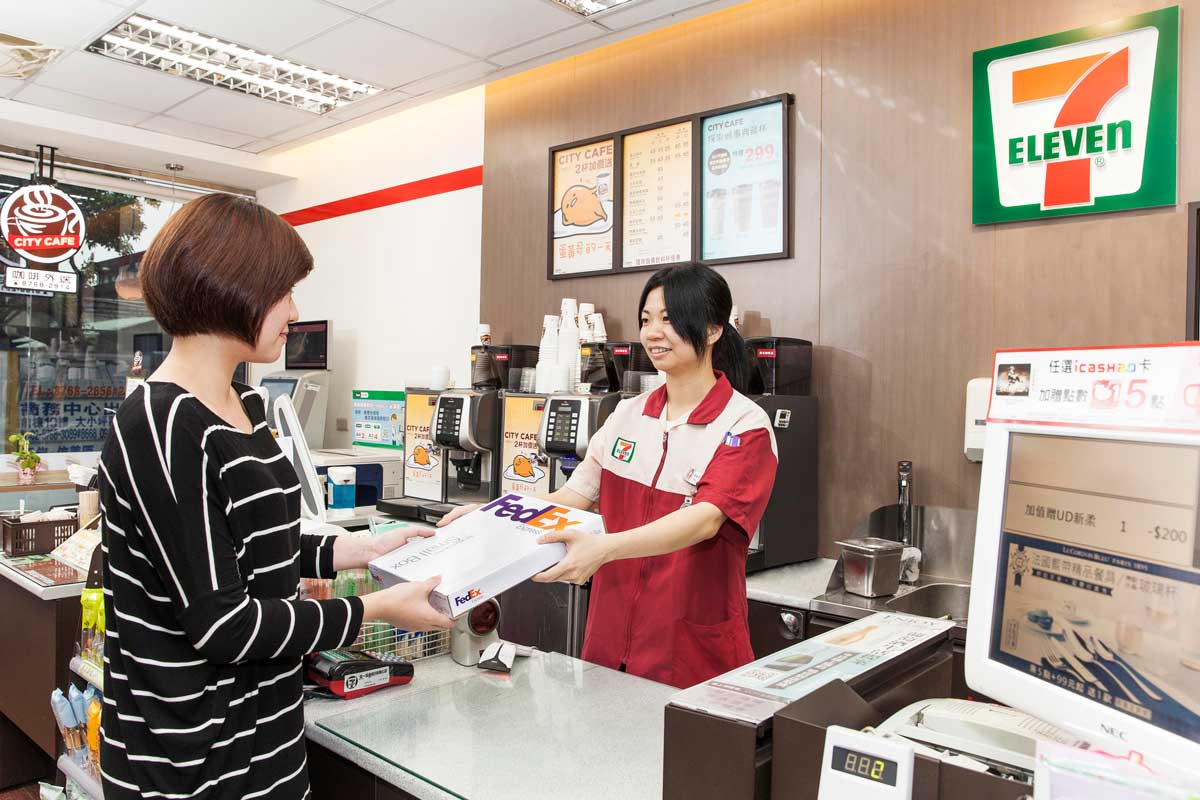
    Convenience store chain operator 7-Eleven Malaysia is jumping on the bandwagon in e-commerce by offering parcel locker services in some of its outlets to facilitate delivery for online shopping.

    The service is expected to start this month, says 7-Eleven Malaysia chief executive officer Gary Brown at the Asia Pacific Retail Congress in Kuala Lumpur recently.

    The move by 7-Eleven will be seen as a nascent but integral part of an expanding online retail eco-system that is beginning to grow in popularity in Malaysia.

    “An online shopper can choose to get his purchases delivered to a 7-Eleven store most convenient to him. Once it arrives, he will receive a text with a PIN code. Because we are a 24-hour convenience chain, we will be able to offer online shoppers the convenience to pick up their purchases 365 days, 24×7,” he says.

    Brown says the move is to make shopping as convenient as possible and is part of the chain’s evolution in the larger retail space that is not confined to bricks and mortar. It has been around since the 1980s but it was only of late that the convenience chain began went beyond retail to offer payment services.

    7-Eleven Malaysia Holdings Bhd was listed on Bursa Malaysia in 2014. The convenience store chain is controlled by Tan Sri Vincent Tan Chee Yioun, with an indirect stake of 53.59% via HQZ Credit Sdn Bhd. HQZ Credit is the ultimate holding company of Berjaya Retail Bhd – the major shareholder of 7-Eleven.

    Brown says he is seeing a lot of changes in Malaysia’s retail landscape and 7-Eleven, as part of that landscape needs to improve customer’s experience by making it convenient.

    Brown says the company plans to open 200 new stores annually for the next 10 years.

    It opened 500 new stores in the past 2½ years and at the same time, refurbished another 500. The cost of 200 new stores and refurbishing another 200 involves an investment of between RM80mil and RM90mil a year, he says.

    Brown says out of 2,050 7-Eleven outlets, close to 100 stores are located in malls and other managed facilities.

    In Publika, Solaris Dutamas, there are four 7-Eleven outlets, six in Times Square, Jalan Imbi and three in Sg Wang mall. Two out of the six in Times Square operate 24×7.

    “In a high traffic area, for example, in a mall, we need to have more density. In a mall, they operate 12 hours. But when they are outside a mall, but in a managed area, they operate 24×7,” he says.

    Brown says the company is interested to enter more malls. Having a store in a mall makes sense because consumers do not want to walk too far.

    “7-Eleven leverages on what we call impulse satisfaction, or instant gratification,” he says.

    It also offers mobile top-up services and payment of utility bills 24×7 and recently introduced sitting arrangement for that cup of coffee.

    “It is not convenient carrying a cup of hot coffee around,” he says.

    The convenience store operator reported a group revenue for the financial year ended Dec 31, 2015 of RM2.01bil, an increase of 6%, or RM113.2mil, over 2014’s revenue of RM1.89bil.

    The company reported a gross profit of RM59.9mil for 2015 financial year, which translates into a 3% gross profit margin over revenue, which is normal as margins tend to be rather thin for the retail sector. It reported operating income of RM109.7mil, an increase of 2.2% compared to 2014.

    Better merchandise mix

    Its growth in revenue was driven by new stores, an improved merchandise mix and consumer promotion activities, and was achieved despite an ongoing retail market negativity, which explains the need for the company to go into a store expansion mode as well as to offer new services at its 24-hour outlets.

    The company’s store expansion drive of about 200 new stores a year will help grow revenue. Its store count increased by 199 stores or 11.4 % from 1,745 stores to 1,944 stores in 2015.

    On the often quoted view that there is an oversupply of retail space in the Klang Valley and cities like Penang and Johor Baru, Brown disagrees.

    “There is a lot of mall space in the Klang Valley but I would not say there is an oversupply. Malaysians like malls, so they have a role to play, despite the growth in online retail,” he says.

    He says the more pertinent question is what will happen to malls which are not well located and which are not well managed.

    Those that are will continue to grow, thrive and attract tenants. A mall will survive on tenant mix, which drives customer traffic.

    “There may be some fallout if a mall does not have a good tenant mix,” he says.

  • Cambodia Properties Shine in Asean

    Cambodia Properties Shine in Asean

    Asean property markets are promising, with Cambodia offering the most attractive prospects due to strong demand and limited supply, notably in Phnom Penh.

    Aliwassa Pathnadabutr, managing director of property consultant CBRE Thailand, said prime residential property for rent in the Cambodian capital has posted the highest yield among all sectors at eight percent per year. Selling prices remain relatively low, but rents are high.

    “Demand for rental in Phnom Penh is driven by expatriates working for multinational companies set up in the city,” she said. “Asking rents are high as those companies are willing to spend on good accommodation for their staff.”

    With strong demand and a limited supply of only 5,500 units, the apartment sector has an occupancy rate of between 80 to 90 percent while rent per square meter is 700 to 1,000 baht (about $20 to $28).

    Rent for a one-bedroom serviced apartment is around 40,000 to 50,000 baht per month ($1,141 to $1,426), the same rate for a unit in Bangkok.

    But the average selling price for a high-end unit is only 110,000 baht per square meter, lower than Bangkok’s 200,000-300,000 baht.

    She said the selling price per square meter for a high-end residential unit in Phnom Penh is lower than that in Bangkok due to lower land costs. Construction costs, however, are close to those in Bangkok as most of the construction materials are imported from Thailand.

    For the high-end segment, the average selling price is 110,000 to 170,000 baht per square meter. For middle-end condos it is 93,000 baht and 24,000 baht on average for the affordable segment.

    The foreign ownership quota in Cambodia’s residential sector is higher than Thailand’s, with up to 70 percent of total units at a project. But foreigners are not allowed to buy ground-floor or basement units. Foreigners are also allowed to set up a company with 100 percent ownership.

    However, Thai investors should be cautious if they want to jump on the bandwagon as Phnom Penh’s residential supply will reach 25,000 units in 2018 from only 5,000 units this year, Ms. Aliwassa said.

    Investing in a condo for rent in Phnom Penh is attractive for individual investors. The major investment buyers in the city are Taiwanese, Chinese, Singaporean, South Korean and Japanese.

    “If Thais want to get in on the act, they should do so now or at the beginning of the boom as there will be a large volume of new supply being completed in the next two years,” added Ms. Aliwassa.

    She said office and retail spaces in Phnom Penh are limited but demand is strong so the occupancy rate is quite good. The city’s office supply totals around 280,000 square meters, compared with 8.4 million square meters in Bangkok.

    For C-grade office space, occupancy is as high as 90 percent due to a lower monthly rent of $10 to $15 per square meter. Rent for B-grade office space is $16 to $25 with an occupancy rate of 85 percent while A-grade rent stands at $28 with an occupancy rate of only 40 percent, compared with $30 in Bangkok.

    Another attractive investment in Phnom Penh is retail, as Thai brands are very popular among Cambodian consumers. Successful Thai retailers in Phnom Penh now include Major Cineplex, Fuji and S&P restaurants.

    Nonetheless, the retail property market in Phnom Penh is quite small compared with Bangkok. The current retail space in Phnom Penh totals 680,000 square meters, which accounts for less than 10 percent of Bangkok’s total retail area of seven to eight million square meters.

    Despite limited supply, the monthly rent for prime malls remains low at only 1,200 baht per square meter, compared with 3,000 to 4,000 baht in Bangkok.

    Although Phnom Penh’s luxury segment has a limited supply, it might be too soon to enter the market as the segment is very small and Cambodian consumers are not ready to accept luxury prices, said the consultant.

    “Besides checking local regulations, investors should consider the balance of costs, prices and returns. If one of them is too high, the rest will fall down just like in Myanmar where land costs are very high,” added Ms. Aliwassa.

    Tony Picon, managing director of property consultant Colliers International Myanmar, said all commercial properties in Yangon are attractive with high occupancy rates since supply is limited and demand is strong.

    “New supply is difficult to enter as regulations are unclear and land costs are steep,” he said. “But opportunities in Myanmar are high as its GDP is the highest in the region at 8.3 percent. The country also boasts abundant resources.”

    Suphin Mechuchep, managing director of property consultant JLL Thailand, said Vietnam is an interesting investment destination as its economy is picking up, purchasing power is strong and the government is spending on infrastructure projects.

    “All segments in Vietnam’s property market have bottomed out in the past two years as middle-income earners prefer spending on IT, mobile and technology,” she said.

  • Zhouheiya fast food chain to list in Hong Kong

    Zhouheiya fast food chain to list in Hong Kong

    The initial public offering of Zhouheiya, a Hubei province-based fast food chain known for its spicy-braised duck neck and other ready-to-eat snacks, opened for subscription in Hong Kong, looking to raise up to HK$3.3 billion ($425.7 million).

    The braised food producer and retailer, scheduled to make its trading debut on Nov 11, will sell 424 million shares at an indicative range between HK$5.8 and HK$7.8 apiece.

    Founded in 2002 in Wuhan, Hubei province, Zhouheiya beefed up its business footprint in 38 cities across 12 mainland provinces with 715 self-operated retail stores.

    Executive Director Hao Lixiao told a news conference in Hong Kong on Monday that the company is always looking to expand into the Hong Kong and Macao markets. However, he didn’t reveal a detailed timeline, adding that the firm still deals with the local licenses, not to mention that product research and the buildup of sales networks also takes time.

    Zhouheiya’s Hong Kong IPO highlighted an industrywide trend of mainland duck-food manufacturers floating public shares. Competitors like Jiangxi Huangshanghuang Group listed in Shenzhen back in 2012, while Hunan Juewei has been stuck for more than two years in the Chinese mainland’s clogged pipeline of IPOs.

    “Such a trend indicates that growth of mainland duck-food chains has somewhat run into a bottleneck which pushes them to raise capital via public listings as a growth booster,” said Zhu Danpeng, a researcher at the China Brand Research Institute.

    With rival Hunan Juewei being trapped in a big logjam of mainland IPO filings, Zhouheiya’s decision to join in a cluster of mainland food companies floating in Hong Kong appears to be a time-saving move.

    Choosing Hong Kong as a listing destination helps companies jump the long IPO queue in the Chinese mainland, but low valuation in the Asia’s financial hub remains a sure thing. In particular, Hong Kong investors still view food stocks listed there as generally expensive options, which may explain why some believe shares of Zhouheiya are priced a bit too high, said Hannah Li, a Hong Kong-based strategist with UOB Kay Hian.The IPO logjam that has long beset mainland catering companies accessing mainland capital markets was spotlighted when high- and mid-end restaurant chain Xiao Nan Guo Restaurants Holdings, and hotpot chain Xiabu Xiabu turned to Hong Kong to list in 2014.

  • HKMA grants stored value licences to eight more issuers including PayPal

    HKMA grants stored value licences to eight more issuers including PayPal

    The Hong Kong Monetary Authority (HKMA) said on Friday that it had granted stored value facilities (SVF) licences to eight more issuers including Paypal Hong Kong Limited, bringing the total to 13.

    “We are pleased to see companies with diverse backgrounds offering a variety of SVF products which will enhance retail payment convenience in Hong Kong,” said Howard Lee, Senior Executive Director of the HKMA.

    The implementation of a supervisory regime by the HKMA will strengthen public confidence in using stored value products and services which, in turn, will encourage innovation in the local retail payment industry, Lee said.

    The other issuers granted licenses are 33 Financial Services Limited; Autotoll Limited; ePaylinks Technology Co., Limited; K & R International Limited; Optal Asia Limited; Transforex (Hong Kong) Investment Consulting Co., Limited; and UniCard Solution Limited.

    The city’s de-facto central bank granted the first batch of licenses to SVF issuers such as Alipay Financial Services (HK) Limited in August.

    The Payment Systems and Stored Value Facilities Ordinance started operation on Nov. 13 last year and provided a one-year transition period for application for SVF licences.

    Upon the expiry of the one-year period, it will be illegal for any person, unless being exempt, to issue or operate SVF without a license, the HKMA said.

  • Thailand takes a long-term gamble on Isaan region

    Thailand takes a long-term gamble on Isaan region

    If all goes according to plan, Thai Prime Minister Prayuth Chan-ocha will make a media splash next year with the launch of a 60 kilometer stretch of dual-track train line between Nakhon Ratchasima and Khon Kaen provinces in northeast Thailand.

    Work on the short spur — part of a larger project to upgrade the region’s freight transport to Thailand’s main deep sea port — is being speeded up to be completed before the next election. But whether the planned publicity stunt will win Prayuth’s coup-installed government popularity in the country’s poor northeast region remains to be seen.

    Prayuth’s government is banking on heavy investments in infrastructure to both stimulate growth during the current economic doldrums and strengthen Thailand’s competitiveness in the future. While most economists concur that the expenditure on infrastructure is long overdue, some say a lot more could be done to help the country’s rural poor in the short term. And most of Thailand’s rural poor live in the country’s northeastern region, known locally as Isaan.

    Isaan was the only region to reject the draft of a military-guided constitution in the Aug. 7 referendum, with 51.4% of the people voting against it compared with a nationwide 61.40% endorsement. Isaan, accounting for one third of Thailand’s 67 million population but only 10% of its gross domestic product, is also the power base of the Pheu Thai Party, whose de facto leader is Thaksin Shinawatra, the populist politician and the present regime’s number one enemy. Prayuth and his officers originally came to power after a May 2014 coup, toppling Thaksin’s sister, former Premier Yingluck Shinawatra.

    Prayuth, using his sweeping powers under an interim constitution, has fast-tracked at least 20 megaprojects that will cost the country an estimated 2 trillion baht ($57 billion) over the next six years. Of that amount about 10% will be spent in Isaan — primarily on a new motorway linking Bangkok to Nakhon Ratchasima, Isaan’s largest city, and an expanded dual-track train link connecting Khon Kaen, Isaan’s second largest city, to Nakhon Ratchasima and on to the port of Laem Chabang on the eastern seaboard southeast of Bangkok. A single track already exists, but is too congested to serve as an efficient freight link for the Isaan region to transport its main crops to markets abroad. A third megaproject, a so-called Sino-Thai high speed train between Bangkok and Nakhon Ratchasima, has yet to receive cabinet approval.

    “The fact that the government is seriously interested in infrastructure is something, anyway, because if you trace the history we haven’t been investing enough in infrastructure here,” said Somchai Lertlarpwasin, director of the Bank of Thailand’s North Eastern Regional Office. “If the government puts 200 billion baht in the region over six years, it’s over 2% of the gross regional product in the northeast, so it means that you’ve lifted up GRP by 2% already, not even accounting for the crowd-in effects.”

    Retail boom

    There have been some “crowd-in” effects already. Nakhon Ratchasima, also called Korat, is fast becoming a shopping paradise for people in the region and from farther afield in neighboring Cambodia and Laos. All three of Thailand’s largest Bangkok-based department store chains have invested in massive outlets in the city, which will boast 1 million sq. meters of retail space by late next year.


    The Mall has had an outlet in the city since 1996, and recently invested 100 million baht to build an extension that includes a “Snow Zone,” treating Issan customers to a winter wonderland of ice skating, sledding and snowball-throwing. The Mall’s expansion was driven by increased competition, the advent of the ASEAN Economic Community earlier this year and the government’s approval of the new motorway to the capital which will halve travel time to Korat to around 2.15 hours.

    “Korat’s prospects are bright. If the government had not committed to investing in infrastructure it might have been harder to persuade the board to invest in the expansion,” said Preecha Limoua, general manager of The Mall’s Nakhon Ratchasima Branch. The department store’s Snow and Ice Planet is proving a new tourist attraction for the city. “Cambodian families are already coming here to see the snow. It is the only snow in Isaan.”

    Terminal 21, owned by Siam Retail Development, will open a 250,000 sq. meter outlet in December, boasting the city’s first observation tower on the outside and a replica of the Eiffel Tower on the inside. Central Group plans to open a Central Grand Plaza outlet with 320,000 sq. meters of retail space in September 2017. The Mall Korat, with its snow zone extension launched in October, now occupies 360,000 sq. meters. There is also a Makro, eight Tesco-Lotus convenience stores and several Big C locations, while Sweden’s Ikea and Japan’s Aeon are both reportedly looking for locations in the city.

    Klang Plaza, a local department store chain that opened its first outlet in Korat 50 years ago, has three outlets already and is investing in a fourth near the city’s railway station. The local chain, which operates under the motto “The Korat Department Store,” is not afraid of the upmarket competition from Bangkok, given its strategy of concentrating on supermarkets and stationery supplies and keeping its outlets within walking distance from Korat’s city communities. “Korat can handle 10 department stores,” said Pairat Manasilp, vice president of Klang Plaza Company.

    Korat grows, Issan flounders

    Korat province has a population of 2.7 million people, and a GDP of about 250 billion baht, the highest in Isaan. Only 250 kilometers northeast of Bangkok, Korat is an obvious gateway to the northeast and a logistical hub. It is already an industrial hub. U.S.-based Seagate Technology Company has a huge HRD disk drive factory in Korat, employing more than 12,000 people. The province is best known, however, as a hub for food processing using Isaan’s main commercial crops — rice, tapioca and sugar. Isaan accounts for half of Thailand’s exports of the three crops, which employ more than 700,000 Isaan families.

    In the long run, the dual track rail line running from Khon Kaen to Laem Chambang will provide a vital and cheaper transport link for these commodities that could make them more price competitive abroad.

    “The problem with Thailand is transportation costs. We don’t have efficient transport like trains,” said Hassadin Suwattanapongchet, president of the Nakhon Ratchasima Chamber of Commerce. Rail currently accounts for only 2% of Thailand’s goods transport, although freight is about half the cost of road transport per ton and is less polluting.

    Work has commenced on the dual track line, but it will take four to five years before the connection to Laem Chabang port is completed. “That’s a long time. People cannot imagine what it will be like in five years, so if the government can last for five years some people will be grateful,” Hassadin said. Villagers to be displaced by the new motorway have long opposed the project, but their opposition has been silenced by Prayuth’s edict.

    While Korat’s prospects look bright, the rest of Isaan is still suffering. Since last year, the region’s farmers have been hit by a triple whammy of declining demand for their commodities in China, low commodity prices worldwide and drought.

    All commodity prices except sugar are down, while sugar cane has also suffered in the aftermath of the 2015-16 drought. The price of tapioca, which is exported mainly to China, has dropped from 2.30 baht per kilogram last year to 1.40 baht now. Other than short-term measures, such as paying cash to farmers to compensate for low prices, the government has seemed stumped by the challenges facing regional agriculture. For instance, the Federation of Thai Tapioca Growers has been urging the government to strengthen efforts to promote of the use of tapioca in ethanol fuel and plastics, but so far, the official response has been slow.

    The region’s rice, tapioca and sugar cane farmers were the target of populist measures under the previous two elected governments designed to boost their incomes. A controversial rice pledging scheme under Yingluck’s government, promising to buy rice at 40% above market prices, was particularly popular but crashed down in scandals over corruption allegations. It seems unlikely that Prayuth’s transport projects, due for completion years from now, will win him similar kudos. The former Army Commander-in-Chief has made it clear he would be willing to become prime minister after the next election, albeit as an appointed one.

    “The government can invest in the motorway, or a high-speed train, or whatever, but the fact remains that most of the people here are farmers and the price of their crops — rice, tapioca and sugar — are low, so the people will have no money to drive cars on the motorway, or ride the high speed train, or shop in department stores,” said Pornchai Amnuaysap, senior adviser to the tapioca growers’ federation. “They will just stay at home and try to survive.”
  • Record demand for New Zealand avocados in Korea

    Record demand for New Zealand avocados in Korea

    The death of Thailand’s long-serving monarch may be affecting the buying behaviours of Thai consumers but export group leader AVOCO says any shortfall of New Zealand fruit sold will be more than made up in AVOCO’s other markets.

    Thailand is in official mourning following the death of King Bhumjbol Adulyadej on October 13. Popular tourism events have been cancelled and entertainment has been banned for 30 days as Thai people closely observe this period as a sign of respect to the 88-year-old monarch who ruled for seven decades. With fewer people dining out and industries temporarily shutting down, export activity to Thailand has slowed, says AVOCO and AVANZA’s market manager for Thailand, Carwyn Williams.

    “Sales have definitely changed and we are keeping a close eye on what impact this event will continue to have on avocado export volumes to Thailand,” says Mr Williams. “Correspondence has been difficult as business takes a back seat for Thai people during this time. This illustrates the importance of having a diverse range of export markets and the silver lining for us is that we can direct more fruit to our strong performing Korean market.”

    Shipments of New Zealand avocados to South Korea have reached an industry high with 209,000 trays planned for export this season. Worth about $6 million to the total industry, it is three times the volume exported last year.

    The greater volume reflects the industry’s larger national crop in 2016-17 but more importantly the work AVOCO has put in, under its AVANZA brand name, to promote New Zealand avocados and drive consumption in Asia.

    After a short crop of 2.5 million trays last season, about 5.1 million trays will be exported in 2016-17 – exceeding the previous record of 4.5 million trays two years ago.

    AVOCO will handle the bulk of New Zealand’s crop and this season will export about 3.1 million trays, with 83% destined for Australia. The remaining 17% will be sent to various Asian markets, including Japan, Thailand, Singapore, India and Korea and marketed under the AVANZA brand.

    AVANZA is responsible for 85% of all NZ exports to Korea this season, shipping more than 7000 trays a week over a 25-week supply window. Compare that to last year when AVANZA’s total contribution was just over 65,000 trays.

    Changing diets and promotion of avocados as a healthy food option means the superfood is in demand more than ever in Korea, which has a population of 50 million people. Korean imports of avocados between January and August this year from all origins, including Mexico and the US, was 347,000 trays – an 83% increase on avocado imports during the same eight month period in 2015.

    It’s likely New Zealand avocados will make up about half of all avocado imports this year to Korea where AVANZA market manager Martin Napper says retail and wholesale buyers can’t get enough of the fruit.

    “Korea has been a rapidly growing market for avocados. Two years ago, New Zealand shipped close to 72,000 trays to Korea – anymore and the market could tip over very quickly. But this year, we’ve received unprecedented interest. Avocados have just hit a nerve.”

    Korea, unlike other Asian markets, prefers large size fruit, which gives AVOCO a valuable supply avenue outside Australia for fruit above a certain size profile. The larger size premium fruit (16/18/20/24ct) is retailing for NZ$4 per piece this season which Mr Napper considers to be a “reasonable price point”, given the nature of the product and the inclusion of duties.

    New Zealand’s Free Trade Agreement ratified with Korea in September last year saw the 30% tariff on New Zealand avocados drop to 24% at January 1. The tariff drops 3% annually until it is eliminated in 2024. Mr Napper says that while the duty is still a hindrance to AVANZA, currently accounting for up to US$10 for every bulk carton shipped to Korea, demand for avocados continues unabated.

    “There’s recognition that healthy food items command a premium price and consumers are prepared to pay that.”

    While other New Zealand exporters have shipped fruit to Korea in small volumes in recent years, AVANZA has led the way in developing the market, partnering with similarly health-focussed brands at retail events designed to raise awareness about the health benefits and versatility of New Zealand avocados. This year, they’ve partnered with Korea’s second largest dairy company, Maeil Dairies, to cross-promote smoothies using avocados and soya milk. By the season’s end, Koreans will have taken part in more than 1000 in-store demonstrations promoting AVANZA avocados since 2014.

    AVANZA has also collaborated in the market with the Avocado Industry Council which has helped to promote New Zealand avocados on a website designed specifically for a Korean audience. The NZAIC Korean website offers recipe ideas and fruit handling information to inspire and educate the Korean consumer. It has also engaged Korean celebrity chef Hong Shin Ae to front tasting events and meal demonstrations using avocados.

    “The AIC has also undertaken social media research to better understand the buyer behaviours of consumers throughout Asia. That information is fed back to us to tailor our own marketing strategies to reach our targeted consumer, which in Korea is a woman, aged 20-45. She values health and beauty and makes all the household buying decisions.”

    Additionally, AVANZA has made efforts to educate retailers handling the fruit. Technical consultants Colin Partridge and Jerome Hardy have visited Korean retailers to instruct them on techniques to ripen fruit correctly which have been critical to boosting sales. Supermarkets have been encouraged to put ripe, ready-to-eat fruit on display alongside hard, green fruit – a strategy that can result in a 300% increase in sales because people buy more often and consume the day of purchase.

    “Displaying ripe fruit is a step forward by retailers who would never have done that even two years ago due to perceived wastage. But they recognise now that avocado is an important retail category for them and any wastage will be more than offset by increased sales,” says Mr Napper.

    “It’s one of the experiences we’ve taken out of our market presence in Japan where New Zealand avocados are more established. We’ve noticed the difference these strategies have but timing is everything and Korean retailers are recognising now that avocados are a growth category for them and they’re worth the investment.”

    Nearly 800 avocado growers across Northland and the Bay of Plenty supply AVOCO. Harvesting got underway in the Far North in late-August and will continue until February.

  • Qlik and Esri Singapore join forces to redefine visual analytics

    Qlik and Esri Singapore join forces to redefine visual analytics

    Qlik, a leader in visual analytics, today announced its technology partnership with Esri Singapore, the country’s leading Geographic Information System (GIS) technology provider.

    The collaboration will see Esri Singapore and Qlik working together to educate industries on the benefits of synergising geographic and spatial analytics.

    Smart mapping: making intelligent decisions with geographic information

    Esri’s ArcGIS Online is a collaborative, cloud-based technology platform that allows users to easily create, share and access content rich maps, applications and data. The technology collects location information contained within an organisation’s data and translates static data into useful, intelligent maps. Different locations have unique characteristics, and organisations need to identify, qualify and understand the connections between people, places and events. When mapping analytics is combined with a powerful visual analytics platform, organisations can add a new dimension to the practice of analysing information by translating complex datasets into the universal language of smart maps.

    Additionally, by integrating location information with data in real-time, businesses can unearth relationships, patterns and trends that would otherwise remain hidden. Esri’s ArcGIS Online maps are compatible with both QlikView and Qlik Sense. The Qlik Sense extension is available on Qlik Branch – a collaborative workspace and open exchange that provides customers, developers and partners simplified access to the open and powerful APIs of Qlik solutions. “More than 80 per cent of our business data is location related. From understanding your customer information and their behaviours to managing chronic illness, pandemic patterns, and even business impact due to accessibility of transport networks – location essentially links different sets of business information together to provide executives with better informed decision making.

    Through our partnership with Qlik, we aim to help organisations understand the value of letting users see their data in new and provoking ways, allowing them to develop actionable plans to address real-world challenges, said Thomas Pramotedham, Chief Executive Officer, Esri Singapore. “From retail sales performance to urban planning, being able to seamlessly merge intelligent mapping with visual analytics is critical to smart, data-driven decision-making. Qlik is proud to partner with Esri Singapore to promote the benefits of combining mapping technology and visual analytics for organisations to drive better decision making. We look forward to pursuing more innovative projects together in the future,” said CK Tan, Product Marketing, Qlik Asia Pacific.

  • Chinese firm plans to process re-fresh cod products for Shanghai retail

    Chinese firm plans to process re-fresh cod products for Shanghai retail

    Beiyang Jiamei Seafood, a Chinese processor switching its business from exports to imports, plans to expand into re-fresh products for the domestic market.

    The company, which is based in Qingdao, hopes to start processing re-fresh, packaged cod products for retail in Shanghai early next year, said Peng Song, its general manager.

    “We have in mind selling re-fresh cod and redfish. I think cod, both Atlantic and Pacific, can be very big in the Chinese market,” he told.

    If this model works, it could then be applied in other Chinese cities, he said. “I think we would be the first company in China to do this,” he said, during the China Fisheries & Seafood Expo.

    The company is also starting to sell frozen cod products into Chinese retail, wholesale and foodservice.

    “For the big, longline Pacific cod, we cut it into steaks. For the Atlantic cod, we make loins, portions and J-cuts,” he said. “I do think this item will boom in China, in a very short time.”

    Chinese in coastal cites do eat Pacific cod, he said, as the same species that is caught by Russians and American vessels is also in Chinese waters.

    But, the species is not sold as “cod” and consumers are unfamiliar. “The catching is inconsistent, so people do not like to promote it. The species may not be new, but to name it Pacific cod, Atlantic cod, that is new,” he said.

    The company is also putting the Marine Stewardship Council (MSC) logo on its cod retail bags.

    “We now have most of our products MSC approved. I think that is the future,” said Song.

    “The MSC is also fully traceable, from catch-to-plate. That is a powerful message for the Chinese consumer, who is worried about food safety,” he said.

    Promoting the traceability angle of the MSC logo is the best way to expand in the China market, he said, due to the concerns over food safety in China.

    Shift to domestic sales

    Beiyang Jiamei now generates around $35 million from domestic sales, as well as the same amount from re-processing and exporting.

    For the re-processing business, cod, haddock and arrowtooth flounder are the main species, he said.

    The company only started doing domestic sales in 2011. Beiyang Jiamei is selling into wholesale, into retail and foodservice, and also via online stores on JD.com and Tmall.

    Beiyang Jiamei’s main brand is “Sea Mix”, but it also has another for families, “Dinosaurs”. Also, the company is launching a high-end brand, “Prime Catch”, for crab and other more expensive items.

    A big focus of the domestic business, including e-commerce, is coldwater shrimp. Beiyang Jiamei imports around 5,000 metric tons of coldwater shrimp a year.

    Due to the quota cuts for coldwater shrimp in Canada, the company is now importing more vannamei from Ecuador and also red shrimp from Argentina.

    “We use coldwater shrimp to open the door to the supermarkets. Then, we try and introduce our other products to them. Coldwater shrimp will remain the most important item to us,” he said.

    “Needless to say, the high prices of coldwater shrimp mean vannamei has taken a share of the market,” said Song.

    “The price is RMB 91.50 ($13.53) per kilogram. This is the same price as L1 [Argentine shrimp] or 30/40 from Ecuador,” he said.

    “In China, if you entertain a guest, you want the bigger size to create a good impression”, meaning the vannamei and Argentina shrimp has a strong appeal, he said.

  • Russian chocolate, beer and baby food companies aim to conquer Asia

    Russian chocolate, beer and baby food companies aim to conquer Asia

    Every time Chinese President Xi Jinping visits Russia, he asks for some Russian ice cream. As a result of this craving, Russian President Vladimir Putin presented a whole box of ice cream to his Chinese counterpart at the G20 summit.

    Chinese tourists share their leader’s love for Russian ice cream so much that there are rumors that China is planning to build its own Russian ice cream factory. Consumers from across Asia are increasingly buying Russian food products thanks to a recent growth in exports from Russia.

    Chocolate

    Alyonka, Babaevsky and Rossyia chocolate bars, which are popular among tourists, are now being exported to Asia.

    “Alyonka is the most popular brand of chocolate that is being sold in China, but Babaevsky and Vdohnovenie chocolate bars are also becoming popular,” says Denis Usalev, marketing manager of Uniconf, which owns all three brands, and is the largest confectionery holding in Eastern Europe.

    He adds that sales of Alyonka grew six-fold year-over-year in China in 2015 and the company expects to see even more growth in 2016. Chinese consumers can buy Russian chocolate through ecommerce platforms as well as in local shops.

    Russian companies are also looking beyond China, and are obtaining Halal certification to compete in Muslim countries in Asia.

    Waffles and biscuits

    The Russian confectionary industry is developing new products specifically for the Asian market to cater to local tastes.

    “Korovka waffles with milk and chocolate fillings is our main driver of sales in China,” says Usalev. “Also around 50 per cent of Alenka biscuits are exported to China.”

    The Jubilee sugar cookies brand was launched in early 1913 and gradually became very popular in Russia. In 2007, Mondelēz International Inc acquired the brand and renamed it to belVita Breakfast. In 2015 belVita Breakfast biscuits were introduced in China and Indonesia . The company has become a global breakfast icon, with sales growing at about 20 per cent annually over the last few years.

    Healthy snack bars

    The organic food market segment has been growing rapidly for years. In 2015, Take a Bite was launched in Hong Kong, China and Singapore. The Russian company relied almost exclusively on retail sales in local super markets, but today buyers can purchase Take a Bite from the TMALL online store.

    Another Russian healthy food brand ECO botanica, which is owned by Uniconf, is also looking to tap into the Asian market.

    “Sales in China grew tenfold in the first nine months of this years,” says Usalev. Next month we will launch the ECO Botanica store on the Alibaba platform.”

    Baby food 

    The leader in the baby food market in Russia, Frutonyanya has also entered the Chinese food market.  “We’ve already received two 40-feet containers of Frutonyanya products and are now waiting for the third one,” says Artem Zhdanov, co-founder and marketing director of UChina, which is helping the Russian baby food company enter the Chinese market.

    “The first consignment went to our Chinese partners, distributers, trade platforms and a food exhibition to enhance brand recognition and to promote the brand name.”

    The company has more than 200 products including fruit drinks, jellies, desserts, fruit puree, milk and milkshakes. It will launch a separate line for pregnant women and breastfeeding mothers.

    Beer

    Baltika, a favorite of former U.S. Ambassador to Russia Michael McFaul, became the first Russian beer to be exported to Asia. It is now available in Vietnam and Malaysia.

    The Russian beer brewer, Ochakovo established licensed production in Japan in 2016. Since July 2016, the company has been supplying three types of canned beer. Ochakovo has also launched beer exports to China.

  • Swedish retail giant H&M opens 18th Philippines Store in Centrio

    Swedish retail giant H&M opens 18th Philippines Store in Centrio

    Swedish retail giant H&M Hennes and Mauritz, Inc. has opened its 18th store in the Philippines at Ayala Centrio Mall in Cagayan de Oro City.

    H&M Country Manager for South East Asia Fredrik Famm leads the countdown for the ribbon cutting of their Centrio Store

    H&M Country Manager for South East Asia Fredrik Famm leads the countdown for the ribbon cutting of their Centrio Store

    Over a thousand excited shoppers queued as early as the day before to be the first to see only its second store in Mindanao after Davao.

    The crowd lines up to get a glimpse of the new store

    The crowd lines up to get a glimpse of the new store

    H&M Cagayan de Oro has more or less 1,500 square meters of store space and opens regularly from 10am-9pm.

    It carries a full assortment of H&M products including ladies, men’s, kids, shoes, accessories and lingerie, and also has complete sports, denim and underwear departments for both men and ladies.

    Ed Montalvan and other media are given a quick tour of the store prior to its 27 Oct opening by AList Dir Cybill Guynn (RMB, NPN)

    Ed Montalvan and other media are given a quick tour of the store prior to its 27 Oct opening by AList Dir Cybill Guynn (RMB, NPN)

    Alert environment-conscious shoppers will find an array of Conscious and sustainably-produced products, and will be delighted to avail of the option to donate used clothes for a discount voucher they can use for their next purchase under H& M’s Garment Collecting Program..

    Fredrik Famm, H&M Country Manager for South East Asia, sees a lot of potential in his assigned region, especially the Philippines.

    Fredrik Famm, H& M Country Manager for South East Asia, fields queries from the media with Danreb Mejia, H&M Head for Communications & Press

    Fredrik Famm, H& M Country Manager for South East Asia, fields queries from the media with Danreb Mejia, H&M Head for Communications & Press

    “By the end of the year we will have around 20 stores in the Philippines,” Famm said an exclusive media interview prior to the 27 October Centrio store opening. “We have big plans for the coming years given the country’s growing population, growing middle class, growing disposable income, and growing fashion interest.”

    “We’ve been in the Philippines for exactly two years since October 2014,” he said. “It’s been an amazing journey, we’ve been very well received, so we now have 18 stores in the country, it’s been a very quick expansion, and Filipino customers have embraced us in an amazing way.”

    The country’s robust economy has obviously been the driver for the store’s fast expansion.

    “We see a lot of potential in the Philippines, there is a lot of fashion interest, we see that segment is growing very quickly, and we see we have something to offer that is not yet fully present in the market,” Famm said. “We offer fashion, quality and price, and our products are made in a sustainable way. We think we can manage this mix better than most of our competitors.”

    H&M Centrio offers the same fashion at the same price you find in H&M stores all over the world

    H&M Centrio offers the same fashion at the same price you find in H&M stores all over the world

    H&M has sold out collections and there have been long queues whenever they open a new store. Apparently, fashion conscious Pinoys who’ve been abroad have been delighted to find the same merchandise at the same prices in H&M’s Philippine stores.

    “The fashion you see in Cagayan de Oro is the same that you can see in London, Paris, New York,” Famm stressed. We believe fashion is global and everything travels fast these days via internet and social media. We want customers to have the same experience when they enter our store in Cagayan de Oro as what they experience when they enter a store in Europe or US.”

    Thus, the chain has experienced sold out collections and long lines whenever they have opened a new store in the Philippines.

    Centro Mall Manager Natalie Mae Crisostomo (left) with Veronika Spanikova , H&M Construction Manager for South East Asia & Joy Tan, Construction Project Manager for H&M Philippines (photo by Mike Banos, NPN)

    Centro Mall Manager Natalie Mae Crisostomo (left) with Veronika Spanikova , H&M Construction Manager for South East Asia & Joy Tan, Construction Project Manager for H&M Philippines.

    “We want Cagayan de Oro customers to be able to find the same fashion in bigger cities in Europe and the US. We have the same collections everywhere and we build our stores the same way,” he added.

    Providing fashion for every age group at affordable prices has endeared the store to fashion conscious Pinoys eager to make their own individual fashion statements.

    “We believe customers are looking for the same fashion all over the world. Looking at the diversity that we have, everyone must be able to dress their own personality,” Famm said.

    “Every day you have new fashion arriving in the store, and that’s what makes us extremely competitive.  We want customers to find something new every time they visit us so customers should be able to come back every week and find something interesting.”

    Pinoy shoppers who’ve shopped in H&M stores all over the world will be further delighted to know they’re paying the same prices for the same merchandise they’ve been buying aboard.

    Souvenir shot with Danreb Mejia, H&M Head for Communications & Press

    Souvenir shot with Danreb Mejia, H&M Head for Communications & Press

    “We aim to have the same prices all over the world except for local differences due to customs duties, taxes, logistics, or exchange rates, but more or less we have the same price levels especially within the Philippines,” Famm assures.

  • Guardian to open 30 new stores next year

    Guardian to open 30 new stores next year

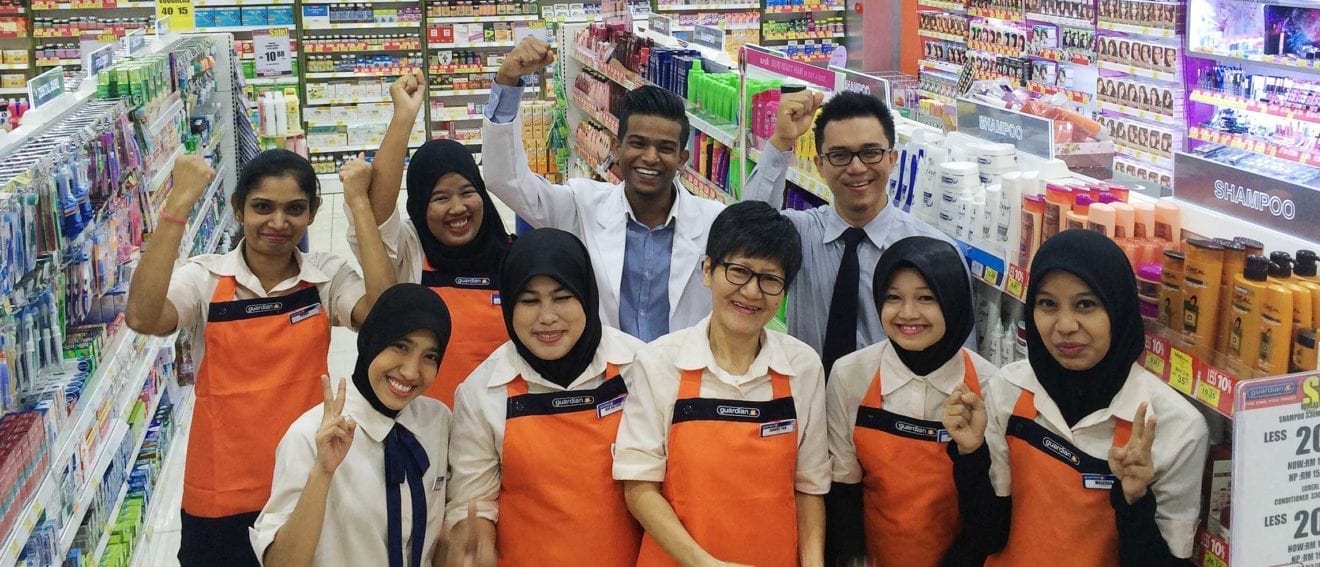
    Guardian Health and Beauty (Guardian Malaysia) plans to open between 25 and 30 new stores next year as it embarks on an aggressive expansion plan to further strengthen its position in the domestic health and beauty retail market.

    Chief Executive Officer Peter J Dove said besides the new stores opening, the company would also refurbish 70 stores, as well as, close 15 existing stores which are less performing.

    At present, Guardian Malaysia has 430 outlets nationwide and commands a 30 per cent market share in the health and beauty segment.

    “Domestically, the current retail market is tough and demand is soft, so we have conducted a research and come out with a new concept, which is aligning products with shoppers’ demand, and then see the customers’ response,” Dove told Bernama after launching Guardian’s concept store in Kuala Lumpur City Centre Sunday.

    The retailers in the pharmacy and personal care sub-sector are expecting to record an 11.4 per cent growth in the third quarter of 2016.

    Guardian Malaysia also plans to implement the same concept store idea for 10 out of its 40 top stores nationwide.

    “We will also introduce and aggressively go into e-commerce next year to reach more customers,” he said, but declined to disclose the investment allocation to develop the new e-commerce platform and new concept stores.

    Meanwhile, the new concept store incorporates shopper-friendly features including a “Make Me Up” corner, which focuses on addressing the needs of shoppers, highlight the latest cosmetics products and trend, as well as, offer a semi-private area for product trials.

    Guardian Malaysia has also expanded its range of new international and local brands, as well as, spearhead the first modern trade pharmacy initiative with the listing of traditional Chinese herbal health products.

  • With close to 55%, Japan has highest mobile commerce transactions

    With close to 55%, Japan has highest mobile commerce transactions

    Mobile commerce conversion rates are highest in Japan, the U.K and South Korea for Q2 2016 states the State of Mobile Commerce Report released by performance marketing technology company, Criteo. The company claims to have studied 1.7 billion transactions across desktop and mobile sites worth $720 billion in annual sales, covering over 3,300 online retail businesses for this report.

    Global numbers

    • Mobile Vs Desktop: With close to 55% of its retail commerce transactions done through mobile phones, Japan tops the list of countries in the world with the highest mobile retail commerce transactions for Q2 2016 followed by United Kingdom and South Korea with a little over 50% and 48% of its retail commerce transactions, respectively.
    • Smartphone Vs Tablet: For the first time, smartphones have superseded tablets delivering majority of the mobile commerce transactions. South Korea recorded over 95% of its mobile retail commerce transactions were done through smartphones while Japan and Brazil recorded close to 90% and over 80% of its mobile retail ecommerce transactions through smartphones, respectively.
    • Apps Vs Mobile Web: According to the report, apps convert 3x more than mobile website in Q2 2016. Globally, 54% of the transactions were driven through mobile apps while 46% of the transactions were driven by mobile web in Q2 2016.
    • According to the report, new app users are twice as likely to return within 30 days vs. mobile web users.
    • Average order value higher on apps vs mobile web: $127 seems to be the average order value on apps compared to $91 and $100 on mobile web and desktops respectively.
    • Apps’ conversion rates highest: The conversion rate for transactions is highest on mobile apps (3x) followed by desktop (2x) while mobile web is the lowest.
    • Mobile-friendly websites aid higher transactions: According to the report, countries with mobile-friendly websites seem to have the greatest share of mobile transactions. With close to 90% mobile-friendly websites, Japan has over 50% mobile transactions followed by U.K with little over 85% mobile-friendly websites and nearly 50% mobile transactions. In the third place, with over 95% mobile-friendly websites, South Korea has close to 50% mobile transactions.
    • Leading retailers vs Emerging retailers: The report also notes that leading retailers that succeed retaining users and attracting views drive 39% more mobile web conversions more than emerging retailers. The report defines leading retailers as mobile app that attract more products browsed per user than lower tiers while emerging retailers are mobile-commerce enabled apps that are accessible via at least one operating system.

    U.S Market

    • In Q2 2016, Android has a market share of 68% superseding iOS (31%) although iOS continues to generate the maximum number of mobile commerce transactions done on smartphones with 14.6% compared to Android devices (8.8%).
    • In the same quarter, 70% of mobile commerce transactions were done on smartphones compared while the remaining was done on tablets.
    • Contributing over 40% to mobile commerce transactions in the U.S, fashion and luxury retail is the category with the highest number of transactions in the quarter followed by Mass Merchants (close to 40%) and Health & Beauty (30%).
  • Customised price plans for electricity in the pipeline

    Customised price plans for electricity in the pipeline

    Consumers can look forward to shopping for electricity the way they choose a phone plan. Electricity retailers are preparing a buffet of options for consumers, as the Energy Market Authority (EMA) plans to fully open up the electricity retail market to competition in the second half of 2018.

    For the eco-conscious, there will be plans that guarantee a portion of energy consumed will be linked to renewable energy, such as solar power. And those who work in the day could sign up for options that allow them to take advantage of lower electricity tariffs at night.

    Electricity is cheaper at night as there is lower demand for it.

    Those who are home all day could in turn benefit from schemes that offer varying tariffs for different periods of the day, allowing them to choose to run home appliances when electricity prices are lower.

    There will even be short-term trial packages to entice consumers who are resistant to change.

    “In the initial stage, many consumers will be sceptical about switching for various reasons, like reliability, security and so on,” said electricity retailer iSwitch.

    “iSwitch is planning to roll out price plans, such as short-term trial packages, to increase their confidence in switching,” it said.

    These are just some of the customised price plans that small energy users, such as households and small businesses, could benefit from.

    Currently, only 33,000 commercial and industrial consumers with an average monthly electricity consumption of at least 2MWh – which amounts to a monthly electricity bill of about $450 – are taking advantage of this flexibility. But the remaining 1.3 million consumers, mainly households, will get to benefit with the change, EMA said.

    During this year’s Singapore International Energy Week, which starts today, participants are expected to discuss issues such as green energy and the implications of low energy prices.

    There were just seven electricity retailers in 2013. This has increased to 20, EMA told The Straits Times.

    Industry players say market liberalisation will benefit consumers.

    “Not only will it lead to better value and services (for customers), but it also gives them the opportunity to achieve their other objectives, such as environmental protection in purchasing green energy,” said a spokesman for retailer PacificLight.

    Customers may also enjoy lower tariffs.

    Mr Vijay Sirse, chief executive of Red Dot Power, said: “It is expected that every household will potentially save anything from 10 per cent to 20 per cent of its monthly electricity bill.”

    Associate Professor of Marketing (Education) Seshan Ramaswami, from the Singapore Management University, noted that while it is difficult to say whether prices will definitely go down, customers could benefit in other ways.

    For instance, retailers could try to differentiate themselves by offering bundled or value-added services – such as installing smart home systems or giving discounts on energy-saving appliances.

    Housewife Mastzainah Jalil, 45, likes the idea of being able to time the use of her appliances to when electricity tariffs are the lowest.

    Assistant manager Daniel Govindan, 28, prefers a price plan which incorporates renewable energy and a smart system that sends alerts when energy-intensive appliances are in use when electricity tariffs are high.

    He said: “Renewable energy is the way to go. I think clean air is a public good. So less fossil fuels, more clean air.”

  • How Asia-Pacific is driving global online retail

    How Asia-Pacific is driving global online retail

    The world’s largest and most populous continent, Asia is made up of 48 countries and spans 44,579,000 square kilometres. With a widely diverse population of 5.096 billion people, the continent’s rich historical background offers a wealth of opportunities to explore, from the untouched steppes of Central Asia to the bustling economic centres of China and Japan. Iconic sights such as the Taj Mahal and the Temples of Angkor Wat may draw tourists from around the world, but strong economic growth and up-and-coming markets are providing new footholds for businesses and investors alike.

    The key e-commerce markets in the Asia region are China, India, Indonesia, Japan, Malaysia, Philippines, Singapore, South Korea, Thailand and Vietnam. Together, these countries represent 86 percent of all e-commerce turnover in the Asia Pacific region, a figure which rises to 90 percent when Oceanic countries such as Australia and New Zealand are excluded.

    E-commerce in Asia is flourishing – with $770 billion in transactions annually, the Asia-Pacific region leads the world. An expanding middle class, growing Internet penetration and improving infrastructure means the region will continue to drive global online retail over the next five years.

    Access to financial services is a key stimulus for e-commerce. A lack of banking infrastructure in many countries in the region is exacerbated by barriers caused by geographical and physical access to banking services. Increased Internet penetration will aid in removing these barriers, but with some areas having an account penetration of as low as 2 percent, many countries will continue to rely on cash as the main method of payment for some time to come.

    While, on average, 51 percent of the region’s population has access to an account with a financial institution, the extremely low income level of a significant proportion of the population results in a high overall percentage of unbanked people. In spite of its growing middle class, China’s traditional rural economy and vast territory results in the country accounting for more than 12 percent of the world’s unbanked population.

    The expanding middle class is making a significant contribution to the growth of e-commerce across the Asia region. This group is expected to reach 1.7 billion by the year 2020, with China, India and Indonesia experiencing the greatest growth. With the increase in the number of options that e-commerce brings, consumers are also showing marked personal preferences. This, in turn, is leading to increased competition, with traditional retailers moving to having an online presence (either individually, or by using an online marketplace), and local businesses experiencing pressure from regional and global brands which want a share of the growing sector’s profits. Again, China is a leading force in both the regional and global economy.

    Technology, naturally, is a major factor in changing economic patterns, with internet penetration playing a significant role. Notably, in spite of having the highest B2C e-commerce sales of any region in 2014, Asia has the lowest penetration of all regions globally (although Japan, Singapore and South Korea fall into the global top ten). As infrastructure becomes more ubiquitous, e-commerce will continue to experience high growth as a result; countries with a low penetration rate, such as India, with only 18 percent, are expected to drive future growth.

    The young are traditionally the first to embrace new methods of doing anything, and it is no different in Asia. Millennials are the most active group online, and use social media as their preferred form of communication – Facebook has more than 270 million active daily users in Asia alone. This familiarity with the online environment results in a willingness to embrace cashless payment methods, and this group exhibits different patterns of consumer behaviour to other demographics.

    The use of online payments varies throughout the region according to how developed the local market is. The more mature the market, the more likely it is that consumers in the country will use cards in order to pay for online purchases: for instance, in Japan and South Korea, 63 percent and 83 percent of online purchases respectively are paid by card. In contrast, emerging markets such as India and Malaysia continue to prefer cash based payment methods.

    In China, E-wallets are the most popular form of payment online, being used for 48 percent of transactions. Whereas, in Indonesia, e-wallets and other forms of payment are the least preferred methods, making up 5 percent and 3 percent of transactions respectively. There, bank transfer is used in 39 percent of e-commerce transactions, with card-based purchases accounting for 29 percent.

    The trend, though, we are seeing overall is that cash based payments are increasingly being displaced by electronic payment methods throughout the region.