Tag: asia

  • Duty-free sales climb 36% in Korea so far in 2016

    Duty-free sales climb 36% in Korea so far in 2016

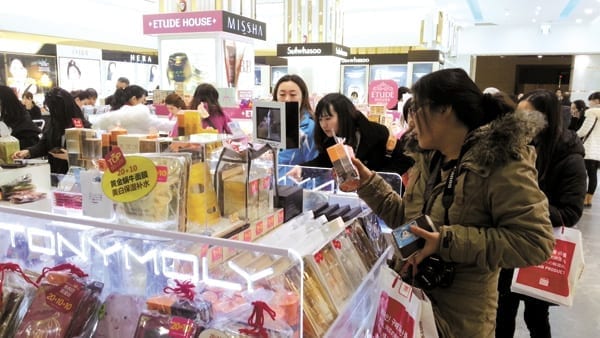
    Duty-free sales from South Korea’s retailers increased 36.4% year-on-year to W8.9trn ($7.9bn) in the first nine months of 2016, according to local media reports. This is compared with W6.55trn a year ago.

    Sales growth in particular is driven by the rise in foreign tourists, with Chinese travellers comprising nearly 43% of all travellers. Chinese spend per passengers reached a total of $350, while Koreans spent $106, according to The Korea Times.

    According to the publication, despite the increase in sales many retailers in the country are facing deficits, with the exception of Lotte Duty Free and The Shilla Duty Free, which reportedly saw profits totalling W232bn and W38bn in the first half the year, respectively.

    Galleria Duty Free Shop of Hanwha was reported to have suffered a W17bn loss, while Doosan’s Doota Duty Free saw a W16bn loss for the same period.

    Despite this, there is still room for optimism, with potential for annual duty-free sales to top W10trn by the end of the year. Retail real-estate developments such as Hanwha Galleria’s launch of the Galleria Duty Free 63 store in July, and buoyant figures reported by retailers like Shinsegae, add to the country’s potential for a possible positive rebound.

    Photo of KTO

  • Fashion retailer French Connection’s shares jump on takeover hopes

    Fashion retailer French Connection’s shares jump on takeover hopes

    Shares in UK-based fashion retailer French Connection Group Plc rose more than 20 percent on Monday after a media report said overseas investors were looking to buy the lossmaking firm.

    The Telegraph newspaper had said on Saturday that interested buyers were thought to be a mix of European and U.S. private equity firms, as well as investment manager Neuberger Berman, and that French Connection had approached investment bank Moelis & Co (MC.N) for advice.

    French Connection and Moelis declined to comment. Neuberger Berman did not immediately respond to a request for comment.

    French Connection has struggled to compete in recent years against fast-fashion rivals such as ASOS, Forever 21 and Inditex’s Zara and has failed to report a pretax profit since the year ended Jan. 31, 2012 with critics saying it should ditch its 25-year-old FCUK logo.

    Private equity firms could be a natural fit for French Connection as they could push through operational changes to extract profit, and revive the company’s brand appeal, said Neil Saunders from retail consultant Conlumino.

    The retailer has been the source of takeover speculation in the past, and some industry experts said there was now more pressure on the company following years of underperformance and little sign of underlying issues being addressed, despite turnaround measures including store closures and the hiring of new management and design teams.

    Activist investment firm Gatemore Capital Management (GCM), which has an 8 percent stake in French Connection, would be supportive of running an open sales process, Liad Meidar, managing partner at GCM said in an emailed statement.

    GCM said it would be interested in a potential buyer looking to focus on increase the rate of store closures and improve gross margins in French Connection’s retail and wholesale business.

    French Connection needed to focus on fashion for 25- to 35- year-olds, said Gatemore, which last month urged the retailer to speed up its store closure program after its first-half results showed another loss.

    As of Friday’s close of 32.75 pence – a fraction of highs of more than 500p set in 2004 – French Connection had a stock market value of 31.5 million pounds.

    Any buyer will have to gain the backing of founder and executive chairman Stephen Marks, who still holds a 41.65 percent stake in the company as of March 15, according to Thomson Reuters data.

    British companies have become cheaper for overseas buyers in recent months as Britain’s vote to leave the European Union has driven the pound GBP= to its lowest in about three decades.

    French Connection shares were up 10 percent at 36p by 0721 ET on Monday.

  • Aruba rethinks network procurement with NaaS

    Aruba rethinks network procurement with NaaS

    At the Aruba APAC Atmosphere 2016 conference held late last month in Singapore, Aruba Networks President Dominic Orr announced the launch of network-as-a-service, which supports the delivery of the company’s new Mobile First Platform.

    Core applications for Gen-Mobile era

    The core applications on Aruba Networks’ new Mobile First Platform are supported by its existing network infrastructure, including Wi-Fi, Bluetooth low energy (BLE), wired and WAN. The platform comprises network controls, network management, policy management, cloud networking, network analytics and location services. These applications supports the delivery of third-party IT services and business applications that form a mobile apps ecosystem.

    Examples of the IT services that are available on Aruba’s Mobile First Platform include Citrix, MobileIron (MDM and enterprise mobility services), splunk (operational intelligence), ArcSight (an HP company that provides cyber security), Okta (identity management and single sign-on), Check Point, Intel Security, Juniper, and Palo Alto Networks.

    As for business applications, the Platform also supports Skype for Business, AT&T, Aislelabs (enterprise mobile wallet marketing platform), kasada (cryptographic data firewall and our password-less authentication), RetailNext (in-store analytics), Envoy (visitor registration) and eventboard (visitor and room management).

    “The Gen-mobile has given rise to rapid IT forces like the internet of things (IoT) and mobility. This is not just about the use of next-generation devices, like the Wi-Fi-connected TV boxes like the Apple TV, but the applications on top,” said Anthony Wai, sales engineering director of Asia Pacific, Aruba Networks (a HPE company), in an exclusive interview.

    In a typical workplace environment, an organization needs to refresh the network infrastructure once every three to seven years. For example, they would need new routers and new switches to conform to new standards of the wireless network. In the past, when IT procurement was largely driven by IT, addressing user experience tended to be an afterthought. The situation today is reversed, however. “Many of the IT procurement decisions today are now user-driven. For example, the line of businesses (LoB) would first provide to their banking customers a banking application. They would then instruct IT to handle the infrastructure matters,” Wai said.

    Utility-like network procurement models

    To catch up with the fast pace of new mobile apps development and delivery, and the increasingly shortened cycle of network infrastructure upgrades, IT and the other LoBs would benefit from a flexible network services procurement model, such as network-as-a-service (NaaS), said Wai.

    “NaaS enables the subscription of network infrastructure services using an opex model instead of a capex model. By subscribing instead of acquiring these network services, customers can benefit from the latest technologies, and need not budget a sum of capex to invest in the next round of network technology upgrades,” Wai said.

  • Orange Business launches IoT and analytics suite globally

    Orange Business launches IoT and analytics suite globally

    Orange Business Services has announced the worldwide launch of Datavenue, its IoT and data analytics modular suite.

    Datavenue will help multinational and large national corporations seize the endless opportunities offered by the IoT revolution, the operator said.

    Already 56% of decision makers consider IoT as strategic. Use cases include improving safety and user experience within smart cities by connecting street lights or parking meters, as well as improving quality of life by connecting medical devices to monitor a person’s health remotely.

    Datavenue is supported by Orange Business Services’ 700 IoT and analytics experts worldwide, as well as data scientists, developers, consultants, statisticians and IoT security experts.

    Datavenue includes four modules:

    1. Select relevant objects and sources of data. Orange offers a range of certified and tested connected objects, such as sensors, cameras or modules to connect existing assets. Datavenue has a catalog of data that includes population movement analytics using anonymized data from mobile networks.
    2. Connect objects reliably with the most suitable and secured networks. A truck travelling cross borders or an agricultural sensor in a field would require different networks. To address the wide diversity of needs, Orange provides a range of connectivity options. These include future-proof global cellular networks and innovative capabilities, such as eUiCC, worldwide fixed and satellite networks, as well as low-power solutions, such as LoRa.
    3. Manage data to improve efficiencies and create enhanced services. For example, a construction company can monitor cranes worldwide to prevent problems and reduce maintenance costs. Managing data in real-time enables technicians to solve issues remotely or to arrive on site with the right material, reducing service interruptions. Orange offers both cloud-based and on-premises software solutions, encompassing remote device management, processing and visualization.
    4. Control key elements of enterprise transformation projects. Orange experts aim to provide end-to-end security and data protection, integration with information systems and service scalability. Throughout the entire project and beyond, customers can rely on Orange to ensure the solutions are future-proof and adapted to market evolutions.

    “We have developed extensive vertical expertise around IoT and data analytics in several sectors, including automotive, industry, smart cities, healthcare and smart homes,” Orange Business Services VP of IoT and analytics Olivier Ondet said.

    “Our solutions have already improved performance and employee safety through industrial machinery monitoring, enhanced patient care with remote assistance, and enriched citizen well-being with smart city services. This is now all being brought together to support the international launch of Orange Datavenue.”

    Datavenue was first launched in France in 2015. Orange today operates more than 10 million active B2B objects and processes 65 million items of technical data per minute – all fully compliant with data protection regulations.

  • ZALORA Brings See Now, Buy Now Model to Singapore Fashion Week

    ZALORA Brings See Now, Buy Now Model to Singapore Fashion Week

    ZALORA, Asia’s online fashion destination, today announced its partnership with Singapore Fashion Week as the Official E-Tail Partner. This is the second time the online fashion brand is taking part in one of the region’s biggest fashion events of the year. ZALORA will be presenting three Singapore designers and labels namely, Stolen, Aijek, and Max Tan in the Fashion Futures Showcase. Fashion fans in Singapore can purchase the collections on ZALORA from today onwards.

    As the Official E-Tail Partner, ZALORA will be hosting a shoppable Singapore Fashion Week microsite on ZALORA.com that will feature curated collections from Fashion Futures Showcase and Singapore Fashion Week Access, a dedicated show segment for Singapore designers. As part of ZALORA’s commitment to stay up-to-date with the latest trends within the industry, ZALORA is embracing the ‘see now, buy now’ model enabling fashion show goers to purchase their favourite looks immediately.

    Shop Max Tan Spring/Summer 2017, Stolen Spring/Summer 2017, and Aijek Fall/Winter 2016 collections at www.zalora.sg/fashion-week-singapore and on the ZALORA mobile app.

    “ZALORA is proud to be supporting local designer talent in one of the most anticipated fashion events of the year,” said Parker Gundersen, Chief Executive Officer of ZALORA Group. “We’re very passionate about supporting the local fashion industry across all of our markets in Asia, and Singapore Fashion Week provides a great opportunity for us to give the region’s top designers exposure to millions of new consumers on our online platform. It’s also an exciting way for our customers to discover new fashion and to buy product straight from the runway.”

    “Singapore Fashion Week is delighted to be working with ZALORA again this year, as we recognise the growing impact and importance of digital and social media, and connecting designers and labels

    with customers via e-commerce. With the growing trend of ‘See Now, Buy Now’ as well, I believe that online retailers like ZALORA will play an ever-growing role in partnerships with fashion weeks around the world,” commented Tjin Lee, Founder and Chairman of Singapore Fashion Week.

    ZALORA also strongly believes in making fashion more inclusive and accessible. To further engage fashion consumers, the Fashion Futures Showcase will be live-streamed on ZALORA where viewers at home can watch the shows and access exclusive content. Catch all the exciting happenings at Singapore Fashion Week Fashion Futures Showcase on social media at #ZALORAxSGFW.

  • New York-based LAGUARDA.LOW ARCHITECTS has announced the completion of KK One

    New York-based LAGUARDA.LOW ARCHITECTS has announced the completion of KK One

    New York-based LAGUARDA.LOW ARCHITECTS has announced the completion of KK One, a new 1.1 million square-foot retail complex in Shenzhen. Set at the base of an expansive mixed-use complex encompassing three residential towers, four office towers, and one hotel tower, KK One connects two adjacent land parcels to create a premiere shopping facility in the city’s Futian District.

    The exterior swooping facade, composed of aluminum panels in three tones of gray, was designed to create a sense of movement around the dense blocks of high-rise towers. The aluminum skin gives unity to the site’s eight towers and peels back at several points to reveal a minimal glass and steel structure. To give the development a distinctive presence at night, rows of inset, vertical bands of LED lights illuminate the facade.

    The interior of the five-story mall is luminous with gently curving forms and a palette of white surfaces and clear glass throughout. Natural light permeates through the clerestory at the top level and four sky-lit atrium spaces. To soften direct light from above, LAGUARDA.LOW designed custom ceiling grids for the two main atrium spaces that filter daylight through five levels and create a dynamic pattern of light and shadow throughout the day. 

    “With five levels of shopping, food and entertainment and direct access to the subway, KK One was designed to be the center of commerce for this growing urban district,” states John Low, Principal of LAGUARDA.LOW.  He continues: “The fluid exterior façade and bright interior spaces create an inspiring destination for shoppers and a tranquil point of refuge from the fast pace of the city.” 

    The opening of KK One marks LAGUARDA.LOW’s second completed project for KingKey Real Estate Group, following the 2010 completion of KKMall in Shenzhen. The completion of KK One follows LAGUARDA.LOW’s recent announcement for the design of OCT Longhua – an expansive new 3.7 million square-foot mixed-use development in Longhua New District of Shenzhen.

  • DHL encourages employees to help local communities

    DHL encourages employees to help local communities

    Deutsche Post DHL calls upon its 500,000 employees to participate in Global Volunteer Day (GVD) for the sixth year in a row. During this year’s official GVD period, employees from all business units will again team up with independent organizations and charities to help in numerous non-profit projects to benefit the local communities in which they live.

    As Christof Ehrhart, Executive Vice President of Corporate Communications and Responsibility at Deutsche Post DHL Group, explains, the Global Volunteer Day 2016 motto – “Working Together for a Better World” – stresses the importance the company places on collaboration: “Employee volunteerism lies at the core of our efforts to connect people and improve their lives. Our GVD activities highlight the fact that when our employees join forces, not only do they donate their energy and skills to help their local communities, but they also grow together as a team. They achieve common goals, they enjoy and are proud of what they do, and they incorporate the GVD spirit into their daily work.”

    In addition to a wide range of specially planned activities for the core GVD period, many employees remain active year-round, cementing lasting ties with the charitable organizations with which they work. Entirely separate from GVD, more than 13,000 Deutsche Post DHL Group employees in Germany have volunteered to participate in initiatives to help refugees. The Group thus operates a dedicated fund to which employees can apply for financial support on behalf of the projects they themselves commit to all year round.

    The vast majority of GVD projects at Deutsche Post DHL Group focus on one or other of the company’s long-standing GoTeach, GoHelp and GoGreen initiatives. Many activities take place in kindergartens and schools, while others take the form of job application workshops.

    However, others see employees volunteer to help people in need, becoming involved in restructuring efforts to rebuild homes in the wake of natural disasters or by organizing donation drives. And as environmental protection remains a major concern for many employees, some choose to plant trees, clean waste from beaches and parks, and support the upcycling trend by turning old, discarded materials into something useful and new.

    Deutsche Post DHL Group launched Global Volunteer Day in 2008. By 2015, over 110,000 employees were involved in providing support to non-profit projects in their local communities as part of the GVD program, contributing more than 260,000 volunteer hours in more than 2,000 individual projects in 114 countries around the world. As an integral component of our Corporate Citizenship activities, Global Volunteer Day supports our sustainability strategy to serve the company’s economic interests and those of our stakeholders’ while balancing these with social and environmental needs.

  • Currency hurt Walgreens Boots Alliance sales

    Currency hurt Walgreens Boots Alliance sales

    Walgreens Boots Alliance sales figures have been an early victim of the strengthening dollar, especially against sterling in which the majority of which Boots’ sales are denominated.

    This dynamic has turned a 1.4 per cent international sales gain in local currency terms into a decrease of 10.9 per cent in the final accounts. In turn, this has diminished overall turnover growth to a paltry 0.4 per cent – markedly down on the 35 per cent uplifts posted a year ago when not yet annualised Alliance Boots’ sales were providing a healthy boost to the figures.

    Fortunately, thanks to some one-off expenses and losses on equity interest last year – neither of which reoccurred this year – the bottom line outcome is strong, with net income rising by well over 3130 per cent. Given that Walgreens is still in the process of driving synergy savings from the Boots Alliance merger it will generate further profit uplifts well into the next fiscal, even against a more challenging growth backdrop.

    It is inevitable, however, that the returns from cost savings and the streamlining of the business will diminish over time. And given that the prospects for a recovery in sterling look slim, the company will need to look to its domestic operation to drive future growth.

    On this front there are two pieces of somewhat disappointing news from today’s results.

    The first is the merger with Rite Aid which was scheduled to close in the second half of this year has now been extended into the next fiscal. There is no real mystery about this – it comes down to the glacial pace at which the Federal Trade Commission, which is examining the deal, moves. However, the extension means Walgreens will not be able to rely on Rite Aid to boost its numbers in the next quarter. Longer term, the deal will be value accretive, mostly thanks to the forecast $1 billion in synergy savings and to the productivity improvements Walgreens can bring to Rite Aid’s rather lacklustre stores.

    The second concern comes from Walgreens’ front of store sales numbers in the US, which fell by 0.3 per cent on a comparable basis and by 0.5 per cent in total. Such an outcome is discouraging given that these had been on an upward trajectory thanks to the improvements the company has been making in its beauty offer. Given that Walgreens has also marketed its general merchandise offer more heavily this year, it is disappointing not to see gains in customer traffic. That said, the numbers are up against some tough comparatives from last year and with the new beauty offer continuing to attract interest from consumers, these metrics will strengthen over the holiday quarter.

    The new fiscal year presents Walgreens Boots Alliance with more opportunities than it does challenges. As such, after a softer start expect to see strong growth in both sales and profits across the year as a whole.


    -Neil Saunders

  • Laziz Pizza to fast-track growth with 100 new stores

    Laziz Pizza to fast-track growth with 100 new stores

    Overwhelmed by response to its first 50 stores across India, local brand Laziz Pizza plans to double its outlets in the short term.

    Owned by Laziz Food and Beverages, the chain is primarily targeting tier-one, -two and -three cities.

    Founder/CEO Keirron Patil says the company started franchising in 2013, and as well as India now has its expansion sights set on Malaysia (it already has one store in Johor Bahru), Singapore, Sri Lanka, Bangladesh and Nepal.

    Laziz allows its franchisees to team its outlets with other brands so they can offer customers multiple products under one roof, including a vegetarian outlet. An unusual aspect of the Laziz business is that franchisees are not charged a royalty fee nor have to share profits with the franchisor.

  • Starbucks Reserve Roastery Japan for Tokyo

    Starbucks Reserve Roastery Japan for Tokyo

    A Starbucks Reserve Roastery Japan will open in Tokyo’s Nakameguro district in 2018.

    Starbucks Coffee Company says the 1200 sqm space will be in an upscale neighborhood known for its boutiques and art galleries. It will offer customers an immersive coffee environment unlike any other in the market.

    Starbucks Roastery Lower Bar

    Customers will be able to watch green coffee beans arrive, connect with coffee specialists and master roasters and choose from a curated range of handcrafted beverages.

    Starbucks Roastery Scoop Bar

    Artisan food and breads baked on site by Italian food purveyor Princi will also feature at the roastery.

    Starbucks Roastery Copper R

    Architect and Tokyo Olympics 2020 designer Kengo Kuma is leading the design of the roastery, which will blend art and nature with a Japanese design sense to pay tribute to coffee artistry and craft. His design for the Starbucks store in Fukuoka has won awards.

    Starbucks Roastery Upper Bar1

    Starbucks Roastery Upper Bar

    Japan is one of the largest markets in Asia Pacific for Starbucks and is regarded as a key driver of the company’s global growth.

    Starbucks Roastery


    Starbucks Roastery had its debut in Seattle in 2014, the most successful store opening in the company’s history. The company has announced new Roastery locations for Shanghai next year and New York in 2018.

  • Asian duty-free market buoyant

    Asian duty-free market buoyant

    The Asian duty-free market is growing at five times the global growth rate.

    New data released by the travel retail trade association TFWA (Tax Free World Association) shows that sales in the first quarter of 2016 rose by 5 per cent in Asia-Pacific. Global growth was just under 1 per cent.

    The TFWA is optimistic that the duty-free sector “faces a bright future” at a time when other sectors of the international retail market are struggling.

    Global duty-free sales are estimated at US$62 billion according to duty free and travel retail specialist Generation Research. The market has been growing steadily for the past six years, and while it suffered a decline in 2015, the figures for the first quarter of 2016 show the business is back on its upward trajectory.

    The fragrance and cosmetics category is the main driver of growth globally and its sales were up 7.8 per cent in the first quarter, while sales of wines and spirits were up by 4 per cent. Sales on board ferries grew by 6.5 per cent, while airport sales remained stable.

    TFWA president Erik Juul-Mortensen said the figures allowed the sector to be cautiously optimistic and tips further growth from the booming air travel market.

    The trade association Airports Council International predicts passenger numbers worldwide will more than double from 2015, when the number of air travellers reached 7.2 billion, to just over 19 billion in 2035 – a compound annual growth of 5 per cent.

    The World Tourism Organisation’s says international tourist arrivals were up 4 per cent in 2015 to reach a record of 1.2 billion, 50 million more than in 2014. The latest figures for the first half of this year show that tourism got off to a strong start in 2016, with international arrivals up 4 per cent compared with the same period last year.

    “This can only be good news for our industry, and all the indicators would suggest that we have plenty to be upbeat about,” said Juul-Mortensen. “This is a great sector to be in, and with growth rates that have been, in many years, the envy of many high street retailers, duty free and travel retail presents a wealth of opportunities.”

  • ICT vendors must prepare for China’s 13th Plan

    ICT vendors must prepare for China’s 13th Plan

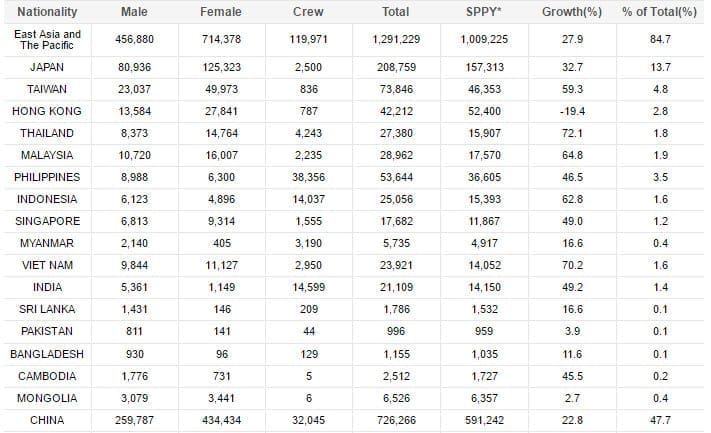
    As China moves to implement its 13th Five-Year Plan, ICT vendors need to reassess their positions to take advantage of the major business opportunities it will offer, according to IDC.

    China’s 13th Five-Year Plan, and the decisions and policies introduced at the Third Plenary Session of the 18th Central Committee of the Communist Party of China will serve as the roadmap and action plan for the country’s economic development over the next five to ten years.

    Based on these two guiding documents and amid a challenging macroeconomic environment, the Chinese government has rolled out a host of policies and initiatives to advance the cause. These efforts will bring huge opportunities and become the cornerstone of China’s IT market in coming years, IDC predicts.

    IDC sees six areas that will be the foundation for China’s economic development as follows:

    1. Some 165 major projects to maintain economic growth – IDC estimates that total investment in these 165 projects will exceed 6 trillion yuan ($900 billion), generating over 500 billion yuan ($ 75 billion) in ICT business opportunities, with 300 billion yuan ($45 billion) alone in the rollout of 5G.

    2. Innovation to advance economic restructuring – The Chinese government has established innovation and entrepreneurship as two of its top policy initiatives to facilitate economic restructuring. IDC believes that such government-led endeavors will generate immense business opportunities for ICT vendors in ICT infrastructure; cloud computing and big data; mergers and acquisitions of startups; and the transition of traditional industries to digital.

    3. Policies to improve public well-being – In 2016, the State Council issued a joint initiative to promote Internet+Government services and kicked off 80 pilot cities with the One Window One Network plan that introduced interregional sharing of electronic certificates and public service information across government offices.

    For ICT vendors, the main business opportunities will be ICT infrastructure, cloud computing and services, big data platforms, smart community, and mobile apps, which are seen as the basis for the digital transformation of government.

    4. The Belt and Road Initiative to facilitate globalization – Initially introduced in 2013, this initiative has connected 18 of China’s provinces with nearly 40 countries along its route across Asia and Europe. For ICT vendors, IDC predicts the initiative to  give rise to abundant business opportunities as Chinese companies venturing abroad upgrade their IT systems, countries along the route construct their IT infrastructures, and China develops its own big data platforms for the initiative.

    5. Expanding Free Trade Zones – The first Free Trade Zone (FTZ) was established in Shanghai in 2013. In 2014, the second batch of FTZs was established in Tianjin, Guangdong, and Fujian. In 2016, Liaoning, Zhejiang, Henan, Chongqing, Sichuan, and Shanxi provinces were approved to set up FTZs. Currently, 11 FTZs have been established across China. Collectively, they support the Belt and Road Initiative in promoting globalization and the smooth development of China’s economy.

    According to IDC, ICT vendors should focus on developing smart parks, smart transportation, smart logistics, and other smart city projects, in addition to utilizing the cloud platform infrastructure to support the digital transformation of FTZ regions.

    6.China as an internet powerhouse – China’s national IT development strategy was first introduced in 2006 and has acted as the basis of many of China’s IT development policies since then. In 2016, the Chinese government introduced an outline that standardizes and guides the next 10 years of China’s IT development.

    To remain competitive in this market, multinationals will have to radically transform many things, including their domestic business models, strategic investment, technology transfer, equity transfer, and joint investment strategy.

    “ICT vendors should capitalize on China’s supportive policies and economic environment, making use of ICT technologies and displaying their strengths to discover the opportunities being brought by Digital Transformation,” IDC China VP and chief analyst Lianfeng Wu said.
  • Nokia to transform Globe’s fixed, wireless networks

    Nokia to transform Globe’s fixed, wireless networks

    The Philippines’ Globe Telecom has contracted Nokia to transform the operator’s fixed and mobile networks into a flexible cloud-based infrastructure ready for 5G and the IoT.

    Globe has signed two frame agreements  with the vendor – one covering wireless networks and the other for IP, optical and SDN technologies – to set the stage for the upgrade.

    Under the collaboration, Nokia will deploy its 4.5G Pro technology including 5G-ready base stations and small cells, in the Visayas and Mindanao regions. Some of the areas in these regions will be receiving broadband for the first time as a result of the deployment.

    Nokia will also set Globe up to support mobile edge computing and advanced carrier aggregation technologies on its network.

    The fixed agreement will involve the deployment of IP, optical and carrier SDN technologies across the Philippines, allowing the operator to deliver coverage to more regions, and to provide flexible data services over Nokia’s SDN platform to enterprise customers nationwide.

    “As the Philippines’ leading fixed and mobile service provider, we are devoted to improving people’s connected lives day-by-day. With Nokia’s innovative technologies, we are confident to lead the 5G and cloud network evolution,” Globe CEO Ernest Cu said.

    Last week, Globe’s rival PLDT announced that its wireless division Smart achieved data speeds of 1.4Gbps over LTE-A during a trial conducted with Huawei. The trial used five-carrier aggregation technology to achieve the blazing fast speeds.

    “It will take time for carrier aggregation on five frequencies to be deployed, largely because capable handsets are not yet commercially available. But the excellent results of these tests have encouraged us to roll out LTE-A using two or three component carriers which can already be utilized by several handset models in the market,” PLDT and Smart CTO Joachim Horn said.

  • Dtac, True slam new computer crime bill

    Dtac, True slam new computer crime bill

    Legal representatives from both TrueMove and Dtac have slammed the new computer misuse act for moving the burden of proof to ISPs to prove their innocence while True said that the Single Gateway government mass surveillance program was still alive and well.

    Speaking at a recent seminar entitled Online life: which way shall we go, Akarawit Jongsawasdiworakul from Dtac’s legal division said that unlike the US’ common carrier law, Thailand’s computer misuse act article 15 puts telcos at risk of criminal prosecution for the actions of their subscribers as service providers face the same criminal liability as their users for, say, an illegal posting.

    Dtac has to invest significant resources into monitoring its users to stay safe legally, resources that could have better been invested in 5G, he said.

    Unlike most aiding and abetting clauses in Thai law in which the aider gets two-thirds of the punishment, the computer misuse act doles out the same punishment to the service provider as it does to the criminal using it.

    However, the latest draft amendment is much worse. In trying to fix that glaring problem, the new version lays out a system where authorities can issue orders to service providers to block the offending post. The law then goes on to say that if the service provider can prove they complied with the order, then they are exempted from any punishment.

    Akarawit said that the computer misuse act shifts the burden of proof. Instead of the prosecution proving guilt, the service providers will now have to prove their innocence to a court.

    He also noted that under the current law, censorship orders must be only via a court order. The new version only needs an order from a “the official in charge” without any judicial oversight.

    Suporn Hornchaiya from True’s legal division, added that the definition of service provider is so vague that anyone with an unsecured WiFi hotspot would be subjected to the full force of the law.

    Suporn said that today authorities use article 20 to block websites, not just those which are a threat to national security or good morals which are allowed under the law, but also use it to block gambling websites and copyright infringement sites which is not allowed under the law. He noted that courts regularly grant blocking orders for the latter.

    Suporn said True has in the past appealed a court order, but the appeal was not accepted as the courts said that True was not an affected party to the blocking order.

  • Oysho lingerie arrives in Indonesia

    Oysho lingerie arrives in Indonesia

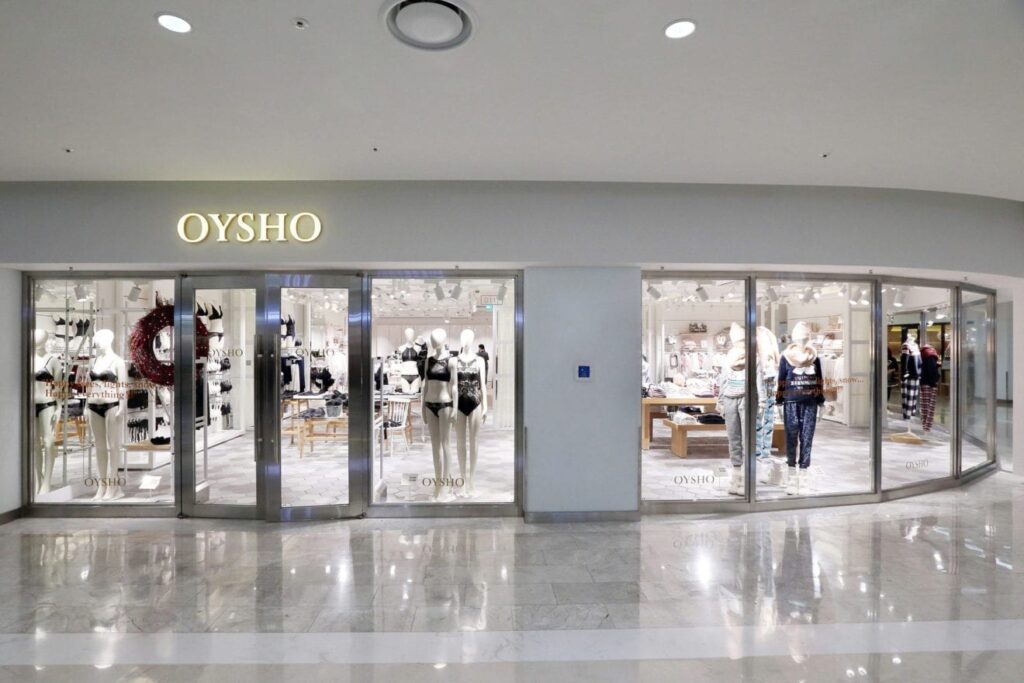
    Spanish lingerie brand Oysho, owned by Inditex, continues its international expansion with the opening of its first store in Indonesia.

    In Jakarta’s centre, the 300 sqm shop is in Plaza Indonesia, a shopping centre that is also home to other Inditex brands such as Zara, as well as luxury labels including Burberry, Chanel, Hermes and Louis Vuitton.

    oysho-store

    Since launching in 2001, Oysho has expanded its presence to 44 countries with more than 600 stores. The brand specialises in lingerie, sleepwear, loungewear and footwear. It generated 229 million euros (about US$252 million) in the first quarter of this year, representing an 8 per cent increase year-on-year.