Tag: asia

  • Toyota to introduce new safety features in future vehicles

    Toyota to introduce new safety features in future vehicles

    Japanese auto major Toyota plans to introduce its new global architecture and latest safety technologies in future vehicles as it seeks to play a major role in bringing down fatalities in road accidents.

    The company, which has introduced its Toyota New Global Architecture (TNGA) in its 4th generation hybrid car Prius, plans to introduce it in its future models as well.

    Besides, it is also looking to introduce pre-collision system (PCS) in vehicles from next year in Japan, Europe and the US.

    “We have introduced the TNGA in the market with our 4th generation Prius. We will introduce it in vehicles following the Prius and eventually introduce it to all our products when there is a model change,” Toyota Motor Corporation Assistant Chief Safety Technology Officer Seigo Kuzumaki said here.

    Stating that TNGA has resulted in new collision safety body structure, he said in oblique frontal crash test, the new Prius has about 55 per cent decline in cabin deformation percentage compared to the previous 3rd generation.

    The test was conducted at a speed of 90 kmph as compared to 64 kmph done in the previous generation, he added.

    According to Toyota, TNGA incorporates wide reaching structural innovations that promises substantially improved basic performance and product appeal.

    Commenting on the PCS, Kuzumaki said: “The plan is to introduce this technology to our vehicles in Japan, Europe and the US in 2017. Later on, it will be rolled out country wise depending on suitability.”

    The PCS is a feature that helps prevent collisions using a camera and millimetre wave radar and engaging brake assistance system after warning when a driver fails to use brake.

    Although the company hasn’t specified a timeline for these technologies to be brought to India, it assumes significance as Indian roads account for registering the highest number of road fatalities in the world.

    Deaths due to road accidents in the country increased by around 5 per cent to 1,46,000 in 2015 from the previous year.

    As per WHO, fatalities due to road accidents globally were at 1.42 million people and is projected to increase to 1.85 million by 2030.


  • 5G connections tipped to reach 690m by 2025

    5G connections tipped to reach 690m by 2025

    There will be around 690 million 5G connections by 2025, five years after the standard is expected to be approved, Strategy Analytics predicts.

    The research firm expects 5G to account for 7% of mobile connections by this time, driven by early adopters in the US, South Korea and Japan.

    China has also laid out a 2020 5G launch plan, Strategy Analytics notes, which will help accelerate adoption.

    Operators including NTT DoCoMo, SK Telecom, Verizon and AT&T are leading the charge

    Commercial 5G handset sales are meanwhile expected to exceed 300 million by 2025, according to Strategy Analytics director Ken Hyers.

    “While the first commercial 5G handsets will appear in small numbers in 2020 in South Korea and Japan, from 2021 more countries including the US, UK, Sweden, UAE and China will see their own launches,” he said.

    “By 2022 tens of millions of 5G handsets will be sold, and as a proportion of total handset sales will reach low single digit percentages.”

    The first trial 5G handsets expected to emerge in 2018 are expected to have issues including short battery life, no 4G handover or unstable connectivity, Strategy Analytics said. But these teething problems are expected to have been largely resolved once commercial handsets reach the market.

  • Thailand aims to rethink Thaicom concession

    Thailand aims to rethink Thaicom concession

    Thailand’s ICT ministry plans to renegotiate the terms of Thaicom’s satellite concession, in the wake of a recent Supreme Court ruling against the amendment allowing Shin Corp to reduce its minimum holding in the company.

    The court recently found former ICT Minister Surapong Suebwonglee guilty of criminal malfeasance over the agreement to amend the terms of the concession, and sent him to jail for a year.

    Shin Corp was allowed to reduce its stake in what is now Thaicom to 40% from 51%, which the court found was against telecoms law. The court held that the move unfairly boosted Thaicom’s competitiveness and put the business at risk of foreign dominance.

    As a result of the ruling the ministry plans to device a new investment model for the satellite industry to replace the licensing regime.

    The government is considering four investment options – turning Thaicom into a state enterprise, a public-private joint venture majority owned by the state, a more flexible public-private joint venture model or the existing licensing model with higher fees.

    Negotiations with Thaicom are expected to be complete by early next year. The current concession, which involves fees amounting to 20.5% of revenue, is due to expire in 2021.

    Thaicom operates three of its satellites under the concession regime, while two more are operated under an NBTC licensing system involving a license fee of 5.75% of total revenue.

  • Apple said to plan iPhone for Japan that supports FeliCa

    Apple said to plan iPhone for Japan that supports FeliCa

    Apple is reportedly planning to launch an iPhone in Japan that supports FeliCa, the contactless mobile payment standard widely used in the market.

    Sources told that a future iPhone designed for the market will include a FeliCa chip to support payments using the Sony-developed standard.

    FeliCa is used in multiple public bus and train pass payment systems across Japan. The standard dominates in Japan over the NFC standard used in Apple Pay – there are an estimated 1.9 million FeliCa payment terminals in the country handling around $46 billion worth of transactions per year.

    According to the report, Apple plans to work with multiple transit card providers on the launch, and is currently planning to store virtual representations of transit passes within the iPhone’s wallet app.

    Apple is said to currently plan to introduce the FeliCa functionality into the next iPhone models bound for the market, although the introduction could be held back to next year if talks with Japanese payment networks stall.

    One hurdle that could complicate the plan is the fact that FeliCa chips are designed to process transactions in a tenth of a second to accommodate Japan’s very busy transit system, whereas transactions using Apple Pay currently go through servers and require bank approval.

  • Telstra taps drones to improve network repair times

    Telstra taps drones to improve network repair times

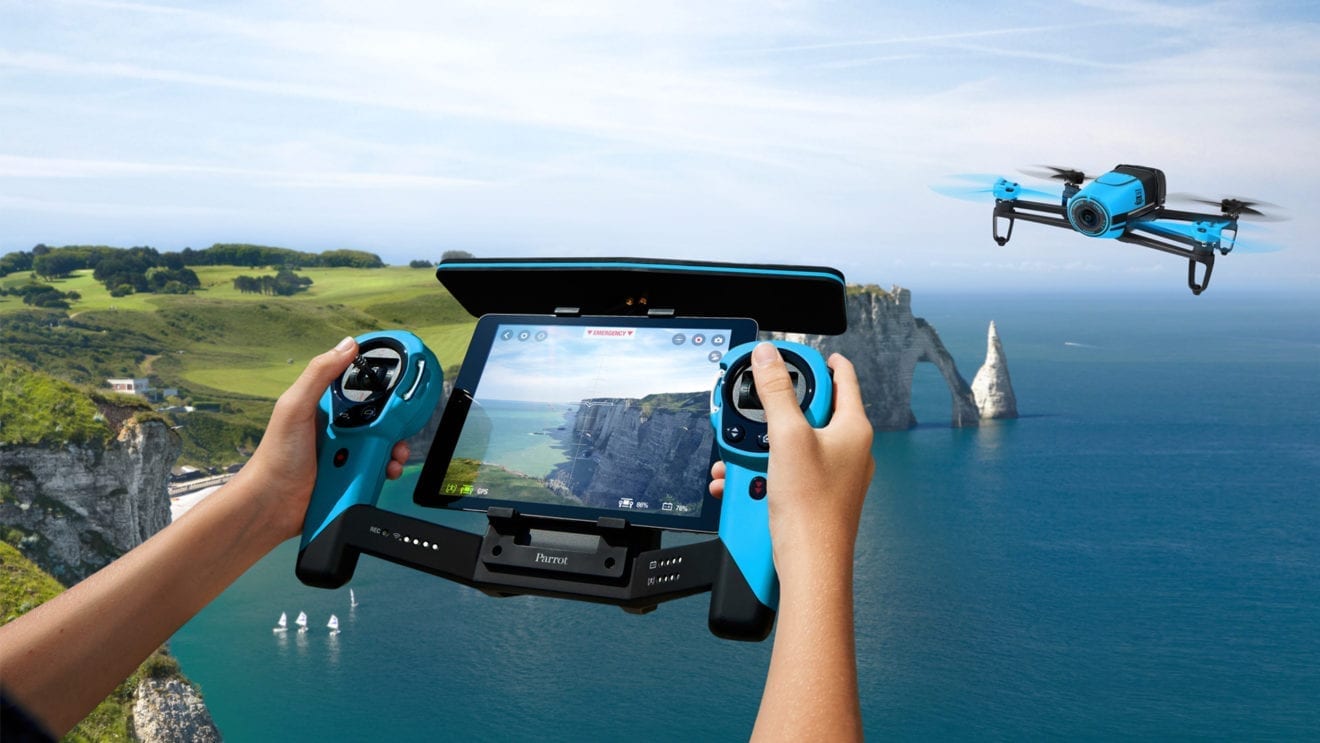
    Australia’s Telstra has revealed plans to use drone technology to improve network resilience and disaster readiness during the tropical state of Queensland’s upcoming storm season.

    The operator will use drones as an “eye in the sky” to help technicians inspect local base stations following a storm or cyclone, checking for damage before technicians are deployed on-site for repairs.

    According to Telstra, this will decrease the time needed to conduct repairs following a natural disaster related outage.

    Drones from 3D Robotics fitted with sophisticated cameras and capable of flying up to 120 meters high will be used to look for damage to network assets.

    Telstra previously used a drone to check for damage to mobile infrastructure following bushfires in another state in late 2015.

    “With more than 8,500 mobile network sites around Australia, delivering coverage spanning 2.4 million square kilometers, our mobile network is the largest in the country,” Telstra group managing director for networks Mike Wright said.

    “The maintenance of our network is key to ensuring customers get the best possible service available and using drones is revolutionizing the way we inspect base stations.”

  • Apple Pay, Android Pay purchases may hit $8b by 2018

    Apple Pay, Android Pay purchases may hit $8b by 2018

    In-app purchases and website retail payments are projected to drive annual spend via Apple Pay and Android Pay up to $8 billion in 2018, up from $540 million this year, Juniper Research reveals.

    The company also projects that the value of digital and physical goods purchased through mobile ‘OS-Pay’ platforms will increase by fifteen times in the next two years.

    Meanwhile, despite the continued contraction of the consumer tablet market, more than 85% of remote goods payments are forecast to be made using mobile devices in 2021.

    The new study, “Mobile & Online Remote Payments for Digital & Physical Goods: Opportunities & Forecasts 2016-2021,” found that the integration of OS-Pay into apps will be standard for developers looking to reduce buyer friction, where password entry on smartphones remains cumbersome.

    “It is clear that even in markets where PCs and laptops have a high installed base, the smartphone is playing an increasingly important role where remote goods purchases are concerned,” noted research author Steffen Sorrell. “For merchants, this means that the buyer experience must be made as frictionless as possible – from product search and discovery to purchase.”

    Apple has recently signalled its intent to offer Apple Pay to online merchants by the end of 2016, offering a similar payment mechanism to PayPal. Juniper anticipates that this move will be welcomed by most merchants as long as integration into their storefronts is made simple and rates are competitive.

    The research firm also expects the entry of Android Pay into this space as it expands to more countries. This will no doubt boost the market further in terms of merchants who may have been undecided where Apple Pay is concerned.

    Juniper believes that these OS-Pay solutions are likely to pose a threat to PayPal’s Western dominance, although it said it does not anticipate that combined sales via Apple Pay and Android Pay will approach those via PayPal within the next five years at least.

  • UPS wins package network visibility tool award

    UPS wins package network visibility tool award

    UPS has been named to the 2016 CIO 100 listing for the successful launch and integration of the UPS Near Real-Time Service Performance Reporting tool (NRT) – marking the tenth time the company has been honored at the annual IDG CIO 100 Awards.

    The annual listing to recognize technology innovation is selected by the CIO editorial team, working with more than three dozen judges including industry experts, academics and former CIOs.

    A business intelligence platform, NRT uses advanced analytics to take traditional network management, package tracking and package visibility tools to the next level. It provides UPS operations with the ability to see the state and performance of the service network across all packages moving through all modes of transportation and all buildings, for all UPS customers.

    “NRT is an industry-first solution, designed to find new ways to improve our network performance, overall customer service, and ultimately, customer satisfaction,” said Juan Perez, UPS chief information officer.

    “NRT represent the next step in UPS’s big data and analytics journey, complementing proven customer visibility services like UPS My Choice, and our award-winning route optimization platform, ORION. It’s another example of how UPS is using data to transform our operations and continually improve the customer experience.”

    With the ability to execute complex analytics processes for over 1.5 billion information records daily, NRT consumes data at a rate of 8,700 transactions per second from multiple global sources around the clock, including pick-ups, sorting, transfers and deliveries being moved by truck, train or airplane.

    Applying predictive analytics, NRT provides the ability to proactively identify weather or other conditions that may require alternate plans to meet service commitments and maintain an on-time network. UPS ships more than four billion packages worldwide each year using this real time status monitoring platform.

    The end result is improved visibility across the supply chain and enhanced quality of service for millions of customers every day.

    “Delivering innovation and business value are top priorities for CIOs everywhere, and our CIO 100 awards program celebrates the leading IT organizations that excel at both,” said Maryfran Johnson, Editor in Chief of CIO Events.

    “Our 2016 winners are raising the bar even higher this year with their outstanding work in digital transformation, customer focus and IT-business collaboration.”

    The 29th annual award program recognizes organizations around the world that exemplify the highest level of operational and strategic excellence in information technology.

  • Kemper introduces air monitoring system

    Kemper introduces air monitoring system

    Clearly verify the presence of dust in production: Companies check the hall air quality efficiently with the new air monitoring system AirWatch. Kemper GmbH’s sensor technology is able to determine and document the number and weight of nanoparticles and then analyze it with smartphone, tablet or PC and compare it to limit values.

    Raising employees’ awareness regarding fine dust risk.

    A traffic light display visualizes permanently the status of air quality. The system is suited for any workplace in production facilities, warehouses and logistics halls. With AirWatch, Kemper wants to raise awareness of the dangers behind fine dust.

    “With our new air monitoring system AirWatch, we introduce for the first time a system on the market that is in a position to efficiently measure the number of fine dust particles,” emphasizes Björn Kemper, Managing Director of Kemper GmbH. For this purpose, the highly sensitive sensor technology is essential as it can capture particles right up to the nano range.

    Checks are not depending on the workplace

    Whether industrial production facility, warehouse or logistics operation: AirWatch continuously monitors the air quality regardless of the type of workplace. The air monitoring system measures fine dust particles in a radius of up to 30 meters using a laser-powered sensor. An integrated fan draws in ambient air.

    It is possible to save individual limit values for hazardous substances. A traffic light shows the current air quality level measured against these values. At the same time, the system saves the data across a long time period. Users access the data simply using a smartphone, tablet or PC. A trend display for day, week, month or year also allows companies to analyze concentration of hazardous substances in more detail.

    Verify the presence of fine dust according to WHO standards

    AirWatch captures particles in the range of 100 nanometers up to 16 micrometers. This area includes the fine dust categories PM2.5 for alveolar common dust (A dust) and PM10 for all inhalable dusts (E dust) as defined by WHO. AirWatch automatically classifies the captured particles accordingly.

    In addition to checking the air quality, AirWatch also monitors the effectiveness of ventilation measures. Companies can independently check their compliance with regulations issued by professional associations apart from official checks made by professional associations.

    Highlight the value of employee health
    With the system, Kemper aims to raise awareness of the fine dust risk. “Companies are wise to continuously check air quality with regards to employee productivity.” Yet, dust in warehouses is also a threat to the quality of products and can develop into a tremendous cost factor.

    A best-practice example shows how it is done: Once the Airwatch traffic light jumps to red at the workplace of a metal processor, the employees ask the welder to switch on the extraction and filter plant. “Not only employees consider their health more thanks to AirWatch,” explains Kemper. Employers show that they consider their employees’ health as important. “Within the framework of a successful recruitment of specialists, they place themselves as a sustainable business.”

    Verify hazards despite adherence to limit values

    Counting fine dust particles has great advantage compared to applicable limit values, which analyze the weight of fine dust: If coarse dust particles in the production move around then a limit value is surpassed quickly.

    Mr Kemper explains that the invisible fine dust on the other hand often remains undetected – with fatal consequences: “Millions of fine dust particles which do not reach the weight of the specified limit value make employees sick.”

    Even if the limit value is adhered to, a permanent exposure to fine dust can lead to serious health problems. Current studies show that fine dust is the cause of increased heart attack risk, accelerates dementia, causes cancer and may even lead to death. The WHO classes fine dust as a direct cause of lung cancer.

  • Relaunch of Freightbook with new online ratings feature

    Relaunch of Freightbook with new online ratings feature

    Based in the UK, Freightbook Ltd was formed by Rachel Humphrey who has been actively involved with global freight networks since the mid-90s.

    Rachel Humphrey launched Freightbook www.freightbook.net in July 2009 as a new concept of linking forwarders together at a low-cost and as an alternative to a traditional freight network.

    Since then 1500+ companies in 140+ countries have registered and are promoting their services on a global scale whilst at the same time driving traffic to their own websites.

    Today, Freightbook is enjoying an exciting relaunch with a fabulous new feature inspired by the fact that ratings are now an essential element to any online directory.

    “Personally, I always refer to customer ratings before purchasing products online. This applies to service providers too. A recent survey showed that 91% of businesses are influenced by recommendations when making a decision to use a company so we’ve made it super quick and easy to share feedback on our advertisers,” said Rachel Humphrey, Founder.

    She also recently launched v3.0 of their Smartphone Service at m.freightbook.net where forwarders and suppliers to the freight industry can be found quickly on mobile devices

    The online directory costs £50 for 2 years registration and boasts additional benefits including contact details listed in the monthly FB Index, dedicated online news/PR service, direct quote request leads (approved by in-house staff to avoid spam), automatic amendments to profile pages and the ability to post ratings and reviews for fellow advertisers.

    “Freightbook is an online business directory dedicated to the transportation industry. There are no rules, registered users are not governed and Freightbook offers no financial protection or arbitration. There are many freight networks already established but some forwarders dislike the ties that are enforced by membership. Freightbook provides an alternative solution for forwarders to find overseas agents … and to be found,” said Humphrey.

  • Asia leads Tiffany sales decline

    Asia leads Tiffany sales decline

    Asia has led a decline in global sales for US jeweller Tiffany & Co in both the first half year and the second quarter periods to July 31.

    Same-store Tiffany sales plunged 13 per cent in the six months in Asia-Pacific – excluding Japan where they rose 10 per cent, but fell on a constant currency basis.

    Sales growth in China and Korea was offset by a continuation of significant declines in Hong Kong and more moderate declines in most other markets, the company reported.

    Same-store North America sales declined 9 per cent in the six months, largely due to declining spending by Chinese tourists in the US.

    “The global environment continues to reflect well known challenges that we believe have had broad effects on spending by local customers, as well as foreign tourists, especially from China,” said CEO Frederic Cumenal.

    “We are managing expenses efficiently, but also maintaining our marketing spending as a percentage of sales and continuing to invest in key strategic initiatives and opportunities to further strengthen Tiffany’s competitive position among global luxury brands.”

    In the Asia-Pacific region, total sales of US$230 million in the second quarter and US$469 million in the first half were down 6 per cent and 7 per cent, respectively, and comparable store sales declined 12 per cent and 13 per cent. On a constant-exchange-rate basis, total sales and comparable store sales declined 3 per cent and 9 per cent in the second quarter and 4 per cent and 11 per cent in the first half.

    During the second quarter, worldwide net sales declined 6 per cent to $932 million and comparable store sales declined 8 per cent. Net earnings rose 1 per cent to $106 million, in the prior year. Net earnings declined 5 per cent from the prior-year period’s $111 million, which excludes a specific charge in that period.

    In the first half, worldwide net sales of $1.8 billion were down 7 per cent and comparable store sales declined 9 per cent. On a constant-exchange-rate basis, worldwide net sales and comparable store sales declined 6 per cent and 9 per cent, respectively.

    Net earnings for the half year were $193 million.

    Gross margin increased to 61.9 per cent in the second quarter and 61.6 per cent in the first half, due to lower product input costs, changes in product sales mix and price increases taken in the past year.

  • Carrefour Taiwan launches digital vouchers

    Carrefour Taiwan launches digital vouchers

    In a world first, Carrefour Taiwan has launched the supermarket’s first digital voucher service.

    Carrefour Ticket Xpress enables both retail and mobile payments, and was launched jointly with international payment service Edenred.

    Partners in Taiwan include banks as well as loyalty and employee benefit programs. The vouchers can be distributed, managed and redeemed easily via mobile devices. It offers mobile payments for Carrefour’s consumers in Taiwan, and the company plans to roll out the service in other countries.

    carrefour voucher

    In Taiwan the service partners include 113, Cathay United Bank, Chunghwa Telecom online mall, CTBC Bank, E.Sun Bank, Hua Nan Commercial Bank, JihSun Bank, MyCard, PayEasy, Ta Chong Commercial Bank, Taishin Bank and Tree Mall.

    Consumers can use reward points to have Carrefour Ticket Xpress vouchers delivered directly to their mobile device, and cash them in by scanning the barcode at any of 87 Carrefour stores in Taiwan.
    Carrefour Taiwan has also updated its mobile app with the “reward wallet”, an in-app Carrefour Ticket Xpress gift catalog for CTBC and E.Sun credit card holders. An “e-voucher clip” feature is also available for consumers to manage vouchers received outside the app.

  • Pizza Hut develops diet pizza range

    Pizza Hut develops diet pizza range

    Pizza Hut Japan has teamed with Rizap, a Japanese company promoting nutrition and exercise, to create a ‘diet pizza’.

    The two companies aim to make the fast-food favourite more healthy, and have released three sugar-reduced varieties with Pizza Hut Japan.

    Six stores around Tokyo’s Kanto area are offering the healthier options, including thick-cut bacon and grilled vegetables, savory bulgogi and teriyaki egg. They come baked fresh in a personal pan size.

    As well as take-out, deliveries are available, each of the pizzas costing 1000 yen (US$9.99).

    Each pizza crust has had its sugar content halved, while overall the new pies contain less than 30g of sugar (regular pizzas contain 55.2g).

    Unfortunately, the healthy-style pizzas will be offered only until October 23.

  • Korean wave exports boom

    Korean wave exports boom

    Outbound shipments of Korean food, beauty, fashion and personal care products soared in the first half of the year on the back of the growing popularity of the Korean Wave, or hallyu.

    Official data released today by the Korea International Trade Association (KITA), shows exports of such goods amounted to US$6.79 billion in the January-June period, up 15.2 per cent from a year earlier.

    Industry watchers said the growth is attributable to the cultural wave of “hallyu” in China and other Asian countries, which refers to the boom of South Korea-made entertainment goods, including pop music, movies and TV dramas. The popularity of hallyu helped turn its fans into consumers of South Korean products.

    The growth was driven by cosmetics-related goods with their exports rising 38.5 per cent to reach $1.81 billion during the first half of the year.

    Exports of foods also rose 3.5 per cent year-on-year to reach $2.43 billion, the data showed.

    The association said South Korea’s diversified product portfolio helped meet demand from customers in overseas markets.

    Last year, exports of such products amounted to $12.21 billion won, the data showed.

    Earlier data also showed that exports of South Korea-made cosmetics more than tripled over the past five years.

    Outbound shipments of makeup products reached $2.45 billion in 2015, surging 53.1 per cent from $1.56 billion a year earlier, according to the data by Korea Customs Service (KCS).

    The 2015 figure soared more than threefold from $698 million in 2011, with an annual average growth of 36.9 per cent over the 2011-2015 period.

    The total volume of cosmetics exports stood at 90,491 tons in 2015, compared to 31,606 tons tallied in 2011.

    China is the biggest buyer of South Korean beauty products, importing $999.5 million last year, or 40.6 per cent of the country’s entire cosmetics exports.

  • Loss deepens for FJ Benjamin Holdings

    Loss deepens for FJ Benjamin Holdings

    Restructuring has taken its toll on FJ Benjamin Holdings’s bottom line.

    The fashion and lifestyle brand management company has deepened its full-year net loss to S$23 million (US$16.9 million) for its latest financial year, compared to S$17 million the previous year.

    Group turnover subsided 14 per cent to S$253.6 million. Excluding the translation effects of foreign currency, the fall was 10 per cent.

    Turnover from the fashion business declined 9 per cent to S$212.5 million, while timepieces fell 13 per cent to S$51.6 million, after excluding currency translation loss.

    FJ Benjamin attributes the turnover decline to the closing of non-performing stores, discontinued businesses and the closure of its north Asian business, plus a S$10.4 million loss in converting Malaysian ringgit to Singapore dollars. These factors more than offset a slight increase in sales from franchise brands.

    Gross profit margin was 39 per cent against 41 per cent in the previous year because of increased promotional expenses.

    The group operating loss, excluding a one-time gain of S$19.6 million from the sale of mandatory convertible bonds and the sale of properties last year, was 32 per cent lower year on year at S$19.9 million.

    FJ Benjamin says it expects the trading environment to remain challenging amid uncertain economic slowdown in its key markets.

    “The restructuring that started in 2013 has been substantially completed, and associated losses are unlikely to recur,” says the group.

  • Amazon India eyes private label

    Amazon India eyes private label

    Amazon India is planning to expand its private label fashion offer to gain a bigger foothold in the growing eCommerce sector.

    Deal Street Asia reports that the US-based company sees private label fashion and electronics lines will help give the brand additional pulling power with Indian consumers in a crowded, but booming online retail market.

    “Launching private labels is tricky as India bans foreign direct investment (FDI) in online retail, but allows 100 per cent FDI in the marketplace model, under which sites such as Amazon and Flipkart are supposed to simply connect third-party sellers with customers,” Deal Street Asia noted in a report online.

    Private label products may also be added to its grocery offer, which it markets through the Amazon Now app.

    Amazon recently hired former Myntra chief creative officer Gautam Kotamraju to lead its push into private brands in fashion. Kotamraju, who has worked 18 years in the fashion business, helped create Myntra’s large private brands business, which generated more than 20 per cent of Myntra’s gross sales within two years of its launch.

    Amazon hasn’t decided on a timeline for the launch of its proposed private brands in fashion, the report said, quoting sources familiar with the matter.

    Read more on Deal Street Asia