Tag: asia

  • HK privacy commissioner weighs in on e-wallets

    HK privacy commissioner weighs in on e-wallets

    Privacy commissioner for personal data Stephen Kai-yi Wong has urged Hong Kong residents to vigilantly keep control of their personal data in wake of the Hong Kong Monetary Authority’s (HKMA) decision to grant Stored Value Facilities (SVF) licensesto five mobile e-wallet providers.

    Wong also called on e-wallet operators to win customers’ trust by respecting their privacy rights and safeguarding their personal data.

    While he acknowledged that e-wallet operators may need to collect significant amounts of personal data as part of their operations, he said providers should give consumers control over the types of data e-wallet apps are allowed to access, and the ability to revoke these permissions at any time.

    To keep their personal data safe, Wong recommended that users of e-wallet services find out how e-wallet operators will handle and process personal data collected, understand the apps’ privacy settings and permissions and avoid operating e-wallet apps over public or insecure Wi-Fi connections.

    Users should also use complex, unique passwords, make sure devices with the app installed have appropriate anti-theft features switched on and regulatory monitor transaction records for unauthorized payments.

    Wong said e-wallet operators are required under the new Stored Value Facilities Ordinance to clearly explain to users what personal data is collected and the reasons why.

    Operators planning to use collected data for purposes not directly related to payment should obtain the user’s explicit and voluntary consent, and are legally required to ensure the accuracy and security of personal data collected. Customers are also entitled to access this data and request corrections.

  • Singapore’s services industry business receipts edge up 0.4% in Q2

    Singapore’s services industry business receipts edge up 0.4% in Q2

    Singapore’s services sector saw a mixed performance in the second quarter with overall revenue edging up 0.4 per cent year on year.

    This is according to the latest business receipts index, released on Friday (Aug 26) by the Department of Statistics Singapore, which excludes wholesale & retail trade and accommodation & food services.

    The health & social services industry reported the largest revenue growth of 7.7 per cent in April-June quarter from the same period a year ago.

    Other industries with higher business receipts included education services (5.0 per cent) and information & communications services (1.4 per cent).

    Industries that saw lower turnover included transport & storage services (-2.2 per cent) and recreation & personal services (-1.6 per cent).

  • Lotte forecasts $5bn for 2016 after first-half surge

    Lotte forecasts $5bn for 2016 after first-half surge

    South Korean duty free and travel retailer, Lotte Duty Free Group, is targeting a +20% increase in total duty free revenue to reach just over $5bn in 2016 after first half growth of +25%. Driving the big increase have been high-spending Chinese visitors shopping in its stores.

    First half sales reached almost $3bn, a senior Lotte Duty Free source said on condition of anonymity. The sales boost comes at a time when the company was preparing to close its Lotte World Tower store in June after failing to renew the shop’s licence.

    “Chinese tourist numbers are very strong (and) we are forecasting a +20% increase in total revenue for 2016. Sales have increased a lot (so far) this year because in 2015 we had the MERS epidemic problem,” the source said. “Last year, our total revenue in South Korea was $4.2bn.”

    Lotte-World-Tower-hero-P&C

    Chinese travellers continue to boost sales.

    Sales in the second half of 2016 also got off to a good start with July revenue climbing +45% as the summer peak season got underway, the source noted.

    To cope with the closure of the Lotte World Tower store the company has expanded its Sogong downtown flagship unit in central Seoul. The shop has been expanded to occupy four floors in the Lotte Sogong department store building – adding floor 12 to floors nine to 11.

    The duty free shop took over the 12th floor in February which has been converted to the new perfume and cosmetics space and opening in June. It replaces the food court that was previously there.

    BEAUTY GETS ITS OWN FLOOR

    Moving beauty to the 12th floor from the 9th floor has increased the total duty free beauty area by around +35% to 3,500 sq m. In addition, Lotte will use about one third of its 11th floor retail area to display mid-priced South Korean cosmetics brands which are also popular with Chinese visitors.

    Space for the South Korean cosmetics brands zone on the 11th floor is being created by moving some fashion brands from this level to the ninth floor area where perfume and cosmetics were located previously. The ninth floor area is being developed as an open display fashion floor and Lotte plans to bring in a number of new South Korean and international fashion brands as well for the first time.

    The group has taken over the Seoul Gimpo Airport beauty and general merchandise licence, previously operated by Shilla Duty Free, which was recently retendered by Korea Airports Corporation (KAC).Meanwhile, responding quickly to the loss of its Lotte World Tower store licence, Lotte has recently acquired two new airport duty free licenses, emphasising the company’s intention to retain its leading position in  Korea’s DF&TR market.

    SME operator City Plus was awarded the Gimpo liquor, tobacco and general merchandise licence, that was previously operated by Lotte, after KAC reserved the concession for SME bidders only.

    Elsewhere, Lotte Duty Free has also taken over the Gimhae Airport perfume and cosmetics licence in Busan, after Shinsegae Duty Free decided to give up after losing money and it was retendered.

    FIGHTING ON FOR LOTTE WORLD

    Meanwhile, Lotte is aiming to reopen its Lotte World Tower store and has set its sights on winning one of four new duty free licenses for downtown shops in Seoul that Korea Customs Service is due to tender towards the end of 2016.

    “The 7th floor is being used for the Lotte Internet duty free centre and the customer lounge. As the government recently issued new duty free licenses, we will do our best to acquire a licence to repay the love our customers have shown to us. Thank you.”Following the World Tower closure: Lotte posted the following announcement on its website: “We express our deep thanks to our customers for shopping at Lotte World Tower. Due to the expiry of our duty free shop licence, Lotte World Tower store was closed on 26 June, 2016.

    Of the four new downtown duty free shop licenses that KCS will award, three are for large conglomerates and one for SME operators. In addition to Lotte, Shilla Duty Free and Shinsegae Duty Free may make bids even though both companies have already opened new downtown stores in Seoul this year.

    Newcomer Hyundae Department Store is another likely bidder, as is WalkerHill Duty Free which had to close its newly-rebuilt downtown store after losing its licence. It is keen to re-open its now empty shop.

  • Globe fast-tracking LTE 700 rollout

    Globe fast-tracking LTE 700 rollout

    The Philippines’ Globe Telecom is fast-tracking the rollout of LTE over its recently-acquired 700-MHz spectrum.

    The operator revealed it has recently rolled out more than 150 700-MHz base stations, mostly in Metro Manila.

    The new sites cover major business districts and populated areas in the country. Globe launched its first 700-MHz base station Quexon City in June, and the company said its LTE 700 sites now cover the majority of the city.

    Globe is planning an initial rollout of 200 compatible LTE 700 base stations, and has committed to deploying around 4,500 multiband, multimode software defined radio base stations covering 95% of municipalities and cities in the country.

    “We are confident that more and more of our customers will experience improved services as adoption of LTE-capable devices increases and as we continue to deploy LTE 700 in more sites,” Globe senior vice president for network technical group program governance Joel Agustin said.

    “This is consistent with our strategy of continuously improving internet services using the previously idle 700 MHz spectrum that the NTC now allowed us to co-use.”

    Globe acquired rights to co-use the 700-MHz spectrum after joining with rival Smart to acquire San Miguel Corporation’s telecoms assets for a combined 69.1 billion pesos ($1.5 billion) earlier this year.

  • Pos Malaysia Q1 net profit jumps 40% to RM32mil

    Pos Malaysia Q1 net profit jumps 40% to RM32mil

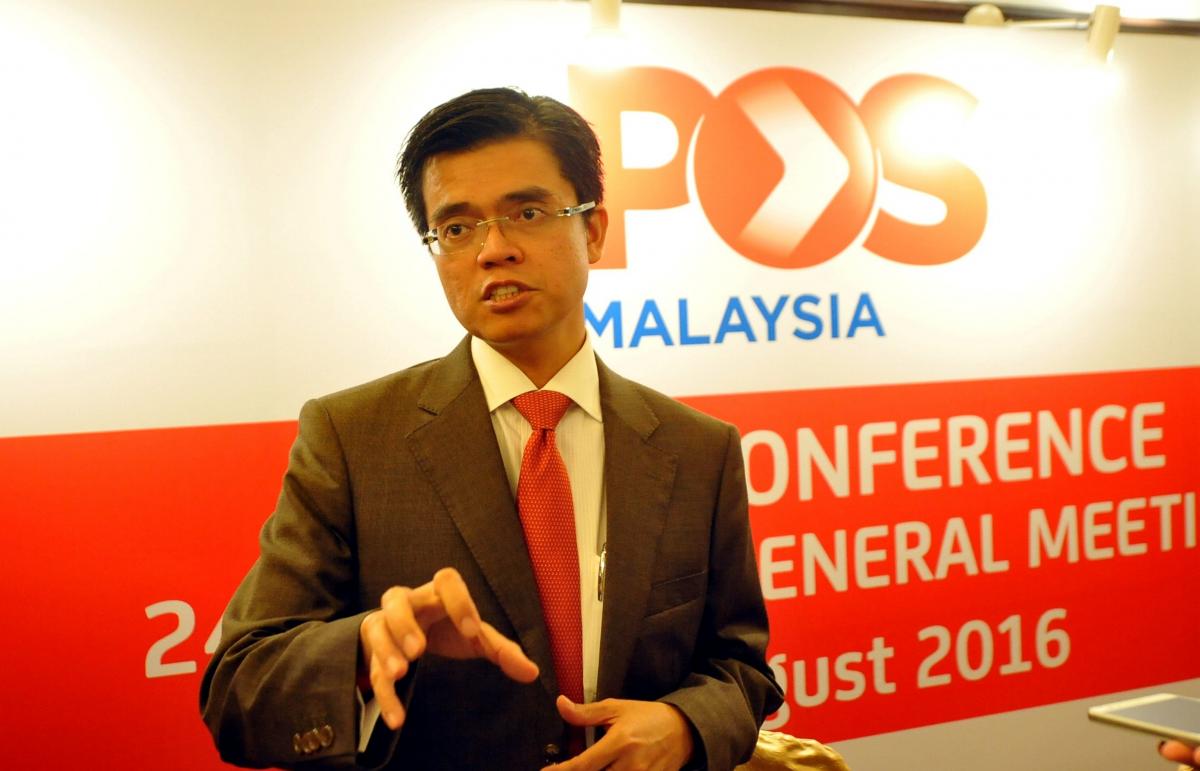
    Pos Malaysia Bhd’s net profit for its first quarter ended June 30, 2016 grew 40% to RM31.84mil, from RM22.74mil a year ago, despite operating in the current challenging environment, said group chief executive officer Datuk Mohd Shukrie Mohd Salleh.

    The increase was due to higher profits generated from its courier segment that was driven by demand from its e-commerce and online businesses. First quarter revenue rose to RM415.87mil from RM390.37mil a year earlier.

    Shukrie said Pos Malaysia is focussing to transform itself into a one-stop fully integrated logistics services provider through the recently approved and soon-to-be-completed corporate exercise of acquiring Kuala Lumpur Airport Services Sdn Bhd (KLAS) group of companies.

    The company will also introduce more new 24/7 e-commerce convenient touch points when it unveils a slew of new services. The company will also enhance facilities at all Pos Laju Centres and post offices nationwide. It is planning a total of 110 more touch points from the current total of 1,030 throughout Malaysia by end of 2016, Shukrie said.

    In a separate Bursa filing yesterday, the company said its courier segment registered higher revenue of RM162.8mil in the first quarter of this year compared with RM148.1mil a year ago.

    The upward performance was driven by increase in demand from e-commerce, the company said. Its postal services segment registered lower revenue of RM206.7mil in the first quarter of 2016 compared with RM230.6mil a year ago.

    “This is due to lower revenue for direct mail for mail segment and decrease of transactions from bill payment for retail segment,” Pos Malaysia said.

    Its international segment registered lower revenue by RM16.4mil as compared to RM36.1mil a year earlier due to lower transactions from transhipment business segment.

    Meanwhile, Pos Malaysia’s other segments which consist of digital certificates, printing and insertion registered higher revenue by RM7.8mil in the first quarter of this year due to higher business volume attributed to sales of digital certificates, as well as printing and insertion.

    Going forward, the company said its longer term prospects remain closely tied to the growth in the fulfilment and delivery of merchandise arising from the growth of e-commerce.

    “Investments by global e-commerce giants into the South-East Asia’s e-commerce players, for example the acquisition of Lazada by Alibaba, support the growth and development of the industry in the region.”

  • New Louis Vuitton perfumes

    New Louis Vuitton perfumes

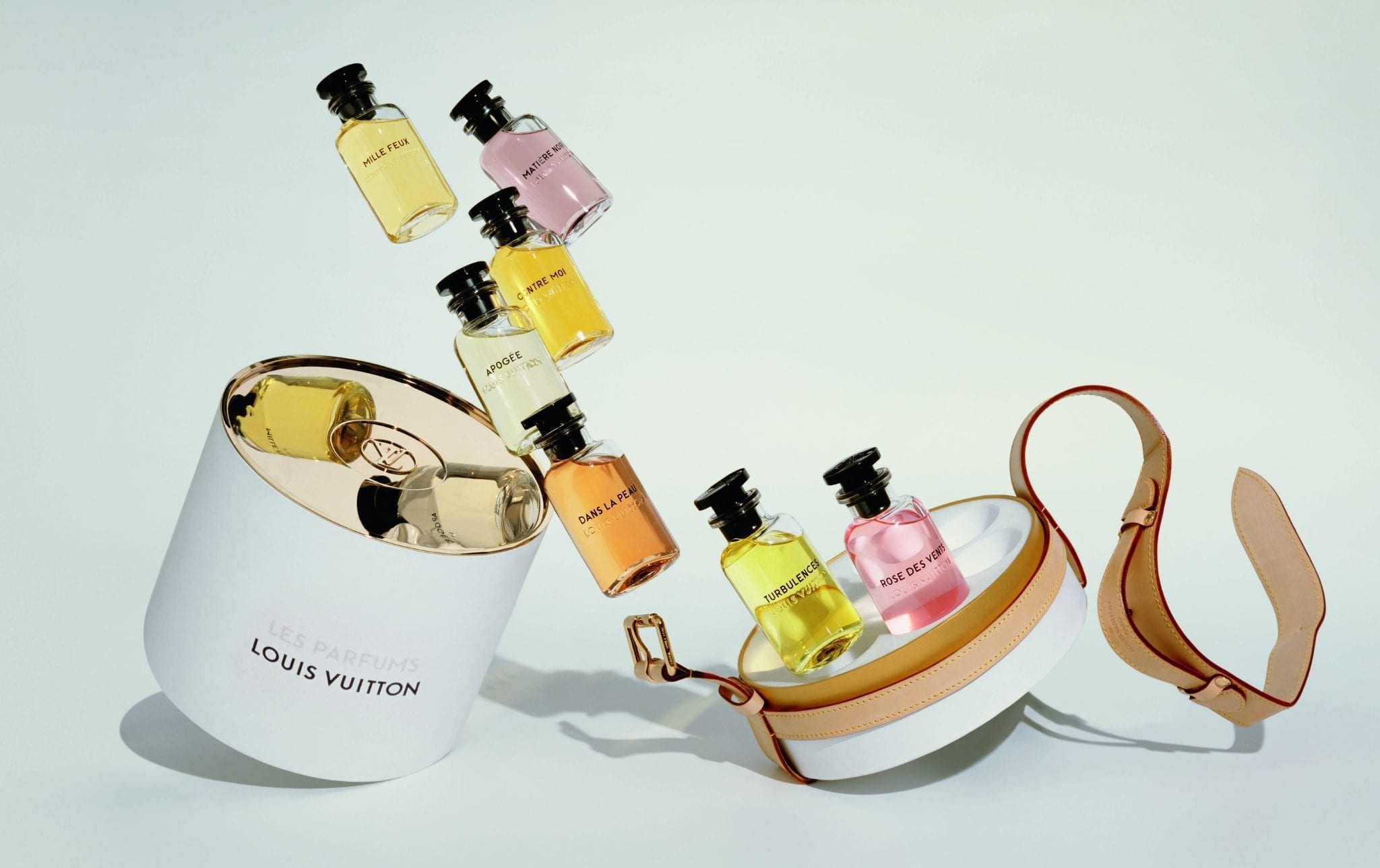
    Louis Vuitton perfumes are available again, with the French fashion house offering seven choices for its first fragrance launch in 70 years.

    Ingredients for the perfumes have been sourced internationally, including CO2 extractions from jasmine and May roses native to Grasse, the French town known as the world’s perfume capital. The extraction process is a first in the perfume industry.

    The 162-year-old label’s master perfumer, Jacques Cavallier Belletrud, whose creations include Issey Miyake’s L’Eau d’Issey and Stella by Stella McCartney, spent months travelling the five continents to seek out exotic and rare materials for the fragrances.

    “I wanted to surprise people who smell the perfumes – create emotion, bring them back to childhood or moments of pleasure,” says Belletrud, who is a native of Grasse.

    His new fragrances include elements from countries including China, France, Indonesia, Italy, Laos and Peru.

    For Rose des Vents, he blended a trio of roses, centifolia, Bulgarian and Turkish; with Apogee, he uses lily of the valley, Grasse jasmine and Chinese magnolia.

    While most of the scents are floral, the range also has the more masculine notes of leather and wood (in the perfumes Contre Moi and Matiere Noire).

    Louis Vuitton gave Belletrud the freedom to work without a deadline, and he took four years to produce the range. “The challenge was to create something that would last over the years,” he says.

    The fragrances will be available in Singapore next month at Louis Vuitton boutiques at Marina Bay Sands and Ngee Ann City.

  • Huawei, Indonesian partners build cloud platform

    Huawei, Indonesian partners build cloud platform

    PT Huawei Tech Investment (Huawei Indonesia) has worked with Accenture, Cloudera, Anabatic, IDPRO, Infosys and Telkomsigma to build a new cloud ecosystem.

    The new solution, FusionSphere 6.0, was launched during the recent Huawei Cloud Conference Indonesia.

    FusionSphere 6.0 is an enterprise-class cloud operating system that helps customers deploy virtual servers, private clouds, public clouds, hybrid clouds, cloud desktops and NFVI.

    The ecosystem brings the concept of open source which used in components, architecture, and ecosystem enabling customers to have more choices in software. Huawei FusionSphere 6.0 keeps pace with the open-source OpenStack community, complies with the native OpenStack standards, and supports OpenStack APIs.

    Third-party applications developed based on native OpenStack can run on Huawei FusionSphere 6.0 without having to make changes.

    The platform is designed to help enterprises overcome the challenges faced during different stages of IT transformation, making enterprise business and workflow more effective and efficient in the deal with changes in the market, lowering investments on IT assets and human resources.

    “Huawei enthusiastically built a win-win cloud ecosystem with partners,” Huawei Indonesia CEO Liu Haosheng said.

    “We would like to share our successful practices in the global ICT sector, and to use the most innovative and competitive ICT technologies, products, and solutions to support our strategic business partners in Indonesia , creating values and benefits for their users in the cloud era.”

    At the conference, Huawei Indonesia also shared its successful practices in cloud transformation in cooperation with Accenture, as partners, for Telkomsigma.

    This successful practice in cloud transformation embodies Huawei Indonesia’s commitment to do innovation together with partners in an effort to build an open cloud ecosystem to help customers accelerate the transformation toward cloud solutions.

  • Robust profit for 7-Eleven Malaysia

    Robust profit for 7-Eleven Malaysia

    Despite a sluggish retail market, 7-Eleven Malaysia had robust after tax profit, growing 40.3 per cent, in its second quarter compared with the same period last year.

    Gross profit margin continued to improve, and the average customer spend edged up 4 per cent.

    A milestone was the opening of the 2000th 7-Eleven store in Malaysia.

    CEO Gary Brown says the net profit growth was achieved in a tough market in which the introduction of GST on April 1 last year dampened consumer FMCG spending.

    “We remain confident that continuous store expansion, refurbishment, promotional activity, improved merchandise mix and expanded in-store services will continue to deliver positive results despite the challenging headwinds.”

    Revenue for the second quarter, ended June 3, grew by 4.8 per cent to RM505.7 million (US$125.7 million). This was driven by store expansion, improved merchandise mix and promotional activity.

    Gross profit was up 6.8 per cent to RM156.7 million, mainly because of the revenue growth and gross profit margin expansion of 0.6 per cent.

    Profit before tax of RM21 million surged by 38.1 per cent, driven mainly by the revenue growth, gross profit margin expansion, other income growth and cost control.

    For the six months ended June 30, the group’s revenue grew 4.5 per cent to RM1.03 billion, driven by expansion (at the period end, the group had 2001 stores). Gross profit improved by RM18.9 million, or 6.3 per cent, thanks to the revenue growth plus gross profit margin edging up 0.5 per cent.

    Profit before tax was RM43.3 million, up 22 per cent.

  • Philippines Mactan casino project to start in 2017: Calata

    Philippines Mactan casino project to start in 2017: Calata

    Philippine fertiliser product distributor Calata Corp says construction works for its Mactan casino resort are scheduled to start in January 2017.

    “There will be a 36-month construction schedule with six months for warranty works giving it a total of 42 months to complete. The projected date of completion would be in the middle of 2020,” the firm stated in a Friday filing to the Philippine Stock Exchange. The filing was in response to a query from the exchange on the Mactan project and the parties involved.

    The project – named Mactan Leisure City – is being developed in partnership with U.S.-based Sino-America Gaming Investment Group LLC and the latter’s subsidiary Macau Resources Group Ltd. Mactan is an islet linked by bridge to the Philippine holiday island of Cebu.

    Macau Resources Group’s registration on the OTC Markets Group exchange, based in New York, United States, was revoked last month, after the firm’s failure to make required periodic filings with the U.S. Securities and Exchange Commission. Calata said in its Friday filing that Macau Resources Group shareholders had “agreed to deregister” the firm from the exchange “to provide management the ability to effectively rebrand and position the company”.

    Calata added: “Once rebranded, the company will then be re-registered as Jade Leisure and Entertainment Group, on the [OTC Markets Group exchange], with a goal to list on the Nasdaq at the earliest opportunity.”

    The partnership between Calata, Sino-America Gaming and Macau Resources Group was first announced on Tuesday. The Philippine firm explained at the time that it would involve “the creation of a corporate vehicle intended for the future establishment of a real estate and investment trust (REIT)” which would be used for the Mactan project. The corporate vehicle – in which Calata will have a 51 percent stake – is to be established by next month, the firm said in Friday’s filing.

    Under the Philippines’ constitution and public land laws, only Filipinos, or entities owned at least 60 percent by Filipino citizens, are allowed to own land.

    In a story published by GGRAsia in April 2015, Sino-America Gaming managing director Michael Foxman had provided several details about the group’s plans for Mactan. At the time, Calata’s name was not mentioned.

    Mactan Leisure City has been presented by Calata as “a PHP65-billion [US$1.4-billion] integrated resort incorporating three hotels, casino and entertainment complex, commercial, retail, and conference facilities, and yacht club, situated at a 14-hectare property located on Mactan Island, Cebu”.

    The firm stated on Friday it expected to secure a casino licence for the project from the country’s gaming regulator – the Philippine Amusement and Gaming Corp (Pagcor) – by the end of 2017.

    “The target submission of the complete application with Pagcor will be by late October 2017,” Calata stated. The firm added that the project had already received support from local authorities, civic groups and the Catholic Church.

  • IBM opens 9th APAC cloud center in Korea

    IBM opens 9th APAC cloud center in Korea

    IBM has launched its first cloud data center in Korea together with SK Holdings, a Korean IT services company IBM partnered with last year.

    The company’s ninth cloud data center in Asia Pacific, it is the latest step in IBM’s ongoing expansion of the physical infrastructure that supports its cloud services. The facility in Pangyo, outside of Seoul, is the 47th site in this global cloud data center network.

    IBM is going after the Korean public cloud services market, which IDC expects to grow from $445 million last year to $1 billion in 2019. Target customers are both Korean enterprises and start-ups, according to IBM’s announcement.

    The cloud data center will have the capacity to support “thousands of servers,” IBM said.

    Its services include public, cloud, and hybrid environments, as well as IBM’s extensive Platform-as-a-Service portfolio, collectively branded Bluemix. Among them are APIs for the company’s “cognitive computing” capabilities called Watson, which developers can use to build those capabilities into applications they design.

  • Xiaomi eyes offline expansion

    Xiaomi eyes offline expansion

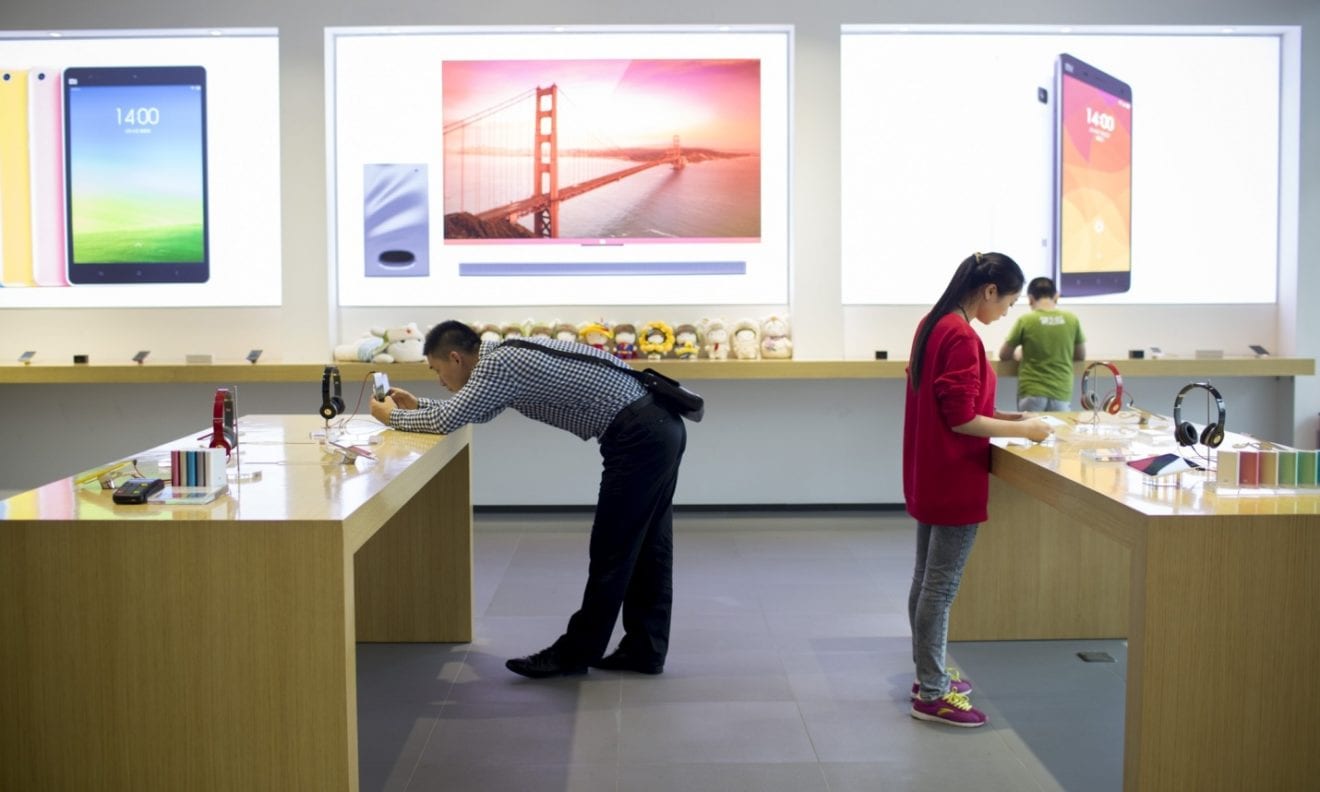
    Chinese smartphone vendor Xiaomi Corp unveiled a new smartphone with China Mobile Communications Corp on Thursday, as the company steps up efforts to expand offline retailing channels.

    China Mobile, the country’s largest telecom mobile carrier by subscribers, said it hopes to sell 30 million Xiaomi handsets this year, signaling a boost for Xiaomi, which is wrestling with declining shipments and mounting competition from rivals such as Huawei Technologies Co Ltd.

    Priced from 899 yuan ($136), the new phone, the Redmi Note 4, will be on sale at China Mobile’s 20,000 offline stores and more than 100,000 bricks-and-mortar retailing partners’ stores.

    Lei Jun, CEO of Xiaomi, said the company has sold more than 110 million smartphones under Redmi, a brand known for its cost-effectiveness. “The new phone is our latest effort to offer a quality smartphone that everyone can buy.”

    The move came as China’s online smartphone sales hit a ceiling, and market players are banking on bricks-and-mortar retail partners for growth.

    James Yan, research director at Counterpoint Technology Market Research, said it is highly possible to achieve the sales target, given China Mobile’s sprawling offline presence.

    “Telecom operators’ retail channels account for 30 percent of China’s total smartphone sales, and more than half of that are handled by China Mobile,” Yan said.

    The new phone’s good design and sophisticated body, better than most of Xiaomi’s previous phones, will also help boost sales. And the Beijing-based firm’s supply chain partner Wingtech Group is able to ensure an abundant supply of the new phone, he added.

    In 2015, China Mobile and Xiaomi jointly unveiled a smartphone called Redmi Note, whose total sales volume hit 27.5 million units, but that happened when Xiaomi was growing rapidly.

    The partnership between Xiaomi and China Mobile will also be expanded to Southeast Asia, as China’s smartphone market is reaching saturation point and local players are eyeing overseas markets for opportunities.

    Li Huidi, vice-president of China Mobile, said the company is making investments in India and Southeast Asian counties where Xiaomi has established a presence.

    “We will partner with hardware vendors such as Xiaomi to bring more domestic devices to overseas markets,” Li added.

    He did not disclose details, but analysts said it is likely for China Mobile to leverage its overseas investments or foreign partners to build retail channels for Chinese handsets.

  • Prada falls on tough times in China

    Prada falls on tough times in China

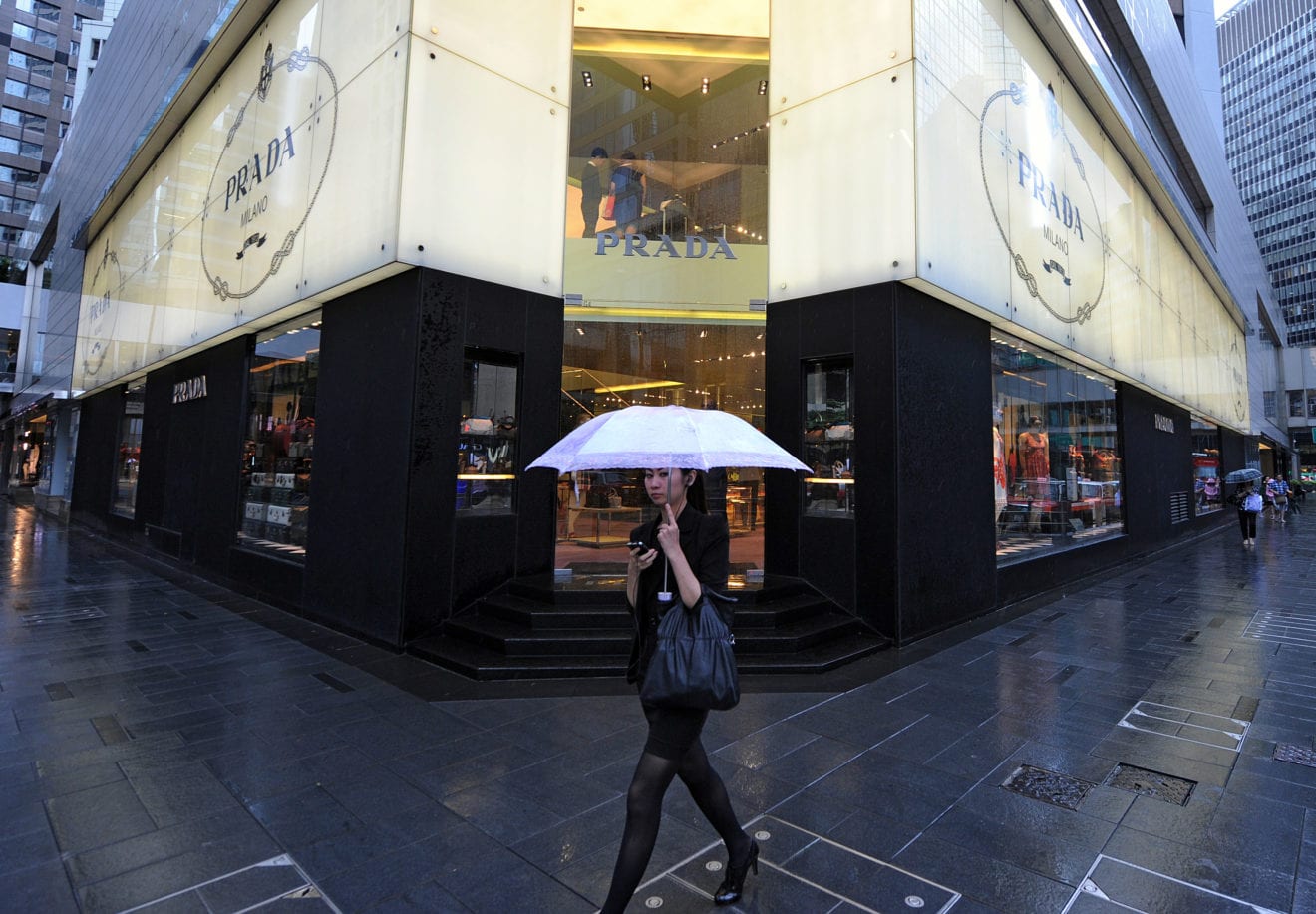
    Italian fashion brand Prada is suffering from shrinking demand in its largest market of China, with a 20%-plus drop in first-half sales dragging down overall profit to the same degree.

    The Hong Kong-listed, Milano-based company announced late Friday that net revenue dropped 15% on the year to 1.55 billion euros ($1.37 billion) for February to July. The fall was “entirely attributable to a sales decline in the retail channel as the wholesales and royalties were positive,” Prada said. Retail net sales, accounting for more than 80% of net revenue, sank 18%.

    A significant blow came in greater China as sales from directly operated stores fell 24% to 278.7 million euros. On top of lower sales at stores on the mainland, “Hong Kong and Macau continued to weigh heavily on the region’s contraction,” the company said. China’s anti-corruption campaign and economic slowdown bit into purchases of pricey items. A reduced appetite for travel by mainlanders to Hong Kong and Macau also took a toll.

    The fall in revenue was not confined to greater China. All of its geographic categories, brands and product lines suffered declining sales. By product, sales of its signature leather goods dropped 22%, “especially in the Far East,” according to the statement.

    Excluding greater China, Europe was another hard-hit region, with a 21% drop in net sales. The main reason was terrorist attacks in major cities, with the company blaming a “reduction of traveler flows, resulting mainly from the publicized tragic events.”

    But there were some silver linings in Europe as well. Russian sales saw double-digit growth in local-currency terms, and the U.K. apparently benefited from “the weak pound after the Brexit” vote. Casualties in Japan and the Middle East were relatively light, with retail sales declining just 2% and 1%.

    Net profit decreased 25% to 141 million euros even after such belt-tightening measures as cutting labor and lease costs as well as advertising and communications expenses.

    Along with launching new collections to stimulate its customers’ appetite for buying, the company is upgrading important stores while shutting down others. Eighteen new outlets were opened in the half, while 14 were closed, bringing the number of directly owned stores to 622. The company continues to refurbish strategic stores into so-called new-concept stores in such key locations as a GUM department store in Moscow facing Red Square, and the Plaza 66 complex in central Shanghai on bustling Nanjing West Road.

    Prada closed 1.6% higher here at 21.65 Hong Kong dollars on Friday, ahead of the earnings announcement. Despite seeing some gains that day, the shares have lost more than 10% since the start of the year, while the benchmark Hang Seng index has risen 4.5%.

  • Lotte Group vice chairman found dead, suicide suspected

    Lotte Group vice chairman found dead, suicide suspected

    A local news agency reports that a suicide note was found in the executive’s car.

    A senior executive at South Korea’s Lotte Group was found dead on Friday, a suspected suicide, hours before he was to be questioned by prosecutors conducting a criminal probe into the family-run conglomerate, news reports said.

    Lotte Group, in a text message to reporters, said it confirmed the death of Vice Chairman Lee In-won through police and other sources. It did not elaborate further or give the cause of death.

    South Korea’s Yonhap News Agency, citing unnamed sources, reported a body believed to be Lee’s was found on a walking path outside Seoul on Friday morning. Police were trying to confirm the body was Lee’s, Yonhap said, adding that a suicide note was found in the executive’s car.

    Prosecutors raided Lotte offices in June, looking into a possible slush fund as well as breach of trust involving transactions among the group’s companies, sources said at the time.

    Lee, who was 69, had been scheduled to appear before prosecutors on Friday morning for questioning, Yonhap said.

    Park Ju-gun, head of corporate analysis firm CEO Score, said Lee’s death is a blow to prosectors given his high rank in the group.

    “Lee’s standing within Lotte was almost on par with that of the owner family members,” he said.

    Lee had been with the group since 1973 and was a top lieutenant of Chairman Shin Dong-bin, who last year saw off a bitter challenge from his older brother for control of the conglomerate founded by their 94-year-old father, Shin Kyuk-ho.

    “He oversaw Lotte Group’s overall housekeeping and core businesses and accurately understood the minds of Chairman-in-Chief Shin Kyuk-ho and Chairman Shin Dong-bin to be carried out well in subsidiary companies,” Lotte Group said in a statement.

    Lee was also engaged in finding new growth opportunities for Lotte, the group said.

    “Vice Chairman Lee has always emphasized improving Lotte employees’ sense of ethics as he believed ethical management directly translates to improving company value.”

    The investigation had already exacted a devastating toll on Lotte’s business, which ranges from hotels to retail to chemicals. Its Hotel Lotte unit was forced in June to shelve an initial public offering to raise up to 5.7 trillion won ($5.12 billion), which would have made it the world’s largest this year.

    Also in June, its Lotte Chemical unit withdrew from bidding for U.S.-based Axiall AXLL 0.09% , citing its difficulties in South Korea. Rival Westlake Chemical WLK -0.58% ended up with a $2.33 billion deal for Axiall.

    Fire department staff and police found a body believed to be Lee’s, an official at the Yangpyeong fire department near Seoul told Reuters, declining to be named as he was not authorized to speak to media. Police officials could not be immediately reached for comment.

    A South Korean prosecution official, who declined to be identified as he was not authorized to comment on the matter, expressed condolences for Lee’s death and said prosecutors planned to reconsider the schedule for the ongoing investigation.

  • Curtain to Rise on Major Fashion Event Centerstage Next Month

    Curtain to Rise on Major Fashion Event Centerstage Next Month

    CENTRESTAGE, a brand new fashion promotion and launch platform, will be held from 7 to 10 September at the Hong Kong Convention and Exhibition Centre (HKCEC). Organised by the Hong Kong Trade Development Council (HKTDC), the trade show will feature some 200 fashion brands from 20 countries and regions, as well as more than 50 spectacular events, including the large-scale opening gala fashion show CENTRESTAGE ELITES and around 30 other fashion shows. There will also be designer sharing sessions, industry seminars, networking events and more.

    At a press conference today, HKTDC Deputy Executive Director Benjamin Chau noted, “Hong Kong has long been known as the region’s fashion capital, setting style trends for the region. To further solidify the city’s position, we are debuting CENTRESTAGE to provide the ideal promotion and launch platform for international, especially Asian, fashion brands and designer labels.” Mr Chau added that the trade show is supported by local and overseas industry players, and is expected to attract buyers, particularly select shops, department stores and e-tailers, as well as fashion media and fashion enthusiasts in the region.

    Designers and guests at the press conference included local designer Mim Mak as well as Simon Choi, Project Director of Fashion Mirage, Hong Kong Fashion Designers Association and Elina Lee, Director of Partnership, Marketing, Communications, Events & Special Projects, Hong Kong Design Centre (HKDC).

    “Shooting Stars” is the theme of the inaugural CENTRESTAGE, which includes four thematic zones: GLAM, ALLURE, METRO and FORWARD. The participating countries and regions, include the Chinese mainland, Taiwan, Japan, Korea, Malaysia, Thailand, India, Australia, the United States and Europe. Local and overseas industry associations will also attend, such as the Hong Kong Fashion Designers Association, the California State Trade and Export Promotion & Center for International Trade Development from the US, the Taiwan Textile Federation and the Thailand Textile Institute.

    Some 30 fashion shows: Showcasing new collections, new talents

    To further showcase Hong Kong as an international fashion capital, the large-scale opening gala fashion show CENTRESTAGE ELITES will be held on the first day (7 September). The hottest rising stars in Asia, namely Mim Mak from Hong Kong, Simon Gao from Beijing, Ko Taeyong from Seoul and Pongsak Suprratccheep & Thita Kamonnetsawat from Bangkok, will display their latest collections for Spring/Summer 2017. Top models including Angie Ng and Kiki Kang are invited to present designer collections at this spectacular fashion extravaganza.

    The Hong Kong Fashion Designers Association will stage a show, Fashion Mirage, on 7 September. According to Simon Choi, Project Director of Fashion Mirage, the show will adopt a theme based on five local cultural elements and the event will feature 50 fashion designers, including Walter Ma and Barney Cheng.

    For years, the Hong Kong Young Fashion Designers’ Contest (YDC) has identified many fine talents for the local fashion industry and has been a cradle for Hong Kong’s designer brands. The final competition of YDC 2016 will be held on the last day (10 September) of CENTRESTAGE, where 17 finalists will take the stage to compete for the top three awards, as well as the Best Footwear & Accessories Design Award. Trendy Japanese label FACETASM’s founder and designer Hiromichi Ochiai will be the VIP judge and will share his valuable views and insights with the finalists.

    In addition, the Knitwear Innovation & Design Society will organise the Knitwear Symphony to nurture a new generation of knitwear designers and promote Hong Kong’s knitwear design and capability.

    The nearly 30 fashion shows at CENTRESTAGE will also feature such brands as 45R, anagram, ANTEPRIMA, Aquascutum, ARTHUR LAM, ATSURO TAYAMA, Charmante, Galtiscopio, HARRISON WONG, HIDY N.G., initial, i.t., JNBY, KENAXLEUNG, KOYO, LOOM LOOP, LU LU CHEUNG, Marimekko, MOISELLE and more.

    20+ seminars and networking activities: Sharing new developments, new trends

    Apart from fashion shows, the HKTDC has invited forecasting experts from WGSN and Fashion Snoops to analyse fashion and retail trends for the coming year. At another seminar, the designers participating in CENTRESTAGE ELITES will discuss and share ideas on Asia’s design influence on international styles and trends. YDC VIP judge Hiromichi Ochiai will likewise share his creative journey with visitors to the show.

    During the event, there will also be thematic seminars to help businesses grasp the latest developments in the global market. These include “Technology Trends Transforming the Fashion Industry”, “Innovation and Technology Symposium 2016” and a panel discussion on “A More Sustainable Fashion System: Is Digital Disruption Fuelling Positive Change?”

    Hong Kong in Fashion: citywide participation

    CENTRESTAGE is set to become a signature fashion event for the region showcasing top-notch creativity in Asia and drawing close attention from fashion enthusiasts. To take CENTRESTAGE outside the HKCEC and share the excitement of the fashion industry with the public, the HKTDC is launching a citywide campaign “Hong Kong in Fashion”. The campaign, which will run from today until 25 September, features more than 80 activities organised with support from more than 90 partners, including fashion and design institutions, renowned fashion brands, malls, hotels and restaurants. The activities are open to all fashion lovers.

    The HKDC will organise “Fashion PMQ” from 7 to 19 September. Elina Lee said the event will feature 40 local fashion and accessories designers, with an aim to facilitate the development of Hong Kong’s fashion industry. Fashion Mart (9-11 September) will be the highlight, while the HKDC has arranged a number of Fashion Crossover Pop-ups at various PMQ studios from 7 to 19 September to feature collaborations or crossover items by fashion designers from different disciplines.

    The Footwear Design Competition, organised by The Federation of Hong Kong Footwear Ltd. and co-organised by the HKTDC, has helped to nurture many talented footwear designers over the years. This year’s awards presentation ceremony and winning entries parade will be held as a “Hong Kong in Fashion” event on 2 September at the concourse of the apm shopping mall in Kwun Tong.

    Other public activities include the Street Snap Competition. From now until 25 September, participants can upload a personal fashion styling snapshot to Instagram (#CENTRESTAGEHK) for a chance to win a total of more than $100,000 worth of gifts. For details of the many “Hong Kong in Fashion” activities, please visit: centrestage.com.hk/hkinfashion

    The last day of CENTRESTAGE (10 September) will be “OPENSTAGE”, which will be open to public visitors aged 12 or above free of charge. Members of the public will have the chance to experience this major fashion industry event and check out the latest designs from leading brands. Individual exhibitors will retail their discounted products, offering fair visitors more shopping fun.

  • Jimmy Choo sales outperform Burberry and Mulberry

    Jimmy Choo sales outperform Burberry and Mulberry

    British footwear brand Jimmy Choo has outperformed luxury peers such as Burberry and Mulberry to post a strong set of growth figures for the first half of 2016.

    While competitors struggle with declining luxury demand in Asian markets, Jimmy Choo has bucked the trend and reported an impressive 22.1 per cent growth in Asia (ex-Japan) with China leading the way with double digit like-for-like growth; proving its measured approach to store expansion and brand building is successful without over exposing the brand.

    Europe, Middle East and Asia revenue grew by 12.2 per cent – commendable given it is one of Jimmy Choo’s most mature markets – with the UK performing well as domestic demand remained robust, supported by a renovated store portfolio.

    The recent uptick in luxury goods demand in the UK, as international travellers take advantage of the weaker pound, will further benefit Jimmy Choo’s UK performance in the second half.  The Americas, however, is proving a tougher nut to crack though, as sales declined 3.4 per cent; affected no doubt by the continuing volatility in the US department store market which has led wholesale orders to decline.

    Creative director Sandra Choi has led a strong half year of product design, building upon Jimmy Choo’s British identity to produce ranges which continue to resonate with consumers across the globe. The brand’s recent decision to focus on expanding men’s footwear is proving fruitful, as it’s now its fastest growing category, representing 8 per cent of total revenue. That will continue to grow as the brand opens dual gender stores and invests in the product and marketing of men’s collections.

    Globally, Jimmy Choo sales grew 9.2 per cent at reported currency and 3.8 per cent at constant currency. Improved gross margins and cost controls drove adjusted EBITDA growth of 13.7 per cent. Reported operating profit rose 42.6 per cent to £25.3 million.

    Jimmy Choo is in prime position to continue its growth momentum with its multi-pronged focus on eCommerce (bolstered by growing social media engagement and a robust distribution network) and conversion of retail outlets to new concept stores – all supported by a stellar product offer that is effective in both design and range.

    *Nivindya Sharma