Tag: asia

  • Jamba Juice Opens First Location in Indonesia

    Jamba Juice Opens First Location in Indonesia

    Jamba Juice Company, a leading lifestyle brand with a passion for making healthful living fun, announced today that the Panen Lestari Internusa (“PLI”) group has opened the first Jamba Juice location in Indonesia. The store is located in the popular Central Park Mall, in Jakarta. PLI is a subsidiary of Mitra Adiperkasa (“MAP”), the largest retailer in Indonesia, with more than 1,800 retail outlets, a portfolio of 150 brands, and over 22,000 employees.

    The Jakarta store brings the total number of Jamba locations to 886 stores globally.

    “We are excited to introduce the Jamba Juice brand in Indonesia,” said Agus Gozali, Managing Director of PT, PLI. “Their menu of local fruit-based products are aligned with our consumers’ needs. Central Park Mall is one of the largest premium lifestyle malls in Indonesia and by adding a lifestyle brand like Jamba Juice to the mall we will ensure consumers have access to menu offerings that are both fit and fun. The Jamba store will be located at one of the mall’s major entrances, making it highly convenient for mall guests.”

    In addition to Jamba’s top selling products like Strawberries Wild® and Banana Berry™, the Indonesian menu will include several local products featuring popular Indonesian fruits, including guava and dragon fruit.

    “The launch of our first Indonesian location is significant for the Jamba brand and business. We continue to see demand for our hand-made, premium products across the globe,” noted Arnaud Joliff, Senior Vice President, Chief Systems Officer and GM International at Jamba Juice. “We are very fortunate to be represented in Indonesia by such a knowledgeable, passionate and well-established partner as PLI. We look forward to many years of partnership as we build the Jamba Juice brand in Indonesia.”

    Jamba Juice is currently awarding franchise opportunities in other select markets around the globe. For more information, please visit www.jambafranchise.com.

  • Singapore Builds Flight Simulation Center in Tangerang

    Singapore Builds Flight Simulation Center in Tangerang

    Singapore-based flight simulator provider SIM Aero Asia plans to build a flight simulator training center in Tangerang, Banten. The US$50 million (Rp666.6 billion) project is expected to start operating next year.

    SIM Aero Asia business development officer Alex Teoh said the Indonesian aviation industry’s growth rate is currently among the most rapid in Asia. He said this creates an opportunity for SIM Aero Asia to its business in Indonesia.

    “We have received the permit from the Investment Coordinating Board (BKPM). Through our subsidiary SIM Aero Indonesia we are ready to rent airline simulator equipment to Indonesian airlines,” he said in Jakarta, Wednesday, August 24.

    Teoh said Indonesia’s need for flight simulation devices will increase, especially since a number of domestic airlines are raising the number of their fleet to meet the rising demand for air transport services.

    Alex is confident SIM Aero optimistic Indonesia can contribute to the development of the Indonesian aviation industry by providing aviation training with international standards.

    Alex said his company plans to provide three simulation equipment; one A320 flight simulator and two helicopter simulators. The rent is around US$400 per hour for the A320 and US$800 for a helicopter simulation.

  • Indonesia asks New Zealand to lower import duty

    Indonesia asks New Zealand to lower import duty

    Indonesia has asked New Zealand and Australia to lower import duties on two export products from Indonesia-herbicides and insecticides-from 5 percent to zero percent under the ASEAN-Australia New Zealand Free Trade Agreement (AANSFTA).

    “To increase trade with Indonesia, import duties for herbicide and insecticide, which are high at 5 percent need to be made zero percent,” said Industry Minister Airlangga Hartarto here on Thursday.

    Airlangga said this after holding a meeting with the Ambassador of New Zealand to Indonesia, Trevor Matheson at the Industry Ministry Building, Jakarta.

    Meanwhile, the Director General of Security and Development Access International Industry, Ministry of Industry, Harjanto explained, there are two ASEAN member countries that export herbicide and insecticide to New Zealand, namely Indonesia and Malaysia.

    Unfortunately, since the cooperation agreement has been in force, the import duty for Indonesian products is higher than for Malaysia, which is zero percent.

    This makes the products from Malaysia more competitive than the products from Indonesia.

    “Herbicide and insecticide is used by New Zealand for work on the farm. We hope products from Indonesia can be as competitive as from Malaysia through the liberalization of this market,” said Harjanto.

    Harjanto speculated that outside the AANZ FTA agreement, Malaysia and New Zealand have other agreements, which allow import duties for Malaysian products to be zero percent.

    According to data from the Industry Ministry, trade value between Indonesia and New Zealand reached US$1.07 billion, of which Indonesia is experiencing a deficit of US$200.8 million.

    Harjanto hoped that with zero percent import duty, the trade balance between Indonesia and New Zealand would become more balanced, so that cooperation between the two countries can be strengthened further.

  • Pertamina Reports Net Profit rp23,8 Trillion Six Months

    Pertamina Reports Net Profit rp23,8 Trillion Six Months

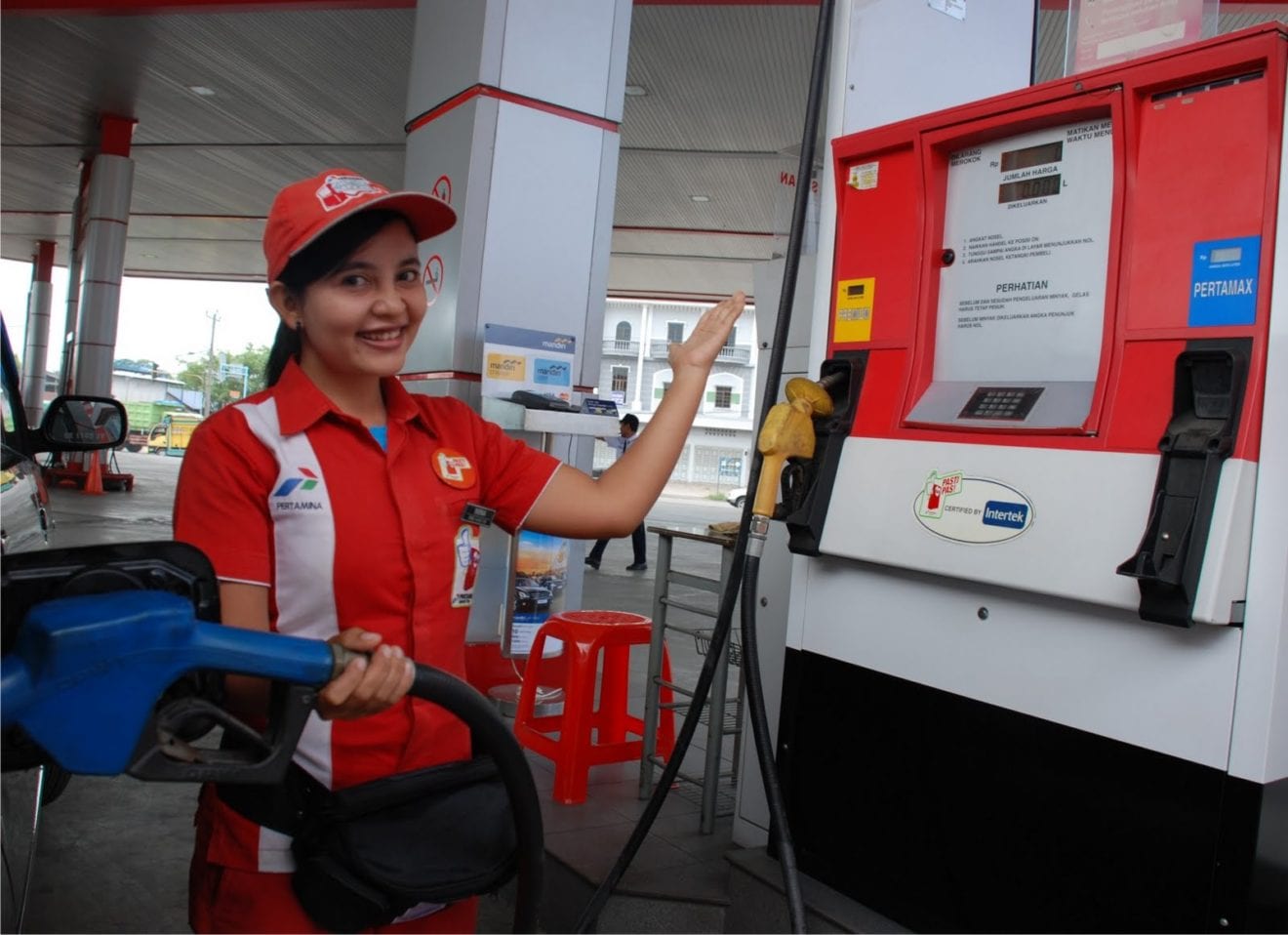
    PT Pertamina reported US$1.83 billion (Rp23.8 trillion) in net profit in the first half of the year, or an increase of 221 percent from the same period last year.

    Chief Executive of the state-owned energy company Dwi Soetjipto attributed the increase in profit to improved performance of its business units and efficiency in operation.

    “We are grateful that efficiency and increase in performance in the upstream and downstream operations have resulted in an increase in net profit to US$1.83 billion,” Dwi said.

    He said in the first half of the year, the company was still confronted with declining prices of oil in the world market.

    The condition served a big blow to oil companies in the world though the impact was less damaging on Pertamina, he said.

    The prices, however, began to pick up in the following three months, he added.

    Pertaminas Finance Director Arief Budiman said in the first half of 2016 the company recorded US$17.19 billion in income, down 21 percent from US$21.79 billion in the same period last year.

    Its operating income rose 110 percent from US$1.56 billion in the first six months of 2015 to US$3.28 billion in the same period in 2016.

    “We are strong in cash flow with balance reaching US$5 billion. Therefore, we are strong enough to carry out corporate action when necessary,” he said.

    He said the company produced 640,000 barrels of oil equivalent per day consisting of 305,000 barrels of crude oil and 1,938 mmscfd of gas.

    Investment in a number of upstream projects have been implemented such as in the 1×55 MW geothermal power project of PLTP Ulubelu 3, and 2×55 MW PLTP Lumut Balai now 45 percent completed .

    The company also continued to develop infrastructure both for gas transport and processing and marketing.

    Among gas pipe projects such as Arun-Belawan-KlM-KEK, Muara Karang-Muara Tawar, Gresik-Semarang, and Porong-Grati gas pipes have been more than 80 percent completed.

    Development of processing infrastructure is being accelerated such as Refinery Development Masterplan Program (RDMP) of Kilang Balikpapan, which is now in the final phase of “Basic Engineering Design”, and RDMP of the Cilacap refinery now in the phase of “Front End Engineering Design”.

    Meanwhile, a number of marketing infrastructure projects have been in the final phase of development such as Pulau Sambu and Tanjung Uban oil fuel terminals, procurement of oil fuel and crude oil tankers of the General Purposes (GP) and Medium Range (MR) types with delivery expected this year.

  • Yusen Logistics Indonesia acquires highest standard of quality certification

    Yusen Logistics Indonesia acquires highest standard of quality certification

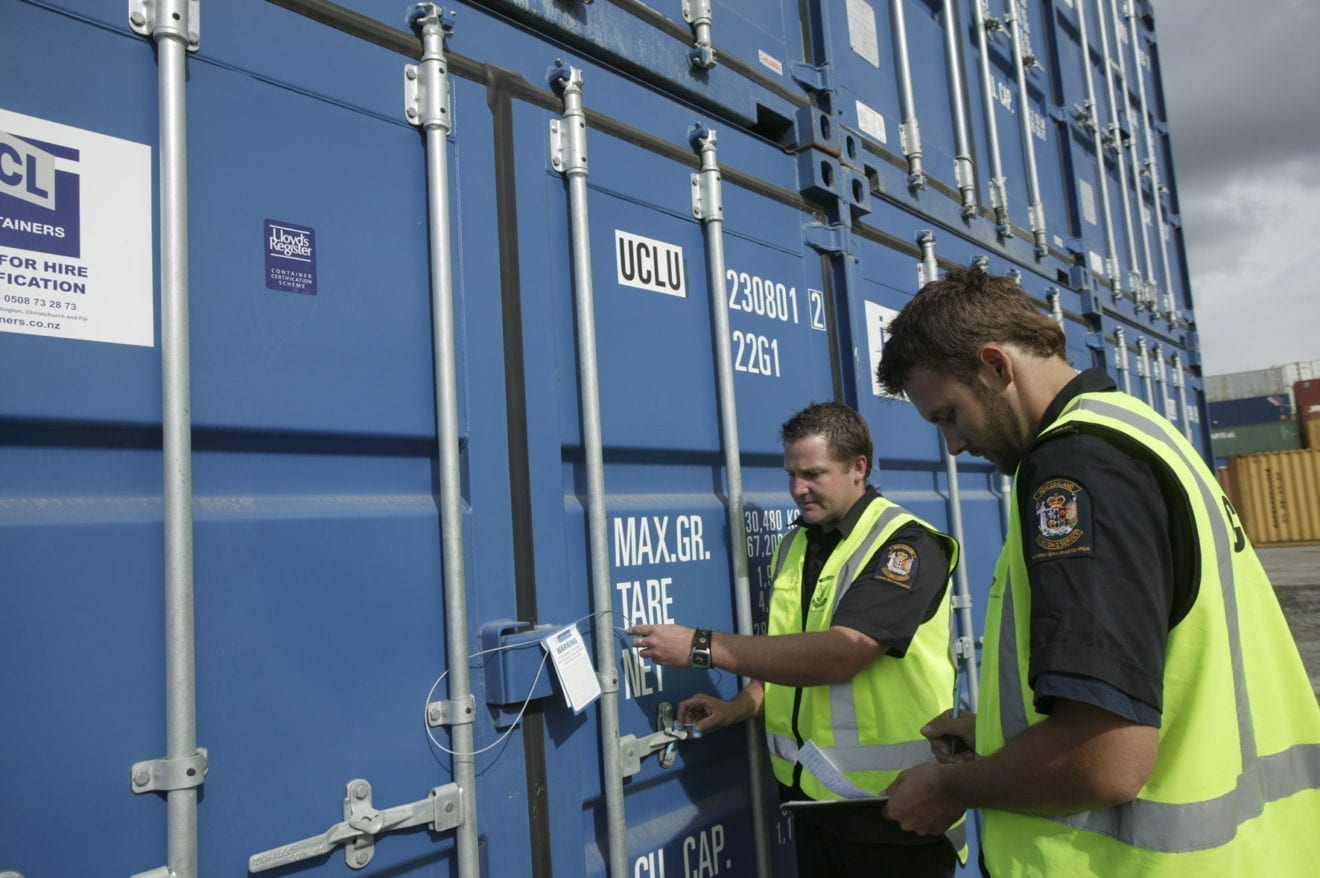
    PT Yusen Logistics Indonesia has become the first logistics business in Indonesia to acquire GDP certification, the industry standard of quality for the storage and transport of medical and pharmaceutical products.

    PT Yusen Logistics Indonesia has been handling pharmaceutical and medical devices more than 10 years, transferring high value, temperature sensitive products all over the world through Yusen Logistics’ European Pharma Network. With demand for advanced quality rising, the Company has invested in acquiring GDP(*) certification to verify the quality of its services to customers.

    Yusen Indonesia can now assure customers that transportation quality and shipment safety is being met through strict compliance with GDP guidelines; insured by regular inspections and systematic staff training.

    The Company’s Pharma shipping service employs company-owned vehicles with temperature control capability and real-time GPS tracking. Delivery routes are finalized after assessment of transportation risks, with implemented temperature mapping and monitoring. For air shipments, through using systematic cargo management techniques, Yusen Indonesia’s Customs clearance services are faster and more efficient; achieving greater service accuracy.

    As part of Yusen Logistics’ medium term business plan, “GO FORWARD, Yusen Logistics – Next Challenges”, the Company has taken measures to expand its healthcare logistics services across Europe, most recently opening a new GDP warehouse in Amsterdam(**) and expanding its global shipping network. Now that Yusen Logistics Indonesia has acquired GDP certification, the expertise Yusen Logistics has cultivated in Europe will be applied to Asia – providing safe, reliable and speedy services to its customers.

    (*)GDP: Good Distribution Practice
    (**)September 2015

  • Browser and search engine UCWeb claims 50pc market shares in India and Indonesia

    Browser and search engine UCWeb claims 50pc market shares in India and Indonesia

    UCWeb, the mobile browsing arm of e-commerce giant Alibaba Group which is behind the UC Browser, is claiming more than 50 per cent shares of both the Indian and Indonesian mobile browser and search engine markets, six years after entering the countries for the first time.

    The company also revealed it has reached the milestone of recording more than 400 million monthly active users globally, including 88 million in India.

    Amid stagnant growth in mobile internet usage and cutthroat competition in its home market, the Chinese company said the successes have been built on its relentless effort to adapt to both media environments, spearheaded by local sales teams, and a lack of any strong local competitors.

    “In these markets [UCWeb] has focused on being a big ‘platform’ that enables users to discover content.

    Indian viewers have a much stronger appetite for sport, music and videos, while less interest in social and gossip news, as in China

    He Xiaopeng, UCWeb’s president

    “We don’t care about short-term revenue and profit overseas. And we don’t rely on small apps to acquire traffic,” said He Xiaopeng, UCWeb’s president.

    His comments came as the company officially shortened its name from UCWeb to just “UC”, in an effort to highlight its upgrade from being a simple browser to what officials called a “digital media and entertainment platform”, which along with other operations such as Alibaba Music, and Alibaba Pictures, form the company’s growing culture and entertainment matrix.

    In a separate announcement, it said in partnership with Mumbai entertainment TV station Colors, it is also launching an English language news conglomerate, “UC News”.

    “India is among the few markets that still see traditional media outlets growing,” He explained.

    “This is different from China and Indonesia, where social media and online celebrity culture dominate.

    “Indian viewers have a much stronger appetite for sport, music and videos, while less interest in social and gossip news, as in China,” He said.

    The company employs nearly 100 staff in India, and a few less in Indonesia, mainly business development and marketing staff, who are backed up by much larger technical and products team in Guangzhou, He said, within a total workforce of 500.

    Chen Chao, the company’s general manager, said it is relatively easy building a successful presence in markets like India and Indonesia, where users are happier to accept foreign companies, and there is a lack of competitive local firms.

    UCWeb has far less interest in developed markets such as Japan, he added, for instance.

    The company’s expansion in the emerging markets comes as growth in the number of mobile internet users has plateaued in China, and browser competition has intensified between rivals such as QQ, which is backed by Tencent, and Baidu’s own browser.

    Zhu Dalin, an analyst with Analysys International, said the announcements underlined UCWeb’s ambition to become a major platform, which alll users can access easily.

    “It is also stressing its customised feeds, but its competitors are doing this.

    “China’s mobile internet landscape has changed so fast that it may not necessarily have developed in the way that UC wished,” said Zhu.

    Unlike during the personal computer age, mobile users can now access content through a various of ways, so browsers such as UC have to fight even harder for users, analysts say.

    India and Indonesia have become natural targets for UCWeb, despite having to overcome tough regulatory risks.

    The company has also built a strong presence in Iran, before being blocked by the Iranian government overnight, along with Facebook and Google.

    He Xiaopeng said the biggest challenge in India turned out to be poor infrastructure, on top of a lack of electricity, water and online payment tools.

    UCWeb’s local operating experience could potentially be an asset for its parent Alibaba, which is also exploring opportunities in markets including India.


  • Samsung promises to employ more local talent

    Samsung promises to employ more local talent

    Korean technology giant Samsung has promised to develop and nurture local talent in Indonesia through its Samsung Research and Development Institute (SRIN), a platform for innovation.

    The SRIN is currently carrying out a roadshow at several academic institutions in Indonesia to help young developers put their ideas into practice where previously it “would be hard for them to do so”, as the company claims. The platform could become a gateway for Indonesian talent to contribute to the development of new technologies for Samsung or other companies.

    Aside from developing its devices, Samsung’s other goal is to drive innovation in the internet of things (IoT) segment, which the company says is starting to take off in Indonesia.

    Samsung Indonesia’s marketing director for IT and mobile technology, Vebbyna Kaunang, said the use of Samsung’s IoT technologies in Indonesia was currently limited to business-to-business application, such as equipping offices with smartphone-controlled lights and other utilities. It is still unclear when these features will be made available to the general public.

    Because the company is pushing this segment further in the hope of preparing it for the Indonesian market, the development of local talent seems more important than ever, as qualified Indonesians could contribute to future Samsung technologies.

    Earlier this year, the company laid out plans to seek more Indonesian developers to help create local content for its burgeoning virtual reality (VR) service.

    “What we plan to do is to get our digital ecosystem in gear and hopefully fulfill all device segments with the latest technology every time. Through programs held by the SRIN, we are able to do that using unnurtured talent,” she said at the launch of Samsung’s new Galaxy Note 7 on Tuesday.

    The Galaxy Note 7 is described by Samsung as its pinnacle of innovation. Assembled in the company’s factory in Cikarang, West Java, the smartphone is equipped with features such as an iris scanner for more secure access, an improved stylus called the S Pen, and the ability to function for 30 minutes under water at a depth of 1.5 meters.

    The device itself is not yet available in retail stores in Indonesia, but pre-orders for the country sold out within three days earlier this month at a price of Rp 10.7 million (US$813).

    Vebby added that the components of the Galaxy Note 7 were 100 percent compliant with the upcoming regulation, which requires all 4G smartphones sold in the country to be made of at least 30 percent local components.

    At present, the government applies a mandatory rule of having 20 percent local content in 4G smartphones sold in the country, but the rule applies mostly to hardware, while the upcoming regulation will also encapsulate software requirements.

    The regulation is slated to be implemented at the beginning of next year.

    Samsung released its Galaxy S7 smartphone in March.

  • Indonesia outlines strategy for sports development

    Indonesia outlines strategy for sports development

    Indonesia President Joko Widodo on Wednesday stressed on the development of sports which have the potential to garner medals at international championships, including badminton, archery and weightlifting.

    “Prioritise development of games which have already shown achievements,” President Widodo said at the State Palace after congratulating the country’s medallists at the Rio Olympics, including the gold medallists in the badminton mixed doubles.

    In addition to that one gold medal, Indonesia also collected one silver medal and one bronze medal in weightlifting competitions at the Olympics, improving from the achievement at the Olympics in 2012, during which only one silver medal and one bronze medal were secured, reports Xinhua.

    Widodo added that the development “includes the improvements of facilities, infrastructure and training camps”.

    “If it is better undertaken with a long strategy, more gold medals will be able to be garnered,” he said.

    Widodo said that he had coordinated with the sports minister on how to materialise the new strategy.

  • Trade Expo Indonesia Targets 14,700 Potential Buyers

    Trade Expo Indonesia Targets 14,700 Potential Buyers

    The Trade Ministry is targeting the Trade Expo Indonesia (TEI) 2016, which will be held on October 12-16, to be able to attract 14,700 domestic and foreign potential buyers.

    “We provide 1,100 outlets,” Director General of National Export Development of The Trade Ministry Arlinda said in a press conference in Jakarta on Wednesday, August 24, 2016.

    Arlinda said there are currently 4,000 potential buyers who have confirmed to attend the expo.

    The Trade Expo 2016 comprises of six leading sector zones, namely manufacture, furniture and home decoration, food and agriculture, creative industry and investment.

    The TEI promotion has been intensively conducted in domestic and abroad.

  • RHB Bank to assess opportunities in Indonesia

    RHB Bank to assess opportunities in Indonesia

    RHB Bank Bhd, which saw its bid to acquire a stake in Indonesia’s PT Bank Mestika Dharma Tbk fall through, is optimistic about the prospects in that country and and will assess the opportunities.

    Group Managing Director, Datuk Khairussaleh Ramli, said the Indonesian market was good with banks recording stronger credit growth and higher return on equity compared to Malaysia’s.

    It has been reported that, on average, an Indonesian bank’s return on investment was between 15% and 20% compared with Malaysia’s 9) and 11%.

    “(However) at this point there is nothing on the table for us to look at and when it does we will have to evaluate the opportunity,” he said after announcing RHB Bank’s first-half 2016 financial results here on Wednesday.

    He said the recent bilateral agreement signed between Indonesia Financial Services Authority (IFSA) and Bank Negara Malaysia would pave the way for banks to have greater access in both countries.

    In 2009, RHB Bank, which was then the banking unit of RHB Capital Bhd had, proposed to acquire 80 per cent of PT. Bank Mestika Dharma Tbk for RM1.16 billion but IFSA’s move to limit the foreign ownership to 40 per cent emerged as a stumbling block for the deal to be signed.

    The second bid to acquire a 40% stake, also fell through after RHB Capital did not get the Indonesian authorities’ approval before the deadline of the sales and purchase agreement on June 30, 2014.

    Also under its own corporate exercise, on April 14, 2016, RHB Bank emerged as the new group’s holding company and it was listed on Bursa Securities on June 28, 2016.

    For the first half-year ended June 30, 2016, its pre-tax profit fell by 12.7% to RM1.22bil due to a one-off impairment on a corporate bond in Singapore. For the first-half of 2015, it reported a pre-tax profit of RM1.40bil.

    Revenue for the six months of 2016, however, rose to RM5.42bil from RM5.37bil.

    Khairussaleh said the financial market would remain challenging due to the macro-economic uncertainties in most parts of the world.

    “The risks of external demands and softer consumer sentiments are expected to moderate Malaysias gross domestic product growth in 2016 to 4% from 5% last year.

    “The banking sector growth too is expected to remain modest, attributable to a deceleration in corporate loans market and ongoing consolidation of household loans sector,” he said.

    He said although the bank’s performance in the second quarter was affected by one large impairment on securities, RHB was on track to achieve its long-term objectives set under the reframed strategy of focusing on performance.

    For the second quarter ended June 30, 2016, pre-tax profit stood at RM469.33mil, down from RM724.9mil a year ago. Revenue increased to RM2.68bil from RM2.65bil previously.

    “The group will stay on course in executing the various initiatives under its transformation programme, while continuing to be vigilant amid a challenging macro environment and volatility in the market place,” he said.

  • East Nusa Tenggara proposes flights on Kupang-Dili-Darwin route

    East Nusa Tenggara proposes flights on Kupang-Dili-Darwin route

    The Tourism and Creative Economy Office of East Nusa Tenggara Province has suggested to the Ministry of Transportation to start the Kupang-Dili-Darwin flight route.

    “The flight route will increase the number of foreign tourist arrivals in East Nusa Tenggara and other regions in Indonesia,” Head of the Tourism and Creative Economy Office of East Nusa Tenggara Province, Marius Jelamu, stated here on Thursday.

    He noted that the Kupang-Dili-Darwin flight route is, so far, unavailable. Hence, foreign tourists keen on visiting the province have to take a flight via Jakarta or Denpasar to Komodo airport in Labuan Bajo or El Tari airport in Kupang.

    Until mid 80’s there were international commercial route between Kupang and Darwin in Australia.According to Jelamu, the flight route should be considered as the three destinations are located in proximity to each other.

    “East Nusa Tenggara shares its borders with Timor Leste, and it is close to Australia. If there is a flight connecting the three destinations located in three different countries, then the transportation and communication lanes will be smoother,” Jelamu affirmed.

    Starting a transportation lane from one country to East Nusa Tenggara would help the province boost its economic growth, especially in the tourism sector.

    “It will ease travel for the foreign tourists from Timor Leste and Australia planning to visit East Nusa Tenggara and other regions. Moreover, the visa-free policy will facilitate the flow of tourists into the province,” he stated.

    He noted that the Indonesian flight carrier Garuda Indonesia could seize this opportunity as the market will always exist.

    “The flight carrier should not harbor concerns as passengers are always available,” he added.

  • New Marriott wing at Resorts World Manila opens Sept

    New Marriott wing at Resorts World Manila opens Sept

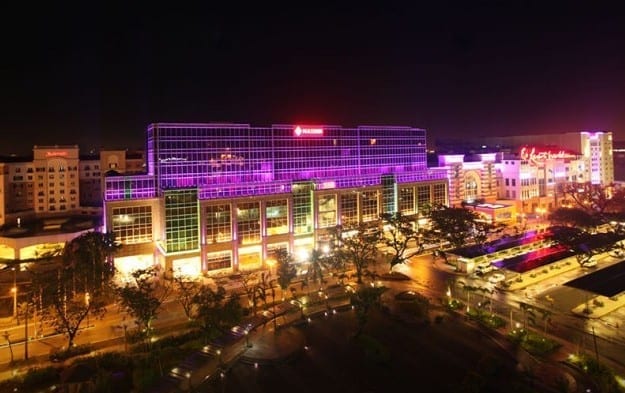
    The new west wing of the Marriott hotel at casino resort Resorts World Manila will be in operation by next month, said on Tuesday Genting Hong Kong Ltd.

    Resorts World Manila – located in the Philippines capital Manila, next to the city’s international airport – is owned and operated by Travellers International Hotel Group Inc. The latter is a venture between Philippine-based Alliance Global Group Inc and Genting Hong Kong.

    Resorts World Manila – already featuring three hotels – is currently undergoing a phase three expansion. “Ongoing developments which will introduce three new hotels – Hilton Manila Hotel, Sheraton Hotel Manila and a new Maxims hotel – are expected to be completed by the end of 2017,” Genting Hong Kong stated in its unaudited interim report for the six months to June 30. The document was filed with the Hong Kong Stock Exchange on Tuesday after trading hours.

    The firm added that the new expansion would “include additional gaming and retail facilities.”

    “Looking ahead, Resorts World Manila’s phase four development will give way to more retail alternatives and another international hotel brand,” Genting Hong Kong stated.

    The new wing at Marriott will add 228 new hotel rooms to Resorts World Manila, according to previous releases. Total room count for the exiting three hotels – Maxims Hotel, Remington Hotel and Marriott Hotel Manila – stood at 1,226 in the second quarter of 2016. Hotel occupancy rate during that period was 87 percent, according to Travellers International.

    Travellers International’s net profit for the second quarter of 2016 amounted to PHP638.2 million (US$13.7 million), an increase of 3.1 percent from a year earlier, the company reported on August 15.

    Genting Hong Kong’s share of profit from Travellers International totalled US$19.1 million in the first half of 2016 compared with US$22.6 million in the prior-year period. Genting Hong Kong said the decline was “primarily due to increase in general marketing and depreciation expense during the period.”

    Cruise business

    Genting Hong Kong – also an operator of casino cruise ships – reported a net loss of US$54.6 million for the six months ended June 30. The loss compared with a net profit of US$2.2 billion for prior-year period.

    The company said the net loss was mainly attributable to the absence of a one-off accounting gain of US$1.57 billion following the reclassification of Genting Hong Kong’s investment in Norwegian Cruise Line Holdings Ltd and the absence of a gain of US$599.6 million from the disposal of shares in Norwegian Cruise. Both of these operations were completed in the first half of 2015.

    Genting Hong Kong, a subsidiary of Malaysian conglomerate Genting Bhd, has accelerated its expansion plans for its cruise business. “The company continues to develop its three-brand cruise portfolio with focus on each of the major cruise market segments – Crystal Cruises for the ultra-luxury segment, Dream Cruises for the premium segment and Star Cruises for the contemporary segment,” Genting Hong Kong stated in its Tuesday interim results report.

    The company last month announced it would invest more than EUR100 million (US$113.1 million) to upgrade the three shipyards in Germany that it acquired in April. The move follows the company’s earlier purchase of the Lloyd Werft Bremerhaven shipyard in Germany last year. Genting Hong Kong plans to build new cruise ships to expand its fleet.

    The firm’s new Asian cruise line, Dream Cruises, is scheduled to start operations in November, according to Tuesday’s report.

  • Allianz secures distribution rights with Malaysia’s Maybank

    Allianz secures distribution rights with Malaysia’s Maybank

    Allianz is hoping the agreement will give access to Maybank’s 4 million customers in Asia. The insurer said it has jointly developed three life insurance products with Maybank which includes a unit-linked life insurance product compliant with Islamic Shariah law, a single-premium investment product and a life policy which combine protect with investment. “This partnership demonstrates Allianz’s continued focus on growing in the Asia region, of which Indonesia is a key priority.

    We’re excited to bring our multi -channel approach, innovative products and digital expertise to serve the protection needs all Maybank customers,” said Allianz’s regional chief executive for Asia Pacific, George Sartorel, in a statement on Tuesday. Under the collaboration, a team of more than 150 insurance advisers will sell the products to Maybank clients via their retail branches. Joachim Wessling, chief exectuive of Allianz Life Indonesia said: “This cooperation between two outstanding companies combines our strengths in providing world-class services and solutions, to deliver insurance protection tailored to our customers’ needs. We look forward to working closely with Maybank to secure a safer future for our customers in Indonesia.”

    Last week, it emerged that Allianz and France’s Axa are locked in a bidding war to acquire the 15-year distribution rights to sell insurance products through Standard Chartered’s channels in Asia. Meanwhile, Hanwha Life, South Korea’s second largest life insurer, is set to pump KRW150bn (£102m, €121m, $134m) into its Indonesian arm in a bid to expand its foothold in the country’s booming insurance sector.

  • Entrepreneur Now Awards 2016 nominations now open

    Entrepreneur Now Awards 2016 nominations now open

    Entrepreneur Now has launched the Entrepreneur Now Awards 2016 at a kickoff event at the Work Loft in Silom. This is the second year for the award ceremony which aims to honour and support SMEs in Thailand. The awards are organised with more than 20 community partners including many local chambers of commerce.

    There are eight categories in this year’s awards:

    • Outstanding female entrepreneur
    • Eco-entrepreneur
    • Creative entrepreneur
    • Innovative entrepreneur
    • Social enterprise entrepreneur
    • Most entrepreneurial team
    • SME (50 employees to 100)
    • Best newcomer

    In order to apply, entrepreneurs need to submit an application by October 31st, including uploading a 3-minute video about their company. Nominated startups will attend a networking evening with the judges, a group of seven diverse representatives from local startups, corporates, universities and organisations.

    The awards are open to both Thai and foreign SMEs with under 100 employees, provided they have a registered company in Thailand.

    This year’s awards ceremony will be held on November 23rd and organiser Pacharee Pantoomano promised it will be “bigger and better” than last year, with over 10 million baht worth of prizes available.

    The criteria the judges will use to select Thailand’s best entrepreneur are “uniqueness, eco-sustainability, striking achievements, recognition and traction, overcoming challenges, value in Thailand and ASEAN, vision and personal growth”.

    Judge Jacky Cheng said it was exciting to “mentor real businesses, not just ideas”.

    Duanghamon Kaewphongsri won last year’s Oustanding female entrepreneur award with her startup, Annette I Tim Tuk Tuk, selling artisan ice cream from iconic tuk-tuks. K. Duanghamon announced they are about to open their new 800 sqm factory and create products for export.

    Another of last year’s winners, Jonas Becker from Thinkatorium encouraged as many entrepreneurs as possible to apply: “There’s nothing to lose. It’s a good way to reflect on your company, where you are and where you want to be”.

    Probably the most complex part of the application process for startups is preparing the three minute video. The judges encouraged startups to include facts and figures. Rather than try to cover everything, focus on the criteria which best apply to you. K. Pacharee noted that many startups reuse their video to represent themselves at future events. Entepreneur Now will prepare additional help for preparing the video component in the next few weeks.

    Startups have until October 31 to submit their application via the Entrepreneur Now website.

  • Napster taps Terada for next-gen music streaming products

    Napster taps Terada for next-gen music streaming products

    Napster is upgrading its analytic ecosystem to implement the Teradata Unified Data Architecture (UDA).

    The deployment includes multiple nodes of the Data Warehouse Appliance with Teradata QueryGrid for seamless data and systems integration and, in addition, a Teradata Appliance for Hadoop with Cloudera.

    Digital streaming is one of the most widely accepted methods of distributing musical content. With a catalog of over 40 million songs, Napster delivers a premium music streaming experience to more than three million paying subscribers in 34 countries across the globe.

    “This upgrade establishes Teradata’s UDA technology as the go-forward foundation for analytics to drive Napster’s next-generation music streaming products,” said Brian Ringer, CTO of Napster. “Our newest product offerings such as the Listener Network — which measures music taste overlap among like-minded music fans around the world to help them discover more music they love — demands more advanced big data tools and techniques for understanding and leveraging customer behavior.”

    Ringer said Teradata helps Napster optimize detailed customer level data — including content and application usage, and gives them the ability to more effectively analyze and predict lifetime customer value through customer behavior and usage data.

    “As we leverage big data through our UDA and new Hadoop Appliance with Cloudera, we expect to understand and serve our customers with deeper personal relevance and even greater listening enjoyment,” he said.

    Also, Napster is deploying Teradata QueryGrid, which works to connect a Teradata and Hadoop system to massive scale, with no effort, and at speeds of 10 Gbps.