Tag: asia

  • Maxis taps YouTube for 360° film series

    Maxis taps YouTube for 360° film series

    Maxis is partnering with YouTube and Malaysia’s best storytellers to produce a Merdeka-themed film series, shot entirely using the latest cutting edge 360° cameras.

    Maxis will be working with award-winning filmmakers that include The Ming Thing, YouTube superstars with over 20 million video views; Junad Mohd Nor, whose film Ikal Mayang’s Odah premiered at Busan International film festival; and Denes Kumar & Vimala Perumal, the filmmakers behind Tamil’s box office hit, Vetti Pasanga.

    The company said that, using YouTube 360° video, it wants to empower Malaysians to be the first to “see Malaysia from different angles.”

    “Instead of premiering in a traditional physical cinema, these films will premiere exclusively via the YouTube platform to an estimated audience of 15 million via their mobile screens starting August 25,” said Sulin Lau, Maxis’ head of marketing services.

    “Because 360 films are truly immersive video, it’s a great way to demonstrate how great the Maxis 4G network is for seamless, buffer-free video,” said Lau.

    For this film series, the filmmakers are drawing inspiration from Malaysia’s diversity and will tell stories showing that even though we are made up of many different people, we can still come together and embrace each other’s differences.

    Maxis and YouTube are also inviting students and the public to submit their own Merdeka film and stand a chance to be premiered alongside the films of these award-winning filmmakers.


  • Telstra ramps up mobile offers as streaming go small screen

    Telstra ramps up mobile offers as streaming go small screen

    New research reveals mobile video streaming is growing at more than 30% a year and on-demand TV, sports and music is changing when and where Australians watch their favorite entertainment, according to Telstra.

    To help customers make the most of the mobile streaming revolution, Telstra has included a three-month subscription to all three leading streaming video providers Netflix, Stan and Presto on selected mobile plans.

    Also, Telstra mobile plan customers can now enjoy Apple Music with data-free music streaming which means listening to all your favorite songs, albums and playlists without tapping into their data allowance.

    Further, Telstra launched a new app that makes it easy to discover all the sports and entertainment content included in Telstra mobile plans.

    “Telstra mobile customers can now get Netflix, Stan and Presto, unmetered Apple Music and free access to live NRL or AFL, Netball and Basketball, providing an unmatched mobile entertainment experience,” said Michele Garra, Telstra’s executive director for media.

    She said Australians have embraced streaming video services like Netflix in their lounge rooms and that appetite is now seen translated to phones and tablets outside the home.

    “Network traffic surges during the morning and afternoon commute, suggesting two new prime-time periods are emerging, as people discover how easy it to continue watching their favorite shows on the go,” said Garra.

    Garra said to make it easier for customers to discover the full range of entertainment options available to them as part of their plan Telstra is introducing the Telstra TV+ app for mobiles.

  • Singtel interested in MobiFone privatization

    Singtel interested in MobiFone privatization

    Singtel has joined the ranks of operators interested in becoming the strategic partner of Vietnamese operator MobiFone.

    Singtel’s VP for business development Oliver Foo met with deputy ICT minister Pham Hong Hai recently to discuss a possible investment in the venture.

    The Vietnamese government plans to privatize the currently state-owned operator MobiFone, and is seeking a foreign operator interested in participating in the privatization. Companies including Norway’s Telenor, Sweden’s Comviq and Australia’s Telstra have previously expressed an interest.

    Now Singtel has also indicated it may want to participate in the opening up of the operator to private investors.

    MobiFone has an estimated brand value of $539 million. The company jointly controls the majority of Vietnam’s telecoms market together with fellow state-owned operator VinaPhone and military-run Viettel.

    But the government has not yet announced its plans for the privatization of MobiFone.

    MobiFone recently contracted Ciena to build a 300Gbps backbone networkspanning more than 1,400km across the country.

    Singtel has meanwhile been expanding its regional operations, having recently announced plans to indirectly increase its stakes in Thai mobile operator AIS and India’s Bharti Airtel.

  • Telenor, MPT apply for Myanmar 2600-MHz auction

    Telenor, MPT apply for Myanmar 2600-MHz auction

    Telenor and Myanmar state-owned operator MPT have both lodged expressions of interest regarding taking part in Myanmar’s first spectrum auction in October.

    The operators are among the potential bidders for 40 MHz of 2600-MHz spectrum reserved for mobile broadband services.

    Multiple ISPs and other companies – including Yatanarpon Teleport and Myanmar Telecommunication Network – have also lodged expressions of interest regarding the auction. In total, 22 companies have applied.

    Of the total number of applicants, 20 have been accepted as potential bidders, while the applications of two were rejected due to those companies lacking the required network facilities service license.

    Selected bidders will need to meet financial and technical prerequisites, including providing a $500,000 deposit, to qualify.

    By contrast, Telenor Myanmar’s main rival Ooredoo Myanmar has elected not to participate in favor of waiting for a separate 1800-MHz auction, which the operator expects to take part later in the year.

    During the auction the 40 MHz of 2600-MHz spectrum will be divided into two 20 MHz licenses, and this will itself be divided into three separate regions. Bidders will not be allowed to win more than 20 MHz in any one region, and will only be allowed to secure spectrum in up to two regions.

  • M1 to deploy NB-IoT network by 2017

    M1 to deploy NB-IoT network by 2017

    M1 and Nokia have teamed up to roll out the first nationwide commercial narrowband Internet of Things (NB-IoT) network in Singapore by 2017.

    When completed, the deployment – Nokia’s first large-scale deployment with an operator partner in Asia – is expected to be among the world’s first commercial NB-IoT deployments.

    NB-IoT networks and devices are designed to deliver improved network performance for M2M (machine-to-machine) communications – low-bandwidth, robust indoor penetration, and low power consumption, while delivering the benefits of licensed spectrum such as network reliability and security.

    The NB-IoT standards were finalized by the GSMA Standards body 3GPP in June 2016. Commercial NB-IoT devices are expected to be available by mid-2017.

    According to Bell Labs Consulting, there will be up to five billion IoT devices connected through mobile networks by 2020. In Singapore, NB-IoT deployment will support the nation’s journey to become a Smart Nation underpinned by data to deliver anticipatory services to its people.

    “NB-IoT is emerging to be a potentially promising technology for smart city’s machine-to-machine type of applications and services. We look forward to working with NB-IoT partners to explore the use of NB-IoT in developing innovative Smart Nation services that improve our citizens’ lives and make our businesses more productive,” said Jacqueline Poh, Chief Executive-designate, Government Technology Agency (GovTech).

    Sandeep Girotra, Nokia’s Senior Vice President of Asia-Pacific and Japan, said Nokia’s joint collaboration of NB-IoT deployment with M1 lays an important groundwork for further application of LTE-based IoT services.

    M1 also recently announced it is working with Nokia on Singapore’s first commercial HetNet deployment.

  • Singapore testing SIM logins for US visitors

    Singapore testing SIM logins for US visitors

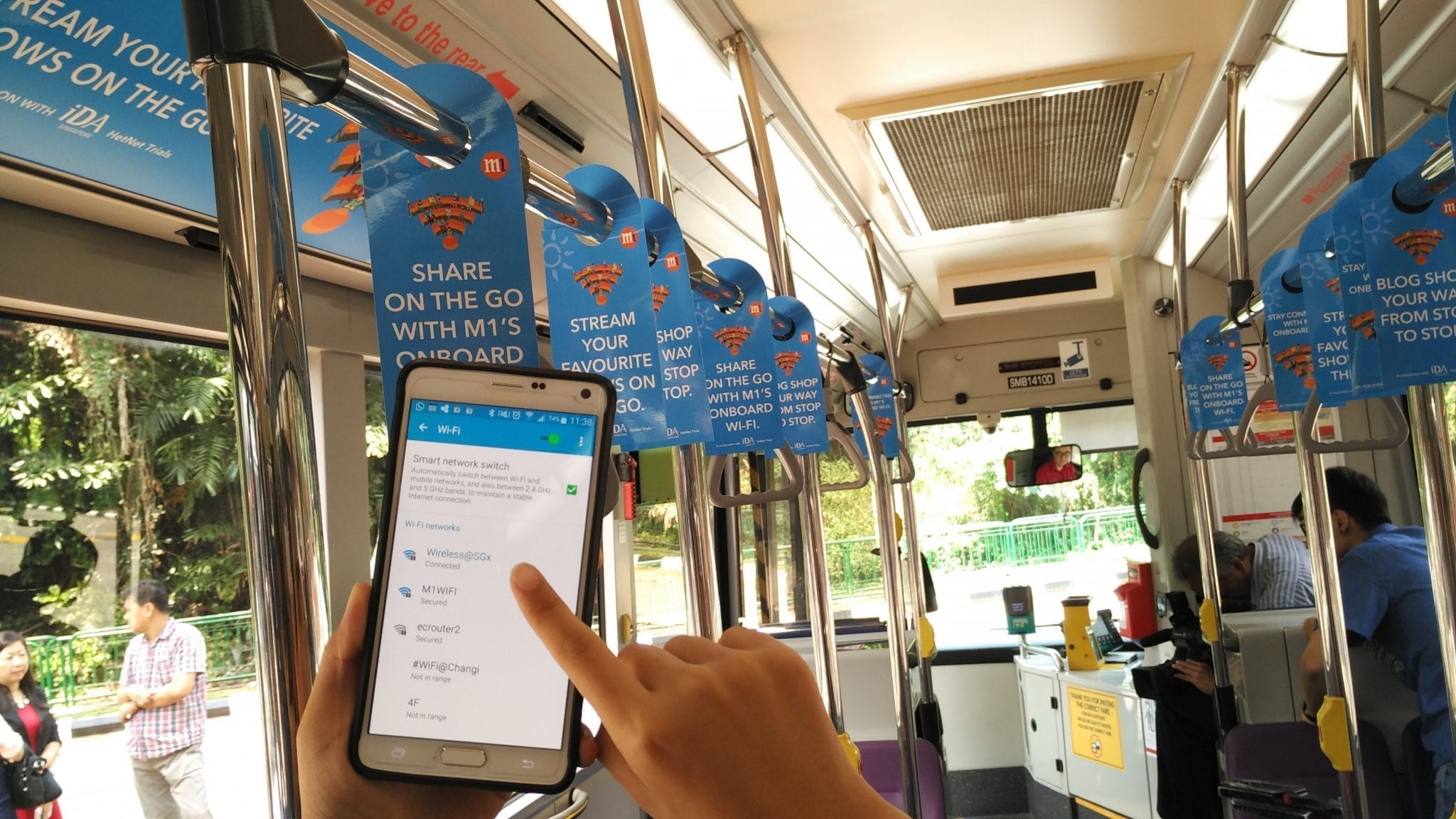
    The Infocomm Development Authority of Singapore (IDA) is piloting trials for US visitors to connect to the local wireless broadband network, Wireless@SG.

    The trials, which commenced yesterday and will run until September 21, will be conducted in partnership with the Land Transport Land Transport Authority (LTA), M1, Sentosa Development Corporation (SDC) and Singtel.

    Under the project, T-Mobile US subscribers can connect automatically to Wireless@SG after a one-time setup on their SIM devices. This would enable them to connect to around 290 hotspots in designated test areas – Sentosa and major MRT stations. Other US visitors who are not subscribers of T-Mobile can sign up for a free account in the government website.

    “Wi-Fi is fast becoming a daily necessity and Wireless@SG as the largest city-wide federated Wi-Fi network will be an important enabler to improve connectivity and liveability in Singapore as we move towards a Smart Nation,” said Khoong Hock Yun, IDA’s assistant chief executive.

    “Trialing the SIM-login method for foreign visitors is something new to us, and we hope to gather new insights, fine tune technical challenges, and enhance the Wireless@SG program further,” he added.

    IDA said the trial is taking place in conjunction with the Wireless Broadband Alliance (WBA) City Wi-Fi Roaming Project, which also allows Singapore visitors to the US to roam automatically and securely between free public Wi-Fi hotspots in participating US cities, namely, San Jose, San Francisco and New York for the same period.

    The City Wi-Fi Roaming Project is likewise a supporting activity of World Wi-Fi Day initiative. Both initiatives are backed by the Connected City Advisory Board, which aims to deliver the vision of Connected Cities around the world

  • Ooyala unveils turnkey OTT solution

    Ooyala unveils turnkey OTT solution

    Telstra unit Ooyala has introduced Ooyala AppStudio, its new turnkey over-the-top (OTT) solution for video providers to cost-effectively build and deploy comprehensive OTT app- and web-based video entertainment experiences.

    According to a report by DTVR, OTT services are booming globally as consumers flock to connected devices for content; creating a market opportunity of nearly $65 billion over the next five years.

    Using Ooyala AppStudio, broadcasters, publishers and media companies can quickly launch, manage and monetize new OTT offerings.

    The new turnkey solution promises to mitigate the expensive custom development and integration costs typically associated with OTT market entry.

    An out-of-the-box solution, it promises to ensure customers can deploy premium OTT experiences on time and on budget, with a simple, easy-to-use interface.

    As such, it does not require highly technical staff to build or manage services. Content providers can automate the build of OTT apps directly within the Ooyala AppStudio console for any device, supporting apps for Apple TV, Roku, Amazon Fire TV, and Chromecast as well as on iOS, Android and the web. No engineering is required, drastically reducing time-to-market as well as development and personnel-associated costs.

    Ooyala will demonstrate Ooyala AppStudio at the 2016 International Broadcasting Convention (IBC) in Amsterdam, September 8 through September 13.

  • Property sale boosts Bossini International profit

    Property sale boosts Bossini International profit

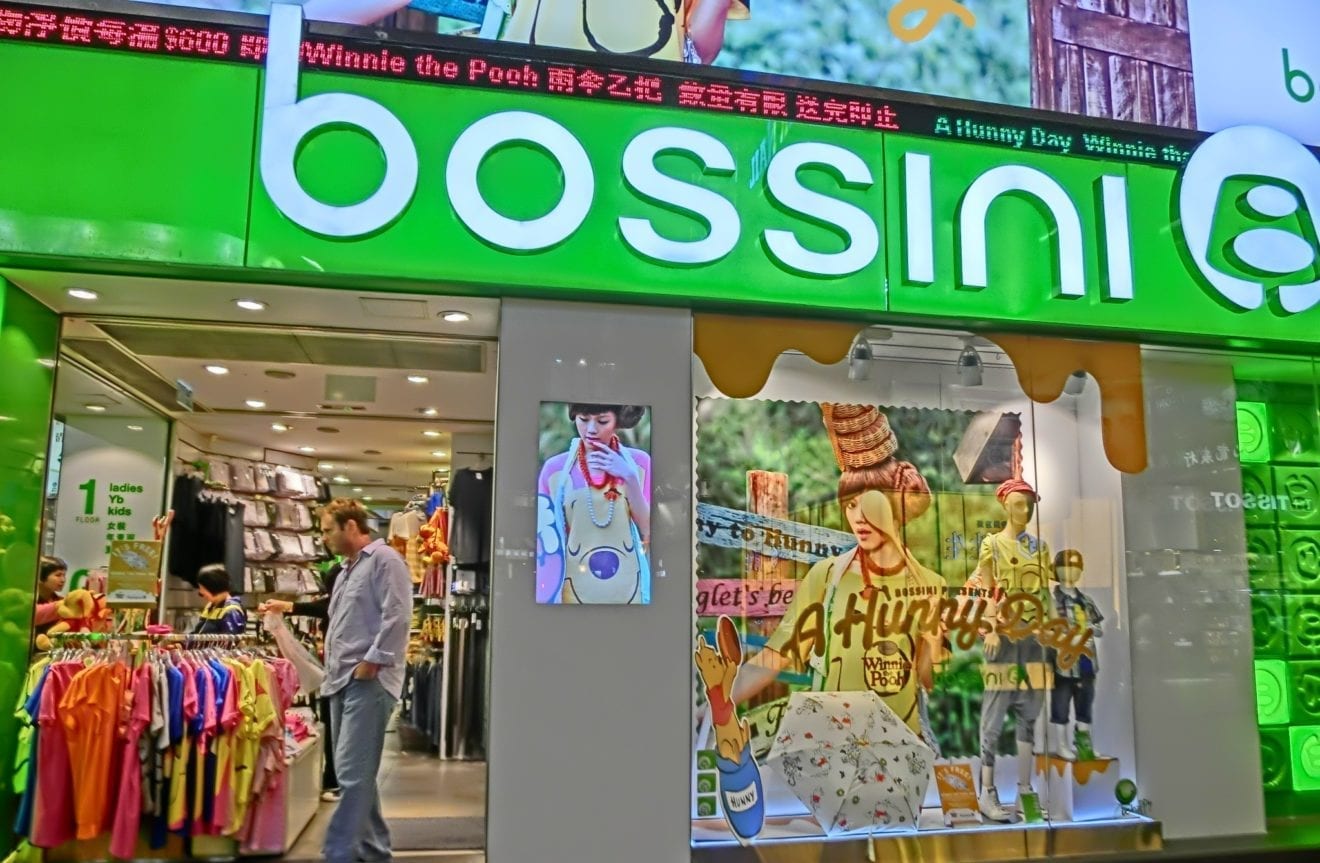
    While expecting a leap in profit because of a special circumstance, clothing retailer Bossini International Holdings had a “significant” decrease in revenue for its latest year of trading.

    The group reports an expected jump in profit ranging from 147 to 157 per cent for the year ended June 30, mainly because of a gain of about HK$267 million (US$34.4 million) on the disposal of a macau property and a leaseback arrangement.

    Excluding that gain, the group predicts a drop in profit of between 75 and 85 per cent compared with the previous year, attributed mainly to a drop in revenue resulting from fewer tourists in Hong Kong and Macau, and a strong Hong Kong dollar.

    Other factors were weak local consumer sentiment, an unseasonably warm winter and intensified competition in several core markets.

    Bossini’s audited annual results are expected to be announced late next month.

  • Jollibee Hanoi makes it five

    Jollibee Hanoi makes it five

    Jollibee Hanoi has opened its fifth outlet, taking its Vietnam store count to 81.

    “The outlet in To Hieu St in Cau Giay district is a key, strategic location for us to serve customers,” Tran Ngoc Hoai Thuong, PR manager at Jollibee Vietnam, said in an interview.

    jollibee

    Earlier, Jollibee Vietnam announced plans to add 20 outlets in the country every year, and that it would seek partners for further expansion through franchising.

    Jollibee Foods Corp (JFC), Jollibee’s parent company, has reported that its system-wide sales grew by 15.1 per cent in the second quarter compared to sales for the same period of 2015.

    As of June 30, JFC has a 50 per cent  interest in joint ventures with Highlands Coffee (Vietnam, Philippines), Pho 24 (Vietnam, Indonesia, Cambodia, Korea and Australia) and 12 Hotpot (China). It also has a 40 per cent interest in Smashburger that has 366 outlets, mostly in the US.

    JFC was operating 2528 restaurant outlets in the Philippines and more than 600 abroad, according to its latest financial report.

  • Korean fashion brands in Zalora pop-up

    Korean fashion brands in Zalora pop-up

    South Korean fashion brands are featuring in an online pop-up store on regional sites of online fashion portal Zalora.

    It’s all part of a concerted bid to expand recognition of Korean fashion bards across the broader Asia-Pacific region.

    Launched in Singapore, the Premium Korean Fashion pop-up shop is open until October in Zalora sites in Singapore, Malaysia, Indonesia, the Philippines, Hong Kong and Taiwan, according to the officials at the Korea Trade-Investment Promotion Agency (Kotra) and the Korea Fashion Association.

    Seventeen South Korean designer brands, which have been recognised for their competitiveness both at home and abroad, are showcasing their products on the pop-up store.

    A launch ceremony was attended by some 80 Southeast Asian fashion journalists and so-called power bloggers. It marks South Korea’s first marketing activity targeting the entire Southeast Asian region.
    At the event, Giulio Xiloyannis said there is growing interest in Korean fashion in Southeast Asia and that the opening of the pop-up store is not only a new attempt but also an important event for Zalora.

    A Kotra official said the trade agency will step up efforts to gain access to major online portals in an effort to make inroads into regional markets.

    “Southeast Asia is emerging as the next eCommerce market after China as youths account for a large portion of its population and regional economies are growing at a fast pace,” Lee Byung-woo, head of Kotra’s office in Kuala Lumpur. “Efforts will be made to help Korean brands gain a foothold there.”

  • Alibaba making moves to buy ShopClues

    Alibaba making moves to buy ShopClues

    Chinese internet giant Alibaba has been discussing the acquisition of Indian online marketplace ShopClues, which is valued at more than US$1 billion.

    Alibaba wants to merge the marketplace of Paytm, in which it has a stake, with larger rival ShopClues, reports The Times of India. The newspaper says Alibaba has several acquisition targets as it aims to firm up its presence in India against Amazon.

    Based in Gurgaon, ShopClues has raised about $250 million with investors including GIC of Singapore, Helion, Nexus Venture Partners and Tiger Global. It is positioned as an online flea market, selling cheaper and mostly unbranded merchandise.

    Former Zynga and Yahoo executive K Guru Gowrappan, who has been mandated to chart Alibaba’s growth in Asian markets (excluding China), is driving the merger-and-acquisition talks with the senior management of ShopClues, sources say.

    Meanwhile, Alibaba group, which holds a stake of about 40 per cent in Paytm, has started the process to separate the Noida-based company’s core payment business and smaller commerce business into two separate entities.

  • From loss to profit for Parkson Retail Asia

    From loss to profit for Parkson Retail Asia

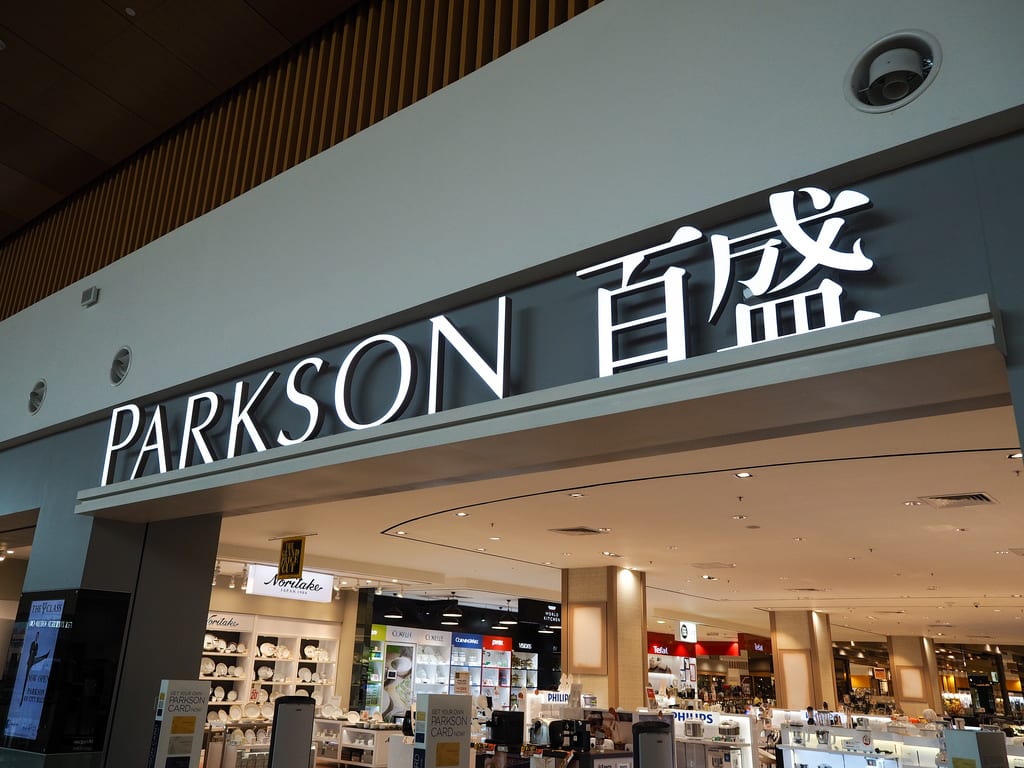
    Department store Parkson Retail Asia has managed a turnaround with profit before tax (PBT) of S$35 million (US$25.8 million) for the year ended June 30, compared to a pre-tax loss of $40.6 million the previous year.

    Profit was boosted by gain from a partial disposal of equity interest in Parkson Hanoi (PHCL) of $45.6 million. A subsidiary of the group, PHCL is now an associate company.

    On a same-store basis, PBT for the year fell by 46.9 per cent year-on-year to $17.4 million.

    For Malaysia, PBT declined by 28.9 per cent through negative same-store sales of -6.5 per cent and weak local currency; Vietnam had a pre-tax loss of $0.5 million with -2.9 per cent same-store sales; there was a pre-tax loss of $3.2 million in Indonesia; while Myanmar’s results were affected by uncertainty arising from redevelopment plans for the FMI Centre where the store is located.

    For the group’s fourth quarter, same-store sales grew 21.5 per cent in Malaysia, attributed to early festive buying arising from a shift in the Hari Raya calendar as well as the same quarter last year being hit by low sales following the introduction of the Goods & Services Tax.

    New concepts

    New concepts have been initiated, such as introducing Korean apparel, affordable private labels, and specialty shoe stores.

    “We have been consolidating our department store space by identifying non-performing stores with the view to closure upon tenancy expiry,” says Parkson.

    In Myanmar, the group had a 25 per cent decline in same-store sales, affected by plans to close the FMI Centre, while Vietnam had a 4.1 per cent decline for the quarter, with the discretionary retail environment difficult amid an increasingly crowded retail scene.

    Indonesia was more positive with 7.3 per cent growth in same-store sales, mainly because of early festive buying as a result of a shift in the Lebaran calendar.

    Overall, gross sales proceeds (GSP) and revenue for the quarter grew by 9.8 per cent and 10.9 per cent respectively to $232.1 million and $93.9 million. However, GSP and revenue declined by 10.2 and 9.4 per cent respectively to $967.7 million and $388.4 million.

    The group’s pre-tax loss for the quarter was $13.4 million. Contributing factors included impairment on fixed assets for two loss-making stores of $5.4 million, impairment on prepaid rental and rental deposit of $3.3 million, provision on deposit for a managed store in Ho Chi Minh City of $2.2 million, and the initial loss-making periods associated with new stores and businesses.

  • Isetan Philippines in planning

    Isetan Philippines in planning

    A Japanese department store operator has set its eyes on the Philippines to build commercial-residential facilities by 2022.

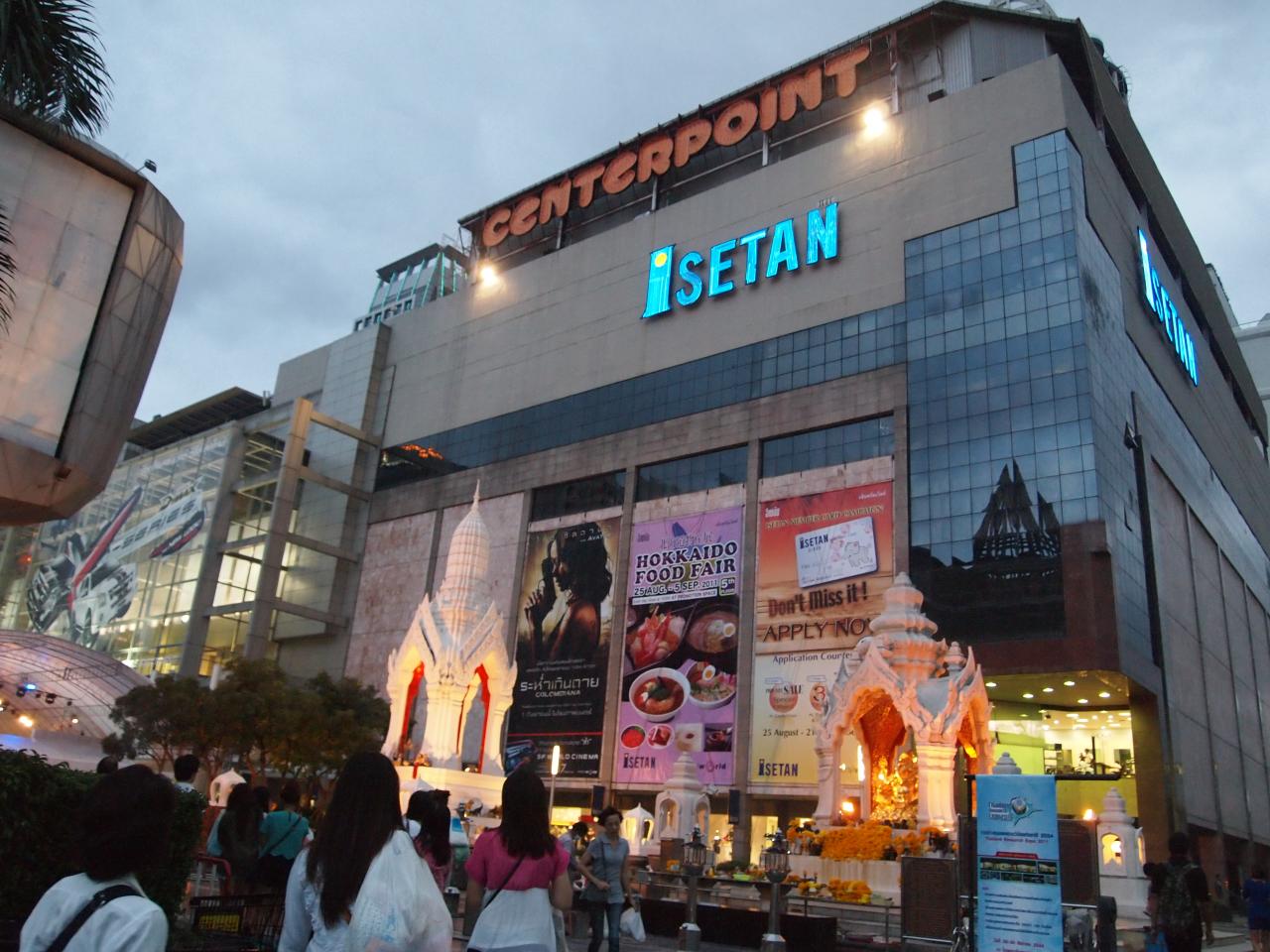
    Isetan Philippines will work with Nomura Real Estate Holdings to build properties in Manila. The project is projected to reach approximately $500 million.

    The developer, a rival of Takashimaya, plans to erect four 40-story condo buildings with more than 1500 residential units on a 15,000 sqm lot.

    Isetan’s parent, Isetan Mitsukoshi, will operate a department store and other commercial facilities on the lower levels of the buildings. The retail giant plans to offer products developed in-house in addition to local favourites..

    According to reports, the Philippine project is part of Isetan Mitsukoshi’s Asia’s expansion amid Japan’s shrinking domestic market.

  • What lies behind the Gap sales decline

    What lies behind the Gap sales decline

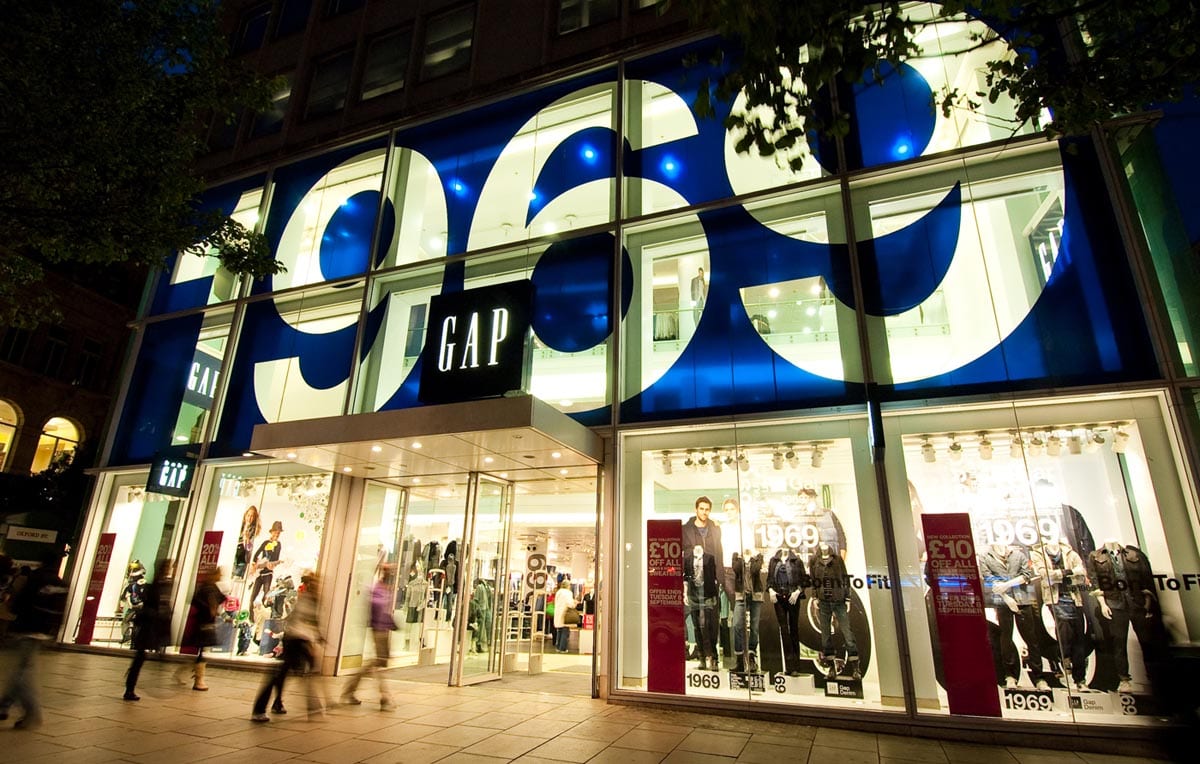
    That the overall pace of the Gap sales decline has moderated since both last quarter and last year is the only – very small – crumb of comfort for Gap Inc in its latest set of results.

    Gap last week reported a profit of US$125 million for the quarter, down from $219 million a year earlier. Total revenue declined 1.2 per cent to $3.85 billion.

    The total sales decline in the US is actually worse than last year with much heavier declines at Banana Republic and flat growth at Old Navy dragging down performance.

    Looking in stores it is not hard to see why this is the case. The Gap brand has no sense of newness and heavy discounting and constant promotion still appear to be the only tools the company has to drive trade. From Conlumino’s data it is clear that in the US Gap is not only losing customers but the customers it has retained are visiting less and spending less – mostly thanks to taking advantage of offers and deals. This is a dangerous position that erodes sales and profit, and suggests Gap has not even begun to remedy its underlying problems.

    Although it is clear the company is serious about creating a step change at its main brand, and while the autumn “#DoYou” campaign and its associated merchandise represent a small step forward, Gap has failed to convince it has done enough to correct the problems in its business.

    While Gap has troubles, Banana Republic is even more problematic. Over the quarter total sales in the US fell by 7.1 per cent, and on a global basis comparable sales for Banana shrunk by 9 per cent off the back of a 4 per cent decline in the prior year. The assortment is at the heart of Banana’s issues and symbolises a brand that has simply lost its way. The spring and summer collection is best described as predominantly bland with a generous sprinkling of oddness thanks to garments with strange cuts and patterning. Customers are confused and, of course, increasingly unwilling to pay the premium that Banana Republic once commanded. As a consequence the brand is falling into exactly the same trap as Gap as it resorts to discounting and deals to shift merchandise.

    Banana Republic is a smaller part of the group, but it is one in which a turnaround will be difficult to engineer. For this reason, it is getting set to completely shutter its UK, and possibly European, operations. As much as this retrenchment is an admission of failure, it is a necessary contraction given the parlous state of the business.

    Old Navy, which once delivered consistently positive numbers, spluttered again this quarter with flat growth in the US. While this brand is in a much better position than its siblings, it has become much less consistent in its marketing and instore merchandising, something which is reflected in its choppier sales numbers.

    Gap Inc is a troubled retailer without much of a plan – a plan that is desperately needed as its net profit decline of 43 per cent in this quarter aptly shows.

  • Sennheiser Singapore store an Asian first

    Sennheiser Singapore store an Asian first

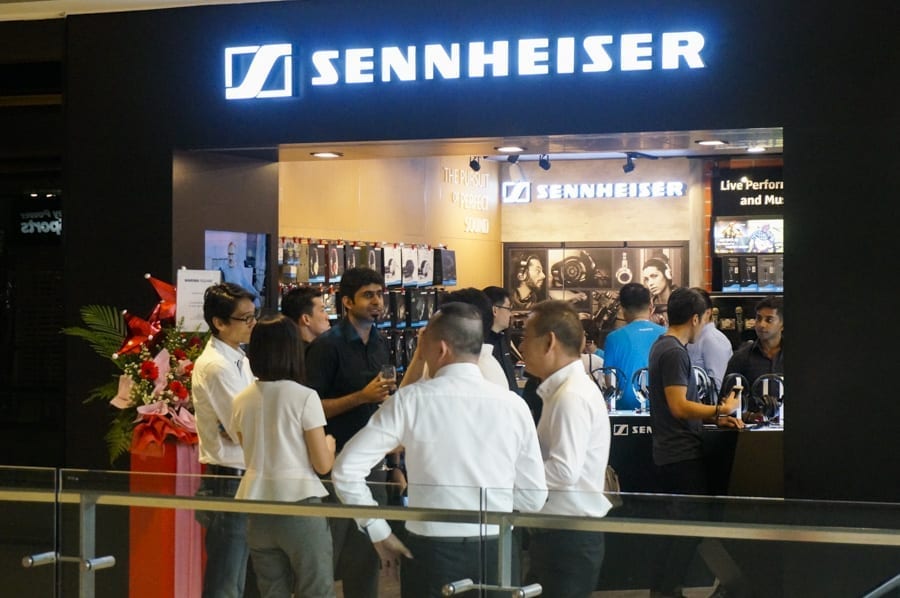
    Headphone brand Sennheiser Singapore has opened its first store, at Marina Square.

    After its home country Germany, the store is only its second fully owned outlet, but it is the only one to offer a one-week free trial service.

    sennMS-10 (1)

    Customers can take home the HD650, HD800S and Momentum Wireless models to trial for a week. The company says this will allow customers to experience product features to help them decide which model to buy.

    Sennheiser also offers a pick-up and drop-off  point for customers who want to have their products checked and/or repaired. This saves them having to go to the company’s service center at Alexandra Technopark.

    Compared to the previous outlet run by a distributor, the new Sennheiser brand store offers a wider range of products. As well as headphones there are microphones – models mainly used by musicians and video journalists – as well as enterprise audio products.

    “Singapore is a key market for us, and this is an integral part of our regional go-to-market strategy,” says Sennheiser Asia sales and marketing VP Martin Low.