Tag: asia

  • Raja Ampat launches tourism and conservation website

    Raja Ampat launches tourism and conservation website

    The government of Raja Ampat, West Papua, has launched a website on tourism and conservation to support tourism services in the region.

    The government is striving to boost innovation, Head of the Public Service Regional Office Technical Implementation Unit (BLUD UPTD) Water Conservation Area Raja Ampat Adrianus Kaiba noted in a press release received by Antara in Manokwari on Thursday.

    A technical institute, since its establishment in 2015 and under the coordination of the Department of Marine and Fisheries Raja Ampat, has been given the authority to manage water conservation in the area.

    He remarked that it was committed to improving services. Launching a website is rated as a step forward to improve the quality of services offered to both domestic and foreign tourists.

    “As a conservation area, we felt it was important to manage conservation in a professional and sustainable manner for the preservation of nature in this area,” he pointed out.

    He emphasized that the website was launched by Raja Ampat Regent Faris Abdul Umlati at Kampung Saonek, South Waigeo District, Wednesday (Aug. 17). It is part of a series of celebration activities to commemorate the 71st anniversary of the countrys independence.

    Kaiba said any information on water conservation in Raja Ampat can be updated on www.kkpr4.net, which is developed by BLUD UPTD.

    Meanwhile, Umlati highlighted that the website provides information on various conservation initiatives, scientific research, as well as water conservation activities being carried out in Raja Ampat in a sustainable manner.

    He believes the website will help domestic and foreign tourists obtain information regarding Raja Ampat, mainly related to water conservation.

    Moreover, Umlati remarked that the website is important to ensure that the areas biodiversity is always maintained and can be enjoyed by future generations.

    The Raja Ampat Islands are located at the northwestern tip of West Papua Province. They are located right in the heart of the coral triangle and are the worlds center of marine biodiversity.

    The results of ecological studies by The Nature Conservancy and Conservation International showed that Raja Ampat is home to 75 percent of the coral reefs in the world, with 553 species of coral and 1,437 species of reef fish.

    The waters in the area have abundant resources to provide sustenance and a means of livelihood for more than 40 thousand people spread across 135 villages in Raja Ampat.

    Local communities in Raja Ampat have cultural links and strong traditional ownership rights over the land and sea territory.

    Local authorities, through the BLUD UPTD Water Conservation Area, continue to ensure that water conservation is being carried out effectively, efficiently, and professionally.

    This step is being taken to ensure preservation of the natural resources and to improve the experience of tourists visiting the area to enjoy its natural beauty.


  • Tokopedia Tops Indonesia`s E-Commerce Website List

    Tokopedia Tops Indonesia`s E-Commerce Website List

    Seven years after its establishment, start-up company Tokopedia continues to strengthen its foothold in Indonesia’s e-commerce market. Tokopedia CEO William Tanuwijaya said that there are currently one million registered sellers in Tokopedia.

    “Over 16.5 million items are delivered monthly to buyers in Tokopedia,” William told Tempo, Wednesday, August 17, 2016. “The items are sent [to various regions] from Sabang to Merauke. The volume reaches trillions of rupiah per month,” William said during Tokopedia’s 7th birthday party at Pullman Hotel Central Park, Jakarta.

    William said Tokopedia has successfully become Indonesia’s most popular e-commerce website. Per SimilarWeb data, Tokopedia (9th in Indonesia) ranks above Twitter and Wikipedia. Data from Appnie also show that Tokopedia app is used most often compared to other e-commerce websites, such as Lazada (16), Bukalapak (17), Blibli (22), Elevenia (18), or Mataharimall.com (20). Its total active users are twice of other e-commerce website users.

    William said Tokopedia was started with a dream of providing an equal opportunity for all Indonesians. “Today is Tokopedia’s seventh year in realizing the dream,” William said.

    Willian said consumer behaviour has changed in the past few years. “Two years ago, mobile visitors were 56 percent and contributed to 29 percent of purchase. Yet, in the first half of 2016, 79.55 percent of visit were mobile and the transaction volume hit 73.5 percent,” he said. Today, a total of 1.3 billion pages are opened monthly in Tokopedia.

    Tokopedia is currently making efforts to help vendors by establishing cooperation with banks to distribute loans of up to Rp18 billion per vendor.

    “Our mission is to ensure all Indonesia a digital access to economic equality,” William said.

  • HK netizens support smart city push

    HK netizens support smart city push

    More than 50% of local internet users believe it is important for the government to transform Hong Kong into a smart city, according to a HKIRC survey.

    Hong Kong internet users believe that a smart city transformation will help them save time (79.6%), enhance the quality of life (77.4%) and live green (62.4%).

    HKIRC revealed the results of the survey at its eighth Digital Marketplace seminar at Cyberport last week, which had the theme of “Smart City Business ─ Shaping Our Future.”

    At the event speakers from MTR, PwC Advisory Services, Future Impact Lab Limited, The Chinese University of Hong Kong, JOS, Realmax Hong Kong, Smart City Consortium, Cyberport and Octopus Cards shared their thoughts on various smart city topics.

    The survey also showed that over 70% of respondents are interested in smart technologies in the near future.

    Among those willing to spend 11% or more of their monthly incomes, 38.2% would like to spend on smart healthcare or education, 37.6% on smart living, 31% on smart safety, 29.2% on smart finance, 29% on smart mobility and 27.7% on smart utility.

    HKIRC noted that this implies there is massive business potential for startups and enterprises in the emerging smart city technology space.

    But despite seemingly strong support for smart city policies, respondents believe there is still plenty of room for improvements in terms of the breadth and depth of products and services in smart government, smart living, smart mobility and smart economy.

    “The survey results echo the government’s spearhead action in Smart City development.” HKIRC chairman Simon Chan said.

    “This year’s DMP demonstrates a strong demand from the public for Smart Technologies, and the business community is ready to launch products and solutions to meet the needs. We are happy to see that the city has started to emerge itself into a Smart City.”

  • Qihoo 360 launches new advertising initiatives

    Qihoo 360 launches new advertising initiatives

    Chinese internet company Qihoo 360 is rolling a number of initiatives to help CMOs better connect with Chinese netizens.

    The company, named by iResearch as the number one provider of internet and mobile security products in China based on user base, is looking to make advertising effective in China’s fast-growing online market.

    Many global brands are looking to capture the potential of China’s large pool of netizens. With global brands competing with large local brands, CMOs need to fine tune their digital strategy in a market where most consumers prefer to shop online, and increasingly via their mobile phones.

    Qihoo 360 has built one of the largest open internet platforms in China to monetize its massive user base, which is 99.6% of Chinese netizens, primarily through online advertising and through internet value-added services on its open platform. Through its Qihoo 360 International Advertising Unit, the company services over 250 advertising business customers in Hong Kong and overseas markets.

    The new product updates include Huajiao, a livestreaming app showcasing user-generated content that is now available in Hong Kong. Another product, 360 Mobile Security, will soon be available for advertising placement in Hong Kong for selected advertisers, allowing them to precisely target Chinese tourists during their travels.

    Six business core business strategies were also announced for 2H 2016, including “more innovative products”, “more professional support in planning”, “more responsive customer service”, “more comprehensive technology upgrades”, “more powerful voice on behalf of the market”, and “more effective tools and systems.” they aim to help CMOs to target Chinese online customers more effectively.

    “Today, we’re pleased to showcase the power of our big data analytics services, together with the announcement of our latest business strategies and future direction – assisting brand development and boosting advertising effectiveness with branded content,” said Dr. Michael Yang, chief business officer of Qihoo 360.

    “Qihoo 360 connects with 96.6% of Chinese netizens. We aim to help Hong Kong and overseas brands effectively and accurately connect with the right audience in the China market through a comprehensive product portfolio,” he said.

  • StarHub brings back 12GB+ mobile data bundles

    StarHub brings back 12GB+ mobile data bundles

    Singapore’s StarHub has launched a new range of plans bundling large volumes of mobile data with 1Gbps fiber broadband subscriptions.

    The operator’s new SurfHub plans include between 12GB and 24GB of 4G data as well as the 1Gbps home broadband plan.

    Prices start at under S$100, which is about half the cost of a standalone 12GB mobile plan, StarHub head of product and marketing Wang Li-Na said.

    “We know customers miss the freedom that huge data bundles offer and wish they were as affordable as before. Faster 4G technologies have catalysed the adoption of data-intensive services, and our customers are now sharing more and watching for longer on their smartphones, she said.

    “With SurfHub, we want to continue giving our Hubbing customers the best value, which is what StarHub is known for.”

    The plans also come with between 150 minutes and 700 minutes of talk time and 1000 to 1500 SMS, and offers for 50% off value-added services including international roaming, multiSIM and the StarHub Go Select online streaming service.

    StarHub has also increased the mobile data allocation for its five-services-in-one pack HomeHub Go – which combines 3G and 4G mobile broadband, fiber home broadband, fiber TV and home phone services – to 15GB.

  • Vodafone Fiji launches LTE-Advanced

    Vodafone Fiji launches LTE-Advanced

    Vodafone Fiji has become one of the first operators in the Pacific to roll out an LTE-Advanced network.

    The operator has gone live with an LTE-A network that currently covers 65% of the population, and aims to expand this to 85% by Christmas. The network offers theoretical peak downlink speeds of 225Mbps.

    Customers with compatible smartphones will be able to take advantage of the LTE-A network without any additional costs or setup requirements.

    Vodafone has had a presence in Fiji since 1994, and has now been the first mobile operator in the country to roll out every generation of mobile technology since upgrading from 2G to 2.5G GPRS. The company first launched 4G services in the market in 2013.

    “[The rollout] ensures that Fiji is on par with the developed countries in the world and remains on the forefront of digital revolution,” Vodafone Fiji CEO Pradeep Lal said.

    “Billions of people across the world are already online and more are expected to join them in the next few years as broadband coverage expands transforming the world into a highly connected and interactive world. The world is fast evolving with the power of mobile communication and Internet of Things are no longer seen as a distant future but more so is happening now.”

  • M1 commences Singapore’s first HetNet rollout

    M1 commences Singapore’s first HetNet rollout

    Singapore’s M1 has announced it has commenced Singapore’s first commercial HetNet rollout in collaboration with Nokia.

    As part of the rollout, M1 plans to progressively deploy Nokia’s Flexi Zone small cells and Wi-Fi equipment at hundreds of high-traffic hotspots across Singapore, including mass transit stations, malls and popular outdoor areas.

    The operator will also use small cell technology to bring connectivity to hard-to-reach areas including car parks, basements and parks.

    M1 plans to use LTE-WiFi Aggregation (LWA) technology to deliver peak download speeds of more than 1Gbps over its 4G+ network by 2017.

    The rollout follows HetNet trials earlier in the year at multiple locations including three MRT stations. During the trial, download speeds were improved by 60%.

    M1, MyRepublic, Singtel and StarHub have all been working with the Infocomm Development Authority (IDA) of Singapore on nationwide HetNet trials. M1’s participation has included trials of HD VoWiFi, as well as Wi-Fi on public buses.

    “The results from our HetNet technology trials were positive. 90% of users enjoyed a better mobile experience, with faster download and upload speeds. We are pleased that the trials have given our partners such as M1 useful insights and confidence to further enhance the mobile experience through commercial HetNet deployment,” IMDA chief executive designate Gabriel Lim said.

    The IMDA is due to be formed through the merger of IDA with the Media Development Authority (MDA) of Singapore.

    “As Singapore moves towards a Smart Nation, we look forward to working closer with companies in the tech, engineering and R&D space to develop solutions that can enhance connectivity and improve Singaporeans’ lives,” Lim added.

  • Electric car charging station companies issue warning over VW settlement

    Electric car charging station companies issue warning over VW settlement

    Electric vehicle charging companies are calling for independent oversight of the $2 billion Volkswagen AG is required to invest in clean car infrastructure, saying VW should not have the power to shape the nascent electric car charging space.

    The German automaker agreed to invest the money, which includes $1.2 billion nationally and $800 million in California, as part of its penalties for equipping hundreds of thousands of its diesel vehicles sold in the United States with software designed to cheat tailpipe emissions tests.

    While charging station companies called the money a potential “game changer,” they worry that if it is misspent, it could hurt competition.

    “The agreement shouldn’t pick winners and losers, especially given that this emerging market transition will in no small part define 21st century transportation,” twenty eight companies, including ChargePoint, EV Connect and Electric Vehicle Charging Association, said in a letter to the U.S. Justice Department on Friday.

    The letter, seen by Reuters on Tuesday, said an independent administrator is key to ensuring that the program treats all industry participants, regardless of business model and technology, fairly.

    VW did not immediately respond to a request for comment.

    “The program should be structured to benefit drivers in California and across the nation, not enable the settling defendants to enter or influence the markets for (zero emission vehicle) charging and fueling equipment and services,” the letter said.

    It said regulators should earmark some of the funds for a rebate program to incentivize employers, apartment owners, workplaces and other facility managers who want to install EV charging stations.

    A shortage of charging stations at workplaces and multi-unit apartment dwellings is seen as a key hurdle to the widespread adoption of electric vehicles.

    VW’s plan for spending the $2 billion, which has yet to be released, will be overseen by the California Air Resources Board and the U.S. Environmental Protection Agency.

  • Honda hoping for 20% industrywide sales jump on Indonesian tax amnesty

    Honda hoping for 20% industrywide sales jump on Indonesian tax amnesty

    Indonesia’s tax amnesty could boost industrywide car sales by a fifth as people spend their newly declared wealth on big-ticket items, according to the local unit of Honda Motor Co.

    “The car ownership ratio in Indonesia is relatively low and there’s enough room for producers to sell more,” Jonfis Fandy, head of sales and marketing at PT Honda Prospect Motor, said in an interview Friday at the Gaikindo Indonesia International Motor Show.

    “If the tax amnesty program proves to be a success, we could see an increase of as much as 20 percent next year,” he said as people crowded around the latest models at the annual expo in Jakarta.

    Indonesia’s central bank estimates the reprieve, which runs through March 2017, could lure as much as 560 trillion rupiah ($43 billion) of undeclared income back to the country from overseas.

    If the amnesty lives up to those projections, it will lift economic growth and enable the government to continue with an ambitious infrastructure program.

    With a population of 256 million, Indonesia is Honda’s third-biggest overseas market after the U.S. and China.

    Honda, which is No. 2 in the Indonesian car market behind Toyota Motor Corp., posted 35 percent sales growth in the first half, official data show, compared with 1.2 percent expansion for the industry as a whole.

    Some of Honda’s fastest expansion is occurring in outlying areas of the archipelago, such as Sulawesi in eastern Indonesia, Fandy said. If the 20 percent growth estimate comes to pass in 2017, that would be the sharpest growth since 2012.

    Total car sales will rise to 1.05 million units in 2016 from 1.01 million last year, Yohannes Nangoi, chairman of Indonesia’s automotive industry association, known as Gaikindo, told reporters on Aug. 11.

    PT Astra International, which manufactures and distributes Toyota cars in Indonesia, recorded a 4.1 percent expansion in sales in the first half, Gaikindo figures show. Toyota controls 33 percent of the market, with Honda at 21 percent.

    “The comeback of the Indonesian market is extremely good for Japanese automakers” struggling with a shrinking home market, said Koji Endo, a Tokyo-based analyst at SBI Securities Co. “Honda may benefit the most as it has a big share in the motorcycle market there and people tend to step up to vehicles of the same brand.”

    Southeast Asia’s largest economy beat estimates to expand 5.18 percent in the second quarter from 4.92 percent in the previous three months. Bank Indonesia is forecasting full-year growth of 5.4 percent, including an estimated 0.3 percentage point increase from the amnesty.

    While the tax reprieve could boost automotive sales, it’s too early to tell how successful it will be and if Honda’s projection is achievable, said Isnaputra Iskandar, an analyst at PT Maybank Kim Eng Securities in Jakarta. Iskandar raised Astra International to a buy this month, citing the improving economy and a recent rule reducing the minimum level for hire-purchase deposits for vehicle purchases. Honda’s Indonesian unit isn’t listed.

    Honda sold 109,662 cars in Indonesia in the first half and is targeting 180,000 for the full year, said Fandy, who oversaw an almost quadrupling of sales in the 10 years through 2015. The company has the capacity to produce 200,000 cars a year at its manufacturing plant in Karawang, east of Jakarta, and has the flexibility to increase that to 240,000, he said.

    “Indonesia is among the few countries in the world with a bright future for the automotive industry,” Fandy said.

  • Estee Lauder’s quarterly sales miss on lower retail traffic

    Cosmetics maker Estee Lauder Cos. reported a smaller-than-expected rise in quarterly sales, hurt by a slowdown in sales in the Americas as fewer customers visited department stores and tourist spending declined.

    Shares of the company were down about 4 percent at $91.34 before the bell on Friday. Up to Thursday’s close, the stock had risen 13.5 percent in the past year.

    Sales in the Americas, its biggest market, rose 1.4 pct to $1.1 billion on a reported basis, its slowest growth in four quarters.

    Lower retail traffic mainly affected the company’s “heritage” brands Estee Lauder and Clinique, and a few M.A.C freestanding stores.

    Demand for its skin care products continued to weaken, as the company cited overall global slowdown in the category. Sales from its namesake brand and Clinique were also hurt by lower sales in some Asia-Pacific countries, mainly Hong Kong.

    “Social and political issues, currency volatility and economic challenges are affecting consumer behavior in certain countries, such as Hong Kong, France and some emerging markets,” the company said.

    Rival L’Oreal SA earlier reported second-quarter sales growth marginally below forecast as the company said Western Europe was being held back due to a “very difficult market in France.”

    Net income attributable to the company fell to $93.5 million, or 25 cents per share, in the quarter, from $153 million, or 40 cents per share, a year earlier.

    Net income was hurt by restructuring and other charges. Excluding items, the company earned 43 cents per share. Net sales rose to $2.65 billion from $2.52 billion. Analysts on average had expected a profit of 40 cents per share and revenue of $2.66 billion.

    New York City-based Estee Lauder said its expects fiscal 2017 adjusted profit to be between $3.38-$3.44 per share, missing analysts’ estimates of $3.53.

    The company also said it expects to incur restructuring charges of about $80 million-$100 million in fiscal 2017, related to its Leading Beauty Forward strategy.

    As part of its Leading Beauty Forward strategy, the company had earlier approved restructuring initiatives to exit businesses in certain markets and channels of distribution while also reducing its workforce globally.


  • Singapore makes cashless payments push

    Singapore makes cashless payments push

    In 2014 Singapore was one of the first countries in the world to build a 27/7, real-time interbank fund transfer system, called Fast.

    However, cash in circulation is 8.8% of GDP, compared to 4.4% in Australia and 2.12% in Sweden. Nearly 13 cheques per person were written in the country in 2014, compared to seven in Australia and effectively none in Sweden.

    According to research from the Monetary Authority of Singapore and KPMG, the social costs of this heavy reliance on cash and cheques is around 0.5% of GDP, or S$2 billion a year.

    In a speech, MAS managing director Ravi Menon says that the fact that Singapore is so far behind these other countries shows that the Fast infrastructure is “grossly under-utilised”.

    One of the key reasons for this is that people do not know the bank account numbers of people that they want to send money to. Therefore, MAS and the country’s banks are developing a Central Addressing Scheme (CAS) that will allow payments to be made through Fast using only a recipient’s mobile number, or NRIC number, or Unique Entity Number.

    “If all goes well, by this time next year, we will no longer need to remember bank account numbers for a majority of our electronic fund transfers,” says Menon.

    In his speech, the MAS MD also says that cost is holding back the take up of Fast among small businesses. Some banks charge up to S$10 to transfer funds through the system while cheque payments are free.

    Menon also bemoaned Singapore’s complicated point-of-sale situation, which sees many stores cluttering up counters with multiple terminals to accept different cards.

    To tackle this, the country is pushing ahead with a unified POS terminal that can read all kinds of cards at retail and hospitality outlets. About 1000 of them have been deployed at convenience stores such as 7-Eleven, with more to follow.

    Meanwhile, Singapore’s Land Transport Authority is teaming up with MasterCard for a pilot that will see participants pay for their train and bus journeys by tapping their contactless credit and debit cards.

    On MAS’s own role, Menon says that the central bank will streamline and strengthen the payments regulatory framework to create a single and modular regime that will be applied on an activity basis, rather than specific payment systems.

    KPMG’s report also recommends strengthening the governance model and creating a national payments council that fosters innovation, competition and collaboration, coordinating key initiatives, such as promoting interoperability and adopting common standards.

  • Galaxy Note 7 most costly in Europe, cheapest in Korea

    Galaxy Note 7 most costly in Europe, cheapest in Korea

    Samsung Electronics’ Galaxy Note 7, which was launched Friday globally, is the most expensive in Europe and cheapest in South Korea, according to the tech firms’ online stores Friday.

    The new phablet costs around 1.06 million won ($948) in Germany, 1.07 million won in France and Spain and 1.09 million won in the UK, according to Samsung’s online stores, reports the Korea Herald.  The prices set for European consumers are around 70,000 won to 100,000 won higher than the price set for Korean consumers. The Galaxy Note 7 is being sold for 988,900 won here, along with freebies such as the Gear Fit 2.

    “Prices in Europe are normally set higher than in other regions, considering higher consumer prices in the region,” Samsung’s official said, adding, “The prices are not entirely set by Samsung but with local mobile carriers.”

  • Tesla opens website for online reservations in Korea

    Tesla opens website for online reservations in Korea

    Tesla Motors has begun taking online reservations in Korea for its electric cars, Model S, Model X, and Model 3, the company said Friday.

    With a deposit of 2 million won ($1,800) for the Model S, 5 million won for Model X and 1 million won for model 3, customers can make a reservation, it said in the first statement released for Korean press.

    “Korean customers have already shown a great interest in Tesla through reservations for Model 3,” it said. The model 3 is a Tesla electric vehicle that will be available starting at $35,000 in 2017.

    Test drives of the Model S in Korea will be available at its retail stores and events at the end of this year, the US carmaker said, without naming the location of stores. The model X will be showcased at the beginning of 2017, it added.

  • Thailand Post plans B500m upgrade

    Thailand Post plans B500m upgrade

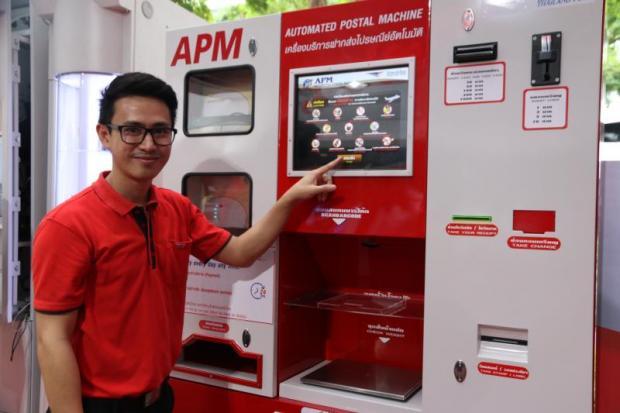
    A Thailand Post staff member shows an Automated Postal Machine — one of several new products and services the agency is offering to enhance e-commerce and to pamper new generation users.

    Thailand Post is spending 500 million baht on upgrading its core information technology (IT) automation systems and distribution centres to boost service innovation for the next-generation of online merchants and digital lifestyle consumers.

    The move is intended to fight back against the influx of no-frills messenger service apps like Lalamove, a Hong Kong-based delivery-matching mobile application, and parcel delivery service providers looking to capitalise on Thailand’s burgeoning e-commerce market.

    Of the total 500 million baht in spending, 300 million will go towards upgrading IT automation systems. The remaining 200 million baht will go to improving flexibility within and across its distribution centres.

    “We’re also in the process of transforming ourselves to become more digital in a drive to improve services and maintain our leadership in the home delivery service market,” said Samorn Terdthampiboon, president of Thailand Post.

    Thailand Post plans to roll out a slew of innovative services over the next seven months.

    For instance, she said PromptPost, a pre-registration mobile app service for high volume parcel delivery, will allow users to reduce the parcel processing time from eight seconds when they employ the service at a post office to two seconds when using Thailand Post’s semi-automated processing counters.

    Mrs Samorn said Thailand Post will soon provide an e-money service called THP Card, which allows people to use a card to pay for all Thailand Post services at its post offices across the country.

    Customers can also top up their cards at Thailand Post locations nationwide.

    She added Thailand Post plans to apply for an operating licence with the Bank of Thailand to provide an e-wallet service in the near future.

    Thailand Post has expanded its cross-border trading and e-commerce services to Indochina, crossing the Cambodian, Laotian and Myanmar borders to reach Chinese consumers.

    Mrs Samorn said Thailand Post is ready to enter Asean Economic Community (AEC) markets following a comprehensive organisational restructuring and the implementation of its enhancement schemes.

    Cross border revenue represented 14% of Thailand Post’s total, boasting bright prospects for revenue growth thanks to the booming business-to-business e-commerce market.

    Up to 37% of cross border revenue comes from its mail delivery service, and 6% from its mail system used to send financial statements and business letters to the retail and financial sectors.

    Mrs Samorn said Thailand Post expects its revenue to grow by 22% to 24.3 billion baht this year. Net profit is expected to reach 3 billion baht this year.


  • Newcomers try to tap into Indonesia’s niche motorcycle market

    Newcomers try to tap into Indonesia’s niche motorcycle market

    New players in the premium motorcycle business are optimistic that they can tap into the Indonesia market despite the sluggish sales the country has been experiencing.

    Garansindo Euro Sports, the sole distributor of Italian luxury motorcycle maker Ducati and French Peugeot Scooters, lined up several new models at the Gaikindo Indonesia International Auto Show (GIIAS) in Serpong, Banten, in an attempt to entice people in the middle- and upper-income brackets.

    Garansindo became Ducati’s sole distributor in the country in January, taking over from PT Supermoto Indonesia, while Peugeot Scooters made its Indonesian debut in 2015.

    “People tend to buy new vehicles in August, plus economic conditions seem better now,” Garansindo managing director Dhani Yahya told The Jakarta Post on Monday.

    Indonesia’s economy rose to 5.18 percent on an annual basis in June from a yearly rate of 4.91 percent in March, fueling optimism that recovery is under way. However, the country’s motorcycle sales dropped 27.6 percent year-on-year in July, with 305,153 units sold, a more than 40 percent slump from the previous month.

    Astra Honda Motor (AHM), the country’s leading motorcycle manufacturer, said, however, that the domestic market for premium bikes was still promising and expected its marketing of its big bike model BR250RR to strengthen its grip in that segment.

    At the country’s biggest auto expo, Ducati rolled out four new motorcycles in the 959 Panigale, Hyperstrada, Hypermotard 939 and Xdiavel S models, priced at Rp 658 million (US$50,008), Rp 570 million, Rp 515 million and Rp 988 million, respectively.

    Apart from the new models, Dhani said that it was banking on the Ducati Scrambler Sixty2, which made its Indonesian debut in April, to meet demand for entry-level premium motorcycles.

    The Scrambler Sixty2, named after the year when Ducati first produced its Scrambler model, is equipped with a 400 cc air-cooled engine and is priced at Rp 219 million, discounted to Rp 199 million for GIIAS visitors.

    “We see the price as affordable for middle-income people between 30 and 40 years old, such as managers and entrepreneurs wanting to upgrade their style,” Dhani said.

    In May, Garansindo opened up its flagship store in the elite Kemang, South Jakarta, said to be Ducati’s largest dealership after its outlet in New Delhi, India.

    The 3,000 square-meter flagship store is also equipped with Ducati’s one-stop service, spare parts provider and certified used-bike-reseller in the country.

    Garansindo also relies on the Peugeot Django 150 model to tap into Indonesia’s growing premium scooter market. At the expo, Garansindo showcased three kinds of Django 150: the Django Sport, Django Evasion and Django Allure, priced at Rp 40 million, Rp 41 million and Rp 43 million, respectively.

    Indian motorcycle manufacturer Royal Enfield, which entered Indonesia in January, used the GIIAS opening last week to introduce its new Himalayan motorcycle. The brand currently has four types of motorcycle sold in Indonesia — Bullet, Classic, Rumbler and Continental GT — with prices ranging from Rp 64 million to Rp 172 million.

    “We are currently focusing more on introducing the brand and encouraging people to try and feel the riding experience using our products,” said Distributor Motor Indonesia managing director Ade Sulistioputra, whose company is the sole distributor of Royal Enfield in the country.

    Meanwhile, Russian heavy sidecar motorcycle manufacturer IMZ-Ural, which made its Indonesian debut at the expo, is upbeat that it can expand its market in Indonesia after achieving overseas success in several regions such as the US, Australia, Europe and South America.

    Ural Indonesia CEO Michael Sofyan said the company targeted premium motorcycle buyers in the country as its segment, hoping that Ural’s unique design, which was initially tailored for Russian military officers, would lure them into purchasing its products.

    “We are trying to reach big bike communities first,” Michael told the Post.

    Fifty-nine-year old Affandi Permana, a visitor at Ural’s booth at the expo, said that he was very eager to purchase the maker’s military-styled Gear-Up model, which is priced at Rp 405 million. “The Gear-Up model represents masculinity,” Affandi said.