Tag: asia

  • Survey shows carriers’ top picks for SDN

    Survey shows carriers’ top picks for SDN

    For global carriers, Cisco/Tail-f, Nokia and Ciena—including Cyan—are the top SDN vendors, according to a survey released by IHS Markit.

    The IHS Markit survey interviewed global service providers that have deployed software-defined networking (SDN) and network functions virtualization (NFV) or will do so in the future.

    “In our survey of global carriers, Cisco/Tail-f, Nokia and Ciena led all vendors in unaided brand awareness for SDN orchestration software,” said Michael Howard, senior research director and advisor, carrier networks at IHS Markit.

    “And Cisco/Tail-f and Nokia were also tops in SDN hardware and software under evaluation.”

    The survey explores SDN and NFV deployment timing, supplier types, perceived top vendors and operator ratings of SDN and NFV manufacturers on nine criteria.

    Howard said over three-quarters of operator respondents will use telecom equipment manufacturers, among other supplier types, to supply SDN hardware and software for their networks.

    “Carriers envision a world of multi-supplier SDN and NFV, with centralized orchestration of network services and equipment, and new control mechanisms and network architectures. They’ll use a variety of suppliers to avoid vendor lock-in,” the analyst added.

    More than 40% of survey respondents will buy from each of the following supplier types: specialized SDN vendors, open source distribution vendors, SDN application software specialists, data center virtualization/orchestration software vendors and virtualized network functions (VNF) software specialists.

    The top-ranked criteria service providers use to select an SDN vendor include product reliability, service and support, technology innovation, price-to-performance ratio and management software.


  • BMW worldwide sales increases by 4 percent in July

    BMW worldwide sales increases by 4 percent in July

    German car manufacturer, BMW Group has announced its sales number for the month of July. The automaker in total sold 180,080 vehicles around the world with an increase of 4.0% when compared to same month last year. After a sluggish first half of the years, the automaker reported a solid start to the third quarter with year-to-date sales climbing 5.5% with 1,343,217 vehicles delivered worldwide.

    “The BMW Group continues to deliver sustainable, profitable sales growth month after month,” said Dr Ian Robertson, Member of the BMW AG Board of Management with responsibility for Sales and Marketing BMW. “While we see growth across our range, the fact that the planned production for our electrified 7 Series, 3 Series and 2 Series Active Tourer models is already sold out this year demonstrates our strategy of rolling out electrification on all models is the right one. We will, of course, now respond to this high customer demand,” he added.

    In a press statement, the company stated that BMW brand sold 153,392 units, an increase of 4.0% in the July. This brings year-to-date sales for the brand to 1,139,947 units, an increase of 5.6% compared with the first seven months of last year.

    On other hand, MINI achieved record sales of 26,439 units in July with a rise of 4.0%. A total of 201,337 MINIs were sold in the first seven months of the year, an increase of 5.2% and the first time the brand has sold over 200,000 vehicles by this point in the year. According to the company, the biggest growth drivers for Mini as a brand are the Convertible and the Clubman.

    In Europe, combined monthly sales of BMW and MINI totalled 79,815 in July, up 5.6% compared with the same month last year. Year-to-date sales in Europe are up 10.5% with a total of 622,664 vehicles delivered. Almost all markets in the region have contributed to this strong growth with the three biggest markets, Germany (182,390 / +7.8%), the UK (136,914 / +9.6%) and France (49,755/ +13.0%) playing a significant role.

    Sales of BMW and MINI vehicles in Asia also saw strong growth last month with a total of 56,819 vehicles delivered to customers in July (+7.9%). In the first seven months of the year, a total of 417,730 BMW and MINI vehicles were sold in Asia, an increase of 7.4% compared with the same period last year. The region’s biggest market, Mainland China, achieved an 8.5% increase compared with the first seven months of last year, with a total of 287,753 vehicles sold. Year-to-date sales in Japan (41,750 / +8.2%) and South Korea (34,569 / +9.9%) also show strong growth.

    Sales of BMW and MINI in the Americas decreased 3.9% in July compared with the same month last year, with a total of 38,097 vehicles delivered to customers in the region. Year-to-date sales of BMW and MINI vehicles in the region total 260,621, which is down 7.4% compared with the same period last year. While sales in Canada (25,524 / +7.3%) and Mexico (18,308 / +9.1%) are up, the increasingly competitive market in the USA has seen year-to-date deliveries decrease 9.5% with a total of 209,131 BMW and MINIs delivered to customers.

    This year continues to be the best ever for BMW Motorrad, with year-to-date sales up 2.1% compared with the same period last year: 94,546 motorcycles and maxi-scooters were delivered to customers in the first seven months of the year. Monthly sales for July achieved almost the same extremely high level as last year with 13,792 units sold, a slight decrease of 2.7%.

  • Level 3 to deliver NaaS solution for enterprise customers

    Level 3 to deliver NaaS solution for enterprise customers

    Level 3 Communications announced that it is delivering an on-demand network-as-a-service solution on the market using Cisco’s Network Services Orchestrator (NSO), enabled by Tail-f.

    The firm said its Adaptive Network Control Solutions suite leverages the benefits of network automation and Software-Defined Networking (SDN) to deliver technology solutions to customers in a rapid, self-service manner, empowering them to be more agile and competitive.

    Level 3 customers want faster, easier ways to bring applications from test environments to full-scale production. They’re looking to integrate new third-party cloud services and applications more easily, with less complexity and overhead. With the click of a button, Cisco’s NSO innovative capabilities are helping to enable Level 3’s customers to rollout new services in a matter of minutes or days rather than weeks or months.

    With the support of NSO, Level 3 developed a programmable wide area network (WAN). The service provider can automate the full range of data services and multivendor devices in its markets around the world. The company can also orchestrate the entire service lifecycle—including activation, testing and ongoing service-level assurance—through a single data model.

    Travis Ewert, SVP of network software development at Level 3, said “The power of agility in today’s competitive marketplace is not overstated.”

    “Global businesses need network resources that are flexible enough to be leveraged as a service, with the reliability and security they can rely on to deliver critical business applications. With Cisco NSO, Level 3 is making the once-distant dream of full lifecycle service automation a reality for enterprises around the world,” the executive said.

    The company further said Level 3 now manages more than 75,000 different network devices around the world. It is offering the same automated services, with the same scalability, high availability and redundancy across geographies, regardless of the underlying infrastructure.

  • Shenzhen-Hong Kong Connect project approved

    Shenzhen-Hong Kong Connect project approved

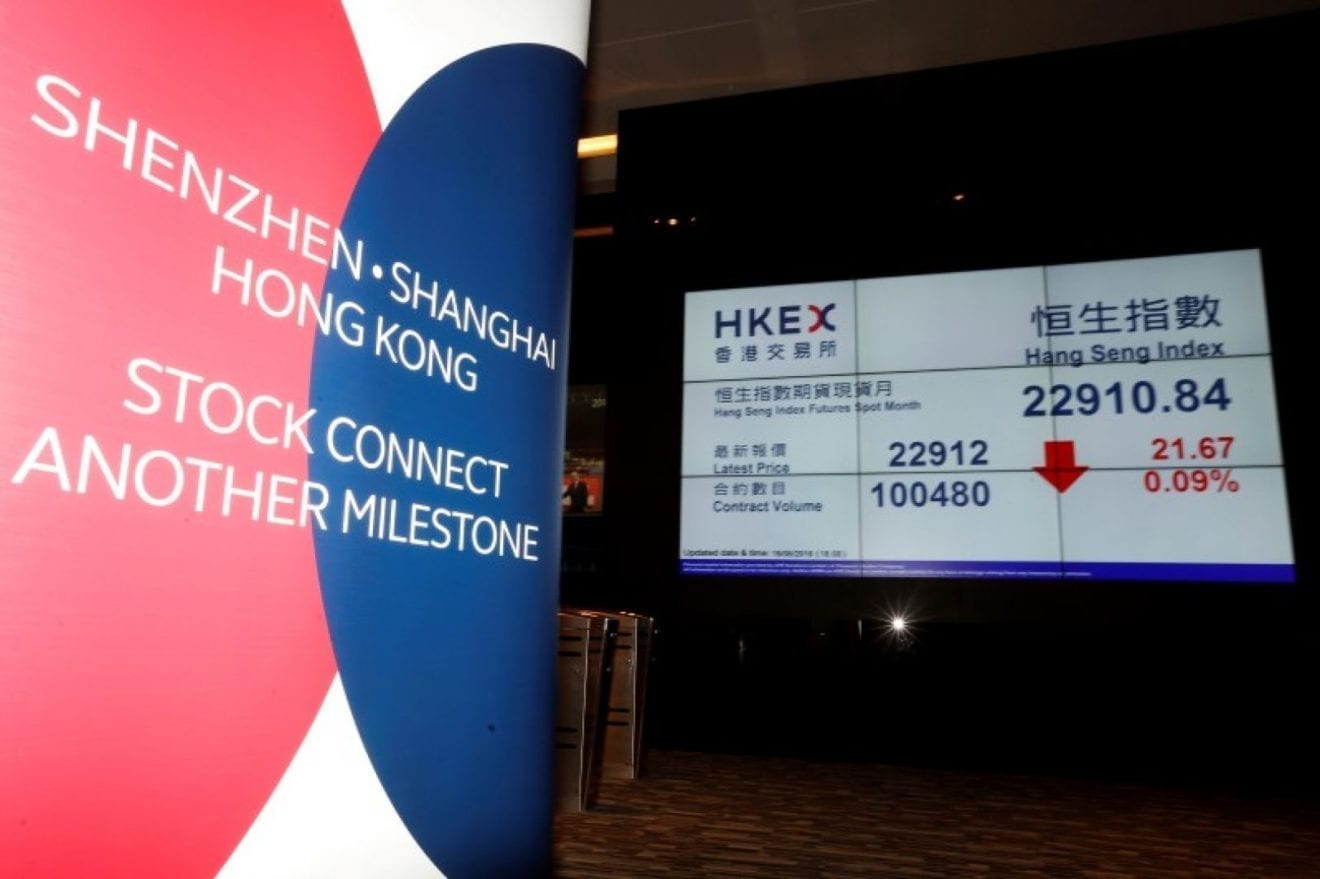
    The Securities and Futures Commission (SFC) and the China Securities Regulatory Commission (CSRC) today have given in-principle the approval of the structure of the proposed Shenzhen-Hong Kong Stock Connect.

    The project will provide mutual stock market access between Hong Kong and Shenzhen via a northbound trading link and a southbound trading link. There will be no aggregate quota under Shenzhen-Hong Kong Stock Connect.

    Today’s joint announcement issued by the SFC and the CSRC also abolishes the aggregate quota under Shanghai-Hong Kong Stock Connect with immediate effect.

    “The expansion of mutual stock market access represents yet another milestone towards strengthening the interconnectivity between the stock markets in Hong Kong and the Mainland as well as consolidating Hong Kong’s position as a major offshore renminbi centre,” said Mr Carlson Tong, the SFC’s chairman.

    The launch of Shenzhen-Hong Kong Stock Connect is subject to the finalization of all necessary regulatory approvals, market readiness and relevant operational arrangements.

    A separate announcement on the commencement of Shenzhen-Hong Kong Stock Connect will be made in due course.

  • Carrefour China concentrating on convenience

    Carrefour China concentrating on convenience

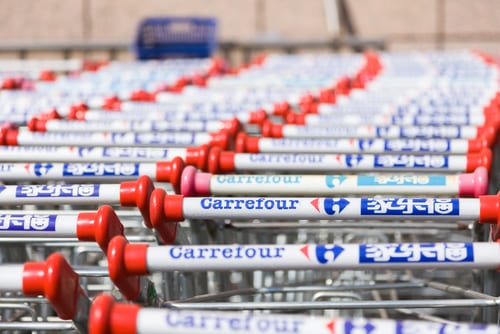
    Carrefour China says it will concentrate on convenience store development for the rest of this year.

    The French-headquartered retailer has been losing market share in the hypermarket segment and has closed about 30 stores during the past three years. It is trying to find a new growth model for the competitive Chinese model according to IGD analyst Catherine Ellwood and IGD Singapore program director Shirley Zhu.

    Hypermarkets will still play a role for Carrefour, particularly in western and central China, they say. The retailer is changing focus because of the increasing challenges for hypermarkets.

    Carrefour reportedly plans to open 40 to 50 convenience stores in Shanghai as well as about 15 Carrefour Easy stores by the end of the year.

    Rapid urbanisation, smaller families and rising affluence levels mean Chinese shoppers are demanding more convenient solutions, says the IDG team.

    “Convenience stores present a huge growth opportunity, but winning in this sector under rising costs and fierce competition is not an easy task.”

    However, Carrefour does have the advantage of existing sourcing and supply-chain capability for fresh products. Daily delivery from its own fresh distribution centre ensures availability and quality.

    A typical Carrefour Easy store has a floor size of 250 to 300 sqm with plenty of room for fresh produce displays. The stores act as pick-up locations for online shopping, and have kiosks to provide various services. There is also free Wi-Fi and charging devices in-store.

    For mobile payment alone, the stores accept Alipay, Apple Pay, Samsung Pay and WechatPay.

    Carrefour opened an extra distribution centre in June. The 21,000 sqm centre, in Dongguan, Guangdong province, will help with expansion in south China. Carrefour aims to have six distribution centres by the end the year.

  • Saigon underground mall planned

    Saigon underground mall planned

    Ho Chi Minh City can expect its first underground shopping mall by 2020.

    According to local news sources, the city’s government has sought central government approval to build a four-level Saigon underground mall beneath a station in its first metro route, from Ben Thanh market to Suoi Tien theme park.

    The underground complex will include a shopping mall, walking streets, a square, and other infrastructure.

    The mall is said to cover 40 per cent of the 45,000sqm area, starting from/under Ben Thanh market, going along Le Loi St and ending at the city center’s iconic Opera House.

    The US$303 million project will be constructed jointly by Toshin Development and other consortiums, including Nikken Sekkei Civil Engineering, Osaka Chikagai, and Join.

  • ‘Super-shoppers’ dominating online retail

    ‘Super-shoppers’ dominating online retail

    A Worldpay global survey of 20,000 consumers has discovered that buying power in the internet age is concentrated within a group of high-spending, high-frequency “super-shoppers”.

    While these shoppers make up just 5 per cent of the population in China, they account for 92 per cent of all money spent buying physical goods online in China each month.

    Worldpay’s research into three Asia Pacific markets further reveals that APAC super-shoppers are most likely to shop online via a mobile device, and are demanding when it comes to payment method. The international payments company polled 2000 consumers in each of the 10 countries covered by the Why Do They Pay That Way? Study, including China and Japan.

    Key findings include…

    • Chinese super-shoppers are more likely than the average Chinese shopper to use a credit or debit card.
    • More than 60 per cent of Japan’s online shoppers will switch to another retailer if they cannot use their preferred payment option at checkout.
    • Australian super-shoppers were the world’s second-biggest buyers, spending on average more than £200 (US$260) on their latest online transaction.
    • The Chinese are the biggest mobile shoppers in the world, with 33 per cent of super-shoppers making their latest online purchase by mobile phone.

    “With eCommerce markets developing at lightning speed across the Asia Pacific region, it’s no surprise elite shoppers are taking their spending power online,” says Worldpay GM Asia Pacific Phil Ponford. “The super-shopper trend is driven by a growing middle class, high mobile penetration and advancements in consumer technology.

    “APAC super-shoppers are passionate about what they buy and sophisticated in how they shop. They do research to find the most competitive prices, and will turn elsewhere if they discover they can’t use their preferred payment method at checkout.”

    Unable to pay

    Internationally, 36 per cent of super-shoppers said they had experienced the situation of reaching checkout and being unable to pay with any of the listed options. This was particularly the case in China, where 44 per cent of Super-Shoppers said they could not use their preferred payment method.

    When faced with not being able to use their preferred payment option, super-shoppers may buy the same item from another website or abandon their purchase all together. In Japan, 61 per cent of super-shoppers said they would switch to another retailer if unable to use their preferred payment option at checkout. Worldpay estimates that for each lost sale globally, retailers are missing out on as much as £100.

    Super-shoppers in APAC overwhelmingly prefer credit cards. While 41 per cent of the general population in China prefers to pay online with Alipay, only 18 per cent of China’s super-shoppers said they were likely to use their nation’s most popular eWallet. Instead, 54 said they preferred to use a credit card.

    “Retailers should be looking at super-shoppers as a distinct group that often behaves very differently from other customers,” says Pomford. Retailers who do not support the right range of payment methods could actually lose major revenue without noticing.

    He describes super-shoppers as an audience that thinks of online shopping as a daily task, not just an occasional treat.

  • Parkson Retail Asia cuts Q4 loss by 80%

    Parkson Retail Asia cuts Q4 loss by 80%

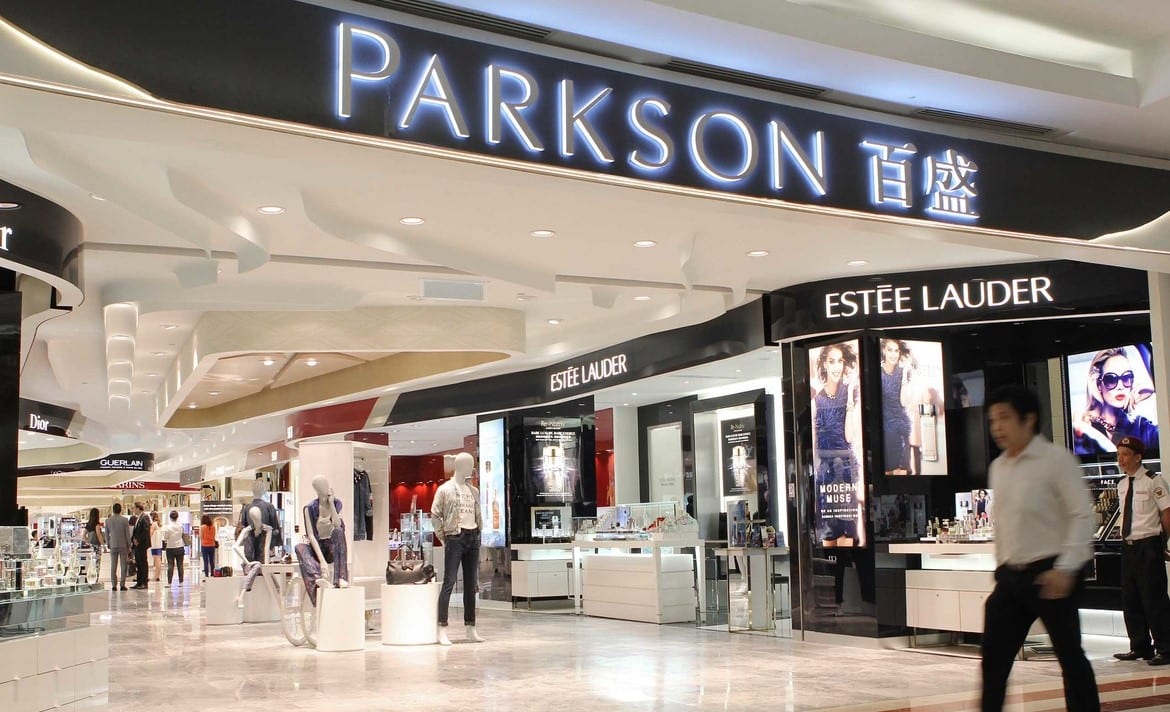
    South-east Asian department store operator Parkson Retail Asia narrowed its fourth quarter net loss by 80 per cent, owing to the absence of costs associated with a store closure a year earlier.

    Parkson, which does not have stores in Singapore, reported a net loss of $12 million for the three months to June 30.

    Revenue was up 10.9 per cent to $93.9 million from a year earlier, it added yesterday.

    The closure of a store at Landmark 72 in Hanoi, Vietnam in January last year had cost the firm $68.4 million. This went under other expenses – which include advertising, selling and administrative expenses, for instance – which improved 70.4 per cent to $27.6 million.

    Owing to this, the firm added in a statement that “as a percentage of revenue, the other expense ratios for the fourth quarter and the full year declined substantially year on year”.

    For the 12 months to June 30, Parkson reversed a net loss of $34.7 million to a net profit of $33 million, while revenue dipped 9.4 per cent to $388.4 million from a year earlier.

    Parkson has department stores in cities across Malaysia, Vietnam, Indonesia and Myanmar.

    Malaysia reported same store sales growth being up 21.5 per cent, thanks to “early festive buying arising from the shift in the Hari Raya calendar”. The growth also came from a low base a year earlier, where consumers bought less after the 6 per cent goods and services tax was introduced on April 1 last year.

    Even though consumer sentiment remains subdued in Malaysia, the firm said it has initiated new concepts such as introducing South Korean apparel, affordable private labels and shoe speciality stores to diversify earnings.

    Parkson added: “We have been consolidating our department store space by identifying non-performing stores with the view to closure upon tenancy expiry.”

    The Myanmar operations’ same store sales growth, however, took a 25 per cent hit in the fourth quarter.

    Parkson added that there are plans to close the store in FMI Centre in Yangon for re-development, and this upcoming closure has affected sales.

    “The landlord has not confirmed the timing for the re-development,” the firm added.

    Overall, it expects the first quarter of the next financial year to remain challenging.

    Quarterly loss per share stood at 1.78 cents, up from a loss of 8.82 cents in the same period last year. Net asset value per share was 24 cents as at June 30, up from 19 cents as at the same date last year.

    Parkson proposed a final dividend of 0.5 cent.

    Its shares closed 0.3 cent lower at 15.6 cents yesterday.

  • Pokemon Go game changer in Malaysian retail scene?

    Pokemon Go game changer in Malaysian retail scene?

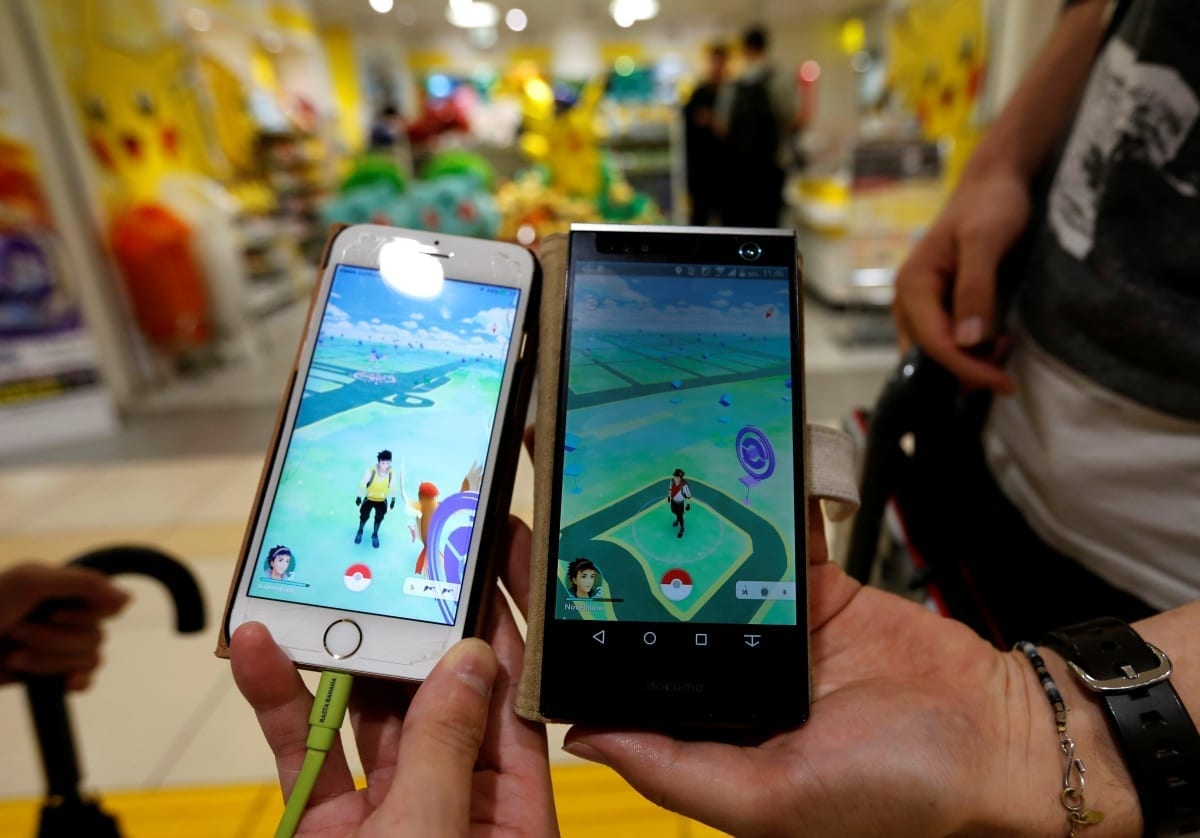
    The runaway success of augmented reality game Pokemon Go can be a potential game changer in the local retail scene.

    UOBKayHian said in a report that the game could also be seen as a revenue booster for retail real estate investment trusts (REITs) and modestly positive for food and beverage (F&B)/convenience store retailers and cellular companies.

    “Pokemon Go creates higher footfall in malls. Although turnover revenue accounts for less than 10% of retail REITs’ revenue, sustained higher footfall leads to better rental reversion.

    The research house said Sunway REIT has reportedly experienced a double-digit hike in average footfall at its malls.

    “Car count has increased by 10%. Similarly, Suria KLCC and Pavilion have also garnered attraction from Pokemon Go ‘hunters’.

    UOBKayHian said F&B retailers like Starbucks, OldTown and other F&B retail chains surveyed saw minimal impact with sales being consistent before and after Pokemon Go’s launch.

    “Nevertheless the higher footfall in the malls and shoplots could eventually translate into higher sales for the F&B retailers.”

    As for convenience stores, the research house said KK Supermart, which operates a chain of 223 convenience stores in shoplots, had reportedly seen a surge in footfall, with the sales of some store shooting up by up to 20%.

    “Approximately one-third of both 7-Eleven and Bison’s stores are located in the malls. The higher footfall in the malls may translate into higher sales for these convenience stores.

    “However, we note from these companies that at this juncture, impact on earnings is minimal.”

    UOBKayHian said it was “potentially marginally positive” on the telecommunications sector on higher data usage and pre-paid reloads.

    It pointed out that Pokemon Go had hastened the adoption of smart phones, currently accounting for around 30% of global mobile phones.

    “The game could hasten global conversion to smart phones, which benefits Malaysian electrical and electronics component suppliers like Inari. Among the potential beneficiaries, our top pick is Sunway REIT.”

    The research house noted that public response to Pokemon Go, which was released on Aug 6, has been overwhelming in Malaysia.

    Pokemon Go, which is by far the highest revenue grossing game in history, can provide at least a short-term lift to various Malaysian companies.

    “Although widely seen as a fad, this game’s shelf life could well exceed common expectations; 90% of players who downloaded the app continue to play after its launch,” according to a media report.

  • PTCL signs fiber leasing deal with Zong

    PTCL signs fiber leasing deal with Zong

    Pakistan’s largest operator PTCL has secured a fiber leasing agreement with China Mobile’s Pakistani mobile unit Zong.

    Under the agreement, PTCL will deploy 789 kilometers of fiber for Zong’s mobile network.

    The fiber leasing agreement will also allow Zong to utilize PTCL’s nationwide fiber footprint, which will help the operator further expand its 3G and 4G networks nationwide.

    PTCL and Zong signed a memorandum of understanding in December last year which declared PTCL as Zong’s preferred partner for infrastructure and technical expertise. PTCL has meanwhile been making efforts to position itself as the “carrier of carriers,” the report states.

    Zong is Pakistan’s third largest mobile operator by subscribers with a market share of around 19% as of late 2014. China Mobile first entered the Pakistani market in 2008 by acquiring an operating license from Millicom, and holds a 100% stake in Zong Pakistan.

  • Thailand sets terms for rural broadband project

    Thailand sets terms for rural broadband project

    Thailand’s ICT ministry has finalized the terms of reference for a tender auction for a 15 billion baht ($433.1 million) national broadband project.

    The project’s procurement committee is preparing the auction process and expects to name the winner by September 15, citing comments from ICT minister Uttama Savanayana.

    Whichever company is selected for the project will be a major supplier of fiber or copper broadband networks for the national project. State-owned operator TOT will be in charge of distributing the network to selected areas and hiring private companies to construct it.

    The national project aims to extend broadband infrastructure to the 39,000 villages that still lack broadband internet access. Uttama said the ministry aims to expand the network to at least 10,000 villages by the end of the year and to all 39,000 next year.

    While the ICT ministry first aimed to complete the terms of reference for the project by March, it was delayed by several months due to management issues, the report states. The project forms part of the government’s digital economy and Thailand 4.0 policies.

    TOT was selected to take sole responsibility for the project in April, despite initial plans to have the company jointly oversee the project with fellow state-owned operator CAT.

  • Singtel to lift stakes in AIS, Airtel

    Singtel to lift stakes in AIS, Airtel

    Singtel has confirmed it has arranged to indirectly increase its stake in Thai mobile affiliate AIS, and revealed it will also increase its share in India’s Bharti Airtel.

    The operator announced it has entered a conditional agreement to acquire 21% of Thai operator AIS’ largest shareholder Intouch Holdings from Singtel’s majority shareholder Temasek Holdings, confirming reports from earlier in the week.

    Intouch is AIS’ largest shareholder with a roughly 40% stake, while Singtel owns a 23% stake in AIS.

    Singtel has meanwhile also agreed to acquire a 7.39% stake in Bharti Airtel’s holding company Bharti Telecom, adding to the 39.78% it already owns.

    The acquisitions have a total value of S$2.47 billion ($1.84 billion). Singtel will pay cash, and fund the acquisition through a combination of internal cash, short-term debt and proceeds from a S$1.6 billion placement of new Singtel shares to Temasek. The deal still requires shareholder and regulatory approvals.

    “Singtel has been a strategic partner to both AIS and Airtel for more than 15 years. We have built deep and trusted relationships, worked well together through the years, sharing knowledge and expertise and we have grown together, from strength to strength,” Singtel Group CEO Chu Sock Koong said.

    “Today, they have a combined mobile customer base of more than 380 million across Asia and Africa. This is a unique opportunity for us to deepen our relationships with two great market leaders.”

  • Shopping malls generate HK$1.3b rental income for Swire Properties

    Shopping malls generate HK$1.3b rental income for Swire Properties

    Shopping malls generate HK$1.3b rental income for Swire Properties

    Swire Properties (1972) shopping malls including The Mall at Pacific Place, Cityplaza in Taikoo Shing and Citygate Outlets at Tung Chung generated gross rental income of HK$1.35 billion in the first half, the company reported today.
    At June 30, 2016, the retail properties in Hong Kong were valued at HK$52.79 billion. Of this amount, Swire Properties’ attributable interest represented HK$46.46 billion.

  • Philippines grocery retail market ‘stands out in Asia’

    Philippines grocery retail market ‘stands out in Asia’

    According to retail analyst IGD, the Philippines is one of the fastest-growing countries in Southeast Asia, with its GDP growth hitting 6.9% in the first quarter of 2016, and further strong expansion predicted on the back of robust domestic consumption, rapid urbanisation and rising wages. A young and increasingly skilled workforce also has a major part to play in the country’s growth.

    The country’s newly elected president, Rodrigo Duterte, is expected to implement further economic reforms and provide a better business environment, through investments in infrastructure and the cutting of red tape.


    From these factors, IGD projects that the grocery market, currently worth US$99bn, will see a 10% compound annual growth rate to reach US$157bn by 2020.

    Similar to many developing countries, the Philippine grocery market is dominated by traditional trade. Modern retailing makes up around just 30%.

    Yet the Philippines’ leading retailers have made extraordinary progress in transforming the country’s modern retail landscape. These have strong financial backing and entrepreneurial spirit, says Jenny Li, a senior retail analyst for IGD.

    SM Retail, Puregold and Robinsons Retail are the top three domestic players in the country. All of them are scaling up their footprints with significant store network expansion and consistent sales growth,” she said.

    SM Retail, for instance, has opened 99 new stores in various formats in the past year; Puregold, with 305 stores across the country, has reported an impressive 20% increase in sales in the first quarter of 2016.

    IGD’s latest report, “Philippines in Focus: Retail Landscape and Channel Outlook”, has identified a number of key trends driving the country’s retail channel development. Among others, building a diversified portfolio strategy has been successful for most leading retailers.

    Modern retailing in the Philippines started with hypermarkets and supermarkets; increasingly, however, retailers are embracing a multi-format strategy by building their presence in smaller formats and online channels,” said Li.

    Source: IGD

    This enables them to create differentiated offers to target a broader audience, with unique demographic profiles and different shopping needs. Furthermore, emerging channels, such as convenience stores and e-commerce, are growing faster and are best placed to capitalise on the higher margins of discretionary spend categories.”

    A subsidiary of the pan-Asian retail giant Dairy Farm, Rustan’s Philippines is the leader in premium retailing and is well-established to target upscale shoppers. Over the past few years, the company has been developing Wellcome, which follows a neighbourhood supermarket format and combines daily staple products with competitive pricing.

    Meanwhile, Rustan’s convenience store network, created via a joint-venture with FamilyMart, is gaining popularity among busy office workers.

    It’s clear that the Philippine retail market presents great opportunities for future growth,” said Li.

    If you are looking to invest in Asia, or seeking to expand into new markets, the Philippines is one region to consider.”

    However, she warns that success lies in the ability to build a solid understanding of the local market and establish strategic partnerships with local players, as well as provide relevant and flexible solutions to support retailers’ multichannel strategies.


  • Premium Indian mall rents rise

    Premium Indian mall rents rise

    Premium Indian mall rents have risen “significantly” in the first six months of 2016.

    A report by property consultant CBRE South Asia shows rental rates at India’s more up-market shopping centres were led by major cosmopolitan mall clusters Noida (rising by 45 per cent), Gurgaon (by 30.8 per cent), Vasant Kunj (28.6 per cent), and East Bangalore (10.5 per cent).

    By region, rental rates have increased in the National Capital Region centered around Delhi (Vasant Kunj, Saket, and Gurgaon), Mumbai (Kurla, Ghatkopar and Lower Parel), and Bangalore (Whitefield, Ulsoor, and areas in West Bangalore).

    The steep rise in rent is due to the robust demand led by international retailers, and rapid expansion plans of established retailers. For example, during the first half of 2016, Swedish clothing retailer H&M, US clothing company Gap, Japanese lingerie brand Wacoal, and Dutch brand Hunkemoller opened new stores in India, while the more established retail stores – Shoppers Stop, Levi’s, Puma, Pepe Jeans, Fabindia, Gap, Haagen-Dazs, and Mebaz – further expanded their outlets.

    A gap between the demand and supply is also to blame, as building malls is a capital intensive activity and completion of projects may take up four to six years.

    However, the rise in rent and demand is restricted to premium markets. In another report, by property consultant Jones Lang LaSalle (JLL) India, findings indicate that tier 2 cities and even average and poor malls in tier 1 cities, continue to struggle with high vacancy rates, which began with the global financial crisis of 2008. Poor consumer and retailer sentiment has also prompted several mall developers to shelve or defer new projects across the country.

    JLL estimates that rental rates in premium markets will stay constant or increase till the gap between demand and supply gets bridged in about five to seven years.

    • This article was first published by Dezan Shira & Associates which, since its establishment in 1992, has been guiding foreign clients through Asia’s complex regulatory environment and assisting them with all aspects of legal, accounting, tax, internal control, HR, payroll, and audit matters. Dezan Shira & Associates is a full-service consultancy with offices across China, Hong Kong, India, and ASEAN.