Tag: asia

  • Sales ease for Big C Thailand

    Sales ease for Big C Thailand

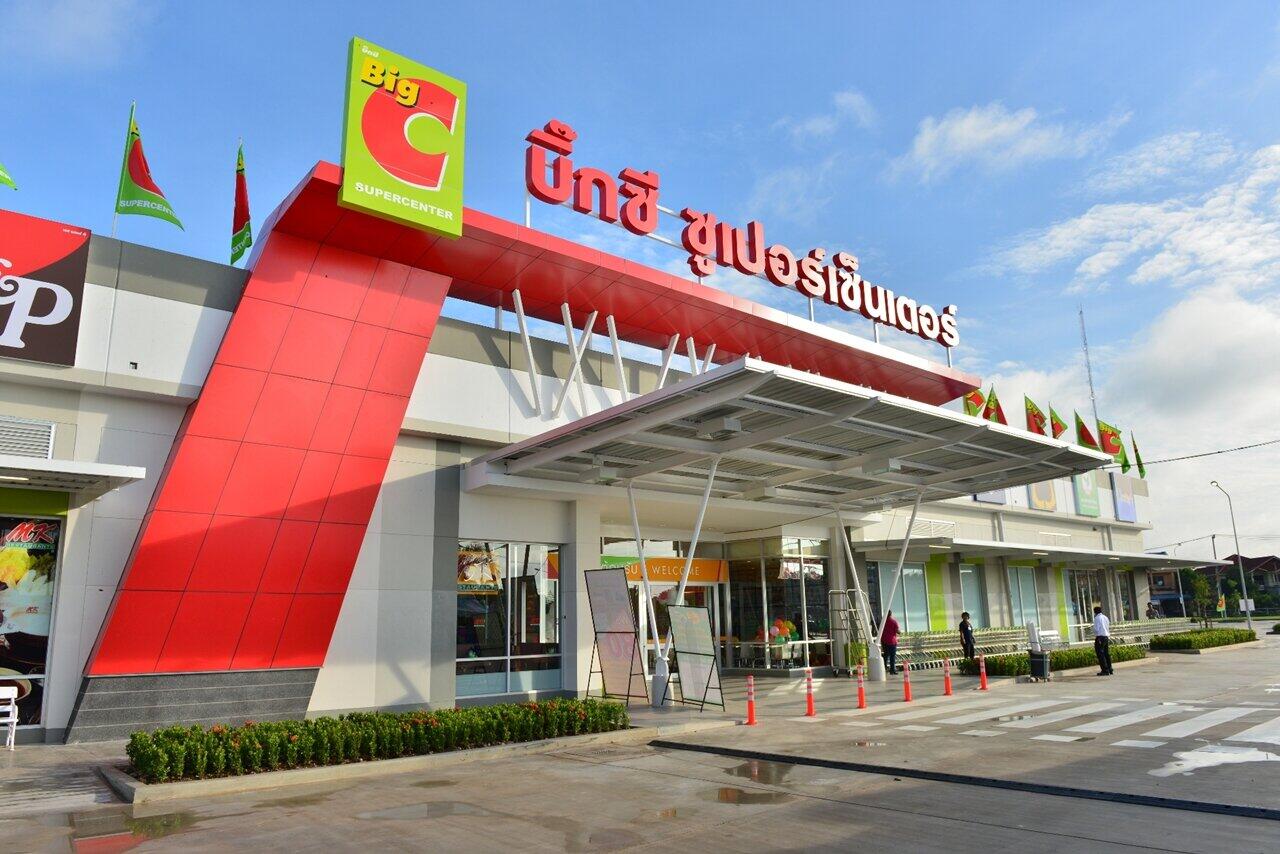
    A strong profit margin has helped Big C Supercenter weather a slight decline in sales for its second quarter.

    The Big C Thailand operator says “lukewarm economic conditions” continued, with the tourism sector and government spending continuing to act as the main drivers for the economy.

    “Some signs of improving agricultural prices and less severe drought conditions were seen during the quarter, but this has not yet translated into improved consumer confidence,” the company said in a stock exchange filing.

    During the quarter the company introduced a fundamental change in the way it trades. “We shifted our focus to the quality of sales rather than just the absolute sales amount,” says its report.

    “This does not mean we are neglecting our price position among retail customers; rather, we are limiting the number of ‘big-basket coupons’ we have previously used when targeting professional customers.

    “In order to be able to better answer to our customers’ local tastes and preferences, we started to reorganise and decentralise our store operations teams.

    “The work to capture synergies between the company and the BJC group, our new major shareholder, has also started.” For example, the company has been using combined volumes when re-negotiating with suppliers.

    More stores

    During the quarter, the group’s store network continued to grow across formats. A hypermarket opened in Ranong, Big C Markets opened in Pakthongchai and Somdet, 11 Mini Big C stores opened, including three at gasoline stations plus three franchise stores, and two Pure Drugstores. This brought the store total at the end of June to 126 large-format stores (Big C Supercenter, Extra and Jumbo), 57 Big C Markets, 408 Mini Big Cs (including 167 in gas stations and six franchise stores) and 149 Pure Drugstores.

    Big C’s total revenues from retail sales, rental and service income, and other income, reached baht 33,796 million (US$975.36 million) for the quarter, representing a 1.1 per cent decline of Baht 362 million compared with the same period last year.

    This decrease was driven by a 1.5 per cent retail sales decline.

    The group’s dual retail-property model continued its steady performance with rental income for the year increasing by 3 per cent.
  • New post at Luxasia Group for SingPost’s ex-boss

    New post at Luxasia Group for SingPost’s ex-boss

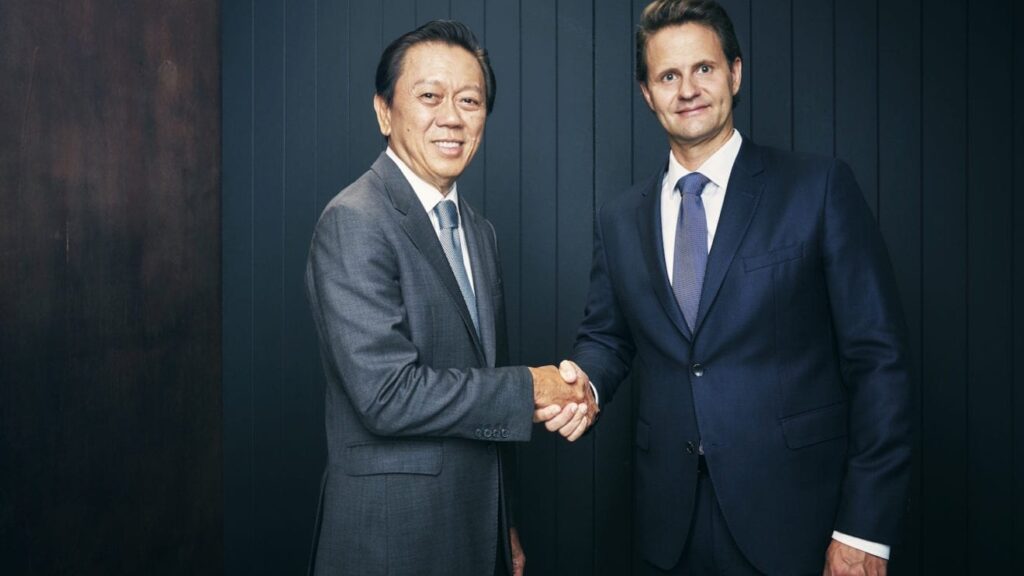
    Beauty retailer The Luxasia Group has appointed former SingPost CEO Dr Wolfgang Baier as group CEO, while founder/owner Patrick Chong has become chairman.

    “Luxasia is now at an important crossroads,” says Chong. “We intend to grow with our international partners and strengthen our core competencies to become the leading Asia consumer-centric omnichannel go-to-market partner of the beauty industry.”

    Patrick-Chong-Wolfgang-Baier

    He says Baier has proven leadership capabilities, vast knowledge and skills in areas such as CRM and omnichannel retail. “His track record in the logistics sector will also help strengthen Luxasia’s partnerships.”

    “Transformation is relevant in every sector and particularly for retail, where the digital and physical space is converging,” says Baier. “This makes developing an omni-channel ecosystem critical. We want to revolutionise how we serve consumers and brand partners in the beauty industry across Asia.”

    Chong says the search for a CEO took more than a year, as it was important Luxasia found the right leader.

    “Not only does Wolfgang understand our operations and share the same aspirations, in some ways he is even more ambitious for Luxasia with regard to developing new areas.”

    Established in 1986, The Luxasia Group has developed retail and distribution networks across Asia for some of the world’s biggest beauty companies. Based in Singapore, the privately held company has 11 offices and more than 2000 full-time employees in Singapore, China, Hong Kong, India, Indonesia, Malaysia, Myanmar, Taiwan, Thailand, the Philippines and Vietnam.

    It manages a portfolio of more than 120 international fragrance, cosmetics, skincare and
    professional salon brands including Beiersdorf, Burberry, Clarins, Estee Lauder, Ferragamo, Hermes, P&G and Shiseido.

  • Yamada Denki profits from strategy change

    Yamada Denki profits from strategy change

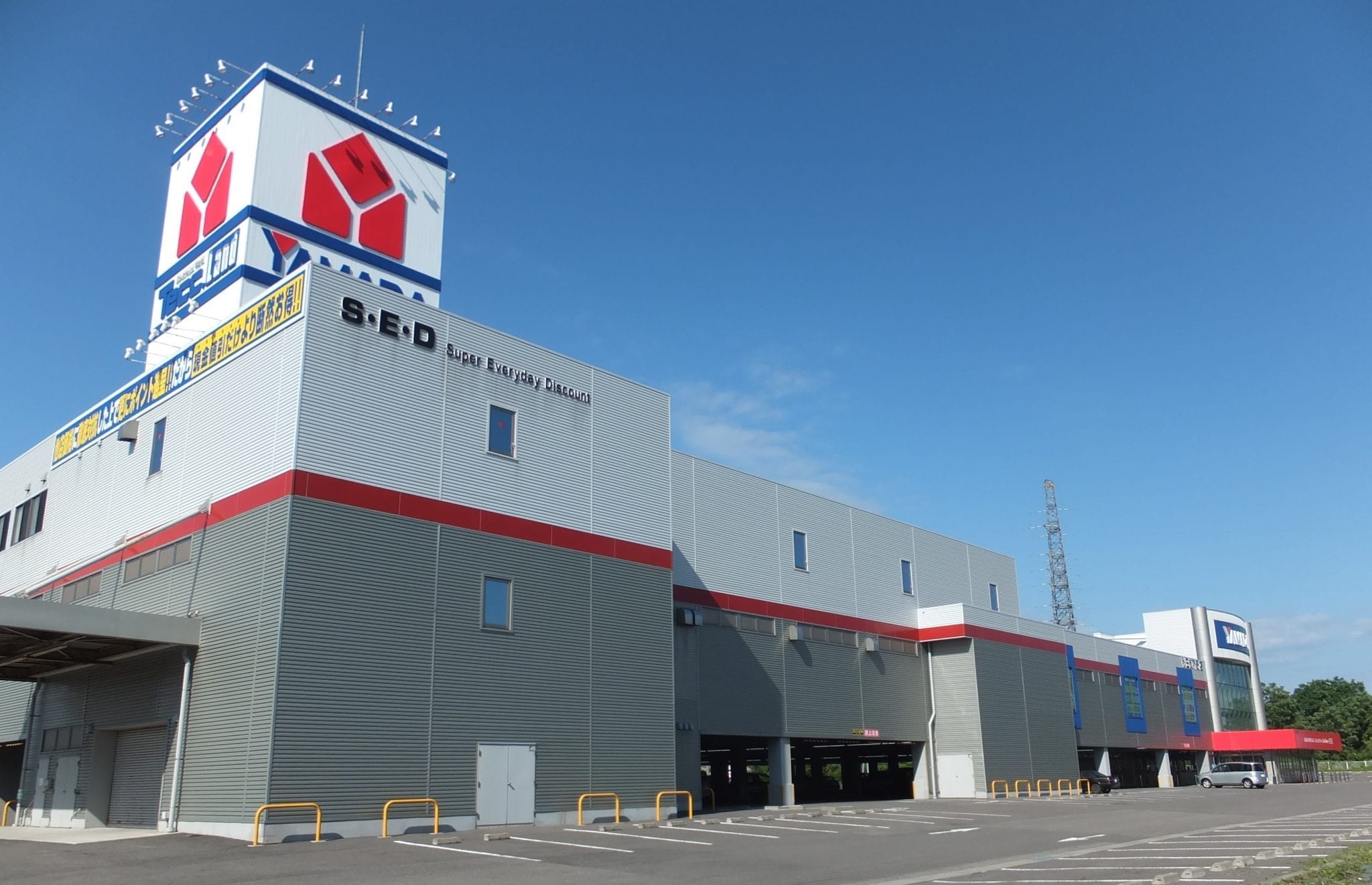
    Japanese electronics retailer Yamada Denki saw its operating profit surged to 2.5 times the year-earlier level in its latest quarter.

    The company says this reflects a strategic pivot to highly profitable white goods from digital electronics, which are susceptible to price drops.

    Logging 6.4 billion yen (US$62.4 million) in operating profit for the April-June period, the company says air conditioners sold briskly, as did ultra-high-resolution 4K televisions ahead of the Olympic Games in Rio de Janeiro.

    However, sales for the quarter fell 2 per cent to 363.7 billion yen. Widespread clearance sales ahead of store closures last year account for part of the comparative drop.

    Yamada Denki’s gross margin widened 0.4 points to 28 per cent following the closure of about 60 unprofitable locations last year. It has also remodelled about 200 stores a year since 2014, allowing more space for home appliances such as refrigerators and washers at the expense of personal computers.

    Coming from a human resources background, the company’s new president appointed in April, Mitsumasa Kuwano, has spearheaded reforms to the company’s staffing strategy, such as putting more workers on the sales floor during busy periods.

  • Faster roll-out for Mister Minit Asia

    Faster roll-out for Mister Minit Asia

    Australasian services retailer Mister Minit is to expand its retail presence in SE Asia after stellar growth in Malaysia and Singapore.

    The company says it is experiencing an increasing appetite for its personal services among time-poor shoppers.

    For the third consecutive year, the company has experienced strong comparable growth in Singapore and Malaysia with current running rates at 30 to 40 per cent, and is now on the verge of a major expansion program in South East Asia.

    “We are committing significant funding over the next three years initially in Singapore and Malaysia, with interest in also expanding into other Asian markets in the medium term,” said Mark Rusbatch, CEO of Mister Minit.

    Mark Rusbatch - CEO  cropped

    There are currently 12 Mister Minit Singapore retail stores and seven in Malaysia.  The company is developing a pipeline of new shop openings for both countries and working with key landlords on identifying prime locations in shopping centres.

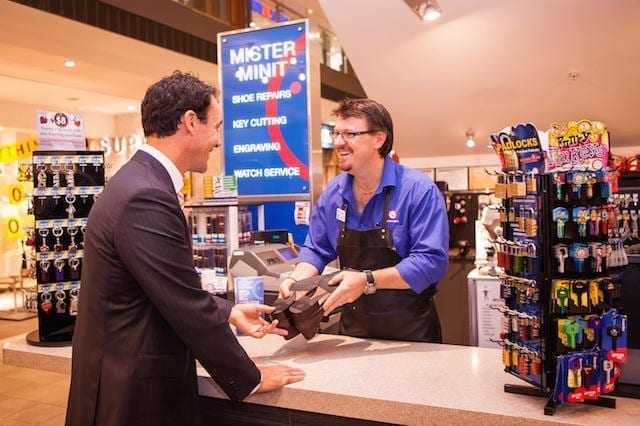
    “One of the fastest growing trends right now is ‘do it for me’ and Mister Minit is well placed to make time poor customer’s lives that bit easier – from shoe repairs to other household and personal services including key duplication, engraving and watch servicing,” said Rusbatch.

    Mister Minit Shoes 8157 (Large)

    The company is synonymous with ‘fixing people’s problems’ in Australia and New Zealand, where it is the clear market leader, and has shown year on year comparable sales and total growth for the past 15 years.

    “Our strategy in Australia and New Zealand has been to secure prominent locations in high foot traffic areas that provide ready access to those customers who are time poor and need to utilise our array of services as part of their everyday shopping needs including visiting the supermarket,” said Rusbatch.

    Mister Minit Service2 8406 (Large)

    Mister Minit will adopt a similar strategy in Southeast Asia, where it sees a real opportunity to accelerate its growth rates in the medium and long term.

    “Mister Minit’s heritage in this region has been around high quality shoe services and augmenting these with our full array of services, which include key duplication, personalisation through engraving, and watch servicing including band and battery replacement.”

    “As an international brand we deliver a consistent level of quality and services from our shop fit outs to our high service standards. We recognise the importance of people – from securing the best people to retaining them. We also invest in a significant level of training, upskilling our team in the latest technology and expertise. We know the quality of our people defines our brand.”

    The company’s franchise model is also a strength of the business, and has so far been implemented across five of the Singapore stores with more anticipated to follow.

    Mister Minit Singapore

    “Franchising is our preferred business model as it delivers a strong offer – combining local ownership with an International brand profile,” said Rusbatch.

    Mister Minit will next year celebrate its 60th Anniversary, following its establishment in 1957 in Europe.  In a further sign of the importance of the South East Asia region to the company, it will celebrate the milestone locally.  Mister Minit will host its Annual Franchisees Conference in Singapore in 2017, attended by franchisees and employees from across Australia, New Zealand and South East Asia.

  • Watsons stores lead 1000 openings for Hutchison

    Watsons stores lead 1000 openings for Hutchison

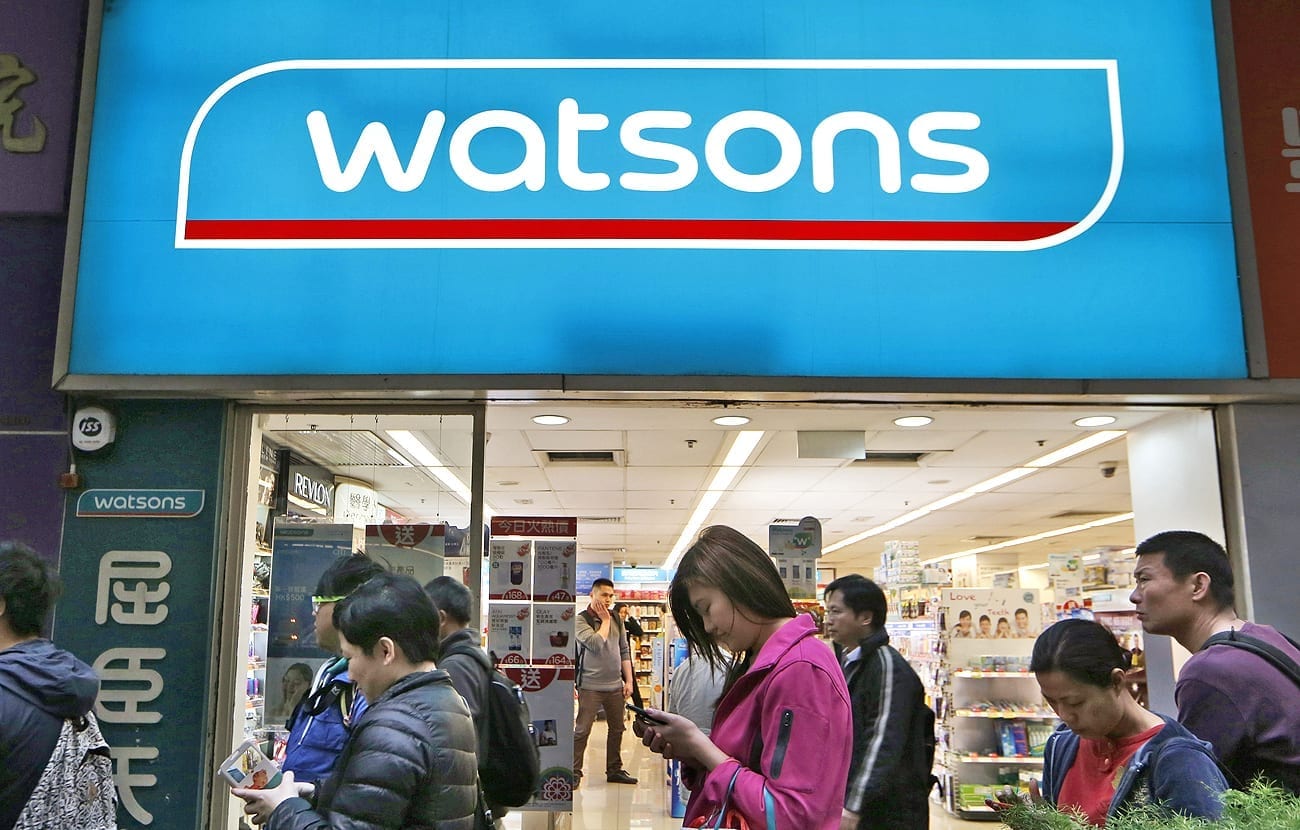
    Watsons stores account for the bulk of more than 1000 new stores to be opened by parent CK Hutchison this year.

    Hutchison said in its six month results released Friday it has added 257 stores to its global network already this year and 800 more would open by year-end. About two thirds of those will be Watson healthy and beauty outlets, mainly in China and Asia.

    CK Hutchison had more than 12,600 stores across 25 markets at the end of June. The vast bulk of those are Watsons stores, but the group also operates Fortress electronics stores, supermarket ParknShop and Watsons Wines.

    The group’s total retail revenue was HK$73.413 billion and net earnings were $5.338 billion, were all 2 per cent lower than the same period last year, results adversely affected by foreign currency translation to Hong Kong dollars.

    “Despite strong growth in the health and beauty segment, the retail operations in Hong Kong experienced mounting pressure from the severely reduced tourist arrivals and spending in the first half, which dampened the growth in the overall retail division,” Hutchison said in its half-year report.

    “In local currencies, revenue increased by 1 per cent, while EBIT increased by 2 per cent.”

    The Watsons health and beauty business represents 94 per cent of the retail division’s net income, which grew 6 per cent in local currencies. In Europe, EBIT grew 11 per cent, reflecting a 4 per cent increase in store numbers, 3.6 per cent comparable-store sales growth and generally improving margins.

    “In particular, health and beauty UK was a major growth contributor with an encouraging comparable store sales growth of 6.5 per cent for the period.”

    In Asia, despite the comparable store sales declining 3.1 per cent, the organic expansion of stores continued with a 15 per cent increase in store numbers against the same period last year, resulting net EBIT growth of 3 per cent in local currencies.

    “Watsons China’s total revenue was flat against the same period last year in local currency against a 17 per cent increase in stores numbers, as comparable store sales growth was negative 8.5 per cent due to weak retail market sentiment and competition from the eCommerce segment.”

    Despite these difficult conditions, EBIT growth was 3 per cent “from well-executed margin and cost management”, the company said.

    “Watsons China will continue to build up and expand its eCommerce platform to compete in the rapidly growing eCommerce segment.”

  • Baidu adopts Qlik Sense for self-service analytics

    Baidu adopts Qlik Sense for self-service analytics

    Baidu is Qlik Sense to improve its cloud services platform and provide an enhanced data analytics experience to its customers.

    Qlik Sense will be integrated into Baidu Palo to enable self-service visualization analytics on the Palo OLAP engine, giving Chinese enterprises the ability to achieve greater agility in aggregating data from various sources to make data driven business intelligence decisions.

    By incorporating Qlik into the Palo OLAP engine, Baidu aims to provide start-ups in China, especially those enterprises on Baidu Cloud, with greater support in driving data analytics among cloud or filed sources.

    “We are very excited to implement Qlik Sense into Palo OLAP to provide users in China with innovative self-service visual analytics,” said Yang Liu, General Manager, Baidu Open Cloud.

    “Qlik Sense has an open API and powerful features, and is suitable for enterprise level applications. The close cooperation and technical integration of the two companies has led to more powerful and flexible business intelligence solutions, which will greatly enhance the user experience.”

    “With the popularity of big data, cloud computing in BI, social networks, and mobile applications in China these past few years, integrating a powerful visual analytics solution into China’s largest search engine company will only lead to greater value for businesses,” said Toni Adams, senior vice president Partners and Alliances, Qlik.

    “Businesses of all sizes using Baidu’s Palo OLAP will now have the ability to take their analysis to a deeper level, leading to a better understanding of their business, as well as their customers.

  • AsiaSat reports flat profit and revenue for 1H16

    AsiaSat reports flat profit and revenue for 1H16

    Hong Kong based AsiaSat has reported largely flat profit and revenue for the first six months of 2016 amid challenging market conditions.

    The satellite operator reported revenue for the half-year period of HK$640 million ($82.5 million) and profit attributable to owners of HK$249 million. Contracts on hand also remained stable at HK$3.54 billion.

    During the period the company acquired a growing number of customers, including new customers of its new AsiaSat 6 and AsiaSat 8 satellites in mainland China, Bangladesh and Thailand.

    Construction of the operator’s newest satellite – AsiaSat 9, which is due to replace AsiaSat 4 – is meanwhile on schedule for completion early next year.

    AsiaSat’s chairman Ju Wei Min commented that the company expects business to remain flat for the remainder of the year.

    “We do not anticipate any significant changes in market conditions and believe that they will continue to pose a challenge not only for AsiaSat but the industry as a whole,” he said.

    He noted that AsiaSat expects not to have to deal with the increased competition from terrestrial providers that is affecting satellite operators in other parts of the world due to the lack of quality terrestrial networks in many parts of APAC.

    But he added that “the new contracts signed in the first half will only partially compensate for the expiry of short-term revenue from a to-be retired satellite and the termination of a number of contracts which will occur in the second half due to changes in regulations.”

  • China Mobile awards contracts for 100G OTN

    China Mobile awards contracts for 100G OTN

    China Mobile has issued contracts to build a 100G optical backbone network to support the rollout of 4G services and help meet its Broadband China strategy ambitions.

    Nokia revealed it has been awarded a more than 30% share of the project. Under the contract, Nokia will deploy a 100G OTN and DWDM backbone for China’s largest mobile operator by subscribers.

    China Mobile plans to use the optical platform to deploy services more rapidly, meet rising mobile data demands and be able to provide scalable capacity for a range of cloud-based 4G services.

    “This is a crucial win with our longstanding partner,” commented Mike Wang, head of the joint management team of Nokia Networks China and Alcatel-Lucent Shanghai Bell. Nokia and China Mobile have had a working relationship since 1994.

    “With our innovative 100G OTN solution, we are able to help China Mobile meet the higher requirements for large-scale 4G construction,” Wang added.

    “We are committed to delivering the latest optical transmission innovations to enable China Mobile to optimize their networks and open up new opportunities for their subscribers.”

  • Naughty Cat Vietnam makes Saigon debut

    Naughty Cat Vietnam makes Saigon debut

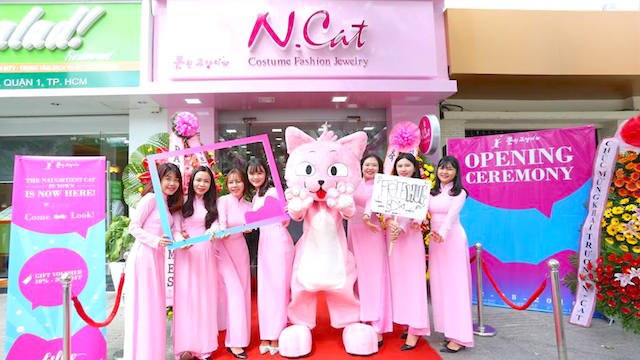
    Leading Korean accessories chain Naughty Cat has opened its first Vietnam store on Nguyen Hue St in the city centre.

    Naughty Cat Vietnam is located at 47 Nguyen Hue street, D1. The store hopes to cash in on the crowded ‘walking street’ as well as the growing influence of the Hallyu wave in Vietnam.

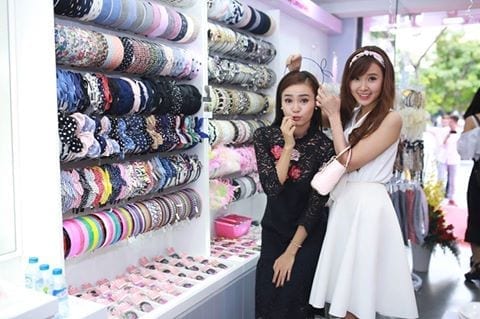
    To mark the launch, the brand invited Vietnamese models and actresses to the store to demonstrate how fashionable girls will be when wearing these accessories.

    naughty cat

    Customers might be overwhelmed by thousands of items from headbands, hair clips, wigs, gloves and socks to earrings, necklaces, bracelets and even cell phone plugs. Naughty Cat – or N.Cat for short – has collections for men as well.

    After 23 years in the industry, N.Cat knows how to vary its collections to serve different fashion styles, and maintain quality and affordable prices. Globally, it introduces more than 5000 items every month to maintain customer interest and encourage repeat store visits.

    Founded in 1991, N. Cat Accessories had 110 franchised stores in Korea, Europe, America and Asia at the end of 2015.

  • Chopard Singapore fails to notice missing millions

    Chopard Singapore fails to notice missing millions

    Geneva-based luxury goods company Chopard Singapore failed to notice it was missing S$11.2 million until a government investigator started looking into the embezzlement after a tip-off.

    Now the former accounting manager of the luxury goods company, known for its watches and jewellery, has been sentenced to 15 years’ jail for siphoning the money from her employer over nearly seven years.

    Chew Siew Lang, 53, misappropriated most of the money using erasable ink to write on cheques made out to Chopard suppliers for bogus transactions. After gaining the required two signatures on the cheques – Chew herself was an authorised signatory – she replaced the payee’s names with her own.

    The offences took place between January 2006 and August 2012, and Chew spent at least $2.1 million on lottery bets – she wrote 76 cheques of between $20,000 and $68,000 to a Singapore Pools retailer.

    In December, she pleaded guilty in the High Court to 56 charges – six counts of criminal breach of trust, 30 counts of falsification of accounts and 20 counts of using the benefits of her criminal conduct. A further 187 similar charges were taken into consideration.

    The prosecution had sought 18 to 20 years’ jail, but the defence argued that Chew has an impulse control disorder that turns her into a pathological gambler. The case was adjourned after Justice Woo Bih Li asked if there was a causal link between her mental disorder and her offences.

    In her latest appearance, Chew’s lawyer, Daniel Chia, told the court his client was not pursuing the point about her disorder after the prosecution submitted two psychiatric reports. He sought a jail term of 12 years.

    In sentencing, Justice Woo noted it was good Chew has the support of her family. “However, I also have to take into account that you misappropriate a very huge sum for which only a small portion has been recovered.”

    Chopard found out about the embezzlement only after the Commercial Affairs Department started investigating Chew. The company sacked her in August 2012, and two months later filed a civil suit against her. It has managed to recover only $197,000.

  • Retail sales up 0.9% on-year in June, boosted by vehicle sales

    Retail sales up 0.9% on-year in June, boosted by vehicle sales

    Retail sales in Singapore rose 0.9 per cent in June compared with the previous year, mainly due to a jump in sales of motor vehicles, the Department of Statistics (SingStat) said on Monday (Aug 15).

    However, excluding motor vehicles, retail sales dipped 3.0 per cent compared with the same period a year ago.

    On a month-on-month basis, retail sales were down 1.5 per cent in June. Excluding motor vehicles, retail sales dropped 3.7 per cent.

    The total retail sales value in Juune was estimated at S$3.6 billion, similar to a year ago.

    Retailers of motor vehicles recorded a sales increase of 17.1 per cent compared to the previous year, the highest increase of all sectors. The next best performing sector was furniture and household equipment, which saw a 5.8 per cent increase. The medical goods and toiletries sector also recorded an increase of 3.0 per cent.

    Other than the mini-marts and convenience stores section, which was unchanged, all other sectors were in the red.

    According to SingStat, the telecommunications apparatus and computers sector fell the most at 25.1 per cent, compared with the previous year. This was followed by petrol service stations, which fell 14.1 per cent, and recreational goods, which saw a 11.8 per cent dip.

    Sales of food and beverage services rose 0.4 per cent from the previous year. The total sales value of food and beverage services in June was estimated at S$649 million, higher than the S$646 million in June 2015.

    The Retail Sales Index and the Food and Beverage Services Index measure the short-term performance of retail and F&B service industries based on their sales records. The sales figures exclude taxes such as GST and COE.

  • Pacsafe opens first global flagship store in the Philippines

    Pacsafe opens first global flagship store in the Philippines

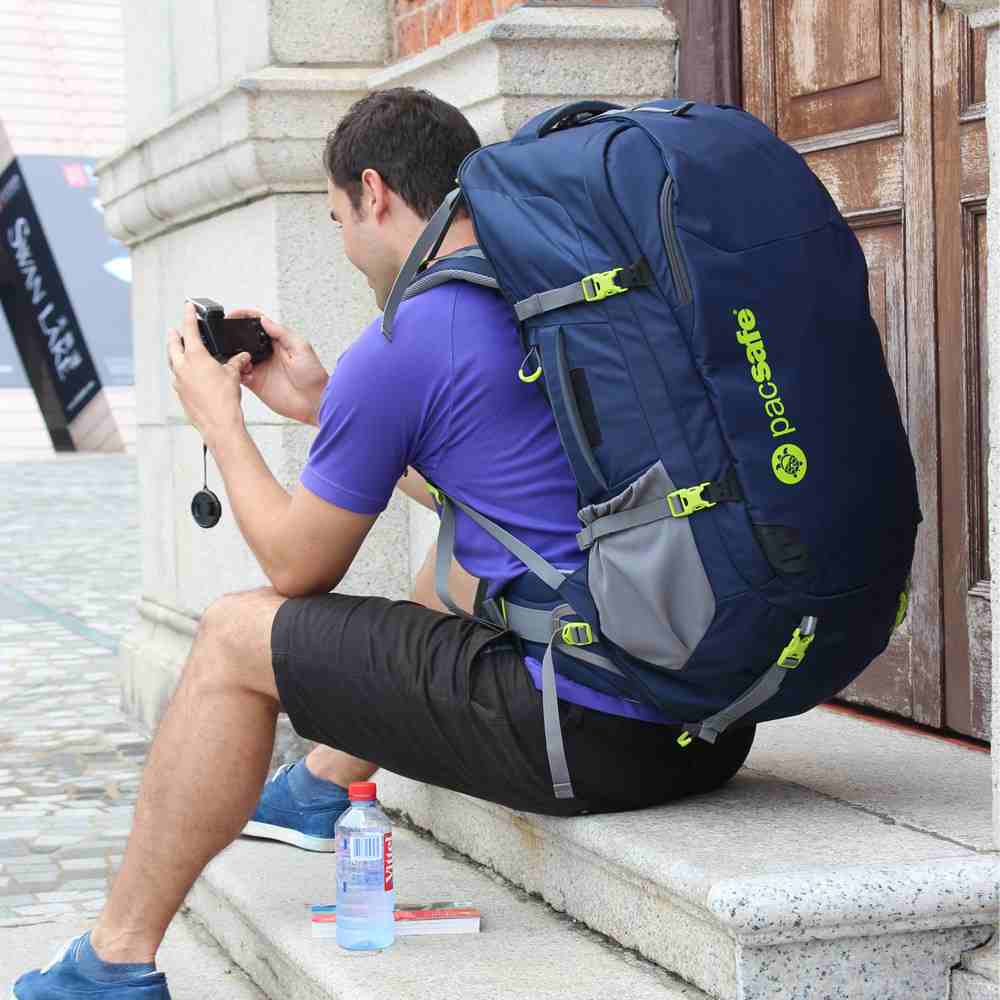
    Keeping in mind the growing demand for safer travel, globally recognized travel gear brand Pacsafe has opened its first flagship store in the Philippines. The boutique, the company’s first in the world, is located at G/F Glorietta 5, Makati City. It was officially launched through United Limsun International Trading Corp., the brand’s exclusive distributor in the country. At least 10 more retail locations are expected to open in three years.

    The new boutique will carry the company’s full range of products (adventure backpacks, urban and leisure bags, women’s bags, photography bags, luggage and travel accessories such as straps, cables and locks).

    Pacsafe has extended its company’s global marine turtle conservation advocacy by providing a kick-off fund donation of P235,000 to the Bantay Pawikan Conservation Center in Morong, Bataan, through the Bataan Tourism Council. Present to accept the donations were Vicky Garcia and Isabel Garcia, chairs of the Bataan Tourism Council.

    Built on the aspirations of Australian founders Rob Schlipper, CEO, and Magnus McGlashan, president and cofounder, Pacsafe has become synonymous with smart and safe travel. As the pioneer of the travel security category since 1998, Pacsafe is known all over the globe as the world’s most secure antitheft travel gear. It has steadily gained solid industry leadership throughout the years, thanks to trademark innovations like the eXomesh, RFIDsafe and other technologies.


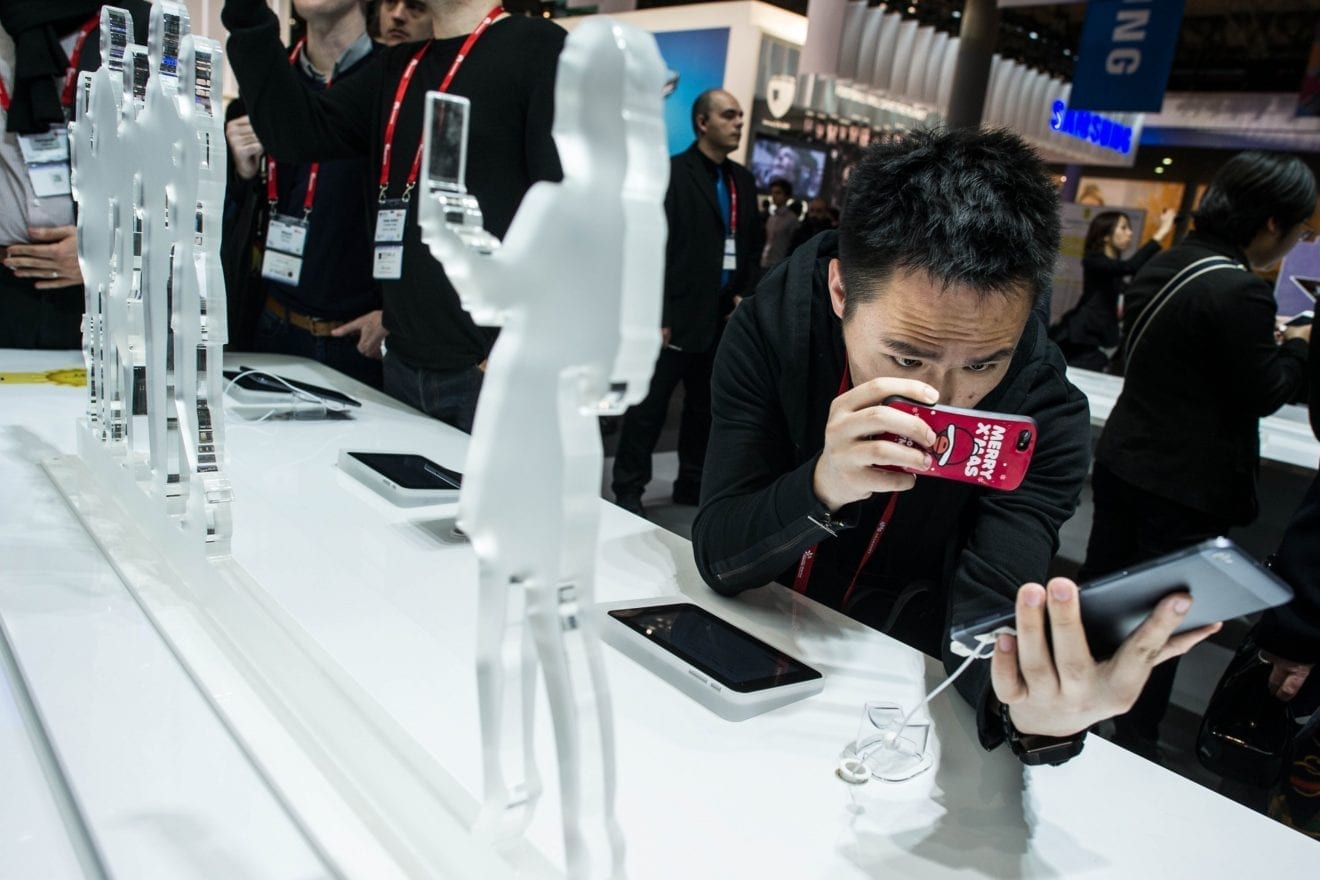
  • Huawei tests Samsung-Shinsegae ties

    Huawei tests Samsung-Shinsegae ties

    Huawei, China’s top-tier handset and networking infrastructure business operator, is basking in the limelight for its partnership with Shinsegae, a former Samsung Group affiliate and the nation’s second-largest retailer.

    The partnership is also eye-catching as Huawei has icy relations with its rival Samsung Electronics following a series of lawsuits between the two.

    Shinsegae, which separated from Samsung Group in 1991, had been a decades-long retail services operator of Samsung. Shinsegae Group Chairman Lee Myung-hee is the younger sister of Samsung Group Chairman Lee Kun-hee.

    The partnership was announced last week when Huawei officially named Shinsegae I&C, the IT-based platform service affiliated with the retail giant, as its sole distributor in Korea, to speed up penetration into the market here.

    Given that Samsung and Huawei are engaging in legal battles, critics said the partnership is quite “unexpected.”

    In May, Huawei filed a patent lawsuit against Samsung Electronics in the U.S. District Court for the Northern District of California, claiming that the Korean electronics firm infringed on Huawei’s wireless patents without licensing.

    In response, Samsung Electronics countersued Huawei and a department store in Beijing last month, claiming some $24.14 million in damages.

    Amid the chilly relationship, Huawei held a press conference last week to launch the sales of its two-in-one portable PC, MateBook, in Korea. The company also announced its partnership with Shinsegae I&C whose retail clients include renowned global information and communication technology (ICT) companies such as Google, Hewlett-Packard and JBL.

    “Huawei joined hands with Shinsegae I&C, as the Chinese company appreciates our capability in managing global ICT firms,” said a Shinsegae manager. “We have nothing to comment on why Huawei chose the former Samsung affiliate despite its current estranged relationship with Samsung Electronics.”

    He said the partnership came as Shinsegae has a nationwide foothold to distribute devices by using its e-mart discount chains.

    Huawei established its Korean branch in 2007, but has so far failed to attract huge attention with its consumer electronics products — including smartphones and laptops. Expectations are that the Chinese handset giant aimed to stop the decade-long weak profile here by signing a partnership with the strong retail giant, regardless of its relationship with Samsung.

    There are only a few “hit” Huawei products here — including its budget handset Y6 introduced earlier this year. But the phone failed to gain wider interest, as the country’s smallest mobile carrier LG Uplus was the exclusive distributor for the smartphone.

    Huawei Korea officials were unavailable for comment over the specific reasons for the partnership.

  • Fall of 5-10% in Hong Kong property prices ‘not abnormal’ — Wheelock

    Fall of 5-10% in Hong Kong property prices ‘not abnormal’ — Wheelock

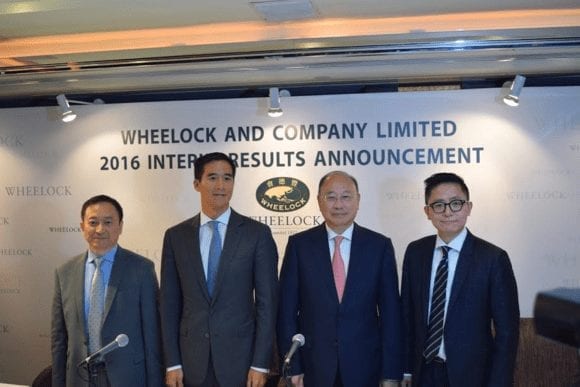
    Hong Kong’s property market has yet to stabilize and could fall by 5-10% in the second half of the year, according to leading developer Wheelock.

    “Given the global uncertainties arising from Brexit and volatility in the currency market and oil prices, a 5-10% fluctuation in [home] prices in Hong Kong is not something abnormal,” said Chairman and Managing Director Douglas Woo Chun-kuen in an earnings briefing on Monday.

    In his late thirties, Woo, an architecture graduate from Princeton University, has become a third-generation owner to take the helm of the Hong Kong-listed property conglomerate after a stint at UBS. He assumed the chairmanship from his father Peter Woo Kwong-ching in 2014.

    Woo’s cautious outlook came after his group reported a 29% plunge in net profit to 5.66 billion Hong Kong dollars ($730 million) in the six months ended June. Underlying profit, excluding the impact of property revaluation, fell 19% to HK$5.13 billion on the year, despite a surge in property sales amid a housing downturn in previous months.

    Contracted sales reached HK$11.8 billion as of mid-August this year, primarily driven by the sale of three residential projects and the en-bloc sale of OneHabourGate East office tower and shops for HK$4.5 billion. The four projects already accounted for nearly 91% of its full-year sales target last year but the group would not say if it had plans to raise its target.

    Wheelock attributed the weaker bottom line to the high base of last year’s earnings, which was boosted by a significant contribution from the sale of One HarbourGate West office tower and shops to the overseas unit of China Life Insurance for HK$5.9 billion.

    The developer’s earnings are affected by the performance of Wharf Holdings, which accounts for a fifth of its core profits. Wharf, a landlord 60%-owned by Wheelock, saw a 7% increase in rental income from its malls despite a retail slump in Hong Kong, caused primarily by a dwindling number of wealthy mainland Chinese tourists to the territory.

    Analysts at Macquarie Securities maintain an “outperform” rating for Wheelock, citing its healthy residential and office sales. Thanks to strong demand and low average vacancy for Grade A-offices in Hong Kong’s central business districts, “we think this is a solid support for Wheelock’s sales due to keen expansion interest from mainland [Chinese] financial institutions,” according to a Macquarie note.

    Asked about competition from mainland Chinese developers on land acquisitions, Woo said Wheelock would “do its own math” and be “selective” in making acquisitions particularly in commercial land sites launched by the government.

    The developer has a land bank of 8.3 million sq ft and of that, 95% is in urban areas. This is however dwarfed by its rivals’ — Sun Hung Kai Properties has 50.8 million sq ft and Henderson Land Development has 24.4 million sq ft.

    Wheelock’s stock closed 0.35% higher at HK$43.3, before its earnings were announced. Its shares have advanced 32.62% since the start of this year, against the Hang Seng Index’s 4.65% gain. It declared a first interim dividend of HK$0.45, up 6% from a year earlier.

  • Lifestyle plans third SOGO store

    Lifestyle plans third SOGO store

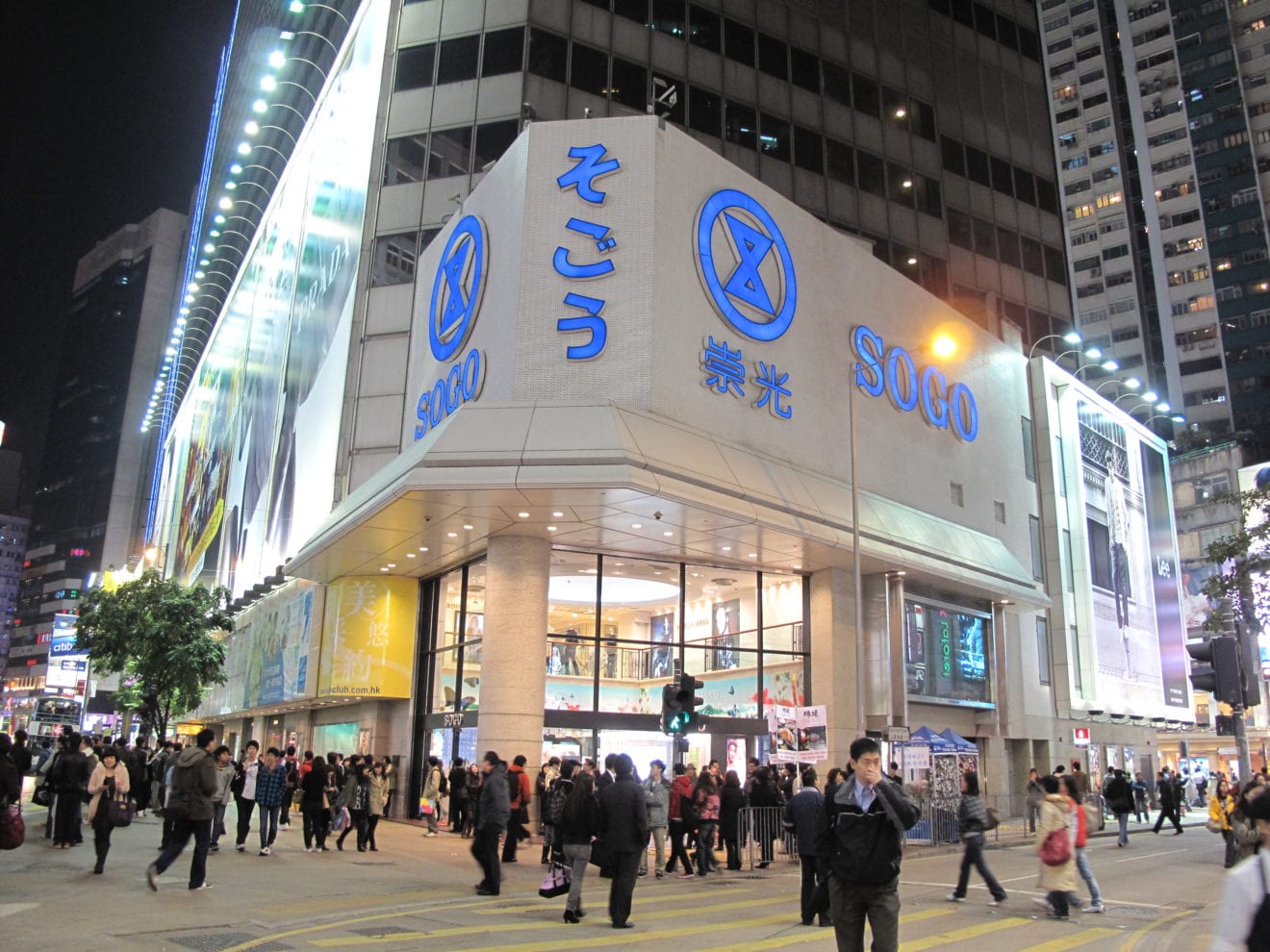
    Lifestyle International (1212) non- executive chairman Thomas Lau Luen- hung said the company is looking to open a third SOGO department store in Hong Kong and expects the investment to be no less than HK$5 billion.

    There are so far two SOGO branches in Hong Kong, one in Causeway Bay and one in Tsim Sha Tsui, Lau said.

    While the Tsim Sha Tsui branch focuses on selling cosmetics, Lau believes there is a market demand in Kowloon for a department store similar to the one in Causeway Bay.

    Lau said the company is still looking for a suitable location for the new store and that they would be more interested in opening and developing it through bidding for commercial sites rather than renting space from other companies.

    Lau said they have bid for commercial sites in the past without success but will continue to be involved as the government launches more commercial sites. He also did not rule out the possibility of partnering with other companies to develop the new store.

    He said the company is holding more than HK$6 billion in cash and has an investment portfolio of more than HK$4 billion which he said can be cashed in within 48 hours as the portfolio is comprised of mostly investments of high liquidity such as blue-chip stocks.

    Lifestyle International recorded a decline in net profit of 49.9 percent for the six months ended June 30 to HK$587 million compared to the same period last year, which the company said was attributable to the significant decline in investment income.

    Taking out the effect of net investment loss, the drop in net profit would be narrowed to 9.1 percent.

    The company proposed an interim dividend of 28.9 HK cents per share.

    Lifestyle’s landmark department store SOGO Causeway Bay’s same- store sales recorded a negative growth of 9.5 percent in the first half of this year compared to the same period last year as a result of weak local consumption, increased outbound travel and lower inbound tourists.

    Meanwhile, its Tsim Sha Tsui store recorded a 11.3 percent growth in same- store sales.

    Lau said the retail market was the worst in January and February and the decline bottomed out and remained flat during May and June.

    He does not expect there will be a rebound in retail market in the short term and retail sales will mostly likely remain flat in July and August.

    Lau said the fourth quarter will be an important indicator of the performance this year.

    Meanwhile, spinoff Lifestyle China (2136) recorded a decline in net profit of 6 percent to HK$157.4 million in the six months ended June 30.

    Lifestyle Properties Development (2183) recorded a drop in net profit of 67.9 percent to HK$148.6 million.