Tag: asia

  • China Jo-Jo Drugstores Reports Fiscal 2017 First Quarter Results

    China Jo-Jo Drugstores Reports Fiscal 2017 First Quarter Results

    China Jo-Jo Drugstores, Inc. (CJJD) yesterday announced financial results for its first fiscal quarter ended June 30, 2016.

    FY 2017 First Quarter Highlights:

    • Revenue was $20.9 million compared to $21.3 million a year ago
    • Gross profit increased 2.4% year-over-year to $4.5 million
    • Gross margin increased 90bps year-over-year to 21.4%, retail pharmacy gross margin increased 280 bps to 28.5% from a year ago
    • GAAP net income was $131,153 or $0.01 per diluted share compared to net income of $110,611 or $0.01 per diluted share a year ago
    • Adjusted net income was $754,000 or $0.04 per diluted share compared to adjusted net income of $277,481 or $0.02 per diluted share a year ago

    China Jo-Jo’s Chairman and CEO, Mr. Liu Lei commented, “Our results in the first quarter were temporarily impacted by lower pharmacy traffic due to preparation for the G20 summit in Hangzhou, and the unexpected disruption in the Yikatong referral business. We are proactively seeking referral arrangement with alternative providers of Pharmacy Benefit Management. We remain focused on increasing our gross margin and expanding the online and offline integration of our wellness offerings.”

    Net revenues for the quarter were $20.9 million compared to $21.3 million in the same quarter a year ago, a decrease of $375, 377 or 1.8%. Retail drugstores sales were $12.7 million and increased 4.4% compared to the prior year period. The Company continues to launch in-pharmacy virtual doctor clinics, provide access to mobile payment and implement other operational strategies to promote same store growth. The pharmacy store count increased to 61 as of June 30, 2016, compared to 59 stores a year ago.

    Online pharmacy sales for the quarter were $5.1 million compared to $6.0 million in the same quarter a year ago, a decrease of $894,689 or 15.0%. The decrease was mainly due to the decline in referral transactions from Yikatong on the Company’s own online pharmacy website. Excluding the RMB depreciation, sales via e-commerce platforms increased by 6.0% year over year. The Company is proactively seeking referral arrangements with alternative providers of Pharmacy Benefit Management.

    Net income was $131,153 or $0.01 per diluted share compared to last year’s first quarter net income of $110,611 or $0.01 per diluted share.

    Adjusted net income was $754,000 or $0.04 per diluted share compared to last year’s first quarter adjusted net income of $277,481 million or $0.02 per diluted share.

  • New Zealand’s Ministry of Health approves MS cloud services

    New Zealand’s Ministry of Health approves MS cloud services

    New Zealand’s Ministry of Health has officially approved the use of cloud services for advancing the country’s electronic health service capabilities.

    Specifically, Microsoft’s core cloud services Azure, Office 365 and Dynamics CRM Online have been deemed to meet the ministry’s requirements for storage of personal health information.

    Barrie Sheers, Managing Director for Microsoft New Zealand, said the government’s decision to use Microsoft’s Trusted Public Cloud services will be transformative for the eHealth agenda in New Zealand.

    “New Zealand’s health tech industry is today worth $1.3 billion to the local economy, and our country significantly punches above its weight on the international stage with health tech innovation,” he said.

    “With leading exporters like Orion Health and more than a hundred other smaller independent software vendors, the health tech sector in New Zealand is one that continues to grow and provide a burgeoning opportunity for export to the fast growing global health market.”

    With the advent of personalized medicine, genomics, intelligent sensors, advanced diagnostics and laboratory tests, data usage by health organizations will also increase as the sector builds ever more advanced models of the human body, according to Gabe Rijpma, senior director of health and social services Asia at Microsoft.

    “Being able to process all this data, store it, analyze it and make intelligent predictions on the results will usher in a new era of healthcare that will radically transform the way care is both diagnosed and delivered,” he said.

    Rijpma who is based at Microsoft NZ’s Christchurch office, said the local health tech sector has already been rapidly adopting the public cloud to develop futuristic solutions, but they have not been able to sell those solutions in international markets until now.

    “Now the local health tech sector will be able to use New Zealand as a fertile ground for new innovation and also deliver their world firsts here, too,” he added.

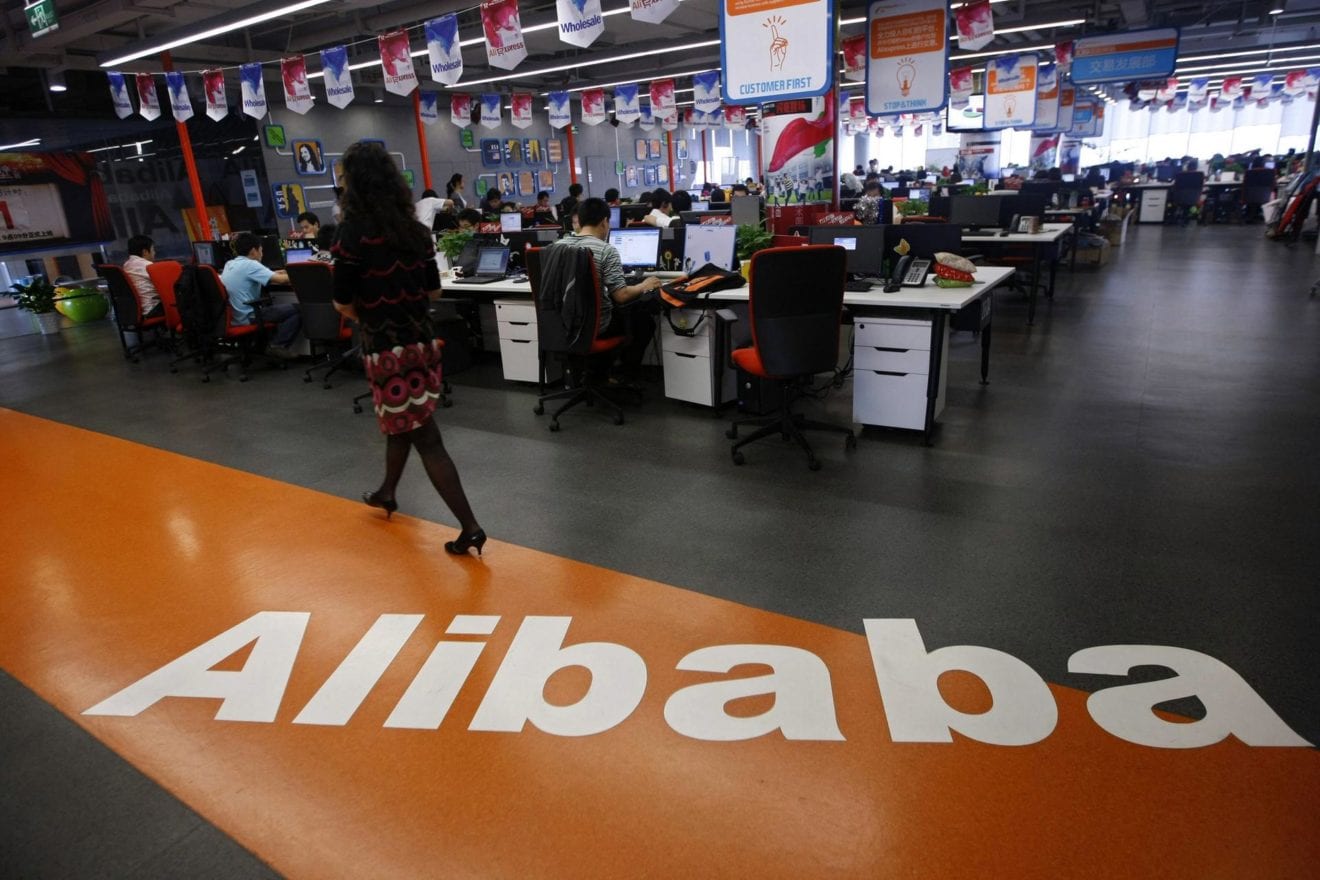
  • Alibaba revenue grows 59% in June quarter

    Alibaba revenue grows 59% in June quarter

    The Alibaba Group reported a 59% revenue growth (reaching $4.84 billion) for the quarter ended June 30.

    Revenue from its China retail marketplaces ($3.51 million), including Taobao and TMall, also rose 49% from a year earlier.

    It is, however, in the area of mobile that the e-commerce giant had made huge strides.

    Alibaba Group’s Chief Financial Officer Maggie Wu reported that mobile monetization – the commission the group charges for each transaction –  reached 2.80% this quarter, surpassing the non-mobile monetization rate for the first time since the company commenced mobile monetization in the fourth quarter of 2013.

    Mobile monthly active users (MAUs) on the China retail marketplaces also grew to 427 million in the month ended June 30, compared to 410 million in the month ended March 31. This represents a net addition of 17 million MAUs in the quarter and a 39% increase from 307 million a year earlier.

    The company attributes its strong growth in mobile users to the increased adoption of mobile devices by consumers as the primary method of accessing its platforms. Daily and monthly active users ratio of the Taobao App, for example, was 40% in June 2016.

    Joe Tsai, co-founder and vice chairman of Alibaba Group, said during the earnings conference call, that the company overall growth was unprecedented since Alibaba became a public company.

    He noted the tremendous value proposition of the e-commerce platform with 434 million highly engaged customers in China that even its China retail marketplaces have done well against the backdrop of economic headwinds and reduced expectations from the industry.

    He said features that focus on community, sharing,  originality, immediacy, and data-driven customization are capturing the imagination of today’s generation of young consumers. Around 75% of users on the Taobao app, for example, are below 35 years of age.

    “Taobao has fully evolved from a transactional platform to a social commerce platform driven by China millennials,” said Daniel Zhang, Chief Executive Officer of Alibaba Group. “Mobile Taobao enjoyed daily active users (DAU) versus MAU ratio of 40% in June, which points to a high degree of stickiness among our mobile user base.”

  • Spark New Zealand opposes Vodafone-Sky merger

    Spark New Zealand opposes Vodafone-Sky merger

    Spark New Zealand has revealed it is formally opposing rival Vodafone New Zealand’s planned merger with Sky Network Television.

    The operator announced it has made a submission to competition regulator the Commerce Commission opposing the proposed merger on the grounds that Spark feels it is not in the best interest of consumers.

    Spark GM for regulation John Wesley-Smith said based on Sky’s current wholesale market arrangements for premium sports content, the company has told the Commerce Commission that the merger should not go ahead in its current form.

    “Sky has a monopoly on rights for premium ‘national sports’ in New Zealand. Given Kiwis’ love of these sports, they are ‘must have’ rights for media content providers,” he said.

    “Sky’s business model seems increasingly focused around sports, which underlines how effective their monopoly is in this space. The proposed merger with Vodafone is likely to entrench that monopoly, and that’s something all New Zealanders should be concerned about.”

    He said Spark has previously abandoned an earlier reselling deal with Sky three years ago because it was not financially viable, and it relied on an outdated distribution model involving reselling Sky boxes for pay TV services that no longer works for the operator’s customers.

    “We believe if the Commerce Commission blocked the proposed merger, Sky would be forced by commercial realities to make all of its sports content available online and on-demand – and via wholesale arrangements with lots of parties that help distribute this content to New Zealand consumers,” he said.

    Sky and Vodafone announced a proposed NZ$3.44 billion ($2.5 billion) reverse takeover deal in June involving Sky Network TV buying the operator in exchange for a 51% stake in the combined company.

  • Singtel said to plan to increase stake in AIS

    Singtel said to plan to increase stake in AIS

    Singtel is reportedly in talks regarding indirectly increasing its stake in Thailand’s top mobile operator AIS.

    The operator is negotiating with Temasek Holdings regarding a sale of part of the investment company’s 41% stake in Intouch, a major shareholder in AIS.

    Temasek Holdings is a Singaporean state-owned investment company which holds a 51% majority stake in Singtel. Temasek is also Intouch’s biggest shareholder with a 41% stake, while Intouch itself owns 40% of AIS. Singtel’s stake in AIS is currently 23%.

    Singtel and AIS previously held discussions regarding the Singaporean group increasing its stake in the Thai operator in 2014, but the negotiations were put on hold due to political and economic instability in the nation.

    But Bloomberg’s source stated that the companies involved believe there is renewed opportunity to pursue a deal now that the situation is becoming more stable.

    Singtel’s regional mobile associates are important to the operator’s financial performance. The company’s recently announced first quarter results  show that while the company’s net profit grew just 2%, pre-tax earnings contributions from the company’s regional associates climbed 19%.

    Temasek is meanwhile under pressure to pursue investments with a greater potential for returns after reporting the first decline in its portfolio for seven years during the financial year ending in March.

  • Ooredoo Myanmar reaches 500,000 LTE subs

    Ooredoo Myanmar reaches 500,000 LTE subs

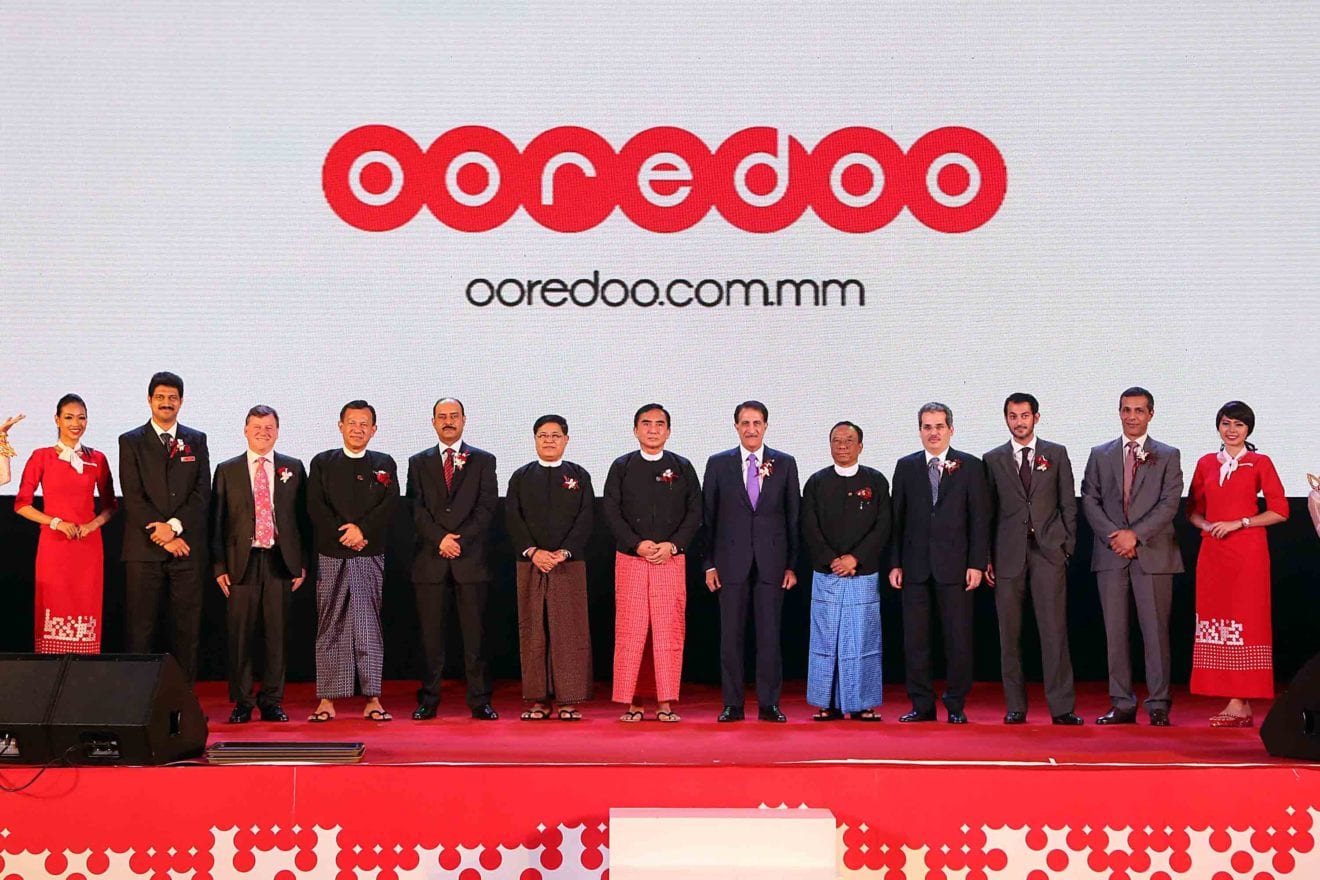
    Ooredoo Myanmar has signed up 500,000 LTE users since launching 4G services in May and is pushing ahead with the operator’s ambitious rollout plans.

    The operator’s CEO Rene Meza told that the operator now has a total 4G population coverage of 4.6 million people in Yangong, Mandalay and Nay Pyi Taw.

    The company is concentrating its 4G rollout efforts on urban areas. It has a target of covering half of Yangon’s townships, all of Mandalay and about 90% of Nay Pyi Taw.

    Main rival Telenor Myanmar has been later to offer 4G. The operator launched in Nay Pyi Taw in July and is at the testing phase in Yangon and two other cities.

    Telenor is also taking a different strategy of focusing its rollout efforts away from heavy usage areas to minimize the impact on existing 3G services.

    Both Telenor and Ooredoo’s 4G networks are currently data-only, and neither operator currently charges a premium for 4G. Meza noted that 80% of the operator’s Myanmar customers are now using mobile data.

    But both operators’ 4G ambitions will be dependent on the acquisition of more mobile spectrum. The government plans to auction 40 MHz in the 2600-MHz band in mid-October and to auction 1800-MHz spectrum by the end of the year.

  • Kantar Worldpanel partners with Facebook to expand advertising measurement service

    Kantar Worldpanel partners with Facebook to expand advertising measurement service

    Kantar Worldpanel has formed a global partnership with Facebook that brings Facebook mobile ad exposure data into Kantar Worldpanel’s Consumer Mix Model (CMM) service.  In Asia, the service has launched in South Korea, Taiwan, Thailand, Philippines, and Vietnam, and will soon be available in Indonesia and Malaysia as well.

    The enhanced CMM tool combines Facebook’s mobile ad exposure data (in addition to desktop) with Kantar Worldpanel’s continuous consumer packaged goods (CPG) purchase data to provide brands with an accurate assessment of the effectiveness of their cross-media advertising campaigns. 

    The advertising landscape has witnessed rapid change in recent years as brands increasingly turn to digital formats.  In April Facebook announced that its advertising revenue had grown by 57 percent to $5.2 billion in the first quarter of 2016 alone, with advertisers drawn to its increasingly large user base. 

    The tool allows brands and advertisers to understand the real impact of individual advertising campaigns on actual sales and the contribution Facebook and other media have on their return on investment.  This in turn will help them to optimise their media planning and ultimately improve the efficiency of their media investment.

    Josep Montserrat, chief executive of Kantar Worldpanel, commented: “The partnership allows our experts to build a solid understanding of how advertising works and the role that Facebook plays in a wider campaign context.  Working with Facebook will allow us to inspire even better decisions to optimise advertising budgets and maximise advertisers’ return on investment.”

    Marcy Kou, chief executive of Kantar Worldpanel Asia, said: “It brings tremendous potential for advertisers on Facebook as the number of smartphone users continues to grow in Asia Pacific. Retail ecommerce in this region is going stronger than the rest of the world, and is still considered the “it” market. Yet there hasn’t been a reliable method to measure the effectiveness of mobile ads, and with this partnership, we will finally be able to.”

    Patrick Harris, director of Global Agency Development at Facebook, said: “We believe that strong partnerships with our agency partners are key to providing advertisers with the tools they need to measure true business value on Facebook.  We are excited to help inform Kantar Worldpanel’s Consumer Mix Model solution by bringing in our mobile ad exposure data in a privacy-safe way.”

    Kantar Worldpanel’s continuous CPG purchase panels are already widely used by the advertising community worldwide to understand the effect of cross-media advertising.  Its measures take into account in-store promotions and consumer loyalty to determine the full picture behind consumer purchase behaviour. 

    This partnership with Facebook is part of a wider alliance between WPP and Facebook to activate WPP’s data proprietary assets within Facebook, which was announced in April 2015.

  • First JCB card in Myanmar Introduced by Ayeyarwady Bank

    First JCB card in Myanmar Introduced by Ayeyarwady Bank

    Ayeyarwady Bank (AYA Bank), a major commercial bank in the Republic of the Union of Myanmar (Myanmar), Myanmar Payment Union Public Co.,Ltd (MPU), and JCB International Co. Ltd. (JCBI), the international operations subsidiary of JCB Co., Ltd., today announced that AYA Bank has launched the first JCB credit and debit card as AYA Universal MPU-JCB Co-Brand cards in Myanmar. Myanmar is the 4th country in the Mekong region where JCB cards are issued, along with Thailand, Vietnam and Laos.

    The Universal AYA MPU-JCB Co-Brand Card combines the MPU brand and JCB brand. Cardmembers can use MPU’s nation-wide merchant network in Myanmar and JCB’s international merchant network with over 31 million locations globally.

    The card has 4 different kinds of product, Universal Platinum credit card, Universal Gold credit card, Universal Silver credit card, and Universal debit card. All the cardmembers can enjoy JCB privileges such as JCB Plaza, and special offers at selected merchants all over the world. JCB offers Platinum cardmembers exclusive JCB Platinum services, such as JCB Platinum airport lounge service, JCB Platinum Concierge Desk, and Special JCB Platinum Hotel Services.

    U Zaw Zaw, Founder and Chairman of AYA Bank commented, “The bank has always been committed to providing our customers higher quality service and experience. This co-brand arrangement will enable cardholders to have more flexible options for their payments in foreign countries. This is another milestone in Myanmar card payment market, to promote the country’s transition to a cashless economy.”

    Kimihisa Imada, Deputy President of JCB International said, “Myanmar is an important market for JCBI. With its growing economy and population, Myanmar has great potential for growth in the card payment market. With the start of JCB card issuing in Myanmar, cardmembers can have a new choice of payment and experience the convenience of shopping abroad with JCB’s worldwide merchant network.”

  • Apple and Samsung continued to lose smartphone market share in China during Q2

    Apple and Samsung continued to lose smartphone market share in China during Q2

    Smartphone shipments in China during the second quarter rose 14.9% on a year-over-year basis to 149 million units. Sequentially, shipments rose 2.7%. This growth is not coming from high-end manufacturers like Samsung and Apple. Instead, entry-level handsets and mid-range 4G models are capturing attention from subscribers to the nation’s three major carriers. China Mobile, China Unicom and China Telecom are each offering subsidies on these less expensive models.

    This has resulted in a build up of inventory in the country’s retail channels. During the first two quarters of the year, manufacturers shipped more phones than the number that consumers were buying. As a result, analysts expect an “inventory correction” during the fourth quarter. This should result in manufacturers slowing down shipments of smartphones to retail channels in order to keep inventories lean.

    Digitimes own research has Huawei listed as the top smartphone producer in China with a 14% market share from April through June. The 12.7% share earned by Oppo during the same time period was next, followed by Vivo and Xiaomi with 11.2% and 10.4% of the market, respectively. Apple was fifth with a single digit slice of the pie.

    In an earlier report, Apple was said to have claimed 10.8% of the Chinese smartphone market during the first quarter of this year. That was a decline from the 12% share Apple controlled in the first quarter of 2015. Now in single digit territory, the company is looking at India to provide future growth in iPhone shipments.

    source: Digitimes

  • Metro Manila malls love Pokemon GO for bringing increased foot traffic

    Metro Manila malls love Pokemon GO for bringing increased foot traffic

    “A few days after the Philippine launch of Pokemon GO, mall operators reported a surge in foot traffic from people hooked on the augmented reality mobile phone-based game,” reports Doris Dumlao-Abadilla in Philippine Daily Inquirer.

    Maricris Bernardino, Ayala Malls head of marketing, said, “Since the launch of Pokemon Go in the Philippines, our parks and malls have filled with Pokemon hunters. Gamers continue to play and visit our malls despite the rains.” Several unique Pokemon monsters have reportedly been found in Ayala Malls’ gardens and parks.

    For his part, Harold Brian Geronimo, assistant vice president at Megaworld Corp, noted that Eastwood City’s daily average foot traffic “more than doubled” after the launch of Pokemon GO. Geronimo added that foot traffic was also higher than McKinley Hill, Burgos Circle, and Venice Piazza. This, he explained, led to an incease in dining sales.

    It’s the same case with SM Supermalls. In fact, last Fri night, Aug 12, SM hosted a nationwide Pokemon GO “lure party” across its 50 SM Supermalls and SMDC Properties.

    CNN Philippines reports that Robinsons Malls, Araneta Center, Bonifacio High Street, UP Ayalaland Technohub, Greenfield District Central Park, The Podium Mall, and Capitol Commons also hosted lure parties last Aug 12.

  • APT launches IoT dual-network platform

    APT launches IoT dual-network platform

    Taiwan’s APT has launched what it is calling the market’s first IoT dual-network multi-platform, named IoT by Gt Smart Life.

    The platform combines LTE connectivity from APT with a  LoRa network deployed by network operator FHNet. APT has already rolled out 500 LoRaWAN hotspots in Greater Taipei and Taoyuan to support the dual network.

    APT is also providing application development and service delivery, while Foxconn is providing the hardware.

    The companies have signed up key partners including domestic and overseas manufactures for the platform, including Actility, IBM, Semtech, Cisco, Advantech and Shin Kong Security. Certified partners in the project are entitled to free use of the LoRa network.

    Actility’s ThingPark standards-compliant IoT solution is being used to power the platform.

    APT has already launched the first demonstration applications for the platform, which include a smart city application covering the use of smart water, electricity and gas meters, as well as a goods delivery tracking service suitable for both indoor and outdoor tracking.

  • Circle K Hong Kong sales defy downturn

    Circle K Hong Kong sales defy downturn

    Circle K Hong Kong sales rose 4.7 per cent in the first half of this year, defying the retail downturn.

    Parent Convenience Retail Asia has reported an overall turnover boost of 3.4 per cent to HK$2.339 billion. Same-store sales grew 5.2 per cent year on year in the six months to June 30.

    Turnover in the company’s Saint Honore bakery business decreased slightly, by 0.5 per cent to $496 million, with low-single-digit growth in comparable store sales in Hong Kong.

    Convenience Retail Asia has 324 Circle K stores in Hong Kong, 118 in Macau, Zhuhai and Guangzhou; and 94 Saint Honore stores in Hong Kong and 50 in Macau, Shenzhen and Guangzhou.  In the first half of this year, it opened six new Circle K stores in Hong Kong and closed 10 for a net decrease of four, and it opened seven new Saint Honore stores in Hong Kong and closed two for a net increase of five.

    The group’s net profit increased 68.4 per cent to HK$52 million for the six months, primarily due to the disposal of Circle K business in Guangzhou last year..

    “Despite weak retail market sentiment, convenience store and bakery operations achieved

    satisfactory comparable store sales growth in Hong Kong,” the company said in a stock exchange filing. “Core operating profit increased 7% on back of stabilised operating costs and improvement in Saint Honore operations.”

    With the stabilisation of the commercial property rental market, store expansion has become a key growth strategy for the Saint Honore chain.

    Convenience Retail Asia says during the second half of 2016, it will seek to grow profit at existing stores “by continuing to improve efficiency, reduce costs, and drive sales through innovative product development, marketing and category management”.

    “With the commercial rental market on the downswing, cautious store expansion will play a role in driving revenue across the convenience store and bakery businesses.

    “Although the business environment has been challenging, the group’s core operations remain

    strong and healthy, and it has a solid balance sheet with a good cash position. We will continue to monitor the market closely for merger and acquisition opportunities that can help us grow our business, at the same time as we strive for healthy organic growth.”

  • For Indonesia, assisted e-commerce may just be the next big thing

    For Indonesia, assisted e-commerce may just be the next big thing

    In the case of Indonesia, only a small portion of the population can enjoy such benefits despite the rapid growth of smartphone sales. Over the past few years, the boom of e-commerce has opened up many possibilities for Indonesians. From the rise of young entrepreneurs to a chance to purchase rare goods from overseas, we have seen how the internet drives the interactions between marketers and buyers onto the next level.

    Among the litany of advantages, it is evident that consumers would benefit the most from the thriving e-commerce through price competition. The availability of e-commerce platforms allows buyers to browse varieties of products and pick those that are offered at the most reasonable price.

    Putting aside the argument that blames e-commerce for promoting consumerism, the new shopping platform has undoubtedly helped customers make informed decisions and ensure prudent spending of their money.

    In the case of Indonesia, only a small portion of the population can enjoy such benefits despite the rapid growth of smartphone sales. That is because, in part, only 20 per cent of the country’s population of 250 million own bank accounts, a prerequisite for making payments on many e-commerce platforms. Meanwhile, only about 5 million of Indonesia’s 125 million-strong workforce have credit cards and hence more convenient access to e-commerce.

    Apart from the technical barriers, lack of trust has halted potential customers from shopping online. Futhermore, while many Indonesian e-commerce players have been focusing on attracting tech-savvy end users, these unbanked, technology illiterate segments have remained untouched in the business. With such a huge gap, there are a number of reasons why assisted e-commerce — in which online purchases are made with assistance from a third party — serves as an alternative model to help more people access e-commerce and relish its benefits.

    Filling the Gap

    The first and foremost factor is, of course, the huge room for expansion in the local e-commerce market. Although they have been enjoying continuous growth in the number of registered sellers and transactions, major players such as online marketplaces Bukalapak and Tokopedia have been mainly relying on purchases made by end users who browse and buy products for their own use. The abundant parts of the society who have neither means nor knowledge to make online purchases, meanwhile, will remain at a distance in the absence of efforts or innovations that can help them understand and, therefore, access online shopping platforms.

    And this is where the assisted e-commerce providers start to fill the gap. Jakarta-based Kudo, for instance, claims that it has managed, as of last week, to recruit more than 100,000 marketers, or agents, across the archipelago within just a few months after the launching of its application early this year. Running on the Android operating system only, the Kudo application serves as a mobile online store for its agents, who receive a certain commission for every product they manage to sell to people around them.

  • Indonesian airlines have been cleared to begin flying to the US

    Indonesian airlines have been cleared to begin flying to the US

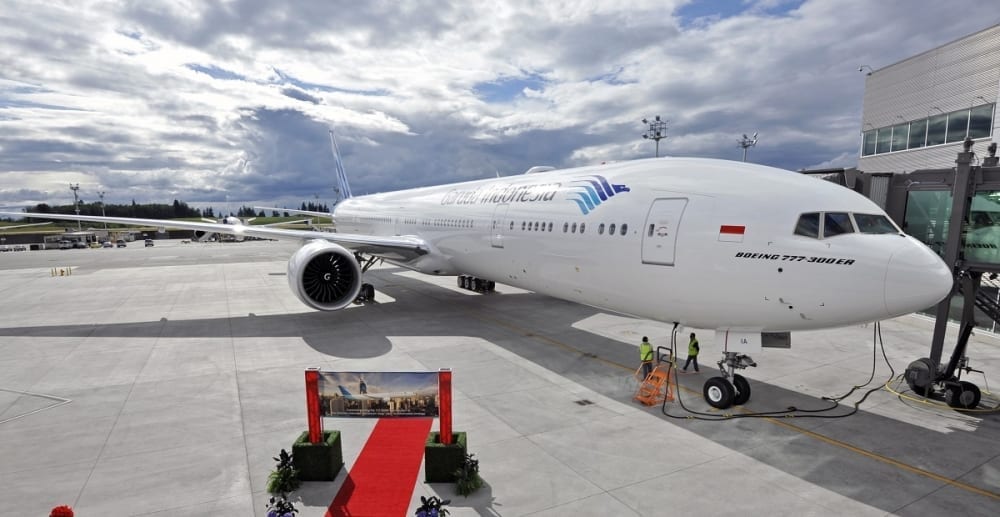
    Indonesian airlines have been cleared to begin flying to the US, after a safety review by regulators.

    The US Federal Aviation Administration (FAA) said Indonesia had been upgraded to “Category 1” – the top-tier air-safety rating – after nearly a decade.

    Indonesia’s fast-growing aviation market suffered several high-profile accidents and was downgraded in 2007.

    The European Union also recently lifted a ban on three Indonesian airlines.

    After a safety review in March, Indonesia now complies with International Civil Aviation Organization (ICAO) safety standards, the FAA said in a statement.

    “With the International Aviation Safety Assessment (IASA) Category 1 rating, Indonesian air carriers…can establish service to the United States and carry the code of US carriers,” the FAA said.

    The South-east Asian nation has had 13 fatal plane crashes in the past decade, according to Flightglobal data, higher than the global average.

  • Goodyear Indonesia eyes SUV market with new tire

    Goodyear Indonesia eyes SUV market with new tire

    Publicly listed tire maker Goodyear Indonesia (GDYR) is eyeing a bigger share of the country’s growing sports utility vehicle (SUV) market by introducing a new midsize SUV tire.

    The new product, called Wrangler TripleMax, will be launched in November. It is expected to double the size of the company’s SUV market to around 10 percent in 2017, up from the current 5 to 6 percent.

    “The SUV has become a sexy market for us as it has seen a constant growth within the Asia-Pacific region in recent years, including in Indonesia,” Arfianti Puspitarini, Goodyear Indonesia’s consumer product and trade marketing manager, said during the Gaikindo Indonesia International Auto Show (GIIAS) in Tangerang, Banten, last week.

    Puspitarini even said that SUV cars “were like a second living room”, especially for people living in big cities like Jakarta.

    Sales of SUV cars, such as Daihatsu Terios, Mitsubishi Pajero Sports and Toyota Fortuner, increased 15.28 percent year-on-year to 131,966 units throughout 2015.

    Their share accounted for 13 percent of overall car sales of around 1.01 million units last year, according to the Association of Indonesian Automotive Manufacturers (Gaikindo). Entering 2016, the SUV segment made up 22.1 percent of total car sales of 267,228 units in the first quarter.

    Goodyear claims that the Wrangler TripleMax, which was also launched in Thailand and the Philippines last month, would optimize a car’s braking system, with a two-meter shorter braking distance compared to competitors in the midsize SUV segment.

    Goodyear Indonesia sales and marketing director Yedi Yunadi Sondy said the new product would fill in the market of the company’s previous product, the Wrangler HP All Weather, which was sold for between Rp 700,000 (US$53.35) to Rp 1.5 million each.

    It sells premium SUV tires as well, with price tags ranging from Rp 1.2 million to Rp 2.2 million each, that cater to high-end vehicles, such as Nissan Terrano or Mazda CX7.

    The company’s first-quarter financial report showed that it booked $40.6 million in revenues, 2.9 percent lower than the first quarter of 2015. More than half of the revenues came from domestic sales, which surged 8.3 percent year-on-year.

    The report also showed that it managed to cut various business costs that led to $629,344 in net profits in the January to March period, overturning the $205,864 of net losses that it posted in the same period last year.

    During a May interview in Jakarta, Goodyear Indonesia corporate secretary Wicaksono Soebroto said the company had decided not to expand to other export markets this year.

    On the contrary, it plans to strengthen its domestic market following a slight recovery in the country’s economy and the government’s goal to boost infrastructure projects nationwide.

    “Those infrastructure projects certainly need lots of trucks [to transport building materials]. We can also provide more tires for them,” said Goodyear Indonesia managing director Allan Loi.

    Its overseas markets currently consist of those in Southeast Asia, Oceania and in other countries. It suffered from a 78.39 percent plunge in annual sales in Oceania last year, mainly because of an 80.13 percent decline in Australia.

    At present, Goodyear has 89 outlets in 27 provinces across the country, with 26 outlets located in the Greater Jakarta area.