Tag: asia

  • Starbucks investing in upscale chains

    Starbucks investing in upscale chains

    Starbucks plans to open a new brand of stores called Starbucks Reserve-only starting next year.

    The coffee chain has also joined global investment team, Milan-based Angel Lab and Pekepan Investments to expand the footprint of standalone boutique bakery’s and cafes into international markets.

    Starbucks Reserve-only will offer premium, small lot reserve coffee in stores that will be approximately twice as large as current Starbucks stores and will feature ‘more of a cafe atmosphere’.

    “We recognise our customers expect and desire a higher level of product and we want to give it to them,” said Howard Schultz, company chair and CEO.

    The company plans to open the new stores next year in hundreds of locations.

    Schultz said the new brand is part of a broader company plan to improve and expand its food offerings.

    The company also announced earlier it has partnered with Italian restaurant Princi, the boutique bakery and café founded by Rocco Princi in 1986 known for its artisan breads created from traditional family recipes.

    Princi’s menu will become the exclusive food offering in all new Starbucks Roastery locations, including Shanghai and New York and will be fully integrated into all new Starbucks Reserve-only stores starting 2017.

    The investment team, which includes Milan-based Angel Lab and Pekepan Investments, will focus on expanding the number of standalone Princi locations worldwide as well as making Princi the exclusive food purveyor at the new Starbucks Reserve Roastery and Tasting Rooms in Shanghai and New York. The Shanghai and New York Roastery locations are on track to open in 2017 and 2018, respectively.

    “We have never baked in our stores in 45 years. But all of that will change with the creation of this unique partnership,” Schultz said.

    “Rocco and his team at Princi possess a passion for handcrafted food and artisanal baked goods that mirrors how I feel about our coffee. The attention to detail, the care invested in selecting the ingredients and the artistry of preparation is second only to the service Rocco offers customers inside his Princi stores.”

    “I can think of no better pairing for our most premium coffee experience and am excited by the possibilities we envision in Princi food elevating every daypart – breakfast, lunch, and dinner – in Starbucks Roasteries and Reserve Stores.”

    Currently, Starbucks has nearly 24,000 stores worldwide and offers Reserve coffee in 2,000 locations in 30 countries.

  • Real Singapore retail sales continue to decline

    Real Singapore retail sales continue to decline

    Real Singapore retail sales in May rose on April’s figures – but remain down year-on-year.

    According to Statistics Singapore, total retail sales (seasonally adjusted) increased 1.4 per cent in May 2016 over April. Excluding motor vehicles, retail sales increased an even better 2.3 per cent.

    But compared to May 2015, retail sales decreased 3.3 per cent after removing motor vehicle sales from the data. Including vehicles, total sales rose 3 per cent year-on-year.

    After seasonal adjustment, retail sales of watches & jewellery, furniture & household equipment, food & beverages, optical goods & books, department stores, apparel & footwear, medical goods & toiletries and petrol stations increased between 0.8 per cent and 6.5 per cent in May 2016 compared to April.

    Retail sale SG May 16

    In contrast, retail sales of recreational goods, mini-marts & convenience stores, phones & computers and supermarkets decreased by between 0.4 per cent and 6.3 per cent in May over April 2016.

    Year-on-year, retail sales of furniture & household equipment and medical goods & toiletries grew by 3.1 per cent and 1.9 per cent respectively.

    Conversely, retail sales of phones & computers and petrol service stations declined 17.3 per cent and 14.9 per cent respectively. Sales of recreational goods, optical goods & books, watches & jewellery, food & beverages, supermarkets, mini-marts & convenience stores, apparel & footwear and department stores also fee, by between 1.9 per cent and 8.7 per cent. .

    The total retail sales value in May 2016 was estimated at $3.7 billion, higher than the $3.6 billion in May 2015.

    Food & beverage service sales

    Retail sale SG FnB May 16

    Sales of food & beverage services (seasonally adjusted) increased 0.9 per cent in May over April.

    Compared to May last year, sales of food & beverage services increased 0.7 per cent.

    The total sales value of food & beverage services in May 2016 was estimated at $690 million, higher than the $685 million in May 2015.

    Year-on-year, sales by ‘other’ eating places grew by 6.7 per cent and by fast food outlets by 1 per cent.

    However, turnover of food caterers decreased 3.7, and of restaurants by 3.6 per cent.

  • Telenor will sit out of Indian spectrum auction

    Telenor will sit out of Indian spectrum auction

    Telenor Group has revealed it will not participate in India’s upcoming spectrum auction, leading to speculation about the company’s future in the market.

    The company has decided after thorough consideration not to participate in the auction, “as we believe the proposed spectrum prices do not give an acceptable level of return,” Telenor said in its second quarter report.

    “We will continue our efforts to meet customer demands and grow the business based on the current spectrum holding. As we evaluate our options in India, we will be disciplined on capex,” the report states.

    Telenor reported revenue from India of 1.55 billion kronor ($181.9 million) in the second quarter, up 13% from the prior year. But Telenor India also reported a wider loss for the quarter of 132 million kronor, and 3.32 billion kronor for the first half of the year.

    Given that Telenor only operates in six of India’s 22 telecom circles, and exclusively holds 1800-MHz spectrum – limiting its ability to effectively roll out 4G services – Observers had considered additional spectrum to be essential to Telenor India’s ongoing operations.

    With the operator electing to sit out of the auction, some experts are speculating that the company could pull out of the market.

    By contrast, Telenor’s operations in Myanmar are already cashflow positive, the Q2 results show. Telenor Myanmar reported an operating profit of 614 million kronor, on the back of 3% higher revenue of 1.49 billion kronor.

    Telenor Myanmar added 1.4 million new mobile subscriptions during the quarter, taking its total base to 16.9 million. But ARPU in local currency decreased by 8% due to promotional spending and increased penetration in rural areas.

  • Telkom launches 1Gbps broadband for enterprises

    Telkom launches 1Gbps broadband for enterprises

    Indonesia’s PT Telkom has launched a new line of high-speed broadband services for enterprise customers offering speeds of up to 1Gbps.

    The operator’s new Smart Office Pro services are designed to meet business customers’ requirements for high-speed broadband in the digital age.

    The company is offering a 1Gbps package bundled with up to 1,000 minutes of free voice calls, IPTV and bundled services including storage, hosting and managed services.

    At a press conference announcing the new offers, Telkom director enterprise and business services Muhammad Awaluddin said the service aims to help customers benefit from increased efficiency, flexibility, stability, sustainability ad continuity.

    He added that the launch is in line with the operator’s commitment to building a digital society in Indonesia, which itself also aligns with the government’s vision of transforming the nation into a digital economy.

  • Philippines’ new ICT chief orders spectrum audit

    Philippines’ new ICT chief orders spectrum audit

    The chief of the new Philippines Department of Information and Communications Technology (DICT) has ordered the inventory of used and unused telecoms spectra.

    In his first public speaking engagement and media interview since assumption into office on July 1, DICT Secretary Rodolfo Salalima said frequency is a scarce public resource and the patrimony of the nation.

    “I do not want public telephone entities to be warehousing frequencies, meaning getting assigned frequencies from the government, storing it without using it but using it for speculative purposes,” he said.

    He clarified that this act is contrary to the Philippine Constitution and a public service law which states that frequency must be assigned only to those who can make it effective and efficient use of it.

    “If they (telecommunications companies) have not used these frequencies within a reasonable time as stated in the position of giving or assigning to them the frequency, we better start revoking these frequencies because it ought to be assigned to telcos that can effectively and efficiently utilize them,” he added.

    The DICT Chief, however, gave assurances that due process will be observed if the department will resort to revocation of spectrum licenses or permits if some telcos are found to have not used them within the prescribed period.

    “We will hear them out,” he said, further clarifying that what telcos pay for is only the use of the frequency. “They do not become owners of these frequencies because they can never be owned under the Philippine Constitution.”

    The issue stemmed from the recent co-purchase of the telco business of San Miguel Corporation (SMC) by the country’s two dominant carriers – PLDT and Globe Telecom, which the government’s antitrust body, the Philippine Competition Commission (PCC) now wants investigated.

    Salalima said frequency is crucial to the operations of telecommunications companies in servicing the public.

    “This is the reason why to my mind, PLDT and Globe have to purchase control of the holding company of SMC so that at least they can have part of the frequency (not the entirety) needed for them to further improve the service,” he said.

    He clarified though that he is leaving it to the PCC to decide on the issue of whether the telco buyout deal is in the best interest of the public. His concern is the efficient use of spectrum, especially in light of the need to improve internet connection speed in the country and public services.

    Newly elected President Rodrigo Duterte has given local telecommunications players one year to shape up telco services and internet speed or ship out.

    The DICT, which was given the mandate to make policies and plans in regard to telco services and the country’s ICT infrastructure, is still in the transition period. It is currently awaiting the Implementing Rules and Regulations (IRR) of the law that created the new department only last May.

  • China’s Growing E-Commerce Addiction

    China’s Growing E-Commerce Addiction

    I am admittedly an Amazon shopping addict, so it was interesting to have a long conversation recently with Chinese colleagues in Nanning about their own growing addictions to online shopping. They are big fans of Taobao, although they also use other e-commerce sites likeJD.com and Suning.com. My colleagues are representative of a larger trend of Chinese consumers shifting partly from brick-and-mortar shopping to online shopping, and expanding online shopping in its own right. E-commerce now represents a high-growth sector.

    Though relatively new to online shopping, Chinese consumers already make up for almost half of global online retail sales, and are only growing in numbers. Online retail sales amounted to $581.61 billion in 2015, surging 33.3% from the previous year. The volume of online sales in China now exceeds that in the US, and online sales are expected to grow 20% annually by 2020. Furthermore, online shoppers represent the vanguard of China’s growth story, since they tend to be young, urban, and highly educated. They have a different attitude toward shopping than older generations, which were shaped as savers by more challenging political and economic circumstances. Younger shoppers are more willing to spend.

    Compared to brick-and-mortar retailing in China, e-commerce sales often experience fewer licensing requirements and quicker customs clearance. As a result, e-commerce is to some extent replacing shopping in physical marketplaces, and will comprise 42% of growth in private consumption by 2020 according to Boston Consulting and AliResearch. For this reason and others, hypermarkets such as Carrefour and Walmart have shut down a number of stores. Online shopping also allows consumers to access products that are not available in stores, including organic foods and some luxury products from overseas.

    As consumers in Tier 1 and Tier 2 cities (think Beijing, Shanghai, but also Chongqing and Chengdu) become increasingly savvy online shoppers, there continues to be large potential for online sales particularly in Tier 3 and 4 cities. E-commerce penetration amounts to 89% in Tier 1 and 2 cities, but only amounts to 62% in Tier 3 and 4 cities, as per the McKinsey iConsumer China 2016 Survey. The online shopper base in Tier 3 and 4 cities is 257 million, a population number that is larger than that of almost all countries in the world (except India, China as a whole, and the United States). That is serious market potential.

    To keep up with increasing demand from smaller urban and rural areas, online retailers are seeking to expand logistics infrastructure and services. For example, Alibaba ’s logistics arm, Cainiao, now owns 180,000 express delivery stations for the shipment of products and has recently expanded its fresh food distribution centers across China. The firm recently completed its first external funding round and is expected to spend $16 billion over the next five to eight years to expand its network. Growth in China’s underdeveloped logistics sector can certainly be expected to accompany the expansion of e-commerce.

    *originally posted by Forbes

  • chuang x yi concept store by lukstudio in shanghai

    chuang x yi concept store by lukstudio in shanghai

    chuang x yi concept store by lukstudio in shanghai

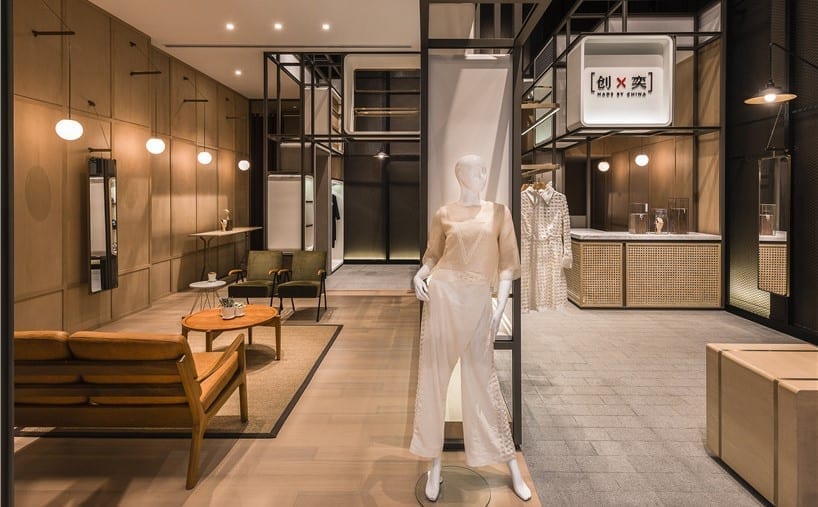
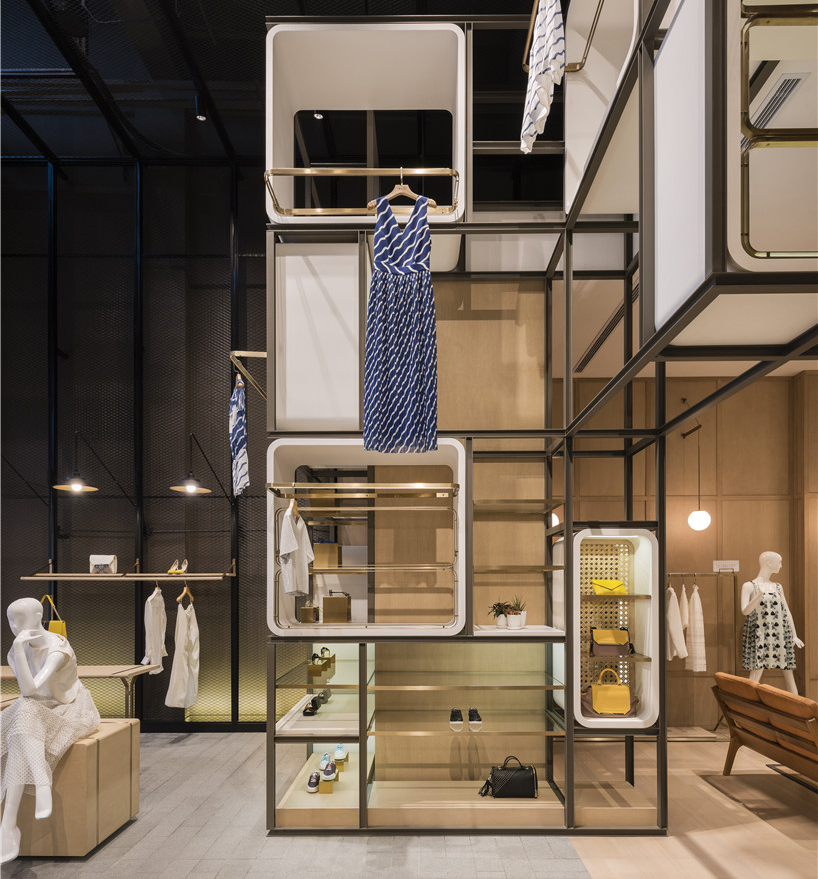
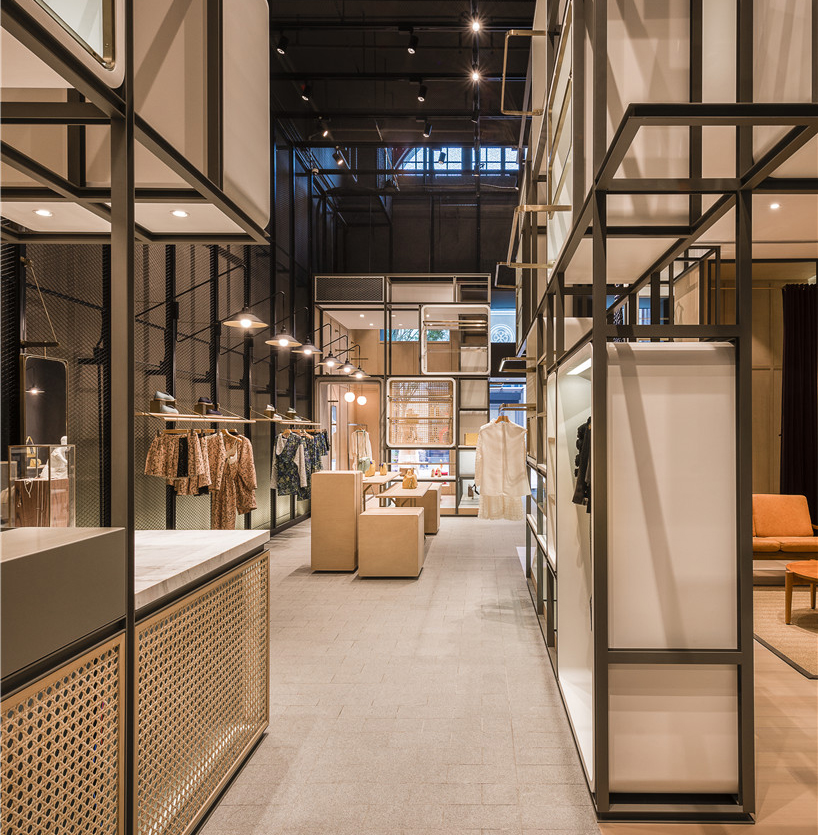
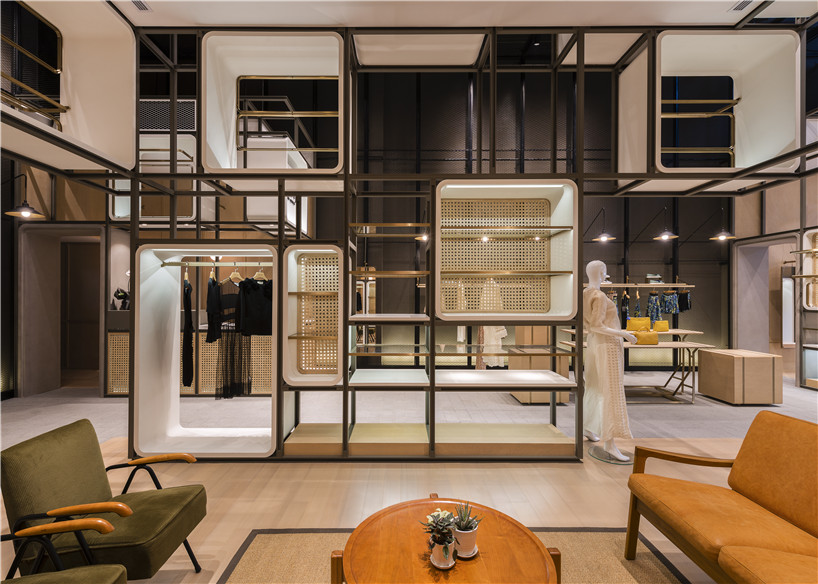
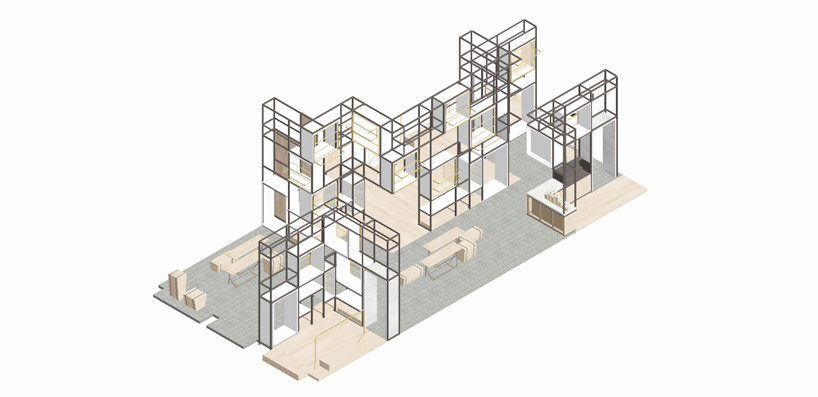
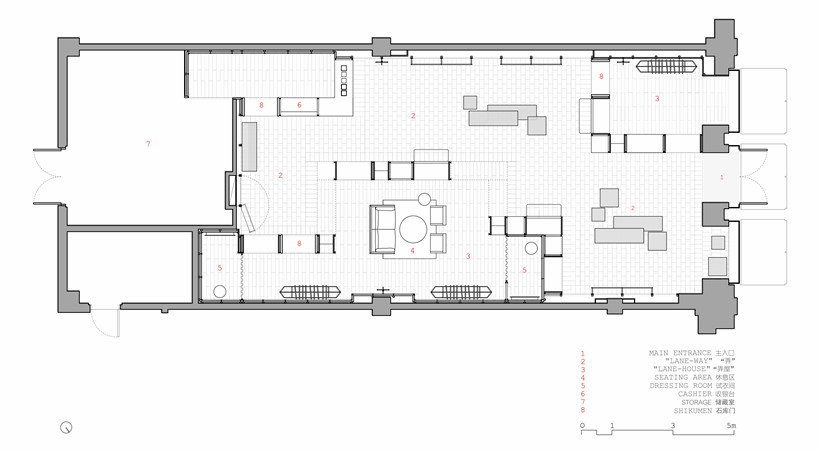
    lukstudio’s ‘modular lilong’ was developed at the behest of value retail china to showcase ‘chuang x yi’ — a fashion platform for chinese designers. the 150 sqm site, located in yioulai shanghai village, is organized around meandering lanes, or lilong, a system that allows creative displays in areas with spatial constraints. this concept, in part, is what gives shanghai its signature streetscape.

    lukstudio07-designboom
    ‘chuang x yi’ concept store
    images © dirk weiblen

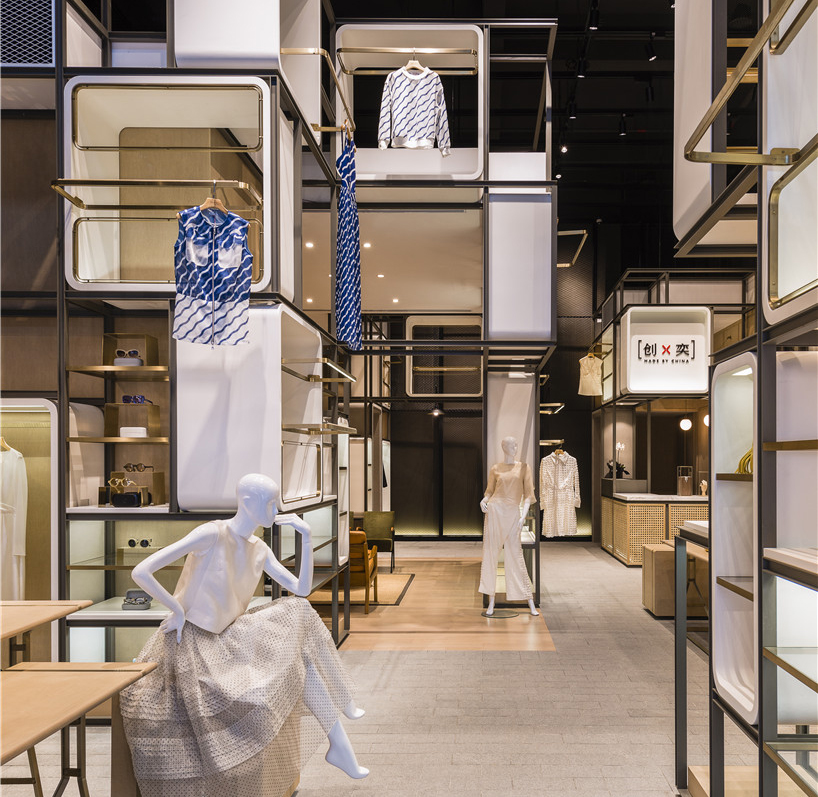
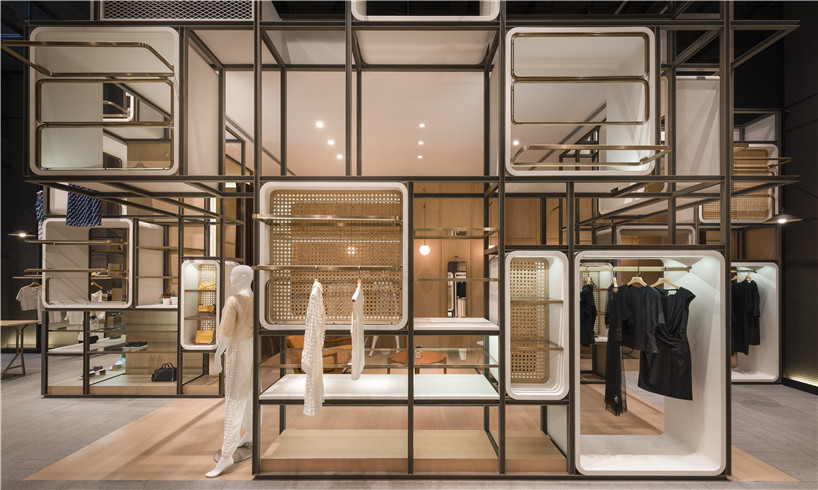
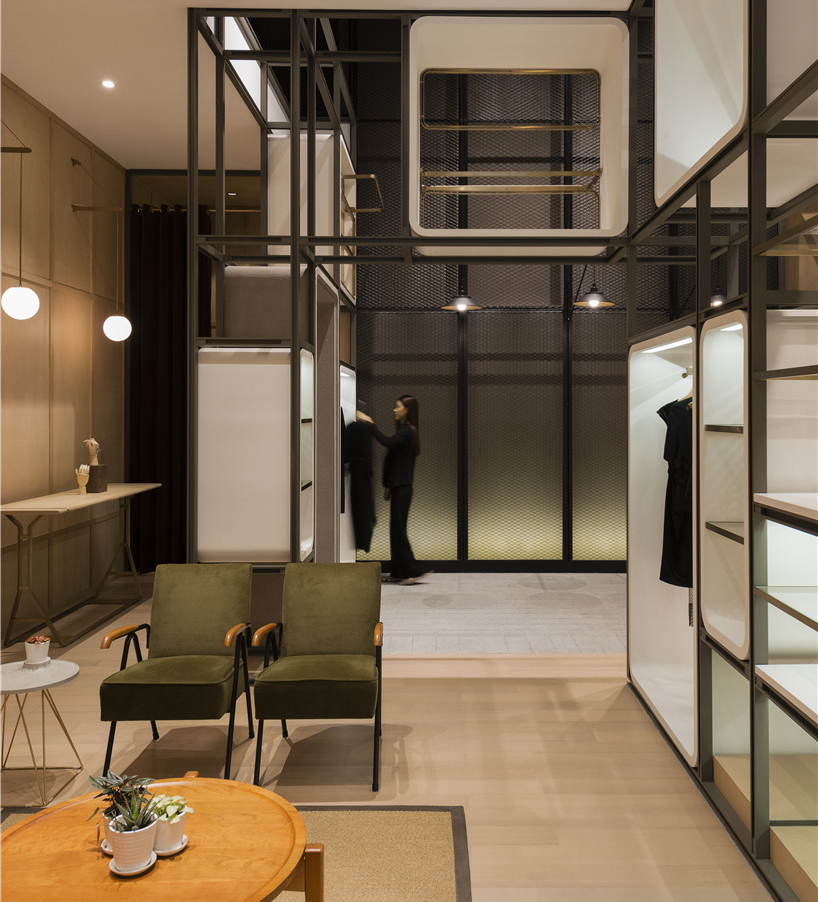
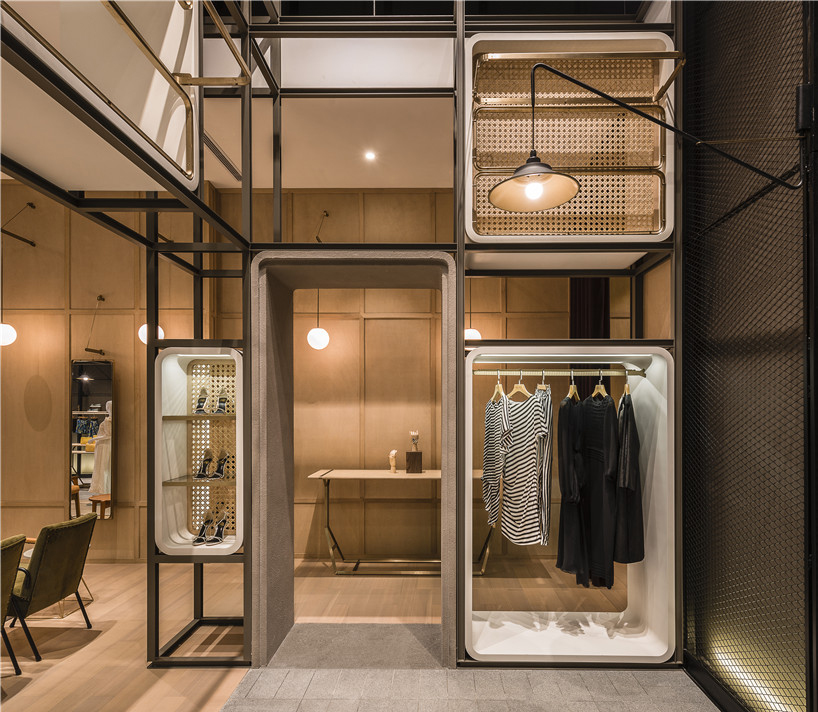
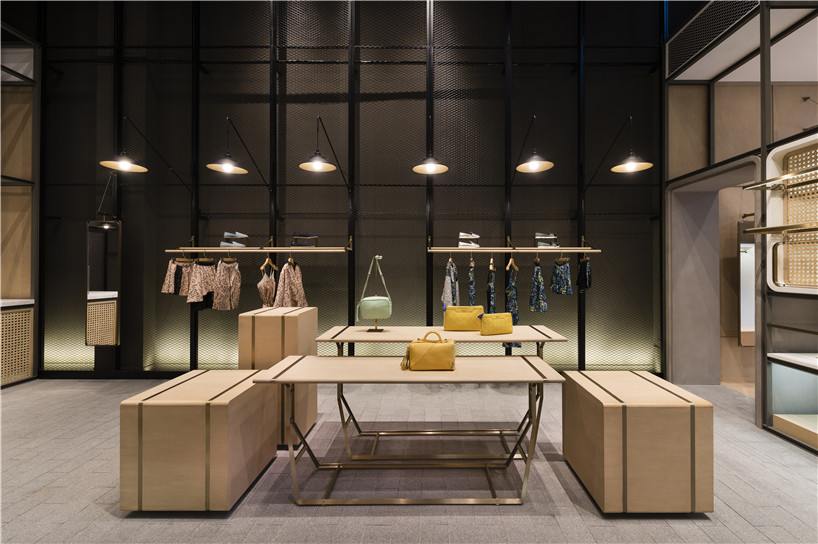
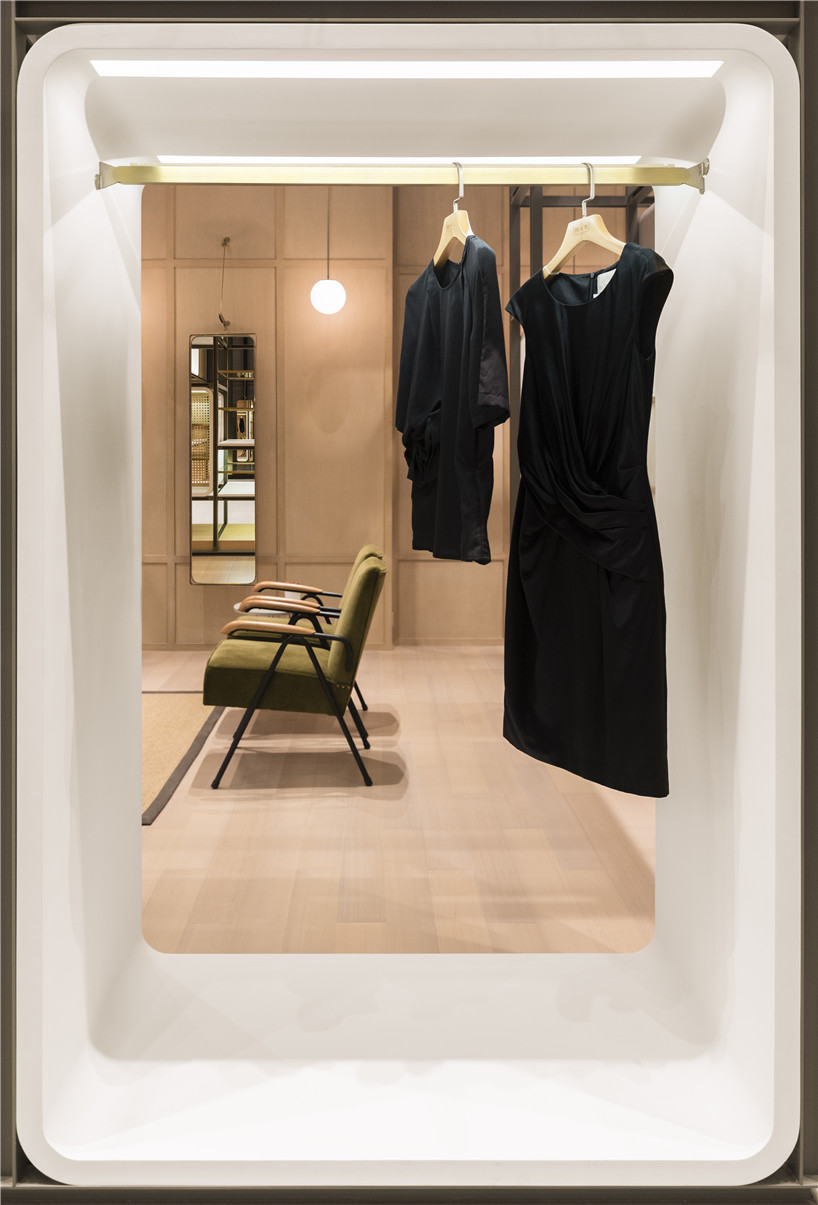
    ‘lilong’, interpreted by lukstudio, results in a modular interior that can be easily disassembled and re-located to other locations. pieces are based on architectural features and textures often found in a ‘lilong’ including old stone ‘shikumen’ gates; visualized in smooth, rounded corners in displays. laundry lines become copper-coated clothing racks, and bamboo rattan is utilized as dividers.

    lukstudio06-designboom
    rattan serves as dividers in the store

    the retail experience of ‘chuang x yi’ offers a visual dialogue between interior and urban environment, combining many layers into a cohesive structure. lukstudio’s work is a journey of discovery that connects historical shanghai architecture and the consumer culture of today.

    lukstudio05-designboom
    interior by lukstudio


    seating and structural display

    lukstudio04-designboom
    grid layout


    interior

    chuang x yi concept store lukstudio shanghai china
    display cube

    lukstudio03-designboom
    axonometric

    lukstudio02-designboom
    floor plan

    project info:

    name: chuang x yi: the modular lilong
    client: value retail china
    location: shanghai village, 88 shendi east road, pudong new area, shanghai, china
    net area: 150 sqm
    interior & lighting design: lukstudio
    team: christina luk, marcello chiado rana, alba beroiz blazquez
    display furniture & custom lighting: TIWU design
    lounge furniture: lost and found, MRT
    timeline: jan. – feb. 2016
    construction: mar. 2016
    general contractor: centroid construction
    photography: dirk weiblen


  • E-Mart and Lotte enter Vietnam

    E-Mart and Lotte enter Vietnam

    The Go Vap district near Tan Son Nhat International Airport and part of Ho Chi Minh City in Vietnam are widely known as special to the Korean retail industry. This is because despite the fact that there are not many Koreans residing in the area, Korean retail giants are competing fiercely in the region. E-Mart, Lotte Mart and Vietnam’s second largest retailer Big C all have stores competing in a four kilometer (2.5 mile) radius.

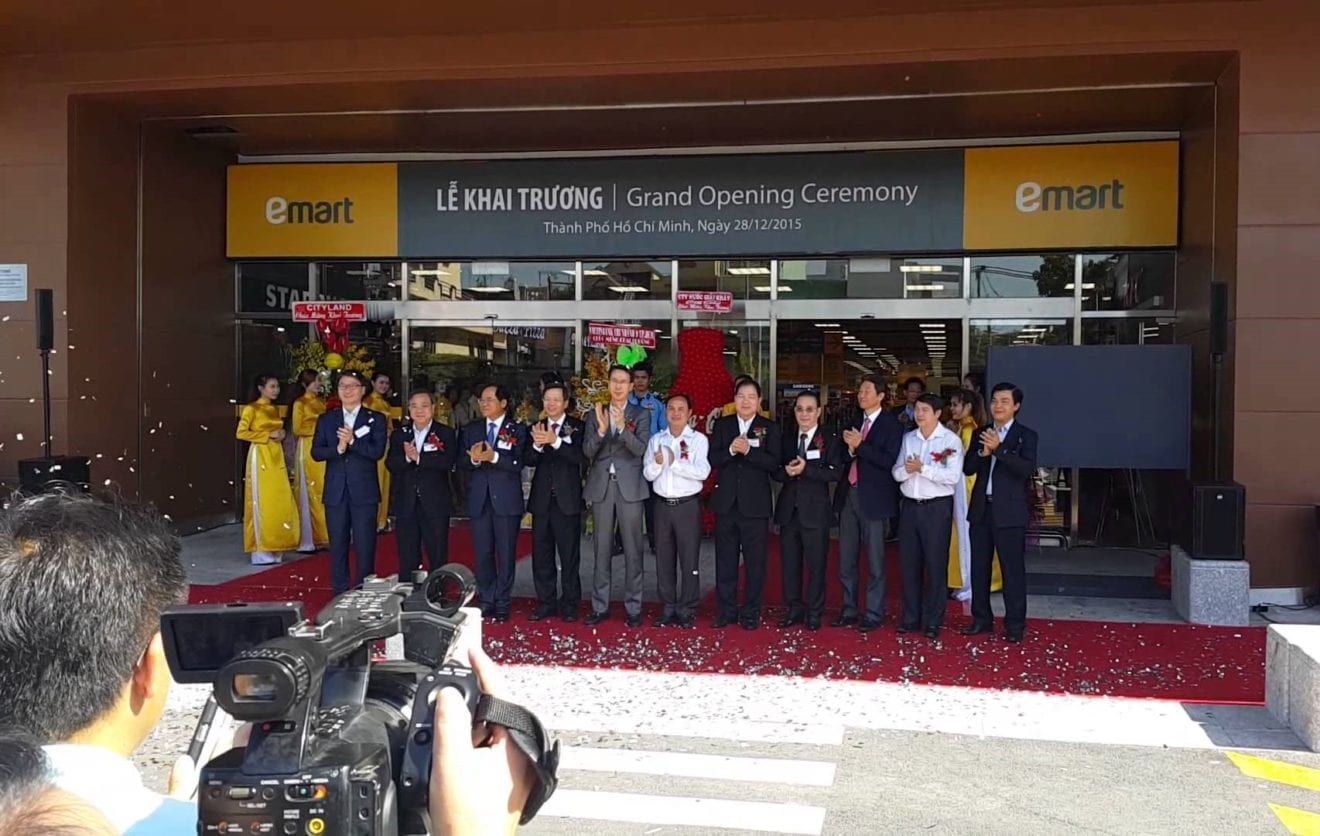
    E-Mart and Lotte Mart are competing for dominance in the young Vietnamese market. More than half of Vietnam’s population of 93 million is less than thirty years old. The large market industry is also undeveloped in Vietnam, with 75 percent of shopping being done at traditional markets, so there is great potential for growth. This potential attracts big retailers like E-Mart and Lotte Mart. Go Vap is particularly attractive because its residents are middle class, well-earning couples. Lotte Mart established itself in Vietnam in 2008 and has 12 stores, which is the third highest in Vietnam for a retailer. E-Mart leapt into the Vietnamese market last December with its store in Go Vap and it is planning to expand its operations.

    The E-Mart store in Go Vap is no different from the ones in Korea. There were the iconic yellow shopping carts as well as No Brand products displayed in the center of the store. No Brand products, modeled after the Japanese company Muji, are relatively cheap because they have no branding and packaging costs, but their quality remains unaffected. E-Mart’s membership card has the phrase “Korea’s No.1 Mart.”

    “We have set up our stores to reflect the Korean lifestyle,” Chang Yun-suk of E-Mart said. “The reasonably priced No Brand products are considered Korean luxury products in Vietnam.”

    E-Mart also operates an Electro Mart, which specializes in electronic goods, in Vietnam. Even on a weekday afternoon, there are plenty of Vietnamese customers flying drones and enjoying the action figures on show, as well as singing karaoke. E-Mart showcased the Electro Mart when it opened its E-Mart Town last June and it only has them in a few places in Korea, including in Yeongdeungpo in Seoul and in Pangyo, Gyeonggi.

    The Korean lifestyle theme is felt in the food available in the area, with Starbucks and Korean pork belly, or samgyeopsal, restaurants in the store. It is unusual to have a Starbucks in a large mart like E-Mart in Vietnam but Shinsegae Group, which operates Starbucks in Korea, persuaded the Vietnamese authorities to have a Starbucks in the store like they do in Korea. Vietnam normally only has Starbucks in hotels, department stores and luxury shopping malls.

    On the other hand, the Lotte Mart store in Go Vap, located only three kilometers from its rival E-Mart, has a Vietnamese feel. The store is filled with a thousand types of Vietnam Choice L products, which are developed and produced in Vietnam. Lotte Mart aims to offer products based on the Vietnamese lifestyle. The traditional rice noodles and cookies are all made in Vietnam. At the end of this year, Lotte Mart will release a point system for all of its subsidiaries in Vietnam known as Vietnam L. Point.

    Lotte Mart even exports Vietnamese products to Korea. Lotte Mart stores in Korea offer various Vietnamese goods including Vietnamese G7 coffee and hosts a special program onVietnam every summer. This is because Lotte Group is very well established in Vietnam with its many subsidiaries based there, including top restaurant business Lotteria, Lotte Hotel and Lotte Department Stores. Lotte wants to project a positive image of itself to the Vietnamese people.

    In fact, the Lotte Mart enjoys so much export success in the Vietnamese market that even Vietnamese politicians and media often jokingly ask their domestic companies, “Do you know how much Vietnamese products Lotte Mart export?”

    The E-Mart and Lotter Mart stores differ greatly, but their large size and strategy for entertainment are compatible. The E-Mart store is 10,579 square meters in size while the Lotte Mart store is 13,223 square meters. Both stores welcome between 10,000 and 15,000 customers every day and both have large motorbike/scooter parking lots capable of holding 1,500 such vehicles to cater to Vietnamese customers, whose main method of road transport is either motorbikes or scooters.

    Both stores also target couples with children, hence they both have large children’s cafes, each measuring 990 square meters. Lotte Mart’s entertainment stores, including its bowling arena and cinema, cover a considerable area of 6,600 square meters, while E-Mart’s occupies 4,628 square meters.

    “Vietnam does not have many amusement parks and cinemas so families often come to large marts to enjoy leisure activities,” Hong Won-sik, general director of Lotte Mart Vietnam, said. “Also, considering the business side, Vietnam has such low consumer prices that it is common to make profits through external store rents rather than from selling fresh products.”


  • Tesla in talks for store in Korea’s biggest mall

    Tesla in talks for store in Korea’s biggest mall

    Tesla Motors Inc. is in talks to open its first store in what will be South Korea’s biggest mall, according to the shopping complex’s owner Shinsegae Group.

    The two parties are negotiating over an outlet at Starfield Hanam, which is set to be the country’s largest mall when it opens in September, according to Shinsegae Group. Built jointly by Shinsegae Group and Taubman Asia, the four-story complex occupies an area the equivalent of 70 football fields and is located about six miles east of Seoul.

    Premium automakers including BMW are opening showrooms in retail districts to attract walk-in customers who wouldn’t otherwise visit car dealerships. Shinsegae Group owns Shinsegae Co. and E-MART Inc. and is South Korea’s second-largest retail conglomerate, behind Lotte Group.

    Atsuko Doi, a spokeswoman for Tesla in Tokyo, didn’t immediately reply to an email request for comment. Tesla said last month it plans to set up an office in Seoul, without giving further details. The U.S. electric vehicle maker advertised positions in sales, engineering, service and marketing in Seoul on its website. South Korea would be Tesla’s fourth market in Asia after China, Hong Kong and Japan.

    Separately, Hyundai Motor Co. said in an email that it will open its first premium Genesis brand store in the Starfield mall later this year.

  • Bursa Malaysia expected to trade higher next week

    Bursa Malaysia is likely to trend higher next week on improved sentiment including Bank Negara’s overnight policy rate (OPR) cut, rebound in oil prices, global bank stimulus and a stronger currency.

    Affin Hwang Investment Bank Vice-President and Retail Research Head, Datuk Dr Nazri Khan Adam Khan said the benchmark FTSE Bursa Malaysia KLCI (FBM KLCI) was ready to stage further upside if the ringgit and commodities continued to strengthen.

    He said the local bourse should be catalysed by Bank Negara’s unexpected move to reduce the OPR to 3.00% from 3.25%.

    “The index should be bullish with the rate cut although the broad market is slow to react.

    “We see the OPR cut as a pre-emptive move to ensure that inflation remains under control and the economy remains on a steady growth path,” he told Bernama.

    This was confirmed by the Malaysian bonds three-year yield which dropped to its lowest level since 2009 and a stronger ringgit which hit a 10-week high against the US dollar this week, he added.

    He said technically, the FBM KLCI had broken out from its consolidation zone and was still looking to test its immediate resistance level at 1,680.

    “Overall, given the buoyant mood coming from global markets as well as positive catalysts in the domestic front, we reckon that the FBM KLCI could be poised to trend upwards this week to break out from its consolidation zone,” said Nazri Khan.

    He said the upside resistance and downside support are now spotted at 1,700/1,680 and 1,650/1,630 levels, respectively.

    On Friday-to-Friday basis, the FBM KLCI rose 23.86 points to 1,668.40 from 1,644.54 recorded last week.

    The FBM Emas Index improved 190.22 points to 11,657.87, the FBMT 100 Index rose 184.2 points to 11,360.08 and the FBM Emas Syariah Index was 208.9 points higher at 12,228.11.

    On a sectoral basis, the Finance Index fell 22.19 points to 14,252.12, the Industrial Index increased 46.35 points to 3,140.55 and the Plantation Index improved 13.94 points to 7,531.31.

    Weekly turnover increased to 8.18 billion units worth RM9.37 billion from 2.87 billion units worth RM3.37 billion last week.

    Main market volume rose to 5.44 billion shares worth RM8.84 billion from 1.95 billion shares valued at RM3.21 billion previously.

    Warrant turnover swelled to 1.22 billion units valued at RM197.75 million from 446.69 million units worth RM75.04 million last week.

    The ACE market increased to 1.49 billion shares worth RM320.29 million from 471.92 million shares valued at RM89.36 million previously.

  • IKEA to Recall Unsafe Furniture in China

    IKEA to Recall Unsafe Furniture in China

    Swedish furniture giant IKEA will recall their unstable Malm furniture line of chests and drawers in China.

    The decision came after many vocal Chinese consumers complained that IKEA was discriminating them. The Malm line was still in Chinese stores amidst recalling over 29 million pieces of chests and drawers in Canada and the United States.

    The product recall in North America transpired two weeks ago, after being linked to the death of six children.

    When IKEA refused to recall their product from their Chinese outlets, consumers complained online and through government controlled media. Government controlled newspaper Xinhua accused IKEA of committing “blatant bullying.”

    The government-run General Administration of Quality Supervision, Inspection and Quarantine claimed that after meeting IKEA, the company decided to change their minds.

    Last Tuesday, the furniture company decided to recall about 1.7 million pieces from their stores. IKEA offered free home installation and an optional refund.

    IKEA’s spokeswoman, Xian Jiaxin, said, “IKEA is a very responsible company. Consumer protection is very important to us, which is how we came to this decision.”

    Many Chinese shoppers go to IKEA for their furniture needs. As a result, the Swedish company incurred a large amount of sales. By September 2015, total revenue totaled to $1.55 billion.

    The furniture company is determined to firm its hold in the vast Chinese retail market. Total retail sales annually is worth $4.5 trillion in China, which will soon exceed sales from the United States.

    Jeff Walters, managing director of the Boston Consulting Group said, “If you look across the world and you look where there is still significant growth in consumer spending, the answer is very much China. Of course any company is going to make sure it’s standing on the right side of regulation to have access to a market that size.”

    Many Chinese consumers are becoming more discriminating due to violation of rights in the past. Since then, government inspectors have been more stringent in regulation and inspection of goods and products.


  • The seven reasons for Alibaba’s success ; Alibaba’s development and framework

    The seven reasons for Alibaba’s success ; Alibaba’s development and framework

    Alibaba was initially founded in Jack Ma’s apartment in Hangzhou in 1999, before Alibaba.com was launched later that same year. In 2003, as the number of Internet users in China reached 80 million,[1] Taobao.com was launched as an online market. Shortly afterwards, both Alipay and Aliwangwang (instant messenger on Taobao) were launched to complete the purchasing process in Taobao. In 2007, the number of Internet users in China rose to 210 million[2] and Alimama was launched as an advertisement transaction platform. Taobao started to monetize that same year. Tmall was launched in 2008, as Alibaba ran both B2C and C2C platforms. In 2009, Alibaba Cloud computing was founded, illustrating Alibaba’s commitment to prioritize big data as part of its strategy. In 2010, the following three platforms were launched as part of Alibaba’s increasing focus on mobile payment: Juhuasuan (a platform for C2B); AliExpress (a global consumer marketplace) and Mobile Taobao App.

    Alibaba’s framework is based on the three following targets:

    1. Chinese customers: Taobao (online shopping destination), Tmall (brands and retail platform), Juhuasuan (group buying marketplace), 1688.com (Chinese wholesale marketplace).
    2. Customers abroad: AliExpress (global consumer marketplace), Alibaba.com (global wholesale marketplace).
    3. Support platforms: Alipay (online payment service); China smart logistic (logistic information system); Alimama (online marketing services); Alibaba cloud computing (platform for internal and third-party use).
     

    Screenshot 2016-07-19 09.20.09

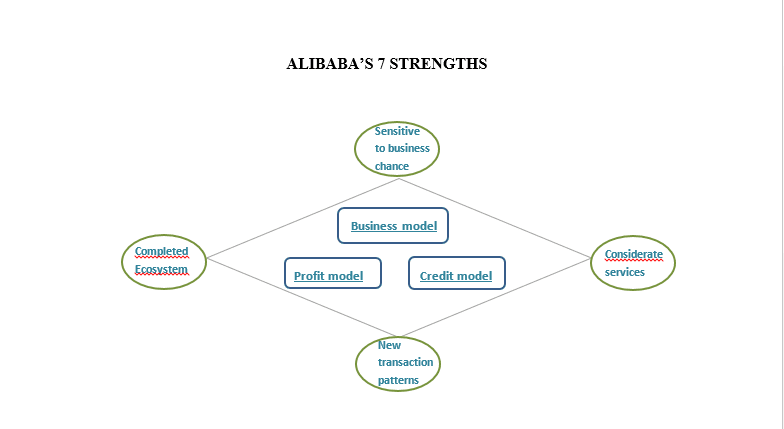
    The three core factors that influence Alibaba are its Business model, Profit model and Credit model. In addition, there are four subsidiary factors namely considerate service, sensitive for business chance, new transaction patterns and completed system supporting Alibaba to gain its success.

    1. Alibaba’s unique business core to provide services mainly to small enterprises and individual defines a unique business opportunity which not only emancipates the productive forces of small enterprises but also offer much more diversified consumption choices for consumers.

    Alibaba’s service offer focuses on small enterprises. Whether we talk about 1688 – a B2B eCommerce platform specifically aimed at wholesale and procurement business – Taobao (including Tmall business shopping mall) – a B2C & C2C eCommerce platform gathering numbers of individual sellers – or YiDaTong (the largest Chinese professional import and export agent) which not only subsidizes small enterprises but also helps them accumulate credit through history data, all three of Alibaba’s core businesses mainly focus on providing services to small enterprises helping them create value which could not be accomplished by any of them individually (such as cost control). Additionally, the three core businesses represent a complete eCommerce ecosystem.

    The focus on small enterprises also leads to a phenomenon whereby a large variety of goods are available to a large variety of target consumer groups (age, profession, wealth, etc.) on the platform. In 2014, the Alibaba platform as a whole experienced a total transaction volume of 2.3bn CNY (close to 330 bn EURO).

    1. Alibaba’s profit model that Alibaba gets profits by charging services in marketing and technical supports rather than by charging admission fee contributes to a large and robust market share made up of loyal customers.

    Alibaba’s profits mainly come from advertisements and keyword bidding within platforms, which in total represents 57% of profits. The second most important source of profits is the variety of technical services based on big data of consumer behaviors, representing 25% of profits. One of the important reasons why Alibaba could beat eBay China can be found in their strive to cultivate the online transaction habit among Chinese customers by allowing sellers to register for free and by removing intermediate fees. EBay China, on the other hand, was in a rush to harvest the Chinese market by charging fees for all transactions completed on the platform. Taobao thus gathered a large number of sellers, thereby encouraging an even larger number of customers to purchase via the Taobao platform. Hence, Alibaba successfully developed a strong and loyal online customer base.

    Nowadays, the Alibaba platform represents more than 0.5bn registered users, among which there are more than 0.23bn active buyers and more than 8m active sellers. The Annual orders already exceed 11bn. [3]Thanks to the large number of customers on the platform, Alibaba can make use of advertisement, keyword bidding and customer’s data for profit. Advertisements on Taobao can generate thousands of clicks for a single brand; the bidding for keywords contributes to the higher ranking of brands in search results; technical services assist sellers in the management of their online store and relationship with customers through analysis of customers’ preferences and feedbacks.

    1. Alibaba’s accurate credit model, which builds a third-party payment platform as a bridge between consumers and e-stores to standardize payment process and to protect consumer’s rights, helps to develop a good and trustworthy reputation among customers.


    • All sellers on the eCommerce platform are requested to pass an online certification test to verify their identity information.

    Such certification ensures the supervision of sellers on the platform at all times and reduces the possibility of illegal transactions.

    • All transactions are recorded and can be traced back by both sellers and customers. Based on the records, Taobao set up a system to measure the degree of integrity of both actors.

    Such a system ensures that any fraudulent behavior is published for everybody to see and can lead to a significant loss in the number of future transactions because of the lack of the other party’s trust. The system protects the legitimacy of each transaction and helps customers chose more reliable sellers.

    • Alipay is an online payment platform, combining ease of use, safety and efficiency. Payments are first transferred to Alipay. Once the buyers have received their product and ensured they are not faulty, the payment is transferred to sellers from Alipay. If the product is faulty or does not meet the expectations of the buyer and returned, so is the payment.

    When eCommerce first appeared in China, the safety of online purchases was the most important problem that concerned customers. Alipay provides a reliable solution which has won the trust of Chinese customers. Because of its convenience, Taobao attracts more and more online shoppers. Nowadays, people can use Alipay to pay for any fees arising in their lives in general. Besides, Alipay allows customers to purchase goods on credit used in the current month and paid back the following month. Up to 2013, the number of users in Alipay approached 0.3bn while the number of transactions reached 900bn CNY (about 128bn EURO) and the active users of the Mobile terminal reached 0.1bn which exceeded the number of users on PayPal.

    • Online feedback is largely encouraged. The more comments a customer writes for products, the more discount coupons he receives.

    Word of mouth can strongly influence customer’s behavior, especially when all information concerning a particular product is more difficult to find. The large amount of comments can guide and encourage customers in their purchasing experience and help them pick out their preferred product, while reducing post-purchasing regrets.

    1. Alibaba’s considerate service offer provides a comfortable purchasing environment and a positive online customer experience leading to high user engagements.

    Based on the analysis of its large customer base, Alibaba always knows how to provide the most suited services for optimal customer satisfaction. It helps sellers to maintain positive interaction with buyers; it offers online business training for various stores; it introduced a special coding system to manage the large number of stores on the platform; it developed its own instant communication tool to improve seller-buyer communication exchange; it enables the reimbursement of any product ensuring payment return within the following seven days, and so on. Those support services help sellers grow their business while helping buyers to find their preferred products, thus generating more and more transactions.

    1. Alibaba excels at identifying and seizing unique business opportunities, thereby positioning itself as a leader and developing customer loyalty.

    In China, two festivals have a major impact on people all over the country: Spring Festival (the Chinese New Year) and ‘Double 11’ (a festival created by Taobao).

    The ‘Double 11’ festival falls on November 11th, just between Chinese National Day and Christmas when people would prefer physical in-store shopping (offline). Although most customers would typically be avoiding shopping during that period, Taobao developed a campaign encouraging consumption, so much so that the day became an actual shopping festival. On that day, various brands offer different discounts and even launch new products. Customers pick out their various preferred products and purchase them online on November 11th. In 2014, ‘Double 11’ generated over 1bn CNY in total trading volume for Tmall within the first three opening minutes. Within the first 14 minutes 2 seconds, volumes exceeded 5bn CNY. Total volume for the day reached 53bn CNY (approximately 7.6bn EURO)! In a single day, Taobao generated revenue of 1.5bn CNY and net profit of more than 0.5bn CNY (approximately 71m EURO).[4]

    The ‘Double 11’ day has successfully developed a new popular shopping event for the majority of customers in China. At such an event, the various Tmall sellers’ needs for advertisement and software services increase largely. Alibaba thus gains enormous profits from the event, while both sellers and buyers rely more on the open platform. Alibaba’s advantage in cloud computing also represents a valuable asset for the shopping festival.

    1. Always keeping an eye on customers’ evolving needs, Alibaba dares to challenge the traditional transaction patterns and explores new ways to create more value for customers.

    C2B transaction model: When customers are in particular predominance for a certain transaction, Alibaba deploys the C2B transaction model to reduce costs in the traditional supply chain and shortens the time required for product turnover, thereby increasing customer satisfaction. On the one hand, Alibaba gathers a large number of scattered customers who express the similar needs to form a powerful purchase group that can buy single products at a wholesale price. On the other hand, Alibaba takes advantage of its massive online customer behavior data to develop products suited to particular customer habits. For example, the analysis may show that customers based in south regions use their dryers more frequently on account of the wet weather and therefore need more resistant machines while other customers may not like vacuum cleaners which require the user to bend down when using it. In that case, Alibaba takes charge of 12 product lines in 12 brands and exerts total control over the production schedule to ensure the production of the selected products which are predicted to be in high demand within shortened production cycles. Lastly, Alibaba integrates the product the production with front-end sales to bring instant personalized products to customers. Within the single day of May 8th 2014, Tianmao sold 180,000 sets of the 12 products which equated the sales volume for a period of 3 months on the internet.

    O2O strategy: In Alibaba’s plan, customers can purchase a product by scanning two-dimensional codes and then receive products with another code which involves the interaction of the instruction and after-sales functions. Customers can also take part in various brand-run initiatives and receive targeted advertisements by scanning corresponding codes. In order to accelerate the plan execution, Alibaba is actively developing its expansion to mobile terminal areas – “Alipay Wallet” represents one such significant trial. “Alipay Wallet” not only provides different ways for payment such as code scan and direct cash-transfer, but also partners with different banks in order to provide an assistance service to customers for managing their many bills and coupons. Along with many other purchased Apps covering other domains including taxi services, maps, weather, music and travel, “Alipay Wallet” aims to transfer the content and activities of customers’ daily lives onto the O2O service.      

    1. Rather than positioning itself as a simple eCommerce company, Alibaba focuses on providing excellent service quality to both sellers and buyers, by introducing easier ways to do business for the former and developing a positive purchasing experience for the latter.

    In order to achieve its goal in terms of positioning, Alibaba keeps expanding its core business to many different domains such as advertising services, logistic network, financial services and mobile terminal services.

    1. Alimama: Alimama is an advertising platform which operates as Alibaba’s B2B system: owners of advertisement positions such as blog owners post the positions in Alimama and advertisers purchase their favorite positions according to their own criteria. Nowadays, Alimama focuses on three dimensions: Big Data, “Taobao Ke” (cost per sale mode) and the combination of video and mobile terminals. Through these dimensions, Alimama aims to help merchants find their specific target customers and help customers achieve their preferred products easily.
    2. Big Data: Besides the massive internet flow, transactions and database that Alimama represents, Ali also integrates comprehensive data resources that cover almost every aspect of customers’ daily lives through the acquisition of software companies in many other domains such as map, weather, taxi, music and travel. The accurate and diversified data can thus help advertisers select the most appropriate website advertising channels and reach customers effectively.
    3. “Taobao Ke” is a group of people dedicated to assisting merchants in the promotion of their products who receive a commission when a transaction is completed (cost per sale billing model). CPS is useful for eCommerce since people who successfully identify customers and convince them to complete a purchase are rewarded by commission.
    4. The combination of video and mobile terminal: In April 2014, Taobao bought 16.5% shares of China’s largest video site, intending to leverage the strengths of video in both PC and mobile to enable the interaction of an advertisement between the two terminals. When the audience watch advertisements during videos, Taobao will send the related information to the mobiles of people in the audience in various forms, including games and coupons to entice clicks from the audience.
    5. Ali micro finance: Ali micro finance mainly provides micro deposits and loans. It uses the data collected directly from the Ali platform: credit data and behavioral data. It translates the online customer behavior data into businesses and categorizes individual credit ratings by small enterprises according to their eligibility to apply for small loans from Ali micro finance (eg. small amount, short-term, momentarily borrow and return), as these small structures usually experience difficulty in obtaining loans in the traditional banking channels. Meanwhile, Ali’s small loan service also attaches great importance to the use of new technologies. It relies a lot on the cloud computing technology to determine whether there is a particular match between a certain buyer and a seller, whether they speculate credits, what rate the risk possibility stands at and so on. This not only ensures the safety and efficiency of the service but also reduces operating costs. In addition, the Internet makes it possible to provide a set of financial services, 24/7, 365 days a year, to large-scale small enterprises at the same time. This meets the major demand for capital resulting from the increasing number of small enterprises being founded in China.
    6. CSN (China Smart Network) project: CSN project was launched by Ali in collaboration with the four most influential logistics companies in China. Ali hopes to achieve the goal of enabling the delivery of products to buyers within 24 hours of ordering via the platform. Different logistic networks belonging to different logistic companies are integrated into forming the single most effective network in terms of parcel turnover for customer delivery. Different logistic companies focus and provide their expertise on specific portions within the network to maximize efficiency. Meanwhile, based on data analysis, Ali selects the most suitable logistic company for different portions of the network and allocates delivery businesses according to performance. As a consequence, logistic companies need to improve service quality and reduce costs, while ensuring continuous delivery. Moreover, customers can choose their favorite types of deliveries such as ‘fastest’, ‘cheapest’, ‘safest’ and ‘best service’ since the CSN can deploy the work capacities of the logistic companies.


    ALI’S FUTURE DEVELOPMENT

    Globalization

    In November 2014, Ali expanded its commercial transaction worldwide for the first time. Since that date, Ali’s global ecosystem consisting of its eCommerce platform, logistic network, cloud computing and big data has been developed further and communicated on publicly. On Tianmao International’s platform, Chinese customers can purchase goods of popular retail brands abroad directly and customers from other countries including Russia, Brazil, the US and Canada can also purchase products from China directly. Due to the reduced amount of procedures required in foreign trades without importers, Ali is able to transfer the profits from the importers to the merchants and thus cut down transaction costs. The CSN network represents a global coverage of countries to increase the convenience for parcel delivery to customers. For example, CSN developed a special supply chain in Russia allowing customers to receive products within 35 days. It also increases the cooperation with banks in other countries to improve the payment system.

    Besides the globalization of its eCommerce activities, Ali is also developing its finance business abroad. Recently, Ali has cooperated with Lending Club – the biggest online loan platform. The cooperation signifies that small American enterprises which get loans from Lending Club can now look for Chinese producers and supply sources on Alibaba’s platform.

    Taobao Village

    Focusing on eCommerce development in rural areas of China is one of Ali’s most important future strategies. In the same way that it always looks for business opportunities among small enterprises and individual customers, Ali fosters the online purchase forces in thousands of villages across China. Taobao village represents the village where active online shops reach more than 10% of local households and trading volume amounts to more than 10m CNY. The high concentration of online shops in these villages makes it possible to form an eCommerce chain made up of producers, suppliers, shops and logistics, thereby facilitating development and economies of scale. Moreover, Taobao village helps to address the problem of local unemployment (Taobao village brings about more than 280,000 jobs and the average income at Taobao village is 2.19 times higher than that found in normal villages); it contributes to the transfer of the environmental advantage into an economic advantage (since the natural and original product is welcomed by customers); and it helps to diminish the purchase gap between urban and rural areas. Up to December 2014, 211 Taobao villages were developed. Ali provides support through credit and loans, talent training and promotion.

    Develop more offers suited to more fields in customers’ daily lives

    Yulebao: An investment platform for television work with approximately 7% annual return on investment. Investors have the opportunities to meet with directors of various TV projects, take part in premieres, travel to the filming locations of certain TV programs, etc. The customer’s preference is better evaluated and will truly influence the Chinese entertainment trends. Besides, it helps high quality projects which do not necessarily have the matching high budget to get investment for production. Yulebao was launched in March 2014.

    Ali future hospital: In August 2014, Ali collaborated with a renowned hospital in Shanghai, installing Alipay to allow patients to complete their own registration process, payment and report-fetching online. Most importantly, Alipay is combined with medical insurance in order to deliver a fully automated service to customers.

    [1] The data comes from  Alibaba’s prospectus: https://www.sec.gov/Archives/edgar/data/1577552/000119312514184994/d709111df1.htm

    [2] The data comes from  Alibaba’s prospectus: https://www.sec.gov/Archives/edgar/data/1577552/000119312514184994/d709111df1.htm

    [3] The data comes from  Alibaba’s prospectus: https://www.sec.gov/Archives/edgar/data/1577552/000119312514184994/d709111df1.htm

    [4] Data comes from “Le single day Chinois bat tous les records de ecommerce”:

    https://www.le-webmarketeur.com/2013/12/10/le-single-day-chinois-bat-tous-les-records-de-e-commerce/


    Author :

    Prof. Xavier Pavie

    Associate Academic Director, MSc in Management, ESSEC Business School

    Director of iMagination Center


    Yixuan Luo

    Master student at ESSEC Business School
  • HomeSquare’s 7th Annual Smart Buy Weeks Kicked Off last week

    HomeSquare’s 7th Annual Smart Buy Weeks Kicked Off last week

    HomeSquare, Hong Kong’s largest one-stop shopping mall for home furnishing is proud to bring back its Smart Buy Weeks event for the seventh year in a row. Taking place from July 17 to August 17, 2016, more than 58,000 pieces of furniture will go on sale for as little as $1, $100, or with discounts of up to 90%, making for a perfect opportunity for new homeowners to furnish their living space without breaking the bank. In all, Smart Buy Weeks will save consumers a total of up to HK$18 million!

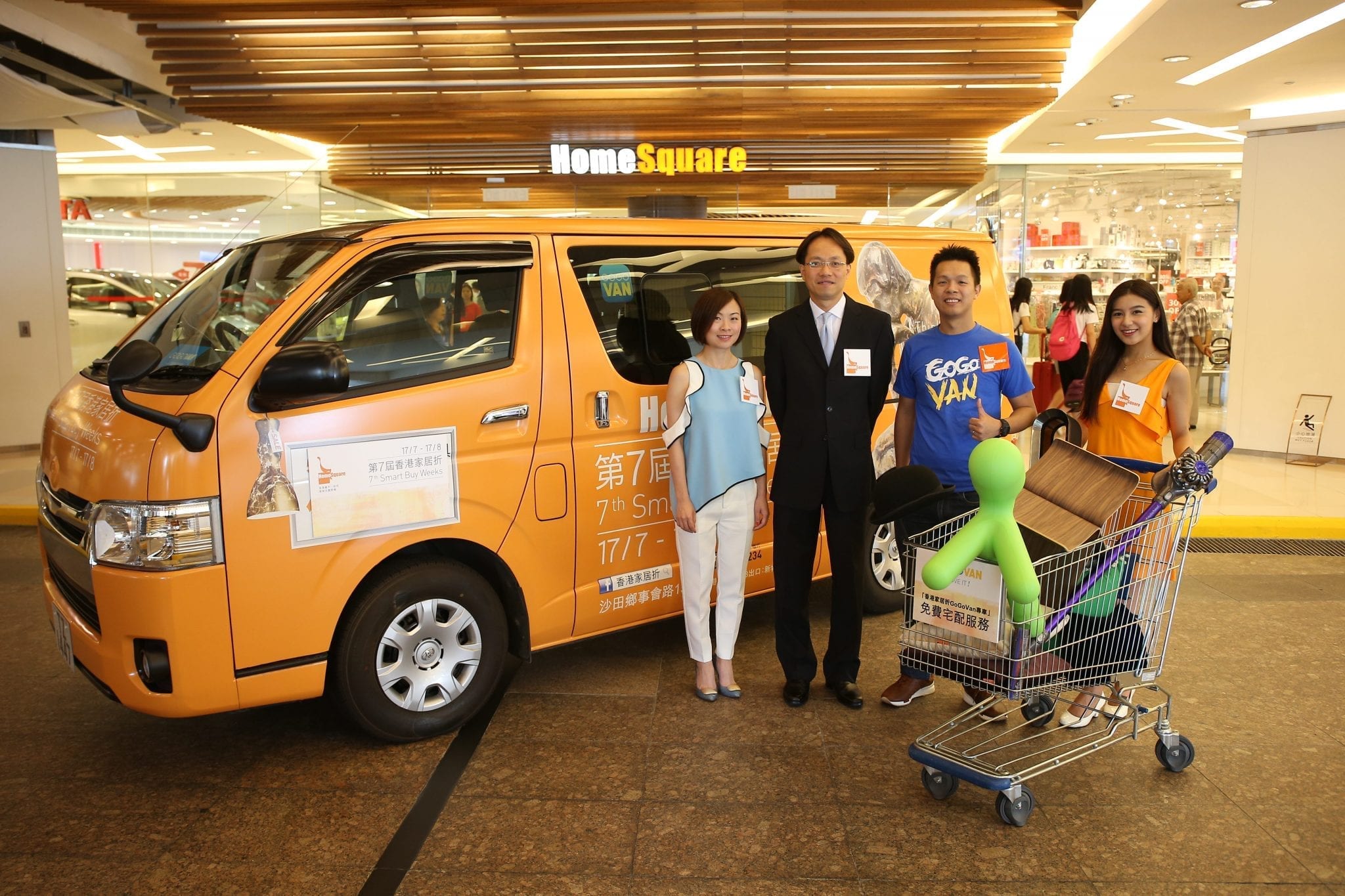
    A press conference/opening ceremony for HomeSquare 7th annual Smart Buy Weeks was held today, officiated by Mr. Henry Lam, Sun Hung Kai Real Estate Agency General Manager (Leasing) and Ms. Yoki Hui, Sun Hung Kai Real Estate Agency Senior Leasing Manager.  They were joined by representatives from GoGoVan and YATA Department Store, Hong Kong Design Institute as well as international designer JLee Ho Lam to kick off the annual mega sales event.

    Mr. Henry Lam estimates that the 32-day Smart Buy Weeks this year would attract more than HK$1.23 million shoppers, a 10% increase from last year.  He also expects to see stronger footfall this year, with around 184,800 visitors on opening day alone and approximately 37,768 visitors on an average weekday, representing a 10% and 9% increase from last year respecively.  Mr Lam believes HomeSquare’s annual Smart Buy Weeks will attract around 101,959 daily visitors during public holidays and weekend, which would record 10% growth from last year.  The expected retail consumption per capita would be between HK$500 to HK$5,500, with those interested in interior design likely to spend up to HK$230,000 on average.   It is expected to generate  HK$224 million business turnover to tenants, representing a year-on-year increase of 12%.

    Mr Lam adds, “HomeSquare’s annual Smart Buy Weeks always endeavors to excel beyond customers’ expectations.  We strive to surprise shoppers with innovative themes and offers every year.   With Smart Buy Weeks going into its seventh year, we believe that just offering low prices is no longer enough for today’s sophisticated shoppers who pursue quality lifestyle in home design.  Therefore, HomeSquare, being a visionary leader in home furnishing industry, has invested HK$4 million on this annual campaign this year to bring a 360-degree all-encompassing lifestyle design experience to shoppers.  With support from different business parties, HomeSquare’s 7th Annual Smart Buy Weeks will present a recorded number of sales rebates to shoppers ever.  We have set an entirely new standard on all aspects of home life, from diversified shopping offers, home design ideas, shopping process, to post-sales service.

    In recent years, consumers have developed higher standards for home decor product design and quality.  They are no longer looking for “the best deal”, but the “best valued product”, meaning product price and quality are of equal importance to shoppers.  Sophisticated shoppers will do online research, compare brands and products, learn about the product’s design philosophies and product durability, among others.  Two areas that consumers have become increasingly interested in are brand heritage and the quality of material used. These concepts are more important to consumers, even ahead of price. Consumers are more willing to buy items from an established, respected brand because they know the item could last them well from 5 years to over a decade, in addition to vintage furniture gaining value in price as time goes on, hence the continual increasing interest in high-end furniture. HomeSquare’s Smart Buys Week focuses on the aforementioned trends, and have collaborated with renowned international brands that are known for their quality and craftsmanship, these include: Denmark’s BoConcept, French mattress brand Treca, Italy’s Cattelan Italia, and Decor Collection, which exclusively handles a myriad of European brands.

     Special offers by international brands at HomeSquare’s 7th Annual Smart Buy Weeks include: 

    Brand    Item    Discount Price Quantity
    BoConcept Groove Tray 90% HK$85 9 Pieces
    TRECA Treca French Bed 90% HK$2,540 1 Pieces
    Cattlelan Italia Baum Clothing Rack HK$1 HK$1 1 Pieces
    Décor Collection Thalya Chair HK$1 HK$1 1 Pieces

    HomeSquare 7th Annual Smart Buy Weeks has interpreted “360-degree all-encompassing lifestyle design experience ” via five aspects of special offers: 

     1: Nearly 60,000 products available to fit various tastes, different home decor needs and diversified shopping behaviors: 

    This year’s Smart Buy Weeks have garnered full support from Hong Kong’s home furnishing businesses, seeing 100% home tenants’ participation, including new join to Smart Buy Weeks and most sought-after brands, offering a total of more than 58,000 items available for both online and offline purchase.  Every item is sold at a major discount, from popular brand name goods to award-winning designer pieces, to meet the needs of shoppers with different tastes and needs.  To cater to the surging demand for online shopping, HomeSquare has launched a smartphone app exclusively for Smart Buy Weeks offering a quality, easy-to-use and secure online shopping experience.  Shoppers can select and pay for furniture all on their smartphones, making online shopping at HomeSquare as easy as a snap of the fingers.

    2: Hong Kong’s first 360-degree cinematheque offering valuable insights for building one’s home: 

    For this year’s Smart Buy Weeks, HomeSquare has invited LAAB Architect, the makers behind the amazing 309-sq-ft “transformer” apartment that was covered by CNN, as well as international creative artist Ms. JLee Ho Lam to share their respective insights on building a “Smart Home” and an “Art Home”. The immersive experience includes a virtual exploration of interiors and products that are part of Smart Buy Weeks.

    3: HomeSquare partners with GoGoVan for all-inclusive door-to-door delivery service: 

    During Smart Buy Weeks, GoGoVan’s team of professional drivers will be on hand to provide door-to-door delivery service. To ensure customers don’t have to wait long for service, HomeSquare has launched a “GoGoHome 30 Second Challenge” initiative — if a GoGoVan driver takes longer than 30 seconds to pick up the shopper, coffee is on us!

    4: HomeSquare teams up with partners to present the biggest surprises and most sales rebates for shoppers ever: 

    This year, HomeSquare has partnered with GoGoVan, HSBC Credit Card and YATA Department Store to launch the most number of promotions and surprising rebates for shoppers, including some new exclusive offers to shoppers.

     5: Hong Kong Design Institute stars show off the blueprint to build a happy home: 

    This year, HomeSquare will join hands with Hong Kong Design Institute to present “Think and Do” scholarship program.   The three students awarded the scholarship will share their insights on creating unity within the home via symmetrical layout and proportional settings in the Home 360 exhibition. In addition, JLee will share the secrets to crafting an “art home” with the use of special offered products of Smart Buy Weeks.

     Be The First To Experience Immersive 360-Degree Tour Of Two Distinctive Units 

    Following the opening ceremony, Mr. Henry Lam and Ms. Yoki Hui led a press tour of the 360-degree cinematheque, which screened films on the amazing 309-sq-ft “transformer” apartment designed by LAAB Architect, which was covered by CNN; as well as the “Home. Art. Home” presented by Ms. JLee Ho Lam.  Media were offered an exclusive preview of the 360-degree virtual exploration of interiors and products that are part of Smart Buy Weeks, letting media venture into, and explore the virtual space via VR goggles.  LAAB Architect introduced to the audience the “Small Home Smart Home” while JLee explained the eight tips on how to merge art and home decor in “Home. Art. Home”. With this VR experience, Smart Buy Weeks hopes to help visitors unlock the potential to building their homes.

  • aCommerce Builds World-class eCommerce Fulfilment Capability  with Manhattan Associates

    aCommerce Builds World-class eCommerce Fulfilment Capability with Manhattan Associates

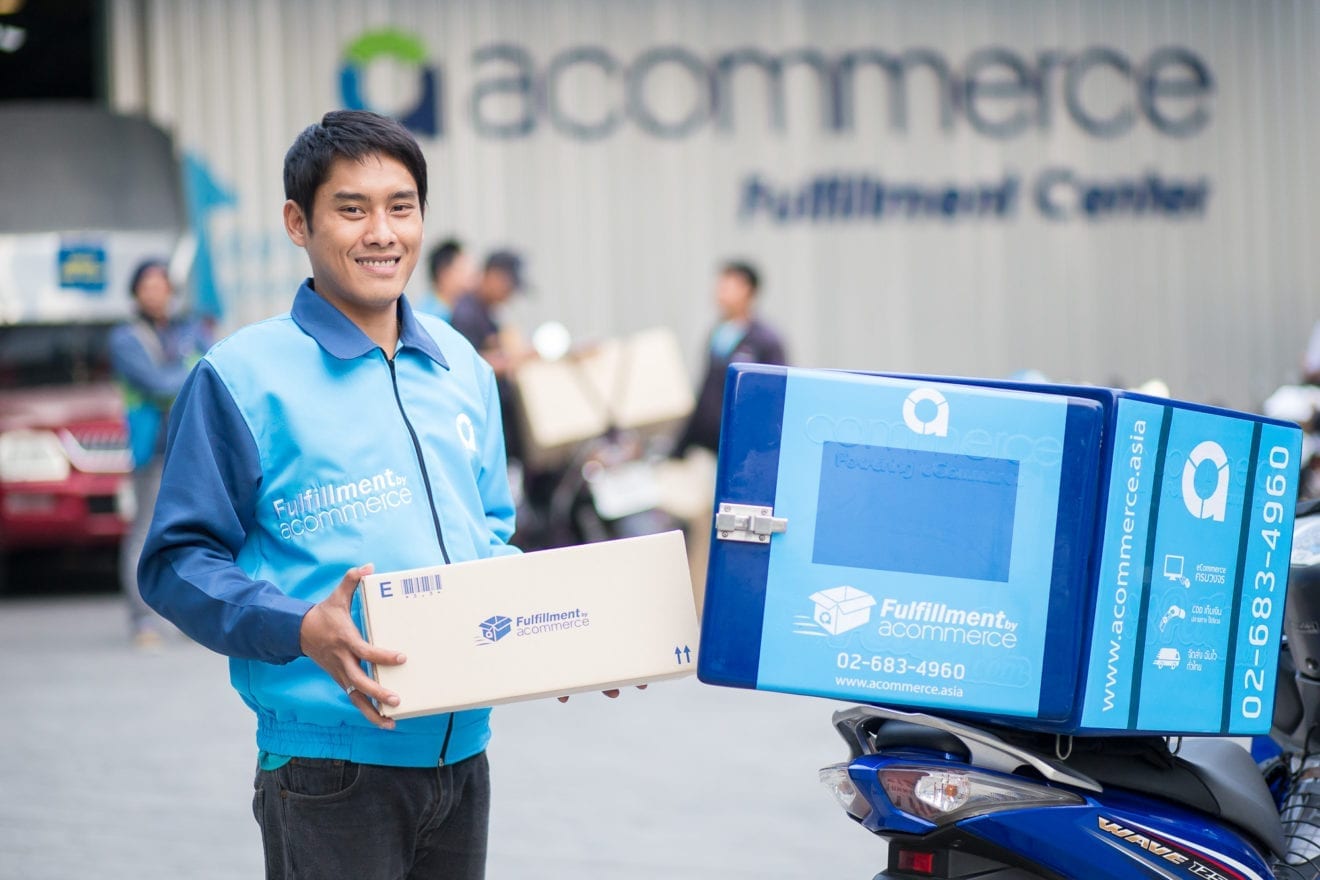
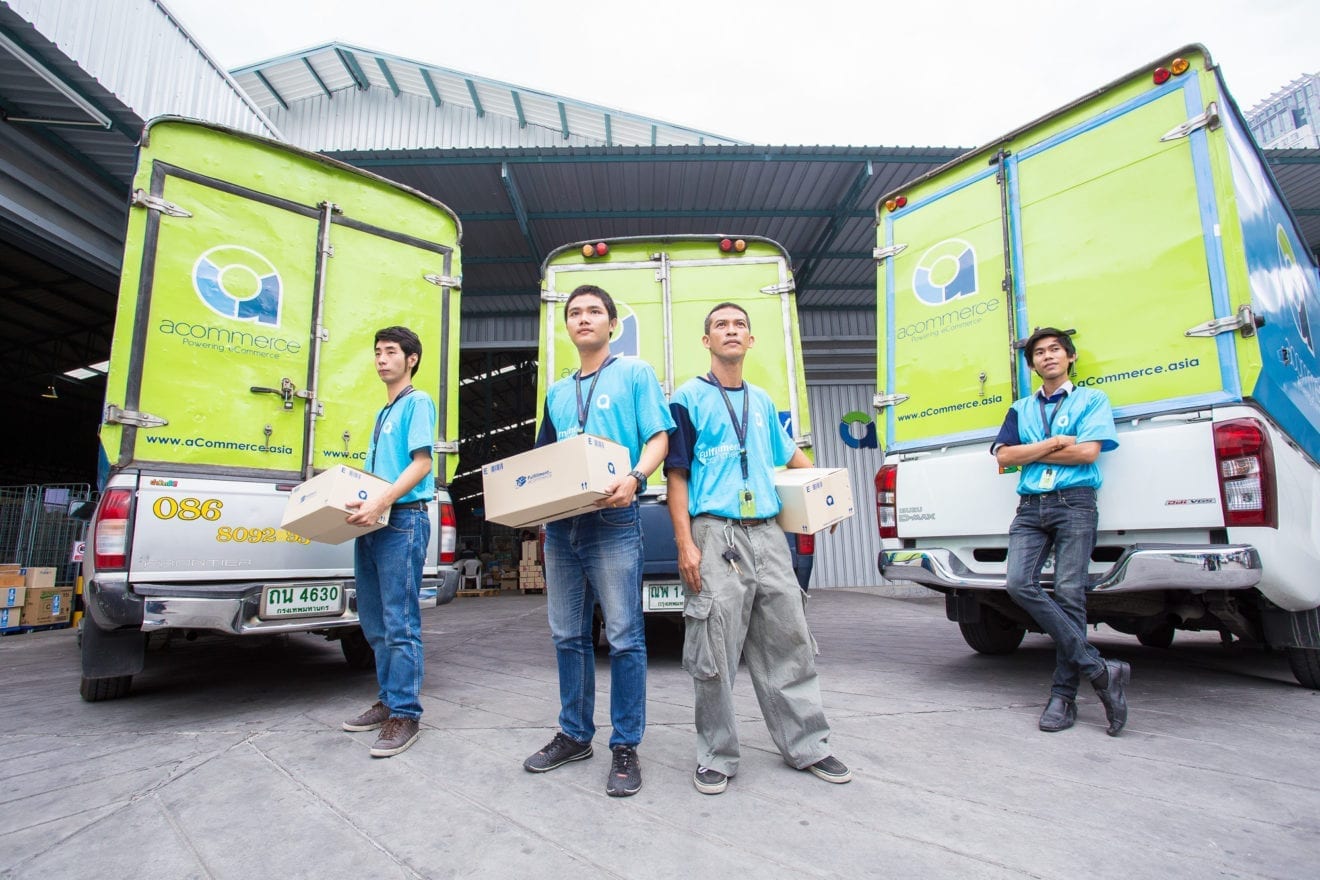
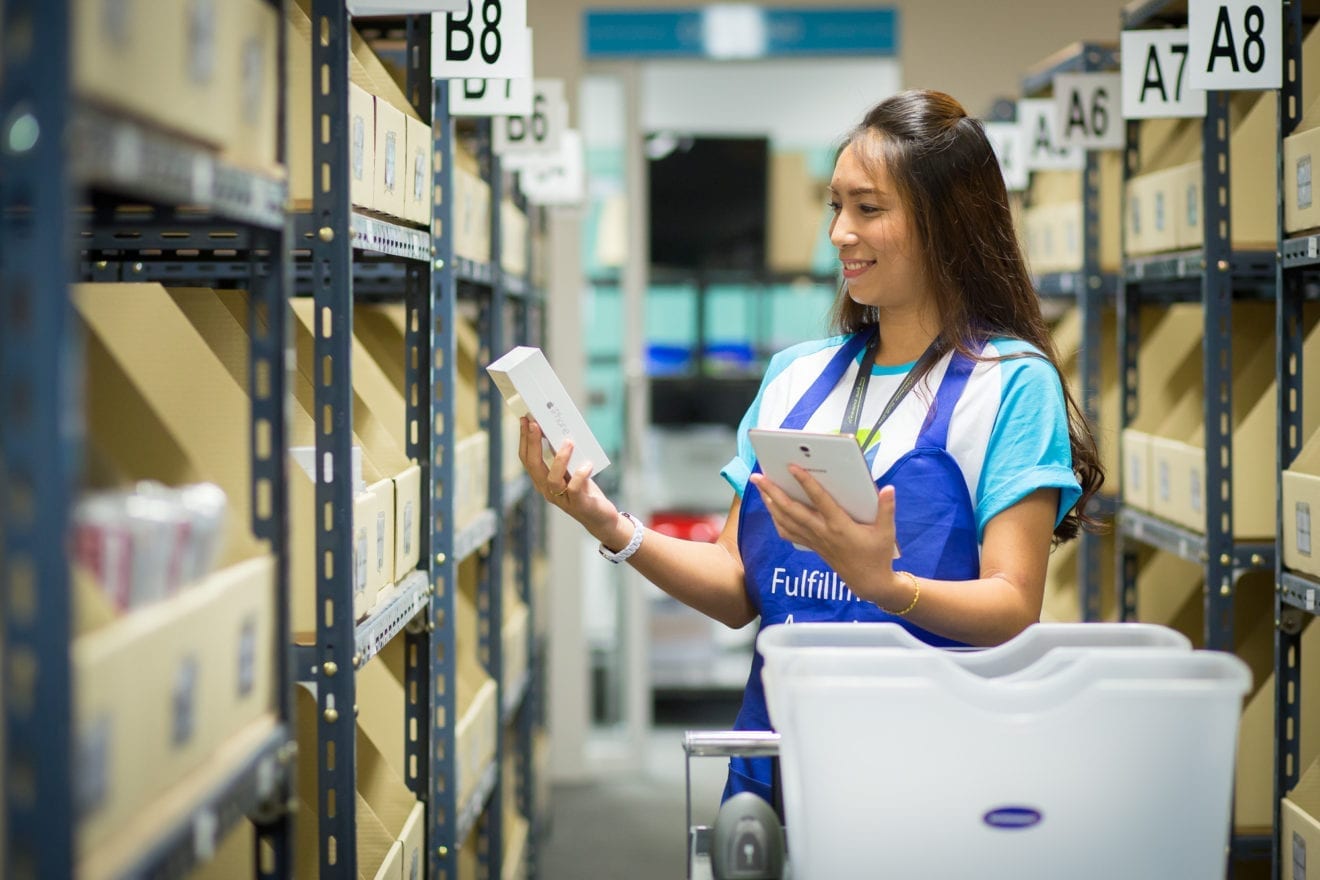
    Manhattan Associates, Inc., (NASDAQ: MANH) today announced that Southeast Asia’s leading ecommerce service provider and online distributor aCommerce has selected the Manhattan SCALE™ product suite to support its continued expansion in the Southeast Asia region. Manhattan SCALE will deliver an improved warehouse management capability across aCommerce’s warehousing estate in Indonesia, Philippines and Thailand, enabling an easier and faster integration of new aCommerce customers. The system will also provide the required degree of scalability for the business’s projected growth in the years ahead.

    warehouse_49

    While the initial implementation of Manhattan SCALE at aCommerce’s distribution centre (DC) in Thailand will be conducted by a joint team from Manhattan, aCommerce and Manhattan’s Thai GeoPartner Logiciel Consulting and Development Co., aCommerce expects its own team will manage subsequent deployments at its other DCs in the region.

    Paul Srivorakul, Group CEO at aCommerce, commented: “Over recent years, local e-tailers and international retail brands expanding into Southeast Asia have focused on building their websites and supporting front end systems but today their ecommerce strategies are increasingly structured around order execution and fulfilment processes. With the Manhattan SCALE solution, we’re aiming to drive improvements in revenue and profitability for our clients through higher service levels to the end consumer as well as give them a more efficient outsourced logistics capability.”

    warehouse_200

    Richard Wright, managing director at Manhattan Associates, Southeast Asia, commented, “Our unique platform will allow aCommerce to deliver on its customer service, distribution efficiency and enterprise growth goals, as well as create exceptional value for its retail customers and the consumers that they serve. We are honoured to be selected by aCommerce and excited to play such a key role in furthering its success as the leading integrated ecommerce services platform in Southeast Asia.”

  • AccorHotels picks Ruckus Wireless as Wi-Fi vendor

    AccorHotels picks Ruckus Wireless as Wi-Fi vendor

    AccorHotels Group  has selected Ruckus Wireless as the preferred Wi-Fi partner for its chain of more than 3,700 hotels in 90 countries.

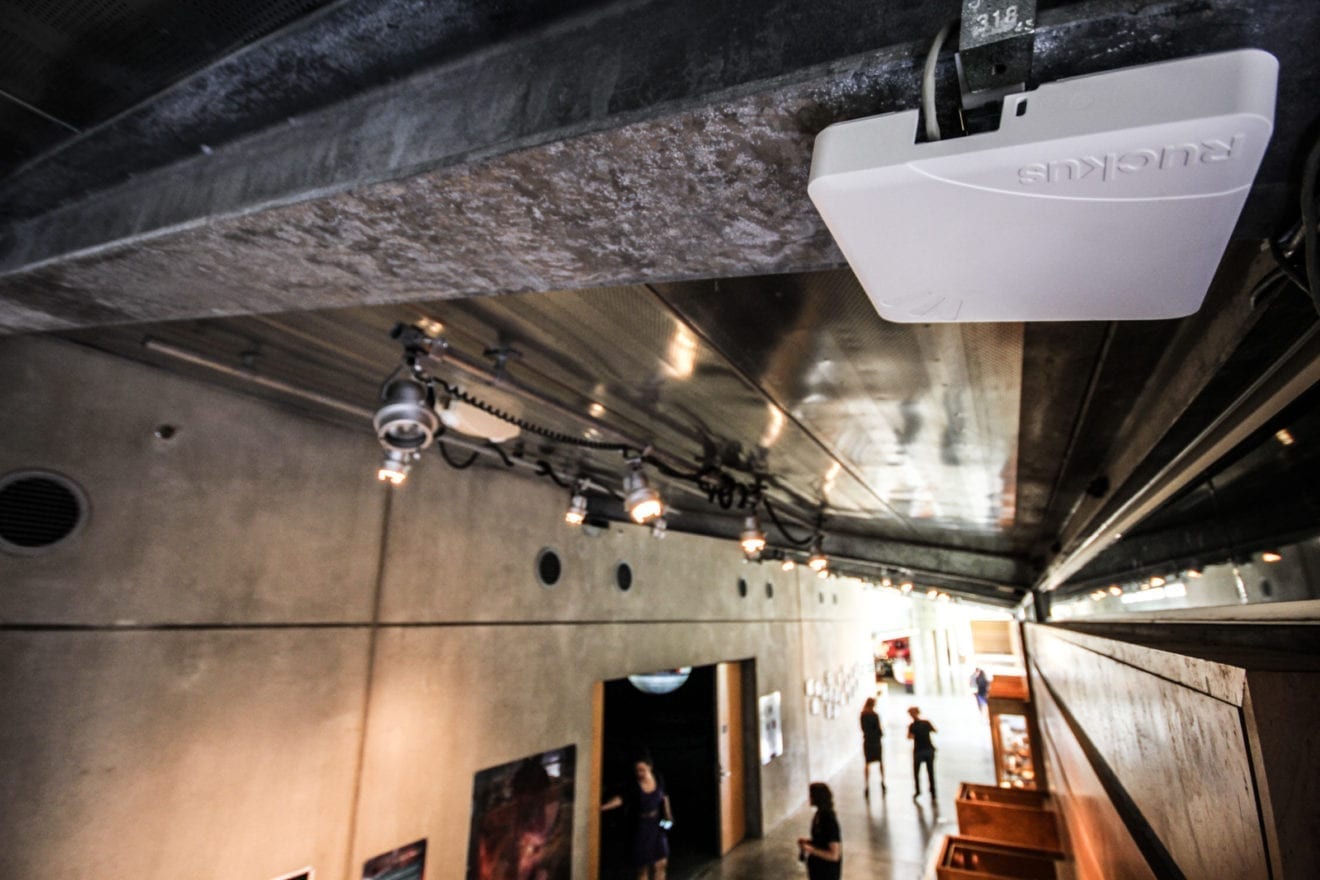
    The company has started implementing 802.11ac access point technology from the vendor at hotels including Novotel Hong Kong Nathan Bay Kowloon to improve performance for both customers and staff.

    As part of the agreement, Ruckus ill also update the hotel group’ technical infrastructure to help support new standards and customer requirements.

    “Our digital strategy is hyper-focused on our customers and owners—and their expectations for high-performance, multi-access, personalized Wi-Fi services,” said David Esseryk, vice president of guest technology and innovation at AccorHotels.

    “Ruckus’ understanding of the hospitality industry and close relationship with global HSIA services providers made the choice clear-cut. We look forward to working together, streamlining processes and ultimately further enhancing our powerful brand DNA.”

    Hotels require strong Wi-Fi infrastructure to support what is often a large number of concurrent users. Guests have also come to consider Wi-Fi as a must-have requirement.

    Ruckus Wireless Wi-Fi technology includes unique selling points including directional, high-gain RF signal routing to improve coverage, performance and cost-effectiveness, making the company a popular choice for the hospitality sector.