Tag: asia

  • Global giants eye Vietnam e-commerce logistics market

    Global giants eye Vietnam e-commerce logistics market

    The world’s largest container shipping line Maersk and U.S. express delivery company FedEx are seeking to enter Vietnam’s e-commerce logistics market. Ditlev Blicher, regional managing director for Asia-Pacific, A.P. Moller – Maersk (Maersk), was in the country this week, three months after the Danish company spent US$3.6 billion on acquiring Hong Kong firm LF Logistics.

    He said with LF Logistics’ expertise in omnichannel orders, Maersk would have a better position in the global e-commerce market, including Vietnam. He said that his company plans to offer business-to-business (B2B) and business-to-consumer (B2C) delivery services.

    Hoan Dang, head of omnichannel order fulfillment at Maersk Vietnam and Cambodia, said with the acquisition of LF Logistics, his company could join hands with e-commerce platforms to handle goods orders in the Vietnamese market.

    FedEx is integrating its services with e-commerce platforms to enable online retailers to use them without leaving the platforms.

    Hardy Diec, managing director of FedEx Express Indochina, said e-commerce would continue to flourish in Vietnam.

    Earlier this month his company opened a new $2-million operations center in Hanoi’s Bac Tu Liem District. Vietnam will be one of the top 10 countries for FedEx in terms of trade volume growth over the next five years.

    Vietnam will achieve the highest growth in the digital economy in Southeast Asia between 2022 and 2025, a report by Google, Temasek and Bain & Company has forecast.

    Its digital gross merchandise volume is likely to reach $23 billion in 2022, and $32 billion by 2025.

    According to global firm Allied Market Research, Vietnam’s express delivery market is expected to be worth $4.88 billion by 2030 after growing at 24.1% annually, with the growth of e-commerce being one of the main drivers.

    Logistics firms are expanding their services and lowering prices.

    This month Lazada Logistics announced it would start offering omnichannel deliveries for online shops.

    J&T Express announced cuts of 10-20% in freight.

  • UBS Switzerland Marketing Manager Moves to Group

    UBS Switzerland Marketing Manager Moves to Group

    UBS named a new head of marketing and digital sales for its Switzerland business to replace the current manager who is moving to another role within the bank at the group level.

    After eight years as the head of marketing and digital sales for UBS Switzerland, Daniel Fischer is moving to group communications and branding starting January 1, reporting to the head of the team Marsha Askins, according to an internal memo seen by finews.com and confirmed by a UBS spokesperson.

    To replace him, UBS recruited Aydin Sahin as the new head of marketing and digital sales for UBS Switzerland, who joins on January 1, and also become a member of the business forum COO Switzerland, reporting to the COO of the Swiss unit Sabine Magri who wrote the memo.

    Sahin’s career at Commerzbank spanned 12 years, where he was jointly responsible for the company’s digitalization and growth strategy in various management positions, most recently as head of marketing & customer Intelligence at Commerzbank and Comdirect.

    The past two years have been characterized by the definition of our strategy and the start of its implementation, with clearly defined growth areas, a strong focus on digitalization and transformation, as well as the corresponding alignment of the organization. We have achieved a lot and gained excellent momentum in the market, Magri wrote the memo announcing the changes.

  • Personal Data of Passengers, Employees Stolen in Ransomware Attack on AirAsia

    Personal Data of Passengers, Employees Stolen in Ransomware Attack on AirAsia

    AirAsia, a budget airline that operates out of Malaysia, is dealing with the aftermath of a ransomware attack that saw the personal data of some five million people stolen.

    To add insult to injury, the gang of responsible cyber criminals said they would not follow up on the beleaguered airline due to how “sloppy” its internal organization and management appeared to be.

    The perpetrators of the ransomware attack appear to be “Daixin Team,” a group that is thought to be based in or around China and that has become active enough in recent months to merit an alert from the FBI and CISA. The group has been active since at least June 2022, but previously had shown a strong preference for targeting healthcare and public health facilities via unpatched VPN vulnerabilities.

    The ransomware attack on AirAsia occurred on November 11 and 12, with samples of the stolen personal data being leaked to the group’s dark web site about a week later. The posted samples contain employee personal information as well as passenger booking information. The group says that it has captured “all employees” personal data and an unspecified quantity of passenger data.

    While Daixin Team continues to shake down AirAsia using the stolen personal data, it said there would be no further ransomware attacks on the company due to its “chaotic organization” and poor cybersecurity. However, this did not appear to be out of pity, but at frustration at having to sort through a tangled internal network to find information of value; the group said it would leave it to “newcomers” to pick through the “garbage.” However, the hackers also said they would stop short of locking anything that could be life-threatening, such as air traffic control and radar systems.

    Founded in 1993, AirAsia has the largest fleet in Malaysia and flies to the greatest range of international and domestic destinations. The airline carried a total of about 4.81 million passengers in 2021, indicating that the personal data stolen by the attackers may be limited to bookings taking place within the last year or so. Part of the leak of sample data stolen during the ransomware attack shows a database of passenger names with ID numbers and the total cost of their ticket.

    Ransomware attacks have become both more frequent and more expensive to weather in recent years, but they have also become more dangerous. Attackers have now demonstrated that they are willing to cause real-world damage, potentially even death, if they think it will increase their chances of a payout. That was a red line that was really not crossed before the major attacks on critical infrastructure and hospitals in 2021.

    It is unclear if Daixin Team’s claim that it had access to air traffic control and other sensitive airline applications that could cause physical damage is accurate. This would generally require direct access to an individual airport’s systems rather than an airline’s internal network or booking system. There have been numerous attacks on both airlines and the public-facing portion of airport websites at this point, none of which have yielded that sort of access; about the closest example was an attack on Bristol Airport in 2018 that caused outages of the flight status screens for two days, but did not impact actual aircraft operations. Another attack in India earlier this year disrupted flight scheduling for several days, but did not prevent planes from flying. FedEx’s air shipment service has also been hit by ransomware attacks at least twice, but flight operations are not known to have been impacted.

    Ransomware attacks have been demonstrated to be capable of indirectly causing death at this point, however, in the health care industry that Daixin Team likes to target. In 2020 a German patient being transported by ambulance for emergency services was turned away from a hospital that had its systems shut down by ransomware, and died en route to the next closest facility. And in 2021, a baby in Alabama died after a mother was not given tests that may have saved its life, due to ransomware limiting hospital capabilities at the time. Though hospitals are generally not well-funded, hackers target them due to the wealth of personal data they hold and the fact that they cannot afford to have systems down for any length of time.

    Nick Tausek, Lead Security Automation Architect at Swimlane, notes that this is a risk that all types of organizations now need to consider: “Since June of this year, the Daixin Team has attacked several healthcare organizations, including the OakBend Medical Center in Texas and the Fitzgibbon Hospital in Missouri. Both attacks resulted in the exposure of personally identifiable information (PII) on the dark web and represented a significant threat to patient and employee safety. Now, the Daixin Team seems to be shifting towards new targets – global critical infrastructure. Like prior Daixin Team attacks, the attack on AirAsia has resulted in sensitive data exposure. Unfortunately, AirAsia will most likely face large financial burdens and a crisis of confidence from its consumer base due to this attack.”

    “To mitigate the chances of similar attacks in the future, it is imperative that organizations adopt low-code security automation to help detect and respond to threats in real-time by allowing complete visibility into IT environments. Endpoint security tools that integrate low-code security automation give organizations a cohesive protection strategy that protects customers and employees as well as keeps essential services like air travel up and running,” recommended Tausek.

  • Louis Vuitton picks Shanghai for first furniture and homewares store

    Louis Vuitton picks Shanghai for first furniture and homewares store

    Louis Vuitton on Friday announced plans to open a dedicated furniture and homewares store in Shanghai, a world first for the French luxury brand as it aims to expand further into lifestyle offerings to affluent Chinese clients.

    The appointment-only showroom, which will open on Monday, is located in a century-old three-storey mansion situated just behind Nanjing Road, the city’s premier upscale shopping strip.

    Louis Vuitton, part of LVMH, said in a statement the showroom will be trialed for several months as a pop-up and if successful will then become a permanent feature.

    While no price tags were on show at the store during a media preview, a Louis Vuitton employee said a brightly hued hanging cocoon chair designed by the Campana brothers is priced at more than 700,000 yuan ($97,860) and a small lamp resembling a glass milk bottle encased in leather straps cost 10,500 yuan.

    A smaller side building is dedicated to showing designs by Frank Chou, the first mainland Chinese designer tapped by Louis Vuitton to collaborate on the Objet Nomades collection, as the furniture and homewares ranges is known.

    Finding new avenues for growth, particularly among wealthy consumers, is becoming increasingly important for luxury brands in China as COVID-19 curbs, a property market decline, and widespread economic uncertainty pressure luxury spending.

    Louis Vuitton dipped its toes into a more lifestyle-oriented offering in China last month when it opened a store in the southwestern city of Chengdu that included an exhibition space and restaurant.

    “LMVH is striving to … reposition itself as a contemporary luxury brand by tapping new avenues that resonate with dynamic Chinese Millennials and Gen Z consumers,” said GlobalData consumer analyst Bobby Verghese, whose firm reckons sales in China’s home sector will grow to $782 billion by 2026.

    Verghese sees homewares as a good bet for Louis Vuitton, especially in China.

    “Unlike their predecessors who prioritized privacy, the Gen Y digital immigrants and Gen Z digital natives are not averse to flaunting their lifestyles on social media,” Verghese said. “LMVH aims to gain an early-bird advantage in this emerging space.”

  • FCC bans new telecom gear from Huawei and ZTE

    FCC bans new telecom gear from Huawei and ZTE

    For years, even before 2019 when Huawei was placed on the Entity List banning it from access to its American supply chain (including Google), the company was considered a national security threat along with ZTE. The Chinese phone and telecom equipment makers were often accused of putting backdoors in their handsets and equipment, allowing them to obtain confidential information and send it to servers in Beijing. Both firms denied the allegations multiple times.

    Axios reports that the FCC announced new rules banning U.S. sales and imports of new telecommunications equipment made by both Huawei and ZTE.  In a tweet, FCC Commissioner Brendan Carr wrote, “Today, the FCC takes an unprecedented step to safeguard our networks and strengthen America’s national security. Our unanimous decision represents the first time in FCC history that we have voted to prohibit the authorization of new equipment based on national security concerns.”

    To be clear, the ban affects new equipment only. Gear that has already received FCC approval can still be shipped to the states.
    FCC Chairwoman Jessica Rosenworcel added, “These new rules are an important part of our ongoing actions to protect the American people from national security threats involving telecommunications.” Huawei told Axios that it had no comment and ZTE had yet to respond. Huawei and ZTE are among the largest suppliers of telecom equipment worldwide. Last year, the FCC voted to spend $1.9 billion to rip out Huawei and ZTE equipment already used by rural wireless firms.
    In 2019, a law was passed forcing carriers that receive federal subsidies to purge their networks of equipment supplied by companies considered threats to U.S. national security. Most rural carriers are subsidized by the Universal Service Fund (USF). The USF is funded by fees charged to subscribers of wireless providers and is managed by the FCC.
    The FCC was given one year after the passage of the Secure Equipment Act last November to vote on the order to ban Huawei and ZTE gear. Besides the two familiar names to phone enthusiasts, three lesser-known Chinese firms are affected by the order. These companies include telecom firm Hytera Communications, surveillance equipment producer Dahua Technology, and video surveillance firm Hangzhou Hikvision Digital Technology.
    Hikvision released a statement that says, “This decision by the FCC will do nothing to protect U.S. national security, but will do a great deal to make it more harmful and more expensive for U.S. small businesses, local authorities, school districts, and individual consumers to protect themselves, their homes, businesses and property.” The company will continue to do business with its U.S. customers “in full compliance” of U.S. regulations.
    This year the four bipartisan FCC commissioners have voted unanimously on robocall enforcement and on plans for spectrum-sharing. And now, the four have all voted in favor of banning new Huawei and ZTE telecom gear from entering the U.S.
  • Musk hints that a Tesla phone could be made to punish Apple and Google

    Musk hints that a Tesla phone could be made to punish Apple and Google

    You might wonder how Elon Musk got where he is today based on his uneven performance as Twitter’s new owner. His confusing and illogical changes to the verification checkmarks and his inability to make a decision and stick to it without changing his mind a few times does not inspire confidence in the guy as someone who can run a company like Twitter.
    And when former T-Mobile president and CEO John Legere said that he would be interested in working his magic on Twitter (albeit at a superstar executive salary of course), Musk flat-out rejected him without even hearing him out. Considering what Legere did for T-Mobile, taking it from its position as last among the four major wireless providers to second, the guy should get at least a personal meeting. After all, he does have a stunning track record and helped T-Mobile become the most innovative company in the industry.
    The latest news involving Musk and Twitter is that the multi-billionaire has posted a tweet in which he says that should Apple and Google bounce Twitter from their respective app storefronts, Musk will make what he calls an “alternative phone.”
    Let’s run through the whole thing. A conservative commentator Liz Wheeler tweeted, “If Apple & Google boot Twitter from their app stores, @elonmusk should produce his own smartphone. Half the country would happily ditch the biased, snooping iPhone & Android. The man builds rockets to Mars, a silly little smartphone should be easy, right?” Elon responded by writing, “I certainly hope it does not come to that, but, yes, if there is no other choice, I will make an alternative phone.”

    This reminds us of another billionaire who thought that building a competitive smartphone might be right up his alley. Jeff Bezos and Amazon released the Fire Phone in June 2014. To put it mildly, this phone was a flop, as reportedly only 26,000 units were sold.

    But we digress. Right now there are no signs that Apple or Google is considering the removal of Twitter from the App Store and Google Play Store, respectively. But you never know when something Musk does will go afoul of App Store and Play Store rules. If Google were to banish Twitter from the Android app storefront, Twitter could always end up in a third-party app store like Amazon’s where Android users could sideload it.
    Sideloading an app on Android means downloading it from an app store other than the Play Store. Losing the App Store wouldn’t even be a blow even if sideloading is not an option on iOS. That’s because without an Android or iOS app, Twitter still would be accessible through the mobile browser on iPhone and Android handsets; in other words, the lack of a native iOS and/or Android app would not spell the end for Twitter.

    We’d imagine that if a Tesla phone is developed, Musk would create a mobile/wireless business unit for Tesla. But Elon is going to have to be careful how he approaches such a project. Keep in mind that his holdings in Tesla stock have cratered by 54% so far this year. Tesla stockholders might not take too kindly to Elon using Tesla’s cash and name to prop up Twitter which is one of Musk’s personal holdings.

    Again, this is all conjecture at this point, especially since Twitter remains a listing in good standing in the App Store and the Play Store. Unless development plans for an alternative phone have already started, the process of building a new smartphone using a brand-new platform will take several years. So hopefully Mr. Musk doesn’t expect to snap his fingers and see a new phone instantly become an iOS and Android competitor.
  • Google will soon allow Messages users to react using any emoji

    Google will soon allow Messages users to react using any emoji

    If you are messaging a fellow Android user who, like you, uses the Rich Communication Services (RCS) platform that is part of the Google Messages app, you can exchange longer messages, share larger video and image files, get a read receipt, enjoy end-to-end encryption, see a typing indicator, and more. Like Apple’s iMessage, none of these features will work when someone using another platform (like iMessage) is part of a group chat.
    But one thing that Google Messages users can do when talking among themselves, or even texting an iOS user, reacts to a message by sending one of seven emoji: thumbs up, smiley face with heart-shaped eyes, laughing with tears, surprised look, sad face with a tear, frowning face, and thumbs down. While those seven emoji will allow you to respond to many different messages, wouldn’t you prefer a wider range of possible options?
    Before we continue, let’s explain how Android users with the Google Messages app can respond to an RCS or Text message with an emoji. Long press on a chat bubble and you’ll see a pill-shaped popup containing the seven emoji mentioned above. Just tap on the one that best expresses how you react to a comment.

    For example, this writer is a beta tester for the Google Messages app yet the new feature is not showing up on my Pixel 6 Pro. If you are unable to access the emoji picker on your Android phone, don’t worry. Eventually, it will roll out for all Google Messages users.

    You can constantly check for an update by opening the Play Store app. Tap your profile pix or avatar or initials found in a circle on the right of the search bar at the top of the screen. From there, go to Manage apps & device and tap on the green See recent updates link. That takes you to a list of recently updated apps. At the top of the display, there is a tab reading Updates available. Tap on it and then tap on the Update all button.
    Google might end up using a server-side update which means that the company itself will flip the switch and you’ll never know until after it happens. We have no idea when you will receive the update containing the new feature but we have a gut feeling that it won’t be terribly long. Unless, of course, it is.
    You might recall that during the summer Google tried to pressure Apple into supporting RCS in a bid to stop the green bubble bullying that goes on when an Android user joins what was an all iOS group chat. When an Android user joins an all-iOS chat, many of the features of iMessage are no longer available and text bubbles turn green instead of blue. The interesting thing is that the same thing applies to iOS users who join an all RCS group chat on Android.

    The only difference seems to be that Android users don’t insult and bully those iPhone users who join their group chat which disables the RCS features in the same way that an Android user can disable iMessage features.

  • Global giants eye Vietnam e-commerce logistics market

    Global giants eye Vietnam e-commerce logistics market

    The world’s largest container shipping line Maersk and U.S. express delivery company FedEx are seeking to enter Vietnam’s e-commerce logistics market. Ditlev Blicher, regional managing director for Asia-Pacific, A.P. Moller – Maersk (Maersk), was in the country this week, three months after the Danish company spent US$3.6 billion on acquiring Hong Kong firm LF Logistics.

    He said with LF Logistics’ expertise in omnichannel orders, Maersk would have a better position in the global e-commerce market, including Vietnam. He said that his company plans to offer business-to-business (B2B) and business-to-consumer (B2C) delivery services.

    Hoan Dang, head of omnichannel order fulfillment at Maersk Vietnam and Cambodia, said with the acquisition of LF Logistics, his company could join hands with e-commerce platforms to handle goods orders in the Vietnamese market.

    FedEx is integrating its services with e-commerce platforms to enable online retailers to use them without leaving them. Hardy Diec, managing director of FedEx Express Indochina, said e-commerce would continue to flourish in Vietnam.

    Earlier this month, his company opened a new $2-million operations center in Hanoi’s Bac Tu Liem District. Vietnam will be one of the top 10 countries for FedEx in terms of trade volume growth over the next five years.

    Vietnam will achieve the highest growth in the digital economy in Southeast Asia between 2022 and 2025, a report by Google, Temasek, and Bain & Company have forecast. Its digital gross merchandise volume will likely reach $23 billion in 2022 and $32 billion by 2025.

    According to global firm Allied Market Research, Vietnam’s express delivery market is expected to be worth $4.88 billion by 2030 after growing at 24.1% annually, with the growth of e-commerce being one of the main drivers.

    Logistics firms are expanding their services and lowering prices.

    This month Lazada Logistics announced it would start offering omnichannel deliveries for online shops.

  • Fuel market cannot be regulated by administrative diktats

    Fuel market cannot be regulated by administrative diktats

    The recent fuel shortages happened because retail prices did not follow the market economy principles, and the government cannot mandate prices, Prime Minister Pham Minh Chinh said.

    “Businesses only operate if they gain profits. It is difficult for the government to use administrative measures with them in a market economy.”

    He pointed out that calling on businesses to sacrifice their own interests for the nation could only be done during wartime, and authorities need to be flexible and keep up with the market.

    “When retail prices correctly reflect costs, retailers started to sell again because they see profits.”

    The government has instructed the Ministry of Industry and Trade to amend regulations to ensure demand and supply principles are followed.

    Many localities, including Hanoi and Ho Chi Minh City, reported fuel shortages for weeks in October and early November as gas stations said they were selling at a loss since retail prices were too low.

    The situation has improved in the last three weeks, with long queues no longer seen at filling stations.

    State-owned fuel distributor Petrolimex said it is set to increase supply by 40% to 2,000 cubic meters daily.

  • Gold prices continue to drop

    Gold prices continue to drop

    Prices of gold bars branded SJC on Monday dropped 0.4% from the weekend to VND67.35 million ($2,716.82) per tael.

    Selling prices of gold rings remained unchanged, reaching VND54.05 million per tael. A tael is equal to 37.5 grams or 1.2 ounces.

    Globally, gold prices slipped on Monday, as a stronger U.S. dollar made the greenback-priced metal more expensive for buyers holding other currencies.

    Spot gold was down 0.2% at $1,752.66 per ounce, as of 0016 GMT. U.S. gold futures fell 0.1% to $1,751.80, according to Reuters.

    SPDR Gold Trust, the world’s largest gold-backed exchange-traded fund, said its holdings rose 0.2% to 908.96 tonnes on Friday from 906.93 tonnes on Wednesday.

  • Vietnam’s seafood exports nearing $11 bln in 2022

    Vietnam’s seafood exports nearing $11 bln in 2022

    Vietnam’s seafood exports this year could reach $11 billion for the first time, spearheaded by shrimp, pangasius and tuna, according to the Vietnam Association of Seafood Exporters and Producers (VASEP).

    Truong Dinh Hoe, VASEP general secretary, said at a conference in HCMC Saturday that by November, seafood exports had already crossed $10 billion, so by the end of the year, it could reach $11 billion for the first time.

    The largest seafood export markets for Vietnam are the U.S., Japan, China and the EU. The EU, the U.S., and China account for 60% of the global seafood trade and 50% of Vietnam’s export turnover in the first ten months of this year.

    Hoe said all sectors of the seafood industry grew 18-77%, but exports began to slow down amid lower purchasing power, higher interest and fluctuating exchange rates. He added that as the world enters a recession and inflation increases, demand is falling globally.

    As such, Vietnam’s seafood industry would face tough competition from competitors that offer lower costs and prices, like Ecuador or India.

    Economist Dinh The Hien said that the global economy would worsen in 2023, directly affecting the seafood industry.

    “However, businesses shouldn’t be too pessimistic; they should search for new opportunities to grow,” he said.

  • Tech professionals in Vietnam prefer foreign companies

    Tech professionals in Vietnam prefer foreign companies

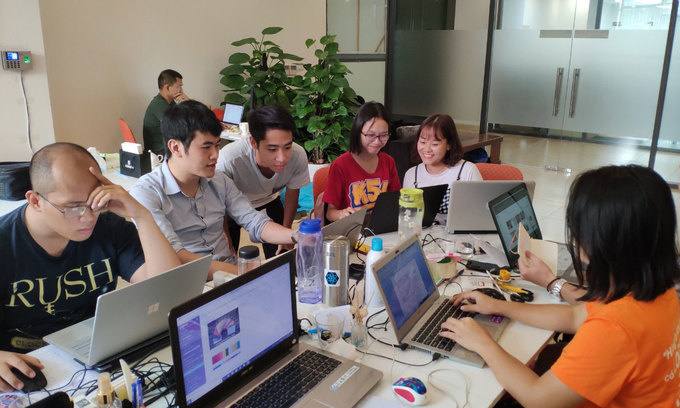
    Six takeaways from the most-updated nationwide report reveal what IT professional salaries and expectations in 2022-2023 look like.

    Designed to address and understand the multifaceted IT job market with tons of “rosy myths” about salary and tasks, “Salary & Job Expectation of IT Professionals in Vietnam 2022-2023” builds on a detailed analysis of 1,257 IT workers’ responses across the country.

    With an employee-based orientation, the latest report reveals, including but not limited to, IT professionals’ salaries based on positions and experiences, expectations among employers, and desired improvement areas.

    Information technology (IT) jobs have been in high demand as technology products and services become more integral to our lives. The U.S. Bureau of Labor Statistics (BLS) projects the computer science and IT industry’s employment rate to grow 21% from 2021 to 2031, much faster than the average for all occupations.

    The job market in Vietnam is not an exception, which is witnessing an expansion in the IT field regarding the number of companies and jobs. While there are still unexplored facets in the field, the report titled “Salary & Job Expectation of IT Professionals in Vietnam 2022-2023”, for the first time ever, has been released to reveal in-depth aspects of IT jobs based on 1,257 responses from IT professionals.

    Game, Data, and AI/Machine Learning positions have the highest salary compared to others with the same years of experience.

    According to self-report salaries from IT professionals in different types and years of experience, IT professionals in the field of Data and AI/Machine Learning, who have at least three working years, can earn a monthly salary of VND30,500,000.

    Meanwhile, with the same experience, Front-end Developers and Designers make only VND23,000,000VND and VND28,000,000 per month, respectively. Even professionals with more experience in the job market receive lower salaries or just slightly higher than those in Data and AI/Machine Learning positions.

    Four-year experienced Back-end and Full-stack Developers, for instance, have a median monthly salary of VND30,000,000 and VND29,000,000, correspondingly. Mobile Developers with five experienced years can make VND33,500,000 per month. In contrast, by merely acquiring two years of experience, a Game Developer can receive a monthly salary of VND27,000,000.

    Trendy and specialized programming languages like Python, TypeScript, and Go may guarantee higher pay than other skills. IT professionals mastering these languages have a monthly salary of VND30 million to VND40 million with three to five years of experience. HTML/CSS, conversely, is the lowest-paid skill, with a salary of VND16 million per month.

    With skills in Dart and C# programming languages, it may be more challenging for IT professionals to earn a competitive salary. Their monthly median salary is VND22,500,000, with four-year experience, and VND28,500,000, with five-year experience.

    JavaScript, Bash/Shell, and Ruby languages are worth keeping an eye on if IT professionals want higher earnings, thanks to their essentiality and productivity.

    The Covid-19 pandemic might impact the way employees in all professions think about their working modalities. A total 70.2% of 1,257 IT professionals participating in the research were attracted and cared more about job offers that allowed hybrid working mode. Nevertheless, it was not their top concern when applying for a job.

    The top four topics an IT professional would love to discuss during a job interview include the working style of future leaders, company culture, company/product development potentiality, and new challenges to conquer.

    Interestingly, while salaries do not appear as IT workers’ most prioritized consideration, a large number of them expected to receive at least a 20% salary increase to accept a new job offer.

    Salary is the main deciding factor for IT employees when it comes to reasons for quitting their current job. Unsatisfying salaries and rare/no chances to raise wages are the top two motives leading IT professionals to give up. Two more are no challenges in working tasks and rare/no promotion opportunities. Employees may find no conquering tasks when their assignments are too easy, on a small scale, or already in shape. Factions and politics at the workplace also contribute to employee decisions to resign.

    Regarding an ideal company, IT professionals tend to refer to corporations originating from European countries, America, or Canada. Vietnamese companies come in third place, which is moderately higher than Australian and New Zealand corporates.

    Once again, flexibility to work at home or no timekeeping required plays an important role to make employees stay loyal. Other factors concerning company culture are getting along with colleagues and reasonable workload, particularly, limited overtime tasks.

    A clear vision of prospective growth from the company, leaders and themselves is the most significant preference of IT professionals when considering staying with a company. They would love not only to know their development and promotion potential but also to have leaders who can provide explicit foresight and orientations.

    Most IT professionals want to enhance their technical skills & knowledge for short-term plans, covering 60% of responses, while switching to management skills and positions involve long-term objectives.

    The top two improvement areas that they focus on are English and technological expertise. They are looking forward to learning new programming languages including Python, Go, and TypeScript at 25,3%, 22,4%, and 15%, respectively. If you find those languages familiar, yes, you read it from the second takeaway. It is reasonable to learn skills that bring you more stipend.

    The report has been released for the very first time, conducted and published by ITviec, the leading job site for IT recruitment in Vietnam. The report’s findings aim to provide employers a better understanding of each IT position/type, thus, developing more successful job offers.

    Qualitative information was gathered via in-depth interviews with professionals in typical IT roles. An online survey was employed consisting of multiple short questions and can be completed within 20 minutes. Qualified respondents are ITviec users and from other sources that do not relate to the ITviec platform. The report does not include IT freelancers and people who do not work in IT.

  • Bank deposit interest rates surpass 10%

    Bank deposit interest rates surpass 10%

    Some banks have hiked deposit interest rates to 10-10.35% amid low liquidity in the system. NCB is paying the highest interest rate of 10.35% for 12-month deposits of VND1 billion (US$40,300) downwards made online. For six-month deposits, it is offering 10%. Over the past month, lenders have increased deposit interest rates frequently, even weekly in some cases.

    At least ten banks are now offering more than 9% deposit interest rates. Most have also launched promotions offering higher rates than officially listed to attract depositors. MSB is offering 9.9% to new clients if they place a deposit of at least VND1 million.

    Many, including Kienlongbank, GPBank, BaoVietBank, PGBank, OCB, VPBank, VietBank, Sacombank, and SeABank, are paying over 9% for 12-month deposits. Public banks are offering around 8% for 12 months.

    For periods of below six months most banks are paying around 6%. Banks lack liquidity and so have had to sharply hike the rates to meet the needs of business borrowers, Nguyen Quoc Hung, general secretary of the Vietnam Banks Association, said.

    The director of a large bank said the tightened bond and property markets mean some lenders have to increase deposit interest rates to ensure liquidity steeply.

    In the last two months, interest rates on deposits of six months or more have increased by 1.5-2.5 percentage points, leading to higher lending interest rates. Floating interest rates are predicted to soon surge to 15% yearly for individual borrowers and 11-12% for businesses.

    Now they are around 13% and 9%.

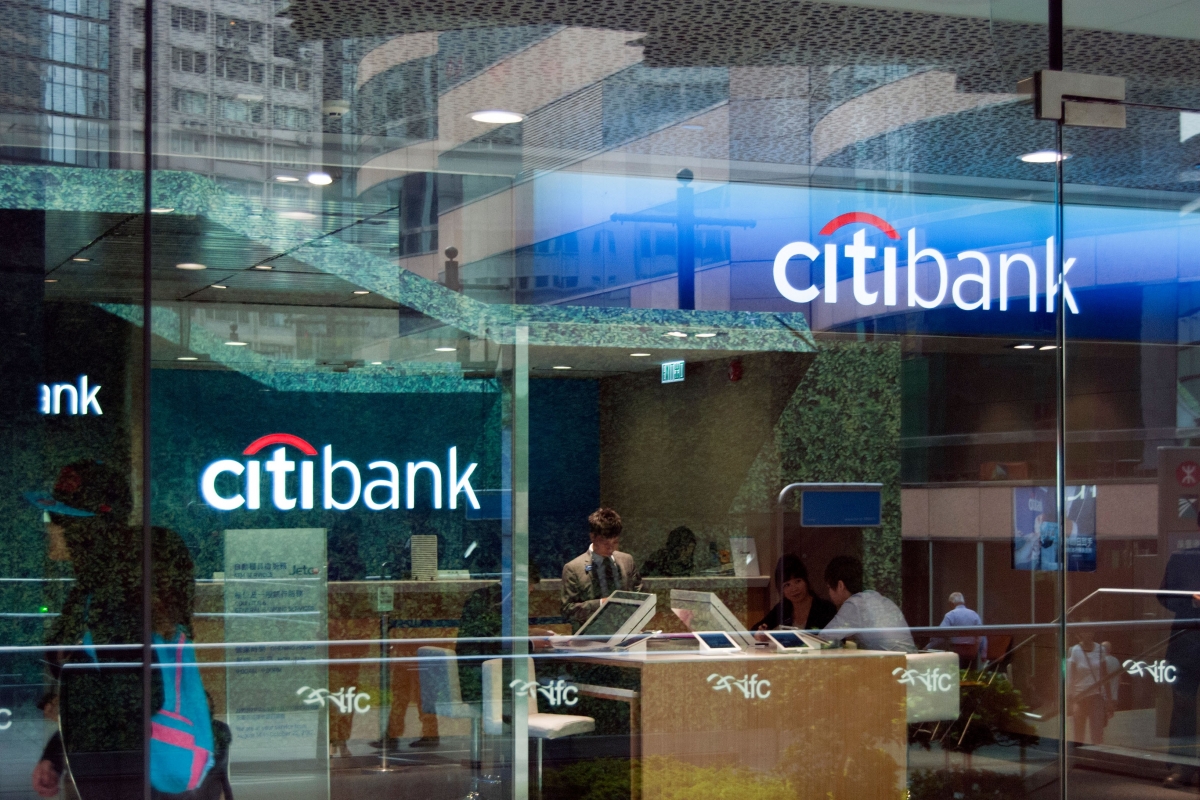
  • Citigroup on the Migratory Patterns of the Rich

    Citigroup on the Migratory Patterns of the Rich

    Switzerland has always been a magnet for the super-wealthy. In the last two years, more families and their wealth have moved to the country. Citigroup’s General Market Manager for Switzerland said who has been coming over and why.

    Having worked in several locations in Citigroup’s private banking over the past twenty years, Laurence Mandrile has kept a close eye on the migratory patterns of the world’s rich.

    After having lived here previously, her return to the country was well-timed. Mandrile started her role overseeing Citigroup’s Swiss private bank in the summer of 2019, a few months before the pandemic set many of the wealthy and their assets in motion.

    Since joining the Geneva office, she has observed an increasing demand for ultra-high net worth families to be serviced from Switzerland for safety reasons, especially post-corona, with its education, health care, and countryside also playing into the nation’s hands.

    This new money flows into Citigroup’s Swiss onshore business dedicated to Swiss nationals and residents with a minimum net worth of 25 million francs and family offices from its Geneva and Zurich branches.

    Family offices play an important role in Citigroup’s worldwide private banking operations. The bank regularly brings the members of its 1,500-strong family office network together to exchange expertise on topics, such as how to engage with the next generations ahead of the great wealth transfer.

    Along with centers in London, Jersey, and Luxembourg, the Swiss booking center falls under Citigroup’s EMEA umbrella, accounting for 20 percent of assets booked in the region.

    Although Brexit coming into force at the start of 2020 made it harder for UK citizens to get a Swiss passport, it didn’t stop some of the bank’s super-wealthy clients from heading to the alpine country. This year’s political instability and high inflation on the island have only added to the trend.

    The US bank’s Swiss booking center also serves clients in the Middle East, a region Mandrile sees as a big opportunity, given the current price of oil and the energy crisis, all boosting its economic growth.

    Clients are attracted to the US bank, not only because its wallet share in the region is growing, but because its Swiss booking center «remains the destination of choice for the Middle East, Mandrile said.

    The Swiss booking center is also a draw for Chinese clients, who make up a large part of the wealth coming from Asia over the past two years. Among them are some who have close ties to the United Arab Emirates. These clients might choose to relocate to Dubai or Abu Dhabi, while their wealth is managed from Geneva, she said.

    Overall, Switzerland stands out as being particularly business-friendly, which is also partly why US families have continued to come over the past few years, she added.

    After COVID, many individuals who had installed themselves or their family offices in Switzerland were ready to invest, but then the war came, keeping clients on the sidelines.

    It is only in the past few months that we’ve seen clients come back to trading, Mandrile said.

    Reflecting the uncertain and evolving dynamics of the last 12 months, the bank had to shift the way we invest several times, she added while advising clients to remain invested for the core of their wealth and increase the quality of their investments.

    During this time, for European investors, the best hedge has been in US dollar, which has shown a 10 percent positive performance just by holding the currency, while safe-haven instruments, like investment grade income, have not worked, she said.

    Citigroup is now focused on reviewing clients’ asset allocation while taking a close look at yields, which are making a comeback in fixed income. Moreover, Mandrile has observed certain clients moving to commodities, particularly energy, and illiquid markets.

    A recent Citigroup study on the segment showed family offices hold over 35 percent of their invested assets in illiquid markets, via direct investments, real estate, and private equity funds. Within alternative investments, Citigroup has the advantage of being able to offer its clients direct private equity investments in US and global deals.

    However, one area the Swiss competition does not need to worry about is the retail sector. The US bank, which prefers «to lead where it can have a competitive edge,» doesn’t have a retail presence in the country, she said.

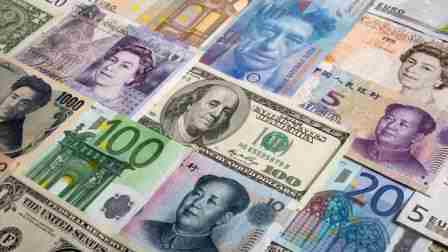
  • Hong Kong Dollar Peg Tests Another Round of Doubters

    Hong Kong Dollar Peg Tests Another Round of Doubters

    US-China decoupling, weak growth, and shrinking reserves have led to fresh doubts about the sustainability of the Hong Kong dollar peg. Will the city’s linked exchange rate system survive this round of doubters?

    Last week, Pershing Square Capital Management founder Bill Ackman announced that he was betting against the Hong Kong dollar and its US dollar peg, citing worsening US-China decoupling as a driver.

    We have a prominent notional short position against the Hong Kong dollar through the ownership of put options. The peg no longer makes sense for Hong Kong and it is only a matter of time before it breaks, Ackman said in a social media post.

    In light of the recent US/China decoupling of recent years, we find it surprising, almost embarrassing, for China to continue to peg the HK dollar to the US dollar, he added in another post that has since been deleted.

    Ackman is not alone in his doubts about the Hong Kong dollar peg. In one of his social media posts, who details concerns about Hong Kong’s shrinking foreign reserve as a reason for the peg to become untenable.

    Call me old fashioned but a government clearly in need of cash and a chunk of assets whose value has probably further fallen make it rather likely that the Exchange Fund’s assets have further to shrink — and that the reasons for that will put still further pressure on the peg, said Cookson.

    However unlikely de-peg may be, the payoff of upwards of 200:1 is comparable to CDS payoffs for the default of co’s like IBM over the same [6-month] horizon, tweeted hedge fund manager and Saba Capital Management founder Boaz Weinstein in support of Ackman’s trade, calling it a smart lottery ticket. Nothing is impossible, but only one of these is at all plausible.

    Since 1983, the Hong Kong dollar has been pegged to the greenback and successfully defended against multiple rounds of attacks. Notable investors against the peg include George Soros in 1998 and Hayman Capital Management founder Kyle Bass in 2020 during the height of political unrest in Hong Kong, in a strategy with 200 times leverage.

    Even for Ackman, this is not his first time wagering against the peg after betting in 2011 that the Hong Kong dollar would appreciate due to being materially undervalued.

    It’s nice to finally have others agreeing with our thesis. Rigid currency pairs harnessed to asynchronous economies are destined to fail, Bass said in report in response to Ackman’s latest bet. One bad day of deposit/currency outflows will likely bring unimaginable stress to the situation.

    Still, banks remain positive that the Hong Kong dollar peg will remain in the foreseeable future.

    Although maintaining a peg could at times bring short-term headwinds to growth, we believe it remains the optimal arrangement for Hong Kong in the longer term, according to a Morgan Stanley research note authored by economists Helen Lai, Jenny Zheng and Robin Xing, highlighting that the yuan was not yet fully convertible.

    Conditions are not favorable for selling Hong Kong dollar which will suffer negative carry, added DBS strategist Carie Li. The Hong Kong government also shows no intention to change the system.

    And as usual, local authorities continue to vehemently defend the exchange rate policy.

    If you bet against the Hong Kong dollar, you are bound to lose, said financial secretary Paul Chan in a speech at the city’s global banking summit earlier this month. You can verify my advice with certain hedge fund managers in the US who have been wrong about Hong Kong dollar time and again.

    Up until moments before a currency peg is lifted, the sovereign always asserts that they will never lift their peg. Peg defense 101, Ackman added.