Tag: asia

  • Binance Launches Billion-Dollar Crypto Rescue Initiative

    Binance Launches Billion-Dollar Crypto Rescue Initiative

    Binance invites participants to support the crypto industry via a rescue initiative, to which it will initially commit $1 billion.

    Binance has established the Industry Recovery Initiative (IRI), which includes its own initial commitment of $1 billion, according to a blog post by the crypto giant.

    The IRI is not an investment fund, Binance said, adding that it intends to increase the amount to $2 billion soon if the need arises.

    The initiative is expected to last about six months with flexibility on the investment structure, be it token, fiat, equity, convertible instruments, debt, or credit lines. The committed capital must be set aside within public addresses to ensure transparency.

    Aside from Binance, there are other existing IRI participants, including Jump Crypto, Polygon Ventures, Aptos Labs, Animoca Brands, GSR, Kronos, and Brooker Group which have made an initial aggregate commitment of around $50 million. 150 applications from companies seeking to provide support have also been received.

    On the participation of traditional financial institutions, Binance said it was open to exploring other deal structures for those keen as such firms may be unable to send money to a public address.

    On the targets for capital deployment, IRI is aiming for companies with «innovation and long-term value creation, a delineated and viable business model, and a laser focus on risk management.

    Aside from funding support, we plan to provide founders and projects with comprehensive support – from formation, technical execution, fundraising, and more – so that they can emerge and grow stronger from the crypto winter, the post added.

    Meanwhile, the crypto winter persists following the collapse and subsequent revelations of the fallen exchange FTX. Binance had planned initially to acquire FTX but backed out one day after signing a non-binding agreement citing concerns from due diligence and news reports.

  • Old iPhones back in vogue as new models remain beyond reach

    Old iPhones back in vogue as new models remain beyond reach

    With the iPhone 14 series expensive and difficult to obtain, many Vietnamese consumers are turning to used models.

    Huy Quoc of Hanoi has been looking to buy a phone with about VND20 million ($800) in hand. Originally, he planned to buy an iPhone 14 or an iPhone 14 Pro Max via instalment payments. Retail prices of iPhone 14 Pro and Pro Max are in the VND28.9-32.5 million ($1,165-1,310) range.

    However, after a few weeks of deliberation, he decided to buy a used 13 Pro Max in mid-November. Quoc said the “99%” (almost new) iPhone 13 Pro Max 256 GB cost him VND 20.5 million.

    He felt the price and six-month warranty provided by the store made his purchase a reasonable choice given his current budget and needs.

    “Even though it’s not the latest product, this is still a phone model with a more advanced configuration and design than the regular iPhone 14, with more stock, no waiting and not as costly as the 14 Pro Max,” he said.

    Many people seem to have adopted Quoc’s approach. Several retailers in Vietnam say that the number of people looking to buy used iPhones has increased significantly in November.

    The most bought used models are the Pro series of iPhone 12 and 13, and the regular and Pro Max versions of iPhones 11.

    The CellphoneS chain said that sales of second-hand iPhones in October and November increased by 40% compared to the previous months.

    “The iPhone 13 Pro Max is the most popular item among consumers, accounting for 40-45% of old iPhone sales,” said Nguyen Lac Huy, the company’s representative.

    At the HnamMobile chain, the iPhone 11 Pro Max model launched three years ago and currently priced at VND11 million continues to be the most popular old model, accounting for nearly 40% of second-hand phone sales, followed by 12 Pro / Pro Max, 13 Pro / Pro Max, each with 20%.

    According to Xa Que Nguyen, CEO of HnamMobile, pre-owned iPhones are now quite large in number and vary in models.

    “In the context of the genuine iPhone 14 being in short supply and of high price, older models, especially the Pro and Pro Max versions, are becoming the go-to option for many domestic users,” Nguyen said.

    According to store representatives, after sales of the iPhone 14 began mid-October, many people bought new models, indirectly creating a supply of used iPhones in the market.

    The new 128 GB VN/A iPhone 13 Pro Max is currently selling for about VND27 million, while an old one can be bought for VND20-21 million. The old iPhone 11 costs VND7-8 million, VND3 million lower than the new one. The iPhone 11/12 Pro Max can only be purchased as used devices.

  • Workers worry about pink slip as global economic woes dry up orders

    Workers worry about pink slip as global economic woes dry up orders

    With her company planning to cut its payroll from 300 to 20, Ngoc has a constant dread of being fired, and does not even dare take sick leave.

    “Everyone goes to work with a constant worry, not knowing who will be fired next,” she says.

    She returns home at 9 p.m. after four straight shifts. “Our company does not have new orders, and so people have to manage existing ones.”

    She works for a steel company in the southern province of Long An that does not have enough cash flows to pay salaries and so is laying off workers gradually.

    Those still with jobs have to work harder and harder.

    Ngoc works overtime, but does not get extra pay though the law requires payment of 150-300% of normal wages for overtime.

    “My salary is VND250,000 (US$10) per day. My overtime rate remains the same. But I don’t dare quit since I don’t know what to do next.”

    Ngoc is one of many workers worried about losing their job amid the fewer orders due to rising global inflation and economic instability.

    The Long An Province Trade Union of Industrial Parks recently reported that more than 4,100 workers in local industrial parks have been sacked or had their working hours reduced.

    In another province next to HCMC, Binh Duong, some 28,000 workers have been laid off without compensation this year, and 240,000 others have cut their working hours.

    In Ho Chi Minh City, 2,858 workers have been let go from 27 companies.

    More than 61,400 people in Hanoi applied for unemployment benefits in the first 10 months of this year, up 14% from the same period last year, according to the Hanoi Employment Service Center.

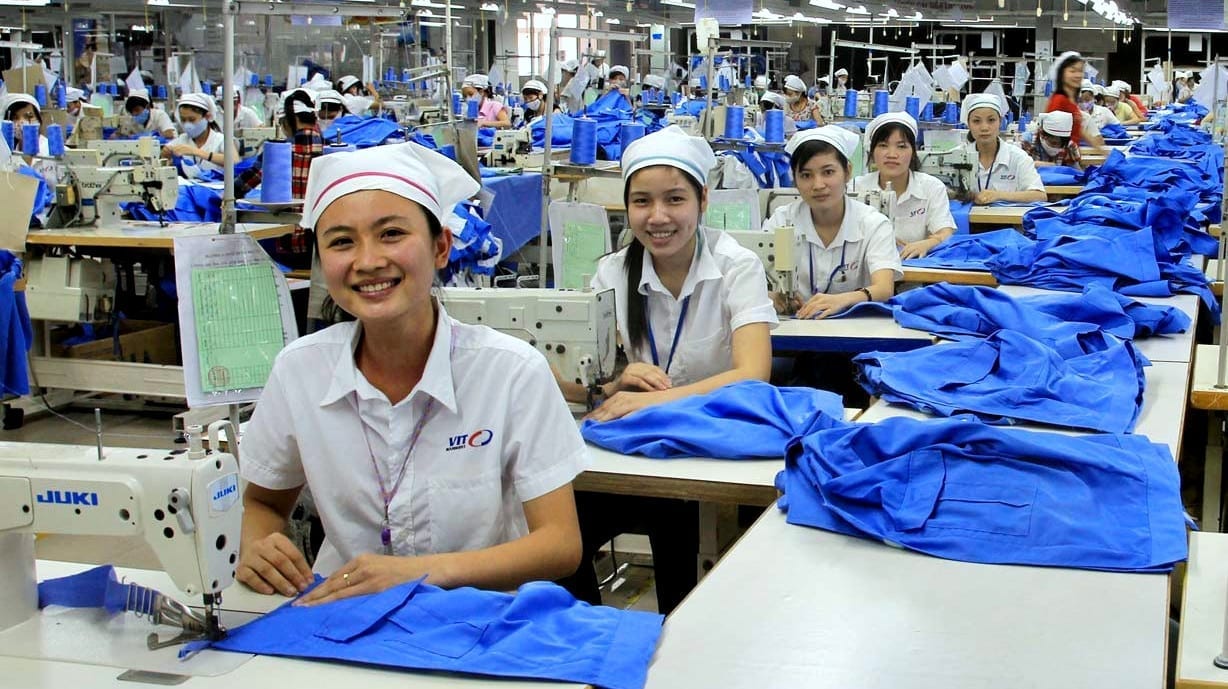
    The HCM City Business Association said a number of textile and apparel businesses have had to downsize their workforce and production as a result of lack of orders and financial challenges.

    As the pandemic faded away orders had surged from the fourth quarter of 2021, and this lasted until July this year.

    But recently consumption has declined drastically as a result of high inflation, particularly in Vietnam’s major textile and apparel export markets such as the U.S. and E.U.

    The conflict between Russia and Ukraine has had a significant impact on logistics and raw material costs. Some 95% of textile and apparel exports to Russia have come from Vietnam, but shipments have fallen by 42% during the conflict.

    Other challenges businesses must deal with include the strengthening dollar, rising oil prices and surging bank interest rates.

    Le, a garment worker in Binh Duong, has also been particularly worried since her company has laid off close to 1,000 employees recently.

    Those remaining are rotated due to the lack of orders at the moment.

    She says: “There is far less work to do. It will take us just two to three hours to complete the work. The salary is not enough for daily expenses, but I don’t know where to apply for a new job since all companies face the same challenges.”

    Mai, a worker at a leather footwear company in Ho Chi Minh City, is not so lucky and is set to get a pink slip this month.

    She says: “Many of our company’s products are unsold. Frequently buyers complain about and return products, which causes the inventory to swell. Before Covid sometimes I would not have time to relax, but now I spend way too much time not working.”

    Most people are trying to retain their jobs at least until Tet so that they can get the annual bonus.

    “After a year of hard work, everyone looks forward to the Tet bonus to take care of our family. If I quit now, there will be no Tet bonus, and getting a new job at year-end is incredibly difficult.”

    A loan package worth VND10 trillion ($402.37 million) out of a total of VND20 trillion has been urgently rolled out to provide immediate support to workers at industrial parks across the country since tens of thousands are losing their jobs or having their working hours and wages reduced.

    The union is also making an effort to assist workers during this Lunar New Year.

    The Binh Duong Province Confederation of Labor is trying to mobilize resources along with union funding to support workers through the difficult period until they can return to work.

    Le and other workers hope things will get better in the new year.

    The Bac Giang Province native says she will try to stay at this job at least through Tet. She feels luckier than others for still having a job though it does not pay too well.

  • Electric motorbike startup raises another $8 mln

    Electric motorbike startup raises another $8 mln

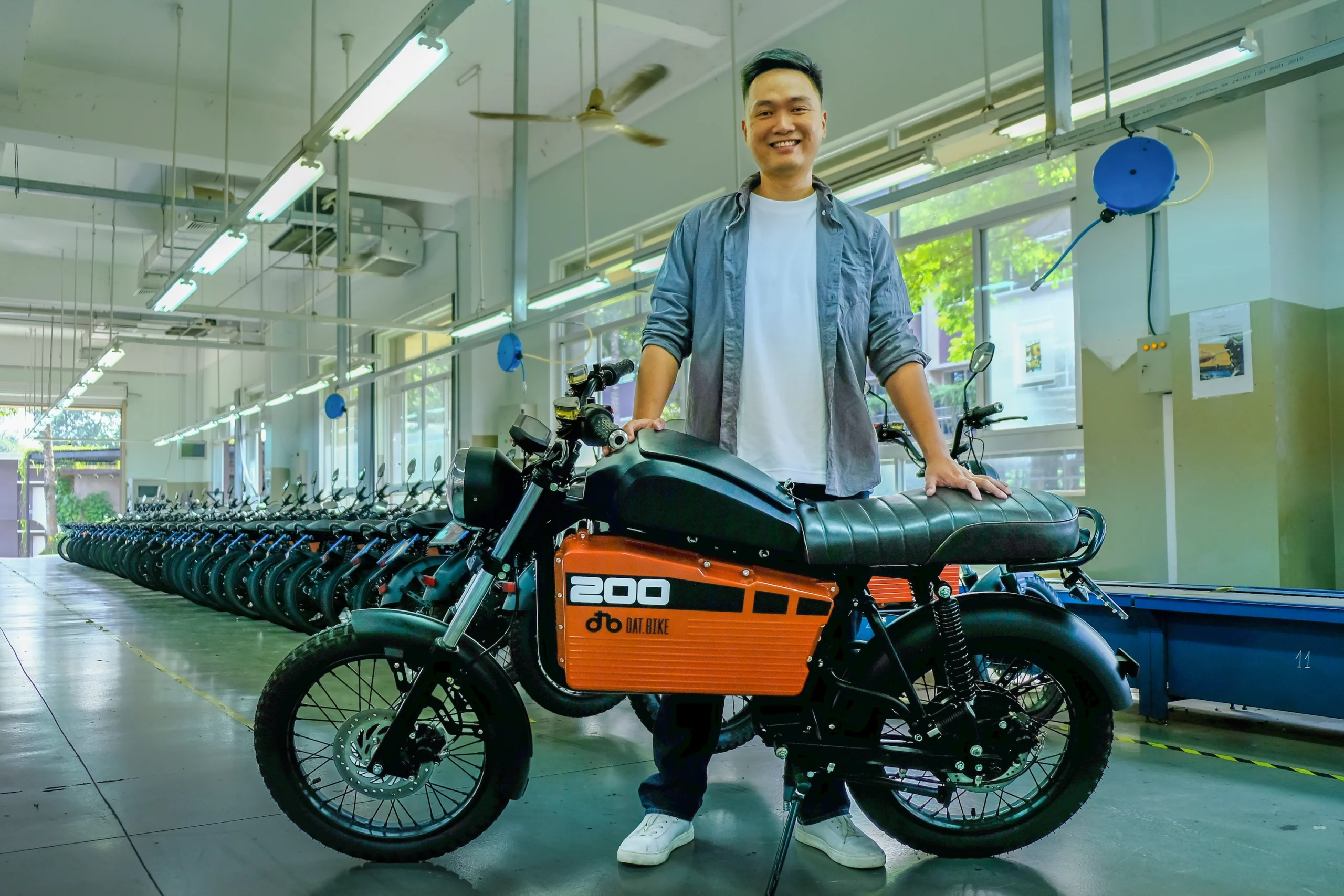
    Vietnamese electric motorbike startup Dat Bike has secured $8 million in a funding round, bringing the total since its establishment to $16.5 million.

    The round was led by returning investor, Singapore-based Jungle Ventures, with participation from GSR Ventures, Innoven Capital, Wavemaker Partners, and Delivery Hero Ventures – the investment arm of Foodpanda’s parent firm.

    The startup will use the new round of funding to invest in technology, scale production, product development and hiring talent, said Nguyen Ba Son, founder and CEO of Dat Bike.

    Founded in 2019, Dat Bike says its revenue grew 10 times over the past 12 months.

    The launch of its latest model, Weaver 200, has solved the problems of performance and range as it has a maximum capacity of 6,000W, covering 200 km with a 3-hour charge, Son said.

    The startup has also launched Dat Charge – an ultra-fast charging station for its electric bikes, which allows charge for a 100km trip in 20 minutes and 150km in 30 minutes. This is the highest electric bike charging speed in the country at present, according to the company.

    After four years of operations, Dat Bike has three stores in Ho Chi Minh City, Hanoi and Danang. It plans to enter other Tier 1 cities, including Quang Ninh, Hai Phong, Nha Trang, Binh Duong and Can Tho, soon.

  • Gold prices surge as Fed signals slower rate hikes

    Gold prices surge as Fed signals slower rate hikes

    Marked ingots of 99.99 percent pure gold are placed in a cart at the Krastsvetmet non-ferrous metals plant in the Siberian city of Krasnoyarsk, Russia March 10, 2022.

    Gold prices rose as soon as the U.S. Federal Reserve announced that it may slow the pace of interest rate hikes in the future. The price of SJC branded gold bars surged VND100,000 ($4.04) from the previous day to VND67.6 million per tael. A tael is equal to 37.5 grams or 1.2 ounces.

    The selling price of gold rings also increased by VND200,000 to VND54.1 million per tael.

    SJC gold prices are typically higher than the world average by some VND15.5 million per tael

    The minutes of the Fed’s Nov. 1-2 meeting showed that a “substantial majority” of Fed policymakers agreed it would “likely soon be appropriate” to slow the pace of interest rate hikes.

    Fed fund futures are now pricing in an 85% chance of 50-basis point (bps) increase in the December meeting, after four straight 75 bps hikes.

    Globally, gold prices bounced above the key $1,750an ounce level on Thursday, consolidating gains after minutes of the U.S. Federal Reserve’s latest meeting signalled slower interest rate hikes.

    Spot gold rose 0.4% to $1,755.73 per ounce by 0321 GMT. U.S. gold futures advanced 0.6% to $1,755.90.

  • Dollar drops against dong

    Dollar drops against dong

    TPBank let the dollar slide 0.004% to VND24,854. Techcombank sold it at VND24,852, down 0.004%.

    The State Bank of Vietnam set its exchange rate at VND23,671, also down 0.004%.

    The dollar was sold VND24,940 at unofficial exchange points, down 0.4% from Wednesday.

    The U.S. dollar was broadly weaker on Thursday as investors, encouraged by the prospect of a slower pace of interest rate hikes from the Federal Reserve, placed bets on riskier assets.

    The dollar index, which measures the greenback against six major peers, was down 0.066% at 105.830, after sliding 1% overnight.

  • Mercedes recalls nearly 1,000 vehicles over fire risk

    Mercedes recalls nearly 1,000 vehicles over fire risk

    Mercedes is recalling 966 cars in Vietnam due to fire risks related to electrical short circuits in the trunk control modules and faulty trim bars on rear doors.

    The recall covers three models – C300, GLE, and GLS imported via official channels in Vietnam. Of these, 126 recalled Mercedes C300 cars were made between May 2021 and May 2022.

    The remaining 840 units – GLE 450 4Matic, GLS 450 4Matic, GLS Maybach 480 4Matic, and GLS Maybach 600 4Matic – were made between July 2019 and January 2022.

    With the C300 model (W206 generation), there is a risk of rainwater ingress at the rear trunk. Moisture can thus seep into the signal acquisition and actuation module (SAM module) inside the trunk, the carmaker said.

    In this case, short circuits may occur in the control modules and fire risks cannot be eliminated entirely. In addition, short-circuiting can lead to various other problems, such as taillight damage. The company has recalled vehicles to fit a waterproof cover over the module that receives the signal and activates it to prevent problems.

    The GLE and GLS models are being recalled to repair the trim bar in the triangular window (rear door) because they may not meet specifications due to deviations in the assembly process. As a result, the decorative bars may detach from the vehicle while in motion, potentially causing accidents or injuries to other road users.

    The above models are being recalled at Mercedes Vietnam’s authorized dealers system nationwide, and repairs are done free of charge. Fixing the error on the C300 takes about 60 minutes, and procedures for the remaining lines about half that time. The recall program will run from November 10, 2022 to December 31, 2027.

    Mercedes Vietnam has said that it will also provide free error correction support for C300, GLE, and GLS models not imported via official channels that are on the global recall list of Mercedes AG.

  • Citigroup Preparing for a Dealmaking Upswing

    Citigroup Preparing for a Dealmaking Upswing

    The second half of next year could see an increase in M&A and leveraged finance deals as market makers move closer together in their earnings expectations, and pent-up deals come to fruition.

    Macro-economic uncertainty, triggered by the Ukraine war, inflation, and supply chain disruptions, have left many European and US deals up in the air, Citigroup’s head of mergers & acquisitions for German-speaking countries in Europe, Holger Knittel, said at a media roundtable Wednesday.

    Although the slowdown in deal flow is expected to continue over the next few quarters, it could pick up next year if the situation stabilizes. Citigroup’s co-head of equity capital markets for EMEA, Valery Barrier, said that.

    Initial public offerings (IPOs), which dropped by 70 percent in EMEA so far this year compared to last year, could even surge in the second half of 2023 with pent-up deals potentially materializing, he said.

    At the same time, the trend for companies to delay or hold off from going public is likely to remain as the investor base for minority private placements of equity investments has become more structured with more defined processes, Barrier said.

    Compared to 2021, which was one the best for equity markets, companies’ earnings expectations for next year have already come down, because investors are grappling with not knowing how inflation, the macro-outlook as well as energy prices will affect companies’ business models, Knittel said, adding that there is still scope for further earnings estimate downgrades.

    In this uncertain climate there is a gap between what the sell-side says companies are worth and what the buy-side is willing to pay, halting dealmakers in their tracks. Exacerbating the situation within leveraged finance is the limited number of buyers able to finance such deals, resulting in the absence of a fully functioning leveraged finance market.

    The sheer velocity at which this year’s investment environment has changed, is partly responsible for this deficiency within leveraged finance, according to Barrier. Some companies have seen their stock prices plummet 50 percent since the beginning of the year, he said while drawing attention to the rate at which central banks are pushing ahead with interest rate increases.

    Citigroup seems to be preparing for when markets have more clarity by bolstering its investment banking leadership with recent new hires Patrick Frowein from Deutsche Bank and Jens Welter from Credit Suisse.

  • Budget carrier MYAirline to begin competing against AirAsia in December 2022

    Budget carrier MYAirline to begin competing against AirAsia in December 2022

    After much anticipation, it’s been revealed that new Malaysian low-cost carrier MYAirline will begin flying in December 2022, with reports having confirmed approvals from the Malaysian Aviation Commission (Mavcom) and Civil Aviation Authority (CAAM) for the company to start selling tickets.

    Also, the airline took to its social media pages to hint at its very first flight destinations, which will most likely include Malaysian cities such as Kuching, Kota Kinabalu, and Langkawi, judging by the graphics in its posts.

    This comes after the airline’s CEO Rayner Teo said that MYAirline would seek domestic air traffic rights, with flights to begin very soon after approvals.

    “We’re hoping to start flying before the end of this year,” he said. “We’re looking at domestic destinations within the Peninsula.”

    The airline — which currently has 330 employees and is still hiring — will look to start off its operations with three Airbus A320 aircraft flying from Kuala Lumpur International Airport 2 (KLIA2).

    While all of the airline’s planes are currently under lease, Teo also revealed that the airline has the goal of increasing its fleet to 50 aircraft within the next four years.

    As an aside, he mentioned that starting the company during the height of the COVID-19 pandemic was crucial to helping it learn from competitors about how to operate such a business and serve its customers better.

    “A lot of feedback that we hear is that it’s hard to reach the airline after you have purchased a flight ticket,” heMYAirline explained. “As for us, we’ll ensure that our passengers can communicate with us effectively.”

    “We won’t be looking at chatbots, but rather focus on human interaction. On-time performance is also something that we’ll focus on.”

    With the travel industry now opening up around the world following the pandemic, flyers in Southeast Asia (especially Malaysia) will more than likely be pleased at the arrival of more competition in the space, especially when considering the many well-documented issues faced by travelers dealing with more established rivals like AirAsia.

  • VinFast ships first electric vehicles to US

    VinFast ships first electric vehicles to US

    VinFast had shipped its first batch of 999 cars to the U.S., capping a five-year bid to develop an auto production hub in Vietnam for markets in North America and Europe.

    The company said that the first cars are expected to be handed over to customers by the end of December.

    VinFast Chief Executive Le Thi Thu Thuy said some of the VF 8 electric SUVs being shipped on Friday would be sent to U.S. car subscription service Autonomy but the majority would go to retail buyers who have ordered the car.

    Thuy said VinFast expected to be able to ship a second batch of cars to the United States, its first export market, around January.

    VinFast is in the process of building an electric vehicle plant in North Carolina that is awaiting final regulatory approval from local officials.

    Thuy said the company expected to start production at the North Carolina factory from July 2024 and that electric vehicles built there would qualify for incentives under the terms of the Inflation Reduction Act signed by U.S. President Joe Biden.

    The Inflation Reduction Act, as currently written, requires automakers to have 50% of critical minerals used in EV batteries come from North America or U.S. allies by 2024, rising to 80% by the end of 2026.

    Major automakers have said those targets are unrealistic and it was not immediately clear how VinFast would meet the sourcing requirements.

    “The IRA came as a surprise to all of us but it doesn’t really impact our strategy in the U.S.,” Thuy told Reuters. “As soon as we start manufacturing cars in the U.S., our customers will be eligible (for) the tax incentive.”

    VinFast said last week that Autonomy had ordered 2,500 electric vehicles, its largest corporate order to date. VinFast has said it has almost 65,000 orders globally in total and expects to sell 750,000 EVs annually by 2026.

    The North Carolina factory project is running months behind schedule, based on the company’s initial targets, and the first shipment of EVs built by VinFast was short of the initial goal to deliver as many as 5,000 cars built at its factory in Haiphong by December.

    VinFast officials said the number 999 for the vehicles shipped in the first batch had been chosen because it is considered a lucky number in Vietnam.

    “There is no luckier number than 999,” Thuy said. The Panamanian-chartered transport ship used to send the first shipment of VinFast EVs had the capacity to carry up to 2,000 vehicles, officials said.

    Shares in VinFast’s listed parent company, Vingroup, which also has property and resort development businesses, were up 5.41% on Friday morning.

  • Hey Bud Skincare Partners with Pattern to Grow Sales through Online Marketplaces

    Hey Bud Skincare Partners with Pattern to Grow Sales through Online Marketplaces

    Booming Australian hemp skincare brand Hey Bud aims to grow online sales by 40% through new marketplace & eCommerce strategy

    Hey Bud, Australia’s #1 Hemp skincare brand has partnered with the category leader for global eCommerce acceleration Pattern Australia, to optimise its eCommerce operations and grow sales through online marketplaces.

    Founded as an online-only business, Hey Bud has rapidly grown to become one of the country’s most popular skincare brands. The company is aiming to grow overall online sales by 40% in two years through selling on online marketplaces.

    “Since our original product line – The Hydrating Clay Mask – sold out instantly in 2020, Hey Bud has rapidly expanded to become one of the most popular skincare brands in Australia, with a growing international audience. Today, we distribute our 8-piece product line from 3PL fulfilment centres in Australia, the US, New Zealand, and the UK, to consumers across the globe,” said Alex Roslaniec, Co-Founder of Hey Bud Skincare.

    Hey Bud’s sales and advertising model traditionally focused heavily on leveraging micro-influencers on social media, coupled with online advertising on Facebook and Instagram, with additional revenue streams flowing from its VIP Facebook group. However, since the recent IOS 14-15 privacy and security updates to iPhones, customer tracking and targeted advertising via social media became more difficult and less effective.

    Following a recent round of external funding to accelerate international business growth, Hey Bud has turned to Pattern to help diversify its sales channels and expand its customer base through online marketplaces like Amazon.com.

    “It’s been an amazing experience watching our brand grow and be loved by so many customers in Australia and internationally. While our social media following and our partnerships with micro-influencers have helped us reach where we are today, it was time to diversify our sales channels and route-to-market to fuel our next phase of growth. Digital marketplaces will enable Hey Bud to reach a new range of customers in Australia and internationally given our growing influence and popularity amongst consumers,” said Alex.

    Pattern will manage all end-to-end eCommerce processes for Hey Bud, including marketplace storefront set-up, product page management, and fulfilment and logistics operations to ship products from its own warehouse to Amazon, as well as implementing an overarching eCommerce and marketplace strategy.

    The strategy will first focus on the initial launch of Hey Bud on Amazon Australia, working also to oversee and perfect Hey Bud’s product creation and branding, content and marketing design, and listing optimisation.

    Additionally, Pattern will leverage its extensive experience in marketplaces to maximise growth for Hey Bud by:

    • Increasing Hey Bud’s product visibility on all marketplaces
    • Maximising marketplace conversion rates for Hey Bud
    • Managing marketplace customer support
    • Implementing various marketing campaigns for Amazon Australia
    • Aligning Hey Bud’s promotional activities on Amazon with the wider market
    • Ensuring continual stock in Amazon warehouse is available for fast delivery of customer orders via in-house proprietary forecasting & replenishment tools
    • Identifying new marketplace & growth opportunities for Hey Bud

    “Hey Bud has rapidly grown to become a much-loved Australian skincare brand. We are very excited to begin work and help Hey Bud diversify its sales model through new online marketplace activity,” said Merline McGregor, General Manager, at Pattern Australia.

    “We are partnering with Hey Bud to grow their Amazon channel through streamlined sales, customer reviews and optimised listing management, then using this same strategy to help them break into other digital marketplaces like eBay and Catch, and beauty marketplaces like Cult Beauty and Macy’s,” ended Merline.

    For more information on how retail brands can grow their market share through online marketplaces, please visit: www.pattern.com/au


     

  • US tech giant Hewlett Packard plans up to 6,000 job cuts

    US tech giant Hewlett Packard plans up to 6,000 job cuts

    PC-maker Hewlett Packard on Tuesday said it would layoff as many as 6,000 employees over the next three years as the slumping world economy continues to embroil the US tech sector.

    HP, which has a payroll of about 61,000 people, said it aimed to secure $1.4 billion in annual savings through 2025 as it followed the cost-cutting path of other tech giants such as Facebook-owner Meta, Amazon and Twitter.

    The plan “will enable us to serve our customers better and drive long-term value creation by reducing our costs and reinvesting in key growth initiatives to position our business for the future,” HP CEO Enrique Lores said in a statement.

    Meta said earlier this month it will lay off more than 11,000 of its staff and Twitter saw half of its 7,500-strong employees culled just days after billionaire Elon Musk took over the company in late October.

    “These are the toughest decisions we have to make, because they impact colleagues we care deeply about. We are committed to treating people with care and respect…” an HP spokesperson said in an email to AFP.

    HP, which makes computer hardware and printers, announced the layoff plan as it announced an 11.2 percent fall in revenues to $14.8 billion for the final fiscal quarter of 2022.

  • Thai durian farmers feel threatened as Vietnam makes China debut

    Thai durian farmers feel threatened as Vietnam makes China debut

    Thai farmers who’ve enjoyed a virtual monopoly in exporting fresh durian to China are worried about Vietnam entering the fray because the latter’s proximity to the importer generates several advantages.

    When Vietnam’s first batch of fresh durian was exported to China under official quota in September, Thai farmer Busaba Nakpipat said she was concerned about heightened competition in a market that Thailand has dominated for decades.

    “Thailand used to be the only country allowed to export fresh durians to China, while Vietnam used to export processed durian,” she said. “But now Vietnam is our competitor and it worries me.”

    During a trip to Vietnam in September, Busaba saw an increasing number of durian orchards and found there was large potential in the country to further expand cultivation of the special fruit.

    Vietnam has been exporting processed durian to China for years, but now that the export of fresh durian to the world’s largest consumer market has been approved, local farmers see a great opportunity to make bigger profits.

    China has approved exports of fresh durian from nearly 3,000 hectares in Vietnam. It took Vietnam four years to negotiate the approval as China has become a difficult market with high quality standards.

    “Our exports need to meet Chinese consumers’ standards and we need to respect their desires and regulations. That is how we can ensure a sustainable export channel to this market,” said To Ngoc Son, deputy head of the Asia and Africa division under the Ministry of Industry and Trade.

    Industry insiders in Thailand view this development with some trepidation because its market dominance is threatened now.

    Thailand was the first country to export fresh durian to China. In 2021, Thai durian exports to China grew at a record 68% year-on-year to more than 875,000 tons.

    However, Vietnamese farmers have an advantage over their Thai counterparts because they can afford to pick durians for export later than in Thailand. Shipments from Vietnam take less time to reach China, said Thai academic and agriculture specialist Sakda Sinives.

    “Even without any clear difference in terms of taste … the riper fruit from Vietnam will slowly attain higher prices from buyers, while the price of durians from Thailand will fall. This quality control issue is why Thai [durian production] will fall as farmers can no longer shoulder the costs,” Sakda said.

    Sakda said that many traders operating in Thailand – more than a few acting on behalf of buyers from mainland China – have moved to Vietnam, lured by higher profit margins though very few Vietnamese farms have received export approval from China, he added.

    Long way to go

    However, Vietnamese officials say farmers in the country have a long way to go in improving their standards and practices to ensure export of high quality fruit.

    The nearly 3,000 hectares of durian orchards approved for exports to China only account for 3.5% of total area dedicated to cultivating the fruit.

    In the Central Highlands province of Dak Lak, where many durian orchards are located, only 16 out of 25 applications were approved by Chinese officials.

    “Some farmers are not aware of the benefits of being approved. Of those who have been approved, some do not keep a careful record of their farming activities,” said Vo Thanh Toan, an agriculture expert in Krong Pak District.

    Other officials have said that Chinese buyers have warned Vietnamese farmers about the failure to follow their standards by growing durian in the same area with other fruits, which increases the risks of pests and diseases. Some farmers have been warned about low hygiene and weak anti-Covid-19 measures.

    Nguyen Thi Thu Huong, deputy head of the Plant Protection Department, expressed concern at a recent forum that some Vietnamese durian farmers who have not been approved by Chinese officials are looking for ways to export to the neighboring country illegally.

    Farmers have registered to export 1.3 million tons of durian to China a year, which is double the approved amount by Chinese officials, suggesting that unapproved farmers are trying to add their fruit to the inventory of approved ones, she said.

    “If Chinese officials find out, all our negotiations and efforts of the last four years will be thrown away.”

  • Gold prices rise

    Gold prices rise

    Prices of gold bars branded SJC on Wednesday increased VND100,000 ($4.02) from the previous day to VND67.5 million ($2,706) per tael.

    Prices of gold rings branded SJC dropped VND250,000 from the previous day to VND53.85 million per tael.

    SJC gold prices are higher than the world average by some VND15.3 million per tael.

    Globally, gold prices were flat on Wednesday, as investors held back from making big bets ahead of the U.S. Federal Reserve’s latest policy meeting minutes, which could offer clues on further interest rate hikes, Reuters said.

    “There is some nervousness in the market ahead of the Fed minutes,” said Edward Meir, an analyst with ED&F Man Capital Markets.

    Market participants are awaiting the minutes of Fed’s Nov. 1-2 policy meeting due at 1900 GMT. U.S. durable goods data and weekly initial jobless claims are also on the radar.

    Although gold is seen as a hedge against inflation, rising U.S. interest rates dull non-yielding bullion appeal.

    “In the near term, expect gold prices to work a bit higher from here into year-end because I see the dollar weakening some more and we are very close to peaking out on inflation and interest rates,” Meir said.

  • Sole bond issuance recorded in October

    Sole bond issuance recorded in October

    Only one private bond issuance was recorded in October, indicating that companies remain reluctant to mobilize cash using this channel after recent arrests of alleged fraudsters.

    Nui Phao Mining Company under the Masan Group was the only corporate bond issuer last month with a batch of VND210 billion ($8.45 million) with a five-year maturity.

    This is very unusual as banks and property developers have been the biggest bond issuers in Vietnam for several years now.

    Financial data provider FiinRatings said in a report that the rising interest rates, tightened bond regulations and recent violations in the market have restrained companies from mobilizing cash through bonds.

    The alleged violations of An Dong Investment Group and other companies like property developer Tan Hoang Minh, as well as the arrests of their leaders, have raised red flags for businesses.

    They are now buying back the bonds they have issued. Last month, VND5.8 trillion worth of bonds was bought back.

    Banks accounted for 53% of the buyback value, followed by property developers at nearly 22%.

    The buyback has helped ease payment pressure on companies this year as they only have VND21.85 trillion worth of bonds set to mature after November 15.

    But next year, the value of bonds set to mature will be high, at VND119.05 trillion, and in 2024 it will be VND111.81 trillion.

    FiinRatings analysts expect more debt restructuring moves to be carried out soon. Some of the methods being used are an extension of debt payment with new coupon rates, converting the bonds to long-term loan contracts with new interest rates, or converting them into property units.

    “This is a positive signal for the current liquidity issues on the market as it helps reduce the payment burden in the short term for bond issuers,” they say.

    With mobilizing capital domestically proving very difficult, companies are seeking international loans.

    Ten major loans have been recorded recently with a total value of $1.92 billion, including that of the Masan Group ($600 million), VPBank ($500 million) and SeABank ($200 million).